HYDROFOILS WITH ROUNDED NOSES
Thesis by
Okitsugu Furuya
In Partial Fulfillment of th.e Requirements For the Degree of
Doctor of Philosophy
California Institute of Technology Pasadena, California
1972
ACKNOWLEDGMENT
I wish to thank my research advisor, Professor Allan J. Acosta, for his most generous guidance and encouragement during my years of graduate study at the California Institute of Technology. Specifically, his recognition of the importance of this type of problem and his unique suggestions on the approach have made it possible to accomplish the present work. I also thank him for the opportunities given to me to present this subject on many occasions.
I would also like to acknowledge Professor Theodore Y. T. Wu for his interest in the present problem, and particularly for his useful suggestions on the numerical procedure of his own work which has been used for comparison with the present work.
I am grateful to the Institute for four years of tuition payments and financial assistance for me and my family. This work was sup-ported partially by the Office of Naval Research and a major part of the computing was done under an Institute grant. This help is gratefully acknowledged.
Thanks are due to Mrs. Julie Powell and Mrs. Lynne Lacy for the competent typing and careful preparation of the manuscript under the pressure of shortage of time.
ABSTRACT
A simple, direct and accurate method to predict the pressure distribution on supercavitating hydrofoils with rounded noses is
presented. The thickness of body and cavity is assumed to be small. The method adopted in the present work is that of singular perturbation theory. Far from the leading edge linearized free streamline theory is applied. Near the leading edge, however, where singularities of the linearized theory occur, a non-linear local solution is employed. The two unknown parameters which characterize this local solution are determined by a matching procedure. A uniformly valid solution is then constructed with the aid of the singular perturbation approach.
The present work is divided into two parts. In Part I isolated supercavitating hydrofoils of arbitrary profile shape with parabolic noses are investigated by the present method and its results are com-pared with the new computational results made with Wu and Wang's exact "functional iterative" method. The agreement is very good. In Part II this method is applied to a linear cascade of such hydrofoils with elliptic noses. A number of cases are worked out over a range of cascade parameters from which a good idea of the behavior of this type of important flow configuration is .obtained.
Some of the computational aspects of Wu and Wang's functional iterative method heretofore not successfully applied to this type of
· TABLE OF CONTENTS
ACKNOWLEDGMENT ABSTRACT
TABLE OF CONTENTS NOMENCLATURE INTRODUCTION
PART I. ISOLATED SUPERCAVITATING HYDROFOILS WITH ROUNDED NOSES
1. Statement of the Problem 2. Outer Solution
3. Inner Solution 3. 1 Regular Case 3. 2 Critical Case 4. Matching
4. 1 Expansion of the Outer Solution 4. 2 Expansion of the Inner Solution 4. 3 Matching for the Regular Case 4. 4 Matching for the Critical Case
5. Construction of Uniformly Valid Solutions 5. 1 Uniformly Valid Solutions for the
Regular Case
5. 2 Uniformly Valid Solutions for the Critical Case
6. Special Cases
6.
1 Infinite Cavity Case for an Arbitrary Profile Shape with a Parabolic Nose 6. 2 Parabolic Strut at Zero Cavitation6. 3 Base-Vented Parabolic Strut 7. Numerical Results and Discussion 8. Sununary
References
List of Figure Captions Appendices
PART II. LINEAR CASCADES OF SUPERCAVITATING HYDROFOILS WITH ROUNDED NOSES
1. Statement of the Problem 2. Outer Solution
3. Inner Solution 4. Matching
5. Uniformly Valid Solutions
6. Numerical Calculations and Dis~us sions 7. Summary
References
Li st of Figure Captions Appendix
41 41 44 45 47 65
NOMENCLATURE
A lower separation point of cavity B upper separation point of cavity
c
connection point between rounded nose and arbitrary profileshape
CL lift coefficient based on the chord length normalized by the dynamic pressure on the cavity in the direction normal to the upstream flow
CD drag coefficient based on the chord length normalized by the dynamic pressure on the cavity in the direction of the
upstrea1n flow
lift coefficient defined in the same way as CL but in the direction normal to the vector mean of the inlet and outlet velocity vector
drag coefficient defined in the same way as CD but in the direction of the vector mean
cp pressure coefficient defined by (p-pI)
Ii
pui
C pressure coefficient defined by (pp )/-2 1
pU2, C
=
C forPc c c p Pc
d
F(()
H(C) £
(J
=
0.space of hydrofoils in linear cascade
p q. 1 u v u n v n
u u nE:' nCY
v v nE:' nCY
w(z}
W(C)
u.
1pressure
cavity pres sure
a rational function
velocity distribution in the inner region velocity distribution in the outer region stagnation point
velocity component in the x-direction
velocity component in the y-direction
normalized velocity component of the
n~
order in € onlyin the x-direction
normalized velocity component of the
n~
order in € onlyin the y-direction
normalized velocity components of the
n~
order in € andCY respectively in the x-direction
normalized velocity components of the n
~
order in € and CY respectively in the y-directioncomplex velocity potential in the physical plane complex velocity potential defined by iw(z) in the
transform plane
magnitude of the local uniform flow speed in the inner region
magnitudes of the flow speed at upstream and downstream
infinity, respectively
U
00 vector mean of the vectors Ur and UII
Uc velocity on the cavity ( = Ur
....fT+CJ)
X,Y
coordinates in the inner regionz complex variable in the linearized physical plane
z
complex variable in the inner regionflow angles at upstream and downstream infinity, rewritten
by E:
6r
and E:6II, respectivelyaB geometrical angle between hydrofoil chord and 5r-axis
a
angle of the body axis with the x-axis (= e:c )
c c
a
00 flow angle of the vector mean Y stagger angle
·../' geometric stagger angle used in fully wetted linear cascade
r
61' 611' 6 c E:
(, rt
e
A.,
µ;
i;, T)w
theory, defined by Y - Cle -ClB in the present work contour used for contour integrals
see a
1, all and ac
small quantity in linearized theory transform planes
flow angle
coordinates in
x.
and ( planes respectivelycavitation m.nnber based on the upstream pressure, defined 1 2
by (Pr - Pc)
I
2
PU IINTRODUCTION
Long cavitites are often created downstream of vane sections in pumps, turbines and on the components of the modern high speed hydrofoil craft. In order to maintain mechanical strength such supercavitating hydrofoils necessarily have rounded or locally blunt leading edges. It is this feature that poses difficult problems for analysis. Because of the roundedness or bluntness, the location of the cavity separation on the suction side of the lifting body is
com-pletely unknown. Therefore, it is important to predict not only the forces but also the pressure distribution on the body, since the latter may possibly indicate the separation point of the cavity on the curved
surface.
There exist various methods of attacking free streamline problems of the type associated with hydrofoils. These are the full non-linear theory and a later linearized free streamline method
purpose. But in actual computations with this method numerical complexities and difficulties often arise. The most troublesome aspect is computational instability which seems to be inherent in this type of problem. For example, Lurye [15] who applied Wu and Wang's method to base-vented parabolic struts was unable to obtain convergent solutions.
Many attempts have been made to avoid the non-linearity of the exact theory and also its computational difficulties. Brodetsky, Oba, Larock and Street, and Murai and Kinoe [4, 5, 6, 7 respectively] expressed the flow angle on the bcidy by power series in the potential. Larock and Street took only two such terms, while Murai and Kinoe incorporated leading edge curvature in these power series expansions. The coefficients in these power series are obtained by collocation of the flow angle or curvature on the body at discrete points. The final profile found as the result of calculation cannot be determined in advance unless a very great number of terms in the series are used.
On the other hand the linearized free streamline theory of Tulin [8] is a simple and direct theory which is useful for the calcu-lation of the forces on thin bodies. Yet this theory fails to predict the pressure on the body except far away from the leading edge, because such linearized theories require singularities at the leading edge to represent the stagnation flow there.
The method adopted in the present work for this purpose is
that of singular perturbation theory as described in the books by
Van Dyke [10] and Cole [11
J.
In what follows we describe the basicidea of the new application of this theory to the present problem.
Assume that the angle of attack, camber and body- and
cavity-thickness are all sufficiently 11 small". Far from the leading edge
(called here the "outer region") the perturbed velocities are considered
to be small in respect to the undisturbed flow so that linearized free
streamline theory can be applied. In terms of this perturbed complex
velocity, one can reduce the problem to a mixed-type Hilbert boundary
value problem which has been thoroughly treated by Muskhelishvili [12].
Near the leading edge of the foil the curvature of the surface is
large and generally there is a stagnation point nearby. This is the
region of the flow which in the parlance of the singular perturbation
literature is called the "inner region". In this portion of the flow the
linearized theory is not applicable and in fact the local solution in this
region is very non-linear with the local velocities differing greatly in
magnitude and direction from the free stream velocity.
The flow in this nose region past supercavitating hydrofoils may
be very complex. The flow past a simple supercavitating flat plate,
for example, exhibits a forward facing streamline which has infinite
curvature at the detachment point which decays as arc length to the
inverse fourth power. The distance of the stagnation point from the
leading edge in such a flow is proportional to the fourth power of the
flow may be fully wetted near the nose; base vented or cavitating profiles are an example of this type of configuration. However it may happen that a free streamline (arising either from cavitation or venti-lation) may originate near the leading edge. In this case the cavitation separation may be of two types (as discussed in the literature cited thus far); these are a 1'fixed detachment 11 point or a 1'smooth detach-ment1'. In the former the pressure gradient on the body becomes infinite on the wetted body at the detachment point and the curvature of the ensuing free streamline is infinite at this point. The smooth separation exhibits zero pressure gradient at detachment and the radius of curvature of the free streamline there matches that of the body.
this kind of application. Both cavitation and ventilation occur on bodies
having smooth, rounded leading edges; the position of this type of
separation or detachment is not fixed in advance. It depends upon the
local viscous flow, surface tension, and other physical parameters of
the flow and as of this date cannot be predicted, but must be measured.
The present work, as will be seen, is still applicable to this situation
provided the separation point is known. It should be mentioned that
all of the "exact" theories suffer the same degree of uncertainty in
regard to free streamline detachment on smooth bodies. It follows
that the criterion of 11
smooth" separation referred to before does not
necessarily mean that this type of free streamline separation actually
occurs,011 bodies in real fluids. A full discussion of this as yet
unresolved problem is beyond the scope of the present work. It is
brought up here only to note that in what follows the separation point
will be fixed a priori. Whether such a point coincides with a free
streamline 11 smooth" separation point on a continuous body must, as
of this writing, be decided by experiment.
From the foregoing discussion it can be perceived that the local
flow around the nose will fall into two classes. In the fir st, the local
flow is fully wetted because in this case the free streamline separation
is well downstream. In this situation the 11inner flow" is that around
a semi-infinite half body which has the coordinates of the nose region
of the body. This type of problem is a standard one in fluid mechanics
and is readily solved by two-dimensional potential flow methods. In
the present work this is called the 11regular case11
• As will be shown,
with are unknown. The second class as might be surmised exhibits a free streamline within the inner region. This considerably complicates the inner flow because (just as in the full non-linear treatment) the exact position of this streamline is unknown in advance. However,
. an "exact" knowledge of this inner streamline would exceed the
expectations originally laid out for the present work. To recapitulate, we hope to find a solution for the set problem everywhere as accurate as the linear solution where the linear solution itself is appropriate. We do not therefore need an "exact" inner solution when a free streamline is present there, and, as will be seen, a sufficiently
accurate solution can be obtained by a simple assumption. This class of inner problem, when the inner solution contains a free streamline, is termed herein a 11
critical case".
Thus far no assumption has yet been made about the shape of the nose region itself. Insofar as the present method goes it can be arbitrary. Nevertheless, there is a considerable advantage in keeping the inner solution as simple as possible. The reasons for this will become evident in the section to follow. A particularly simple nose section is that of a parabola. In fact most airfoil and hydrofoil profiles have leading edges reasonably well approximated by parabolas, and this shape possesses attractively simple, explicit formulations of the surrounding flow field. This leading edge profile is therefore adopted in the pre sent work as being expeditious and practical but by no
means is the methodology to be expounded limited to it.
As mentioned, two parameters in the inner flow past the
magnitude of the local uniform flow speed and the location of the
stagnation point of the flow about the parabola. These quantities are
determined by 11matching procedure11 of the singular perturbation method in such a way that the local 11nose11 solution (or inner solution)
blends smoothly into the linear solution far away from the nose (or
outer solution) with the error never exceeding that of each of its
constituent solutions.
The singular perturbation method is completed by constructing
a uniformly valid solution out of the two obtained solutions, inner and outer. The simplest method of doing this is to add the inner and outer
solution and to subtract the part they have in common. In this process
the deficiencies of the linearized theory are removed by eliminating
its singularities.
In the present work only two-term outer and one-term inner
expansions have been used.
In the first part of this thesis we show the mathematical basis
of the singular perturbation method, using simple flow profiles for isolated supercavitating hydrofoils and with those sections prove the validity and accuracy of this method by comparison with an exact theory.
The profile used is that of an isolated supercavitating parabolic wedge.
This work is then extended to account for an arbitrary camber function
downstream of the parabolic nose and for non-zero cavitation number.
In Part II of this thesis the present method has been applied to
Although the nose shape is changed to that of an ellipse, it still has a
parabolic nose locally as mentioned earlier. Therefore the inner
solu-tions remain exactly the same as those in Part I.
Linearized free streamline theory should be carefully applied
to find outer solutions when it is used for cascade problems. Since the
flow is turned or deflected through the cascade, the relevant
perturba-tion of the velocities should be made in respect to the vector mean of
the inlet and outlet velocity, and at the same time the vector mean
should be correctly aligned with the linearized flow configuration so
that a consistent representation within the framework of the linearized
theory is carried out. This point has escaped many workers using
linearized free streamline theories for linear cascade problems in the
recent past as will be discussed later. The many parameters and the
variable flow geometry make the computation of cascade flows very
tedious. Nevertheless as will be shown these cases can be treated
with only somewhat more complexity than for isolated hydrofoils. In
the numerical work on these flows profile shapes consisting of an
ellip-tical forebody connected to a straight line and a circular arc after
profile were used. These kinds of profiles resemble (except for the
leading edge thickness) supercavitating propeller sections now in use.
They exhibit surprisingly good lift-to-drag ratios for the circular arc
PART I
ISOLATED SUPERCAVITATING HYDROFOILS
WITH ROUNDED NOSES
1. Statement of the Problem. Consider a flow configuration of an
isolated supercavitating hydrofoil as shown in Fig. 1, assuming two
dimensional, incompressible potential flow. The rounded nose of the
hydrofoil is defined by a parabola y
=
±e/X,
E: being a small parameter.The lower side of the nose is smoothly connected to an arbitrary
pro-file shape of y
=
8h(x) at a point denoted by "C" (x=
x ). The point ''C" cis arbitrary but assumed to be located sufficiently far away from the
leading edge in this method. We also assume that a cavity detaches at
two points; namely, at A and Bon the body. The separation is fixed
but arbitrary and extends downstream the distance
"
£"
.
The pres surep in the cavity is assumed to be constant. Therefore we can define a
c
pressure coefficient normalized by the dynamic pressure on the cavity
by
( 1)
and cavitation number by
Ci
=
(2)where p
number
er
is also assumed to be small and of the same order as e:. Theflow approaches the body at a small angle
°J
with x-axis, which isrewritten by e:
o
1 for notational convenience.
With the flow model as stated above we proceed now to consider
a regular perturbation method, namely, linearized free streamline theory of Tulin [8] to find the outer solution.
In our particular small perturbation problem there are two
small parameters which control the perturbations rather than one. These are e: and
er,
and they are independent. We now obtain in the usual way perturbation expansions in terms of these variables, i. e. ,u
u
(3a)c
(3b)
where
( 4)
using the Bernoulli equation. With the original form in mind une: and
uncr' and vne: and vncr are combined to rewrite Eqs. (3a) and (3b) as
follows
u
u
c (3a')v 2
U
=
e:v 1+
e:
v 2+ · · ·
(3b')
c
where
The complex velocity potential w can be defined by
w
u
c = u-ivu
c2 = 1
+
ew1
+
€ w 2+ ...
wn
=
(u - iv )/Un n c
( 5)
(6)
( 7)
(8)
(9)
The term w
1 is that of the fully linearized free streamline theory. It is regular and uniform far from the leading edge, but it is singular
near the leading edge, because the assumption of small disturbances
around the stagnation point is violated there. Since the regular
pertur-bation theory breaks down near a stagnation point, the idea of a
singu-lar perturbation theory becomes relevant.
The first step for this theory is to find a local non-linear
solution in the region where the singularities of the linearized theory
are located. This "inner" region can be easily found from the nature
of singularities in the outer solution. But one can also infer the scale
of the inner region in the present situation by inspecting the body profile
for the flow; in this case, around a parabolic nose defined by y
=
±elx:
the first characteristic length is obviously its thickness the order of
which is 11E:11
, and the second is the leading'edge radius "€2 /2". This second characteristic length, 11 e2 /211
region, (i. e. , z = 0(
e?)
is the inner region, e. g., [ 10 ]) and this checks with the singularity1
/x112
in the linearized solution obtained later.2. Outer Solution. The boundary conditions in the present problem which should be satisfied by the complex velocity potential w(z) = u-iv are:
(i) the flow is tangent to the body so that on the wetted portion of the hydrofoil
v
=
dd [e: g(x)}
=
e: g' (x) u xwhere e:g(x) denotes the profile of the hydrofoil,
( 10)
(ii) the magnitude of the flow velocity on the cavity is Uc, i.e. ,
(iii) at infinity
(12)
(iv) closure condition; in the present work the cavity-body system is assumed to form a closed body. This condition is expressed as
~
dy =cavity-body (C.B.) C.B.
.Y.
dx=
0u ( 13)
When the series expansions for u and v in Eqs. (3a) and (3b) are substituted into these boundary conditions (i) -(iv) and are equated in like powers of
e:
andcr, the linearized boundary conditions for uv
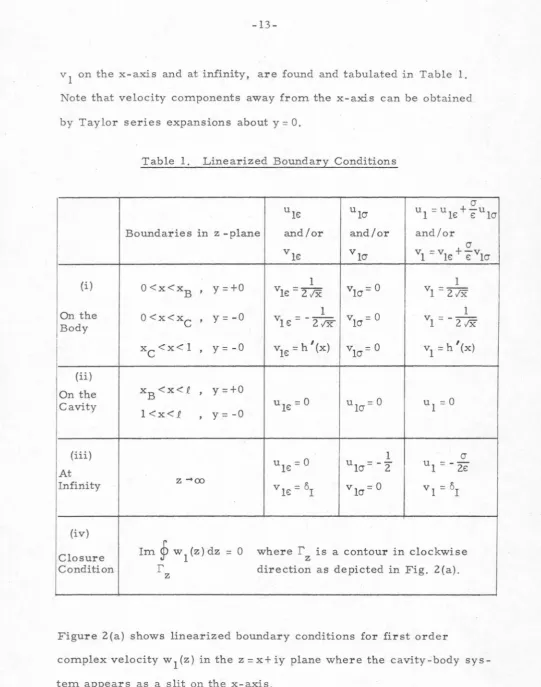
1 on the x-axis and at infinity, are found and tabulated in Table 1.
Note that velocity components away from the x-axis can be obtained
by Taylor series expansions about y = 0.
(i)
On the Body
(ii)
On the Cavity (iii) At Infinity (iv) Closure Condition
Table 1. Linearized Boundary Conditions
(J ule: ulcr ul = ulE: +Eula
Boundaries in z -plane and/or and/or and/or
O<x<xB ' y =+0
o
<x<xc,
y = -0xc <x< 1
,
y = -0xB <x<i
'
y=+Ol<x<i
,
y = -0z -+oo
Im
p
w1 ( z) dz = 0
r
z
O'
v lE: v 10' vl = vle: + Evlcr
1
v1cr = 0 1 vlE: = 2
rx
vl = 2 ./X1
v1cr = 0 1
vl E: = - 2 ./X vl = - 2 ./X
I
v
18 = h (x) v1cr = 0
I
v
1 = h (x)
u lE: = 0 ulcr =0 u1=0
u18 = 0 ulO' = -
2
1 u 1 = - 2E: O'v le: = oI v 10' = 0 vl
=
6Iwhere
r
is a contour in clockwisez
direction as depicted in Fig. 2(a).
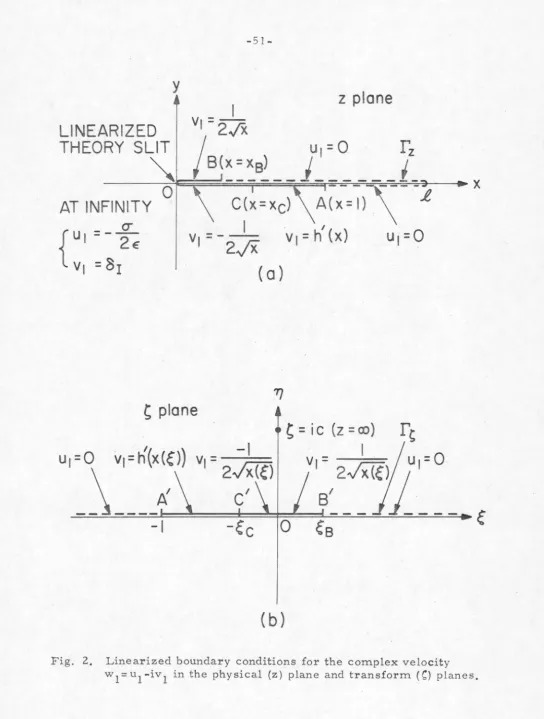
Figure 2(a) shows linearized boundary conditions for first order
complex velocity w
[image:21.563.7.548.36.723.2]The most convenient way to find an analytic function w
1 (z) is to unfold the cavity-body slit onto a single line in another plane and to
reduce the problem to a Hilbert mixed-type boundary value problem.
See, e. g. , Muskhelishvili [ 12] for this type of problem in detail.
The mapping function for this purpose is
where
and
(, =
cJ-z
z-i
C=s+i11
c = /"j'"":"[
which maps the z-plane onto C-plane as follows.
a) The cavity-body slit in z-plane --+ the real axis
S
of C-plane.b) The whole flow field in z-plane --+ the upper half of C-plane.
c) The end point of the cavity --+ the infinity in C-plane.
d) The infinity in z-plane --+ C =ic.
e) The coordinate x in z - plane --+
11/2
s
/c2+s2
11/2
s
rx
=-/c2+s2
for
for
s>o,
11=+0
s<O, 11=-0.
(14)
( 15)
(16)
( l 7a)
( l 7b)
The boundary conditions are also mapped onto C-plane and are shown
in Fig. 2(b). Defining a new function W
1(C) as
( 18)
we analytically continue W
(19)
Introducing the notations
(20a)
WI =WI (S-iO) = vI (S, 0) - iuI (S, 0) (20b) one can write the boundary conditions as
+
-
!!"w
I -w
I = 2iuI (':,, 0) = 0 for -00 < s< - I (2 I a)+
-
IWI + WI = 2v I ( S, 0) = 2h (x( S)) for -I < s < - Sc (2 I b)
(21 c)
+
-
.
WI-WI=21u
1(s,0)=0 for sB<s<oo (2 Id)
where the relation between x and
S
in Eq. (I 7) has been used to obtain Eq. (2 Ic). The homogeneous problem corresponding to the present problem is+
-HI -Hl = 0 for -oo< s<-I +
-H1+HI = 0 for -I< s< - sc +
-0 for -sc<s< sB HI +HI =
+
-H1-HI=0 for sB<s<oo
By inspection the homogeneous solution can be easily found to be
considering the conditions that no singularities be allowed at the trailing edges. With the right choice of a branch cut, i.e. , -1 to SB on s-axis, one obtains the relationships
(23a)
-oo<s<-I (23 b)
which are useful in finding the particular solution. The use of those relationships and the introduction of the new function
yield the particular solution as follows: The boundary conditions for F
1 (C) now read
+
-F 1--F 1
w1
Wi
·for -oo<s<-1
for -I<s <-sc
from Eqs. (2 la) to (2 ld), using the relations (23a) and (23b).
(24a)
(24b)
(24c)
(24d)
+
-If Fl-Fl is known on an arc
r,
the analytic solution for Fds'
.
(2 5)Then one can write down the particular solution for W l (
s)
as-s
w.(CL =H (C)F
(0
=J
(s+l)(C-s )I~
J
c 2h'(x(s'))1 'P i 1 B
L2'1T1
1i/(i+s'Hs -s')
- B
~]
s'-C
(26)
using Eqs. (22) and (25), where
s'
are dummy variables for integrals.The general complementary solution has the form of
where
n=-oo
and Pl (
s)
can be determined by the following two conditions thati) W
1 (s)C can not have stronger singularities than W 1 (s)p,
and that
ii) w
1
(z) behaves likel//z-i
as z-£, orw
1
(C)
behaves likeC
as
C
-+oo.With these restrictions the only possible form for P
1 (C) is
(2 7)
(28)
where A
can be built up from Eqs. (26) and (2 7) as
ds'
s'
-
c
~+A
+ B,.1}
s'
-
c
1 ""(2 9)
where the symbol (~!<) denotes that the Cauchy principal value is taken for the integrals if necessary, and A
1, B1 and .R. are yet unknown real constants.
In order to qetermine three unknown quatities the boundary
condition at infinity (iii) and the closure condition (iv) are used. First define the new notations by
_K_
s'
-
c
(30a)(30b)
(30c)
(30d)
(30e)
then W
1 (C) in Eq. (29) is rewritten as
The boundary condition at infinity (C
=
ic) is applied to W1 ( C), then W
1 (ic)
=
v 1+
i u1also the closure condition to W
1 ( C), then
Im fwl(z)dz
=
Imf w1(z(C))*d'I'z
r,
=
-ReJ
w
1
(C)*
dCr,
(3 1)
(32)
where I'C is a corresponding contour in
C
plane to I'z in z-plane. (SeeFigs. 2(a) and 2(b).) We have three equations (two from Eq. (31) and
one from: Eq. (32 )) for the unknowns, A
1, B 1 and P., therefore we can uniquely determine them as follows. Since these three equations have
turned out to be linear in A
1, B1 and
"O""
(instead of"£"), we can writethem in the matrix form as
where
0
1
2€
0
m
12
=
Re[J1(ic)}m
22
=
Im[J1(ic)}a
=
m
13 = Re[J2(ic)}
m
23
=
Im [J2 (ic)}(3 3)
(34:)
cont. Nl
=
o
1 - Re [I0 (ic)}Nz
=
-Im[I0(ic)}N3
=
- Re{J
I 0 (C)~C
dC}r,
Therefore the explicit expressions for A, B and CJ are
(3 5)
. (36)
(3 7)
where
(38)
Now the problem is restated: given a geometry of the hydrofoil, its upstream flow condition and the length of cavity "£" (instead of "CJ"), we have found the first order linearized solution, the outer solution, and the cavitation number "CJ". Now one can write the velocity distri
-bution q
2
+
2u v
u2
c
body
=
1+2e:u11 +oce:
2)body
with Eqs. (21) and (3
1
), thus
qo
2U
=
1+
e:u 1+
0 (e: )
c
body
where
u1j =Im(W
1(s,+O)} for -l<s<sB body
(3 9)
(40)
using relation (18). One can notice that the asymptotic expansion for
the outer solution of Eq. (39) is not valid for
S
=0(€) or x=O(e:2) becauseIm(W
1 (S, +O)} has l/s or l/x
112
singularities, which can be easily seen
from Eq. (29). The series expansion in
e:
then diverges for that region(the inner region). This fact suggests that we stretch the x-y
coordi-nates in this region by the factor
e:
2, and find the local non-linearsolution of the inner solution in the inner region so obtained.
3. Inner Solution. As implied in the foregoing discussion, we stretch
the coordinate system near the leading edge by the stretching factor
e:
2to find the inner region. Therefore the new coordinates X and Y
(called the "inner variables") are expressed by
and (41)
y =
±/X.
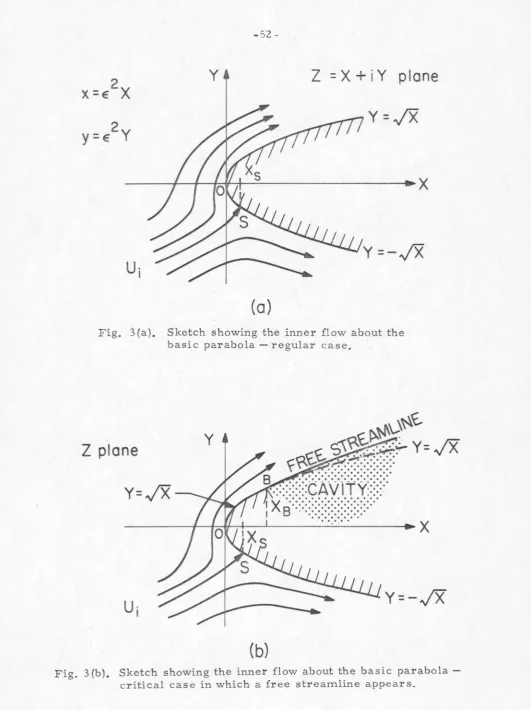
(42)The flow configuration in the inner region (after stretching) is shown
in Fig. 3(a) or Fig. 3(b), depending on the location of the upper separa -tion point of the cavity.
Figure 3(a) shows the regular case in which the cavity separa -tion point is in the outer region, whereas Fig. 3(b) shows the critical
case in which the separation point is within the inner region.
3. 1. Regular Case. The flow around the infinitely long parabolic strut in the inner region can be constructed by the superposition of two simple
flows; the parallel uniform flow to the axis of the parabola and the
exterior corner flow turning around the parabolic nose, as schemati -cally shown in Fig. 3 (a). One can easily find the complex potential for
this flow with the help of conformal mapping function
(43)
This function transforms the flow field made by the parabolic strut
Y =
±/X
in the Z-plane onto the left half ft- plane where ft= A.+ iµ. Nowthe two flows mentioned above appear in the K-plane as a local stagnation
flow perpendicular to the wall and a parallel flow along the wall. The
complex potentials which express the flows are
W - -U.ft2
s l (44a)
and
W
=
-iU x.p p (44b)
respectively, where U. and U are the magnitudes of local uniform
l p
Superposing these two complex potentials, one obtains the complex potential W. for the inner solution as follows
l
W. l
=
W +W s . p= -U. x.2 - iU x.
l p
(45)
where additional as yet unknown constants b and d have been introduced. The velocity profile q. on the parabolic strut is then
l
[
-2 dW. dW. ·
qi = ( dZ1 )( dZ1)
J
.
body Sincedw. 1
dZ1 body= [
dwi dx.
JI
=dx. ·dz body -2u. (x.+ ib).
-1
-
j
i 1-21'<. body Eq. (46) becomes
2 _ 4u2[x.+ib _ x.-ib
Jj
_
4 u2 x."K-ib(x.-"K)+b2I
qi - i 1-21'<. 1-2;{ body - i l -2(K+K)+4x.x. body(46)
- 2 2
On the body KK = µ , K-K = 2iµ, x.+ X:
=
0, and µ=
X due to thetransforma-tion of Eq. (43 ), q. is now written in the inner variable X as
l
2 2
q~ =
4
U~ µ +2bµ +bl l 1+4µ2
~i.
=
j
1/4~
x
1
1±:1n
1
.
l
x
or
or in terms of x=
e
2X, the velocity profile on the body is then~i.
=J
2 x 11 ±~~2
1
1 € /4+x x
(4 7)
where the upper sign is used for the upper half portion of the body, and
the lower sign for the lower half portion of the body. U. and b are as
1
yet unknown parameters which represent the magnitude of the local uniform flow speed and the location of the stagnation point respectively. These two parameters which characterize the inner flow are determined
·later by matching with the outer solution. Before proceeding to this matching procedure we first treat the critical case mentioned before.
3. 2. Critical Case. Due to the appearance of the free streamline in
the inner region there is no easy way to find the exact inner solution as for the regular case. See Fig. 3(b) for the flow configuration. Never-theless, a simple assumption on the location of the free streamline makes it possible to formulate and solve the problem with the hodograph
vari-able to a sufficient accuracy. The assumption made here is to satisfy
the boundary condition for the free streamline on the extension of the nose shape; that is, the upper body-cavity profile is also expressed by Y =
IX,
so that the same transformation used for the regular case will map the body-cavity system onto a straight line. All other boundary conditions used for the non-linear technique remain exact. Thisapproximate inner solution so obtained is verified later to be sufficiently
complete to permit matching with the outer solution. The final results
are then found to be accurate for the order desired. The hodograph variable
w.
is defined by1
dW.
i9 iw.
1
U.e 1
dZ
=
q.e 1=
1 (48)where W. is a complex potential and U. is the magnitude of the local
uniform flow speed in Z-plane. Therefore
W. = 8
+
i T 1The conformal mapping
Z = iK+x.2
T=fni}
1K = A.+ iµ
(49)
(50)
maps the boundary of the parabolic body-cavity system onto the real
A. axis and also the flow field in the Z-plane onto the upper half K-plane. The coordinate relation between X and A. on the body is found to be
(51)
Therefore, one can write the boundary conditions in the K-plane as
T
=
0-1 dY
90 =tan dX
-1 dY
= iT +tan dX (52)
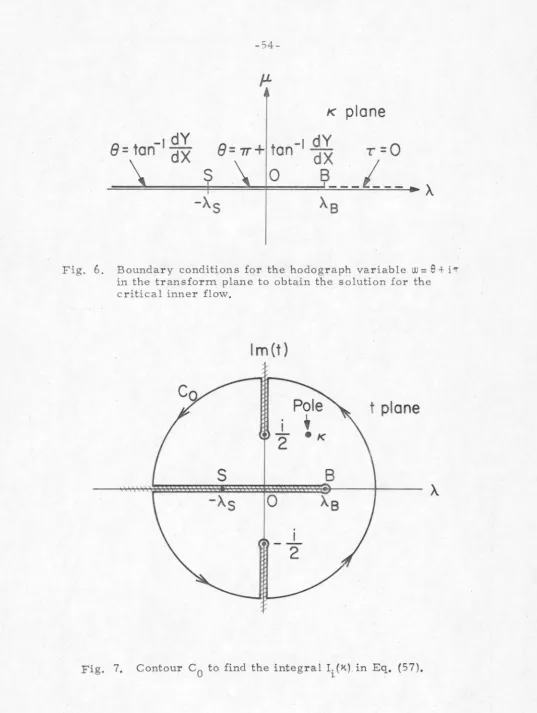
where -A.S and A.B correspond to XS and XB' respectively. The boundary conditions in the K-plane are shown in Fig. 6. Again this problem can be reduced to a Hilbert mixed-type boundary value problem as was done
for the outer solution in Chapter 2. First the analytical continuation of
w.
(x.) into the lower half K-plane is done by1
W. {K)
=
W. {K),1 1
which leads one to write the boundary conditions as
+
-w
1.
+
w.
1 = 2 90+
-w. -
w.
= 01 1
(53)
Consider the new function F. (i-t) defined by l
where H. {X.) is the homogeneous solution to this problem which is easily l
found to be
.Jx.
-
AB by inspection. Now the boundary conditions ofEqs. (521) for the new function F. (x.) are written as l
+
-F. -F.
l l
+
-F. -F.l l We now observe that
and
+
-H.
=
H. l l290
=
iv~
B
-oo<A<AB
=
0-H~
l -oo <A< AB
( 52 II)
One can solve for
w.
(x.) by applying Plemelj' s formula to Eqs. (5211) ,l namely,
W. (K) = H. (K)F. (X.)
l l l
(54)
The arbitrary polynomial P(K) must be zero in this case to satisfy the boundary conditions at infinity, namely, Wi
=
9+
i T=
0.Substituting 9
where
ft. -1 dY
J
B tan dX dA.lb (K)
=
---:====~ ~.-oo /ft.B _ft.
I (K) has the closed form a
(541)
(55)
(56)
( 55 I)
The contour integral method is used to find a closed form for Ib(K) as
follows. Since
then
dY _ ± - 1 - _ 1
dX
-2
/X - 2X
-1 dY -1 1
tan dX = tan
2X
= 2i 1 inDefine a new contour integral in the t plane, defined in Fig. 7, by
-1 1 i
r.pq
=I
tanu
~
=
I
~£n
t+~
._1 _ _ dtl It-A_ t-X. 21 t-~ lt-L t-X. C
0 .. B
c
0 2 "B(57)
where
c
0 is the contour depicted in Fig. 7. The reason why tan- 1
i
A.is rewritten as
ii
£n (t+i/2)/(t-i/2) is that it is easier to identify thebranch points in this form. By the Cauchy integral formula
-1 1
tan -2
-
x.
I. ( x.)
=
2iriThe contour integral itself along
c
0 is a tedious but straightforward calculation and here only the result is given
I. ( K) =
1
Equating Eqs. (58) and (59), one can find
where
(
2
1)1/2
Ro=
AB+
4
-1 -1
e
0=
;r +tanzx;
( 59)
( 5 6 ')
( 60)
and A.Bis found by Eq. (51) such that
\=X~
2.
Equations (55') and (56') are now substituted into Eq. (541) to obtainl
e
2 0 r . ;
-i R
0 + ( ~ - K) + 2R0 sin
2 . .; \ -
x.
+
2£n 1-
2 .e
0R +(L-K)-2R sin-·~ 0 "B 0 2 B
( 54 ")
We are now able to express the velocity distribution on the body using the original definition for
w.
in Eq. ( 48), i. e. ,2 2 i(U\-Wi)I
q. = U. e .
1 1
body
Since
(W.-W.)I
=
2iim[w.pq}I
,
1 1 1
body X.-A< A
-
B
and
I
I
As+ AlI [
w
.
(
x.) }=
in---;;::::::===::--:====--:----:---m i ' ' 2 JAB+ AS
,j
AB - A + 2 AB + AS - AX.= A< f\B
we finally obtain the inner velocity distribution for the critical case
q.
1
u.
-1
(
Jxll2~
x1/2 +Jx112
+A )2B
·
B
S
8
)112
. CR
0+
(x~
2
Tx
112)
+
2R~
2sin:·
j
x~
2TXl/
2 , R 0+
(x1/2 B ~ x1;2 )- 2 R1/2 . O sm 2_g_. Jx112
B ~ x1/2(61)
with the aid of Eq. (51). In terms of the outer variable x
=
e2x
with2
1/2
qi
'"s±TI
ui
=
(J
XB1/2
=F x1/2
j
XB1/2
)2
+ --+
t.
e:
€s
1/2
(
1/2
::r:1/2)
8
J
1/2
~
1/2 \.
XB T x
1/2
.
0
XB T x \Ro+
(
1/2: 1/2
)+
2
R
0
sin~·
j
1/2;
1/2)
.
XB x
1/
2 . 0 XB x R0 +
e:
-
2R0 sm2 .
8 ·(6 11)
where R
0 , 90 are given by Eq. (60). Two unknown parameters U. and l
t-5 appear in this result. These have exactly the same meaning as
those in the regular case, and they are to be determined by matching.
4. Matching. The basic notion of matching is that there exists a
common region where both the outer and inner expansions agree.
Mathematically speaking, the behavior of the outer solution as the outer
variable x tends to zero and the inner solution as the inner variable X
tends to infinity should be in agreement with each order of expansion
of the small parameter. Alternatively, the "asymptotic matching
principle" described by Van Dyke (Ref. [ 10
J,
pg. 64-68) can be applied.In words this is
"The m-term inner expansion of (the n-term outer expansion)
=
the n-term outer expansion of (the m-term inner expansion)"(62)
m and n may be taken as any two integers, equal or unequal. The actual
procedure following the principle of Eq. (62) is that the m-term
the inner variables; and conversely for the right-hand side of Eq. (62 ).
(In the present problem m
=
1 and n=
2.)In order to save time in rewriting the solutions for expansions, one can expand both inner and outer solutions in terms of the outer
variable x only. In the present case the outer solution is expanded in terms of x the order of which is 11
e:
2 " (the inner region), and also theinner solution in terms of x the order of which is 11111 (the outer region).
4. 1. Expansion of the Outer Solution. The two term expansion for the
outer solution is, from Eq. (39),
qo
l
U
=I+ e:ul c body(39')
and from Eq. (40)
u i
I
=
Im { W 1 (S ,+
O)}body
Now we further expand Eq. (39') for small x (note that near the nose the order of xis like
e:
2). From Eqs. (17 a, b) we obtainx= x-+O. (63)
Therefore, as
s
-+Q(€) (64)We now explicitly expand the velocity u
1 on the body as
Im { W
1 ( s , + O) }
I
= Imfr
1 ( s , + O) } + Im {r2 ( s ,+
o) } bodyEach of these terms is expanded fir st in terms of
S and then in x
through Eq. (63). There are two cases to consider, the regular case and the critical case. We consider first the regular case. The first term in Eq. (401) becomes(6 5)
=
-
;
F;
I~
(0, +O) + 0( e) (6s')
where-s
r'
(s, +o)=
*f
c
h'(x(s')) .~
1
/(i+s')(s -s') s'-s
-1 B
(66)
For the second term we have
Im [1
2 ( S, +O)}
I
= body(6 7)
(6 7')
where
(68)
The third term is
Im[Jl(s,+o)}j
=
~(l+S)(SB-S)
body(69)
=
JF:;;"
+
O( e)*':<
I 2fa(s,+O) seems to have a singularity as t;-+O(E: ), because of the l/s term in front of the bracket, but this behaves like a constant as s -+O.
and lastly the fourth term is
( 70)
vts;
r--- ( 1 )= - s - + YSB
1--r
+0(€)B
(70')
Therefore for the regular case the leading term required for matching with the inner solution is found in Eq. (701) , i. e. ,
where SB= 0(1 ). In terms of x this is
(71)
We now treat the critical case (xB = O(e2), SB= 0(€)). The
expansion is slightly different because "SB-s11 is now of the same order
as €, so that
Again, this is rewritten in terms of x using Eq. (63) to obtain
1/4
J
1/2+
1/2 i. XB x= l - e:B 1
172
1/2c x
The negative sign is used here because the matching p1·ocess is carried out on the lower half of the body.
4. 2. Expansions of the Inner Solution. As before we begin by treating the regular case. From Eq.
(47
1) ,qi
J
xui
=
82- + x
4
which has the two term expansion
I
1
±~f2
I
x
qi
e:
bu.
=
l ±172 .
(73)1 x
The critical case is obtained from Eq. (61 '). After the lengthy algebraic calculations one can find the expansion as
J
1/2
1/2
~ff::/2
)
qi
1/2
XB+
x XBu
= 1 - e: 1/2 2-e:-
+ "-s
- so
c x
1/2 1/2
1
~x~
2
+
x1
1
2
)
~
r;;rzz-
~
+e:z-
1/2 2J-%--e:-++~"s-so
x (x
)
2~
~+
A.
.+ E:
e:
E:s
+0(€3/2) xx
(74)
where
(75)
Note that the last term is found to be of order
e:
312, note:
2 as in theregular case~
4. 3. Matching for the Regular Case. We now equate the leading terms of Eqs. ( 71 ), (73) to determine the unknown parameters U. and b.
1 They are
u.
=
u
(76b)
4. 4 Matching for the Critical Case. A similar process with Eqs. (72),
(74) allows the parameters ui and ~ to be found,
u.
=
u
1 c (77a)
XB 1/2 £1 4
~~
/2
)
·12
-e: -
+ A.S - S 0 =e:
B 1 c l / 2 ' (77b)or
(77b')
The matching has been done so that both the inner and outer solutions
behave in the same manner to the order of
e:
in some intermediate region.We should notice, however, that the next higher order term not matched
is of order
e:
312 unlike the regular case which is matched through the2
order of e: • But this was quite expected because of the assumption made
on the location of the free streamline. Nevertheless, the errors due to
this assumption have turned out to be as seen above of higher order.
5. Construction of Uniformly Valid Solutions. The simplest way to
construct uniformly valid solutions among others is to add the inner
and outer solutions and subtract the part they have in common. (This
both to the regular and critical cases; one can find the uniformly valid solutions as follows.
5.1. Uniformly Valid Solution for the Regular Case. Since the
common part is given by 1 ± e:b/x112 from Eq. (73), the uniformly valid solution on the body is
if-
=
j
x / 1 ±~~
2
I
+
e:j(
i+ s(x) )( sB - s(x))c . e:2 / 4
+
x . xx
[-I~
(S(1Tx), +O)I~(s(x),
+O) ]- 1/2 +Al
2ir f
[
~(l+s(x))(SB-s(x))
-J1sBJ
2+
e:Bl S(x) =f 1/2+
O(e: ) <78 )ex
from Eqs. (47') and (401) with (65) - (69). The upper signs are used for
the upper portion of the body and the lower signs for the lower portion of the body.
r;.
(S(x), +O) and I~(S(x), +O) are given by (66) and (68) respectively, b by (76b), A1 and B1 by (35) and (36). Also xand Sare related through the Eqs. (l 7a) and (l 7b).
5. 2. Uniformly Valid Solution for the Critical Case. Since the common
part is
J
1/2 =f 1/2XB
xl /2
x
_..9._
=
u
cI
A. ± _x _ _ 1/2I
s
€1/2
=f X
r:;vz-)2
+J~+~
(
1/2 1/2) 9
j
l/2 =f xl/2 RO+ xB : x +2R~2
sin-f ·
xBe
1/2 1/2 1/2 1/2
(
xB =fX ) 112 80 xB =t=x R
0+ e -2R0 sin
y·
81/2
I
1 (S(x), +O) 12(-:o(x), +O)
[
I I J:"
J
+ e)(l+s(x))(SB-s(x)) - rr - Zrr£1/Z +A 1
where I~(S(x), +O) and I~(S(x), +O) are given by (66) and (68), AS by (77b') with (60), (51) and (75), and x and Sare related by Eqs, (17 a, b). We notice that in both cases the uniformly valid solutions do not have any
singularities as x
-o.
Also notice that the solution for the critical3/2 . 2
case has the error
e
instead ofe
for the regular case.6. Special Cases.
6. 1. Infinite Cavity Case (.£ .... co or O'= 0) for an Arbitrary Profile Shape
·with a Parabolic Nose. For .£ .... oo, the mapping function is simplified to
s
=
±/X.
( 81)on the real axis. Therefore
I~
( S(x), +O) / 1112 now assumes the formfrom Eq. (68 ). Since
- sc
(
s'
-
s)
J (
i+
s') (. sB
- s')
=
1
(Sc+ s)(
l+SB)
~
( l+s)( SB
-
S)
1.n (J
(1-Sc)( SB+
Sc) +
J
(1+
S)
(SB
-
S)
)2
+ (Sc+ s
)2
(82)
and
lB
dS'
"DI (0)" -_l_
.
en
Sc(l+sB~
-sc s' J(l+s')(sB-s'l
JsB
(~o-e:cHsB+sc)
+
lf;)
2+
s~
(83) the uniformly valid velocity profile on the body is then for the regular case
_s.._ _
u -
j
x
11
± e:bI+
e:j(
1
±112)( 112 112)
2
--vz
.
x XB =fXI
~
E:B1
(Jr
1± 1/2)( 1/2 1/2)-1172)
O( 2) 1± xl/2 \ x xB =f x
y
xB+
€ )[
I~(s(x),+0)
1 ():f:
]
x -
·rr ± 1/2 Dl(O)-Dl(S(x).) +Al 2,,.x(84) cont.
where
(85)
from Eq. (76b) and I~ (S(x), +O) is given by Eq. (66) and the remaining terms in the bracket are given in Eqs. (82), (83). The constants A
1, B
1 and
a
defined by Eqs. (35), (36) and (37) are reduced to simpler forms(86)
-s
B1
=
o
-
..!..
J
c
h'(x(s')) <ls' - D1(0)1 ,,. - 1
~
( i+ s'H
s - s') 2,,. B(8 7)
(J
=
0 (88)For the critical case we obtain from Eq. (79)
=fXl/2
~)
e
+
.
J++;,_s
(89)x
1/2
1/2
j
1/2
1/2
( XB =f x )
1/2 . 90
XB =f xR
0
+
8+
2R
0 sin2 .
81/2
xl/2 =f xl/2 .
e
R +( B
)-2R
112
sin__Q_·0 € 0 2
1/2
.
1/2
XB =f x
€
J(
I/2)f 1/2
1/2)[
I~(s(x),+O)
t € 1 ± x \XB =f x - 'IT (89)
cont.
±
11/2
(nl(O)-Dl(S(x)))l2'ITX
J
e:Bl
(J(i
l/2)f 1/2
1/2)
±172
± x \XB =fXx
j
1/2
1/2)
+
0( 3/2.
- . XB =fX € )
where \, becomes
(90)
with Eqs. (51 ), (60) and (75) and B
1 remains the same.
6. 2. Parabolic Strut at Zero Cavitation Number. For the regular case as sC-+l, both
I~(s,+O),
D1(s) go to zero, B1-+oI' and b-+o1
J:!f2.
We obtain the velocity distribution1/4
~
J
xI
e:oixBI
u
=
2
l±
1/2
c e:/4+x x
±
~
1
)
2
(
J(l±xl/2)(x~2hl/2)
-Jx~z)
+
0(€2). (91)The critical case is similarly treated to obtain
x
1/2 1/2
j
l/2 1/2( XB =f x ) 1/2 . 9
a
XB =i= xRa+ e +2Ra sm-z· e
1/2 1/2
j
l/2 1/2( XB =f x ) 1/2 . 8
a
XB =f xRa+
e
-
2Ra sm2 ·
e
where
2 1/2
f-s
= .!.
(e
1/2 5+s ) -
xB4 1
a
E.: ( 93)6. 3. Base-Vented Parabolic Strut. This is the case in which the two detachment points are fixed at x
=
1 followed by the infinite cavity.The velocity follows from setting xB =I in Eq. (91). We obtain
J
xI
e
5
1
I
E.:5
1 ( ) 2
-ff-=
2 1±172±172
/T=X-1 +O(E:)c E.: /4
+
x x x(94)
This result is similar to Johnson and Rasnick' s [ 13] semi-exact ad hoc calculation for the zero angle of attack case.
7 · Numerical Results and Discussion. Theoretically the uniformly
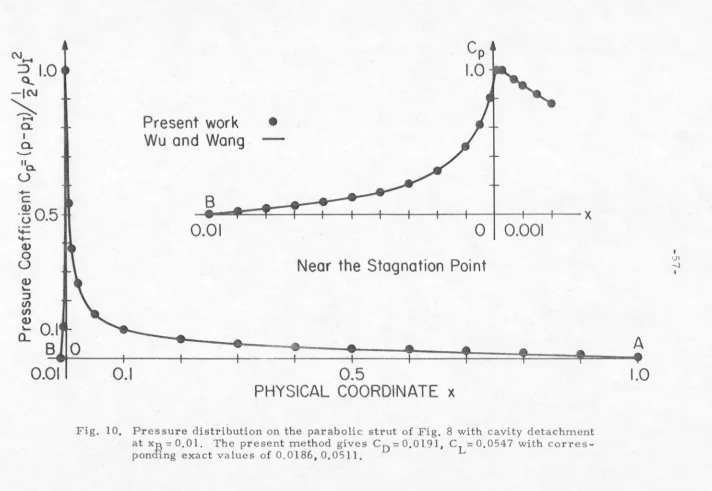
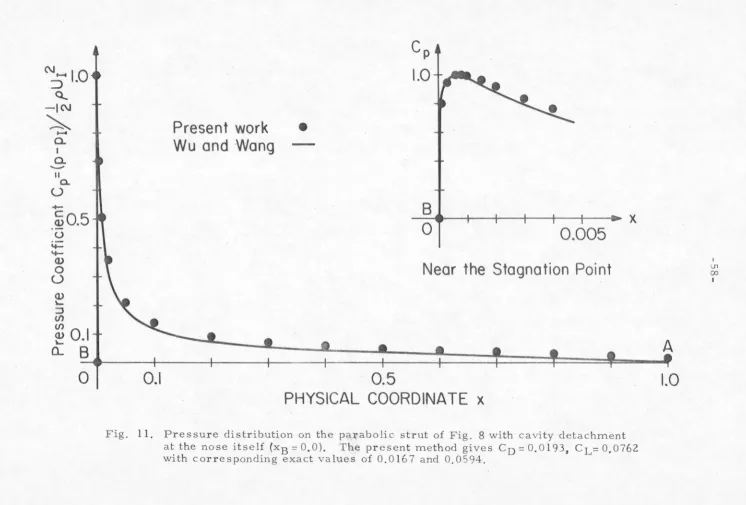
infinite cavity was analyzed. The upper detachment points we fixed at were xB= 1.0, 0.05, 0.01, 0, and the angle of attack was set at one degree.
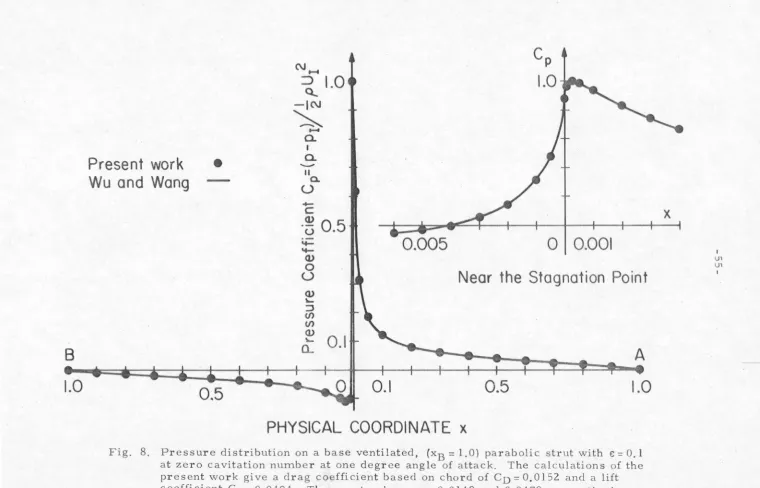
Note that the leading edge diameter, e2, is 0.01. Using the Eqs. (91), (92) and (94), we calculated the pressure distribution on these bodies. The results of these calculations are presented in Figs. 8-11 together with original calculations using Wu and Wang's exact theory [2
J.
This latter method appears to be the most direct and useful of the several exact methods now available but there are definitely numerical diffi-culties in obtaining convergent solutions. These are described more at length in Appendix B. The main point to be established here is that the present approximate method agrees very well with the exact results.We should mention, however, differences in the two methods in the cases xB = 0.0, 0.05 (Figs. 11, 9). These errors are however of the expected order in
e
and they are not large. It should be mentioned that the matchings of the present problem have been carried out around the nose. The expansions used are not appropriate for the critical case when the cavity separation point lies in an intermediate position between the nose and the outer region. The small differences observed for the xB = 0. 05 case (Fig. 9) are due to this reason. The differences occuring for the separation at the leading edge (xB = 0, Fig. 11) are due to adifferent source. In this case the upper free streamline cannot be
expected to be well approximated by the parabolic shape. As mentioned, the error in this case is of order e312 which came from the inner solution. Although the profile of the leading edge in the present method is not
linear cascade problems in Part II of this thesis), the accuracy of this
method then depends on that of the inner solution. In the case where
the simple inner flow can not be easily solved to a sufficient accuracy
for matching, or where the angle of attack and/or the cavity thickness are large, it seems more appropriate to use nonlinear exact theories
[2, 4] directly.
The pressure coefficients CL, CD calculated at the same time
also show good agreement with the exact values which are included in
the caption of each figure.
All computations were carried out on the IBM Computer 3
70-15 5 at the Booth Computing Center, California Institute of Technology.
It took about 6 to 14 minutes to obtain each convergent solution after
14 to 25 functional iterations of Wu and Wang's non-linear method,
whereas the computations by the present work took just two seconds.
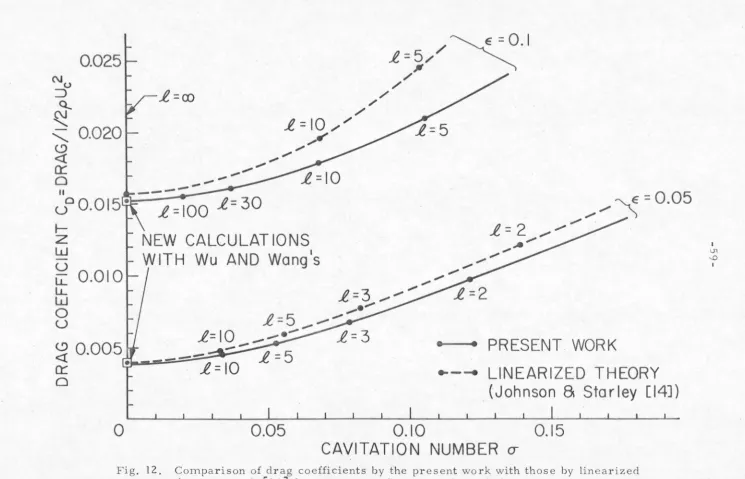
Figure 12 shows the comparison of drag coefficients computed
by the present work with those determined from the full linearized free
streamline theory [ 14] for the base-vented parabolic struts defined by
y
=
± E:./x.
Wu and Wang's non-linear calculation showed the samevalue as those of the present work as the limiting case (f-oo) both for
E': = 0.05 and 0.1. The overestimation on the drag coefficients by the
linearized theory of Ref. [ 14] is due to its poor representation of
bluntness of the foil, especially for finite cavity length. The
over-estimation of forces is characteristic of linearized free streamline
theory.
In Figs. (13) to (15) attention has been paid to the variations of
angles of attack. This type of information may possibly indicate the cavitation separation point in a real flow, but otherwise these distributions are applicable in non-cavitating ventilating flow. It is interesting to note that in Fig. 13 the zero degree angle of attack
case indicates a smooth type of separation for xB
=
0. 01. We can also observe smooth separations for long cavity lengths at two degree angle of attack (Fig. 14). For other angles of attack and for shortercavity lengths negative pressure coefficients are developed near the nose (Figs. 14, 15) and the change of the fixed separation point has a
strong effect (Figs. 14-16).
Figures (16) and (17) show the variations of drag and lift
coefficients for parabolic struts with the fixed separation point
xB = 0. 01 as a function of cavitation number and angle of attack.
8. Summary. The singular perturbation method has been applied
to correct the deficiencies of linearized theory of flow past cavitating
hydrofoils with rounded noses. The differences of the local pressure coefficient between the present work and an exact theory have been found to be not large even for the most "critical" case, i.e., the case in which the cavity separation point is fixed right on the nose itself. Otherwise the agreement is excellent. The procedure of the
singular perturbation method is straightforward with the aid of
linearized free streamline theories and the standard method of complex
variable analysis. Because of its simplicity, economy, and direct
REFERENCES
1. Levi-Civita, T. 1907. "Scie e leggi di resistenzia". R. C. cir
mat. Palermo, .!.:..~.' pp 1-37.
2. Wu, Y. T. and Wang, D. P. 1963. "A wake model for free-streamline flow theory, Part 2. Cavity flows past obstacles of arbitrary profile". J. Fluid Mech., ~' pp 65-93.
3. Wu, Y. T. 1956. "Note on the linear and non-linear theories for fully cavitated hydrofoil". California Institute of Technology, Rep. 21-22. Pasadena, California, U.S. A.
4. Brodetsky, S. 1922. "Discontinuous fluid motion past circular and elliptic cylinders". Proc. Royal Society of London, A 102, pp 542-553.
5. Oba, R. 1964. "Theory for supercavitating flow through an arbitrary hydrofoil". J. of Basic Eng. ASME 86, pp 285-290. 6. Larock, B. E. and Street, R. L. 1968. ''Cambered bodies in
cavitating flow - A non-linear analysis and design procedure". J. of Ship Res. 9, pp 1-13.
7. Murai, H. and Kinoe, T. 1968-1969. "Theoretical research on blunt-nosed hydrofoil in fully cavitating flow". Rep. Inst. High
Sp. Mech. 20. Tohoku, University, Sendai, Japan.
8. Tulin, M. P. 1953. "Steady two-dimensional cavity flows about slender bodies". DTMB Report 834, Navy Department,
Washington, D. C.
9. Tulin, M. P. 1964. "Supercavitating flows - Small perturbation theory". J. of Ship Res.
J_,
pp 16-37.10. Van Dyke, M. 1964. "Perturbation methods in fluid mechanics". Academic Press.
11. Cole, J. D. 1968. "Perturbation methods in applied mathematics". Blaisdel Pub. Co.
12. Muskhelishvili, N. I. 1946. "Singular integral equations".·