Fraser, Claire, Lewis, Kiara and Manby, Martin
Kirklees Young Pals Evaluation: Final Report
Original Citation
Fraser, Claire, Lewis, Kiara and Manby, Martin (2009) Kirklees Young Pals Evaluation: Final
Report. Project Report. University of Huddersfield and Nationwide Children's Research Centre,
Huddersfield. (Unpublished)
This version is available at http://eprints.hud.ac.uk/id/eprint/10930/
The University Repository is a digital collection of the research output of the
University, available on Open Access. Copyright and Moral Rights for the items
on this site are retained by the individual author and/or other copyright owners.
Users may access full items free of charge; copies of full text items generally
can be reproduced, displayed or performed and given to third parties in any
format or medium for personal research or study, educational or notforprofit
purposes without prior permission or charge, provided:
•
The authors, title and full bibliographic details is credited in any copy;
•
A hyperlink and/or URL is included for the original metadata page; and
•
The content is not changed in any way.
For more information, including our policy and submission procedure, please
contact the Repository Team at: [email protected].
Kirklees Young Pals
Evaluation
Final Report
January 2009
Claire Fraser, Kiara Lewis & Martin Manby
Nationwide Children’s Research Centre
Brian Jackson House
New North Parade
Huddersfield HD1 5JP
Telephone: 01484 415461
E-mail: [email protected]
Page
Executive
Summary
3
-
11
1.
Introduction 12
-
23
- Background
- Methodology
2.
Quantitative
Data
24
-
55
- Self-Esteem
- Attitudes Towards Physical Activity
- Frequency and Type of Exercise Participation
- Physical
Measurement
Data
3.
Qualitative
Data
57
-
96
- Views
of
Children and Young People
- Views
of
Parents/Carers
- Evaluators’
Observations
- Views of Partner Agencies and Young Pals Staff/Managers
4.
Summary Case Study Data
97 - 98
5.
School-Based ‘Taster Session’ Data
99 - 101
6.
Conclusions, Discussion and Recommendations
102 - 109
References
119 - 114
Appendices: 115
-
134
(i) Kirklees
Obesity
Strategy 2007 – 2010:
(ii) MEND
Programme Summary Data
(iii) Rosenberg
Self-Esteem Scale (amended)
(iv) Attitudes Towards Physical Activity Scale (< 10 years)
(v)
Attitudes Towards Physical Activity Scale (> 10 years)
The authors would like to thank the children/young people, parents/carers and
agency representatives who have contributed to the evaluation.
Thanks also to Alison Morby, Juliet Jackson, Errol Barrows, Abi Mackenzie, Emma
Schofield, Charlotte Crabtree, Alicia Whitwam, Jamie Carroll and Jacob Senior at
Young Pals for their assistance throughout the evaluation. Anne Robbins at the
Nationwide Children’s Research Centre is also thanked for her help in producing the
evaluation report.
Funding for the Young Pals Programme (and this evaluation) has been provided by
the Kirklees Council; Kirklees NHS Primary Care Trust; the Big Lottery Fund; and
Sport England.
Note: Direct quotations in this report from services users (from recorded interviews
or questionnaires) are in italics, without inverted commas.
Claire Fraser, Kiara Lewis and Martin Manby
Introduction
(i) Results of the first year of data collection for the National Child Measurement Programme suggest that Kirklees has average levels of children who are overweight and who are obese compared to national figures.
(ii) In January 2008 the Government introduced a new strategy to combat obesity: “Healthy weight; healthy lives”.
(iii) Childhood obesity has increased to unprecedented levels in recent years in the United Kingdom. Asian children are more likely to be obese than white children.
(iv) Childhood obesity has been correlated with serious health risks and physical disorders.
(v) The causes of the current rise in childhood obesity are complex. They are related to increased consumption by children of energy dense foods / fast foods / soft drinks, less consumption of milk and an increase in snacking. Current advice is that children should be active for at least sixty minutes per day at a moderate level. Children are walking less, partly due to car usage.
(vi) Tackling obesity requires a combination of a healthy diet and an active lifestyle.
(vii) Higher levels of obesity are linked to higher birth weights and most of children’s excess weight gain happens before school age. Breast feeding has a protective effect against obesity. Parents’ attitudes, beliefs and behaviour have been found to be influential in tackling childhood obesity.
(ix) A recent research overview (Riley 2007) commended prevention programmes promoting breast feeding; reducing television viewing and screen time; promoting physical activity; and reducing the intake of sugar sweetened, fizzy and fruit drinks
(x) The Kirklees Young Pals (KYP) Programme had begun by 2003, supporting overweight or obese young people through physical activity programmes. More recently, educational elements and working with parents have been incorporated. Full time staff to deliver the Young Pals programme have increased. Kirklees Young Pals has run alongside the National MEND programme since 2007. The programme has been extended across the seven locality areas in Kirklees.
(xi) School nurses and other health professionals have played a main part in recommending children and young people to Young Pals.
Evaluation
The Nationwide Children’s Research Centre (NCRC) was appointed to evaluate the Young Pals programme, in partnership with the University of Huddersfield, in 2006. The evaluation period was from September 2006 until September 2008.
(xii) The evaluation methodology included physical measurements, self esteem questionnaires and questionnaires focusing on physical activity; and qualitative data, drawing on the experience of participants and their parents/carers, service providers and other professionals.
Quantitative Data - Findings
(xiv) About a third of the sample had dropped out by September 2008.
(xv) School nurses recommended 36% of the sample and GP surgeries 11%. Substantial numbers were self referred. Publicity at schools and sports centres was particularly successful in raising awareness of the programme.
(xvi) Children and young people who enrolled on the Young Pals scheme either attended physical activity (Fusion) sessions; or simply attended twelve weekly one to one review sessions, for example if they were participating in physical activity elsewhere.
Impact of the service
(xvii) Self esteem increased for 72% of participants for whom at least two scores were available. Younger children scored higher (on average) than older children. Higher numbers of attendances at Fusion sessions were associated with higher self esteem. Most participants had positive attitudes to physical activity at the start of their involvement and therefore large increases in scores would not be expected. Young people with a disability had more positive attitudes towards physical activity than those without a disability.
(xviii) Participants tended to record increases in frequency of participation in a range of physical activities, although there were some exceptions. Children were encouraged by Young Pals staff to exercise every day in whatever way they wished.
(xix) 46% of young people increased the range (type) of activities in which they took part following participation in the programme; 20% recorded no change.
without a disability.
(xxi) For children who had two sets of data recorded, 57% recorded decreases in body mass index (BMI). The mean decrease in BMI was 0.9
(xxii) Almost all children and young people participating in the programme were either overweight or obese. The study found very high prevalence of obese and morbidly obese children in the sample.
(xxiii) Most children remained at the same point on centile charts, although 10% moved to a lower weight category.
Follow up of non attenders
(xxiv) Telephone interview data for children who had dropped out of the programme found that the proportion of children and young people participating in physical activity elsewhere was much increased amongst those who had previously attended Fusion sessions (compared with those who had not). As well, children and young people who had attended Fusion sessions were much less likely to feel shy or embarrassed at the prospect of attending physical activity sessions.
Case Studies
(xxv) Case studies provided by the Young Pals staff team demonstrated progress achieved by individual young people; and close monitoring and support provided by KYP staff.
Feedback from Fusion taster sessions in schools
Views of Children and Young People and Parents/Carers
(xxvii) Children and young people involved understood the aims of the programme and described improvements in self confidence and other benefits from attending. Most were knowledgeable about healthy eating.
(xxviii) Qualitative data indicated that children’s level of embarrassment about weight related issues had reduced following attendance at Young Pals.
(xxix) Children and young people rated KYP staff very highly.
(xxx) Parents described a range of benefits experienced by children and young people attending, including increases in self confidence, fitness, improved diet and evidence of healthy eating, and evidence of children taking on new sports and activities. Parents and carers consulted described the Young Pals staff as approachable and their advice for children as authoritative and motivational.
(xxxi) Parents welcomed children of similar abilities coming together at Kirklees Young Pals in an environment free of stigma.
(xxxii) Parents consulted, particularly in 2008, were knowledgeable themselves about healthy eating.
(xxxiii) Parents who were overweight themselves were equally determined (as other parents) for their children to take advantage of the programme, although they could find this more difficult.
(xxxv) Dieticians and school nurses have welcomed and commended the Young Pals programme, emphasising the merits of a whole family approach.
(xxxvi) Dieticians and school nurses commented positively on changes introduced by KYP in 2007, from a referral procedure to one based on recommending children and young people to the Young Pals programme. The scheme was now working “as well as it could”.
(xxxvii) These professionals have acknowledged the limited time they have available to support children and young people with weight and obesity problems.
(xxxviii) School nurses welcomed the extension of the Young Pals scheme through the provision of “taster sessions” in schools across Kirklees.
(xxxix) School nurses’ main concerns (2008) were about children whose parents resisted getting involved with programmes like KYP; and about the barriers in accessing the scheme experienced by Asian young people due to (entirely proper) requirements for Mosque attendance after school.
(xl) Kirklees Young Pals staff were very clear about service objectives.
(xli) KYP Fusion sessions now (2008) include more emphasis on parental involvement including education sessions.
(xlii) Staff recognised that the impact of diet on children’s weight was at least as important as the impact of physical activity; advice on both aspects had been successfully integrated into the programme.
Government’s “softly softly” approach to tackling problems of childhood obesity.
Views of strategic Managers
(xlv) Addressing the needs of overweight and obese children was a very high priority for Kirklees PCT. Future plans included more intensive intervention for children with the most serious problems.
(xlvi) The evidence base for Kirklees had improved since the introduction of the National Child Measurement Programme.
(xlvii) Kirklees PCT put a premium on the contribution made by Kirklees Young Pals to tacking childhood obesity.
(xlviii) Opportunities to focus on children and young people’s emotions and mental health needs were being prioritised by both Kirklees MDC and Kirklees PCT.
(xlix) A multi-agency approach was crucial. Schools had a key role in combating obesity.
Conclusions and recommendations
(l) The Kirklees Young Pals Programme has proved resilient, successful and adaptable; and responsive to feedback from participants, parents and professionals.
(li) The programme has successfully integrated Fusion sessions and the National MEND programme emphasising the involvement of the whole family.
agency approach. Partnership work between Kirklees MDC and Kirklees PCT has been effective and well developed. Close links with schools have been prioritised.
(liv) The programme has been effectively targeted towards children in the obese or morbidly obese categories. Children from ethnic minority communities have been (appropriately) over represented in the sample.
(lv) Evidence from the evaluation has confirmed positive progress achieved by participants.
(lvi) A majority of participants for whom two sets of data were obtained have recorded decreases in BMI.
(lvii) Health professionals and KYP staff have had most concerns about overweight or obese children and young people, particularly teenagers, and their families, who have not so far become involved in the scheme.
Recommendations
(lviii) Continuation of the programme and of the multi-agency approach is strongly recommended.
(lix) Promotion of the scheme should involve closer partnership with Children’s Services and local schools, as well as the Healthy Schools Programme and Kirklees PCT.
(lx) Targeting and recruitment of children and young people from the South Asian community, and also for teenagers should be prioritised.
1. Introduction
Background
Child obesity is a complex public health issue that has been documented as a growing threat to children’s health, as well as a current and future drain on National Health Resources (NAO 2006). In response to this in 2004 the Government produced a PSA (Public Service Agreement) to “halt the year on year rise in obesity among children aged under 11 by 2010” (Department of Health 2004). To support this target in 2005 /06, PCTs (Primary Care Trusts) were asked to collect data on children’s height and weight (reception and year 6) of all LEA schools. Locally, childhood and young people have been identified as a priority within the LAA’s (Local Area Agreements). The results of the first year of data collection for the NCMP suggest that Kirklees has average levels of overweight and obesity at both age groups compared to the national average (YHPO 2008).
Obesity, and childhood obesity in particular, continues to be high on both local and national health agendas. In January 2008, the Department of Health introduced a cross government strategy to combat obesity ‘Healthy weight; healthy lives’ and with it provided a £372 million budget. The first priority of this strategy is ‘by 2020 to reduce the proportion of overweight and obese children to 2000 levels’ (Department of Health 2008). The first campaign from this strategy “Change 4 life - eat well, move more, live longer”, launched in January 2008, aims to improve children’s diet and activity levels. This was preceded by social marketing research which found in particular:
Parents acknowledge childhood obesity is a problem – but not their problem
Parents underestimate the amount they and their children eat and overestimate the amount of activity the family does
children’s lives was the alarming rise in the prevalence of obesity in England from 11% (1995) to 14% (2003) and this has continued to rise with latest available data suggesting 16% of children aged 2-15 are classed as obese (HSE 2006). Kirklees Obesity Strategy (2007) states that: Obesity amongst
children has doubled in 2 - 4 year olds in the last ten years, and has trebled in
6 – 15 year olds in the last eleven years. Obese children are more likely to be
obese as adults. In Kirklees, 16.4% of Year 6 children are obese. General
trends suggest that Asian children are 4 times more likely to be obese than those who are white (NAO 2006) and that levels of obesity are increasing fastest in the most deprived areas (NAO 2006). Kirklees has average levels of income deprivation compared to national averages, but significant areas of poverty (Department of Health 2007).
Measurement of obesity
While obesity is universally measured through BMI, difficulties arise when measuring BMI in children. Guidelines have now been produced nationally as to how to measure childhood obesity on a population level (Department of Health 2006). According to these guidelines and the PSA target, children are defined as overweight if their BMI is above the 85th centile and obese if above
the 95th centile (Department of Health 2006). This cut off is derived from the
UK National BMI classification (Department of Health 2006). When dealing with individual children the 91st and 98th centile tend to be used and are the
cut off points used within the Young Pals Scheme.
Health impact
There has been much speculation as to why children’s weight levels and obesity are increasing;and there is now a commonly held belief that children are eating too much and not exercising enough. However, when these two areas are studied more closely, the causes (and therefore the prevention/treatment) are found to be much more complex. One of the problems has been difficulties in measuring both physical activity and diet. Most research to date relies on self-report of behaviours which are both difficult to define and to measure. Calorie consumption includes both food and liquid consumption. When the total calorie consumption of children today (self/parent reported) is compared to that of the 1960’s there does not appear to be much difference (Eisenmann 2006). However the content and the pattern of eating has changed considerably with more consumption of energy dense foods/ fast foods/ soft drinks and less consumption of milk and an increase in snacking (Eisenmann 2006). Fizzy drinks and sugar and chocolate confectionary are the top three sources of non-milk extrinsic sugars in children’s diets (aged 7-10 years) (BMA 2005). The contention therefore that we merely need to reduce caloric consumption in order to manage weight is clouded by the importance of the macro and micro-nutrient content of the food consumed, and also possibly by children’s eating behaviours and patterns. In order to assess the effectiveness of any weight loss intervention these need to be taken into account.
methods of measuring activity may not be accurate. The most common methods of measuring energy expenditure on a large scale (self-report) are also the most unreliable. Whereas energy expenditure can be estimated to some extent when attending designated sessions, the overall increase in activity (e.g. walking more instead of using the car etc.) is again more difficult to measure. What is certain is that children are walking less (due to car usage, in particular as a means of travelling to school) and that safety concerns have led to their playing freely less (Mackett and Paskins 2008).
Role of diet and exercise in the management of obesity
The majority of research in this area is on adults. However there is a growing body of evidence that has researched into childhood obesity (research on ethnic minority groups and gender difference is very limited) and found:
1) Diet and exercise is more effective than diet alone 2) Exercise can increase fitness levels in obese children
3) Exercise particularly an ‘active lifestyle’ is important for maintenance of weight loss (10 year follow up studies)
4) Exercise and behaviour modification (including the family, dietary advice, encouraging participation in active rather than sedentary pursuits) is most effective
Exercise has been described as:
an empirically validated method of treating paediatric obesity…. the
impact has been found through synthesis of available research to
have a modest to strong impact on selected body composition
variables (LeMura and Maziekas 2002 p. 494).
more people active by 2012 and includes a school walking challenge and investment in children’s play.
Research has been conducted to establish what barriers to physical activity exist amongst children, and the results suggest three distinct areas:
(i) preferences and priorities (preferring to do other things); (ii) family life and parental support (parents not supportive); (iii) restricted access to opportunities (Brunton et al, 2003).
The majority of interventions to date that have tried to increase activity levels have been school-based and most have focused on providing information / education. They have mostly been undertaken in the US and few intervention studies have been conducted in the UK (Brunton et al, 2003). There is, therefore, little evidence of what is effective to guide physical activity promotion. The recommendations that do exist suggest engaging parents in supporting and encouraging their children’s physical activity, and providing opportunities for family participation and combining this with education and provision at school. Successful approaches that take into account children’s views “provide children with a diverse range of activities to choose from; emphasise the aspects of participating in physical activity that children value (e.g. opportunities to spend time with friends); (and) provide free or low-cost transportation and reduce costs” (Brunton et al, 2003 p6).
Other factors
help to explain why (traditional) approaches of diet and exercise are ineffective” (Eisenmann 2006 pp 332). Breast feeding has consistently been shown to have a protective effect on childhood obesity (BMA 2005). The latest Government strategy (Healthy Weight Healthy Lives, Department of Health 2008) recognises these factors and pregnancy and early years and breastfeeding are given a high priority. Parents’ attitudes, beliefs and behaviours have been found to be influential and require a supportive environment (impact of deprivation) (BMA 2005). Recent research suggests strategies to prevent childhood obesity may need to focus on pre-school children since much of children’s excess weight gain is thought to happen during early years (BBC News 2008).
Finally there is increasing concern about children’s and young peoples’ level of stress and the potential links to obesity. “It is conceivable that environmental noise, crime, terrorism, household stress etc. may be contributing to the overall stress load of contemporary children and adolescents” (Eisenmann 2006 pp. 331). The impact of the social and physical environment provided for children is manifested in the physiological response in children to problems of being overweight and obese. This requires more than providing information on diet and exercise and hoping that the result is a change in behaviour. The complex interaction of parental behaviour, socioeconomic status, and marketing varies with age (BMA 2005).
Intervention strategies
If the causes of obesity are complex then so too will be its treatment.
Overweight and obesity in children are socially engineered problems.
Physiology is responding appropriately to the conditions of plentiful
food supply and reduced activity by storing fat.
Steinbeck 2001 pp.126
environmental interventions to support and facilitate behaviour change (Jebb et al, 1997).
Evidence to date on successful weight management programmes suggests that behavioural modification can enhance an exercise programme: for example, including parents, providing nutritional advice, and encouraging more spontaneous activity as well as attending structured exercise sessions (LeMura and Maziekas 2002). Evidence to date on the MEND programme has found similar results; that intensive, child-orientated multidisciplinary programmes can improve the health and psychological well being of obese children. There is in particular, however, a lack of research on successful interventions that address ethnic and gender differences, despite the knowledge that children from ethnic minority backgrounds tend to be less physically active and that gender differences in both activity participation and fat deposition and removal exist (LeMura and Maziekas 2002).
The recognition of psycho-social issues is also deemed essential to effective weight management in children. Changes in psychosocial health are regarded as an essential component of any weight loss intervention (Hill 2005). Both depression and low self-esteem are predictors of drop-out from paediatric weight management services. However, the relationship between the two is not clear. In particular, this is true in younger children where obesity does not appear to impact on concepts of self worth – it is only during adolescence (and more commonly in girls) that links (but not necessarily causative relationships) are found to self-esteem (Hill 2005).
randomised control trial carried out over two school years which successfully prevented new cases of obesity in girls; the positive effects of the programme are attributed by the authors to a reduction in television viewing.
The suggestion from most of the research to date is that further evaluations of what does and does not work for overweight and obese children are needed. More is required on the most effective ways of engaging young people in physical activity, both structured and spontaneous; and more is needed on preventing future weight gain on those already overweight and on the psychological impacts of obesity in childhood.
“Given the shortage of evidence on what works for obesity, it will be of
critical importance to ensure that high quality evaluations are put in to
place as programmes and initiatives are rolled out” (NAO 2006).
Kirklees Young Pals
Part of the evidence in this section was provided by the Kirklees Physical Activity Development Manager, and by the Health Improvement Practitioner responsible for the Kirklees PCT Obesity Programme.
Kirklees Young Pals was developed by Kirklees Culture and Leisure Services in partnership with Kirklees Primary Care Trust (PCT) based on their experience of running the Adult Pals Programme, launched in 1994. This provided activity programmes for people with a wide range of health problems, including people who were overweight. Young Pals had started by 2003 with a clear focus on supporting young people who were overweight (above the 91st centile) or obese (above the 98th centile). The Young Pals
incorporated into Fusion programmes. In response to participant requests for more weekly sessions, separate weekend Meltdown sessions were phased out. In 2007 / 2008, more emphasis was placed on involving parents in Fusion sessions, including providing education sessions for parents as well as children. Fusion sessions have been run on Saturday mornings in North Kirklees for Asian children unable to attend after school sessions because of Mosque attendance commitments. Programmes have been run for children aged 5 – 11 and 11 – 16 in North and South Kirklees. Sessions have provided a structured programme of games and physical activity, including regular measurement of height and weight; and more recently education, food and nutrition and behaviour change.
During the period of the evaluation, numbers of full-time staff for the Young Pals Programme increased from 2 to 4.5 full-time equivalents. Kirklees Primary Care Trust (PCT) took responsibility for joint funding the programme, reflecting the priority attached to tackling problems of obesity for both adults and children. Sport England provided additional funding.
During 2007, a key development was the introduction of the National MEND (Mind, Exercise, Nutrition, Do It!) Programme funded through the Big Lottery. MEND is an inclusive programme for whole families, providing intensive (twice-weekly) sessions for children and including educational elements for adults, running over nine weeks. Involvement in the MEND Programme took approximately a quarter of the Young Pals staff team’s time by July 2008. The programme had been rolled out across Kirklees, running now in seven locality areas up to three times per year. Programmes were co-ordinated by the Kirklees Physical Activity Development Officers under the umbrella of the Young Pals Programme, with opportunities for transfer between the programmes and follow-up support.
To start with, children and young people were referred to Young Pals, mainly by School nurses, via their General Practitioner who could also refer children to Dieticians. Joint clinics were held initially by Kirklees Young Pals and by Dieticians with the former assessing physical activity needs, and the latter assessing nutrition and dietary requirements. Self-referrals became increasingly important during the lifetime of the project.
However, referral processes overall proved cumbersome and were replaced by a system based on recommendations from 2007. School nurses, or other health professionals, after seeking parental consent, recommended children and young people directly to the Young Pals service. Joint clinics with Dieticians had been discontinued by the spring / summer of 2008: this was because numbers using the clinics had dropped; and also because the Physical Activity Development Officers were more confident about assessing children’s healthy lifestyles, including nutrition, following training received for MEND programmes and for weight management. Dieticians recommended that the wider role adopted by the Physical Activity Development Officers should be continued.
Evaluation of the programme was discussed initially with the University of Huddersfield (Kiara Lewis, Senior Lecturer in Physical Activity, Exercise and Health) early in 2006. Aims of the evaluation were described as:
(i) To evaluate the effectiveness of a care pathway for overweight and obese young people
(ii) To find out what works locally for children and young people who are overweight and obese to inform local practitioners and contribute to the debates about effective approaches to tackling childhood obesity
(questionnaires, psychological tests) and qualitative (semi-structured) interviews. An evaluation framework was developed between Kirklees Culture and Leisure and the University of Huddersfield
The Nationwide Children’s Research Centre (NCRC) was approached in June 2006 to undertake the evaluation in consultation with Kirklees Culture and Leisure and the University of Huddersfield, and a contract for the evaluation was agreed in October 2006.
Kirklees Culture and Leisure stressed the importance of including parents and referring agencies in the evaluation.
Methodology
Following negotiation it was agreed that the evaluation would comprise:
(i) Attendance data for young people at Meltdown or Fusion sessions (and for parents attending Meltdown sessions where available).
(ii) BMI, weight (kilograms) and body fat percentage to be recorded at monthly Meltdown sessions at regular intervals (Weeks 1, 12, 24 and 48).
(iii) Self-esteem (of young people) to be measured using the Rosenberg Self-Esteem questionnaire at regular intervals.
(iv) Additional questionnaires recording Type and Frequency of Activity and Attitudes towards Physical Activity to be completed by young people
follow-up telephone calls (including 36 with parents of children who had stopped attending Fusion sessions).
Summary
Data from a range of quantitative measures is presented here for a sample of children and young people from across the Kirklees district. The sample represents a good range of the local population as defined by age, gender and ethnicity. Participants were most likely to hear about the Young Pals scheme following a recommendation from a school nurse; recommendations from GP practices were also common. Self-referral accounted for almost a quarter of the sample and recent publicity drives in schools and sports centres appear to have been particularly influential in raising awareness of the scheme.
Both models of support offered via the Young Pals scheme (one to one support with or without attendance at Fusion activity sessions) appear to have similar outcomes on the variables measured.
Self-esteem scores increased, following participation in Young Pals, for 72% of the sample and attendance at Fusion sessions was positively correlated with increases in self-esteem. Younger participants had, on average, higher self-esteem scores than older participants.
PE, team sports and cycling. The findings also provide evidence of increased flexibility in relation to understanding of what constitutes physical activity such that it may now be a less daunting prospect for some children and young people. For example, children are encouraged to realise that physical activity may be something which is as much fun as ‘playing out’ provided it is done at an appropriate level of intensity. Some group differences based on gender, age and disability were observed.
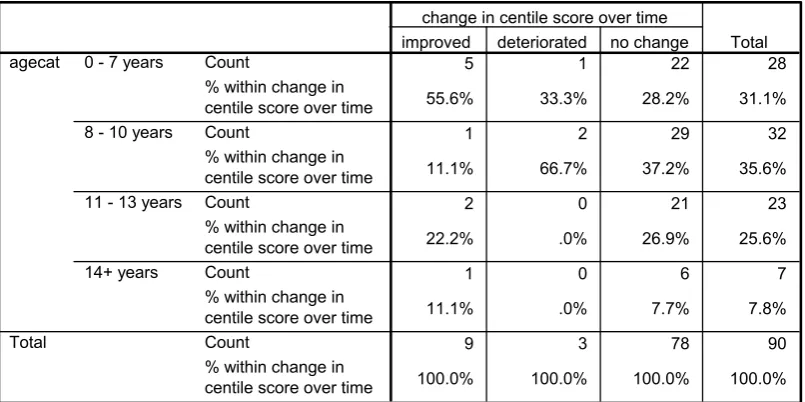
Over half (57%) of the sample recorded decreases in BMI and 35% recorded decreases in weight (in kg). Centile score data reveals the high prevalence of obese and morbidly obese children and young people in the Young Pals sample. Improvements (i.e., reductions) in centile score were more likely to be associated with very young (below 7 years) participants.
The final section of this chapter explores follow up data obtained from children and young people who have either failed to attend the scheme following a recommendation or who have ceased attending after a period of time. Importantly this data highlights largely positive feedback about the content and style of the sessions (for those who had attended Fusion) and notes that a significant proportion are now attending alternative physical activity sessions outside of the Young Pals scheme.
Introduction
Quantitative evaluation outcome measures (self-esteem; frequency and type of activity undertaken; attitudes to physical activity) have been completed by all young people (where they have agreed to participate and the parent has provided consent) who have enrolled in the Young Pals programme since September 2006 throughout Kirklees.
Initially the evaluation also explored the use of accelerometers as an objective measure of physical activity participation, but this proved too difficult to implement fully within the evaluation time period. However, data from a pilot of the accelerometers at a Fusion session in North and South Kirklees during June 2007 provided evidence for the level of intensity of exercise undertaken at sessions being of a moderate level.
ceased on 30th June 2008 since registrations beyond this time would not allow for time two
data to be collected.
Data collected during the course of the two year evaluation programme has been regularly recorded onto an SPSS (Statistical Package for the Social Sciences) database by a member of the evaluation team. This database contains information on attendance, evaluation measure scores, physical measurements and demographic data for up to 325 children and young people who have participated in the Young Pals scheme since September 2006. Demographic data is recorded at the time of entry to the scheme and figures reported here do not reflect changes during the two year evaluation programme (e.g., change in child’s age/school attended). To comply with data protection requirements, all data inputting has taken place at Galpharm stadium and access to the SPSS database is password protected and only accessible by the evaluation team.
Demographic Data
Of the 325 children and young people detailed on the SPSS database, 166 (51%) are female; and 159 (49%) are male. Participants range in age from 5 – 16 years with the majority (63%) in the younger age range of 5 – 10 years. Exploring participation peaks in terms of age it can be seen that the scheme is most popular with children aged from 7 – 12 years.
Participants are fairly evenly distributed across the Kirklees area with 53.5% (174) residing in the North and 46.5% (151) in the South of Kirklees. Seventy-six children (23%) are also participating in the National MEND Initiative (or have done so within the last two years).
Forty-eight (15%) of the sample are attending infant/primary School; the majority (175 or 54%) are attending junior school and just under a third (100 or 31%) are attending Secondary School. Two children are attending special educational provision.
The majority of the children and young people recorded their ethnicity as white British (59%); 15% Pakistani; 5% Indian; 8% any other Asian background; 5% Black; 7% dual heritage; 1% any other ethnic group.
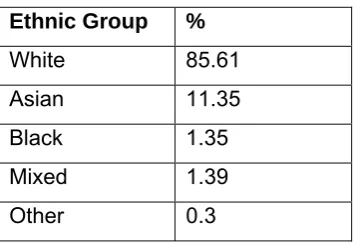
Table 1 – Ethnicity Census Data – Kirklees (2001)
Source: ONS (2www.neighbourhood.statistics.gov.uk)
This finding is consistent with recent research exploring the prevalence of children who are overweight or obese in Great Britain which found that Asian young people were four times as likely to be obese than white participants (Jebb et al, 2003).
To facilitate statistical analysis, all Black and minority ethnic groups were subsumed to form just two categories of white British children (59%) and Black and minority ethnic children (41%).
Information recorded on disability reveals that thirty-one (9.6%) of the sample consider themselves to have a disability. Eighteen children were noted to have a learning disability; eight a physical disability; three a hearing impairment; three a visual impairment; five speech/language difficulties; three Aspergers/Autism and one child has Downs Syndrome (in some cases more than one type of disability was recorded for a particular child and therefore total figures equate to more than 31).
At the end of the two year evaluation period (September 2008), 59% (192) of the 325 children and young people were still actively enrolled in the Young Pals scheme. Of the remaining 133, 29 had completed and exited the full 48 week programme and 104 had ceased attending fusion sessions or failed to attend review or exit appointments. This represents a ‘drop out rate’ of 32% and it is interesting to note that this is much lower than that found in research with adults where the drop out rate was in the region of 50% across different schemes (Robinson & Rogers, 1994).
Much of the research exploring non-adherence to exercise schemes has focused on an adult population to date and clearly there may be some differences in children and young people’s
Ethnic Group %
White 85.61 Asian 11.35 Black 1.35
reasons for non-adherence, not least because they may be reliant on support from an adult in order to travel to the scheme. Further data on children and young people who dropped out before the end of the scheme is detailed in the final section of this chapter.
Recommending Agents
To facilitate data collection on care pathways, information on recommending agents was recorded to assess the main referral routes for children enrolling on the Young Pals programme. The largest group (36% or 117) had been recommended to the scheme by a School Nurse; 19% had been recommended by their GP Surgery (either by the GP or the Practice Nurse); 11% had been referred after attending the National Mend scheme; 6% had been recommended by the Community Paediatric Dietician or another Hospital specialist; and 6% had been told about the scheme by Kirklees Culture and Leisure Services staff directly. The remaining 21% had contacted the scheme directly as a result of seeing publicity for the scheme, receiving a recommendation from a parent or relative, or because they had previously attended Young Pals. Leaflets and posters at schools and sports centres and information on the Kirklees website appears to have been particularly successful in raising awareness of the scheme, with this source of referral being cited by 15% of the sample.
Attendance Data
In the first year of the evaluation period (September 2006 – September 2007), the Young Pals scheme offered weekly Fusion activity sessions in a number of localities across the Kirklees district and two monthly Meltdown sessions, one in the South (Huddersfield) and one in the North (Batley) of the district.
In September 2007, in response to consultation with service users and a review of evidence contained within NICE (National Institute for Clinical Excellence) guidance, the Young Pals team made changes to programme delivery. Meltdown sessions in their pre-existing format (monthly) were cancelled and replaced by increased Fusion sessions, including sessions at weekends. This was in response to observations from parents and children that attendance during the week could be restricted due to other commitments (e.g., mosque/madressah attendance) and weekly session times clashing with parental working hours.
North of Kirklees and Huddersfield Sports Centre (7 – 13); and Colne Valley Leisure Centre (5 – 7 and 7 – 13) in the South.
To reflect these changes attendance has simply been summed to produce a total figure for each participant across the two year evaluation period, regardless of whether they attended Fusion, Meltdown or both. However, it should be noted that not all children and young people enrolled on the Young Pals scheme attend Fusion sessions. For example, some participants simply attend the 12 week review sessions (ALE) without attending Fusion activity sessions as they are participating in physical activity elsewhere. This is the case for 54% (176) of the sample.
Mean attendance at Fusion over the course of the two-year evaluation period was 5.59 for the 149 children and young people who had regularly attended Fusion activity sessions. Of these:
• 88 children and young people attended between 1 and 10 sessions
• 37 children and young people had attended between 11 and 20 sessions
• 7 children attended between 21 and 30 sessions
• 11 children attended between 31 and 40 sessions
• 6 children attended 41 or more Fusion sessions with the highest attendance rate recorded as 66 sessions over the two year period
evaluation data collected by Young Pals staff on the school-based sessions is included in section five of this report.
Evaluation Data
Where time two data is missing this is due to the non-attendance of the participant at an ALE review or exit from the scheme prior to time two data collection
Models of Support
All of the outcome variable data (self-esteem; attitudes towards physical activity; frequency and type of exercise undertaken; physical measurements) reported in this section has been analysed in terms of a number of factors such as age, gender, ethnicity etc. and details are reported within each section.
It is interesting to note here that the two models of support offered via the Young Pals scheme (one to one support via ALE sessions with additional attendance at weekly Fusion activity sessions versus one to one ALE support without Fusion attendance) do not appear to differ in terms of their impact on the outcome variables. This finding suggests that both models of support can be equally effective in terms of the outcomes measured in this evaluation.
When all outcome variables were analysed based on type of support received, only one significant difference was found such that young children (below 10 years) who did not attend Fusion sessions had slightly more positive attitudes towards the benefits of physical activity in terms of social relations and health and fitness (t = 2.866, df = 61.936, p = 0.006; t = 2.096, df = 54.95, p = 0.041). However, the mean differences recorded in attitudinal scores were minimal.
Self-Esteem
with a series of faces ranging from smiley (strongly agree) to sad (strongly disagree). The scale is detailed at Appendix iii.
Baseline Rosenberg self-esteem measures were completed by 92% (300) of the sample at the initial assessment and the mean score at Time 1 was 29.39 indicating moderate levels of self-esteem although some children’s scores were as low as 13 indicating extremely low levels of self-esteem at baseline. The mean score at Time 2 (completed by 115 participants) had increased (indicating improvements in self-esteem) to 31.89, by time 3 (34) the mean score was 33.70 and by time 4 (12), 37.45.
To enable scores across the sample to be compared, regardless of whether the measure had been completed on two or four occasions, baseline and final scores for each participant were analysed to assess whether they had increased, decreased or remained the same.
Overall, self-esteem increased for 72% of the sample (82 of the 115 for whom at least
two scores were available) and remained the same for a further 8% (9). Self-esteem decreased over time for 20% (23) of the sample.
A paired sample T-test was carried out and the increase between time one self-esteem and end score was found to be statistically significant (t = -6.997, df = 114, p = 0.0001).
These findings are consistent with Physical Activity Development Officers’ observations and parental reports of increases in confidence amongst the young people attending Fusion sessions.
Further analysis was undertaken to explore the effects of demographic variables such as age, gender, ethnicity and disability and level of attendance and weight classification (above or below 98th centile) on self-esteem scores:
A one-way Anova explored the impact of age (categorised into four groups of 7 years and below; 8 – 10 years; 11 – 13 years and 14 years +) on final self-esteem scores. A
significant difference between the four groups was found (F = 4.392, DF = 3 & 111, p =
0.006) with younger children scoring higher (on average) than older children. From the
Scheffé F tests it can be seen that there is a significant difference between the following groups:
Thus, at the end of the evaluation, younger children had, on average, significantly higher self esteem than older participants. Possible explanations for this finding are that the scheme impacts more positively on self-esteem for younger participants or simply that children below 7 years are less prone to negative impacts on self-esteem often associated with being overweight. This latter suggestion is partly supported by a review of the psychosocial consequences of childhood obesity which found impaired self-perception only began in teenage years for boys (Hill, 2005). However, the negative effects on self-perception were noted in the same paper to be detectable before puberty for girls.
An independent samples t-test found no significant differences in self-esteem scores on the basis of gender, disability, ethnicity or involvement in the MEND programme (alongside Fusion) and a one-way Anova found no significant differences based on children’s centile scores.
To examine whether greater scheme involvement had an impact on self-esteem scores a Pearson’s r test was carried out to explore if either total length of scheme involvement (i.e., number of months enrolled on scheme) or number of fusion sessions attended in total was related to final self-esteem score. The analysis found a statistically significant positive correlation between total number of fusion sessions attended and final self-esteem score such that as fusion session attendance increased, so did self-esteem (r = 0.204,
N = 115, p = 0.028). Length of involvement in the scheme found no such correlation which suggests that it is participation in fusion sessions (as opposed to simply being enrolled on the scheme but not attending fusion) which impacts on self-esteem over time. However, it should be highlighted that although the correlation is statistically significant, at 0.2 it is a relatively weak correlation.
Attitudes to Physical Activity
Just under a third of the sample (100 participants) completed the revised versions of the CATPA (see below) on at least two occasions:
Younger Participants
Sixty-four younger participants (generally 10 years and below) completed a reduced version of the Attitudes to Physical Activity Scale (Appendix iv) on at least two occasions. This adapted scale assessed three domains: social growth (taking part in physical activity = a chance to meet new people); social relations (taking part in physical activity = a chance to be with friends); and health and fitness (taking part in physical activity = making health better and improving body condition). Two further original domains entitled ‘vertigo’ and ‘aesthetic’ were deleted from the scale for the purposes of this evaluation. The maximum score for each of the three domains is 5 which indicates a highly positive attitude towards physical activity.
At Time 1, the mean score for the 64 younger participants on the measure of social growth was 4.40 (out of 5). At Time 2 this had increased to 4.56, although this increase was not statistically significant.
The mean score for the domain of social relations was 4.55 (out of 5) at Time1 and at Time 2 this had increased to 4.66, although this increase was not statistically significant.
For the domain of health and fitness, an increase was also observed with a mean score at Time 1 of 4.70 increasing to 4.78 (out of 5) at Time 2. (Not statistically significant).
All scores observed indicate positive attitudes at time one (baseline) and therefore large increases in scores would not be expected.
Further analysis was undertaken to explore the effects of demographic variables such as age. gender, ethnicity and disability and level of attendance and weight classification (above or below 98th centile) on younger participant’s attitudes to physical activity scores:
An independent samples t-test found significant differences on attitudes towards physical activity amongst younger participants based on centile scores. After re-coding the four categories of centile score (≥99.6th; ≥98th; ≥91st; <91st) into two categories representing
children and young people above and below the 98th centile,
attitudes towards physical activity for social growth and health and fitness were significantly different such that children below the 98th centile had a more positive attitude towards these ideas (t =
-4.876, df = 49, p = 0.0001 (SG) and t = -3.348, df = 49, p = 0.002 (HF)
To examine whether greater scheme involvement had an impact on attitudes towards physical activity, a Pearson’s r test was carried out to explore if either total length of scheme involvement (i.e., number of months enrolled on scheme) or number of fusion sessions attended was related to final attitudinal scores. The analysis found a statistically significant negative correlation between total time enrolled on the scheme and attitudes towards physical activity on the health and fitness domain (younger participants) (r = -0.286, N = 62, p = 0.024). This finding suggests that greater scheme
involvement has a negative impact on attitudes towards physical activity for health and fitness such that the longer younger children are enrolled on the scheme the less likely they are to feel positive about the idea of ‘taking part in physical activities to make your health better and get your body in better condition’. No similar relationship was found between attitudes and increased fusion attendance. However, as noted in the previous section on self-esteem, this is again a relatively weak negative correlation and the finding is based on less than half of the total sample. However, it is an interesting finding and might suggest that younger participants have unrealistic expectations about the time needed to observe changes in body condition and health.
Older Participants
In the social growth domain, the mean score at Time 1 was 22.21 (out of 25) and this had increased to a mean score of 23.59 at Time 2. (Not statistically significant).
In the social relations domain, the mean score at Time 1 was 23.09 (out of 25), and this increased to a mean score of 23.98 at Time 2. (Not statistically significant).
In the domain health and fitness (value) the mean score at Time 1 was 24.35 (out of 25); this slightly decreased (indicating a reduction in positive attitude) to 23.55 at Time 2. (Not statistically significant).
In the domain health and fitness (enjoyment) the mean score at Time 1 was 23.29 (out of 25) and this increased to 23.64 at Time 2. (Not statistically significant).
In the domain release of tension, the mean score at Time 1 was 22.34 (out of 25) and this had increased to 23.37 at Time 2. (Not statistically significant).
Baseline scores for the older participants also indicate very positive attitudes towards physical activity at time one and therefore little change over time.
Further analysis was undertaken to explore the effects of demographic variables such as age. gender, ethnicity and disability and level of attendance and weight classification (above or below 98th centile) on younger participant’s attitudes to physical activity scores:
An independent samples t-test found significant differences between young people with a disability and those without (older participants) on the domains of social growth (t = 4.523, df = 39, p = 0.0001), social relations (t = 3.695, df = 39, p = 0.001) and release of tension (t = 4.376, df = 39, p = 0.0001) such that young people with a disability had more positive attitudes towards physical activity than those without a disability.
Comparison against normative data
The use of the revised CATPA inventories has highlighted that attitudes towards physical activity amongst the children and young people participating in this evaluation were very positive at baseline and therefore little change has been observed overtime.
Although, with the exception of the health and fitness (older children) domain, minor changes have all indicated positive increases in attitude, the generalisability of this data may be limited. For example, it was hypothesised that children and young people enrolling on the young pals scheme would have less than positive attitudes towards physical activity and that attendance at Fusion would impact (positively) on these attitudes. However, since scores were high (positive) to begin with, it has not been possible to evaluate this hypothesis.
[image:38.595.75.523.460.658.2]However, an alternative explanation is that the hypothesis that overweight/inactive children have more negative attitudes towards physical activity than normal weight/active children has been refuted. To assess this proposition, the data from the children and young people participating in this evaluation has been compared against the normative data presented in the Schutz et al (1985) paper as detailed in Table 2 below:
Table 2 – Comparison of CATPA scores against normative data
The scores of younger participants in fact appear to support the hypothesis that attitudes of overweight/inactive children towards physical activity are lower (less positive) than those found in a ‘normal’ sample of children who are active/not overweight. Importantly, the Young Pals scheme appears to have impacted on these attitudes such that participants displayed
Young Pals Sample Domain (and age group)
Baseline Endscore
Normative Data
Social Growth (<10) 4.40 4.56 4.75 Social Relations (<10) 4.55 4.66 4.75 Health & Fitness (<10) 4.70 4.78 4.80
more positive attitudes post-intervention (although this change is not statistically significant as noted above).
However, in the case of older participants, this further analysis reveals that the young pals sample have more positive attitudes towards physical activity than has been found in norms produced from earlier studies with ‘normal’ samples (i.e., not overweight/inactive young people). This suggests that the hypothesis has been refuted in the case of older participants.
A number of explanations are possible. Firstly, it is possible that older participants are more aware than younger participants of positive health messages in relation to physical activity. Secondly, the normative data dates from the mid 1980s and therefore given the current policy focus on positive health and physical activity it is certainly likely that the current evaluation sample will have been more exposed to messages which impact on attitudes towards physical activity. Thirdly, it is possible that the high scores may suggest the presence of a ‘social desirability’ effect, that is, that older participants particularly could identify the most desirable response from the options presented and so chose the option that Young Pals staff would want to see (i.e., positive attitudes). Discussions with Young Pals staff suggest this appeared to occur in some cases and indeed, the possibility of such an effect is acknowledged in the Schutz et al (1985) paper.
A further possible explanation is that children and young people with more positive attitudes towards physical activity are more likely to enrol on the Young Pals scheme than those with negative attitudes. This hypothesis is further supported by the fact that older participants, who are likely to have more voluntary choice to attend sessions, including the ability to travel to sessions without parental transport, are displaying more positive attitudes at baseline. Younger participants are more likely to attend sessions, regardless of attitude towards physical activity, if their parent suggests they do so and if they are reliant on their parent to attend the session. This view is supported by qualitative data with younger participants who sometimes revealed it was their parent’s idea for them to enrol on Young Pals.
Type and Frequency Data
1 = Never 2 = Less than once per week 3 = Once per week
4 = Two or three times per week 5 = Five times per week
95% of the sample (310) completed the frequencyand type measure at time one (baseline) and 117 completed a second (time two) measure. Thirty-three completed a third measure and eighteen, a fourth.
Mean changes in scores over time for each of the twelve types of activity are displayed below (based on two administrations of the measure due to low numbers participating in the third and fourth administration):
• Walking (mean increase from 3.99 to 4.26)
• Swimming (mean increase from 1.40 to 2.35)
• Playing out (mean increase from 3.81 to 4.23)
• Household chores (mean increase from 2.72 to 2.86)
• P.E. (mean decrease from 3.58 to 3.47)
• Team sports (mean decrease from 2.05 to 1.88)
• Cycling (mean decrease from 2.27 to 2.23)
• Exercises (mean increase from 2.36 to 2.74)
• Skateboarding / rollerblading (mean increase from 1.40 to 1.51)
• Jogging (mean increase from 2.26 to 2.73)
• Dance (mean increase from 2.18 to 2.30)
All activities except PE, team sports and cycling recorded increases in frequency of participation over time. Clearly, increases in PE participation would not be expected since this is a timetabled activity within school provision. However, despite the slight increases in frequency recorded, the majority of activities, with the exception of walking, playing out and PE, are still performed less than once per week. However, since a greater range of activities are now being undertaken (see below), this may also explain smaller increases in individual activities since more time is being spent on a greater number of activities.
Furthermore, the responses to the frequency and type measure are likely to reflect children’s attitudes towards definitions of physical activity. For example, it has been noted by Young Pals staff that children enrolling on the scheme often view ‘physical activity’ as structured sports and games, e.g., PE and team sports. However, children are encouraged to realise that physical activity can be achieved in a range of ways such as walking to school and playing out with friends and ‘jogging’ is defined as ‘running about’ such as would be seen in the playground rather than a structured running session. To emphasis this point, rather than specifying particular types of physical activity to be undertaken, staff encourage children to:
Exercise everyday! Work yourself to a medium level where your body gets a bit out
off puff and a bit sweaty! You need to do 1 hour of physical activity! Do any exercise
that you like as long as you enjoy it and do the above!
(Source: Kirklees Energise website - 3http://www.energisekirklees.co.uk/physical_activity.htm)
Further analysis was carried out to allow the data for all participants (who had completed at least 2 measures) to be compared over time to assess individual changes, i.e., whether a child’s participation in, and frequency of participation in exercise had increased, decreased or remained stable.
Of the 117 children and young people who completed the measure on at least two occasions, 46% (54) increased the range of activities (type) they participated in following participation in the Young Pals programme. A further 20% (23) recorded no
Of the 117 children and young people who completed the measure on at least two occasions, 59% (69) increased their frequency of participation in the twelve activities.
4% (5) recorded no change and 37% recorded decreases in frequency of participation.
Further analysis was undertaken to explore the effects of demographic variables such as age, gender, ethnicity and disability and level of attendance and weight classification (above or below 98th centile) on frequency and type of exercise participation.
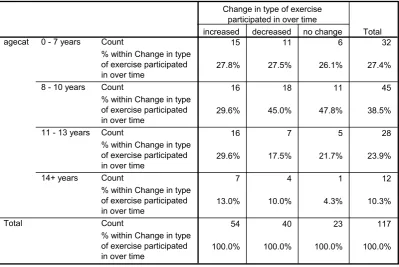
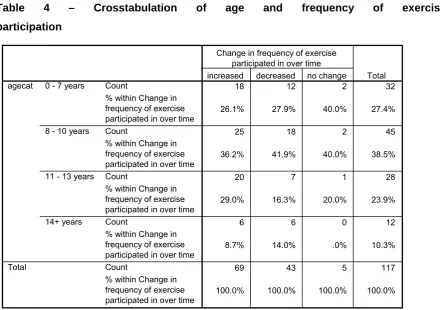
To examine the impact of age on frequency and type of exercise participation the four age categories (7 years and below; 8 – 10 years; 11 – 13 years and 14+) were crosstabulated with the recorded change over time (increased; decreased; no change) on frequency and type to explore relationships between the two variables.
Table 3 – Crosstabulation of age and type of exercise participation0
1
15 11 6 32
27.8% 27.5% 26.1% 27.4%
16 18 11 45
29.6% 45.0% 47.8% 38.5%
16 7 5 28
29.6% 17.5% 21.7% 23.9%
7 4 1 12
13.0% 10.0% 4.3% 10.3%
54 40 23 117
100.0% 100.0% 100.0% 100.0%
Count
% within Change in type of exercise participated in over time
Count
% within Change in type of exercise participated in over time
Count
% within Change in type of exercise participated in over time
Count
% within Change in type of exercise participated in over time
Count
% within Change in type of exercise participated in over time
0 - 7 years
8 - 10 years
11 - 13 years
14+ years agecat
Total
increased decreased no change Change in type of exercise
participated in over time
Total
From Table 3 above it can be seen that younger participants (up to 13 years) tend to be more associated with increasing the type (range) of exercise they participate in after
participating in Young Pals than participants aged 14+ although the numbers of older participants are considerably lower than younger participants and therefore the strength of the association may be limited.
Table 4 – Crosstabulation of age and frequency of exercise participation
18 12 2 32
26.1% 27.9% 40.0% 27.4%
25 18 2 45
36.2% 41.9% 40.0% 38.5%
20 7 1 28
29.0% 16.3% 20.0% 23.9%
6 6 0 12
8.7% 14.0% .0% 10.3%
69 43 5 117
100.0% 100.0% 100.0% 100.0%
Count
% within Change in frequency of exercise participated in over time Count
% within Change in frequency of exercise participated in over time Count
% within Change in frequency of exercise participated in over time Count
% within Change in frequency of exercise participated in over time Count
% within Change in frequency of exercise participated in over time 0 - 7 years
8 - 10 years
11 - 13 years
14+ years agecat
Total
increased decreased no change Change in frequency of exercise
participated in over time
Total
When examining frequency of exercise participation (regardless of type), young people in the 8 – 10 years category are associated with the largest increases.
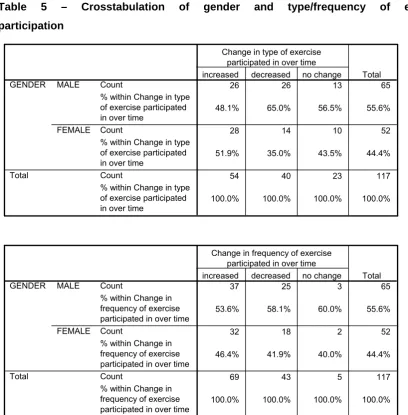
[image:44.595.76.517.84.394.2]Table 5 – Crosstabulation of gender and type/frequency of exercise participation
26 26 13 65
48.1% 65.0% 56.5% 55.6%
28 14 10 52
51.9% 35.0% 43.5% 44.4%
54 40 23 117
100.0% 100.0% 100.0% 100.0%
Count
% within Change in type of exercise participated in over time
Count
% within Change in type of exercise participated in over time
Count
% within Change in type of exercise participated in over time
MALE
FEMALE GENDER
Total
increased decreased no change Change in type of exercise
participated in over time
Total
37 25 3 65
53.6% 58.1% 60.0% 55.6%
32 18 2 52
46.4% 41.9% 40.0% 44.4%
69 43 5 117
100.0% 100.0% 100.0% 100.0%
Count
% within Change in frequency of exercise participated in over time Count
% within Change in frequency of exercise participated in over time Count
% within Change in frequency of exercise participated in over time MALE
FEMALE GENDER
Total
increased decreased no change Change in frequency of exercise
participated in over time
Total
Female participants were more likely to be associated with increases in the type of exercise undertaken whereas gender differences for frequency indicate that male participants were more likely to increase the frequency of exercise participated in over time. This finding suggests that girls are perhaps being more imaginative about
choosing a wider range of activities, but that boys are choosing to exercise with greater frequency.
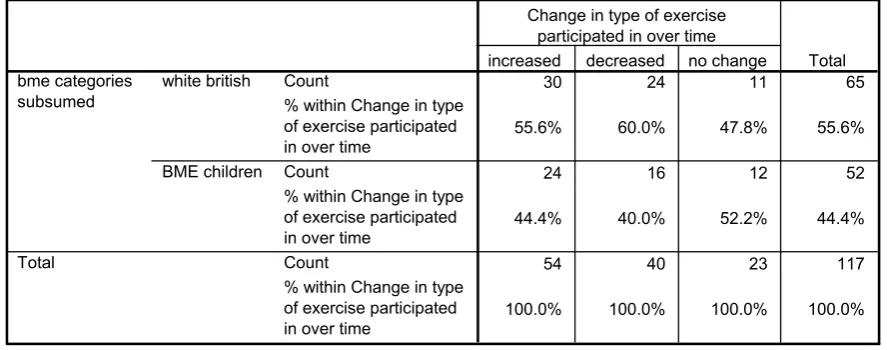
[image:45.595.74.483.85.501.2]Table 6 – Crosstabulation of ethnicity and type/frequency of exercise participation
30 24 11 65
55.6% 60.0% 47.8% 55.6%
24 16 12 52
44.4% 40.0% 52.2% 44.4%
54 40 23 117
100.0% 100.0% 100.0% 100.0%
Count
% within Change in type of exercise participated in over time
Count
% within Change in type of exercise participated in over time
Count
% within Change in type of exercise participated in over time
white british
BME children bme categories
subsumed
Total
increased decreased no change Change in type of exercise
participated in over time
Total
39 23 3 65
56.5% 53.5% 60.0% 55.6%
30 20 2 52
43.5% 46.5% 40.0% 44.4%
69 43 5 117
100.0% 100.0% 100.0% 100.0%
Count
% within Change in frequency of exercise participated in over time Count
% within Change in frequency of exercise participated in over time Count
% within Change in frequency of exercise participated in over time white british
BME children bme categories
subsumed
Total
increased decreased no change Change in frequency of exercise
participated in over time
Total
White British children were more likely to increase both type and frequency of exercise participation when compared to children from black and minority ethnic groups.
A Pearson’s r test found no correlation between session attendance or scheme involvement (number of months enrolled on scheme) and type and frequency of exercise participation.
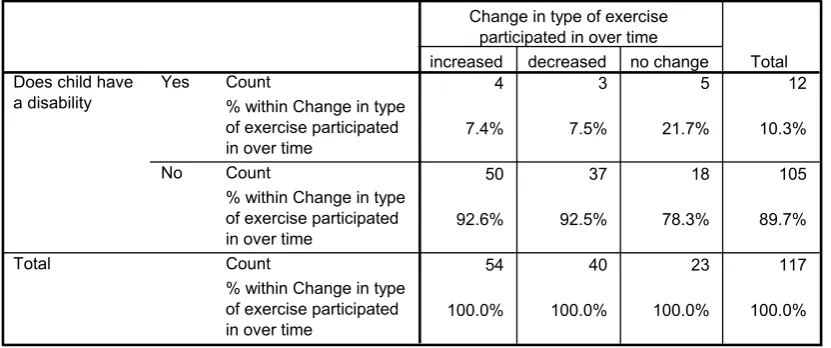
Table 7 – Crosstabulation of disability and type/frequency of exercise participation
4 3 5 12
7.4% 7.5% 21.7% 10.3%
50 37 18 105
92.6% 92.5% 78.3% 89.7%
54 40 23 117
100.0% 100.0% 100.0% 100.0%
Count
% within Change in type of exercise participated in over time
Count
% within Change in type of exercise participated in over time
Count
% within Change in type of exercise participated in over time
Yes
No Does child have a disability
Total
increased decreased no change Change in type of exercise
participated in over time
Total
8 4 0 12
11.6% 9.3% .0% 10.3%
61 39 5 105
88.4% 90.7% 100.0% 89.7%
69 43 5 117
100.0% 100.0% 100.0% 100.0%
Count
% within Change in frequency of exercise participated in over time Count
% within Change in frequency of exercise participated in over time Count
% within Change in frequency of exercise participated in over time Yes
No Does child have a disability
Total
increased decreased no change Change in frequency of exercise
participated in over time
Total
Increases in both the type and frequency of exercise undertaken were more associated with children without a disability.
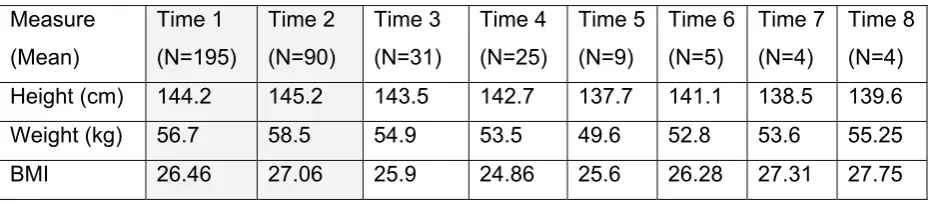
Physical Measurement Data
During the Active Lifestyle Evaluations (ALE) or ‘one to one’ sessions with children and parents, physical measurements (height in cm and weight in kg) are recorded at baseline (week one) and then again on a twelve week basis at follow-up review appointments (12, 24, 36, 48 weeks). From the physical measurements recorded, BMI (Body Mass Index) can be calculated by taking the child’s weight in kilograms and dividing it