A Research Study on Efficient Management of
Memory in Mobile Ad Hoc Network in Trust
Management System Environment
S.Mohamed Imranul Hasan#1, Dr.Radhika.V#2
#Research Scholar ,Deparment of Computer Science,Sri Krishna Arts And Science College,Coimbatore
Principal,Sri Krishna Adithya Arts And Science College,Coimbatore.
Abstract— The simple Mobile Ad hoc network has only limited storage capabilities. In order to construct an efficient Trust Management System in the Existing Mobile Ad hoc Network and make it perform the real time decisions based on the events is much difficult and at a same time a Cumbersome task. Due to the season that the mobile Ad hoc Network has only the limited infrastructure Capabilities. It had been designed and developed for simple and at the same time more efficient communication setup. To Prevent the Mobile Ad hoc Network from Various Attacks and Vulnerabilities an trust Management system has to be used. The Trust management system will perform based on large Constraints of information’s. These Information’s has to be made available in the particular Mobile Ad hoc Networking system for the trust management system to prevent the Mobile Ad hoc network from Attack. But it requires a most important need that large quantities of data and information’s has to be stored. But the major problem in this system is that huge amount of data are to be stored and accessed from the limited storage Capacity of the Mobile Ad hoc Network. This requirement has to fulfill to make the trust management system more Cost and Performance Effective One.
Keywords— MANET.LOAD SHARING, MEGA BYTES
I. INTRODUCTION
In this research paper we focus on the most important issue that the memory management issues that are available in the mobile Ad hoc network. We need to address this problem because the reason that the mobile Ad hoc network has the limited infrastructure Capabilities. In this research paper we also have an elaborate look and analysis on the memory management techniques and planning to make use of the available Storage resources of the Mobile Ad hoc network in a most efficient manner. We have to formulate certain memory management techniques like this to make the trust management system in the Mobile Ad hoc network Much Effective One.
II. LITERATURE SURVEY
An easy way to comply with IJRASET paper formatting requirements is to use this document as a template and simply type your text into it.
A. Ad hoc Network
The Word Ad-hoc which are commonly used today originates from a Latin word , which means "for this purpose ". The Most Popular Ad-hoc network is an self operable networks that can be deployed anyplace and anytime without the need of a large and costly infrastructure. It is used for military oriented purposes.
B. Mobile Ad-hoc Network (MANET)
Technology (IJRASET)
Fig. 1:A Typhical MANET Structure
In the above depicted figure both the laptops and cell phones exchange informations among themselves. They use configuration less communication gateways to establish connection among themselves. In mobile Ad hoc Network various types of
telecommunication devices communicate among them.
III.TRUST MANAGEMENT SYSTEM
The trust management system are designed and developed in the mobile ad hoc network to prevent the various attacks and vulnerabilities that are affecting the Mobile Ad hoc Network. These trust management Systems are called so because the is no central Administration Unit to control all the activities of the mobile Ad hoc Network. All the Communications are based on the trust. It means the nodes participating in the communicating circle of the mobile Ad hoc Network are analysed and trusted to make data Communication.
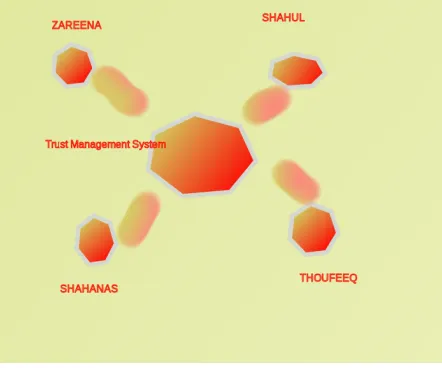
Fig.2: Trust Management System Architecture
The above Figure is an example of Trust Management System. In the Above figure the Big polygon shape is a Trust Management System. All the remaining nodes named Zareena,Shahul,Shahanas and Thoufeeq. These nodes will share all there details with the trust management System.
IV.MEMORY MANAGEMENT
[image:3.612.195.416.399.583.2]We will now have a detailed research on a situation in where we have to effectively Control and C-ordinate the memory. For an example consider a environment that we have constructed an Trust Management System that allows the nodes participating in the Communication Environment of the Mobile Ad hoc to Communicate among themselves based on the track record of the nodes. It means it is situation the trust management system has to keep all the previous Transaction histories of the nodes that are participating in the Communication System. It is based on the principle that “Information of All, For All”. It means in the real sense the trust management system is not a single controlling authority that are present in the Mobile Ad hoc Network, because this is due to the reason that Mobile Ad Hoc network does not have a Central Control Authority. So in order to achieve our aim of constructing an Trust Management System that operates based on the Previous Informations, that will make the Mobile Ad hoc Network Much Secure for communications. So there in a need for memory and memory Management to make it as a well operable Environment.
B. Memory Overflow Issue
The memory management technique can be looked very detailedly by using a certain Environment. For Example Consider a Mobile Ad hoc network Communication Environment System has five nodes. And each nodes have a Storage Capacity of 1Mb.
Fig.3 :Initial Memory Allocated
In the Trust Management System Environment Each and information’s of the nodes like name, id, Previous Nodes, Next Nodes and Data Transmission Records Will be kept in record for future references. If each transaction takes place the nodes that are available among the source and destination will be kept as back in all the intermediate nodes that are present in between them.
Technology (IJRASET)
Fig.4: Data Transferring State
But Consider a situation when all the Communication nodes takes place in a simultaneous manner as follows.
Fig.5: Memory Full Problem
C. Memory Management Technique
These memory overflow Problem has to be addressed effectively in order to make the system to function in a most efficient manner. We can tackle this memory overflow problem with a technique called “Load sharing”. Load Sharing means will the available memory is full that memory space less node should and will share its data load with the nearest nodes in an encrypted format based on the private key encryption Technique. By the “Load Sharing” technique the memory full problem will be avoided and when the shared nodes memory is free it can revoke it and it can decrypt it by its own and make the data available for all the other nodes requesting the information’s about the nodes for Communication. Since it is sent using the private key encryption method the helping nodes receiving the encrypted data will not be able to get to know the details of the encrypted content. In this way it make the load sharing contents much secure one.
Fig.6: Encrypted Load Sharing
V. ACKNOWLEDGMENT
The word Acknowledgment is the most respectable way to express our gratitude to those who backed us in all our endeavors. We are honoured to thank our parents, family members, friends and all our teachers who has been generously giving their support in all our endeavours. We also thank the Almighty who created and protect us all.
REFERENCES
[1] Security Issues in MANET: A Review. Mahakal Singh Chandel,Arjun Institute of Advaced Studies and Research Centre, Indore,India. Rashid Sheikh,Durgesh Kumar Mishra, Acropolis Institute of Technology and Research, Indore, India,2010 IEEE.
Technology (IJRASET)
[4] Locating the Attacker of Wormhole Attack by Using the Honeypot.T Divya Sai Keerthi and Pallapa Venkataram.Electrical Communication Engineering Department, Indian Institute of Science, Bangalore,India. 2012 IEEE 11th International Conference on Trust, Security and Privacy in Computing and Communications.
[5] L. Capra, “Toward a Human Trust Model for Mobile Ad-hoc Networks,” Proc. 2nd UK-UbiNet Workshop, 5-7May 2004, Cambridge University, Cambridge, UK.
[6] J. Li, R. Li, and J. Kato, “Future Trust Management Framework for Mobile Ad Hoc Networks: Security in Mobile Ad Hoc Networks,”IEEE Communications Magazine, vol. 46, no. 4, Apr. 2008, pp. 108-114.
[7] R. Li, J. Li, P. Liu, H. H. Chen, “An Objective Trust Management Framework for Mobile Ad Hoc Networks,” Proc. IEEE 65th Vehicular Technology Conf. (VTC’07), 22-25 Apr. 2007, pp. 56-60.
[8] N. C. Fernandes, M. D. D. Moreira, and O. C. M. B. Duarte, “An efficient filter-based addressing protocol for autoconfiguration of mobile ad hoc networks," in IEEE INFOCOM’09, Apr. 2009.
[9] B. Ishibashi and R. Boutaba, “Topology and mobility considerations in mobile ad hoc networks,"Ad Hoc Netw. J., vol. 3, no. 6, pp. 762-776,Nov. 2005. [10] P. B. Velloso, R. P. Laufer, O. C. M. B. Duarte, and G. Pujolle, “HIT: a human-inspired trust model," in 8th IFIP IEEE International Conf. Mobile Wireless Commun. Netw., Santiago, Chile, Aug. 2006
[11] htttp://www.strategicaffairs.com/webmaster/other_story/images/Better transmission.jpg.
AUTHORS
S. Mohamed Imranul Hasan, received his Bachelor of Computer Applications, degree from Jamal Mohamed College, Bharadhidasan University, Trichy. He also received Master of Computer Applications, degree from SVS Institute Of Computer Applications,Anna University, Chennai. He is doing his research degree in Computer Science,Sri Krishna Arts And Science College, Bharathiar University, Coimbatore.
Radhika.V received her B.Sc (Phy) ,MCA and M.Phil degree from Bharat
hiar University Coimbatore. in 1993 ,1996 and 2003 respectively. She received her PhD from
Avinashilingam university for women, Coimbatore. in 2013. She is the Principal, Sri Krishna