Efficient Algorithms for Pattern Mining in Spatiotemporal
Data
Nagasaranya N
Asst. Prof., Dept. of MCAKarpagam College of Engineering, Coimbatore - 641032
ABSTRACT
Spatio-temporal data is any information relating to space and time. It is continually updated data with 1TB/hr are greatly challenging our ability to digest the data. With that data, it is unable to gain exact information. Data mining models contains many statistical models such as regression models of various kinds, cluster analysis models, covariance analysis models, principle component analysis models, outlier detection models(temporal, spatial, non-spatial), trend detection models, partial least squares models(prediction) and multiple variant visualization models. Most of these models find applications in spatial data mining and pattern discovery.
Keywords
Spatio-Temporal Data, Clustering, Association Rule, Pattern Discovery
1.
INTRODUCTION
Data mining is the analysis of observational data sets to find unsuspected relationships and to summarize the data in novel ways that are both understandable and useful to the data owner. Extracting interesting and useful patterns from spatio - temporal database is more difficult than extracting the corresponding patterns from traditional (fixed) numeric and categorical (clear) data due to the complexity of spatio - temporal data types, spatio - temporal relationships, and spatio - temporal autocorrelation. Spatio-temporal data is any information relating space and time.
Geospatial data is regularly updated data with 1TB/hr, are greatly challenging our ability to digest the data. With that data, it is unable to gain exact information. Here the data may lose. Geospatial data take a view of geospatial phenomena, here it captures the spatiality. If it evolves over time, it captures the spatiality as well as the temporality. From that we are able to know the process and events of spatiotemporal data. Knowledge of extracting spatio-temporal data gives better prediction of its process and events.
Finding the trend is most important task in spatiotemporal data. Particularly it is to analyze trajectories movement, animal movements, mating behavior, harvesting, soil quality changes, earthquake histories, volcanic activities and prediction etc. Spatial, temporal and/or spatio-temporal data mining looks for patterns in data using the spatiotemporal attributes. Trend discovery cannot be directly performed well. The proposed research performs trend discovery by combining the principles of clustering, association rule mining, generalization and characterization.
The significance of spatio-temporal data is continuously updated data with 1 TB/hr. It is terribly massive and huge dimensional geographic and spatio-temporal datasets.e ask that authors follow some simple guidelines. In essence, we ask you to make your paper look exactly like this document. The easiest way to do this is simply to download the template, and replace the content with your own material.
Meteorology
Biology Crop sciences Forestry Medicine Geophysics Ecology
Transportation, etc
And we can apply this proposed algorithm to any kind of data mining applications. Especially when we apply to spatiotemporal databases, it gives most significant results. When trend discovery algorithm is used, the rate of data retrieval is fast and results obtained were accurate.
The objective of this research is to develop a novel algorithm for trend discovery on multi dimensional Spatiotemporal databases. Objectives are,
Predict the knowledge
Retrieve hidden information Discover Trend
Future Usage
2.
LITERATURE REVIEW
Number of papers has been reviewed for this study and that are categories into three major phases such as, Clustering in Spatio-temporal Data
Outlier detection in Spatio-temporal Data Feature, Location and Pattern finding from
Spatiotemporal Data
Based on study [1], several drawbacks have been found out in each and every phase. And we also compared the performance analysis in terms of accuracy, sensitivity, specificity, time and memory space.
2.1
Drawbacks of Existing Study
Clustering of spatio - temporal data is a difficult Problem that is compared to various fields and applications.
o The Major and common drawbacks are high dimensionality of data (2D or 3D), initial error propagation, high dimensional data complexity.
o Clustering of space and time related data, spatiotemporal clustering methods focus on the specific characteristics of distributions in 2-D or 3-D space, while general-purpose high-dimensional clustering method have limited power in recognizing spatiotemporal pat-terns that involve neighbors.
36
Outlier Detection in Spatio-temporal Data - The neighbors which occurs in spatio-temporal outliers are very conflict, even the non spatio-temporal values are normal for the rest of the objects of the same class.
Spatio-temporal outlier detection may not properly work with non-spatial or non-temporal datasets. Even if the non-spatial attributes are separated, it unable to predict the outliers from spatio-temporal datasets.
Rule mining in spatio-temporal data - Drawbacks of existing Dependency Analysis algorithms are, while incorporating local search in high-dimensional spatio- temporal data, the performance is very low and it faces the diversity problem. In the optimization process, the existing algorithms are not able to work with partial optimism.
In that stage, the algorithm will easily affect the speed and direction of the particle and it may not work properly to do their remaining iterations. And the existing algorithms cannot able to solve the
issues of huge dimensional, unsystematic datasets in the stage of particle search and moving object search.
Feature, Location and Pattern finding from Spatio – temporal Data - existing algorithms drawbacks, while discovering the trend in spatio-temporal data are as follow,
The anomalies will occur in the existing system, while it concentrates the graph alteration. Here the information may loss badly. So the necessities of the table scan may increase more.
In generalization process face problem to identify the description of data while doing the path relation and their hierarchy.
Spatio-temporal dependency process faces several problems while finding the dependency of large spatio-temporal data.
To overcome these drawbacks, we propose new algorithms for discovering the best trend in spatio-temporal data sets.
2.2
Problem Definition
The performance of trend discovery analysis is hindered in spatio-temporal data due to the following reason:
Clustering of massive spatio-temporal data is cumbersome. Features of the data are often preselected, yet the properties of different features and feature combinations are not well investigated in the huge spatio-temporal data sets. Finding appropriate features to form a cluster group is essential for better search.
Cluster accuracy is less, so it requires deviation and outlier detection analysis for high dimensional spatio-temporal clustered data.
Rule generation accuracy of spatio-temporal data is less, while it predicts the value of one attribute with the help of another attribute value over a period of time. So it requires optimization process for rule generation.
To know about the compact description of data, it needs better generalization and characterization method.
Trend discovery of spatio-temporal data accuracy is very less, while it’s going for the huge dimensional data sets.
3.
DATABASE DESCRIPTION
For our implementation work we have taken the spatiotemporal moving object trajectory high dimensional data sets. Trucks dataset consists of 276 trajectories of 50 trucks delivering concrete to several construction places around the Athens metropolitan area in Greece for 33 distinct days [8].
Datasets consist of 1,12,203 data. The structure of each record is as follows:
obj-id, traj-id, date(dd/mm/yyyy), time(hh:mm:ss), lat, lon, x, y
where (lat, lon) is in WGS84 reference system and (x, y) is
in GGRS87 reference system.
3.1
Finding the Latitude and Longitude
Points
The LATLON system uses angular measurements. Earth’s latitude various between -90° south to +90° north in the units of 1 degree, and is different for other planets, moons. When higher precision is needed, we express in it in terms of minutes, seconds, and decimal seconds.
The formula to convert angles in degrees to radians is,
𝑟𝑎𝑑𝑖𝑎𝑛𝑠 =
π
180
+ degree +
minutes
60
+
seconds
3600
Longitudes on the other hand have a range of -180 East to +180 West. Here we always represent the latitude and longitude as pairs. Each part being suffixed by East, West, North and South. If the radians are 0 to ±180 we omit East to West longitude.
Example,
LATLON coordinates of the points are (10.81 E, 79.17 N). Express (i) Both the decimal parts as minutes and seconds, (ii) Only the seconds as radians.
Solution:
We first convert the longitude multiply 0.81 with 60 to get 48.6, which gives 48 minutes. Next multiply 0.6 with 60 to get 36 as the seconds. Hence the longitude becomes 10° 8’ 36”.
To convert the latitude we multiply 0.17 with 60 to get 10.2, which give 10 minutes. Next multiply 0.2 with 60 to get 12 as the seconds. Hence the latitude becomes 79° 10’ 12”.
3.2
Pseudo Code
Step 1: Get the latitude and longitude position
Step 2: First convert the longitude position into minutes,
seconds and decimal seconds.
Step 3: To convert the value into minutes and seconds we go for the multiplication process with 60.
Step 4: Multiply the first value into 60 to get the minute and with that reminder of minutes we get the seconds by multiplying 60.
Step 5: Do the same process for latitude too.
Step 7: To repeat the step until all data have been converted into minutes and seconds.
Step 8: By using that value we easily find the exact trajectory of one particular object with a help of our proposed algorithm.
4.
CONTRIBUTION OF THIS
RESEARCH
Phase 1 gives the solutions to the challenges in segmenting the spatio - temporal data by Proposed PANN algorithm
Phase 2 removes the deviations and outliers of spatio - temporal data accurately by improved STOD Technique
Phase 3 generates the rules for dependency analysis of spatio - temporal data by proposed IESO technique
Phase 4generalizes and characterizes the spatio – temporal data by improved GAOI technique
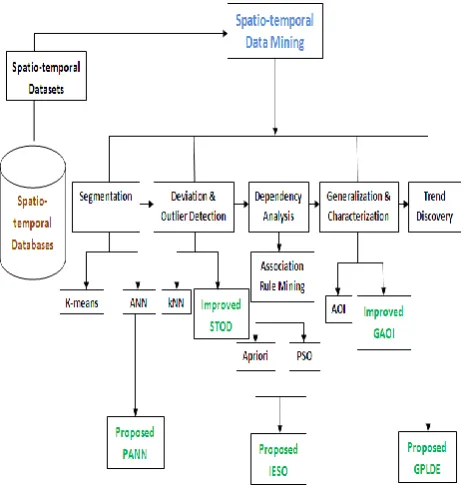
[image:3.595.316.550.73.253.2]Phase 5 Finally the Proposed GPLDE algorithm is developed for the further trend discovery of spatio - temporal data.
Fig 1 shows that the entire framework of proposed research.
Fig 1: Entire Framework of Proposed Research
5.
MATERIALS AND METHODS
5.1
Clustering in Spatio-temporal Data
Clustering of spatio-temporal data are the very difficult problem when compared to traditional and categorical data sets because of the high dimensionality, more complexity, initial error propagation, etc. So we propose PANN clustering techniques over spatio-temporal data.Fig 2: Work flow of Proposed PANN Algorithm
Fig 2, shows that the overall work flows of the proposed
PANN algorithm. Here we are applying several clustering algorithm like K-means, ANN, respectively in spatio-temporal trajectory data sets.
Steps to follow Proposed PANN Algorithm
Step1: Prepare Dn € Cc (Spatio-temporal moving object trajectory data)
Step2: Reduce the Dimension of input Data using Principal
Component Analysis. This will give a reduced d dimensional data.
Step3: Create a neural network with D number of inputs and C number of outputs. Step4: Train the network with N Number of records.
Step4: Test the Network with the Training data or Testing Data and Find the new Class label L2
Step5: Compare the original Class labels L1 and calculated class label L2 with Rand Index and Other Metrics and evaluate the accuracy of Clusters.
Step6: Repeat the above steps for Different values of N for Studying the performance with different number of records.
Our proposed framework has also worked with k-means and k-means based ANN clustering. Pseudo code for proposed PANN algorithm is shown in fig 3.
[image:3.595.57.293.304.548.2]38
5.2
Deviation and Outlier Detection
[image:4.595.316.547.71.295.2]A spatial outlier is a spatially referenced object whose non-spatial attribute values are significantly different from the values of its neighborhood.
Fig 4: Pseudo Code for improved STOD (Spatio-temporal Outlier Detection) Algorithm
Identification of spatial outliers leads to the discovery of unexpected, interesting, and useful spatial patterns. Major drawback of existing methods is that, the normal objects tend to be falsely detected as spatial outliers when their neighborhood contains true spatial outliers. In this paper, we propose a suite of spatial outlier detection algorithms to overcome the disadvantage. We formulate the spatial outlier detection problem in a general way and design algorithms to detect accurate spatial outliers. After the process of clustering, outlier detection is made.
Because clustered data must have some outliers. Detecting and removing the outliers from the data is said to be an outlier detection analysis. Fig 3 shows, the Pseudo code of Spatiotemporal Outlier Detection (STOD) Algorithm.
5.3
Dependency Analysis
PSO is first designed for simulating social behavior by Kennedy, Eberhart and Shi [3,4,5]. It represents the movements of organisms in a bird flock or fish school.
[image:4.595.54.291.123.257.2]The algorithm was designed to perform the optimization. A survey of PSO application is described by Poli [6] [7]. The overall framework of the proposed IESO algorithm is shown in Fig 5. The proposed IESO algorithm gives efficient and promising results to do rule generation in Spatio-temporal data sets.
Fig 5: Work flow of proposed IESO algorithm
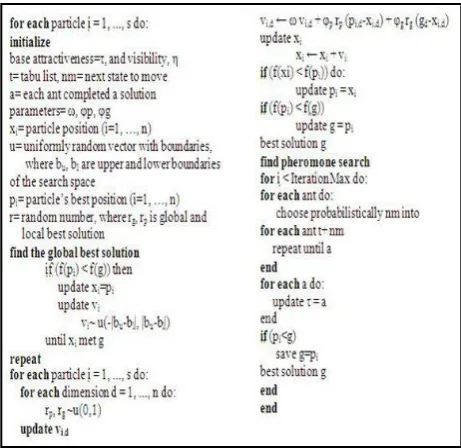
Fig 6: Pseudo code of Proposed IESO (Intelligent Evolutionary Swarm Ant Optimization) Algorithm
The pseudo code for the proposed IESO algorithm is presented in fig 6.
Steps to follow IESO Algorithm:
Step 1. Input data are taken from the clustered data output [1]
Step 2. Transforming the data into binary form and calculate the IR
Step 3. Applying the rule generation using IESO algorithm
Step 4. Finding Support and confidence value
Step 5. Finding the best fitness obtained by the particle in the iteration using IESO algorithm
Step 6. Finally we get Mining Association rule result
5.4
Trend Discovery
The proposed GPLDE algorithm to solve the anomalies in the rules-based AOI uses Generalization Dependency Graph (GDG) in spatio-temporal rule generated data sets. This work introduces a rule-based Attribute-Oriented (AO) Induction method of rule-based concept hierarchies that can be constructed from generalization rules. Based on analyzing some major previous approaches such as rule-based AO induction with backtracking, path-id based AO induction and acyclic graph based AO induction, we propose a GAOI approach to facilitate induction on the rule based case that can avoid a problem of anomaly and overcome disadvantages of existing methods.
Our approach is different from the previous ones as follows:
we solve anomalies to tackle the information loss by altering on the graph, so we can avoid the requirement of table scans in order to backtrack the tuples in the prime relation to the initial tuples. In the generalization process, we also use generalization rule sets instead of path relations or hierarchies. Each rule set corresponds to one hierarchy for each attribute.
[image:4.595.55.287.567.738.2]Workflow of Proposed GPLDE Algorithm for Trend Discovery
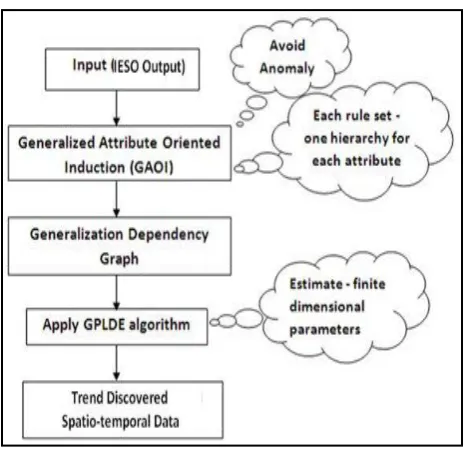
Fig 7 shows the workflow of the proposed GPLDE algorithm.
Fig 7: Work Flow of Proposed GPLDE Algorithm
After the rule generated by the proposed IESO to find the trend discovery the proposed GAOI and GPLDE algorithms were applied. In the first step, GAOI is used to avoid the anomaly and each rule set is related to one hierarchy for each attribute. So it is well knowledgeable approach to do attribute value detection process. Then the generalized dependency graph was drawn from these values. Here GPLDE estimates the finite dimension parameter for the datasets. The trend discovery results of the proposed approaches were more promising and significant when compared with other existing algorithms.
[image:5.595.55.288.489.682.2]Steps to follow GPLDE Algorithm:
Fig 8: GPLDE pseudo code
The proposed Gaussian Pairwise Linear Difference Estimator (GPLDE) algorithm has several stages as
Step 1. Input data is taken from phase3 output
Step 2. The GAOI is to facilitate induction on the rule based system that avoid the problem of anomaly
Step 3. GAOI – each rule set corresponds to one hierarchy for each attribute
Step4. GPLDE is attractive – estimating the finite-dimensional parameters
Step 5. Finally we discover the trend of spatial data
The pseudo code of proposed GPLDE algorithm is shown in fig 8.
6.
CONCLUSION
Spatio – temporal trajectory data has been used in this research of which 80% is treated as training data and 20% is considered as testing data. Proposed PANN method is an influential tool for the clustering and improved STOD for outlier detection of multidimensional spatio – temporal data sets. And the improved GAOI and proposed GPLDE algorithms gives better performance in trend discovery of spatio-temporal trajectory data. Results and discussion of these proposed algorithms will be discussed in the next research paper.
7.
REFERENCE
[1] R. V. Nehme and E. A. Rundensteiner, “SCUBA: Scalable Cluster- Based Algorithm for Evaluating Continuous Spatio-temporal Queries on Moving Objects,” EDBT, 2006, pp.1001-1019.
[2] Nanopoulos, Y. Theodoridis and Y. Manolopoulos, “C2P: Clustering based on closest pairs,” VLDB, 2001, pp.331-340.
[3] J. Kennedy and R. Eberhart, “Particle Swarm Optimization,” Proceedings of IEEE International Conference on Neural Networks.IV, 1995.
[4] Y. Shi and R. Eberhart, “A modified particle swarm optimizer,” Proceedings of IEEE International Conference on Evolutionary Computation, 1998, pp.69–73.
[5] J. Kennedy, “The particle swarm: social adaptation of knowledge,” Proceedings of IEEE International Conference on Evolutionary Computation, 1997, pp.303–308.
[6] R. Poli, “An analysis of publications on particle swarm optimization applications,” Technical Report CSM-469 (Department of Computer Science, University of Essex, UK), 2007.
[7] R. Poli, “Analysis of the publications on the applications of particle swarm optimization,” Journal of Artificial Evolution and Applications, 2008, pp.1–10.