ScholarWorks @ Georgia State University
Business Administration Dissertations Programs in Business Administration
5-6-2018
How Experts Judge Creativity: A Field Study of the
Assessment of Creative Output
Michael Robert Seyle
Follow this and additional works at:https://scholarworks.gsu.edu/bus_admin_diss
This Dissertation is brought to you for free and open access by the Programs in Business Administration at ScholarWorks @ Georgia State University. It has been accepted for inclusion in Business Administration Dissertations by an authorized administrator of ScholarWorks @ Georgia State University. For more information, please [email protected].
Recommended Citation
Seyle, Michael Robert, "How Experts Judge Creativity: A Field Study of the Assessment of Creative Output." Dissertation, Georgia State University, 2018.
PERMISSION TO BORROW
In presenting this dissertation as a partial fulfillment of the requirements for an advanced degree from Georgia State University, I agree that the Library of the University shall make it available for inspection and circulation in accordance with its regulations governing materials of this type. I agree that permission to quote from, copy from, or publish this dissertation may be granted by the author or, in her absence, the professor under whose direction it was written or, in his absence, by the Dean of the Robinson College of Business. Such quoting, copying, or
publishing must be solely for scholarly purposes and must not involve potential financial gain. It is understood that any copying from or publication of this dissertation that involves potential gain will not be allowed without written permission of the author.
NOTICE TO BORROWERS
All dissertations deposited in the Georgia State University Library must be used only in accordance with the stipulations prescribed by the author in the preceding statement.
The author of this dissertation is: Michael Robert Seyle
915 Lorena Street
Mamaroneck, New York 10543
The director of this dissertation is:
Pam Scholder Ellen
J. Mack Robinson College of Business Georgia State University
How Experts Judge Creativity: A Field Study of the Assessment of Creative Output
by
Michael Robert Seyle
A Dissertation Submitted in Partial Fulfillment of the Requirements for the Degree
Of
Executive Doctorate in Business
In the Robinson College of Business
Of
Georgia State University
GEORGIA STATE UNIVERSITY
ROBINSON COLLEGE OF BUSINESS
Copyright by Michael Robert Seyle
ACCEPTANCE
This dissertation was prepared under the direction of the MICHAEL ROBERT SEYLE
Dissertation Committee. It has been approved and accepted by all members of that committee,
and it has been accepted in partial fulfillment of the requirements for the degree of Doctor of
Philosophy in Business Administration in the J. Mack Robinson College of Business of Georgia
State University.
Richard Phillips, Dean
DISSERTATION COMMITTEE
Dr. Pam Scholder Ellen (Chair)
Dr. Steve D. Olson
ACKNOWLEDGEMENTS
I am deeply indebted to and sincerely appreciate the hard work and support of my
Dissertation Committee Chair, Dr. Pam Scholder Ellen, and the members of my Dissertation
Committee, Dr. Steve D. Olson and Dr. Edward E. Rigdon. Their guidance, direction and
mentorship were invaluable to the completion of the research and the dissertation. All three are
also wonderful people with a passion for research, teaching and living a full life. I am very lucky
to have them as instructors, mentors and professional colleagues during and after this academic
journey.
I would also like to thank my professors, fellow doctoral students, and the staff of the
Executive Education program at the Robinson College Business of Georgia State University. I
have never met a more dedicated, caring and professional group of individuals, and I am honored
to have experienced such an amazing program with them. In particular, I want to thank Dr. Lars
Matthiessen, Academic Director, and Maury Kalnitz, former Director of the Executive Doctorate
Program, for their confidence and guidance. Their vision and leadership helped create an
outstanding opportunity for executives to develop new skills and understanding, and to
contribute to both academia and practice in a meaningful way.
Last, but by no means least, I want to thank my wonderful wife, Michelle, and my
children, Kathryn, Emily, Haley, Jack and Gia, for all of their support, love and understanding as
I pursued my dream of another advanced degree. I hope my curiosity and love of learning
TABLE OF CONTENTS
ACKNOWLEDGEMENTS ... iv
LIST OF TABLES ... ix
LIST OF FIGURES ... x
I INTRODUCTION ... 1
I.1 Background ... 1
I.2 Problem Statement... 2
I.3 Statement of Purpose and Research Questions ... 3
I.4 Research Approach ... 4
I.5 Researcher Background and Assumptions ... 6
I.6 Rationale and Significance ... 7
I.7 Summary of Remaining Chapters ... 8
II LITERATURE REVIEW ... 10
II.1Introduction ... 10
II.2Review of Literature ... 10
II.2.1 Definitions of Creativity ... 11
II.2.2 Creativity Research ... 13
II.2.3 Creative Outcomes ... 17
II.3Measurement of Creative Output... 20
II.3.1 Consensual Assessment Technique ... 25
II.4Experts and Expertise-Based Intuition ... 27
II.5Judgment and Decision Making (JDM) ... 31
II.5.1 Cognitive-Experiential Self-Theory ... 31
II.5.3 Application of CEST and CCT using Naturalistic Decision Making ... 39
III METHODOLOGY ... 45
III.1 Introduction and Overview ... 45
III.2 Rationale for the Research Approach ... 46
III.2.1 Rationale for a qualitative field study approach ... 46
III.2.2 Rationale for a case study approach ... 47
III.3 Research Setting and Context ... 49
III.3.1 Overview of information needed... 50
III.4 Research Participants and Data Sources ... 51
III.4.1 Pilot Study ... 51
III.4.2 Criteria for Research Participants ... 52
III.4.3 Participant Selection ... 53
III.4.4 Backgrounds of the Participating Expert Judges ... 55
III.5 Data Collection ... 56
III.5.1 Observation of Creativity Contest Judging Event, Simulations, Think-Aloud Exercises and In-Person Interviews of Experts and Contest Administrators ... 57
III.5.2 Interviews of Judges from Prior Year Contests ... 61
III.5.3 Collection of Scoring Data from Observed Event and Prior Contests ... 62
III.6 Data Analysis ... 63
III.6.1 Data Reduction ... 63
III.6.2 Data Display ... 64
III.6.3 Conclusion Drawing and Verification ... 64
III.6.4 Coding... 64
III.6.6 Ethical considerations... 66
III.7 Issues of Trustworthiness ... 67
III.8 Anticipated Limitations and Delimitations ... 68
IV FINDINGS ... 70
IV.1 Introduction ... 70
IV.2 Findings from interviews, observations and exercises ... 72
IV.3 Judges’ scoring and interrater agreement testing ... 99
V DISCUSSION ... 113
V.1 Introduction ... 113
V.2 Discussion... 114
V.2.1 Definition and Elements of Creativity ... 114
V.2.2 Processes Used by Experts in the Field ... 119
V.2.3 Applicability of the Consensual Assessment Technique ... 120
V.2.4 Cognitive Processing (CEST and CCT) ... 121
V.2.5 Recognition Primed Decision-Making and Expert Intuition ... 125
V.2.6 Expert v. Novice ... 127
V.2.7 Using Heuristics and Avoiding Biases ... 129
V.2.8 Inter-rater Agreement of Judges Scores ... 131
V.3 Contributions to Theory And Practice ... 132
VI CONCLUSIONS AND RECOMMENDATIONS ... 135
VI.1 Conclusions ... 135
VI.2 Recommendations for further research ... 135
VI.3 Final Thoughts ... 137
Appendix A: Applied Cognitive Task Analysis ... 139
Appendix B: Review of Selected Creativity Studies ... 142
REFERENCES ... 154
LIST OF TABLES
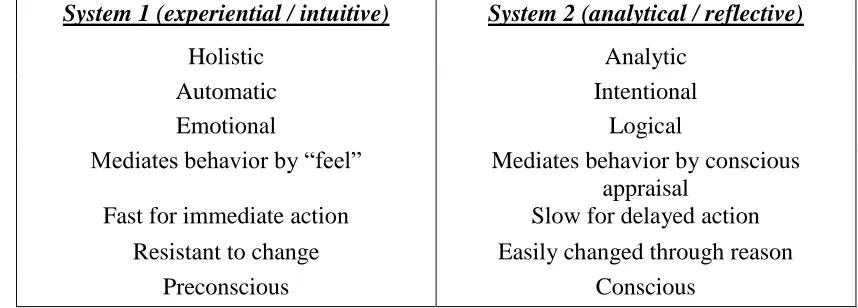
Table 1 Characteristics of Experiential-System 1 and Rational-System 2 (from Epstein, et
al. 1996) ... 33
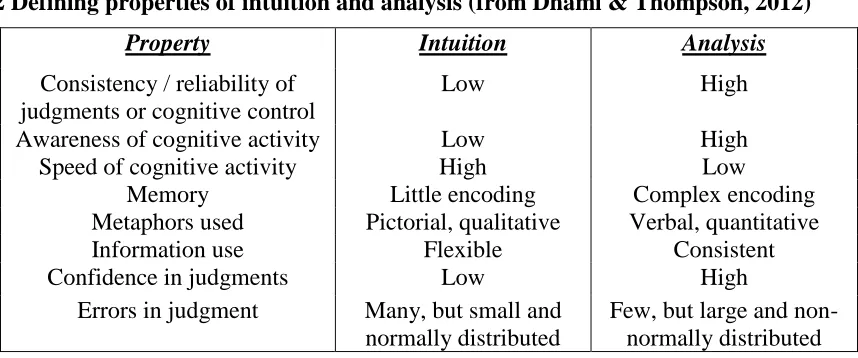
Table 2 Defining properties of intuition and analysis (from Dhami & Thompson, 2012) ... 36
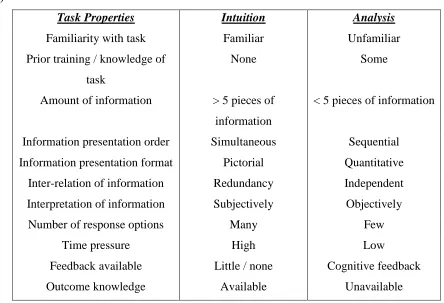
Table 3 Properties of tasks that induce intuition and analysis (from Dhami & Thompson, 2012) ... 38
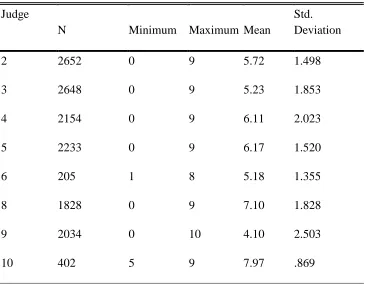
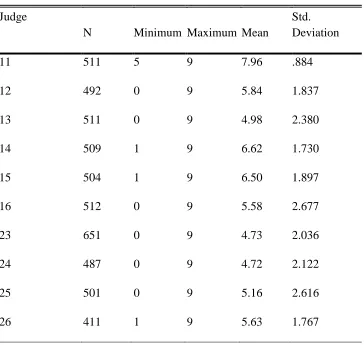
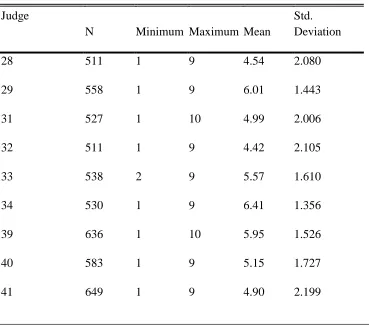
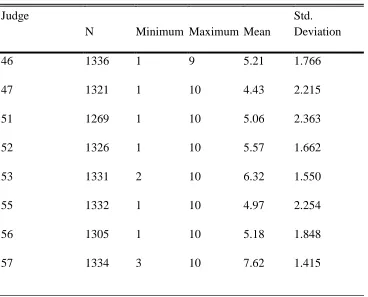
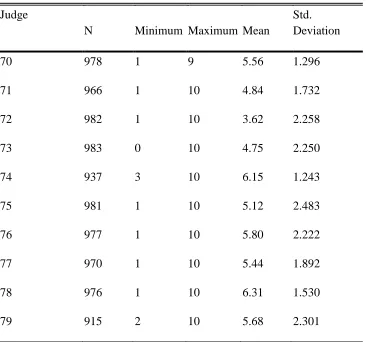
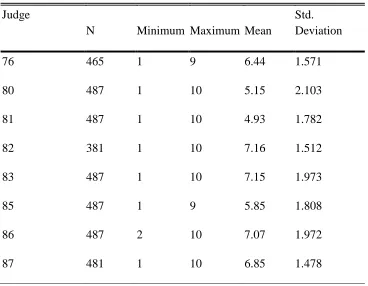
Table 4 Descriptive Statistics for Scores of Items in Contest 1... 103
Table 5 Descriptive Statistics for Scores of Items in Contest 2... 104
Table 6 Descriptive Statistics for Scores of Items in Contest 3... 105
Table 7 Descriptive Statistics for Scores of Items in Contest 4... 106
Table 8 Descriptive Statistics for Scores of Items in Contest 5... 107
Table 9 Descriptive Statistics for Scores of Items in Contest 6... 108
Table 10 Descriptive Statistics for Scores of Items in Contest 7... 109
Table 11 Descriptive Statistics for Scores of Items in Contest 8... 110
LIST OF FIGURES
Figure 1 Schematic Model of Creativity Concepts ... 17
ABSTRACT
How Experts Judge Creativity: A Field Study of the Assessment of Creative Output
by
Michael Robert Seyle
August 2018
Chair: Pam Scholder Ellen
Major Academic Unit: Executive Doctorate in Business
Creativity is a fundamental component of innovation and critical for long-term business
success. Identifying the products and ideas that are most creative, and therefore worthy of
further development and investment, is an essential part of the creative process. However,
experimental research into creativity over the past 20 years has yielded inconsistent and
contradictory results. Moreover, this same research has shown that organizations struggle to
identify their most creative products and ideas for further development. Critics suggest
organizational creativity research may suffer from measurement misspecification due to a
misalignment between existing construct definitions of creativity as a response that is both
“novel and useful” and experimental studies that use only a single item, creativity, to measure
creative output. This research investigates whether the theorized misalignment may be due, in
part, to the research use of judges with little or no experience in the creative domain and their
failure to understand the criteria, approaches, and techniques that expert judges actually use to
assess creative output. To better understand how these issues may affect research results, this
research utilized Naturalistic Decision Making field-study methods to investigate how expert
judges assess the creative output of experienced professionals in the setting of a creativity awards
with expert judges of creativity award contests, this research identifies six factors experts use to
assess professional level creative output, and uncovers the processes, approach, and challenges
involved in the real-world assessment of creative products and ideas. Recommendations for how
assessing creativity can be improved in research and practice are discussed as well as suggestions
for future research.
INDEX WORDS: Creativity, Intuition, Analysis, Experts, Creative Output, Measurement, Field
I INTRODUCTION
I.1 Background
The importance of creativity to business success and the global economy continues to
garner attention in both business press and academia. Expanding on Drucker’s concept of the
“knowledge-based” organization, Florida argues human creativity has become “the decisive
source of competitive advantage” for businesses and “the ultimate economic resource” for
organizations (Florida, 2002). In 2008, the Conference Board reported that corporate executives
view creativity as a key capability organizations need to succeed:
U.S. employers rate creativity and innovation among the top five skills that will increase
in importance over the next five years and rank it among the top challenges facing CEOs
(Conf. Board, 2008).
A 2010 survey of 1,500 U.S. corporate CEOs extended the significance of creativity to the
C-suite, stating, “Creativity is now the most important leadership quality for success in business,
outweighing even integrity and global thinking” (IBM, 2010).
Creativity is viewed as an essential element and precursor to innovation that drives
organizational success and economic prosperity (Amabile & Khaire, 2008). The importance of
creativity to both business and global economies is reflected in the impact creative industries
have on domestic production. Creative industries, such as the arts and cultural goods and
services, are estimated to contribute more than $500 billion to the U.S. Gross Domestic Product,
or more than 3.2% of current-dollar GDP, compared to other industries, like travel and tourism,
that generate only 2.6% of GDP (U.S. Bureau of Economic Analysis, 2013). Advertising
creativity alone is estimated to generate almost $200 billion in U.S. gross domestic output, or
Kingdom, creative industries supply more than 1.5 million jobs, which amounted to more than
5% of the U.K.’s total employment in 2010 (UK Dept. Culture Media and Sport, 2011).
I.2 Problem Statement
Given creativity’s importance to business success and global economic output, it is
unsurprising that individual and organizational creativity has been the subject of increasingly
intensive research in the fields of management, psychology, education, and the arts over the past
60 years (Runco, 2004). Despite this intense academic interest across disciplines, however,
understanding of creativity remains fragmented into specialized subfields, often resulting in
inconsistent, and conflicting, research findings (Amabile, 2012). Recently, scholars have raised
concerns that these inconsistent and contradictory creativity research results may be due to
construct measurement misspecification, incomplete methodological approaches, or poor
construct validity (Sullivan & Ford, 2010; Montag et al., 2012). Many of these concerns relate
to how creativity is defined, both as a construct and operationally, as well as the processes
utilized in assessing creative output in research studies (Montag et al., 2012).
Most extant creativity research has utilized consensual judgment methods to assess the
“overall creativity” of products or ideas as a unitary construct or single item. This approach
contradicts the numerous existing construct definitions of creativity as either a two-item or a
multi-faceted construct (Sullivan & Ford, 2010). The majority of published research to date also
has relied upon experimental studies that employ children, students, and individuals with little or
no experience or training in creativity as study participants (Montag et al., 2012). These
inexperienced experimental subjects raise concerns about the quality of the items assessed and
the validity of their results (Byron & Khazanchi, 2012). Moreover, the majority of studies have
as judges to measure the creative output of study subjects. In short, it appears existing creativity
research may suffer from the triple-threat combination of low construct validity, measurement
misspecification, and incomplete assessment methods. To investigate the nature and extent of
these potential shortcomings, and gain insight into the processes, criteria, and approaches used to
assess creative products and ideas in practice, this research examined how established domain
experts make judgments of the creative output of professionals in a real world setting.
I.3 Statement of Purpose and Research Questions
The purpose of this field study was to investigate the processes and criteria expert judges
use in assessing the output creativity of those who regularly create products and ideas in creative
industries that are subsequently submitted to award contests. Understanding how domain experts
make judgments about the level of professionals’ creativity in situations where judges face
significant time, uncertainty, and ambiguity constraints provides useful insights into how
creativity is assessed in real-world situations. Such insights may also: (1) increase the field’s
understanding of the challenges creativity researchers face in assessing creative output in
experimental studies, (2) identify the key criteria real world judges use in assessing creativity;
(3) suggest more effective assessment methods to improve the overall reliability and validity of
creativity research, and (4) provide ideas that organizations can use to better discern the most
promising creative product and ideas for development and investment.
To explore these issues, this research examines how domain experts judge the creativity of
entries in a professional award program by investigating the following research questions:
1. What criteria do expert judges of creativity awards contests report using to assess the
creativity of products and ideas; in particular, do experts use the “novel and useful” definition of
2. What processes do experts use as they judge creativity in contest settings; are the
processes involved in creativity contests similar to or different from those used in the experts’
professional workplace settings?
3. What types of cognitive processing are involved in expert judgment of creative products
and ideas; do experts use intuition, rational analysis, a combination of both, or something else
when judging creativity contests?
4. What do experts say are the differences between how experts and non-experts make
judgments of creativity; what kinds of mistakes might a novice make in judging creativity?
5. What biases and heuristics do expert judges acknowledge encountering when judging
creativity in real-world situations, and how do they attempt to deal with them?
I.4 Research Approach
After receiving approval for the study from the university’s institutional review board, this
research began investigating the steps, processes, and experiences of experts judging entries in a
creativity awards contest. Identified expert participants were all professionals in various creative
industries with significant experience in assessing creative output in organizational settings as
well as having acted as judges in numerous regional, national, and international creativity award
programs.
The main method of data collection involved in-depth interviews of these experts.
Following an engaged scholarship research approach, the investigation originated with a pilot
study that conducted open-ended interviews of managers in different creative industries. This
approach revealed the nature of creativity assessment in organizational settings and identified
key challenges facing organizations that seek to exploit their most creative products and ideas.
the researcher subsequently spent three days immersed in a creativity awards event, observing
expert judges during the judging process, collecting information about the awards program, and
interviewing contest judges and the organizers of the awards program. In-person interviews of
participants were conducted using Applied Cognitive Task Analysis techniques in an effort to
uncover non-conscious routines and steps in the judging process. Several participant judges also
took part in simulated judging exercises and think-aloud protocols during judging of contest
entries to provide a better explanation of their cognitive effort. After the awards event,
additional phone interviews were conducted with domain experts who had served as judges for
the same awards program in prior years. A total of 12 in-depth interviews of expert judges were
administered during and after the three-day judging event, and five judges also participated in
simulation and think-aloud exercises during the judging event. In addition to the interviews,
simulations and observations, archival data on the judges’ numerical scores across ten creativity
award contests over five years were obtained from the contest organizers. This data was
obtained in non-attributable format for use in testing the judges’ inter-rater reliability and
comparing rater agreement within and across awards contests.
The combination of interviews, many involving Applied Cognitive Task Analysis with
simulations and think-aloud exercises, along with direct observation of the judging event, and a
longitudinal analysis of contest scores, did not allow for complete triangulation of data, but did
help provide a deep analysis of creativity assessment in a field setting. A comprehensive review
of the literature on the assessment of creativity and expert judgment, the pilot study, and direct
observations helped shape the collection of additional data from past judges. Preliminary coding
classifications were developed in advance of interviews, simulations and think-aloud exercises,
and the frameworks underlying the data analysis. To help insure reliability of the coding
process, two independent researchers check-coded several interview transcripts and
disagreements were discussed until consensus was reached on a coding scheme that was used by
the researcher for the remaining transcripts.
I.5 Researcher Background and Assumptions
The researcher who conducted this study is employed as an executive at a global
architecture and design organization and has more than a decade of direct experience working
with professionals engaged in generating creative products and ideas on a regular basis. This
background and practical experience provides a unique understanding about creativity in the
workplace and the challenges organizations face in the development of creative and innovative
output. This background, however, also tends to color and potentially limit the researcher’s
perceptions and beliefs about creative work and how creativity is judged. As a result, the
researcher took additional steps to identify and address potential preconceptions and biases that
might affect the neutrality of the research, including peer reviews of the research design and
process, consultation with academics and consultants not connected to the research, journaling
about the decisions and choices made in the study’s design and analysis, and informing each of
the research participants of the researcher’s position, such that they could raise any concerns they
might have during the research process. To help strengthen the validity of the research and
address the subjectivity of the researcher, interview candidates were not prescreened as to their
viewpoints and were selected by the contest organizers based solely on their qualifications as
domain expert judges of numerous creativity contests. Multiple data sources were sought to help
identify diverse perspectives and possible alternative explanations for the findings and
existing theoretical concepts was preserved and considered separately, to prevent forcing the data
to fit any preconceptions.
Based on past experience and understanding of the challenges businesses face in assessing
creativity, as well as concerns raised in the literature about judgments of creative output, the
following three assumptions grounded this research. First, creativity is a social construct that is
dependent upon the experiences, values, and utility ascribed to it by individuals who hold a
position of authority, respect, or recognition within a particular domain or industry. As such,
creativity cannot be measured objectively through scientific analysis or accurately described as a
physical property—whether something is considered creative is an intersubjective assessment or
shared meaning developed through interaction with others and by means of comparison,
expectation and personal aesthetic judgment. Second, although all individuals can be creative in
some way and at some period, those who are employed in creative industries to generate creative
output have special skills, training, talent, motivation, supports, and experience that are
necessary to inform creative products and ideas for business. This second assumption leads to a
third, wherein those who have been employed as creative professionals for many years and who
have been identified by their peers as masters of their craft, such that they are selected to judge
the creativity of other professionals, have achieved a level of experience to be considered
“experts” in their domain.
I.6 Rationale and Significance
The rationale for this study arises from the challenges business leaders and managers of
creative industries face in identifying the most creative products and ideas for further
development and investment. In addition, academic research into creativity has struggled to
consequences, and methods to motivate individuals and increase creative output. One possible
reason for inconsistent, and often contradictory, results may stem from how the dependent
variable of “creative outcomes” is measured and assessed. A deeper understanding of how
experts judge creativity in field settings should lead to improved processes for assessing creative
output and lend new insights into how to measure, increase, and expand creativity.
I.7 Summary of Remaining Chapters
The remaining chapters of this dissertation cover the following areas:
• Chapter 2 - Literature Review: This section provides a general review of the literature on creativity and the assessment of creative outcomes. It examines previous research on the definitions and processes of creativity, measurement of creative output in
experimental studies, and the decision-making aspects of creative evaluation and assessment. This chapter highlights concerns about possible measurement
misspecification and the validity and reliability of existing quantitative research. The review also generally explores the research on expert decision-making processes, particularly expert intuition and the heuristics and biases that accompany its use. The review establishes that a lack of research has explored how creativity is evaluated in real-world settings and the processes domain experts use in judging creativity; in doing, it identifies the gap in literature this study is designed to address. This section also describes the two main theories of information processing relating to judgment and decision making, Cognitive-Experiential Self-Theory (CEST) and Cognitive Continuum Theory (CCT), explores how each theory applies to previous research, and the constructs and predictions of each theory about how decisions are made and outcomes are evaluated. This section illustrates how CEST and CCT differentially view the role and impact of intuition and analysis in decision-making, the nature and impact of heuristics and human cognitive biases, and the reliability of judgments under different conditions. This chapter also provides an overview of Naturalistic Decision Making (NDM) as a framework for investigating and understanding judgment and decision making of experts in field settings.
• Chapter 3 - Research Methodology: This chapter justifies the use of a qualitative, process focused case study approach, as it seeks to answer how experts judge creativity where the researcher has no control over activities, behaviors, and events of interest. This chapter also discusses the engaged scholarship approach to research as a means of
judging and evaluating creativity in professional settings is also discussed. This chapter also provides an outline of the data collection, reduction, and triangulation strategies utilized to both increase understanding of the context and improve validity by
incorporating: (1) multiple sources of evidence, (2) a case study database, and (3) a chain of evidence. It subsequently explains the methods used to analyze the various types of data obtained.
• Chapter 4 – Findings
Chapter 4 presents the key findings of the in-depth interviews, simulations and
think-aloud exercises, field observations of an actual creativity awards judging event, and the
results of inter-rater reliability testing of judges’ numerical contest scores. Extensive
illustrative quotes from participant interviews are provided to allow the reader an
opportunity to explore participants’ views in their own words.
• Chapter 5 – Discussion
This section provides an analysis of the findings and a synthesis of the data in an effort to
make sense of the meaning of the data. It additionally explores how the data relates to
the theoretical frameworks applied in this research study. Possible linkages and logical
inferences suggested by the data are explored, and the main contributions of the study to
theory and practice are discussed.
• Chapter 6 – Conclusions and Recommendations
This final chapter provides the researcher’s conclusions based on study findings and
analysis, as well as recommendations for changes to research methods and practice based
II LITERATURE REVIEW
II.1 Introduction
The purpose of this field study was to investigate the processes and criteria expert judges
use in assessing the creativity of output by individuals who regularly create products in creative
industries. Specifically, the research sought to understand how domain experts make judgments
about the level of creativity of products and ideas, in situations where judges face extreme time
pressure, uncertainty, and ambiguity. Before conducting the study, critical reviews of the
literature on creativity research, construct measurement, decision making and expert cognition
were conducted. The literature review informed the research design, data collection, and
analysis phases of this study.
This review of creativity literature traces the approaches, methods, results, and challenges
of research into the nature and elements of creativity; in particular, the ways in which creative
outcomes are measured and assessed. Moreover, as discernment of creative outcomes involves
many aspects of judgment and decision making, this review explores the constructs and theories
relating to decision making, particularly as it concerns experts, rational choice, and intuition.
Lastly, literature relating to how individuals make decisions in field settings is reviewed.
II.2 Review of Literature
Academic study of creativity began to flourish after J. P. Guilford’s 1950 presidential
address to the American Psychological Association (Mumford, 2003; Amabile, 2012). However,
for the first 30 years of inquiry, creativity was considered solely a psychological “trait” or
quality, consisting of unique attributes and “divergent” thinking abilities only possessed by
mid-1990s focused on the inherent differences and abilities of exceptionally creative individuals
(Mumford, 2003).
Over the past 20 years, creativity research has undergone a number of significant shifts in
both the development of theory and the use of various research methodologies (Mumford, 2003).
This research has also expanded from psychology to sociology, education, economics, and
management (Runco, 2004). As a result of its multi-disciplinary focus, the scope of
understanding creativity’s processes, antecedents, and consequences has grown exponentially,
but not without having paid a price (Hennessey & Amabile, 2010). The lack of inter-disciplinary
research has resulted in fragmented, often conflicting and confusing, findings and the
development of numerous competing theories of creativity, how it functions, how to measure it,
and how to improve creative thinking and outcomes (Hennessey & Amabile, 2010).
II.2.1 Definitions of Creativity
What creativity is, and what it is not, hangs as the mythical albatross around the neck of
scientific research on creativity (Prentky, 2000: 97).
One of the most significant challenges to creativity research the lack of a consistent
definition. More than 50 years ago, Rhodes reported having identified 40 different definitions of
creativity (Rhodes, 1961). Twenty-seven years later, a review of published psychological
research uncovered more than 60 different definitions for the concept (Taylor, 1988). These
various definitions reflect the growing, but fragmented, academic interest in the study of
creativity from different domains and research perspectives.
When used as an adjective, the word “creative” is defined in the Oxford Dictionary as,
“relating to or involving the use of the imagination or original ideas to create something” or
job involves creative work.” As a verb, to “create” is defined as meaning to “bring (something)
into existence,” or “cause (something) to happen as a result of one’s actions.” Creativity also has
been defined as “inventiveness; the use of imagination or original ideas to create something.”1
Synonyms of creativity include cleverness, imagination, ingenuity, inventiveness, originality,
resourcefulness, inspiration, and vision (Roget, 2013).
In creativity research, the term “creative” has developed numerous inherent meanings
over the past 65 years that can refer to a person, group or organization, or to the process,
products, and environment in which people work (Batey, 2012). For example, when creativity is
viewed as an aspect of a person, the definition might arise from the traits and abilities inherent in
creative genius (Runco, 2004; Runco & Jaeger, 2012). If the focus is on process, a definition
might relate the mental activities and procedural steps involved in a divergent thinking exercise
(Mumford, 2003).
The lack of a shared definition is certainly not due to a shortage of effort or attention. In
1996, Amabile attempted to define creativity from a social-psychological approach stating, “a
product or response will be judged as creative to the extent that (1) it is both a novel and an
appropriate, useful, correct, or valuable response to the task at hand, and (2) the task is heuristic
rather than algorithmic” (Amabile, 1996: 35). Sternberg and Lubart (1999) defined creativity
more objectively as “the ability to produce work that is both novel (i.e., original, unexpected)
and appropriate (i.e., useful, adaptive concerning task constraints)” (Sternberg & Lubart, 1999:
1The origin of the word “create” is believed to be of late Middle English in the sense of “form out of nothing” and
relating to “a divine or supernatural being” originally from the Latin creat- “produced,” from the verb creare. “However, the verb form derives from a Proto-Indo-European root kerh2, which is believed originally to have meant, ‘grow’ and in Latin its original meaning was ‘to make (something) grow.’” The past participle of creare is “to make, bring forth, produce, beget” which is related to crescere, or “arise, grow.”
3). This seeming confluence of conceptual understanding lead Mumford to conclude: “Over the
course of the last decade, however, we seem to have reached a general agreement that creativity
involves the production of novel, useful products” (Mumford, 2003: 110). However, despite
these various attempts to capture the essence of creativity, many authors still believe a widely
accepted or inter-disciplinary definition of creativity remains elusive and that the lack of a
workable definition hampers efforts to formally identify and measure the construct (Sullivan &
Ford, 2010; Batey, 2012; Montag et al., 2012; Simonton, 2012).
This study investigated the assessment of creative individuals’ output (Montag, et al.,
2012), as opposed to creative processes, individual traits, or the environments surrounding
creative activity,; accordingly,the research necessarily focused only on creative products and
ideas. Thus, for the purposes of the present research, and for the reasons outlined in the next
section, this study adopts as a starting point Amabile’s proffered definition of creative output as a
product or response that is both novel and appropriate to the task, where the task is heuristic
rather than algorithmic (Amabile, 1996; 2012).
II.2.2 Creativity Research
To understand the divergent views of creativity and why a standard definition of
creativity is necessary, it is important to trace the development of creativity research over the
past 30 years. According to the componential theory of creativity, developed by Amabile in
1983 and refined in the years since, creativity occurs in the combination of three
“within-individual” components and one external component. The three internal components are: (1)
domain-relevant skills, i.e., expertise or knowledge in the relevant domain or domains; (2)
creativity-relevant process abilities, i.e., cognitive abilities and personality attributes that enable
The single external component of the theory is the surrounding social or workplace environment
the individual acts within (Amabile, 1983; 2012).
Amabile’s componential theory therefore predicts, “creativity should be at its highest
when an intrinsically motivated person with high domain expertise and high skill in creative
thinking works in an environment high in supports for creativity” (Amabile, 2012: 3).
Domain-relevant skills relate to the knowledge, experience, skills, and abilities of the particular technical
or professional arena where an individual has gained expertise. This domain-relevant expertise
provides the background the individual will likely draw upon to develop new combinations and
to evaluate the viability of the various options created (Amabile, 1983). Creativity-relevant
process abilities include “a cognitive style and personality characteristics that are conducive to
independence, risk-taking, and taking new perspectives on problems, as well as a disciplined
work style and skills in generating ideas” (Amabile, 2012: 3).
Task, or intrinsic, motivation has received the most scholarly attention in recent years,
and the inconsistent, and often contradictory, research findings in this area frame many of the
current definitional dilemmas. The intrinsic principle of motivation posits “people are most
creative when they feel motivated primarily by the interest, enjoyment, satisfaction, and
challenge of the work itself” (Amabile 2012: 4). However, the external factors that explicitly
motivate the organization or the individual—so-called extrinsic motivators—as well as other
workplace, mood, and compensation factors, can have either a positive or negative effect on an
individual’s intrinsic motivation and creativity (Oldham & Cummings, 1996; George & Zhou,
2007).
One of the most widely used frameworks for understanding the concept of creativity is
person, process, place, and product (Runco, 2004). Initially developed by Rhodes (1961), the
Four P’s identify each aspect of creativity as an attribute of: (1) the Person—i.e., some
individuals tend to be more creative than others; (2) the Process—i.e., particular types of
thinking, perception and behaviors are likely to produce creativity more readily than others; (3)
Place—i.e., physical and social environmental factors can have the effect of increasing or
decreasing creativity in individuals; and, (4) Product—i.e., some ideas, solutions and designs can
be judged as more creative than others (Rhodes, 1961; Runco, 2004).
One of the most comprehensive models of the Process aspect of creativity is that
developed by Csikszentmihalyi (1996), and consists of five stages: (i) preparation, (ii)
incubation, (iii) insight, (iv) evaluation, and (v) elaboration. Preparation involves the
preparatory work that focuses an individual's mind on the problem and explores the problem’s
dimensions. Incubation is the stage where the problem is internalized into the unconscious mind
and nothing appears externally to be happening. Insight arises when the creative person begins
to make connections between previously unassociated concepts and a creative idea arises from
non-conscious processing into conscious awareness. Evaluation occurs when the newly
developed idea is mentally challenged and tested for its appropriateness to the problem or goal.
Finally, elaboration is the stage where the idea is further refined and then applied.
The Product category of the Four P’s creativity model and the evaluation stage in
Csikszentmihalyi’s (1996) five-stage model provide the focal points for this research study. The
Product dimension focuses on the creative outcomes and results of the creative process,
specifically whether they are judged as more or less creative. The evaluation stage is crucial in
generated ideas during the creative process. For organizations, the evaluation stage serves as a
critical juncture where products and ideas are assessed for
potential value and further development. An error in assessment at this stage can prevent
creative ideas and products from being realized or result in unnecessary development effort and
excessive cost. Businesses must also be able to assess the creativity of fully developed ideas and
products before incorporating them into to strategic plans or introducing them to the
evaluation stage or conclusion of the creative process has been called “the bedrock of all studies
of creativity” (Cropley & Cropley, 2008; MacKinnon 1978: 187).
Figure 1 Schematic Model of Creativity Concepts
II.2.3 Creative Outcomes
Similar to the challenges of defining creativity overall, the definitions of creative
products and outcomes also have varied considerably over the past 50 years. Brogden and
Sprecher (1964) defined a product simply asa physical object, a theoretical system, an equation,
or a technique. Research studies using this definition attempt to explain the differences between
creative and ordinary products (Santanen, Briggs, & Vreede, 2004). Jackson and Messick (1965)
defined a creative productas being “unusual” when compared to other products: it is appropriate
to the context of the situation; it shifts the constraints andboundaries of the situation; and it
condenses both simplicity andcomplexity in such a way that the product may at first appear
simple but is in reality quite complex. Condensing these definitions, Amabile et al. (1986)
operationally defined a product as creative if it was both novel andappropriate in response to a
non-algorithmic task (Santanen et al., 2004).
However, the past 30 years of research using these definitions of creativity and creative
products has resulted in conflicting, and often contradictory, experimental outcomes across
numerous disciplines (Batey, 2012; Hennessey & Amabile, 2010). For example, in the
social-psychological study of creativity, particularly with regard to its motivational dimension,
researchers have struggled to find common ground in methods to increase creativity (Hennessey
& Amabile, 2010). A significant body of research shows extrinsic motivators, such as financial
rewards or recognition, have a detrimental effect on creative output by increasing a sense of
to the componential theory (Amabile, 1996; Hennessey, 2003). Researchers following a
behavioral perspective, however, have developed substantial empirical evidence showing how
extrinsic rewards and recognition can increase creativity, particularly in the workplace, by
focusing individuals on the need for creative ideas, without any resulting detrimental impact on
intrinsic motivation (Cameron & Pierce, 1994; Eisenberger & Shanock, 2003; Eisenberger &
Aselage, 2009).
Similarly, research into the effects one’s work environment has on creativity has failed to
reach consensus. For example, the effect of time pressure on creativity has been shown to have a
detrimental impact on creativity in some studies (Amabile et al., 1996), while other studies have
found that individuals respond positively to time pressures and produce greater levels of
creativity (Madjar & Oldham, 2002). Studies also have shown a complicated relationship
between time pressure, the person, and the situation, resulting in an inverted U-shape relationship
that is mediated by personality (Baer & Oldham, 2006). Likewise, summaries of research into
the related concepts of feedback, monitoring by supervisors, and evaluation of work product
have shown these environmental factors to have quite different effects on creative output
depending on how information is presented and processed by the individual (Zhou, 2003). In
organizational research, some studies have shown the use of clear overall goals can increase
motivation and creative output (Amabile, Hennessey & Grossman, 1996), while many others
suggest such external expectations have a direct negative impact on creativity (Shalley & Perry
Smith, 2001; West, 2002).
A number of meta-analyses and reviews of extant research also have failed to coalesce
the disparate findings surrounding various approaches to creativity research, stating that “few
Baer, 2006; Shalley, Zhou, & Oldham, 2004; Montag, et al., 2012). For example, Byron &
Khazanchi (2012) reviewed more than 60 experimental and field studies applying either Learned
Industriousness Theory (LIT) or Self-Determination Theory (SDT) and concluded that neither
theory completely accounted for the inconsistent and contradictory results of the various studies
reviewed (Byron & Khazanchi, 2012). The authors also identified a number of study limitations
that may have contributed to a lack of validity and reliability, including that the majority of the
research subjects were children, students, or individuals who were not required or expected to
perform creatively on a routine basis. Additionally, most of the studies did not occur in creative
or professional settings, and the few studies situated in workplace settings did not focus
specifically on creative employees (Byron & Khazanchi, 2012). As a result, the conclusions
reached by LIT and SDT research cannot extend to questions of workplace creativity among
professionals or employees in creative occupations. The authors also point out most of the tasks
involved in the 60 studies reviewed offered little opportunity for high levels of creativity,
explaining, “the studies in this analysis were more likely to employ tasks that were relatively low
in complexity” and concluding the “proposed models may better explain incremental creativity
than radical creativity” (Byron & Khazanchi, 2012: 825). In conclusion, the authors urge further
research into the nature of creativity in the workplace using experienced creative employees as
participants.
Another recent review of the creativity literature offered a different perspective to explain
the inconsistent results of existing research. Montag, et al. (2012) criticized most creativity
research approaches as unnecessarily focused and organized according to the antecedents of
creativity, which may have resulted in incorrect conclusions and inconsistencies among prior
Montag and colleagues instead propose a new framework for organizing and understanding
workplace creativity constructs based on workplace performance literature. Instead of thinking
of creativity as a unitary construct, they contend creativity should be considered a research
domain with multiple constructs. The authors hypothesize at least two separate sets of constructs
may exist within the creativity domain, i.e., Creative Performance Behaviors (CPB) and Creative
Outcome Effectiveness (COE), with differential definitions and causal directions between them.
The competing perspectives, inconsistent results, and contradictory findings of creativity studies
over the past few decades have caused some commentators to question the appropriateness of the
various frameworks, theories, and methodologies used in studies of creativity, as well as whether
the definitions utilized are appropriate and complete, and whether the construct of creativity
itself needs to be reconsidered (Sullivan & Ford, 2010; Montag et al., 2012).
II.3 Measurement of Creative Output
As outlined above, how creativity is measured depends in large part on the construct and
operational definitions used as well as the research perspective employed. Separating creative
behaviors from creative output as proposed by Montag et al. (2012) requires an understanding of
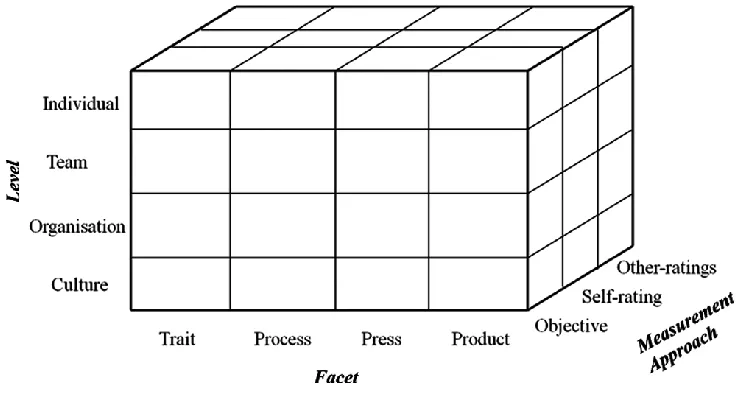
the methods that have been used to measure creative output. Batey (2012) developed a heuristic,
multi-level framework to account for different levels of analysis, facets, and approaches to
measuring creativity. Within this taxonomic framework, shown in the diagram from Batey’s
article reproduced below, creativity can be analyzed from an individual, team, organization, or
culture level by considering the four facets of creativity—i.e., traits, process, press, or product.
Measures of creativity under this heuristic model can employ: (1) objective measures, (2)
subjective assessments through self-reports, or (3) external appraisals or ratings by subject matter
Figure 2 Measures of Creativity (Batey, 2012)
From a practice perspective, the assessment of creative ideas and output is especially
important for organizations during the idea evaluation or “validation stage” (Montag et al., 2012;
Csikszentmihalyi, 1996). However, organizational creativity research has shown managers do
not differentiate between creativity, innovation, or problem solving, incorrectly viewing the three
distinctly separate constructs as inextricably connected (Banks, Calvey, Owen, & Russell, 2002).
Evaluating the most promising ideas and creative output during the iterative stages of the
creative process requires accurate forecasting of which ideas and products are most creative, as
well as which have the best chance for ultimate success (Daily & Mumford, 2006; Lonergan,
Scott, and Mumford, 2004). Thus, evaluation of creative ideas and products is one of the most
critical steps in the creative process, yet organizations struggle to make appropriate decisions
about the creative ideas and products they develop (Harvey & Kou, 2013). For example, groups
have been shown to prefer relatively average ideas produced by their members over more novel
ideas created by other individuals (Rietzschel, Nijstad, & Stroebe, 2006). Unlike idea
convergent decision-making activity that occurs in later stages of the creative process and seeks
to filter out poor ideas (Paletz & Schunn, 2010; Singh & Fleming, 2010). This convergent
process of product or idea evaluation in group settings involves social, political, and critical
assessment functions, as members “choose consciously or subconsciously to ignore ideas,
advocate for their own ideas, show enthusiasm for others’ ideas, and provide interpersonal
rewards for good ideas” and “reflects the iterative and integrated nature of idea evaluation at the
individual and organizational levels” (Rietzschel et al., 2006: 347). Organizations and
individuals that are best able to discern which ideas and products are highly creative will not
only produce the candidates that are most likely to be successful, but will also reduce the overall
cost and timeframe of development.
From a research perspective, measurement of creative output is critical to the validity of
experimental results. As noted above, various concerns have been raised about the evaluation of
creative output in research; in particular the possibility of measurement misspecification as a
result of differences between construct definitions and empirical measurement approaches
(Sullivan & Ford, 2010). After a review of published creativity research in top journals over a
10-year period, Sullivan & Ford (2010) noted that, despite the growing use of definitions
including both “novelty” and “usefulness” components, most creativity research studies continue
to measure creativity as a unitary construct that relies on a single dimension. Other authors have
suggested novelty and usefulness are associated with different organizational processes (Ford &
Gioia, 2000), may have different causes and consequences (Reiter-Palmon, Illies, Cross,
Buboltz, & Nimps, 2009), and may have distinct goals that can be represented as orthogonal
constructs (Litchfield, 2008). As a result, some researchers hypothesize the differences between
that threatens statistical conclusion validity and could result in errors of inference (Sullivan &
Ford, 2010; Montag et al., 2012).
To test their hypotheses about possible measurement misspecification of prior creativity
research, Sullivan & Ford (2010) conducted two experiments to examine alternative
measurement models of creativity, comparing a one-factor measurement model with reflective
measures, against two-factor and three-factor composite latent models using novelty and
usefulness and novelty, usefulness, and ‘stylistic appeal', respectively, as formative indicators.
The results from both experiments suggest the two-factor composite latent construct model with
distinct formative indicators for novelty and usefulness provided the best fit of the participants’
assessments (Sullivan & Ford, 2010). However, the authors point out the measurement model
required by a specific study may depend on the nature of research and its theoretical approach,
and that in some circumstances a unidimensional or multiple-facet reflective indicator approach
may be more appropriate. The authors conclude by noting a significant limitation of their
research involved the use of students and professors to create and judge creative output,
suggesting future research should investigate “the relative weight of novelty and usefulness
assessments,” as well as “how other appropriate judges evaluate the creativity of stimulus items
in their domain” and “whether the depth or breadth of the judges’ domain expertise affects
creativity assessments” (Sullivan & Ford, 2010: 518). This research attempts to respond to the
authors’ three suggestions.
Other attempts to address the perceived insufficiency of the “novel and useful” construct
and operational definitions have generally involved the addition of a new facet or criterion. As
noted above, Sullivan & Ford (2010) included the criterion of “stylistic appeal” in their analysis
support to unequivocally recommend adding that factor. Boden (2004) advocated three facets,
requiring a creative idea to be novel, valuable, and surprising, following Bruner’s (1962)
definition of creativity as involving an element of “effective surprise.” Simonton (2012) and
others have advocated that researchers adopt a definition similar to the three-part test utilized by
the United States Patent and Trademark Office (USPTO) for patent applications, under which a
product or idea will only be awarded a patent if it is shown to be: 1) novel; 2) “non-obvious;”
and, 3) useful. Section 101 of Title 35 of the United States Code governs the Patentability of a
product or idea, which asserts:
Whoever invents or discovers any new and useful process, machine, manufacture, or
composition of matter, or any new and useful improvement thereof, may obtain a patent
therefor, subject to the conditions and requirements of this title.
Section 102 of Title 35 U.S.C. expands on the newness requirement of Section 101 by stating the
invention must exhibit “novelty,” which is defined as not having already been patented,
described in a publication, or otherwise in public use, for sale or available to the public. This
requirement is also described as the “prior art” exclusion and is designed to preclude obtaining a
patent by appropriating someone else’s previously published idea or publicly available product.
Section 103 adds the second criterion of “non-obvious subject matter”:
A patent for a claimed invention may not be obtained…if the differences between the
claimed invention and the prior art are such that the claimed invention as a whole would
have been obvious … to a person having ordinary skill in the art to which the claimed
invention pertains.
The “non-obviousness” criterion, or “surprise” in Simonton’s (2012) formulation,
art” such that is not simply an obvious extension of an existing idea or concept (Barton, 2003:
476). European patent regulations contain very similar requirements of novelty and usefulness,
but term the non-obviousness requirement as “inventiveness,” requiring that the product or idea
represent an “inventive step” or significant iteration in development either through the
combination of disparate ideas or departure from a normal development cycle (Barton, 2003).
Although some researchers have used a three-part criterion in the past, Simonton points out that
“few have followed their example” (Simonton, 2012: 98, fn, 1).
II.3.1 Consensual Assessment Technique
Most studies of creativity that involve the assessment of creative products or output rely
on external appraisals (Batey, 2012). The assessment of creative products by others initially
began as “aesthetic judgment” of the arts more than 100 years ago (Kaufman, Baer, Cropley,
Reiter-Palmon, & Sinnett, 2013). Amabile (1982) built on that historical approach in developing
the Consensual Assessment Technique (CAT), which provides specific guidelines for measuring
the results and output of creative effort. Amabile’s consensual assessment technique is expressly
premised on a “product-based” operational definition of creativity:
A product or response is creative to the extent that appropriate observers independently
agree it is creative. Appropriate observers are those familiar with the domain in which
the product was created or the response articulated. (Amabile, 1982: 1001.)
Amabile’s CAT is unabashed in its reliance on knowledgeable individuals’ subjective and
intersubjective judgment of creative products, acknowledging the difficulty, if not near
impossibility (and perhaps the irrelevance), of attempting to assess creativity objectively
(Amabile, 1982, 1996). Moreover, CAT rests on two important assumptions: first, that given an
that creativity exists on a continuum, i.e., some products and outcomes are more creative than
others are. This first assumption takes into account the fact that, while it is difficult to identify
specific features of a product that make it creative, people can recognize creativity when they see
it. Second, as a consensual technique, CAT assumes there are degrees of creativity and that
experts and individuals familiar with the domain can generally agree on the level of creativity of
a particular product (Amabile, 1982, 1996). The consensual assessment technique follows the
manner in which creativity is judged in many real-world situations in that it requires a group of
judges, usually domain experts, working independently and without specific instructions, to
make intersubjective assessments of creativity (Kaufman & Baer, 2012). As a result, CAT has
been called the “gold standard” of creative output measurement for research (Kaufman & Baer,
2012).
Recent research highlights the importance of expertise in judging creative output using
consensual assessment techniques and the stark differences between expert and novice ratings of
creativity. For example, Kaufman, Baer, Cole, and Sexton (2008) assessed the level of interrater
agreement among domain experts and college students who were asked to judge the creativity of
poems and short stories. Novices were found incomparable with experts in both cases. For
poetry, the correlation between experts and novices was only r = .22, and for short stories the
correlation was r = .71 (Kaufman et al., 2008; Kaufman, Baer & Cole, 2009). The expert judges
had very high levels of interrater reliability for both the poetry and short stories, with a
coefficient α of .83 and .92, respectively. For novices, interrater reliability was surprisingly also
very high, with a coefficient α of .94 for the poems and .93 for short stories. However, the very
high interrater reliabilities of the novices required using scores from 106 novice judges. When
dramatically to just .58 for poetry and .53 for short stories. Even the moderate level of
agreement of r = .71 between novices and experts for short stories necessitated reliance on more
than 100 novices. As a result, the authors concluded novices could not be relied upon to produce
valid creativity judgments, and that the validity of CAT as a measurement tool in research
requires the use of domain experts as judges (Kaufman et al., 2013).
Contrary to the evidence showing that domain expert judges are necessary for the
consensual assessment technique to be considered reliable and valid, and that experts perform at
a much higher level as judges than novices, a review of published research suggests the vast
majority of creativity studies over the past 30 years utilizing CAT or similar consensual
techniques to assess creative outcomes have not used recognized domain experts as judges (see
Appendix 7.2, Summary of Published Creativity Research). The review reveals that a high
preponderance of studies (37 of 41) used college students, research assistants, university
professors, or study researchers to judge the creative outcomes produced by study participants.
The use of non-expert judges to assess creative outcomes—where CAT necessitates expert
judges for reliability and validity—raises questions about the soundness of those research results,
as well as the appropriateness of the criteria and processes used to evaluate creativity in those
studies (Sullivan & Ford, 2010). However, how experts actually judge creativity in practice is
not well understood.
II.4 Experts and Expertise-Based Intuition
Psychologists have studied expertise for over a century in an attempt to understand how
experts acquire and use knowledge, particularly studying the differences in mental functioning
between experts and novices (Andre & Gobet, 2008). Current research on expertise suggests that
knowledge organization. Visual perception plays a major role in evoking knowledge (Henderson
& Hollingworth, 1999) and, because expert knowledge is fundamentally different from that of
novices, the study of cognitive expertise cannot be separated from the study of perception—
experts literally “see” their domain differently than novices (Reingold, Charness, Pomplun, &
Stampe, 2001). Experts are also fundamentally different from novices in the way they acquire,
manage, and organize domain knowledge (Andre & Gobet, 2008). While experts have not been
shown to possess greater memory or computational capacity than others with similar intelligence
(Ericsson & Ward, 2007; Ericsson, 2014; but see Grabner, 2014), the manner in which they
develop and reorganize information sets them apart from novices of similar general abilities
(Chase & Simon, 1973).
Expert knowledge is thought to be organized in two ways, as “chunks” or “scripts” at a
low level of abstraction, and in more schematic and abstract elements or “templates” which can
be adapted readily to a larger range of situations in higher levels (Andre & Gobet, 2008).
Experts use these chunks and templates to situate problems or challenges within groups of past
experiences from long-term memory, allowing the expert to extrapolate or anticipate next steps,
the way an expert chess player can both “see” the entire chess board and simultaneously imagine
most if not all of the next possible moves available (Gobet & Simon, 1996). Obtaining the
requisite knowledge and schemas to become an expert requires a considerable number of years
of direct experience and “deliberate practice” (Ericsson, Krampe, & Tesch-Romer, 1993).
Interest in the effectiveness of intuition in judgment and decision-making has also grown
in recent years as scholars have begun to accept the concept, particularly with regard to expert
use of intuition. Several researchers have suggested that expert intuition might be an effective
In psychology, intuition is generally accepted to arise from one of two information-processing
systems that operate within the brain (Epstein, 2003). Under this dual-process model, decision
making is hypothesized as either the product of primal, automatic, associative and experiential
“System 1” processing, or the result of rational, intentional, deliberate, and extensional “System
2” processing (Epstein, 2003; Kahneman, 2003, 2011). Intuition is thought to arise from the
faster, associative, and “nonconscious” information processing of System 1 (Epstein 2003;
Kahneman 2003, 2011).
In management literature drawing upon dual-process models, the construct of intuition
consists of four characteristics: “Intuition is a (1) nonconscious process (2) involving holistic
associations (3) that are produced rapidly, which (4) result in affectively charged judgments”
(Dane & Pratt 2007: 36). The process of “intuiting” is rapid (often instantaneous), spontaneous
(without effort and unable to be controlled) and alogical (not necessarily contradicting the rules
of logic but may not follow them either) (Dorfler & Ackermann, 2012).
Intuiting has been theorized to involve matching environmental stimuli or a
non-algorithmic task with nonconscious patterns, schemas, or cues (Dane & Pratt, 2007; Klein, 1998)
or linking or associating disparate elements of information (Epstein, Pacini, Denes-Raj, & Heier,
1996). However, a significant body of research shows intuition is ineffective in decision-making
involving algorithmic tasks that can be decomposed and solved logically, sequentially, or
mathematically (Dane, Rockmann & Pratt, 2012). In fact, research has repeatedly shown that
reliance on intuition in decision-making that involves decomposable tasks, mathematical
calculations, or following a sequence of rules is likely to produce gross misjudgments (Tversky
& Kahneman, 1974; Kahneman, 2003). In their research on “heuristics and biases,” Kahneman