When you have completed this lecture, you will be able to
1 Describe and identify monopolistic competition.
2 Explain how a firm in monopolistic competition determines its output and price in the short run and the long run.
3 Explain why advertising costs are high and why firms use brand names in monopolistic competition.
1 WHAT IS MONOPOLISTIC
COMPETITION?
Monopolistic competition
is a market structure in which • A large number of firms compete.• Each firm produces a differentiated product.
• Firms compete on price, product quality, and marketing.
•
Large Number of Firms
Like perfect competition, the market has a large number of firms. Three implications are
• Small market share
• No market dominance
• Collusion impossible
•
Product Differentation
Product differentiation
is making a product that is slightly different from the products of competing firms.A differentiated product has close substitutes but it does not have perfect substitutes.
When the price of one firm’s product rises, the quantity demanded of that firm’s product decreases.
•
Competing on Quality, Price, and Marketing
Quality
Design, reliability, after-sales service, and buyer’s ease of access to the product.
Price
Because of product differentiation, the demand curve for the firms’ product is downward sloping.
Marketing
Marketing has two main forms: Advertising and packaging.
1 WHAT IS MONOPOLISTIC
Entry and Exit
No barriers to entry. …
So the firm cannot make economic profit in the long run.
Identifying Monopolistic Competition
Two indexes:
• The four-firm concentration ratio
• The Herfindahl-Hirschman Index
2 OUTPUT AND PRICE DECISIONS
How, given its costs and the demand for its jeans, does Lucky brand decide the quantity of jeans to produce and the price at which to sell them?
•
The Firm’s Profit-Maximizing Decision
The firm in monopolistic competition makes its output and price decision just like a monopoly firm does.
1. Profit is maximized when MR = MC.
3. The profit-maximizing price is $100 per pair, which exceeds the ATC of $50 per pair.
4. The firm makes an economic profit of $6,250 a day.
2. The profit-maximizing output is 125 pairs of Lucky jeans per day.
2 OUTPUT AND PRICE DECISIONS
•
Profit Maximizing Might Be Loss Minimizing
Some firms in monopolistic competition have a tough time making a profit. A burst of entry into an industry can limit the demand for each firm’s own
product.
1. Loss is minimized when MC = MR.
3. The price is $40 per month, which is less than ATC.
4. The firm incurs an economic loss.
2. The loss-minimizing output is 40,000
customers and
Long Run: Zero Economic Profit
Economic profit induces entry and economic loss induces exit, as in perfect competition.
Entry decreases the demand for the product of each firm. Exit increases the demand for the product of each firm.
In the long run, economic profit is competed away and firms make zero economic profit.
Figure 3 on the next slide illustrates long-run equilibrium.
1. The output that
maximizes profit is 75 pairs of Lucky jeans a day.
2. The price is $70 per pair. Average total cost is also $70 per pair.
3. Economic profit is zero.
Monopolistic Competition and Perfect Competition
The two key differences between monopolistic competition and perfect competition are that in monopolistic competition, there is
• Excess capacity
• A markup of price over marginal cost
Excess Capacity
A firm has
excess capacity
if the quantity it produces is less than the quantity at which average total cost is a minimum. A firm’sefficient scale
is the quantity of production at whichaverage total cost is a minimum.
Markup
A firm’s
markup
is the amount by which price exceeds marginal cost.1. The efficient scale is 100 pairs of Lucky jeans a day.
2. The firm produces less
than the efficient scale and has excess capacity.
3. Price exceeds 4. marginal cost by the amount of
5. the markup.
6. A deadweight loss arises.
In perfect competition,
1. The efficient quantity is produced and
2. Price equals marginal cost.
•
Is Monopolistic Competition Efficient?
Deadweight Loss
Because price exceeds marginal cost, monopolistic competition creates deadweight loss—an indicator of inefficiency.
Making the Relevant Comparison
Price exceeds marginal cost because of product differentiation. But product variety is valued.
The Bottom Line
Product variety is both valued and costly. But compared to the alternative, monopolistic competition looks efficient.
3 PRODUCT DEVELOPMENT AND
MARKETING
Product Development
Wherever economic profits are earned, imitators emerge.
To maintain economic profit, a firm must seek out new products.
Profit-Maximizing Product Development
When the marginal cost of a better product equals the marginal revenue from a better product, the firm is doing the profit-maximizing amount of product
3 PRODUCT DEVELOPMENT AND
MARKETING
Efficiency and Product Development
Regardless of whether a product improvement is real or imagined, its value to the consumer is its marginal benefit, which equals the amount the consumer is willing to pay.
The marginal benefit to the producer is the marginal revenue, which in equilibrium equals marginal cost.
3 PRODUCT DEVELOPMENT AND
MARKETING
Marketing
Firms in monopolistic competition spend a large amount on advertising and packaging their products.
Marketing Expenditures
3 PRODUCT DEVELOPMENT AND
MARKETING
Selling Costs and Total Costs
Advertising expenditures increase the costs of a monopolistically competitive firm above those of a perfectly competitive firm or a monopoly.
Advertising costs are fixed costs.
Advertising costs per unit decrease as production increases.
1. When advertising costs are added to
2. The average total cost of production,
3. Average total cost increases by a
greater amount at small outputs than at large outputs.
4. If advertising enables sales to increase from 25 pairs of jeans a day to 100 pairs a day,
the average total cost falls from $60 a pair to $40 a pair.
3 PRODUCT DEVELOPMENT AND
MARKETING
Selling Costs and Demand
Advertising and other selling efforts change the demand for a firm’s product.
The effects are complex:
• A firm’s own advertising increases the demand for its product.
• Advertising by all firms might decrease the demand for any one firm’s product and might make demand more elastic.
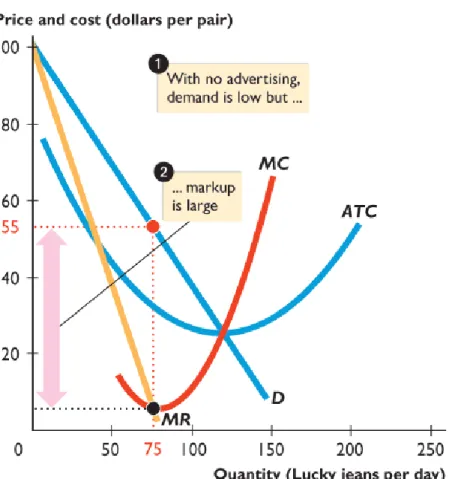
Figure 6 shows the possible effect of advertising.
1. With no advertising, demand is low but …
2. The markup is large.
With advertising, average total cost increases.
If advertising enables more firms to survive, new firms might be encouraged to enter the market.
The number of firms in the market might increase. The demand for any one firm’s product decreases.
If all firms advertise, the demand for any one firm’s product becomes more elastic.
The figure on the next slide shows these effects.
With advertising, average total cost increases and the ATC curve becomes ATC1.
If all firms advertise, demand for one firm’s product decreases and becomes more elastic.
Profit-maximizing output increases, the price falls, and the markup shrinks.
3 PRODUCT DEVELOPMENT AND
MARKETING
Using Advertising to Signal Quality
Some advertising is very costly and has almost no
information content about the item being advertised. Such advertising is used to signal high quality.
A
signal
is an action taken by an informed person or firm to send a message to uninformed people.Signaling works because it is profitable to signal high quality and deliver it but unprofitable to signal a high quality
3 PRODUCT DEVELOPMENT AND
MARKETING
Brand Names
Brand names are also used to provide information about the quality of a product.
It is costly to establish a widely recognized brand name. Like costly advertising, a brand name signals high quality.
Brand names work because it is unprofitable to incur the cost of creating a brand name and then deliver a low quality
3 PRODUCT DEVELOPMENT AND
MARKETING
Efficiency of Advertising and Brand Names
Advertising and brand names that provide information
about the quality of products enable buyers to make better choices.
Advertising and brand names can be efficient if the marginal cost of the information equals its marginal benefit.
In the long-run equilibrium, entry and innovation by each competitor will drive the economic profit toward zero.
Each cell-phone maker will offer a degree of product differentiation that equates the marginal cost of variety with its marginal benefit.
But the pursuit of economic profit will spur ever more innovation.