Methodological Aspects of Estimation of ICT-Based
Economic Development
information and knowledge economy are developed.
Keywords: ICT-based economy; information and knowledge economy; indicators system; economic indicators; composite index; subindices; ICT, and e-services; high-tech park.
Introduction
Information and knowledge economy (IKE) formed as a result of it reveals itself as the next stage of economic development. In recent years, developed countries make the rapid transition into the new type of economy based on modern ICT technologies, information, and knowledge. Transition into the new economy is characterized with changing in the nature of traditional productions areas, shifting the information into the major production resource, and economic system to be the main development factor. The economic health, the level of economic development of a country is increasingly tied to the sustainability of information economy. And the information economy is characterized with changing in the nature of traditional productions areas, shifting the information into the major production resource, and economic system to be the main development factor. In recent years developed countries invested heavily in the sphere of information and communications technology (ICT). This process is to maintain their competitiveness in the global information economy. The emerging of the economy is pursuing through enhancement and promotion of their ICT.
Alovsat G. ALIYEV
Institute of Information Technology of Azerbaijan, National Academy of Sciences 9A B. Vahabzade St., AZ1141, Baku, AZ
Abstract.This article is dedicated to methodological aspects of estimation of ICT-based
economic development. İnformation economy development and formation trends in
The processes of digitization have a significant impact on the globalization of economic relations and the development of a new economy.
Technological development and innovations act as a long-term driving force of economic increase. Information and knowledge become the main development factor of society. The fields of production of knowledge and information products play an extremely important role in the development and competitiveness of the countries going from the industrial development stage to post-industrial stage. In other words, nowadays development of the countries highly depends on the development of science-intensive fields, including technology innovations.
The factors of global character have influenced the processes going on in all fields of national economy. The development concept "Azerbaijan 2020 - a look into the future" (Azerbaijan Government, 2015), as well as the Strategic Roadmaps of the National Economy (Center for Analysis of Economic Reforms and Communication, 2017) indicates the main directions of the country's development.
In order to transform the economy of the country into the economy based on efficiency, a transition to the stage characterized by the advantage of innovations must be provided. At the same time, the purposefulimprovement of the structure of the economy is one of the main issues. In the period of formation of the Global information society (IS), accepted as the development ideology of the third millennium information, technology and knowledge have become the competitiveness sustainability factors of the most world countries. Serious need for analytical analysis and assessment of the level of innovative economy developing as a result of their wide implementation appeared. For the implementation of quantitative and qualitative evaluation of the application of high technologies, including ICT in different sectors some indicators system was developed by international organizations. They have some methodological defects and application difficulties. That is why for objective assessment of the development level of information economy in the countries there is a need for the development of indicators system in different levels. Creation of calculating methods of these indicators and development of suggestions and recommendations about eliminations of the existing issues in this sector is also one of the important problems.
A strong linkage exists between the production and use of ICT and the development of a sustainable information economy. It contributes to economic growth of emerging economies. A sustainable information economy depends upon the production of ICT goods and services and the diffusion and use of ICT in other sectors.
Research design and methodology
In this research work, development level of the economy on the basis of ICT is taken. The components, structure, existing problems, estimation indicators of the new information economy, structure, formation and development tendencies of information economy in foreign countries are revealed. Multilevel indicators have been proposed for the assessment of the level of economic development. Formation and development tendencies of information economy in leading foreign countries are taken into consideration. Systematic analysis, the theory of algorithms, correlation and regression analysis are used to investigate the considered issues. Additionally, the systematic approach, the theory of information, and the theory of fuzzy sets have also been applied to the process. Multi-criterion optimization methods, economic-mathematical modeling, and econometric analysis methods are used in the explanation of the analysis and evaluation methodology, in the calculation of indicators and indices. Mathematical statistics, correlation and regression methods are used in the conducting of economic analysis. Official statistical data and empirical assessments are used in the research process. Computer software packages and analytical statistical methods are applied in the obtained results.
The stage of the formation of ICT-based economic development
Analysis of the economic characteristics of the post-industrial era shows that this era can be called information economy era as well. The information economy is the comparatively newly formed term. Those close to the meaning are definitions like
“post” and “neo-industrial society”, “knowledge economy”, “new economy” and so
on. In recent years “new economy” which is used in scientific literature, is also used
as a synonym of the development stage of the post-industrial economy. Different researchers attempted to explore different aspects of this stage of the economy (Alguliyev, Aliyev, & Abbasova, 2017; Fathollahi, Momeni, Elahi, & Sajjad Najafi,
2015). There are many fields of “new economy” relating to different spheres of
The information economy and ICT development tendencies of various countries
The U.S. is a leader in the field of formation of the information economy. The U.S. developed comprehensive, multilevel system of national innovation in this area, which can be even regarded as the world standard. The U.S. carried out its implementations in the fields of science and innovation, education, the development of ICT, risk financing, the development of the information economy, which meets requirements of the legal framework, as well as a variety of related activities. Due to the tax regulation mechanisms of American tax policy, the U.S. investment in informatics tools increased by 4 times each decade, and the labor productivity averagely by 2.1 % (OECD, 2014).
28 % of all research and experimental-design work in the U.S. (R&D) are conducted with the financial support of the state (European Commission, 2018). The significant role of the state in the formation of information market is associated with a high capital-intensive of the whole software and innovation activity.
The state support for newly established enterprises includes reducing state barriers, ensuring their access to credit resources, preferential tax for small and medium businesses. First of all, the American experience in the information and telecommunication industry should be especially noted in the field of antitrust regulation. Investment of billions of dollars in R&D sphere is strongly influenced by the state monopoly policy.
According to the scale of costs of R&D, logistics and human resources in recent decades, the United States left behind all other countries. In 2011, the total costs incurred by the US to R&D amounted to $ 499 billion (3.7% of GDP). This amounts to approximately 42% of total cost of research and development of Organization for Economic Cooperation and Development (OECD) member countries (OECD, 2014). Scientific and technical potential of the U.S. is concentrated higher in some states - California, Michigan, Massachusetts, and Pennsylvania.
Israeli high-tech revolution is the basis of the country's economic development. Breakthrough in the field of high-tech in the country was due to the massive import of "human capital". An impact on the world high-tech products market is the characteristic of the Israeli economy. The Israeli government adopted a package of new programs to promote technological innovation. Under the programs, the government-owned insurance company provided investment funds at risk with investment guarantees up to 70% of their initial capital. Thus, the high-tech exports increased by $ 21 billion in 2011. At the same time, the share of high-tech products in total exports (up to 57% in 2011) increased significantly (IndexMundi, 2018).
R&D, the use of the Internet at the state enterprises, training of more professional human resources, etc. In early XXI century, international competitiveness of Japan is associated with the development of the Internet and overall economic liberalization. The new methods were adopted for GDP measurement, which benefits from software, new technology, services, healthcare, infrastructure and other advantages more precisely.
The Republic of Korea established its national policy for science and technology according to the "general innovation" program. The national innovation system was expected to be the most important factor in the development of the national economy of the country. The development of information areas, such as the production of special displays for digital information transmission, intelligent robots, digital contents and etc. have become a priority of the national economy. The success of South Korea in this field is due to the publicity of telecommunications market. Long-term development strategy of the telecommunications market is to provide high-speed Internet access. The antitrust policy of South Korea contributes to the development of video-information transmission technologies via the Internet. This, in its turn, contributes to the competitive advantages of South Korean manufacturers in the field of mobile devices provided with Internet access (Bock, Field, Zwillenberg, & Rogers, 2015).
According to this indicator Chinese lagged behind the U.S. and Japan. China distinguishes for its highly developed Internet, and it is supported and controlled by the state directly. Including the Internet, information technology, first of all, is developed to present China's export products to the world market. China is the largest export economy in the world. In 2016, China exported $2.06T and imported $1.32T, resulting in a positive trade balance of $736B. In 2016 the GDP of China was $11.2T and its GDP per capita was $15.5k (IndexMundi, 2018). The Chinese government supports the distribution of Internet technologies in most advanced areas of industry, in order to improve the management quality and competitiveness efficiency.
India has made significant progress in the development of the information economy. Approximately 4 million people in the country are engaged in the spheres of service, and 340 thousand in computer companies. IT industry of India is specialized in the field of outsourcing and offshore programming (Aliyev, 2013; Techatassanasoontorn, Huang, Trauth, & Juntiwasarakij, 2011). Offshore programming development is fully supported by the government; India increases its budget for training human resources, R&D, and e-commerce to develop information economy. India is considered to be a sufficiently serious competitor for Central and Eastern European countries specialized in the field of offshore programming, as well as Russia.
India, South Korea, China, Thailand had some success in improving the educational potential of the country. It was the impetus for the development of knowledge-based industries. Moreover, these countries have been able to go with their goods and services to the global information technology market. At the same time, the standard of living here is pretty low, on the order below the standard of living in Singapore or Taiwan. In these countries the low domestic demand for high-tech products, and hence the level of development of information and telecommunications infrastructure. High qualification and low wages specialists form concurrently advantages of these countries (Aliyev, 2013; Budaeva, 2010).
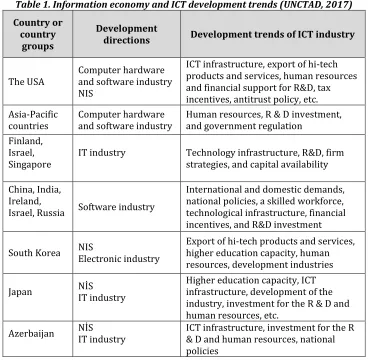
The analysis of development tendencies of various countries in the formation and development of information economy showed, that ICT infrastructure, national innovation system, the development of scientific and service industries, the export of high-tech products, higher potential of education, high-level specialized human resources, and etc. are the key factors in the formation and development of information economy (Table 1) (UNCTAD, 2017).
Table 1. Information economy and ICT development trends (UNCTAD, 2017) Country or
country groups
Development
directions Development trends of ICT industry
The USA Computer hardware and software industry NIS
ICT infrastructure, export of hi-tech products and services, human resources and financial support for R&D, tax incentives, antitrust policy, etc. Asia-Pacific
countries Computer hardware and software industry Human resources, R & D investment, and government regulation Finland,
Israel,
Singapore IT industry Technology infrastructure, R&D, firm strategies, and capital availability
China, India, Ireland,
Israel, Russia Software industry
International and domestic demands, national policies, a skilled workforce, technological infrastructure, financial incentives, and R&D investment
South Korea NIS Electronic industry Export of hi-tech products and services, higher education capacity, human resources, development industries
Japan NİSIT industry Higher education capacity, ICT infrastructure, development of the industry, investment for the R & D and human resources, etc.
The comparative analysis of development tendencies of various countries
There is no one-size-fits-all path of information economy development in the world. We consider that there are general issues that are important for developing a sustainable information economy. These countries have additional for building their information economies.
The results claim that sustainable information economy is being formed in Azerbaijan. The improvement and further development of the structural economy are required for it. Besides, Azerbaijan needs coherent taxation, ICT, and human capital policies in order to develop a sustainable information economy.
Infrastructural challenges include uneven physical infrastructure development across regions. Infrastructure issues of the workforce are too small. R&D has low expenditures in the ICT sector. The economic growth of Azerbaijan will depend on an increase in investments and improvement in technology and innovation. A good infrastructure is important to facilitate the work in the ICT sector. Ireland is in the leading position with respect to infrastructure development. The Irish government supports the active involvement of the private sector. China is far more advanced than India with respect to ICT diffusion and infrastructure development. China and India are at a similar developmental stage of ICT. In terms of infrastructure development of China can be attributed to a considerable amount of investment, nationwide developmental strategy. The government strongly intervenes and controls also the development of the economy (Techatassanasoontorn et al., 2011).
In India, the service industry of ICT is concentrated around major clusters including Bangalore, Mumbai, Chennai, Delhi, and Hyderabad (IndexMundi, 2018). In these clusters, the infrastructure has been developed to facilitate ICT sector work. In the rest of India, the ICT infrastructure is insufficiently developed. It lowers the national average indicators and poses a barrier to future growth.
Azerbaijan has made steady progress in the development of ICT infrastructure. Azerbaijan can learn some valuable lessons. It must provide continuous investment in ICT infrastructure. It must pay more attention to the effort in establishing a strong technical and human infrastructure. It must promote balanced nationwide ICT development. The development of information economy in many different countries is the criticality of ensuring the supply of a qualified knowledge workforce. The education was made essentially free in Ireland. It ensured the supply of a skilled workforce.
China to turn the brain-drain into a brain-gain. The challenges China and India are currently facing valuable lessons for Azerbaijan. And Azerbaijan needs to improve the quality and quantity of IT workers, the country must support the growth and value-added contribution of its IT industry. Azerbaijan carefully evaluates the global market trend and its distinctive characteristics to define its own developmental path.
The situation of economic development on the basis of ICT in Azerbaijan
The national development model is adapted to analyzed development trends of advanced countries. Azerbaijan is a country with emerging economy in Europe and Central Asia. In the region, it has experienced substantial economic growth during the last decade. Azerbaijan has been actively seeking ways to develop its ICT sector. It attracts foreign investment, foster domestic entrepreneurship, and raise its competitive position.
ICT sector in the country was declared a priority in recent years, and many large-scale projects are implemented in this regard. That is why, according to some development indicators, Azerbaijan left behind some leading countries. "The Global Information Technology Report 2014", developed by the World Economic Forum, rated Azerbaijan 49th among 148 countries for its "Networked Readiness Index", which reflects the development of the countries in the field of information technology (World Economic Forum, 2014). Azerbaijan was rated 56th last year. According to this table, Azerbaijan left behind even some leading countries.
It maintains its leading position in the CIS. It is being rated 59th for the number of Internet users per 100 people out of 148 countries, and 46th for the number of Internet subscribers. In addition, due to the innovative ability of the companies, Azerbaijan rated 35th in the world and 1st among CIS. Currently, there are about 1 million Internet users in Azerbaijan 50% of which is broadband users (World Bank, 2014).
Recently, ICT sector has become leading and dynamically developing an area of the economy. Over the years, investment in the industry amounted to approximately $ 2.5 billion. The mobile network has been expanded. The 4G technology was introduced in the country in 2012. There are 110 mobile subscribers per 100 people in the country. Internet channel capacity increased by 12.9 times in last five years and reached 200 Gbit/s, and the size of the Internet services market increased about 4 times (World Bank, 2014).
"Electronic-State" project is carried out in the country successfully, the use of electronic signatures is expanded. "E-state" portal (www.e-gov.az) was launched in order to provide information exchange among information systems of government agencies and to ensure e- services through "single-window" principle. 179 electronic services submitted by 30 state agencies are available for the users. At the same time, service centers "ASAN Xidmat" are organized to provide comfortable and higher quality services to citizens from a single location, with the use of modern innovations, which is highly appreciated by many international organizations and universities, and became the brand of Azerbaijan. High-specialized human resources are trained in ICT to expand national capacity. State Fund for Development of Information Technology and "High-Tech Park" have been established in the country to provide developed and competitive innovative ICT industry with high export potential (Ministry of Transport, Communication and High Technologies of the Republic of Azerbaijan, 2018). These new bodies will contribute to strengthening the economy of the republic of Azerbaijan, attracting foreign investment and expanding ICT products, and so on. Never use letter spacing and never use more than one space after each other.
Comparative analysis of measurement methods of the level of information and knowledge economy
The review analysis of scientific literature in which existing methods, indicators, and indices are analyzed, is carried out in order to estimate the formation and development level of information and knowledge economy. For this purpose, 122 articles of the US authors, 104 of the English authors, 85 of the Chinese authors, 41 of the Austrian authors, 28 of the Canadian authors, 21 of the German authors etc. which are included to Thomson Reuters base and published in 2010-2017, are round-reviewed.
There are different indices characterizing information and knowledge economy found in scientific literature (UNCTAD, 2017): 1) Economy index, 2) Digital economy and Society index, 3) Global competitiveness index, 4) Global creativity index, 5) Global innovation index, 6) Global ownership index, 7) Technological readiness index, 8) Economic stimulation and institutional conditions index, 9) Poverty and unemployment index, 10) Knowledge index, 11) Knowledge economy index etc.
(OECD, 2014). Of course, this indicator can’t reflect the conditions of IKE completely and correctly.
According to the method of European Commission (2013) readiness of formation of IKE in the country is calculated on the basis of the Global economy index (GEI). GEI = A*Tec + B*SISI + C*Mec
Tec – technological subindex, GISI – State institutional subindex, Mec – subindex of Macroeconomic conditions. A, B, C are the mass ratio of the proper indices and they meet these requirements:
A + B + C = 1,
according to EEC it is accepted that A = 1/3, B = 1/6 C = ½. It should be noted that proper indicators impact on the formation of each subindex. Proper indicators impact on the formation of each subindex. According to a different approach this kind of information base is used in Kazakhstan to evaluate KE level (Ivan, Ciurea, & Zamfiroiu, 2014; Yusuf, 2015): 1) quality of economic regulation, 2) the degree of execution of laws, 3) Royalty and license fees, 4) Publications in scientific and technical journals, 5) Number of patents, 6) The average duration of education, 7) Secondary/higher education coverage, 8) Number of phones/computers, 9) Number of internet users (per 1000). 2013-year method of Russian Statistics Committee under calculating of the part of high technology and science-intensive sector products (SIP) in GDP (Federal State Statistics Service, 2014) is based on the following: HTI – total extra income on high technology economic activity, SII – total extra income on science-intensive activity, TEI – total extra income on all economic activity SIP = (HTI + SII)/TEI
Calculating an integral indicator of IKE can also be implemented on the basis of relevant statistic report indicators (ITU, 2015).
X1 –the expense on research and development, m/person, X2 – the volume of
innovative product, X3 – the volume of innovative product for export, X4 – ICT
expenses.
In this case, in addition to the per capita indicators, ratio and structural indicators are also taken into account.
Structural indicators. X5– specific weight of high innovation product, %, X6 – the
specific weight of organizations using internet, %, X7– specific weight of computers
with internet access, %.
Ratio indicators. X8 – researcher project staff per 10 thousand employees, X9 –
researchers per 10 thousand economically active people, X10– costs of technological
innovation per 1 employed person, X11 – the number of patents per 100 researchers.
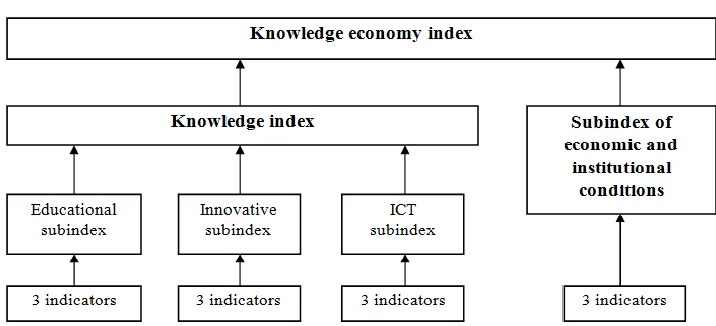
Figure 1. Formation structure of knowledge and knowledge economy index
Knowledge economy index is a complex indicator. It is developed by the proper department of WB since 2004. Formation and Calculating of the index are implemented on the basis ofmethodology of the World Bank.
A rating of 109 content and quality indicators in 4 groups from 146 countries in 2012 was calculated (ITU, 2015; World Bank, 2006). In the I group, indicators like 1) economic development conditions, 2) economic, legal environment, 3) quality of
regulation, 4) development of business, 5) initiatives, 6) society’s ability to use
knowledge are used in the formation of subindex of economic and institutional conditions. In the II group education level, literacy indicators, attitude to education are taken into account in calculating of the Educational index. NIS level, research centers, universities, techno parks, scientists, patents, scientific journals are accepted in calculating of the Innovation subindex in the III group (Alguliyev et al., 2017; Shahabadi et al., 2016). Information such as ICT level, regional infrastructure, information broadcast is required in calculating of ICT index in the IV group. The countries in each indicators group get 1-10 points. 2 common indices are calculated according to methodology:
1) KI –knowledge index. KI is an average of the 3 indices. KI = (EI + II + ICT) ∕ 3;
2)KEI – knowledge economy index. KEI is accepted as an average of 4 indices. KEI =
(EI + II + ICT + KI) ∕ 4, 0 ≤ KI ≤ 1, 0 ≤ KEI ≤ 1.
The characteristics of regional and sectorial approach to the assessment of the level of IKE
Analyses show that different approaches, indicators, methods, indices etc. exist in the
assessment of IKE level. There’s disunity in the conduct of comparative analyses. The
base groups that will be chosen for comparison don’t completely meet the requirements, regional characteristics. That’s why during economic analysis of the condition of the formation of IKE it’s suggested that from the functional point of view
economic development stages should be accepted as agrarian, industrial, information, knowledge, smart technologies.
Besides, guiding developed countries (G7, G10, G20), Post-soviet, former USSR, CIS countries, regional countries, developing countries, countries with similar conditions will be included into the group of the countries chosen for comparative analyses and assessments (Lopez-Leyva & Mungaray-Moctezuma, 2017; Svarc & Dabic, 2017). From this point of view, in particular, countries such as the USA, Great Britain, Germany, France, Italy, Canada, Japan, China, Russia, India, Korea, Turkey, Switzerland, Sweden, Austria, Iran, Malaysia, Singapore, Israel, Ireland, Pakistan, Hungary, Bulgaria, Kazakhstan, Ukraine, Azerbaijan, Belarus, Uzbekistan, Georgia and Armenia are added to the group of the countries chosen for comparison. At the same time, regional levels of the country as Baku, Nakhchivan, Karabakh – Shusha, Sumgait, Mingachevir, Shirvan, Lankaran, Guba, Shamakhi, Gabala, Shaki, and Ganja are accepted as economic-administrative division.
For conduction of economic analyses in a more compact area reconciled to each other, sub-sectors of IKE can also be classified. Taking this into account, sectorial classification of Information and knowledge economy can also be formed as following: Internet; Software engineering and automatization technologies; Digital contents; IT-service, telecommunication; Computing and e-industry; Creative content and digital media; Electronics sector; Military industry; Aerospace and aircraft industry; Management services; Bio, Nano and high technologies; Business and industrial services;
Pharmacology and medical industry; Environment and ecology; Optical industry; Transport and communication; Energy sector; Chemicals and oil chemistry; Scientific research and experimental design works; Scientific technological-intensive service sectors; Education; Media sector.
It should be noted that while carrying out analyses by this division spheres of the Traditional economy shouldn’t be forgotten, either. That’s why although Agriculture,
Information-communication technologies in management, production and service processes technologies, irrigation and cultivation technologies, marketing and sales technologies, know-how technologies, innovative technologies, smart technologies.
Calculating of GDP forming by information and knowledge
To calculate GDP forming by information and knowledge in any country the following marking and methods are suggested.
1. Production and service sectors according to official statistical reports of the country- i = 1,2,…,n
2. GDP of the ith sector – GDPi
3. GDP of the ithsector forming by the industrial production – GDPIi; GDPIi = Ii*GDP
4. GDP of the ith sector forming by the service production – GDPSi; GDPSi = Si*GDP
5. GDP of the ith sector forming by the information – GDPIni; GDPIni = Ini*GDPi
6. GDP of the ith sector forming by the knowledge – GDPKi; GDPKi = Ki*GDPi
7. GDP of the ith sector forming by the technology – GDPTi; GDPTi = Ti*GDPi 0 ≤ {𝐼𝑖 , 𝑆𝑖 , 𝐼𝑛𝑖 , 𝐾𝑖, 𝑇𝑖}≤ 1
0 ≤ (Ii + Si + Ini + Ki + Ti) ≤ 1
Weight ratios – Ii, Si, Ini, Ki, Ti are determined on the basis of expert assessment.
Their impact on GDPcan be assessedin two ways: 1)indirectly by impacting management, organizing, decisions; 2)as a shopping object of technology, information, knowledge or as the last product, technology, service, innovation (Alguliyev et al., 2017; Lopez-Leyva & Mungaray-Moctezuma, 2017; Shahabadi et al., 2016; Svarc & Dabic, 2017).
So, GDP formed by industry, service, information, knowledge, technology across the country (SIGDP, SSGDP, SInGDP, SKGDP, STGDP) will be calculated as follows: 1) country total GDP – TGDP = ∑𝑛𝑖=0𝐺𝐷𝑃𝑖
Indices and subindices forming a composite index of information and knowledge economy
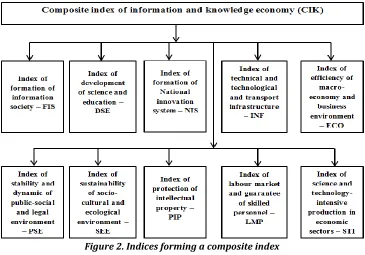
Forming of Composite index information and knowledge economy (CIK) is suggested by indices shown in figure 2.
Figure 2. Indices forming a composite index
The observations and analyses show that the number of content of subindices and indicators that impact forming those sectorial indices can be expressed as follows: 1. The content of index of formation of the information society (FIS) – 13 subindices
and indicators
2. Indicators that impact index of development of science and education (DSE) – 9 indicators
3. Components of the index of formation of national innovation system (NIS) – 13 subindices and indicators
4. Factors that impact index of technical and technological and transport infrastructure (INF) – 5 subindices and indicators
5. Indicators of the index of the efficiency of macro-economy and business environment (ECO) – 12 subindices and indicators
6. Components of the index of stability and dynamic of the public-social and legal environment (PSE) – 6 subindices and indicators
7. Factors that impact index of sustainability of socio-cultural and ecological environment (SEE) – 8 subindices and indicators
8. Indicators forming an index of protection of intellectual property (PIP) – 5 subindices and indicators
10.Indicators forming an index of science and technology-intensive production in economy sectors (STI) – 5 subindices and indicators.
The scientific-methodological basis of development of the system of composite indices on a comparative assessment of IKE
The structure of the system of composite indices (SCI) is suggested in multilevel form. The main level integratively reflects all the lower coming after it and the parameter which characterizes it is called composite index of IKE (IKC). Composite index forms as a result of the assessment and have a leading position in comparative analysis. So that it’s as a result of this value that IKE gets proper ratings. Each
subindex is evaluated in the [0,10] scale. Weight ratios as first are accepted as 1. The composite index is accepted as the sum of subindices and varies between [0,100]. Besides, calculating of a composite index of IKE can be also functionally noted as follows:
IKC = F(FIS, DSE, NIS, INF, ECO, PSE, SEE, PIP, LMP, STI). F expresses dependence form of the composite index from other indices. Thus it can be noted that scientific-methodological basis of development of composite indices system on a comparative assessment of IKE consists of the following:
• Composite indices are a useful indicator for assessment, analysis, and comparison of development level of society, economy.
• Composite index and indicators form due to a combination of separate indicators measured on the basis of multidimensional criteria.
• Composite index although not directly, but indirectly allows to evaluate the efficiency of IKE, gives ground to conclude on its role in the society, the extent of its part.
• To form composite index, the values of the indices above are suggested to be taken as a basis.
• The following can be noted on the assessment of indices and subindices:
• Average numbers, expert assessment, weight ratios, proper econometric and statistical methods will be used in the calculation of new indices and subindices. Indices, subindices and indicators system on a comparative assessment of IKE is divided into different hierarchical levels.
• The 1st national level consists of a composite integrative index of IKE, firstly 2nd level consists of 10 indices, 3rd level – 83 subindices and indicators, 4th level – 320 indicators of macro/micro nature. Indices and subindices of the 1st, 2nd and 3rd levels are determined on the basis of both expert assessment and the parameters forming the next level.
• 4th level indicators include both official statistics and other external and internal indicators. 4th level indicators mostly serve as a basis for determination of the 3rd and 2nd level subindices by experts. In this case, absolute indicators and their concrete values are used. The approach here is different and can be realized individually in accordance with every concrete situation.
• The indices and indicators system suggested in such comparative assessment, being a successful model, can meet existing modern requirements in the assessment of the activity of a separate region in Azerbaijan.
• Composite index in the interval [0,100], all 1st level indices and 2nd level subindices
in the interval [0,10] have “monotonous increase” characteristics, i.e. the increase of
the values shows better conditions while the decrease shows worsening of the conditions.
Practical importance, implementation and application of results
The economic analyses, summaries, recommendations are given, also methodologies, indices, indicators, criteria, models, methods suggested in the article can be used in different management levels, central executive structures, production and service sectors, development of state programs and strategies, development of action plans. The applied management methods can be used in the activity of different innovative structures. The practical significance of the work is that scientific-practical results achieved on the basis of the suggested methods and models allow increasing of the quality efficiency of the activity results of different management and production and service structures.
The results of the work are regularly used in the development of the indicators system of ICT sphere, implementation of the National Strategy for ICT, State Programs on Socio-Economic Development of Regions and Poverty Reduction.
The scientific-theoretical and practical results of the article can be used in the relevant central executive structures of the Republic. The effective implementation of the suggested models, methods and mechanisms is possible and can create additional opportunities for increasing efficiency in new economic management, diversification, and reconstruction of the economy, the formation of the non-oil sector.
Conclusion
Research gives reason to note that most of the viewed indices can’t apply the
as the main. According to this approach, the calculation method of GDP forming information and knowledge is suggested. At the same time the quantitative and qualitative content of the composite index of information and knowledge economy, the other indices, subindices and indicators forming it is explained. The stages of explaining and calculating of indices allow to use them as real analysis, planning, and forecasting mechanisms in the future.
The studies prove, that establishing efficient information infrastructure based on free and healthy competition of telecommunication market, the development of ICT sector, including the tech sector and the services, investing to R&D and high-tech institutions, expansion of the export of high-high-tech products, computer literacy of the population, availability of efficient and secure information exchange, training of human resources, government support and the legal and regulatory framework are of great importance for the formation and development of information economy.
Research shows that there is no single model exists for information economy
development. Further, globalization requires that the development of a nation’s
information economy must be closely connected to the global market. The current development rate of the country, taking into account its features, benefiting from the experience of the advanced countries, information society, and economy can be certainly formed and developed in Azerbaijan.
References
Alguliyev, R.M., Aliyev, A.G., and Abbasova, V.A. (2017). The study of formation characteristics and development tendencies of international information and knowledge economy. Review of Knowledge Economy, 4(1), 7-14.
Aliyev, A.G., Shahverdiyeva, R.O., and Abbasova, V.A. (2016). Comparative analysis of strategies and trends shaping the information economy of Azerbaijan with leading countries.Retrieved from
https://ieeexplore.ieee.org/document/7991788/.
Aliyev, A.G. (2013). Analysis of the current state of the Internet economy and its development prospects. Problems of Information Society, 2, 21-30.
Azerbaijan Government (2015). Azerbaijan 2020: Look into the Future. Retrieved from https://www.president.az/files/future_en.pdf.
Bock, W., Field, D., Zwillenberg, P., and Rogers, K. (2015). The Growth of the Global Internet Economy. Retrieved from
http://www.transactives.com/Portals/24/docs/GPSS%202015/Growth_of_t he_Global_Mobile_Internet_Economy_Feb_2015_tcm80-181599.pdf.
Budaeva, O.V. (2010). Assessment of development of information economy in different countries. Vestnik ESSTU, 4(31), 109-115.
Center for Analysis of Economic Reforms and Communication (2017). Azerbaijan Economic Reforms Review. Retrieved from
European Commission (2013). The EU in the world - economy and finance. Retrieved from
http://ec.europa.eu/eurostat/statistics-explained/index.php/The_EU_in_the_world_-_economy_and_finance. European Commission (2018). Europe 2020 headline indicators. Retrieved from
http://ec.europa.eu/eurostat/statistics-explained/index.php/Europe_2020_headline_indicators.
Fathollahi, J., Momeni, F., Elahi, N., and Sajjad Najafi, S.M. (2015). Appropriate theoretical framework for understanding and analyzing economic issues in knowledge-based economy. Journal of the Knowledge Economy, 8, 957-977. Federal State Statistics Service (2014). Main indicators. Retrieved from
http://www.gks.ru/wps/wcm/connect/rosstat_main/rosstat/en/main/. Greenberg, R.S. (2015). Economy of modern Russia: state, problems, prospects.
Bulletin of the Institute of Economics of the Russian Academy of Sciences, 1, 10-29.
IndexMundi (2018). OECD members - High technology exports. Retrieved from https://www.indexmundi.com/facts/oecd-members/high-technology-exports.
ITU (2015). Measuring the Information Society Report. Retrieved from
https://www.itu.int/en/ITU-D/Statistics/Documents/publications/misr2015/MISR2015-w5.pdf. Ivan, I., Ciurea, C., and Zamfiroiu, A. (2014). Metrics of collaborative business
systems in the knowledge-based economy. Procedia Computer Science, 31, 379-388.
Li, M., and Gao, M. (2003). Strategies for developing China’s software industries. Information Technologies and International Development, 1(1), 61-73. Lopez-Leyva, S., and Mungaray-Moctezuma, A.B. (2017). Knowledge-based
economy as a foundation for the economic development of countries.
Management Dynamics in the Knowledge Economy, 5(4), 481-501. Makarov, V.V., and Blatova, T.A. (2014). Information and communication
technologies as an indicator of development of a knowledge economy.
Liberal arts in Russia, 3(4), 275-281.
Ministry of Transport, Communication and High Technologies of the Republic of Azerbaijan (2018). State Fund for Development of Information Technologies. Retrieved from http://ictfund.gov.az/?page_id=1373&lang=en.
OECD (2014). Global Forum on the Knowledge Economy 2014. Retrieved from http://www.oecd.org/sti/global-forum-knowledge-economy-2014.htm. Shahabadi, A., Kimiaei, F., and Afzali, A.M. (2016). The evaluation of impacts of
knowledge-based economy factors on the improvement of total factor productivity (a comparative study of emerging and G7 economies). Journal of the Knowledge Economy. Retrieved from https://doi.org/10.1007/s13132-016-0379-3.
Sudarkina, E.S. (2016). Structure analysis of Russian economy and development perspectives on the modern stage. Economics and Management, 1, 57-58. Svarc, J., and Dabic, M. (2017). Evolution of the knowledge economy: a historical
Techatassanasoontorn, A.A., Huang, H., Trauth, E.M., and Juntiwasarakij, S. (2011).
Analyzing ICT and Development: Thailand’s path to the information
economy. Journal of Global Information Management, 19(1), 1-29.
Tkachenko, E., Rogova, E., and Bodrunov, S. (2016). The Evolution of the Models of Knowledge Management in the Dynamic Business Environment (Cases of the Industrial and Construction Networks in St Petersburg). Electronic Journal of Knowledge Management, 13(1), 29-37.
UNCTAD (2017). Information Economy Report 2017. Retrieved from http://unctad.org/en/PublicationsLibrary/ier2017_en.pdf.
World Bank (2006). The knowledge economy, the KAM methodology and World Bank operations (English). Retrieved from
http://documents.worldbank.org/curated/en/695211468153873436/The-knowledge-economy-the-KAM-methodology-and-World-Bank-operations. World Bank (2014). Republic of Azerbaijan. A Sector Assessment: Accelerating
Growth of High-Speed Internet Services in Azerbaijan. Retrieved from http://documents.worldbank.org/curated/en/585201468206662555/pdf/ AUS91950REVISED0Box385411B00PUBLIC0.pdf.
Yusuf, S. (2015). Knowledge-based economic growth in Kazakhstan. Global Journal of Emerging Market Economies, 7(3), 257-286.