USF Scholarship: a digital repository @ Gleeson Library | Geschke
USF Scholarship: a digital repository @ Gleeson Library | Geschke
Center
Center
Master's Theses Theses, Dissertations, Capstones and Projects
2000
Effects of a Group Intervention on the Self-Esteem of Sixth and
Effects of a Group Intervention on the Self-Esteem of Sixth and
Seventh Grade Girls
Seventh Grade Girls
Anka M. Laszio
Follow this and additional works at: https://repository.usfca.edu/thes
EFFECTS OF A GROUP INTERVENTION ON THE SELF-ESTEEM OF SIXTH AND SEVENTH GRADE GIRLS
A Dissertation
Presented to the Faculty of the School ofEducation
Counseling Psychology Program
In Partial Fulfillment
Of the Requirements for the Degree
Doctor of Psychology
Anka M.J-aszlo, M.A.
candidate's dissertation committee and approved by the
members of the committee, has been presented to and
accepted by the Faculty of the School of Education in partial fulfillment of the requirements for the degree of
Doctor of Psychology. The content and research
methodologies presented in this work represent the work of the candidate alone.
,4.J .,-,
1'0
G:vJ
2/' ,
eLL
A .
Anka M. Laszlo, M.A. Candidate
Dissertation Committee
~~CQ~I1_
Terence Patterson, Ed.D.- Chair~
Steven Zlutnick, Ph.D.Robert Burns, Ph.D.
I )..__ - 7 -2-c;oD
Date
17.-7-CC
Datet~-
-:t-2000
DateI
;z
-l -
2..6()0Table ofContents
TABLE OF CONTENTS 2
I. INTRODUCTION 6
Problem Statement 6
Need for the Study 7
Purpose and Overview of the Study 10
Research Questions 10
Definition of Terms 11
II. REVIEW OF LITERATURE 13
Theoretical Background 13
Self-Esteem in Adolescent Girls 16
Assessment ofSelf-Esteem 21
Group Interventions with Adolescent Girls 27
Conclusion 32
III. METHODOLOGY 34
Setting 34
Population 35
Sample 35
Research Design 36
Procedure 37
Instrumentation 38
Data Analysis 40
Protection ofHuman Subjects 40
IV. RESULTS 41
Individual Results 50
Individual Results by Group - 1 50
Individual Results by Group - 2 56
Reliability 60
Summary 60
v.
DISCUSSION 61Summary ofFindings 62
Discussion 63
Limitations 68
Recommendations for Practice and Future Research 69
Significance ofStudy 71
APPENDIXES
A BEHAVIOR CHECKLIST 79
B. GIRLS' CIRCLE CURRICULUM 80
C. INDEX OF SELF-ESTEEM SCALE 83
D. EVALUATION QUESTIONNAIRE 84
E. SPONSOR CONSENT FORM 85
F. PERMISSION FORM 87
G. STUDENT CONSENT FORM 88
H. ENROLLMENT AGREEMENT 89
I. REQUEST FOR INFORMATION/CONFIDENTIALITY
AGREEMENT (Permission to involve Milton Hershey
students in research project) 93
J. PERMISSION LETTER FROM INSTITUTIONAL
MANAGEMENT 95
List ofTables
1. Individual Mean Self-Esteem Rating Results for Baseline and Intervention Phases 51
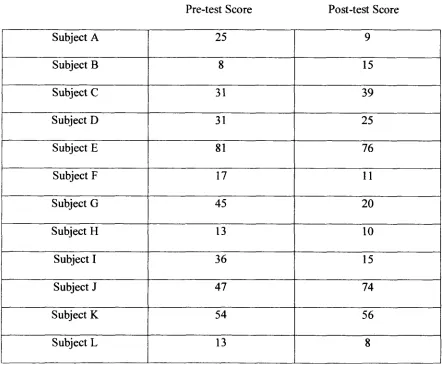
2. Individual Results on Pre-test and Post-test Administration ofthe Index of the
List ofFigures
1. Mean Self-Esteem Rating Scores for Group 1 Based on Home Observations 43
2. Mean Self-Esteem Rating Scores for Group 2 Based on Home Observations 43
3. Comparison oflndividual and Group Performances Across Baseline
for Home Observations 44
4. Mean Self-Esteem Rating Scores for Group 1 Based on School Observations 46
5. Mean Self-Esteem Rating Scores for Group 2 Based on School Observations 46
6. Comparison oflndividual and Group Performances Across Baseline
Chapter 1
Introduction
"Of all the judgments we pass, none is as important as the one we pass on ourselves. Positive self-esteem is a cardinal requirement of a fulfilling life."
Nathaniel Branden, Psychologist
Problem statement.
For more than a century, the onset of adolescence has been identified as a time of
heightened psychological risk for girls. Girls have been observed to lose their sense of
self, to underestimate their abilities, and relinquish a degree of personal control. The past
decade has brought forth a tremendous amount of research addressing girls' development.
One significant finding is that a girl's connection with others is a central organizing
feature in her psychological make-up (Brown & Gilligan, 1992). While a search for
identity through separation is one primary task of adolescence, feminine psychology
presents another model of development: the experience of relationships with others is the
foundation from which females derive personal esteem, a sense of worth, and feelings of
competence (Apter, 1990; Miller, 1986). Research has shown that girls mature from
dependence to interdependence from within significant relationships. However, studies
show that girls tend to lose connection with themselves during the adolescent years
(Gilligan, Lyons, & Hanmer, 1990).
Studies investigating pre-teen and teenage girls have demonstrated the decline in
self-esteem, the evaluation which an individual makes and customarily maintains with
regard to himself or herself, expressed as an attitude of approval or disapproval
(Rosenberg, 1965; Proctor & Choi, 1994; AAUW, 1991 ). Results of the survey
most dramatic. Despite the changing roles of women in current society, many girls fall
into the traditional patterns oflow self-image, self-doubt, and self-censorship of their
intellectual and creative potential. While most teens experience a degree of role
confusion and a faltering sense of self, girls' self-concepts decline further than boys' and
never seem to catch up. They emerge from adolescence with less confidence in and
lower expectations of their abilities. Clearly, the self-esteem oftoday's girls is under
siege and in need of intervention. A new understanding ofthe needs of adolescent girls
has emerged and set the stage for potential interventions.
A variety of strategies has been used to address self-esteem in adolescent girls.
These include listening to girls, providing them with opportunities for authentic
supportive relationships with adults, and developing ceremonies to honor their
progression into young womanhood (Rutter, 1996). Given the demonstrated need and
desire for connectedness in young girls, a supportive small group experience would likely
prove beneficial and efficacious in impacting self-esteem, a critical construct.
Need for the study.
A significant amount of research in the past decade has elucidated the tension that
exists between psychological theories of human development and the experience and
situation ofteenage girls and women. Focusing on women's conceptions ofselfhas
drawn attention to the proliferation of developmental theories and research on men. If
separation is a central concern of adolescence while connecting to others is a central
concern for girls, the conflict between these opposing tendencies creates a major dilemma
(Gilligan, Lyons, & Hanmer, 1990).
Adolescence presents a problem for girls in Western culture. They are challenged
either be selfish or selfless. As a result, research has shown that while boys tend to react more negatively to stress than girls, the situation reverses in adolescence (Elder, Nguyen,
& Caspi, 1985). During adolescence, girls are more likely than boys to first manifest
psychological difficulties, are more disparaging than boys in appraising themselves, and
reveal more disturbances in self-image. Furthermore, episodes of depression have been
shown to increase for girls in adolescence. The study conducted by the AAUW (1991),
the most extensive national survey on gender and self-esteem to date, demonstrated in a
dramatic fashion that for females the period of adolescence is marked by a loss of
confidence in herself and her abilities, an extremely critical attitude toward her body. and
a burgeoning sense ofpersonal inadequacy.
The evident decline in the self-esteem of females has many implications.
Research has found associations between low self-esteem and problematic health and
physical development (Harper & Marshall, 1991). Association has been drawn between
low self-esteem in females and problematic family relationships. Low self-esteem has
been associated with depression (Baumeister. 1990; Bolognini, Plancherel, Bettschart. &
Halfon, 1996; Harter & Jackson, 1994; Rosenberg, 1965), delinquency (Bynner,
O'Malley, & Bachman, 1981; Wells & Rankin, 1983), alcohol and drug use (Stacy.
Newcomb, & Bentler, 1992), and difficulty adjusting to schoolwork (Harper & Marshall,
1991 ). High self-esteem has been associated with positive peer relationships (Hirsch &
DuBois, 1991; Savin- Williams & Berndt, 1990) and high levels of academic achievement
(Faunce, 1984), and is believed to serve as a buffer against stress (Rutter, 1987). High
self-esteem has also been linked in the literature to enhanced motivation and positive
The growing body of research on the psychological development of females has
documented and validated their experiences of self and the centrality of connections. The
challenge, nevertheless, remains in operationalizing what the research has shown (Rubin,
1992). How can this information be used to intervene in the lives of adolescent girls and
effect change?
Elizabeth Rubin ( 1992) believed that an intervention could be made which might
alter the developmental transition girls were experiencing. Her impressions were
validated after Carol Gilligan, Nona Lyons, and Trudy Hanmer (1990) published their
findings on the relational worlds of adolescent girls after extensive research at the Emma
Willard School, a boarding and day school in Troy, New York. Rubin explored a
preventative focus by working with girls " ... to provide a forum where issues important to
them could be discussed in an open, nonjudgmental fashion while simultaneously
modeling for them clear and assertive behavior" (p. 72). Rubin concluded that the
participants seemed to gain strength and increased self-esteem. She proposed that the
possibilities for future interventions were many and varied.
The decline in girls' self-esteem is a serious social issue that schools can play a
major role in solving. In addition to providing education, schools are a forum for the
development of self-esteem, particularly in girls. Research confirms that girls perform
better in interactive or cooperative groups (Litvak, 1991). Therefore, group support can
be a critical element in enhancing female development in adolescence. Through the
implementation of such groups in schools, female adolescent development and the
struggles inherent in the process are valued as well as validated as unique and different
Purpose and overview of the study.
The purpose of this study is to determine the effectiveness of a group prevention
approach with adolescent girls relative to self-esteem. The intent of this study is to
examine the effect of the "Girls' Circle," a support group designed to promote
self-esteem in adolescent girls through encouragement of verbal expression. creative
expression, and group discussion of gender-relevant topics. Developed in the Bay Area,
the Circle format serves as a model for building esteem and a sense of competence in
early adolescent girls while, in the process, facilitating critical thinking skills, a sense of
community, a respectful setting, and necessary problem-solving skills (Hossfeld &
Taormina, 1998). Participants in the Circle meet weekly with a facilitator for six weeks
and address topics such as self-awareness, self-expression, problem solving, assertion,
communication in relationships, and sexuality through discussion and creative activities.
With a theoretical foundation akin to Gilligan ( 1982), the Girls' Circle validates
individuality as well as connectedness while emphasizing awareness and
self-acceptance; key factors in the development of self-esteem.
The group format affords participants the opportunity to build and nurture a
number of peer relationships. Research indicates that approval and confirmation from
others affects self-esteem (Savin- Williams & Berndt, 1990). In some cases, peers may be
the only ones to provide such feedback. Furthermore, research shows that the group
modality is widely accepted as the preferred treatment for the majority of adolescents in
need of support in their transition to adulthood (MacLennan, 1991). Research questions.
1) To what extent will a support group impact the self-esteem of sixth and seventh
a) As a result of participation in the group, to what extent will girls demonstrate
behaviors associated with high self-esteem (Appendix A) as observed in their
student home?
b) As a result of participation in the group, to what extent will girls demonstrate
behaviors associated with high self-esteem (Appendix A) as observed in their
school environment?
c) As a result of participation in the group, to what extent will girls report higher
self-esteem on a global self-report measure of self-esteem (Index of
Self-Esteem~ Appendix C).
2) What are adolescent girls' perceptions of their participation in a supportive group
experience as indicated on an "Evaluation Questionnaire (Appendix D)"?
Definition of terms.
Girls' Circle - a female peer group who meet on a weekly basis and engage in a
variety of activities incorporating verbal expression, creative expression, and group
discussion of gender-relevant topics
Self-esteem- the evaluation which an individual makes and customarily maintains
with regard to himself or herself, expressed as an attitude of approval or disapproval
(Rosenberg, 1965). Behavior indicators ofhigh self-esteem include the following: (1)
gives others directives or commands, (2) voice quality is appropriate for situation, (3)
expresses concern, (4) sits with others during social activities, (5) works cooperatively in
a group, ( 6) faces others when speaking or being spoken to, (7) maintains eye contact
during conversation, (8) initiates friendly contact with others, (9) maintains comfortable
space between self and others, and ( 1 0) little hesitation in speech, speaks fluently.
by teasing, name calling, or gossiping, (2) gestures are dramatic or out of context, (3)
inappropriate touching or avoids physical contact, (4) gives excuses for failures, (5)
glances around to monitor others, ( 6) brags excessively about achievements, skills,
appearance, (7) verbally puts self down; self-deprecation, (8) speaks too loudly, abruptly,
or in a dogmatic tone, (9) does not express views or opinions, especially when asked, and
Chapter 2
Review ofLiterature
The literature review includes a comprehensive and critical discussion of theory
and research pertinent to female adolescent psychosocial development. Literature
examining self-esteem in adolescent girls and methods of assessment will also be
addressed. Finally, research regarding models for group interventions with adolescent
gir Is will also be reviewed.
Theoretical background.
Erikson (1950) emphasized developmental change throughout the life span
conceptualizing each stage or crisis as a turning point of increased vulnerability and
enhanced potential. This study will focus on Erikson's fifth developmental stage, identity
versus identity confusion, which is experienced during adolescence. Teens are faced with
the challenge of finding out who they are, what they are all about, and where in life they
are heading. They are also confronted with new roles. Erikson believed that if
adolescents do not adequately explore many roles, identity confusion will reign.
Some argue that identity formation in males precedes the stage of intimacy while
for females intimacy precedes identity (Harter, 1997). Such theories are consistent with
the belief that relationships and emotional bonds are more important concerns for
females, while the need for autonomy and achievement are prevalent concerns for males.
The task of identity exploration may be more complex than historically thought.
Carol Gilligan ( 1982) asserts that girls reach a critical juncture in their
development when they reach the adolescent years. Girls quickly become aware that
their intense interest in intimacy is not valued by the male-dominated culture, though
becoming selfish or selfless. Due to this dilemma, girls have been shown to have
silenced their distinctive voices.
Research demonstrates that the problems girls experience in adolescent
development are problems of connection rather than separation (Harper & Marshall,
1991; Nicholson & Antill, 1981 ). It then appears that for girls to remain responsive to
themselves, they must resist the conventions of feminine goodness; to remain responsive
to others, they must resist the values placed on self~sufficiency and interdependence.
Therefore, for girls to develop a clear sense of self in relationship with others means
addressing the question of what relationship means to themselves, to others, and to the
world (Bolognini et al., 1996; Gilligan et al., 1990). A group format affords girls the
opportunity to build and nurture a number of peer relationships, which is not a natural
outgrowth of individual counseling or individual mentoring. Furthermore, research
indicates that the quality of peer relationships is a critical aspect of a young girl's
self-esteem (Savin- Williams & Berndt, 1991). Also, because the perception of approval and
confirmation from others significantly impacts self-esteem (Harter, 1997), for some girls
their only opportunity for such reinforcement is from their peers. Therefore, the
experience in a group with the opportunity to form many relationships in which the
expression of approval and confirmation is facilitated should prove more beneficial than
individual meetings or meetings with only a few other peers. Small supportive group
meetings may enhance connectedness rather than perpetuate the historic tradition of girls
navigating their way through adolescence alone.
Joan Berzoff(l989) examined the role of attachment in female adolescent
development in her study of women in their thirties and their experiences in friendship.
facilitating their psychological growth. Eighteen women participated in the study that
included interviewing and psychological testing. Her examination uncovered the
following four themes pertinent to female adolescent development: (1) women saw
female friends as models who expanded their views of themselves, (2) women described
friends as mirrors who provided feedback and enhanced self knowledge, (3) female
friendships were described as functioning like journals: promoting insight and providing
transitional functions, and ( 4) women described creating empathic contexts with valued
female friends which functioned as holding environments.
This research supports the contention that adolescent girls use their female peer
relationships to negotiate the process of differentiation. Without fearing the loss of a
relationship, girls use their peer relationships as a safe forum to understand and perhaps
resolve their issues and conflicts ofnurturance and autonomy. This research also makes
a significant contribution to the research in female adolescent development. Her study
lends support to a relational model of development as opposed to the traditional model of
adolescent differentiation. She emphasizes the value of peer relationships for girls as
models for normal development. Furthermore, journals and diaries, she suggests, can be
effective therapeutic tools facilitating the expression of girls' thoughts and feelings. She
clearly promotes the utility of group interventions in order to assist girls in the task of
differentiating through attachments and not assuming separation and individuation to be
the only goals of adolescent development. Berzoffs (1989) evidence also supports the
claim of Savin-Williams and Berndt ( 1991) that close peer relationships are, in fact,
Self-esteem in adolescent girls.
Adolescence is a developmental period distinguished by obvious maturational
changes, shifting societal expectations, conflicting role demands, and complex
relationships with peers and family. Self-esteem plays an integral role in this
developmental process (Block & Robins, 1993).
The American Association ofUniversity Women (AAUW) commissioned the
most extensive exploration to date of comparative self-esteem levels during 1990. The
research firm, Greenberg-Lake: The Analysis Group, interviewed 3,000 girls and boys
across the United States ages nine to fifteen with the goal of investigating the impact of
gender on self-confidence, academic interests, and career goals (AAUW, 1991).
The survey found that 60% of elementary school girls and 69% of elementary
school boys said they are "happy the way I am." Girls' self-esteem fell31% by high school while boys' self-esteem fell only 23%. The drop in self-esteem for girls was more
than three times the drop in self-esteem for boys. Also noted from the interviews was the
important fmding that adults and adult institutions, teachers and schools in particular,
have the greatest impact on the self-esteem and aspirations of adolescents (AAUW,
1991).
The survey the AAUW conducted also suggested that the decline in self-esteem of
females happens near the beginning of adolescence. Girls who were seemingly assertive
and confident at age eight and nine lose their sense of confidence shortly after entering
adolescence and succumb to attitudes that negatively affect their sense ofself(AAUW,
1991).
Block and Robins (1993) conducted a study of self-esteem addressing the time
and 4 7 females who were participants in a larger longitudinal study of personality and
cognitive development that was initiated in 1968. Subjects completed intensive
assessments including comprehensive self and ideal-self descriptions during their first
year of high school, the last year of high school, and five years after high school.
The Q-sort procedure was employed in this study to assess the congruence of the
participants' report of self and ideal self. As described in the research, the Q-sort
procedure requires the subject to consider the descriptiveness of a large set of statements,
ordering the statements from those most characteristic to those least characteristic of
oneself The descriptiveness of each item is then evaluated relative to each other item
within that particular subject rather than being evaluated separately as done in other
assessment instruments. The subjects in this study described themselves (perceived self) and the person they would really like to be (ideal self) using the 43-item Self-Descriptive
Q-set at ages 14, 18, and 23. The congruence was then calculated. Higher congruence
scores reflected higher levels of self-esteem (Block & Robins, 1993).
Results of this longitudinal study indicate that males tended to have higher
self-esteem scores than females at every age and the disparity increased over time. Analysis
of the developmental divergence suggests that males on average increased in self-esteem
from age 14 to 23 by approximately one-fifth of a standard deviation while females on
average decreased in self-esteem by one-fifth of a standard deviation (Block & Robins,
1993).
Block and Robins (1993) also evaluated personality correlates of self-esteem.
Twenty-two items significantly correlated with self-esteem change for females in the
study. For example, females who were observed to be moralistic, protective, humorous,
females judged to be hostile, criticaL negative, and irritable tended to decline in
self-esteem. Analysis of the fmdings led Block and Robins to conclude that a general change
in self-esteem appears related to an " ... another-orientation ... to interpersonal
characteristics reflecting warmth and a communal orientation" (p. 916), akin to the
relational theory put forth by Gilligan ( 1982).
Blyth, Simmons, and Carlton-Ford (1983) examined the particular experience of
school transitions for early adolescents and the impact on self-esteem. They found girls
in junior high to have significantly lower self-esteem when compared to girls in the
elementary and middle school grades. Self-esteem was lower in seventh grade than it
was in sixth grade. Further analysis utilizing longitudinal data indicated that junior high
girls did not fully recover from the net loss in self-esteem.
Zimmerman, Copeland, Shope, and Dielman ( 1997) also analyzed longitudinal
data to explore self-esteem. They used a cluster-analytic approach to identify self-esteem
trajectories of adolescents over a four-year period from sixth to tenth grade. The
researchers conducted secondary data analysis of information from a larger-scale project
that took place in southeastern Michigan.
esteem was measured using a shortened version of Coopersmith's
Self-esteem scale. Four self-Self-esteem trajectories were identified through analysis: ( 1)
consistently high, (2) moderate and rising, (3) steadily decreasing, and (4) consistently
low. Female adolescents were found to be most frequently in the decreasing self-esteem
group while male adolescents were more likely to be in the moderate and rising group.
More females reported decreasing self-esteem than male adolescents. The study
contributes to the understanding that general trends may not describe the adolescent
stability of self-esteem nor those that indicate a rise in self-esteem In fact, the data
reported demonstrate a decline in self-esteem after Grade 6 (Zimmerman et al., 1997).
Simmons, Burgeson, Carlton-Ford, and Blyth (1987) found that girls suffer losses
in self-esteem when the number of life changes they are exposed to increases. They
conclude that with regard to self-esteem, girls appear more vulnerable to life transition
stressors than do boys.
A similar study conducted outside the United States found that Swiss girls tend to
have a poorer self-esteem than boys. In Lausanne, Switzerland, Bolognini, Plancherel,
Bettschart, and Halfon ( 1996) studied a community population of French-speaking Swiss
adolescents. Conducted between 1990 and 1993, the longitudinal evaluation included
Harter's self-report questionnaires completed by 219 males and females at the ages of 12,
13, and 14 as part of a more comprehensive study of self-esteem and mental health in
early adolescence.
Harper and Marshall ( 1991) also found that consistent with their hypothesis, the
self-esteem of girls was significantly lower than that of their male counterparts. In an
examination of problems experienced in adolescence and the relationship with
self-esteem, they administered the Rosenberg Self-Esteem Scale and the Mooney Problem
Check List to 201 Year 9 students in Sydney, Australia. Harper and Marshall ( 1991) cite
role confusion as a primary contributor to the decline in self-esteem in girls as they
approach the adolescent years.
Chubb, Fertman, and Ross (1997) examined the stability of self-esteem through
the high school years. Subjects were from a school district in a community consisting of
a combination of a small, working-class town, a middle-class suburban area, and a rural
family influences on adolescents. One hundred seventy-four participants provided data
for four consecutive years. The average age at the start was 15 years.
Analysis of responses to the Rosenberg Self-Esteem Scale indicated that
self-esteem ratings of students were consistent from ninth grade through twelfth grade.
However. male subjects had significantly higher self-esteem than did females. They state
that more information is needed to determine the reason for this discrepancy, but their
current hypotheses suggest that the adults in the lives of adolescents are sending different
messages to girls and boys regarding their adequacy. Consistent with the relational
model of development, the authors suggest the possibility that girls are conscious of the
lower status society places on relationship tending and the higher status on autonomy and
independence.
The American Psychological Association (AP A) has made recent efforts to
understand and assist the teenage girl (AP
A.
1999). In 1996 during her Presidential year,Dorothy W. Cantor created the AP A Presidential Task Force on Adolescent Girls:
Strengths and Stresses. The mission statement reads as follows:
Through the mission, AP A is presenting a new approach to the current
understanding ofteenage girls (APA. 1999). While validating the struggles and stresses
of this age group, the task, according to AP A, is to no longer focus on the negative
aspects of the adolescent experience, but to celebrate girls for their strength, their
resilience, their successes, and their confidence. Adults and mentors need to model for
teens this positive view of adolescence in the hope that teens will respond accordingly.
In conjunction with the task force, AP A published a compilation of works written
by psychologists who reviewed literature related to adolescent girls within the past ten
years. Beyond Appearance: A New Look at Adolescent Girls (1999) strives to address
some questions put forth by the task force. For example, what is important to help girls
thrive during adolescence? Are there different positive influences at different
developmental stages? What does the research say about girls with high self-esteem?
And, what are the roles of the educator, parent, psychologist, health care system, and
policymakers in providing and environment that enriches the strengths adolescent girls
bring to our society (American Psychological Association, 1999)? Efforts are clearly
being made to explore the needs of adolescent girls and assist them in the developmental
process and those efforts need to continue.
Assessment of self-esteem.
Self-esteem is a widely researched construct in the psychological literature.
However, the conceptualization of self-esteem varies across studies, as does the
instrumentation used for its assessment. Over the years, many different instruments have
been constructed to measure both global self-esteem as well as specific dimensions of
or utility (Demo, 1985). Reviews of assessment methodology in self-esteem research are
therefore not generally positive (Gecas, 1982) and often cite unexplained variance among
instruments as a major weakness (Demo, 1985). Studies addressing intercorrelations
among measures are not encouraging (Spitzer, 1969).
Savin-Williams and Jaquish ( 1981) conducted research with adolescents to
compare methods of self-esteem assessment. Using traditional self-report instruments
along with observational data and repeated self-report measures, they were able to draw
conclusions regarding the validity, reliability, and comparability of these measures.
Their first study took place at a 5-week summer camp for boys from the Midwest.
Twelve adolescent boys participated in this study. Trained observers prior to camp
collected observational data of behavior measuring self-esteem in the form of a checklist.
The checklist used was previously developed after interviewing adolescents and youth
workers. Based on their responses to a question regarding behavioral indicators of high
and low self-esteem, 48 behaviors were pilot-tested on 40 adolescents. The 20 behaviors
with the highest interobserver reliability coefficients were selected as measures of
self-esteem and were included on the observation checklist. The checklist contained
descriptions often behaviors measuring high self-esteem and ten behaviors measuring
low self-esteem (Appendix A). A self-esteem score was computed for each checklist by
subtracting the number of low self-esteem behaviors from the number of high self-esteem
behaviors, then dividing by 10. A proportion score resulted ranging between -1.00 and
+ 1.00 (Savin-Williams & Jaquish, 1981 ).
Peer ratings of self-esteem were also collected at the end ofthe camp during
individual interviews. Boys rated each member of the study on a scale from one to five
a secure person with high self-esteem Scores were determined by the mean of all the
peer raters. Results ofthe study demonstrated a significant correlation (r=.85, 10 dj
p<.001) between the behavioral and peer rating measures of self-esteem (Savin-Williams
& Jaquish, 1981 ).
The second study described by Savin-Williams and Jaquish (1981) examined the
internal consistency of the self-esteem behaviors recorded by the trained observers in the
previously-mentioned study and sought to solidify validity claims for the behavioral
measures of self-esteem. Also, the inclusion of a random sample consisting of39 eighth
grade students extended their earlier research to a more diverse population. The study
addressed whether the particular behaviors significantly correlated with each other within
the categories of high and low self-esteem, and whether adolescents would agree with the
researchers' conclusions of which behaviors were high and low self-esteem measures.
The sample of 17 males and 22 females came from various socioeconomic strata
and religious affiliations. Observer ratings as indicated on the behavior checklist and
peer ratings (the 1-5 self-esteem scale) collected over a 12-week period were used to
calculate self-esteem scores for the subjects. Results indicate a significant correlation
coefficient, r=.33, p<.04, though lower than that found in the first study. It was suggested
that the smaller sample size increased the likelihood of a high correlation and the fact that
the subjects were in an enclosed setting may have caused increased familiarity with each
other's behavior, thus contributing to the higher correlation coefficient in the initial study
(Savin- Williams & Jaquish, 1981 ).
The second goal of the study was to assess whether adolescents would agree that
the behaviors included on the checklist were representative of high and low self-esteem
participants was used to assess this. In small group settings, the students were asked to
describe a peer who had high or low self-esteem. Then the items on the behavior
checklist were read in random order to the students who rated each item as indicative of
high or low self-esteem. Results indicate that the participants significantly agreed among
themselves on the categorization of 18 of the 20 items. The remaining two approached
significance (Savin- Williams & Jaquish, 1981 ).
After revealing a significant relationship between behavioral measures of
self-esteem and peer ratings, internal consistency ofthe itemized behaviors (as evidenced by
factor analysis) and the significant agreement of adolescents regarding characteristic
behaviors of high and low self-esteem, Savin-Williams and Jaquish ( 1981) sought to
compare such methods with traditional and commonly used report measures of
self-esteem.
The Rosenberg Self-Esteem Scale and the Lerner Self-Description Scale were
completed by the subjects in the first study during the last week of camp. In addition, for
one week each participant carried a beeper that alerted him six to eight times a day on a
random schedule to complete a sheet describing his location, major activity, thoughts,
and other persons present. Included on the sheet was also a list of 40 words (20
indicating high self-esteem and 20 indicating low self-esteem) from which the participant
chose as many as needed to describe what he felt at the moment the beeper sounded.
Thirty-nine sheets were completed and used for calculating a self-esteem score for each
boy (Savin-Williams & Jaquish, 1981 ).
Analysis of the results indicated that the two global measures were significantly
correlated to each other (r=.72, 10 df p<.Ol) and neither was significantly correlated to
measures. The self-esteem scores from the beeper generated sheets did not correlate
significantly with the behavioral (r=.Ol, 33 df, ns) or peer rating (r=-.17, 33 df, ns)
measures for the students in the second study (Savin-Williams & Jaquish, 1981). Savin-Williams and Jaquish ( 1981) present and validate a true operational
defmition of self-esteem. They identified specific behavioral indicators both for positive
and negative self-esteem, a genuine contribution to the field of research on self-esteem.
David Demo ( 1985) also sought to further the research in the assessment of
self-esteem. With a sample of 55 adolescents (24 male, 31 female), he compared eight
measures of self-esteem. All subjects were participating in a 6-year longitudinal study of
self-esteem. They were enrolled in the ninth grade of a northeastern school in 1979-1980
while the data were collected.
Demo ( 1985) used a beeper self-report technique, self-report scales, ratings by
others, an interview, and a projective instrument for self-esteem assessment. The beeper
self-report technique, as developed by Savin-Williams and Jaquish ( 1981 ), generated an
average of 48 sheets per subject. The Rosenberg Self-Esteem Scale and the Coopersmith
Self-Esteem Inventory represented the global self-report measures the subjects
completed. Peer-based ratings were obtained for each subject and observer ratings were
collected by both behavior checklists and Q-sorts completed by undergraduate observers.
The behavior checklist, also developed by Savin-Williams and Jaquish ( 1981 ), was
utilized over a four-month period. Additionally, at the end of the four-month period,
each observer assessed the personality characteristics of the subject he or she had been
paired with using the Q-sort method as described by Block and Robins (1993). A
personal interview was also conducted by the researcher during which the subject
dominance. Two pictures from a modified version ofMurray's (1938) Thematic
Apperception Test were used with the subjects to address underlying aspects of
personality that standardized methods of assessment do not. The girls responded to the
stimulus of the girl looking into a mirror and the boys responded to the picture of a boy
looking into a mirror (Demo, 1995).
Analysis demonstrated a significant correlation between the Rosenberg
Self-Esteem Scale (RSE) and the Coopersmith Self-Self-Esteem Index (SEI), but the RSE
significantly correlated with only one other method (.32 with peer ratings). Only modest
convergent validity was observed. The SEI, demonstrating stronger convergent validity,
correlated significantly with every other measure with the exception of the behavior
checklist. The peer ratings correlated significantly with the other two observer methods
and with the RSE and SEI. The observer checklists were found to correlate significantly
with other observer measures but not with the self-report scales, similar to the fmdings of
Savin-Williams and Jaquish ( 1981 ). The Q-sort intercorrelated significantly with all
measures except the RSE exhibiting strong convergent validity. The beeper measure and
the TAT each evidenced only one significant correlation with other measures (Demo,
1985).
Demo's ( 1985) study demonstrated clear validity for peer ratings and observer
checklists as measures of self-esteem. Ratings by others, due to apparent construct
validity, were also supported and suggested to be a strong alternative to traditional global
Group interventions with adolescent girls.
Group work with adolescent girls has been documented since before World War
II. Groups continued to be held throughout the 1940's and 1950's and were
predominantly psychoanalytic in nature. Research, however, also indicates a dearth of
supportive services for early adolescent girls in the 1950's and 1960's. A very small
number of girls were brought to clinics and agencies at this time. Few groups existed
both in inpatient settings and outpatient settings. Outpatient groups mainly consisted of
girls only or girls with their mothers addressing a combination of behavior problems and
neuroses. Major preoccupations of girls between the ages of ten and fourteen were found
to be feelings of low self-esteem, anxiety about learning social skills and getting along
with boys, difficulties with school work, and problems getting along with their mothers.
Other groups were conducted in the schools and addressed issues such as learning
disorders in children and adolescents and physical problems such as diabetes and epilepsy (MacLennan, 1991).
Group counseling continued in the 1970's, and the groups were more diversified
in theoretical orientation, but mostly included elementary school boys and adolescents.
Drug issues were paramount. Some groups addressed the needs of early adolescents
through art, social skills training, and mutual support. Efforts to improve resources
available to early adolescents continued in the eighties. Groups were many and varied. It
was at this time that affective and cognitive groups were formed to discuss and impact
the self-esteem of early adolescent girls. Most importantly, prevention efforts began in
the mid-eighties. Most efforts were directed toward very young students and those in
long before it was understood that a combination of information, self-esteem
enhancement, and social skills training was more effective (MacLennan, 1991).
According to Litvak (1991), group psychotherapy is widely accepted as the
preferred treatment for the majority of adolescents in need of support in their transition to
adulthood. Exposure to poverty, gang violence, domestic violence, as well as familial,
social, and psychological pressures can compromise the educational opportunities of
certain students. School-based programs can provide a valuable service to address the
needs of students.
Omizo and Omizo (1988) investigated the effects of group participation on
children's self-esteem. Their sample consisted of60 seventh and eighth grade students
from a lower-middle to middle class suburban neighborhood. All of the participants'
parents were divorced and had not remarried. The 30 students in the experimental group
were further divided into three groups often. A school counselor served as the moderator
of the groups while the authors served as consultants to the group and also monitored the
sessions. The goal of the groups was to clarify the students' feelings about the divorce,
understand that others had similar feelings and concerns, help the participants gain a
realistic awareness of the situation, learn to cope with their feelings, support each other,
and share their feelings.
The treatment consisted often weekly sessions lasting approximately one hour.
The sessions involved drawing, role-playing, bibliotherapy, peer discussion, and other
activities. The Coopersmith Self-Esteem Inventory (SEI) was used to assess the
participants' level of self-esteem. T-tests revealed no significant differences between the
experimental and control groups on dependent pre-test measures. The MANOVA,
Subjects in the treatment group had higher levels of self-esteem. The researchers
concluded that being aware of one's feelings and being able to express them, giving and
receiving positive feedback, and knowing that others were experiencing similar feelings
and behaviors seemingly had a positive impact on the self-evaluation of the boys and
girls who participated in the small group intervention (Omizo & Omizo, 1988).
Elizabeth Rubin (1992) spent many years working in schools with groups of
children addressing social skills before proposing a different program to the
administration of one school. She offered to conduct a group for adolescent girls to
provide them with an opportunity to "discuss what it meant to grow up female in this
culture" (p. 72). Rubin's working premise was that if given a forum to discuss concerns
not being addressed elsewhere, the girls would be better equipped to make choices and
decisions as they move toward adulthood.
The first group she conducted consisted of girls in their senior year of high
school. While the topics were varied, many sessions centered on the issue of romantic,
platonic, and parental relationships. This evident focus on relationships supported the
increasingly popular notion that the female self develops within the context of
relationships, not as a separated autonomous individual. Moreover, at the end ofthe
group, Rubin (1992) believed the participants gained strength and an increased level of
self-esteem from the validation they experienced while being a member ofthe group.
Though not providing experimental data as part of this published article, Rubin sets the
stage for future research in this area. She suggests pilot programs with younger girls and
follow-up studies to assist in understanding the potential impact of such a program on the
future of participants. She also suggested an understanding of diversity in this context is
Rachel Williamson (1992) also reported success in raising the self-esteem among
adolescent girls. She formed a group of girls who met for four weeks. All had poor peer
relationships, strained parental relationships, and problems with their boyfriends. The
girls had low school attendance and lacked fun and freedom in their lives, according to
Williamson. Using reality therapy in a group setting, Williamson believed the girls were
meeting their own needs, their self-esteem was increasing, and their symptoms and
behaviors improved.
Kathryn Kirshner ( 1994) implemented a " ... unique outpatient group therapy
prevention program for emotionally vulnerable early adolescent females," (p. 28) called
the High School Transition Group. In working with at-risk eighth grade students facing a
transition to high school, she hoped to help prevent serious behavioral or mental health
problems in later adolescence by focusing the group on interpersonal issues and
self-esteem.
Kirshner is a proponent of friendship groups for early adolescent girls given the
importance and value inherent in them. Such relationships provide a forum to share
ideas, feeling, and uncertainties about emotional and physical changes that occur during
this developmental period. According to Kirshner ( 1994 ), peer relationships offer models
for identification and a strong sense of emotional relatedness. While under favorable
conditions, girls are able to negotiate this difficult period of early adolescence and lay the
foundation for the capacity to form stable, enduring, and mutually satisfYing
relationships. Under adverse conditions, where there have been serious family problems,
relationship disruptions, or other types of trauma, the early adolescent girl can be at risk.
She may proceed through adolescence with low self-esteem, limited sense of autonomy
appropriate intervention and psychological support during these years, young women
who suffer from these developmental deficits are at risk for serious depression,
self-destructive behavior and/or potentially harmful relationships from which they can not
extricate themselves (Kirshner, 1994).
Kirshner (1994) developed the High School Transition Group for Girls within a
community mental health center in order to provide "a non-threatening, non-stigmatizing
form of group therapy for early adolescent girls," (p. 31 ). She sought to address the
needs of eighth grade girls who were believed to have low self-esteem, difficulty in peer
relationships, and declining school performance. Referrals came from school support
staff and mental health workers concerned about low self-esteem, social problems with
peers, family conflict, and low school achievement in their students or clients. Many
were not involved in a friendship group at that time. Participants in the groups came
from professional, middle, and working class backgrounds. Some ethnic diversity was
present and all family histories included one or more of the following: alcoholism,
divorce, domestic violence, significant family conflict, and a family member in trouble
with the law.
Conversations with mothers of the participants at the conclusion of the group
experience indicated that many of the girls showed "significant behavioral changes at
home, for example, by not fighting as much with mother, by appearing generally happier,
and by being more self-expressive and out-going with peers" (Kirshner, 1994, p. 41 ).
Kirshner does not offer experimental data but concludes that the group experience serves
to enhance the adolescent's sense of individual autonomy as well as her sense of
an autonomous self provide psychological protection in a difficult and confusing world
(Kirshner, 1994).
Conclusion.
Increasing attention has been directed toward how our society's girls feel about
themselves. The study commissioned by the AAUW ( 1991) and the startling results
served to focus attention on the self-esteem of early adolescents. Theories attempting to
explain the different experiences in early adolescent boys and girls report address issues
of connection and separation. Rather than consider the developmental goal of
adolescence for girls as autonomy and separation from the family of origin, research
supports the therapeutic value of peer relationships as a model for normal female
development (Berzoff, 1989).
Longitudinal research conducted in the United States as well as Europe and
Australia indicate similar results to that reported by the AAUW (1991). The self-esteem
of girls is below that of boys. In particular, while self-esteem is believed to decrease for
both boys and girls as they enter adolescence, the self-esteem of girls drops further than
that ofboys and never then catches up.
The 1980's saw an increase in psychological and psychoeducational services
directed toward impacting the self-esteem of early adolescent girls. Supportive group
meetings proved to be an effective method in impacting self-esteem both directly and
indirectly. Groups were conducted both in schools and in outpatient treatment settings.
The published work of Carol Gilligan, Nona Lyons, and Trudy Hanmer (1990)
describing their experience with students at the Emma Willard School inspired continued
research. Elizabeth Rubin (1992), for example, was prompted to directly implement
development. She was a pioneer in proposing proactive group interventions in the
schools.
Professionals working with adolescents should be cognizant of the relational
opportunities that can potentially support female adolescent development. The
experience of a supportive group intervention can serve important normative affective
and cognitive functions. In such groups, girls are encouraged to express their concerns,
feelings, interests, attitudes, and perceptions. Self-esteem has been shown to increase as a
result of facilitating the early adolescent girl to assert herself and engage in self-reflection
within the context of a safe environment consisting of her peers.
A dearth of research published on group interventions seeking to directly effect
the self-esteem of early adolescent girls exists. While groups, Girls' Circle and those
similar in nature, may be currently implemented in schools and community settings, little
empirical data is available regarding efficacy. The few studies included in the research
literature involve older girls (Kirshner, 1994; Rubin, I 992), yet make recommendations
for interventions to involve the younger ones during the difficult transition to maturity.
For this reason, the intervention used in the current study was chosen because it targets
middle school girls, those seemingly in need of support.
The current study also offers methodological contribution to research in the field.
Use of behavioral indicators in the assessment of self-esteem yield richer outcome data
when compared to only singular scores on a global self-report measure. Behavior change
is obvious or at the very least observable to others. Self-esteem is seen in action through
Chapter 3
Methodology
This study employed a single case experimental design with multiple baselines across
groups. It was conducted at the Milton Hershey School, a private co-educational
boarding school located in Hershey, Pennsylvania. Two groups of six girls in grade six
and seven met one time weekly for six weeks at which time the experimenter presented
the Girls' Circle curriculum (Appendix B).
Setting.
Milton Hershey School is an independent coeducational boarding school enrolling
approximately 1,1 00 students in Kindergarten through Grade 12. Academic, living, and
medical expenses for students who are selected to enroll are fully subsidized by the
Hershey Foundation. Milton Hershey School is situated on a 3,200-acre central campus
surrounded by an additional6,000 acres. The school is accredited by the Middle States
Association of Colleges and Schools and the Pennsylvania Association ofPrivate
Academic Schools. Milton Hershey School is a member of the National Association of
Independent Schools, the Pennsylvania Association oflndependent Schools, the
Pennsylvania Association of Private Academic Schools, the College Board, the National
Association of College Admissions, and the Pennsylvania Association of College
Admissions Counselors.
Students live in homes with a married couple and 8-11 other students. Values and
life skills are taught in the student home. A structured chore program is consistently
monitored by the houseparents as the operation and maintenance of the home is the
Population.
Milton Hershey School consists of a diverse student body representing 30 states
and several foreign countries. Students are predominantly from families of low
socioeconomic status and often have single parents. According to student records,
approximately 40% of the student body are Caucasian, 51% are African-American, 7%
are Hispanic, and 2% represent other ethnic minorities. The male-female ratio is almost
equal. There are approximately 200 students in the elementary program, 400 in the
intermediate program, and 500 in the high school program.
Admission to Milton Hershey School is competitive. Students considered for
admission must be between the ages of four and sixteen and from a family with limited
income. They must demonstrate at least low average intelligence on a standardized test
of intelligence completed during the interview process. Scholastic achievement,
motivation, behavior and medical history, and moral character are also highly valued in
the selection criteria.
Sample.
Girls in grades six and seven attending Milton Hershey School participated in the
study after being referred by a professional in the Department of Psychological Services
or Neighborhood and Family Life. The sample was made up of two groups each
consisting of6 girls. Both groups had 3 girls in grade 6 and 3 girls in grade 7. Ofthe 12
participants, there were 3 African-American, 2 Latina, I Asian, and 6 Caucasian girls.
Due to the researcher's experience in the institution where groups similar in nature are
run on a regular basis, students likely to be referred shared some of the following
participates in few extracurricular activities, loud and boisterous, struggles in schooL and
perhaps relatively new to the school.
Girls were considered for participation if they met the following criteria: 1)
receive no other services from the Department of Psychological Services or outside
agency, 2) no active psychosis as evidenced in their student files, 3) currently in grades
six or seven, 4) referred by a professional indicated above, and 5) willing to participate
for the duration ofthe meetings. Girls were not considered if they met the following
criteria: 1) exhibit active psychosis, 2) in individual counseling, 3) recently completed
group counseling of a similar nature to the design proposed here, and 4) in grades other
than six or seven.
Research design.
A single case experimental design was used. Repeated measures ofthe dependent
variable in the form of a behavior checklist were obtained three times weekly prior to the
start of the group and two times weekly for the duration of the six-week intervention. The
participants at the first and last group meetings completed a report measure of
self-esteem (Index of Self-Esteem, Appendix C).
A multiple baseline across groups method was employed to demonstrate
experimental control, due to the impossibility of implementing a reversal. Baseline data
were initially collected on subjects in both groups. After baseline was established, the
curriculum was introduced to one group while baseline data continued to be collected on
the second group. After baseline was established with regard to the second group, the
curriculum was introduced and data subsequently collected and plotted for both groups
Procedure.
Members of the psychological and residential staff and at Milton Hershey School
referred potential participants for consideration. Subjects not receiving any concurrent
services provided by Milton Hershey School Department of Psychological Services or
outside agencies were appropriately screened for active psychosis or severe
psychopathology through review of student files. Inclusion and exclusion criteria were
assessed as indicated above. The groups each consisted of six girls who met six times for
two hours weekly in a small conference room on their school's campus. The researcher
conducting the study facilitated both groups.
The Girls' Circle format was chosen for its parallelism with Gilligan's ( 1982)
theoretical foundation validating individuality and connectedness while emphasizing
self-awareness and self-acceptance. These elements are viewed as key factors in the
development of self-esteem. The group format also affords participants the opportunity
to build and nurture a number of peer relationships which research indicates to be
significant in female psychosocial development (Savin- Williams & Berndt, 1990). In
some cases, peers may be the only ones to provide approval and confirmation from
others. Furthermore, research shows that the group modality is widely accepted as the
preferred treatment for the majority of adolescents in need of support in their transition to
adulthood (MacLennan, 1991 ).
The participants completed the Index of Self-Esteem Scale (Appendix C) prior to
the start of the group and at the last group meeting. Trained observers completed the
behavior checklist sheets (Appendix A) three times weekly during baseline and two times
weekly during intervention relative to behaviors observed both at the student home and at
each participant (number ofbehaviors associated with negative self-esteem subtracted
from number of behaviors associated with high self-esteem divided by 1 0). Potential
scores range from -1.0 to 1.0.
Data collectors, naive to the purpose ofthe study, were members of the
psychological staff at Milton Hershey School titled Mental Health Workers. All were
trained in data collection procedures until90% or higher inter-rater agreement was
reached through a point-by-point agreement reliability procedure (Kazdin, 1982).
Videotaped segments of students interacting in a group setting were used to train the
observers. Reliability estimates were obtained by a second rater throughout the 6 weeks
of the study to include 30% of the total observations completed per participant.
After referrals were made and participants screened accordingly, the two
experimental groups were formed. Data collectors were assigned to the girls and began
conducting observations in the student homes and in the school environment to collect
baseline data. After one week, scores on the behavior checklist appeared stable and
baseline was established. Six girls formed the first experimental group. Groups were
intentionally balanced to include three students in sixth grade and three students in
seventh grade to avoid potential mediating factors relative to grade level. Baseline data
continued to be collected for an additional week on the other group of six girls. The
second group subsequently formed and began meeting weekly for six weeks.
Observations continued in their home and school environments for the duration of the
group meetings.
Instrumentation.
The independent variable, the Girls' Circle curriculum (Appendix B), was
adolescent girls developed in the Bay Area of California. It is designed to foster
self-esteem, help girls maintain a connection with peers and adult women in their community,
counter trends toward self-doubt, and allow for genuine self-expression through verbal
sharing and creative activity.
The dependent variable, self-esteem, was measured using the Index of
Self-Esteem Scale (Appendix C; Hudson, 1982) and direct observation (Appendix A;
Savin-Williams & Jaquish, 1981 ). The Index of Self-Esteem (ISE) is a 25 item summated
category-partition scale that was designed to measure the degree, severity, or magnitude
of a problem with self-esteem. The ISE is structured to have a score that ranges from
0-100, with low scores representing the relative absence of a problem with self-esteem, and
high scores indicating the presence of a more serious problem with self-esteem. Those
who score below 30 are believed to nearly always be free of a clinically significant
problem with self-esteem. Subjects scoring above 30 are believed to have a problem with
self-esteem that is regarded as clinically significant (Abell, Jones & Hudson, 1984).
Good to excellent internal consistency, and content, concurrent, construct, and factorial
validity have been demonstrated with the ISE (Royse, 1998).
Self-esteem ofthe subjects was also measured by direct observation of the twenty
behaviors Savin-Williams and Jaquish (1981) determined to be indicators ofboth high
and low self-esteem (Appendix A). Ratings were conducted two times a week during
school and at the student home of each participant and a self-esteem score was calculated
from the checklist sheets. Trained observers, not aware ofthe experiment's intent,
In addition, the girls completed an Evaluation Questionnaire at the conclusion of
the group for the purposes of gathering qualitative information regarding their experience
in the Girls' Circle.
Data analysis.
Analysis occurred through visual inspection of the trend and level of graphed data
that included the subjects' self-esteem scores as measured by the behavior checklists of
direct observation. Analysis of collected data sought to identifY consistent changes and
orderly patterns of change in observed behavior during the baseline and intervention
phases for each participant.
Protection of human subjects.
To ensure the protection of the rights ofhuman subjects, the researcher adhered to
the ethical standards set forth by the American Psychological Association (1982) and
gained approval by the University of San Francisco Institutional Review Board for the
Protection of Human Subjects. Prospective subjects and their parents were informed of
the general nature of the study, its basic purpose, and the researcher's availability to
answer any questions influencing the willingness to participate (Appendix E, F).
Subjects were informed that they had the opportunity to learn the results of the study and
that they were free to withdraw from the study at any time without penalty (Appendix G).
Information and test scores remained confidential. The study involved no deception.
Chapter 4
Results
Data analysis was performed through visual inspection of graphed data points that
represent self-esteem scores. These scores were derived from checklists based on direct
observation (Appendix A). Self-report data from The Index of Self-Esteem scale
(Appendix C) were also evaluated to determine any change in level of clinical
significance from pre-test to post-test. Responses included on the "Evaluation
Questionnaire" are reported descriptively.
Four experimental questions were investigated in this study to assess the extent to
which a support group would impact the self-esteem of sixth and seventh grade girls.
First, as a result of participation in the group, to what extent will girls demonstrate
behaviors associated with high self-esteem as observed in their student home?
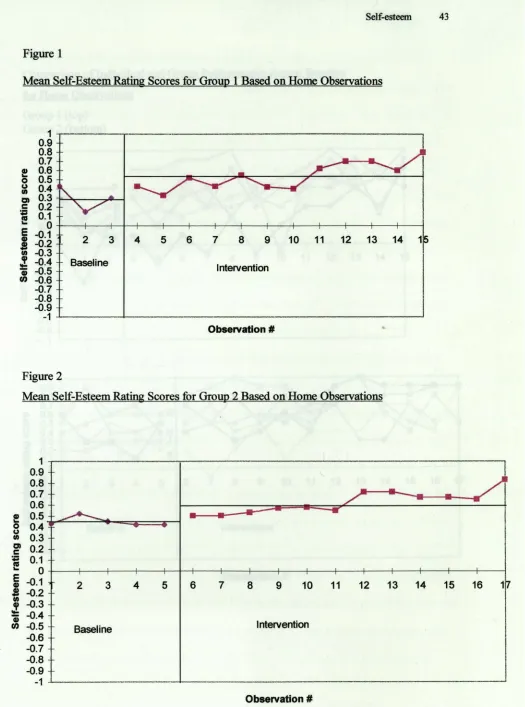
Figure 1 shows that during baseline, the means of Group 1 participants' scores
based on observations conducted in their student homes show a downward trend (mean=
.29; SD=.14; range=.15-.43). During the six-week intervention, self-esteem scores for
those participants indicate an upward trend (mean=.54; SD=.15; range=.33-.80). Results
are similar for participants in Group 2. Figure 2 shows that, during baseline, self-esteem
scores demonstrate a downward trend (mean=.45; SD=.04; range=.42-.52). During
intervention, an upward trend was noted (mean=.62; SD=.lO; range=.S0-.83) according to
observations conducted in the student homes. Overall, results show a favorable
improvement in the behaviors targeted on the checklist, evidencing an increase in
self-esteem as exhibited in the student home.
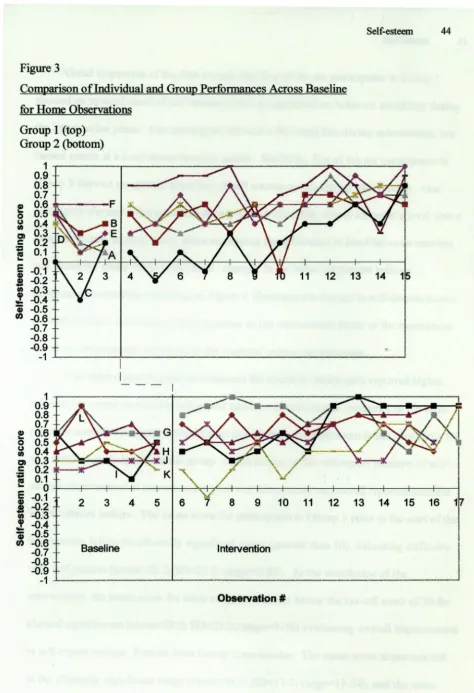
Inspection of the data reveals an upward trend of self-esteem scores based on
the six participants in Group 1. The other participant showed a downward trend during
intervention but scores were at a higher level than during baseline. Three of the six
participants in Group 2 showed an upward trend in self-esteem scores on behavior checklist ratings during the intervention phase. Two showed a downward trend during
intervention but both earned scores at a higher level than baseline. The other participant
in Group 2 showed a flat trend during intervention, but also earned scores at a higher
level than baseline. In most cases, when examining the difference in level between
baseline and treatment phase of the experiment, changes in the behavior pattern indicate
progression toward the desired goal. Figure 3 illustrates the change in self-esteem scores
for both Groups 1 and 2 from baseline to the intervention phase of the experiment based
on observations conducted in the students' homes.
The second research question explored the extent to which girls demonstrated
behaviors associated with high self-esteem
as
observed in their school environment as aresult of participation in the group. Observations conducted in the school environment
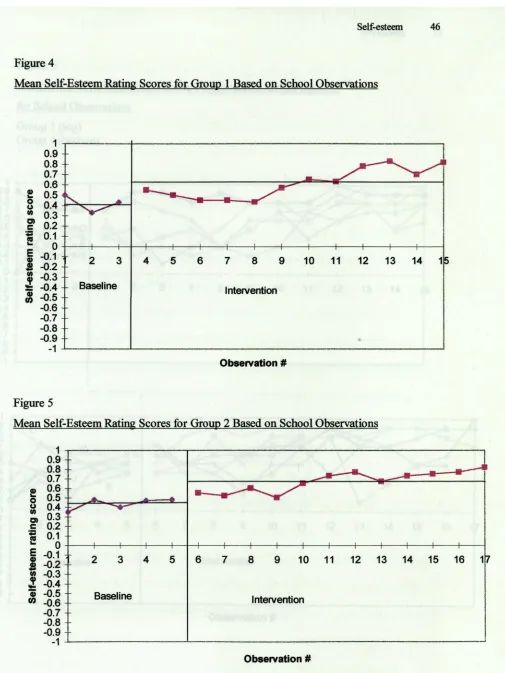
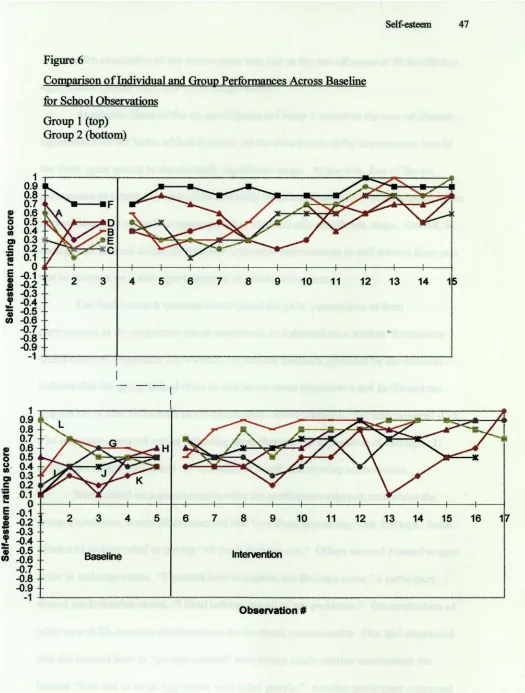
yielded similar results to observations conducted in the student homes. Figure 4 shows
that the mean baseline data for Group 1 indicated a downward trend of self-esteem scores
(mean= .42; SD=.08; range=.33-.50) and data collected during the intervention phase
indicate an upward trend (mean=.61; SD=.15; range=.43-.82). Figure 5 shows the mean
data for Group 2 indicate a slight upward trend during baseline (mean=.44; SD=.06;
range=.35-.48) and an upward trend during intervention yet at a higher level (mean=.67;
SD=.l1; range=.50-.82). Overall, results show a favorable improvement in the behaviors
targeted on the checklist evidencing an increase in self-esteem in the school environment.
Moreover, results of observations conducted in the school were very similar to those