Open Access
Research article
Who uses firearms as a means of suicide? A population study
exploring firearm accessibility and method choice
Helen Klieve, Jerneja Sveticic and Diego De Leo*
Address: Australian Institute for Suicide Research and Prevention, National Centre of Excellence in Suicide Prevention, WHO Collaborating Centre for Research and Training in Suicide Prevention, Griffith University, Brisbane, Australia
Email: Helen Klieve - [email protected]; Jerneja Sveticic - [email protected]; Diego De Leo* - [email protected] * Corresponding author
Abstract
Background: The 1996 Australian National Firearms Agreement introduced strict access limitations. However, reports on the effectiveness of the new legislation are conflicting. This study, accessing all cases of suicide 1997-2004, explores factors which may impact on the choice of firearms as a suicide method, including current licence possession and previous history of legal access.
Methods: Detailed information on all Queensland suicides (1997-2004) was obtained from the Queensland Suicide Register, with additional details of firearm licence history accessed from the Firearm Registry (Queensland Police Service). Cases were compared against licence history and method choice (firearms or other method). Odds ratios (OR) assessed the risk of firearms suicide and suicide by any method against licence history. A logistic regression was undertaken identifying factors significant in those most likely to use firearms in suicide.
Results: The rate of suicide using firearms in those with a current license (10.92 per 100,000) far exceeded the rate in those with no license history (1.03 per 100,000). Those with a license history had a far higher rate of suicide (30.41 per 100,000) compared to that of all suicides (15.39 per 100,000). Additionally, a history of firearms licence (current or present) was found to more than double the risk of suicide by any means (OR = 2.09, P < 0.001). The group with the highest risk of selecting firearms to suicide were older males from rural locations.
Conclusion: Accessibility and familiarity with firearms represent critical elements in determining the choice of method. Further licensing restrictions and the implementation of more stringent secure storage requirements are likely to reduce the overall familiarity with firearms in the community and contribute to reductions in rates of suicide.
Background
Significant declines in the use of firearms as a means of suicide are widely documented [1] with identified links to the introduction of access restrictions [2-6]. However, conflicting reports on the effectiveness of such restrictions
[7,8] support the call for a broader explanation for access to and the use of firearms in suicide.
Accessibility
Assessments of firearm access have adopted different approaches: while, in some cases, availability has been Published: 24 September 2009
BMC Medicine 2009, 7:52 doi:10.1186/1741-7015-7-52
Received: 2 August 2009 Accepted: 24 September 2009
This article is available from: http://www.biomedcentral.com/1741-7015/7/52
© 2009 Klieve et al; licensee BioMed Central Ltd.
measured directly by household surveys [9,10] or the number of gun licences [3], investigations have more often used proxy measures such as the number of pur-chased handguns [11], gun magazines subscriptions [12,13] or comparison of rates of firearms suicides [8]. Disparities between studies also exist with regard to the definition of 'access'. For example, Ikeda et al., using data from the USA Injury Control and Risk Survey, examined details of 5056 respondents who provided information on their firearms ownership and access. They reported that 313 (6.2%) respondents owned firearms but did not identify the possibility of rapid access to them, while 421 (8.3%) did not personally own firearms but could have rapid access to them, with women and members of ethnic minorities having the greatest representation in the latter group [14]. Similarly, Smith in the 2001 USA National Gun Policy Survey found that while only 24.1% of respondents personally owned a gun, 34.9% had a fire-arm within the household, with women again showing the greatest level of accessibility without ownership (at an almost three times the difference) [15].
Unlicensed access is particularly difficult to identify - this including firearms licensed to others, for example family members, and illegal and unlicensed weapons. One method by which these can be obtained is through the theft or purchase of stolen firearms. A 2005 to 2006 study on firearm theft in Australia reported 302 stolen firearms, mainly rifles in Queensland, with 7% of these being unregistered. Storage was identified as a major issue, with 22% of 'firearm only' thefts were from unsecured premises with a further 27% obtained by 'entry undetermined' [16].
Suicide risk
While recognizing varying data quality, the majority of studies confirm the positive association between firearm access and increased firearm suicide risk [3,17,18], with the strongest relationship for those having firearms at home [1,19-23]. However, studies on the association between firearm access and the total suicide rates have not been completely conclusive. In fact, a number of investi-gations have found significant correlations between fire-arms accessibility and increased suicide rates [18,19,21,22,24,25], while others could not confirm that firearms availability in itself increases suicide rates [13,17,26].
In general, higher rates of firearm suicide were found in geographical areas with greater firearms ownership and less restrictive firearms law, most notably in the USA [22,27]. Rural and regional differences (i.e. areas outside cities) were also identified in Australia, with greater regional declines in rates of firearm suicide identified fol-lowing the imposition of access restrictions, even if the rates continued to remain higher in the same areas [28].
Method choice
There have been widely reported successes in strategies restricting access to means of suicide, for example, after the detoxification of domestic gas [29] or placement of barriers on frequent sites of suicide by jumping [30]. In these cases, no substitutions were detected and the overall suicide rates were positively influenced, at least initially [17]. It has been suggested that means substitution has accounted for the decrease in suicide using firearms but increased the rate of suicide by hanging in Australia. How-ever, a closer analysis of the data failed to confirm the sub-stitution theory [31], but rather emphasised the need to consider more complex factors behind changes in the choice of method (e.g. social acceptability, change in atti-tudes, etc.).
The effect of 'instrumentality', which suggests that those with a strong propensity for one method would not seek a substitute [4,12], should also be noted. Links between demographic and psychological characteristics [32-34] and socio-cultural acceptability of certain suicide meth-ods [35] are increasingly recognized (see the choice struc-turing model by Clarke and Lester [36]).
Using detailed data for each suicide case matched to its history of legal firearm possession adds to the current debate on the effectiveness of firearm restrictions in Aus-tralia [6,7,37]. It provides a unique method of examining the patterns underlying the choice of suicide methods for those with or without legal access to firearms and the asso-ciated suicide risk in these groups.
Methods
Data on suicides in Queensland were accessed from the Queensland Suicide Register (QSR), a comprehensive database of suicide mortality data from 1990 to present day, which contains information derived from police reports on all suicides in Queensland (including autopsy and toxicology reports) [38]. The use of data from the QSR has continuing ethnical approval from the Griffith University Ethics Committee.
For this study, the analysis included all 'probable' or 'beyond reasonable doubt' cases of suicide during the years 1997-2004 (n = 4,469). Queensland population data, 2001, obtained from the Australian Institute of Health and Welfare [39] were used for the calculation of the rates. Table 1 provides details of licence possession and suicide incidences in Queensland.
use and regular renewals of the licence. A data matching process, focused on the name, date of birth, age and address of the licence holder, was undertaken between the QSR and the Firearms Registry (Queensland Police Serv-ice), which identified the licence history of all suicide cases from 1997 onwards. Where partial matches occurred (for example, an unspecified birth date, a different address between the time of death and the application for the licence), an additional review of original the QSR file was undertaken.
Geographical location has been found to influence use of firearms in suicides [28]. The Accessibility/Remoteness Index of Australia (ARIA Index) provides a measure of the accessibility of regional localities [40]. An ARIA score was identified for each case, with scores between 0 and 3.51 defining Highly Accessible/Accessible localities such as major cities, specified as ARIA1, and scores greater than 3.51 defining Moderately Accessible, Remote or Very Remote localities, classed as ARIA2. Blood alcohol levels at death were accessed from toxicology reports.
Statistical analyses
This study describes all known cases of suicide in Queens-land with these matched against known licence posses-sions - thus describing the population of suicide cases in Queensland 1997-2004.
Descriptive analysis was used to compare the characteris-tics of those with a history of licence possession and the use of firearms in suicide firearms/other. The comparison of these groups provides a link between firearm accessibil-ity and the chosen method. Rates of suicide were then used to document population differences by method used and availability of means, based on known licence his-tory.
Odds ratios (OR) were used to assess the suicide probabil-ity, with confidence intervals and significance tests evalu-ated using Woolf's equation [41]. This analysis was conducted between familiarity with firearms by licence history and outcome (suicide or not). The proportion of
the population who were familiar with firearms was esti-mated setting the number of people in Queensland who had a licence in 2001 (n = 191,109, accessed through the Queensland Firearms Registry) against the remainder of the 2001 general population (n = 3,437,837). Finally, a logistic regression, with independent variables entered simultaneously, was conducted using predictors of hold-ing a current licence, gender, age group, ARIA group, pos-itive blood alcohol level and marital status. All statistical analyses were undertaken using SPSS Version 15. The two-tailed significance was set at 5%.
Results
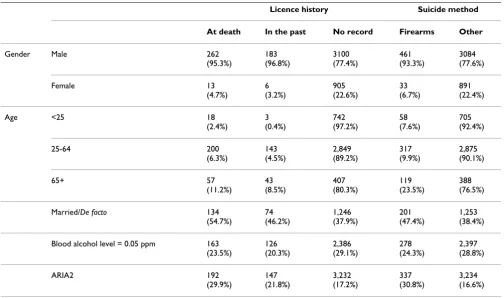
Table 2 details the demographic features of suicide cases based on licence history and method choice (firearms or other). The characteristics of those with a current licence were, in most cases, very similar to those who used fire-arms as a method of suicide. Far more men had a licence (95.3%) than women, and men used firearms as a means of committing suicide more often than any other method (93.3%). There was also an obvious age difference in both licence possession and the method of suicide, as younger people were less likely to have a licence (2.4% to 11.2% for under 25 years and 65+ years, respectively) and less likely to use firearms as a means of committing suicide (7.6% to 23.5% for under 25 years and 65+ years, respec-tively).
Higher proportions of those with a current licence were married (54.7%, compared to 37.9% with no licence his-tory) and lived in rural areas (29.1% classed as ARIA2, compared to 17.2% with no licence history). These pat-terns were similar when comparing those using firearms as a means of suicide to those using other methods -47.4% were married (compared to 38.4%) and 30.8% lived in rural areas (compared to 16.6%). Finally, those without a licence history were slightly more likely to have a blood alcohol level of above 0.05 ppm than current licensees (29.1% and 23.5%, respectively), as were those who chose other suicide method compared to firearms suicides (28.8% and 24.3%, respectively). Those who had held a licence in the past were likely to be slightly older and less likely to be rurally located - only 21.8% were recorded as living in ARIA2, compared to 29.9% of current licensees.
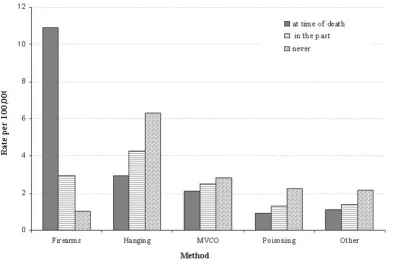
Marked variations in the methods selected were observed in those who had a firearm licence history (Figure 1). Two hundred and eight-two people (1.03 per 100,000) who did not have a licence history used firearms as a means of suicide, which is a far lower rate than for those with a cur-rent (10.92 per 1000, 000) or past licence history (2.94 per 100,000). The rate of all suicides by those with a licence history was 30.41 per 100,000, almost double the rate of 15.39 per 100,000 for all suicides.
Table 1: Number of firearm licences and the incidence of suicide in Queensland, 2001.
Population 3,628,946
Number of suicides 1 91,109
By any method 505
By firearms 60
By hanging 234
The relationship between firearm familiarity (those with a licence history) and the likelihood of their committing suicide is explored in Table 3. This shows a very highly sig-nificant relationship between those who are familiar with firearms and the risk of suicide (OR = 2.09, P < 0.001), expressing double suicide rate in those with an identified exposure to weapons.
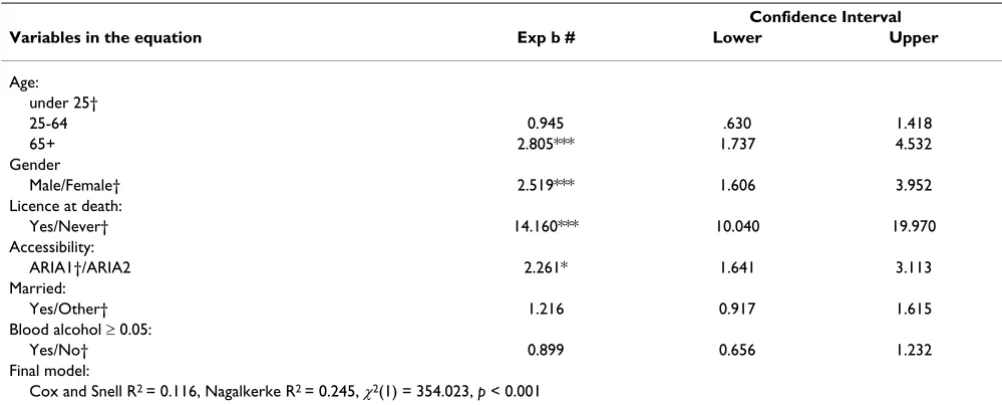
A logistic regression analysis (Table 4) was undertaken in order to study the factors found to be associated with using firearms as a means of suicide. The strongest rela-tionship to the choice of firearms as a method was a cur-rent licence (OR = 14.16, P < 0.001). Age and gender (65+ years: OR = 2.81, P < 0.001; males: OR = 2.52, p < 0.001) were also significant factors. Whilst being married or hav-ing a positive blood alcohol level were not significant, accessibility indicated a greater likelihood of those in more regional and remote areas to use firearms (OR = 2.26, P < 0.05).
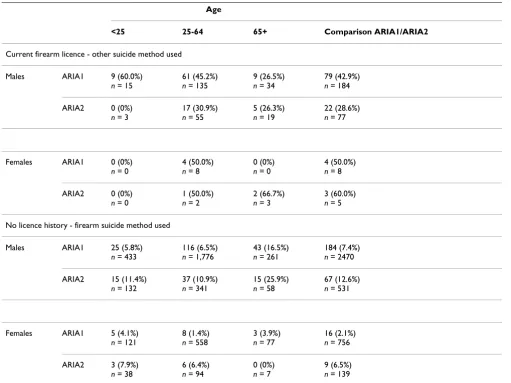
The main deviations from the identified relationship between those with a current licence and the selection of firearms as a suicide method occurred: (i) where an avail-able firearm was not used (n = 108); or (ii) where those without a licence history used a weapon to commit
sui-cide (n = 282). Table 5 summarizes the characteristics of these groups.
Among males with a licence, a greater proportion of those younger than 25 years of age used an alternative method -60.0%, compared to 26.5% of those aged 65+ years. Also a greater proportion of ARIA1 men selected alternative means (42.9%, compared to 28.6% for ARIA2). For those without a licence history, but who had used firearms as a means of committing suicide, a greater proportion of both men and women were from ARIA2 (12.6% and 6.5%, respectively). In general, women are far less likely to use firearms as a suicide method which makes it more difficult to identify any significant trends. However, it is interesting to note that of the 13 females with a licence, seven used an alternative method. Twenty-five females with no iden-tifiable licence were recorded as using firearms to suicide, suggesting they may have had access to firearms licensed to another person in their home [15].
Discussion
This research, drawing on the evidence of firearms sui-cides during 1997 to 2004, furthers the understanding of the relationship between access to means, method famili-arity and method choice. It also supports more recent
Table 2: Demographic factors of all suicide cases presented by licence history and suicide method.
Licence history Suicide method
At death In the past No record Firearms Other
Gender Male 262
(95.3%)
183 (96.8%)
3100 (77.4%)
461 (93.3%)
3084 (77.6%)
Female 13
(4.7%)
6 (3.2%)
905 (22.6%)
33 (6.7%)
891 (22.4%)
Age <25 18
(2.4%)
3 (0.4%)
742 (97.2%)
58 (7.6%)
705 (92.4%)
25-64 200
(6.3%)
143 (4.5%)
2,849 (89.2%)
317 (9.9%)
2,875 (90.1%)
65+ 57
(11.2%)
43 (8.5%)
407 (80.3%)
119 (23.5%)
388 (76.5%)
Married/De facto 134
(54.7%)
74 (46.2%)
1,246 (37.9%)
201 (47.4%)
1,253 (38.4%)
Blood alcohol level = 0.05 ppm 163 (23.5%)
126 (20.3%)
2,386 (29.1%)
278 (24.3%)
2,397 (28.8%)
ARIA2 192
(29.9%)
147 (21.8%)
3,232 (17.2%)
337 (30.8%)
3,234 (16.6%)
work arguing for a broader explanation of factors (includ-ing socidemographic) impact(includ-ing on the use of firearms as a means of suicide [7]. It demonstrates that not only is there a greater likelihood that those familiar with firearms and having access to them would select firearms as a means for suicide, but also that there is a greater likeli-hood of suicide by any means among this group.
Results from the logistic regression identified significant factors for those most commonly selecting firearms as a method of suicide. These included age, location and fire-arm access, with older males from regional areas with access to a firearm being the most likely group to use fire-arms to commit suicide.
The presence of firearms has been found to be associated with a significantly higher risk of suicide by the use of fire-arms in men than women. This is consistent with some
other studies [42]. Additionally, this research found that the risk of suicide by any means was more than doubled in those with a licence history (OR = 2.09, P < 0.001).
A number of other studies have explored the link between suicide and firearm access. At a regional level, associations between higher firearm availability and total suicide rates have been identified [21,22,25]. However, small samples and the effects of overall firearm accessibility often make it difficult to confirm the relationship. Beautrais et al. [17], in a study of 197 suicide cases in New Zealand, found a positive, but non-significant, association between firearm access in the home and the selection of this means of sui-cide (OR = 1.4, P > 0.05). Kellerman et al. [20] found an increased suicide risk (OR = 4.8) where a firearm was available in the home. Studies focusing on links between recent firearm access and suicide risk also found an
Method selection rates in persons by firearms licence history
Figure 1
Method selection rates in persons by firearms licence history.
Table 3: Risk of suicide on the basis of licence possession.
Suicide Risk
Suicide Control z Odds ratio 95% confidence interval
History of firearm licence Yes 464 190645 14.98 2.09 1.90 2.30
increased risk among those who had recently purchased handguns [11,43].
Given the significance of the finding of an elevated suicide risk in those with a history of firearm access, some consid-eration of the possible differences in this group is war-ranted. Few studies have explored the mental health [44] and rates of depression and suicide ideation [45] among those with access to firearms, but found no significant links. Gun owners are known to be a relatively consistent demographic group [46]. In our study the profile of those choosing firearms as a means of suicide showed them to be older regional men, many of whom were farmers. The higher incidence of suicides in older men, and in regional localities, is well documented [38], as are the higher rates among Australian farmers [47,48]. In seeking to explain the higher suicide rates of farmers in the UK, Booth et al. suggested a number of factors, including a more func-tional attitude to death associated with the nature of the farming lifestyle [49]. Such attitudes are likely to be rein-forced over time, with Hendrix [46] suggesting a cultural transmission of values surrounding firearms. There is a need for further exploration of these relationships with elevated suicide rates.
Method choice: access versus selection
The present study (Figure 1) showed that, amongst cur-rent licensees, firearms remained the preferred method of suicide (10.92 per 100,000), in contrast to those without a licence history for whom hanging was the most pre-ferred method (6.31 per 100,000) and firearms the least preferred (1.03 per 100,000). Further, for those with doc-umented familiarity with firearms, holding a current or
past licence, there was a greater likelihood of their com-mitting suicide compared to those without such a history (OR = 2.09, P < 0.001).
Of particular interest were individuals with an identified access to firearms who used other means of suicide (n = 108). They were more likely to be younger people from ARIA1 areas - thus poorly aligning with the more usual characteristic of firearm suicides. Such a choice (by seven of the 15 males aged less than 25 years from ARIA1) is consistent with the increasing choice of hanging among young males, both in Australia [31] and internationally [50].
The evidence shows that those who accessed firearms without a licence were significantly more likely to be older, male and from ARIA2. This group aligns well with the profile of those selecting firearms, with the exception of current licence holders. There was no significant age difference for females; however, they were significantly more often from ARIA2 (Table 5).
While the access restrictions introduced in 1996 were intended to limit firearm use to those with licences, there are a number of likely avenues by which illegal access can be achieved - for example, through access to firearms in the home, through work or social networks or through theft. Studies by Smith [15] and Ikeda et al. [14] docu-mented access without ownership, particularly by females and young males, who were the least likely to hold a licence. In their investigation of firearm theft, Bricknell and Mozous [16] showed that a greater proportion of Queensland thefts occurred in rural and regional areas,
Table 4: Logistic regression results showing predictors of the selection of firearms as a suicide method.
Confidence Interval
Variables in the equation Exp b # Lower Upper
Age: under 25†
25-64 0.945 .630 1.418
65+ 2.805*** 1.737 4.532
Gender
Male/Female† 2.519*** 1.606 3.952
Licence at death:
Yes/Never† 14.160*** 10.040 19.970
Accessibility:
ARIA1†/ARIA2 2.261* 1.641 3.113
Married:
Yes/Other† 1.216 0.917 1.615
Blood alcohol ≥ 0.05:
Yes/No† 0.899 0.656 1.232
Final model:
Cox and Snell R2 = 0.116, Nagalkerke R2 = 0.245, χ2(1) = 354.023, p < 0.001
and that only 57% of licensed owners complied with the safe storage requirements. Thus it can be seen that it is rel-atively easy for unlicensed people to obtain access to fire-arms.
While accessibility is a critical element of choice, this research demonstrates that a licence is not a necessary fac-tor in determining firearm accessibility. Further, where access is present through a licence, this may also not be a sufficient factor in determining the choice of the method of suicide. The relevant number of those using other means demonstrates that the choice of method is also greatly influenced by age and location, with illegal access occurring more frequently in regional locations.
Limitations
Owning a current firearm licence has been used as a proxy for current access. Although this is a good indicator of access, there are situations where a person with a licence may not have immediate access, for example, when away from their normal residence. On the other hand, for those without a licence there are a number of mechanisms by which firearms can be accessed. Those with a past licence may still retain their old weapon. Further, those without a license can obtain weapons stored by known licence hold-ers (sometimes within their household) or illegal weap-ons.
The identification of licensed persons used the most detailed information available, integrating information
Table 5: Incidence of suicide where availability or use are not consistent with licence status.
Age
<25 25-64 65+ Comparison ARIA1/ARIA2
Current firearm licence - other suicide method used
Males ARIA1 9 (60.0%)
n = 15
61 (45.2%)
n = 135
9 (26.5%)
n = 34
79 (42.9%)
n = 184
ARIA2 0 (0%)
n = 3
17 (30.9%)
n = 55
5 (26.3%)
n = 19
22 (28.6%)
n = 77
Females ARIA1 0 (0%)
n = 0
4 (50.0%)
n = 8
0 (0%)
n = 0
4 (50.0%)
n = 8
ARIA2 0 (0%)
n = 0
1 (50.0%)
n = 2
2 (66.7%)
n = 3
3 (60.0%)
n = 5
No licence history - firearm suicide method used
Males ARIA1 25 (5.8%)
n = 433
116 (6.5%)
n = 1,776
43 (16.5%)
n = 261
184 (7.4%)
n = 2470
ARIA2 15 (11.4%)
n = 132
37 (10.9%)
n = 341
15 (25.9%)
n = 58
67 (12.6%)
n = 531
Females ARIA1 5 (4.1%)
n = 121
8 (1.4%)
n = 558
3 (3.9%)
n = 77
16 (2.1%)
n = 756
ARIA2 3 (7.9%)
n = 38
6 (6.4%)
n = 94
0 (0%)
n = 7
9 (6.5%)
n = 139
ARIA = Accessibility/Remoteness Index of Australia; ARIA1 = highly accessible or accessible localities; ARIA2 = moderately accessible, remote or very remote localities.
from the QSR with that from the Firearms Registry. How-ever, it is possible that inaccurate reporting or recording of information could have occurred in the documentation of some cases.
Firearm suicide is predominantly a method chosen by males; thus, the numbers of reported female cases were low and the possibility of identifying statistical differ-ences, for example across age classes, was limited.
This study relied on data from the QSR, limiting the anal-ysis to Queensland. Similar analyses for all of Australia, while certainly possible, are constrained in their effective-ness by recognised issues with national data quality [51,52].
Conclusion
This research suggests that familiarity with and access to firearms is central not only to the choice of this method, but is also linked to a greater likelihood of committing suicide by any method. Factors such as gender, age and geographical location impact on the choice of this means, with older regional males the most likely to choose fire-arms. It is apparent that access to firearms has been possi-ble for a large number of persons without a current licence; however, a valid licence increases the likelihood of this choice as a suicide method, even if it is not an essential prerequisite.
In progressing firearms policy, the implementation of more stringent secure storage requirements and further licensing restrictions are likely to contribute to continued reductions in firearm suicides, and also reduce the overall familiarity with firearms in the community. While this study was limited to Queensland, its results are possibly relevant for other jurisdictions, particularly states with high prevalence of firearms suicides.
Abbreviations
OR: odds ratio; QSR: Queensland Suicide Register; ARIA: Accessibility/Remoteness Index of Australia; ARIA1: highly accessible or accessible localities; ARIA2: moder-ately accessible, remote or very remote localities.
Competing interests
The authors declare that they have no competing interests.
Authors' contributions
HK participated in the design of the study, linking data from the QSR and the Firearm Registry, performed the sta-tistical analysis and contributed to the writing of the paper. JS contributed to the data analysis and the writing of the paper. DDL conceived the study, participated in its design and helped to finalize the manuscript for publica-tion. All authors read and approved the final manuscript.
Acknowledgements
We are grateful to the Queensland Firearms Registry (Queensland Police) for their co-operation and support in the provision of data on firearms reg-istration. We are also indebted to the Queensland Health for the continu-ing support of the Queensland Suicide Register. We should also like to thank the reviewers for their comments.
References
1. Ajdacic-Gross V, Killias M, Hepp U, Gadola E, Bopp M, Lauber C, Schnyder U, Gutzwiller F, Rössler W: Changing times: a longitu-dinal analysis of international firearm suicide data. Am J Public Health 2006, 96:1752-1755.
2. Beautrais AL, Fergusson DM, Horwood LJ: Firearms legislation and reductions in firearm-related suicide deaths in New Zea-land. Aust N Z J Psychiatry 2006, 40:253-259.
3. Kapusta ND, Etzersdorfer E, Krall C, Sonneck G: Firearm legisla-tion reform in the European Union: impact on firearm avail-ability, firearm suicide and homicide rates in Austria. Br J Psychiatry 2007, 191:253-257.
4. Lambert MT, Silva PS: An update on the impact of gun control legislation on suicide. Psychiatr Q 1998, 69:127-134.
5. Mann JJ, Apter A, Bertolote J, Beautrais A, Currier D, Haas A, Hegerl U, Lonnqvist J, Malone K, Marusic A, Mehlum L, Patton G, Phillips M, Rutz W, Rihmer Z, Schmidtke A, Shaffer D, Silverman M, Takahashi Y, Varnik A, Wasserman D, Yip P, Hendin H: Suicide prevention strategies: a systematic review. JAMA 2005, 294:2064-2074. 6. Ozanne-Smith J, Ashby K, Newstead S, Stathakis VZ, Clapperton A:
Firearm related deaths: the impact of regulatory reform. Inj Prev 2004, 10:280-286.
7. Klieve H, Barnes M, De Leo D: Controlling firearms use in Aus-tralia: has the 1996 gun law reform produced the decrease in rates of suicide with this method? Soc Psychiatry Psychiatr Epide-miol 2009, 44:285-292.
8. Lester D: Preventing suicide by restricting access to methods for suicide. Arch Suicide Res 1998, 4:7-24.
9. Hemenway D, Azrael D, Miller M: Gun use in the United States: results from two national surveys. Inj Prev 2000, 6:263-267. 10. Powell KE, Jacklin BC, Nelson DE, Bland S: State estimates of
household exposure to firearms, loaded firearms, and hand-guns, 1991 through 1995. Am J Public Health 1998, 88:969-972. 11. Cummings P, Koepsell TD, Grossman DC, Savarino J, Thompson RS:
The association between the purchase of a handgun and homicide or suicide. Am J Public Health 1997, 87:974-978. 12. Duggan M: Guns and suicide. In Evaluating guns policy: effects on
crime and violence Edited by: Ludwig J, Cook PJ. Washington, DC: Brookings Institution Press; 2003:41-73.
13. Lester D: Gun ownership and suicide in the United States. Psy-chol Med 1989, 19:519-21.
14. Ikeda RM, Dahlberg LL, Kresnow MJ, Sacks JJ, Mercy JA: Studying 'exposure' to firearms: household ownership vs. access. Inj Prev 2003, 9:53-57.
15. Smith TW: National Gun Policy Survey of the National Opinion Research Center: Research findings Chicago: National Opinion Research Center, University of Chicago; 2001.
16. Bricknell S, Mouzos J: Firearms theft in Australia 2005-06. Research and public policy series (No. 82) Canberra: Australian Institute of Criminol-ogy; 2007.
17. Beautrais AL, Joyce PR, Mulder RT: Access to firearms and the risk of suicide: a case control study. Aust N Z J Psychiatry 1996,
30:741-748.
18. Killias M: International correlations between gun ownership and rates of homicide and suicide. CMAJ 1993, 148:1721-1725. 19. Brent DA, Perper JA, Allman CJ, Moritz GM, Wartella ME, Zelenak JP: The presence and accessibility of firearms in the homes of adolescent suicides: A case-control study. JAMA 1991,
266:2989-2995.
20. Kellermann AL, Rivara FP, Somes G, Reay DT, Francisco J, Banton JG, Prodzinski J, Fligner C, Hackman BB: Suicide in the home in rela-tion to gun ownership. N Engl J Med 1992, 327:467-472. 21. Miller M, Azrael D, Hemenway D: Household firearms ownership
and suicide rates in the United States. Epidemiology 2002,
Publish with BioMed Central and every scientist can read your work free of charge "BioMed Central will be the most significant development for disseminating the results of biomedical researc h in our lifetime."
Sir Paul Nurse, Cancer Research UK
Your research papers will be:
available free of charge to the entire biomedical community
peer reviewed and published immediately upon acceptance
cited in PubMed and archived on PubMed Central
yours — you keep the copyright
Submit your manuscript here:
http://www.biomedcentral.com/info/publishing_adv.asp
BioMedcentral 22. Miller M, Lippmann SJ, Azrael D, Hemenway D: Household firearm
ownership and rates of suicide across the 50 US States. J Trauma 2007, 62:1029-1034.
23. Wiebe DJ: Homicide and suicide risks associated with fire-arms in the home: a national case-control study. Aust N Z J Psy-chiatry 2003, 41:771-782.
24. Birckmayer J, Hemenway D: Suicide and firearm prevalence: are youth disproportionately affected? Suicide Life Threat Behav 2001, 31:303-310.
25. Miller M, Azrael D, Hepburn L, Hemenway D, Lippmann SJ: The association between changes in household firearm owner-ship and rates of suicide in the United States, 1981-2002. Inj Prev 2006, 12:178-182.
26. Ludwig J, Cook PJ: Homicide and suicide rates associated with implementation of the Brady Handgun Violence Prevention Act. JAMA 2000, 284:585-591.
27. Conner KR, Zhong Y: State firearm laws and rates of suicide in men and women. Am J Prev Med 2003, 25:320-324.
28. Wilkinson D, Gunnell D: Youth suicide trends in Australian metropolitan and non- Metropolitan areas, 1988-1997. Aust N Z J Psychiatry 2000, 34:822-828.
29. Kreitman N: The coal gas story: United Kingdom suicide rates, 1960-71. Br J Prev Soc Med 1976, 30:86-93.
30. Beautrais AL: Effectiveness of barriers at suicide jumping sites: a case study. Aust N Z J Psychiatry 2001, 35:557-562.
31. De Leo D, Dwyer J, Firman D, Neulinger K: Trends in hanging and firearm suicide rates in Australia: substitution of method?
Suicide Life Threat Behav 2003, 33:151-164.
32. De Leo D, Evans R, Neulinger K: Hanging, firearm, and non-domestic gas suicides among males: a comparative study.
Aust N Z J Psychiatry 2002, 36:183-189.
33. De Moore GM, Robertson AR: Suicide attempts by firearms and by leaping from heights: a comparative study of survivors.
Am J Psychiatry 1999, 156:1425-1431.
34. Fischer EP, Comstock GW, Monk MA, Sencer DJ: Characteristics of completed suicides: implications of differences among methods. Suicide Life Threat Behav 1993, 23:91-100.
35. Cantor C, Baume P: Access to methods of suicide: what impact? Aust N Z J Psychiatry 1998, 32:8-14.
36. Clarke RV, Lester D: Suicide: closing the exits New York: Springer-Ver-lag; 1989.
37. Chapman S, Alpers P, Agho K, Jones M: Australia's 1996 gun law reforms: faster falls in firearm deaths, firearm suicides, and a decade without mass shootings. Inj Prev 2006, 12:365-372. 38. De Leo D, Klieve H, Milner A: Suicide in Queensland, 2002-2004:
Mor-tality rates and related data Brisbane: Australian Institute for Suicide Research and Prevention; 2006.
39. Australian Institute of Health and Welfare: State and territories GRIM (general record of the incidence of mortality) books Canberra: AIHW; 2005.
40. Department of Health and Aged Care: Measuring remoteness: accessi-bility/remoteness index of Australia (ARIA), revised edition Occasional Papers: New Series No. 14. Canberra: DHSC; 2001.
41. Kirkwood BR, Sterne JAC: Essential medical statistics 2nd edition. Oxford: Blackwell Publishing; 2003.
42. Conwell Y, Duberstein PR, Connor K, Eberly S, Cox C, Caine ED:
Access to firearms and risk for suicide in middle-aged and older adults. Am J Geriatr Psychiatry 2002, 10:407-416.
43. Wintemute GJ, Parham CA, Beaumont JJ, Wright M, Drake C: Mor-tality among recent purchasers of handguns. N Engl J Med 1999, 341:1583-1589.
44. Sorenson SB, Vittes KA: Mental health and firearms in commu-nity-based surveys. Implications for suicide prevention. Eval Rev 2008, 32:239-256.
45. Hemenway D, Miller M: Association of rates of household hand-gun ownership, lifetime major depression, and serious sui-cidal thoughts with rates of suicide across US census regions.
Inj Prev 2002, 8:313-316.
46. Hendrix PN: Gun ownership: cultural or situational? Paper pre-sented at the annual meeting of the American Society of Criminology, Atlanta, Georgia 2007 [http://www.allacademic.com/meta/ p207064_index.html].
47. Miller K, Burns C: Suicides on farms in South Australia, 1997-2001. Aust J Rural Health 2008, 16:327-331.
48. Page AN, Fragar LJ: Suicide in Australian farming, 1988-1997.
Aust N Z J Psychiatry 2002, 36:81-85.
49. Booth N, Briscoe M, Powell R: Suicide in the farming commu-nity: methods used and contact with health services. Occup Environ Med 2000, 57:642-644.
50. Gunnell D, Middleton N, Fraenkel S: Method availability and the prevention of suicide - a re-analysis of secular trends in Eng-land and Wales 1950-1975. Soc Psychiatry Psychiatr Epidemiol 2000,
35:437-443.
51. Australian Bureau of Statistics: Information paper: external causes of death, data quality, 2005. Cat. 3317.0.55.001. Canberra 2007. 52. De Leo D: Suicide mortality data needs revisions. Med J Aust
2007, 186:157.
Pre-publication history
The pre-publication history for this paper can be accessed here: