http://dx.doi.org/10.4236/fns.2014.513138
How to cite this paper: Brandi, R.A., Tribucci, A.M.O., Balieiro, J.C.C., Hoffman, R.M. and Bueno, I.C.S. (2014) Citrus Pulp in Concentrates for Horses. Food and Nutrition Sciences, 5, 1272-1279. http://dx.doi.org/10.4236/fns.2014.513138
Citrus Pulp in Concentrates for Horses
Roberta A. Brandi
1*, Adriana M. O. Tribucci
1, Julio C. C. Balieiro
1, Rhonda M. Hoffman
2,
Ives C. S. Bueno
11Faculty of Animal Science and Food Engineering, University of São Paulo, Pirassununga, Brazil 2School of Agribusiness & Agroscience, Middle Tennessee State University, Murfreesboro, USA
Email: *[email protected]
Received 23 April 2014; revised 25 May 2014; accepted 7 June 2014
Copyright © 2014 by authors and Scientific Research Publishing Inc.
This work is licensed under the Creative Commons Attribution International License (CC BY). http://creativecommons.org/licenses/by/4.0/
Abstract
The objective of this study was to evaluate the inclusion of increasing levels of citrus pulp in horse diets by investigating nutrient digestibility and the diet carbohydrate fractions, as well as to eva-luate the correlation observed between the studied digestibility coefficients. Five adult horses were used. The horses were housed in individual stalls and had approximate ages of 3.5 years and live weights of 492.5 ± 44.5 kg. The experimental diets were formulated to meet the animals’ re-quirements for maintenance, establishing a roughage-to-concentrate ratio of 60:40 with the coast-cross hay as the roughage. The formulated concentrates contained increasing inclusion le-vels of citrus pulp (0%, 7%, 14%, 21%, and 28%). No effect of the diets was observed (p > 0.05) on the coefficients of digestibility of dry matter, organic matter, crude protein, ether extract, nitro-gen-free extract, and non-fibrous carbohydrates; however, there was an effect (p < 0.05) on the soluble carbohydrates, y = 66.298 + 0.3724x. Citrus pulp may be used in horse diets at up to 28% concentrate. Citrus pulp is a safe energy source and benefits the digestibility of the nutrients and the carbohydrate fraction (both the fibrous and non-fibrous fractions) of the diet.
Keywords
Carbohydrates, Citrus Pulp, Digestibility, Horses
1. Introduction
Horses are capable of using large amounts of roughage to meet their nutritional requirements; however, to maximize growth and productivity, diets with high percentages of grain are used [1]. To meet the requirements of several types of horses, alternative ingredients in the composition of the diets have been sought.
grouped into fibrous carbohydrates and non-fibrous carbohydrates, which include starch, mono-, di-, and oligo-saccharides, fructosans, pectins, galactans, and β-glucans [3]. The following nutrients compose the soluble car-bohydrates: oligosaccharides, fructosans, and a portion of starch [4]. Meanwhile, hydrolyzable carbohydrates differ from the soluble carbohydrates due to the exclusion of fructosans [5].
The inclusion of easy fermentable carbohydrate reduces the level of starch in the diet without compromising the caloric density of the feed [6]. One of the ingredients that have been used as a source of fiber and energy for horses is citrus pulp, a by-product of the orange juice industry that is readily available and economically viable
[7].
No study is available regarding the fractionation of the carbohydrates in the diets containing citrus pulp for horses. The fractionation of carbohydrates for horses was proposed by [8] and was initially studied in Brazil by
[5], who determined the digestion of carbohydrates of roughage foods for horses.
The objective of the present study is to evaluate the viability of the inclusion of increasing levels of citrus pulp in diets for horses through trials examining the digestibility of nutrients and the carbohydrate fractions of the diet, as well as to evaluate the correlation observed among the studied coefficients of digestibility.
2. Material and Methods
2.1. Experimental Design
The experiment was conducted in the Horse Breeding Sector of the Coordinating Committee of the Pirassunun-ga Campus from February to May of 2010. Five crossbred horses were used with approximate ages of 3.5 years and live weights of 492.5 ± 44.5 kg; the horses were housed in individual stalls.
The animals were dewormed at the beginning of the experiment and had an adaption period to the diet of 7 days followed by 3 days of total collection of feces and 4 days of rest between periods. The horses were indivi-dually exercised daily for 15 minutes at a walk and light trot.
The experimental diets were formulated to meet the animals’ maintenance needs as described by the Nutrient Research Council [2]. The ratio of roughage-to-concentrate was 60:40 with coast-cross hay being the roughage used. The experimental concentrates were formulated with the inclusion of increasing levels of citrus pulp as described in Table 1.
The animals were fed twice a day, providing 1/3 of the hay during the day and 2/3 in the afternoon. The con-centrate was also fractioned into 2 daily meals, provided at 07:00am and 05:00pm. There was no leftover food, suggesting that the concentrate was well accepted by the animals.
During the collection period, the bedding was removed from the stalls, and the feces were collected from the floor on 3 consecutive days and were later weighed and homogenized at the end of each day, from which a 15% aliquot was obtained and stored in a freezer (−10˚C) for subsequent analysis. At the end of each experimental period, one composite sample was produced per treatment.
2.2. Analysis
At the end of each experimental period, the feces were thawed at room temperature and homogenized, and composite samples were produced, which were placed in aluminum containers and pre-dried in a forced-ventila- tion oven at 55˚C for 72 hours. Subsequently, these samples were ground in a Wiley-type mill and stored in la-beled plastic jars.
The analysis to determine the amounts of dry matter (DM), ash, ether extract (EE), and crude protein (CP), were performed according to the methodology described by Association of Official Analytical Chemistry [9]. The analysis of NDF and ADF were performed as per [10]. The bromatological analysis was performed at the Bromatology Laboratory of the Department of Animal Science at FZEA (Faculdade de Zootecnia e Engenharia de Alimentos/Faculty of Animal Science and Food Engineering)—USP (Universidade de São Paulo/University of São Paulo) and the calcium and phosphorus analysis was performed at the Mineral Laboratory of the Depart-ment of Animal Science at FZEA-USP (Table 1).
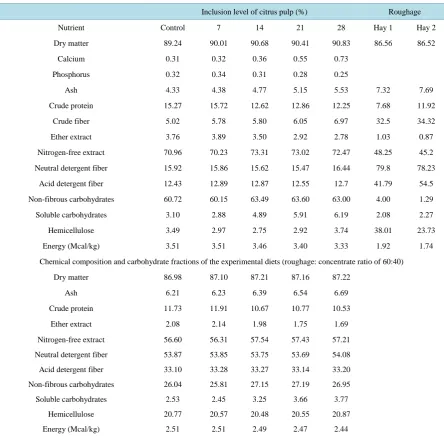
Table 2 shows the chemical composition and the carbohydrate fractions of the concentrates and the experi-mental diets.
Table 1.Ingredient composition (%) of the experimental concentrates.
Ingredient Inclusion levels of citrus pulp (%)
0 7 14 21 28
Ground corn 78.57 73.04 67.36 61.12 54.88
Soybean meal 10 10 10.15 10.9 11.64
Wheat bran 7.28 5.81 4.34 2.83 1.32
Citrus pulp 0 7 14 21 28
Premix 2 2 2 2 2
Common salt 1 1 1 1 1
Limestone 0.95 0.95 0.95 0.95 0.95
Dicalcium phosphate 0.2 0.2 0.2 0.2 0.2
Table 2. Chemical composition (%) and carbohydrate fractions (%) of the concentrates and the experimental diets.
Inclusion level of citrus pulp (%) Roughage
Nutrient Control 7 14 21 28 Hay 1 Hay 2
Dry matter 89.24 90.01 90.68 90.41 90.83 86.56 86.52
Calcium 0.31 0.32 0.36 0.55 0.73
Phosphorus 0.32 0.34 0.31 0.28 0.25
Ash 4.33 4.38 4.77 5.15 5.53 7.32 7.69
Crude protein 15.27 15.72 12.62 12.86 12.25 7.68 11.92
Crude fiber 5.02 5.78 5.80 6.05 6.97 32.5 34.32
Ether extract 3.76 3.89 3.50 2.92 2.78 1.03 0.87
Nitrogen-free extract 70.96 70.23 73.31 73.02 72.47 48.25 45.2
Neutral detergent fiber 15.92 15.86 15.62 15.47 16.44 79.8 78.23
Acid detergent fiber 12.43 12.89 12.87 12.55 12.7 41.79 54.5
Non-fibrous carbohydrates 60.72 60.15 63.49 63.60 63.00 4.00 1.29
Soluble carbohydrates 3.10 2.88 4.89 5.91 6.19 2.08 2.27
Hemicellulose 3.49 2.97 2.75 2.92 3.74 38.01 23.73
Energy (Mcal/kg) 3.51 3.51 3.46 3.40 3.33 1.92 1.74
Chemical composition and carbohydrate fractions of the experimental diets (roughage: concentrate ratio of 60:40)
Dry matter 86.98 87.10 87.21 87.16 87.22
Ash 6.21 6.23 6.39 6.54 6.69
Crude protein 11.73 11.91 10.67 10.77 10.53
Ether extract 2.08 2.14 1.98 1.75 1.69
Nitrogen-free extract 56.60 56.31 57.54 57.43 57.21
Neutral detergent fiber 53.87 53.85 53.75 53.69 54.08
Acid detergent fiber 33.10 33.28 33.27 33.14 33.20
Non-fibrous carbohydrates 26.04 25.81 27.15 27.19 26.95
Soluble carbohydrates 2.53 2.45 3.25 3.66 3.77
Hemicellulose 20.77 20.57 20.48 20.55 20.87
[image:3.595.92.537.283.719.2]the subtraction of 100% of dry matter from the percentages of CP, EE, MM, and NDF as described in the for-mula below and cited by [11]: %NFC = 100% of the DM-(%CP + %EE + %MM + %NDF).
The coefficients of digestibility were calculated for DM, CP, OM, NDF, ADF, hemicellulose, soluble carbo-hydrates, and non-fibrous carbohydrates.
To estimate the digestible energy of the experimental concentrates, the equation suggested by [12] was used as follows:
DE (kcal/kg) = (−3.6 + 0.211 × CP + 0.421 × EE + 0.015 × CF + 0.189 × NFE)/0.00419.
The experimental design used was a 5 × 5 Latin Square (LS). Each experimental period lasted 14 days, with 7 days of adaptation to the diet, 3 days of total collection of feces, and at the end of this period, 4 days of rest.
To analyze the results, a mixed linear model was used, considering the fixed effect of the citrus pulp inclusion levels (0%, 7%, 14%, 21%, and 28%) and period, in addition to the random effect of animals within the LS and the residual (SAS Inst. Inc., Cary, NC). In the case of a significant effect for the inclusion level, a regression analysis was performed to analyze the digestibility of the nutrients as a function of the inclusion levels. Associa-tions between the digestibility coefficients of the nutrients in the diet were examined using a Pearson’s correla-tion analysis.
3. Results and Discussion
The digestibility coefficients of the nutrients of the experimental diets observed in the present study may be considered to be satisfactory and are similar to those found in the literature for horse diets. In general, the diges-tibility coefficients of nutrients observed in this trial were higher than those found in previous studies using ci-trus pulp in diets for horses [13] [14].
Considering the apparent digestibility coefficients of the DM (ADCDM), it was observed that the coefficients obtained in the present study, 58% for 7% of citrus pulp inclusion and 59.97% for 14% of inclusion, are greater than those observed by [7], in which concentrates with the inclusion of 7.5% and 15% citrus pulp were provided, and ADCDM values of 68.7% and 67.5% were observed, respectively. In another study which it was provided 20% citrus pulp as a substitute for coast-cross hay, observed an ADCDM of 80.22% [14].
When provided coast-cross hay, soybean meal, and synthetic pectin obtained ADCDM of 49.20% [15]. These values were similar to those observed by [16] substituting 100% of the Tifton 85 hay with soybean hulls (ADCDM 82.77%) and evaluating the in situ digestibility of the forage peanut (ADCDM 83.7%) and the lime-yellow pea (ADCDM 82.9%) [5]. It can be considered that the ADCDM observed in the present study is a high value, as described by [16], who observed a variation in the ADCDM of 58.2% and 86.5% for diets com-posed of roughage and concentrate.
No was observed effect (p > 0.05) on the crude protein digestibility (ADCCP). The observed values ADCCP were lower than those reported by [7] (78.6%, 74.08%) [16] and were similar to [13] [14] [17] (66.25%, 67.7% and 57.5%).
A quadratic effect of the addition of increasing levels of pectin over the digestibility of crude protein and suggested that the addition of pectin initially improved the protein digestibility because it is an easily and readily available energy source for microorganisms, making them more efficient, in addition to probably promoting the growth of the microorganism population, which upon being excreted in the feces, lead to underestimation of the digestibility of the protein in the diet, thereby reducing the ADCCP. Another factor that may have influenced this result was the variation in the percentages of the ingredients in the diet because, with the inclusion of citrus pulp in the diet, the percentages of corn and wheat bran were reduced, and these ingredients are greater sources of protein [15].
With the increase in the inclusion levels of citrus pulp, the amount of non-fibrous carbohydrates was main-tained, as well as that of crude fiber and NDF, as already discussed; however, there was an increase in the so-luble fraction of carbohydrates (Table 2), which may have influenced the effect (p < 0.05) observed for the in-clusion of citrus pulp over the digestibility of soluble carbohydrates (Figure 1).
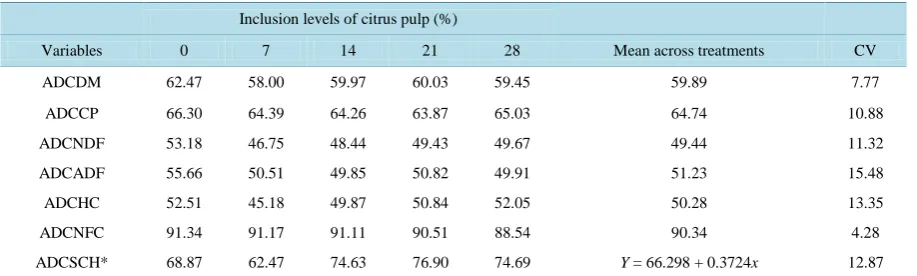
No effect was observed (p > 0.05) of the inclusion levels of citrus pulp on the digestibility coefficients of the nutrients and the carbohydrate fractions (Table 3). The apparent digestibility coefficients of the NDF (ADCNDF) displayed values similar to those cited in the literature (44.2% to 58.8%); however, the ADCADF values were greater than those observed [16].
Figure 1. Effect of the inclusion levels of citrus pulp over the digestibility of soluble carbohydrates in the diet (ADCSCH).
(43%), lower than those observed by [14] (57.71%), and similar to those observed by [5] (49.6%) for alfalfa, and coast-cross hay. Meanwhile, the ADCADF values were similar to those observed by [15] (47.79%), lower than those observed by [13] [16] (53% to 55.8%; 72% to 82%), and greater than those observed by [7] (33% to 35%). For the ADC of hemicellulose, the observed values were greater than those observed by [17] (ADCHC 56.8%) and [15] (ADCHC 60.29%).
The ratio between the fibrous and non-fibrous carbohydrate fractions may have also influenced the results obtained in the present study. This balance may positively influence the microbiota of the cecum and of the co-lon, improving the digestibility of NDF, ADF, and hydrolysable carbohydrates [18]. For this reason to be main-tained, it is necessary to determine the ratio of roughage to concentrate in the diet, which is one of the factors with the greatest variation among the experiment protocols used in the literature. The present study used a roughage: concentrate ratio of 60:40, while other studies used the inverse ratio, 40:60 and 80:20 [7] [14], which favors the disparity of the results obtained among the different studies. Horse diets containing a lower percen-tage of roughage in relation to the concentrate display a lower ADCDM [19]. The greater supply of concentrate increases the availability of starch and easily fermentable carbohydrates in the diet, which may negatively in-fluence the fermentative profile of the large intestine and, with this inin-fluence, decrease the ADCDM.
The largest digestibility coefficients of NDF and ADF in diets with a 60:40 ratio and 25% NDF were ob-served [18]. [20] observed an improvement in the microbial activity in the caecum and colon and a tendency of the cellulose-fermenting microorganisms to work more efficiently with the inclusion of hay in the diet, which are factors that may also have contributed to obtaining large digestibility coefficients of DM, ADF, and hydro-lyzable carbohydrate in the present study.
Correlations was observed between the apparent digestibility of dry matter (ADCDM) and ADCDFN (R = 0.857, p = 0 < 0.0001), between ADCDM and apparent digestibility of ADF (R = 0.789, p =< 0.0001) and be-tween ADCNDF and ADCADF (0.7509).
No effect was observed on the apparent digestibility of crude protein (ADCCP, p = 0.8365), but ADCCP was highly correlated with ADCADF (R = 0.812, p =< 0.0001) and moderately correlated with ADCNFC (R = 0.670, p = 0.0004) (Table 3).
The use of a larger amount of roughage ensures the constant presence of substrate in the digestive tract, al-lowing for continuous action of the microorganisms, favoring the digestibility of the nutrients, mainly of the fibrous fraction of carbohydrates.
The quality of the fiber used in the diets is a noteworthy factor. The inclusion of citrus pulp at different levels in the diet provided a constant supply of crude fiber (22.42% ± 0.59%) and NDF (53.87% ± 0.37%) but with va-riable fiber quality from the diet (composed by the hay and the concentrate), given that the percentage of ADF in the diet increased with the increase of the inclusion of citrus pulp (for the levels of 21% and 28%), as well as the soluble carbohydrates, the percentage of hemicellulose decreased. Considering that hemicellulose is a collection of amorphous polysaccharides with a degree of polymerization lower than that of cellulose and that the bacteria that degrade it belong to the same group of cellulolytic bacteria also capable of degrading pectin [21], this
ADCS
CH
Table 3. Apparent digestibility coefficient of dry matter (ADCDM), crude protein (ADCCP), neutral detergent fiber (ADCNDF), acid detergent fiber (ADCADF), hemicellulose (ADCHC), non-fibrous carbohydrates (ADCNFC), and soluble carbohydrates (ADCSCH).
Inclusion levels of citrus pulp (%)
Variables 0 7 14 21 28 Mean across treatments CV
ADCDM 62.47 58.00 59.97 60.03 59.45 59.89 7.77
ADCCP 66.30 64.39 64.26 63.87 65.03 64.74 10.88
ADCNDF 53.18 46.75 48.44 49.43 49.67 49.44 11.32
ADCADF 55.66 50.51 49.85 50.82 49.91 51.23 15.48
ADCHC 52.51 45.18 49.87 50.84 52.05 50.28 13.35
ADCNFC 91.34 91.17 91.11 90.51 88.54 90.34 4.28
ADCSCH* 68.87 62.47 74.63 76.90 74.69 Y = 66.298 + 0.3724x 12.87
increase may have favored obtaining higher levels of ADC for DM, ADF, and HC.
In addition to promoting the activity of the above bacteria, pectin possibly increased water retention capacity
[22] [23] and, with this increased viscosity, increasing the transit time and the possibility of digestion of the fibrous fraction of the diets. In addition, increased pectin content in the diet may have helped maintain the pH in the large intestine (buffering action) by promoting the fibrous fraction and its capacity for cation exchange and bonding with metal ions [11], which would contribute to the maintenance of microorganism populations, as the cellulolytic organisms are the ones most drastically affected under low pH conditions. As the fermentation of this substrate produces acetic acid [24] and not lactic acid, maintenance of the pH level may be favored. The pectin appears to provide a positive associative effect, since the inclusion results in higher digestibility coeffi-cients [25].
The inclusion of citrus pulp or other sources of easily-fermentable fibers (beet pulp and soybean hulls) in horse diets is a trend in contemporary nutrition [6], as it allows for a reduction in the supply of starch and a de-crease in the magnitude of the glycemic and insulinemic curves in addition to providing similar amounts of energy in a safe manner.
Observing the composition of the experimental diets of the present study, it can be noted that even with the increase in the inclusion levels of citrus pulp, the amount of non-fibrous carbohydrates was maintained, as well as that of crude fiber and NDF, as already discussed; however, there was an increase in the soluble fraction of carbohydrates (Table 2), which may have influenced the effect (=0.0502) observed for the inclusion of citrus pulp over the digestibility of soluble carbohydrates (Figure 1). Such a result was not expected, given that citrus pulp supplies a large amount of pectin, which could favor digestibility [18].
According to [26], non-fibrous carbohydrates are comprised of starch, monosaccharides, disaccharides, oli-gosaccharides, fructans, β-glucans, galactans, and pectins. Considering that grass hays display low concentra-tions of fructans, that citrus pulp is a poor source of starch, and that the remaining components of this fraction display a beta link between monomers, it is suggested that the main energy-generating pathway is the fermenta-tive one. A dilution of the concentration of starch in the diets was also provided, as indicated by the lower supply of corn in the diet with the increase in the inclusion of citrus pulp (Table 2), which may have favored the use of the fractions of NFC and soluble carbohydrates (composed of oligosaccharides, fructosans, and part starch).
With regard to the efficiency of the use of dietary fiber for horses, this aspect is correlated with three main factors: the composition of the diet, especially the carbohydrate fraction, both structural and non-structural; the fibrolytic activity of the microbial ecosystem; and the passage rate of digesta through the digestive tract, espe-cially in the fermentation compartment, with an increase in fiber digestibility being generally associated with an increase in the digest retention time [27].
Acknowledgements
References
[1] Oliveira, C.A.A., Almeida, F.Q. and Vieira, A.A. (2003) Cinética de Passagem da Digesta, Balanço Hídrico e de Nitro- gênio em Equinos Consumindo Dietas com Diferentes Proporções de Volumoso e Concentrado. Revista Brasileira de Zootecnia, 32, 140-149. http://dx.doi.org/10.1590/S1516-35982003000100018
[2] National Research Council (2007) Nutrient Requirements of Horses. 6th Edition, National Academic Press, Washing- ton DC.
[3] Hall, M.B. (2003) Challenges with Non-Fiber Carbohydrate Methods, Journal of Animal Science, 81, 3226-3232. [4] Silva, D.J. and Queiroz, A.C. (2002) Análise de Alimentos: Métodos Químicos e Biológicos. 3th Edition, Universidade
Federal de Viçosa, Viçosa.
[5] Morgado, E.S., Almeida, F.Q., Silva, V.P., Gomes, A.V.C., Galzerano, L., Ventura, H.T. and Rodrigues, L.M. (2009) Digestão dos Carboidratos De alimentos Volumosos em Equinos. Revista Brasileira de Zootecnia, 38, 75-81.
http://dx.doi.org/10.1590/S1516-35982009000100010
[6] Geor, R.J. (2007) Equine Carbohydrate Nutrition: Implications for Feeding Management and Disease Avoidance.
Proceedings of the 5th Mid-Atlantic Nutrition Conference, Timonium, 28-29 March 2007, 154-161.
[7] Manzano, A., Freitas, A.R., Esteves, S.N. and Novaes, N.J. (1999) Polpa de Citros Peletizada na Alimentação de Equinos. Revista Brasileira de Zootecnia, 29, 1327-1332. http://dx.doi.org/10.1590/S1516-35981999000600021
[8] Hoffman, R.M., Wilson, J.A., Kronfeld, D.S., Cooper, W.L., Lawrence, L.A., Sklan, D. and Harris, P.A. (2001) Hy- drolyzable Carbohydrates in Pasture, Hay, and Horse Feeds: Direct Assay and Seasonal Variation. Journal of Animal Science, 79, 500-506.
[9] AOAC (1995) Official Methods of Analysis. 16th Edition, Association of Official Analytical Chemistry, Washington DC.
[10] Van Soest, P.J., Robertson, J.P. and Lewis, B.A. (1991) Methods for Dietary Fiber, Neutral Detergent Fiber, and Non- starch Polysaccharides in Relation to Animal Nutrition. Journal of Dairy Science, 74, 3583-3597.
http://dx.doi.org/10.3168/jds.S0022-0302(91)78551-2
[11] Deriaz, R.E. (1961) Routine Analysis of Carbohydrates and Lignin in Herbage. Journal of the Science of Food and Agriculture,12, 150-160. http://dx.doi.org/10.1002/jsfa.2740120210
[12] Zeyner, A. and Kienzle, E. (2002) A Method to estimate Digestible Energy in Horse Feed. American Society for Nutri- tional Sciences. The Journal of Nutrition, 132, 1771-1773.
[13] Ott, E.A., Feaster J.B. and Lieb, S. (1979) Acceptability and Digestibility of Dried Citrus Pulp by Horses. Journal of Animal Science, 49, 983-987.
[14] Perali, C., Freitas L.J.A., Fialho, E.T., Bertecchini, A.G. and Araújo, K.V. (2001) Valores Nutricionais de Alimentos Para Equinos. Ciência e Agrotecnologia, 5, 1216-1224.
[15] Oliveira, G.J.C., Lima, J.A.F., Araújo, K.V., Fialho, E.T., Bertechini, A.G., Pérez, J.R.O. and Freitas, R.T.F. (2002) Influência da Adição de Pectina e Farelo de Soja Sobre a Digestibilidade Aparente de Nutrientes, Em Equinos. Revista Brasileira de Zootecnia, 31, 1184-1192. http://dx.doi.org/10.1590/S1516-35982002000500015
[16] Quadros, J.B.S., Furtado, C.E., Barbosa, E.D., Andrade, M.B. and Trevisan, A.G. (2004) Digestibilidade Aparente e Desenvolvimento de Equinos em Crescimento Submetidos a Dietas Compostas por Diferentes Níveis de Substituição do Feno de Tifton 85 Pela Casca de Soja. Revista Brasileira de Zootecnia, 3, 564-574.
http://dx.doi.org/10.1590/S1516-35982004000300006
[17] Miraglia, N., Bergero, D., Polidori, M., Peiretti, P.G. and Ladetto, G. (2006) The Effects of a New Fibre-Rich Concen- trate on the Digestibility of Horse Rations. Livestock Science, 100, 10-13.
http://dx.doi.org/10.1016/j.livprodsci.2005.11.003
[18] Braga, A.B., Araújo, K.V., Leite, G.G. and Mascarenhas, A.G. (2008) Níveis de Fibra em Detergente Neutro em Dietas Para Equinos. Revista Brasileira de Zootecnia, 37, 1965-1972. http://dx.doi.org/10.1590/S1516-35982008001100010
[19] Jansen, W.L., Van Der Kuilen, J., Geelen, S.N.J. and Beynen, A.C. (2000) The Effect of Replacing Nonstructural Car- bohydrates with Soybean Oil oh the Digestibility of Fiber in Trotting Horses. Equine Veterinary Journal, 32, 27-30.
http://dx.doi.org/10.2746/042516400777612008
[20] Zeyner, A., Geibler, C. and Dittrich, A. (2004) Effects of Hay Intake and Feeding Sequence on Variables in Faeces and Fecal Water (Dry Matter, pH Value, Organic Acids, Ammonia, Buffering Capacity of Horses). Journal of Animal Phy- siology and Animal Nutrition, 88, 7-19. http://dx.doi.org/10.1111/j.1439-0396.2004.00447.x
[21] Teixeira, J.C. (2001) Nutrição de Ruminantes. Textos Acadêmicos, Lavras.
[22] Eastwood, M.A. (1992) The Physiological Effect of Dietary Fiber: An Update. Annual Review of Nutrition, 12, 19-35.
[23] Van Soest, P.J. (1994) Nutritional Ecology of the Ruminant. Cornell University Press, Ithaca.
[24] Barrêto Júnior, R.A., Minervino, A.H.H., Mazzocca, F.A., Rodrigues, L., Antonelli, A.C., Sucupira, M.C.A., Mori, C.S. and Ortolani, E.L. (2008) Avaliação do Potencial da Polpa Cítrica em Provocar Acidose Láctica Ruminal Aguda em Bovinos. Brazilian Journal of Veterinary Research and Animal Science, 6, 421-428.
[25] Ben-Ghedalia, D., Yosef, E., Miron, J. and Est, Y. (1989) The Effects of Starch- and Pectin-Rich Diets on Quantitative Aspects of Digestion on Sheep. Animal Feed Science and Technology, 24, 289-298.
http://dx.doi.org/10.1016/0377-8401(89)90150-8
[26] Van Soest, P.J. (1967) Development of a Comprehensive System of Feed Analyses and Its Application to Forages.
Journal of Animal Science, 26, 119-128.
currently publishing more than 200 open access, online, peer-reviewed journals covering a wide range of academic disciplines. SCIRP serves the worldwide academic communities and contributes to the progress and application of science with its publication.
Other selected journals from SCIRP are listed as below. Submit your manuscript to us via either