Review
Exercise training in heart failure
Andrew JS Coats
National Heart and Lung Institute, Imperial College of Science, Technology and Medicine, Royal
Brompton Hospital, London, UK
Abstract
Chronic heart failure (CHF) is a common condition with a poor prognosis. It is associated with poor exercise tolerance and debilitating symptoms. These symptoms appear to be associated with pathophysiological changes that occur systemically in the patient with CHF. Exercise training in carefully selected patients has been shown to be safe and to improve exercise capacity. Many of the pathophysiological abnormalities of CHF are improved by training. Some studies have suggested a possible improvement in morbidity and mortality with training. This review analyzes the controlled clinical trials of exercise training in CHF published to date.
Keywords:exercise tolerance, exercise training, heart failure, rehabilitation Received: 17 September 2000
Accepted: 26 September 2000 Published: 15 November 2000
Curr Control Trials Cardiovasc Med2000, 1:155–160
© Current Controlled Trials Ltd
(Print ISSN 1468-6708; Online 1468-6694)
CHF = chronic heart failure.
Introduction
Chronic heart failure is a common condition with a poor prognosis. It is associated with debilitating limiting symp-toms even with optimal modern medical management. One of the most prominent symptoms of CHF is severe exercise intolerance with marked fatigue and dyspnea at low exercise workloads.
The severity of symptomatic exercise limitation varies between patients with CHF and appears to be unrelated to the extent of left ventricular systolic dysfunction at rest. Peripheral changes commonly occur in patients with CHF and have been implicated in the development of symptoms in this condition. The reason for fatigue in CHF has been more readily attributed to persistent vasoconstrictor drive, endothelial dysfunction, and a wide range of structural and
functional abnormalities of skeletal muscle than to ventricu-lar dysfunction per se [1]. Simiventricu-larly, dyspnea appears to be more closely related to enhanced ventilatory effort than pul-monary congestion in most well-treated non-edematous patients [2]. This may be related to augmented reflex control systems, such as the arterial chemoreflexes and the muscle ergoreflexes (metaboreflexes) [3,4].
Interest has been shown in the possibility that some forms of exercise therapy, either localized or systemic, could benefit the peripheral manifestations of CHF and thereby modify the symptoms of patients with CHF. Recently it has even been suggested that regular training could have ben-eficial effects on disease progression and survival. This review looks at the controlled clinical trial evidence for the role of exercise therapy in the management of patients
commentary
review
reports
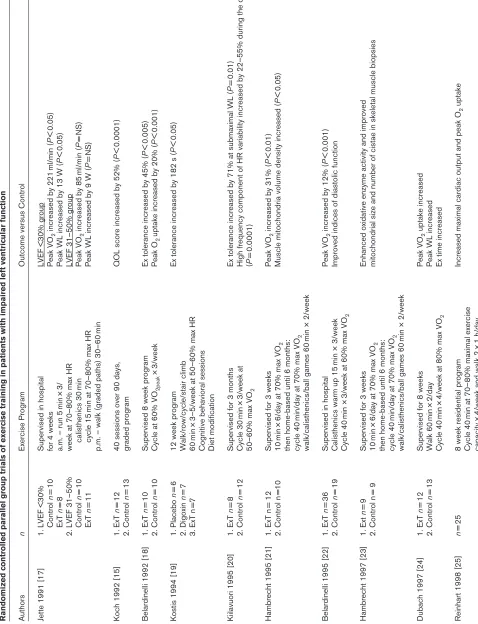
Table 1 Randomized controlled parallel group trials of exercise training in patients with impaired left ventricular function Authors
n
Exercise Program
Outcome versus Control
Jette 1991 [17]
1.
LVEF <30%
Supervised in hospital
LVEF <30% group
Control
n
=
10
for 4 weeks
Peak VO
2
increased by 221
ml/min ( P < 0.05) ExT n = 8
a.m. – run 5
min
×
3/
Peak WL increased by 13 W (
P
<
0.05)
2.
LVEF 31–50%
week at 70–80% max HR
LVEF 31–50% group
Control n = 10 calisthenics 30 min Peak VO 2
increased by 85
ml/min ( P = NS) ExT n = 11 cycle 15
min at 70–80% max HR
Peak WL increased by 9 W (
P
=
NS)
p.m. – walk (graded paths) 30–60
min
Koch 1992 [15]
1.
ExT
n
=
12
40 sessions over 90 days,
QOL score increased by 52% (
P < 0.0001) 2. Control n = 13 graded program
Belardinelli 1992 [18]
1.
ExT
n
=
10
Supervised 8 week program
Ex tolerance increased by 45% (
P < 0.005) 2. Control n = 10
Cycle at 60% VO
2peak
×
3/week
Peak O
2
uptake increased by 20% (
P
<
0.001)
Kostis 1994 [19]
1.
Placebo
n
=
6
12 week program
Ex tolerance increased by 182 s (
P < 0.05) 2. Digoxin n = 7 Walk/row/cycle/stair climb 3. ExT n =7 60 min ×
3–5/week at 50–60% max HR
Cognitive behavioral sessions Diet modification
Kiilavuori 1995 [20]
1.
ExT
n
=
8
Supervised for 3 months
Ex tolerance increased by 71% at submaximal WL (
P = 0.01) 2. Control n = 12 Cycle 30 min × 3/week at
High frequency component of HR variability increased by 22–55% during the day
50–60% max VO
2
(
P
=
0.0001)
Hambrecht 1995 [21]
1.
ExT n
= 12
Supervised for 3 weeks
Peak VO
2
increased by 31% (
P < 0.01) 2. Control n =10 10 min ×
6/day at 70% max VO
2
Muscle mitochondria volume density increased (
P
<
0.05)
then home-based until 6 months: cycle 40
min/day at 70% max VO
2
walk/calisthenics/ball games 60
min × 2/week
Belardinelli 1995 [22]
1.
ExT
n
=
36
Supervised in hospital
Peak VO
2
increased by 12% (
P < 0.001) 2. Control n = 19
Calisthenics warm up 15
min × 3/week
Improved indices of diastolic function
Cycle 40
min ×
3/week at 60% max VO
2
Hambrecht 1997 [23]
1.
Ext
n
=
9
Supervised for 3 weeks
Enhanced oxidative enzyme activity and improved
2. Control n = 9 10 min ×
6/day at 70% max VO
2
mitochondrial size and number of cistae in skeletal muscle biopsies
then home-based until 6 months: cycle 40
min/day at 70% max VO
2
walk/calisthenics/ball games 60
min × 2/week
Dubach 1997 [24]
1.
ExT
n
=
12
Supervised for 8 weeks
Peak VO 2 uptake increased 2. Control n = 13 Walk 60 min × 2/day
Peak WL increased
Cycle 40
min
×
4/week at 80% max VO
2
Ex time increased
Reinhart 1998 [25]
n
=
25
8 week residential program
Increased maximal cardiac output and peak O
2
uptake
Cycle 40
min at 70–80% maximal exercise
capacity
×
4/week and walk 2
×
commentary
review
reports
[image:3.612.72.544.102.748.2]primary research
Table 1 Continued Authors
n
Exercise Program
Outcome versus Control
Wielanga 1998, 1. ExT n = 41
Supervised for 12 weeks
Feelings of being disabled decreased as shown by?
1999 [26,27] 2. Control n = 39 3 × 10
min cycle/walk/ball games 5
min rest
Self-Assessment of General Well-Being (SAGWB)
Exercise at target heart rate (resting HR + 60%
Ex time increased by 21.4% (
P
<
0.0001)
difference between resting and maximum HR)
Anaerobic threshold increased by 12.5% (
P
<
0.05)
Peak O
2
uptake not significantly changed
Callaerts-Vegh 1.
ExT
n
=
9
8 weeks intensive training
Peak O
2
uptake increased by 30.9%
1998 [28] 2. Control n = 8
Urinary nitrate elimination decreased in controls but unchanged in ExT group
Willenheimer 1998 [29]
1.
ExT
n
=
22
Supervised for 16 weeks. Interval training:
Peak ex WL increased by 7 W (
P < 0.01) 2.Control n = 27
cycle 60 s at 80% VO
2max
then 30 s rest
week 0–7 15
min
×
2/week
week 7–16 45
min
×
3/week
Belardinelli 1999 [16]
1.
ExT
n
=
50
Supervised 8 week program
Peak O
2
uptake increased by 18% at 2 months (
P < 0.001) 2. Control n = 49
Cycle at 60% VO
2peak
×
3/week
Lower mortality (n
= 9 versus n = 20, RR =
0.37; 95% CI, 0.17 to 0.84;
P
=
0.01)
Supervised 12 month maintenance program:
Fewer hospital readmissions for heart failure (5 versus 14; RR
=
0.29; 95% CI,
2 sessions/week: 20
min stretching exercises;
0.11 to 0.88;
P
=
0.02)
40
min cycle
Sturm 1999 [30]
n
=
26
12 weeks of 50% maximal exercise capacity
Peak O
2
uptake increased by 23.3% (
P
=
0.001
training progressing to 100
min step
Peak WL increased by 26% (
P
=
0.0001)
aerobics/week and 50
min cycle/week
Keteyian 1999 [31]
1.
ExT
n
=
21
Warm up 5
min, cool down 11
min 33
min ×
3/week
Peak O
2
uptake increased (
P < 0.05) 2. Control n = 22
at 60–80% max HR (11
min
×
3 ergometers:
Improved chronotropic response to exercise
cycle, row, arm, treadmill) ×
24 weeks
Quittan 1999 [32]
1.
n
=
25
Aerobics 3 h/week
Improved QOL (
P
=
0.0001), physical role fulfillment (
P
=
0.001), physical (
P
=
0.02)
and social (
P
=
0.0002) functioning
Peak O
2
uptake and ex time increased (
P
<
0.01)
Hambrecht 2000 [33]
1. ExT n = 36 2 weeks × 10
min cycle 4–6/week followed by
NYHA class improved
2.
Control
n
=
37
6 months home-based cycle
×
20
min at 70%
Ex time increased
peak O
2
uptake
LVEF increased from 0.30 to 0.35 (
P
=
0.003)
Peak ex TPR decreased (
P = 0.003) ex = exercise, ExT =
exercise training, HR
=
heart rate, LVEF
=
left ventricular ejection fraction, NYHA
=
New York Heart Association fun
ctional class, peak O
2
uptake
=
peak oxygen consumption,
QOL
=
quality of life, RR
=
relative risk, TPR
=
total peripheral resistance, WL
=
with CHF. It will concentrate on generalized exercise train-ing programs and will not look at selective respiratory muscle training.
The beneficial effects of exercise training in cardiac patients without symptomatic heart failure have been well described and will not be reviewed here. This review focuses on the evidence for training as a therapeutic option in patients with stable symptomatic CHF and refers specifically to studies on post-infarct left ventricular dys-function or selective muscle training where necessary.
Exercise training in chronic heart failure
Participation in an exercise program was historically consid-ered to be ill-advised for patients with significant left ventric-ular impairment. Until the late 1980s, avoidance of physical exercise was the standard recommendation for all patients suffering from heart failure. This was initially challenged by uncontrolled studies that showed that selected patients with significantly impaired left ventricular function could increase their exercise tolerance after a period of exercise training [5,6,7]. There was no detectable deterioration in left ventricular function in patients included in these studies.
It was not until the end of the 1980s that reports were published showing that physical training could increase exercise capacity in patients with CHF. Sullivan and col-leagues [8,9] found that patients with severe left ventricu-lar dysfunction, some of whom had previously suffered heart failure, improved their maximal exercise performance after a prolonged regime of physical training. They demon-strated an increased blood flow to exercising muscle and an increased ability of skeletal muscle to extract oxygen from the nutritive blood flow. Ventilatory function was also improved, with a reduction in the respiratory exchange ratio at sub-maximal exercise and a delay in the anaerobic threshold. These authors showed no improvement in exer-cise cardiac output, so the training-induced benefits appeared to be mainly caused by peripheral adaptations.
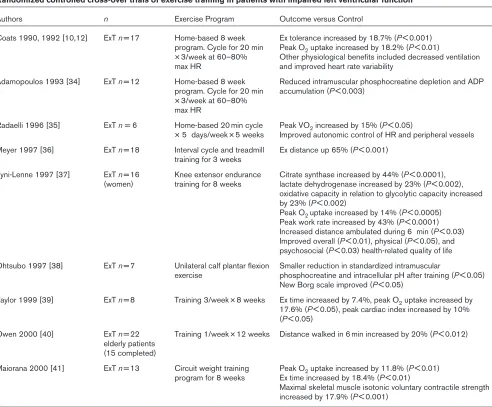
The beneficial effects of training were confirmed in a con-trolled cross-over trial in 11 patients with stable class II-III CHF [10]. These carefully selected patients could exercise without serious ventricular arrhythmias and had no other medical condition that limited their exercise tolerance. After baseline evaluation and familiarization with laboratory proce-dures, all patients completed 8 weeks of exercise training and 8 weeks without exercise in a randomized cross-over study. The training regime produced a 20–25% increase in exercise tolerance and peak oxygen consumption. There was also a significant reduction in questionnaire-rated symptoms attributable to heart failure and a coincident increase in the extent and ease of performing daily activities. Since these early reports, numerous trials of similar design have con-firmed these benefits and have shown many additional advantages of training in patients with heart failure. The
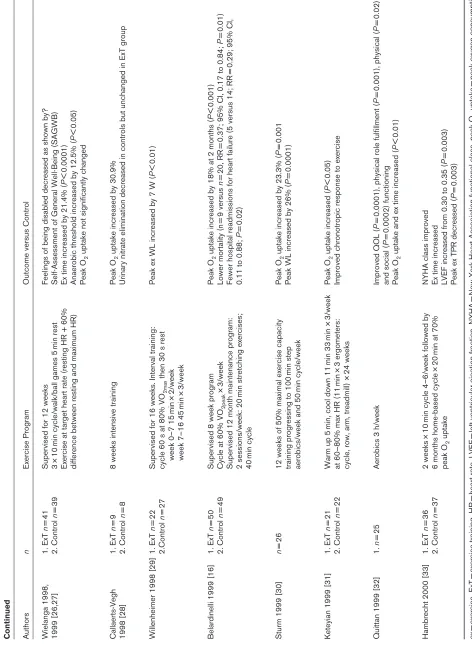
randomized trials of parallel group design are summarized in Table 1 and those of cross-over design are in Table 2.
Training for heart failure: development of an idea
The earliest reports of training patients with significant left ventricular impairment were case reports or small series. The first report of exercise training of patients with heart failure was in 1987, in Russia [11]. This study compared the effects of exercise training with no exercise in post-myocar-dial infarction patients who showed clinical signs of heart failure. The training continued for 11 months and included exercise therapy, cycle ergometry and walking. The patients who exercised showed a considerable increase in physical working capacity, a more favorable hemodynamic response to stress, a higher stroke index, a reduced heart rate incre-ment and a greater reduction in systemic peripheral resis-tance compared with the control patients.
Further physiological investigation of the training-induced improvements in exercise capacity was undertaken by Sul-livan and colleagues [8,9]. This was closely followed in the early 1990s by the first randomized controlled trials of training in patients with chronic stable heart failure [10,12], which showed an increase in exercise capacity and improved symptomatic status.
In the rest of the 1990s, an increasing number of larger and better designed studies in patients with heart failure demonstrated a consistent increase in exercise capacity and a bewildering array of physiological benefits with exer-cise training. A summary of trials performed by a collabora-tive European group [13] and an overview of all trials published up to 1998 [14] have shown a consistent 15–20% increase in exercise capacity in a broad range of patients with heart failure. The beneficial effects of training have included improvements in hemodynamic responses, myocardial perfusion, diastolic function, skeletal muscle function and histological and biochemical responses, ven-tilatory control, peripheral vascular and endothelial func-tion and neurohormonal and autonomic funcfunc-tion.
Unanswered questions
Although there are many reports of training, few have prospectively compared the elements of the training program. Important points that still need to be considered include the optimal frequency and intensity of training, the necessary duration for training effects and how long these effects last after cessation of a formal program. Other points that need to be addressed in future controlled trials include details of the most appropriate selection of patients, the elements of the training program and possi-ble interactions with modern heart failure medications. Although cardiovascular medicine has greatly improved in the last decade as a result of randomized controlled trials of effective treatments, this oldest of physical therapies remains extremely difficult to evaluate. This is at least partly because our modern system of funding trials is firmly
in favor of commercial patentable treatments. A program of government support for randomized non-commercial treatment trials is needed if these important questions and considerations are to receive a timely answer.
Acknowledgements
Professor Coats is supported by the Viscount Royston Trust. Some of the work described in this manuscript was supported by the British Heart Foun-dation and the Peel Medical Research Trust.
References
1. Drexler H, Coats AJ: Explaining fatigue in congestive heart failure.
Annu Rev Med1996, 47:241–256.
2. Clark A, Coats A: The mechanisms underlying the increased
venti-latory response to exercise in chronic stable heart failure.Eur
Heart J1992, 13:1698–1708.
3. Piepoli M, Clark AL, Volterrani M, Adamopoulos S, Sleight P, Coats AJ:
Contribution of muscle afferents to the hemodynamic, autonomic, and ventilatory responses to exercise in patients with chronic heart
failure: effects of physical training.Circulation1996, 93:940–952.
commentary
review
reports
[image:5.612.61.553.111.518.2]primary research
Table 2
Randomized controlled cross-over trials of exercise training in patients with impaired left ventricular function
Authors n Exercise Program Outcome versus Control
Coats 1990, 1992 [10,12] ExT n= 17 Home-based 8 week Ex tolerance increased by 18.7% (P< 0.001) program. Cycle for 20 min Peak O2uptake increased by 18.2% (P< 0.01)
× 3/week at 60–80% Other physiological benefits included decreased ventilation max HR and improved heart rate variability
Adamopoulos 1993 [34] ExT n= 12 Home-based 8 week Reduced intramuscular phosphocreatine depletion and ADP program. Cycle for 20 min accumulation (P< 0.003)
× 3/week at 60–80% max HR
Radaelli 1996 [35] ExT n = 6 Home-based 20 min cycle Peak VO2increased by 15% (P< 0.05)
× 5 days/week × 5 weeks Improved autonomic control of HR and peripheral vessels
Meyer 1997 [36] ExT n= 18 Interval cycle and treadmill Ex distance up 65% (P< 0.001) training for 3 weeks
Tyni-Lenne 1997 [37] ExT n= 16 Knee extensor endurance Citrate synthase increased by 44% (P< 0.0001), (women) training for 8 weeks lactate dehydrogenase increased by 23% (P< 0.002),
oxidative capacity in relation to glycolytic capacity increased by 23% (P< 0.002)
Peak O2 uptake increased by 14% (P< 0.0005) Peak work rate increased by 43% (P< 0.0001) Increased distance ambulated during 6 min (P< 0.03) Improved overall (P< 0.01), physical (P< 0.05), and psychosocial (P< 0.03) health-related quality of life
Ohtsubo 1997 [38] ExT n= 7 Unilateral calf plantar flexion Smaller reduction in standardized intramuscular
exercise phosphocreatine and intracellular pH after training (P< 0.05) New Borg scale improved (P< 0.05)
Taylor 1999 [39] ExT n= 8 Training 3/week × 8 weeks Ex time increased by 7.4%, peak O2uptake increased by 17.6% (P< 0.05), peak cardiac index increased by 10% (P< 0.05)
Owen 2000 [40] ExT n= 22 Training 1/week × 12 weeks Distance walked in 6 min increased by 20% (P< 0.012) elderly patients
(15 completed)
Maiorana 2000 [41] ExT n= 13 Circuit weight training Peak O2uptake increased by 11.8% (P< 0.01) program for 8 weeks Ex time increased by 18.4% (P< 0.01)
Maximal skeletal muscle isotonic voluntary contractile strength increased by 17.9% (P< 0.001)
4. Chua TP, Clark AL, Amadi AA, Coats AJS: Relation between chemosensitivity and the ventilatory response to exercise in
chronic heart failure.J Am Coll Cardiol1996, 27:650–657.
5. Letac B, Cribier A, Desplanches JF: A study of left ventricular
func-tion in coronary patients before and after physical training.
Circu-lation1977, 56:375–378.
6. Lee AP, Ice R, Blessey R, Sanmarco ME: Long-term effects of
physi-cal training on coronary patients with impaired ventricular
func-tion.Circulation1979, 60:1519–1526.
7. Conn EH, Williams RS, Wallace AG: Exercise responses before and
after physical conditioning in patients with severely depressed left
ventricular function.Am J Cardiol1982, 49:296–300.
8. Sullivan MJ, Higginbotham MB, Cobb FR: Exercise training in
patients with severe left ventricular dysfunction: Hemodynamic
and metabolic effects.Circulation1988, 78:506–515.
9. Sullivan MJ, Higginbotham MB, Cobb FR: Exercise training in
patients with chronic heart failure delays ventilatory anaerobic
threshold and improves submaximal exercise performance.
Circu-lation1989, 79:324–329.
10. Coats AJS, Adamopoulos S, Meyer TE, Conway J, Sleight P: Effects of
physical training in chronic heart failure.Lancet1990, 335:63–66.
11. Lipchenko AA, Fomin IL: Use of physical training in the
rehabilita-tion of patients with post-infarct heart failure [in Russian].
Kardi-ologiia1987, 27:48–52.
12. Coats AJS, Adamopoulos S, Radaelli A, McCance A, Meyer TE, Bernardi L, Solda PL, Davey P, Ormerod D, Forfar C, Conway J,
Sleight P: Controlled trial of physical training in chronic heart
failure: exercise performance, hemodynamics, ventilation and
autonomic function.Circulation1992, 85:2119–2131.
13. European Heart Failure Training Group: Experience from controlled
trials of physical training in chronic heart failure: protocol and patient factors in effectiveness in the improvement in exercise
tol-erance.Eur Heart J1998, 19:466–475.
14. Piepoli MF, Flather M, Coats AJ: Overview of studies of exercise
training in chronic heart failure: the need for a prospective
ran-domized multicentre European trial.Eur Heart J1998, 19:830–841.
15. Koch M, Douard H, Broustet JP: The benefit of graded physical
exer-cise in chronic heart failure. Chest1992, 101(suppl 5):231S–235S.
16. Belardinelli R, Georgiou D, Cianci G, Purcaro A: Randomized,
con-trolled trial of long-term moderate exercise training in chronic heart failure: effects on functional capacity, quality of life, and
clin-ical outcome.Circulation1999, 99:1173–1182.
17. Jette M, Heller R, Landry F, Blumchen G: Randomized 4-week
exer-cise program in patients with impaired left ventricular function.
Circulation1991, 84:1561–1567.
18. Belardinelli R, Scocco V, Mazzanti M, Purcaro A: Effects of aerobic
training in patients with moderate chronic heart failure [in Italian].
G Ital Cardiol1992, 22:919–930.
19. Kostis JB, Rosen RC, Cosgrove NM, Shindler DM, Wilson AC:
Non-pharmacologic therapy improves functional and emotional status
in congestive heart failure.Chest1994, 106:996–1001.
20. Kiilavuori K, Toivonen L, Naveri H, Leinonen H: Reversal of
auto-nomic derangements by physical training in chronic heart failure
assessed by heart rate variability.Eur Heart J1995, 16:490–495.
21. Hambrecht R, Niebauer J, Fiehn E, Kalberer B, Offner B, Hauer K,
Riede U, Schlierf G, Kubler W, Schuler G: Physical training in
patients with stable chronic heart failure: effects on
cardiorespira-tory fitness and ultrastructural abnormalities of leg muscles.J Am
Coll Cardiol1995, 25:1239–1249.
22. Belardinelli R, Georgiou D, Cianci G, Berman N, Ginzton L, Purcaro A:
Exercise training improves left ventricular diastolic filling in patients with dilated cardiomyopathy. Clinical and prognostic
implications.Circulation1995, 91:2775–2784.
23. Hambrecht R, Fiehn E, Yu J, Niebauer J, Weigl C, Hilbrich L, Adams V,
Riede U, Schuler G: Effects of endurance training on mitochondrial
ultrastructure and fiber type distribution in skeletal muscle of
patients with stable chronic heart failure.J Am Coll Cardiol1997,
29:1067–1073.
24. Dubach P, Myers J, Dziekan G, Goebbels U, Reinhart W, Muller P,
Buser P, Stulz P, Vogt P, Ratti R: Effect of high intensity exercise
training on central hemodynamic responses to exercise in men
with reduced left ventricular function.J Am Coll Cardiol1997, 29:
1591–1598.
25. Reinhart WH, Dziekan G, Goebbels U, Myers J, Dubach P: Influence
of exercise training on blood viscosity in patients with coronary
artery disease and impaired left ventricular function.Am Heart J
1998, 135:379–382.
26. Wielenga RP, Erdman RA, Huisveld IA, Bol E, Dunselman PH, Baselier
MR, Mosterd WL: Effect of exercise training on quality of life in
patients with chronic heart failure. J Psychosom Res1998, 45:
459–464.
27. Wielenga RP, Huisveld IA, Bol E, Dunselman PH, Erdman RA, Baselier
MR, Mosterd WL: Safety and effects of physical training in chronic
heart failure. Results of the Chronic Heart Failure and Graded
Exercise study (CHANGE).Eur Heart J1999, 20:872–879.
28. Callaerts-Vegh Z, Wenk M, Goebbels U, Dziekan G, Myers J, Dubach
P, Haefeli WE: Influence of intensive physical training on urinary
nitrate elimination and plasma endothelin-1 levels in patients with
congestive heart failure.J Cardiopulm Rehabil1998, 18:450–457.
29. Willenheimer R, Erhardt L, Cline C, Rydberg E, Israelsson B: Exercise
training in heart failure improves quality of life and exercise
capacity.Eur Heart J1998, 19:774–781.
30. Sturm B, Quittan M, Wiesinger GF, Stanek B, Frey B, Pacher R:
Mod-erate-intensity exercise training with elements of step aerobics in
patients with severe chronic heart failure.Arch Phys Med Rehabil
1999, 80:746–750.
31. Keteyian SJ, Brawner CA, Schairer JR, Levine TB, Levine AB, Rogers
FJ, Goldstein S: Effects of exercise training on chronotropic
incom-petence in patients with heart failure. Am Heart J 1999, 138:
233–240.
32. Quittan M, Sturm B, Wiesinger GF, Pacher R, Fialka-Moser V: Quality
of life in patients with chronic heart failure: a randomized con-trolled trial of changes induced by a regular exercise program.
Scand J Rehabil Med1999, 31:223–228.
33. Hambrecht R, Gielen S, Linke A, Fiehn E, Yu J, Walther C, Schoene N,
Schuler G: Effects of exercise training on left ventricular function
and peripheral resistance in patients with chronic heart failure: a
randomized trial.JAMA2000, 283:3095–3101.
34. Adamopoulos S, Coats AJ, Brunotte F, Arnolda L, Meyer T, Thompson
CH, Dunn JF, Stratton J, Kemp GJ, Radda GK, Rajagopalan B:
Physi-cal training improves skeletal muscle metabolism in patients with
chronic heart failure.J Am Coll Cardiol1993, 21:1101–1106.
35. Radaelli A, Coats AJ, Leuzzi S, Piepoli M, Meyer TE, Calciati A, Finardi
G, Bernardi L, Sleigh P: Physical training enhances sympathetic
and parasympathetic control of heart rate and peripheral vessels
in chronic heart failure.Clin Sci (Colch)1996, 91:92–94.
36. Meyer K, Schwaibold M, Westbrook S, Beneke R, Hajric R, Lehmann
M, Roskamm H: Effects of exercise training and activity restriction
on 6-minute walking test performance in patients with chronic
heart failure.Am Heart J1997, 133:447–453.
37. Tyni-Lenne R, Gordon A, Jansson E, Bermann G, Sylven C: Skeletal
muscle endurance training improves peripheral oxidative capac-ity, exercise tolerance, and health-related quality of life in women with chronic congestive heart failure secondary to either ischemic
cardiomyopathy or idiopathic dilated cardiomyopathy. Am J
Cardiol1997, 80:1025–1029.
38. Ohtsubo M, Yonezawa K, Nishijima H, Okita K, Hanada A, Kohya T,
Murakami T, Kitabatake A: Metabolic abnormality of calf skeletal
muscle is improved by localised muscle training without changes
in blood flow in chronic heart failure.Heart1997, 78:437–443.
39. Taylor A: Physiological response to a short period of exercise
training in patients with chronic heart failure.Physiother Res Int
1999, 4:237–249.
40. Owen A, Croucher L: Effect of an exercise programme for elderly
patients with heart failure.Eur J Heart Fail2000, 2:65–70.
41. Maiorana A, O'Driscoll G, Cheetham C, Collis J, Goodman C, Rankin
S, Taylor R, Green D: Combined aerobic and resistance exercise
training improves functional capacity and strength in CHF.J Appl
Physiol2000, 88:1565–1570.
Author affiliation:National Heart and Lung Institute, Imperial College of Science, Technology and Medicine, Royal Brompton Hospital, London, UK
Correspondence:Andrew J S Coats, Viscount Royston Professor of Clinical Cardiology, National Heart and Lung Institute, Imperial College of Science, Technology and Medicine, Royal Brompton Hospital, London, SW3 6NP, UK. Tel: +44 44 20 7351 8164;