© 2018, IRJET | Impact Factor value: 6.171 | ISO 9001:2008 Certified Journal | Page 4731
Dynamic Pricing as a Model for Control and Management of Cellular
Communication Network for Improved Quality of Service (QoS)
J.B Erua
1, F.I Anyasi
2, B.E Omatahunde
31,2,3 Electrical and Electronic Engineering Department, Ambrose Alli University, Nigeria
4Electrical and Information Engineering Department, Covenant University, Nigeria
---***--- Abstract - In this paper, a dynamic pricing model as a
control for network quality of service QoS in cellular communication was presented. This policy allows the network service providers to change a cost per unit time depending on the availability of the network resources; hence regulates the arrival rate of calls of service to the network. This enables network service demand, such as availability, reliability, security, bandwidth, congestion and routing, stability, delay etc to be maintained at an acceptable level. Demand for the network service as a function of the arrival rate, which in turn is a function of the service price was modelled. Hence, a solution based on real time or dynamic pricing techniques where the price for network resources were adjusted according to the availability of the network resources hence making better use of the available bandwidth, and providing the desired QoS to the users as well as greater revenue to the service provider.
Keywords: Cellular, dynamic, bandwidth, control, simulate,
network, admission, model.
INTRODUCTION
The demand for mobile service has increased exponentially over the years since the advent of cellular mobile communication. However, the bandwidth and frequency spectrum to support these critical mobile services is limited. To address the competition for scarce resources, cellular communication service provider (voice, video and data) need new tools to help them efficiently manage the network for effective utilization [1,2]. Several methods have been suggested such as cell splitting and frequency re-use, dynamic channel allocation or alternative routing, and adaptive cell-sizing algorithm [1,3]. All these approach often imply either an increase in system complexity or a significant reduction in the quality of service. An alternative approach is to attempt to modify user demand to fit within the available network resources in the cell. Currently, most mobile service providers use static pricing strategies by offering cheaper (or free) off-peak calls as a marketing incentive, in an attempt to utilize the spare capacity. However, the major drawback of this tariff is that it lacks flexibility and inability to take account of the actual network load or the status of the network resources, [2,3,4] by merely increasing the tariffs when the operator anticipates high demand.
In this context, we propose a solution based on real-time or dynamic pricing techniques, where the price for network resources are adjusted according to the availability of the network resources, hence making better use of the available bandwidth, and providing the desired QoS to the user as well as greater revenue to the service provider. It presents the users with a price they are ready to pay. It is intuitive that the trend of users’ demand can be modified by imposing higher rate during peak-traffic time period and lower the rates in off peak period, or when large network resources are available. Thus, this pricing scheme can be used as a congestion control, which we can refer to as call admission control and resource management. Dynamic pricing strategies have been mainly used to control wired networks supporting internet-based services. In this case, techniques to derive the system optimal rates have been proposed which charge users on the basis of congestion caused to the network. Dynamic pricing on cellular networks is an emerging research domain. In year 2000, E.D. FITKOV-NORISS and A. KHANIFAR proposed a self-regulated system with an algorithm that maximizes both the revenue for service provider and the welfare of end users, that is, to choose the pricing function, which offers the best utilization of the system capacity, whilst keeping the call blocking probability at a preset level [3,5].
Another dynamic scheme also proposed and introduced the notion of call admission control. The scheme also shows a clear distinction between new calls and handoffs. The main goal of this research is to maximize the total revenue by finding an optimal pricing function.
This paper is arranged to present an overview of dynamic pricing strategy and the road map of the paper is to achieve optimal bandwidth utilization and improve revenue. It will also present a cellular modelling of the system. While the controller design of the dynamic pricing strategy is described, we present the simulation test result [3,5,6].
MATERIALS AND METHOD
Dynamic Pricing in Mobile Network
© 2018, IRJET | Impact Factor value: 6.171 | ISO 9001:2008 Certified Journal | Page 4732 shorten the duration of their calls and reduce the number of
calls made. Pricing strategy is a very powerful tool for monitoring the network load and congestion [1,4,6].
The algorithm itself is self regulated. If it is decided that the network requires a price adjustment, a tariff increment DP, is calculated and the price is adjusted. DP is either positive or negative. If it is positive, the load on the system is too high and users’ degree of satisfaction suffers which acts as incentive for new users to wait for a while before making their calls, thus reducing the traffic load. On the other hand, if DP is negative, it means the resources are not optimally utilized and that a part of the network is available for use. As such, low prices encourage the consumers to make their calls. The speed at which this price update takes place, determines the level of self-regulation of the system [7].
It is suggested that the most suitable position for the implementation of the algorithm will be the Base station controller (BSC) for three justifiable reasons.
i. Firstly, the BSC already collect information used by the algorithm (revenue, number of calls both blocked and allowed)
ii. Secondly, the calculation of the algorithm in real time requires sufficient processing power which can be found in the BSC
iii. And lastly, the position of the algorithm in the BSC would minimize the increase in the control traffic overhead in the network [6,9].
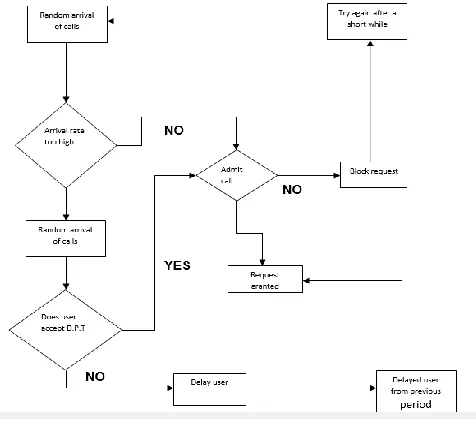
[image:2.612.46.284.490.701.2]The complete algorithm of signal flow in a typical dynamic pricing scheme is shown in fig. 1
Fig 1: Complete algorithm of a dynamic pricing scheme
SYSTEM MODELLING
The network capacity (resources) is denoted by c(k), whose unit is the maximum number of packets that can be transmitted over the link per unit time. The arrival rate of guaranteed and best effort services depends on price and follows Poisson distribution with mean arrival rate ʎ(k) given by
ʎk = K1 d(k)[N0+ K2 (p0– p(k)) + K3 (d (k) – D0)]
(1) where,
K 1, K2, K3= constants depending on the population,
d (k )= dynamic demand,
D0= initial demand,
N0= initial network load,
P0= initial price,
p(k ) = dynamic price.
According to Erlang B traffic model, blocking probability is given by,
(2)
where,
β= blocking probability (grade of service),
H = network capacity (maximum number of calls that can be carried by the network) [6,9,12,14].
ρ = network offered load (the product of call arrival rate, ʎ (p, t ) and the call duration, td)
Call duration is assumed to be exponentially distributed with a specified departure rate r. The acceptance of packets is assumed to be Poisson distributed. The assumed arrival rate is a non-linear function and has to be linearized in order to enable the use of control theory. This was achieved by letting D0= d(k ) and K 1=1/d (k ) in equation (1).
ʎ(k)= N0+ K2 p0 -K 2p(k) (3)
We let No+ K2 po= M(k) . Hence equation (3) results to
© 2018, IRJET | Impact Factor value: 6.171 | ISO 9001:2008 Certified Journal | Page 4733
i. Call Expectation
The stochastic call process is given by
C = {C(t,ω); ω ϵ Ω}
where,
ω = sample points
Ω = sample space
Since each time a different function is generated, it is necessary to calculate the mean in order to approximate the
system response.
(5)
ii. System Identification
From equation (4), the telecommunication network can be represented as
[image:3.612.333.554.562.700.2]Shown in fig.2
Figure: 2 Telecommunication System
where,
p(k ) = dynamic price (input)
C(k ) = no of call in progress (output)
G(z ) = plant open loop transfer function
M(k ) = disturbance input
Generally, transfer function of a system is given by (6)
The same input price function was used severally (since it’s a stochastic process) to generate the system outputs. The mean of the outputs were determined using equation 5. We
assumed that the system is of order 11 in order to determine the coefficient vector
(7)
According to previous studies, the least square system identification estimate of θ is given[14,15,16]by
(8)
where ,
Hence, the system transfer function was deduced to be;
(9)
Design of The Control System
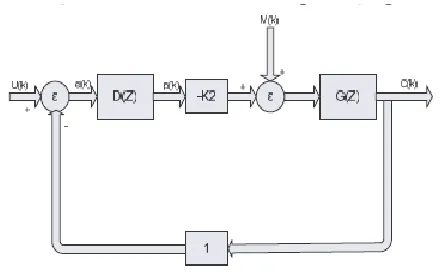
For the system controller, the forward loop and feedback control system was used as shown in fig. 3
Here, a controller (compensator) is needed to compare the reference network utility and the current system output so that a price is set each time (t) depending on the error.
© 2018, IRJET | Impact Factor value: 6.171 | ISO 9001:2008 Certified Journal | Page 4734 Where:
U (k) = reference network utility
e (k) = error
D (z) = controller P (k) = dynamic price
M (k) = dynamic demand
G (z) = plant open loop transfer function
C (k) = network resources
From fig. 3 M(k) input influences the plant output but is not controlled. Such inputs are called disturbances. Usually, the goal is to design the control system such that these disturbances have a minimal effect on the system. The dynamic pricing system output is given by:
(10)
when M (z )= 0
(11)
Hence in terms of frequency response, in order to reject the disturbance, we require
that over the desired system bandwidth. Then
If we consider only the disturbance input, then
(12)
Hence, over the desired system bandwidth
(13)
Since the denominator of expression is large, the disturbance response will be small provided that the numerator is large.
Therefore the design of the controller D (z ) should be such that the right hand side of equation 13 is as small as possible.
We designed a simple controller with different orders and then third order gave us the best results.
The compensator was found to have a transfer function of
(14)
SIMULATION RESULTS AND TEST RESULTS
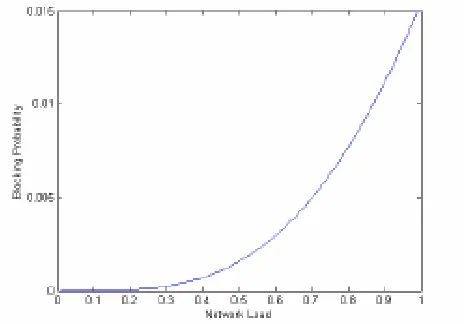
[image:4.612.326.561.468.630.2]In this section, we show results obtained using our analytical model using MATLAB. We plotted the network blocking probability against the network load. Figure 4, shows that the two network parameters are directly proportional, that is, the higher the network load the higher the blocking probability [14,15,16].
Fig. 4: Plot of Blocking Probability against Network Load
© 2018, IRJET | Impact Factor value: 6.171 | ISO 9001:2008 Certified Journal | Page 4735 Fig. 5: Typical Daily Call Arrival Rate
We applied the blocking probability given by equation 2 to the daily call arrival pattern since the network resources cannot be operated at 100% usage, there must be some reservations. As figure 5, indicate that the more the network resources are in use, the greater the blocking probability, until sometimes all best effort services are completely blocked.
We propose a dynamic pricing strategy to work with the network call admission techniques for call admission and hence resource management. When dynamic pricing scheme was applied to the network, the arrival of calls was controlled by the price being offered at any time t . Figure (6) shows that when price is high, only few people are willing to pay, hence network availability is high (which equivalent to low arrival rate), hence reduction in the number of users. In the other hand, if price is low, so many people can afford this hence high arrival rate (network resources become scarce), hence increase in the number of users. Whenever there is an imbalance in network resource price is used to maintain the resources availability at around 60% - 70%.
[image:5.612.38.296.72.239.2]Figure: 6: Fractional network availability and dynamic price
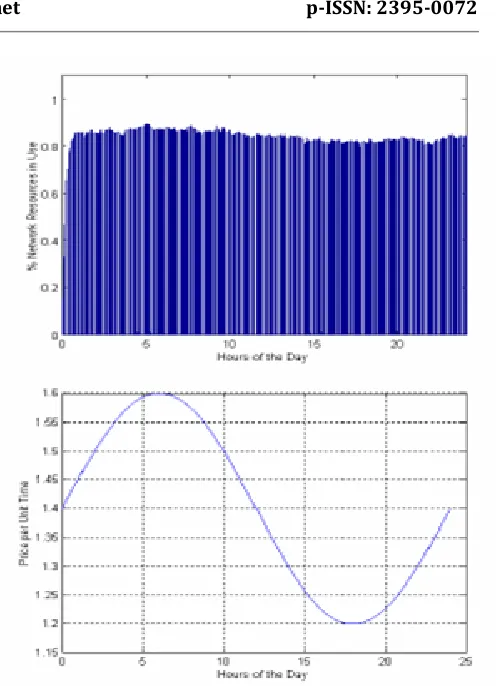
Figure: 7 Relationships between Sinusoid Price Function & Call in Progress
The two diagrams in figure 7 show that dynamic pricing can be used to maintain the network resource utility rate at around 80% to 90%.
To know the behavior of the system when the input is varied from zero to finite value, we plotted a closed loop step response of the system represented in figure (8).
[image:5.612.339.551.541.692.2] [image:5.612.39.283.548.691.2]© 2018, IRJET | Impact Factor value: 6.171 | ISO 9001:2008 Certified Journal | Page 4736
CONCLUSION
Dynamic pricing gives the user the freedom to use the network at a price they are willing to pay [1,3,10]. Users are discouraged by high price during peak period of demand for network access, while at low demand, i.e. off peak period, the network resources are made available at less cost to the consumer, hence they are encouraged to make more calls by the dynamic pricing. We recommend that dynamic pricing system be implemented by all network providers [6,15,16], for efficient management of resources for improved quality of service QoS and revenue generation.
REFERENCES
1. R. Abiri. “Optimizing service quality in GSM/GPRS networks”. In focus, September 2001
2. O.A. Al-Kishrewo and M.M. Mousa. “Integration of dynamic pricing with guard channel scheme for uniform and non-uniform cellular network traffic”. In: Pro. Intl. RF and Microwave Conference, Malaysia, 2006, pp. 360-369
3. A. Gupta, D.O. Stahh and A.B. Whinston, “Priority pricing of integrated services network”. In: Internet economic, eds, MIT press, 1999 pp. 324-327
4. K. Ahmad, E. Fitkov-Norris, “Evaluation of dynamic pricing in mobile communication systems”. University College London, 1999
5. M. Koschat, L. Uhler, P. Spinagesh. “Efficient price and capacity choices under uncertain demand: An empirical analysis” Journal of regulatory economics, 7, 1995 pp. 5-6
6. Q. Wang, J.M. Peha, M.A. Sirbu, “Original pricing for integrated services networks with guaranteed quality of service.” Carnegie Mellon University, Chapters in internet economics, MIT Press. 1996
7. J. Gibson, Edit, “The mobile communication handbook” 1996, CRC press and IEEE press
8. J.K. Mackie-Mason and H.R. Varian, “Pricing congestible network resources” IEEE Journal on selected areas in communication Vol. 13, issue 7, 1995 p. 1141-1145
9. I.C. Paschalidis, J.N. Tsitsiklis, “Congestion-dependent pricing of network services”, IEEE/ACM transactions on networking, Vol. 8. No. 2,2003, pp. 71-84,
10. J.M. Peha, “Dynamic pricing and congestion control for best-effort ATM services”. Computer networks, Vol. 32 pp. 333-345, March 2000
11. E.D. Fitkov-Norris, and A. Khanifer, “Dynamic pricing in mobile communication systems” First international conference on 3G mobile communication technologies (IEEE Conf. Publ. No. 471), 2000 pp. 416-418
12. E. Viterbo, C.F. Chiasserini, “Dynamic pricing for connection oriented services in wireless networks,” In 12th IEEE international symposium on personal,
indoor and mobile radio communications, Vol. 1 pp. A-68-72. September 2001
13. J. Hou, J. Yang and S. Papavassiliou, “Integration of pricing with call admission control for wireless network”. Vehicular technology conference, Vol. 3, 2001, pp. 1344-1346
14. G.F. Franklin, J.D. Powell and M. Workman, “Digital control of dynamic system (3rd edition)”. Addison
Wesley Longman, 1998
15. J Hou, J. Yang, S. Papavassiliou, “Integration of pricing with call admission control to meet QOS requirements in cellular network". IEEE/ACM transactions on Parallel and distributed systems. 13:2002,pp 890-905