Department for Communities and Local Government. Link to Leeds Beckett Repository record:
http://eprints.leedsbeckett.ac.uk/816/
Document Version: Monograph
c
Leeds Metropolitan University 2008.
Copyright in the typographical arrangement rests with the Crown.
This publication, excluding logos, may be reproduced free of charge in any format or medium for research, private study or for internal circulation within an organisation. This is subject to it being reproduced accurately and not used in a misleading context. The material must be acknowledged as Leeds Metropolitan University copyright and the title of the publication specified.
The aim of the Leeds Beckett Repository is to provide open access to our research, as required by funder policies and permitted by publishers and copyright law.
The Leeds Beckett repository holds a wide range of publications, each of which has been checked for copyright and the relevant embargo period has been applied by the Research Services team.
We operate on a standard take-down policy. If you are the author or publisher of an output and you would like it removed from the repository, please contact us and we will investigate on a case-by-case basis.
Annex 2: Evaluation of the National Programmes
Telephone: 020 7944 4400
Website: www.communities.gov.uk
© Leeds Metropolitan University, 2008
Copyright in the typographical arrangement rests with the Crown.
This publication, excluding logos, may be reproduced free of charge in any format or medium for research, private study or for internal circulation within an organisation. This is subject to it being reproduced accurately and not used in a misleading context. The material must be acknowledged as Leeds Metropolitan University copyright and the title of the
publication specified.
Any other use of the contents of this publication would require a copyright licence. Please apply for a Click-Use Licence for core material at www.opsi. gov.uk/click-use/system/online/pLogin.asp, or by writing to the Office of Public Sector Information, Information Policy Team, St Clements House, 2-16 Colegate, Norwich, NR3 1BQ. Fax: 01603 723000 or email:
If you require this publication in an alternative format please email [email protected]
Communities and Local Government Publications PO Box 236
Wetherby West Yorkshire LS23 7NB
Tel: 08701 226 236 Fax: 08701 226 237
Textphone: 08701 207 405 Email: [email protected]
Online via the Communities and Local Government website: www.communities.gov.uk
April 2008
Contents
The Project Team 4
Acknowledgements 5
The Policy Research Institute 6
Abbreviations 7
Executive Summary 8
Introduction and background 8
Methodology and key research questions 8
Development, Management and Delivery of National Programmes 9
Conclusions and key findings 10
1 Introduction 11
1.1 Background and Context 11
1.2 The Capacity Building Programme for Local Government 11
1.3 The national evaluation 11
2 Methodology for the National Programmes Evaluation 13 2.1 Evaluation challenges, levels of analysis and attribution 13
2.2 Key Research Questions 14
2.3 Provider Consultation 15
2.4 Case Study Fieldwork 15
2.5 Case Study Selection 16
2.6 Evaluation Framework 17
3 Development and management of the National Programmes 25
3.1 Evolution of the National Programmes 25
3.2 Proposals for future changes to the management of the National
programmes 27
3.3 Theories of change 27
3.4 Management of the National Programmes 29
4 Key Findings 31
4.1 Fit between National Programmes and Demand for Capacity
Building 31
4.2 Delivery of the National Programmes 46
4.3 Achievement of objectives 47
4.4 Added Value of the National Programmes 51
4.5 Coordination between the National Programmes and other elements of the Capacity Building Programme 53
4.7 Impact of the Capacity Building Programme for Local
Government 59
4.8 Linkages between the National Programmes and the wider policy
agenda 64
4.9 Lessons Learned from the National Programmes 64
Appendix One: The Performance Partnership Programmes 70
Accelerated Development Programme 70
LEAP – HR Strategic Coaching Programme 79
National Graduate Development Programme 84
Workforce Remodelling 95
Diversity in Districts 97
Skills Pathways 100
Public Protection Programme 102
Peer Clearing House 110
Leadership Academy 111
Advanced Leadership Programme 117
Gateway Reviews 122
Procurement Skills Training 129
Appendix Two: Framework Contract Programmes 135
The Future Leadership Programme 135
Performance Improvement and Management 146
Project and Programme Management 153
Councillor Mentoring 158
Organisational Development 170
The Local Government Leadership Centre 172
Index of Figures
Figure 1: The Skills Pathways model 101
Figure 2: Gateway Review Process 124
Figure 3: Initial Structure of the Procurement Skills
Training Programme 131
Figure 4: Performance Improvement Programme
– Process Chart 147
Figure 5: Performance Improvement Programme
– Performance Cycle 148
Index of Tables
Table 1: Overall logic for National Programmes 17
Table 2: Generic impacts expected by central government
from the CBP 18
Table 3: Specific expected impacts from each of the National
Programmes 19
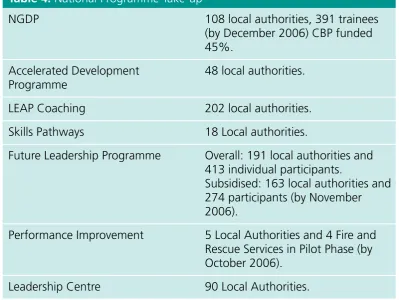
Table 4: National Programme Take-up 38
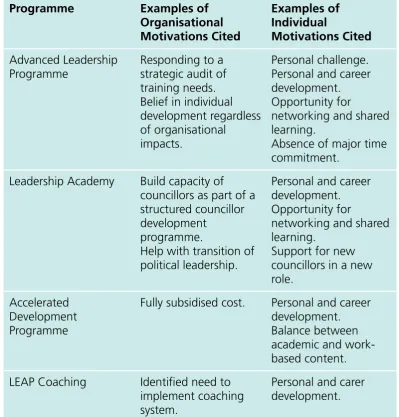
Table 5: Organisational & Individual Reasons for Participating
in National Programmes 40
Table 6: Achievement of Objectives by National Programme 49
Table 7: Evidence of overlap between National Programmes
and other components of the CBP 55
Table 8: Impact of National Programmes at Individual Level 62
Table 9: Impact of National Programmes at Organisational Level 63
Table 10: Accelerated Development Programme: Assessment
Criteria– Key Competencies 71
The Project Team
The research underpinning this report was undertaken by a team from the Policy Research Institute at Leeds Metropolitan University and the Cities Research Centre at the University of West of England, comprising:
Dr Alex Nunn
• , who was responsible for overall management of the
research and analysis, undertaking case study fieldwork and drafting the report.
Sukky Jassi
• who undertook case study fieldwork and assisted with the production of the final report.
Sarah Kelsey
• who undertook case study fieldwork and assisted with the production of the final report.
Martin Purcell
• , Dr Lynne Dowson, Murray Hawtin, Sally-Anne
Halliday and Amanda Stevens at the Policy Research Institute who all undertook fieldwork.
Dr David Sweeting, Laura Evans, Dr Ian Smith and Maggie Rust
• at
the Cities Research Centre who all undertook case study fieldwork. Professor Helen Sullivan
• at the Cities Research Centre who advised on
Acknowledgements
The project team are grateful for the assistance of Katherine Cane, Seamus Hayes, Paul Downie and Paul Philpott at Communities and Local
Government. The many interviewees from local authorities and programme providers are also thanked for their time, patience and cooperation in
The Policy Research Institute
The Policy Research Institute is one of the UK’s leading university-based centres for applied economic and social research. Founded in 1987, we have an established track-record of delivering high quality research, evaluation and consultancy for a wide range of clients including central government departments, regional and local development agencies, local authorities and regeneration partnerships, and international bodies like the European
Commission. Providing a multi-disciplinary environment for research and evaluation, we work to improve policy and practice across a range of fields including labour markets and skills, economic development and urban regeneration, enterprise and SMEs, local and regional governance and social inclusion and the third sector.
Our aim is to provide high quality research that meets the needs of our clients and contributes to the public good and the advancement of
Abbreviations
ADP Accelerated Development Programme.
ALP Advanced Leadership Programme.
CBP Capacity Building Programme for Local Government.
CPA Comprehensive Performance Assessment.
DCLG Department for Communities and Local Government. Formerly known as the Office for the Deputy Prime Minister (ODPM).
EO Employers Organisation for Local Government.
FLP Future Leadership Programme
IDeA Improvement and Development Agency.
INLOGOV Institute for Local Government Studies.
ODPM Office of the Deputy Prime Minister. ODPM became the Department for Communities and Local Government (DCLG) on 5 May 2006.
Executive Summary
Introduction and background
The report is one of a series of outputs from the national evaluation of the CBP, being undertaken by a team of researchers at the Policy Research Institute (PRI) at Leeds Metropolitan University and the Cities Research Unit at the University of West of England. The Capacity Building Programme for local government was launched in 2003 as a joint Department for
Communities and Local Government (DCLG) / Local Government Association (LGA) initiative to support capacity building and improvement activities within local authorities in England. The evaluation of the Capacity Building Programme has been underway since late 2004. A scoping phase was conducted until May 2005, including a short evaluation of the Pilot
Programmes. The main phase of the evaluation commenced in September 2005 and encompassed four main phases (see Section 1.3: p10).
Methodology and key research questions
The evaluation methodology for the National Programmes was multi-levelled as the evaluation sought to pursue a Theory of Change approach (see
Section 3). The Capacity Building Programme has a number of different Theories of Change in operation covering the CBP as a whole on the one hand and each National Programme on the other. Therefore it was also necessary to develop a multi-levelled framework that could accommodate these different Theories of Change.
A case study methodology was developed to encourage maximum
participation. Triangulation was achieved by a number of methods. Firstly, structured interviews were held not just with beneficiaries but also with their line managers and respondents were able to give a corporate view, across the local authority. In addition, documentary sources such as organisational training and staff or organisational development plans and the Corporate Performance Assessments which form part of the Comprehensive
Performance Assessment process were reviewed to gain supplementary evidence of organisational change.
At the outset of the main phase of the evaluation, the following key research questions were set by the client:
1. Is the programme comprehensive in meeting demand for capacity building from local authorities?
2. How is the national programme being delivered?
5. How are the various elements of the national programme working in isolation and together as well as with the local and regional work that has been commissioned?
6. What is the impact of the national programme on the sector, networks of authorities, individual authorities and on individuals who take part in its initiatives?
7. Is the national programme cost effective and does it offer value for money?
8. How the CBP promotes equality and diversity; the shared priorities, efficiency and sustainability?
Throughout, the evaluation work concerned with the National Programmes has sought to answer these questions and they form the basis for the conclusion.
The research consisted of a provider consultation which involved structured interviews with representatives of each of the National Programmes
providers (see Section 2.3). Interviews with providers were also used as a means of collecting information about participation in the projects and any other evaluation that was undertaken.
Development, Management and Delivery of National
Programmes
The National Programmes developed in the context of the need to deliver the CBP quickly, however the initial structure of the programmes changed several time during the development of the CBP (see Section 3.1).
The management of the CBP has suffered from a lack of continuity of key staff and there is evidence that the clarity of the information and procedures for accessing support through the CPB has suffered in light of this.
Programme providers seemed to be confused about the changing emphasis of CBP with some having established their programmes to fit with the initial logic and then being frustrated as the CBP continued to evolve. Providers also stated that they were not given appropriate guidance on required performance and monitoring, there were some concerns regarding financial mechanisms which clearly undermined the capacity of central government to manage the National Programmes effectively (see Section 3.4). These are key learning points for CBP and should be addressed to ensure that this does not happen in the future.
The various National Programmes were delivered in very different ways. Local Authorities were allowed a menu of alternative provision to allow some element of choice about the improvement support available to meet their needs (see Section 4.2).
Conclusions and key findings
Overall the key findings from this evaluation of national programmes suggests the programmes have had a positive influence and impact on authorities at both an individual and organisational level. Impacts were most pronounced in terms of new skills and increased confidence, the acquisition of new skills tended to be related to generic management and project management competencies. Generally local authorities reported progress on corporate capacity with substantial investment over recent years in
1 Introduction
1.1 Background and Context
The report is one of a series of outputs from the national evaluation of the CBP, being undertaken by a team of researchers at the Policy Research Institute (PRI) at Leeds Metropolitan University and the Cities Research Unit at the University of West of England.
1.2 The Capacity Building Programme for Local
Government
The Capacity Building Programme for local government was launched in 2003 as a joint Department for Communities and Local Government (DCLG) / Local Government Association (LGA) initiative to support capacity building and improvement activities within local authorities in England. The CBP has supported four main streams of improvement and capacity building activity in local authorities:
Pilot Projects
• : the CBP supported a large number of pilot projects which were to “trial innovative ways of working and ‘pave the way’ for other authorities”.
National Programmes
• : the CBP initially focused on the establishment or expansion of several National Programmes, delivered both by central bodies (such as the Improvement and Development Agency (IDeA), Employers Organisation for Local Government (EO), the 4Ps and framework contractors, delivering training and other organisational development support to local authorities.
Improvement Partnerships
• : Since 2004, the CBP has also channelled
financial resources through ‘Improvement Partnerships’; groups of local authorities (including Fire and Rescue Authorities and National Parks Authorities) established on a regional, sub-regional or County-wide basis to undertake collective improvement activity.
Direct Support
• : the CBP has also provided Direct Support to authorities defined as either ‘poor’ or ‘weak’ through the Comprehensive
Performance Assessment (CPA) process.
1.3 The national evaluation
Improvement Partnerships
• – Qualitative research, including interviews
and focus groups and a documentary review are being undertaken in seven case study Improvement Partnerships. The fieldwork is being carried out in two trenches. The first, baseline stage, was undertaken between September 2005 and December 2005. A report summarising the results of this was completed in January 2006. The second phase of the
Improvement Partnership fieldwork is due to take place in the same period in 2006. The aim is to compare progress over-time in each of the case studies, to produce evidence of what approaches are currently being deployed in the Partnerships and which are having positive benefits, and why.
National Programmes
• – This involves undertaking qualitative research (again including interviews, focus groups and documentary analysis) in eighteen case study local authorities. The research focuses on a series of different levels within the case study authorities. Sixteen of the case studies were chosen for maximum participation in the National
Programmes. In these, the emphasis is on the impact of participation on the individuals concerned and the translation of this to organisational change, including what facilitated and blocked this transition. A further two case studies have been chosen for non-participation in the National Programmes, to assess the reasons for not participating and the
alternative types of improvement and capacity building activity that might be underway. Case study work in local authorities is supplemented by consultation with the National Programme Providers and examination of the evaluative and management information collected by them. This work is currently underway and will be completed by October 2006.
Direct Support
• – A number of research activities consider the role and impact of Direct Support on local authorities. A report on emerging findings from this work has been completed and submitted to the DCLG. Stakeholder Consultation
• – A number of qualitative interviews with
2 Methodology for the
National Programmes
Evaluation
2.1 Evaluation challenges, levels of analysis and
attribution
The evaluation methodology for the National Programmes was multi-levelled as the Evaluation Framework set out in Section 2.6 describes. This is because the evaluation sought to pursue a Theory of Change approach and the Capacity Building Programme has a number of different Theories of Change in operation covering the CBP as a whole on the one hand and each
National Programme on the other. Further details are provided in Section 3.4 on the evolving and multiple Theories of Change. However, because of this it was necessary to develop a multi-levelled framework that could
accommodate these different Theories of Change.
A further problem was encountered in relation to charting the organisational benefits of individual level capacity building interventions. This is a noted problem in evaluating training courses (UKES, 2004), with traditional training evaluation taking the form of ‘happy sheet’ completion by beneficiaries and being on the ‘Kirkpatrick’ (1998) scale of evaluation methods. However, because these largely take place at the point of training, they do not provide adequate opportunity for beneficiaries to return to their workplace,
implement their new skills or changed behaviour or utilise their new knowledge. Moreover, the evaluation team were keen to assess the cumulative effect of participation in different elements of the Capacity Building Programme such as participation in multiple national programmes or both national programmes and Direct Support. This also involved
ascertaining how organisations were attempting to join together the
development of perhaps disparate individuals to gain organisational change.
Assessment process were reviewed to gain supplementary evidence of organisational change.
Whilst mostly successful, this approach did create further problems. The necessity of ensuring that time had passed since participation meant that some beneficiaries were difficult to trace and in some instances simply could not remember their engagement or participation on the programme in question. For others, the time lapse meant that attribution was even more difficult with multiple other causal variables acting over time. The lesson therefore is that successful evaluation of the organisational impacts of individual training requires individual and organisational level longitudinal monitoring at stages, both prior to and after participation. The problem with this obviously, is the relative cost of the process, especially when it is external to the training provider and where data access is more time consuming and difficult.
2.2 Key Research Questions
At the outset of the main phase of the evaluation, the following key research questions were set by the client:
9. Is the programme comprehensive in meeting demand for capacity building from local authorities?
10. How is the national programme being delivered?
11. To what extent is the national programme meeting its objectives? 12. What is the added value of the national programme?
13. How are the various elements of the national programme working in isolation and together as well as with the local and regional work that has been commissioned?
14. What is the impact of the national programme on the sector, networks of authorities, individual authorities and on individuals who take part in its initiatives?
15. Is the national programme cost effective and does it offer value for money?
16. How the CBP promotes equality and diversity; the shared priorities, efficiency and sustainability?
2.3 Provider Consultation
Structured interviews were undertaken with representatives of each of the National Programmes providers. In most cases, respondents were interviewed several times to ensure that progress in the development of the National Programmes was charted and any emerging issues were explored. The interviews followed a tailored Topic Guide and explored developing issues in the provision of support, process aspects of the evaluation and perceptions of impact and changing capacity needs, as well as how well different elements of the national programme were working together.
Interviews with providers were also used as a means of collecting
information about participation in the projects and any evaluation that was undertaken. While providers were asked at multiple points during the evaluation to provide data on take-up and evaluation, this information was somewhat difficult to obtain and where available it was often in formats which made comparison between programmes very problematic.
2.4 Case Study Fieldwork
Case Study Fieldwork included a number of different components:
Elected leadership
• – single or group interviews with elected members who may or may not have participated in CBP programmes. The purpose of these interviews was to ascertain views of the capacity needs of case study local authorities and how these were arrived at, whether the CBP currently meets these needs, their experience of engagement with the CBP and the impact of this.
Senior management/leadership
• - single or group interviews with senior
manager/s (director level) who may or may not have participated in CBP programmes. The purpose of these interviews was to ascertain views of the capacity needs of local authorities and how these were arrived at, whether the CBP met these needs, their experience of engagement with the CBP and any views on impact. These interviews also collected
information about the range of other capacity building activities underway within the authority.
Sponsoring line managers
• – in some cases we were able to interview
Individual Beneficiaries
• – who had participated directly in National
Programmes. This involved individual or group interviews with
beneficiaries of specific programmes. The aim was to collect information on the reasons behind participation, how these were mapped to a perceived need, the experience of participating and any impacts of this. Where possible these interviews were undertaken in groups to encourage and promote good practice by shared learning among the group.
Individuals in the group were, for instance, to identify how their engagement with the CBP had led them and others around them to change their workplace practices and develop organisational practice. Where individuals could highlight such impact they were asked to share their experiences and others were encouraged to think about how they may achieve similar spill-over.
Documentary review
• – of CPA assessments (with specific attention given to the Corporate Assessment), Community Strategies, Corporate Plans, organisational development and staff training plans. This
documentation was used to gain an insight into the capacity challenges facing the authority, how these were being addressed through the
planning cycle and the progress made in terms of building the capacity of the authority over time. It was thus part of the effort to contextualise the findings regarding participation in the National Programmes and to understand the relative contribution made by them. This documentary review was also useful in attempting to triangulate any reported findings from respondents.
Each category of interview was undertaken against a tailored and structured Topic Guide agreed with the client steering group. The questions in the Topic Guides were derived from and mapped against the key research questions set by the client at the outset of the evaluation.
2.5 Case Study Selection
National Programme Case Studies were selected to satisfy maximum variation across two main and a number of subsidiary criterion:
Maximum Participation
• – 16 case study authorities to include
participation in as many National Programmes as possible, including coverage of all National Programmes with participating authorities at September 2005. Within this group, efforts were made to ensure maximum variation by:
Type of authority
– – County, Districts, City Unitaries and Metropolitan Unitaries.
Regional coverage
– .
Performance category
– – to include representation of the four main performance bands of the CPA that were in use at that time. No Participation
2.6 Evaluation Framework
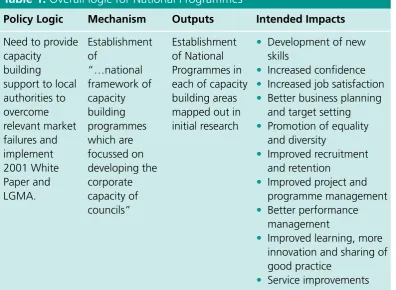
The final overall theory of change for the evaluation was established through discussions with key stakeholders in the DCLG. This is set out in Table 1.
During the scoping phase of the evaluation, a comprehensive literature review on capacity building was undertaken. Among other things this review suggested that the evaluation framework would need to be multi-levelled, to take account of interventions at individual, organizational and sectoral level. The literature review also highlighted the need to identify the extent to which the impact at each level had been translated to others. Most notably, the concern was to identify how individual level interventions (participation on training and development courses) had been translated to achieve
[image:21.595.59.456.348.638.2]organizational change. As such, the evaluation framework also attempted to identify the mechanisms by which this was facilitated and the factors that acted as a barrier to this.
Table 1: Overall logic for National Programmes
Policy Logic Mechanism Outputs Intended Impacts
Need to provide capacity
building
support to local authorities to overcome relevant market failures and implement 2001 White Paper and LGMA. Establishment of “…national framework of capacity building programmes which are focussed on developing the corporate capacity of councils” Establishment of National Programmes in each of capacity building areas mapped out in initial research
Development of new
•
skills
Increased confidence
•
Increased job satisfaction
•
Better business planning
•
and target setting Promotion of equality
•
and diversity
Improved recruitment
•
and retention
Improved project and
•
programme management Better performance
•
management
Improved learning, more
•
innovation and sharing of good practice
Service improvements
•
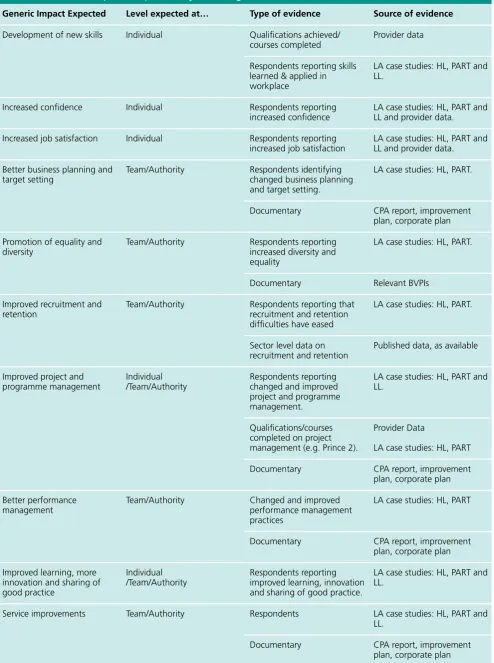
Table 2: Generic impacts expected by central government from the CBP
Generic Impact Expected Level expected at… Type of evidence Source of evidence
Development of new skills Individual Qualifications achieved/
courses completed Provider data
Respondents reporting skills learned & applied in workplace
LA case studies: HL, PART and LL.
Increased confidence Individual Respondents reporting
increased confidence LA case studies: HL, PART and LL and provider data.
Increased job satisfaction Individual Respondents reporting
increased job satisfaction LA case studies: HL, PART and LL and provider data.
Better business planning and
target setting Team/Authority Respondents identifying changed business planning and target setting.
LA case studies: HL, PART.
Documentary CPA report, improvement plan, corporate plan
Promotion of equality and
diversity Team/Authority Respondents reporting increased diversity and equality
LA case studies: HL, PART.
Documentary Relevant BVPIs
Improved recruitment and
retention Team/Authority Respondents reporting that recruitment and retention difficulties have eased
LA case studies: HL, PART.
Sector level data on
recruitment and retention Published data, as available
Improved project and
programme management Individual /Team/Authority Respondents reporting changed and improved project and programme management.
LA case studies: HL, PART and LL.
Qualifications/courses completed on project management (e.g. Prince 2).
Provider Data
LA case studies: HL, PART
Documentary CPA report, improvement plan, corporate plan
Better performance
management Team/Authority Changed and improved performance management practices
LA case studies: HL, PART
Documentary CPA report, improvement plan, corporate plan
Improved learning, more innovation and sharing of good practice
Individual
/Team/Authority Respondents reporting improved learning, innovation and sharing of good practice.
LA case studies: HL, PART and LL.
Service improvements Team/Authority Respondents LA case studies: HL, PART and LL.
Documentary CPA report, improvement plan, corporate plan
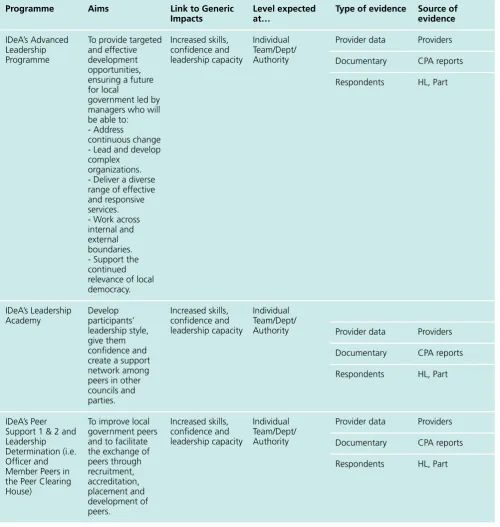
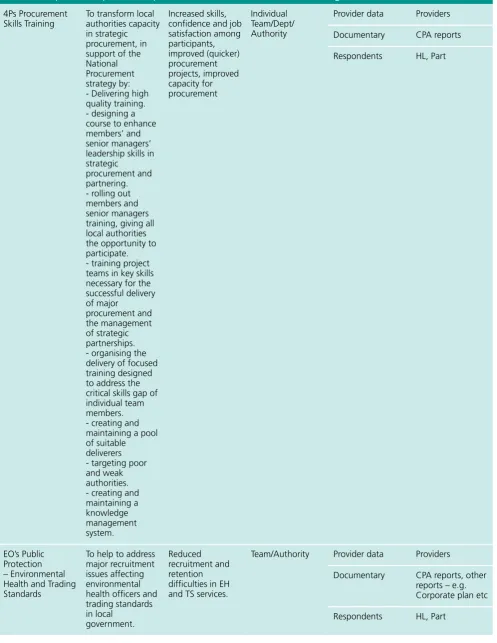
Table 3: Specific expected impacts from each of the National Programmes Programme Aims Link to Generic
Impacts Level expected at… Type of evidence Source of evidence
IDeA’s Advanced Leadership Programme
To provide targeted and effective development opportunities, ensuring a future for local
government led by managers who will be able to: - Address
continuous change - Lead and develop complex
organizations. - Deliver a diverse range of effective and responsive services. - Work across internal and external boundaries. - Support the continued relevance of local democracy. Increased skills, confidence and leadership capacity Individual Team/Dept/ Authority
Provider data Providers
Documentary CPA reports
Respondents HL, Part
IDeA’s Leadership
Academy Develop participants’ leadership style, give them confidence and create a support network among peers in other councils and parties. Increased skills, confidence and leadership capacity Individual Team/Dept/
Authority Provider data Providers
Documentary CPA reports
Respondents HL, Part
IDeA’s Peer Support 1 & 2 and Leadership Determination (i.e. Officer and Member Peers in the Peer Clearing House)
To improve local government peers and to facilitate the exchange of peers through recruitment, accreditation, placement and development of peers. Increased skills, confidence and leadership capacity Individual Team/Dept/ Authority
Provider data Providers
Documentary CPA reports
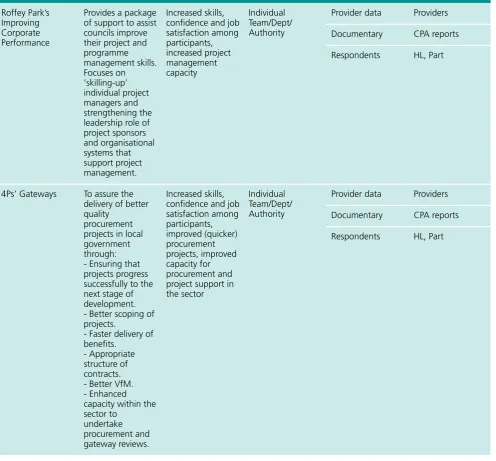
Table 3: Specific expected impacts from each of the National Programmes
Roffey Park’s Improving Corporate Performance
Provides a package of support to assist councils improve their project and programme management skills. Focuses on ‘skilling-up’ individual project managers and strengthening the leadership role of project sponsors and organisational systems that support project management. Increased skills, confidence and job satisfaction among participants, increased project management capacity Individual Team/Dept/ Authority
Provider data Providers
Documentary CPA reports
Respondents HL, Part
4Ps’ Gateways To assure the delivery of better quality
procurement projects in local government through: - Ensuring that projects progress successfully to the next stage of development. - Better scoping of projects.
- Faster delivery of benefits.
- Appropriate structure of contracts. - Better VfM. - Enhanced capacity within the sector to
undertake procurement and gateway reviews.
Increased skills, confidence and job satisfaction among participants, improved (quicker) procurement projects, improved capacity for procurement and project support in the sector
Individual Team/Dept/ Authority
Provider data Providers
Documentary CPA reports
Table 3: Specific expected impacts from each of the National Programmes
4Ps Procurement
Skills Training To transform local authorities capacity in strategic procurement, in support of the National Procurement strategy by: - Delivering high quality training. - designing a course to enhance members’ and senior managers’ leadership skills in strategic
procurement and partnering. - rolling out members and senior managers training, giving all local authorities the opportunity to participate. - training project teams in key skills necessary for the successful delivery of major procurement and the management of strategic partnerships. - organising the delivery of focused training designed to address the critical skills gap of individual team members. - creating and maintaining a pool of suitable deliverers - targeting poor and weak authorities. - creating and maintaining a knowledge management system.
Increased skills, confidence and job satisfaction among participants, improved (quicker) procurement projects, improved capacity for procurement Individual Team/Dept/ Authority
Provider data Providers
Documentary CPA reports
Respondents HL, Part
EO’s Public Protection – Environmental Health and Trading Standards
To help to address major recruitment issues affecting environmental health officers and trading standards in local government. Reduced recruitment and retention difficulties in EH and TS services.
Team/Authority Provider data Providers
Documentary CPA reports, other reports – e.g. Corporate plan etc
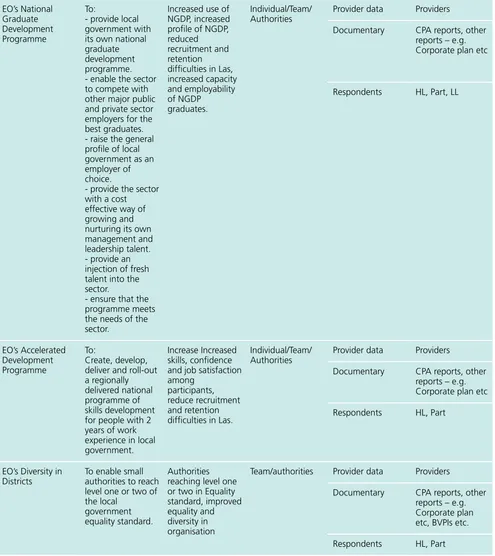
Table 3: Specific expected impacts from each of the National Programmes EO’s National Graduate Development Programme To:
- provide local government with its own national graduate development programme. - enable the sector to compete with other major public and private sector employers for the best graduates. - raise the general profile of local government as an employer of choice.
- provide the sector with a cost effective way of growing and nurturing its own management and leadership talent. - provide an injection of fresh talent into the sector.
- ensure that the programme meets the needs of the sector.
Increased use of NGDP, increased profile of NGDP, reduced recruitment and retention difficulties in Las, increased capacity and employability of NGDP
graduates.
Individual/Team/
Authorities Provider data Providers
Documentary CPA reports, other reports – e.g. Corporate plan etc
Respondents HL, Part, LL
EO’s Accelerated Development Programme
To:
Create, develop, deliver and roll-out a regionally delivered national programme of skills development for people with 2 years of work experience in local government.
Increase Increased skills, confidence and job satisfaction among
participants, reduce recruitment and retention difficulties in Las.
Individual/Team/
Authorities Provider data Providers
Documentary CPA reports, other reports – e.g. Corporate plan etc
Respondents HL, Part
EO’s Diversity in
Districts To enable small authorities to reach level one or two of the local
government equality standard.
Authorities reaching level one or two in Equality standard, improved equality and diversity in organisation
Team/authorities Provider data Providers
Documentary CPA reports, other reports – e.g. Corporate plan etc, BVPIs etc.
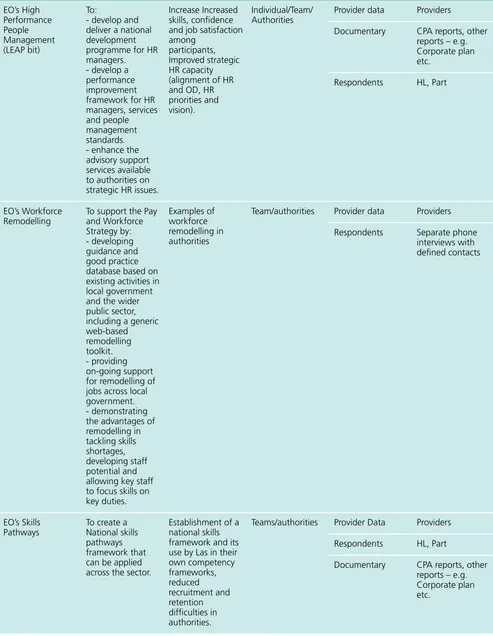
Table 3: Specific expected impacts from each of the National Programmes EO’s High Performance People Management (LEAP bit) To:
- develop and deliver a national development programme for HR managers.
- develop a performance improvement framework for HR managers, services and people management standards. - enhance the advisory support services available to authorities on strategic HR issues.
Increase Increased skills, confidence and job satisfaction among
participants, Improved strategic HR capacity (alignment of HR and OD, HR priorities and vision).
Individual/Team/
Authorities Provider data Providers
Documentary CPA reports, other reports – e.g. Corporate plan etc.
Respondents HL, Part
EO’s Workforce
Remodelling To support the Pay and Workforce Strategy by: - developing guidance and good practice database based on existing activities in local government and the wider public sector, including a generic web-based remodelling toolkit. - providing on-going support for remodelling of jobs across local government. - demonstrating the advantages of remodelling in tackling skills shortages, developing staff potential and allowing key staff to focus skills on key duties.
Examples of workforce remodelling in authorities
Team/authorities Provider data Providers
Respondents Separate phone interviews with defined contacts
EO’s Skills
Pathways To create a National skills pathways framework that can be applied across the sector.
Establishment of a national skills framework and its use by Las in their own competency frameworks, reduced recruitment and retention difficulties in authorities.
Teams/authorities Provider Data Providers
Respondents HL, Part
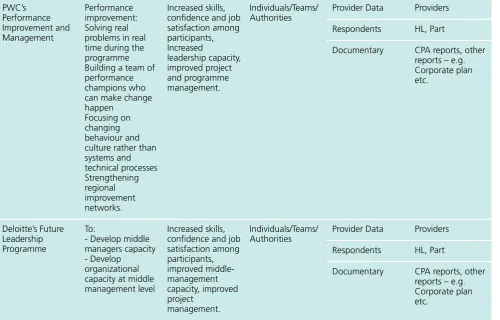
Table 3: Specific expected impacts from each of the National Programmes
PWC’s Performance Improvement and Management
Performance improvement: Solving real problems in real time during the programme Building a team of performance champions who can make change happen
Focusing on changing behaviour and culture rather than systems and technical processes Strengthening regional improvement networks.
Increased skills, confidence and job satisfaction among participants, Increased
leadership capacity, improved project and programme management.
Individuals/Teams/
Authorities Provider Data Providers Respondents HL, Part
Documentary CPA reports, other reports – e.g. Corporate plan etc.
Deloitte’s Future Leadership Programme
To:
- Develop middle managers capacity - Develop organizational capacity at middle management level
Increased skills, confidence and job satisfaction among participants, improved middle-management capacity, improved project
management.
Individuals/Teams/
Authorities Provider Data Providers Respondents HL, Part
3 Development and
management of the
National Programmes
3.1 Evolution of the National Programmes
A key theme of the 2001 local government White Paper Strong Local Leadership, Quality Public Services (DTLR, 2001a) was strengthening the capacity of local councils in order to deliver the local government
modernisation agenda. In particular, the White Paper singled out corporate capacity and the skills of both officers and elected members as key capacity building needs for local authorities. In response to this commitment the 2002 Spending Review set aside £135m for capacity building in local
authorities over three years (Treasury, 2002:80). This funding has in practice been a complicated mix of contributions from the Local Government
Association’s ‘top slice’ of the revenue support grant and direct Treasury funding, through the ODPM, resulting a joint fund management
arrangement between the LGA and ODPM.
A year after the Spending Review – 2003 - the Capacity Building Programme was born. However, the period of its gestation had witnessed considerable institutional change in central government. The former Department for Transport, Local Government and the Regions was disbanded, with Transport becoming a new independent department. Responsibility for planning, housing, local government and regional policy remained together and was placed in the remit of the newly created Office of the Deputy Prime Minister (ODPM). Subsequently the institutional arrangements for managing central government responsibility for local government within ODPM went through several rounds of changes and the team responsible for managing the CBP witnessed frequent changes of staffing, so much so that the entire team was replaced within a 12 month period.
The National Programmes, therefore, developed in the context of the need to deliver the CBP quickly. As such, the initial structure of the National Programmes changed several times in the early development of the CBP and was reliant on subsidising access to existing programmes of support available to local authorities, largely through the IDeA. The effect of this can be seen in the subsequent revisions of CBP marketing material. For instance, the initial prospectus (ODPM, 2003a) released in June of 2003 highlighted seven themes of support that were available through the CBP:
Peer Support
• – with some of the costs of the IDeA’s Peer Clearing House met by the CBP and subsidies available for accessing peer support
Support for Improvement Planning
• – with subsidies available for Poor
and Weak authorities to access consultancy, primarily from the IDeA but also, where this is requested, from other consultancies.
Leadership and Change Management
• – through funding the
expansion of the IDeA’s existing Leadership Academy for elected members and Advanced Leadership Programme, for senior officers.
Recruitment and Retention
• – through expanding the existing National
Graduate Development Programme, operated by the Employer’s Organisation and the piloting of the Accelerated Development Programme, also run by the Employer’s Organisation.
Middle Management Development
• – through supporting two
Employer’s Organisation projects. The first was the National Management Development Programme which aimed to generate a skills pathway detailing progression from specialist expertise to generic management competencies. The second was the High Performance People
Management programme which intended to improve strategic human resources functions in local authorities.
Making the Best Use of Scarce Skills
• – through supporting the Centre
for Public Scrutiny, the sharing of knowledge between the Regional Centres of (procurement) Excellence, Procurement Skills Training and Gateway Reviews programmes, run by the 4Ps and several programmes run by the EO, including Workforce Remodelling and Skills Pathways. Support for District Councils
• – with special terms of access and subsidy
available for access to the Peer Clearing House and other IDeA consultancy support.
The following year a joint ODPM and LGA publication The Capacity Building Programme – the Facts (ODPM and LGA, 2004) described the CBP as
structured around four different themes of improvement support, with the National Programmes being one of these. By now, the seven themes of improvement activity had been abandoned and the National Programmes mentioned were differentiated between those that were new, commissioned through the Framework Contract, and those that were existing. The new programmes in development were at that time, a Middle Management Development Programme (which later became the Future Leadership
Programme) and Councillor Mentoring programme, to be available through the IDeA and the Peer Clearing House. The existing programmes mentioned were:
EO’s Regional Capacity and Skills advisers, •
the Peer Clearing House; •
the Advanced Leadership Programme; •
the Leadership Academy; •
IDeA improvement consultancy services; •
the National Graduate Development Programme, •
Gateway Reviews; and •
Procurement Skills Training. •
A further year later, The Capacity Building Programme – Update 2005
themes of activity; those available through direct funding (such as the establishment of improvement partnerships or direct support to poor and weak authorities) and that available through participation on the National Programmes. This time the Leadership Centre for Local Government was listed under National Programmes along with the Academy for Sustainable Communities, the IDeA’s Modern Members programme and the Faculty of Local Government Managers. By now, several new national programmes had also been commissioned through the Framework contract, including
Councillor Mentoring, the Future Leadership Programme and Project and Programme Management.
3.2 Proposals for future changes to the management of
the National programmes
There are a number of proposed changes to the structure of management and funding to the National Programmes. The most important proposed changes are:
That the management responsibility for the National Programmes would •
be transferred to the IDeA. This is intended to offer greater management capacity to the National Programmes overall, improve marketing and promotional activity and allow the National Programme providers access to the deeper networks maintained by the IDeA.
That the responsibility for funding available for subsidy payments to •
incentivise participation on the National Programmes be transferred to Improvement Partnerships.
3.3 Theories of change
The evaluation sort to use a theory of change analysis, however, this was complicated by a number of factors which included the multiple levels at which the Capacity Building Programme operates, the nature of the local government sector and the changing configuration of the CBP.
The multi-levelled structure of the CBP means that different, potentially conflicting, theories of change have been in operation at the same time. Overall it is difficult to identify a clear and consistent statement of precisely what the CBP sought to achieve. The overall logic for the CBP appears to have been three-fold. First was a concern to implement the modernisation agenda, with a specific focus on the reforms introduced through the 2001 White Paper on local government. Secondly, there was an assumption that local authorities lacked the capacity to deliver these reforms. The third, was a corresponding assumption that the market for improvement support for local authorities to develop this capacity was failing in a number of respects:
Supply-side failures – that there was insufficient supply of improvement •
Demand-side failures – that local authorities lacked the capacity and •
resources, in some cases to identify their own weaknesses, and in others to gain access to the support that was available and to any that might be developed in the future.
Information failures – that suppliers lacked knowledge and information of •
what the weaknesses and needs of the sector were and that local authorities lacked awareness and knowledge of what support was
available and how to access this. Informational failures also related to the capacity of local authorities to learn from one another and to share knowledge and best practice.
The 2001 White Paper was quite clear in the intention to develop a package of support for councils which would help them to build capacity to deliver the reforms set out in the same document, in particular:
“The Government is determined to ensure that councils, members and officers all have the support they need to build their capacity to deliver strong and confident community leadership and high quality public services. In particular there is a need to build up capacity and skills in:
strategic leadership;
•
effective overview and scrutiny; and
•
partnership working, performance management, project management,
•
new technologies and commissioning and procurement.”
The White Paper also began to elaborate on a set of assumptions about how this could be achieved, highlighting the rationalisation of existing funding streams, more effective tailoring of improvement support to the specific needs of individual local authorities, making the best use of those skills that are available and encouraging the sharing of knowledge and ‘know how’ within the local government sector and beyond, so that councils could learn about good practice elsewhere. By the time the prospectus, the approach was focused on shared learning from peers, supporting improvement
planning, supporting leaders (elected members and officers) to lead change, helping to address recruitment and retention, developing middle managers project and programme management skills and getting the best out of available skills. These themes provided something of a framework for the aims of the programme and how these were to be achieved, and operated not just across the National Programmes, but through the initial Pilot projects and Direct Support also. However, as the CBP developed, these themes of activity disappeared, with the emphasis moving simply to the means by which support was available to local authorities, such as through the National Programmes, Direct Support, Pilot Programmes and then the
This evolution in thinking has created two types of complexity for the evaluation. The first is related to the changing theories of change in
operation, which present the evaluation with the problem of choosing which one to use in judging the progress and impact of the CBP. This has been overcome through work with the DCLG to identify more specific outcomes that they hoped to achieve across the National Programmes. Each of these applied differently at different levels. For example, some operated at an individual level and others operated at a team/departmental level and others across the whole organisation.
It was also complicated because each National Programme adopted its own set of aims and objectives and operated under its own assumptions about what inputs and processes were needed to achieve these. While these were sometimes different from those espoused directly through the overall
management of the CBP, they were not directly contradictory, and as such, it has been possible to develop a multi-tiered approach to the theories of change that are in operation to allow all these different approaches to be accommodated.
In addition to this, each participating authority and each participating individual also had their own ideas about what they wanted to achieve and how they thought participation in a national programme(s) would help them achieve this, either in terms of individual or organisational change. At an organisational level, the overwhelming reason for participating on a national programme was a perceived linkage with a weakness identified through the CPA process. At an individual level, motivations varied. Some individuals had clearly been nominated to fill a perceived skills gap in the organisation, but in other cases the logic for individual participation was much weaker and more opaque. Wherever possible, the evaluation has sought to identify these and to link them to the generic and specific aims of the programme as set out in the Evaluation Framework set out in Section 2.6.
3.4 Management of the National Programmes
The management of the CBP has suffered from a lack of continuity of key staff. There is evidence from the fieldwork that the clarity of the information and procedures for accessing support through the CBP has suffered because of this. The management of the National Programmes is a good example of this in a number of respects. For instance, no clear mechanism for
monitoring the progress of the different National Programmes has been established. Many of the programme providers reported that central government representatives on their governance structures lost interest in the programme once it had been commissioned.
quickly failed with DCLG unable to attend programme management meetings. Further, providers complained that they were not given
appropriate guidance on required performance monitoring and reporting. This led to a variety of procedures on the part of providers. Clearly, this undermined the capacity of central government to manage the National Programmes effectively. A clear point of learning for the CBP is the necessity of establishing appropriate and streamlined governance and performance management procedures to ensure that this does not happen in the future.
Providers also reported some concerns at changes in financial mechanisms and local authorities in places reported difficulties in understanding the financial processes for delivering subsidy payments. Frequently, these processes have been complicated by the regulatory environment which makes it difficult for the DCLG to pass money and support to local
authorities. This is clearly an area that needs addressing in the future, and proposed changes to the nature of funding for the next phase of the CBP appear to have overcome these problems.
A further point of confusion and tension regards the overall nature of the National Programmes as a market correcting intervention. Some programme providers did not understand the intention that central funding was
perceived by central government as a pump-priming measure. There are thus concerns that the revised funding and subsidy model will mean that some of the National Programmes will need to charge or raise user-fees. In turn there is concern that the market will not bear these costs and that this will mean that they are unsustainable in their present form. Related to this, some providers are not clear about the ownership of intellectual property that is embedded in programme content and models of delivery. This will be
4 Key Findings
4.1 Fit between National Programmes and Demand for
Capacity Building
Key Research Question: Are the national programmes comprehensive in meeting demand for capacity building from local authorities?
4.1.1 Fit between National Programmes and need at the outset of the CBP At a superficial level, the fit between the capacity building needs reported by local authorities in the course of the work and the coverage of the national programme is good. The coverage of the National Programmes broadly fits with the needs of the sector as identified by research commissioned at the outset of the programme (OPM, 2003) which defined capacity as:
“… the right organisation, systems, partnerships, people and processes to deliver against a particular agenda or plan.” (OPM, 2003:7).
This definition was then placed in a vertically differentiated model and where capacity could be understood at a whole sector, strategic/organisational, operational management and service delivery level (Ibid: 8-9). Capacity building was then differentiated between measures to develop institutional, organisational and individual capacity. The first of these, institutional
capacity, was defined as building capacity to engage in external linkages, to maintain relationships and to engage in effective partnership working. The second – organisational – component was defined as not just the aggregate of individual competencies within the organisation but “how well the organisation structures and uses its human resources, and by its systems, processes and culture” (9).
In analysing the context for capacity building, the OPM research highlighted a range of broad issues. On the demand-side they identified the
implementation the modernisation agenda as a specific driver of demand. Authorities lacked the time and resources to implement multiple initiatives effectively. This was a specific concern for smaller District Councils lacking corporate capacity. Partnership working with other agencies, where the investment-benefit horizons are often long-term, was also raised as a specific capacity challenge arising from the modernisation agenda. Finally, inspection reports were identified as providing the role of highlighting problems to elected members and senior management or providing the impetus for change in the case of known problems. However, OPM also noted
authorities’ concerns at the ambiguity of inspection bodies’ role, particularly in the case of critical inspections where the Audit Commission will also offer support for improvement (10-11).
competitive effects of CPA with authorities vying to attract a limited pool of talented managers. This was compounded by competition with the private sector and expanding national and other public sector employers, tight labour markets and the perceived negative image of local government as a career option (12).
OPM identified specific sector-wide gaps, including skills, knowledge,
implementing e-government, risk taking and community engagement. Skills gaps were listed as generic leadership competencies such as coalition and consensus building, communicating, consulting, managing change, delegating and negotiating. Knowledge gaps were identified around
partnership working and models, policy and funding developments and the use of performance management. Community engagement gaps were identified as related to the need to support grass-roots development, needs analysis, using informal power networks and the ability to manage conflict and tension (13-15).
Capacity gaps at organisational level were highlighted at strategic
management level as consistency, managing change and prioritisation. At operational (middle management) level gaps were related to sharing practice, performance management, challenging existing models of service delivery and project management skills. Difficulties in specific support
functions were acknowledged in procurement, IT, HR and asset management functions. Finally, capacity gaps in political leadership and accountability were also identified in the role of elected members in the new constitutional structures, prioritisation of resources and decision making and recognising the need for change. The problems associated with split responsibilities between conducting council business and representing constituents was also recognised as a continuing difficulty (19-22).
While barriers to capacity building largely repeated those issues identified as gaps, embedded cultures and resistance to change were also acknowledged, offering support to the ideas about informal institutional persistence. Finally, OPM surveyed authorities about their perceived capacity needs. A list of options were supported by authorities such as increased peer support, funding, sharing best practice and toolkits, developing staff and management skills (37).
The fieldwork for this evaluation also covered local authorities’ capacity building needs. These discussions suggested that the multi-tiered analysis of capacity building needs in local government used by the OPM continues to be relevant. For instance fieldwork with respondents in local authorities and consideration of relevant literature1, suggested that local authorities
continue to have capacity gaps in relation to managing their external relationships.
The precise nature and extent of these gaps varied but some common themes did emerge. For instance, several case studies lacked capacity to engage in as wide a range of partnerships and networks as they would have
liked, or they lacked the capacity to lead debate and strategic direction through these.
The reasons for this were again varied. In some places there were concerns about the confidence and capability of elected members to maintain a strategic focus. For instance, one senior officer commented:
“our members find themselves in partnership settings… they are amongst 20 or 30 … they need to develop the skills and confidence to carry out this role effectively. This has consequences for capacity within the
organisations … how officers can support members … there is discomfort and anxiety where we are not in control of situations … we need to develop communication skills and leadership styles” (Senior Officer, County Council in the North of England).
This was especially problematic in the context of a change in political
leadership, particularly where this results in a lot of first time councillors and executive members.
In others, especially smaller District Councils, a reported lack of available officer time to attend external meetings and effectively manage external relationships was cited. This presented a problem at both senior and middle manager level. Internally, case study authorities also lacked capacity at senior and middle management levels. At these levels, ‘leadership’ was widely cited as a weakness, though it was often difficult to determine exactly what was meant by this. For instance, in one case study authority a weakness in
‘leadership’ was diagnosed by the IDeA and clear definition given to it as the absence of a clear statement of corporate priorities and strategic direction. In other cases, however, this was present but respondents still mentioned weaknesses in leadership as a capacity building need.
To some extent these more ambiguous definitions appeared to be related to the possession of generic management skills, and in particular programme and project management techniques and processes among middle managers associated with service specific expertise and was thus related to a more general perceived trend toward more general management rather than technical experts rising through a service-specific organisational structure to hold a management position. Interestingly, though, some NGDP graduates suggested that this perception was not necessarily accurate as they felt their job search options were narrowed by the fact that so many local authorities wanted recruits with service-related technical expertise rather than generic managers.
defined by embedding these in the organisation by a process of aligning resource allocation and individual behaviour with them.
In other cases, leadership was referred to in terms of ‘decentralised’ leadership. In the same vein, others talked of “pushing leadership down through the organisation”. Such definitions were not precise or clear, but tended to be couched in a context of needing a wider group of staff to be committed to an agenda and thus taking concerted action in pursuit of shared objectives, while making best use of the widely differing skills and competencies of a wider group or team to achieve this. This correlates with some of the definitions produced in the literature (e.g. Bennet et al., 2003). What is significant is that it transfers the emphasis away from the individual characteristics of individuals, to the collective commitment and culture of a group. Where the characteristics of the individual leader remain important is in relation to ‘soft’ skills areas such as around communication, influencing and emotional awareness. Certainly, these were skills needs cited by and of middle and senior managers.
Further, discussion in some of the case studies focused around knowledge gaps, such as keeping abreast of policy changes, the relevant regulatory environment or techniques and strategies in implementing these. Examples include procurement and the shared services agenda, planning and building control.
Generally, local authorities reported significant recent progress on corporate capacity with substantial investment over recent years in strengthening corporate processes and systems, largely in response to the demands of CPA. Despite this, some case studies reported continuing needs in terms of
Human Resources systems, programme and project management processes, performance management and communication between departments. However, in each of these areas, the needs of case studies varied widely. For instance, some still needed to introduce corporate HR strategies or had not been able yet to fully align resources with organisational priorities.
In others, these systems were in place but they needed to take the next step. For example, one already high performing council was hoping to renew its HR strategy in the context of moving to a much greater reliance on staff working from home so that premises could be released either for efficiency savings or for more appropriate front-line use. This was seen as important in terms of addressing future recruitment and retention problems as well as addressing the demands of area-based and neighbourhood management and governance. However, it had major implications for the way that staff are managed, for the IT and other support services that need to be in place. In these two examples the specific types of HR capacity building that were needed are very different and this was the case across business systems.
retention problems in attracting high calibre recruits (with graduates mentioned specifically in at least one case study) as stemming from a perceived unattractive image and reputation of local government. Indeed transforming their image as an employer and becoming more attractive to potential employees was seen as a key capacity building challenge. This is typified by the following statement from a case study authority’s
Improvement Plan:
“an employer of choice which identifies and nurtures talent, applying it intelligently in an organisation with a strong capacity for change” (Council Improvement Plan, Inner London Borough).
In another, one respondent reported that they had been without a Chief Executive for a period of time, undermining leadership and strategic direction. This was felt compound a lack of stability in strategic direction caused by frequent changes in political control:
“There are a wide range of reasons why [the council] is improving at such a slow rate, there has been political volatility in the council and there needs to be stability politically, or through the Chief Executive” (Senior Manager, large Urban Unitary in the South of England).
Despite suggestions of the importance of distributed leadership, the connections between leadership and recruitment and retention issues was made in a number of case studies, emphasising the importance of the individualistic characteristics of leaders. For instance, one respondent suggested that:
“capacity is about resources – these resources are principally the people that do things … it is about leadership and management and the skills sets that people have to lead and to manage” (Senior Officer, Inner London Borough).
Several case studies also noted the need to embed revised internal business systems within the ‘culture’ of the organisation. ‘Culture’, like leadership, was a widely repeated phrase but it was not always clear exactly what was meant by the term. As a lowest common denominator it appeared to refer to widely shared beliefs or values about appropriate workplace behaviour. As such, performance management systems or equality and diversity policies may have been strengthened or corporate priorities more clearly stated, but there were places where respondents felt these hadn’t yet become part of these widely shared belief/value systems, meaning that individual staff behaviour might not yet have been revised to take these into account. Where this was the case, there was a clear need to gain more commitment and ownership of the revised processes from a wider group of staff. For instance, in one authority where this was the case, a respondent noted that there had been
This approach to organisational culture appears, in this sense, to significantly overlap the definitional discussion of leadership, above. Interestingly, there was very little mention in this regard of relationships with trade unions or with other staff representatives. Strengthening mechanisms for negotiating changes to organisational structures with staff might be one area of
organisational capacity building that might help to address the need for culture change.
One continuing capacity building need which was also highlighted by the initial OPM research, was the demands created by shifting central
government initiatives. This is often not related to changing policy agendas but changing funding arrangements or institutional structures for accessing support in order to implement these. One implication of the need to
generate stable mechanisms for delivering support to local authorities to implement national policy agendas. The Capacity Building Programme is one of these, of course, and the development of Improvement Partnerships offers one mechanism through which central government support for local
implementation might be made more stable in the future.
When compared with this analysis of past and current capacity building needs, the National Programmes appear to appropriately cover the demands of local authorities, and there is no obvious gap. However, what was
noticeable from the research is that respondents in case study local
authorities were often forthright in conveying the specificity of their capacity building need; one authority’s need for capacity building in relation to HR, performance management or councillor development is not the same as another’s. The extent to which this is