A Case Study of K-Water Public Relations
Campaign in Korea
Seung-jun Moon
1,*, Jong Dae Kim
2, Tae Woo Kim
11Department of Communication and Information, Inha University #253 Yonghyun-dong, Nam-gu Incheon, Korea 402-751 2College of Business Administration, Inha University #253 Yonghyun-dong, Nam-gu Incheon, Korea 402-751
*Corresponding Author: [email protected]
Copyright © 2014 Horizon Research Publishing All rights reserved.
Abstract
Corporations are increasingly focused on theirsocial impact; thus, they seek to enhance their social images through acts of corporate social responsibility (CSR). To this end, corporations raise public awareness of their positive social returns via various mass media vehicles. In this research, we analyzed the public relations strategy for Korea Water Resources Corporation (K-Water) by identifying a synergistic combination of media vehicles to improve the company’s social image and to inform stakeholders of the Gyeongin Ara Waterway’s environmental and economic contributions. K-Water is one of the most famous public corporations in Korea; currently, it relies on four mass media vehicles (television, newspapers, magazines, and the Internet) for public relations communications. Structural equation modeling (SEM) was used to analyze which combination of mass media vehicles worked best in informing stakeholders of the environmental friendliness of the Gyeongin Ara Waterway.
Keywords
Public Relations, EnvironmentalCommunication, Sustainability Management,
1. Introduction
Recently, corporations in Korea have turned their attention to environmental issues. The Korea Water Resources Corporation, known as K-Water, is a major public corporation that has focused on environmentally friendly construction in their development of the Gyeongin Ara Waterway. Officially opened on May 25, 2012, the Gyeongin Ara Waterway is the first inland waterway in South Korea. Although the idea to construct the waterway was suggested almost 800 years ago, construction did not start until 2009 due to financial and technical difficulties (Kim, 2012). The waterway was initially designed to control the flooding of the Gulpo Stream
1, but additional plans
extended the canal to 18 kilometers in order to connect the1 The Gulpo Stream is a small tributary of the Han River, a major river that runs through the middle of Seoul.
port city of Incheon on the Yellow Sea
2 to the
Han River in Seoul, the capital of South Korea (Park, 2013).The multipurpose Gyeongin Ara Waterway offers an ecologically friendlier freight transport solution, as well as a financially appealing alternative to both road and rail transport. Accessible via convenient subway and train stations, and in addition to greatly reducing road congestion and pollution, the waterway offers environmentally-sound leisure spaces like parks, bicycle paths, and entertainment venues (Cho, 2013; Chung, 2009). As well as promoting the social image of K-Water, emphasis on social responsibility was a major factor in the public relations strategy publicizing the environmental and economic results of the Gyeongin Ara Waterway.
This research aims to determine a mass media public relations strategy for K-Water by analyzing combinations of mass media vehicles that optimally inform stakeholders of the environment-conscious development of the waterway while simultaneously presenting both the contribution to the nation’s economic development and a positive social image of K-Water. Considering the emphasis on corporate social responsibility (CSR) in Korea, along with the growing expectation that corporate profits be used for social welfare, this paper shows how K-Water has endeavored to inform stakeholders of the environmental and economic results of developing the Gyeongin Ara Waterway, while improving the corporation’s social image.
2. Literature review
Waterways have been developed throughout the world, especially in the European countries of Germany, the Netherlands, Belgium, and Italy. In Asia, the role of waterways has received much attention, and many Asian countries including China, Japan, Bangladesh, India, Iraq, and Egypt have developed internal waterways. China constructed waterways for internal transportation from 206 BC to 5 AD. Currently, 4,267 km of inland waterways are
2 The Yellow Sea is a small marginal sea off the west coast of the Korean peninsula.
navigable and well-constructed. A section of the Beijing-Hangzhou Canal to the south of the Yangtze River was upgraded recently for shipping capacities of 500 tons, and a section in Shandong Province was modernized. Consequently, huge national and regional economic benefits have been realized (Cao, Xiao, & Wu, 2010; Land, 2001). Japan developed a waterway from 1914 to 1923 in Otatu, thereby improving the economy and tourism industry in the country. The Suez Canal in Egypt is one of the most commercially utilized waterways. This inland coastal saltwater body links the Mediterranean Sea in the north with the Red Sea in the south. Its commercial and military-strategic tenets yield immeasurable savings in vessel voyage distance, sailing time, and transport costs (Finkl, Pelinovsky, & Cathcart, 2012). Korea designed and developed its own Gyeongin Ara Waterway based on the success of other Asian waterways. K-Water engaged in a public relations strategy to inform stakeholders of the environmental, economic, and social benefits of the Gyeongin Ara Waterway.
In some cases, public relations has had little or no significant effect on image enhancement (Ayish, 2005); however, various mass media vehicles—television, newspapers, magazines, and the Internet—are used strategically in corporate public relations (CPR) as companies, governments, and organizations endeavor to present positive social images to stakeholders. Recently, corporations in Korea have expanded the focus beyond increased revenue to corporate social image and social responsibility. Furthermore, they have utilized various mass media vehicles to raise public awareness of their positive social returns (Schaefer, 2004). Perhaps the most influential mass media vehicle, television news is believed to play a significant role in forming corporate public image (Skobo, 2005). Television appeals to viewers with its synchronous visual and audio content, and public relations activities using television have a greater ripple effect than activities using other mass media vehicles. In other words, as positive corporate images are aired to the public, corporations quickly become more highly regarded by stakeholders (Caspi, 1989; Shoemaker, 1989).
Newspaper, with its visual cues, is another popular vehicle for corporate public relations. There are many examples of corporate public relations using mainstream newspapers as vehicles to promote social agendas (Lumpkins, Bae, & Cameron, 2010) and to form positive images of corporations (Park, 2001). Feeley and Vincent III (2007), for example, discussed how newspaper articles shape laypeople’s attitudes and intentions regarding organ donation, and suggested that newspaper stories framed the public’s social agenda by presenting donations in a positive light.
Magazine is another influential vehicle, and as a tool for corporate public relations to establish a corporate public image. Compared to broadcast television and newspapers, magazines have specific targets, and thus influence specific groups with more detailed information through visually colorful cues (Curry, Pederson, & Stryker, 2011). For
example, corporations reach various demographics with detailed color articles in a wide variety of magazines that are gender-flavored, local-flavored, interest-segmented, or age-segmented.
Finally, the Internet is a relatively new mass media vehicle that merges visual and audio characteristics of traditional mass media vehicles such as television, newspaper, magazine, and radio. As a hybrid of traditional linear media forms of mass communication, the Internet is a non-linear multimedia form of communications that is popular with younger generations who frequently use email, chatting, web sites, and online games (Avidar, 2011).
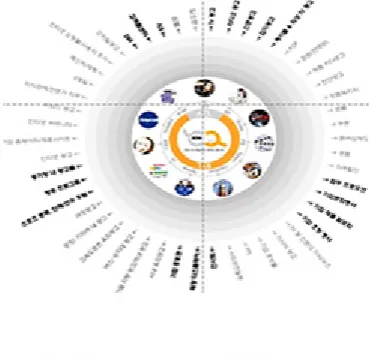
Due to the different characteristics and targets of each mass media vehicle, selecting the best combination of mass media vehicles to inform stakeholders of the Gyeongin Ara Waterway’s environmental and economic results, simultaneously establishing K-Water’s social image, is very important to corporate sustainability. Since the annual budget for each public relations vehicle is limited, and public relations expenditures are sometimes excessive, choosing which mass media vehicles to use for corporate public relations is crucial. Industry models can be used to facilitate these difficult public relations decisions. Two such mass media vehicle public relations tools are shown in Figure 1: the TBWA Worldwide
3
developed Brand Audit Wheel model for choosing effective media vehicles, and the Cheil Communication4
developed KISS model for choosing the best vehicles for public relations. The Brand Audit Wheel shows the sizes of geographical boundaries which show effectiveness of mass media vehicles, and the KISS model shows branches showing the degrees of each media’s effectiveness (see Figure 1).3 TBWA Worldwide is an international advertising agency whose headquarters are in Midtown Manhattan, New York City, United States. 4 Cheil Communication is the number one Korean marketing agency in Korea, and the 15th biggest marketing agency in the world. Ad Age Agency
Report in 2012.
Figure 1. Brand Audit Wheel Model and KISS Model
3. Research Questions
K-Water currently uses the four mass media vehicles of television, newspaper, magazine, and Internet to not just improve their corporate social image, but to inform stakeholders of the environmental and economic results of the Gyeongin Ara Waterway. It is believed that effects of public relations strategy utilizing television (visual and audio), newspaper (visual with black and white print), magazine (visual with color print), and Internet (a hybrid of visual, audio, black and white print, and color print) should all be different since each media vehicle has different characteristics.
Past research has mainly focused on independent mass media effects of each vehicle. However, since each mass media vehicle has unique characteristics, synergy or anti-synergy cross-effects may be created when multiple vehicles are used simultaneously. American marketing agency, MediaEdge:Cia (MEC) evaluates mass media cross-effects with a tool they developed called Navigator. Figure 2 provides theoretical background regarding cross-effects that occur when mass media vehicles are used simultaneously. Unfortunately, since Navigator was commercially developed, the exact measuring technique is a trade secret.
It is important to consider different characteristics of each mass media vehicle as well as mass media cross-effects in order to determine which combination of mass media vehicles is ideal. Hence, the following research questions emerge: Which mass media vehicle combination is best for relaying the environmental and economic results of the Gyeongin Ara Waterway, as well as for promoting K-Water’s social image? Which mass media vehicle combination produces synergy, or anti-synergy, when communicating the environmental and economic results, as
[image:3.595.320.544.111.299.2]well as positive corporate social image, of the Gyeongin Ara Waterway?
Figure 2. Diagram of MEC Navigator
4. Analysis
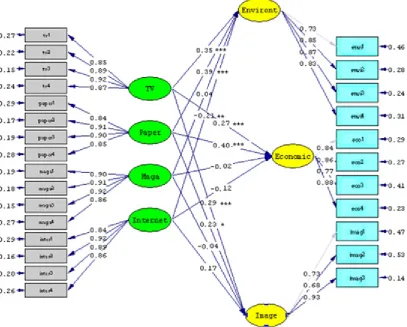
[image:3.595.325.547.348.532.2]Figure 3. Diagram of Structural Equation Modeling
First, the goodness-of-fit index was calculated based on the following three suggested categories: the χ2 test (304, N
= 237) = 766.30, p < .05, RMSEA (.08), and GFI (.91) for an absolute fit measure; NFI (.94) and NNFI (.97) for an incremental fit measure; and CFI (.96), IFI (.97), and RFI (.95) for a parsimonious fit measure. Based on the outcome of these three fit measure categories, this model is an excellent fit due to the high values of the goodness-of-fit indices. Figure 3 presents the results of the structural model depicting the effects of four mass media vehicles informing stakeholders of environmental and economic results of the Gyeongin Ara Waterway, and also the effects on K-Water’s social image.
4.1. Effects decomposition
In this structural model, each γ in Figure 3 represents a direct effect. The direct effect of one variable on another is not mediated by another variable. While a regression method using SPSS analyzes each independent variable and dependent variable separately, structural equation modeling analyzes the effects of all variables simultaneously, which enables the measuring of synergy or anti-synergy effects (Joreskog, & Sorbom, 1996; Kline, 1998). Since most corporations use several mass media vehicles concurrently, it is logical to use structural equation modeling to analyze the
effects of all vehicle variables at once rather than evaluate the effects of each variable separately.
For example, when the four mass media vehicles which K-Water uses in its public relations strategy are analyzed, the first exogenous variable, TV public relations strategy, is not only statistically related to positive perception of environmental results (standardized γ1 1 = .35, p < .001) and
economic results (standardized γ2 1 = .27, p < .001) of the
Gyeongin Ara Waterway development, but also to K-Water’s social image (standardized γ 31 = .29, p < .001).
Similarly, newspaper public relations strategy is statically significant for environmental results (standardized γ1 2 = .39,
p < .001) and economic results (standardized γ2 2 = .40, p
< .001) of the Gyeongin Ara Waterway development, as well as to K-Water’s social image (standardized γ 32 = .23, p
< .05). However, magazine public relations strategy is not significant for environmental results (standardized γ1 3 = .04,
p > .05) or economic results (standardized γ2 3=-.02, p > .05)
of the Gyeongin Ara Waterway development, nor is it significant for social image of K-Water (standardized γ 33 =
-.04, p > .05). Interestingly, though the Internet is not significant for either economic results (standardized γ2 4 =
-.12, p > .05) or social image (standardized γ 34 = .17,
p > .05), it is negatively significant for environmental results (standardized γ1 4 =-.21, p < .01). This suggests that the more
Gyeongin Ara Waterway, the greater the perceived negative environmental impact by stakeholders (see Figure 3).
5. Conclusion
This research focused on effective mass media public relations strategy for Korea Water Resources Corporation (K-Water). This research paper empirically shows which mass media vehicle combination should be effective when communicating the environmental and economic results as well as positive corporate social image of the Gyeongin Ara Waterway. Although media strategy of corporations may tend to be made solely on intuition and without empirical research, this paper shows how to empirically determine the best media strategy. Structural equation modeling (SEM), one of the most developed analysis methods, was used to analyze combinations of mass media vehicles to determine which combination produces synergy by providing a diagnosis of the current mass media public relations strategy of K-Water. Though K-Water spends a large amount of money on specific mass media vehicles, it was revealed that while some were effective, others were not. In conclusion, the following results were suggested.
First, in addition to improving K-Water’s social image, it was empirically shown that television and newspaper, rather than magazine or Internet, are effective vehicles for informing stakeholders of K-Water’s corporate social responsibility (CSR); specifically through the environmental and economic results of the Gyeongin Ara Waterway (see Figure 3). However, because television is usually recognized as the most expensive mass media vehicle, the efficacy of television needs to be compared to that of the less expensive, but significant, mass media vehicle of newspaper. Moreover, geographical boundaries of local newspapers versus national newspapers should be considered for a more sophisticated public relations strategy.
Second, it was revealed that magazine was not a predictor for informing stakeholders of K-Water’s economic, environmental, or social activities at all (see Figure 3). Whether these results were due to mass media characteristics or poor public relations practices (e.g., inappropriate content or frequency of images shown) is arguable, and the results should, therefore, be investigated further. Since major corporations in Korea spend excessive amounts of their budgets on corporate image, ineffectiveness of some mass media vehicles like magazine poses a serious problem.
Third, the Internet was also found to be insignificant for economic results of the Gyeongin Ara Waterway, and social image of K-Water. However, the Internet’s negative significance for environmental results of the construction of the Gyeongin Ara Waterway is a serious problem for K-Water. It was found that the more the public is informed about the Gyeongin Ara Waterway construction via the Internet, the more stakeholders will have negative perceptions of the environmental results. These negative findings should be analyzed with focus on the unique
characteristics of the Internet. Unlike television, newspaper, and magazine, websites do not have strong credibility with the public, and effectiveness of the Internet has been debated in the past. Due to the lack of content moderation and ubiquitous anonymity, questionable online content stems from both corporate public relations and the public. For example, as it is natural for corporations to write only positive content on their corporate websites, it is expected that anti-corporate netizens intentionally leave only negative comments (Kiousis & Dimitrova, 2006). Since K-Water’s online public relations activities were found to be either ineffective or negatively effective, a better solution needs to be developed for their Internet public relations strategy.
Finally, though K-Water spends a great deal of its budget on several mass media vehicles in order to maintain positive corporate public relations, synergy effects from a combination of multiple mass media vehicles were not evident. Instead, only some of the mass media vehicles such as television and newspaper were effective, while magazine was not effective at all, and the Internet was either ineffective or negatively significant. Specifically, the Internet was negatively related to relaying environmental results of the Gyeongin Ara Waterway construction to stakeholders. These results are important for the public relations strategy of each mass media vehicle, as well as for corporate social responsibility and corporate sustainability, because the expenditure per year for each mass media vehicle is often greater than anticipated.
REFERENCES
[1] Avidar, R. (2011). Israeli public relations and the Internet. Israel Affairs, 17(3), 401–421.
[2] Ayish, M. I. (2005). Virtual public relations in the United Arab Emirates: A case study of 20 UAE organizations’ use of the Internet. Public Relations Review, 31(3), 381-388. [3] Cao, S., Xiao, X., & Wu, P. (2010). Yangtze River: China’s
golden waterway. Civil Engineering, 163(5), 15-18.
[4] Caspi, D. (1989). In Search of a Theory of Television News and Public Relations. American Behavioral Scientist, 33(2), 216-221.
[5] Chung, J. (2009). Waterway to Double as Canal and Floodwater Diversion. Retrieved from http://www.newsworl d.co.kr/cont/article2009/0912-34.htm
[6] Curry, L. E., Pederson, L. L., & Stryker, J. (2011). The Changing Marketing of Smokeless Tobacco in Magazine Advertisements. Nicotine & Tobacco Research, 13(7), 540-547.
[7] Feeley, T., & Vincent III, D. (2007). How Organ Donation Is Represented in Newspaper Articles in the United States. Health Communication, 21(2), 125-131.
[9] Kim, K. (2012). Gyeongin Ara Waterway Opens Friday. Retrieved May 7, 2013, from http://english.kbs.co.kr/news/n ews_view.html?page=53&No=90585&id=Ec
[10] Land, T. (2001). Helping China’s pollution with waterways. Contemporary Review, 1, 292-294.
[11] Joreskog, K. & Sorbom, D. (1996). LISREL 8: User’s reference guide. Chicago, IL: Scientific Software International.
[12] Kiousis, S., & Dimitrova, D. V. (2006). Differential impact of website content: Exploring the influence of source (public relations versus news), modality, and participation on college students’ perceptions. Public Relations Review, 32(2), 177-179.
[13] Kline, R. (1998). Principles and Practice of Structural Equation Modeling, New York, NY: The Guilford Press. [14] Lumpkins, C. Y., Bae, J., & Cameron, G. T. (2010).
Generating conflict for greater good: Utilizing contingency theory to assess Black and mainstream newspapers as public relations vehicles to promote better health among African Americans. Public Relations Review, 36(1), 73-77.
[15] Cho, Y. (2009). Mayor Oh unveils plan for ‘Yellow Sea Silk
Waterway’. Retrieved from
http://english.seoul.go.kr/gtk/cg/news_view.php?idx=7563& mcd=MN01040103&mode=prevData
[16] Park, J. (2001). Images of ‘Hong Bo (Public Relations)’ and PR in Korean newspapers. Public Relations Review, 27(4), 403-421.
[17] Park, R. (2013). Han River and West Sea Meet at Gyeong-In Waterway (n.d.). Retrieved from
http://www.d-o-l.cz/index.php/en/similar-projects-around-th e-world/gyeong-in-waterway?26e583503c6f2e4eaeb52fa8ff 1992c6=9028900df0a3d879e99a2c452050a4f
[18] Politicka Misao: Croatian Political Science Review, 42(5), 97-117.
[19] Schaefer, A. (2004). Corporate sustainability - integrating environmental and social concerns? Corporate Social Responsibility and Environmental Management, 11(4), 179-187.
[20] Shoemaker, P. J. (1989). Public Relations versus Journalism? American Behavioral Scientist, 33(2), 213-216.