Georgia State University Georgia State University
ScholarWorks @ Georgia State University
ScholarWorks @ Georgia State University
Real Estate Dissertations Department of Real Estate
Summer 7-30-2011
An Investigation into Appraisal Bias: The Role of Decision Support
An Investigation into Appraisal Bias: The Role of Decision Support
Tools in Debiasing Valuation Judgments
Tools in Debiasing Valuation Judgments
O. Alan Tidwell
Follow this and additional works at: https://scholarworks.gsu.edu/real_estate_diss
Part of the Real Estate Commons
Recommended Citation Recommended Citation
Tidwell, O. Alan, "An Investigation into Appraisal Bias: The Role of Decision Support Tools in Debiasing Valuation Judgments." Dissertation, Georgia State University, 2011.
https://scholarworks.gsu.edu/real_estate_diss/10
This Dissertation is brought to you for free and open access by the Department of Real Estate at ScholarWorks @ Georgia State University. It has been accepted for inclusion in Real Estate Dissertations by an authorized
PERMISSION TO BORROW
In presenting this dissertation as a partial fulfillment of the requirements for an advanced degree from Georgia State University, I agree that the Library of the University shall make it available for inspection and circulation in accordance with its regulations governing materials of this type. I agree that permission to quote from, to copy from, or publish this dissertation may be granted by the author or, in his/her absence, the professor under whose direction it was written or, in his absence, by the Dean of the Robinson College of Business. Such quoting, copying, or publishing must be solely for the scholarly purposes and does not involve potential financial gain. It is understood that any copying from or publication of this dissertation which involves potential gain will not be allowed without written permission of the author.
NOTICE TO BORROWERS
All dissertations deposited in the Georgia State University Library must be used only in accordance with the stipulations prescribed by the author in the preceding statement.
The author of this dissertation is:
Owen Alan Tidwell
Department of Real Estate
J. Mack Robinson College of Business Georgia State University
Atlanta, GA 30303-4020
The director of this dissertation is:
Dr. Paul Gallimore Department of Real Estate
J. Mack Robinson College of Business Georgia State University
An Investigation into Appraisal Bias: The Role of Decision Support Tools in Debiasing Valuation Judgments
BY
OWEN ALAN TIDWELL
A Dissertation Submitted in Partial Fulfillment of the Requirements for the Degree
Of
Doctor of Philosophy
In the Robinson College of Business
Of
Georgia State University
GEORGIA STATE UNIVERSITY
ROBINSON COLLEGE OF BUSINESS
Copyright by
Owen Alan Tidwell
ACCEPTANCE
This dissertation was prepared under the direction of the Owen Alan Tidwell Dissertation Committee. It has been approved and accepted by all members of that committee, and it has been accepted in partial fulfillment of the requirements for the degree of Doctoral of Philosophy in Business Administration in the J. Mack Robinson College of Business of Georgia State University.
H. Fenwick Huss, Dean
DISSERTATION COMMITTEE
Dr. Paul Gallimore, Chair
Dr. Julian Diaz, III
Dr. Andrew Hansz
ACKNOWLEDGEMENTS
I have been wonderfully blessed with so much support and encouragement during the doctoral
program, I am truly thankful. Beth, my lovely wife has been a steady partner whose love,
affection and encouragement consistently provided the support needed to successfully persevere
through the rigors of a Ph.D. program. Our wonderful daughter Sarah is a blessing in so many
ways and has reminded me to keep school and work in its proper perspective. I am truly blessed
to have such a loving and supportive family, thank you. I would also like to thank my parents
for their loving support and all of their sacrifices to insure that I attended excellent schools and
the foresight to know that the education received would help provide many opportunities.
I would like to thank my committee chair, Dr. Paul Gallimore for his consistent encouragement
and sage advice during the dissertation process. To all my committee members, Dr. Gallimore,
Dr. Diaz, Dr. Ziobrowski, and Dr. Hansz I would like to thank you for your valuable guidance, it
has been a pleasure to have such a knowledgeable and dedicated committee. I will always look
fondly on the time spent in the Department of Real Estate at Georgia State University, thank you
for your guidance throughout the Ph.D. program. Ms. Purdue, thank you for all of the
responsibilities that you so competently perform to help with the success of the department and
Ph.D. students. I would also like to thank my Ph.D. colleagues whom I have had the pleasure of
spending time with over the last four years; you help create an environment of fellowship and
learning that I truly enjoyed.
Thank you God for the talents, gifts and opportunities you give me, I pray that I will use them to
ABSTRACT
An Investigation into Appraisal Bias: The Role of Decision Support Tools in Debiasing Valuation Judgments
BY
Owen Alan Tidwell
June 30, 2011
Committee Chair: Dr. Paul Gallimore
Major Academic Unit: Department of Real Estate
information, which is central to the appraisal process, may manifest into a wide dispersion of possible market value estimates and lead to the use of heuristics or cognitive short-cuts depending on the type and amount of information obtained.
When conducting an appraisal assignment, the appraiser is charged with following an eight-step systematic appraisal process (the normative appraisal model) prescribed by the Appraisal Institute, a respected appraisal organization and leader in professional appraisal education. In practice, the application of the prescribed normative appraisal model is a time demanding and cognitively challenging process due to the complexity, volume and limited availability of the information to be collected. Simon (1957) contends that limits on the computational capacity of humans is a notable constraint upon rational decision makers (e.g. a person with complete knowledge, a stable system of preferences, and unlimited processing ability) and thus people exhibit “bounded rationality”. Newell and Simon (1972) and Simon (1978) suggest that the processing limitations of human memory is constrained, and the greater the information to analyze the greater the constraints, often times resulting in decision making that is based on bounded rationality. The central theme of bounded rationality is that constrained cognitive processing capacity mandates the use of heuristics or cognitive simplification mechanisms involving the selective and undemanding use of readily available information to solve a problem.
In a number of ways the prescribed appraisal process correspond to the human problem solving information-processing model of Newell and Simon (1972) and Simon (1978). The systematic process provides a standardized model to apply when confronted with an appraisal task environment and forming the perception of the problem or problem space. Formal training in the prescribed appraisal process model assists in acquiring the skills needed to identify the task-relevant aspects of the appraisal task in order to move competently from problem perception to problem solution. However, the normative model fails to address the potential effects of the appraiser’s interaction with the task environment, most notably in this study the role of an anonymous expert’s opinion of value.
unobservable construct based on probabilities, direct feedback against this objective is typically not possible. Therefore, alternate signals derived from the task environment such as confirmation of previous appraised values may be employed, thereby potentially altering the appraiser’s perception of the valuation objective leading to divergence from the normative model. Indeed, Diaz and Hansz (1997) and Diaz and Hansz (2001) illustrate appraiser susceptibility of this reference point in the real estate appraisal domain. The use of this heuristic is typically aimed at reducing cognitive search costs, however, the consideration of a previous value opinion is, of course, in contradiction to the appraisal normative model. However, the real estate behavioral literature suggests commercial appraisers have been susceptible to anonymous value opinions of experts, a clear deviation from the normative model, often times resulting in biased valuation judgments.
Recently, research programs have examined potential “debiasing” techniques to moderate or eliminate systematic biases which under certain conditions result from the use of heuristics. One approach to debiasing is through the use of decision support tools and informational displays. This approach is coined the “technologist” approach because it relies on technology external to the decision maker (Larrick, 2004). In recognizing that attention and processing ability are scarce resources of a decision maker, and that acquiring and processing information can be costly, the use of technology in the form of a decision support tool has the ability to reduce search and processing cost (Payne, Bettman, and Schkade, 1999). In the context of commercial real estate, the emergence of CoStar and other providers of real estate information and analytics now provide decision support tools for real estate professionals including appraisers. Conlisk (1996) suggests that a reduction in informational search and processing costs may lessen the decision makers’ reliance on cognitive simplification mechanisms. Thus, technologist contend that through the use of external decision support tools, systematic bias in decision making can be subdued or eliminated and the decision making process can approach the normative standard.
biases if they can be implemented with little cognitive effort. The use of CoStar as a decision support tool in the commercial valuation context is expected to reduce the costs associated with the application of the normative appraisal model, resulting in a reduction in cognitive effort; and therefore should be utilized as a potential debiasing tool.
The technologist view suggests that commercial appraisers’ utilizing external decision support tools which contain readily available standardized data will result in appraisers having increased confidence in their valuation estimates due to a reduction in market uncertainties. This increase in confidence, results in appraisers who are less susceptible to non-sanctioned heuristic influence. Indeed, Levy and Schuck (1999) contend that access to comprehensive in-depth market information would increase appraisers’ confidence in their initial value judgments and lessen the amount of potential heuristic influence. Additionally, Molloy and Schwenk (1995) find the use of information technology that allows for efficient scanning of data increases decision makers’ confidence in their decisions.
This research will be the first to focus on decision support tools as a technique to eliminate systematic biases in the appraisal process. The study focuses on the value opinion of an anonymous expert as a source of potential bias, because the value opinion of an anonymous expert is a common non-sanctioned source of influence representing a clear departure in the normative appraisal process. Also expert value opinions exerted the least amount of influence on appraisers, although still statistically significant, compared to other tested reference points (Diaz and Hansz, 2001). Therefore, the efficacy of decision support tools in debiasing valuation judgments is likely to be highest for groups receiving expert value opinions as a treatment.
Table of Contents
Chapter One ... 1
1.1 Background and Theoretical Foundation ... 1
1.2 Importance and Purpose of the Study ... 7
1.3 Outline of the Dissertation ... 13
Chapter Two... 14
2.1 Human information processing related to problem solving behavior ... 14
2.2 Heuristic behavior ... 16
2.3 The Debiasing Role of Decision Support Systems in Decision Making... 30
Chapter Three... 36
3.1 Test Hypotheses ... 36
3.2 Research Methodology ... 40
3.3 Research Design ... 42
3.4 Sampling procedure and operationalization ... 48
3.5 A Posteriori Research ... 50
3.6 Validity Issues ... 51
Chapter Four ... 55
4.1 Sample Participant Profile ... 55
4.2 Experimental Data ... 56
4.3 Examination of the Research Hypotheses ... 59
4.4 A Posteriori Analyses ... 65
Chapter 5 ... 69
5.1 Discussion of Analyses ... 69
5.2 Future Research Considerations ... 73
References ... 75
Figures... 83
1
Chapter One
Introduction
In this chapter, the general background, theoretical foundation, and importance of the
study are discussed.
1.1 Background and Theoretical Foundation
The real estate appraisal profession can be described as a business of systematically
gathering, analyzing and interpreting information, typically culminating in the reporting of a
valuation judgment (i.e. appraisal). Gallimore (1996) contends that appraisals are a function of
the way in which appraiser’s process information. Contrary to an efficient stock exchange,
where a multitude of information is publicly available and a considerable number of
homogenous transactions occur each day, the private real estate market historically has been
characterized by high informational search cost, limited information, heterogeneous properties
and relatively few transactions. In the recent past, commercial appraisers operated without a
central data provider and were largely constrained to anecdotal approaches to gather market data,
which often times resulted in an incomplete search for information. This deficit of market
information, which is central to the appraisal process, may manifest into a wide dispersion of
possible market value estimates and lead to the use of heuristics or cognitive short-cuts
depending on the type and amount of information obtained.
When conducting an appraisal assignment, the appraiser is charged with following an
eight-step systematic appraisal process1 (i.e. the normative appraisal model) prescribed by the
Appraisal Institute, a highly respected appraisal organization and leader in professional appraisal
1
2
education.2 In following the normative appraisal model, appraisers analyze the observed prices
of “comparables” or similar properties in the market and compare their attributes with those of
the subject property. Selection of comparables and subsequent adjustments are inter-related
activities, but ultimately lead to decisions or judgments which reflect the degree of reliance or
confidence placed upon individual pieces of evidence (Gallimore, 1996). The robustness of this
approach can be attributed to its efficiency and ease, providing sufficient available sample data.
This approach is applicable to all types of real estate; a series of steps is prescribed to ensure
appraisers follow a systematic procedure. Appendix 2 presents the five prescribed steps of the
sales comparison approach to value.
In practice, the application of the prescribed normative appraisal model is a time
demanding and cognitively challenging process due to the complexity, volume and constrained
availability of the information to be collected. Simon (1957) contend that limits on the
computational capacity of humans is a notable constraint upon rational decision makers (e.g. a
person with complete knowledge, a stable system of preferences, and unlimited processing
ability) and thus people exhibit “bounded rationality”. Bounded rationality is the concept that
human decision-making is limited by available information, available time, and the
information-processing ability of the mind. Newell and Simon (1972) and Simon (1978) suggest that the
processing limitations of human memory is constrained, and the greater the information to
analyze the greater the constraints, often times resulting in decision making that is based on
bounded rationality. The central theme of bounded rationality is that constrained cognitive
2
3
processing capacity mandates the use of heuristics or cognitive simplification mechanisms
involving the selective and undemanding use of readily available information to solve a problem.
In a number of ways the prescribed appraisal process and the sales comparison procedure
correspond to the human problem solving information-processing model of Newell and Simon
(1972) and Simon (1978). The systematic process provides a standardized model to apply when
confronted with an appraisal task environment and forming the perception of the problem or
problem space. Formal training in the prescribed appraisal process model assists in acquiring the
skills needed to identify the task-relevant aspects of the appraisal task in order to move
competently from problem perception to problem solution. However, the normative model fails
to address the potential effects of the appraiser’s interaction with the task environment, most
notably in this study the role of an anonymous expert’s opinion of value. Indeed, research has
shown that appraisers do not always follow the prescribed normative model (Diaz, 1990a) or the
prescribed sales comparison procedure (Diaz, 1990b), particularly when they are aware of the
pending sales price (Gallimore and Wolverton, 1997). Additionally, appraisers have been shown
susceptibility to the influence of a variety of reference points.
While historically, there were minimum standards for recording publicly available real
estate transactions, these standards and the amount of required public disclosure varied across
localities. Access to this information is essential to the valuation process, but until recently
informational access has been constrained by high search cost and the unreliability or availability
of information3. Thus, commercial real estate appraisers may have been inclined to deviate from
the prescribed normative appraisal process relying on short-cuts or heuristics, the use of which
may lead to systematic biases when rendering valuation judgments.
3
4
Recently, research programs have examined potential “debiasing” techniques to moderate
or eliminate systematic biases which often times result from the use of heuristics. One approach
to debiasing is through the use of decision support tools and informational displays. This
approach is coined the “technologist” approach because it relies on technology external to the
decision maker (Larrick, 2004). In recognizing that attention and processing ability are scarce
resources of a decision maker, and that acquiring and processing information can be costly, the
use of technology in the form of a decision support aid has the ability to reduce search and
processing cost (Payne, Bettman, and Schkade, 1999). In the context of commercial real estate,
the emergence of CoStar and other providers of real estate information and analytics now
provide decision support tools for real estate professionals including appraisers. Conlisk (1996)
suggests that a reduction in informational search and processing costs may lessen the decision
makers’ reliance on cognitive simplification mechanisms. Thus, technologist contend that
through the use of external decision support tools, systematic bias in decision making can be
subdued or eliminated and the decision making process can approach the normative standard.
The extent to which decision support tools reduce search cost is positively related to their
effectiveness. Decision maker’s strategies are adaptive and generally result in a strategy which
maximizes accuracy while minimizing search cost (Einhorn and Hogarth, 1981; Payne 1982;
Johnson and Payne, 1985). The use of external decision support tools (e.g. CoStar) can
successfully eliminate biases if they can be implemented with little cognitive effort. The use of
CoStar as a decision support aid in the commercial valuation context is expected to reduce the
costs associated with the application of the normative appraisal model, resulting in a reduction in
5
Given the nature of the valuation task environment appraisers are subject to knowledge
of anonymous expert’s previous value opinion, typically in the form of an historic appraisal.
And, because an appraisal task involves the rendering of market value, a hypothetical,
unobservable construct based on probabilities, direct feedback against this objective is typically
not possible. Therefore, alternate signals derived from the task environment such as
confirmation of previous appraised values may be employed, thereby potentially altering the
appraiser’s perception of the valuation objective leading to divergence from the normative
model. Indeed, Diaz and Hansz (1997) and Diaz and Hansz (2001) illustrate appraiser
susceptibility of this reference point in the real estate appraisal domain. The use of this heuristic
is typically aimed at reducing cognitive search costs, however, the consideration of a previous
value opinion is, of course, in contradiction to the appraisal normative model. The appraiser’s
role is to render an unbiased and object value opinion while operating under the guidelines of the
normative model and not simply validating previous value opinions. However, the real estate
behavioral literature suggests commercial appraisers have been susceptible to anonymous value
opinions of experts, a clear deviation from the normative model.
The technologist view suggests that commercial appraisers’ utilizing external decision
support tools which contain readily available standardized data on virtually all market sales will
result in appraisers having increased confidence in their valuation estimates due to a reduction in
market uncertainties. This increase in confidence, results in appraisers who are less susceptible
to the influence of previous value opinions of anonymous experts. Indeed, Levy and Schuck
(1999) suggest access to comprehensive in-depth market information would increase appraisers’
6
Additionally, Molloy and Schwenk (1995) find the use of information technology allowing for
efficient scanning of data increases decision makers’ confidence in their decisions.
The idea that appraisers lack confidence in their valuation judgments has been discussed
in the real estate literature. Geltner (1989b) contends that appraiser’s lack of confidence is a
possible explanation of the appraisal smoothing phenomenon. The rational updating hypothesis
formulated by Quan and Quigly (1991) suggests that appraisal smoothing exists because
appraisers do not adequately update values because of poor market information, and due to the
uncertainty of current market conditions attribute a function of the value to historic valuations.
Diaz (1997) and Diaz and Hansz (1997) conducted a series of experiments examining the impact
of previous expert value opinions on appraisal judgment and discovered no evidence that real
estate appraisers operating in familiar geographic areas were influenced by the previous value
estimates of anonymous experts. However, appraisers operating in unfamiliar areas were
influenced by the valuation opinion of an anonymous expert. Diaz and Hansz, (1997) therefore
argue their findings point to the conclusion that increased uncertainty may trigger the use of
unsanctioned reference points (i.e. previous anonymous expert value opinions) which would
otherwise be given little or no credence.
This research is structured around the debiasing potential of decision support tools
recently made available in the commercial real estate appraisal profession. Decision support
tools facilitate improved decision making by providing appraisers with more efficient access to
reliable data than previously possible. The search cost for data in the private commercial real
estate markets has been substantially lessened as a result of decision support tools such as
7
1.2 Importance and Purpose of the Study
Market value estimation is inherently an imperfect and ill-structured process because it
attempts to estimate a hypothetical value, i.e., the most probable price which a property should
bring in a competitive market. An accurate, unbiased appraisal will increase the effectiveness of
the appraisal user’s decisions. However, the extant real estate behavioral literature is rich with
studies providing evidence of systematic bias in the appraisal process. The present study,
investigates the debiasing effect of decision support aids (tools) when used in the commercial
appraisal process, and will build on existing behavioral appraisal research by introducing a
potential debiasing technique to the real estate literature.
This research is the first to focus on decision support tools as a technique to eliminate
systematic biases in the appraisal process. The study focuses on the value opinion of an
anonymous expert as a source of potential bias, because the value opinion of an anonymous
expert is a non-sanctioned source of influence representing a clear departure in the normative
appraisal process. Also expert value opinions exerted the least amount of influence on
appraisers, although still statistically significant, compared to other tested reference points (Diaz
and Hansz, 2001) Therefore, the efficacy of decision support tools in debiasing valuation
judgments is likely to be highest for groups receiving expert value opinions as a treatment.
Technological advances and the use of decision support tools has lead to change in
virtually all business and industry sectors in recent years, and the real estate and appraisal
industry are no exceptions. Historically, commercial appraisers operated in a domain with
severe data limitations and information asymmetries. The data was asymmetric in that
8
result appraisers were often relegated to rely on inefficient non-standardized methods to collect
data which varied greatly among appraisers and appraisal firms. These methods placed reliance
on the appraiser’s ability to secure data from a disparate though related network of various real
estate professionals through individual inquiry for each appraisal assignment. Often this method
resulted in an incomplete search for data due to high search cost, leaving appraisers susceptible
to the biasing effects of heuristic influence.
The findings of Diaz, Gallimore, and Levy (2004) illustrate that appraisers have a
ubiquitous need to reduce cognitive effort when the search cost for information is high, even to
the determent of performance quality. The authors find appraisers do not increase the number of
sales examined when operating in unfamiliar markets relative to work performed in familiar
markets. The authors contend that appraisers should increase sales search in unfamiliar markets
requiring greater time-on-task, however instead of searching for additional information,
appraisers tend to rely on frugal heuristics even though these heuristics typically ignore a
substantial amount of available information. As a result, appraisers tended to rely on only a
small number of informational cues.
Although, real estate is one of the last sectors of the economy to adapt data
standardization and online informational services, technology has already transformed the way
real estate information is retrieved, analyzed, transmitted, reported, and stored (Linne and
Cirincione, 2008). Friedman (2005), describes technology driven change, and discusses how the
world is being “flattened” by the move towards technology and standards. Linne and Cirincione
(2008) argue that these two drivers, e.g., open data standardization and technological innovation,
9
that process and data standardization efforts will not only drive significant efficiencies into the
market, they will reshape the nature of real estate analytics.
This realization for change is not a recent phenomenon. In the decision making literature
several authors (Davis 1984; Huber 1984; Huber 1990 and Isenberg, 1984) have argued that the
use of information technology will help managers recognize and overcome human deficiencies in
decision making. Indeed, Simon (1987) stated “Over the past 40 years, the technique of decision
making has been greatly advanced by the development of a wide range of tools in particular, the
tools of operations research and management science, and the technology of expert systems.” In
the real estate domain, Gau, Lai, and Wang (1992) commented on the various automatic or
semi-automatic approaches needed to make comparables selection more reliable and efficient in the
appraisal domain. While Gallimore (1994) suggested that unless or until these automatic or
semi-automatic approaches are adopted, the appraisal process will be greatly influenced by the
characteristics of human decision making. Further, Gallimore comments that the emergence of
information technology systems may lead to a greater reliance on simultaneous data review and
processing, the implications of these developments should be studied.
Havard (2001) finds the form in which information is presented can successfully
ameliorate a form of bias identified as transaction price anchoring bias, and suggest further
research should be conducted on strategies to counter bias in the real estate domain. With
decision support tools capable of filtering and searching through large data sets and with analytic
capabilities available to commercial appraisers for the first time, it is becoming increasingly clear
10
informationally inefficient industry to one in which standardized, comprehensive and reliable
data is now available to practitioners and academics.
The successful application of debiasing strategies would potentially have substantial
practical implications due to the volume and diversity of appraisal users. Financial institutions
represent a large number of appraisal end users as they are required to obtain an objective and
accurate market valuation of the property, so that they can manage portfolio risk and reduce the
loss in the event of a loan default. Figure 1 presents descriptive statistics on outstanding loan
balances derived from the Federal Reserve Board of Governors. As of April 2010, outstanding
real estate loans (i.e. commercial and residential) at commercial banks in the U.S. were
approximately $3.715 trillion dollars with commercial loans representing 43% or $1.598 trillion4.
In the first quarter of 2010, federally insured U.S.-chartered commercial banks in the US
experienced a charge-off rate of 2.12% and a delinquency rate of 8.6%.5 Figures 2 and 3
presents seasonally adjusted descriptive statistics on delinquency and charge-off rates on loans at
commercial banks.
Real estate developers and investors also represent a substantial number of appraisal end
users as they are interested in an accurate and objective valuation. The outcome of the appraisal
could impact the decision on whether the expected return from a proposed development project
is sufficient to offset the cost and risks. Figure 4 presents seasonally adjusted descriptive
4
Federal Reserve System (http://www.federalreserve.gov/econresdata/releases/statisticsdata.htm)
5
11 statistics on the value of put-in-place private real estate in the US. The adjusted average value of
new private construction in the US from January 2000 to April 2010 is approximately $731
billion dollars per annum. Additionally real estate investors prefer to know a reasonable market
value of their properties, especially prior to acquisition and disposition decisions. Thus, attaining
an independent and objective commercial property valuation is crucial to developers, financial
institutions, and investors.
In recent years, the residential lending and appraisal industries have been the focus of
regulations aimed at enhancing the independence and accuracy of the appraisal process. Two
notable changes include the Home Valuation Code of Conduct (HVCC) and revisions to
Regulation Z. The HVCC is the result of a joint agreement made in March 2008 and revised in
May 2009 between Freddie Mac, the Federal Housing Finance Agency (FHFA), and the New
York State Attorney General to enhance the independence and accuracy of the appraisal
process.6 HVCC requires complete independence within a lender’s organization between the
appraisal process and loan production and limits communication with the appraiser, and strictly
prohibits lenders and third parties from influencing or attempting to influence the development,
result, or review of an appraisal report. Fannie Mae and Freddie Mac will no longer purchase
mortgages from lenders that do not adopt HVCC with respect to single-family mortgages. In
2009 the Board of Governors of the Federal Reserve System adopted an additional rule
strengthening safeguards of Regulation Z.7 The revised Regulation Z addresses lender conduct
and explicitly forbids any coercion of appraisers by lenders.
6
Freddie Mac Home Valuation Code of Conduct Information
7
12
The recently adopted Home Valuation Code of Conduct (HVCC) as well as Regulation Z
have profoundly changed the residential banking and appraisal industries, but have rendered the
commercial real estate domain unaffected. These regulations also are primarily, but not entirely,
focused on client influence as a potential source of appraisal bias. This is a needed step in the
appraisal industry, but other potential sources of bias such as appraiser reliance on previous
appraisal value estimates is not explicitly addressed in the current regulations. A reexamination
of the influence derived from an anonymous expert’s previous value opinion on commercial
valuations will build support for existing theories or encourage the development of new theories
concerning commercial valuer behavior. This study will provide insight into the impact of an
anonymous expert’s previous value opinion on the appraisal process, and the effectiveness of
debiasing techniques in the commercial real estate domain.
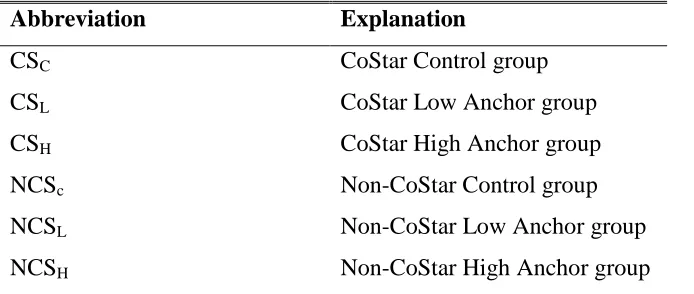
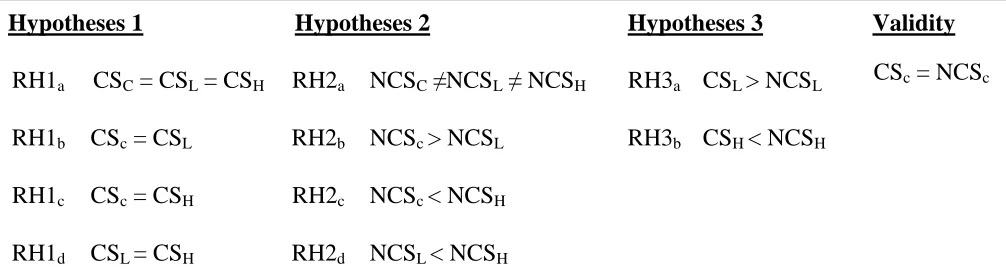
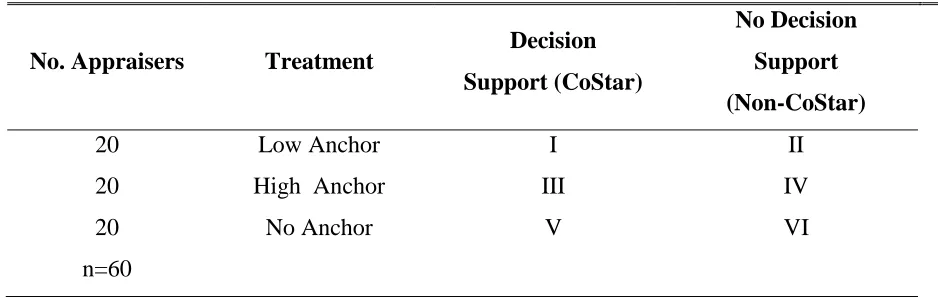
To operationalize the research hypotheses a two-factor, randomized experiment was
conducted. The first factor of interest is an anonymous expert’s previous value opinion. Treatment
for this factor is received at three-levels: low previous valuation, high previous valuation, and no
previous value opinion. The second factor is the decision support tool in which half of the
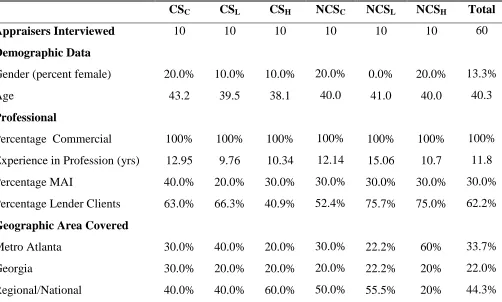
participants were given access. Commercial appraisers (n=60) were randomly solicited from the
Atlanta, GA. area to participate as subjects. The statistical test conducted to test the stated
hypotheses consists of the non-parametric Mann-Whitney U Test and the Kolmogorov-Smirnov
(K-S) Test, the parametric procedures employed are Analysis of Variance (ANOVA), Student’s
13
1.3 Outline of the Dissertation
This chapter presents the general background, theoretical foundation and importance of
the study. Chapter Two begins with an overview of the relevant literature from cognitive
psychology concerning human information problem solving and heuristic behavior. Next,
literature covering decision making debiasing strategies is discussed. The research methodology,
research hypothesis, data collection and operationilization, and validity issues are covered in
Chapter Three. Chapter Four presents the results of the study. Chapter Five will conclude the
14
Chapter Two
Literature Review
This chapter will elaborate on the theoretical concepts and prior research from the
psychology and real estate disciplines concerning the influences of heuristics on problem
solving, providing a foundation for this study. The literature review is disaggregated into the
following sections: human information processing related to problem solving behavior, heuristic
behavior, feedback, and the debiasing role of information technology and decision support aids
in decision making.
2.1 Human information processing related to problem solving behavior
The theoretical foundation commonly used in behavioral research in human problem
solving is derived from Simon (1957, and 1978 and Newell and Simon (1972). Simon (1957)
contends that decisions are made within a subset of all possible solutions based on the “bounded
rationality” of individuals. In contrast to models of unbounded rationality where all information
is readily available, bounded rationality is the concept that the rational capacity of people is
limited by the search cost of information, cognitive limitations, and time constraints. Thus,
bounded rationality revises the assumption of unbounded rationality to account for the fact that
perfectly rational decisions are rarely feasible in reality due to the limited computational
resources available. Simon recognizes the cost associated with gathering and processing
information as a constraint on the classical models of rationality.
Newell and Simon (1972) and Simon (1978) broaden and refine Simon’s earlier work by
emphasizing cognitive limitations, and developing a general theory of human problem solving.
information-15
processing system, the problem solver, and task environment. The human information processing
system is comprised of short-term and long-term memory, and is considered a serial system
capable of processing only one order at a time. The problem solver is the person performing the
task. The task environment is the task as described by the experimenter (the problem as it is
presented); the problem space, or schema, is the way a particular problem solver defines the task.
In responding to a task, the problem solver interprets the task environment into a problem space
(one’s unique way of viewing the task environment) where problem solving occurs. The
interaction between these three components establishes the foundation for problem-solving
behavior.
Problem-solving efforts of the human information processing system are guided by
several characteristics. Humans process information serially, only one task at a time, rather than
in a parallel (more than one task at a time) fashion. The information processing is comprised of
short-term and long-term memory. Long-term memory has unlimited storage capacity,
consisting of symbols or “chunks” of stored information. However, indexing and recall can be
time-demanding and inefficient. Short-term memory has limited capacity, capable of only
storing between four and seven “chunks” or pieces of information, and acts as the task
environment filter for the information processing system. The short-term memory is comprised
of a language interpreter, which functions to understand the problem, and problem space, where
problem solving occurs. The problem space is constrained by the informational storage capacity
of short-term memory.
To initiate problem-solving, the problem solver must represent the task environment in
16
conditioned on the ability of the problem solver to effectively interpret the task environment in
the problem space. The problem space consists of a set of nodes representing a possible state of
knowledge that the problem solver may attain and is able to retrieve swiftly (fraction of a
second). The capacity limitations of short term memory make it difficult for problem solvers to
effectively “backtrack” to previous nodes, instead they almost completely focus on proceeding
from the current situation. Simon (1978) notes that when sufficient external memory (e.g.
information and decision support systems ) is provided problem solvers may be more willing to
“backtrack” from an unpromising situation to a more promising one reached earlier.
2.2 Heuristic behavior
The general mechanics of human information processing is robust across subject domain
experts and novices solving both well-structured and ill-structured problems (Simon 1978).
However, there is considerable evidence that experts, as compared to novices invoke different,
and in some cases superior, information processing strategies (Simon and Simon, 1978; Larkin,
McDermott, Simon, and Simon, 1980a, 1980b; Selnes and Troye, 1989; Simon and Schaeffer,
1992; Gobet and Simon, 2000). Experts and novices may differ in their initial state of
knowledge, amount and type of new information considered, and in how they navigate the
problem space. Experts tend devote more effort to identify and define the problem, and examine
problems more deeply than novices. Evans (1989) suggests that experience and training will
foster improved task recognition and enhanced development of a particular problem space.
Therefore, in short-term memory experts are capable of forming richer data symbols expanding
the processing capabilities of the problem space. Additionally, an expert is better equipped to
work in an ill structured task environment, through the development of problem solving
17
efficient way of processing information, they may lead to systematic errors called judgmental
bias.
Heuristics are a learned behavior as a result of environmental feedback, experience,
training and active searches (see Evans, 1989; Baron 1985; Svenson, 1979). It is through these
experiences that individuals develop heuristics that streamline the solution process fostering an
efficient analysis of data. There are many reasons for using simplified heuristics in problem
solving, most notably: individuals simplify due to the cost of time and effort which may act as
constraints on practical processing given the task environment, and because the use of heuristics
has worked satisfactorily in the past and they are easily recalled in memory.
In their seminal work, Tversky and Kahneman (1974) began a research program
examining heuristics and biases. They identify several types of cognitive heuristics employed in
problem solving, e.g., representativeness, availability and anchoring and adjustment. These
simplified problem solving methods are intended to cope with humans’ limited amount of
storage and processing capacity in short-term memory by selective and simple use of information
to solve decision problems. Much of the more recent research in heuristics and associated biases
consolidates previous findings, delineates under which circumstances specific biases are likely to
appear (Koehler, 1996) and increases the number of newly identified heuristics and biases.
Baron (2002) lists at least 25 biases and Hogarth (1980) lists at least 29 heuristics. However,
these have not been as widely investigated as the original three heuristics as defined by Tversky
and Kahneman.
The use of heuristics may provide efficient procedures for solving complex problems
given the limited information processing capabilities of human problem solvers. However,
18
subconscious responses to the task environment. This can be problematic when the modifying
effects of experience on normative training trigger a routine response that differs from the
normative process (Svenson, 1979; Evans, 1989). The use of heuristics in some situations can
lead to systematic decision errors resulting in judgmental bias. Shanteau (1992) postulates that
when individuals are asked to solve ill-structured tasks characterized by poor feedback and
uncertainty, similar to the real estate domain, heuristic use is likely to result in potentially biased
and sub-optimal solutions. This occurs when individual’s task perceptions differ from a
normative standard and heuristics developed for efficient decisions are misguided (Baron, 1985;
Evans, 1989). Consequently, systematic human error in judgment is often not motivated by
irrationality, but the result of a constrained information processor relying on simplified
procedures which are misapplied (Tversky and Kahneman, 1974). Thus, oftentimes heuristic use
manifests in departures from the appraisal normative process potentially resulting in biased
judgments.
The appraisal normative model8 consists of an eight-step prescribed valuation process set
forth by the Appraisal Institute9 which must be followed when conducting a valuation task. The
normative model is regulated by The Appraisal Standards Board (ASB), which develops and
8
The appraisal normative model was established by the Real Estate Appraisal Reform Amendment or Title XI of Public Law 101-73: Financial Institutions Reform, Recovery and Enforcement Act (FIRREA) of 1989. This Act established the Appraisal Subcommittee (ASC) to monitor and oversee state and federal appraisal certification and licensing of real estate appraisers engaged in federally related transactions. The ASC reviews the operations and provides input to the Appraisal Foundation, a private, not-for-profit corporation which promulgates the Uniform Standards of Professional Appraisal Practice, and the minimum educational and experience standards for appraisal licensure.
9
19
interprets the Uniform Standards of Professional Appraisal Practice (USPAP) providing a
minimum set of quality control standards for the development of an appraisal and the reporting
of its results. USPAP requires that appraisers be familiar with and properly employ prescribed
appraisal methodology, i.e., the normative valuation model. The Scope of Work rule was added
to USPAP in July 2006, requiring the appraiser to discuss a priori the amount and type of
information to be researched, and the analysis to be applied in order to solve the appraisal
problem. Formulating the scope of work necessary prior to beginning the assignment in accord
with the normative model should reduce deviation from the prescribed model. Although
previous research suggests anonymous expert value opinions play a role in the calibration of
judgments, the appraisal normative model does not sanction the use of value opinions as part of
the appraisal process. Thus, appraisers operating under the normative model should not allow
anonymous expert value opinions to influence judgment outcome when performing an appraisal
task.
The use of information processing heuristics and resulting biases are well documented in
the extant real estate literature. In one of the first studies of heuristics and bias in the real estate
domain, Northcraft and Neale (1987) examine the anchoring and adjustment heuristic in the
context of single-family residential property. Participants consisting of practicing real estate
agents (experts) and undergraduate students (novices) were provided a 10-page packet
containing all the information local real estate agents might use in their evaluation or a house.
The only deviation between information packets was the listing price, which served as the
anchor. The anchor was presented in four levels normally distributed around the actual
appraised value, providing four experimental conditions. After receiving the information packet,
20
appraised value of the property, appropriate listing price, reasonable price to pay for the house,
and minimum selling price. The impact of the listing price anchor at all levels, across all these
estimates was significant for both experts and novices. This study provided strong evidence that
the results of previous research on heuristic and biases in laboratory settings were not merely
“parlor tricks” but robust to “real world” settings. However, the use of real estate sales agents as
expert valuers limits their results. The typical real agent may be considered experts in marketing
and are likely familiar with pricing techniques, but lack appraisal experience and receive no
formal training in the appraisal process. Thus, it would be in error to infer that real estate sales
agents are “expert” real estate valuers.
Diaz (1990a) and (1990b) began a research program investigating information-processing
techniques of real estate appraisers. Diaz (1990a) finds that residential real estate appraisers
depart from the normative appraisal model in both familiar and unfamiliar task environments
(geographical settings). He alludes to subsequent research on the subject of appraiser behavior,
by observing that non-normative appraisal behavior may lead to suboptimal valuation judgments
placing “objective” valuations at risk of systematic biases. Diaz (1990b) finds that the
information-processing technique that expert real estate appraiser’s exhibit when selecting
residential comparable sales differs from novices (students). Experts relied on a more
cognitively efficient selection strategy focusing on key attributes and limiting the number of
comparables examined. Conversely, novices spent more time on the task and examined more
data. Diaz suggests that expert appraisers develop cognitive shortcuts or heuristics, which may
be efficient but may also lead to bias. Over time, the use of schema or heuristics may become
21
In the first large-scale real estate behavioral study conducted in the UK, Gallimore (1994)
examines three information processing heuristics which may lead to bias in real estate valuation
judgments. The heuristics considered are anchoring, recency and dilution. Anchoring, as
formulated by Tversky and Kahneman (1974) is the contention that when individuals are asked
to arrive at an estimate, they often do so by adjusting from an initial reference point as evidence
is assimilated. Recency and dilution, attributed to Einhorn and Hogarth (1985), are
presentational effects suggesting that the assimilation of new information is influenced by the
order and mode in which it is presented. The recency effect contends that when data are
analyzed sequentially, greater emphasis is placed on the most recent data analyzed. Dilution is
the notion that the mode in which data are presented (i.e. sequentially or simultaneously) may
influence the valuation adjustment process. Those inclined to accept new evidence (either
supportive of, or challenging to, existing views) will adjust to it less when consistent evidence is
presented simultaneously with challenging evidence, therefore diluting the impact of new
information. Gallimore finds strong support for the anchoring and recency effect among
appraisers, but no evidence is found for the dilution effect. The response to the recency effect
appears to be asymmetric with only supporting (positive) evidence producing the predicted
effect.
Driven by Gallimore’s (1994) findings suggesting that appraisers adjust less to negative
evidence than to evidence which supports an existing view, Gallimore (1996) seeks to explicitly
test for confirmation bias. Confirmation bias is the inclination to seek out evidence that supports
prior opinions. In the valuation context, this is when appraisers form an opinion of value early in
22
search for the most salient evidence. Gallimore concludes that the presence of confirmation bias
remains unproven.
Wolverton (1996) and Gallimore and Wolverton (1997) empirically test the contentions
of the Diaz (1990a and 1990b) studies and build upon the findings of Gallimore’s earlier work.
The authors examine the impact of pending sales price and listing price knowledge on
comparable sales selection and valuation judgments by expert residential appraisers in the U.S.
and England. In comparison to the English valuers, the American appraisers tended to exhibit
less bias (although statistically significant) in valuation judgments, but a stronger bias in
comparable sale selection when aware of pending sale price. The authors contend, that in
contrast to normative appraisal training, the rountinization of non-normative heuristics
over-emphasize the importance of the pending transaction price of the subject property, and therefore
lead to bias in the comparable sales selection process and valuation judgment.
Although, both UK valuers and US appraisers are significantly influenced by the pending
transaction price, the differences in magnitude are attributed to their unique task environments.
UK valuers at the time of the study had less reporting requirements, operate in environments
with poor data quality and are generally accustomed to making large adjustments to comparables
to arrive at the subject’s value. Residential appraisers have access to a comprehensive residential
data set (Multiple Listing Service) and must support their valuation judgments through a
reporting process. Standardized residential appraisal forms are utilized to provide relevant
property and regional information to the client, these forms include a section in which
comparable properties are adjusted and the respective justification of such adjustments is
23
The valuation behavioral research in real estate was expanded by Diaz (see Diaz 1997,
Diaz and Hansz 1997 and Diaz and Wolverton 1998) in a successful attempt to explain the
appraisal smoothing phenomenon documented in earlier research. Ibbotson and Siegel (1984)
were the first to recognize that a differential existed between real estate return series constructed
using appraised values as substitutes for actual transaction values. The authors find
valuation-based returns contain less variability than one would expect from transaction valuation-based returns. Cole
(1988) empirically tested this contention by comparing valuation-based series to
transaction-based indices and confirmed valuation-transaction-based series exhibit reduced variability. Cole identifies
several factors which may contribute to appraisal smoothing: insufficient adjustment from past
valuation judgments, annual rather than quarterly appraisals, and client influence. Geltner
(1989a and 1989b) defines appraisal smoothing and devises a smoothing correction technique for
valuation-based return data. Geltner (1989b) suggest appraisal smoothing is a function of relying
to heavily on past “acceptable” valuations, presumably the result of a lack in confidence
triggered by uncertainty in newly available information. Quan and Quigly (1991) echo a similar
sentiment when describing why appraisal smoothing is rational appraiser behavior. They authors
use Bayesian statistical theory to show how appraisers operating in an environment characterized
by limited and noisy information will only partially update their valuation estimates based on
current market conditions. McAllister, Baum, Crosby, Gallimore and Gray (2003) find that the
IPD commercial property index exhibits characteristics consistent with appraiser smoothing
behavior; however the authors find a seasonal effect with greater search cost and information
being applied to annual and quarterly appraisals than monthly. This increase in information
24
A series of separate studies shed additional light on the behavior of individual appraisers
by applying a behavioral approach grounded in psychological theory. Diaz (1997) finds expert
US appraisers operating in familiar geographic areas do not anchor to the previous valuation
judgments of anonymous experts when conducting a current valuation. Conversely, Diaz and
Hansz (1997) find expert appraisers operating in an unfamiliar geographic setting were
influenced by the previous valuation judgments of anonymous experts. The authors suggest that
market uncertainty may induce the use of an unsanctioned reference point (anchoring heuristic)
that would not otherwise impact judgments. Diaz and Wolverton (1998) find expert appraisers
operating in unfamiliar geographic territory will make insufficient adjustments when
reappraising (updating) appraisal assignments. Clayton, Geltner and Hamilton (2001) also find
evidence of appraisal smoothing when examining a large data-set of individual property
appraisal reports performed over the 1986 – 1996 time period. While business pressure or
agency issues may contribute to smoothing, Diaz and Wolverton (1998) find evidence of
appraisal smoothing in the absence of client pressure. The authors attribute this form of
appraisal smoothing to problem solving behavior namely the anchoring and adjustment heuristic.
Hansz (2004) finds evidence that commercial appraisers induced by prior transaction price
knowledge employed a partial adjustment strategy, as proposed by Quan and Quigley (1989,
1991), when asked to perform a current valuation on the subject property. In contrast to expert
commercial appraisers, nonappraisers did not employ a partial updating strategy; however their
estimates were “noisier”.
Although, previous research documents that expert appraisers operating in areas of
geographic unfamiliarity may be influenced by the value estimates of anonymous experts,
25
absent. Diaz and Hansz (2001) fill this gap by examining the impact of additional potential
reference points. The authors examine the impact on valuation judgment resulting from
knowledge of an uncompleted contract price of a comparable property, the uncompleted contract
price on the subject property, and the value opinion of anonymous experts. They hypothesize the
hierarchy of impact will be consistent with the degree to which each reference point adheres to
the US normative appraisal model and to the frequency each reference point is encountered in
practice. Contract prices of both comparable and subject property enjoy implicit support in the
appraisal process; however value opinions of experts are not sanctioned by the normative
appraisal process. The authors find all three reference points impact valuation judgment, and as
expected the implicitly sanctioned reference points (e.g. unclosed contract price of comparable
and subject property) exhibit a greater influence.
In a related study, Havard (2001) examines whether the mode of data presentation can
counter bias arising from the tendency of appraisers to anchor to the transaction price of the
subject. They contend that information presented in a tabulated summary table will provide a
more “vivid” presentation of comparable transaction information and have a mitigating effect on
bias. Indeed, the author finds that in the commercial real estate domain tabulated information
does have a damping effect on bias resulting from the use of the anchoring and adjustment
heuristic. The author cautions the reader in that the findings were based on student participants
and suggest that ultimately this research should be done with practicing appraisers. Furthermore,
Harvard calls for additional research focused on alternative debiasing strategies.
Hansz (2003) examines the influence of tax assessed values on the formation of market
value estimates by both commercial appraisers and nonappraisers and finds that knowledge of
26
appraisers were not affected. Tax assessed values have been found to be poorly calibrated (see
Kowalski and Colwell, 1986; and Janssen and Soderberg, 1999), experienced commercial
appraisers have likely formulated the same conclusion. Thus, these results indicate that
commercial appraisers need some form of content validity prior to using a reference point as an
anchor.
In addition to the heuristics previously mentioned appraisers have also been susceptible
to the biasing influence of market and client feedback. These types of studies are generally
theoretically grounded in the Brunswik (1952 and 1956) lens model of perceptual. This theory
provides a foundation for the examination of the relationship between appraiser and client, in
which client feedback is incorporated into the learning process. Brunswik contends that the
perceptual system includes the task (ideal) system and the cognitive system (individual
perception of task system). The task system represents the environment, and the cognitive
system is the individual’s perception of the environment. That is, individuals cannot view the
event being judged directly, but instead must view the event through a filter of “cues” (pieces of
information). Individuals form their perception of the environment through the use and
weighting of “cues” which shape their understanding of the environment. Feedback provides
the information needed to compare the cognitive system to the task system. Based on this
feedback, the individual can calibrate the cognitive system so the attributed cue weights will
more closely resemble the optimal weights (Doherty and Balzer, 1988).
The conceptual framework of the lens model can easily be applied to the real estate
appraisal task. The criterion to be judged is the market value of a subject property as of the date
of value (task system). The judge is the appraiser (cognitive system), who must render a
27
normatively prescribed items of information such as: market area data, subject property data, and
comparable property data. Since the criterion to be judged (market value) is an unobserved
hypothetical value, feedback from clients, colleagues and the market provide information on the
relation between the criterion and the appraiser’s judgment of market value. Thus, through
feedback, the appraiser can calibrate the cognitive system to more closely relate with the task
system (Doherty and Balzer, 1988). Indeed, Klein (1998) identifies accurate and timely
feedback as an important source of learning for experts. However, problems may arise if the
feedback contains an element of systematic bias, these problems may manifest in departures
from the appraisal normative process potentially resulting in bias judgments.
Hogarth (1980) contends that feedback is central to the learning process of experts, but
cautions that feedback may contribute to non-normative practices. In order for feedback to be
effective it must reveal whether past judgment was accurate, this is difficult in the appraisal
domain as the “true” market value is unobservable. In this setting, feedback assessing the
correctness of the valuation judgment may only come in the form of accepted convention (e.g.
proximity to contract price or value required for financing) rather than the accuracy of the
valuation judgment. Indeed, feedback which contains this form of systematic bias may over time
override formal appraisal training, resulting in an appraiser departing from the normative
appraisal process in favor of a judgment process which conforms to convention (Svartdal, 1995).
Previous valuation research has shown that the type of feedback from clients can vary
substantially, and often client feedback is directed at encouraging appraisers to deviate from the
prescribed valuation objective. Smolen and Hambleton (1997) surveyed 292 US residential and
commercial appraisers and find that appraisers are subject to a substantial amount of client