Automatic Leaf Picking Machine
Shangkavi G1, Jibin Mohan C2, Kesavaraj N3, Nandhani T4, Vijayalakshmi M5
1
Professor, Department of EIE, SNS College of Technology, Coimbatore, India 2
UG Scholar, Department of EIE, SNS College of Technology, Coimbatore, India 3
UG Scholar, Department of EIE, SNS College of Technology, Coimbatore, India 4
UG Scholar, Department of EIE, SNS College of Technology, Coimbatore, India
Abstract: In Early days, Labours are used to take the banana leaf in banquet meal. So in order to reduce human work, the simple mechanism is used to take the leaf automatically by using Automatic leaf picking machine. The main purpose of this project is to pick the leaf automatically using the leaf picking machine. Initially in the existing system, the food was served in banana leaf. At that time banana leaves are picked manually by human beings in special occasions. Mostly in the function hall, the number of human resources required to collect the leaf is very high, in this type of process the time consumption is also very high. To overcome this problem, the paper Automatic leaf picking machine is proposed.
I. INTRODUCTION
Leaf picking was originally done by human beings in special occasions. If the banana leaf quantity is higher in the occasion, the human resource required for picking the used leaf is also very high. In order to reduce the work and time consumption, the automatic leaf picking machine is introduced[1]. This method overcomes the problem of manual methods of leaf picking.
II. PROPOSED SYSTEM
The main aim of the proposed work is to pick the leaf automatically after the consumption of food. In the function hall the number of persons required is very high for taking leaves, so to overcome this problem the Automatic Leaf Picking Machine is proposed. Therefore, by using Automatic leaf picking machine the time consumption and the human resource required is reduced. The waste leaf can be automatically collected by machine and therefore, it is a fast process. The sharp edge is used for taking the leaves into the conveyor belt. So the conveyor belt is used to carry the used leaves and it pass the used leaves to the collecting box[15]. Before the leaves are taken to the collecting box, the leaves are made into pieces using the cutter.
Fig. 1. Block of Diagram automatic leaf picking machine
The above Fig.1 shows the block diagram of automatic leaf picking machine
When the leaf reach the end of the conveyor belt the cutter which is fixed will cut the leaves into small pieces and then it is taken to the bin. The basket is fabricated in such a manner to collect at least 20 number of leaves from the floor. The power supply is switched ON using the connection of 12V battery and 7.5 amps current[13].
III. COMPONENT DESCRIPTION A. Power Supply
The battery used here is a regular battery which is used generally in many applications. The 12 volt battery looks different depending on its use. In some ways, it is one of the most diverse of all batteries. The battery will be able to be recharged as current. Limit initial current is 2.16A. Charge until battery voltage reaches 14.4 to 14.7 volts at 68°F (20°C). Hold at 14.4 to 14.7 volts until current drops to under 77mA. Battery is fully charged under these conditions, and charger should be disconnected.
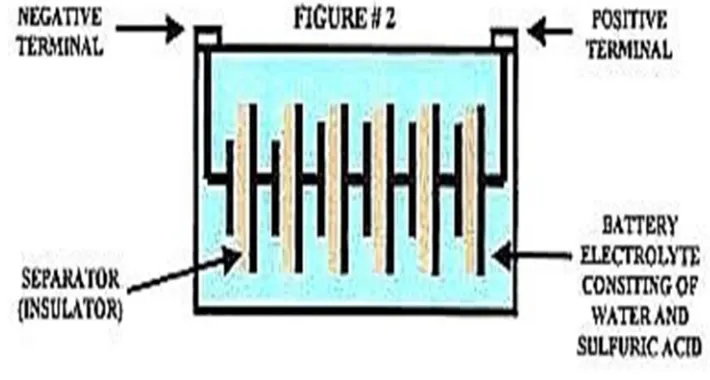
[image:3.612.184.426.215.424.2]The below Fig.2 is the 12V battery used in the automatic leaf picking machine. These batteries are excellent for use in many applications because they do not need maintenance during the off season and the batteries can be stored in any state of charge without the worry of degradation.
Fig. 2. 12V Battery
It can hold upto 50-100% charge before storage. It can be large or small, heavy or light and sizes of 12 volt batteries vary widely used on the amp hours.
Fig. 3. working of battery
The above Fig.3 shows the working of battery, It consists of 12 volt battery supply and 7.5 amps current.
[image:3.612.124.479.476.666.2]B. DC Motor
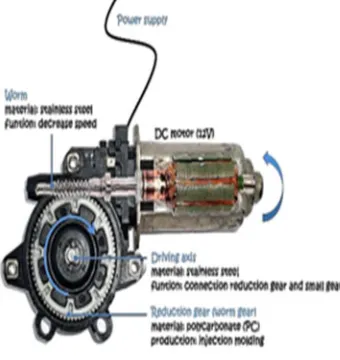
[image:4.612.246.366.120.284.2]The below Fig.4 shows the DC motor used in automatic leaf picking machine
Fig. 4. DC Motor
The DC motor is one of the machines devised, which convert electrical power into mechanical power. The principle of working of a DC motor is that "whenever a current carrying conductor is placed in a magnetic field, it experiences a mechanical force".
Fig. 5. Working of DC Motor
The above fig.5 shows the working of a DC motor. It widely used in the opening and closing of car windows [5]. DC motor is 12 volts and 2.5 Amps, which operate the load speed at 48 RPM. The 12 volt battery is connected with DC motor. DC motor directly connects to the positive battery voltage to one motor wire and battery ground to the other motor wire. The motor should run in one direction. DC motor is used to run the conveyor belt and it is placed near the upper shaft to handle easily. The upper shaft is connected to the middle of a DC motor to run the upper roller and then the conveyor starts moving.
C. Conveyor Belt
Belt conveyor system perform the material transportation from one location to another location[11]. A belt conveyor is a typical energy conversion system from electrical energy to mechanical energy. The energy efficiency of belt conveyor focuses on the operational level and the equipment level.
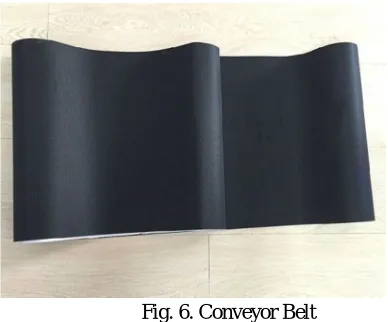
[image:4.612.235.405.331.511.2]Fig. 6. Conveyor Belt
The upper roller will rotate in one direction and the lower roller is at a fixed position, then the conveyor belt starts moving [3]. The conveyor belt is slanted at a particular angle or position, and then the banana leaf picked the from the floor is taken through the conveyor belt .the conveyor belt is made up of PVC material ,it is used to carry out the banana leaves without any restriction.
D. Bearing
The bearing are used in a wide variety of application, they are simple in design, non-separable, suitable for high speeds and are robust in operation, and need small maintenance[4]. The bearing device allows the constrained relative motion between two or more parts, typically rotation or linear movement.
[image:5.612.221.397.381.708.2]Fig. 7. Inner and outer bearing
In this work the bearing used is 6202 model, which mainly used to control the shaft. Bearing is connected with the shaft and it has an inner diameter and outer diameter. The inner diameter is about 15mm and the outer diameter is about 35mm alone with the width is 11mm.
IV RESULT AND DISCUSSION
The proposed system is successfully implemented and the leaf has been picked automatically using the automatic leaf picking machine. The power supply is given to the motor, then the motor gets ON, so that the conveyor belt will rotate.
When the person moves the machine the sharp edge of the machine will pick the leaf from the floor. The conveyor belt will carry the leaves into the bin. Before reaching the bin, leaves are cut into small pieces using the cutter, which is fixed near the end of the conveyor [6]. Finally the bin will be filled with leaves which are crushed.
A. Automatic Leaf Picking Machine Design Process
Conveyor belt design for leaf picking process was done by using Auto CAD. Length: 60 centimeter
Width: 45 centimeter Height: 2 Meter Angle: 30 degree
B. Output of Automatic Leaf Picking Machine
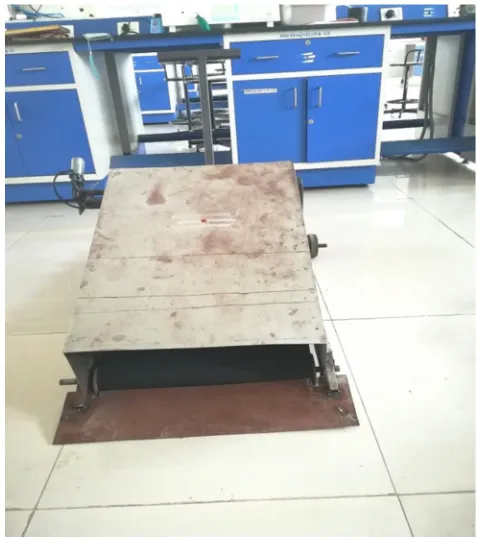
[image:6.612.186.425.345.615.2]The automatic leaf picking machine uses simple mechanism and simple construction of picking the leaf automatically from the floor.
Fig. 9.Output of the automatic leaf picking machine
The above Fig.9. Shows the output of the automatic leaf picking machine Implementation of automatic leaf picking machines uses motor, conveyor belt, bearing, cutter and collecting bin for the picking process of the leaf after the end of the banquet meal.
VI. CONCLUSION
Leaf picking can be done using manual methods. But we have chosen automatic leaf picking method because it reduces time consumption and human resources.
Customer satisfaction is good in automatic method and cleanliness is maintained in a perfect way. Number of leaves collected will be higher in automatic method than in manual method. Therefore the automatic leaf picking method is more preferable than manual methods.
REFERENCES
[1] Aishwarya et.al, “Review on Automation in Fruit Harvesting”, International Journal of Latest Trends Engineering and Technology, Volume.6, Issue 2, November 2015.
[2] AlfonsoDamian et.al, “Second-Order Sliding-Mode Control of DC Drives”, IEEE Transactions on Industrial Electronics, Vol. 51, No. 2, April 2004. [3] Anil Funk Batmaz et.al, “Design of a Quadrotor Roll Controller Using System Identification to Improve Empirical Results”, International Journal of Materials,
Mechanics and Manufacturing, Vol. 1, No. 4, November 2013.
[4] PengYi Weng et.al, “Roller Bearing Fault Diagnosis Based on Wavelet Packet Decomposition and Support Vector Machine”, Proceedings of IEEE International Conference on Applied System Innovation,IEEE-Icasi, Meen, Prior & Lam (Eds),2017.
[5] Atul Kumar Dewangan et.al, “Pwm Based Automatic Closed Loop Speed Control of DC Motor”, International Journal of Engineering Trends and Technology- Volume3,Issue2,2012.
[6] Kadafa A et.al, “Applications of System Analysis Techniques in Solid Waste Management Assessment”, Polish Journal of Environmental Studies PP:1061-1070,2014.
[7] Benedetto Allotta et.al, “Modeling and Control of a Full-Scale Roller-Rig for the Analysis of Railway Braking Under Degraded Adhesion Conditions”, IEEE Transactions on Control Systems Technology, Vol.23, No. 1, January 2015.
[8] ChiaChangWu et.al, “Developing Situation of Tea Harvesting Machines in Taiwan”, Engineering, Technology & Applied Science Research Vol. 5, No. 6, 2015.
[9] Christine Khairallah et.al, “Analysis of a Wave Roller Energy-Harvesting Device”, International Conference on Advances in Computational Tools for Engineering Applications,2016.
[10] Chun Hsiunglan et.al, “The Design of a Multi-Conveyor System for Profit Maximisation”, International Journal of Advanced Manufacturing Technology, Volume 22, Issue 7-8, PP510-521, November 2003
[11] Daniel J Fonseca et.al, “A Knowledge-Based System for Conveyor Equipment Selection”, Expert Systems with Application, Volume 26,Issue 4,PP615-623,May 2000.
[12] Deng.T et.al, “Effect of Particle Concentration on Erosion Rate of Mild Steel Bends In A Pneumatic Conveyor”,Wear,Issue1-4,Vol258,PP:480-487,January2005.
[13] Eran Schweitzer et.al, “Automated Generation Algorithm for Synthetic Medium Voltage Radial Distribution Systems”, IEEE Journal on Emerging and Selected Topics in Circuits and Systems, Vol. 7, No. 2, June 2017.
[14] K et.al, “An Optimal Scheduling of Pick Place Operations of a Robot-Vision-Tracking System by Using Back-Propagation and Hamming Network”, International Conference, Robotics and Automation, 1992.
[15] Ghaziabu Taher et.al, “Automation of Material Handling With Bucket Elevator and Belt Conveyor”, International Journal of Scientific and Research Publications, Volume 4, Issue 3, March 2014.