University of South Carolina
Scholar Commons
Theses and Dissertations
1-1-2013
Working Memory-Learning Condition
Interactions: Proficiency In L2 Russian Under
Naturalistic and Formal Learning Conditions
Marc Canner
University of South Carolina
Follow this and additional works at:https://scholarcommons.sc.edu/etd
This Open Access Dissertation is brought to you by Scholar Commons. It has been accepted for inclusion in Theses and Dissertations by an authorized administrator of Scholar Commons. For more information, please [email protected].
Recommended Citation
WORKING MEMORY-LEARNING CONDITION INTERACTIONS
P
ROFICIENCY INL2
R
USSIAN UNDERN
ATURALISTIC ANDF
ORMALL
EARNINGC
ONDITIONSby
Marc T. Canner
Bachelor of Arts
University of New Mexico, 1984
Master of Arts
University of South Carolina, 2011
__________________________________
Submitted in Partial Fulfillment of the Requirements
For the Degree of Doctor of Philosophy in
Linguistics
College of Arts and Sciences
University of South Carolina
2013
Accepted by:
Paul Malovrh, Director of Committee
Nina Moreno, Committee Member
Curtis Ford, Committee Member
Alexandra Rowe, Reader
ii ii
iii iii
Dedication
I dedicate this work to my loving wife, Dale, and to my incredible children,
Aleksandre, Wesley and Rachel. Apart from their longsuffering patience, kindness and
iv iv
Acknowledgements
As with any challenging endeavor, this dissertation simply could not have been
completed without the aid and friendship of a great number of people. I would like to
first thank my wife, whose great patience and encouragement have been instrumental in
the pace that I kept toward its completion. I would also like to thank Paul Malovrh, who
was there every step of the way with the kind of focused advice, mentoring, and planning
that enabled me to complete the task. My first advisor, Barbara Schulz, though absent for
the completion of this work due to illness, also deserves my heartfelt thanks for helping
me to get the research process off the ground. I also extend gratitude to Nina Moreno,
Curt Ford and Alexandra Rowe for their outstanding recommendations as part of my
committee. I wish to thank the many participants and friends in Russia and Ukraine
whose cheerful willingness to endure testing was actually one of the most inspiring
aspects of the project. To John Musgrove, missionary extraordinaire and faithful friend
to me and to my Ukrainian brothers and sisters, I extend my warmest appreciation. The
many long hours he spent helping me to contact potential participants in Kiev and
Moscow speak volumes as to his selfless friendship. I also acknowledge the help of my
friend and partner in training cross-cultural workers, Dave Wheeler. Apart from his hard
work at running our institute in my absence, this project would not have been possible.
Last of all, I again want to thank my incredible wife, Dale, who, in addition to her help on
the home front, has diligently filled in for me as a teacher at our institute. The good Lord
v v
Abstract
The purpose of this dissertation was to examine the relationships between working
memory (WM) and three commonly used learning strategies or conditions in the nature
of proficiency among adult L2 Russian learners. Based on the aptitude-learning
condition interaction framework articulated by Robinson (2002b), the study identifies
two types of relationships between the fixed variables of working memory and learning
condition, and four variables related to second language proficiency (SLP) in Russian:
accuracy, fluency, overall general proficiency or ‘native-likeness’, and the occurrence of
potentially fossilized forms in speech. Three main learning contexts were identified,
including strictly naturalistic conditions resulting from immersion in-country (NC),
naturalistic learning followed by formal learning experiences (NF), and formal training
followed by naturalistic learning through immersion (FN).
37 participants were recruited, including naturalistic learners (n = 12),
naturalistic/formal (n = 12), and formal/naturalistic participants (n=13). A proficiency
interview was used to test learners for their L2 Russian proficiency, including measures
for fluency, overall proficiency or native-likeness, accuracy via the elicitation of three
prevalent structures in native speech, and the presence of potentially fossilized inter
language (IL) forms. Based on proficiency scores and answers provided on an
experience-related questionnaire, three experiments were conducted. The first
experiment tests for predictive relationships between WM and the four aspects of
vi vi
interactions between WM and the three learning conditions in relation to the main aspects
of proficiency. A third experiment tests for correlations between the amount of formal
training and accuracy-related measures for the two combined (NF and FN) learning
contexts.
The results of a logistic regression indicate significant predictive correlations
between working memory and accuracy, and a negative correlation with the rate of
potential fossilization for the naturalistic condition. No predictive significance for WM
alone and aspects of proficiency was found in either NF or FN conditions. The second
experiment yielded results indicating a significant interaction between WM and
naturalistic conditions for fluency, and significance for interactions between WM and the
amount of formal training for both accuracy and general proficiency for the
formal/naturalistic (FN) context. The third experiment found predictive correlations
between the amount of formal training and fossilization for the FN condition. The study
found no significant correlations for the NF context. Results are interpreted to signify
differential effects in relationships between WM and the major aspects of proficiency
among different conditions, with an evident impact of the order or sequence of
naturalistic and formal experience for the combined contexts. It appears that working
memory does not act alone, but interacts with the nature of learning conditions to affect
proficiency. Significant correlations between the amount of formal instruction and
vii vii
T
ABLE OFC
ONTENTSDEDICATION ...iii
ACKNOWLEDGEMENTS ...iv
ABSTRACT ...v
LIST OF TABLES ...ix
LIST OF FIGURES ...xi
LIST OF ABBREVIATIONS ...xii
CHAPTER I:INTRODUCTION ...1
1.1 THE NATURE OF ADULT L2VARIABILITY ...1
1.2 THE RESEARCH PROBLEM ...6
1.3 THE RELEVANCE OF APTITUDE AND LEARNING CONDITIONS ...14
1.4 OVERVIEW OF THE DISSERTATION...18
CHAPTER II: LITERATURE REVIEW………...20
2.1 VARIABILITY AND FOSSILIZATION IN ADULT SLA:COGNITIVIST PERSPECTIVES...20
2.2THE NATURE OF THE APTITUDE COMPLEX OF ABILITIES ...30
2.3 MODELS OF APTITUDE-ORIENTED INTERACTIONIST RESEARCH...54
2.4WORKING MEMORY AND ITS ROLE IN THE ATTAINMENT OF L2PROFICIENCY...57
2.5 CHALLENGES RELATED TO THE ACQUISITION OF L2RUSSIAN ...69
2.6 CHALLENGES IN ACQUIRING L2RUSSIAN PROFICIENCY …………...81
2.7 RESEARCH QUESTIONS AND HYPOTHESES...85
viii viii
3.1 CHALLENGES RELATED TO EXPERIMENTAL DESIGN...88
3.2 STUDY PARTICIPANTS...89
3.3 MATERIALS...95
3.4PILOT TESTING FOR APTITUDE AND PROFICIENCY ASSESSMENT INSTRUMENTS ...104
3.5DATA ANALYSIS ...107
CHAPTER IV:RESULTS ...118
4.1 WORKING MEMORY AS A PREDICTOR OF FLUENCY AND ACCURACY...122
4.2 WORKING MEMORY AS A PREDICTOR OF FOSSILIZATION RATE ...141
4.3 WORKING MEMORY-LEARNING CONDITION INTERACTIONS...148
4.4LEARNING CONDITIONS AND RUSSIAN SLP...151
4.5RESEARCH QUESTIONS:ASUMMARY OF THE RESULTS ...170
CHAPTER V: DISCUSSION...173
5.1WMREGRESSION EXPERIMENT:MAJOR PROFICIENCY COMPONENTS...180
5.2 WMREGRESSION EXPERIMENT:FOSSILIZATION RATE...188
5.3 WM-LEARNING CONDITION MODERATED REGRESSION...190
5.4LEARNING CONDITION-RUSSIAN SLPCORRELATIONS...194
CHAPTER VI:CONCLUSION...225
REFERENCES ...236
APPENDIX A:LANGUAGE BACKGROUND QUESTIONNAIRE...247
APPENDIX B:PROFICIENCY COMPONENT TEST MEASURES ...248
APPENDIX C:WM BY COMPONENTS OF PROFICIENCY...254
APPENDIX D:WM BY EXPERIENCE MODERATED REGRESSION ...255
ix ix
L
IST OFT
ABLESTABLE 3.1STUDY PARTICIPANTS...94
TABLE 3.2PARTICIPANT FLUENCY AS A PERCENTAGE OF NATIVE-LEVEL FLUENCY ...108
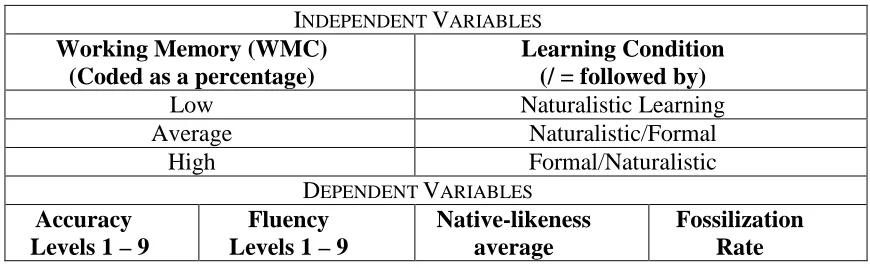
TABLE 3.3INDEPENDENT AND DEPENDENT VARIABLES...114
TABLE 4.1ALL PARTICIPANTS:AVERAGE PROFICIENCY SCORES...122
TABLE 4.2ALL PARTICIPANTS:ACCURACY, FLUENCY AND NATIVE-LIKENESS BY WM AND EXPERIENCE...126
TABLE 4.3AVERAGE NATIVE-LIKENESS BY LEVEL OF WORKING MEMORY/EXPERIENCE...130
TABLE 4.4AVERAGE FLUENCY BY LEVEL OF WORKING MEMORY/EXPERIENCE...135
TABLE 4.5AVERAGE ACCURACY BY LEVEL OF WORKING MEMORY/EXPERIENCE...140
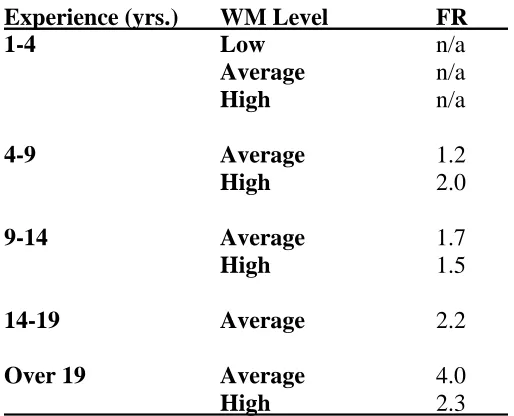
TABLE 4.6ALL PARTICIPANTS:FR BY LEVEL OF WM AND EXPERIENCE...142
TABLE 4.7AVERAGE FOSSILIZATION BY LEVEL OF WORKING MEMORY/EXPERIENCE...146
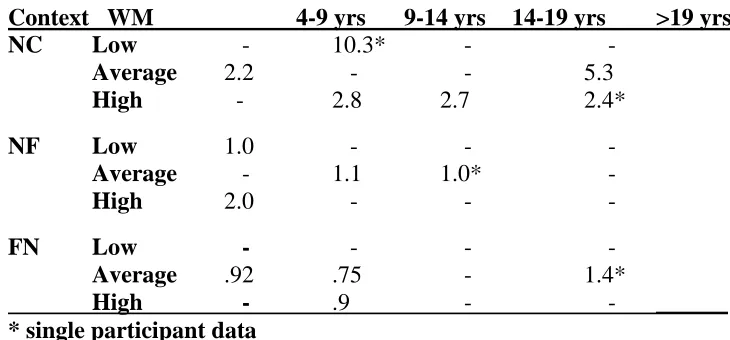
TABLE 4.8LEARNING CONDITIONS:GENERAL PROFICIENCY AVERAGES (NL) ...153
TABLE 4.9LEARNING CONDITIONS:AVERAGE FLUENCY BY AMOUNT OF EXPERIENCE...155
TABLE 4.10LEARNING CONDITIONS:AVERAGE ACCURACY...156
TABLE 4.11LEARNING CONDITIONS:AVERAGE RATE OF POTENTIAL FOSSILIZATION...158
TABLE 4.12HIGHEST INDIVIDUAL PROFICIENCY COMPONENT SCORES...160
TABLE 4.13NFPROFICIENCY AVERAGES:FORMAL TRAINING AS A PERCENTAGE...165
TABLE 4.14FNPROFICIENCY AVERAGES:FORMAL TRAINING AS A PERCENTAGE...165
x x
TABLE 4.16FN LEARNERS:ACCURACY-RELATED SCORES BY FORMAL TRAINING (FT) ...166
TABLE 4.17NFLEARNERS:FR WITH FORMAL TRAINING AS A PERCENT OF EXPERIENCE..168
xi xi
L
IST OFF
IGURESFIGURE 4.1WMC BY ACCURACY FOR NATURALISTIC LEARNERS...141
FIGURE 4.2WMC BY FR FOR NATURALISTIC LEARNERS...147
FIGURE 4.3OBSERVED FOSSILIZATION BY FORMAL TRAINING FOR FN LEARNERS...169
FIGURE 5.1AVERAGE NATIVELIKENESS BY AMOUNT OF EXPERIENCE...203
FIGURE 5.2AVERAGE FLUENCY BY AMOUNT OF EXPERIENCE...205
FIGURE 5.3AVERAGE ACCURACY BY AMOUNT OF EXPERIENCE...209
xii xii
L
IST OFA
BBREVIATIONSANOVA………...Analysis of Variance
ALA………Analytic Language Ability
AM………Associative Memory
CE………...Control Executive (a function of Working Memory)
CLT………..Communicative Language Teaching
CPH……….Critical Period Hypothesis
DLAB………...Defense Language Aptitude Battery
EB………...Episodic Buffer (a function of Working Memory)
FDH………..Fundamental Difference Hypothesis
FL………..Foreign Language
FN……….Formal/Naturalistic learning condition
FSH………...Fundamental Similarity Hypothesis
g……….General Intelligence
Gf………...Fluid Intelligence
GS………...Grammatical Sensitivity
ID……….Individual Difference
L1………First or Native language
L2………Second language
xiii xiii
MMR………...Moderated Multiple Regression
MRA……….Multivariate Regression Analysis
MRI………Magnetic Resonance Imaging
NC………Naturalistic learning Condition
NL………...Native Language
NF……….Naturalistic/Formal learning condition
PL………Phonological Loop (a function of working memory)
PLAB………...Pimsleur Language Aptitude Battery
SLA………Second Language Acquisition
SLP……….Second Language Proficiency
STM …...………...……….………..Short Term Memory
UG………..Universal Grammar
VS………Visuospatial Sketchpad (a function of working memory)
WM………...Working Memory
1 1
C
HAPTERI:
I
NTRODUCTIONOne of the perennial problems in SLA research is the existence of a high degree
of inter-learner variability in terms of both overall success and the nature of an adult’s
developing or mature inter language (IL) grammar. One of the most prevalent
characteristics of L2 learners is their general failure to acquire native-like proficiency,
especially in terms of accuracy or complexity. Foreign language teachers are usually able
to identify such differences among learners as they develop, but are rarely able to prevent
such failure: the goal of promoting native-like proficiency can be daunting for the learner
and teacher alike. The adult L2 acquisition of Russian is certainly no exception to this
observation. Regardless of the type of strategy utilized, the amount of time spent
learning in a Russian-speaking country, or the number of teachers, tutors or conversation
partners employed, adult English L1 learners of L2 Russian rarely approach native levels
of proficiency, and differ widely in their attained language abilities.
1.1 The Characteristics of Adult L2 Variability
Of particular interest to the present study are three key aspects of adult L2
acquisition related to variability in proficiency: an overall lack of success, general failure,
and variation in the degree of success (Bley-Vroman, 1989). The first of these, an
overall lack of success, involves the failure to master complex skills in adult learning for
those areas that do not have a related domain-specific cognitive capacity. The degree to
which such skills are mastered varies among adults, and few ever approach target-like
2 2
would state that a single process is responsible for both adult and child language learning
(see for example, Bley-Vroman, 1989; Dörnyei, 2005; Robinson, 2002b). A second
aspect is general failure or the rarity of complete success, which means that “a (second)
language is not merely difficult to learn with only general cognitive strategies, it is
virtually impossible” (Bley-Vroman, 1989, p. 44). The extent of such failure is also
variable. Lastly, variation in the degree of success relates to the common observation
that different degrees of success in attainment are experienced by adult learners who
utilize the same strategies, experience similar learning conditions or are influenced by
similar affective variables, such as motivation (see for example, Dornyei, 2005; Dörnyej
and Skehan, 2003). These three main aspects of variation in adult attainment of L2
proficiency point out the importance to any SLA theory of explaining this phenomenon.
The above three major types of variation in proficiency can be characterized as
inter-learner variation, since they describe differences between learners. Another major
type of variability also exists, however: intra learner variability. Intra learner variability
refers to differences within the proficiency acquired by individual learners, or variation in
the success the learner achieves between the different major areas of proficiency. For
example, the same learner may have achieved a high level of fluency (native-like rapidity
of speech), but without a high level of morphological accuracy. Sentence structure
(syntax) may be native-like, but without target-like inflectional morphology. Research in
the area of intra learner variation typically relates to an examination of the causes of
fossilization (Han, 2004).
Fossilization in Adult L2 Attainment
3 3
phenomenon of fossilization stands out as one of the most intriguing aspects of SLA
research, and its explanation remains elusive at best. Although the phenomenon has been
defined in a number of ways, one of the more succinct definitions is provided by Han
(2004), who describes fossilization as the “stabilized IL [inter language] forms that
remain in learner speech or writing over time, no matter what the input or what the
learner does” (p. 20). The literature also describes fossilization as having two
dimensions: Cognitively, it relates to the primary systems involved in the generation of
fossilized structures; experimentally, it refers to fossilized IL structures that are retained
in communication (whether spoken or written) regardless of the input or of any strategies
the learner uses to eliminate them (Han, 2004). The parts of speech that tend to fossilize
include linguistic structures, various subsystems, and rules that a learner has adopted into
the IL associated with a specific target language (TL) grammar, regardless of the adult
learner’s age, amount of instruction in the L2, or extent of exposure to TL forms;
research shows that such fossilized forms appear predisposed to recur in production even
if they had been previously ‘eliminated’ (e.g. Selinker, 1972).
The evidence for fossilization varies widely, with much debate over the exact
nature of the phenomenon. A number of potential characteristics of the issue have been
discussed in the literature. One question is whether fossilization should be viewed as
being a global phenomenon, or something that is expressed more locally. The global
view of fossilization states that it impacts the entire IL system (e.g. Selinker, 1992), while
those who view it as a local phenomenon have concluded that its effects are only seen on
specific aspects of the interlanguage grammar (e.g. VanPatten, 1988; Han, 2004). Han
4 4
and is not supported in the evidence; on the other hand, the conclusion that it is largely
local is predicated upon the existing evidence that demonstrates that fossilization only
affects specific linguistic properties that are part of various sub-components of the IL
grammar, while other parts of the system tend to remain unaffected (Han, 2004).
One general and fairly common view of fossilization describes two basic types of
learners: those who have fossilized, who are called ‘type 1’ learners, and learners who
have not, called ‘type 2’. Han (2004) states that “such a bifurcation of L2 learners is
conceptually flawed” (p. 21) since it is dependent on conclusions related to whether
learning is continuing to occur, which are based in turn solely upon the learner’s
observed performance; according to Han (2004), such a classification therefore represents
a largely behaviorist perspective. Researchers also hold to competing perspectives on
whether fossilization is a product or a process, with some referring to it as both. The
cognitivist perspective holds to the view that it is largely a product, while those who see
fossilization as more of a process have adopted a predominantly phenomenological
perspective of the issue (Han, 2004). Jung (2002) points out the challenges associated
with drawing conclusions about the exact nature of fossilization, such as the need to
conduct long-term research to track its development. Such difficulties underscore the
problematic issues involved in discovering its causes. However, a number of key
observations have been made that help to clarify our understanding of the phenomenon
and consequently the factors that contribute to its occurrence.
Findings related to fossilization are typically found either in longitudinal research
that focuses on individual learners and their L2 development over time, or in studies that
5 5
experienced continued exposure to the target language, and have acculturated or adjusted
well (e.g. Long, 2003). Different degrees of observed fossilization are usually described
in two main respects: inter-learner fossilization (some learners come closer to target-like
(TL) structures than others), and intra-learner fossilization (the individual comes closer to
the target language in some respects than in others) (Han, 2004). Researchers have
explained the different degrees of fossilization and consequently success in the
attainment of proficiency in various ways. The number of possible explanations that
have been suggested is staggering, and at least 50 different potential explanations of its
causes have been identified (Han, 2004). Within cognitivist research, the explanation of
fossilization emphasizes both cognitive and external factors that contribute to the
phenomenon (e.g. DeKeyser, 2000; Schmidt, 1983; Seliger, 1975; Skehan, 1998). The
present study relies upon this perspective.
Past approaches to the issue of learner variability and fossilization have been
largely one-dimensional, and the emphasis of research has wavered between individual
difference (ID) variables in cognitive, affective, or learning style domains, the type of
learning context or environment, or among generativist researchers a learner’s access to
UG. A focus on learning context as the main cause of such variation motivated the move
toward more communicative or implicit styles of teaching (e.g. Krashen, 1981), and other
subsequent trends, such as the more recent reaction to the failures of communicative
teaching that has revived an emphasis on the importance of focus-on-form instruction
(e.g. Long and Robinson, 1998). In recent years, a more multi-dimensional approach to
the problem of inter-learner and intra-learner variability in SLA research has surfaced.
6 6
problem perhaps lies not in one or another of the many variables, but in an interaction of
at least two key aspects of L2 acquisition: IDs in cognitive abilities (i.e. components of
‘aptitude’) and specific learning conditions, a model that has been called
‘aptitude-learning condition interaction research’ (Robinson, 2002b). For some researchers the
concept of aptitude is now encompassed by Baddeley’s (2003) construct of working
memory (e.g. Bowden, Sanz, and Stafford, 2005; Miyake and Friedman, 1998).
1.2 The Research Problem
It is the aforementioned research model that provides the basis for this study of
adult L2 Russian. Based on Robinson’s (2002b) framework, the goal of the present study
was to examine specific characteristics of adult second language proficiency (SLP) in L2
Russian which result from an interaction of working memory and the types of learning
conditions and strategies that are most commonly experienced by English-speaking
learners of Russian. Four main aspects of adult proficiency in L2 Russian were targeted
for this study: accuracy, fluency, general proficiency (excluding pronunciation), and the
presence of potentially fossilized forms in speech. Working memory was chosen because
of its recognition as one of the primary components of adult language aptitude used in the
acquisition of a second language (e.g. Miyake and Friedman, 1998). As a result of scores
demonstrated during a WM reading span task, three profiles of working memory capacity
were identified among study participants, including Low, Average, and High abilities.
To examine participant proficiency, an oral proficiency test was conducted including a
general oral interview, a fluency monologue, and an accuracy elicitation task that targets
three morpho-syntactic structures that are ubiquitous in everyday native Russian speech.
7 7
morphosyntax during the interview process. These measures of proficiency were tested
among post-pubescent learners who have used three main types of acquisition strategies.
37 adult Russian speakers were recruited for the experiment, including 35 who
were residing in Russia or the Russian-speaking region of Ukraine at the time of testing.
The three learning conditions that were targeted for this research represent the strategies
that are most commonly utilized by adult L2 Russian learners who have relocated for
work to Russian-speaking regions of the former Soviet Union. These learning conditions
are based on two predominant types of learning experienced by adult English L1 learners
of Russian as a second language. The first major type of learning is naturalistic: many
adult learners have attempted to acquire the language via largely naturalistic strategies.
Such strategies include certain ‘barefoot’ approaches that focus on incidental or
intentional interaction, or the use of adult conversation partners or conversation ‘tutors’.
Others have approached the problem entirely differently, and have utilized various formal
approaches including grammar instructors, college classroom training, or for many,
intensive programs prior to entry into a Russian-speaking country.
This second general strategy has included both formal training and naturalistic
experience resulting from immersion. When both naturalistic and formal conditions are
utilized, the order in which the two types of experience are used results in two types of
combined learning conditions: One combined strategy used by many learners includes
initial, often intensive, formal study in the US which is subsequently followed by various
naturalistic approaches and immersion. For our purposes this approach is called the
formal/naturalistic (FN) condition. Other learners were first immersed and learned in a
8 8
development, these learners later enrolled in more formal learning programs, such as
intensive Russian programs following immersion experiences. This second combined
strategy is called the naturalistic/formal (NF) approach. The third strategy that was
targeted in this study is the strictly naturalistic condition or approach (NC). All of the
participants in this study have experienced large amounts of immersion within
Russian-speaking countries; no participants have had less than 4.3 years of largely full-time L2
Russian experience, including both formal and naturalistic types of exposure.
Three experiments were devised for this study. Two of the experiments were
designed to examine working memory and its relationship to these three learning
conditions. These two experiments have two different overall objectives. The objective
for the first experiment was to investigate the degree to which working memory predicts
four important characteristics of proficiency: accuracy, fluency, general proficiency or
‘native-likeness’, and the occurrence of potentially fossilized forms. A logistic
UNIANOVA regression was utilized to test for statistical significance of the data for this
experiment. The second experiment’s objective was to search for and examine potential
interactions between working memory and the three learning conditions in relation to
these aspects of proficiency. For the interactive experiment a moderated UNIANOVA
regression was used. The third and final experiment involved an investigation of the
learning conditions themselves to determine whether the types (i.e. formal instruction or
naturalistic immersion) and order (the two different sequences of naturalistic and formal
experience for the two combined contexts) have a significant predictive effect on the
9 9
logistic regression for analysis of significance. All three experiments required a careful
classification of participant experiences, including their duration and type.
Attaining Accuracy in L2 Russian: Structures Targeted in the Current Study
The acquisition of L2 Russian presents the adult English learner of this language
with a great number of difficulties on various levels. One requirement is the mastery of
morpho-syntactic accuracy: Russian has highly developed inflections for case, gender
and number. Native Russian speakers also utilize some highly variable and
context-specific patterns of syntax. In terms of morphosyntax, many of the most challenging
forms are also very common in everyday speech; the learner must acquire a number of
different complex relative clause structures. Another key difficulty is the need to master
the complexities of verbal aspect and mood. For example, use of the perfective rather
than the imperfective can create unintended consequences, such as the impression that the
speaker is impatient, rude, or has an overbearing expectation of the listener, while the
reverse error may indicate indecisiveness or a flippant attitude in some contexts. These
challenges are further multiplied when overlaid on top of important paradigms such as
motion verbs. Russian has grammaticalized a number of dimensions of motion, with
distinctions between verb forms in terms of mode (e.g. vehicular versus bipedal motion),
and the type of motion, including specific verbs for unidirectional and multidirectional or
indeterminate movement. As with motion verbs, the Russian lexicon in general is highly
context-specific: the English learner of Russian must acquire a multitude of forms that
are highly specialized for use in specific contexts, with many instances of one-form to
10 10
Many of the forms that need to be mastered are characterized by a high degree of
morpho-syntactic or semantic complexity, including several important relative clauses,
such as the relative pronouns kotoryj and the to, chto construction or the subjunctive use
of the conjunction chtoby. Because of their highly specialized nature and the importance
of their usage, such structures are also relatively straight forward to elicit in a production
task and are ubiquitous in native speech. While evidence of the use of such structures is
elicited in this study, it is important to point out that the learners’ use of the structures in
question is relied upon as a measure of conformity to native-like speech; the targeted
items were not used in an instructional type of treatment, as is often seen in SLA
research.
The first item targeted was a relative clause construction using the relative
pronoun kotoryj ‘which, that’, which is used in a subordinate clause structure to refer
back to specific nouns in a main clause and which demands accurate control of both the
inflectional morphology and syntax demanded by the context of its clause. The relative
pronoun must be in the initial position of its clause except when a preposition is used to
modify it, when the preposition appears in front of kotoryj. In addition, the pronoun must
reflect the gender/number of the noun it refers to in the initial clause, while also reflecting
the inflectional morphology demanded by elements in its clause. Examples of this
structure’s use following specific questions are seen in (1):
(1) a. ‘Kakaya zhenshchina molozhe?’ ‘Zhenshchina, u kotoroj chyornje volosy molozhe.’ ‘Which woman younger?’ ‘(The) woman, with who (GEN/F) black hair younger.’ ‘Which woman is younger?’ ‘The woman who has the black hair is younger.’
b. ‘Kakije lyudi molodyje?’ ‘Lyudi, s kotorymi govorit Svetlana.’
11 11
Another similar relative pronominal structure used in complex sentences was also
elicited: the common relative pronoun conjunction to, chto ‘that, what/which’, which
demands control of both inflectional morphology and syntax. As with the relative
pronoun kotoryj, this construction is highly representative of the syntactic and
morphological control that is typical among native speakers, and is necessary in certain
contexts due to the constraints of Russian. Examples are provided in (2):
(2) a. ‘O chyom govorit Sergej?’ On govorit o tom, chem zanimaetsa Ivan.’
‘About what speak (3SG.) Sergej?’ ‘He speak about that (LOC/SG), what (INSTR) busy Ivan.’ ‘What is Sergej speaking of?’ ‘He’s speaking about what Ivan is doing.’
b. ‘O chyom govorit Andrej?’ ‘On govorit o tom, chto emu nado idti domoj.’
‘About what speak (3SG) Andrej?’ ‘He speak about that (LOC/SG), that (NOM/SG) he (DAT/SG) need go (INF) home (ACC(INSTR)/SG)’
‘What is Andrej talking about? He is talking about the fact that he needs to go home.’
The third structure that was elicited is the subjunctive use of the conjunction
chtoby ‘so that, in order that’. This construction demands accurate control of past tense
verbal morphology (the subjunctive mood in Russian is expressed with the verb in the
past tense), the control of verbal aspect, and a specific syntactic structure, as seen in (3):
(3) a. ‘Chto khochet Ivan?’ ‘On khochet, shtoby Sveta poshla s nim na vecherinku.’ ‘What want (3SG) Ivan?’ ‘He want, that-be Sveta go (FSG/PAST) with him to party’
‘What does Ivan want?’ ‘He wants Svyeta to go with him to the party.’
These three constructions are representative of the level of syntactic and
morphological structure and complexity that is attributed to native-like speech, and due to
their important status for effective communication, are targeted for acquisition during the
first or second semester of intensive formal instruction (usually between the second year
and third year for learners in a standard college curriculum). They are very common in
12 12
experience great amounts of exposure to the structures in the course of interaction with
native speakers.
A Word about Terminology
Since the term “language aptitude” can often create considerable confusion due to
its commonly broad application, for the purpose of the present study specific terms for
component types of learner aptitude are identified and used. While other component
abilities will at times figure into discussions of learner ID variables, the specific
component of aptitude that serves as the focus of this research is working memory (WM),
with the learner’s ability in WM characterized as the individual’s “working memory
capacity” (WMC) or ‘working memory span’. Working memory is used here according
to the definition found in Gathercole and Baddeley (1993) and Baddeley (2003), who
describe this component of aptitude as a system of “temporary storage and manipulation
of information that is assumed to be necessary for a wide range of complex cognitive
activities” (Baddeley, 2003, p. 189). The WM construct includes a verbal or
phonological component called the “phonological loop”, a similar visual component
called the “visuospatial sketchpad”, a vital capacity that controls a learner’s attention
control abilities called the “central executive”, and a storage component called the
“episodic buffer” that processes information from various sources into a multi-faceted
code (episode) that underlies one’s awareness capacity. Working memory may also be
generalized to a broader discussion of “learner aptitude”.
The term learner “proficiency” or “second language proficiency” (SLP) is also
used. In SLA literature proficiency is sometimes referred to as “observed performance”
13 13
measure or level of ability in the foreign or second language related to two main areas of
oral performance: Accuracy, which for our purposes is defined as the extent to which the
language used in performance demonstrates “the ability to produce error-free speech”
(Lennon, 1990, p. 390) that is “elaborate and varied” (Ellis, 2003, p. 340) (“Elaborate and
varied” speech is defined as a native-like level of complexity in sentence structure and
command of vocabulary); and Fluency, which is defined as language characterized by
“native-like rapidity” or the extent to which language “manifests pausing, hesitation, or
reformulation” (Ellis, 2003, p. 342).
For determining accuracy in the present study, the language was analyzed in
respect to the degree to which it incorporates specific morpho-syntactic structures
common to native-like patterns of speech, while also evaluating discourse content (as
compared to native speakers). It is important to note that this study is not an attempt to
analyze the acquisition of these targeted structures following an instructional or
non-instructional ‘treatment’. Rather, the accuracy part of the proficiency interview was
designed to determine if the targeted structures had been previously acquired. An
additional measure of overall accuracy was also utilized: the occurrence of potentially
fossilized forms or fossilization rate (FR), which is measured by the number of recurrent
errors in morphosyntax that occur per 100 words in the discourse elicited as part of the
proficiency interview. The term ‘fossilization’ or ‘fossilized forms’ is used to describe
the observation of apparently fossilized IL structures that have remained in the learner’s
spoken communication in spite of years of exposure to and practice with the accurate use
of such forms (Han, 2004), not in terms of the cognitive systems that are involved in the
14 14
The current study also involves an analysis of two general learning conditions
(alone and in combination), formal instruction and naturalistic learning. The formal
instruction condition refers to learning that occurs in a more traditional classroom context,
such as college courses or intensive programs similar to Middlebury’s intensive Summer
Russian Institute. Formal conditions typically include so-called “focus-on-form”
instruction, including classroom instruction or tutoring in which the learner is consciously
aware of the target forms or structures (phonological, morphological, or syntactic) that
are being learned. However, for the current study it is important to distinguish between
what in SLA research is traditionally called “explicit” instruction, which refers to specific
focus-on-form techniques in controlled experiments, and “formal learning conditions”.
The term “formal” in the sense used here simply refers to traditional types of classroom
training that are commonly utilized in US-based language programs. The “naturalistic”
condition is defined as a context in which learning occurs in the course of everyday
communication or with a conversation partner, with primary emphasis on the learning of
meaning. Under this condition, the acquisition of grammatical forms tends to occur
incidentally, not in a focused or instructed manner.
1.3 The Relevance of Aptitude and Learning Conditions
Early researchers did not have the benefit of the body of knowledge related to
language acquisition that has been acquired since the early 1980s. As a result of more
recent SLA research, especially a number of key studies that were conducted after 1990,
a quickly growing body of data has accumulated related to SLA theory. Much of this
information has had a direct impact on our understanding of the role of aptitude in L2
15 15
There are a number of key variables that relate to the importance of learner
aptitude in L2 acquisition, including age and learning context. Research over the past 20
years has demonstrated, for example, that adult L2 acquisition differs significantly from
child acquisition not only in terms of success, but also in relation to the types of cognitive
resources adults rely upon during learning, with analytic aspects of aptitude and the
attention control capacity of working memory being far more crucial to adult acquisition
of the L2 (e.g. DeKeyser, 2000; Harley and Hart, 1997, 2002; Ross, Yoshinaga and
Sasaki, 2002). The results of these studies lend credence to Bley-Vroman’s (1989)
Fundamental Difference Hypothesis (FDH), which posits a fundamental difference
between adult and child acquisition processes. As such, IDs in aptitude have a direct
bearing on any discussion of adult acquisition, since such differences naturally cause
variability in these abilities, leading to different levels of proficiency. The connection
between aptitude and proficiency, however, was ignored for over 20 years due to the
erroneous perception that such cognitive abilities, though predictive of learning in the
classroom, are unrelated to true language acquisition.
Perhaps the greatest impetus for the rejection of aptitude stemmed from the
perception that there is a dichotomy between language ‘learning’ and true language
‘acquisition’. The predominant perspective among researchers during the early years of
SLA was that true acquisition of an L2 occurred unconsciously and therefore only under
implicit or incidental learning conditions. The belief was that more explicit or formal
types of instruction, in which learning occurs consciously, merely promote language
‘learning’, not true ‘acquisition’ (see, for example, Bialystok and Fröhlich, 1978;
16 16
success in the formal language learning classroom, it was assumed that measures of
aptitude only predict learning under formal or explicit learning conditions. For these
researchers aptitude had become irrelevant to the new communicative paradigm. Such
sentiment was further compounded by research that erroneously held to a monolithic
view of aptitude as being the equivalent to general (g) intelligence: researchers often used
measures of IQ-related intelligence to test for correlations with L2 acquisition, and when
none were found the conclusion was that ‘aptitude’ was irrelevant to true acquisition
under implicit or incidental conditions. However, research has since demonstrated a
strong predictive validity of aptitude measures for acquisition that occurs under any
learning condition.
It has been demonstrated that learner aptitude is a more potent predictor of
language-learning success than any other individual difference variable (Dörnyei, 2005;
Dörnyei and Skehan, 2003; Skehan, 1989, 2002). Quantitative data from a number of
studies has demonstrated the high predictive validity of aptitude, with correlations
between aptitude assessment scores and achievement as high as .70 (Skehan, 1989). In a
study conducted by Ehrman and Oxford (1995), it was found that measure of aptitude
was the ID variable that correlated most powerfully with proficiency in an L2, with
aptitude scores explaining as much as a 25% variance in second language proficiency
(SLP) (Dörnyei, 2005). Such correlations between aptitude and achievement or
proficiency are considerably higher than the next most important ID variable –
motivation. ID research has also consistently demonstrated that measured aptitude is a
potent predictor of L2 success in virtually any learning condition (e.g. Ehrman and
17 17
In the last decade a growing number of researchers who have analyzed the
relationships between various aspects of learner aptitude and variability in L2
performance or proficiency have come to the understanding that although aspects of
aptitude represent key predictive variables related to L2 proficiency, such variables
potentially do not function independently as predictors, but are closely related to
elements of the context of learning. Robinson (2002b) has developed an
aptitude-learning condition interactionist framework which describes the effects of aptitude in
terms of the nature of different types of learning contexts. He emphasizes the need to
‘profile’ learners in terms of major aptitude abilities and match such learner profiles to
optimum learning conditions. For example, based on research that has found strong
effects of working memory capacity on the processing of lexical items in terms of speed
and accuracy (e.g. Kroll and De Groot, 1997; Potter et al., 1984), learner profiles of WM
can be used to predict learner difficulties in lexical processing under various learning
conditions. Likewise, learner profiles in analytic language abilities, which have been
strongly correlated with the acquisition of morphosyntax (e.g. Ross, Yoshinaga and
Sasaki, 2002), can be used to create the optimum conditions for the acquisition of
accurate L2 morphosyntax. The interactionist framework therefore provides a platform
for the study of the relationships between measures or profiles of key abilities, such as
working memory, and acquisition or proficiency under different learning conditions.
Among the different aspects of learner aptitude, working memory stands out as
perhaps the most important cognitive ID variable (Bowden, Sanz, and Stafford, 2005;
Miyake and Friedman, 1998). WM has been implicated in a great number of
18 18
De Groot, 1997; Potter et al., 1984), phonological aspects (e.g. O’Brien, Segalowitz,
Collentine, and Freed, 2006), as well as fluency, accuracy and complexity in speech
production (e.g. Mota, 2003; Mota and Bergsleithner, 2007). Although our
understanding of the role of working memory in L2 acquisition and performance has
grown significantly, research is needed that can elucidate or reveal the extent to which
abilities like WM interact with the nature of learning contexts to produce the different
elements of a learner’s IL grammar. Robinson’s (2002b) interactionist framework
appears to be the best fit for this type of research.
Besides the lack of research designed to discover potential interactions between
aspects of aptitude and learning conditions in producing major characteristics of learner
proficiency, past research has provided, at best, an incomplete picture of the acquisition
processes involved with the different learning conditions and their relationships with the
characteristics of the IL grammar that demonstrate the greatest variability among
learners. Much remains to be learned about the exact nature of learning conditions and
how they impact learner proficiency. The current study therefore represents a step in the
direction of addressing these twin issues related to the roles of aptitude and learning
context in the nature of learner proficiency. The information provided by such a research
framework can potentially become a vital part of determining the causes of inter-learner
and intra learner variability in various aspects of proficiency, especially as it relates to
some of the more elusive accuracy-related characteristics such as fossilization.
1.4 Overview of the Dissertation
19 19
Chapter Two provides a review of the current literature related to the following topics: 1)
cognitive perspectives on variability and fossilization in Adult SLA; 2) the nature of the
aptitude complex of abilities; 3) models of aptitude-oriented interactionist research; 4)
working memory and its role in the attainment of L2 Proficiency; 5) challenges related to
the acquisition of L2 Russian; 6) the challenges related to the attainment of L2 Russian
proficiency; and 7) the study’s research questions and hypotheses. Chapter Three
provides a description of the research methods that were utilized in the study, including
the challenges of its design, participants, testing materials used, and data analysis
procedures. Chapter Four reports the results of the three main experiments as well as a
general overview of relationships seen in the data. Chapter Five provides a discussion of
the results for both the general patterns seen in the data and for the three experiments.
For greater ease in reading, Chapters Four and Five follow the same general format with
a report and discussion of the results in terms of the following subsections:
1) The results for working memory and its predictive relationship with participant
fluency and accuracy, related to the first research question.
2) Results for the experiment testing for predictive relationships between WM and
observed fossilization. This section relates to the second research question.
3) Results for the interaction experiment testing for potential interactions between
working memory and learning conditions.
4) A description of the relationships between different learning conditions and
accuracy-related measures of proficiency, with an emphasis on the sequencing of
the two combined learning conditions.
20 20
C
HAPTERII:
L
ITERATURER
EVIEWThe objective of the current study is to describe the characteristics of adult second
language proficiency (SLP) in L2 Russian which result from an interaction of working
memory and the types of learning conditions and strategies that are most commonly
experienced by English-speaking learners of Russian. In order to provide the proper
backdrop for this study, the summary of literature that follows examines what is currently
known about the following key areas of SLA research: a) the cognitivist perspective on
the nature of inter-learner and intra-learner variability and fossilization in the
interlanguage (IL) grammar; b) the nature of the aptitude complex of abilities and the
construct of working memory; c) models of aptitude-related interactionist research,
including Robinson’s aptitude-learning condition interaction model; d) what is currently
known about the role of working memory in the attainment of L2 proficiency; and e) the
challenges English L1 learners of L2 Russian experience in attaining proficiency, with
emphasis on both the overall difficulties in becoming proficient and the types of
morpho-syntactic structures and grammatical paradigms necessary for native-like accuracy and
complexity, including those forms targeted in the current study;
2.1 Variability and Fossilization in Adult SLA: Cognitivist Perspectives
The existence of a high degree of inter-learner variability in terms of both overall
success and the presence of fossilized grammatical forms has been one of the most
perplexing problems in SLA. The cognitivist view of variability and fossilization is best
21 21
established in cognitive psychology. Within the cognitivist paradigm, the high degree of
variation in adult L2 attainment has perhaps been the main driving force behind
individual difference (ID) research. In response to the limitations of contrastive analysis,
cognitivists explained variation in adult L2 success largely by relying on IDs in affective
and cognitive variables (internal factors). However, due to the impact of Krashen’s early
model of SLA, many researchers turned chiefly to affective variables such as motivation
(e.g. Gardner, 1985), learning style (e.g. McDonough, 1981), or degree of acculturation
(e.g. Hubbard, 1975), and the role of social and individual affective factors in producing
variability is well documented in research (e.g. Gardner, 1985; Gardner and Lambert,
1972; Williams, 1994) (Dörnyei, 2005). The most influential model of affective
variables, integrative motivation, was developed by Gardner (2001) as a synopsis of the
relationships between motivation and other IDs and success in L2 acquisition (Dörnyei
and Skehan, 2003): measures of motivation have been widely used for predicting overall
L2 attainment. Yet among information-processing approaches to the phenomenon of
adult variability in ultimate attainment, cognitive IDs tend to be seen as the most crucial
factors in the processing of input (Bowden et. al, 2005; Sanz, 2005).
Of all ID variables, IDs in memory, attention and other cognitive abilities are
relied upon as the most potent predictors of adult L2 success. Such IDs have been widely
used to explain variability in attainment (see Dörnyei, 2005; Dörnyei and Skehan, 2003;
Skehan, 1989). In examples of modern cognitivist research the analysis of learner
variability or fossilization in L2 proficiency may draw conclusions based on all the above
ID factors, including aptitude, and affective variables such as motivation, learning style,
22 22
differences in aspects of learner aptitude are seen by many modern researchers as a
primary cause of such variability (see discussion under section 1.1). Although cognitive
variables remain a primary focus in the cognitivist tradition, a great number of factors
may act together to cause learner variability in ultimate attainment, and consequently
fossilization. Research has therefore come to include a wide variety of variables that may
contribute to these phenomena.
In light of evidence for a critical period, especially as it relates to variable success
in attaining native-like proficiency, cognitivists have come to emphasize the interaction
of a broad array of variables in L2 acquisition that may act together to produce the
variation seen in adult acquisition; because of its emphasis on such interactions,
cognitivist research is sometimes described as ‘interactionist’. Variables often analyzed
include characteristics of the input, learner ID variables (e.g. cognitive resources, or
affective factors like motivation), and strategies or conditions (for example, see Ellis, N.,
2003; Robinson, 1997b, 2002b). Cognitivist research tends to emphasize both the how
and why of acquisition. Their findings are therefore generally applicable to pedagogical
practices.
A number of researchers have cited an interaction of different constraints, such as
both biological and cognitive factors to cause adult acquirers to be “preconditioned to
fossilize” (Han, 2004, p. 9), such as Birdsong and Molis (2001) and Dekeyser (2000).
Other researchers argue that phenomena such as fossilization and its cross-learner
variation is caused by a combination of L1 transfer and other variables, including
linguistic, social, psychological, or age factors (e.g. Han, 2000; Han and Selinker, 1999;
23 23
important role of L1 transfer in fossilization in what they call the “multiple effects
principle” (MEP), or an interaction of key variables producing fossilization. They state
that the MEP is strongest when language transfer combines with one or more factors
which together produce a stabilization of the IL grammar.
In recent years aptitude-related research has been used to speak to the issues of
variation and fossilization in adult L2 attainment. One example is provided by the
aptitude-processing stage interaction model developed by Skehan (1998), in which the
learner’s various cognitive abilities are matched to specific acquisition processes.
Dörnyei and Skehan (2003) describe strengths in certain cognitive abilities used to
process language input as enabling the learner to avoid failure. For example, in Skehan’s
model (1998), the stage of acquisition called ‘pattern restructuring and manipulation’
relates to the learner’s apprehension and reformulation of inaccurate or undeveloped rules
in the IL grammar so that they more accurately reflect the TL grammar; according to this
view, if successful, it is this processing stage that acts as the “anti-fossilization stage of
development” (p. 599). Specific abilities necessary for the task are identified, including
analytic language ability (inductive language learning ability) and grammatical sensitivity.
Research can then test for correlations between these two cognitive abilities and success
during this stage of processing by measuring aspects of observed performance or attained
level of proficiency. As such, Skehan’s (1998) aptitude-processing stage interaction
model can be used to examine potential cognitive causes of variation in adult ultimate
attainment. Robinson (2001, 2002b) has articulated a similar approach that involves
other variables besides the processing of input, such as various learning conditions.
24 24
abilities interact with various learning conditions to produce overall attainment in the L2.
Called ‘aptitude-learning condition interactions’, this particular model of adult L2
acquisition looks at both internal IDs related to aptitude and external factors (learning
conditions) to describe variation in L2 attainment. The model describes the relationships
between certain cognitive abilities and the nature of learning conditions, citing research
that shows significant correlations between specific abilities and the type of learning that
occurs in various learning contexts, including explicit, implicit and incidental conditions.
Such research indicates that some aptitude abilities are more strongly implicated in
learning under certain conditions than others, such as studies conducted by Harley and
Hart (2002) and Ross, Yoshinaga and Sasaki (2002), which provide evidence for the idea
that different learners rely on different clusters of abilities in their development of
proficiency under various learning conditions, resulting in variability in the degree of
success achieved. Research under interactionist models such as Skehan’s
aptitude-processing stage approach or Robinson’s model of aptitude-learning condition
interactions can therefore provide insights into the causes of variability in adult L2
attainment, and possibly the issue of fossilization as well.
Cognitivist Research Related to Variability and Fossilization
Cognitivist research that speaks to the issue of variation and potentially
fossilization appeals to a number of potential explanations for these phenomena.
Research related to the issue of variation in adult L2 attainment is particularly well
attested, and a number of conclusions have been drawn pertaining to the role of cognitive
factors in causing such variability. DeKeyser (2000) reported results that indicate
25 25
to grammaticality judgments for learners who arrived in the US following the critical
period, whereas such correlations were not seen for learners who arrived prior to the CP.
Harley and Hart (1997) specifically examined the interaction of aptitude and age with
both learning context and outcomes in terms of proficiency. Similar to DeKeyser (2000),
they found differential correlations between aptitude and age of arrival, with
memory-related abilities predicting success in attainment for pre-critical period learners, whereas
analytic abilities showed positive correlations with proficiency for learners who arrived
as adults after the critical period. In order to rule out the possible influence of the type of
formal instruction experienced by adult learners (which was largely analytic in the first
study), Harley and Hart (2002) conducted a second follow-up study and again found
positive correlations between analytic ability and proficiency attainment for adult
learners under naturalistic conditions. Such studies appear to demonstrate that adult
learners who score lower in analytic aptitude fair worse in the attainment of proficiency,
which has clear implications for a potential cause of variability in learner success.
Other studies within the cognitivist tradition report similar results, and appear to
demonstrate strong positive correlations between various measures of aptitude and
success in adult L2 learning. Reves (1983) investigated 11th and 12th grade Arabic L1
learners of both English and Hebrew. The study’s participants had been largely
immersed in Hebrew from about grade 5, with classroom instruction in the language
beginning around the same time. Several aspects of the participants’ proficiency,
including oral fluency and morphological accuracy in both Hebrew and English were
rated. A predictive analysis using multiple regression identified measures of aptitude as
26 26
and Hebrew (Reves, 1983). Robinson (2002c) conducted a study of Japanese L1 learners
of Samoan and tested for correlations between working memory and grammar learning
under incidental learning conditions. Participants were required to learn Samoan words
by rote, followed by exposure to 450 sentences, after which they answered test questions
related to comprehension. All participants received scores in comprehension above 95%,
and were later assessed in post-tests that occurred at intervals right after training, a week
after training, and six months later, which included grammaticality judgments and the
production of sentences. Significant positive correlations were found between all
aptitude measures and the incidental learning of grammar in Samoan, with the strongest
correlations seen between WM and accuracy in grammatical usage (Robinson, 2002c).
A number of other studies likewise indicate strong positive correlations between
measures of cognitive abilities (aptitude) and success in L2 proficiency, with findings
that are applicable to explaining the high degree of variation seen among adult learners,
such as studies by de Graff (1997b), Ehrman and Oxford (1995) and Horwitz (1987).
Skehan (1980) examined the relationship between aspects of memory and adult success
in learning L2 Arabic. He found that scores for “memory for text” and what he has called
“response integration” or memory used for acquiring unknown structures, showed greater
validity in predicting L2 success than other memory-related measures, such as the paired
associates (PA) subtest of the MLAT. A later analysis of the data (Skehan, 1986) found
that there were two different profiles for learners who had been successful: younger
learners relied on memory abilities, while older learners depended on analytic types of
aptitude, similar to results found by DeKeyser (2000), Harley and Hart (2002) and
27 27
of aptitude and adult proficiency in an L2 is clearly applicable to explaining the high
degree of variability in success experienced by adult learners, and the findings related
above are cited as evidence supporting Bley-Vroman’s Fundamental Difference
Hypothesis (see discussion by DeKeyser, 2003; Robinson, 2002b; Skehan, 2002).
Variation and Fossilization: Other Perspectives
Although there are a number of other perspectives on variation and fossilization
besides the cognitivist paradigm, the study of these two phenomena has brought about a
convergence of the different views in the very place where research on variation of adult
L2 performance began: cognitive resources related to language learning aptitude. For
example, within the generativist theoretical perspective much of the past research in this
area was focused on questions related to a learner’s access to UG and the role of L1
transfer, with five possible variations of their relationship discussed in the literature,
including ‘Full Access-Full Transfer’ (Schwartz and Sprouse, 1996), ‘Partial Access-Full
Transfer’ (Schachter, 1989), ‘Full Access-Partial Transfer’ (Vainikka and
Young-Scholten, 1994), ‘Partial Partial Transfer’ (Eubank et al., 1997), and ‘Full
Access-No Transfer’ (Epstein et al., 1996) (Han, 2004). The greatest challenge associated with
these positions relates to how their predictions fit the empirical evidence for the nature of
final state grammars, including the high degree of variability in success consistently
observed (Bley-Vroman, 1989), and the possibly universal tendency for learners to
experience fossilization in various aspects of the IL grammar. With their emphasis on the
access/transfer question and orientation towards the acquisition of particular grammatical
structures rather than the attainment of L2 proficiency, many UG studies inevitably fail to
28 28
change, however, and a growing number of generativist researchers have also attempted
to explain both the lack of success and the variation in overall attainment commonly
observed among L2 learners in ways that appeal to other variables outside of the L1
transfer-UG access paradigm.
Bley-Vroman (1989, 1990) concluded that variation in adult attainment is
explained by a fundamental difference between adult and child acquisition (the
Fundamental Difference Hypothesis, or FDH), and that adult learners no longer rely on
UG, but rather upon their cognitive abilities. The strong version of the FDH states that an
adult’s linguistic knowledge and problem-solving abilities make up for an inability to use
or access the system used in childhood. The weak version argues for a partial access to
UG that helps to explain the success that can and does occur (Bley-Vroman, 1989). This
makes sense to many researchers since it is widely recognized that UG alone is
inadequate to the task of acquisition, with extreme limits to the aspects of language that
are controlled exclusively by UG (e.g. Doughty, 2003; Doughty and Williams, 1998).
The FDH states that adult L2 variability must be caused by other factors, such as
differences in the cognitive resources relied upon by adult learners, the effect of learning
context
Other researchers similarly attribute variability in adult L2 success to external
sources outside of UG, such as the nature of the language input or the type of learning
environment. Doughty (2003) states that “without instruction, adult SLA is more
difficult, slower, and less successful” (p. 259), implying that differences in outcomes are
attributed to learning strategies and conditions. Sorace (2003) recognizes that there may
29 29
abilities may be utilized instead of UG in L2 acquisition, particularly if UG no longer
functions after the critical period. In terms of variability in ultimate attainment and the
fossilization in final state grammars that is observed, it seems that a growing consensus
among researchers from various perspectives is afoot: variability in success appears to be
largely related to differences in cognitive resources. These cognitive resources naturally
figure into any discussion of the major aspects of observed oral proficiency. A key
question is whether research related to cognitive variables within the construct of aptitude
can be used to shed light on the potential causes of adult L2 variability and fossilization
of major aspects of the IL grammar.
Although a great number of different explanations for fossilization have been
proposed, many of these potential causes appear improbable since the majority of them
cannot make predictions of the phenomenon due to their relatively universal nature,
including general human traits or widespread characteristics of the learning environment
(Long, 2003). Selinker (1993) views fossilization as a type of linguistic process that is
constrained by the characteristics of the L1, but is commonly manifested differentially by
different individuals. According to Long (2003), variables that are “immutable and the
same for everyone could only work as explanations (of fossilization) for the entire
population of L2 learners and for all structures if they worked at all” (p. 515). He
provides an extensive list of explanations that would fail such a test, including either
partial or full loss of UG access, immutable characteristics of the relatedness of the L1 to
the L2 (the Multiple Effects Principle), learner-wide cognitive resources that are variable
in degree alone, and maturational constraints considered to be universal. It would appear
30 30
However, by using a process of elimination to rule out other proposed causes on
both empirical and logical grounds, Long (2003) concludes that only one likely candidate
remains that cannot be ruled out because of the above concerns: sensitivity to input. He
argues that the nature of input is highly stable regardless of the learning condition, and
that L2 acquirers exhibit highly variable sensitivity. As a component of learner aptitude
that has been well documented in the SLA literature (see Dörnyei and Skehan, 2003), this
particular type of learner ID is described as being involved in three of the original
components of aptitude proposed by Carroll: phonetic coding ability, inductive or
analytic learning ability and grammatical sensitivity. It turns out that research within the
cognitivist tradition, especially the aptitude-related interactionist models proposed by
Robinson (2001, 2002) or Skehan (2002) may therefore hold the key to discovering the
cause of this elusive issue in SLA.
2.2 The Nature of the Aptitude Complex of Abilities
As stated earlier, the development of the tests devised by Carroll, Pimsleur and
many others was based upon a great number of different test trials with thousands of
subjects. Clearly a psychometric approach, Carroll’s research model has inevitably led to
what Dörnyei (2005) has called an “atheoretical, assessment-driven view” of the aptitude
construct (p. 36); the tendency of traditional aptitude tests to differ greatly from one
another is a natural result of the assessment-driven, trial-and-error method that was
typically used to develop them, and directly reflects widely disparate views of the nature
of the construct. Some tests, like the MLAT, rely mainly on an assessment of innate
language abilities (with some exceptions), while others include largely experience-driven