Abstr aims the e carrie pollu of the of Pe Keyw optim The infor resou notew anon respo open Cons is to exist trust the n node node Each to ea supe amon in ch Base chara an optim class netw Xiao P2P searc
IMP
OPTIM
CLAS
Dep Dr.Nract:Mining da to propose an extensive literat ed out using M uter attacks. Det e proposed clas eerMate , SMAR
words: Data m mization.
Peer-to-Peer rmation exch urces from p worthy reco nymous nature
onsibility for ning the do sequently, a m o establish a
ting trust rela ted third partie nodes can be e [3]. Under es with which h super node s ase the comm er node is res ng the ordina harge of mana ed on the find acteristic of o improved pr mization bas sifier for m works.
oliang et al. ex networks [5 ching allows
Interna
PROVED
MIZATIO
SIFIER F
E.Banuartment of Co NGP Arts & S Coimbato
ata from the hyb improved pred ture study it is MATLAB by co
tection accuracy ssifier and also
RT , Outlier mi
mining, Hybrid
I. INTR
(P2P) system hange and participating p ognition [2].
e of these sy r the content oor to abuse major challeng scalable trus tionship amon es or authoriti
broadly group each super no the super nod stores its neig munications be sponsible for ry peers. Mea aging the inter ding that each outlier [1] , thi
rediction str sed artificial malicious nod
II. LITERA
xplained the i 5]. These au
attackers int
Volu
ational Jou
Av
PREDIC
ON BASE
FOR MAL
umathi omputer Scien Science Colleg ore,Indiabrid P2P netwo diction strategy identified that onfiguring 100 y, false positive compared with ining mechanism
P2P networks
RODUCTION
ms are able sharing serv peers, so hav
However, ystems often l
a peer puts es by malic ge for a large
t framework ng peers and ies In a hybrid ped as super n ode, there are de forms a sub hbor super no etween subnet managing th anwhile, all th
raction data a malicious pe is research wo rategy using
neural netw de detection
ATURE REVIEW
importance of uthors stated o P2P netwo
ume 9, No.
urnal of Ad
RESE
vailable On
CTION ST
ED ARTIF
LICIOUS
NE
nce georks is an ever using particle only very few 00 nodes with t e rate and false h the existing m
ms.
s, Malicious no
N
to rapidly su vice by util
ve of late ga the open leads to a lac
on the netw cious peers -scale P2P sy
without any without invol d P2P network
node and ordi e several ordi bnet.
odes’ list [4], ts. In a subnet he interaction he super node among the sub er has the spe ork aims to pre
particle sw work (IPS-A
for hybrid
W
f authenticatio d that anony orks. To elim
1, January
dvanced Re
EARCH PA
nline at ww
TRATEGY
FICIAL N
S NODE D
ETWORK
demanding tas swarm optimiz literatures are three different e negative rate a mechanisms. Res ode, classifier, upply izing ained and ck of work, [2]. ystem pre-lving k, all inary inary so as t, the data es are bnets. ecific esent warm ANN) P2P on in ymity minate thes auth tran prov the third Alte a rep trust Acc com anon may HDA suff she netw the base that fina al. diffe auth auth obta Lu auth [12] Thu func guar valid
y-February
esearch in C
APER
ww.ijarcs.in
Y USING
NEURAL
DETECT
KS
Profe D Dsk for detecting zation based art there for detec attack scenario are taken as the sults proved tha
detection, MA
e attackers, hentication. S
saction for vision stipulat
buyer should d parties, bas ernatively, the
putation syste t based P2P n ordingly, J mmunication n
nymous tunne y provide low
AM authentic fers more from has used HD works. Cheng
service provi ed on the com
the service p lly establish if developed a erent gossip henticate eve hentication is ained from eve
et al. ex hentication in ]. In this proce us, it creates
ction. To emp rantee compl dation strateg
y 2018
Computer
nfo
G PARTIC
L NETWO
TION FOR
Dr.V.J essor,PG & RDepartment of Dr.NGP Arts &
Coimba
g malicious beh tificial neural n cting malicious
os namely collu e performance m at the proposed
ATLAB, Artific
the network Stefan Kraxb the online s tes that befor d check the tr sed on the f e buyer can pu em. Jia Zhang
etwork [8]. ia highligh needs the trus eling may not wer performa cation method m authenticati DAM method et al. elucida ider should a mmunication h
provider shou f the node is t Reputation A algorithms [1 ery node i done with ery node. xplained that
P2P system edure, a peer h
a false nam mpower the ve lete security gy is created
Science
ISSNCLE SWA
ORK (IPS
R HYBRI
Jaiganesh Research Dep Computer Sc & Science Colatore,India
havior of nodes network (IPS-AN
node activities usion attack, S metrics for eval d IPS-ANN clas
cial neural netw
k requires t berger et al service provi re making a p rust value of feed back of urchase the ite
g proposed th
hted that st method. Th t provide high ance. Takeda d [9] Curren ion, and it is f d to increase ated that, in th authenticate th history. Chen uld evaluate th
trustworthy or Aggregation 11]. This tec in the P2P
the help of
t a Zero m identifies th has never utili me built in t erification of of the touc d on the prem
N No. 0976-56
ARM
S-ANN)
ID P2P
partment ience llege. This research NN) classifier. s. The simulatio Sybil attacks an luating the effic ssifier better tha
work, particle s
trust and rel l. proposed ision [6, 7]. purchase dec f the product
their trust v em with the he he establishme
P2P anony his is becaus her anonymity a et al. prop ntly, P2P net for this reason
reliability in he P2P framew
he requested ng et al. also n
he trust value r not [10]. Gup
method base hnique is use P network. f reputation
Knowledge-b he fake trust ized its origina the one-way f the associat
chy data, an mise of the Z
Zero-Knowledge Proof. Dannewitz et al. proposed an Information Centric networking method [13] . The aim of this procedure is to develop an authenticated network infrastructure service for today’s users. Bartram et al. proposed PGP (Pretty Good Privacy) [14]. The author asserts that PGP is an authentication and reliable information exchange in P2P networks.
For the PGP, the trusted database is used to authenticate every other node in the network. Additionally, Jayaraj et al. proposed an Efficient, RR based Password-Authentication key protocol [15]. This protocol is used to authenticate the peers in RR protocol. The nodes can send the information when they know the password of particular nodes since the password information is stored in a trusted database. Another study by Wright et al. investigated the attackers by the damaged group members that disgrace the anonymity of all protocols over time [16] . Based on this analysis, they have proved that when an exacting initiator continues to communicate with an exacting responder, the attacker can easily identify the source and responder nodes. Hence, the attackers can take the valid information from those nodes and consequently degrade the network performance.
Bi et al. examined the idea of employing split manufacturing method in Radio Frequency (RF) circuit protection and also developed qualitative security evolution method [17–19]. The exploration conducted by Bi et al. revealed that Intellectual Property (IP), piracy, and hardware Trojans are becoming the main hardware security threats. They have designed three sample circuit structures namely; camouflaging gates, power regulators and polymorphic gates. They have also proved the high-efficiency IP piracy deterrence and circuit protection with the help of the designed circuit structures.
It is noteworthy to mention a very recent and relevant work by Wahab et al., [23] in which authors have proposed a SVM based distributed classification framework in clustered Vehicular Networks (VANETS) for the detection of malicious nodes in a cooperative manner. Selected monitoring vehicles exchange their observations about the credibility of inter-cluster relay nodes and use these observations to learn a SVM classifier in an incremental and online fashion. Final class labels are propagated among cluster heads to take required action.
III. PROPOSED WORK
A. Overview of ANN
In the ANN prediction model, a multilayer feed forward network with one hidden layer is used. The input layer has nodes, the hidden layer has nodes and the output layer has nodes. The transfer function for the hidden node is the sigmoid function, and the output transfer function is a linear activation function. The output of the hidden node is computed as follows:
( ) = 1/(1+exp(−(∑ n
i1 − ))), j= 1, 2…, H (1) Where is the weights that connect the input node to the
hidden node, is the threshold of the hidden layer, is the input, and is the output of the hidden layer. The output from the output layer is computed as follows:
= ∑H
j1 ( ) k = 1,2,……., (2)
Where is the weights that connect the hidden node to the output node. The maximum number of hidden nodes in the network is computed using (2 +1), where is the number of input nodes in the network, which corresponds to the features of the dataset. The accuracy based on the learning error is computed as follows:
=
O
i
K i k
C
Z
1
2
1
)
(
(3) Where K
i is the obtained output from the network and K i is
the target output. is the difference between the target output and the obtained output. The fitness value of the training sample is computed as follows:
( ) = (4)
The gradient error in the network with respect to the weight increment and weight update is computed using equation (5) and (6).
∆ = ( − ) (5)
∆ = +∆ (6)
Where ∆ is the change in weight that connect the hidden node and the input node. The bias ( ) in the network is incremented and updated using equation (7) and (8).
Δ = ( − ) (7) = + Δ (8)
Where Δ is the change in bias and is the learning rate.
B. Particle Swarm Optimization
In PSO, particles placed at random positions in the search space is d- dimensional and the particle of the swarm can be represented by a d-dimensional position vector = ( 1 + 2 + ……., ). The velocity of the particle can be represented as = (V1 + 2 + ……,). During the search process, the position of a particle is guided by two factors. That is, local best ( ,) and global best ( ). The best visited position for the particle by itself is , = ( 1,2,……., ) The , of the particle can be updated in the next generation as given inequation (9).
,,t( +1)=
else
t
x
P
f
t
X
f
if
P
i
best i i
best i
)
1
(
)
(
))
1
(
(
,,
(9)
Where is the size of the swarm. The position of the best particle in the swarm is denoted by = ( 1,2,……, ), and is computed using equation (10)
= ( ,best) … (10)
For each generation the position of the particle and its velocity in a PSO can be updated using the following equations:
( +1) = .V( )+ 1 1( , − ) + 2 2( − ) (11) ( +1) =X ( )+ ( +1) (12)
The linearly decreasing inertia weight is computed using equation (13).
= −( − )(
max
iter
iter
) (13)
Where denotes the current iteration number and is the maximum number of iterations. The value of is between 0.9 to 0.3. Larger inertia weight is assigned to the particle during the initial search which gradually reduces as the search proceeds in further iterations.
In this research work, the best mutation operation is computed using the linearly non- increasing weight values instead of random weights. The linearly non-increasing weight values improves exploration in search space. The modified best mutation strategy is computed using equation (14).
, = 1,gen + ( 2, − 3, ) (14) where is a scaling factor which is used in controlling the amplification of the differential variation [0,1]. 1, 2,
3 are linearly non-increasing particles in the population.
ali( ) =
min max
min
E
E
-V
E
( _ − _ )+ _(15)
where and is the minimum and maximum values of an attribute, . The normalized _ ,_ within the range of [0,1].
C. Improved Prediction strategy using Particle Swarm Optimization based ANN Classifier for Malicious Node Detection Model for Hybrid p2p Networks
The IPS-ANN algorithm is proposed to train the ANN classifier to improve the prediction accuracy. The given number of training samples with dimensional input patterns are mapped onto the corresponding target output . The input patterns are represented as = { k
i = 1,2… }. The objective
is to find the function with a global optimum at a faster convergence rate. The total number of nodes in the hidden layer is computed as follows:
= (2 +1) (16)
In the IPS-ANN algorithm, the NN weights are considered as particles. The weights from and and two biases from input layer and hidden layer take part in the IPS-ANN process. The group of particles is called a swarm. The size of the swam
[0,1] is computed using (17):
= ( +1) +( +1) = 1,2… (17)
where is the total number of inputs. is the total number of hidden nodes. O is the total number of output nodes.
Step 1: Initialize the parameters learning rate ( ), maximum generations ( ), minimum error ( ), swarm size ( ), mutation rate ( ),inertia weight ( , ),cognitive and social learning parameter( 1, 2),maximum velocity( ). The weights are initialized randomly to a value between 0 and 1. Step 2: The any training pattern from the normalized dataset with number of features is applied to the input layer , whose size is equal to . Then the data from each input ( , = 1,2… ) node of that pattern propagates to the hidden layer.
Step 3: Linearly non increasing weights are assigned on the link connecting input layer to the hidden layer ( ) and the hidden to the output layer( ). The weights are obtained from the modified best mutation operation.
Step 4: The feed forward operation is performed using equation (1-4) to find the local best ( ) values. Among the local best values { ,, = 1,2… } the minimum fitness value is the global best = min( , ). After finding the global and local best, for each generation the particles’ position and velocity are updated.
Step 5: The gradient descent BP algorithm is applied to the global best, when it is greater than the fitness value. The network propagates back to change the weights (∆ ,∆ ) and bias (∆ ) to minimize the error. The change in weights and bias values are computed.
Step 6: Compute the fitness of the weight tuned, back propagated network. If the fitness value is less than 10, it terminates the process. Otherwise, the following steps are carried out.
Step7: The back propagated weight values and bias values {∆ 1, ∆ 2…∆ ,∆ 1,∆ 2…∆ ,∆ … } are stored and used for the next generation process. The procedure presented from step 4 to step 6 is repeated.
Step8: If the global best value for the current iteration is greater than that of the previous iteration ([ ] < [ +1]), then the training process is terminated as it may tend to overfit. Otherwise, the following step is carriedout.
Step 9: The above steps (3-7) belongs to the training procedure. Train the ANN till the global best value is reached. At the end of the training, the test set is used to test the generality of the IPS-ANN classifier.
IV. SIMULATION RESULTS
Simulations are carried out using MATLAB. Each simulation runs 10 times, and the average value is reported as the simulation result. Without the loss of generality, commonly used false positive rate (FPR, i.e. the ratio of peers that are normal but considered as malicious to all the normal peers) and false negative rate (FNR, i.e. the ratio of peers that are malicious but considered as normal to all the malicious peers) as the criterion [20, 21] to assess the performance of our model.True positive is the normal activity correctly identified as normal activity. False positive is the attack behavior incorrectly identified as normal activity. True negative is the attack behavior correctly identified as attack behavior. False negative is the normal activity incorrectly identified as attack behavior. The simulation has been performed with three different attack scenario in 500 nodes deployed for hybrid P2P network.
FPR = FP / (FP + TN) FNR = FN / (FN + TP)
Attacks
Number of injected attacks
Sybil attacks
713
File polluter attacks
1264
Table1. Performance Analysis of False Positive Rate, False Negative Rate and Accuracy
TP TN FP FN FPR FNR Detection
Accuracy
Collusion attacks
PeerMate [20] 1204 216 221 205 50.57 14.55 76.92
SMART [21] 1286 185 184 191 49.86 12.93 79.69
Outlier Mining [22] 1399 162 133 152 45.08 9.80 84.56
IPS-ANN 1445 178 102 121 36.43 7.73 87.92
Sybil attacks
PeerMate [20] 337 213 91 72 29.93 17.60 77.14
SMART [21] 342 232 78 61 25.16 15.14 80.50
Outlier Mining [22] 361 242 58 52 19.33 12.59 84.57
IPS-ANN 379 244 41 49 14.39 11.45 87.38
File Polluter attacks
PeerMate [20] 822 147 114 181 43.68 18.05 76.66
SMART [21] 854 171 98 141 36.43 14.17 81.09
Outlier Mining [22] 896 182 87 99 32.34 9.95 85.28
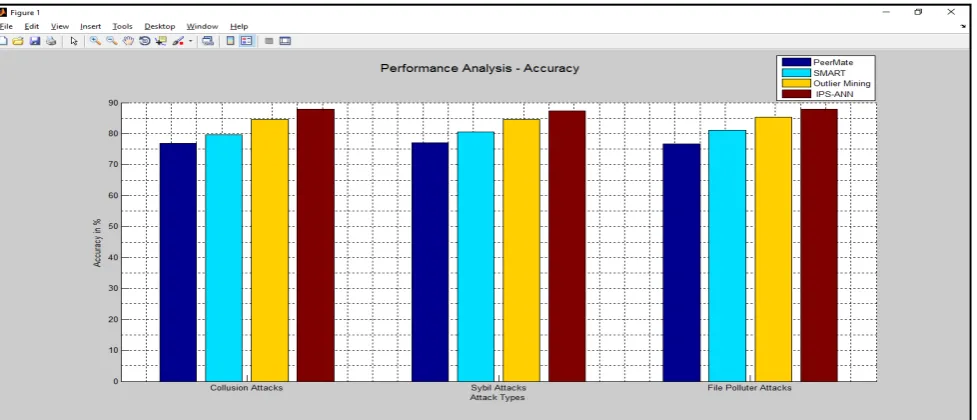
Figure1. Performance Analysis – Accuracy
Figure 3. Performance Analysis – False Negative Rate
From the results it is evident that the proposed IPS-ANN classifier correctly detected collusion attacks, Sybil attacks and file polluter attacks with the accuracy 87.92%, 87.38% and 87.90% respectively. Also the false positive ratio is reduced upto 36.43%, 14.39% and 26.30% for the collusion attacks, Sybil attacks and file polluter attacks respectively. In addition to that the false negative ratio is reduced to 7.73%, 11.45% and 8.25% respectively. The results showed that the proposed IPS-ANN classifier outperforms than that of the existing mechanisms namely PeerMate [20], SMART [21], Outlier mining [22] mechanisms. The matlab results are also presented for the same in Fig.1, Fig.2 and Fig.3.
V. CONCLUSIONS
Data mining nowadays expanded its scope to discover hidden information / knowledge from the network datasets. In real time scenario like hybrid P2P networks the intrusion is prevailing as a common one. This research aim to propose a classifier that would detect the several attacks such as collusion attacks, Sybil attacks and file polluter attacks. Hence an improved prediction strategy using particle swarm optimization based artificial neural network (IPS-ANN) classifier for malicious node detection for hybrid P2P Networks. Simulations are carried out using MATLAB and the obtained results prove that the proposed IPS-ANN performs better detection in terms accuracy, false positive ratio and false negative ratio.
VI. REFERENCES
[1] Q. Lian , Z. Zhang , M. Yang , et al. , An empirical study of collusion behavior in the maze P2P file-sharing system, in: ICDCS 27th International Conference on Distributed Computing Systems, Toronto, Canada, IEEE, 2007, pp. 1–10. [2] J. Li, mSSL: a framework for trusted and incentivized peer-to-peer data sharing between distrusted and selfish clients, Peer-to-Peer Netw. Appl. 4 (2011) 325–345.
[3] C. TIan, S. Zou, D. Wang, S. Cheng, A new trust model based on recommendation evidence for P2P networks, Chin. J. Comput. 31 (2) (2008) 270–281.
[4] Xu Ke, Shen Meng, Ye Mingjiang, A model approach to estimate peer-to-peer traffic matrices, in: Proceedings of IEEE INFOCOM, 2011.
[5] Wang X , Yang L , Sun X , Han J , Liang W , Huang L . Survey of anonymity and authentication in p2p networks. In: Proceedings of the IH, Inf Technol J 2010;9(6):1165–71. [6] Kraxberger S , Martin Pirker R , Guijarro EP , Garcia Millan
G . Trusted identity management for overlay networks. Lecture Notes in Computer Science, vol 7863. Springer publication; 2013. p.16–30.
[7] Audun J, Roslan I, Colin AB. A survey of trust and reputation systems for online service provision. Decision Support Systems 2007;43(2):618–44.
[8] Zhang J , Haixin D , Wu L , Jianping W . Anonymity analysis of P2P anonymous communication systems. Comput Commun 2011;34(3):358–66 .
[9] Takeda A , Chakraborty D , Kitagata G , Hashimoto K , Shiratori N . A new scalable distributed authentication for p2p network and its performance evaluation. 12th WSEAS
international conference on computers, Greece,.2008 Oct; 2008. 7(10;1628-37).
[10] Cheng W , Zhen HT . Correlation trust authentication model for peer-to-peer networks. In: Advanced materials research, vol. 756. Trans Tech Publications; 2013. p. 2237–42.
[11] Gupta R , Singh YN . Reputation aggregation in peer-to-peer network using differential gossip algorithm. IEEE Trans Knowl Data Eng 2015;27(10):2812–23 .
[12] Lu L , Han J , Hu L , Huai J , Liu Y , Lionel M N . Pseudo trust: zero-knowledge based authentication in anonymous peer-to-peer protocols. In: 2007 IEEE International Parallel and Distributed Processing Symposium. IEEE; 2007. p. 1–10. [13] Dannewitz C , Kutscher D , Ohlman B , Farrell S , Ahlgren B
, Karl H . Network of information (NetInf)-an information-centric networkin architecture. Comput Commun 2013;36(7):721–35 .
collaboration, 2008, U.S. Patent 7,392,375, issued June 24, 2008.
[15] Jayaraj V , Sharmila R . An efficient RR based pasword-authentication key agreement protocol. Wireless Commun 2016;8(8):309–11.
[16] Wright MK , Adler R , Levine BN , Shield sC . The predecessor attack: an analysis of a threat to anonymous communications systems. ACM Trans Inf Syst Security 2004;7(4):489–522 .
[17] Bi Y , Jiann-Shiun Y , Yier J . Split manufacturing in radio-frequency designs. In: Proceedings of the International Conference on Security and Management (SAM). The Steering Committee of the World Congress in Computer Science, Computer Engineering and Applied Computing (WorldComp); 2015.
[18] Bi Y , Jiann S , Yuan YJ . Beyond the interconnections: split manufacturing in RF designs. Electronics 2015;4(3):541–64 . [19] Bi Y , Gaillardon P-E , Hu XS , Niemier M , Yuan J-S , Jin Y
. Leveraging emerging technology for hardware security-case
study on silicon nanowire fets and graphene symfets. In: 2014 IEEE 23rd Asian test symposium. IEEE; 2014. p. 342–7. [20] X.L. Wei , T. Ahmed , M. Chen , et al. , PeerMate: a
malicious peer detection algorithm for P2P systems based on MSPCA, in: ICNC International Conference on Computing, Networking and Communications, HI, IEEE Commun, 2012, pp. 815–819 .
[21] X.L. Wei , J.H. Fan , M. Chen , et al. , SMART: a subspace based malicious peers detection algorithm for P2P systems, Int. J. Commun. Netw. Inf. Secur. 5 (1) (2013) 1–8.
[22] X. Meng, S. Ren, An outlier mining-based malicious node detection model for hybrid P2P networks, Computer Networks, 108, (2016), 29-39.