Volume 2006, Article ID 71643, Pages1–8 DOI 10.1155/ASP/2006/71643
Fast Motion Estimation and Intermode Selection for H.264
Byeong-Doo Choi, Ju-Hun Nam, Min-Cheol Hwang, and Sung-Jea Ko
Department of Electronics Engineering, Korea University, Anam-Dong, Sungbuk-Ku, Seoul 136-701, South Korea
Received 1 August 2005; Revised 5 June 2006; Accepted 11 June 2006
H.264/AVC provides various useful features such as improved coding efficiency and error robustness. These features enable mobile devices to adopt H.264 standard to achieve effective video communications. However, the encoder complexity is greatly increased mainly due to motion estimation (ME) and mode decision. In this paper, we propose a new scheme to jointly optimize intermode selection and ME using the multiresolution analysis. Experimental results show that the proposed method is over 3 times faster than other existing methods while maintaining the coding efficiency.
Copyright © 2006 Byeong-Doo Choi et al. This is an open access article distributed under the Creative Commons Attribution License, which permits unrestricted use, distribution, and reproduction in any medium, provided the original work is properly cited.
1. INTRODUCTION
Recent advances in wireless communication technology have introduced various mobile services such as multimedia mes-sage services, video on demand, and mobile video commu-nications. Especially, there are increasing demands on mo-bile video communications with prevailing demands of the mobile devices equipped with camera module. To realize this service, video sequences have to be compressed with high coding efficiency and error robustness. The H.264/AVC is the state-of-the-art video compression standard recently devel-oped by the ITU-T/ISO/IEC Joint Video Team [1].
The H.264/AVC provides various useful features such as improved coding efficiency, error robust data partitioning, and network friendliness with the network abstraction layer (NAL). These features enable mobile devices to adopt the H.264/AVC standard to achieve effective video communi-cations [2]. H.264/AVC supports multiple reference frames and various block sizes for ME. It uses tree-structured hier-archical macroblock (MB) partitions. There are 7 different block sizes (16×16, 16×8, 8×16, 8×8, 8×4, 4×8, and 4×4 blocks) that are used in a macroblock. The current H.264/AVC reference software is based on a rate-distortion optimization (RDO) framework for both ME and mode de-cision.
Among all modules in the H.264/AVC encoder, ME and mode decision require a heavy computation, especially when RDO is used. ME has to be performed for every MB coding mode to find the best matching block. For mode decision, all possible combinations of coding modes are considered to obtain the MB with minimum cost. Moreover, since these
operations are performed in multiple reference frames, the computational load significantly increases at the encoder.
The computational burden of ME can be reduced by ap-plying fast ME methods, such as the three-step search [3], the four-step search [4], the diamond search [5], and the hexagon search [6]. Recently, uneven multihexagon search (UMHexagonS) has been adopted for the fast ME in the H.264/AVC encoder reference software (JM 84) [7]. It re-duces significantly the processing time of ME while main-taining the coding efficiency, but is designed without consid-ering the multiple reference frames.
To optimize the mode decision process, the H.264/AVC software adopts the full mode decision algorithm (FMD) in-ducing an exhaustive computation [8]. For fast mode deci-sion, the early termination technique [9] reduces the number of potential prediction modes. In [10,11], the classification methods are proposed to reduce the average number of block types while maintaining the coding performance, but require the additional processing of edge detection.
In this paper, we propose new fast ME and intermode selection techniques using the multiresolution analysis for the H.264/AVC encoder. The proposed method is based on the multiframe/multiresolution ME using hexagon searching (MFMRME-HS). For the fast intermode selection (FIMS), we introduce a bottom-up merge method using a hypothesis testing. The proposed method first splits all MBs into 4×4 sub-MBs and then merges the sub-MBs when they are clas-sified as the same class by using a new hypothesis-and-test based method.
x(1)
x(3) x(2)
y(0)
y(1)
y(2)
y(3)
y(4) 2
X(3)
X(1)
X(2)
First step Second step
+
+
+
+
+
+
+
Figure1: Modified implementation of fast integer transform.
proposed fast intermode decision method is given. Finally, the simulation results are shown inSection 4and the conclu-sion is described inSection 5.
2. THE PROPOSED MOTION ESTIMATION METHOD
The multiresolution ME (MRME) technique is a fast ME method that is an alternative to the conventional block-matching algorithm. In the conventional MRME, motion vector (MV) is estimated at the lowest resolution (LL band) and then the estimated MV is appropriately scaled to be used as an initial bias and refined on the remained subbands of wavelet transform. By using the MRME scheme, we can re-duce the number of search points while maintaining the ac-curacy of the estimated MV. However, adopting MRME for the H.264/AVC encoder requires discrete wavelet transform (DWT) as well as fast integer transform (FIT), which results in additional computations. The encoding architecture con-sisting of two different transforms is not efficient in terms of system optimization due to its additional computations and increased memory size.
In order to overcome this problem, we propose a modi-fied FIT.Figure 1shows the proposed four-tap modified FIT. Compared with Malvar’s optimal FIT approach [12], it re-quires a little additional computations and memory spaces. However, its resultant coefficients include the coefficients from both FIT and three-level Haar wavelet transform. For MRME, reference frames and a current frame should be decomposed into multilayers. After processing the modi-fied FIT, the resultant coefficients are saved separately in the memory space of each corresponding layer. These coef-ficients are reused when we perform MRME for following frames. Thus, by adopting the proposed modified FIT, we can decompose the frames into three layers without additional DWT.
The detailed procedure of the modified FIT is as follows. The first step of the modified FIT decomposes 4 pixels into
HL1 HH1
HL0 HH0
SS UMHG
EH EH
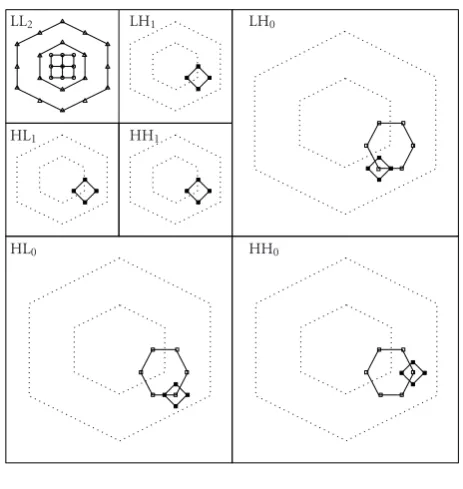
Figure2: Search pattern for multiresolution.
5 intermediate coefficients. The two intermediate coefficients y(1) andy(4) become the coefficients for theH0layer. In the second step,X(0) andX(1) become the coefficients for the L2andH1layers, respectively. For MRME, the resultant coef-ficients are reallocated for each layer inFigure 2. In addition, the high frequency coefficients in multilayers are utilized in the proposed mode decision method. The four coefficients from the modified FIT,X(0),X(1),X(2), andX(3), are ex-actly the same as those from the original FIT.
With the modified fast integer transform, we propose a fast ME algorithm using MRME, hexagon searching, and multiframe reference. The proposed method exploits the cross-correlation among the multilayers of the wavelet trans-form on multiframes, to reduce the computational complex-ity. It can achieve a smaller number of search points over other fast methods and can maintain similar or even smaller distortion error.
Figure 2shows the proposed searching patterns: the small square (SS), the uneven multihexagon grid (UMHG), and the extended hexagon (EH). The SS and UMHG searching patterns are applied to find the coarse MV at layer 2. The EH is used to refine the MV at lower layers.
Figure 3 does show the concept of the proposed MFMRME-HS (multiframe/multiresolution ME using hex-ago nal search) method consisting of four steps. The detailed procedure is followed.
Steps 1, 2
Step 3
Step 3 Step 3 Step 3
Step 3 Step 3
Reference frame (t-1)
Step 4 Step 4 Step 4 Step 4 Step 4
Step 4 Step 4
Reference frame (t-2)
Step 4 Step 4
Step 4 Step 4 Step 4
Step 4 Step 4
Reference frame (t-3)
Figure3: Multiframes/multiresolution motion estimation scheme.
frame (t-1) shown inFigure 3. If the minimum sum of abso-lute difference (SAD) is smaller than an initial threshold, go toStep 3to perform MV refinement at lower layers. Other-wise, go toStep 2to keep searching the MV at layer 2. The MV obtained fromStep 1becomes the initial search center for the next step.
Step 2. Find the MV by using the UMHG pattern at layer 2 of the reference frame (t-1) shown inFigure 3. The MV ob-tained fromStep 2 becomes the search center for the next step, and its corresponding minimum SAD becomes the threshold for the fast reference frame selection (FRFS) in Step 4.
Step 3. Use the EH to refine the MV obtained from Steps1 and2around the search center at lower layers. The MV re-fined in this step becomes a candidate of the best MV.
Step 4. Steps2and3are iterated at all the remained refer-ence frames. For the FRFS, if the minimum SAD at layer 2 is over a threshold, MV refinement (Step 3) is not performed for its corresponding reference frame. As a result, this FRFS improves the performance of the proposed MFMRME-HS. Finally, select the best MV with the minimum SAD among all candidate MVs obtained fromStep 3.
The proposed MFMRME-HS algorithm utilizes the cor-relation between multiframes and subbands of the wavelet transform to reduce the complexity of ME.
3. THE PROPOSED FAST INTERMODE SELECTION METHOD
In the H.264/AVC, there are totally 7 different block sizes (16×16, 16×8, 8×16, 8×8, 8×4, 4×8, and 4×4) that are utilized in the variable size. The reason for adopting seven different block sizes in H.264/AVC is to represent more ac-curate motion field of moving objects to reduce the residual error. In general, the macroblocks in a moving object have the same MVs and homogeneous regions.
In the intermode RDO implementation of H.264/AVC, ME is performed for all the possible block sizes to find the one with the least rate-distortion cost. The intermode deci-sion process using Lagrange multiplier requires an extremely large time consumption, minimizing the following cost func-tion:
Js,c, MODE|QP,λMODE
=SSDs,c, MODE|QP+λMODE·R
using the modified FIT
Find the coarse MV in LL band for each 44 sub-MB
Calculate the sum of the edge intensities in each band
for each 44 sub-MB
Classify 44 sub-MBs by using hypothesis testing
(linear or quadrature discriminant function)
For each 88 sub-MB, check if it is homogeneous
For each 1616 sub-MB, check if it is homogeneous
Select intermodes 2, 3, and 4 as
candidate modes Select intermodes 5, 6, and 7 as
candidate modes
Select mode 1
Perform ME and intermode decision using
candidate modes based on RDO No
No Yes
Yes
Figure4: Flowchart of fast intermode decision by classifying sub-MBs.
where s and c are the source video signal and the recon-structed video signal, respectively, QP is the quantization pa-rameter,λMODEis the Lagrange multiplier, SSD is the sum of the squared differences betweensandc, MODE indicates an MB mode.
In this section, we propose a bottom-up merge method for fast intermode selection (FIMS).Figure 4shows the pro-posed bottom-up merge method. The propro-posed FIMS splits all 16×16 MBs into 4×4 sub-MBs and determines the class of each 4×4 sub-MB by using both MVs in the LL band and the edge information. The 4×4 sub-MBs with the same class can be merged into three ways such as modes 4, 5, or 6 shown inFigure 5, and 8×8 sub-MBs merged as mode 4 can be further grouped into one of three block modes; modes 1, 2, and 3.
In order to classify 4×4 sub-MBs, we propose a new clas-sification method based on a statistical hypothesis testing. A region tends to be homogeneous if the textures in the region have very similar spatial property. It was observed in natural video sequences that there are a lot of homogeneous regions belonging to the same video objects. When the objects move, the various parts of the objects move in a similar manner.
Homogeneous blocks in the picture would have similar mo-tion and are very seldom split into smaller blocks [11]. An effective way of determining the homogeneous region is to use the edge information, since sub-MBs in a homogeneous region have similar edge patterns.
16
16 0
Mode 1
16
8 0
1 Mode 2
8
0 1
16
Mode 3
8
0 1
2 3
Mode 8 8
8
0 8
Mode 4
8
4 0
1 Mode 5
4 8 0 1
3
Mode 6
4 0
4 1
2 3 Mode 7 Subblock modes
4 4
Mode 9 16
16
Mode 10
16
16
Mode 0
Intramodes Skip modes
Figure5: Block modes of H.264.
amplitude of each edge is independent. Using the model that is the most popular statistical model for DWT coefficients and MVs in [13,14], we assume that the distributions for the elements of the feature vector are Laplacian given by
f(x)=λ 2e
−λ|x|. (2)
When the above assumptions are adopted, the proposed classifier can be approximated to the minimum distance clas-sifier from the Bayes decision rule. The approximated dis-criminant function for Laplacian distribution is given by
gi(x)= 3
j=0
λjxj−μi,j, (3)
whereiis the index of classes andjis the index of the feature vector.λjdenotes a weight for thejth element.μi,jindicates a predetermined mean value of thejth element of theith class. We should classify each 4×4 sub-MB by calculating gi(x) for all classes and obtaining the minimumgi(x). In the proposed FIMS, four different classes are defined, such as smooth region with small motion, smooth region with large motion, rough region with small motion, and rough region with large motion. If the number of 4×4 subblocks having the same class in an 8×8 block is three or four, the 8×8 block is recognized as the homogeneous region. For 16×16 blocks, the same processing is used to classify the four 8×8 blocks. Then, RDO using the Lagrangian cost function is performed to select the best mode among the candidate modes selected by the hypothesis testing.
The proposed FIMS does not require the optimization process minimizing the Lagrange function of (1) for all intermodes. It can reduce the number of potential inter-modes. The minimum distance classifier in the FIMS re-quires smaller computations than the Lagrange optimization method used in the current intermode RDO implementation
of the H.264/AVC. Therefore, we can reduce the computa-tional complexity of the whole ME and intermode decision by using the proposed method.
4. EXPERIMENTAL RESULTS
For mobile video, good coding efficiency and low complex-ity are required. To implement a real-time H.264 encoding and transmission system, the profile and level are constrained due to the limited memory size, low computing power, and narrow bandwidth of the mobile network, In general, H.264 baseline profile (BP) and level 3.0 or lower are adopted for mobile video applications. The BP supports intra- and inter-coding (using I-slices and P-slices) as well as entropy inter-coding with context-adaptive variable length codes (CAVLC) [2].
In this section, to demonstrate the effectiveness of the proposed MFMRME-HS and FIMS, simulations using test sequences including “table tennis” and “foreman” have been conducted under the following profile constraints and exper-imental conditions using JM 95 in Intel Pentium IV 2.8 GHz PC with 512 MB RAM:
(i) baseline profile, (ii) level 3.0,
(iii) QCIF sequence: 30 frames, (iv) reference frames: 10,
(v) adaptation of RD optimization,
(vi) quantization parameter (QP): 28 and 32, (vii) search range:±16,
(viii) GOP structure: IPPP.
Computations of transforms
Number of search points Required memory size (for 4×4)
Full search Only FIT M×N2 M×N2
(4 multiplies + 16 additions)
UMHexagonS Only FIT M×NlogN M×N2
(4 multiplies + 16 additions)
Conventional MRME FIT + DWT M×NlogN M×N2logN
(16 multiplies + 28 additions)
Proposed MFMRME-HS Modified FIT M
2 ×Nlog(logN) M×N
2logN
(4 multiplies + 22 additions)
200 180 160 140 120 100 80 60 40 20 0
0 20
Frame index
Ti
m
e
(m
s)
UMHexagonS MFMRME-HS
MFMRME-HS with FRFS (a)
200 180 160 140 120 100 80 60 40 20 0
0 20
Frame index
Ti
m
e
(m
s)
UMHexagonS MFMRME-HS
MFMRME-HS with FRFS (b)
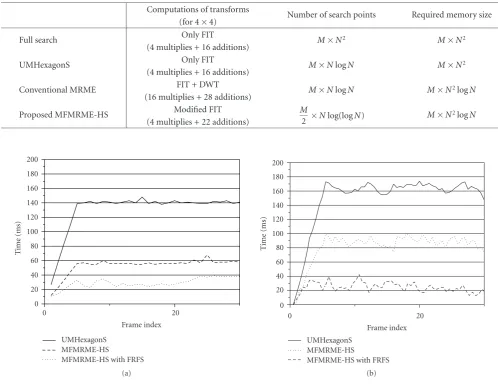
Figure6: Comparison of processing times. (a) “Table tennis,” (b) “foreman.”
points, the proposed method adopting the MRME scheme can reduce the overall processing time due to a smaller num-ber of search points. Moreover, by using the proposed FRFS, we can fast select the reference frame containing the best matching block. Table 1 summarizes the additional com-putations and advantages of the proposed MFMRME-HS. Figure 6shows the processing time of ME for multiple ref-erences. To demonstrate the performance of the proposed ME, the processing time of the MFMRME-HS with the mod-ified FIT is compared to that of the UMHexagonS with the conventional FIT. The proposed method is faster than UMHexagonS approach over 3 times.
Figure 7shows the value of peak-to-peak signal-to-noise ratio (PSNR) of reconstructed images for the H.264/AVC en-coder reference software with the full search, UMHexagonS, and the proposed MFMRME-HS algorithm. The PSNR curves obtained by these methods are almost the same. As far as the processing time is concerned, the proposed method is quite efficient.
Figures 8(a) and 8(b) show simulation results of in-termode decision with FMD and the proposed FIMS. The modes selected by the proposed methods are close to those obtained by FMD. A group of experiments were carried out on the test sequence with 2 quantization parameters (QP = 28, 32). Tables2and3show the results according to quanti-zation parameters. When measuring the processing time of the proposed FIMS, we did not consider the processing time of the integer transform or any other part in H.264. The ex-perimental results show that the proposed method reduces the encoding time by 60% on average. The PSNR loss is neg-ligible with the highest loss at 0.15 dB.
5. CONCLUSION
40
38
36
34
32
30
28
0 20
Frame index
PSNR
(dB)
Full search UMHexagonS
MFMRME-HS
MFMRME-HS with FRFS (a)
36
35
34
33
0 20
Frame index
PSNR
(dB)
Full search UMHexagonS
MFMRME-HS
MFMRME-HS with FRFS (b)
Figure7: Comparison of PSNR: (a) “table tennis,” (b) “foreman.”
(a) (b)
Figure8: Simulation results of intermode selection: (a) FMD, (b) proposed FIMS.
Table2: Comparison of the intermode decision (QP=28).
GOP Change of Saving of processing structure PSNR (dB) time (%) News IPPP −0.03 62.50 Table tennis IPPP −0.06 51.45 Foreman IPPP −0.10 50.30
Table3: Comparison of the intermode decision (QP=32).
GOP Change of Saving of processing structure PSNR (dB) time (%) News IPPP −0.04 62.50 Table tennis IPPP −0.08 42.25 Foreman IPPP −0.15 41.30
ME methods while maintaining the visual quality. Moreover, the proposed mode decision method has reduced the encod-ing time by 60% on average. The PSNR loss is negligible with the highest loss at 0.15 dB.
Experimental results indicate that the proposed fast motion estimation and interprediction method enable the H.264/AVC coder to be effectively adopted for the mobile video communication.
REFERENCES
[1] T. Wiegand, G. J. Sullivan, G. Bjntegaard, and A. Luthra, “Overview of the H.264/AVC video coding standard,”IEEE Transactions on Circuits and Systems for Video Technology, vol. 13, no. 7, pp. 560–576, 2003.
[2] A. N. Netravali and B. G. Haskell,Digital Pictures, Plenum Press, New York, NY, USA, 2nd edition, 1995.
[3] “Draft ITU-T recommendation and final draft international standard of joint video specification ITU-T recommendation, H.264/ISO/IEC 14496-10 AVC,” Joint Video Team (JVT) of IEC MPEG and ITU-T VCEG, JVT-G050, March 2003. [4] R. Li, B. Zeng, and M. L. Liou, “A new three-step search
for fast block motion estimation,”IEEE Transactions on Cir-cuits and Systems for Video Technology, vol. 6, no. 3, pp. 313– 317, 1996.
[6] J. Y. Tham, S. Ranganath, M. Ranganath, and A. A. Kassim, “A novel unrestricted center-biased diamond search algorithm for block motion estimation,”IEEE Transactions on Circuits and Systems for Video Technology, vol. 8, no. 4, pp. 369–377, 1998.
[7] C. Zhu, X. Lin, and L.-P. Chau, “Hexagon-based search pat-tern for fast block motion estimation,”IEEE Transactions on Circuits and Systems for Video Technology, vol. 12, no. 5, pp. 349–355, 2002.
[8] Z. Chen and Y. He, “Fast Integer and Fractional Pel Motion estimation,” Joint Video Team (JVT) of ISO/IEC MPEG and ITU-T VCEG, JVT-F017, December 2002.
[9] G. Sullivan, T. Wiegand, and K. P. Lim, “Joint model reference encoding methods and decoding concealment methods,” Joint Video Team (JVT) of ISO/IEC MPEG and ITU-T VCEG, JVT-J049, December 2003.
[10] P. Yin, H.-Y. C. Tourapis, A. M. Tourapis, and J. Boyce, “Fast mode decision and motion estimation for JVT/H.264,” in Pro-ceedings of IEEE International Conference on Image Processing (ICIP ’03), vol. 3, pp. 853–856, Barcelona, Spain, September 2003.
[11] C.-H. Cheung and L.-M. Po, “A novel cross-diamond search algorithm for fast block motion estimation,”IEEE Transactions on Circuits and Systems for Video Technology, vol. 12, no. 12, pp. 1168–1177, 2002.
[12] H. S. Malvar, A. Hallapuro, M. Karczewicz, and L. Kerofsky, “Low-complexity transform and quantization in H.264/AVC,” IEEE Transactions on Circuits and Systems for Video Technology, vol. 13, no. 7, pp. 598–603, 2003.
[13] T. Chiang and Y.-Q. Zhang, “A new rate control scheme using quadratic rate distortion model,”IEEE Transactions on Circuits and Systems for Video Technology, vol. 7, no. 1, pp. 246–250, 1997.
[14] N. S. Jayant and P. Noll,Digital Coding of Waveforms, Prentice Hall, Englewood Cliffs, NJ, USA, 1984.
Byeong-Doo Choi received the B.S. and M.S. degrees in electronics engineering from the Department of Electronics Engi-neering at Korea University, Seoul, South Korea, in 2001 and 2003, respectively. He is currently working towards the Ph.D. degree in multimedia processing and communica-tion at Korea University. His research inter-ests include video compression, transmis-sion, and reconstruction.
Ju-Hun Nam received the B.S. degree in electronics engineering from Dong-A University in 1995 and the M.S. degree in 1997. He is now a Ph.D. candidate in elec-tronics engineering with the Department of Electronics Engineering at Korea University. His research interests include JPEG2000, MPEG4, source and channel codings, and multimedia communication based on DSP/FPGA.
ment of Electronics Engineering at Korea University, Seoul, South Korea, in 2003. He is currently working towards the Ph.D. de-gree in multimedia signal processing and communication at Korea University. His re-search interests are in the areas of image compression, such as JPEG2000 and H.264, and multimedia communications.
Sung-Jea Koreceived the Ph.D. degree in 1988 and the M.S. degree in 1986, both in electrical and computer engineering, from State University of New York at Buffalo, and the B.S. degree in electronics engineering at Korea University in 1980. In 1992, he joined the Department of Electronics Engineering at Korea University where he is currently a Professor. From 1988 to 1992, he was an As-sistant Professor of the Department of