O R I G I N A L R E S E A R C H
Integrated assessment of PD-L1 expression and
molecular classi
fi
cation facilitates therapy
selection and prognosis prediction in gastric
cancer
This article was published in the following Dove Press journal:
Cancer Management and Research
Yeqi Sun1,*
Wenwei Yu1,*
Wenbin Guan1,*
Lei Cai1
Meng Qiao1
Leizhen Zheng2
Ruiqi Jiang1
Ruifen Wang1
Lifeng Wang1
1Department of Pathology, Xinhua
Hospital, School of Medicine, Shanghai Jiao Tong University, Shanghai 200092, People’s Republic of China;2Department of Oncology, Xinhua Hospital, School of Medicine, Shanghai Jiao Tong University, Shanghai 200092, People’s Republic of China
*These authors contributed equally to this work
Purpose:Targeting the PD-1/PD-L1 pathway has emerged as a novel therapy for cancer. To
identify rational candidates for anti-PD-1/PD-L1 immunotherapy in gastric cancer (GC), the abundance of PD-L1 expression was evaluated on a kind of biomarker-based molecular classification for shaping prognosis and treatment planning.
Methods: One hundred and sixty-five GCs were classified into five subgroups using
immunohistochemistry (IHC) and in situ hybridization (ISH) methods, based on a panel of seven markers (MLH1, PMS2, MSH2, MSH6, E-cadherin, P53, and Epstein-Barr virus mRNA). The expression of PD-L1 in GC tissues was analyzed immunohistochemically.
Results:Thefive categories (Epstein–Barr virus positivity, microsatellite instability, aberrant
E-cadherin, aberrant P53 expression, and normal P53 expression) correspond to the reported molecular subgroups for similar proportions and clinicopathologic characteristics. Survival analysis indicated that subgroups with aberrant E-cadherin expression independently pre-dicted a worse prognosis in GC patients (HR=2.51,P=0.010). The clinical and prognostic profiles produced by this stratification in nonintestinal-type GC were distinguishable from those in intestinal-type. Although PD-L1 was not a significant prognostic factor, that more frequent presence of PD-L1-positive in microsatellite instability tumors than other subtypes (P<0.010) hinted at a prolonged clinical course. Moreover, the lowest level of PD-L1 but the highest of Her2 was observed in the group of aberrant P53, namely it was suggested that there was a negative correlation between PD-L1 and Her2 overexpression.
Conclusion:Different molecular subtypes in GC may have a tendency to react differently to
anti-PD-L1/PD-1 immunotherapy or anti-Her2 therapy. A combination of PD-L1 expression and this cost-effective classification strategy would be helpful for predicting prognosis and promoting personalized therapy in clinical practice.
Keywords:PD-L1, molecular classification, gastric cancer, immunohistochemistry, in situ
hybridization
Introduction
Gastric cancer (GC) is the third leading cause of cancer-related death worldwide, with a particular high occurrence and mortality in Asia.1Although there have been considerable advances in diversified therapeutics over the past decades, the 5-year survival rate of GC after treatment with curative intent is still under 40%.2–4This disappointing outcome is usually caused by the limited capability to discern sub-populations in a heterogeneous cohort of GC patients for differential individualized Correspondence: Lifeng Wang; Ruifen
Wang
Department of Pathology, Xinhua Hospital, School of Medicine, Shanghai Jiao Tong University, 1665 Kongjiang Road, Yangpu District, Shanghai 200092, People’s Republic of China
Tel +86 212 507 7215; +86 212 507 7217 Email [email protected]; [email protected]
Cancer Management and Research
Dove
press
open access to scientific and medical research
Open Access Full Text Article
Cancer Management and Research downloaded from https://www.dovepress.com/ by 118.70.13.36 on 20-Aug-2020
therapy. Long-term used Lauren and WHO classifications are both merely based on morphologic features and far from disclosing molecular alterations about the complex and diverse biology of GC.5Recently, the Cancer Genome Atlas (TCGA) and the Asian Cancer Research Group (ACRG) successively established classification systems of GC via comprehensive molecular analysis.6,7 Concretely, TCGA identified Epstein-Barr virus (EBV), microsatellite instability (MSI), chromosomal instability (CIN), genome stable (GS), and ACRG recognized MSI, microsatellite stable/epithelial to mesenchymal transition (MSS/EMT), MSS/TP53- (tumor protein 53 inaction), and MSS/TP53+ (tumor protein 53 activation). Even if such milestone classification greatly broadens our insights into the hidden molecular nature of GC, the demand for expen-sive and sophisticated high-throughput analysis technolo-gies obviously prevents their clinical application. To overcome this, two research teams proposed an integrated classification contained five molecular subtypes through using relatively inexpensive and widely available immu-nohistochemistry (IHC) and in situ hybridization (ISH).8,9 Intriguingly, despite nearly uniform markers and assess-ment standards adopted by them in grouping, the clinical utility of this protein and mRNA expression-based stratifi -cation is doubtful as there was a huge difference in outcome prediction. Thus, a validation study of TCGA, ACRG, and integrated classification in a cohort of Chinese GC patients was implemented to systematically estimate the predicting value of this simplified molecular classification.
More importantly, what implications for current treat-ment strategies brought by this simplified approach is still unclear, therefore, it is imperative to combine such mole-cular classification with novel targets for therapy in GC. The blockade of PD-1 (program death-1)/PD-L1 (pro-gramdeath ligand-1) interaction to restore T-cell activity has emerged as a promising therapeutic avenue against various cancer types.10,11It is increasingly acknowledged that PD-L1 as a potential predicative marker of response to immune checkpoint inhibition, which nonetheless only occur in a fraction of PD-L1-positive patients.12,13 Some impressive clinical trials of PD-1 inhibitor treatment for solid tumors uncovered that patients with mismatch repair–deficient (d-MMR) have a better prognosis than with mismatch repair–proficient (p-MMR).14–16 Hence, it is rational to speculate that GC with d-MMR and PD-L1 expression may be the prime choice for such therapy, guiding us special focus on the allocation of PD-L1 expression for molecular subtypes. Besides that, it is
very attractive to identify the relationship between PD-L1 expression and clinical outcomes, owing to its prognostic relevance in GC still being a controversial issue.17–24Meanwhile, given that Her2 antibody trastuzu-mab currently is the only approvedfirst-line targeted treat-ment demonstrated by the ToGA trial (for Her2-positive GC patients), it is important to analyze the linkage of Her2 status with molecular subtypes and PD-L1 expression.25
Materials and methods
Patients and samples
This study was approved by the Institutional Review Boards at the Xin Hua Hospital Affiliated to Shanghai Jiao Tong University School of Medicine and conducted according to the Declaration of Helsinki. One hundred and sixty-five cases of gastric adenocarcinoma in our depart-mental archives with available clinical data, hematoxylin and eosin (H&E)-stained slides and formalin-fixed paraffin embedded (FFPE) blocks were enrolled in this study. These patients were treated with surgical resection of
primary gastric tumors between June 2011 and
December 2015. The diagnosis was confirmed by routine pathological examination after surgery. None of the patients received any preoperative radiotherapy or che-motherapy. Written informed consent was obtained from all patients who participated in the study. Pathologic para-meters of all cases were reassessed in accordance to the 4th edition of WHO classification for stomach tumors.26 The time of follow-up was from initial diagnosis to September 2017 (range from 6–76 months).
Immunohistochemistry and chromogenic/
fl
uorescence in situ hybridization
Two representative 2-mm-diameter cores were obtained from per slide of each sample with one paired normal epithelial tissue core as control and inserted into recipient paraffin blocks to construct tumor microarray (TMA). IHC of MLH1 (Clone M1, use; Roche), PMS2 (Clone EPR3947, ready-to-use; Roche), MSH2 (Clone 219–1129, ready-to-use; Roche), MSH6 (Clone 44, ready-to-use; Roche), E-cadherin (Clone HECD1, dilution 1:50; Abcam) and P53 (Clone DO-7, dilu-tion 1:100; Celplor), and Epstein-Barr virus mRNA (EBER) ISH (Ventana Medical Systems, Tucson AZ, USA) were performed on unstained tissue sections from each TMA. IHC for PD-L1 (Clone EiL3N, dilution 1:200; Cell signaling) and Her2 (Clone 4B5, ready-to-use; Ventana) proteins were imple-mented in corresponding whole-tissue sections of all cases.
Cancer Management and Research downloaded from https://www.dovepress.com/ by 118.70.13.36 on 20-Aug-2020
Immunostaining of all markers was carried on a Ventana Automated Immunostainer (Ventana Medical Systems), fol-lowing the manufacturer’s protocols. Chromogenic probe for EBER was detected with ISH Iview Blue Detection Kit on Ventana BenchMark ISH system. Detection of Her2 amplifi -cation was conducted on the above Her2 IHC 2+ cases using a two-color commercial fluorescence in situ hybridization (FISH) probe (Abbott Molecular, Des Plaines, IL, USA).
Two gastrointestinal pathologists reviewed all H&E slides, immunohistochemical, and in situ hybridization slides, with no previous knowledge of the clinical or patho-logical parameters. The detailed procedure for immunohis-tochemical analysis was performed according to descriptions in prior studies and the concrete evaluation was as follows:8,9,27A tumor was taken as d-MMR if at least one of the markers (MLH1, MSH2, MSH6, and PMS2) showed a complete loss of nuclear reactivity in conjunction with appropriate retention in background nonmalignant cells. Complete loss of membranous reactivity or reserved mem-branous staining less than 70% were regarded as aberrant E-cadherin expression, irrespective of whether or not they were accompanied with cytoplasmic or nuclear expres-sion. The P53 specimens were scored for both the staining percentage (1–79% vs 0%/≥80%) and intensity (weak vs no/strong). Tumors that showed complete loss or diffuse (≥80%) and strong P53 nuclear positivity were interpreted as aberrant. Positive PD-L1 expression was defined as ≥1% membranous staining in tumor cells (TC) or tumor-infiltrating immune cells (IC, including lymphocytes, macrophages, dendritics, and histocytes), excluding necrotic areas. For EBER, identifiable nuclear staining (≥1%) served as aberrant expression. The evaluation cri-terion for Her2-overexpressing GC is IHC initial tested as 3+ or IHC initial tested as 2+, and then retested by FISH as Her2 gene amplification.28
Statistical analysis
Spearman’s correlation analysis was directed at
compari-sons of PD-L1-TC and PD-L1-IC expression.
Clinicopathologic parameters (including Her2-positive sta-tus) within subtypes and their correlations with PD-L1 expression were assessed for differences using the Pearson’sχ2test, Yate’s correction, or Fisher’s exact test. The Kaplan-Meier method (and the log-rank test) as well as Cox’s proportional hazards regression model were used for univariate survival analysis. Multivariate survival ana-lysis was performed by Cox’s proportional hazards regres-sion model. Overall survival (OS) was measured from the
date of resection of GC to the date of death from any cause or the last follow-up time. TheP-values under 0.05 (two-sided) were considered statistically significant and all sta-tistical calculations were done using STATA 10.1 (stata corp., College Station, TX, USA). A heatmap that illu-strated the clinicopathologic characteristics and biomar-kers expression level in integrated classification was created by the pheatmap package for R (software version 3.3).
Results
Clinicopathologic characteristics and
survival analysis in relation to patients
’
strati
fi
cation
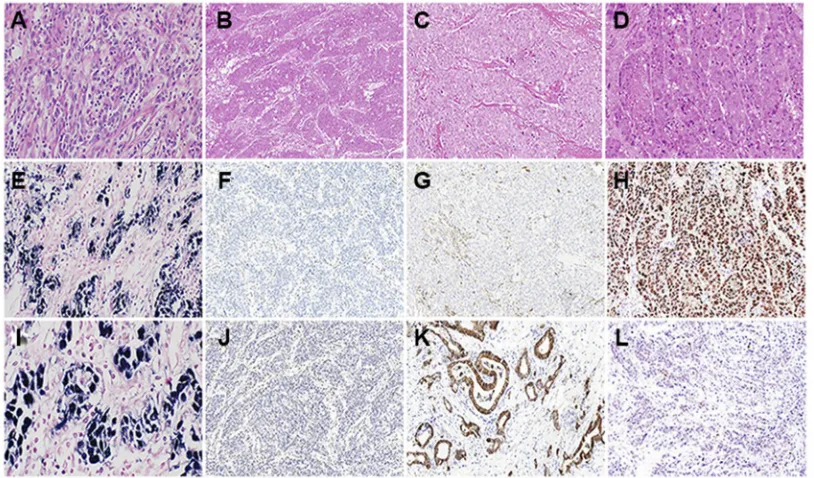
One hundred and sixty-five GC cases were in turn subdi-vided by TCGA, ACRG, and integrated classification based on staining results, using the streamlined, stepwise classifi -cation algorithm as previously advised (Figure 1).8,9Five subtypes in integrated classification were as follows: Cluster 1 (C1, EBER positive), two cases (1.2%); Cluster 2 (C2, MSI), 21 cases (12.7%); Cluster 3 (C3, aberrant E-cadherin expression), 32 cases (19.4%); Cluster 4 (C4, aberrant P53 expression), 79 cases (47.9%); and Cluster 5 (C5, normal P53 expression), 31 cases (18.8%). Aberrant and/or normal expression of these markers is displayed inFigure 2.
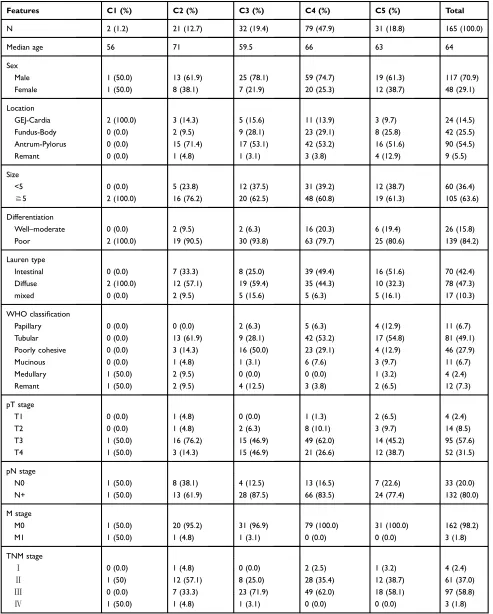
Clinicopathologic characteristics of integrated classifi ca-tion are summarized inTable S1(data of TCGA and ACRG was not shown). C1 were both characterized by younger age, large size (≧5cm), poor differentiation, diffuse-type, and proximal stomach. Compared with the rest, C2 was detected to be significantly more prevalent in elderly age (P=0.009) and early TNM stage (P=0.027), especially for stageⅡ(P=0.004). Increased frequency but no significant difference was made for C2 in tumors with antrum-located location, tubular-type, medullary carcinoma and low lymph node involvement than the others (71.4% vs 52.1%, 61.9% vs 47.2%, 9.5% vs 1.4%, and 38.1% vs 17.4%). In younger patients (P=0.007), poorly cohesive type (P=0.002) and lesions with T4 stage (P=0.037), more frequent presence of C3 was observed than the remaining cases. C3 also had trends toward diffuse type and higher TNM staging (59.4% vs 44.3% and 75% vs 57.1%), although these differences were not significant. An analogous increased proportion of intestinal-type against the others could be yielded in C4 and C5 (13.4% and 11.3%). Clinicopathologic features and bio-marker results for integrated classification are shown in Figure 3.
Cancer Management and Research downloaded from https://www.dovepress.com/ by 118.70.13.36 on 20-Aug-2020
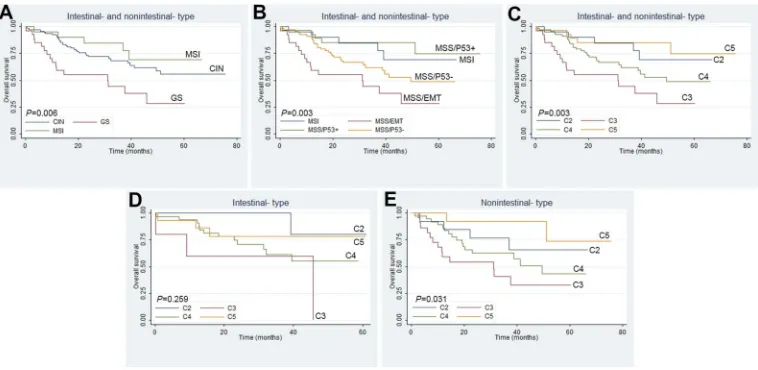
Due to a small number of EBV-positive GC, we ruled out them and performed a survival analysis on the remainder (Figures 4A–C). Substantial overall survival
(OS) difference stratified by integrated classification was described here (P<0.01): C5 (MSS/TP53+) tumors had the best prognosis and C2 (MSI) had almost the same
Gastric cancer (n=165)
EBV (n=2;1.2%)
MSI (n=22;13.3%)
MSS/EMT (n=33; 20.0%)
MSS/P53-(n=79; 47.9%)
MSS/P53+ (n=31; 18.8%) EBER-ISH
A
B
C
P53 IHC EBER-ISH
P53 IHC MMP protein
IHC
MMP protein IHC MMP protein
IHC
■ Undefined clinicopathological characters and prognosis due to small number in this group
■ Old age and early TNM stage
■ Better prognosis
■ Worst prognosis
■ Intermediate prognosis
■ Best prognosis ■ Youger age, poorly cohesive type and T4 stage
(mainly stage II)
E-cdherin IHC
E-cdherin IHC E-cdherin
IHC
C1 (n=2; 1.2%)
C2 (n=21; 12.7%)
C3 (n=32; 19.4%)
C4 (n=79; 47.9%)
C5 (n=31; 18.8%)
Positive Positive
Negative Negative
Loss Loss
Loss
Retain Retain
Aberrant
Aberrant
Aberrant
Aberrant Aberrant
Normal Normal
Normal Normal Normal
Retain
MSI (n=21;12.7%)
GS (n=32;19.4%)
CIN (n=110;66.7%)
Gastric cancer (n=165)
Gastric cancer (n=165)
Figure 1Identification of molecular subtypes of 165 gastric cancers with protein and mRNA-based categorical sequence: (A) TCGA; (B) ACRG, and (C) integrated classification. The rough corresponding relations between the integrated molecular classification and the TCGA and ACRG was: C1 correspondence to EBV (TCGA), C2 to MSI (TCGA or ACRG), C3 to GS (TCGA) or MSS/EMT (ACRG), C4 to CIN (TCGA) or MSS/TP53- (ACRG), and C5 to MSS/TP53+(ACRG).
Abbreviations:ACRG, Asian Cancer Research Group; C1, cluster 1; C2, cluster 2; C3, cluster 3; C4, cluster 4, C5 cluster 5; CIN, chromosomal instability; EBV, Epstein-Barr Virus; MSI, microsatellite instability; MSS/EMT, microsatellite stable/epithelial mesenchymal transition; MSS/TP53-, microsatellite stable/tumor protein 53 inaction ; MSS/ TP53+, microsatellite stable/tumor protein 53 activation; TCGA, the Cancer Genome Atlas.
Figure 2Protein markers expression on molecular subtypes of gastric cancers. (A, E, andI) Positivity for EBER in a medullary gastric cancer was categorized as cluster 1. (B, F,andJ) Concurrent loss of tumor nuclear expression of MLH1 and PMS2, but retained expression on the stroma lymphocytes was stratified into cluster 2. (C, G) Reduced membranous expression of E-cadherin was considered as aberrant, irrespective of cytoplasmic or nuclear expression (cluster 3). (DandH) Aberrant P53 expression was determined by diffuse and strong P53 staining pattern (cluster 4). (KandL) Tumor showed normal expression of E-cadherin or P53.
Abbreviation:EBER, Epstein-Barr virus mRNA.
Cancer Management and Research downloaded from https://www.dovepress.com/ by 118.70.13.36 on 20-Aug-2020
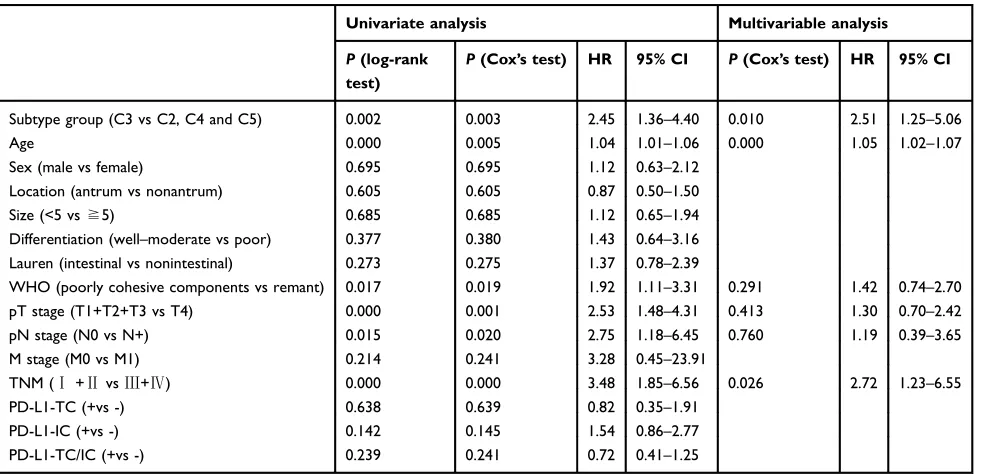
outcome as C5 (MSS/TP53+) without apparent discre-pancy; C4 (MSS/TP53-) and CIN carried the intermediate prognosis; C3 (GS, MSS/EMT) consistently signified the worst prognosis. Univariate analysis indicated molecular subtypes (C3 vs C2, C4, and C5), age, WHO classifi ca-tion (poorly cohesive type), advanced T, N, and TNM grade were associated with poor prognosis (P<0.05). Multivariate modeling revealed that prognosis was just independently influenced by molecular subtypes (P=0.010, HR=2.51, 95% CI=1.25–5.06), age (P=0.000, HR=1.05, 95% CI=1.02–1.07), and TNM stage (P=0.026, HR=2.72, 95% CI=1.23–6.55) (Table 1).
Analysis of molecular subtypes under
different Lauren type background
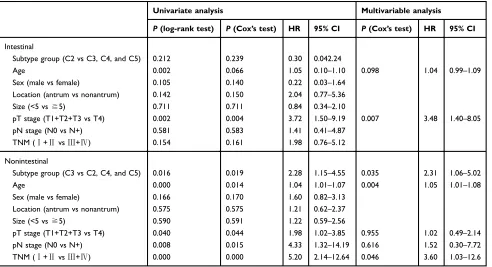
Clinical features for subgroups in nonintestinal-type GC substantially overlapped with the whole cohort: initial diagnosis of C2 at old age and C3 at younger age; low TNM grade in C2 (P=0.021), high T (P=0.008), and TNM (P=0.018) stage in C3; molecular subtypes as an indepen-dent prognosis indicator (P=0.035, HR=2.31, 95% CI=1.06–5.02). While, subgroups in intestinal-type GC manifested radically different characteristics: male predo-minance in C4 (P=0.005), advanced T staging (P=0.028), Figure 3Heatmap depicting clinicopathologic features and biomarker information (rows) of 165 cases (columns) categorized into (C1 to C5) in this cohort. Dichotomous variables are distinguished by green (male, age under 64 years, tumor size less than 5 cm, well-moderate differentiation, lymph node and distant organ involvement) and red (female, aged 64 or more, size equaled or exceeded 5 cm, poor differentiation, without lymph node and distant organ metastasis). Multiple variables are represented by green (GEJ-cardia, intestinal-type, tubular and papillary type, pT1 and stageⅠ), blue (fundus-body, disffuse-type, medullary, pT2 and stageⅡ), yellow (antrum-pylorus, mixed-type, mucinous and remant, pT3 and stageⅢ), and red (the rest location, poorly cohesive, pT4 and stageⅣ). In regard of biomarkers, green and red denote normal and aberrant expression of EBER, MLH1, PMS2, MSH2, MSH6, E-cadherin, P53, and PD-L1, respectively.
Abbreviations:C1, cluster 1; C2, cluster 2; C3, cluster 3; C4, cluster 4; C5, cluster 5; EBER, Epstein-Barr virus mRNA; GEJ, esophagogastric junction.
Figure 4Survival analysis of molecular subtypes determined by Kaplan-Meier method (each diagram deleted 2 EBV-positive cases). Total patients stratified by (A) TCGA classification, (B) ACRG classification and (C) integrated classification. (DandE) Integrated classification in intestinal- and nonintestinal-type gastric cancers.
Abbreviations:ACRG, Asian Cancer Research Group; EBER, Epstein-Barr virus mRNA; TCGA, the Cancer Genome Atlas.
Cancer Management and Research downloaded from https://www.dovepress.com/ by 118.70.13.36 on 20-Aug-2020
and slight female dominance (P=0.054) in C5, C2 was inclined to have the best prognosis without prognostic significance (Figures 4DandE,Figure S1andTable S2).
Distribution of PD-L1- and Her2-positive
molecular subtypes and the clinical
signi
fi
cance of PD-L1 expression
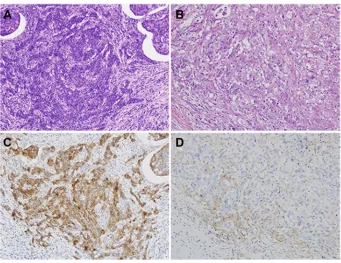
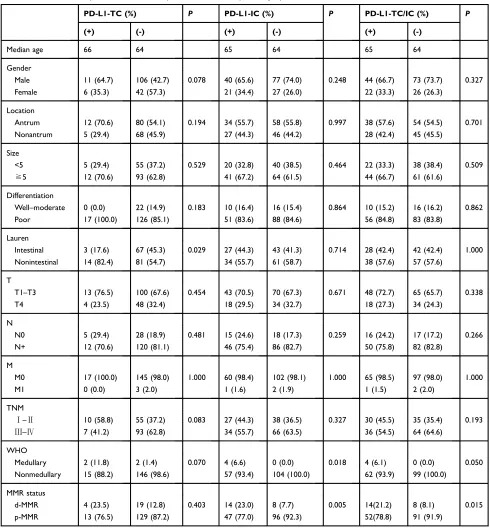
Of the 165 GC cases, 66 cases were positive for PD-L1 staining (66/165, 40%, consisting of 17 in TC and 61 in IC) and 12 cases showed simultaneous expression (TC and IC) of PD-L1 (12/165, 7.3%) (Figure 5). Positive PD-L1-TC and -IC expressions were weakly correlated with each other (r=0.236,P=0.002). The expression rate of PD-L1 in C1, C2, C3, C4, and C5 was 50% (1/2), 66.7% (14/21), 40.6% (13/32), 34.2% (27/79), and 35.5% (11/31), respec-tively (Figure 3). The prevalence of PD-L1-IC or -TC/IC positivity is greater in C2 (23.0% vs 6.7% in other sub-types, P=0.003; 21.2% vs 7.1% in other subtypes,
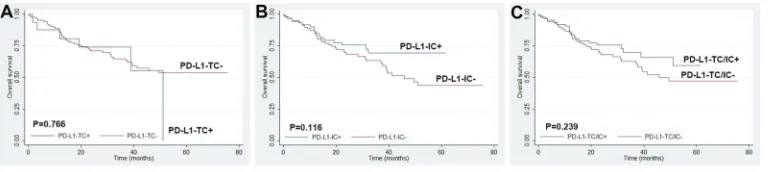
P=0.008). PD-L1-TC positive was related to non intestinal-type GC (P=0.029), even though it conferred no survival disadvantage over PD-L1-TC negative patients (Table 2, Figure 6). Apart from all cases of medullary carcinoma having aberrantly expressed PD-L1 (IC
P=0.018, TC/IC P=0.050), the clinical and prognostic relevance failed to reach any significance for such PD-L1 staining patterns (Table 2,Figure 6). There still seemed to be an inclination towards better outcomes for those with
PD-L1-IC or -TC/IC positivity. When the cut-off defining PD-L1-IC positivity was raised to 5%, there was a more pronounced tendency for PD-L1-IC expressed patients to have a favorable prognosis (ICP=0.067).
Among 165 GC cases, the most common category of Her2 overexpression was C4 (11/79, 13.9%) followed by C5 (4/31, 12.9%), whereas C2 (2/21, 9.5%) and C3 (1/32, 3.1%) were less common for Her2 positive, and C1 (0/2) had no Her2 positivity. The CIN subgroup (including C4 and C5) had increased Her2-positive (13.6% vs 5.5% in the remaining cases). Further analysis unveiled that PD-L1 was more fre-quently expressed in negative GC than that in Her2-positive GC (TC/IC 42.2% vs 22.2%, TC 11.6% vs 0%, IC 38.8% vs 22.2%), even though no statistical significance was reached.
Discussion
Increased PD-L1 expression has been associated with clin-ical activity of anti-PD-1/PD-L1 treatments; however, only a small proportion of PD-L1 expressed patients can truly benefit from checkpoint blockade. In-depth analysis of one-to-one correlations between immune response and molecular or morphological alterations may be a helpful way in selecting patients for PD-1/PD-L1 targeted therapy. Recent clinical trials in a variety of solid tumors (mainly in colorectal cancer) demonstrated a striking difference between d-MMR/MSI-H and p-MMR/MSS in therapeutic
Table 1Univariate and multivariable analysis of overall survival
Univariate analysis Multivariable analysis
P(log-rank
test)
P(Cox’s test) HR 95% CI P(Cox’s test) HR 95% CI
Subtype group (C3 vs C2, C4 and C5) 0.002 0.003 2.45 1.36–4.40 0.010 2.51 1.25–5.06
Age 0.000 0.005 1.04 1.01–1.06 0.000 1.05 1.02–1.07
Sex (male vs female) 0.695 0.695 1.12 0.63–2.12
Location (antrum vs nonantrum) 0.605 0.605 0.87 0.50–1.50
Size (<5 vs≧5) 0.685 0.685 1.12 0.65–1.94
Differentiation (well–moderate vs poor) 0.377 0.380 1.43 0.64–3.16 Lauren (intestinal vs nonintestinal) 0.273 0.275 1.37 0.78–2.39
WHO (poorly cohesive components vs remant) 0.017 0.019 1.92 1.11–3.31 0.291 1.42 0.74–2.70
pT stage (T1+T2+T3 vs T4) 0.000 0.001 2.53 1.48–4.31 0.413 1.30 0.70–2.42
pN stage (N0 vs N+) 0.015 0.020 2.75 1.18–6.45 0.760 1.19 0.39–3.65
M stage (M0 vs M1) 0.214 0.241 3.28 0.45–23.91
TNM (Ⅰ+ⅡvsⅢ+Ⅳ) 0.000 0.000 3.48 1.85–6.56 0.026 2.72 1.23–6.55
PD-L1-TC (+vs -) 0.638 0.639 0.82 0.35–1.91
PD-L1-IC (+vs -) 0.142 0.145 1.54 0.86–2.77
PD-L1-TC/IC (+vs -) 0.239 0.241 0.72 0.41–1.25
Abbreviations:C2, cluster 2; C3, cluster 3; C4, cluster 4; C5, cluster 5.
Cancer Management and Research downloaded from https://www.dovepress.com/ by 118.70.13.36 on 20-Aug-2020
response to PD-1/PD-L1 inhibitors.14–16Furthermore, MSI immune subtype, as one of the four known molecular subtypes for colorectal cancer, presents with a unique his-tological characteristics (including mucinous and medul-lary histology) and aggregated expression of PD-L1.29–31 As for GC, most previous studies focused on investigating the role of PD-L1 expression in predicting outcomes, but few evaluated PD-L1 expression in the context of mole-cular classification. How to choose the right patients for anti-PD-1/PD-L1 therapy, anti-Her2 therapy, or others is a thoughtful question with the development of novel ther-apy strategies. In addition, clinical applications of DNA sequencing technologies are thwarted by the restriction that such methodologies may be inaccessible in many small-scale medical centers and unaffordable by many cancer patients. In this sense, the use of IHC and ISH approaches to assess molecular genetic changes has
become a powerful tool in biomarker detection.
Accordingly, elucidating the association of PD-L1 expres-sion and molecular subtypes as well as Her2-positive, is key to assess prognostic significance and improve therapy selectivity and efficacy for GC patients.
In order to more accurately delineate the expression of PD-L1 on GC tissues, whole tissue sections were adopted to minimize intratumoral heterogeneity. In this patient
cohort, 40% of patients had PD-L1 expression on either TC or IC that conform to 8.8–74.9% of PD-L1 positivity in GC reported by previous literature.17,18,20,22–24 In con-trast with some other research which reported that PD-L1 status could correlate with either favorable or unfavorable prognosis of cancer patients, no significant association was found between PD-L1-positive and almost all clinical and pathologic factors in this study (including TNM staging and OS). Indeed, this is in agreement with both Ma et al17 and Wang et al,18who have published research results that PD-L1 expression is not predictive of patient survival in GC. It should be noted that PD-L1 positivity could vary with antibody clone, preparation of tissue samples, evalu-ating system, and even geographical differences of recruited patients, leading to discrepant results about the association of PD-L1 expression and prognosis. However this study showed that PD-L1 expression tended to give better survival for GC patients, reminding us not to over-look its distribution on molecular subgroups.
Herein, a validation study to assess the reliability of a simplified classification and focused on its prognostic sig-nificance in GC patients was then conducted. EBV-positive tumors (8.8% in TCGA; C1) represented a lower incidence of 1.2% in our cohort compared to other literature (2–20%).8,9,32,33Such distinction appeared to be caused by Figure 5Expression of PD-L1 on gastric cancer. (AandC) Strong PD-L1 expression was observed in tumor cells and surrounding tumor embolism. (BandD) PD-L1-positive immune cells were seen at the peritumoral interface.
Cancer Management and Research downloaded from https://www.dovepress.com/ by 118.70.13.36 on 20-Aug-2020
either the lower proportion of intestinal- type that are one major histological type of EBV GC, or low diagnosis rate of enrolled early-stage GC (EGC) patients.33,34 The predomi-nance of EBV tumors in EGC (30.8%) in the study of Anh favors the hypothesis that EBV was involved at an early stage of GC carcinogenesis.8Hypermethylation of MLH1 is the characteristic of MSI-subtype tumors.6,35 The C2
(correspondence to MSI) in the current study had an inci-dence of 12.7% vs 21.7% in TCGA, 22.7% in ACRG, and 8.2–44.5% in other publications.36–41Consistent with prior studies, loss of MLH1 and PMS2 was the predominant pattern in d-MMR cases.9,35,39 Additional experiments to inspect the coincidence ratio of d-MMR cases by PCR amplifying extracted DNA are necessary. This part of the
Table 2The relationship between PD-L1 expression and clinicopathologic parameters
PD-L1-TC (%) P PD-L1-IC (%) P PD-L1-TC/IC (%) P
(+) (-) (+) (-) (+) (-)
Median age 66 64 65 64 65 64
Gender
Male 11 (64.7) 106 (42.7) 0.078 40 (65.6) 77 (74.0) 0.248 44 (66.7) 73 (73.7) 0.327
Female 6 (35.3) 42 (57.3) 21 (34.4) 27 (26.0) 22 (33.3) 26 (26.3)
Location
Antrum 12 (70.6) 80 (54.1) 0.194 34 (55.7) 58 (55.8) 0.997 38 (57.6) 54 (54.5) 0.701
Nonantrum 5 (29.4) 68 (45.9) 27 (44.3) 46 (44.2) 28 (42.4) 45 (45.5)
Size
<5 5 (29.4) 55 (37.2) 0.529 20 (32.8) 40 (38.5) 0.464 22 (33.3) 38 (38.4) 0.509
≧5 12 (70.6) 93 (62.8) 41 (67.2) 64 (61.5) 44 (66.7) 61 (61.6)
Differentiation
Well–moderate 0 (0.0) 22 (14.9) 0.183 10 (16.4) 16 (15.4) 0.864 10 (15.2) 16 (16.2) 0.862
Poor 17 (100.0) 126 (85.1) 51 (83.6) 88 (84.6) 56 (84.8) 83 (83.8)
Lauren
Intestinal 3 (17.6) 67 (45.3) 0.029 27 (44.3) 43 (41.3) 0.714 28 (42.4) 42 (42.4) 1.000 Nonintestinal 14 (82.4) 81 (54.7) 34 (55.7) 61 (58.7) 38 (57.6) 57 (57.6)
T
T1–T3 13 (76.5) 100 (67.6) 0.454 43 (70.5) 70 (67.3) 0.671 48 (72.7) 65 (65.7) 0.338
T4 4 (23.5) 48 (32.4) 18 (29.5) 34 (32.7) 18 (27.3) 34 (24.3)
N
N0 5 (29.4) 28 (18.9) 0.481 15 (24.6) 18 (17.3) 0.259 16 (24.2) 17 (17.2) 0.266
N+ 12 (70.6) 120 (81.1) 46 (75.4) 86 (82.7) 50 (75.8) 82 (82.8)
M
M0 17 (100.0) 145 (98.0) 1.000 60 (98.4) 102 (98.1) 1.000 65 (98.5) 97 (98.0) 1.000
M1 0 (0.0) 3 (2.0) 1 (1.6) 2 (1.9) 1 (1.5) 2 (2.0)
TNM
Ⅰ–Ⅱ 10 (58.8) 55 (37.2) 0.083 27 (44.3) 38 (36.5) 0.327 30 (45.5) 35 (35.4) 0.193
Ⅲ–Ⅳ 7 (41.2) 93 (62.8) 34 (55.7) 66 (63.5) 36 (54.5) 64 (64.6)
WHO
Medullary 2 (11.8) 2 (1.4) 0.070 4 (6.6) 0 (0.0) 0.018 4 (6.1) 0 (0.0) 0.050
Nonmedullary 15 (88.2) 146 (98.6) 57 (93.4) 104 (100.0) 62 (93.9) 99 (100.0)
MMR status
d-MMR 4 (23.5) 19 (12.8) 0.403 14 (23.0) 8 (7.7) 0.005 14(21.2) 8 (8.1) 0.015
p-MMR 13 (76.5) 129 (87.2) 47 (77.0) 96 (92.3) 52(78.8) 91 (91.9)
Cancer Management and Research downloaded from https://www.dovepress.com/ by 118.70.13.36 on 20-Aug-2020
results will be seen in our subsequent study (the conformity rate is 95.8%). Beyond that, lesser aggressiveness character-istics in parallel with longer survivals were observed in this group, as previously reported.36,37,39,40,42 Both TCGA and ACRG defined a distinctive subset characterized by the low-est number of mutation events, named GS (19.7%) and MSS/ EMT (15.3%), respectively.6,7 In this study, the malignant features and bad prognosis possessed by C3 tumors (corre-spondence to GS or MSS/EMT subtypes; 19.4%) were basi-cally identical to those in a Korean trial.8The largest subtype described by TCGA is the CIN group (49.8%) that has high frequency of TP53 mutation, corresponding to the subtype of MSS/TP53- (35.7%) in ACRG.6,7Likewise, patients with C4 (MSS/TP53-) and CIN tumors having prediction of inter-mediate outcomes constituted the biggest part of our entire cohort (66.7% and 47.9%, respectively). The remaining MSS tumors without TP53 mutation fell into the subtype of C5 (18.8% in our cohort) or MSS/TP53+ (26.3% in ACRG). Unlike the results obtained from research teams in Korea, the present study showed that the prognosis of patients in C5 was slightly superior to that in C2 and yet differed little between them (P=0.704).7,8This difference may be attributed to our overall lower percentage of intestinal-type GC (42.4%), in comparison with the study of Ahn et al8(57%). Hence, it is vital to further analyze the molecular subtypes in two differ-ent Lauren type settings. As expected, the“two-faced” char-acter was substantiated by separate analysis of molecular subtypes in intestinal- and nonintestinal-type GC, especially when considering prognosis. Evidently, additional well-designed trials are needed to clarify the selective role of Lauren type on molecular classification. Certainly, other critical factors, for example the addition of adjuvant che-motherapy after surgery, may also improve the prognosis of C5 patients, so that further research on the relationship of the prognosis and post-operative therapy within subtypes is very necessary.
In light of the feasibility of using this stratification to reflect approximate molecular alternations, the differential expression of PD-L1 in each molecular subtype of this
classification was further investigated. It was shown that PD-L1 was expressed at the highest in C2, followed by C1, which was identical to recent molecular studies having disclosed their altered immune status to some extent. EBV-positive tumors exhibit extreme DNA hypermethylation, high mutation rate of PIK3CA and ARID1A, and frequent amplification of JAK2 and PD-L1/2.6And mutational“ hot-spots” within targetable genes (eg, PIK3CA, ERBB2, ERBB3, EGFR, ARID1A, KRAS, and ALK) are noted in MSI tumors.16,17 These hypermutated genes harbored by this class are suggested as the incentive of added number of tumor-specific neoantigens, which might shape response to immunotherapy through enhancing the host’s immune system.6,7 The finding that PD-L1 positivity with a preference for C2 and C1 was also equal to a previously described elevated PD-L1 expression enriched in MSI and EBV subgroups of GC.17 Moreover, an exciting clinical response to PD-1 blocking therapy exited in MSI and EBV subgroups of mGC (metastatic GC) patients was verified in another recent study.43 As such, this simplified classification could be a useful aid to prioritization of anti-PD-1/PD-L1 therapy in these two subgroups of GC patients, especially for C2. Marked amplifications of the RTK-RAS signaling pathway (eg, ERBB2, EGFR, VEGFA, c-MET, FGFR2, and K-RAS) reported by TCGA are reviewed as actionable targets in CIN tumors.6 In line with previous studies, we found increased Her2 overexpression in C4 (MSS/TP53-) and CIN tumors, but not to a statistical difference.8,43 It was of interest that reduced expression of PD-L1 was seen in C4 (MSS/TP53-) and CIN compared to other subtypes, suggesting the Her2 inhibitor was superior to the PD-1/PD-L1 blockade as the possible first-line tar-geted therapy for C4 (MSS/TP53-)/CIN patients. In fact, the relationship of PD-L1- and Her2- positive remains elusive. Oki et al44found a positive relation between them; on the contrary, a negative relation was reported by both Wang et al18and Li et al.21In current research, the greater differ-ence of PD-L1 expression between patients with or without Her2 overexpression confirmed that immunotherapy may be Figure 6Kaplan-Meier plots of overall survival for PD-L1 expression in (A) tumor cells (TC), (B) immune cells (IC), and (C) tumor cells and/or immune cells.
Cancer Management and Research downloaded from https://www.dovepress.com/ by 118.70.13.36 on 20-Aug-2020
more suitable for the majority of GC patients who have Her2-negative cancer (89.1% in this study, 77.9–88% in previous studies).18,45,46 Other forceful unconventional treatment methods rather than just PD-1/PD-L1 or anti-Her2 therapy should be explored to improve the gloomy prognosis of C3 patients (with a lower prevalence of both PD-L1- and Her2- positive). Notably, some molecular alterations are still found, including the maximum percen-tage of CDH1 mutation, an increase in RHOA mutation and CLDN18–ARHGAP26 fusion, which might be used for the development of new molecular targets for “neutral” C3 tumors.6,7,47,48
One major limitation of this study is that TMA slides fail to entirely account for the intratumoral heterogeneity in stratified patients and intricate molecular changes tend to be under-estimated by protein expression. For example, one of the two EBV-positive cases with unusual overlapping EBV+ and d-MMR was rectified as p-MMR/MSS both by subsequent MMR IHC (using corresponding whole section) and PCR-based MSI assay. Although this correction did not affect the above results of stepwise stratification, two important things should be mentioned here. The first of these two situations (EBV positive and d-MMR/MSI-H status) are virtually mutually exclusive, similar to previous reports.6,43,49 The second, in order to solve the shortage of TMA methods in correctly reflecting MMR heterogeneity. A more compre-hensive categorization of existing approaches will, therefore, be put forward on the whole histological section. At the same time, improving this multi-biomarker panel and enlarging the sample size is another indispensable step for making this stratification closer to actual molecular subtypes and assessing the definite role of PD-L1 expression in GC.
The well-corroborated results from our study elucidates that this protein and mRNA-based classification can be employed as not only a surrogate for molecular subtyping, but also predicting the prognosis of GC. What’s more, PD-L1 expression is positively associated with C2/ d-MMR status and negatively associated with C4/Her2-positive, but not predictive of the survival of patients. This classification presents constructive suggestions for differ-ent therapeutic directions in GC patidiffer-ents, that is, C2/ d-MMR and C4 (MSS/TP53-)/CIN are the good candi-dates for anti-PD-1/PD-L1 immunotherapy and anti-Her2 targeted therapy, respectively. In brief, our results high-light this reproducible and affordable stratification strat-egy, combined with therapy-related biomarkers, can be deemed as a preliminary guideline to optimize GC patients for individualizing treatments.
Acknowledgments
This work was supported by funds from the Shanghai Municipal Commission of Health and Family Planning (No. 20154Y0145 and No. 201740031), Joined Medicine-Engineering Fund of Shanghai Jiao Tong University (No. YG2016QN72), Xinhua Hospital, School of Medicine, Shanghai Jiao Tong University (No. 15YJ10), and Xinhua Hospital for the Introduction of Talent, School of Medicine, Shanghai Jiao Tong University (No. 005).
Disclosure
The authors report no conflicts of interest in this work.
References
1. Ferlay J, Soerjomataram I, Dikshit R, et al. Cancer incidence and mortality worldwide: sources, methods and major patterns in GLOBOCAN 2012. Int J Cancer. 2015;136(5):E359–E386. doi:10.1002/ijc.29210
2. Cunningham D, Allum WH, Stenning SP, et al. Perioperative che-motherapy versus surgery alone for resectable gastroesophageal cancer.N Engl J Med.2006;355(1):11–20. doi:10.1056/NEJMoa055531 3. Macdonald JS, Smalley SR, Benedetti J, et al. Chemoradiotherapy after surgery compared with surgery alone for adenocarcinoma of the stomach or gastroesophageal junction. N Engl J Med. 2001;345 (10):725–730. doi:10.1056/NEJMoa010187
4. Sakuramoto S, Sasako M, Yamaguchi T, et al. Adjuvant chemother-apy for gastric cancer with S-1, an oral fluoropyrimidine.N Engl J Med.2007;357(18):1810–1820. doi:10.1056/NEJMoa072252 5. Lauren P. The two histological main types of gastric carcinoma:
diffuse and so-called intestinal-type carcinoma. An attempt at a histo-clinical classification. Acta Pathol Microbiol Scand.
1965;64:31–49.
6. Cancer Genome Atlas Research N. Comprehensive molecular char-acterization of gastric adenocarcinoma. Nature. 2014;513 (7517):202–209. doi:10.1038/nature13480
7. Cristescu R, Lee J, Nebozhyn M, et al. Molecular analysis of gastric cancer identifies subtypes associated with distinct clinical outcomes.
Nat Med.2015;21(5):449–456. doi:10.1038/nm.3850
8. Ahn S, Lee SJ, Kim Y, et al. High-throughput protein and mRNA expression-based classification of gastric cancers can identify clini-cally distinct subtypes, concordant with recent molecular classifications.Am J Surg Pathol.2017;41(1):106–115. doi:10.1097/ PAS.0000000000000756
9. Setia N, Agoston AT, Han HS, et al. A protein and mRNA expression-based classification of gastric cancer. Mod Pathol.
2016;29(7):772–784. doi:10.1038/modpathol.2016.55
10. Zou W, Wolchok JD, Chen L. PD-L1 (B7-H1) and PD-1 pathway blockade for cancer therapy: mechanisms, response biomarkers, and combinations.Sci Transl Med. 2016;8(328):328rv324. doi:10.1126/ scitranslmed.aaf0746
11. Lote H, Cafferkey C, Chau I. PD-1 and PD-L1 blockade in gastro-intestinal malignancies. Cancer Treat Rev. 2015;41(10):893–903. doi:10.1016/j.ctrv.2015.09.004
12. Topalian SL, Hodi FS, Brahmer JR, et al. Safety, activity, and immune correlates of anti-PD-1 antibody in cancer.N Engl J Med.
2012;366(26):2443–2454. doi:10.1056/NEJMoa1200690
13. Muro K, Chung HC, Shankaran V, et al. Pembrolizumab for patients with PD-L1-positive advanced gastric cancer (KEYNOTE-012): a multicentre, open-label, phase 1b trial. Lancet Oncol. 2016;17 (6):717–726. doi:10.1016/S1470-2045(16)00175-3
Cancer Management and Research downloaded from https://www.dovepress.com/ by 118.70.13.36 on 20-Aug-2020
14. Brahmer JR, Drake CG, Wollner I, et al. Phase I study of single-agent anti-programmed death-1 (MDX-1106) in refractory solid tumors: safety, clinical activity, pharmacodynamics, and immunologic correlates.J Clin Oncol.2010;28(19):3167–3175. doi:10.1200/JCO.2009.26.7609 15. Le DT, Uram JN, Wang H, et al. PD-1 blockade in tumors with
mismatch-repair deficiency. N Engl J Med. 2015;372 (26):2509–2520. doi:10.1056/NEJMoa1500596
16. Le DT, Durham JN, Smith KN, et al. Mismatch repair deficiency predicts response of solid tumors to PD-1 blockade. Science.
2017;357(6349):409–413. doi:10.1126/science.aan6733
17. Ma C, Patel K, Singhi AD, et al. Programmed death-ligand 1 expres-sion is common in gastric cancer associated with epstein-barr virus or microsatellite instability.Am J Surg Pathol.2016;40(11):1496–1506. doi:10.1097/PAS.0000000000000698
18. Wang L, Zhang Q, Ni S, et al. Programmed death-ligand 1 expression in gastric cancer: correlation with mismatch repair deficiency and HER2-negative status. Cancer Med. 2018;7(6):2612–2620. doi:10.1002/cam4.1502
19. Eto S, Yoshikawa K, Nishi M, et al. Programmed cell death protein 1 expression is an independent prognostic factor in gastric cancer after curative resection. Gastric Cancer. 2016;19(2):466–471. doi:10.1007/s10120-015-0519-7
20. Kim JW, Nam KH, Ahn SH, et al. Prognostic implications of immu-nosuppressive protein expression in tumors as well as immune cell infiltration within the tumor microenvironment in gastric cancer.
Gastric Cancer.2016;19(1):42–52. doi:10.1007/s10120-014-0440-5 21. Li Z, Lai Y, Sun L, et al. PD-L1 expression is associated with
massive lymphocyte infiltration and histology in gastric cancer.
Hum Pathol.2016;55:182–189. doi:10.1016/j.humpath.2016.05.012 22. Thompson ED, Zahurak M, Murphy A, et al. Patterns of PD-L1
expression and CD8 T cell infiltration in gastric adenocarcinomas and associated immune stroma. Gut. 2017;66(5):794–801. doi:10.1136/gutjnl-2015-310839
23. Pereira MA, Ramos M, Faraj SF, et al. Clinicopathological and prognostic features of Epstein-Barr virus infection, microsatellite instability, and PD-L1 expression in gastric cancer.J Surg Oncol.
2018. doi:10.1002/jso.25022
24. Xing X, Guo J, Wen X, et al. Analysis of PD1, PDL1, PDL2 expression and T cells infiltration in 1014 gastric cancer patients.
Oncoimmunology. 2018;7(3):e1356144. doi:10.1080/ 2162402X.2018.1490854
25. Bang Y-J, Van Cutsem E, Feyereislova A, et al. Trastuzumab in combination with chemotherapy versus chemotherapy alone for treat-ment of HER2-positive advanced gastric or gastro-oesophageal junc-tion cancer (ToGA): a phase 3, open-label, randomised controlled trial.Lancet.2010;376(9742):687–697. doi:10.1016/S0140-6736(10) 61121-X
26. Lauwers GY, Carneiro F, Graham DY, et al. Gastric carcinoma. In: Bosman FT, Carneiro F, Hruban RH, Theise ND, editors. WHO Classification of Tumours of the Digestive System, 4th. Lyon (France): IARC Press;2010. 48–58.
27. Angell H, Lee J, Kim K, et al. PD-L1 and immune infiltrates are differentially expressed in distinct subgroups of gastric cancer.
OncoImmunology. 2018;8(2):e1544442. doi:10.1080/2162402X. 2018.1544442.
28. Ruschoff J, Hanna W, Bilous M, et al. HER2 testing in gastric cancer: a practical approach.Mod Pathol.2012;25(5):637–650. doi:10.1038/ modpathol.2011.198
29. Rosenbaum MW, Bledsoe JR, Morales-Oyarvide V, Huynh TG, Mino-Kenudson M. PD-L1 expression in colorectal cancer is asso-ciated with microsatellite instability, BRAF mutation, medullary morphology and cytotoxic tumor-infiltrating lymphocytes. Mod Pathol.2016;29(9):1104–1112. doi:10.1038/modpathol.2016.95 30. Ward R, Meagher A, Tomlinson I, et al. Microsatellite instability and
the clinicopathological features of sporadic colorectal cancer. Gut.
2001;48(6):821–829. doi:10.1136/gut.48.6.821
31. Guinney J, Dienstmann R, Wang X, et al. The consensus molecular subtypes of colorectal cancer. Nat Med. 2015;21(11):1350–1356. doi:10.1038/nm.3967
32. Birkman E-M, Mansuri N, Kurki S, et al. Gastric cancer: immuno-histochemical classification of molecular subtypes and their associa-tion with clinicopathological characteristics. Virchows Archiv.
2017;472(3):369–382. doi:10.1007/s00428-017-2240-x
33. Shinozaki-Ushiku A, Kunita A, Fukayama M. Update on Epstein-Barr virus and gastric cancer (review).Int J Oncol.2015;46 (4):1421–1434. doi:10.3892/ijo.2015.2856
34. Takano Y, Kato Y. Epstein-Barr virus association with early cancers found together with gastric medullary carcinomas demonstrating lymphoid infiltration. J Pathol. 1995;175(1):39–44. doi:10.1002/ path.1711750107
35. Fleisher AS, Esteller M, Wang S, et al. Hypermethylation of the hMLH1 gene promoter in human gastric cancers with microsatellite instability.Cancer Res.1999;59(5):1090–1095.
36. Seo HM, Chang YS, Joo SH, et al. Clinicopathologic characteristics and outcomes of gastric cancers with the MSI-H phenotype.J Surg Oncol.2009;99(3):143–147. doi:10.1002/jso.21220
37. Corso G, Pedrazzani C, Marrelli D, Pascale V, Pinto E, Roviello F. Correlation of microsatellite instability at multiple loci with long-term survival in advanced gastric carcinoma. Arch Surg.
2009;144(8):722–727. doi:10.1001/archsurg.2009.42
38. Vauhkonen M, Vauhkonen H, Sajantila A, Sipponen P. Differences in genomic instability between intestinal- and diffuse-type gastric cancer. Gastric Cancer. 2005;8(4):238–244. doi:10.1007/s10120-005-0346-3
39. Lee HS, Choi SI, Lee HK, et al. Distinct clinical features and out-comes of gastric cancers with microsatellite instability.Mod Pathol.
2002;15(6):632–640. doi:10.1038/modpathol.3880578
40. An JY, Kim H, Cheong JH, Hyung WJ, Kim H, Noh SH. Microsatellite instability in sporadic gastric cancer: its prognostic role and guidance for 5-FU based chemotherapy after R0 resection.
Int J Cancer.2012;131(2):505–511. doi:10.1002/ijc.26399 41. Wirtz HC, Muller W, Noguchi T, et al. Prognostic value and
clinico-pathological profile of microsatellite instability in gastric cancer.Clin Cancer Res.1998;4(7):1749–1754.
42. Lu BJ, Lai M, Cheng L, Xu JY, Huang Q. Gastric medullary carcinoma, a distinct entity associated with microsatellite instability-H, prominent intraepithelial lymphocytes and improved prognosis.Histopathology.
2004;45(5):485–492. doi:10.1111/j.1365-2559.2004.01998.x 43. Kim ST, Cristescu R, Bass AJ, et al. Comprehensive molecular
characterization of clinical responses to PD-1 inhibition in metastatic gastric cancer.Nat Med.2018;24(9):1449–1458. doi:10.1038/s41591-018-0101-z
44. Oki E, Okano S, Saeki H, et al. Protein expression of programmed death 1 ligand 1 and HER2 in gastric carcinoma.Oncology.2017;93 (6):387–394. doi:10.1159/000479231
45. Kurokawa Y, Matsuura N, Kimura Y, et al. Multicenter large-scale study of prognostic impact of HER2 expression in patients with resectable gastric cancer. Gastric Cancer. 2015;18(4):691–697. doi:10.1007/s10120-014-0430-7
46. Van Cutsem E, Bang YJ, Feng-Yi F, et al. HER2 screening data from ToGA: targeting HER2 in gastric and gastroesophageal junction cancer. Gastric Cancer. 2015;18(3):476–484. doi:10.1007/s10120-014-0402-y
47. Kakiuchi M, Nishizawa T, Ueda H, et al. Recurrent gain-of-function mutations of RHOA in diffuse-type gastric carcinoma.Nat Genet.
2014;46(6):583–587. doi:10.1038/ng.2984
48. Yao F, Kausalya JP, Sia YY, et al. Recurrent fusion genes in gastric cancer: CLDN18-ARHGAP26 induces loss of epithelial integrity.
Cell Rep.2015;12(2):272–285. doi:10.1016/j.celrep.2015.06.020 49. Janjigian YY, Sanchez-Vega F, Jonsson P, et al. Genetic predictors of
response to systemic therapy in esophagogastric cancer. Cancer Discov.2018;8(1):49–58. doi:10.1158/2159-8290.CD-17-0787
Cancer Management and Research downloaded from https://www.dovepress.com/ by 118.70.13.36 on 20-Aug-2020
Supplementary materials
C1 (n=2; 1.2%)
Nonintestinal-type Gastric cancer (n=95) Intestinal-type
Gastric cancer (n=70)
C2 (n=14; 14.7%)
C3 (n=24; 25.3%)
C4 (n=40; 42.1%)
C5 (n=15; 15.8%)
Positive
Negative
Loss
Aberrant Aberrant C1
(n=0; 0%)
C2 (n=7; 10.0%)
C3 (n=8; 11.4%)
C4 (n=39; 55.7%)
C5 (n=16; 22.9%)
Normal Normal
P53 IHC EBER-ISH
MMP protein IHC
E-cdherin IHC
P53 IHC EBER-ISH
MMP protein IHC
E-cdherin IHC
Retain Positive
Negative
Loss
A
B
Aberrant Aberrant
Normal Normal
Retain
■ intermediate prognosis ■ intermediate prognosis
■ Best prognosis ■ Undefined clinicopathological characters and prognosis due to small number in this group
■ Old age and early TNM stage ■ Old age and slight
tendency to the best prognosis
■ Younger age
■Male predominance
■Advanced T stage and increased female patients
■ Worst prognosis ■ Youger age, advanced T and TNM stage
Figure S1Identification of molecular subtypes of integrated classification with protein and mRNA-based categorical sequence in intestinal- or nonintestinal-type gastric cancers: (A) intestinal-type; (B) nonintestinal-type.
Cancer Management and Research downloaded from https://www.dovepress.com/ by 118.70.13.36 on 20-Aug-2020
Table S1Clinicopathological features according to integrated classification
Features C1 (%) C2 (%) C3 (%) C4 (%) C5 (%) Total
N 2 (1.2) 21 (12.7) 32 (19.4) 79 (47.9) 31 (18.8) 165 (100.0)
Median age 56 71 59.5 66 63 64
Sex
Male 1 (50.0) 13 (61.9) 25 (78.1) 59 (74.7) 19 (61.3) 117 (70.9)
Female 1 (50.0) 8 (38.1) 7 (21.9) 20 (25.3) 12 (38.7) 48 (29.1)
Location
GEJ-Cardia 2 (100.0) 3 (14.3) 5 (15.6) 11 (13.9) 3 (9.7) 24 (14.5)
Fundus-Body 0 (0.0) 2 (9.5) 9 (28.1) 23 (29.1) 8 (25.8) 42 (25.5)
Antrum-Pylorus 0 (0.0) 15 (71.4) 17 (53.1) 42 (53.2) 16 (51.6) 90 (54.5)
Remant 0 (0.0) 1 (4.8) 1 (3.1) 3 (3.8) 4 (12.9) 9 (5.5)
Size
<5 0 (0.0) 5 (23.8) 12 (37.5) 31 (39.2) 12 (38.7) 60 (36.4)
≧5 2 (100.0) 16 (76.2) 20 (62.5) 48 (60.8) 19 (61.3) 105 (63.6)
Differentiation
Well–moderate 0 (0.0) 2 (9.5) 2 (6.3) 16 (20.3) 6 (19.4) 26 (15.8)
Poor 2 (100.0) 19 (90.5) 30 (93.8) 63 (79.7) 25 (80.6) 139 (84.2)
Lauren type
Intestinal 0 (0.0) 7 (33.3) 8 (25.0) 39 (49.4) 16 (51.6) 70 (42.4)
Diffuse 2 (100.0) 12 (57.1) 19 (59.4) 35 (44.3) 10 (32.3) 78 (47.3)
mixed 0 (0.0) 2 (9.5) 5 (15.6) 5 (6.3) 5 (16.1) 17 (10.3)
WHO classification
Papillary 0 (0.0) 0 (0.0) 2 (6.3) 5 (6.3) 4 (12.9) 11 (6.7)
Tubular 0 (0.0) 13 (61.9) 9 (28.1) 42 (53.2) 17 (54.8) 81 (49.1)
Poorly cohesive 0 (0.0) 3 (14.3) 16 (50.0) 23 (29.1) 4 (12.9) 46 (27.9)
Mucinous 0 (0.0) 1 (4.8) 1 (3.1) 6 (7.6) 3 (9.7) 11 (6.7)
Medullary 1 (50.0) 2 (9.5) 0 (0.0) 0 (0.0) 1 (3.2) 4 (2.4)
Remant 1 (50.0) 2 (9.5) 4 (12.5) 3 (3.8) 2 (6.5) 12 (7.3)
pT stage
T1 0 (0.0) 1 (4.8) 0 (0.0) 1 (1.3) 2 (6.5) 4 (2.4)
T2 0 (0.0) 1 (4.8) 2 (6.3) 8 (10.1) 3 (9.7) 14 (8.5)
T3 1 (50.0) 16 (76.2) 15 (46.9) 49 (62.0) 14 (45.2) 95 (57.6)
T4 1 (50.0) 3 (14.3) 15 (46.9) 21 (26.6) 12 (38.7) 52 (31.5)
pN stage
N0 1 (50.0) 8 (38.1) 4 (12.5) 13 (16.5) 7 (22.6) 33 (20.0)
N+ 1 (50.0) 13 (61.9) 28 (87.5) 66 (83.5) 24 (77.4) 132 (80.0)
M stage
M0 1 (50.0) 20 (95.2) 31 (96.9) 79 (100.0) 31 (100.0) 162 (98.2)
M1 1 (50.0) 1 (4.8) 1 (3.1) 0 (0.0) 0 (0.0) 3 (1.8)
TNM stage
Ⅰ 0 (0.0) 1 (4.8) 0 (0.0) 2 (2.5) 1 (3.2) 4 (2.4)
Ⅱ 1 (50) 12 (57.1) 8 (25.0) 28 (35.4) 12 (38.7) 61 (37.0)
Ⅲ 0 (0.0) 7 (33.3) 23 (71.9) 49 (62.0) 18 (58.1) 97 (58.8)
Ⅳ 1 (50.0) 1 (4.8) 1 (3.1) 0 (0.0) 0 (0.0) 3 (1.8)
Abbreviations:C1, cluster 1; C2, cluster 2; C3, cluster 3; C4, cluster 4; C5, cluster 5; GEJ, esophagogastric junction.
Cancer Management and Research downloaded from https://www.dovepress.com/ by 118.70.13.36 on 20-Aug-2020
Cancer Management and Research
Dove
press
Publish your work in this journal
Cancer Management and Research is an international, peer-reviewed open access journal focusing on cancer research and the optimal use of preventative and integrated treatment interventions to achieve improved outcomes, enhanced survival and quality of life for the cancer patient.
The manuscript management system is completely online and includes a very quick and fair peer-review system, which is all easy to use. Visit http://www.dovepress.com/testimonials.php to read real quotes from published authors.
Submit your manuscript here:https://www.dovepress.com/cancer-management-and-research-journal
Table S2Univariate and multivariable analysis of overall survival
Univariate analysis Multivariable analysis
P(log-rank test) P(Cox’s test) HR 95% CI P(Cox’s test) HR 95% CI
Intestinal
Subtype group (C2 vs C3, C4, and C5) 0.212 0.239 0.30 0.042.24
Age 0.002 0.066 1.05 0.10–1.10 0.098 1.04 0.99–1.09
Sex (male vs female) 0.105 0.140 0.22 0.03–1.64
Location (antrum vs nonantrum) 0.142 0.150 2.04 0.77–5.36
Size (<5 vs≧5) 0.711 0.711 0.84 0.34–2.10
pT stage (T1+T2+T3 vs T4) 0.002 0.004 3.72 1.50–9.19 0.007 3.48 1.40–8.05
pN stage (N0 vs N+) 0.581 0.583 1.41 0.41–4.87
TNM (Ⅰ+ⅡvsⅢ+Ⅳ) 0.154 0.161 1.98 0.76–5.12
Nonintestinal
Subtype group (C3 vs C2, C4, and C5) 0.016 0.019 2.28 1.15–4.55 0.035 2.31 1.06–5.02
Age 0.000 0.014 1.04 1.01–1.07 0.004 1.05 1.01–1.08
Sex (male vs female) 0.166 0.170 1.60 0.82–3.13
Location (antrum vs nonantrum) 0.575 0.575 1.21 0.62–2.37
Size (<5 vs≧5) 0.590 0.591 1.22 0.59–2.56
pT stage (T1+T2+T3 vs T4) 0.040 0.044 1.98 1.02–3.85 0.955 1.02 0.49–2.14
pN stage (N0 vs N+) 0.008 0.015 4.33 1.32–14.19 0.616 1.52 0.30–7.72
TNM (Ⅰ+ⅡvsⅢ+Ⅳ) 0.000 0.000 5.20 2.14–12.64 0.046 3.60 1.03–12.6
Abbreviations:C2 cluster 2; C3 cluster 3; C4 cluster 4; C5 cluster 5.
Cancer Management and Research downloaded from https://www.dovepress.com/ by 118.70.13.36 on 20-Aug-2020