ScholarWorks@UMass Amherst
Doctor of Nursing Practice (DNP) Projects College of Nursing
2017
Mindfulness-based Stress Reduction (MBSR) in
Reducing Stress in Nursing Students: An
Integrative Review and Toolkit
Donna J. Petko
University of Massachusetts Amherst
Follow this and additional works at:https://scholarworks.umass.edu/nursing_dnp_capstone Part of theHigher Education Commons, and theNursing Commons
This Open Access is brought to you for free and open access by the College of Nursing at ScholarWorks@UMass Amherst. It has been accepted for inclusion in Doctor of Nursing Practice (DNP) Projects by an authorized administrator of ScholarWorks@UMass Amherst. For more information, please [email protected].
Petko, Donna J., "Mindfulness-based Stress Reduction (MBSR) in Reducing Stress in Nursing Students: An Integrative Review and Toolkit" (2017).Doctor of Nursing Practice (DNP) Projects. 126.
Mindfulness-based Stress Reduction (MBSR) in Reducing Stress in Nursing Students: An Integrative Review and Toolkit
Donna J. Petko
University of Massachusetts Mass College of Nursing
Capstone Chair:Dr. Gabrielle Abelard Capstone Mentor: Sue Naylor Clark Date of Submission: April 18, 2017
Table of Contents
Abstract ...4
Introduction ...5
Background ...5
Problem Statement ...8
Organizational “Gap” analysis of project site ...9
Review of the Literature ...10
Theoretical Framework ...18
Goals, Objectives & Outcomes ...19
Project Design ...19
Project Site and Sample ...23
Setting Facilitators and barriers ...23
Measurement Instruments ...24
Data Collection Procedures ...25
Data Analysis/Statistical Analysis Plan ...25
Cost-Benefit Analysis/Budget ………...25
Timeline ……….26
Ethical Considerations/Protection of Human Subjects ...26
Results ...27
Discussion ...30
Conclusion ...33
References ...34
Appendix ...40
Appendix B (Stages of Change Model) ...48
Appendix C (Knowledge to Action Framework) ...49
Appendix D (PDSA Model) ...50
Appendix E (Toolkit) ...51
Appendix F (Questionnaires) ...67
Abstract
Background: Across the country, nursing students are experiencing alarming amounts of stress. While stress is a common phenomenon, it has been shown to negatively impact nursing student performance and general health. One solution to this issue is mindfulness-based stress reduction (MBSR). Reported effects of MBSR include stress reduction; mindfulness; improvements in self-esteem; increase in general health; a decrease in anxiety; and an increase in empathy. Because MBSR is not widely included in nursing curricula, students are not learning stress reduction techniques needed to manage daily stress. Purpose: To address this gap, a DNP project was implemented at a university site. The project’s purpose was two-fold: To increase the knowledge of faculty and to provide educational resources for students. Methods: A toolkit was developed that included a Power Point presentation for faculty; a copy of the Perceived Stress Scale (PSS); and handouts on stress and MBSR techniques for students. Thirty-four faculty in an online family nurse practitioner program were offered the toolkit at one university in California; five faculty participated and completed the surveys. Results: Valuable data was obtained on the effectiveness of the presentation on faculty knowledge, perception, acceptance, and willingness to use the resources provided. Conclusion: When provided with a toolkit on stress and MBSR techniques, faculty became more aware of the significance of stress and stated they were willing to utilize the resources provided in future online classes.
Keywords: mindfulness-based stress reduction, nurse, nurse practitioner, nursing, stress, students
Introduction
The purpose of this integrative review and toolkit was to explore the literature on mindfulness-based stress reduction (MBSR) as an evidence-based approach for managing student stress. Nursing students have been shown to experience excessive amounts of stress while in school, it is important for faculty to utilize interventions that reduce stress to promote health and wellness, academic achievement, and for student retention in university programs (Beck, Hackett, Srivastava, McKim, & Rockwell, 2004; Maville, Kranz, & Tucker, 2004; Pryjmachuk, 2004; Shields, 2011). Since both stress and anxiety have been shown to negatively impact students’ academic performance, as well as their physical and mental health, it is
imperative that students learn how to prevent, alleviate, and manage stress. Through the
development of a toolkit for faculty, which consisted of an educational Power Point presentation on stress and MBSR with handouts for students, it was anticipated that faculty would become better informed and students would benefit from the materials provided.
Background
Research has shown that nursing students experience a tremendous amount of stress during their professional education. According to Pryjmachuk (2004), one-third of all nursing students experience stress so severe that it can induce mental health problems. While stress is a common phenomenon experienced by nursing students, it can negatively impact their academic performance and their health (Maville et al., 2004). Beck et al. (2004) found that nursing
students have been shown to experience more stress while in school than social work, pharmacy, and even medical students. Additionally, nurse practitioner students experience the highest stress levels of their lives while in school (Maville et al., 2004). Unfortunately, the influence of stress not only impacts students’ academic performance, but their overall health and well-being
(Maville et al., 2004). Thus, interventions to reduce or ameliorate stress are needed. This review will examine the literature on MBSR, survey the findings, and explore how MBSR techniques may provide a useful strategy in combating stress in nursing students.
Stress is defined as a physical and/or emotional tension that is experienced when a person feels threatened or anxious (Centers for Disease Control [CDC], 2015b). While not all stress is negative, chronic stress can lower an individual’s immunity and adversely affect the
musculoskeletal, respiratory, cardiovascular, endocrine, gastrointestinal, nervous, and
reproductive systems (National Institute of Mental Health [NIMH], 2016; NIMH, n.d.; American Psychological Association [APA], n.d.). While infrequent episodes of stress pose little risk, long term stress can keep the body in a state of constant alarm which taxes biological systems
resulting in an increased risk of injury and disease (National Institute for Occupational Safety and Health [NIOSH], 2014).
Stress is a major issue across the United States. In one survey (n=2,505), 49% of all Americans reported experiencing a major stressful event in the last year; of those, 37% reported experiencing some stress within the last month (Harvard School of Public Health [HSPH], 2014). In another survey (n=2,240), 85% of American college students reported experiencing stress on a daily basis (Associated Press [AP], 2009). Of all Americans, the highest levels of stress were seen in college-aged students (AP, 2009). Individuals ranging in age from eighteen to twenty-nine experienced the highest levels of stress when compared to other age groups (AP, 2009). While many people have experienced a major stressful event in the last year (HSPA, 2014), some individuals, like college-aged students, experience stress every day (AP, 2009).
According to the Stress in America Survey (APA, 2015), even though the overall levels of reported stress among Americans (n=3068) appear to be decreasing, 42% of adults say they are
either not doing enough or are unsure of how to manage their stress. Additionally, 20% of those surveyed reported never engaging in activities to relieve or manage their stress (APA, 2015). In terms of gender and generational differences, women reported experiencing more stress than men and younger generations reported more stress than older generations (APA, 2015). Because nursing has historically been a female-dominated profession (O’Connor, 2013), women
experiencing stress, especially female nursing students, are at greater risk for stress (Pryjmachuk, 2004; Maville et al., 2004; Beck et al, 2004; American Psychological Association, 2015). Other factors, such as socioeconomic level and social and emotional support, have also been shown to influence the perception of stress (APA, 2015).
While stress is a response to a threat, anxiety is a response to stress (Anxiety and
Depression Association of America [ADAA], n.d.a). Besides physical manifestations, untreated chronic stress can lead to the development of anxiety, depression, and other mental health disorders (ADAA, n.d.b). Unlike stress, anxiety is more than a temporary condition of worry or fear because it does not go away and can become more severe over time (NIMH, 2016). Anxiety can impact an individual’s daily activities and social relationships (ADAA, n.d.a). In the United States, nearly forty million people experience an anxiety disorder in any given year (Substance Abuse and Mental Health Services Administration [SAAMHSA], 2015). The estimated annual cost of anxiety disorders in the United States is approximately $42.3 billion (CDC, 2015a). When it comes to job-related stress, it is estimated that American companies spend over $300 billion annually in healthcare costs, absenteeism, and diminished productivity (Rosch, 2001; American Psychological Association Center for Organizational Excellence [APACOE], 2008.)
One intervention that has been shown to reduce stress is mindfulness-based stress reduction (MBSR). As stated in Mindfulness-based Stress Reduction (MBSR): Standards of
Practice (University of Massachusetts Medical School [UMMS], 2014), MBSR is a patient-centered educational approach that teaches individuals how to better care for themselves through mindfulness meditation. The program was developed at the Stress Reduction Clinic at the University of Massachusetts Medical Center by Dr. Jon Kabat-Zinn in 1979 (UMMS, n.d.). MBSR utilizes mindfulness meditation methods which include body scan meditation, gentle hatha yoga, sitting meditation, and walking meditation. Mindfulness meditation practices focus on the awareness of events, breathing, and routine activities (UMMS, 2014). The MBSR model has been used with modifications in a number of settings such as schools, prisons, and the workplace (UMMS, 2014).
Studies have shown that MBSR is beneficial to students. Some of the benefits include stress reduction (Erogul, Singer, McIntyre, & Stefanov, 2014); improvements in self-esteem and mindfulness (Aeamla-Or, Hazelton, & Rossiter, 2015);greater self-compassion (Erogul et al., 2014); improvements in coping (Hallend et al., 2014);and protection from mental distress and study stress (Vibe et al., 2015). Based on a review of the literature, MBSR appears to be an effective strategy against student stress.
Problem Statement
The risk of stress in nursing students is a significant concern because nursing students experience more stress than students in other types of university programs (Beck et al, 2004). An extensive review of the literature revealed that although many students experience stress, not all are being offered interventions to help manage their stress (Aeamla-Or et al, 2015; Barbosa et al., 2013; Bergen-Cico, Possemato, & Cheon, 2013; Call, Miron, & Orcutt, 2014; Cohen & Miller, 2009; Erogul et al, 2014; Halland et al., 2015; Kemper & Yun, 2015; Oman, Shapiro, Thoresen, Planye, & Flinders, 2008; Ramler, Tennison, Lynch, & Murphy, 2015; Regehr,
Glancy, & Pitts, 2013; Rosenzweig, Reibel, Greeson, Brainard, & Hojat, 2003; Shiralkar, Harris, Eddins-Folensbee, & Coverdale, 2013; Vibe et al., 2015). The review of the literature led to an understanding that universities and faculty need to be better informed so that measures, such as MBSR, can be implemented to address the problem of stress.
Organizational “Gap” Analysis of Project Site
Nursing students are experiencing stress in school, but little is being done to address the issue. Institutions of higher education may be unaware of the severity of the issue or how MBSR can positively impact it; this can negatively affect student outcomes and retention (Shields, 2011). Nursing programs and faculty are not widely implementing MBSR strategies to help alleviate student stress in the curriculum or in the classroom. Because of this lack of
implementation, the issue of student stress does not appear to be adequately assessed or addressed (Shields, 2011).
The university site that was chosen for the project was not utilizing MBSR in the classroom or in the curriculum. The project was appropriate for this site because it provided faculty with a best practice solution for managing stress in their students. Best practice strategies were shared through education and the dissemination of information from the DNP student to the faculty and then on to the student. Faculty were assessed prior to the presentation and then after the presentation to assess for learning. Potential barriers included the faculty’s knowledge of the problem (i.e., stress in nursing students); willingness to participate; and lack of awareness on the benefits of MBSR. Potential facilitators included informing faculty of the problem (i.e., raising awareness); encouraging faculty participation; and educating faculty on the benefits of MBSR
Review of the Literature
A literature search was conducted using Academic Search Premier, ERIC, and PsycINFO databases. Search terms included mindfulness-based stress reduction (MBSR), nurse, nurse practitioner, stress, and students. The search was limited to research performed within the last fifteen years (i.e., 2000 to 2015); all articles were peer reviewed. Of the eighty-seven articles listed, a total of fourteen studies were chosen based on their relevance to the topic of
mindfulness-based stress reduction and their participant population from an academic institution. It is important to note that no studies examining MBSR among nursing students was found in the ERIC database; the results from this database was comprised of undergraduate and graduate students in a non-nursing context.
Fourteen studies were selected consisting of five randomized controlled trials (RCTs), five quasi-experimental, two non-experimental, and two systematic reviews. Three of the RTCs focused on traditional MBSR programs lasting eight weeks in length while two programs lasted seven weeks in length. The review incorporated one systematic review and meta-analyses which provides the highest level of evidence. In terms of evaluating the evidence, the John Hopkins Nursing Evidence-based Practice Appraisal Tool was used. All of the studies that were evaluated are listed in Appendix A.
Mindfulness-based Stress Reduction
Traditional 8-week MBSR. In a RCT, Aeamla-Or et al. (2015) investigated whether an eight-week MBSR program could decrease stress and depression while promoting self-esteem and mindfulness in one hundred and twenty-seven nursing students attending a university in Northern Thailand. Measures consisted of self-report scales that were collected at baseline, eight, sixteen, and thirty-two weeks. The intervention group received eight weekly MBSR group
classes lasting two hours and thirty minutes each; all of the sessions consisted of weekly activities designed to develop mindfulness skills and practice; and all activates were led by a research member trained in psychosocial intervention. Students were also provided with an eight hour day long silent practice session in the sixth week of the program. In the intervention group, a significant difference in change over time in stress (p=0.0190), self-esteem (p=<0.0001), and mindfulness (p=0.0002) was noted; however, no significant difference occurred between groups in terms of depression (p=0.1904). When compared to controls and at baseline, the intervention group experienced a significant reduction in stress during weeks eight and sixteen; however, at thirty-two weeks, the effect was not significant. Limitations include the study’s small sample size; results may not be generalizable to a larger population. Based on these results, MBSR appears to be a useful strategy in relieving stress in nursing students.
In a quasi-experimental study, Barbosa, Raymond, Zlotnick, Wilk, Toomy, and Mitchell (2013) examined the impact of an eight-week MBSR program on thirteen students from five healthcare graduate programs using a quasi-experimental design. The MBSR program consisted of eight weekly classes lasting two hours and thirty minutes; an eight hour silent day long retreat in the sixth week; and daily at home activities in formal practice lasting thirty-five minutes; and informal practice lasting five to fifteen minutes in length. Formal practice was defined as body scan, mindful movement, hatha yoga, and sitting meditation. Informal practice was defined as mindful awareness of daily routines, events, and communication. Measures consisted of self-report scales that were collected at baseline, eight, and eleven weeks. When compared to baseline, there was a significant decrease in anxiety in week eight (p<0.001) and week eleven (p<0.001). A significant increase in empathy was also observed in week eight (p<0.0096); however, no difference in burnout scores were noted in weeks eight or eleven. Limitations
include the study’s small sample size; results may not be generalizable. These data support MBSR as an intervention to reduce stress and increase empathy in graduate students.
In another quasi-experimental study, Ramler et al. (2015) examined the efficacy of an eight-week adapted MBSR intervention on fifty-six first-year students from two Midwestern liberal arts institutions. The MBSR intervention consisted of eight, two hour long weekly sessions provided by a qualified instructor. Measures consisted of self-report scales that were collected pre and post-intervention along with diurnal salivary cortisol samples. Statistical analysis indicated that students receiving the intervention scored higher on personal-emotional adjustment (p<0.05) nonreactivity (p<0.01), observing/attending (p<0.01), and
describing/labelling (p<0.05). Limitations include a lack of randomization and small sample size. The results suggest that MBSR may contribute to better first-year student adjustment, acclimation, and reduced psychological distress.
Oman et al. (2008) conducted a RCT to evaluate the effectiveness of MBSR and Easwaran’s Eight-Point Program (EPP) on stress, rumination, forgiveness, and hope in college students. Forty-four college students participated in the study. The intervention consisted of eight weekly ninety minute sessions in either MBSR or EPP. Measures consisted of self-report scales that were collected pre-test, post-test, and at eight-week follow-up. Statistical analysis resulted in no significant post-test differences between the MBSR and EPP group (p>0.10). Treated participants experienced benefits in stress (p<0.05), forgiveness (p<0.05), and marginal benefits in rumination (p<0.10). Limitations include a lack of gender diversity and small sample size. The results of this study suggest that meditation-based stress-management practices may be beneficial for female college students.
To determine the effectiveness of an abridged MBSR intervention on wellness measures, Erogul et al. (2014) conducted a RCT of fifty-eight first-year medical students. The MBSR intervention lasted eight weeks in length and consisted of seventy-five minutes of weekly class time; suggested at-home meditation; and a half-day retreat in the final week. Measures consisted of self-report scales that were collected at baseline, eight weeks, and six months after conclusion of the intervention. Statistical analysis revealed that the intervention group scored significantly higher in self-compassion at the conclusion of the study (p=0.002) and at six months post-intervention (p=0.001). At the conclusion of the study, perceived stress was also significantly lower (p=0.03). The study was limited to medical students and therefore the results may not be applicable to all college students. Based on these results, an abridged MBSR intervention appears to improve perceived stress and self-compassion in medical students; it may also be a valuable curricular tool.
In a proof-of-concept study, Kemper and Yun (2015) explored the feasibility and
effectiveness of a hybrid online MBSR program lasting eight weeks in length. The authors’ note that their intention was to assess how many trainees would complete at least half of the eight sessions; the similarities between those who dropped out and those who completed the program; and what factors appear most promising. The intervention included eight weekly sessions using a free online MBSR course with a small group peer facilitation led by a family medicine
resident. Of the seven medical students who began the program, one dropped out of the program and two did not complete post-training questionnaires. A total of six of the seven trainees
completed half of the sessions provided. Measures consisted of self-report scales that were collected via an online survey pre and post-training. While no significance testing was done, changes in the expected direction were observed in perceived stress, mindfulness, resilience, and
confidence. Limitations include the small sample size and lack of statistical analysis. According to the authors, a hybrid online MBSR training program with peer support is practical.
Short-term MBSR. Bergen-Cico et al. (2013), in a quasi-experimental study, examined the potential psychological health benefits of a brief MBSR program lasting five weeks in length; this program was integrated into an elective academic course. One-hundred and nineteen
undergraduate students participated in the study. Mindfulness was measured using a variety of psychological inventories in an online format. Baseline data was collected during week one of the intervention; follow-up data was collected at six weeks. When compared to the control, analysis of covariance revealed significant improvements in psychological health (p≤ .001),
mindfulness (p≤ .001), and self-compassion (p≤ .001). Limitations include a lack of
randomization; length of time of the study; and the small sample size. These results suggest that a brief MBSR program can be beneficial when it comes to students’ psychological health.
Cohen and Miller (2009), in a exploratory study, examined the effects of a novel six-week interpersonal mindfulness training (IMT) program in twenty-one psychology graduate students. The researchers wanted to expand upon previous MBSR research and to investigate its feasibility and helpfulness. The IMT program was modeled after a MBSR intervention and included weekly ninety minute sessions in mindfulness practices and sitting meditation. Measures consisted of self-report scales that were collected at baseline and at six weeks. Significant increases in mindfulness (F=10.037, p=.005), emotional intelligence (F=6.396,
p=.020), meaning in life (F=.363, p=.553), satisfaction with life (F=4.928, p=.051), and social connectedness (F=16.018, p=.002), were found. Additionally, there was a decrease in
perceived stress (F=14.957, p=.001), searching for meaning in life (F=3.708, p=.069), and anxiety (F=5.733, p=.027). Limitations include the study’s small sample size and focus on
psychology students; the results may not be generalizable. Based on these results, providing IMT to psychology graduate students is a feasible option with positive effects.
Call et al. (2013), in their quasi-experimental study, examined the effectiveness of MBSR on anxiety and stress in ninety-one female students. Two MBSR interventions, hatha yoga and body scan, were provided once a week for three weeks; each session lasted forty-five minutes. Measures included self-report scales on anxiety and stress that were collected pre and post-intervention. Results indicated that those participants in both the hatha yoga and body scan conditions had significantly greater reductions in anxiety and stress compared to the waitlisted control. Limitations include the study’s small sample size and lack of gender diversity; the results may not be generalizable. The findings suggest that brief MBSR interventions are effective at reducing symptoms of stress and anxiety in female students.
In a RCT, Vibe et al. (2015) explored the effects of personality on mindfulness training in two hundred and eighty-eight medical and psychology students. The researchers investigated whether baseline personality factors and mindfulness moderated effects of mental distress, study stress, and well-being after the intervention. The intervention consisted of a seven week MBSR program. Measures included questionnaires and self-report scales that were administered pre-intervention and post-pre-intervention. Those students who received greater effects from the mindfulness training were students who had scored higher on the personality traits of
neuroticism and conscientiousness. Additionally, the training received protected students from mental distress and study stress. Limitations to this study include its focus on medical and psychology students; results may not be generalizable. These results suggest that MBSR is an effective strategy for protecting medical and psychology students against mental distress and study stress.
Hallend et al. (2015) in a RCT investigated the results of a seven-week mindfulness training on the use of engagement and disengagement coping strategies. Two hundred and eighty-eight participants took part in the training. Students who received the training increased their use of problem-focused coping; those with neuroticism experienced avoidance-focused coping and social support. Significant use of problem-focused coping in the treatment group was exhibited as opposed to the control (t286=2.50, p=.01). Limitations include a lack of gender diversity since many of the participants were women; additionally, only 40% of eligible students participated in the study.
Long-term MBSR
In a quasi-experimental study, Rosenzweig et al. (2003) examined the effectiveness of an MBSR intervention in medical students. Of the three hundred and two participants, one-hundred and forty second-year students chose to participate in the ten-week MBSR seminar. The control consisted of one-hundred and sixty-two students receiving a didactic seminar on complementary medicine. Measures consisted of a self-report scale on mood that was collected pre and post-intervention. The MBSR group scored significantly lower in total mood
disturbance at the completion of the intervention (p<.05). Significant effects were observed in tension-anxiety; confusion-bewilderment; fatigue-inertia; and vigor-activity subscales.
Limitations to this study include its small sample size and focus on medical students. These results suggest that MBSR may be an effective stress management tool in medical students.
Stress management in general.
In a systematic review with meta-analysis, Regehr et al. (2013) examined the
effectiveness of interventions aimed at reducing stress in university students. In their review involving twenty-four studies consisting of 1431 university students using a randomly controlled
trial with parallel cohort design, findings suggest that cognitive, behavioral, and mindfulness based interventions significantly reduced stress and anxiety in students. Despite variations in the program type and length, results were consistent across programs. Secondary outcome measures consist of depression and cortisol levels. Limitations include no mention of confounding factors and biases. This review and meta-analysis provide strong support for the use cognitive,
behavioral, and mindfulness-based approaches at reducing stress in university students. Shiralkar et al. (2013), in their systematic review, set out to identify stress-management interventions and determine their effectiveness. A total of thirteen RCTs or controlled, non-randomized trials over a twenty-two month period from 2010 to 2011 were identified and used in the analysis. Interventions that supported a reduction in stress and anxiety in medical students included mindfulness-based stress reduction or meditation techniques; self-hypnosis; and pass/fail grading. Limitations include the use of non-randomized trials and lack of standardization of outcome measures across studies.
Conclusion
MBSR programs can vary in length and the types of practices taught to participants. Traditional, short-term, and long-term MBSR programs have all been shown to provide some benefit to students. Studies have shown that students who utilize MBSR techniques experience a reduction in stress (Erogul, Singer, McIntyre, & Stefanov, 2014); greater improvements in self-esteem and mindfulness (Aeamla-Or, Hazelton, & Rossiter, 2015);an increase in
self-compassion (Erogul et al., 2014); improvements in problem-focused coping (Hallend et al., 2014); and are protected from mental distress, study stress, and decreased well-being (Vibe et al., 2015). In summary, MBSR appears to be an effective strategy against student stress.
Theoretical Framework
Developed by Prochaska and DiClementi in 1986, the Stages of Change Theory was originally used with individual patients to change health behaviors (Prochaska, DiClementi, & Norcross, 1992). This theory was chosen because it provides a theoretical framework for structuring the change process in both faculty and students. The current model contains the following five stages (White & Dudley-Brown, 2012, p. 54): precontemplation, contemplation, preparation for action, action, and maintenance stages.
In the first stage, precontemplation, the individual is either uninformed or underinformed and does not plan on making any changes in the foreseeable future; the foreseeable future is usually defined as within the next six months. During contemplation, an individual intends to make a change within the next six months and is aware of the pros and cons of making such a change. In the next stage, preparation, the individual intends on taking action in the immediate future which is typically defined as within the next month. When the individual finally makes obvious changes to his or her behaviors and lifestyle, the action stage has been reached. Finally, the maintenance stage involves continuation of these changes and the prevention of relapse (Prochaska et al, 1992).
The Stages of Change Theory can be implemented at both the organizational level and the individual level. If the theory is viewed from an individual perspective, the precontemplation stage can be considered when faculty want to help students, but are uninformed or
underinformed; the same goes for students who are experiencing stress and are unsure of how to manage it. In the second stage, contemplation, faculty may realize that students are experiencing stress, but may not feel as if they have the time, knowledge, or resources to help their students; again, the same goes for students who are experiencing stress and do not feel as if they have the
time or knowledge to make a change. During the preparation stage, faculty may plan to take action to deal with student stress, attend a presentation, and share stress management resources to students; students, on the other hand, may develop a plan to deal with stress and may be willing to try different techniques such as MBSR. In the action phase, faculty will utilize what they have learned during the presentation and will incorporate aspects of MBSR in the classroom; likewise, students who receive educational materials on MBSR will incorporate aspects of it into their lifestyle. During the maintenance stage, faculty will continue to offer information on MBSR techniques in their classes each term; similarly, students will continue to perform MBSR techniques to prevent reverting back to previous maladaptive coping behaviors. A model demonstrating the Stages of Change Theory can be found in Appendix B.
Goals, Objectives and Outcomes
The purpose of this DNP project was to provide faculty with a best practice strategy to reduce stress in their students. The goal of the project was to increase faculty awareness and knowledge of student stress and present MBSR as a stress management intervention. After participating in the presentation, faculty were expected to meet the following objectives:
• define stress and discuss its significance in the nursing student population;
• describe MBSR and discuss its significance in stress reduction;
• identify three MBSR techniques that students can utilize to decrease stress;
• apply the information presented during the lecture in the classroom with their students.
Project Design
The design of the project was an integrative review with toolkit. The integrative review was chosen because it allowed the DNP student to analyze factors contributing to stress
reduction in students and to develop a toolkit that could be easily used by faculty. It was hoped that faculty would utilize the toolkit with their students in their classrooms, to implement measures to promote stress reduction. The toolkit included an educational presentation for faculty and materials that could be offered to students. The materials consisted of the Perceived Stress Scale to assess student stress and educational handouts on stress and MBSR. In terms of implementation, both the Knowledge to Action Model and the Plan, Do, Study, Act Model were utilized in the project by the DNP student.
Implementation plan.
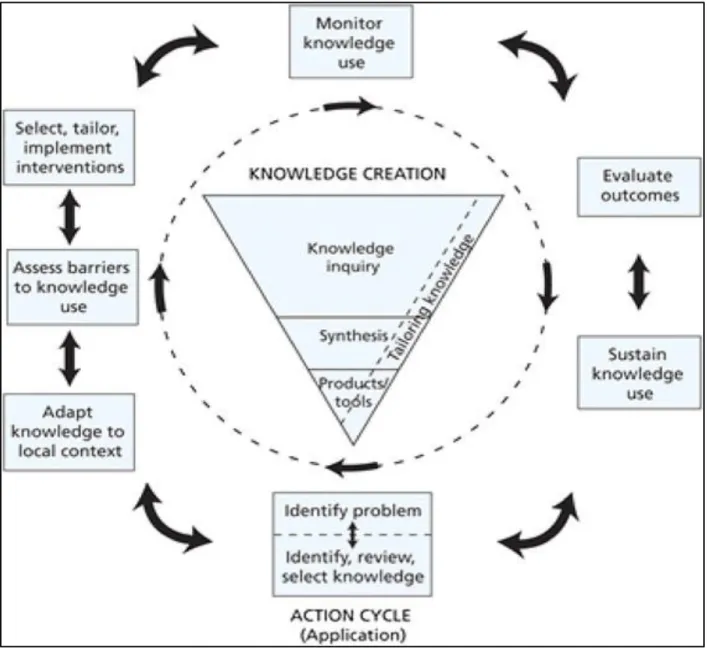
The Knowledge to Action Model. The Knowledge to Action (KTA) model is a
conceptual framework that provides a method to apply theory to implementation efforts (Graham et al., 2006; Field, Booth, Ilott, & Gerrish, 2014). The KTA model is composed of two distinct features: knowledge creation and the action cycle. Knowledge creation is represented by a funnel and consists of knowledge inquiry; synthesis; and tools/products. The action cycle surrounds this funnel and consists of seven phases which include the following: identifying the knowledge to action gaps; adapting knowledge; assessing barriers; selecting, tailoring, and implementing interventions; monitoring knowledge use; evaluating outcomes; and sustaining knowledge. The seven phases of the action cycle are dynamic because they can occur
sequentially or simultaneously; they are also impacted by the knowledge creation phases. The action cycle outlines the process and represents all of the activities that are needed to apply knowledge into practice. When implementing such as model, it is important to involve stakeholders and to tailor the knowledge to the needs of those who will be using it. The framework by Graham et al. (2016, p. 19) demonstrating knowledge creation and the action cycle can be found in Appendix C.
In the DNP student’s project, an example of knowledge creation was the development of a toolkit to facilitate the uptake of knowledge in faculty. The knowledge inquiry phase consisted of gathering evidence through querying studies related to the problem. After the knowledge inquiry phase was complete, the synthesis phase ensued which consisted of a literature review and evidence appraisal. Once the synthesis phase was complete, the toolkit was developed.
The action cycle consisted of seven phases which began with problem identification and ended in sustained knowledge use. In the DNP student’s project, the problem identified was stress in nursing students and the lack of awareness among faculty; this lack of awareness was ascertained through questionnaires. The needs of the faculty were also considered when developing the toolkit. The knowledge funnel provided knowledge that was adapted to the classroom. Barriers included the lack of knowledge, attitudes, motivation, and behavior in faculty and students; external barriers consisted of the environment. The intervention was tailored to the needs of the faculty and consisted primarily of education. To increase the
likelihood of implementation, the program was made cost-effective and was readily accessible to all faculty. Faculty knowledge and willingness to use the MBSR resources presented in the toolkit were assessed through questionnaires. To evaluate the effectiveness of the intervention, questionnaires were used to determine faculty understanding before and after receiving the required education.
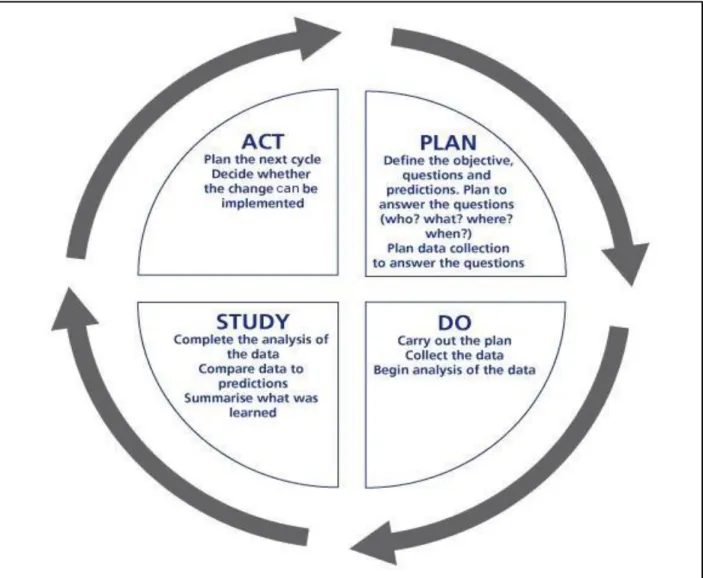
Plan, Do, Study, Act (PDSA) Model. In terms of quality improvement, one model that is commonly employed is the Plan, Do, Study, Act (PDSA) model. PDSA consists of four stages which constitute a cycle. In the first stage of the cycle, the Plan takes place which involves the identification of a goal, theory, or purpose. After the plan is determined, the Do step involves implementing the plan. Next comes the Study stage of the cycle which involves monitoring the
outcomes of the plan to test the validity for signs of progress or problems. The final step is to Act which integrates the learning generated by the process and allows for adjustments and changes. Over time, these four steps are repeated as part of the cycle of continuous quality improvement (Langley, Nolan, Norman, & Provost, 2009, p. 97). The PDSA model provides a useful framework for developing, testing, and implementing change that leads to improvement (Langley et al., 2009).
Plan. The plan defines the objectives, questions, and predictions (Langley et al., 2009). The main objective of the DNP student’s project was to educate faculty on the significance of stress in nursing students. One method to educate faculty was through the use of an educational toolkit. Faculty received an educational toolkit consisting of a Power Point presentation for faculty; the Perceived Stress Scale; and accompanying handouts on stress and MBSR for their students; please see Appendix E for items in the toolkit. Faculty were notified of the toolkit via email and were given a choice to participate in the training. Participants completed pre-post questionnaires to assess their knowledge of stress and MBSR. It was hypothesized that faculty would be more knowledgeable on stress and MBSR after the training. Pre-intervention scores were compared to post-intervention scores to assess the effectiveness of the training. A one group pre-post design was implemented.
Do. The plan commenced and faculty were emailed for inclusion into the program. After completing the pre-intervention questionnaires, the initial data was collected and recorded. Data analysis began when the faculty’s scores were calculated. The toolkit with educational resources was implemented and the faculty completed the training. After the program was completed, post-intervention questionnaires were conducted and recorded.
Study. During the study phase of the cycle, analysis of the data was completed. The data obtained were compared to the predictions made at the start of the program. A comparison of the data to the predictions made and a summary of the findings were presented.
Act. The next cycle of the PDSA was planned. No changes needed to be made and full implementation commenced.
Project Site and Sample. The project took place at a private, not-for-profit university in California. The campus is located in an urban area and offers a variety of undergraduate and graduate nursing programs. All online FNP faculty within the school of nursing were eligible for inclusion in the educational training. Out of the thirty-four faculty who were contacted, only five faculty participated in the project. The key stakeholders included the students, parents, staff, faculty, administrators, employers, and the community as a whole. While many of these stakeholders did not play a direct part in this project, administration played a key role in supporting faculty development for the sake of student learning and retention. The only resources needed by faculty were access to a computer, a university email account, and time to complete the training and questionnaires. Faculty were notified of this educational opportunity via email; those faculty who agreed to participate received the toolkit. By accessing the pre-post presentation questionnaires embedded in the presentation, faculty implied consent to participate.
Setting Facilitators and barriers. The only resources needed within the setting were computer access, an email account, and time. Constraints included the faculty’s current
schedule, computer access issues, and other obligations which may have led to time limitations. Potential facilitators included raising awareness by informing faculty of the toolkit; motivating and encouraging faculty to participate in the training; and by educating faculty on the benefits of MBSR. Internal barriers consisted of a lack of knowledge, motivation, attitude, and behavior.
The environment may have contributed as an external barrier. However, some of these barriers were overcome through education, support, positive motivation, a good attitude, role-modeling positive behavior, and maintaining a supportive faculty community.
Measurement Instruments
The purpose of the outcomes evaluation was to assess the program’s effectiveness at producing change. In order to measure the outcomes of this DNP project, a one group pre-post design was implemented to evaluate the effectiveness of the toolkit through questionnaires. While this type of design is not as rigorous as others, pre-post designs can produce useful results in terms of accountability and program improvement (World Health Organization [WHO], 2000). The pre-post design can determine if objectives are being met and which participants are improving or not improving. This design can also show if improvement is based on the amount of intervention given. According to the WHO (2000), positive results from a pre-post design can be gratifying to staff and may assist in meeting the funding requirements of organizations. Positive results can also lead to further support and resources which may lead to more rigorous studies in the future (WHO, 2000). When results are less than favorable, it shows that action must be taken to improve services.
A one group pre-post design demonstrated where individuals were before the intervention started and where they ended up after the intervention. Improvements in knowledge and
awareness were seen after the intervention; this means that the outcomes most likely
demonstrated the success and effectiveness of the intervention. The evaluation plan consisted of reviewing the outcomes of the intervention and deciding if improvements needed to be made to increase its effectiveness. In terms of quality improvement, the PDSA model was applied. Copies of the questionnaires can be found in Appendix F.
Data Collection Procedures
Faculty were contacted, recruited, and offered the proposed training; accessing the pre-post questionnaires implied consent to participate in the project. The questionnaires were completed online and participants were provided a link to complete them at the beginning and end of the presentation. The toolkit consisted of an educational Power Point presentation; Perceived Stress Scale; and educational handouts on stress and MBSR for students. The Stages of Change Theory provided the theoretical framework for the project and the KTA model was used for implementation. Once the project was implemented, the PDSA model was used to further assess performance. At the conclusion of the intervention, the data provided was analyzed and evaluated. The data obtained was also compared to the predictions made at the start of the program and a summary of the findings were presented.
Data Analysis/Statistical Analysis Plan
The method of collection was in the form of questionnaires. Utilizing Survey Monkey, the DNP student developed questionnaires; embedded links to the questionnaires in the
presentation; and analyzed the results of the intervention. It was the DNP student’s responsibility to analyze the data to determine if there had been any changes in faculty knowledge and understanding. The pre and post-intervention data was conveyed through percentages which allowed the DNP student to assess for change. The DNP student compared the results of the pre-intervention data with the post-intervention data to evaluate the
effectiveness of the presentation.
Cost-Benefit Analysis/Budget
The cost of this project was minimal. The DNP student incurred the cost of time that it took to develop, implement, and evaluate the project. Since the toolkit was developed and
prepared by the DNP student, faculty did not incur any expense in this area. The only expense that faculty incurred was the time it took to attend the presentation and answer the
questionnaires; this cost was minimal. From an administrative standpoint, since student retention is a priority for any university, it made good economic sense for the organization to allow faculty to participate in this project during work hours.
Timeline
The recruitment of eligible faculty began on March 6th, 2017. On March 6th, all of the online FNP faculty were sent an email to participate in the project; they were also given a copy of the toolkit. The faculty were given an opportunity to review and complete the presentation and questionnaires, at their convenience, from March 6th through March 27th; the surveys closed on March 27th. Analysis of the outcomes was completed on April 3rd. On April 8th, the results were presented to faculty. A table outlining the timeline can be found in Appendix G.
Ethical Considerations/Protection of Human Subjects
The ethical considerations inherent to this project involved the following ethical
principles: autonomy, justice, nonmaleficence, and beneficence. The DNP student demonstrated respect for autonomy by acknowledging each person’s right to make choices and take action. Through the fair treatment of all participants, the DNP student ensured justice. Nonmaleficence and beneficence were demonstrated by the DNP student through the prevention of harm to participants. When interacting with participants, the DNP student followed these ethical principles in all interactions.
All participants who completed the pre-post questionnaires implied consent to participate. The DNP student carefully conducted this project and followed the aforementioned principles when interacting with all participants. All information collected as part of the program
evaluation was aggregated data from the project participants and did not include any potential identifiers. The risk to individuals participating in this project were no different from the risk of individuals who did not participate in this project. Participant confidentiality was assured by coding the participants using individual identification numbers. In addition, the list of
participants and their individual identifying numbers were kept in a password protected computer in a locked room. All electronic files containing identifiable information were password
protected to prevent access by unauthorized users; only the DNP student had access to the computer and passwords. Furthermore, the questionnaires were completed via Survey Monkey which allowed for anonymity.
Results Outcomes
Out of the thirty-four faculty who were contacted, five faculty completed the pre-presentation questionnaire, watched the pre-presentation, and then completed the post-pre-presentation questionnaire. While only 14.7% of faculty participated, results indicated that the presentation and toolkit were well received by those who participated. Based on the results of the
questionnaires, the presentation increased faculty awareness of the issue of stress in nursing students and how mindfulness-based stress reduction techniques can reduce it.
The pre-presentation questionnaire yielded the following participant information: gender, age, level of highest education, years of teaching experience, thoughts on stress, and thoughts on MBSR. Faculty were also questioned whether they already provided resources to their students on stress reduction; for those who answered “no,” they were questioned if they thought that providing resources would be beneficial.
Of the five faculty who participated, 100% were female. 20% were between the ages of forty and forty-nine years old whereas 80% were age sixty and older. While 60% of the faculty had a PhD, 40% listed the DNP as their highest level of education. In terms of how long they had been teaching in higher education, 40% of respondents reported between six and ten years; 40% reported between 16-20 years; and 20% reported more than twenty years. When the participants were asked to define stress, responses included the following: “Stress is a state of emotional tension;” “Being anxious, worried, and overwhelmed;” “Sense of helplessness and sense of being overwhelmed;” “A feeling of over whelm, increased heart rate, fatigue, memory difficulty, feeling like you can keep up with expectations;” and “When I find I’m gritting my teeth and feel overwhelmed.”
According to the pre-presentation questionnaire, only 20% of faculty reported stress as a “big problem” for students while 80% viewed stress as a “moderate problem.” When faculty were asked if they provided any materials or resources to help students manage their stress, only 20% responded “yes.” Of the 80% of respondents who reported that they did not provide materials or resources on stress to their students, 100% of them thought it would be helpful. Of the faculty queried, 20% reported having experience with MBSR while 80% did not. When faculty were asked if they would be willing to provide resources on MBSR techniques in their classroom, 100% of the respondents stated “yes.”
The post-presentation questionnaire yielded the following information: participants’ views on stress and MBSR; an assessment of faculty learning; whether faculty were willing to use the resources provided in the toolkit; faculty thoughts on the significance of stress, post-presentation; the effectiveness of the post-presentation; and any additional comments that faculty wanted to share.
After viewing the presentation, 60% of the respondents reported that their view on stress had changed while 40% reported that it did not. Of the 60% of faculty who reported that their view on stress had changed, two respondents, 30%, reported that stress was a much bigger issue for their students than they had realized. One faculty member stated that she “was reminded of how we need to take time to meditate and practice self-awareness.” When faculty were asked if they thought MBSR techniques appear to reduce stress, 100% responded “yes.” In terms of faculty learning, when asked to name three MBSR techniques, all five respondents were able to name three techniques which were discussed in the presentation.
When faculty were asked if they would use the resources from the toolkit in their classrooms, 100% stated “yes.” When faculty were queried a second time on how big of a problem stress was for their students, 80% stated a “big problem.” There was a 60% increase in the number of faculty who reported stress as a “big problem” for students post-presentation; this increase demonstrates greater awareness of the issue of stress among the nursing faculty
surveyed.
In regards to the presentation, 80% of the respondents reported the presentation as “excellent” and 20% reported the presentation as “good.” Additional comments on the presentation provided by faculty included: “Great presentation! Very insightful;” “Excellent presentation. I didn’t realize what a big issue stress was for my students;” “I will definitely add these resources to my classroom;” “Wonderful presentation. Gave me great ideas to manage my own stress plus educate others;” and “I am excited to offer it to my students.”
In summary, key results of the project included the following information:
1. An educational intervention Power Point presentation and toolkit were provided to online FNP nursing faculty at a California university in March 2017.
2. After the educational intervention, participants reported increased knowledge on the significance of stress in nursing students and how MBSR techniques can be used to reduce this stress.
3. While 20% of the respondents reported stress as a “big problem” for their students pre-presentation, this number increased to 80% post-presentation; this shows a 60% increase in the faculty’s level of awareness and thus demonstrates learning.
4. When provided with the toolkit consisting of resources to use in their classrooms, 100% of faculty stated they would use it; this is a substantial increase of 80% over the 20% of faculty who were already using such resources.
Facilitators and barriers. Facilitators consisted of the ease of use of the already developed toolkit. Faculty were able to download resources from the toolkit and implement them in their classrooms; this saves time and expense. Faculty were also able to easily use the resources in their online and on campus classrooms. Because the toolkit provided numerous resources on stress, stress reduction, and MBSR, faculty did not need to spend time searching for such
materials. Barriers included the faculty’s unwillingness to attend the presentation due to time or other issues. Additionally, the presentation was provided to all online FNP faculty and is still available to them. It is hoped that this availability will facilitate greater exposure and thus learning and use of the toolkit.
Discussion Benefits of the Toolkit
The benefits of the toolkit are numerous. The toolkit provides resources for faculty and students which include the Perceived Stress Scale (PSS); an informational handout on stress; and several handouts on MBSR techniques. The PSS allows students to assess their own stress levels
initially, when the materials are presented, and again at a later date to assess for effectiveness. The informational handout on stress explains to students what stress is, how it affects them, and what they can do about it. There are four instructional handouts on MBSR techniques: mindful breathing, mindful eating, body scan meditation, and mindful yoga. An additional handout on mindfulness meditation is included which teaches students ten steps to mindfulness meditation. The final handout on yoga displays various yoga poses that students can practice on their own.
The toolkit emphasizes the awareness of stress through self-assessment and provides educational materials on preventing, reducing, and managing stress. These resources teach safe and efficacious lifestyle changes which students can adopt. Finally, the toolkit provides an easy to implement resource which is highly valuable to students and faculty alike.
Limitations
Limitations included the small number of survey participants. Out of the thirty-four faculty who were contacted to attend the presentation and complete the pre-post questionnaires, only five faculty participated. Of these five faculty, 100% of the participants were female. Due to the small number of female participants, the results may not be generalizable. The results may also not be applicable to other institutions because the project was completed at one university located in California.
While there may have been observed changes in outcome indicators among the
intervention participants, all of these changes cannot be attributed to the intervention alone using the single group pre-test, post-test design; this is because there were no comparison groups. This non-experimental design consists of an intervention group only and lacks a comparison or
control group which makes it a weak design. Without a comparison group, it can be difficult to assess what would have happened in the absence of the intervention. Furthermore, the surveys
can be challenging to validate because they focus on qualitative data. Nonetheless, qualitative data was needed because evidence and statistics already exist on stress in nursing students and the effectiveness of MBSR.
Suggestions and Recommendations
In terms of the survey questions, the open-ended question asking faculty to define stress in the pre-presentation questionnaire could have been asked in the post-presentation
questionnaire to assess for learning effectiveness. Suggestions include providing the presentation, toolkit, and surveys to students at multiple universities to better determine the presentation’s effectiveness. Another suggestion is to require all nursing faculty to complete the surveys and to utilize the resources provided in their classrooms. Recommendations for future studies include examining students’ PSS scores initially, providing the resources from the toolkit, and then reexamining the PSS scores at a later date to evaluate the effectiveness of the MBSR techniques provided in the toolkit. Finally, faculty can be surveyed at a later date to determine if they are still using the resources provided in the toolkit and if they have any recommendations on materials that should be added. Future studies can include comparing this toolkit to another intervention to assess for effectiveness.
It is this DNP student’s opinion that screening, identification, and treatment of stress in the nursing student population is of utmost importance. Nursing students need to understand the importance of self-care and how to manage their stress. By learning MBSR techniques, nursing students will be better prepared to care for themselves and their patients as well. It is vitally important that universities and nursing programs alike adopt programs or provide resources for their students on how to manage their stress. Furthermore, by learning techniques such as
MBSR, nursing students are in a great position to educate patients on the importance of stress reduction and the role of MBSR.
Conclusion
Nursing students experience a significant amount of stress during their professional education. Because universities, faculty, and even the students themselves may not be fully aware of the issue of stress, educational interventions that promote awareness and provide strategies to reduce stress are needed. The purpose of this DNP project was to develop a toolkit for faculty consisting of a Power Point presentation; Perceived Stress Scale; and student
handouts on stress and MBSR. The presentation was developed to educate faculty on the
significance of stress in their students and to teach them about the role of MBSR in reducing this stress. The toolkit contained materials to educate students on stress, a screening tool to assess for stress, and informational handouts on MBSR techniques. The goal of this DNP student was to provide faculty with best practice strategies to reduce stress in their students.
In retrospect, it would have been beneficial to have had more faculty participants and an additional site to provide a comparison. A major limitation was the low number of faculty participants. Because the presentation and toolkit are still available to faculty, it is hoped that more faculty will view the presentation and utilize the resources provided in the toolkit in their classrooms. The project would have had more credibility if faculty were surveyed at a later date to see if they were still using the resources provided. In addition, surveying the students would have provided valuable information on their stress levels and the effectiveness of the MBSR techniques presented. Through the implementation of this project, it is hoped that universities, faculty, and students will become more aware of the issue of stress and how to better manage it.
References
Aeamla-Or, N., Hazelton, M., & Rossiter, R. (2015). Effects of mindfulness-based stress reduction on stress, depression, self-esteem, and mindfulness in Thai nursing students.
International Journal of Mental Health Nursing,24, 1-49. doi:10.1111/inm.12172 American Psychological Association. (n.d.). How stress affects the body. Retrieved from
http://wwwoutage.apa.org.s3-website-us-east-1.amazonaws.com/
American Psychological Association. (2015). Stress in America: Paying with our health. Retrieved from https://www.apa.org/news/press/releases/stress/2014/stress-report.pdf American Psychological Association, Center for Organization Excellence. (2008). By the
numbers: A psychologically healthy workplace fact sheet. Retrieved from http://www.apaexcellence.org/resources/ goodcompany/newsletter/article/44 Anxiety & Depression Association of America. (n.d.). Stress. Retrieved from
http://www.adaa.org/understanding-anxiety/related-illnesses/stress
Anxiety & Depression Association of America. (n.d.). Understanding the facts. Retrieved from http://www.adaa.org/understanding-anxiety
Associated Press. (2009). Economy, college stress, and mental health poll. Retrieved from http://cdn.halfofus.com/wp-content/uploads/2013/10/mtvU-AP-2009-Economy-College-Stress-and-Mental-Health-Poll-Executive-Summary-May-2009.pdf
Barbosa, P., Raymond, G., Zlotnick, C., Wilk, J., Toomey, R. I.,II, & Mitchell, J. I.,II. (2013). Mindfulness-based stress reduction training is associated with greater empathy and reduced anxiety for graduate healthcare students. Education for Health: Change in Learning & Practice, 26(1), 9-14.
Beck, D.L., Hackett, M.B., Srivastava, R., McKim, E., Rockwell, B. (2004). Perceived level and sources of stress in university professional schools. Journal of Nursing Education, 36(4), 180-186.
Bergen-Cico, D., Possemato, K., & Cheon, S. (2013). Examining the efficacy of a brief
mindfulness-based stress reduction (brief MBSR) program on psychological health. Journal of American College Health, 61(6), 348-360.
Brown, N. (2015). Mindfulness techniques to reduce stress. Retrieved from https://www.fix.com/blog/mindfulness-techniques-to-reduce-stress/
Call, D., Miron, L., & Orcutt, H. (2014). Effectiveness of brief mindfulness techniques in reducing symptoms of anxiety and stress. Mindfulness, 5(6), 658-668. doi:10.1007/s12671-013-0218-6
Centers for Disease Control. (2015a). Burden of mental illness. Retrieved from http://www.cdc.gov/mentalhealth/basics/burden.htm
Centers for Disease Control. (2015b). Coping with stress. Retrieved from http://www.cdc.gov/violenceprevention/ pub/coping_with_stress_tips.html
Cohen, J. S., & Miller, L. J. (2009). Interpersonal mindfulness training for well-being: A pilot study with psychology graduate students. Teachers College Record, 111(12), 2760-2774. Cohen, S., Kamarck, T., & Mermelstein, R. (1983). A global measure of perceived stress.
Journal of Health and Social Behavior, 24(4), 385-396.
Erogul, M., Singer, G., McIntyre, T., & Stefanov, D. G. (2014). Abridged mindfulness intervention to support wellness in first-year medical students. Teaching and Learning in Medicine, 26(4), 350-356. doi:10.1080/10401334.2014.945025
Field, B., Booth, A., Ilott, I., & Gerrish, K. (2014). Using the Knowledge to Action Framework in practice: A citation analysis and systematic review. Implementation Science, 9, 172. http://doi.org/10.1186/s13012-014-0172-2
Graham, I., Logan, J., Harrison, M., Strauss, S., Tetroe, J., Caswel, W., Robinson, N. (2006). Lost in knowledge translation: Time for a map? The Journal of Continuing Education in the Health Professions, 26(1), 13-24.
Halland, E., Vibe, Solhaug, I., Friborg, O., Rosenvinge, J. H., Tyssen, R., Bjørdnal, A. (2015). Mindfulness training improves problem-focused coping in psychology and medical students: Results from a randomized controlled trial. College Student Journal, 49(3), 387-398.
Harvard School of Public Health. (2014). The burden of stress in America. Retrieved from http://media.npr.org/documents/2014/july/npr_rwfj_harvard_stress_poll.pdf
Kemper, K. J., & Yun, J. (2015). Group online mindfulness training: Proof of concept. Journal of Evidence-Based Complementary & Alternative Medicine, 20(1), 73-75. doi:10.1177/ 2156587214553306
Langley, G.L., Nolam. K.M., Norman, C.L., & Provost, L.P. (2009). The improvement guide: A practical approach to enhancing organizational performance. San Francisco, CA: Jossey-Bass Publishers.
Maville, J.A., Kranz, P.L., Tucker, B.A. (2004). Perceived stress reported by nurse practitioner students. Journal of American Academic Nurse Practitioners, 16(6), 257-262.
Moe., S. (2015). Infographic: 10 Steps to Mindful Meditation. Retrieved from https://www.garrisoninstitute.org/blog/10-steps-to-mindfulness-meditation/
http://www.cdc.gov/niosh/docs/99-101/
National Institute of Mental Health. (2016). Anxiety disorders. Retrieved from http://www.nimh.nih.gov/health/topics/anxiety-disorders/index.shtml National Institute of Mental Health. (n.d.). Fact sheet on stress. Retrieved from
https://www.nimh.nih.gov/health/publications/stress/index.shtml/index.shtml
O’Connor, T. (2013). Men in the nursing profession: masculinities and gendered identities
(Doctoral dissertation). Retrieved from CINAHL Complete.
Oman, D., Shapiro, S. L., Thoresen, C. E., Plante, T. G., & Flinders, T. (2008). Meditation lowers stress and supports forgiveness among college students: A randomized controlled trial. Journal of American College Health, 56(5), 569-578.
Owen, W. Fagerstrom, D., & Smith, L. (2008). Show me how: 500 things you should know instructions for life from the everyday to the exotic. New York: NY: Harper.
Pro-change.com. (n.d.). The Transtheoretical Model. Retrieved from http://www.prochange.com/transtheoretical-model-of-behavior-change
Prochaska, J., DiClemente, C., & Norcross, J. (1992). In search of how people change: Applications to addictive behaviors. American Psychologist, 47(9),1002-1114. Pryjmachuk, S. (2004). Study reveals effects of stress. Retrieved from
http://www.nsna.org/Portals/0/Skins/NSNA/pdf/Imprint_SeptOct07_Feat_BeatStress.pdf Ramler, T. R., Tennison, L. R., Lynch, J., & Murphy, P. (2015). Mindfulness and the college
transition: The efficacy of an adapted mindfulness-based stress reduction intervention in fostering adjustment among first-year students. Mindfulness, doi:10.1007/s12671-015-0398-3
Regehr, C., Glancy, D., & Pitts, A. (2013). 2614 – Interventions to reduce stress in university students: A review and meta-analysis. European Psychiatry, 28(1). doi:10.1016/S0924-9338(13)77263-8
Rosenzweig, S., Reibel, D. K., Greeson, J. M., Brainard, G. C., & Hojat, M. (2003). Mindfulness-based stress reduction lowers psychological distress in medical students.
Teaching and Learning in Medicine, 15(2), 88-92. doi:10.1207/S15328015TLM1502_03 Rosch, P.J. (2001). The quandary of job stress compensation. Health and Stress, 3, 1-4.
Shields, L.R. (2011). Teaching mindfulness techniques to nursing students for stress reduction and self-care. Doctor of Nursing Practice Systems Change Projects. Paper 18. Retrieved from http://sophia.stkate.edu/cgi/viewcontent.cgi?article=1019&context=dnp_projects Shiralkar, M. T., Harris, T. B., Eddins-Folensbee, F., & Coverdale, J. H. (2013). A systematic
review of stress-management programs for medical students. Academic Psychiatry, 37(3), 158-164.
Substance Abuse & Mental Health Services Administration. (2015). Mental disorders. Retrieved from http://www.samhsa.gov/disorders/mental
University of Massachusetts Medical School (n.d.). History of MBSR. Retrieved from http://www.umassmed.edu/cfm/stress-reduction/history-of-mbsr
University of Massachusetts Medical School. (2014). Mindfulness-based stress reduction (MBSR): Standards of practice. Retrieved from https://www.umassmed.edu/
contentassets/24cd221488584125835e2eddce7dbb89/mbsr_standards_of_practice_2014.pdf Vibe, M., Solhaug, I., Tyssen, R., Friborg, O., Rosenvinge, J. H., Sørlie, T., Bjørndal, A. (2015).
Does personality moderate the effects of mindfulness training for medical and psychology students? Mindfulness, 6(2), 281-289. doi:10.1007/s12671-013-0258-y
White, K. & Dudley-Brown, S. (2012). Translation of evidence into nursing and health care practice. New York, NY: Springer Publishing Company, LLC.
World Health Organization. (2000). Workbook 7: Outcome evaluations. Retrieved from file:///C:/Users/Donna/AppData/Local/Temp/7_outcome_evaluations-2.pdf
Appendix A Matrix Table Citation Sample and Location of Where Study was Performed Design Outcomes/Results of
the Intervention and/or Objectives of the study
Strengths and Weaknesses Evidence Level/ Grade Aeamla-Or, N., Hazelton, M., & Rossiter, R. (2015). Effects of mindfulness-based stress reduction on stress, depression, self-esteem, and mindfulness in Thai nursing students. International Journal of Mental Health Nursing,24, 1-49. doi:10.1111/in m.12172 127 participants Northern Thailand RCT Demonstrate the effectiveness of an MBSR program on stress, depression, self-esteem, and mindfulness in nursing students. Linear mixed modeling demonstrated a
significant difference between participants in the intervention group over the control for change over time in stress (p=0.0190), self-esteem (p=<0.0001), and mindfulness (p=0.0002). MBSR participants experienced a significant reduction in stress at 8 and 16 weeks compared to baseline.
Greater improvements in self-esteem and
mindfulness was
demonstrated at all time points. Strengths: Statistical results clearly discussed; participants were randomized; nursing student population Weaknesses : Small sample size; findings may not be generalizabl e. I B Barbosa, P., Raymond, G., Zlotnick, C., Wilk, J., Toomey, R. I.,II, & 13 participants United States Quasi-experi mental
Examine the impact of MBSR training on students. Significant decrease in anxiety at 8 and 11 Strengths: Statistical results discussed. Students from II B