CONDITION-SPECIFIC DIFFERENTIAL SUBNETWORK ANALYSIS FOR BIOLOGICAL SYSTEMS
Deepali Jhamb
Submitted to the faculty of the University Graduate School in partial fulfillment of the requirements
for the degree Doctor of Philosophy
in the School of Informatics and Computing, Indiana University
ii
Accepted by the Graduate Faculty, Indiana University, in partial fulfillment of the requirements for the degree of Doctor of Philosophy.
Xiaowen Liu, PhD, Chair
Mathew J. Palakal, PhD Doctoral Committee David L. Stocum, PhD December 12, 2014 Lang Li, PhD Yunlong Liu, PhD
iii © 2015 Deepali Jhamb
iv
DEDICATION
I dedicate my dissertation work to my parents who taught me to believe in myself and supported me to follow my passion for science. I also dedicate this work to my brother who made me laugh even in the toughest situations. I especially thank and dedicate this work to my dear husband for his endless love, support, and encouragement throughout this journey.
v
ACKNOWLEDGEMENTS
The last few years to get my PhD have been quite a journey. I learned many new skills, both professional and personal, and strengthened my interest in science and research. Most of all, this degree taught me to be patient and not give up!
There are many people who have supported me through this work and I would like to thank them all. Primarily, I would like to thank my gurus Dr. Mathew J. Palakal and Dr. David L. Stocum for their guidance and continual support. Not only did they encourage me to develop innovative methods for biological data analysis, they also taught me great interpersonal skills. Their enthusiasm and passion for research has been truly inspirational. I would also like to thank all my other committee members, Dr. Lang Li, Dr. Yunlong Liu, and Dr. Xiaowen Liu for their valuable time and suggestions that have helped improve this work.
I especially thank all the members of the TiMAP lab, particularly Dr. Meeta Pradhan. Meeta has been a great friend in the lab and her in-depth review of the work and manuscripts has been invaluable to my research. Stocum lab members have also
contributed greatly to my work: a big thanks to Nandini Rao, Fengyu Song, and Xiaoping Chen for helping me validate the Informatics hypothesis and in writing the manuscripts. I would also like to acknowledge our collaborators at the University of Illinois, Urbana-Champaign, Dr. Jo Ann Cameron, and Derek Milner for their help with validation of the proteomics datasets.
Many others in the IUPUI community have been instrumental during this work. I thank the amazing faculty and staff at the School of Informatics and Computing. Mary O’Neill, Jeff Hostetler, and Elizabeth Bunge helped me through all the administrative work. A special thanks to Jeff for proofreading this dissertation, it was a big help! I also thank Debra Barker at the Graduate School who made sure that all my documents were submitted in time and reviewed the format of this dissertation.
It is difficult to express my gratitude for my family and the wonderful bunch of friends who have stood by me at all times. I have been blessed to have you all in my life. Heartfelt thanks to Rajendra Kedlaya, Sreejith Ramakrishnan, Abhinita Mohanty, and Sudha Savant. Finally, I thank the Almighty for giving me such an amazing opportunity.
vi
This work was supported by grants from the W.M. Keck Foundation, the US Army Research Office (#W911NF07-10176), and the Telemedicine & Advanced Technology Research Center (TATRC, W81XWH-11-1-0743) to David L. Stocum.
My research is an important part of my life and I hope it will make a big impact in the lives of others someday.
vii Deepali Jhamb
CONDITION-SPECIFIC DIFFERENTIAL SUBNETWORK ANALYSIS FOR BIOLOGICAL SYSTEMS
Biological systems behave differently under different conditions. Advances in sequencing technology over the last decade have led to the generation of enormous amounts of condition-specific data. However, these measurements often fail to identify low abundance genes/proteins that can be biologically crucial. In this work, a novel text-mining system was first developed to extract condition-specific proteins from the biomedical literature. The literature-derived data was then combined with proteomics data to construct condition-specific protein interaction networks. Further, an innovative condition-specific differential analysis approach was designed to identify key differences, in the form of subnetworks, between any two given biological systems.
The framework developed here was implemented to understand the differences between limb regeneration-competent Ambystoma mexicanum and –deficient Xenopus laevis. This study provides an exhaustive systems level analysis to compare regeneration
competent and deficient subnetworks to show how molecular entities inter-connect with each other and are rewired during the formation of an accumulation blastema in
regenerating axolotl limbs. This study also demonstrates the importance of literature-derived knowledge, specific to limb regeneration, to augment the systems biology
analysis. Our findings show that although the proteins might be common between the two given biological conditions, they can have a high dissimilarity based on their biological
viii
and topological properties in the subnetwork. The knowledge gained from the distinguishing features of limb regeneration in amphibians can be used in future to chemically induce regeneration in mammalian systems.
The approach developed in this dissertation is scalable and adaptable to understand differential subnetworks between any two biological systems. This methodology will not only facilitate the understanding of biological processes and molecular functions which govern a given system but also provide novel intuitions about the pathophysiology of diseases/conditions.
ix
TABLE OF CONTENTS
List of Tables ... xii
List of Figures ... xiii
List of Abbreviations ... xiv
Chapter One : Introduction ...1
Overview of the Problem ...1
Limitations of the Present Approaches ...3
Summary of the Methodology ...4
Significance...5
Innovation ...6
Chapter Two : Background ...7
Bibliomics ...7 Biomedical Literature ...7 Information Retrieval ...7 Document Similarity ...8 Document Clustering ...9 Biomedical Ontologies...10 Systems Biology ...12
Topology of Biological Networks ...12
Modules and Motifs ...13
Network Comparison ...14
Limb Regeneration...16
Urodele Limb Regeneration ...16
Anuran Limb Regeneration...17
Regeneration-Competence vs. –Deficiency ...18
Chapter Three : Methods ...20
Proteomics...21
Sample Preparation ...21
Liquid Chromatography/Mass Spectrometry Analysis ...22
Protein Identification ...22
x
Bioinformatic Analysis ...24
Condition-Specific Data Mining ...25
Stage 1 ...26 Stage 2 ...27 Stage 3 ...28 Evaluation Metrics ...30 Stage 4 ...31 Condition-Specific Database ...31 Differential Subnetworks ...32 Network Construction ...33 Subnetwork Identification ...35 Subnetwork Validation ...36
Differential Subnetwork Analysis...37
Programming Specifications and Visualization Software ...38
Biological Validation ...38
Immunostaining And Image Analysis ...38
Segment Defect Regeneration...39
Chapter Four : Results ...41
Proteomics...41
Axolotl Proteomics ...41
Xenopus Proteomics ...42
Condition-Specific Data Mining ...43
Proof of Concept ...44
Concept List Generation ...45
Identification of Condition-Specific Articles...48
Data Validation ...51
Protein Extraction ...53
Network Analysis...53
Proof of Concept ...53
Condition-Specific Network Construction ...58
xi
Differential Subnetwork Analysis...68
Growth Factor Subnetwork Comparison ...69
Transcription Factor Subnetwork Comparison ...71
Extracellular Matrix Protein Subnetwork Comparison ...74
Biological Validation ...77
Proteomics Validation ...77
Segment Defect Regeneration...78
Chapter Five: Conclusions ...80
Summary ...80
Limitations and Future Work ...81
Significance...84
Appendix ...86
A1. Description of programs...86
A2. Description of database tables...89
References ...92 Curriculum Vitae
xii List of Tables
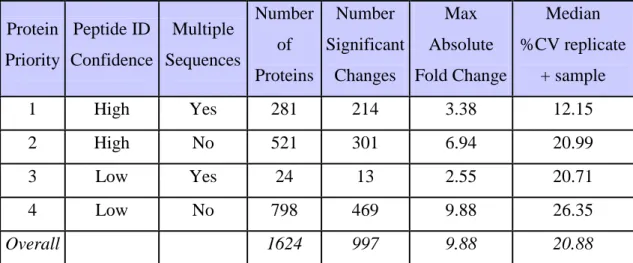
1. Summary for axolotl proteomics data ...41
2. Summary for Xenopus proteomics data ...42
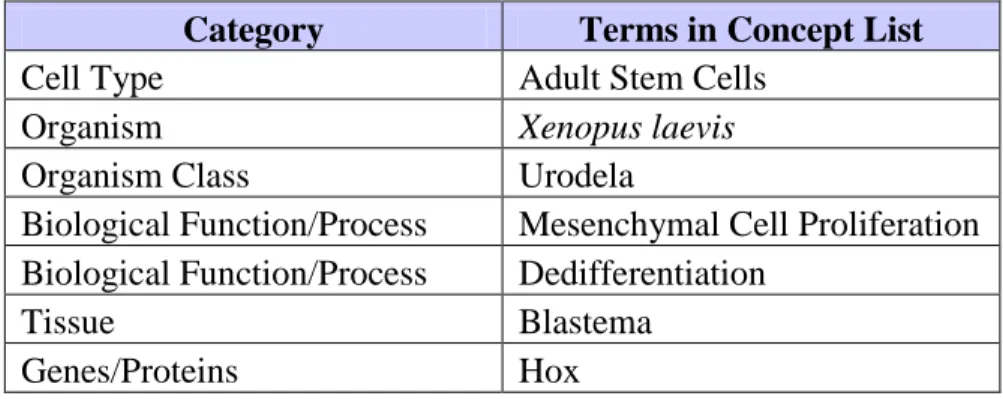
3. An example of concept list terms in limb regeneration ...47
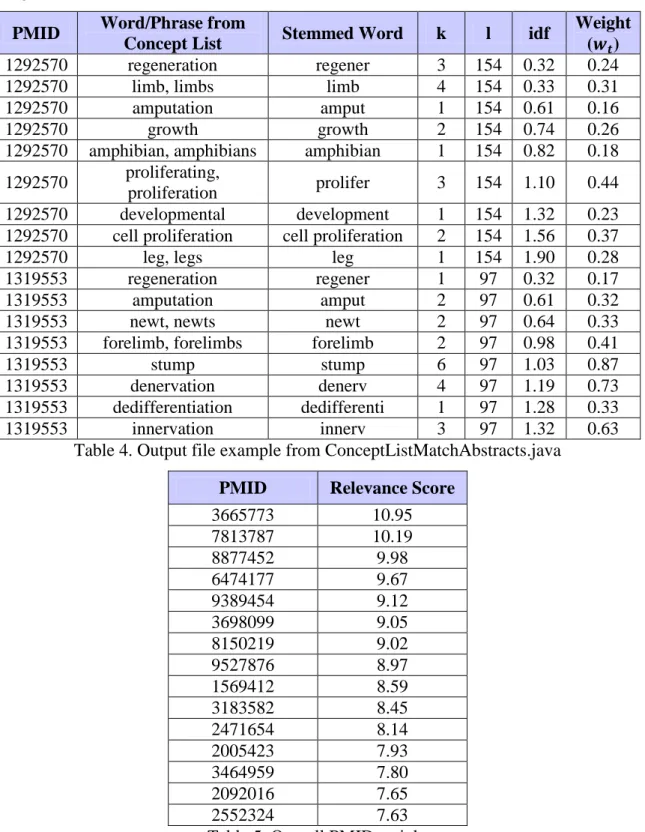
4. Output file example from ConceptListMatchAbstracts.java ...49
5. Overall PMID weight ...49
6. Evaluation metric results...51
7. Contingency values for evaluation metrics ...52
8. Growth factor subnetwork summary ...61
9. Biological process enrichment for HDGF subnetwork in axolotl ...62
10.Pathway enrichment for HDGF subnetwork in axolotl ...62
11.Significant TF subnetworks in axolotl ...64
12.Significant TF subnetworks in Xenopus ...65
13.Significant ECM protein subnetwork statistics for axolotl ...66
14.Significant ECM protein subnetwork statistics for Xenopus ...67
15.Proteins with high dissimilarity scores in HDGF subnetwork comparison ...70
16.Overall dissimilarity score of the highly significant subnetworks...71
17.Transcription factor subnetworks with high dissimilarity ...74
18.Extracellular matrix protein subnetworks with high dissimilarity ...75
xiii List of Figures
1. Overall methodology ...21
2. Overview of the condition-specific data mining methodology...25
3. Condition-specific database (CSDB) schema ...31
4. Differential subnetworks methodology overview ...32
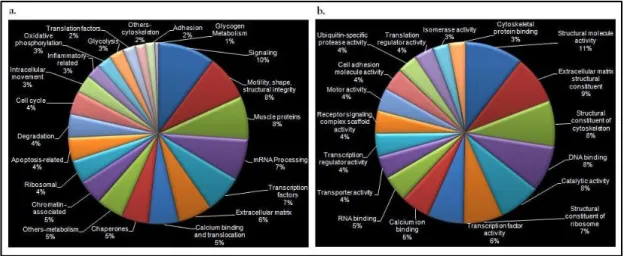
5. Biological process (a), and molecular function (b) categories for axolotl data ...42
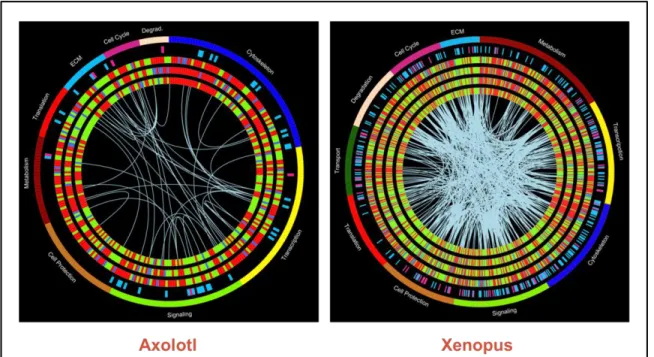
6. Circos representation of proteomics data in the axolotl and Xenopus ...43
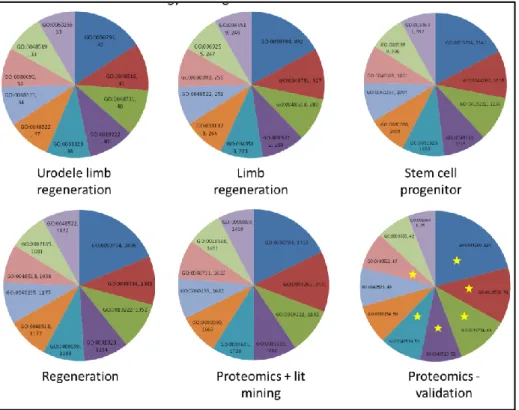
7. Significance of bibliomics knowledge ...45
8. PMID weight vs. number of articles ...50
9. ROC curve for the validation data ...52
10.EVI5 network ...54
11.Transcription factor network with the proteomics derived data ...55
12.Transcription factor and stem cell factor network in limb regeneration ...55
13.Networks of Axolotl (12a) and Xenopus (12b) ...56
14.Targets of c-Myc in the proteomics data ...56
15.Biological scoring vs. topological scoring for breast cancer proteins ...57
16.Condition-specific networks in axolotl (a) and Xenopus (b) ...59
17.HDGF subnetwork of axolotl highlighting dissimilarity ...70
18.Hierarchical clustering of the subnetworks with respect to dissimilarity scores ...72
19.Hierarchical clustering of the subnetworks with respect to dissimilarity scores ...73
20.HNRNPU neighborhood in axolotl (a) and Xenopus (b) ...76
21.Immunostained sections of axolotl hind limbs ...77
22.Two 50% defects treated with BMP4/HGF, three months post-operation ...78
xiv
List of Abbreviations AEC Apical Epithelial Cap
ANOVA Analysis Of Variance
AP Anteroposterior
ATM Automatic Term Mapping
AUC Area Under the Curve
BLASTp Basic Local Alignment Search Tool for Proteins
BP Biological Process
CL Concept List
CSD Critical Size Defect
CSDB Condition Specific Database CV Coefficient of Variance
Dpa Days Post Amputation
DS Dissimilarity Score
EBI European Bioinformatics Institute ECM Extracellular Matrix
EFO Experimental Factor Ontology
EHDA Human Developmental Anatomy Ontology
Eq Equation
EST Expressed Sequence Tags
FC Fold Change
FDR False Discovery Rate
FN False Negative
FP False Positive
FPR False Positive Rate
GF Growth Factor
GO Gene Ontology
HPLC High Performance Liquid Chromatography HPRD Human Protein Reference Database
xv IPA Ingenuity Pathway Analysis IR Information Retrieval
KEGG Kyoto Encyclopedia of Genes And Genomes KPGP Korean Personal Genome Project
LC Liquid Chromatography
MCC Mathew’s Correlation Coefficient
McSyBi Multi-Document Clustering System for Biomedicine MeSH/MESH Medical Subject Headings
MF Molecular Function
MS Mass Spectrometry
NCBI National Center for Biotechnology Information NCBO National Center for Biomedical Ontology NCIT National Cancer Institute Thesaurus
NF Nieuwkoop-Faber
NGS Next Generation Sequencing
NIFSTD Neuroscience Information Framework Standard Ontology
No. Number
OMIM Online Mendelian Inheritance In Man PBS Phosphate Buffered Saline
PIDM Protein Interaction detection Method PMID Pubmed Identifier
PMRA Pubmed Related Article PPIs Protein Protein Interactions
PubNet Publication Network Graph Utility RankSVM Rank Support Vector Machines
RefMed Relevance Feedback Search Engine for Pubmed RegEx Regular Expressions
ROC Receiver Operating Characteristic SIS Small Intestine Submucosa
SNOMED CT Systematized Nomenclature Of Medicine - Clinical Terms SQL Structured Query Language
xvi tBLASTn Translated BLAST
TF Transcription Factor
TF-IDF Term Frequency-Inverse Document Frequency
TN True Negative
TP True Positive
TPR True Positive Rate
TREC Text Retrieval Conferences
UMLS Unified Medical Language System
XLS Excel
1
CHAPTER ONE: INTRODUCTION Overview of the Problem
Systems biology was introduced in 2001 as a framework to study the behavior and relationships between different entities of a biological system [1]. The last fourteen years have seen tremendous progress in this field, leading to a paradigm shift in
biology—from being a descriptive science to a predictive science. In the 20th century, reductionism dominated the research in biology. It was based on the “divide and conquer” policy and hence focused on identification of smaller, simpler solutions of a complex biological system. This approach was largely successful in providing
information about several biological processes and molecular functions and also resulted in finding cures for several diseases, especially metabolic disorders. However, for complex diseases such as cancer, this approach has not succeeded and as more data is being collected, it has become clear that the complexity of a biological system is greater than the mere sum of its individual parts [1-4].
With the advent of sequencing technologies, enormous amounts of data are being generated and deposited in public repositories such as the Gene Expression Omnibus [5]. High throughput measurements are an important source of large and heterogeneous biological information such as genomics, transcriptomics, proteomics, interactomics, and variant data. However, high throughput measurements often fail to identify low abundant genes/proteins which can be biologically crucial [6, 7]. Biomedical literature or
publications are the most comprehensive resource of the knowledge amassed in this discipline. This collection can hence be used to extract the “missing” knowledge (not obtained by high throughput analysis). Since it is hard for scientists to manually keep up with this exploding amount of biomedical literature, text mining or automated retrieval of knowledge from biomedical literature has gained more importance over the last few years. Text mining has its strengths and weaknesses, the most common weakness being the noisy and unspecific data generated as a result of natural language processing. It is important to develop effective and efficient information retrieval techniques to
circumvent the problem of noisy data.
An important issue that needs to be addressed during automated information retrieval is content-focused querying. Any particular biological entity is often discussed
2
in sufficient detail in a given article. However, the traditional text mining approaches usually discard these content-specific details and return a subset of documents which contain the keywords specified by the user. This results in generation of a lot of false-positives or noisy data. For example, from a sentence like “collagen deposition is suppressed during limb regeneration, so we investigated collagen deposition and apical epithelial cap (AEC) formation during axolotl limb regeneration,” biological features such as appendage (limb), biological process (regeneration), tissue (AEC), and organism (axolotl) are usually ignored by keyword retrieval methods (unless these were specified as keywords). Such biological features are crucial to defining and understanding the concept/context of an article. Several document clustering or text categorization approaches have been used to cluster the documents based on context. However, these approaches either suffer from the problem of high dimensionality and hence cannot be applied to large collections such as PubMed [8, 9] or are based on ontologies such as Medical Subject Headings (MeSH) [10] which are not always up to date and can generate a high number of false positives. The performance evaluation of these methods has suggested that it varies based on the domain/field under investigation [8].
Systems biology models can be used to logically integrate the knowledge (such as genes/proteins) extracted from context-specific text mining and high throughput
measurements. This approach can build the foundation to integrate several datasets in an attempt to better understand complex biological systems. Network analysis has found application in several areas ranging from electrical circuits to social networks. It is also now being extensively used to study the inter-relations between different molecular components of a biological system [11]. Most of the work in network biology has focused on static networks. Static networks however merely represent the state of a system at any given point and cannot be used to make predictions about network behavior. As described by Hiroki Kitano [4], one of the pioneers in systems biology:
“Although such a diagram represents an important first step, it is analogous to a static roadmap, whereas what we really seek to know are the traffic patterns, why such traffic patterns emerge, and how we can control them.”
One of the key challenges then is to understand how the networks change with different states of a system. In other words, it is critical to understand the network
3
dynamics or “rewiring.” Biological systems behave differently under different conditions and network comparisons such as between disease and normal state can offer novel intuitions into the pathophysiological process of a disease and also suggest
biomarkers/drug targets for the same. This can also help formulate a novel hypothesis about the change in the biological processes, and regulation patterns across different conditions.
Limitations of the Present Approaches
Several studies have been performed for context-specific mining and network comparisons in the biomedical domain (as described in the Background section of this thesis). However, the following are some of the pitfalls in current studies:
1. Most importantly, to our knowledge none of the studies so far has logically integrated context-specific text mining and high throughput datasets in a systems biology
framework to compare subnetworks across different biological conditions for target discovery. Most of the studies have either focused on information retrieval techniques or systems biology analysis on high throughput measurements alone. In our opinion, information retrieval, information extraction, and downstream analysis through systems biology together can help formulate biologically meaningful hypotheses to identify new targets or to understand the pathophysiology of complex biological systems.
2. The present work in document clustering or context based information retrieval suffers from the “curse of dimensionality” and hence cannot be used to cluster a large set of documents. The current approaches also generate a lot of false positives and the performance of a given method is highly dependent on the field/domain.
3. Although a great deal of work has been done in the identification of functional modules and network analysis, not enough work has been done to identify
functionally differential components by comparing subnetworks/networks between biological systems. The current network comparison algorithms are focused on either the local or global alignment of networks with respect to sequence- or structure-based similarity between the network nodes. These approaches are suitable to find the common structures between networks so as to establish phylogenetic relationships but
4
are not capable of identifying the functionally differential subnetwork components between the two conditions.
4. Network directionality has not been considered in most of the current network
comparison approaches, which is critical to understanding the regulatory mechanisms and both the downstream and upstream effectors of a process.
5. Existing tools like Ingenuity Pathway Analysis (IPA) [12], MetaCoreTM from GeneGO [13] also perform enrichment analysis, however their enrichment is restricted to the use of either the function or pathway information and they do not integrate condition-specific data from the biomedical literature. These tools have built-in algorithms to generate a list of important networks in a biological condition but do not contain effective differential network comparison algorithms. Moreover, these are commercial software tools and not freely available public tools.
6. Network comparisons have been done based on either topology or coexpression networks from high throughput datasets. Each has its own limitations—for instance, topology alone might not be able to identify biologically relevant information while high throughput datasets often fail to identify genes/proteins with relatively low expression level.
Summary of the Methodology
The methodology for the systematic subnetwork comparison between biological conditions developed in this study can be broadly categorized into three steps:
integration, filtration, and analysis. Briefly, an innovative algorithm was designed to mine the condition-specific (or context-specific) knowledge from the biomedical
literature which and integrate it with the high throughput data. This information was used to construct protein interaction networks which were filtered using a rule based novel algorithm to generate subnetworks, based on both the topological (interaction profile) and biological parameters such as molecular class, expression, literature relevance, function and pathway information. A unique subnetwork comparison algorithm to identify differential subnetworks then analyzed subnetworks between two conditions. This
algorithm, unlike current approaches, also considered the direction of interaction between the proteins on the subnetworks.
5
This framework described above was implemented to understand the difference between the limb regeneration competent system of Ambystoma mexicanum (axolotl) and the limb regeneration deficient system of adult Xenopus laevis froglets. Proteomics data from the amputated limbs of both systems at multiple time points was used as the high throughput data in this study. The context-specific information retrieval method was then used to retrieve regeneration-specific articles. Proteins extracted from these relevant articles and proteomics data proteins were used to build protein interaction networks for the limb regeneration-competent and -deficient systems. The novel subnetwork
comparison algorithm was further used to identify the most differential growth factor (GF), transcription factor (TF) and extracellular matrix (ECM) protein subnetworks in these conditions. This led to the generation of a hypothesis to suggest potential protein targets which can be instrumental in conferring limb-regeneration ability on Ambystoma mexicanum. A similar condition-specific data mining methodology was applied in order to understand the segment defect regeneration across a critical size defect. The key GFs identified by this study were validated in the biology laboratory and yielded positive results, thus demonstrating the efficiency of the approach developed.
The approach developed in this dissertation is scalable and adaptable to understand differential subnetworks between any two biological systems. This methodology will not only facilitate the understanding of biological processes and molecular functions which govern a given system but also provide novel intuitions about the pathophysiology of diseases/conditions.
Significance
This approach is expected to increase general understanding about the underlying mechanisms of a biological condition. As an example, a comparison between the
regeneration-competent and –deficient system provided insight into the complex
mechanisms which confer regeneration ability on urodeles as compared to adult anurans. The knowledge gained from the distinguishing features of limb regeneration at systems level in amphibians can then be used to chemically induce regeneration in mammalian systems. These mechanisms can also be further analyzed to understand why humans are not capable of regenerating complex tissues. Hence, significant targets might be
6
can also be performed to distinguish other biological systems—such as performing a comparison between different types of cancer in order to provide intuitions about the pathophysiological processes of cancer.
Innovation
1. The novel bibliomics methodology proposed in this study identified context-specific data from the biomedical literature. Traditional text mining approaches lack in the identification of large-scale context-specific information from the text. This approach was used to identify limb regeneration-specific articles from a set of approximately 200,000 documents—which is higher than any of the currently available methods. The approach developed here achieved a Mathew’s Correlation Coefficient (MCC) score of 0.92 and is easily scalable to a much higher number of articles.
2. An innovative rule based algorithm was developed to identify subnetworks from a global context-specific biological network. This algorithm used both the biological and topological properties of proteins on the network.
3. To our knowledge, this is the only functional and molecular class based differential subnetwork analysis which includes directed protein interactions between proteins mined from condition-specific literature and high throughput experiments.
4. Systems biology approaches have not been applied yet to study the limb regeneration system and the present studies have not been able to confer regeneration-competence upon the deficient mammals. We propose a novel way to analyze the regeneration system so as to discover the governing molecules and mechanisms of limb
regeneration in axolotl.
5. In a screen of growth factor combinations (identified by text mining and systems biology) and protein extracts of axolotl whole limb and regeneration blastema tissues, we found that a combination of BMP-4 and HGF, as well as limb tissue protein extract, but not blastema extract of amputated limbs, stimulated skeletal regeneration across 50% segment defects when delivered by a pig small intestine submucosa (SIS) scaffold.
6. There is enough evidence to indicate that regenerating cells show stem cell-like characteristics. Hence, we believe that the regeneration mechanisms unraveled here will also help in the progression of stem cell research and medicine.
7
CHAPTER TWO: BACKGROUND Bibliomics
Text mining refers to the discovery of novel patterns by automatically extracting information from text. This usually involves “connecting the dots” or different pieces of information from text and linking them together to derive a meaningful, testable
hypothesis [14]. Within the domain of text mining, the bioinformatics discipline which deals specifically with the structural and semantic analysis of the vast biomedical
literature is generally referred to as bibliomics. The advancement of new high throughput technologies and research capabilities in the last decade have contributed to the
exponential growth of biomedical literature [9]. As a result, bibliomics has gained more importance over the last few years. The ultimate goal of bibliomics is to make relevant judgments about new targets to help in progression of basic science and drug discovery.
Biomedical Literature
Biology has often been referred to as a knowledge-based science—unlike
chemistry and physics that can be defined by laws and mathematical equations. There is a huge amount of biological data (especially with the advent of current genomics
platforms) available for the research community. However, this data is complex, volatile, and heterogeneous [15, 16]. PubMed, a resource developed and maintained by the National Center for Biotechnology Information (NCBI), provides free access to over 24 million citations and abstracts in the biomedical literature [17]. In addition to PubMed there are several other data resources available from NCBI and the European
Bioinformatics Institute (EBI) for biomedical and genomic information [18, 19]. Several other initiatives have been taken by different research groups and institutions for
organization of biological information such as, but not limited to, UniProt [20], the Human Protein Reference Database (HPRD) [21], and BioGRID [22].
Information Retrieval
Information retrieval (IR) or obtaining relevant information from a large collection is typically the first task in text mining. Although PubMed provides the interface for querying the most comprehensive resource for the biomedical literature, users are often overwhelmed with the long list of results. It has been previously shown that over one-third of the searches on PubMed yield 100 or more documents [23]. The
8
strategy for IR in PubMed uses automatic term mapping (ATM) for a given query. Briefly, the terms in a query are searched in several lists in the following order: MeSH terms, journal names, and author names. If there is a match in any list, mapping stops and the matched terms and query terms are searched in the “All Fields” of PubMed. If there is no match, PubMed builds a Boolean query with the query terms and searches in the “All Fields” [24]. Query expansion methods like the one used in PubMed and other methods such as retrieval feedback aim to increase the search accuracy [25]. However, some research suggests an improved performance while others suggest no improvement in retrieval by using the query expansion methods [26]. The accuracy of these methods varies with topics, the most common issue being the increased number of false positives. Since the users searching PubMed are usually interested in more specific hits to their domain, the value of query expansion to the end user is questionable [27].
Document Similarity
Document similarity is very crucial for the purpose of IR and several methods have been investigated which aim to improve the ranking of the search results so that similar documents (in relation to the query) rank higher [28, 29]. Text REtrieval
Conferences (TREC) have been a significant part of this effort including their genomics track which ran from 2003-2007 [30, 31]. The methods used for ranking the retrieved documents are generally derived from two earlier publications on vector space models or probabilistic models [28, 32]. MedlineRanker uses supervised learning to identify the list of discriminative words (nouns in a set of known documents) by using a linear Naïve Bayesian classifier. This method can rank a maximum of the 10,000 most recent articles in PubMed, related to the initial set of known domain-specific documents [33]. Several other features such as MeSH terms, Unified Medical Language System (UMLS) concepts, gene ontology (GO) terms, author names, journals, year of publication have been used by tools such as XplorMed, Multi-document clustering system for Biomedicine (McSyBi), and GOPubmed to improve the performance of IR in biomedical literature [34-37]. Alibaba, PubMed-EX, Information Hyperlinked over Proteins (iHOP), and EBIMed identify biomedical entities such as proteins, genes, drugs, diseases, etc. and then compute their co-occurrence in a sentence [38-41]. The method employed in
9
or location as nodes on the network [42]. The Relevance Feedback Search Engine for PubMed (RefMed) and MiSearch are examples of methods based on user feedback [43, 44]. RefMed uses learning to rank algorithms and Rank Support Vector Machines (RankSVM) to learn relevant documents based on user feedback [43]. The different methods to enhance IR in biomedical literature have been summarized effectively by Zhiyong Lu [9].
The different document similarity approaches in the biomedical domain can be broadly classified into: based, citation-based, and hybrid approaches [8]. The text-based approaches use a natural language processing toolkit such as tf-idf (term
frequency-inverse document frequency) to identify parts of text (words or phrases) which can be used for document clustering. Citation-based approaches are based on the concept that similar articles must have similar bibliographic information. Hybrid approaches integrate both text and citation -based methods. Performance results of these approaches are domain/field specific and hence there is no consensus on the best performing method.
Document Clustering
Document clustering or text categorization groups similar documents to provide relevant results for a users’ query. Document clustering is often limited to a small set of documents since it suffers from the “curse of dimensionality.” Most of the approaches for document clustering follow a vector space model to represent the important words from the text and hence suffer from the problem of high dimensionality [45]. Several different machine learning or statistical approaches have been employed for document clustering such as Bayes probability distribution [46], neural networks [47], nearest neighbor classification [48], decision trees [49], etc.
One of the first and most well recognized studies that described document clustering on biomedical data, TextQuest, was based on creating a fixed length array bit vector representation of important words (identified by tf-idf and frequency distribution) for each document and then using k-means unsupervised clustering to cluster the
documents. A final set of representational terms of a cluster were identified by using log-odds ratio [50]. This work has been extended as BioTextQuest and more recently as BioTextQuest+ [51, 52]. Although the fundamental principles are the same as in the initial study, it uses better stemming and clustering algorithms. In the most recent
10
version, queries can be made on both PubMed and Online Mendelian Inheritance in Man (OMIM) resources—it also enables extraction of biological entities such as genes and proteins from the relevant document clusters. The recent versions also support better visualization of results such as tag clouds of overrepresented terms [53]. Several other approaches have taken advantage of ontologies such as MeSH to cluster articles in the biomedical literature [54-57]. The use of ontologies reduces the burden of dimensionality as well as proves to be an effective way to deal with synonyms. However, most of these approaches work only on a small set of documents and results vary based on the
field/domain being investigated. The study by Boyack et al is the most comprehensive evaluation of different text-based document similarity measures for document clustering such as tf-idf, latent semantic analysis, topic modeling, self-organizing maps, and Poisson-based methods [8]. In their study, they found PubMed Related Article search algorithm (PMRA) [58] and BM25 [59] perform the best.
The PubMed Related Article (PMRA) search algorithm and BM25, both use Poisson distribution for calculating term-weight. However, there are fundamental differences between these two approaches. The main goal of PMRA is to identify
“relatedness” of documents rather than “relevance” as estimated by BM25. The retrieval model employed in PMRA is used to populate the related articles in the right hand panel of PubMed. The derivation of Poisson parameters in these two models has important differences especially in the definition of “elite” vs. “non-elite” distributions. PMRA method also accounts for document length since identification of related documents uses the entire document as a query and so query length normalization plays a significant role in the model. PMRA is a topic based content similarity model which uses MeSH terms, title, and abstract words to determine concept based term frequencies [58, 60].
Biomedical Ontologies
Ontologies provide a computational framework to help in the structural and semantic classification of biological data. Ontologies help tremendously in the storage, representation, and dissemination of biological information [15, 16]. Some well-known ontologies in the biomedical domain are: GO[61], UMLS [62], MeSH [10], and
Systematized Nomenclature of Medicine - Clinical Terms (SNOMED CT) [63]. The National Center for Biomedical Ontology (NCBO) maintains a repository of biomedical
11
ontologies that can be accessed programmatically or through a web-based resource called BioPortal [64, 65]. A similar effort is the ZOOMA, which uses the Experimental Factor Ontology (EFO) available from EBI [66].
NCBO BioPortal provides the most comprehensive collection of biomedical ontologies. At present, it contains 393 ontologies with 5,299,586 classes. This can be easily used to build tools and web services to solve specific problems in the biomedical domain. Such ontologies facilitate translational work in biomedicine by allowing a semantic integration of biological terms. Ontologies make it possible to draw correlations between different biological entities such as diseases, proteins, etc.
Ontologies in BioPortal can be searched in many different ways, including the standard tree based search, or queried programmatically through web services [64]. The “Mapping” functionality allows the user to search if there are shared terms between two or more ontologies to facilitate direct comparisons. The “Recommender” and
“Annotator” are two very useful tools for natural language processing of the biomedical text. The “Recommender” service takes the text documents (such as abstracts of articles) or keywords as input and suggests the most appropriate ontologies related to the text. It also provides a ranking of the ontologies based on coverage, connectivity, and the number of concepts in ontologies [67]. NCBO “Annotator” is the most widely used tool which takes the text as input and returns matched terms from ontologies. The user can select direct or hierarchical matching to the ontology concepts and the ontologies to use can be specified as well [68]. NCBO “Resource Index” is another useful tool which relates the ontology concepts with the metadata from the online data resources such as ArrayExpress. It can be linked with the output of Annotator to identify useful online resources related to the matching ontology concepts from the text [69].
The condition-specific data mining algorithm developed in this study used the ontologies specific to a biological domain to first build a list of concept terms. These terms were then used to retrieve condition-specific documents from which proteins were extracted and classified as literature-derived condition specific proteins. We believe that the work done here is scalable to multiple biological domains, is more specific (concept list is different and consists of terms specific for each biological domains since it is built
12
on a known set of positive articles from that domain), and is capable of processing a much higher number of documents as compared to the current studies.
Systems Biology
Topology of Biological Networks
A biological network is modeled as a directed or undirected graph, with a set of nodes (proteins, genes, etc.) and edges (interactions between the nodes). These graphs can be weighted or unweighted on both nodes and edges. Different network analysis algorithms are now available to understand biological networks. Most of these analysis algorithms are based on topological parameters such as degree, eccentricity, closeness, radiality, etc. Degree is the number of nodes directly connected to a given node and so a node with high degree has many connections and many researchers use it as a measure by which to assign significance. Eccentricity refers to the reciprocal of the direct path from a given node to the farthest away node on the network and so a high eccentricity value for a node implies that it is close to all other nodes. Closeness, like eccentricity defines how close a node on the network is to all the other nodes. Radiality compares the direct paths of a node with the longest direct path in the network which is the network diameter. A high value of radiality implies how central a node is in the network [4, 70-76]. It has been established that biological networks are scale-free networks and not random. In scale-free networks, the degree of a network approximates to a power law where is found to be less than three. In other words, biological networks have a small number of hub nodes and most of the other nodes have fewer connections[77].
Topological properties can be analyzed at both local and global levels. The local topological measures only consider the direct neighborhood of a node while global measures consider the entire network. Cytoscape is free network visualization software which provides access to several plugins capable of estimating topological scores for the network. The latest version of Cytoscape (3.1) has a built-in feature, “Analyze
Networks,” which can be used to perform simple topological calculations [78].
CytoHUBBA is an example of a well-known Cytoscape plugin which has the capability to analyze both local and global measures of topology [79].
Topological parameters usually vary in their capability to identify essential genes. Even though the identification of essential genes worked in organisms like yeast, they are
13
much less complex. The key molecules (or essential nodes) identified by such parameters usually tend to be hub nodes (high degree nodes) which are not necessarily biologically significant. Hub nodes might not be specific to a condition since most of them are found to be the regulators of multiple processes even in a normal state. Moreover, targeting such genes also increases the lethality of an organism and hence they cannot be used as potential key targets to induce a response or even as drug targets. It is important to infuse biological knowledge into node ranking so that the condition-specific targets can be identified. Recently, Dezso et al focused on incorporating the connectivity profile with biologically relevant information (such as gene expression) to identify important nodes in the network. Their approach ranked the nodes based on the connectivity of a given node with genes from expression data. The hub nodes that were not connected to the genes from expression were given a low score despite the large number of connections. The nodes which connect most of the genes from expression data were ranked higher by this methodology [80].
Modules and Motifs
Biological networks can be analyzed in a top down fashion or a bottom up fashion. The latter involves the use of subgraphs for the analysis and interpretation of biological data. It is known that several biological networks have a high clustering coefficient which in turn indicates presence of motifs [76, 81]. Motifs are statistically overrepresented, highly interconnected subgraphs with a distinct pattern such as
triangular motifs, which form the feed forward loops in the regulatory networks [82-85]. It has also been observed that these motifs are evolutionarily conserved such as in the yeast protein interaction network [86-88]. Many other motifs have been studied such as autoregulation, single input module, dense overlapping regulons, and feedback loops [89, 90].
A module is a type of subgraph (or subnetwork) with a highly interconnected group of nodes which work together to result in a definite function [76]. Modules in biology were first studied using the genomics or proteomics data where genes/proteins were clustered based on their expression and hence coexpression modules were generated [91-93]. It became clear that these coexpression modules were also functionally related and several studies have been done to identify functional modules in the data based on
14
several properties such as network topology, phenotypic data, expression, gene ontology, pathway information, etc. [94-100]. Modules are known to be present in metabolic, protein-protein interaction, signaling and regulatory networks. However, it should be noted that module detection methods are highly ambiguous and predict different modules for the same dataset [76]. Often times these module detection algorithms also miss properties of a network, such as directionality.
Network Comparison
Network alignment aims to find a common subgraph among the input networks. Like sequence alignment, network alignments can be used to establish evolutionary relationships, ortholog predictions, annotating the protein functions for relatively less-studied species, and to understand the biological processes in a cell. The network alignment problem can be either defined as a local or global network alignment. Local network alignment is commonly used to find regions or small subnetworks or pathways that are conserved in species. It can also refer to identification of modules with high functional similarity across species. Global network alignment on the other hand aims to find the region of maximal similarity among the given networks. Global alignment aims to map every node in the smaller network uniquely with exactly one node in the larger network. Although the local alignments create ambiguity since one node can map to more than one node in other networks, local alignments are more consistent in identifying functionally conserved regions of similarity between species and are computationally more tractable [101, 102].
Coexpression networks coupled with several statistical techniques such as singular value decomposition, Pearson correlation or biological datasets such as
phenotypic, transcription regulation, and promoter data have also been extensively used for the purpose of network comparison [103-110]. Coexpression networks are believed to identify groups of differentially regulated genes or modules usually belonging to a
particular biological process or function [111-113]. One of the most fundamental works in this domain by Segal et al was to identify coregulated genes for different conditions in yeast. Two different sets of data were used for this purpose: yeast microarray data and the data for regulatory programs in yeast. The genes from expression data were assigned to modules based on probabilistic graphical models which matched the expression of genes
15
with the expression profiles of transcription factors such that the TF expression profile could explain the expression pattern of genes in the module [114]. The importance of identifying subnetworks over individual genes has been clearly shown in the work in which subnetworks were used to classify breast cancer metastasis. In this study, the values of gene expression from two well-known cohorts of breast cancer patients were overlaid on protein interaction networks and patterns with high discriminative metastasis potential across patients were searched. The study showed that network based
classification was more accurate in predicting metastasis in breast cancer. [115]. Some other methods also used for network comparison are topological comparisons based on degree [116-119], clustering coefficient [116], path length [116], and centrality [116, 119-121], protein structure based comparisons [122-124], and dynamic Bayesian models [125].
Network comparison methods in biology have been mainly used to establish evolutionary relationships or to create phylogenetic trees from protein interaction networks. Since global network alignment is computationally intractable; most of the studies either used some heuristic method to identify an optimal alignment solution or they sought to identify smaller conserved regions in these networks (motifs, modules, or subgraphs) [102, 126-145] . Some approaches also used metabolic networks instead of protein interaction networks to establish evolutionary relationships [146-150].
Traditionally, functional annotation of unannotated proteins was based on amino acid sequence similarity alone. Currently, several homology-based approaches are being followed, of which similarity in protein networks (determined using network comparison) has become the method of choice for protein annotation [126, 151-155].
The differential subnetwork analysis work in this thesis is based on comparing both the biological as well as the topological properties of a specific molecular class of proteins (such as GFs, TFs etc.) to identify significant differential subnetworks. These properties are specific for a given condition and so we believe that our method is more robust and consistent for identifying differential components between the biological systems and for highlighting the physiological mechanisms between the different conditions. We have demonstrated this by unraveling the differential components that confer limb regeneration ability in axolotls.
16
Limb Regeneration
Two hundred fifty years after Lazzaro Spallanzani first demonstrated the regeneration of amputated newt limbs [156], we still do not fully understand the
mechanisms of this process. The recent breakthrough of converting human adult somatic cells in vitro to embryonic stem cells has made the prospect of a regenerative medicine seem well within our grasp. Current thinking in regenerative medicine envisions the derivation, from autogeneic somatic cells, of pluripotent cells that can be directed to differentiate into transplantable replacements for cells destroyed by injury or disease [157]. Beyond this, however, is another goal, the chemical induction of regeneration directly at the site of tissue damage [158]. Achievement of this goal will require a deep understanding of the molecular components, networks and pathways that characterize regenerative competence.
Urodele Limb Regeneration
With the exception of cervid antlers [159, 160], terminal phalanges of humans and rodents [161-163], and ear tissue of certain strains of mice and rabbits, [164, 165], mammalian appendages do not regenerate after amputation. Urodele (axolotls,
salamanders and newts) amphibians, which regenerate amputated limbs perfectly throughout larval and adult life, provide a research model that lends itself well to furthering our understanding of this process. Urodele limbs initiate regeneration by the formation of a blastema, a limb bud-like structure composed of undifferentiated progenitor cells. Blastema cells originate by a reverse developmental process in which the tissue matrix near the amputation plane is degraded by proteases, releasing both mature cells that are reprogrammed to a mesenchymal stem cell-like state, and muscle stem cells (satellite cells) [166-169]. The liberated cells migrate under the wound epidermis to form an avascular accumulation (also called early bud) blastema [170-172]. Once formed, the accumulation blastema is enlarged to the medium bud stage and beyond by a marked increase in mitosis [173-179]. Sustained mitosis of blastema cells, but not dedifferentiation, is dependent on factors from the wound epidermis [177] and
regenerating nerves [180]. Histological [173, 174], cell marking [181, 182] and genetic marking [183] studies indicate that blastema cells derived from each tissue redifferentiate
17
into the same tissue, although some cells derived from the dermis differentiate into cartilage as well.
Since the ability to form a blastema is what distinguishes urodele limbs from the limbs of most other tetrapod vertebrates that do not regenerate, or regenerate poorly, understanding the mechanisms that lead to blastema formation is crucial to understanding why urodele limbs regenerate, and why the limbs of other species do not. In general, the reductionist approach has been to study the individual genes or proteins involved in biological processes. With the development of high throughput technology over the last decade, there has been a shift in this approach. The ability to obtain large scale omics data has led to the development of discovery approaches that interrelate the elements of biological processes to reveal networks and pathways of organization in a system [184]. Very few studies so far have analyzed global gene or protein expression patterns during limb regeneration. In the axolotl Ambystoma mexicanum, expressed sequence tag (EST) resources have been developed [185] and transcription profiles of denervated vs.
innervated limbs have been analyzed [186]. A number of studies have been carried out on protein synthesis and separation in regenerating urodele limbs. Autoradiographic studies of C14 methionine, S35 thioamino acids or C14 leucine incorporation revealed intense protein synthesis throughout regeneration [187-192]. Several protein separation analyses have been carried out using one-dimensional or two-dimensional gel electrophoresis [193-196]. These resolved up to 800 individual proteins [195] and revealed differences in protein composition at succeeding stages of regeneration in normal [194, 195] and
denervated limbs [193].
Anuran Limb Regeneration
Xenopus possesses the ability to regenerate lost limbs in early tadpole stages of development, but gradually loses the capability for regeneration as development
proceeds, until it is lost completely in adults [197] . Nieuwkoop-Faber (NF) stage 51–53 limb buds of the anuran Xenopus laevis also regenerate perfectly at any level of
amputation. After NF stage 53, however, regenerative capacity becomes progressively hypomorphic and spatially restricted to progressively more distal levels, until by stage 56 or 57 amputation at any level results only in the regeneration of a muscle-less,
18
restriction of regenerative capacity is correlated with the general proximal to distal
ossification of skeletal tissues, although regeneration is slightly better when amputation is through the soft tissue of the joints [201]. Loss of regenerative capacity during limb development in Xenopus is due to intrinsic changes in limb tissues, as shown by the fact that grafting regeneration-competent blastemas to regeneration-deficient limb stumps and vice versa does not alter the regenerative capacity of the blastema [202, 203]. Xenopus studies have focused on subtractive hybridization [204]; microarray analysis [205] and proteomics [206] for molecular screening of limb regeneration.
So we believe that regeneration-competent axolotl and -deficient Xenopus form excellent models to understand the differences between regeneration-competence and deficiency.
Regeneration-Competence vs. -Deficiency
The Xenopus and urodele limb regeneration blastema share some features. Both rely on nerve-dependent signals from the wound epidermis for their formation and growth [207-210]. Both express prx1, a TF that serves as an early marker of
dedifferentiated cells [211, 212]. Most often, however, the Xenopus blastema is described as a “fibroblastema” or “pseudoblastema,” as opposed to the mesenchymal nature of the urodele blastema. Although one study [213] reported that the morphology and fine structure of the cells released by histolysis is similar in amputated urodele
and Xenopus limbs, most studies suggest that, compared to the amputated urodele limb, histolysis is limited in the amputated Xenopus limb, there is little if any cellular
dedifferentiation, progenitor cells are fibroblastic rather than mesenchymal, muscle satellite cells do not contribute to the fibroblastema, neurovascular invasion is sparser, and the AEC is thinner with a connective tissue pad between it and the underlying cells [198, 201, 208, 214, 215]. These features have been correlated with a shift in the response to amputation brought about by the maturation of the immune system as the tadpole differentiates and undergoes metamorphosis [216-218].
Defining the cellular and molecular basis of the contrast in regenerative ability between regeneration-competent and regeneration-deficient limbs is of great interest, because of the potential to identify factors associated with successful regeneration and/or the factors that inhibit it. Differences in transcript expression by amputated
regeneration-19
competent Xenopus limb buds (stage 52/53) vs. regeneration-deficient limbs (stage 57 or froglets) have been reported for specific genes and for global gene arrays compiled by subtractive hybridization or microarray [219-222]. In particular, proximo-distal axial patterning genes such as Hoxa9, Hoxa11, and Hoxa13 are expressed by the
fibroblastemas of Xenopus limbs, but their expression is not deployed in the proper spatiotemporal organization characteristic of regeneration-competent blastemas [223]. Furthermore, regeneration-deficient Xenopus blastemas fail to express shh, an important regulator of anteroposterior (AP) axial patterning in axolotl limb buds and blastemas and Xenopus stage 52 limb buds [222], a failure due to the epigenetic hyper-methylation of an enhancer sequence regulating shh expression [224]. These findings have led to the idea that faulty expression of patterning genes is the major cause of regenerative
deficiency in Xenopus limbs [223]. The reasons why Xenopus limb patterning genes are not activated in their proper spatiotemporal pattern are unknown, but are likely due to an inability to activate and/or inhibit other processes necessary to the formation of a
regeneration-competent blastema.
Although extensive research has been carried out to understand how the blastema is formed and which molecular entities are crucial to regeneration, very little is known about the interactive pathways and networks that lead to blastema formation in an amputated limb. In this work, we used the limb regeneration system to implement condition-specific data mining and differential subnetwork algorithms to understand the differences between the blastema formation in regeneration-competent and -deficient systems and to identify the key molecules (GFs, TFs, and ECM proteins) which might confer the regeneration ability on axolotl.
Same techniques (text mining followed by systems biology) were also used to identify the growth factors that might be used to stimulate regeneration across segmental defects. A biological screening was then done to identify a successful combination of growth factors. Of eleven growth factors identified by this method, a combination of two (BMP-4 and HGF) was shown to stimulate skeletal regeneration across 50% defects when delivered by a pig SIS scaffold. These results validated the efficacy of the methodology developed in this dissertation work for identification of the targets/key molecules in a biological system.
20
CHAPTER THREE: METHODS
The focus of the work developed here was to carry out an exhaustive systems level analysis to identify the differential components of a biological system. In order to achieve this task, it was crucial to integrate the vast knowledge present in the biomedical literature with high throughput experiments such as proteomics. This enabled the
identification of low abundance genes/proteins which are often undetected by the high throughput experiments. This approach was applied to the limb regeneration system.
Briefly, proteomics data from limb regeneration-competent axolotl and deficient Xenopus was collected at different time points. Novel algorithms based on ontology matching were designed to obtain a concept list (CL) containing the relevant terms for a limb regeneration. The CL terms were used for article prioritization and classification based on the weights assigned to each article by Poisson distribution. These condition specific articles were then used to extract proteins by using exact dictionary chunking. The literature-derived proteins were integrated with the proteins obtained from the proteomics data for each condition (regeneration-competent and deficient). Protein interaction networks were hence constructed for both axolotl and Xenopus. These
networks were used to identify molecular class based subnetworks which were compared using an innovative rule based algorithm based on both the biological and topological properties of the proteins to identify differential subnetworks between regeneration-competent and deficient systems. These differential subnetworks were also used to identify key targets of limb regeneration. Biological validation was carried out to show that key targets identified by such approach can be used to induce regeneration across a critical size defect. The following sections will describe each component of the
methodology in-detail.
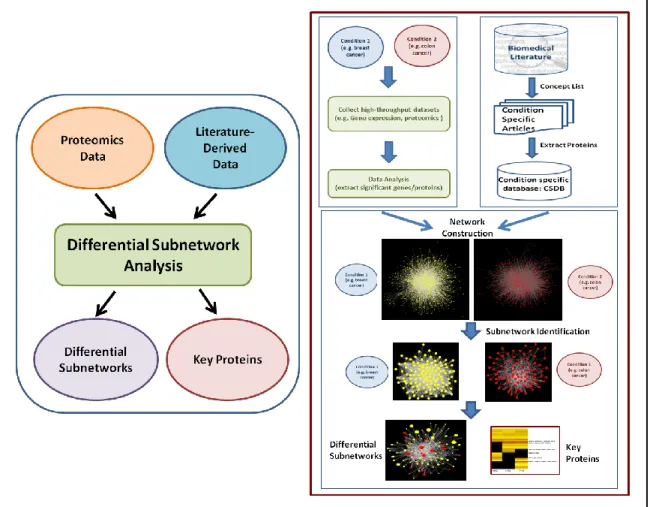
Although this methodology was implemented on limb regeneration, it can be used to compare any two biological systems in future. Figure 1 represents the overall
methodology using breast cancer (condition 1) and colon cancer (condition 2) as an example. The goal of this pipeline then will be to discover differential components (in the form of subnetworks) between breast cancer and colon cancer. In other words, using this pipeline a researcher will be able to answer, what makes breast cancer different from colon cancer in terms of the interconnected genes/proteins?
21
Figure 1. Overall methodology Proteomics
Sample Preparation
A total of 5 pools of tissue each from control, 1dpa, 4dpa and 7dpa limbs (dpa refers to days post amputation) were collected for Ambystoma mexicanum (will be referred to as axolotl throughout). Similar tissues were collected at 1dpa, 5dpa, 7dpa and 12dpa for Xenopus laevis (will be referred as Xenopus throughout). Each pool contained 6 tissues (from two hind limbs of three animals). The samples were processed as
described earlier [225]. Briefly, flash-frozen tissues were homogenized in lysis buffer containing 8M urea and 10 mM dithiothreitol. The resulting cell lysates were denatured by urea, reduced by triethylphosphine, alkylated by iododethanol and digested by trypsin. The Bicinchoninic Protein Assay was used to determine the peptide concentration in each pool. More details about the sample collection, processing, and rest of the proteomics methodology can be found in our publications [7, 226].
22
Liquid Chromatography/Mass Spectrometry Analysis
Tryptic digested peptides were analyzed as previously described [225]. Samples were run on a Surveyor High Performance Liquid Chromatography (HPLC) system with a zorbax 300SB – C18 reverse column (1mmX5 cm). Each peptide pool (20 µg) was injected twice onto the column in a random order. All injections were performed using the identical equipment configuration. Peptides were eluted with a gradient from 5% - 45% acetonitrile developed over 120 min at a flow rate of 50 µl/min, and effluent was electro-sprayed into the Linear Trap Quadrupole Mass Spectrometer (Thermo-Fisher Scientific). Data were collected in the “TriplePlay” mode (Mass Spectrometry (MS) scan, Zoom scan, and MS/MS scan). The resulting data were filtered (to increase the signal-to-noise ratio) and analyzed by a proprietary algorithm developed by Higgs et al [227].
Protein Identification
Using SEQUEST and X!Tandem database search algorithms, database searches against non-redundant NCBI or International Protein Index databases were performed for peptide sequence identification. A confidence score was assigned to each peptide by q-value (false discovery rate) [227]. The score was based on a random forest recursive partition supervised learning algorithm. The % ID confidence score was calibrated so that approximately X% of the peptides with %ID confidence >X% were correctly identified [227].
Proteins were classified according to identification quality (Priority). This priority system is based on the quality of the amino acid sequence identification (Peptide ID Confidence) and whether one or more unique peptide sequences were identified (Multiple Sequences). The Peptide ID Confidence assigned a protein into ‘HIGH’ or
‘MODERATE’ categories based on the peptide with the highest peptide ID Confidence (the best peptide). Proteins with “best peptide,” having a confidence between 90-100%, were assigned to the ‘HIGH’ category while proteins with best peptide having a
confidence between 75-89% were assigned to the ‘MODERATE’ category. All peptides with confidence less than 75% were discarded. To increase the confidence in protein identification, the proteins were further classified based on the number of distinct amino acid sequences identified. A protein was classified as “YES” if it had at least two distinct amino acid sequences with the required ID confidence; otherwise it was classified as
23
“NO.” Thus, the proteins with “HIGH” peptide ID confidence and with more than one identified peptide sequence were termed Priority 1. Proteins with “HIGH” peptide
confidence but with only one identified peptide sequence were termed Priority 2. Priority 3 and 4 proteins were those with “MODERATE” peptide confidence with more than one and only one peptide sequence identified, respectively. Thus, Priority 1 proteins had the highest likelihood of correct identification and Priority 4 proteins the lowest likelihood of correct identification.
Protein Quantification and Statistical Analysis
Protein quantification was carried out using non-gel based and label-free proprietary protein quantification technology described previously [225, 227]. Every peptide quantified had an intensity measurement for every sample. This measurement is a relative quantity giving the area under the curve (AUC) from the extracted ion
chromatogram after background noise removal. The AUC was measured at the same retention time window (1 min) for each sample after the sample chromatograms had been aligned [227]. The intensities were then transformed to the log base 2 scale (commonly used for genomic data), which served several purposes. First, relative changes in protein expression are best described by simple ratios. However ratios are difficult to model statistically, so log transformation converts ratios to fold differences. Second, the transformed data better approximate a normal distribution on a log scale [228], which is important because normality is an assumption of the Analysis of Variance (ANOVA) models used to analyze this data. Third, log base 2 is easy to understand because a 2-fold change (or doubling, or 100% increase) yielding an expression ratio of 2 is transformed to 1 (i.e. a 2-fold change is a unit change on the log base 2 scale). After log
transformation, the data was then quantile normalized [229]. This normalization removed trends introduced by sample handling, sample preparation, HPLC, mass spectrometry, and possible total protein differences.
If multiple peptides had the same protein identification, their quantile normalized log base 2 intensities were weight-averaged proportionally to their relative peptide ID confidences. Then the log base 2 protein intensities were fit by a separate ANOVA statistical model for each protein. Finally, the inverse log base 2 of each sample mean was calculated to determine the fold change (FC) between samples. The maximum
24
observed absolute FC was also given for each Priority Level. Fold Change was computed as Mean Regeneration Group/Mean Control Group. A FC of 1 means no change.
The number of proteins with significant changes for each priority was calculated. The threshold for significance was set to control the False Discovery Rate (FDR) for each two-group comparison at 5% [230]. The FDR was estimated by the q-value, as stated previously. Thus, protein fold changes with a q-value less than or equal to 0.05 were declared to be significant, leaving 5% of the determined changes assumed to be false positives.
We calculated the median percent coefficient of variance (%CV) for each priority group. Percent CV values were derived from the standard deviation divided by the mean on a % scale. The % CV was calculated for replicate variation (technical variation) and the combined replicate plus sample variation.
In constructing biological process categories, only proteins having peptide confidence levels of 90% and above and with FDR <0.05 were included. Many proteins were identified either by the same sequences or different sequences in priority 1 or 2 or both. To avoid redundancy, the fold changes of priority 1 were used if a protein was present in both the priorities, and average fold change was calculated if it belonged to the same priority. If a protein had conflicting expression patterns (upregulated in one case, but downregulated in the other) then it was not considered.
Bioinformatic Analysis
Proteins not recognized by the algorithm were manually curated. NCBI BLASTp (basic local alignment search tool for proteins) [231] was used to match the sequences of hypothetical/ novel/ unknown/ unnamed proteins against the ‘vertebrata’ category in blast (taxid: 7742) to identify their closest neighbors. Only the proteins having 90% peptide ID confidence and above and with FDR <0.05 were chosen. Accession numbers, gene names and names of the proteins were obtained from Uniprot [232] or NCBI [233] using the protein IDs obtained in the raw data. GeneCards [234] and Uniprot were used to
determine their biological processes. The HPRD [235] was used to determine molecular function and primary cellular localization. EVI5 network was generated using
25
peptides having a peptide ID confidence of 90% and above were compared against EST contigs from the Ambystoma EST database using tBLASTn.
Condition-Specific Data Mining
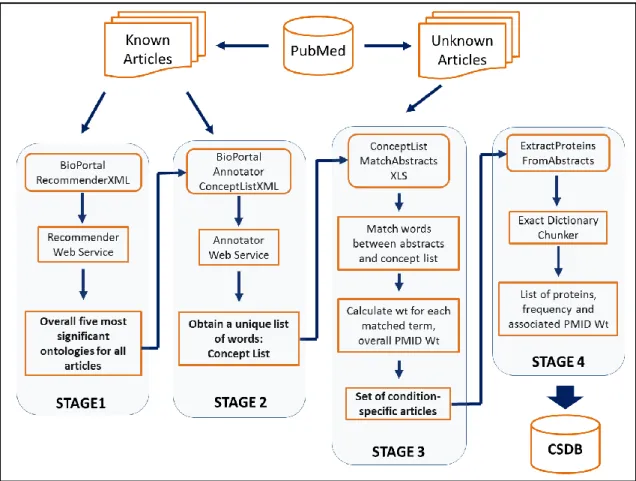
An innovative methodology was developed to retrieve the condition-specific data from published literature. Condition-specific data retrieval refers to the identification of relevant or related articles from a large unknown set of articles (which can be derived from PubMed) for a given biological condition such as limb regeneration. The overview of this methodology is provided in Figure 2.
Figure 2. Overview of the condition-specific data mining methodology
In the first stage of the protocol an already known set of positive articles (for any given biological condition) is used to identify the five most significant ontologies from a collection of ontologies in NCBO BioPortal [236]. The ontologies are then used in the second stage to generate a CL. The concept list contains a collection of condition-specific terms (including but not limited to organism, tissue, cell type, biological function, and proteins studied in a given condition). The CL generated in stage two is then used as an