2015
Developmental morphology, biomass yield and
compositional differences among upland and
lowland switchgrass (Panicum virgatum L.)
ecotypes grown as a bioenergy feedstock crop
Muhammad Aurangzaib Iowa State University
Follow this and additional works at:https://lib.dr.iastate.edu/etd
Part of theAgricultural Science Commons,Agriculture Commons,Agronomy and Crop Sciences Commons, and theOil, Gas, and Energy Commons
This Dissertation is brought to you for free and open access by the Iowa State University Capstones, Theses and Dissertations at Iowa State University Digital Repository. It has been accepted for inclusion in Graduate Theses and Dissertations by an authorized administrator of Iowa State University Digital Repository. For more information, please [email protected].
Recommended Citation
Aurangzaib, Muhammad, "Developmental morphology, biomass yield and compositional differences among upland and lowland switchgrass (Panicum virgatum L.) ecotypes grown as a bioenergy feedstock crop" (2015).Graduate Theses and Dissertations. 14800.
Developmental morphology, biomass yield and compositional differences among upland and lowland switchgrass (Panicum virgatum L.) ecotypes grown as a
bioenergy feedstock crop
by
Muhammad Aurangzaib
A dissertation submitted to the graduate faculty
in partial fulfillment of the requirements for the degree of
DOCTOR OF PHILOSOPHY
Major: Crop Production and Physiology
Program of study committee: Kenneth J. Moore, Major Professor
Andrew W. Lenssen Emily A. Heaton Sotirios V. Archontoulis
Shuizhang Fei
Iowa State University Ames, Iowa
2015
DEDICATION
I dedicate this dissertation to my beloved parents Mian Fazeelat Hussain and Bushra Fazeelat, without whom none of my success would have been possible. Thank you for your unconditional love and believing in me. Thank you for making my dreams come true, and I hope you are as proud of me as I am proud of you.
TABLE OF CONTENTS
DEDICATION ... ii
LIST OF FIGURES ... v
LIST OF TABLES ... vii
ACKNOWLEDGEMENTS ... viii
ABSTRACT ... ix
CHAPTER 1. GENERAL INTRODUCTION ... 1
OBJECTIVES ... 18
DISSERTATION ORGANIZATION ... 19
REFERENCES ... 20
CHAPTER 2. DEVELOPMENTAL MORPHOLOGY AND BIOMASS YIELD OF UPLAND AND LOWLAND SWITCHGRASS ECOTYPES GROWN IN IOWA ... 38
Abstract ... 38
Introduction ... 40
Material and Methods ... 42
Results ... 44
Discussion ... 48
Acknowledgments... 52
References ... 59
CHAPTER 3. COMPOSITIONAL DIFFERENCES AMONG UPLAND AND LOWLAND SWITCHGRASS ECOTYPES GROWN AS A BIOENERGY FEEDSTOCK CROP ... 66
Abstract ... 66
Introduction ... 68
Materials and Methods ... 70
Results ... 73
Discussion ... 78
Conclusion ... 82
References ... 89
CHAPTER 4. A NEW MODEL FOR SWITCHGRASS PHENOLOGY THAT COMBINES TEMPERATURE AND PHOTOPERIOD EFFECTS ... 96
Abstract ... 96
Introduction ... 97
Materials and Methods ... 100
Results ... 108
Discussion ... 111
References ... 122
CHAPTER 5. GENERAL CONCLUSIONS ... 129
LIST OF FIGURES
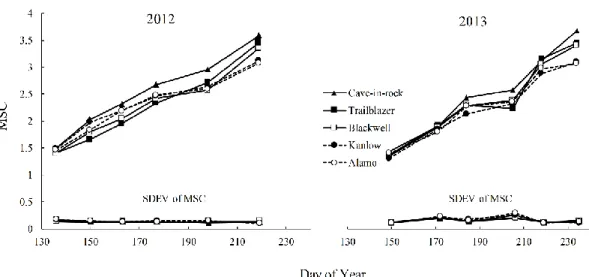
Figure 2.1. Mean stage count (MSC) and standard deviation of MSC (SMSC)
for five switchgrass varieties grown near Ames, IA in 2012 and 2013……...54 Figure 2.2. Tiller demographics and MSC for five switchgrass varieties grown near
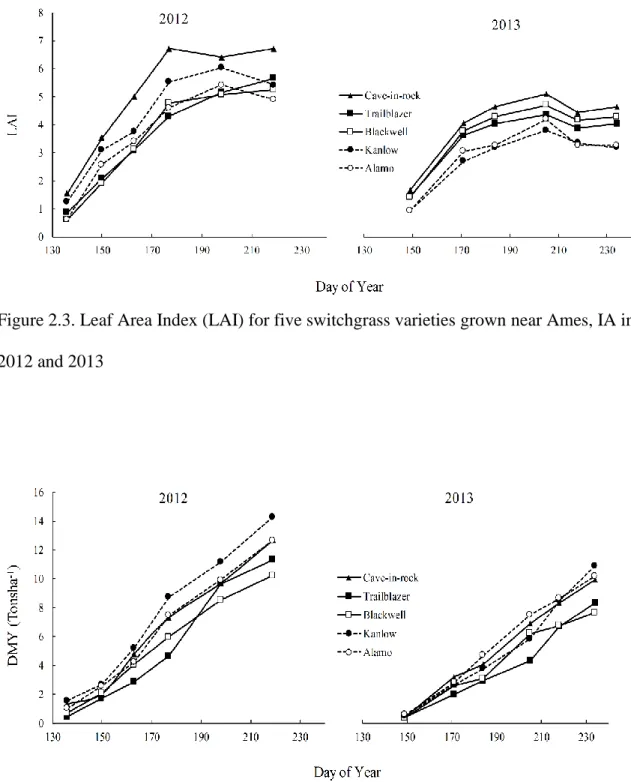
Ames, IA. In 2012 and 2013………55 Figure 2.3. Leaf Area Index (LAI) for five switchgrass varieties grown near
Ames, IA in 2012 and 2013……….56 Figure 2.4. Dry Matter Yield (DMY) Tons ha-1 for five switchgrass varieties grown
near Ames, IA in 2012 and 2013……….56
Figure 2.5. Mean stage count (MSC) and Leaf area index (LAI) relationships for
switchgrass cultivars grown near Ames, IA in 2012 and 2013………57 Figure 2.6. Mean stage count (MSC) and dry matter yield (DMY) relationships for
switchgrass cultivars grown near Ames, IA in 2012 and 2013………58 Figure 3.1. Mean monthly air temperature for 2012, 2013 and 20 year average at
Ames, IA………..84 Figure 3.2. Mean monthly precipitation for 2012, 2013 and 20 year average at
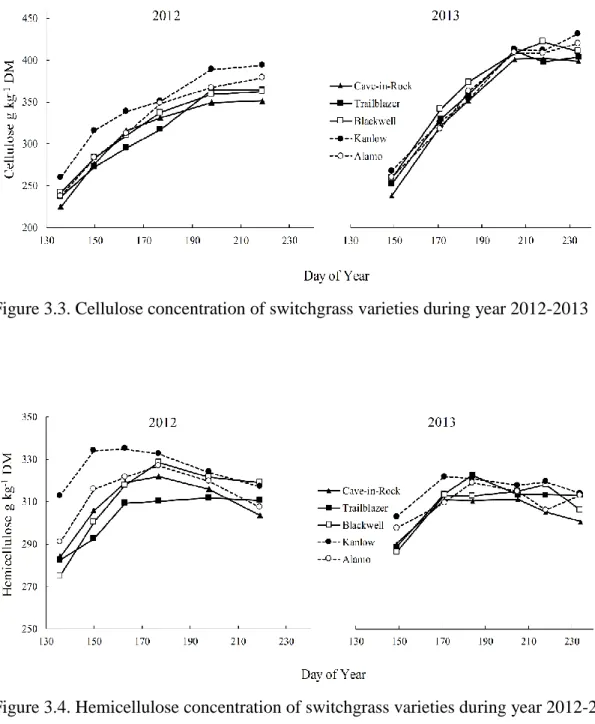
Ames, IA………..84 Figure 3.3. Cellulose concentration of switchgrass varieties during year 2012-2013…...85 Figure 3.4. Hemicellulose concentration of switchgrass varieties during year
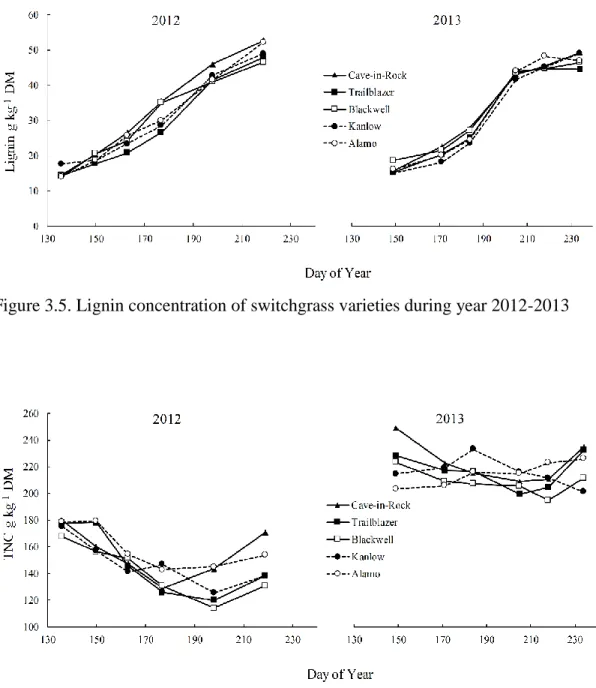
2012-2013………85 Figure 3.5. Lignin concentration of switchgrass varieties during year 2012-2013………86 Figure 3.6. Total non-structural carbohydrate (TNC) concentration of switchgrass
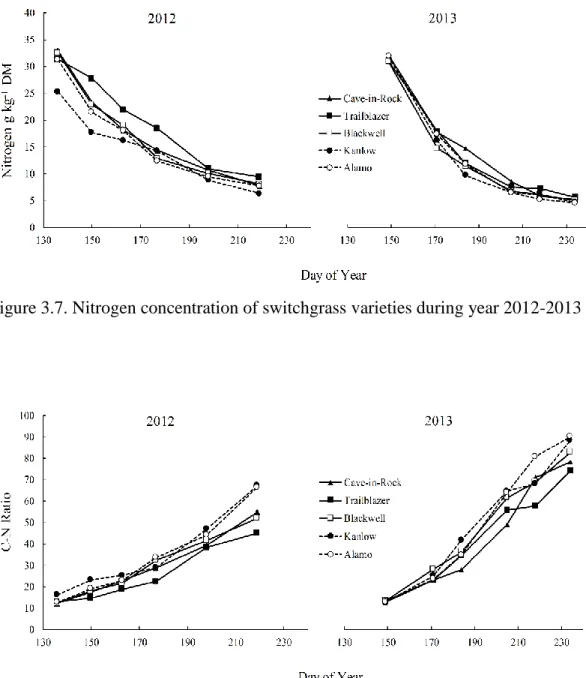
varieties during year………...86 Figure 3.7. Nitrogen concentration of switchgrass varieties during year 2012-2013……87 Figure 3.8. Carbon to Nitrogen Ratio (C-N Ratio) of switchgrass varieties during
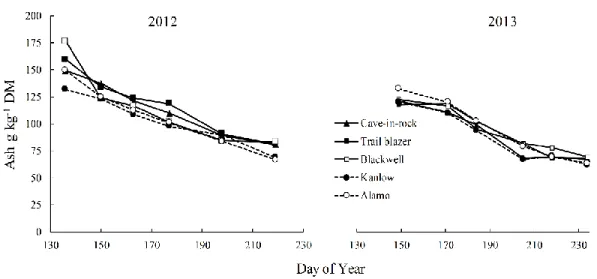
year 2012-2013………87 Figure 3.9. Total ash concentration of switchgrass varieties during year 2012-2013……88 Figure 4.1. Developmental stages observed vs predicted DAE for switchgrass
Figure 4.2. Flowering data observed vs predicted DAE for literature data…………...118 Figure 4.3. Sensitivity analysis performed for input parameters (a1, a2, a3 Pcrit,
Psen and re-growth)………...119
Figure 4.4. Parameter estimates from the optimization program for a2, pcrit and date
of re-growth from the literature database………...120 Figure 4.5. Switchgrass adaptability test- Predicted flowering time DOY for
LIST OF TABLES
Table 2.1. Mean monthly air temperature and precipitation for 2012, 2013 and 20
year mean at Ames, IA……….53 Table 2.2. Analysis of variance for mean stage count (MSC), leaf area index (LAI)
and dry matter yield (DMY)………...53 Table 3.1. Analysis of variance for cellulose, hemicellulose, lignin, TNC, nitrogen,
C-N ratio and total ash concentrations………83 Table 4.1. List of the parameters and acronyms used in this study, with their
definitions, values and units………...114 Table 4.2. Literature datasets used in the analysis and parameter optimization……….115 Table 4.3. Phenological parameter estimates for five cultivars (from experimental
ACKNOWLEDGEMENTS
First and foremost, I would like to express my deepest gratitude to ALLAH (SWT) for all His blessings, kindness and the strength that He gave me to accomplish this work.
Immeasurable appreciation and indebtedness to my advisor, Dr. Kenneth J. Moore for his patience, support and guidance over the period of this research. He was a constant
inspiration, and his assistance and suggestions were very helpful towards the completion of this dissertation. I would also like to thank the committee members, Dr. Andrew W. Lenssen, Dr. Emily A. Heaton, Dr. Sotirios V. Archontoulis and Dr. Shuizhang Fei for their invaluable inputs and for the unique perspectives they each brought to my research. I am grateful to Trish A. Patrick, Roger Hintz and Danielle Wilson for their wonderful help and suggestions during the course of the project.
I would like to thank the faculty, staff and my fellow graduate students and specially biomass & forage quality lab crew for making these past three years so memorable and rewarding. It has been a wonderful experience to work with you all and I won’t forget the memorable moments that we shared together.
Last but not least, my profound love and gratitude to my loving parents, my siblings and my wife who have supported, encouraged and believed in me. I owe them everything and wish I could show them just how much I love and appreciate them.
ABSTRACT
Sustainable and successful development of the bioenergy industry strongly depends upon the amount and quality of bioenergy feedstock produced. Switchgrass (Panicum virgatum L.) has been identified as a model lignocellulosic bioenergy crop in the U.S. Information regarding its growth and development is considered critical for making
management decisions, production of high quality feedstock and to support simulation model calibration and subsequent analysis.
In the first study (Chapter 2), we evaluated upland (‘Cave-in-Rock’, ‘Trailblazer’ and ‘Blackwell’) and lowland (‘Kanlow’ and ‘Alamo’) ecotypes of switchgrass for harvest management, morphological (phenology and leaf area index) and biomass yield differences. A field study was conducted near Ames, IA during 2012 and 2013. The experiment design was a randomized complete block design. Six in-season destructive biomass harvests were collected at approximately 2-week intervals each year. In both years, delaying harvest to later maturity increased biomass yield in all cultivars. Averaged over years lowland cultivars ‘Kanlow’ and ‘Alamo’ produced higher dry matter yield (6.31 and 5.98 tons ha-1,
respectively) than upland ecotypes ‘Cave-in-Rock’, ‘Trailblazer’ and ‘Blackwell’ (5.89, 4.78 and 4.53 tons ha-1, respectively). Lowland cultivars had delayed reproductive development compared with upland ecotypes. The widely recommended cultivar in Iowa ‘Cave-in-Rock’ had the highest mean stage count and leaf area index at the end of both growing seasons, but did not produce the greatest biomass. There was a nonlinear relationship between MSC and biomass yield. However, the magnitude and form of the response was different between cultivars and from year to year.
In the next study (Chapter 3), the objective was to quantify the chemical composition of switchgrass varieties as influenced by harvest management, and to determine if ecotypic differences exist among them. We found that delaying harvest increased cellulose,
hemicellulose and lignin concentrations while decreasing nitrogen and ash concentrations in all varieties. On average, Kanlow had the highest cellulose and hemicellulose concentration (354 and 321 g kg-1 DM respectively), and Cave-in-Rock had the highest lignin concentration (33 g kg-1 DM). The lowest nitrogen and ash concentrations were observed in Kanlow (14
and 95 g kg-1 DM respectively). In general, our results indicate that delaying harvest until fall improves feedstock quality, and ecotypic differences do exist between varieties for important feedstock quality traits.
The objective of the third and final study (Chapter 4), was to develop a new mechanistic model to describe switchgrass phenology with the objective to assist agronomists and on-going breeding programs. Switchgrass is sensitive to photoperiod. However, existing switchgrass phenology models rely on thermal time coupled with ad-hoc empirical modifications to account for the effects of photoperiod when the model is to be applied across a wide range of environments. Our model simulates four phases of switchgrass development (emergence to juvenile, juvenile to elongation, elongation to flowering and flowering to maturity). It uses daily temperature and site latitude as driving variables, contains five cultivar specific biological meaningful parameters, and two model constants (base and optimum temperature of 10 oC and 30 oC respectively). Three of the cultivar specific parameters (a1, a2, a3) define the thermal optimum time needed to complete a phase
and the other two parameters describe the critical photoperiod (pcrit) and the photoperiod
square error) of 2.6 days for each cultivar or with 5.1 days error when average parameters by ecotype were used. The next step in the analysis was to generalize the model by providing estimates of the photoperiod effect, and for that we used diverse literature database. We found that pcrit was 13.5 h and 12.7 h for upland and lowland cultivars. By using these
parameters the overall prediction ability of the model across representative sites in the U.S. had an 8.4 days error. This model can be a helpful tool for improvement and development of calibration protocols for other models and it can also serve as a template for the development of phenology models for other perennial grasses.
CHAPTER 1
GENERAL INTRODUCTION
Global Concern
The world’s population is expected to reach 9.6 billion by the first half of this century, an increase of 34 % over where it stands today (United Nations, 2012). This drastic increase in human population is also going to result in an approximately 70 % increased demand for food and fiber by 2050 (FAO, 2009). Human survival mainly depends upon the natural resources present in our environment like water, soil, natural gas and petroleum oil. These resources are limited and are being diminished and deteriorated. Studies have reported that planetary oil and gas reserves have been declining (Campbell, 2006; IEA, 2007).
Chapman et al. (1972) described the energy crisis as “our natural gas and oil resources are less than what we desire and in future these supplies might cost us a lot more”. This statement is still true today with significant variation in crude oil prices in international markets and with a generally increasing trend.
Furthermore, the use of nonrenewable fuels contribute to global climate change that are disturbing our ecosystems (Ansuategi and Escapa, 2002; Smith and Fang et al. 2008; Gaffney and Marley, 2009). One of the major concerns is the accumulation of greenhouse gasses in the atmosphere (IPCC, 2008), which not only depletes the ozone layer but also leads to increase in global temperature/global warming. This increased atmospheric temperature has been estimated to keep rising throughout 21st century (NRC, 2001). IPCC
20th Century, and this rise in air temperature will also continue in 21st century with an estimated increase of 1.5 to 4.6 oC.
One of the solutions for reducing environmental variation related to climate change is to limit the use of conventional energy sources like coal, gas and petroleum oil. All of these concerns are major driving forces directing the world’s attention towards biorenewable energy sources such as biofuel. Crops grown for biofuels will be a step towards increased biodiversity, environmental sustainability and energy security. Production of renewable fuels from locally grown crops will also reduce U.S. dependence on foreign petroleum oil for fuel and energy needs. According to the Energy Independence and Security Act (EISA) of 2007, the U.S. is expected to produce 136 billion L of renewable fuels by 2022 to meet energy demand and reduce foreign dependence on fossil fuels. Out of this 136 billion L, about 80 billion L will be derived from non-food sources like lignocellulosic material and rest will be produced from grain crops like corn and soybean (EISA, 2007; Perlack and Wright et al. 2011). Use of food crops to produce biofuel also leads to a competition between food and fuel due to limited availability of fertile lands (Tilman et al. 2006). One of the solutions to this problem is the use of the lands marginal for producing food crops for production of lignocellulosic biomass crops (Cai X, et al. 2011).
Lignocellulosic Feedstocks
It has been estimated that U.S. agriculture and forest lands are capable of supplying 1.3 billion tons of dry lignocellulosic materials per annum for bioenergy purposes (Perlack and Wright et al. 2005; DOE, 2011). Currently, there are two main sources of bioenergy feedstock supply; i.e., (i) agricultural and forestry residues and (ii) dedicated energy crops.
Agriculture and forestry residues are the left over biomass after harvesting the main crop component e.g., corn stover, wheat straw, tree residues from lumber production and silviculture. Lignocellulosic bio refineries can utilize these crop residues as feedstock for biofuel and energy production, but the U.S. biofuel policy goals cannot be achieved without the use of dedicated energy crops (Perlack and Wright et al. 2005).
Dedicated energy crops refers to the lignocellulosic crops grown specifically for bioenergy production; e.g., Miscanthus, kenaf, big bluestem, and switchgrass. Recently, warm-season grasses have gained increased attention by the scientific community as a reliable source for lignocellulosic feedstock supply. The Bioenergy Feedstock Development Program at the U.S. Department of Energy has identified switchgrass as a model 2nd
generation bioenergy feedstock crop in North America (Missaoui et al. 2006; Boutan J. 2007; Wright and Turhollow, 2010; Perlack et al., 2011).
Switchgrass as a Bioenergy Crop
Switchgrass (Panicum virgatum L.) is a C4 perennial grass native to North America
that ranges from Quebec to Central America (Moser and Vogel, 1995; Bransby et al. 1999; Missaoui et al. 2006). This grass has been proven to be an excellent candidate crop to be grown as a bioenergy feedstock (Vogel, 1996; Fike et al. 2006a). Some of its desirable traits include perenniality, high biomass yield production, and its adaptability to lands marginal for food crops (McLaughlin et al. 1996). In addition to these traits, another desirable trait is the seed production for its propagation, therefore, it can be grown with the available forage equipment. The species is polymorphic with two distinct ecotypes classified based on their habitat preferences, morphological characteristics and ploidy level; i.e., upland and lowland
ecotypes (Brunken and Estes, 1975). Each ecotype is further sub divided based on its
geographic origin i.e., southern and northern ecotypes (Sanderson, 1992; Casler, 2005). Both ecotypes include a great number of genetically varying varieties which has made it possible for this species to possess a wide range of adaptability (Cassida et al. 2005). Generally latitude is thought to be the largest determinant factor of switchgrass productivity and survival (Casler et al. 2004). The lowland ecotypes are heat tolerant and mostly found in wet climates at lower latitudes ranging throughout the lower plains of Midwest into the Southern U.S. Upland ecotypes are cold tolerant, found frequently in dry climates and range through the northern latitudes of North America (Brunken and Estes, 1975; Bransby et al. 1999; Sanderson et al. 1996; Casler et al. 2004).
Switchgrass reproduces through seeds and spreads vegetatively as well. Seedling establishment includes the germination and emergence phase followed by the development of adventitious root system (Newman and Mooser, 1988). Duration and rate of germination and emergence are influenced by many environmental factors including water, soil, air
temperature, light etc. In literature the reported base temperature for germination and growth is between 8 and 10 oC, and optimum temperature is around 30 oC (Hsu et al. 1985; Seepaul et al. 2011), and maximum temperature can be around 40 oC, but all of these conditions
appear to be cultivar dependent.
Switchgrass is an obligate outcrossing species, and both ecotypes possess high self-incompatibility and produce few or no seeds at all when self-pollinated (Talbert et al. 1983; Taliaferro and Hopkins, 1996). Cross pollination in switchgrass only takes place between cytotypes with analogous ploidy levels (Missaoui et al. 2006). Switchgrass ecotypes have
varying ploidy levels. Upland ecotypes are tetraploid and octaploid with 2n = 8x = 72 chromosomes, whereas, the lowland ecotypes are mostly tetraploid with 2n = 4x = 36 chromosomes (Hopkins et al. 1996; Hultquist et al. 1997; Lu et al. 1998; Missaoui et al. 2006; Zalapa et al. 2011). Switchgrass inflorescence is a diffuse panicle with 2 – 20 inches in length, with a two flowered spikelet which disarticulate below the glumes. Leaf number per plant or per tiller in switchgrass vary based on genotype and environmental conditions (Redfearn et al. 1997), and the leaf length can vary anywhere from 4 – 24 inches.
Switchgrass genotypes have caespitose growth habit with short rhizomes, and Panicoid type root system (Newman et al.1988; Tischler et al. 1993). The rooting depth of established plants can reach up to 3m (Weaver, 1954), similarly the plants can reach a height of 0.5 – 3m (Moser and Vogel, 1995; Vogel, 2004).
Biomass Production
The wide natural geographic distribution of switchgrass has divided cultivars into two ecotypes; upland and lowland cultivars (McLaughlin et al., 2005). Both ecotypes possess large genotypic, phenotypic and physiological differences (Stroup et al. 2003; Casler et al. 2004; Das et al. 2004; Gunter et al. 1996; Yang et al. 2009; Cortese et al. 2010). Switchgrass varieties that have demonstrated greater biomass yield potential in Southern U.S. are the lowland cultivars such as Alamo and Kanlow (Douglas et al. 2004; McLaughlin et al. 2005). These cultivars have been selected from lower latitude, have thicker stems, delayed flowering and are adapted to wet conditions (Casler and Boe, 2003; Casler, 2005; Parrish et al., 2008). Upland cultivars such as Cave-in-Rock on the other hand have demonstrated prominent biomass yields in the mid and northern ranges of U.S. (Douglas et al. 2004; McLaughlin et
al. 2005). Upland cultivars have been selected from higher latitudes, are thin-stemmed and found in drier conditions (Moser and Vogel, 1995). Upland cultivars have demonstrated greater winter survival potential than the lowland cultivars when grown at the same latitude (Cassida et al. 2005, Parrish et al. 2008).
It has been observed that when lowland ecotypes are moved to northern locations, they produce high dry matter yields due to their delayed flowering, which allows them to accumulate more biomass, but they may be unable to produce seeds and get to physiological maturity (Casler et al. 2014). In perennial grasses in order to survive the winter, reaching adequate dormancy and translocation of metabolites to the below ground plant parts is very important. An extended photoperiod may encourage lowland ecotypes to accumulate more biomass, but their incomplete dormancy and metabolite translocation may risk their survival when moved to northern latitudes (Casler et al. 2004, Casler, 2005). On the other hand when upland ecotypes are moved to southern locations their dry matter yields are reduced because they flower early due to the shorter day length in summer, and they can also be more prone to diseases (Olsen, 1984; Van Esbroeck et al. 2003; Casler et al. 2004, Casler et al. 2005).
Generally, switchgrass stand establishment is slow and requires two to three years to reach maximum biomass yields. However, once established it can be maintained for more than 10 years (Evanylo et al. 2005; Fike et al. 2006b; Perlack et al. 2011). An established stand of switchgrass can yield from 8–15 tonsha-1 depending upon the location and cultivar (McLaughlin et al. 2002; Roger and Charles, 2002; Monti et al. 2008; Adler et al. 2008), and with a net energy yield of about 70 GJ ha-1 (Schmer et al. 2014).
A number of factors can affect the biomass yield and quality of switchgrass grown as a bioenergy crop such as, cultivar, soil fertility, climatic conditions and field management. It can be cultivated and harvested as a traditional forage crop (Raneses et al. 1998), but crop management techniques are far different when grown as a bioenergy crop due to biomass quality requirement (Lowenberg-DeBoer and Cherney, 1989). As a bioenergy crop, growers will be more concerned about the total biomass yield; whereas, as a forage crop, growers are also concerned about its nutritive value. Therefore, optimum and appropriate management is required for both systems (Sanderson et al. 1999). As a bioenergy crop, varying harvest regimes have been demonstrated in one and two harvest systems. Lowland cultivars are recommended to be harvested once per year at the end of growing cycle to achieve maximum biomass yield (Bransby et al. 1999; Cassida et al. 2002). Upland cultivars on the other hand may be harvested twice per year since they mature faster than the lowland ecotypes (Bransby et al. 1999; Cassida et al. 2002).
Increase in biomass yield of a grass is a result of leaf number and leaf expansion, stem number and stem length and the development of reproductive structures (Frank, 1996). Kalu et al. (1983) and Nelson et al. (1994) reported plant maturity as an important factor affecting the morphological development within a specie. Casler et al. (2012) and Aspinwall et al. (2013) reported that in geographic zones where switchgrass ecotypes overlap, clear morphological differences have been observed between the upland and lowland ecotypes, such as phenological traits. Grass phenology has been observed to play an important role in biomass accumulation. Production of greater biomass yield by lowland ecotypes is also generally attributed towards their delayed maturity and faster stem elongation (Casler et al.
2004). The perennial grass staging developed by Moore et al. (1991) divides grass
phenological stages into five distinct stages: 1) emergence, 2) vegetative/leaf development, 3) elongation/stem elongation, 4) reproductive/floral development, and 5) seed development and ripening. In this system each mainstage such as vegetative, elongation etc., is further subdivided into sub-stages which have assigned numeric numbers which range from 0.5 – 4.9. These numbers allow researchers to quantitatively estimate the growth stages and apply statistics to determine differences between plant populations with the help descriptive values of physiological and ecological state of the sward.
During vegetative growth switchgrass phenology is closely related to growing degree days (GDD), but this relationship has been observed to vary with cultivar and the location where it is grown (Sanderson and Wolf, 1995a, Sanderson and Wolf, 1995b, Madakadze et al. 1998). However, reproductive development in switchgrass is closely associated with day-of-year suggesting a photoperiod effect (Cornelius and Johnston, 1941, Sanderson and Wolf, 1995a, Hopkins et al., 1995a, Mitchell et al. 2001). Nevertheless, these relationships are also dependent upon the cultivar × environment interactions, and differences between relative biomass yields are often different from year to year, locations and harvest management (Sanderson et al. 1999; Hopkins et al. 1995a, Hopkins et al. 1995b).
Furthermore, canopy architecture is an important factor describing grass growth. It can be influenced by the interaction between plant and its environment (Welles and Norman, 1991). Moore and Moser (1995) reported that the canopy architecture of a grass sward results due to continuous changes and is a function of tiller morphology at varying developmental stages and developmental stage distribution within a tiller population. Grass canopy
architecture can not only affect the plant physiology and light interception, it can also affect its biomass yield production (Nelson and Moser, 1994). One of the important trait of canopy architecture is tiller number. Generally high yielding grass species are associated with the production of greater number of reproductive tillers, and most of the grass dry matter yield comes from the nodes and internodes of these tillers, and a small portion of comes from the leaves (Kalmbacher, 1983).
Generally, a population of grass tillers is referred as grass sward and variability in the structure of a grass sward with time mirror the seasonal variation in developmental
morphology of each tiller (Moore and Moser, 1995). Tiller demographic analysis can be used to describe this seasonal variation in developmental morphology of a grass sward. This analysis is usually presented by plotting the number of tillers m-2 and categorizing them in vegetative, elongation, reproductive and seed ripening stage over the time. In a tiller demographic study of switchgrass Mitchell et al (1997), reported that switchgrass tiller number decline with the advanced maturity. Thus, morphological and phenological development are considered very important to better understand harvest management
practices as a bioenergy crop and to obtain best possible yields. Lemus et al. (2008) reported that switchgrass yields can be improved from 2 to 5 mg ha-1 by simply optimizing agronomic
practices and harvest management. Most of the switchgrass information available is based on wide geographic zones and as a forage crop; however, information related to locally
established field trials to evaluate switchgrass cultivars from both ecotypes for
developmental morphology, harvest management and dry matter yield as bioenergy crop will be more useful for cultivar selection and development.
Biomass Composition
Biomass yield potential is the most important characteristic of an ideal lignocellulosic bioenergy crop, however, feedstock quality is also an important attribute. Lignocellulose is the main component of biomass dry matter, which is made up of cellulose, hemicellulose, lignin and minerals. Lignocellulosic biomass feedstocks are currently converted into energy by biochemical conversion for liquid fuel production (Hayn et al. 1993; McKendry, 2002; Hamelinck et al. 2005) and thermochemical conversion (e.g., combustion/direct combustion, pyrolysis and gasification) for heat and electricity generation (Ortiz-Canavate, 1994;
McKendry, 2002). Biofuel refineries have different feedstock quality requirements, therefore, feedstock quality is also dependent upon the conversion system being used (McKendry, 2002; Hamelinck et al. 2005; Adler et al. 2006; Sanderson et al. 2007; Cheng et al. 2010).
For biochemical conversion systems, higher cellulose and hemicellulose
concentrations are desirable by contributing more fermentable sugars for liquid fuel synthesis (Kurakake et al. 2001; Datar et al. 2004). However, depending upon the biochemical
conversion technology being used lignin can become both desirable by adding more
fermentable sugars or undesirable by reducing the availability of cellulose and hemicellulose during fermentation. Some advance biochemical conversion technologies can convert lignin contents into fermentable sugars through pretreatment processes (Cheng et al. 2009).
However, currently used conversion technologies in the bioenergy industry by hydrolysis and enzymatic systems are not able to convert lignin into liquid fuel (McLaughlin et al. 1996; McKendry, 2002).
In some thermochemical conversion systems, higher nitrogen and ash concentration reduce the system’s conversion efficiency by causing slagging (Sanderson et al. 1996). The buildup of mineral elements, N and ash on the inner surface of the boiler are called slagging, which hinders the efficient transfer of heat and can ultimately make a production plant inoperable (Blander et al. 1997). Higher nitrogen concentration in the dry matter feedstock used in thermochemical conversion systems can result in lower hydrocarbon yields
(Agblevor et al. 1992; Agblevor et al. 1995), and higher nitrogen oxide (NOX) emissions to
the air (Burner et al. 2008). In literature, the reported critical limit for N concentration in dry matter feedstock is 10 g kg-1 DM (Lewandowski et al. 1997). Ash on the other hand is the waste product of thermochemical and biochemical process and its higher concentrations not only decrease the conversion efficiency of the system but can also increase the handling and processing costs (Miles et al. 1993). McKendry (2002) reported that switchgrass feedstock has higher heating value of 17.4 MJ kg-1, which is almost equal to the hard wood (18.5 MJ kg-1for poplar and 20 MJ kg-1 for willow). In literature it has been reported that every 1 % increase in ash concentration in the dry matter feedstock used can reduce the heating value of thermochemical conversion system by 0.2 MJ kg-1 (Cassida et al. 2005).
Higher concentrations of energy dense compounds like lignin, on the other hand are desirable for thermochemical conversion systems due to their higher heating value. Johnson et al. (1995) and Vermerris et al. (2008) reported that in lignin due to the presence of carbon-carbon linkage which can be oxidized, lignin has a large energy contents of about 26 G Mg-1 which is equal to the energy of a coal. Lignin is a vital component of the plants cell wall and has an important role in plant vascular transport and by providing structural strength. It has a
molecular weight of 10,000. Lignin is a cross linkage of aromatic polymers of phenylpropane units which are referred as monolignols, varying with the numbers of methoxy (OCH3) group
attached to the phenolic units (McKendry, 2002; Keshwani, 2010).
Moreover, the lignin during thermochemical conversion process, can also be
converted into many valuable chemicals or materials such as ethylene, propylene, butadiene and aromatics (e.g., benzene, toluene and xylene isomers) (Royal Society of Chemistry, 2015). However, since lignin binds with cellulose and hemicellulose, it can also reduce their availability in biochemical conversion systems, which can result is reduced biofuel
production (Trebbi, G. 1993; Adler et al. 2006; Sanderson et al. 2007).
In addition to these structural carbohydrates (lignin, cellulose, hemicellulose),
lignocellulosic feedstock also contains nonstructural carbohydrates such as sucrose, glucose, fructose and starch. Even though they are not present in very high quantities as compared to the structural carbohydrates in the feedstock, they are still a source of fermentable sugars for liquid fuel production (Dien et al. 2006; Johnson et al. 2007).
Composition of feedstocks can vary based on the geographic location where they were produced, genetic factors, developmental morphology and agronomic practices (Adler and Sanderson et al. 2006; Royal Society, 2008; Vogel et al. 2002). Most of the past
switchgrass compositional and harvest management studies have addressed its use as a forage crop, however, due to tremendous genetic variability understanding of ecotypic variation in switchgrass biomass quality as a bioenergy application is more limited and needs further research.
Modeling Switchgrass Phenology
In the switchgrass life cycle, temperature plays vital role from breaking of bud dormancy to development of reproductive phase (Parrish et al. 2008). Switchgrass cultivars have large genetic variability for their temperature requirements for growth and development (Mcmillan and Weiler, 1959). The development of switchgrass is similar to other perennial grasses and follows the same growth pattern, described by Moore et al. (1991) and as aforementioned in detail i.e., emergence, vegetative, elongation, reproductive and
physiological maturity stage. The duration of each phase is mainly cultivar and temperature dependent. Madakadze et al. (1998) reported a strong relationship between leaf development and internode elongation. Sanderson and Wolf (1995), reported that Cave-in-Rock and Alamo when grown near to their zone of origin need 200 and 430 growing degree days (GDD) at a base temperature of 10 oC to accomplish leaf development and 378 and 1020
GDD for stem elongation stage. Reproductive stage on the contrary is mainly controlled by the photoperiod (Van Esbroeck, 2003), but other factors including temperature cannot be completely ignored.
In another study to analyze the effect of temperature on growth and development of switchgrass, Blasko and Smith (1971), performed an experiment with four day/night temperature regimes of 32/26 oC, 27/21 oC, 21/15 oC and 15/10 oC. From this study they concluded that at the highest temperature treatment (32/26 oC) switchgrass had greatest growth and development. They also reported delayed inflorescence in switchgrass plants at 21/15 oC, and complete inflorescence inhibition at 15/10 oC. Other studies have also reported temperature effects on switchgrass, and most of them have reported that the optimum
temperature for switchgrass growth and development is around 30-33 oC (Bendict, 1941; Masiunas and Carpenter, 1984; Hsu et al. 1985).
Brown et al. (2000) conducted a simulation study to determine the effects of raised temperature in comparison to the present climatic conditions on switchgrass. He reported that a rise of 6-8 oC in the temperature from present climatic temperatures significantly increased switchgrass production, which might be the result of reduced cold stress and prolonged growth season in Minnesota, Iowa, Nebraska and Kansas. He also added that a rise in environmental temperature due to global warming will improve switchgrass biomass yields. This approach seems realistic considering switchgrass is a C4 grass and its cultivars belong to
a wide geographic zones and have a lot of dry matter yield differences among them. Thus, this temperature rise will allow cultivation of high yielding cultivars e.g., lowland ecotypes in the areas where their survival otherwise will be at risk. However, we should also bear in mind that switchgrass growth and development is not only temperature driven but also associated with the other environmental factors. In many annual cereal studies in the past, photoperiod have been reported to significantly affect the duration of vegetative growth (Vince-Prue, 1975; Russell and Stuber, 1983; Miglietta, 1989; Collinson et al. 1992). Although, switchgrass is not an annual grass specie but it has the determinate growth habit which is similar to those grasses (Hyder, 1974).
Many past studies have suggested that switchgrass is sensitive to photoperiod
(Hopkins et al. 1995; Sanderson and Wolf, 1995, Van Esbroeck, 1997; Redfearn et al. 1997; Mitchell et al 1997; Madakadze et al. 1998). Van Esbroeck (2003), studied the effect of day length on two widely grown switchgrass cultivars (Cave-in-Rock and Alamo) with 12 h and
16 h photoperiod. He reported that at 16 h photoperiod inflorescence was delayed by 17 days and the time for panicle exertion was increased by 243 % as compared to the 12 h. On the other hand in Alamo at 16 h photoperiod inflorescence was delayed by 15 days and the time for panicle exertion was increased by 136 % as compared to the 12 h photoperiod.
Many in-field trials provide direct information related to environmental, genetics, soil and management practices for improved productivity (Heaton et al. 2004; Jager et al. 2010; Monti, 2012). Similarly, different crop models are widely used as tools to summarize this information and develop better understanding to enhance management practices, estimate potential yields and to determine environmental influences related to the increase in bioenergy crops in our agroecosystem (Zhang et al. 2010). These models are mainly classified into two categories i.e., empirical and mechanistic models. Empirical models are based on statistical approaches to establish relationships between crop yields and
environmental and agronomic variables, such as switchgrass biomass yield model developed by Wullschleger et al. (2010). This model takes into consideration climatic, physical and management variables including temperature, precipitation, fertilizer and ecotypes for biomass yield prediction. Similarly, Jager et al. (2010) developed an ecotype specific empirical model that also determines response of many biophysical and management variables on switchgrass biomass production.
In contrast to the above mentioned empirical models, mechanistic models provide insight into physiological and morphological developments and their interaction with biomass yield. Two widely used models for switchgrass are ALMANAC and EPIC models (Kiniry et al. 2005; Thomson et al. 2009). ALMANAC model provides information
associated with crop growth and biomass yields across different environmental conditions by taking into account abiotic stresses and crop weed competitions (Kiniry et al. 1992). The EPIC model is process based and predicts switchgrass growth and development by taking into consideration the environmental impacts of agronomic practices along with dry matter yield estimation (Williams et al. 1989; Izaurralde et al. 2006). Although both of these models i.e., ALMANAC and EPIC are different from each other in many ways, inputs for these models are not very different for their field measurement such as leaf area index, radiation use efficiency, carbon partitioning and crop phenology. These models have been very helpful for researchers to understand and simulate switchgrass biomass yield at a specific location (Kiniry et al. 2005; Kiniry et al. 2008) as well as on a regional scale (McLaughlin et al. 2006; Zhang et al. 2010).
However, to our knowledge thorough information regarding switchgrass
photoperiodic sensitivity is limited in literature and especially missing from these models. Such information is fundamental and can greatly support researchers to improve switchgrass crop growth models and breeding programs. One of the most important challenges that bioenergy crop modelers face is to precisely model biomass yields of new cultivars being developed. Each new cultivar might require its own parameter estimation as a result of varying phenological development, which also makes crop model output sensitive to precise modeling of its phenology (Van Oort et al. 2011). Generally, the above mentioned models compensate for the photoperiod/day length effects by regulating the growing degree days requirements (of the same cultivar) at different latitudes. Although this approach may work
well for these models, it lacks the mechanistic consideration which can provide better assessment of switchgrass adaptation to various geographic locations.
Therefore, more detailed studies are required to determine the effect of temperature and photoperiod on switchgrass growth and development, and more specifically, integration of crop phenological information into the modeling platform by taking into account thermal and photoperiod effects on switchgrass growth and development. This information will also help other researchers to improve the already present models as well as for the development of new models.
OBJECTIVES
Given the wide genetic variability within the switchgrass genus, variability in
developmental morphology as well as dry matter yields, this project used five cultivars from two different ecotypes, upland and lowland. The overall objectives of this dissertation work were twofold: (1) Determine the ecotypic differences among switchgrass cultivars for developmental morphology (phenology and LAI) and biomass yield and (2) Determine ecotypic differences among switchgrass cultivars for compositional traits important for its use as a bioenergy feedstock. The objectives of the first study (Chapter 2) were to evaluate ecotypic differences in switchgrass for their harvest management, developmental
morphology and dry matter yields. The objectives of the second study (Chapter 3) were to quantify dry matter composition as influenced by harvest date and to determine if ecotypic differences exist for their chemical composition. The objectives of the third study (Chapter 4) were to investigate the combined effect of photoperiod and temperature on switchgrass phenology by combining experimental information from a wide range of environmental conditions.
DISSERTATION ORGANIZATION
This dissertation is organized into five chapters, and focuses on three research papers that are intended for submission to different Journals. The first chapter contains a general introduction, consisting a comprehensive literature review, following by the description of the objectives and dissertation organization. The second chapter contains the first manuscript “developmental morphology and biomass yield differences of upland and lowland
switchgrass ecotypes grown in Iowa”. The third chapter contains the second manuscript “compositional differences among upland and lowland switchgrass ecotypes grown as a bioenergy feedstock crop”. The fourth chapter contains the third manuscript “A new model for switchgrass phenology that combines temperature and photoperiod effects”. The fifth chapter contains general conclusion derived from the three manuscripts.
REFERENCES
Adler, P.R., M.A. Sanderson, A.A. Boateng, P.J. Weimer and H.J.G. Jung. 2006. Biomass yield and biofuel quality of switchgrass harvested in fall or spring. Agron. J. 1518-1525.
Agblevor, F.A., B. Rejai, R.J. Evans, and K.D. Johnson. 1992. Pyrolytic analysis and
catalytic upgrading of lignocellulosic materials by molecular mass beam spectrometry. p. 69-75. In Klass, D.L. (ed.) Energy from biomass and wastes. XVI Elsevier Applied Sci.
Pub.Chicago.
Agblevor, F.A., S. Besler, and A. Wiselogel. 1995. Fast pyrolysis of stored biomass feedstocks. Energy and Fuels 9:635-640.
Ansuategi, A. and M. Escapa. 2002. Economic growth and greenhouse gas emissions. Ecological Economics 40(1): 23-37.
Aspinwall, M.J., D.B. Lowry, S.H. Taylor, T.E. Juenger, C.V. Hawkes, M.V. Johnson, J.R. Kiniry, and P.A. Fay. 2013. Genotypic variation in traits linked to climate and aboveground productivity in a widespread C4 grass: evidence for a functional trait syndrome. New
Phytologist 199:966–980.
Balasko, J.A., and D. Smith. 1971. Influence of temperature and nitrogen fertilization on the growth and composition of switchgrass (Panicum virgatum L.) and timothy (Phleum
pratense L.) at anthesis. Agron. J. 63:853–857.
Benedict, H.M. 1941. Effect of day length and temperature on the flowering and growth of four species of grasses. J. Agric. Res. (Washington, DC) 61:661–672.
Blander, B. 1997. The inorganic chemistry of the combustion of aspen wood with added sulphur. Biomass and Bioenergy 12: 289–293.
Bouton, J.H. 2007. Molecular breeding of switchgrass for use as a biofuel crop. Current opinion in genetics and development 17:553–558.
Bransby D.I., J. Bouton, B. Conger, S.B. McLaughlin, W.R. Ocumpaugh, D. Parrish, K. Taliaferro, K. Vogel, and S. Wallschleger. 1999. Developing switchgrass as a bioenergy crop. In: J. Janick (ed.), Perspectives on new crops and new uses. ASHS Press Alexandria, VA. P. 282-299.
Brown, R.A., N.J. Rosenberg, C.J. Hays, W.A. Easterling, and L.O. Mearns. 2000. Potential production and environmental effects of switchgrass and traditional crops under current and greenhouse-altered climate in the central United Sates: A simulation study. Agric. Ecosyst. Environ. 78:31–47.
Brunken, J.N. and J.R. Estes. 1975. Cytological and Morphological Variation in Panicum virgatum L. The Southwestern Naturalist 19: 379-385.
Burner, D.M., D.P. Belesky, J.J. Harvey, and T.L. Tew. 2008. Dry matter partitioning and quality of Miscanthus, Panicum, and Saccharum, genotypes in Arkansas, USA. Biomass and Bioenergy 33:610-619.
Cai, X., X. Zhang, and D. Wang. 2011. Land availability for biofuel production. Environ. Sci. Tech. 45:334-339.
Campbell, C. 2006. Excel spread sheets of oil and gas of production and discovery. Oil Depletion Analysis Centre, London, England.
Casler, M.D., K.P. Vogel, C.M. Taliaferro, and R.L. Wynia. 2004. Latitudinal adaptation of switchgrass populations. Crop Sci. 44:293–303.
Casler, M.D. 2005. Ecotypic variation among switchgrass populations from the northern USA. Crop Sci. 45:388–398
Casler, M. D. 2012. Switchgrass breeding, genetics, and genomics. In: Monti, A., editor, Switchgrass. Springer, New York, NY. 29–54.
Casler, M. D., and K.P. Vogel. 2014. Selection for biomass yield in upland, lowland, and hybrid switchgrass. Crop Sci. 54:626-636
Cassida K.A., G. Evers, J. Grichar, F. Hons, M.A. Hussey, J.P. Muir, W.R. Ocumpaugh, J.C. Read, C. Tischler, and B.C. Venuto. 2002. Evaluation of switchgrass cultivars and cultural methods for biomass production in the South Central U.S. Oak Ridge NL.TAMU.
Cassida, K.A., J.P. Muir, M.A. Hussey, J.C. Read, B.C. Venuto, and W.R. Ocumpaugh. 2005. Biofuel component concentrations and yields of switchgrass in south central US environments. Crop Sci. 45:682–692.
Cassida, K.A., J.P. Muir, M.A. Hussey, J.C. Read, B.C. Venuto, and W.R. Ocumpaugh. 2005. Biomass yield and stand characteristics of switchgrass in south central U.S. environments. Crop Sci. 45:673–681.
Chapman, D., and T. Tyrrell, T. Mount. 1972. Electricity demand growth and the energy crisis. Science 178:703-708.
Cheng, J.J., and D.R. Keshwani. 2009. Switchgrass for bioethanol and other value-added applications: A Review. Bioresource Tech. 100:1515-1523.
Cheng, J.J. 2010. Biological process for ethanol production. p. 209-269. In Cheng J. (ed.) Biomass to renewable energy processes. CRC press, Boca Raton, FL.
Collinson, S.T., R.H. Ellis, R.J. Summerfield, and E.H. Roberts. 1992. Durations of the photoperiod-sensitive and photoperiod-insensitive phases of development to flowering in four cultivars of rice (Oryza sativa L.). Ann. Bot. (London) 70:339–346.
Cornelius, D.R., and C.O. Johnston. 1941. Differences in plant type and reaction to rust among several collections of Panicum virgatum L. J. Am. Soc. Agron. 33: 115–124.
Cortese, L.M., J. Honig, C. Miller, and S. A. Bonos. 2010. Genetic diversity of twelve switchgrass populations using molecular and morphological markers. Bioenergy Research 3:262-271.
Das, M.K., R.G. Fuentes, and C.M. Taliaferro. 2004. Genetic variability and trait relationships in switchgrass. Crop Sci. 44: 443–448.
Datar, R.P., R.M. Shenkman, B.G. Cateni, R.L. Huhnke, and R.S. Lewis. 2004. Fermentation of biomass-generated producer gas to ethanol. Biotechnol. Bioeng. 86:587–594.
Dien, B.S., H.G. Jung, K.P. Vogel, M.D. Casler, J.F.S. Lamb, P.J. Weimer, L. Iten, R.B. Michell, and G. Sarath. 2006. Chemical composition and response to dilute-acid pretreatment and enzymatic saccharification of alfalfa, reed canarygrass, and switchgrass. Biomass and Bioenergy 30:880–891.
Douglas J.L., Edwards S.D., and Grabowski J.M. 2004. Evaluation of Warm Season Grass Species and Management Practices to Improve Biomass Production Potential in the
MidSouth. USDA. Nat. Res. Con. S.
EISA, 2007. Energy independence and security act of 2007, Public Law110-140. 121 Stat. 1492. 19 Dec. 2007.
Evanylo, G.K., A.O. Abaye, C. Dundas, C.E. Zipper, R. Lemus, B. Sukkariyah, and J. Rockett. 2005. Herbaceous vegetation productivity, persistence, and metals uptake on a biosolids-amended mine soil. J. Environ. Qual. 34:1811-1819.
FAO, 2009. 2050: A third more mouths to feed. 23 Sept. 2009.
http://www.fao.org/news/story/en/item/35571/icode/ (verified on 11-30-2015).
Fike, J.H., D.J. Parrish, D.D. Wolf, J.A. Balasko, J.J.T. Green, M. Rasnake, and J.H. Reynolds. 2006a. Switchgrass production for the upper southeastern USA: Influence of cultivar and cutting frequency on biomass yields. Biomass and Bioenergy 30:207-213.
Fike, J.H., D.J. Parrish, D.D. Wolf, J.A. Balasko, J.J.T. Green, M. Rasnake, and J.H.
Reynolds. 2006b. Long-term yield potential of switchgrass-for-biofuel systems. Biomass and Bioenergy 30:198-206.
Gaffney, J.S. and N.A. Marley. 2009. The impacts of combustion emissions on air quality and climate - From coal to biofuels and beyond. Atmospheric Environment 43(1): 23-36.
Gunter, L.E., G.A. Tuskan, and S.D. Wullschleger. 1996. Diversity among populations of switchgrass based on RAPD markers. Crop Sci.36: 1017–1022.
Hamelinck, C.N., G.V. Hooijdonk, and A.P.C. Faaij. 2005. Ethanol from lignocellulosic biomass: techno-economic performance in short-, middle-and long-term, Biomass and Bioenergy 28(4):384-410.
Heaton, E, T. Voigt, and S.P. Long. 2004. A quantitative review of comparing the yields of two candidate C4 perennial biomass crops in relation to nitrogen, temperature and water. Biomass and Bioenergy 27:21–30
Hopkins, A.A., K.P. Vogel, K.J. Moore, K.D. Johnson, and I.T. Carlally son. 1995.
Genotypic variability and genotype_environment inter actions among switchgrass accessions from the midwestern USA. Crop Sci. 35:565–571.
Hyder, D.N. 1974. Morphogensis and management of perennial grasses in the United States. In K.W. Kreitlow and R.H. Hart (ed.). Plant morphogenesis as the basis for scientific
management of range resources. USDA Misc. Pub. 1271. U.S. Gov. Print. Office, Washington, DC.
Hayn, M., W. Steiner, R. Klinger, H. Steinmueller, M. Sinner, and H. Esterbauer. 1993. Basic research and pilot studies on the enzymatic conversion of lignocelluloses. p. 33-70. In
Saddler, J.N. (ed.) Bioconversion of forest and agricultural plant residues. CAB Int., Wallingford, Oxon, UK.
Hopkins, A.A., K.P. Vogel, K.J. Moore, K.D. Johnson, and Carlson, I. T. 1995a. Genotype effects and genotype by environment interactions for traits of elite switchgrass populations. Crop Sci.35: 125–132.
Hopkins, A.A., Vogel, K.P., Moore, K.J., Johnson, K.D., and Carlson, I.T. 1995b. Genotypic variability and genotype x environment interactions among switchgrass accessions from the midwestern USA. Crop Sci.35: 565–571.
Hopkins A. S. 1996. Chromosome number and nuclear DNA content variation among switchgrass populations. Crop Sci. 36:1192–1195.
Hsu, F.H., C.J. Nelson, and A.G. Matches. 1985. Temperature effects on germination of perennial warm season forage grasses. Crop Sci. 25:215–220.
Hultquist, S.J. 1997. DNA content and chloroplast DNA polymorphisms among switchgrasses from remnant Midwestern prairies. Crop Sci. 37:595–598.
IEA, 2007. International Energy Agency, World energy outlook, IEA, Paris.
Intergovernmental Panel on Climate Change (IPCC). 1995. The Science of Climate Change, eds. Houghton, J. T., Meira Filho, L. G., Bruce, J., Lee, H., Callender, B. A.,
Izaurralde, R.C., J.R. Williams, W.B. McGill, N.J. Rosenberg, and M.C.Q. Jakas. 2006. Simulating soil C dynamics with EPIC: model description and testing against long-term data. Ecol. Model 192:362–384.
Jager, H.I., L.M. Baskaran, C.C. Brandt, E.B. Davis, C.A. Gunderson, and S.D.
Wullschleger. 2010. Empirical geographic modeling of switchgrass yields in the United States. GCB Bioenergy 2:248–257.
Johnson, D.K., P.A. Ashley, S.P. Deutch, J.A.Fennell, and A. Wiselogel. 1995.
Compositional variability in herbaceous energy crops. p. 267-277. In Proc. 2ndBiomass Conf.
of Am., 21-24 Nov. 1995, Portland, Oregon.
Johnson, J.M.F., N.W. Barbour and S.L. Weyers. 2007. Soil. Sci. Soc. Am. J. 71(1), 155– 162.
Kalmbacher, R.S. 1983. Distribution of dry matter and chemical constituents in plant parts of four Florida native grasses. J. Range Manage. 36: 298-301.
Keshwani, D.R. 2010. Biomass chemistry. P. 7-40. In Cheng J. (ed.) Biomass to renewable energy processes. CRC press, Boca Raton, FL.
Kiniry, J.R., J.R. Williams, P.W. Gassman, and P. Debaeke. 1992. A general, process-oriented model for two competing plant species. Trans ASAE 35:801–810
Kiniry, J.R., K.A. Cassida, M. A. Hussey, J. P. Muir, W. R. Ocumpaugh, J. C. Read, R. L. Reed, M. A. Sanderson, B. C. Venuto, and J. R. Williams. 2005. Switchgrass Simulation by
the ALMANAC model at diverse sites in the southern US. Biomass and Bioenergy 29:419‐
125.
Kiniry, J.R., M.R. Schmer, K.P. Vogel, and R.B. Mitchell. 2008. Switchgrass biomass simulations at diverse sites in the northern great plains of the US. Bioenergy Research 1:259– 264.
Kurakake, M., W. Kisaka, K. Ouchi, and T. Komaki. 2001. Pretreatment with ammonia water for enzymatic hydrolysis of corn husk, bagasse, and switchgrass. Applied Biochemistry and Biotechnology 90(3):251-259.
Lemus, R., E.C. Brummer, C.L. Burras, K.J. Moore, M.F. Barker, and N.E. Molstad. 2008. Effects of nitrogen fertilization on biomass yield and quality in large fields of established switchgrass in southern Iowa, USA. Biomass and Bioenergy 32:1187–1194.
Lewandowski, I. and A. Kicherer. 1997. Combustion quality of biomass: Practical relevance and experiments to modify the biomass quality of Miscanthus x giganteus. Eur. J. Agron. 6:163–177.
Lowenberg-DeBoer, J. and J.H. Cheney. 1989. Biophysical simulation for evaluating new crops: The case of switchgrass biomass energy feedstock. Agricultural Systems 29: 233-246.
Lu, K. 1998. Nuclear DNA content and chromosome numbers in switchgrass. Great Plains Res. 8:269–280.
Madakadze, I., B.E. Coulman, K. Stewart, P. Peterson, R. Samson, and D.L. Smith. 1998. Phenology and tiller characteristics of big bluestem and switchgrass cultivars in a short growing season area. Agron. J.90: 489–495.
Masiunas, J. B., and P.L. Carpenter. 1984. The effect of temperature and polyethylene glycol-induced osmotic stress on radicle growth of Lespedeza stipulacea, Lolium multiflorum, and Bouteloua curtipendula. J. Amer. Soc. Hort. Sci. 109: 67-69.
McKendry, P. 2002. Energy production from biomass (part 1): overview of biomass. Bioresource Tech. 83:37-46.
McLaughlin, S.B., R. Samson, D. Bransby, and A. Wiselogel. 1996. Evaluating physical, chemical, and energetic properties of perennial grasses as biofuels. p. 1–8. Proc. BioEnergy' 96-the Seventh National Bioenergy Conf.: Partnerships to Develop and Apply Biomass Technologies, Nashville, TN. 15–20 Sept. 1996. Dep. of Energy, Oak Ridge Lab., Oak Ridge, TN.
McLaughlin, S.B., D.G. D.L.T. Ugarte, C.T. Jr. Garten, L.R. Lynd, M.A. Sanderson, V.R. Tolbert, and D.D. Wolf. 2002. High-value renewable energy from prairie grasses. Environ. Sci. Tech. 36:2122–2129.
McLaughlin, S.B. and L.A. Kszos. 2005. Development of switcghgrass (Panicum virgatum) as a bioenergy feedstock in the United States. Biomass and Bioenergy 28: 515-535.
McLaughlin, S.B., Kiniry, J.R., Taliaferro, C.M., and D.L.T. Ugarte, D. 2006. Projecting yield and utilization potential of switchgrass as an energy crop. Adv. Agron. 90:267–297
McMillan, C., and J. Weiler.1959. Cytogeography of Panicum virgatum in Central North America. Am. J. of Botany 46: 590–593.
Miglietta, F. 1989. Effect of photoperiod and temperature on leaf initiation rates in wheat (Triticum spp.). Field Crops Res. 21:121–130
Miles, T. R., Jr., L. L. Baxter, B. M. Jenkins, and L. L. Oden. 1993. Alkali slagging problems with biomass fuels. p. 406-421. In Proceedings of the First Biomass Conference of the
Americas, August 30-September 2 in Burlington, VT, National Renewable Energy Laboratory, Golden, Colorado.
Missaoui, A.M., J.H. Bouton, and A.H. Paterson. 2006. Molecular Markers for the Classification of Switchgrass (Panicum virgatum L.) Germplasm and to assess genetic diversity in three synthetic switchgrass populations. Genetic Resources and Crop Evolution. 53:1291-1302.
Mitchell, R.B., K.J. Moore, L.E. Moser, J.O. Fritz, and D.D. Redfearn. 1997. Predicting development morphology in switchgrass and big bluestem. Agron. J. 89:827–832.
Monti, A., G. Bezzi, G. Pritoni, and G. Venturi. 2008 Long-term productivity of lowland and upland switchgrass cytotypes as affected by cutting frequency. Bioresource Tech. 99:7425– 7432.
Monti, A. 2012. Switchgrass a valuable biomass crop for energy. A review. Springer London Heidelberg New York Dordrecht.
Moore, K.J., L.E. Moser, K.P Vogel, S.S. Waller, B.E. Johnson, and J.F Pedersen. 1991. Describing and quantifying growth stages of perennial forage grasses. Agron. J.83: 1073– 1077.
Moore, K.J., and L.E. Moser. 1995. Quantifying developmental morphology of perennial grasses. Crop Sci. 35:37-43.
Moser, L.E., and K.P. Vogel. 1995. Switchgrass, big bluestem, and indiangrass. p. 409-420. In Barnes, R.F et al. (ed.) Forages: An introduction to grassland agriculture. 5th ed. Iowa State Univ. Press, Ames.
National Research Council (NRC) (US). 2001. Climate change science: An analysis of some key questions. National Academic Press, Washington D.C., New York.
Nelson, R.G., M.R. Langemeier, and P.D. Ohlenbusch. 1994. Herbaceous energy crop production feasibility using conservation reserve program acreage. p. 326–331. In Proceedings of the Annual Conference of the American Solar Energy Society. San Jose, CA.
Newman, P.R. and L.E. Moser. 1988. Grass seedling emergence, morphology, and establishment as affected by planting depth. Agron. J. 80: 383-387.
Olson, W.W. 1984. Phenology of selected varieties of warm season native grasses. In: Proceedings of the 9th North American prairie conference. 29 July 1984–1 Aug 1984, Moorhead, Minnesota
Parrish, D.J., J.H. Fike, D.I. Bransby and R. Samson. 2008. Establishing and managing switchgrass as an energy crop. Forage and Grazinglands doi: 10.1094/FG-2008-0220-01-RV
Perlack, R.D., L.L. Wright, A.F. Turhollow, R.L. Graham, B.J. Stokes, and D.C. Erbach. 2005. Biomass as feedstock for a bioenergy and bioproducts industry: The technical
feasibility of a billion-ton annual supply. DOE/GO-102005-2135 and ORNL/TM- 2005/66. Available at http://feedstockreview.ornl.gov/pdf/billion_ton_vision.pdf. NTIS, Springfield, VA.
Perlack, R.D., L.L. Wright, A.F. Turhollow, R.L. Graham, B.J. Stokes, and D.C. Erbach. 2011. U.S. billion-ton update: Biomass supply for a bioenergy and bioproducts industry. Oak Ridge National Laboratory. Oak Ridge, TN. pp. 227.
Raneses, A., K. Hanson, and H. Shapouri. 1998. Economic Impacts from Shifting Cropland use from Food to Fuel. Biomass and Bioenergy 15(6): 417-422.
Redfearn, D.D., K.J. Moore, K.P. Vogel, S.S. Waller, and R. Mitchell. 1997. Canopy architecture and morphology of switchgrass populations differing in forage yield. Agron. J. 89:262–269.
Roger, G.F. and M.T. Charles. 2002. Biomass yield stability of switchgrass cultivars. Trends in new crops and new uses. J. Janick and A. Whipkey (eds.). ASHS Press, Alexandria, VA.
Royal Society, 2008. Sustainable biofuels: prospects and challenges. Science Policy Section: The Royal Society, London.
https://royalsociety.org/policy/publications/2008/sustainable-biofuels/ (verified on Nov. 30. 2015).
Russell, W.K., and C.W. Stuber. 1983. Effects of temperature and photoperiod on the duration of vegetative growth in maize. Crop Sci. 23:847–850.
Sanderson, M.A. 1992. Morphological development of switchgrass and kleingrass. Agron. J. 84:415–419
Sanderson, M.A., and D.D. Wolf. 1995a. Morphological development of switchgrass in diverse environments. Agron. J.87: 908–915.
Sanderson, M.A., and D.D.Wolf. 1995b. Switchgrass biomass composition during morphological development in diverse environments. Crop Sci.35: 1432–1438.
Sanderson, M.A., R.L. Reed, S.B. McLaughlin, S.D. Wullschleger, B.V. Conger, D.J.
Parrish, D.D. Wolf, C. Taliaferro, A.A. Hopkins, W.R. Ocumpaugh, M.A. Hussey, J.C. Read, and C.R. Tischler. 1996. Switchgrass as a sustainable bioenergy crop. Bioresource Tech. 56:83–93.
Sanderson, M.A., J.C. Read, and R.L. Reed. 1999. Harvest management of switchgrass for biomass feedstock and forage production. Agron. J. 91:5–10.
Sanderson, M.A., N.P. Martin, and P. Adler. 2007. In Barnes RF et al (eds) Forages.
Biomass, energy, and industrial uses of forages. The science of grassland agriculture, Ames, Iowa. Blackwell Publisher. V.II.
Schmer, M. R., K. P. Vogel, G. E. Varvel, R. F. Follett, R. B. Mitchell, and V. L. Jin. 2014. Energy Potential and Greenhouse Gas Emissions from Bioenergy Cropping Systems on Marginally Productive Cropland. PLoS ONE 9(3):e89501.
Seepaul, R., Macoon, B., Reddy, K.R., Baldwin, B. 2011 Switchgrass (Panicum virgatum L.) intraspecific variation and thermotolerance classification using in vitro seed germination assay. Am. J. Plant Sci. 2:134–147.
Smith, P. C., M. Fang, J.C. Dawson, and J.B. Moncrieff. 2008. Impact of global warming on soil organic carbon. Adv. in Agron. 97. 97: 1-43.
Stroup, J. A., M.A. Sanderson, J.P. Muir, M.J. McFarland, and R.L. Reed. 2003. Comparison of growth and performance in upland and lowland switchgrass types to water and nitrogen stress. Bioresource Tech. 86: 65–72.
Talbert, L. E. 1983. Estimates of genetic parameters in Switchgrass. Crop Sci. 23:725–728.
Tischler, C.R. and P.W. Voigt. 1993. Characterization of crown node elevation in panicoid grasses. J. Range Manage. 46: 436-439.
Taliaferro, C.M., and A.A. Hopkins. 1996. Breeding characteristics and improvement potential of switchgrass.p. 2–9. In J.S. Cundiff et al. (ed.) Proceedings of the Third Liquid Fuel Conference, Nashville, TN. 15–17 Sept. 1996. ASAE, St. Joseph, MI.
Thomson, M.A., R.C. Izarrualde, T.O. West, D.J. Parrish, D.D. Tyler, and J.R. Williams. 2009. Simulating Potential Switchgrass Production in the United States. Prepared by the Pacific Northwest National Laboratory for the U.S. DOE.
http://www.pnl.gov/main/publications/external/technical_reports/PNNL-19072.pdf (verified on 11-30-2015).
Tilman, D., J. Hill, et al. 2006. Carbon-negative biofuels from low-input high-diversity grassland biomass. Science 314:1598-1600.
Trebbi, G. 1993. Power-production options from biomass: The vision of a southern European utility. Bioresource Tech. 46:23–29.
United Nations, 2012. World population prospects: the 2012 revision. New York, NY: United Nations Population Division.
U.S. Department of Energy. 2011. U.S. Billion-Ton Update: Biomass Supply for a Bioenergy and Bioproducts Industry. R.D. Perlack and B.J. Stokes (Leads), ORNL/TM-2011/224. Oak Ridge National Laboratory, Oak Ridge, TN. 227p.
Van Esbroeck, G.A., M.A. Hussey, and M.A. Sanderson. 1997. Leaf appearance rate and final leaf number of switchgrass cultivars. Crop Sci. 37:864–870.
Van Oort, P. A. J., T. Zhang, M.E. de Vries, A.B. Heinemann, and H. Meinke. 2011. Correlation between temperature and phenology prediction error in rice (Oryza sativa L.) Agric. For. Meteorol. 151, pp. 1545–1555.
Vermerris, W. 2008. Composition and biosynthesis of lignocellulosic biomass. p.89-142. In Vermerris, W. (ed.). Genetic improvement of bioenergy crops. Springer Science and Business Media, New York, NY.
Vince Prue, D. 1975. Photoperiodism in plants. McGraw Hill, New York Russell, W.K., and C.W. Stuber. 1983. Effects of temperature and photoperiod on the duration of vegetative growth in maize. Crop Sci. 23:847–850.
Vogel, K.P. 1996. Energy production from forage or American agriculture-back to the future. J. Soil Water Conserv. 51: 137–139.
Vogel, K.P., J.J. Brejda, D.T. Walters, and D.R. Buxton. 2002. Switchgrass biomass
production in the Midwest USA: Harvest and nitrogen management. Agron. J. 94:413–420.
Vogel, K.P. 2004. Switchgrass. p. 561-588. In Moser, L.E. et al. (ed.) Warm-season (C4) grasses. Agron. Monogr. 45. ASA, CSSA, and SSSA, Madison, WI.
Wang, D., D.S. Le Bauer, and M.C. Dietze. 2010. A quantitative review comparing the yield of switchgrass in monocultures and mixtures in relation to climate and management factors. GCB Bioenergy 2:16–25.
Welles, J.M., and J.M. Norman. 1991. Instrument for indirect measurement of canopy architecture. Agron. J. 83: 818-825.
Williams, J.R., C.C. Jones, J.R. Kiniry, and D.A. Spanel. 1989. The EPIC crop growth model. Trans ASAE 32:497–511
Wright, L., A. Turhollow. 2010. Switchgrass selection as a "model" bioenergy crop: A history of the process. Biomass and Bioenergy 34:851-868.
Yang, J., E. Worley, M. Wang, B. Lahner, D.E. Salt, M. Saha, and M. Udvardi. 2009. Natural variation for nutrient use and remobilization efficiencies in switchgrass. Bioenergy Research 2, 257–266.
Wullschleger, S.D., E.B. Davis, M.E. Borsuk, C.A. Gunderson, and L.R. Lynd. 2010
Biomass production for the herbaceous bioenergy crop switchgrass: database description and determinants of yield. Agron. J. 102:1158–1168
Zalapa, J.E., D.L. Price, S.M. Kaeppler, C.M. Tobias, M. Okada, and M.D. Casler. 2011. Hierarchical classification of switchgrass genotypes using SSR and chloroplast sequences: ecotypes, ploidies, gene pools, and cultivars. Theor. Appl. Genet. 122:805–817.
Zhang, X., R.C. Izaurralde, D. Manowitz, T.O. West, W.M. Post, A.M. Thomson, V.P. Bandura, J. Nichols, and J.R. Williams. 2010. An integrative modeling framework to evaluate the productivity and sustainability of biofuels crop production systems. GCB Bioenergy 2:258–277
CHAPTER 2
DEVELOPMENTAL MORPHOLOGY AND BIOMASS YIELD OF UPLAND AND LOWLAND SWITCHGRASS ECOTYPES GROWN IN IOWA
A manuscript submitted to Industrial Crops and Products Journal
Muhammad Aurangzaiba*, Kenneth J. Moorea, Sotirios V. Archontoulisa, Emily A. Heatona, Andrew W. Lenssena, Shuizhang Feib
Abstract
Sustainable and successful development of the bioenergy industry will strongly depend upon the amount and quality of bioenergy feedstock produced. Switchgrass (Panicum virgatum L.) has been identified as a model lignocellulosic bioenergy crop in the U.S.
Information regarding grass growth and development is considered critical for making management decisions and to support simulation model calibration and subsequent analysis. The objective of this study was to evaluate upland (‘Cave-in-Rock’, ‘Trailblazer’ and ‘Blackwell’) and lowland (‘Kanlow’ and ‘Alamo’) ecotypes of switchgrass for harvest management, morphological (phenology and leaf area index) and biomass yield differences. A field study was conducted near Ames, IA during 2012 and 2013. The experiment was laid out as randomized complete block design, and consisted of three upland varieties and two lowland varieties. Six in-season destructive biomass harvests were collected at approximately 2-week intervals each year. In both years, delaying harvest to later maturity increased
biomass yield in all cultivars. Averaged over years lowland cultivars ‘Kanlow’ and ‘Alamo’ produced higher dry matter yield (6.31 and 5.98 tons ha-1, respectively) than upland ecotypes
‘Cave-in-Rock’, ‘Trailblazer’ and ‘Blackwell’ (5.89, 4.78 and 4.53 tons ha-1, respectively).
Lowland cultivars had delayed reproductive development compared with upland ecotypes. At the end of both growing seasons, upland ecotypes had a higher mean stage count than the lowland ecotypes, indicating that upland ecotypes had morphologically more mature tillers than the lowland ecotypes. The widely recommended cultivar in Iowa ‘Cave-in-Rock’ had the highest mean stage count and leaf area index at the end of both growing seasons, but did not produce the greatest biomass. There was a nonlinear relationship between MSC and biomass yield. However, the magnitude and form of the response was different between cultivars and from year to year. The relationship between biomass yields and mean stage count could be useful for developing switchgrass management strategies such as cultivar selection, fertilizer application rates and optimum harvest time.
Keywords: Biomass yield; Mean stage count; Grass morphology; Switchgrass development; Leaf area index.
a Department of Agronomy, Iowa State University, Ames, IA. 50011, USA b Department of Horticulture, Iowa State University, Ames, IA. 50011, USA *Corresponding Author([email protected] )