Strickhofstrasse 39
CH-8057 Zurich
www.zora.uzh.ch
Year: 2018
Shared decision-making for prostate cancer screening and treatment: a
systematic review of randomised controlled trials
Martínez-González, Nahara Anani ; Plate, Andreas ; Senn, Oliver ; Markun, Stefan ; Rosemann,
Thomas ; Neuner-Jehle, Stefan
Abstract: INTRODUCTION: Men facing prostate cancer screening and treatment need to make critical
and highly preference-sensitive decisions that involve a variety of potential benefits and risks. Shared
decision-making (SDM) is considered fundamental for ”preference-sensitive” medical decisions and it is
guideline-recommended. There is no single definition of SDM however. We systematically reviewed
the extent of SDM implementation in interventions to facilitate SDM for prostate cancer screening and
treatment. METHODS: We searched Medline Ovid, Embase (Elsevier), CINHAL (EBSCOHost), The
Cochrane Library (Wiley), PsychINFO (EBSCOHost), Scopus, clinicaltrials.gov, ISRCTN registry, the
WHO search portal, ohri.ca, opengrey.eu, Google Scholar, and the reference lists of included studies,
clinical guidelines and relevant reviews. We also contacted the authors of relevant abstracts without
available full text. We included primary peer-reviewed and grey literature of randomised controlled
trials (RCTs) reported in English, conducted in primary and specialised care, addressing interventions
aiming to facilitate SDM for prostate cancer screening and treatment. Two reviewers independently
selected studies, appraised interventions and assessed the extent of SDM implementation based on the
key features of SDM, namely information exchange, deliberation and implementation. We considered
bi-directional deliberation as a central and mandatory component of SDM. We performed a narrative
synthesis. RESULTS: Thirty-six RCTs including 19 196 randomised patients met the eligibility criteria;
they were mainly conducted in North America (n = 28). The median year of publication was 2008
(1997-2015). Twenty-three RCTs addressed decision-making for screening, twelve for treatment and one for both
screening and treatment for prostate cancer. Bi-directional interactions between healthcare providers
and patients were verified in 31 RCTs, but only 14 fulfilled the three key SDM features, 14 had at least
”deliberation”, one had ”unclear deliberation” and two had no signs of deliberation. CONCLUSIONS:
There is significant variation in the extent of SDM implementation among studies addressing SDM for
prostate cancer screening and treatment. Further evaluation of these results on patient outcomes, a
standardised SDM definition and guidance for an effective implementation in several clinical settings are
needed.
DOI: https://doi.org/10.4414/smw.2018.14584
Posted at the Zurich Open Repository and Archive, University of Zurich
ZORA URL: https://doi.org/10.5167/uzh-152557
Journal Article
Published Version
Originally published at:
Martínez-González, Nahara Anani; Plate, Andreas; Senn, Oliver; Markun, Stefan; Rosemann, Thomas;
Neuner-Jehle, Stefan (2018). Shared decision-making for prostate cancer screening and treatment: a
systematic review of randomised controlled trials. Swiss Medical Weekly, 148:w14584.
Shared decision-making for prostate cancer
screening and treatment: a systematic review of
randomised controlled trials
Martínez-González Nahara Anani, Plate Andreas, Senn Oliver, Markun Stefan, Rosemann Thomas, Neuner-Jehle Stefan
Institute of Primary Care, University of Zurich and University Hospital of Zurich, SwitzerlandSummary
INTRODUCTION: Men facing prostate cancer screening
and treatment need to make critical and highly
preference-sensitive decisions that involve a variety of potential
ben-efits and risks. Shared decision-making (SDM) is
consid-ered fundamental for “preference-sensitive” medical
deci-sions and it is guideline-recommended. There is no single
definition of SDM however. We systematically reviewed
the extent of SDM implementation in interventions to
facil-itate SDM for prostate cancer screening and treatment.
METHODS: We searched Medline Ovid, Embase
(Else-vier), CINHAL (EBSCOHost), The Cochrane Library
(Wi-ley), PsychINFO (EBSCOHost), Scopus, clinicaltrials.gov,
ISRCTN registry, the WHO search portal, ohri.ca,
open-grey.eu, Google Scholar, and the reference lists of
includ-ed studies, clinical guidelines and relevant reviews. We
also contacted the authors of relevant abstracts without
available full text. We included primary peer-reviewed and
grey literature of randomised controlled trials (RCTs)
re-ported in English, conducted in primary and specialised
care, addressing interventions aiming to facilitate SDM for
prostate cancer screening and treatment. Two reviewers
independently selected studies, appraised interventions
and assessed the extent of SDM implementation based on
the key features of SDM, namely information exchange,
deliberation and implementation. We considered
bi-direc-tional deliberation as a central and mandatory component
of SDM. We performed a narrative synthesis.
RESULTS: Thirty-six RCTs including 19 196 randomised
patients met the eligibility criteria; they were mainly
con-ducted in North America (n = 28). The median year of
publication was 2008 (1997–2015). Twenty-three RCTs
addressed decision-making for screening, twelve for
treat-ment and one for both screening and treattreat-ment for
prostate cancer. Bi-directional interactions between
healthcare providers and patients were verified in 31
RCTs, but only 14 fulfilled the three key SDM features, 14
had at least “deliberation”, one had “unclear deliberation”
and two had no signs of deliberation.
CONCLUSIONS: There is significant variation in the
ex-tent of SDM implementation among studies addressing
SDM for prostate cancer screening and treatment. Further
evaluation of these results on patient outcomes, a
stan-dardised SDM definition and guidance for an effective
im-plementation in several clinical settings are needed.
Key words:
systematic review
,
shared decision-making
,
prostate cancer
,
screening
,
treatment
,
randomised
con-trolled trials
Introduction
Prostate cancer is one of the most serious public health
concerns relating to men’s health worldwide. The World
Health Organization (WHO) has declared prostate cancer
to be the second most commonly diagnosed type of cancer
in men, and the fifth leading cause of death due to cancer in
men worldwide [
1
]. It accounts for 6.6% of the total deaths
of men, and the burden is expected to increase to 1.7
mil-lion cases and 499 000 new deaths by 2030 globally [
2
].
Prostate cancer incidence varies widely in the world with
higher rates (mostly) in high-income countries [
1
], mainly
due to the widespread use of screening tests, which have
improved early detection, but whose benefits and harms
are controversial [
3
,
4
]. There is no consensus on the
gen-eral screening routine, including the age at which screening
should be performed [
5
–
9
], and testing has led to
false-pos-itive results and over diagnosis [
10
]. Furthermore, patients
often face more than one alternative treatment, which
rep-resent a variety of benefits and risks without convincing
evidence indicating a best choice [
11
]. The survival benefit
comes at the price of considerable morbidity, highly
im-paired quality of life, psychological distress and increased
healthcare costs due to treatment [
10
,
12
]. With these
precedents, the individual patient’s situation becomes
pref-erence sensitive, requiring careful consideration and
delib-eration of many factors (e.g., diagnosis, prognosis, fears,
values, beliefs, ethics, hopes and previous experience) that
make decisions complex and highly preference sensitive.
Shared decision-making (SDM) is frequently advocated in
clinical practice as the fundamental component of all
pa-tient-provider interactions in regards to medical decisions
[
13
,
14
] since it is based on the principles of
patient-cen-Author contributionsNAMG wrote the manu-script. NAMG, OS and SNJ conceived and designed the review. NAMG designed the data extraction forms. NAMG, AP, SM, OS and SNJ tested the data extrac-tion forms, screened and se-lected studies. NAMG and AP extracted and verified the data. NAMG, AP, SM, SNJ performed the studies assessment. NAMG per-formed the analyses. TR re-vised the manuscript and contributed to its improve-ment. All authors revised and contributed to improv-ing the manuscript, and read and approved the final manuscript.
Correspondence: Nahara Anani Martínez-González, RA,Institute of Primary Care,University Hospital Zurich,University of Zurich,Pestalozzistrasse 24,CH-8091 Zürich, Na-hara.Martinez[at]usz.ch
tred care [
15
,
16
]. It is particularly recommended for
“pref-erence-sensitive medical decisions” [
17
] and considered
essential for screening and treatment of prostate cancer
[
18
,
19
]. With this approach, the decision depends to a
great extent on the patients’ informed preferences and on
their value of risks, benefits and harms of options [
17
].
These attributes are often integrated and tailored to the
patient’s circumstance by means of decision aids or
oth-er methods [
20
–
23
] that facilitate SDM [
16
]. However,
there is no single definition of SDM and no clear
consen-sus about how to conduct SDM in routine medical
prac-tice. Ongoing debate also indicates that the goal of SDM
is not yet clarified. Some view SDM as a partnership
be-tween patient and/or patient care-related parties (e.g., legal
guardian, relatives) and healthcare providers to equally
share decisions about healthcare choices [
24
–
27
]. For
oth-ers, SDM is a process to engage in decision-making [
14
,
28
], or an approach to incorporate preference-sensitive
el-ements that facilitate decision-making [
17
].
SDM appeals greatly to policy makers and healthcare
providers because of its potential to reduce the overuse of
options with unclear benefits [
29
] while enhancing the use
of beneficial options [
30
] and reducing variations in
prac-tice [
31
]. We performed a systematic review to assess the
extent of SDM implementation in studies of interventions
aiming to facilitate SDM for men facing prostate cancer
screening and/or treatment decisions.
Methods
We developed a protocol before starting the review
follow-ing the principles for systematic reviews [
32
,
33
], and we
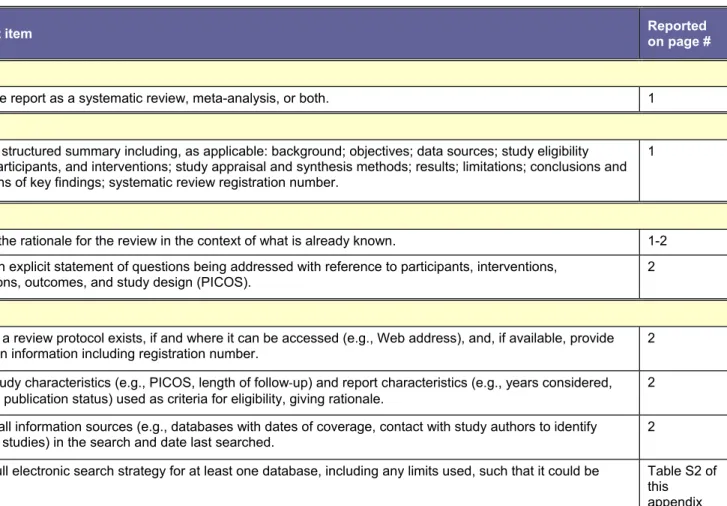
report the methods in accordance with the PRISMA
(Pre-ferred Reporting Items for Systematic Reviews and
Meta-Analyses) guidelines (see
table S1
in appendix 1 for the
PRISMA checklist) [
34
].
Inclusion and exclusion criteria
We focused on the extent to which the concept of SDM is
implemented in clinical practice. We assessed the
report-ed SDM interventions basreport-ed on the SDM model (see
sec-tion “Assessment of SDM implementasec-tion”). We
broad-ly defined SDM interventions as the approaches, methods
or tools designed to facilitate, foster, or improve
patient-healthcare provider involvement in medical
decision-mak-ing, based on Charles et al. [
35
]. We included
peer-re-viewed and grey literature of studies reported in English
addressing (the effectiveness of) SDM interventions for
men facing decisions about prostate cancer screening and/
or treatment. Eligible studies were randomised controlled
trials (RCTs), quasi-RCTs (method of allocation not
strict-ly random), and cluster RCTs (1) comparing SDM
inter-ventions to one or more alternative interinter-ventions, and/or
usual care, (2) directed at patients and/or their care-related
parties and/or healthcare providers, and (3) conducted in
primary or specialised healthcare including general
prac-tices, community clinics, ambulatory care, hospitals and
private care services. Studies were included regardless of
the length of follow-up, publication year and country of
origin. We excluded studies conducted in non-clinical
set-tings and community studies in which discussions were not
intended or could not occur.
Search strategy and data sources
We designed and conducted a comprehensive search
strat-egy in Medline Ovid, Embase (Elsevier), CINHAL
(EB-SCOHost), The Cochrane Library (Wiley), PsychINFO
(EBSCOHost) and Scopus from their inception to March
2015. The search strategy was revised by an information
specialist and, included terminology compatible with SDM
(e.g., “patient participation” and “patient involvement”),
“shared decision making” and “prostate cancer” (see
table
S2
in appendix 1). It was not restricted by publication date,
language, country or outcomes, and included a study
de-sign filter for the identification of RCTs in humans [
36
].
We also searched for grey literature using individual
clin-ical trial registers (
clinicaltrials.gov
and
ISRCTN
), the
WHO search portal (
http://apps.who.int/trialsearch
), and
the
Ottawa
Hospital
Research
Institute
website
(
http://www.ohri.ca
). The records were accessed between
February and August 2016, and the trials registration
num-ber was additionally searched for by use of Medline and
PubMed. We also used Google Scholar and the system
for Information on Grey Literature in Europe (
http://open-grey.eu/
). We identified additional studies by screening
the reference lists of included studies, relevant systematic
reviews and clinical guidelines, and by contacting (June
2015 to January 2017) the authors of potentially eligible
abstracts for which the full text could not be located.
Selection of studies
Two reviewers independently screened the titles and
ab-stracts of all citations, and examined the full text of
po-tentially eligible publications meeting the eligibility
crite-ria. Studies reported in more than one publication were
identified and treated as one unit. We resolved differences
through consensus or by involving an arbitrator.
Data collection and synthesis
One reviewer extracted data using standardised data
col-lection forms designed and developed
a priori
. A second
reviewer independently verified data extractions, resolving
differences by consensus or by involving an arbitrator. For
each study, we extracted information on the
bibliograph-ic details of studies (design, country, time of study
con-duct, funding sources), characteristics of study populations
and interventions, including the interventions’ attributes,
and the elements and key features of SDM
implementa-tion. Data from a single study reported across various
pub-lications were extracted as one unit. We obtained full-text
data from the authors of potentially eligible abstracts
with-out available full text. In this review, we performed a
nar-rative synthesis of the results, including a description of
the reported SDM interventions and their implementation
based on the SDM model. In a future report, we will
in-clude an analysis of the effectiveness of SDM
interven-tions.
Assessment of the extent of SDM implementation
We evaluated the extent of SDM implementation in
accor-dance with the essential characteristics of SDM proposed
by Charles et al
.
[
35
] (see
table S3
in appendix 1). Of the
analytic stages of SDM, we considered deliberation to be
central and mandatory, and that it must be
bi-direction-al (i.e., active participation of both patient and hebi-direction-althcare
provider) for SDM to occur. Provision of information only,
such as use of decision aids, cannot replace this active and
bi-directional participation, but such strategies in a
“stand-alone” format can facilitate SDM or become a component
of a multi-faceted intervention. To differentiate the variants
(e.g., two-way from one-way) in decision-making, we
as-sessed the intervention’s description and content, its
deliv-ery procedure and the mode of decisions to identify the
el-ements aiming to facilitate decision-making. We evaluated
whether:
1. The intervention aimed to facilitate or foster shared
de-cisions, for example by including elements of patient
activation, encouragement to talk or discuss, etc.
2. There was evidence of bi-directional interaction
be-tween patients and healthcare providers, such as
planned (telephone or face-to-face) consultations.
3. Implementation of decision-making was based on
three key features of SDM [
35
], i.e., patient and
health-care provider:
a. share/exchange information,
b. deliberate, and
c. make/implement a decision in consensus.
Ideally, this collection of behaviours occurs altogether
within a clinical encounter [
35
]. We anticipated, however,
that SDM definitions and goals would differ among studies
resulting in heterogeneous decision-making behaviours in
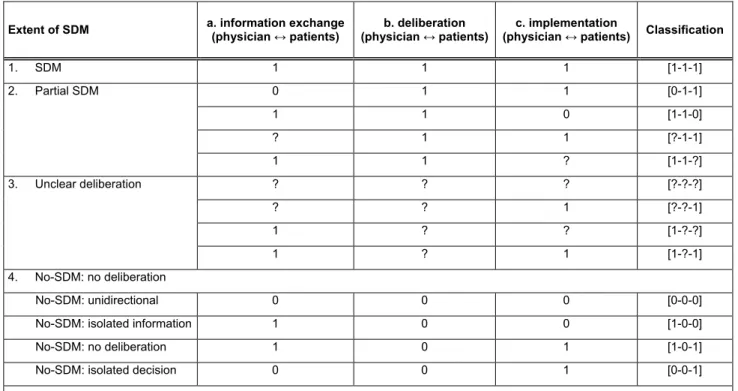
which SDM might not be achieved. We classified the
in-terventions as SDM (all criteria met), partial SDM (at least
deliberation met), unclear (unclear deliberation), and no
SDM (unidirectional interaction) by coding 3a, 3b and 3c
as one if the criteria was met, zero if the criteria was not
met, or unclear (?) if criteria details were not reported or
could not be verified.
Table S4
(appendix 1) illustrates this
system.
We considered the following criteria as components of
SDM, since these were intended to encourage discussions
between patient and healthcare provider or implied a
bi-directional interaction between them: patient activation
strategies such as provision of information, patient
prompts, clinical encounters that occurred at or shortly
fore a healthcare appointment, coaching, interviews, or
be-fore filling out questionnaires.
Results
Identification of eligible studies
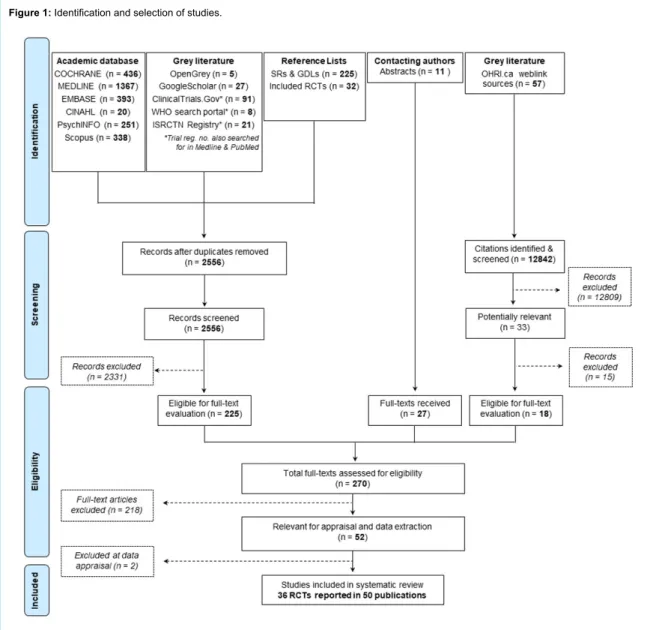
Our searches identified 15 398 records. After perusal of all
titles and abstracts, we excluded 15 128 records. We
exam-ined in detail the full text of 270 potentially relevant
ar-ticles. After excluding 220 articles, 36 RCTs reported in
50 publications met the inclusion criteria [
37
–
86
].
Figure 1
shows the flow of study identification and selection.
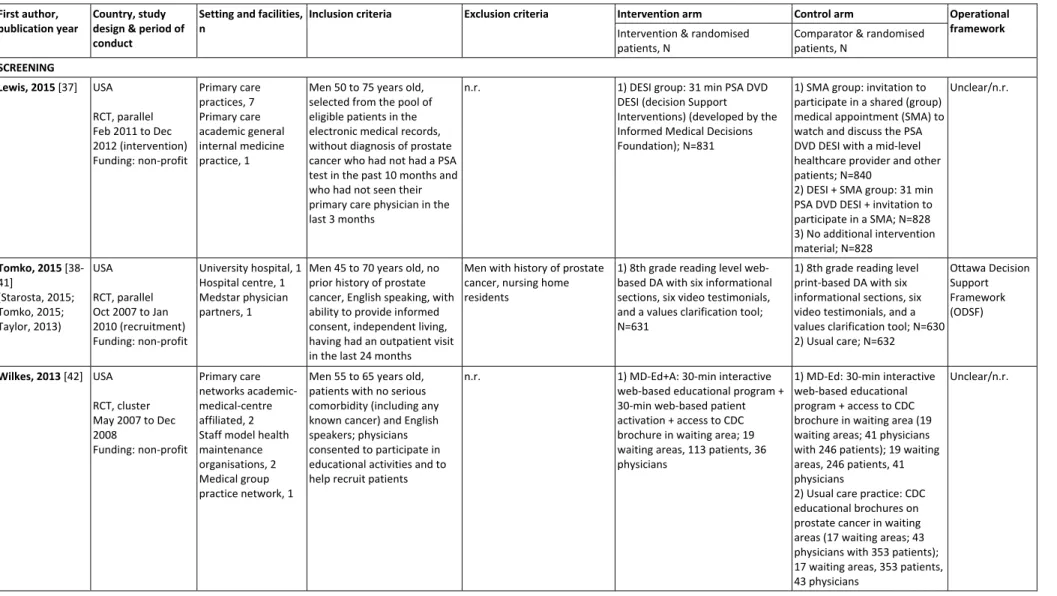
Char-acteristics of study, population and interventions of the 36
RCTs are summarised in supplementary
table S5
(appen-dix 1)
Study and population characteristics
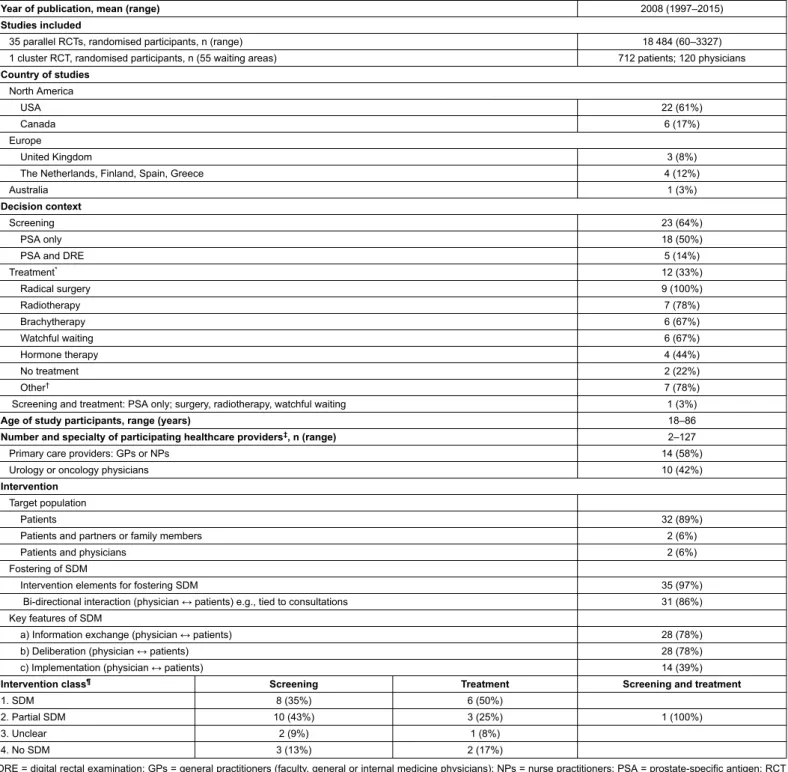
The 36 RCTs were published from 1997 to 2015, and
44.4% (n = 16) were published between 2010 and 2015;
the median year of publication was 2008 (
table 1
). The
vast majority (77.8%) of RCTs were conducted in North
America (n = 28), and the remaining (22.2%) in Europe (n
= 7) and Australia (n = 1). Thirty-five parallel RCTs
in-cluded 18 484 randomised patients, and the cluster RCT
randomised 712 patients with 120 physicians and 55
wait-ing areas. Twenty-three (63.9%) RCTs addressed
decision-making for prostate cancer screening. Of those, only five
(21.7%) defined screening as both testing for
prostate-specific antigen (PSA) and a digital rectal examination
(DRE); the other eighteen (78.3%) defined prostate cancer
screening as testing for PSA only. Twelve (33.4%) RCTs
addressed decision-making for prostate cancer treatment.
Nine (75%) of those provided a range of treatment options
of which surgery (n = 9) was the most commonly offered
choice, followed by radiotherapy (external beam radiation;
n = 7), watchful waiting (n = 6), brachytherapy (n = 6) and
hormone therapy (n = 4). One RCT addressed
decision-making for both screening and treatment of prostate
can-cer [
86
]. Thirty-two (88.9%) RCTs included
patient-direct-ed interventions, but four RCTs targetpatient-direct-ed both patients and
their significant other (e.g., relatives, spouses) [
83
,
84
], or
patients and physicians [
42
,
45
].
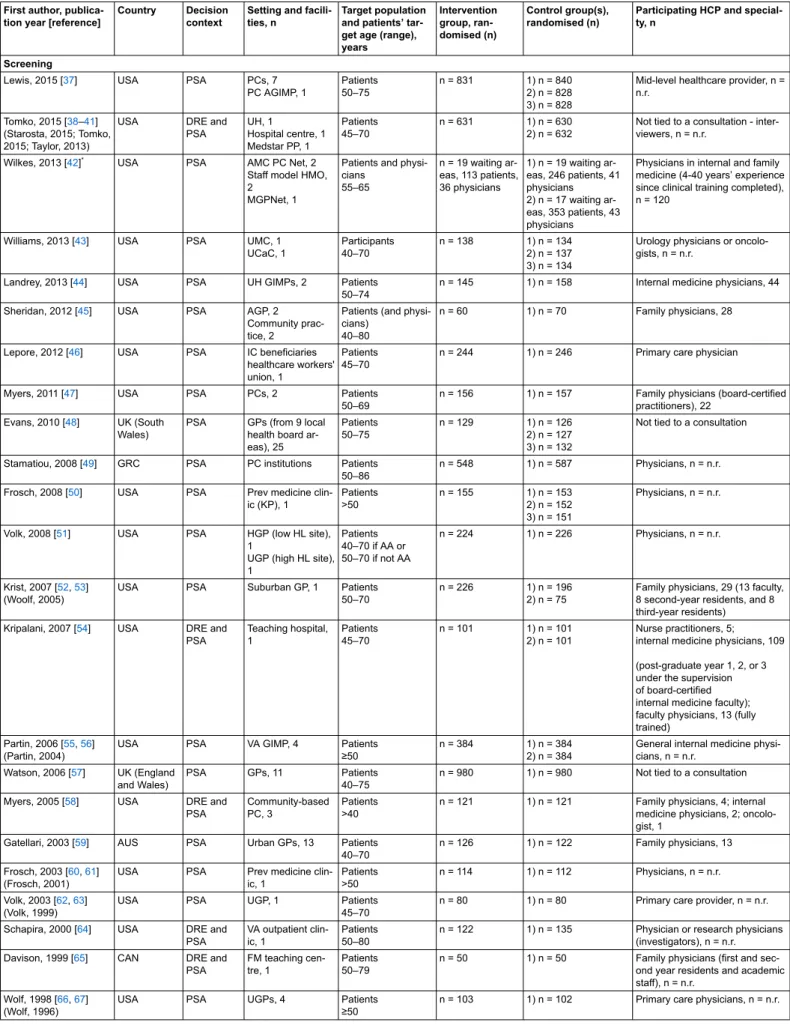
Patients were mainly recruited from primary care clinics
in 20 (55.6%) RCTs (
table 2
). In the other 16 (44.4%)
RCTs, patients were recruited from hospital-based (n = 5)
or cancer (n = 3) clinics, a specific population (n = 1), or
from multidisciplinary (combining at least two; n = 7)
set-tings. Thirty (83.4%) RCTs reported the targeted age of
participants. In 27 RCTs (75%), the minimum and
max-imum targeted age of men was 40 and 86 years,
respec-tively; one RCT (3%) targeted relatively young (younger
than typically recommended) men who were at least 18
years old [
82
]; and two RCTs (5.6%) did not use age as an
eligibility criterion for participants [
68
,
74
]. Three RCTs
were not tied to a consultation [
38
,
48
,
57
], but the type
of participating healthcare providers was reported in 24
(66.7%) RCTs: 14 RCTs (38.8%) employed faculty,
gen-eral or internal medicine physicians, and nurse
practition-ers; and 10 RCTs (27.8%) employed physician
special-ists (urology, oncology, and/or radiation oncology). Eleven
(30.6%) RCTs reported the number of participating
health-care providers, which ranged from 2 [
85
] to 127 [
54
].
Seven RCTs (21.2%) reported the level of healthcare
providers’ training or experience, which ranged from
post-graduate practice to 40 years of experience, or board
cer-tified physicians. Thirty-four RCTs reported the funding
sources; these were non-profit governmental and private
institutions.
Attributes of decision-making interventions
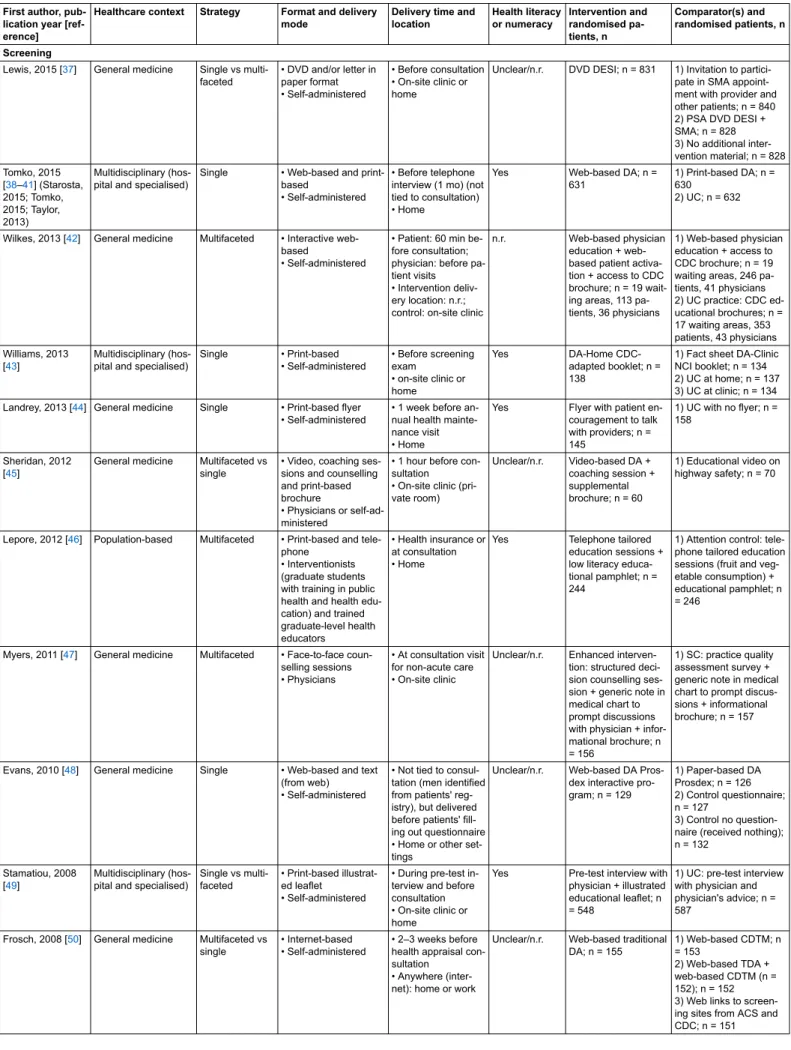
The interventions varied widely in their delivery mode,
form, and content (
table 3
). SDM was considered within
the context of primary care in 55.5% (n = 20) of the RCTs,
multidisciplinary healthcare in 19.4% (n = 7), hospital care
in 14.0% (n = 5), specialised care in 8.3% (n = 3), and
from a population perspective in 2.8% (n = 1). The
inter-ventions were delivered site (n = 14), home (n = 9),
on-site or home (n = 9), home or on-on-site combined with other
settings (n = 3), and face-to-face or by telephone (n = 1).
Most interventions (n = 28) were delivered before
consul-tations, interviews or questionnaires, and a few were
deliv-ered during (n = 6) or after (n = 2) consultations or
ques-tionnaires. The interventions were self-administered in 20
(55.6%) RCTs, exclusively delivered by clinicians or
re-search staff in 10 (27.8%) RCTs, and either delivered by
research staff or clinicians guided patients in 6 (16.7%)
RCTs.
A multifaceted strategy was used in nearly half (47.2%) of
the studies. Most interventions included material in
paper-based (n = 25) format although some included web-paper-based
(n = 4), paper- and web-based (n = 2), or other format (e.g.,
interview, audiotape recording; n = 5). Healthcare
litera-cy levels were considered in the development or pilot
test-ing of the interventions in 19 RCTs (52.8%). Of these, one
RCT exclusively developed separate interventions for low
and high health literacy [
51
]; in two RCTs interventions
were designed for low health-literacy populations [
46
,
54
];
one RCT considered the target population with a literacy
expert [
58
]; and one RCT used tailored literacy with a
de-cision navigator [
72
].
Elements and key features of SDM interventions
Twenty-five RCTs (70%) intended to assess SDM to some
degree (
table 4
). This intention was not clearly stated in
the other 11 RCTs (30%), although the interventions
in-cluded elements to facilitate or foster SDM in all but one
study. “Informed decision-making” was the most
frequent-ly (n = 21) used term, whereas onfrequent-ly 9 (25%) RCTs used
the term SDM. The studies also referred to other terms and
measurements relevant to SDM including “weighing up
benefits and harms”, “risks”, “pros and cons of options”,
“patients’ values”, “preferences”, “promotion of
engage-ment”, “discussions of choices”, “activation” or
“partici-pation in decision-making appointments”, “decision role”
(e.g., active, passive), “patient autonomy”, “patient
cen-tredness”, “knowledge and beliefs”, and “decisional
con-flict”. The interventions varied widely in the operational
framework underlying their development, with the Ottawa
Decision Support Framework (n = 5) being the most
com-mon acom-mong the 23 RCTs that reported using a framework.
Other frameworks included the health belief model theory
(n = 2), the US Preventive Services Task Force (n = 2), the
Patient Centred (n = 2), and another twelve (n = 12)
ap-proaches.
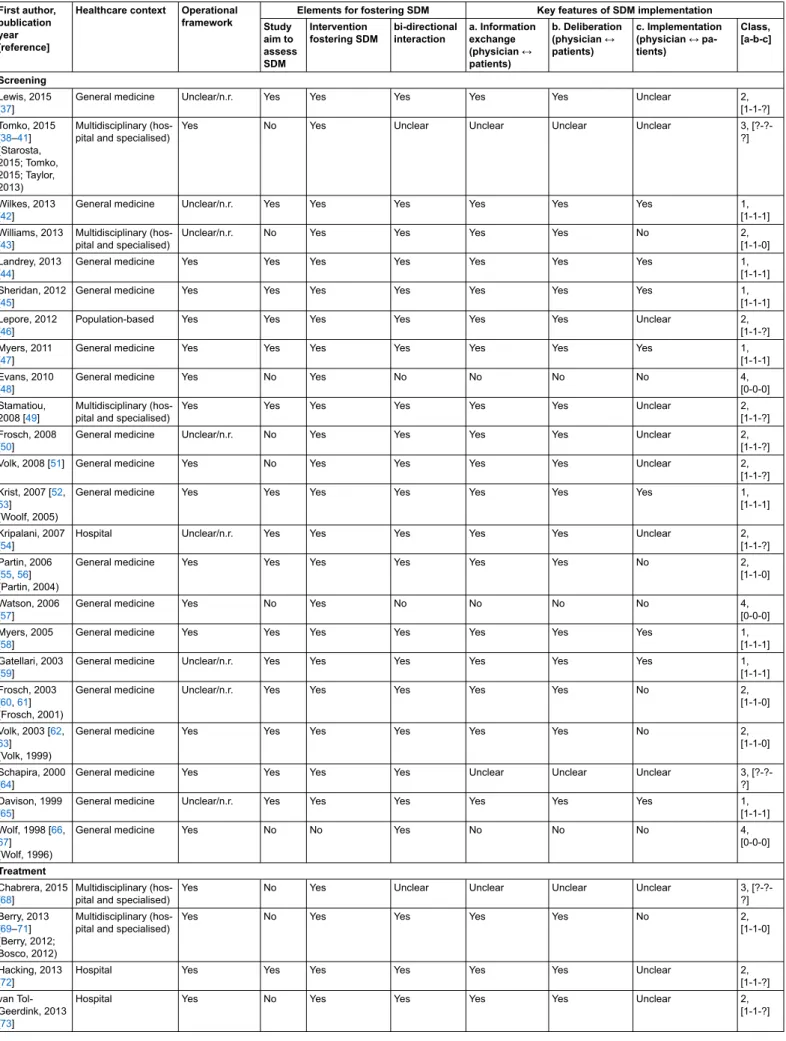
The extent of SDM implementation varied widely among
studies (
tables 2
and 4). Overall, 31 (86.1%) RCTs were
verified as showing bi-directional interactions between
pa-tient and healthcare provider. Of these, 28 (77.8%) RCTs
showed bi-directional interactions for information
ex-change and deliberation, but only 14 (50%) were verified
as having built consensus for decisions about screening or
treatment options. Of the 31 (86.1%) RCTs in which
Table 1:Summary of the characteristics of 36 randomised controlled trials of decision-making interventions for prostate cancer.
Year of publication, mean (range) 2008 (1997–2015)
Studies included
35 parallel RCTs, randomised participants, n (range) 18 484 (60–3327) 1 cluster RCT, randomised participants, n (55 waiting areas) 712 patients; 120 physicians
Country of studies North America USA 22 (61%) Canada 6 (17%) Europe United Kingdom 3 (8%)
The Netherlands, Finland, Spain, Greece 4 (12%)
Australia 1 (3%)
Decision context
Screening 23 (64%)
PSA only 18 (50%)
PSA and DRE 5 (14%)
Treatment* 12 (33%) Radical surgery 9 (100%) Radiotherapy 7 (78%) Brachytherapy 6 (67%) Watchful waiting 6 (67%) Hormone therapy 4 (44%) No treatment 2 (22%) Other† 7 (78%)
Screening and treatment: PSA only; surgery, radiotherapy, watchful waiting 1 (3%)
Age of study participants, range (years) 18–86
Number and specialty of participating healthcare providers‡, n (range) 2–127
Primary care providers: GPs or NPs 14 (58%)
Urology or oncology physicians 10 (42%)
Intervention
Target population
Patients 32 (89%)
Patients and partners or family members 2 (6%)
Patients and physicians 2 (6%)
Fostering of SDM
Intervention elements for fostering SDM 35 (97%)
Bi-directional interaction (physician ↔ patients) e.g., tied to consultations 31 (86%) Key features of SDM
a) Information exchange (physician ↔ patients) 28 (78%)
b) Deliberation (physician ↔ patients) 28 (78%)
c) Implementation (physician ↔ patients) 14 (39%)
Intervention class¶ Screening Treatment Screening and treatment
1. SDM 8 (35%) 6 (50%)
2. Partial SDM 10 (43%) 3 (25%) 1 (100%)
3. Unclear 2 (9%) 1 (8%)
4. No SDM 3 (13%) 2 (17%)
DRE = digital rectal examination; GPs = general practitioners (faculty, general or internal medicine physicians); NPs = nurse practitioners; PSA = prostate-specific antigen; RCT = randomised controlled trial; SDM = shared decision-making. Data are presented as n (%) unless otherwise stated. * Treatment options reported in nine of the twelve RCTs on treatment. † Cryotherapy, pelvic lymph node dissection, transurethral resection, complementary, no preference, undecided, missing, “other”. ‡ Number of healthcare providers reported in eleven RCTs, and the specialty of healthcare providers was reported in 24 RCTs. ¶ SDM key features [a-b-c] coded as: 1 = criteria met, 0 = criteria not met, or ? = unclear (seetable S4in appendix 1).
sion-making involved at least two parties, 45.2%
(screen-ing, n = 8; treatment, n = 6) fulfilled the three key SDM
features: nine considered SDM within the context of
pri-mary care and five within the context of hospital and/or
specialised care. Another 45.2% (screening, n = 10;
treat-ment, n = 3; screening and treattreat-ment, n = 1) met the
cri-teria for partial SDM (verified deliberation); 3.2%
(treat-ment, n = 1) had all key SDM features difficult to verify
(unclear deliberation), and 6.4% (screening, n = 1;
treat-ment, n = 1) had the characteristics of no SDM. The other
five (13.9%) of the 36 included RCTs, showed unclear
de-liberation (screening, n = 1; treatment, n = 1) or no SDM
(screening, n = 2; treatment, n = 1).
Discussion
In this systematic review, we identified 36 RCTs of
inter-ventions aiming to facilitate SDM for screening and
treat-ment of prostate cancer in a variety of settings and
popu-lations. The majority of RCTs were from North America,
mainly the USA (n = 22). Most of the participating men
were 40 to 86 years old and more than half (55.6%) were
recruited from primary care. There was a wide variation in
Table 2:Characteristics of 36 randomised controlled trials of decision-making interventions for prostate cancer.
First author, publica-tion year [reference]
Country Decision context
Setting and facili-ties, n
Target population and patients’ tar-get age (range), years Intervention group, ran-domised (n) Control group(s), randomised (n)
Participating HCP and special-ty, n
Screening
Lewis, 2015 [37] USA PSA PCs, 7 PC AGIMP, 1 Patients 50–75 n = 831 1) n = 840 2) n = 828 3) n = 828
Mid-level healthcare provider, n = n.r.
Tomko, 2015 [38–41] (Starosta, 2015; Tomko, 2015; Taylor, 2013)
USA DRE and PSA UH, 1 Hospital centre, 1 Medstar PP, 1 Patients 45–70 n = 631 1) n = 630 2) n = 632
Not tied to a consultation - inter-viewers, n = n.r.
Wilkes, 2013 [42]* USA PSA AMC PC Net, 2
Staff model HMO, 2
MGPNet, 1
Patients and physi-cians 55–65 n = 19 waiting ar-eas, 113 patients, 36 physicians 1) n = 19 waiting ar-eas, 246 patients, 41 physicians 2) n = 17 waiting ar-eas, 353 patients, 43 physicians
Physicians in internal and family medicine (4-40 years’ experience since clinical training completed), n = 120
Williams, 2013 [43] USA PSA UMC, 1 UCaC, 1 Participants 40–70 n = 138 1) n = 134 2) n = 137 3) n = 134
Urology physicians or oncolo-gists, n = n.r.
Landrey, 2013 [44] USA PSA UH GIMPs, 2 Patients 50–74
n = 145 1) n = 158 Internal medicine physicians, 44 Sheridan, 2012 [45] USA PSA AGP, 2
Community prac-tice, 2
Patients (and physi-cians)
40–80
n = 60 1) n = 70 Family physicians, 28
Lepore, 2012 [46] USA PSA IC beneficiaries healthcare workers' union, 1
Patients 45–70
n = 244 1) n = 246 Primary care physician
Myers, 2011 [47] USA PSA PCs, 2 Patients 50–69
n = 156 1) n = 157 Family physicians (board-certified practitioners), 22
Evans, 2010 [48] UK (South Wales)
PSA GPs (from 9 local health board ar-eas), 25 Patients 50–75 n = 129 1) n = 126 2) n = 127 3) n = 132
Not tied to a consultation
Stamatiou, 2008 [49] GRC PSA PC institutions Patients 50–86
n = 548 1) n = 587 Physicians, n = n.r. Frosch, 2008 [50] USA PSA Prev medicine
clin-ic (KP), 1 Patients >50 n = 155 1) n = 153 2) n = 152 3) n = 151 Physicians, n = n.r.
Volk, 2008 [51] USA PSA HGP (low HL site), 1
UGP (high HL site), 1 Patients 40–70 if AA or 50–70 if not AA n = 224 1) n = 226 Physicians, n = n.r. Krist, 2007 [52,53] (Woolf, 2005)
USA PSA Suburban GP, 1 Patients 50–70
n = 226 1) n = 196 2) n = 75
Family physicians, 29 (13 faculty, 8 second-year residents, and 8 third-year residents) Kripalani, 2007 [54] USA DRE and
PSA Teaching hospital, 1 Patients 45–70 n = 101 1) n = 101 2) n = 101 Nurse practitioners, 5; internal medicine physicians, 109 (post-graduate year 1, 2, or 3 under the supervision of board-certified internal medicine faculty); faculty physicians, 13 (fully trained)
Partin, 2006 [55,56] (Partin, 2004)
USA PSA VA GIMP, 4 Patients ≥50
n = 384 1) n = 384 2) n = 384
General internal medicine physi-cians, n = n.r.
Watson, 2006 [57] UK (England and Wales)
PSA GPs, 11 Patients 40–75
n = 980 1) n = 980 Not tied to a consultation Myers, 2005 [58] USA DRE and
PSA
Community-based PC, 3
Patients >40
n = 121 1) n = 121 Family physicians, 4; internal medicine physicians, 2; oncolo-gist, 1
Gatellari, 2003 [59] AUS PSA Urban GPs, 13 Patients 40–70
n = 126 1) n = 122 Family physicians, 13 Frosch, 2003 [60,61]
(Frosch, 2001)
USA PSA Prev medicine clin-ic, 1 Patients >50 n = 114 1) n = 112 Physicians, n = n.r. Volk, 2003 [62,63] (Volk, 1999)
USA PSA UGP, 1 Patients
45–70
n = 80 1) n = 80 Primary care provider, n = n.r. Schapira, 2000 [64] USA DRE and
PSA
VA outpatient clin-ic, 1
Patients 50–80
n = 122 1) n = 135 Physician or research physicians (investigators), n = n.r. Davison, 1999 [65] CAN DRE and
PSA
FM teaching cen-tre, 1
Patients 50–79
n = 50 1) n = 50 Family physicians (first and sec-ond year residents and academic staff), n = n.r.
Wolf, 1998 [66,67] (Wolf, 1996)
USA PSA UGPs, 4 Patients ≥50
First author, publica-tion year [reference]
Country Decision context
Setting and facili-ties, n
Target population and patients’ tar-get age (range), years Intervention group, ran-domised (n) Control group(s), randomised (n)
Participating HCP and special-ty, n Treatment UH, 1 Chabrera, 2015 [68] SPN n.r. Oncology insti-tutes, 2 Patients >45
n = 73 1) n = 74 Urology physicians, radiation on-cology physicians, medical oncol-ogy physicians, n = n.r. VA hospital, 3 UCaC, 1 Berry, 2013 [69–71] (Berry, 2012; Bosco, 2012) USA 1, 5, 6, 8, 13,14 Ca institute, 2 Patients >40
n = 266 1) n = 228 Physician consultants (urology or oncology physician or other), n = n.r.
Hacking, 2013 [72] UK (Scot-land)
1, 5, 6, 7, 8 GH, 1 Patients Age, n.r.†
n = 63 1) n = 60 Urology physicians or oncolo-gists, n = n.r. UMC, 1 van Tol-Geerdink, 2013 [73] NLD 1, 5, 6, 11 GHs, 2 Patients Age, n.r.† n = 163 1) n = 77 Urology physicians, n = n.r. UHs, 2 Huang, 2014 [74–76] (Auvinen, 2004; Auvi-nen, 2001) FIN 1, 5, 7, 8 GHs, 2 Patients All‡
n = 104 1) n = 106 Urology physicians (board-certi-fied), 4 Feldman-Stewart, 2012 [77–79] (Feldman-Stewart, 2004; Feld-man-Stewart, 2001) CAN 1, 2, 5, 6, 10, 12, 14
Ca clinic centres, 4 Patients >40 n = 81 1) n = 75 Physicians, n = n.r. Taylor, 2010 [80] USA 1, 5, 6, 7, 8, 11 UH, 1 Hospital centre, 1 Local PC support groups and newsletters Patients All‡ n = 66 (95 CD users) 1) n = 66 (25 non-CD users)
Urology physicians, radiation on-cology physicians, medical oncol-ogy physicians, n = n.r.
Mishel, 2009 [81] USA n.r. Ca centre, 2 Community hospi-tal, 3 VA medical centre, 1 Patients Age, n.r.† n = 89 1) n = 93 2) n = 74 Physicians, n = n.r. Hack, 2007 [82] CAN 1, 4, 7, 8, 10 Tertiary oncology clinic treatment fa-cilities, 4
Patients >18
n = 214 1) n = 211 Fully trained radiation oncolo-gists, n = 15
Davison, 2007 [83] CAN 1, 2, 5, 6, 8, 9
GH-based prostate education and re-search centre, 1
Patients and part-ners Age, n.r.† n = 162 1) n = 162 Urology physicians, n = n.r. Feldman-Stewart, 2006 [84] CAN n.r. Ambulatory Ca centres, 3
Patients and family members Age, n.r.†
n = 152 1) n = 156 Physicians, n = n.r.
Davison, 1997 [85] CAN 1, 3, 12 Community clinic with practicing urol-ogists, 1
Patients
Age, n.r.† n = 30 1) n = 30 Urology physicians, 2
Screening and treatment
Wilt, 2001 [86] USA 1, 5, 8 PCs at VA centre, 1
Patients ≥50
n = 275 1) n = 275 Physicians, n = n.r.
CAN = Canada; NLD = The Netherlands; SPN = Spain; FIN = Finland; GRC = Greece. LPC = localised prostate cancer; DRE = digital rectal examination; PSA = prostate-specific antigen; AA = African American; n.r. = not reported; CD = CD-ROM-based decision aid. Settings: VA = Veterans’ affair; PC = primary care clinics/practices; GIMP = general in-ternal medicine practice; AGIMP = academic general inin-ternal medicine practice; UH = university hospital; MGP = medical group practice; PP = physician partners; HMO = health maintenance organisations; AMC = academic medical centre; Net = networks; UMC = university medical centre; UCaC = university cancer centre; AGP = academic general practice; GH = general hospital; FMC = family medicine centre/clinic; IC = insurance company; GPs = general/family medicine practices/clinics; Prev = preventive; KP = Kaiser Permanente; UGP = university-affiliated general practice; HGP = hospital-based general practice; HL = health literacy. Treatment options: 1 = radical surgery (prostatectomy or “surgery”), 2 = cryotherapy (cryosurgery or cryoablation), 3 = lymphadenectomy (lymph node dissection), 4 = transurethral resection of the prostate, 5 = radiotherapy, 6 = brachytherapy (combination of radiotherapy and surgery), 7 = hormone therapy (e.g., orchidectomy, LHRH agonist treatment, antiandrogen or oestrogen), 8 = watchful waiting or active monitoring, 9 = complementary, 10 = no treatment, 11 = no treatment, preference, 12 = other (type not stated), 13 = undecided, 14 = missing. * Cluster RCT. † RCTs for which no specific target age was used as eligibility criterion. ‡ RCTs for which age was not used as eligibility criterion.
the minimum age (range: 40–55) at which men were
tar-geted to be screened for prostate cancer with starting
cut-off ages at 40, 45, 50, 55 years, and 18 years in one study.
Primary care physicians or nurse practitioners
participat-ed in at least a third of the studies, whereas specialisparticipat-ed
physicians participated in less than a third of the studies.
Most studies addressed decision-making for prostate
can-cer screening, with PSA being the most (78.3%) frequently
used method of diagnosis. The interventions differed
wide-ly in delivery mode, format and content.
Our approach for assessing the implementation of SDM
in-terventions was based on the criteria defined by Charles et
al. [
24
,
35
]. The model distinguishes the roles and
respon-sibilities of the relationship between patient and
health-care provider for SDM compared with other models of
de-cision-making. The essential characteristic of SDM is the
bi-directional interaction between patient and healthcare
provider which places SDM in the middle between a
pater-nalistic and an informed-decision approach. Patients (and/
or related parties) and healthcare providers need to
active-ly adopt a set of behaviours in each of the anaactive-lytic stages,
namely information exchange, deliberation and decision
implementation [
35
]. Our approach also supports
delibera-tion as the key feature to accomplish SDM in routine
prac-tice, in keeping with Elwyn et al. [
87
].
We found that different strategies are used to encourage
participation in decision-making, and interventions might
be considered to facilitate SDM, although they might not
Table 3:Characteristics of decision-making interventions for prostate cancer screening and treatment.
First author, pub-lication year [ref-erence]
Healthcare context Strategy Format and delivery mode
Delivery time and location Health literacy or numeracy Intervention and randomised pa-tients, n Comparator(s) and randomised patients, n Screening
Lewis, 2015 [37] General medicine Single vs multi-faceted • DVD and/or letter in paper format • Self-administered • Before consultation • On-site clinic or home
Unclear/n.r. DVD DESI; n = 831 1) Invitation to partici-pate in SMA appoint-ment with provider and other patients; n = 840 2) PSA DVD DESI + SMA; n = 828 3) No additional inter-vention material; n = 828 Tomko, 2015 [38–41] (Starosta, 2015; Tomko, 2015; Taylor, 2013) Multidisciplinary (hos-pital and specialised)
Single • Web-based and print-based
• Self-administered
• Before telephone interview (1 mo) (not tied to consultation) • Home
Yes Web-based DA; n = 631
1) Print-based DA; n = 630
2) UC; n = 632
Wilkes, 2013 [42] General medicine Multifaceted • Interactive web-based
• Self-administered
• Patient: 60 min be-fore consultation; physician: before pa-tient visits • Intervention deliv-ery location: n.r.; control: on-site clinic
n.r. Web-based physician education + web-based patient activa-tion + access to CDC brochure; n = 19 wait-ing areas, 113 pa-tients, 36 physicians
1) Web-based physician education + access to CDC brochure; n = 19 waiting areas, 246 pa-tients, 41 physicians 2) UC practice: CDC ed-ucational brochures; n = 17 waiting areas, 353 patients, 43 physicians Williams, 2013 [43] Multidisciplinary (hos-pital and specialised)
Single • Print-based • Self-administered • Before screening exam • on-site clinic or home Yes DA-Home CDC-adapted booklet; n = 138
1) Fact sheet DA-Clinic NCI booklet; n = 134 2) UC at home; n = 137 3) UC at clinic; n = 134 Landrey, 2013 [44] General medicine Single • Print-based flyer
• Self-administered
• 1 week before an-nual health mainte-nance visit • Home
Yes Flyer with patient en-couragement to talk with providers; n = 145 1) UC with no flyer; n = 158 Sheridan, 2012 [45]
General medicine Multifaceted vs single
• Video, coaching ses-sions and counselling and print-based brochure
• Physicians or self-ad-ministered
• 1 hour before con-sultation
• On-site clinic (pri-vate room) Unclear/n.r. Video-based DA + coaching session + supplemental brochure; n = 60 1) Educational video on highway safety; n = 70
Lepore, 2012 [46] Population-based Multifaceted • Print-based and tele-phone
• Interventionists (graduate students with training in public health and health edu-cation) and trained graduate-level health educators
• Health insurance or at consultation • Home
Yes Telephone tailored education sessions + low literacy educa-tional pamphlet; n = 244
1) Attention control: tele-phone tailored education sessions (fruit and veg-etable consumption) + educational pamphlet; n = 246
Myers, 2011 [47] General medicine Multifaceted • Face-to-face coun-selling sessions • Physicians
• At consultation visit for non-acute care • On-site clinic
Unclear/n.r. Enhanced interven-tion: structured deci-sion counselling ses-sion + generic note in medical chart to prompt discussions with physician + infor-mational brochure; n = 156
1) SC: practice quality assessment survey + generic note in medical chart to prompt discus-sions + informational brochure; n = 157
Evans, 2010 [48] General medicine Single • Web-based and text (from web) • Self-administered
• Not tied to consul-tation (men identified from patients' reg-istry), but delivered before patients' fill-ing out questionnaire • Home or other set-tings
Unclear/n.r. Web-based DA Pros-dex interactive pro-gram; n = 129 1) Paper-based DA Prosdex; n = 126 2) Control questionnaire; n = 127 3) Control no question-naire (received nothing); n = 132
Stamatiou, 2008 [49]
Multidisciplinary (hos-pital and specialised)
Single vs multi-faceted
• Print-based illustrat-ed leaflet
• Self-administered
• During pre-test in-terview and before consultation • On-site clinic or home
Yes Pre-test interview with physician + illustrated educational leaflet; n = 548
1) UC: pre-test interview with physician and physician's advice; n = 587
Frosch, 2008 [50] General medicine Multifaceted vs single
• Internet-based • Self-administered
• 2–3 weeks before health appraisal con-sultation
• Anywhere (inter-net): home or work
Unclear/n.r. Web-based traditional DA; n = 155 1) Web-based CDTM; n = 153 2) Web-based TDA + web-based CDTM (n = 152); n = 152 3) Web links to screen-ing sites from ACS and CDC; n = 151
First author, pub-lication year [ref-erence]
Healthcare context Strategy Format and delivery mode
Delivery time and location Health literacy or numeracy Intervention and randomised pa-tients, n Comparator(s) and randomised patients, n
Volk, 2008 [51] General medicine Single • Video (interactive edutainment), audio booklet
• For subjects at the low-literacy site: RA read material • For subjects at the high-literacy sites: self-administered • RA were available to assist men with using the aids
• Before consultation • On-site clinic
Yes Edutainment: interac-tive and entertain-ment multimedia DA with medical informa-tion combined with storyline; n = 224
1) Audio booklet without interactivity and enter-tainment factors; n = 226
Krist, 2007 [52, 53] (Woolf, 2005)
General medicine Single • Internet link to web-based or paper-web-based • Self-administered
• Within 2 weeks of consultation • Home
Unclear/n.r. Web-based DA; n = 226
1) Pamphlet (paper ver-sion of web-based) DA; n = 196 2) UC with no pre-visit educational material; n = 75 Kripalani, 2007 [54]
Hospital Single • Print-based pam-phlets in high detail or low detail
• Self-administered
• Before consultation • On-site clinic (wait-ing room)
Yes High-detail patient ed-ucational pamphlet to promote SDM; n = 101
1) Low-detail “Talk to your doctor” Cue hand-out; n = 101
2) Attention control: pic-tured traditional food pyramid; n = 101 Partin, 2006 [55,
56] (Partin, 2004)
General medicine Single • Video or print-based pamphlet
• Self-administered
• Within 2 weeks be-fore consultation • Home
Yes Video “The PSA Deci-sion: What YOU Need to Know” by the FIMDM; n = 384
1) Pamphlet developed for study; n = 384 2) UC and whatever de-cision-making support provided in routine ap-pointments; n = 384 Watson, 2006 [57] General medicine Multifaceted vs
single
• Print-based • Self-administered
• Not tied to consul-tation, but delivered at same time as questionnaire • Home
Yes Brief patient DA leaflet + question-naire; n = 980
1) Control questionnaire only; n = 980
Myers, 2005 [58] General medicine Multifaceted vs single
• Print-based booklet and face-to-face edu-cational sessions • Self-administered or trained health educator
• Before consultation • On-site clinic or home
Yes Enhanced interven-tion: informational booklet + decision ed-ucation session by telephone; n = 121 1) SC: informational booklet; n = 121 Gatellari, 2003 [59]
General medicine Single • Print-based booklet and pamphlet • Self-administered • Before consultation • On-site clinic Yes Evidence-based booklet; n = 126
1) Pamphlet by the Aus-tralian government; n = 122
Frosch, 2003 [60, 61] (Frosch, 2001)
General medicine Single • Videotape DA and web-version of video-tape DA
• Self-administered
• Before (30 min or until time/date of) health appraisal con-sultation
• On-site clinic (videotape) or any-where (web-based)
Unclear/n.r. Web-based DA; n = 114
1) Video DA; n = 112
Volk, 2003 [62,63] (Volk, 1999)
General medicine Multifaceted (video and brochure) • Video or print-based (brochure) • Self-administered • Before consultation • on-site clinic (video) or home (brochure)
Yes Educational video by the FIMDM + accom-panying brochure; n = 80
1) No intervention before visit + brochure after 2 week follow-up assess-ment; n = 80 Schapira, 2000
[64]
General medicine Multifaceted vs single
• Print-based pamphlet • Self-administered and RA present and available to answer questions
• 2 weeks before consultation • On site clinic
Yes Pamphlet DA about prostate cancer screening and treat-ment + educational information included in comparator pam-phlet; n = 122 1) Basic information pamphlet; n = 135
Davison, 1999 [65] General medicine Multifaceted vs single
• Verbal and written (information) • Physician (interven-tion) or investigator (control) • Before periodic health examination • On-site clinic
Unclear/n.r. Verbal and written in-formation with en-couragement to dis-cuss with physician and to participate de-cision-making; n = 50
1) Attention control: dis-cussion about general issues; n = 50
Wolf, 1998 [66, 67] (Wolf, 1996)
General medicine Single • Written (information) • RA (read aloud the interventions)
• Before consultation • On-site clinic
Yes Scripted overview of PSA screening; n = 103
1) Brief control message about PSA availability; n = 102
First author, pub-lication year [ref-erence]
Healthcare context Strategy Format and delivery mode
Delivery time and location Health literacy or numeracy Intervention and randomised pa-tients, n Comparator(s) and randomised patients, n Treatment Chabrera, 2015 [68] Multidisciplinary (hos-pital and specialised)
Single • Print-based booklet • Self-administered
• After first consulta-tion
• Take-home with on-site explanation (by physicians and nurses)
Unclear/n.r. Printed booklet DA with information, val-ues clarification exer-cise and interview preparation material for consultation; n = 73 1) Standard information; n = 74 Berry, 2013 [69–71] (Berry, 2012; Bosco, 2012) Multidisciplinary (hos-pital and specialised)
Single • Computer (touch-screen in clinic or com-puter at home), text, print-based, video • Self-administered
• Before consultation • On-site clinic or home
Yes Tailored internet aid; n = 266
1) Website links to es-tablished information about prostate cancer; n = 228
Hacking, 2013 [72] Hospital Single • Face-to-face commu-nication-interaction • RA
• Before consultation • Face-to-face meet-ing or telephone
Yes Coaching DA: prepar-ing for tailored per-sonal consultation plan; n = 63
1) UC pathway with dis-cussion of treatment op-tions with specialists; n = 60
van Tol-Geerdink, 2013 [73]
Hospital Single • Face-to-face semi-structured interview and written information • Researcher
• Before second con-sultation (when par-ticipants elaborated on treatment choice with urologist) • On-site clinic or home
Yes Semi-structured inter-view consultation DA to provide information + discussion of treat-ment choice with spe-cialists; n = 163
1) UC with discussion of treatment options with specialists; n = 77 Huang, 2014 [74–76] (Auvinen, 2004; Auvinen, 2001) Hospital Multifaceted vs single
• Verbal and written (structured informa-tion) • Physicians in both groups • During consultation • On-site clinic
Unclear/n.r. Enhanced participa-tion: patient-defined role in decision-mak-ing actively empha-sised and discussions with urologist + struc-tured information on treatment options; n = 104 1) SC protocols; n = 106 Feldman-Stewart, 2012 [77–79] (Feldman-Stewart, 2004; Feldman-Stewart, 2001)
Specialised (cancer) Multifaceted vs single • Computer program and interview • Self-administered and interview by RA (available to answer questions about using DA computer program)
• Between initial (doctor presents the treatment options) and second (~1 week later when treatment decision is made) consultation • On-site clinic
Unclear/n.r. Computer DA inter-view with well-struc-tured information and Value Clarification Ex-ercises; n = 81
1) Computer DA inter-view with well-structured information and general questions; n = 75
Taylor, 2010 [80] Multidisciplinary (hos-pital and population-based)
Multifaceted • CD-ROM and interac-tive tools
• Self-administered (home) or research staff (at study research offices)
• After first (baseline) telephone interview (material mailed six-teen days (median) after biopsy) but be-fore (1 mo) follow-up telephone interview • On-site study office or home n.r. Information CD + in-teractive decision tools; n = 66 1) Information CD; n = 66
Mishel, 2009 [81] Multidisciplinary (hos-pital and specialised)
Multifaceted vs single
• Video DVD, booklet and telephone calls • Self-administered and telephone calls by nurse (trained in the study intervention) • 10 days to 2 weeks before consultation • Home Yes TS: DVD + booklet + 4 telephone calls to patients and primary support person; n = 89
1) TD: DVD + booklet + 4 telephone calls to pa-tients only; n = 93 2) UC: handout on stay-ing healthy durstay-ing treat-ment; n = 74 Hack, 2007 [82] Specialised (cancer) Single • Audiotape recording
• Clinical research nurse • During consultation (recording of clinical encounter) • on-site clinic
Unclear/n.r. Audiotape: audio recording of clinical encounter; n = 214
1) Consultation not au-diotaped; n = 211
Davison, 2007 [83] Hospital care Multifaceted • Written information • Videotape, tele-phone, research nurse
• Within 10 days of being referred and before consultation • On-site (patient-ed-ucation) centre
Unclear/n.r. Individualised infor-mation printout based on preferences and disease + written in-formation package + telephone call weeks later + encourage-ment to bring signifi-cant others to ap-pointment; n = 162
1) Generic information videotape + written infor-mation package + tele-phone call four weeks later + encouragement to bring significant oth-ers to appointment; n = 162
Feldman-Stewart, 2006 [84]
Specialised (Cancer) Single • Print-based booklet • Self-administered
• Before and after the evaluation ques-tionnaires; after first consultation (con-sent), but before (reading the inter-vention) the AFTER
Yes CCE information booklet; n = 152 1) Standard information booklet developed by AstraZeneca routinely provided to patients; n = 156
First author, pub-lication year [ref-erence]
Healthcare context Strategy Format and delivery mode
Delivery time and location Health literacy or numeracy Intervention and randomised pa-tients, n Comparator(s) and randomised patients, n questionnaire • Home Davison, 1997 [85] General medicine Multifaceted
(verbal and writ-ten)
• Booklet, written and verbal
• Research staff and nurse gave interviews in preparation for con-sultation and helped patients in the inter-vention group
• Before treatment consultation • On-site clinic
Unclear/n.r. Empowerment inter-vention - interview preparing for consul-tation; n = 30
1) Written information package; n = 30
Screening and treatment
Wilt, 2001 [86] General medicine Single • Print-based pamphlet • Self-administered
• 7–10 days before consultation • Home
Yes Question and answer printed sheets; n = 275
1) UC alone; n = 275
RA = Research Assistant; n.r. = not reported. DESI = DEcision Support Intervention; SMA = shared medical appointment; NCI = National Cancer Institute; CDC = Centers for Disease Control and Prevention; ACS = American Cancer Society; TDA = traditional DA; CDTM = Chronic Disease Trajectory Model; FIMDM = Foundation for Informed Medical Decision Making; TD = treatment direct; TS = treatment supplemented; CCE = Cancer Care and Epidemiology Unit from Cancer Research Institute; UC = usual care; SC = standard care intervention.
be explicitly termed as such. Informed decision-making is
the most frequently used term in the literature and it could
be either a stand-alone strategy to facilitate SDM, or one
component of multi-faceted interventions. SDM could also
be measured as a process (e.g., recording consultations) or
can be conceptualised as an outcome.
The quality of implementation of SDM interventions
var-ied widely among studies. In most, the interventions were
consistent in providing information, and the majority (n
= 28) intended to involve deliberation to some degree. In
fact, interventions were mostly delivered before
consulta-tions, interviews, evaluations or questionnaires as an
at-tempt to empower patients. However, only 38.9% (n = 14)
met the key criteria for SDM as proposed by Charles et
al. [
35
]. Interestingly, half of the treatment studies,
com-pared with nearly 35% of the screening studies, achieved
the three key SDM features.
Given the prevalence of prostate cancer, that SDM is
guideline recommended and viewed as the fundamental
component of all interactions between patients and
-health-care providers, it is surprising to find only a small number
of studies on the effects of SDM for prostate cancer,
espe-cially treatment. However, nearly half (44.5%) of the
in-cluded studies were published from 2010 onwards, which
might indicate a growing area of research. In addition,
most (55.5%) studies considered decision-making within
the context of primary care by general practitioners, and
only a few evaluated decision-making in the context of
specialised care by urologists or oncologists. Moreover,
the study interventions were developed to target mostly
patients (88.9%), rarely involving the patients’ significant
others (e.g., family members, carers) despite
recommenda-tions that views and participation from others in
decision-making may lead to more efficient and effective healthcare
[
29
,
88
].
Our review confirms an increase in the development of
SDM interventions for prostate cancer. It also confirms the
lack of both consensus on the definition of SDM and
guid-ance for SDM implementation in routine practice. Makoul
et al. [
14
] identified a range of 31 different SDM
defini-tions and, as noted in our review, their recommendadefini-tions
for a single and more integrative concept of SDM are yet to
be followed. Future research should consider that this
vari-ability might make comparison across studies difficult, and
that consistent reporting of interventions and their
compo-nents could allow better estimation of SDM
implementa-tion. Involving others (e.g., patients’ carers or relatives) in
the process of decision-making might affect patient
out-comes and should be considered in further research.
Nev-ertheless, our results merit further evaluation of their
im-pact on patient outcomes.
Strengths and limitations
To our knowledge, this is the first systematic review about
SDM implementation for both screening and treatment for
prostate cancer. As such, this review focused on assessing
and describing the reported SDM interventions and their
implementation in clinical practice based on the SDM
model. Given the lack of a single SDM definition, we
con-sidered the diversity in the type of interventions that would
be compatible with SDM. Various reviews have focused on
decision aids. We used a broad definition of SDM
inter-ventions and did not limit our search strategy exclusively
to the term “shared decision-making” or “decision aids”.
We used a range of search terms relevant to
decision-mak-ing, including SDM and decision aids. We applied broad
inclusion criteria at the screening stage and full-text
evalu-ation, and included studies regardless of whether a
specif-ic decision was promoted. Our review also covered
inter-national literature with no restriction to countries or type
of healthcare provider. We included literature published in
English only, and academic databases were searched up
to March 2015. However, we made considerable efforts to
identify all relevant studies by comprehensively searching
both peer-reviewed and grey (accessed: February–August
2016) literature in twelve sources. We also contacted
au-thors (2015–2017) of abstracts for which full texts were
not available, increasing the chance of identifying more
lit-erature that is contemporary. Our work thus benefited from
the response of authors, which led to the identification of
more studies and thus more complete data were considered
for eligibility. Moreover, our method for evaluating the
im-plementation of SDM confirmed that research gaps in the
conceptualisation of SDM continue despite previous
rec-ommendations [
14
]. We used the SDM model by Charles
et al
.
[
35
] because it represents only one SDM concept, and
it is the most prominent [
14
] approach to viewing SDM
compared with other models of decision-making. Our
re-view thus presents the elements and key features of SDM
Table 4:Elements and key features of decision-making interventions for prostate cancer screening and treatment.
Elements for fostering SDM Key features of SDM implementation First author,
publication year [reference]
Healthcare context Operational
framework Study aim to assess SDM Intervention fostering SDM bi-directional interaction a. Information exchange (physician ↔ patients) b. Deliberation (physician ↔ patients) c. Implementation (physician ↔ pa-tients) Class, [a-b-c] Screening Lewis, 2015 [37]
General medicine Unclear/n.r. Yes Yes Yes Yes Yes Unclear 2,
[1-1-?] Tomko, 2015 [38–41] (Starosta, 2015; Tomko, 2015; Taylor, 2013) Multidisciplinary (hos-pital and specialised)
Yes No Yes Unclear Unclear Unclear Unclear 3,
[?-?-?]
Wilkes, 2013 [42]
General medicine Unclear/n.r. Yes Yes Yes Yes Yes Yes 1,
[1-1-1] Williams, 2013
[43]
Multidisciplinary (hos-pital and specialised)
Unclear/n.r. No Yes Yes Yes Yes No 2,
[1-1-0] Landrey, 2013
[44]
General medicine Yes Yes Yes Yes Yes Yes Yes 1,
[1-1-1] Sheridan, 2012
[45]
General medicine Yes Yes Yes Yes Yes Yes Yes 1,
[1-1-1] Lepore, 2012
[46]
Population-based Yes Yes Yes Yes Yes Yes Unclear 2,
[1-1-?] Myers, 2011
[47]
General medicine Yes Yes Yes Yes Yes Yes Yes 1,
[1-1-1] Evans, 2010
[48]
General medicine Yes No Yes No No No No 4,
[0-0-0] Stamatiou,
2008 [49]
Multidisciplinary (hos-pital and specialised)
Yes Yes Yes Yes Yes Yes Unclear 2,
[1-1-?] Frosch, 2008
[50]
General medicine Unclear/n.r. No Yes Yes Yes Yes Unclear 2,
[1-1-?]
Volk, 2008 [51] General medicine Yes No Yes Yes Yes Yes Unclear 2,
[1-1-?] Krist, 2007 [52,
53] (Woolf, 2005)
General medicine Yes Yes Yes Yes Yes Yes Yes 1,
[1-1-1] Kripalani, 2007
[54]
Hospital Unclear/n.r. Yes Yes Yes Yes Yes Unclear 2,
[1-1-?] Partin, 2006
[55,56] (Partin, 2004)
General medicine Yes Yes Yes Yes Yes Yes No 2,
[1-1-0] Watson, 2006
[57]
General medicine Yes No Yes No No No No 4,
[0-0-0] Myers, 2005
[58]
General medicine Yes Yes Yes Yes Yes Yes Yes 1,
[1-1-1] Gatellari, 2003
[59]
General medicine Unclear/n.r. Yes Yes Yes Yes Yes Yes 1,
[1-1-1] Frosch, 2003
[60,61] (Frosch, 2001)
General medicine Unclear/n.r. Yes Yes Yes Yes Yes No 2,
[1-1-0] Volk, 2003 [62,
63] (Volk, 1999)
General medicine Yes Yes Yes Yes Yes Yes No 2,
[1-1-0] Schapira, 2000
[64]
General medicine Yes Yes Yes Yes Unclear Unclear Unclear 3, [?-?-?] Davison, 1999
[65]
General medicine Unclear/n.r. Yes Yes Yes Yes Yes Yes 1,
[1-1-1] Wolf, 1998 [66,
67] (Wolf, 1996)
General medicine Yes No No Yes No No No 4,
[0-0-0]
Treatment
Chabrera, 2015 [68]
Multidisciplinary (hos-pital and specialised)
Yes No Yes Unclear Unclear Unclear Unclear 3,
[?-?-?] Berry, 2013 [69–71] (Berry, 2012; Bosco, 2012) Multidisciplinary (hos-pital and specialised)
Yes No Yes Yes Yes Yes No 2,
[1-1-0]
Hacking, 2013 [72]
Hospital Yes Yes Yes Yes Yes Yes Unclear 2,
[1-1-?] van
Tol-Geerdink, 2013 [73]
Hospital Yes No Yes Yes Yes Yes Unclear 2,