Implementation of Automated Irrigation System
Using Advance Wireless Technology
Cidgu soundharya
1, Mr.v. Arun kumar
21M.Tech (DSCE)
2
Assoc.Profesor
Abstract— An automated irrigation system was developed to optimize water use for agricultural crops. The system has a distributed wireless network of soil-moisture and temperature sensors placed in the root zone of the plants. In addition, a gateway unit handles sensor information, triggers actuators, and transmits data to a web application. An algorithm was developed with threshold values of temperature and soil moisture that was programmed into a microcontroller-based gateway to control water quantity. The system was powered by photovoltaic panels and had a duplex communication link based on a cellular-Internet interface that allowed for data inspection and irrigation scheduling to be programmed through a web page. The automated system was tested in a sage crop field for 136 days and water savings of up to 90% compared with traditional irrigation practices of the agricultural zone were achieved. Three replicas of the automated system have been used successfully in other places for 18 months. Because of its energy autonomy and low cost, the system has the potential to be useful in water limited geographically isolated areas.
Index Terms— Automation, cellular networks, Internet, irrigation, measurement, water resources, wireless sensor networks (WSNs).
I.
INTRODUCTION
AGRICULTURE uses 85% of available freshwater reso-urces worldwide, and this percentage will continue to be dominant in water consumption because of population growth and increased food demand. There is an urgent need to create strategies based on science and technology for sustainable use of water, including technical, agronomic, managerial, and institutional improvements [1].
There are many systems to achieve water savings in various crops, from basic ones to more technologically advanced ones. For instance, in one system plant water status was monitored and irrigation scheduled based on canopy temperature distribu-tion of the plant, which was acquired with thermal imaging [2]. In addition, other systems have been developed to schedule irrigation of crops and optimize water use by means of a crop water stress index (CWSI) [3]. The empirical CWSI was first defined over 30 years ago [4]. This index was later calculated. using measurements of infrared canopy temperatures, ambient air temperatures, and atmospheric
vapor pressure deficit values to determine when to irrigate broccoli using drip irrigation [5]. Irrigation systems can also be automated through information on volumetric water content of soil, using dielectric moisture sensors to control actuators and save water, instead of a pre- determined irrigation schedule at a particular time of the day and with a specific duration. An irrigation controller is used to open a solenoid valve and apply watering to bedding plants
(impatiens, petunia, salvia, and vinca) when the volumetric water content of the substrate drops below a set point [6].
An alternative parameter to determine crop irrigation needs is estimating plant evapotranspiration (ET). ET is affected by weather parameters, including solar radiation, temperature, relative humidity, wind speed, and crop factors, such as stage of growth, variety and plant density, management elements, soil properties, pest, and disease control [7]. Systems based on ET have been developed that allow water savings of up to 42% on time-based irrigation schedule [8]. In Florida, automated switching tensiometers have been used in combination with ET calculated from historic weather data to control automatic irrigation schemes for papaya plants instead of using fixed scheduled ones. Soil water status and ET-based irrigation methods resulted in more sustainable practices compared with set schedule irrigation because of the lower water volumes applied [9].
An electromagnetic sensor to measure soil moisture was the basis for developing an irrigation system at a savings of 53% of water compared with irrigation by sprinklers in an area of 1000 m2 of pasture [10]. A reduction in water use under scheduled systems also have been achieved, using soil sensor and an evaporimeter, which allowed for the adjustment of irrigation to the daily fluctuations in weather or volumetric substrate moisture content [11].
In this paper, the development of the deployment of an automated irrigation system based on microcontrollers and wireless communication at experimental scale within rural areas is presented. The aim of the implementation was to demonstrate that the automatic irrigation can be used to reduce water use. The implementation is a photovoltaic powered automated irrigation system that consists of a distributed wireless network of soil moisture and temperature sensors deployed in plant root zones. Each sensor node
involved a soil-moisture probe, a temperature probe, a microcontroller for data acquisition, and a radio transceiver; the sensor mea-surements are transmitted to a microcontroller-based receiver. This gateway permits the automated activation of irrigation when the threshold values of soil moisture and temperature are reached. Communication between the sensor nodes and the data receiver is via the Zigbee protocol [11], [12] under the IEEE 802.15.4 WPAN. This receiver unit also has a duplex communication link based on a cellular-Internet interface, using general packet radio service (GPRS) protocol, which is a packet-oriented mobile data service used in 2G and 3G cellular global system for mobile communications (GSM). The Internet connection allows the data inspection in real time on a website, where the soil-moisture and temperature levels are graphically displayed through an application interface and stored in a database server. This access also enables direct programming of scheduled irrigation schemes and trigger values in the receiver according the crop growth and season management. Because of its energy autonomy and low cost, the system has potential use for organic crops, which are mainly located in geographically isolated areas where the energy grid is far away.
II. IMPLEMENTATION OF AUTOMATED IRRIGATION SYSTEM
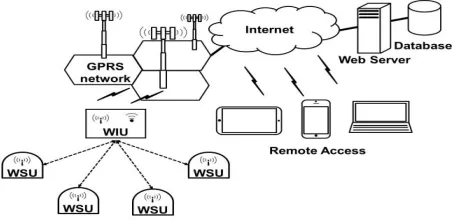
The automated irrigation system hereby reported, consisted of two components ,wireless sensor units and a wireless information unit (WIU) , linked by radio transceivers that allowed the transfer of soil moisture and temperature data, implementing a WSN that uses ZigBee technology. The WIU has also a GPRS module to transmit the data to a web server via the public mobile network. The information can be remotely monitored online through a graphical application through Internet access devices.
Fig. 1. Configuration of the automated irrigation system WSUs and a WIU, based on microcontroller, Zig-Bee, and GPRS technologies
A. Wireless Sensor Unit
A WSU is comprised of a RF transceiver, sensors, a microcontroller, and power sources. Several WSUs can be
deployed in-field to configure a distributed sensor network for the automated irrigation system. Each unit is based on the microcontroller PIC24FJ64GB004 (Microchip Technologies, Chandler, AZ) that controls the radio modem XBee Pro S2 (Digita International, Eden Prairie, MN) and processes information from the soil-moisture sensor VH400 (Vegetronix, Sandy, UT), and the temperature sensor DS1822 (Maxim Integrated, San Jose, CA). These components are powered by rechargeable AA 2000-mAh Ni-MH Cycle Energy batteries (SONY, Australia). The charge is maintained by a photovoltaic panel MPT4.8-75 (PowerFilm Solar, Ames, IN) to achieve full energy autonomy. The microcontroller, radio modem, rechargeable batteries, and electronic components were encap-sulated in a waterproof Polyvinyl chloride (PVC) container .These components were selected to minimize the power consumption for the proposed application .The WSUs were configured such as end devices to deploy a networking topology point-to-point based on a coordinator that was implemented by the XBee radio modem of the WIU. An end device has the following characteristics: 1) it must join a ZigBee PAN before it can transmit or receive data; 2) cannot allow devices to join the network; 3) must always transmit and receive RF data through its parent; 4) cannot route data; andcan enter low power modes to conserve power and can be battery powered. The least significant byte of the unique 64-bit address is used to label the information of the soil moisture and temperature for each WSU in the network. This byte is registered in the WIU as the identifier (ID) associated to each WSU. As shown in the sample frames to request date/time, receive date/time, and send data packaged to the WIU .
B. Wireless Information Unit
The soil moisture and temperature data from each WSU are received, identified, recorded, and analyzed in the WIU. The WIU consists of a master microcontroller PIC24FJ64GB004, an XBee radio modem, a GPRS module MTSMC-G2-SP (MultiTech Systems, Mounds View, MN), an RS-232 inter-face MAX3235E (Maxim Integrated, San Jose, CA), two electronic relays, two 12 V dc 1100 GPH Livewell pumps (Rule-Industries, Gloucester, MA) for driving the water of the tanks, and a deep cycle 12 V at 100-Ah rechargeable battery L-24M/DC-140 (LTH, Mexico), which is recharged by a solar panel KC130TM of 12 V at 130 W (Kyocera, Scottsdale, AZ) through a PWM charge controller SCI-120 (Syscom, Mexico). All the WIU electronic components were encapsulated in a waterproof PVC box as shown in Figs. 5 and 6. The WIU can be located up to 1500-m line-of-sight from the WSUs placed in the field.
via XBee the date and time for each WSU once powered. Then, the microcontroller receives the information package transmitted by each WSU that conform the WSN.
These data are processed by the algorithm that first identifies the least significant byte of a unique 64-bit address encapsulated in the package received. Second, the soil moisture and temperature data are compared with programmed values of minimum soil moisture and maximum soil temperature to activate the irrigation pumps for a desired period. Third, the algorithm also records a log file with the data in a solid state memory 24FC1025 (Microchip Technologies, Chandler, AZ) with a capacity of 128 kB. Each log is 12-B long, including soil moisture and temperature, the battery voltage, the WSU ID, the date, and time generated by the internal RTCC. If irrigation is provided, the program also stores a register with the duration of irrigation, the date, and time. Finally, these data and a greenhouse ID are also transmitted at each predefined time to a web server through HTTP via the GPRS module to be deployed on the Internet web application in real time When the server receives a request for the web page, it inserts each data to the corresponding field in the database. This link is bidirectional and permits to change the threshold values through the website interface; scheduled watering or remote watering can be performed.
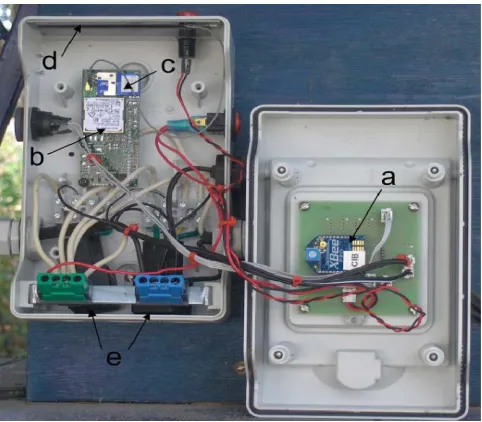
Fig. 2. Inside view of the WIU. (a) Radio modem ZigBee. (b) GPRS module.
(c) SIM card. (d) GPRS PCB antenna. (e) Pumps relays.
Fig 3:Agorithm of the master microcontroller in the WIU for the implementation of automated irrigation system
.
The WIU has also a push button to perform manual irrigation for a programmed period and a LED to indicate when the information package is received. All the WIU processes can be monitored through the RS-232 port.
The WIU includes a function that synchronizes the WSUs at noon for monitoring the status of each WSU. In the case that all WSUs are lost, the system goes automatically to a default irrigation schedule mode. Besides this action, an email is sent to alert the system administrator
Four different irrigation actions (IA) are implemented in the WIU algorithm:
1) fixed duration for manual irrigation with the push button;
2) scheduled date and time irrigations through the web page for any desired time;
3) automated irrigation with a fixed duration, if at least one soil moisture sensor value of the WSN drops below the programmed threshold level;
4) automated irrigation with a fixed duration, if at least one soil temperature sensor value of the WSN exceeds the programmed threshold level.
C.
Web Application
Graphical user interface software was developed for real-time monitoring and programming of irrigation based on soil moisture and temperature data. The software application permits the user to visualize graphically the data from each WSU online using any device with Internet .
Besides the soil-moisture and temperature graphs, the web application displays the total water consumption and the kind of the IA.
values in the WIU according to the crop species and season management. All the information is stored in a database. The web application for monitoring and programming was coded in C# language of Microsoft Visual Studio 2010. The database was implemented in SQL Server 2005.
Fig 4:Web application of the automated irrigation system to remotely supervise the soil moisture and temperature of each WSU and change the threshold values and the scheduled irrigation.
III.
IMPLEMENTATIONOF
IRRIGATION SYSTEM AND ITS
OPERATION
The system was tested in a 2400-m2 greenhouse, located near San Jose del Cabo, Baja California Sur (BCS), Mexico (23° 10.841’ N, 109° 43.630’ W) for organic sage (Salvia officinalis) production. The greenhouse had 56 production beds covered with plastic. Each bed was 14-m long and had two black polyethylene tubes with drip hole spacing of 0.2 m. The automated irrigation system was used to irrigate only 600 m2, which corresponded to 14 beds; whereas, the remaining 42 beds were irrigated by human supervision to compare
water consumption with the tra-ditional irrigation practices in this production place. Four WSUs labeled by the last significant byte of the unique 64-bit address (WSU-54, 55, 56, and 57) were located in the greenhouse at arbitrary points .
The WSU-57 unit was used to measure the soil moisture and temperature in the area (bed 23) where the traditional irrigation practices were employed. The other three units (WSU-54, 55, and 56) were located in beds 1, 2, and 12 to operate the automated irrigation system with their corresponding soil moisture and temperature sensors situated at a depth of 10 cm
Fig 5: Greenhouse for organic sage production with WSUs located arbitrarily in different cultivation beds. (a) WSU-55 on bed 2. (b) WSU-56 on bed 12. (c) WSU-57 on bed 23. WSU-54 was on bed 1
.
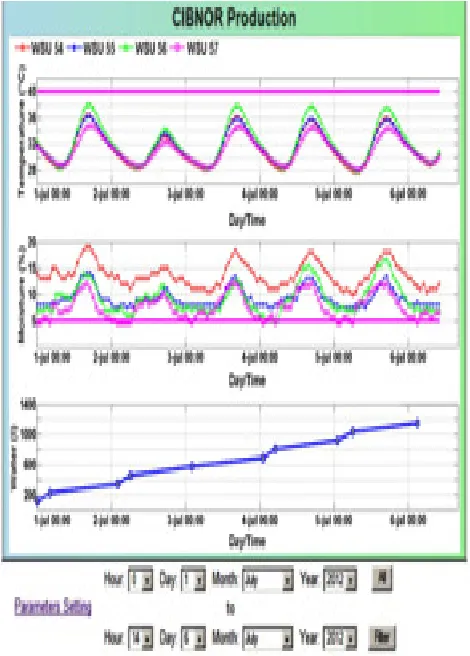
Fig 6:Gathered data of the WSUs, in the web application of the automated irrigation system: soil temperatures, soil moisture, and water supplied (vertical bars indicate automated and scheduled irrigation).
Automated irrigation triggered by soil moisture for four days are shown in Fig. 11; when the soil moisture value fell below the threshold level of 5.0% VWC, the irrigation system was activated for 35 min according to IA-3, whereas the soil temperature remained below the threshold level. Similarly, shows automated irrigation triggered by soil temperature; when the temperature was above 30 °C, the irrigation system was activated for 5 min according to IA-4, whereas the soil moisture remained above the threshold level water consumption with the organic producers traditional irrigation procedure consisted of watering with a 2 electrical pump during 5 hrs three times per week for the whole cultivation period.
Fig 7:Automated irrigation triggered by the soil moisture threshold < 5%
(m
A
)
t Sleep
(4.47 µA) 50
00 5 10 15 20 25 30 35
Time (s)
Fig 8: WSU current consumption in monitoring and seep modes.
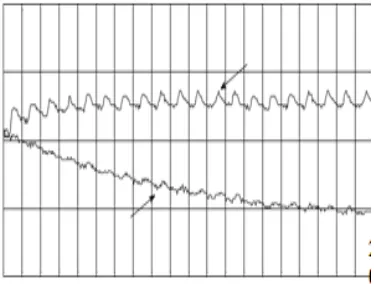
Fig 9:Battery charge–discharge cycle of a wireless sensor unit (WSU)
.
modes .Each hour ,the soil moisture and temperature data were transmitted to the WIU. Before transmitting the data, the XBee of the WSU was powered on through the voltage regulator that was enabled for a period of 20 s by the microcontroller, which was a long enough time for the radio modem to wake up and transmit the data. Then, the total average power consumption was kept at 0.455 mAh. The charge-discharge cycle of the batteries is shown for 20 days
IV CONCLUSION
The Automated irrigation system implemented was found to be feasible and cost effective for optimizing water resources for agricultural production. This irrigation system allows cultivation in places with water scarcity thereby improving sustainability. The automated irrigation system developed proves that the use of water can be diminished for a given amount of fresh biomass production. The use of solar power in this irrigation system is pertinent and significantly important for organic crops and other agricultural products that are geographically isolated, where the investment in electric power supply would be expensive. The irrigation system can be adjusted to a variety of specific crop needs and requires minimum maintenance. The modular configuration of the automated irrigation system allows it to be scaled up for larger greenhouses or open fields. In addition, other applications such as temperature monitoring in compost production can be easily implemented. The Internet controlled duplex communication system provides a powerful decision making device concept for adaptation to several cultivation scenarios. Furthermore, the Internet link allows the supervision through mobile telecommunication devices, such as a smart phone. Besides the monetary savings in water use, the importance of the preservation of this natural resource justify the use of this kind of irrigation systems
V REFERENCES
[1]W. A. Jury and H. J. Vaux, “The emerging global water crisis: Managing scarcity and conflict between water users,” Adv. Agronomy, vol. 95,
pp.1–76, Sep. 2007.
[2]X. Wang, W. Yang, A. Wheaton, N. Cooley, and B. Moran, “Efficient registration of optical and IR images for automatic plant water stress assessment,” Comput. Electron. Agricult., vol. 74, no. 2, pp. 230–237, Nov. 2010.
[3]G. Yuan, Y. Luo, X. Sun, and D. Tang, “Evaluation of a crop water stress index for detecting water stress in
winter wheat in the North China Plain,” Agricult. Water Manag., vol. 64, no. 1, pp. 29–40, Jan. 2004. [4]S. B. Idso, R. D. Jackson, P. J. Pinter, Jr., R. J.
Reginato, and J. L. Hatfield, “Normalizing the stress-degree-day parameter for environ-mental variability,” Agricult. Meteorol., vol. 24, pp. 45–55, Jan. 1981. [5]Y. Erdem, L. Arin, T. Erdem, S. Polat, M. Deveci, H.
Okursoy, and H. T. Gültas, “Crop water stress index for assessing irrigation scheduling of drip irrigated broccoli (Brassica oleracea L. var. italica),” Agricult. Water Manag., vol. 98, no. 1, pp. 148–156, Dec. 2010. [6]K. S. Nemali and M. W. Van Iersel, “An automated system for con-trolling drought stress and irrigation in potted plants,” Sci. Horticult., vol. 110, no. 3, pp. 292– 297, Nov. 2006.
[7]R. G. Allen, L. S. Pereira, D. Raes, and M. Smith, Crop Evapotranspiration-Guidelines for Computing Crop Water Requirements—FAO Irrigation and Drainage Paper 56. Rome, Italy:FAO, 1998.
[8] K. W. Migliaccio, B. Schaffer, J. H. Crane, and F. S. Davies, “Plant response to evapotranspiration and soil water sensor irrigation schedul-ing methods for papaya production in south Florida,” Agricult. WaterManag., vol. 97, no. 10, pp. 1452–1460, Oct. 2010.
[9] J. M. Blonquist, Jr., S. B. Jones, and D. A. Robinson, “Precise irrigation scheduling for turfgrass using a subsurface electromagnetic soil moisture sensor,” Agricult. Water Manag., vol. 84, nos. 1–2, pp. 153– 165, Jul. 2006.
[10] O. M. Grant, M. J. Davies, H. Longbottom, and C. J. Atkinson, “Irrigation scheduling and irrigation systems: Optimising irrigation effi-ciency for container ornamental shrubs,” Irrigation Sci., vol. 27, no. 2,
pp.139–153, Jan. 2009.
[11] P.Baronti ,aaP.Pillai, V.W.C.Dhoo,S.Chessa,A.Gotta , and Y.F.Hu, “Wireess sensor networs :A Survey on the state of the art and the 802.15.4 and zigbee standards,” Comput .commun., Vol .30,no. 7,pp.1655-1695,may 2007.
[12] W.Guo ,W.M.Heay ,and Z.Meng CHU, “ Impacts of 2.4-GHZ ISM band interference on IEEE 802.15.4 wire4ess sensor network reliability in buildings,” IEEE Trans.Instrum.Meas.,vo.61,no.9,pp.2533 -
2544,sep.2012.