housing
Anti-social
Behaviour
Intensive
Family
Support
Projects
October 2006
Sheffield Hallam University and University of Salford
Department for Communities and Local Government: London
Family Support Projects
Any views or proposed policies expressed in it are not necessarily those of the Department.
Acknowledgements to Judy Nixon, Caroline Hunter, Sadie Parr, Sue Whittle (all Sheffield Hallam University), Stephen Myers (University of Salford), Diana Sanderson (Mill Mount Consulting).
On 5th May 2006 the responsibilities of the Office of the Deputy Prime Minister (ODPM) transferred to the Department for Communities and Local Government (DCLG)
Department for Communities and Local Government Eland House
Bressenden Place London
SW1E 5DU
Telephone: 020 7944 4400
Website: www.communities.gov.uk
© Queen’s Printer and Controller of Her Majesty’s Stationery Office, 2006
Copyright in the typographical arrangement rests with the Crown.
This publication, excluding logos, may be reproduced free of charge in any format or medium for research, private study or for internal circulation within an organisation. This is subject to it being reproduced accurately and not used in a misleading context. The material must be acknowledged as Crown copyright and the title of the publication specified.
Any other use of the contents of this publication would require a copyright licence. Please apply for a Click-Use Licence for core material at www.opsi.gov.uk/click-use/system/online/pLogin.asp, or by writing to the Office of Public Sector Information, Information Policy Team, St Clements House, 2-16 Colegate, Norwich, NR3 1BQ. Fax: 01603 723000 or email: [email protected]
If you require this publication in an alternative format please email [email protected]
DCLG Publications PO Box 236 Wetherby West Yorkshire LS23 7NB
Page
Executive Summary 9
Chapter 1
Introduction and context 19
Chapter 2
What types of ASB are the projects dealing with? 29
Chapter 3
What sort of families are working with the projects? 40
Chapter 4
The experiences of young people and children working with the projects 55
Chapter 5
The risk of homelessness and the role of referral and other agencies 69
Chapter 6
What do projects do? 84
Chapter 7
The experience of living in core residential accommodation 104
Chapter 8
The impact of project interventions 117
Chapter 9
Analysis of costs and cost consequences 133
Chapter 10
The organisational issues facing projects 157
Chapter 11
The study conclusions 171
References 175
Appendix 1
The research design and methodology 178
Appendix 2
Table 1:0 Summary activity data and real unit costs 16
Table 1:1 Summary of key research themes 22
Table 1:2 Project Summary Profiles 24
Graph 2:0 Recorded anti-social behaviour 30
Graph 2:1 Reported ASB of families with children over 10 and under 10 years old 32
Graph 2:2 Types of ASB to which service users have been subjected 38
Graph 3:0 Age of adults referred to the projects during 2004/5 41
Graph 3:1 Age of children referred to the projects during 2004/5 41
Table 3:2 Size of families referred to projects 42
Graph 3:2 Source of income 43
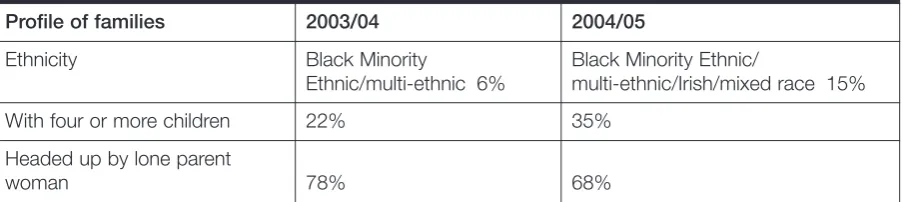
Table 3:3 Changes in the profile of families referred to the projects in 2003/4 – 2004/5 44
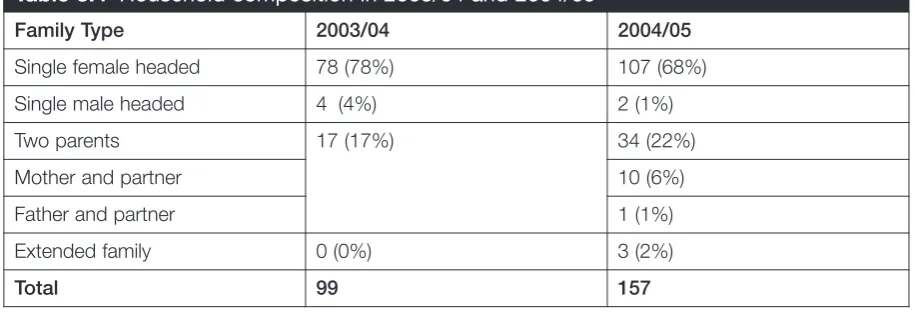
Table 3:4 Household composition in 2003/04 and 2004/5 47
Graph 3:3 Differing family composition by project 48
Graph 3.4 Percentage of families where one or more adults experienced various 50
types of poor health/well-being
Table 3:5 Risk of family breakdown 54
Graph 4:0 Children’s’ health and well being 56
Graph 4:1 Risk of children being taken into care 57
Graph 4:2 Schooling concerns 58
Table 4:0 Project interventions and the Every Child Matters Outcome Framework 60
Graph 4:3 Project workers assessment of the impact of interventions on 64
children’s mental health
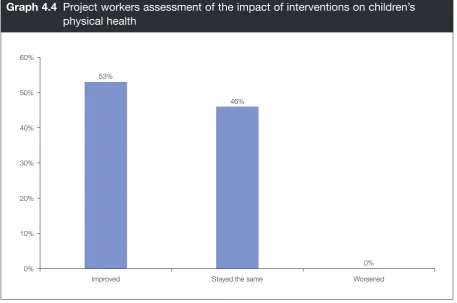
Graph 4.4 Project workers assessment of the impact of interventions on 65
children’s physical health
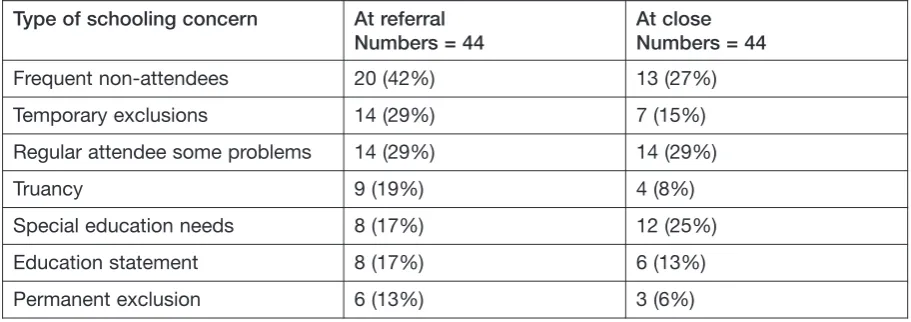
Table 4:1 A comparison of schooling concerns at the point of referral and 66
when the case was closed
Graph 5:1 Actions taken against family members prior to referral 71
Graph 5:2 Previous experiences of homelessness 72
Graph 5:3 Agencies referring to projects 2004/5 74
Graph 5:4 Agencies referring to each project 75
Figure 5.1 Optimum points of referral 77
Graph 5:5 Tenure of families at the point of referral 79
Graph 5:6 Tenure breakdown by project 80
Graph 5:7 Agency involvement with families at the point of referral 81
Table 6:0 The types of support provided by projects 2004/05 84
Graph 6:2 Agencies in contact with families when the case was opened and closed 98
Graph 7:0 Types of ASB associated with families provided with residential and 106
outreach support
Graph 7:1 A comparison of core and outreach families’ health and support needs 108
Table 7:0 Project managers’ views on the pros and cons of a core unit 115
Graph 8:0 Levels of engagement with the project 119
Graph 8:1 Project workers’ assessment of the reduction in complaints of ASB 120
Graph 8:2 Project workers’ assessment of the risk of homelessness 122
Graph 8:3 Project workers’ assessment of the stability of the tenancy 123
Graph 8:4 Project workers’ assessment of the impact on the wider community 124
Graph 8:5 Project workers’ assessment of the impact on complaints to the police 125
Graph 8:6 Project workers’ assessment of the impact on family breakdown 126
Table 9:0 Capacity, types of intervention and other facilities provided by the projects 135
Table 9:1 Percentage shares of the sources of total grants/fees income received during 136
2003/04 – 2004/5
Table 9:2 Percentage shares of direct costs ( actual expenditure, excluding seconded staff) 138
Table 9:3 Real resource costs (£) 140
Table 9:4 Activity Data 141
Table 9:5 Real unit costs 142
Table 9:6 Summary of potential short-term cost savings 144
Table 10:1 Similarities and differences in issues facing projects and lessons learnt 157
Table 10:2 Service focused model 165
Table 10:3 A ‘logical’ development sequence 166
Figure 10:3 Simplified examples of the service focus model operating at the time 167
of the Interim Evaluation
Table 11:0 The shared dimensions of practices employed by the 6 intensive 173
The Government’s strategy to develop sustainable solutions to anti-social behaviour (ASB) is based on a ‘twin track’ approach involving both action to address the underlying causes of problem behaviour and the use of appropriate sanctions to support and protect the wider community. This report addresses the former of these concerns and presents the findings from a two-year evaluation of six intensive family support projects pioneering a new way of working to support ASB ‘perpetrators’ to change their behaviour. The research, funded by the Department for Communities and Local Government (DCLG), was undertaken by a team of specialist researchers led by Judy Nixon at Sheffield Hallam University1. The aim of the study has been to
evaluate the six intensive family support projects in terms of costs and benefits, and effectiveness and lessons for wider dissemination based on the collection of a wide range of both qualitative and quantitative data.
Intensive Family Support Projects
During 2003, six pioneering local authorities, working closely with housing
associations and charities, established a number of dedicated ASB intensive family support projects. While each of the schemes was developed in response to locally-identified needs, they share a number of common features:
•
All the projects formed part of local well developed, comprehensive ASB strategies that recognised the inter-related nature of prevention, enforcement andresettlement action and have been designed specifically to help support families, who have been evicted, or who are under threat of homelessness, due to ASB displayed by themselves or visitors to their homes, change their behaviour.
•
The project interventions aim to break the cycle of poor behaviour andhomelessness; bringing families back into mainstream housing; helping children and young people who are perceived to be out of control; and/or providing an alternative solution where other ASB interventions have failed.
•
The model of provision is based on the work developed by the Dundee Families Project run by NCH in partnership with Dundee City Council (Dillane, 2001). Projects provide a range of services including some or all of the following types of intervention:– outreach support to help families address behavioural and other problems in order to maintain their existing accommodation;
– outreach support in dispersed tenancies managed by the project;
– intensive support in core residential accommodation managed by the project.
Five of the six projects have been developed by NCH (North West) in partnership with authorities in Blackburn with Darwen, Bolton, Manchester, Oldham and Salford, to deliver an outreach, preventative service to reduce the dependency on legal remedies to tackle ASB exhibited by families. Services provided in Bolton and Manchester also include a core residential unit for families considered to be in need of more intensive support and it is proposed that a further core residential unit will be opened in Salford during 2006/07.
The sixth project included in the evaluation was established by Sheffield City Council. The dedicated ASB high support service provides both core residential accommodation and dedicated outreach support mainly to families living in dispersed tenancies. Sheffield City Council is thought to be the first local authority in the country to develop this type of intervention and its inclusion in the evaluation provides an opportunity to explore the impact of different models of service provision.
The findings in the report are based on an analysis of statistical data collected from project case files in relation to 2562 families, consisting of 370 adults and 743 children,
who had worked with the six projects during the period 2003-2005. This quantitative data have been supplemented by qualitative data drawn from interviews with a sample of service users (both adults and children), project staff, referral agencies, and other key stakeholders. Detailed analysis of the costs and benefits of the projects has also been facilitated by scrutiny of project records and accounts.
What types of Anti-social Behaviour are the projects dealing with?
At the point of referral, a wide range of different types of ASB were noted on project files in connection with family members. While some allegations involved criminal behaviour, the majority of cases concerned low-level but persistent nuisance behaviours. The cumulative impact of such behaviour on neighbours should not, however, be underestimated. An indication of the serious nature of the problem is reflected in the fact that seven out of ten families had received a verbal or written warning of impending possession action as a result of their behaviour. The three most common types of ASB associated with families were:
•
Youth nuisance: 70%•
More general neighbour conflicts and disputes: 54%•
Property damage: 43%.Families’ perceptions about the impact of their behaviour on their neighbours and the wider community varied both between families and over time, reflecting the complex and often contradictory way in which behaviour is judged. With the benefit of
hindsight and following a period of intense work with the projects, many service users acknowledged the damaging impact of past behaviour. At the same time,
however, family members commonly disputed the validity of either all or some of the claims made against them, which had left them with a sense of unfairness that they had been singled out for action by agencies. In part, service users’ reluctance to apply the term ASB to their own behaviour was informed by the negative connotations associated with the term. Project staff, referral agencies, and other key stakeholders were also hesitant to describe families as being ‘anti-social’ and clearly articulated the need to restrict the use of the term ASB to describe specific behaviours rather than employing it as a generic description of people.
Evidence of the complex, multi-layered reality of ASB was reflected in the finding that, as well as being ‘perpetrators’ of ASB, six out of ten families (60%) were reported by project staff and/or referral agencies to be ‘victims’ of ASB. This finding strengthens the emerging evidence that it is not always possible to clearly distinguish ASB ‘perpetrators’ from ‘victims’ (Woods, 2004; Jones et al, 2006) and highlights the need for agencies investigating complaints to develop well-defined investigatory policies and processes to ensure that all those involved in ASB cases are dealt with fairly and effectively.
The profile of families referred to projects
Families referred to the six projects shared a number of key characteristics:
•
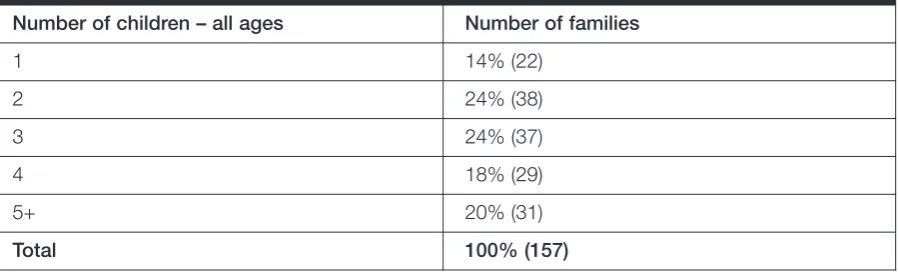
Most typically, families referred to the projects were large, with 62% (97households) comprising of three or more children. Reflecting local demographic trends, projects operating in large metropolitan areas tended to have the highest concentrations of very large families (4+ children).
•
Over the evaluation period, changes were noted in the ethnic composition of families referred to the projects. When the projects were first established referrals predominantly involved white British families. By 2005, a greater diversity in referral patterns was noted with service users broadly representing the national profile of Black and Minority Ethnic (BME)populations living in social rented housing. However, when measuring referral patterns against local demographic profiles in some areas, particularly where the local BME population was higher than the national average, BME families were still found to be under-represented in the sample of service users.•
Families referred to the projects were characterised as having high multiple•
High levels of family violence were associated with families. In almost half of families (47%) referred to the projects a family member was suffering from a history of, or currently being subjected to, intimate partner violence orintergenerational violence. This issue, although very debilitating, was rarely given causal primacy and was often referred to by both family members and other key workers as a marginal problem, with lone parent women in particular reported finding it hard to access support in dealing with violence in the home.
•
High levels of previous experiences of homelessness combined with chaotic and, in some cases, dysfunctional lifestyles were reflected in changes in familycomposition. The risk of family breakdown was assessed by project workers as being exceptionally high, with four out of ten families (40%) deemed to be at risk in some way.
•
Children working with projects were amongst the most disadvantaged in the country. A high incidence of behavioural problems was noted by project workers with for example, Attention Deficit Hyperactivity Disorder (ADHD) affecting children in as many as one in five families as compared to the national average which predicts that ADHD is likely to be prevalent in between 3% – 8% of school-age children (Mytars, 2001; DfES, 2004) (see further Chapter 4) Concern over the welfare of children was reflected in the finding that in nearly eight out of ten (79%) families project workers assessed at least one child to be ‘vulnerable’, while in 20% of families one or more child/ren were on the child protection register. At the point of referral project workers assessed the risk of children being taken into care as exceptionally high, with children in 38% of all families considered to be at a high or medium risk of being taken into care.The referral process
When referred to the projects, 14% of families were living in non-secure
accommodation (ie they were statutorily homeless or at immediate risk of becoming so), while of the remaining referrals just under nine out of ten (89%) families had some form of threat to their tenancy. These threats included warnings (both verbal and written) from the landlord about conduct and action to tackle behaviour, such as an acceptable behaviour contract (ABC) or anti-social behaviour order (ASBO). Although these latter measures may not be a direct threat to the home, non-compliance may, sometimes, result in eviction action by social landlords.
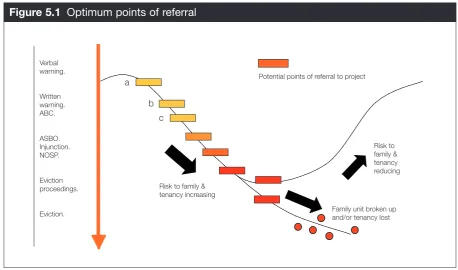
The optimum point of referral for outreach work was identified as being prior to the commencement of legal enforcement action. For those with core or dispersed units, the optimum referral point may be later because, when families are either being asked to give up their existing accommodation to move into non-secure
accommodation and/or are being asked to undertake the type of intensive supervision which takes place in core units, a more severe risk to the home may be required to effect their engagement with the project.
The fact that a family was referred to a project did not mean that there was no input from agencies trying to tackle the problems with which the families presented
although the extent that such input was deemed to be helpful varied from one family to another. In just over two-thirds (69%) of families, three or more community safety agencies were already involved with the family. After housing (79%), those most commonly involved with families were education (57%), social services (48%), police (36%), and Youth Offending Teams (YOTs) (28%).
Multi-agency working and the multi-disciplinary nature of
the projects
The multi-disciplinary nature of the project teams was viewed as a key strength and facilitated a broad range of responses to the multiple needs of the families. Each of the six projects crafted interventions to meet the specific needs of individual family members, but their work was informed by a number of shared guiding principles which included treating family members with respect, listening, being
non-judgemental and accessible while also ensuring that the approach was challenging consistent, and honest.
Direct work with families involved constructing tailor-made support plans appropriate to the specific circumstances of individual family members. The families were often headed by single women who were struggling with a history of adversity. Projects recognised that the gender of the head of household played a role in how the families functioned and the opportunities available for change. Empowering families through building confidence and skills appeared to be a significant factor in
promoting positive change.
The projects also had a critical role in inter-agency working and negotiation and were successful in maximising the effectiveness of services for the benefit of the families.
The experience of living in project core residential accommodation
Families referred to the core-units tended to have multiple and more complex needs than those provided with outreach support3. For example, families living in project
residential units were three times more likely to have been served with an eviction notice or Suspended Possession Order at the point of referral than those provided with outreach support. Further, just under two thirds of those living in core
accommodation reported that they had previously experienced homelessness in the recent past, compared with only just over one-third of families supported on an outreach basis.
Providing the most ‘challenging’ families with highly structured, residential support was seen as one of the toughest elements of project interventions. The potential benefits of this type of intervention were recognised by project managers, other key stakeholders, and indeed families themselves. However, it was also acknowledged that the provision of residential support was both very resource-intensive and high risk activity (see Chapter 7), with residential accommodation only being suitable for a limited number of families. The decision as to whether or not to develop this
resource-intensive form of provision could only be determined by reference to local service priorities and it should not be seen as a generic requirement for all family support projects.
The impact of project interventions
Intensive family support projects are targeting interventions at some of the most disadvantaged and needy families in the country (see Chapter 3). ASB was only one symptom of the dysfunction in many of these families, with ill health, school
exclusions and family breakdown all contributing to the marginalisation of the family members. Given the levels of need associated with families referred to the projects, it might be anticipated that project interventions would only be partially successful. This was not the case. Indeed, the study findings relating to outcomes at the point at which families left the service indicate that, for the vast majority of families, the projects had helped them achieve remarkable changes:
•
In more than eight out of ten families (85%), complaints about ASB had either ceased or had reduced to a level where the tenancy was no longer deemed to be at risk at the point where the family exited the project.•
Moreover, project workers assessed that in 80% of cases families’ tenancies had been successfully stabilised with an associated reduction in the risk of homelessness.•
While it was beyond the scope of the evaluation to carry out an independent assessment of the impact of these changes on the wider communities in which families lived, in 92% of cases project workers assessed the risk to local•
Project interventions to support children were framed within the Every Child Matters Outcomes Framework and over the evaluation period significant improvements in children’s health, well-being and educational attainment were recorded.While no single project model or ‘blue print’ could be identified with each of the six projects crafting specific interventions to reflect local priorities and practices, the very positive outcomes associated with this type of intensive provision were similar across the sample of projects. Further analysis of the specific interventions employed across the six projects identified a number of shared guiding principles that underpinned the work:
•
Employment of a multi-disciplinary and multi-agency focus embedded within local ASB partnerships.•
Provision of intensive interventions sustained over a considerable length of time with outreach support often required for 6+ months and residential support for 1-2 years.•
The ability of project workers to challenge individual family members based on the professional values of listening, being non-judgemental, promoting well being, and establishing relationships of trust.The costs and cost consequences of project interventions
The cost analysis shows that the projects, which in most cases did not reach maturity during this period of analysis, offer excellent value for money as they have the potential to reduce considerably the short-term and longer-term costs of many agencies, including those providing services relating to housing, criminal justice, policing, education, and health. In addition, they deliver many intangible benefits to the families – such as keeping families together and improving their quality of life and their prospects – and to society – for example, by making neighbourhoods and communities safer and more pleasant places.
The financial information used in the cost analysis has been derived from the income and expenditure accounts for the projects, adjusted to include the costs of any staff seconded to the projects (ie payments in kind) and to ensure that central
organisational support costs are included consistently across the projects. The
accounts show that the majority of funding came from Supporting People4 (with some
projects receiving all of their funding from this source), but that funds also came from a variety of other sources, including Children’s Fund and Social Services. The majority of expenditure was on staffing (eg 80% – 90% in 2004/05), with considerable use being made of agency staff in 2003/04, when projects were getting established.
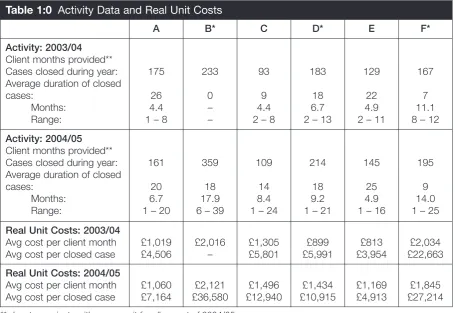
Two unit costs have been calculated for each project for 2003/04 and 2004/05. These are the average cost per client month (where a client is a family household) and the average total cost per closed case. These are shown in Table 1:0 below, along with a summary of the activity data for these two years.
** denotes projects with a core unit for all or part of 2004/05 ** all clients, including those in core units (where applicable)
The activity data and the real unit costs result in the average cost per client month ranging from £813 to £2,034 in 2003/04 and from £1,060 to £2,121 in 2004/05. The average cost per client month is influenced by a number of factors, including the numbers of staff, the capacity of each project, and whether or not the project has a core unit (the two projects with a core- unit throughout the evaluation period have the highest costs per client month). The average total cost per closed case ranges from £3,954 – £5,991 in 2003/04 for the four projects that did not have a core unit during this time and from £4,913 – £12,940 in 2004/05 (the value for the project that opened a core-unit during this year is within this range). The average total costs per closed case for the projects with a core-unit throughout the period were £22,663 in 2003/04 (one of the projects did not close any cases during this year) and ranged from £27,214 – £36,580 in 2004/05.
[image:15.595.85.541.62.375.2]To determine if the projects offer value for money, it is necessary to consider what costs may have been incurred in both the short-term and the longer-term had these projects not intervened to stabilise tenancies and prevent ASB. Potential costs prevented in the short-term include those associated with tenancy termination, the costs of foster care or residential care for children, and costs relating to criminal justice (such as those of being in a young offenders’ institute). Costs due to ASB and domestic violence will also be reduced. A family evicted for ASB with three or four children requiring custodial care, residential care and foster care can easily cost the Exchequer £250,000 – £330,000 in a year (Ward et al;2004). Longer-term costs include those of social exclusion and of not having appropriate skills or qualifications for
Table 1:0 Activity Data and Real Unit Costs
A B* C D* E F*
Activity: 2003/04
Client months provided** Cases closed during year: Average duration of closed cases: Months: Range: 175 26 4.4 1 – 8
233 0 – – 93 9 4.4 2 – 8
183 18 6.7 2 – 13
129 22 4.9 2 – 11
167 7 11.1 8 – 12
Activity: 2004/05
Client months provided** Cases closed during year: Average duration of closed cases: Months: Range: 161 20 6.7 1 – 20
359 18 17.9 6 – 39
109 14 8.4 1 – 24
214 18 9.2 1 – 21
145 25 4.9 1 – 16
195 9 14.0 1 – 25
Real Unit Costs: 2003/04
Avg cost per client month Avg cost per closed case
£1,019 £4,506 £2,016 – £1,305 £5,801 £899 £5,991 £813 £3,954 £2,034 £22,663
Real Unit Costs: 2004/05
Avg cost per client month Avg cost per closed case
It is also important to recognise that the projects are likely to have an impact on expenditure by other Exchequer-funded services (e. the NHS, education) as
previously unrecognised or unmet needs are identified and addressed, but these costs are also expected to be considerably less than the subsequent costs of not addressing these problems.
Service Focus: lessons from the evaluation
The Intensive Family Support Projects (IFSPs) involved in this study afford access to, or themselves deliver directly, multiple services to address the multiple problems of their service users. This report emphasises how projects, ostensibly with the same remit and several within the same organisational regime, have been shaped by their local context.
Over the evaluation period, significant organisational issues faced those managing and developing high support resettlement projects. Examples include how to:
•
construct a role of fair, independent, and respected broker between families, agencies and communities;•
risk innovation and develop new forms of practice within contexts of significant local and national attention from media, policy makers, residents, and practitioners;•
access those families that can benefit most from resettlement services;•
access the right numbers of families to meet cost targets and deliver quality services;•
deliver distinct residential, outreach and dispersed services for different but potentially overlapping service user constituencies;•
demonstrate outputs and outcomes appropriate to funding regimes.The evaluation reports on similarities and differences between projects that have shaped the difficulties experienced and the solutions put in place to address these issues. Advice for those who are seeking to establish such projects in the future is given in the form of potential difficulties and examples of good practice that have helped in securing viable and effective rehabilitation projects over the last two to three years.
The way forward
While the study provides a valuable overview of the complex and multi-faceted support needs associated with families exhibiting ASB and provides evidence about the extent to which intensive family support projects are successful in addressing the underlying causes of problem behaviour, there are limitations to the evaluation
•
The sustainability of interventions in terms of family functioning and behaviour.•
The impact of family project interventions on the wider communities.•
The longer-term impact of family project interventions on existing support and supervision services.In conclusion, the study findings make a significant contribution towards improving knowledge and understanding about the underlying causes of ASB. They also provide a robust evidence base to further the development of the Respect Action Plan 20065,
Introduction and context
1.0 Policy Context
Reducing anti-social behaviour (ASB) and building a culture of respect is a key priority for the Government. Anti-social behaviour (ASB) is clearly located within the wider policy agenda of revitalising disadvantaged neighbourhoods and stimulating a process of civic renewal.
“A key goal of action to tackle anti-social behaviour and promote respect is to
empower individuals and communities, enabling them not just to feel secure but
to be more able to act together to make their neighbourhoods safer and better.”
(Respect Task Force, 2006)
The Government’s approach to tackling ASB was initially formalised in the Crime and Disorder Act 1998, which introduced anti-social behaviour orders (ASBOs), child curfews and parenting orders. The Anti-Social Behaviour Act 2003 followed,
introducing a further wide range of measures to tackle ASB. Taking action to address ASB is now the responsibility of local authorities, the police, social services, schools, registered social landlords, and neighbourhood and residents groups, as well as of ‘victims’ themselves. In October 2003, the Government set up the Anti-Social Behaviour Unit in the Home Office to co-ordinate and lead on the development of ASB strategy.
A range of enforcment powers has been made available for dealing with households whose behaviour has a negative impact on those around them. In addition to non-tenure related powers such as Acceptable Behaviour Contracts (ABCs), Penalty Notices for Disorder (PNDs), Anti-social Behaviour Orders (ASBOs), and noise
abatement orders, social landlords have been given powers to apply to the courts for different types of housing-related interventions, including housing injunctions,
introductory and demoted tenancies, and possession orders. Properties in which class A drugs are supplied and used, and which are associated with anti-social behaviour can be closed by the police for up to three months. Alongside these types of
enforcement-led interventions, Community Safety agencies have been encouraged to developed preventative measures to support households to change their behaviour before enforcement action becomes necessary, thus avoiding families losing their home, children being taken into care, and the problem being displaced. It is now recognised that action to deal with ASB requires agencies to address the many sources of dysfunction in families, of which disruptive behaviour is just one manifestation (Dillane et al 2001; Jones et al 2006; Respect Taskforce, 2006).
intervention, in 66% of cases behaviour had improved and the problems had been curtailed. In February 2005, the Government announced that the work of the Panel would continue for a second year, aiming to target more than 1,000 families (Home Office, 2005a). In addition fifty ‘action areas’ were established with £25,000 being given to each area (Home Office, 2005b)
A further set of measures have been developed to address poor parenting and lack of parental supervision which increase the risk of ASB. In addition to the introduction and extension of mechanisms for enforcing parental responsibility through parenting contracts and parenting orders, in September 2004, the Government worked in partnership with the ten TOGETHER Trailblazer areas to develop a range of
interventions. The types of projects developed vary between regions, but include the development of family behaviour contracts and compulsory parenting classes, where those failing to comply with the terms of the agreement face reduced tenancy rights and other enforcement action. In February 2005, it was announced that this work would be extended to fifty “action areas,” with £25,000 being given to each area from April 2005.
Finally, in January 2006, the Government outlined its plans to tackle ASB focusing on expanding parenting provision through Children’s Centres, extending school services, and Parent School Advisors. It is intended to establish a new Parenting Academy to train staff to deliver parenting support, introduce targeted programmes for parents of children and young people at risk, and expand the use of parenting contracts and orders. The programme of reforms also includes ‘a new approach to the most challenging families’.
The Respect Action Plan sets out a number of measures to address some of the underlying causes of disruptive behaviour, while also recognising the negative effects of ASB on local communities. First, the Respect Action Plan outlines proposals to develop a long-term cross-Government strategy to improve the way public services work with ‘challenging’ families and to ensure that families do not receive a
fragmented response from a range of agencies because of difficulties with working with them. Second, additional investment will be made available for parenting programmes. Third, the Government stated its commitment to develop sustainable solutions to ASB by injecting £28m of new funding to roll out a national network of fifty ‘intensive family support’ projects across England and Wales. It is intended that these projects will be modelled on the Dundee Families Project, which was
established in 1997 and found to be successful in helping families avoid eviction and the need for children to be taken into care (Dillane et al, 2001). The type of
interventions employed will vary between projects, with some providing support to families on an outreach basis only, while others will work with some families in a residential setting as well as providing an outreach service. Whatever type of service is provided, the aim of the projects will be to help perpetrators of ASB change their behaviour and reintegrate into the community.
“Many of the parents who were sent, or agreed to go, to the new services
[parenting programmes] were amongst the most needy in the community. They
were poor, and beset by problems at almost every level of functioning – social,
individual and family. By any standards, these were the families that services
always regard as hard-to-reach: desperately needy, often distressed and chaotic,
with long histories of unsatisfactory contact with helping agencies, and on top of
all this, with a child (and sometimes more than one) displaying challenging
conduct problems”
(Ghate and Ramella, 2002: 76)
Further recognition of the important role that intensive support projects can play was highlighted by a recent Home Affairs Select Committee on ASB, who concluded that the:
“development of intensive family-based interventions is essential if the deepest
rooted ASB problems are not simply to be recycled from area to area.”
(Home Affairs Select Committee, 2005).
1.1 The evaluation
Against the background of increasing Government concern to introduce effective measures to address the behaviour of the most ‘challenging’ families, in January 2004, a team of specialist researchers6 was appointed by the then Office of the Deputy Prime Minister (ODPM) to undertake a two-year study to evaluate six dedicated anti-social behaviour rehabilitation projects. These projects had been set up during 2003 by a number of pioneering local authorities, housing associations and charities. All six of the projects included in the study were modelled on the Dundee Families Projects and were established to support those made homeless or at risk of eviction due to complaints of ASB. It is hoped that the research findings will enable the most effective and beneficial approaches and practices to be identified and will help disseminate good practice to inform the roll-out of the national network of intensive family support projects. The aim of the study is to:
“Evaluate residential and outreach projects for tenants at risk of being evicted for
anti-social behaviour in terms of costs and benefits, effectiveness and lessons for
wider dissemination.”
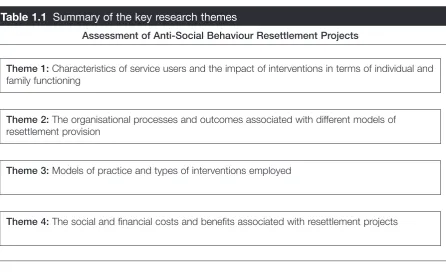
The research specification identified a number of primary objectives and related issues to be addressed by the study. To ensure consistency and integration in the evaluation, a basic matrix approach was employed (see Table 1.1), with the evaluation being underpinned by four broad, cross-cutting themes which relate directly to the key research objectives.
Further details of the research themes and the methodology employed in the study are provided in Appendix 1.
1.2 About the projects included in the study
In January 2004, when the study commenced, a mapping exercise was undertaken to establish the potential population of projects providing dedicated ASB rehabilitation support to families. We were concerned to identify services which had been devised exclusively to meet the needs of families who were at risk of losing their homes as a result of ASB. Support services that targeted those who are homeless or who are at risk of eviction for reasons that might include ASB, but might also arise because of other identified support needs, were therefore excluded from the study. Only eight dedicated ASB intensive support projects were identified across England (there were none in Wales) in early 2004. Two of the eight projects were not considered suitable for inclusion in the study7, but the remaining six all agreed to take part. There has
[image:21.595.91.538.56.330.2]been further growth in the provision of dedicated ASB projects since 2004, and it is believed that there are now a range of projects in various stages of development (Kirklees NCH; Leicester New Start; Bristol Family Support Programme; Choices Family Intervention Project in Birmingham;) operating in England. In Scotland, the number of schemes has also increased (Dundee Families Project; Aberdeen Families Project; and Edinburgh Intensive Family Support Service), with a further three projects being developed with the support of the Scottish Executive during 2006. In addition, by early 2006 there were a number of related Trailblazer initiatives operating in Brighton; and Sunderland, Manchester, Leeds, Westminster and Camden. These provide similar models of intensive support, but mainly target young people or the parents of young people committing ASB or low level crime, rather than families at risk of eviction (although the two may overlap).
Table 1.1 Summary of the key research themes
Assessment of Anti-Social Behaviour Resettlement Projects
Theme 1:Characteristics of service users and the impact of interventions in terms of individual and family functioning
Theme 2:The organisational processes and outcomes associated with different models of resettlement provision
Theme 3:Models of practice and types of interventions employed
The six projects included in this study, all based in the north of England, are
developing a new approach to deal with ASB and the associated problems of social exclusion through the provision of specialist and intensive support for families at risk of eviction as a result of ASB. Each of the six projects was modelled on the Dundee Families Project and provides a range of services, including some or all of the following types of intervention:
•
Floating outreach support to help families address behavioural and other problems in order to maintain their existing tenancy. This form of intervention involves up to ten hours per week of contact to support family members in their existing home.•
Outreach support in dispersed tenancies managed by the project. In addition to the provision of ten hours per week of contact with family members, this type of intervention also involves the project taking responsibility for all the day-to-day management of the property, including collecting rent and undertaking repairs. In some projects, the family’s existing home is transferred to a dispersed tenancy agreement and when the family leaves the project the tenancy management is simply transferred back to the landlord. Variations on this form of support include interventions where families are required to move into specially designateddispersed tenancy accommodation and when they leave the project they are allocated a new tenancy by their landlord (this model of provision was not adopted by any of the projects included in the evaluation).
•
Intensive support in core accommodation managed by the project. Coreresidential support involves the family leaving their existing home and moving into flats located within the project’s premises and managed by the project. Families living in core accommodation are required to adhere to a set of rules and regulations and have daily supervision sessions with project workers.
Five of the six projects have been developed by NCH (North West)8 in partnership
with authorities in Blackburn with Darwen, Bolton, Manchester, Oldham, and Salford. The five NCH projects deliver an outreach preventative service to reduce the
dependency on legal remedies to tackle ASB exhibited by families. Services provided in Bolton (since September 2004) and Manchester (since the start of the project) also include a core residential unit for families considered to need more intensive support and it was proposed that a further core residential unit would be opened in Salford during 2005.
The sixth project included in the evaluation has been established by Sheffield City Council. The dedicated ASB high support service provides both core residential
accommodation and dedicated outreach support, mainly to families living in dispersed tenancies. Sheffield City Council is thought to be the first local authority in the country to develop this type of intervention and its inclusion in the evaluation provides
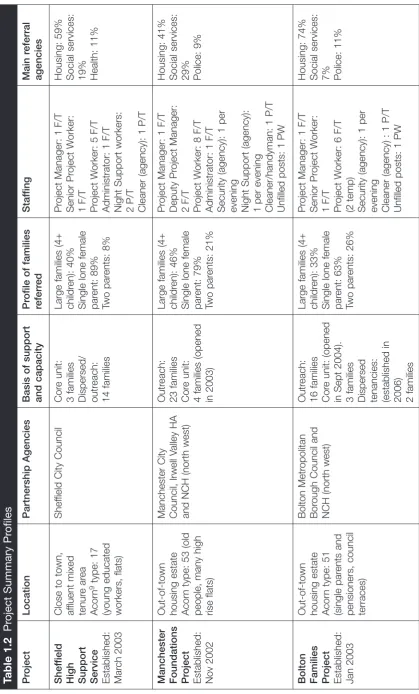
an opportunity to examine the impact of different models of service provision. A summary profile of each of the six projects is outlined below in Table 1.2.
1.3 Aims of the projects
While each of the six projects was developed in response to locally identified needs, they share a common aim – to provide support for families with children who are at risk of homelessness or eviction due to ASB displayed by themselves or visitors to their homes. The projects also share the following key objectives to:
•
prevent repeat cycles of homelessness and family breakdown arising as a result of ASB;•
address unmet support needs and ensure that families are able to sustain a positive lifestyle without being the cause of ASB;•
promote social inclusion for families and assist in providing better outcomes in relation to health, education and well being;•
increase community stability by enabling and supporting families to live peacefully and to fully participate in their communities.1.4 Staffing
The projects employ multi-disciplinary teams of support workers from a variety of professional backgrounds who provide tailored packages of support to enable families to address some of the underlying causes of their problem behaviour. The length of time projects work with individual families varies from two to three months to over a year; with the average for 2004/5 being forty-three weeks. The duration of service provision was, however, found to vary significantly between the six projects. For example, the average length of contact in one project was just under five months, compared with eighteen months in another project. Some further details of the staffing arrangements adopted by the different projects and how these changed over time as the projects developed and matured are provided in Chapter 10.
1.5 Location
1.6 Funding
A variety of funding sources has been used to support the development of the projects, with the majority of revenue funding provided by the Supporting People Programme10. Securing funding was a time–consuming activity for Project Managers
and uncertainly about future funding put all project staff under considerable pressure. Further information on the funding of projects is provided in Chapter 9.
1.7 The evaluation data sources
The evaluation tracked the development and progress of six case study intensive family support projects based in Sheffield, Manchester, Bolton, Oldham, Salford, and Blackburn with Darwen over a two-year period (January 2004 – January 2006). The final evaluation findings presented in this report are based on analysis of a range of different qualitative and quantitative data sources. The findings of the interim
evaluation of the operation of the six projects during their inception and set-up period have already been published (Nixon et al, 2006). These data have now been supplemented by findings from a second case monitoring exercise undertaken over the 12-month period August 2004 – July 2005 combined with in-depth interviews with project staff and other key stakeholders, and repeat interviews with service users (both adults and children). In the majority of cases, at the point of the second interview families were in the process of leaving the project and were in a better position to reflect on their experiences and the impact of working with the project over a period of time. Drawing on both sets of data, the study report highlights changing practices as the projects have matured and project interventions have become more embedded within local practice.
An evaluation of the cost effectiveness of the projects has been facilitated through the collection of financial data covering the period 2003/04 and 2004/05, drawing mainly on the annual accounts for each project. Annual expenditure and activity data were used to identify the costs of two specific ‘units’ of activity associated with the projects – the average cost per client (ie family) month in 2003/04 and in 2004/05, and the average total cost per client leaving the projects during 2003/04 and in 2004/05. Further data have also been collected to explore whether the projects are delivering ‘value for money’ and to review the potential short-term and longer-term costs to the Exchequer and to society associated with tenancy failure and some forms of ASB, comparing potential ‘saved’ or ‘prevented’ costs with the costs of delivering the projects.
Details of the study methodology and data sources are provided in Appendix 1.
Chapter 2 examines what types of ASB the projects are dealing with, the families’ perceptions of their behaviour, and evidence that families working with projects were frequently both victims and perpetrators of ASB.
Chapter 3 outlines what sort of families are working with the projects and reports on the age and gender of service users, their ethnicity, economic status, and families’ support needs.
Chapter 4 focuses on young people and children. It explores their support needs, what interventions had been used to address these needs, and children’s views on the project interventions.
Chapter 5 reports on what action had been taken prior to referral and the threat of homelessness. It considers the views of service users, project staff and key
stakeholders on the referral process.
Chapter 6 examines project interventions and examines what the projects do from the perspectives of service users, staff and stakeholder agencies.
Chapter 7 explores the experience of living in residential (core) accommodation and how this intervention differs from outreach support services.
Chapter 8 reports on project outcomes and the impact of interventions.
Chapter 9 analyses the costs and benefits associated with the projects.
Chapter 10 outlines the organisational processes and outcomes associated with
different models of provision and considers the commonalities and differences in aims and issues facing the projects.
Chapter 11 concludes with a summary of the key evaluation findings.
Appendix 1 provides details of the study methodology and the evaluation design.
What types of ASB are the projects dealing with?
Findings from the Interim Evaluation Report indicated that the type of Anti-social behaviour (ASB) family members were reported to be exhibiting at the point of referral varied widely from one family to another. While some allegations involved very serious criminal behaviour, others concerned mainly low-level but persistent nuisance behaviours (Nixon et al, 2006). Drawing on data from the second data monitoring exercise combined with qualitative interviews with project personnel, family members and other key stakeholders, this chapter outlines:
•
The reported ASB associated with families referred to the projects between August 2004 and July 2005. Significant changes or continuities in the range of behaviours that caused families’ referral to the projects have been highlighted.•
Project staff and key stakeholders’ views on the nature of ASB associated with family members.•
Service users’ reflections on the impact of their behaviour at the point of referral.•
The evidence that suggests that, in a majority of cases, family members are likely to be victims as well as alleged perpetrators of ASB, with high levels ofvictimisation and retaliation recorded on project case files.
2.0 Recorded anti-social behaviour
At the point of referral, projects were asked to record details of the types of anti-social behaviour associated with the families as reported by both the referral and other agencies. The types of behaviour accordingly reflect the views of those agencies regarding the nature of the problems which service users had been involved in. At the point of referral, complaints about youth nuisance were the most common problem associated with family members, with two-thirds (70%) of the 157 families referred the subject of these types of complaints (Graph 2.0). Concerns over
While in the majority of cases (71%) there had been repeated complaints about three or more types of ASB, in a small number of families (five) no complaints about ASB were noted on the project case file. For these families, referrals had been made to address a range of behaviours that were creating a threat to the tenancy but which had not been the subject of complaints:
“It’s the non-attendance of school, it’s the violence to mum and various other
things … but it’s a very, very complex family with really severe emotional damage
to parent and children … but they’ve not actually caused any anti-social
behaviour within the neighbourhood”
(Project Worker).
There were issues for some of the projects about inappropriate referrals (see Chapter 5) which had been improved over time. Some of the families with no recorded ASB may reflect ill informed referral practices but are also likely to be a reflection of the lack of other available services for such families, who were clearly exhibiting behaviour which was of understandable concern to referring agencies.
The findings from the 2004/05 data collection exercise on the reported ASB associated with families broadly reflect the findings from the earlier 2003/04 data collection exercise. However, there does appear to have been a significant increase in the number of families being referred due to problems of youth nuisance, which had increased by 16% between the two monitoring periods. This issue was further
explored in the interviews with project workers, many of whom reflected that, in their experience, children and young people associated with the family were often the
Graph 2.0 Recorded anti-social behaviour
0% 10% 20% 30%
70%
54%
43%
36%
34%
33%
32%
30%
24%
24%
22%
8%
40% 50% 60% 70% 80%
“[it] is usually very loud music, and lots of youths visiting… all hours or parties
going on or disturbances outside the property, either when youths are leaving or
coming or other youths appear, you know, and rival groups, stuff like that are the
main sorts of complaints that we get and then it’s the state of the property as well
but it’s usually more as the young people are hanging around and drinking.”
(Project worker)
Establishing the reasons for the apparent increase in referrals due to youth nuisance is not straightforward. In part, it may reflect an increase in the number of people willing to report youth nuisance as a problem, with some project workers stating that, in their view, the increase was related to the way in which problems of youth nuisance have been profiled by the media and politicians . Equally, however, it is possible that changes in referral agencies’ practices could have led to an increase in referrals for particular types of families with specific sets of problems. Analysis of the profile of families in which youth nuisance was identified as a problem indicates that children in these households were more likely to suffer learning difficulties and other mental health problems compared with families in which youth nuisance was not a problem (37% compared with 30%, and 26% compared with 20%, respectively). These levels of need are far higher than those recorded for the population as a whole, where, for example, Attention Deficit Hyperactivity Disorder (ADHD) could be expected to be found in around 3% – 8% of children (Mytars, 2001; DfES, 2004). Our data do not clearly indicate if one of these hypotheses is more likely than another. Moreover, care must be taken in the interpretation of this finding, since it is possible that the
apparent prevalence of youth nuisance in the second round of case monitoring simply reflects improvements that have occurred in projects’ case recording systems.
While Graph 2.0 outlines the most common reasons for referrals to the projects, further exploration of the data from the 2004/5 case monitoring exercise indicates that the types of ASB families are reported to be involved with differ according to a
number of factors, including:
•
size of family;•
age of children;•
project locality.Each of these factors is briefly considered below.
Size of family
The age of children
A different set of problems was prevalent in families comprising young children aged ten and under. This was only a small group of families (23 of the total of 157
families) and accordingly some care must be taken with this data. It does, however, indicate that, for parent(s) with young children, an overriding concern was ASB caused by neighbour conflicts and the behaviour of visitors. Only 39% of families with children under the age of ten were associated with the problem of youth nuisance, compared with 76% of families consisting of children over the age of 10. This finding suggests that there are different cohorts of families referred to intensive support projects, perhaps with different sets of underlying problems and potential solutions. Graph 2.1 compares the types of ASB reported for families with children over and under ten years of age.
Project locality and patterns of referrals
Further interesting differences concerning the main reasons for referrals were
identified with regard to the area in which the projects were located. For example, in two out of the six projects, crime was identified as a reason for the referral in around a third of cases (30% and 38%, respectively), compared with another project where crime was reported to be a reason for referral in only 11% of cases. In one project, garden condition was noted as a problem in 59% of referrals, whereas in another it was only a problem in relation to 19% of referrals. More detailed information on the precise nature of the ASB associated with families was not available, and it is unclear for example, if concerns about garden condition were used as a proxy for other forms
Graph 2.1 Reported ASB of families with children over 10 and under
0% 10% 20% 30% 40% 50% 60% 70% 80%
Families with children under 10 years (n=23) Families with children over 10 years (n=133)
Pets
Oth ercr
ime
Dru gre
late dnu
isan ce
Viol ence
Vand alis
m/r ubbi
sh
Gar den
cond ition
Har assm
ent Noi
se
ABS byvi
sito rs
Prop erty
dam age
Neigh bour
conf licet
s/
disp utes
Yout hnu
isan ce
9% 4%
24%
17% 24%
22% 24%
22% 30%
22% 33%
35% 32%
30%
36%35%
32% 48%
45%
35% 52%
61% 76%
crime/ASB agencies, while others had more from housing/social services. Equally, the range of alternative complementary types of service provision available varied from one project locality to another. This is likely to have an indirect impact on the reasons why families were referred to the projects rather than to an alternative type of service.
2.1 Project managers’ and workers’ views on the nature of ASB
associated with family members
The in-depth interviews with project managers and workers were used to explore in more detail the types of behaviour exhibited by families at the point of referral to the projects. Although project staff mentioned some extreme cases, where the behaviour in question had been very serious and criminal in nature, more commonly the behaviour was described as involving relatively low-level but repetitive nuisance behaviour. Typically, cases were portrayed as involving ‘noise nuisance’, ‘petty vandalism’, ‘shouting abuse at neighbours’, and ‘arguments over the garden fence.’ The cumulative impact of such behaviour on neighbours should not, however, be underestimated, and this was something that some service users were able to acknowledge after working with the project (see section 2.2).
The relatively low-level nature of the reported individual events was also reflected in project managers’/workers’ accounts of the type of families that tended to be referred to the projects, as they were most often described as being ‘noisy and chaotic’ rather than being particularly ‘fearsome’ or ‘threatening’.
“I’d say there’s a very, very small proportion of the number of families that we
work with, who you would think in your own mind that they must be a
nightmare to live beside. Now there are, you know, a lot of noisy chaotic families.
But in terms of actually you know, sort of fearing for your own safety or your
children’s safety or you know, like say being afraid to go to the shops, that kind
of thing, there’s actually very few families.”
(Project worker)
As the projects have matured, many have prioritised the development of joint working within local networks to establish their place within local strategies for tackling ASB. In doing so, all project managers were keen to frame the service they provide as part of a preventative agenda. They had worked hard to encourage referrals to be made prior to any enforcement action being taken (e.g. prior to a NOSP or ASBO being served). In part, early intervention was seen as being most effective, as it meant that families were less likely to be under direct threat of eviction, thus giving the projects a more realistic time frame in which to initiate change (see Chapter 5). A couple of project managers suggested that this may be a possible explanation of why families referred are often not exhibiting the most extreme and serious types of ASB, with the reasons for referral more accurately located at the lower end of the spectrum of behaviour defined as anti-social.
“I think we’ve missed out on some referrals because of that, because of maybe not
a deliberate behaviour but some sub-conscious filtering of agencies where they
thought, ‘Actually this family are driving me mad and I’ll, you know, just pursue
with the eviction. You know, why help them to stay when I’ve genuinely bent over
backwards and tried to help them, why refer them on elsewhere?’.”
(Project manager)
Project workers and managers were aware of the sensitivities associated with the term ‘anti-social behaviour’ and expressed a preference for using alternative terms to
describe service users. It was felt that labelling families as ‘anti-social’ was stigmatising and counter-productive to achieving change. At the same time, however, it was
readily acknowledged that most families referred to the project had been involved in behaviour that was disturbing and distressing, and project managers freely expressed sympathy and understanding for those in the community who had made complaints. In reconciling these two different points of view, project managers were very clear about the distinction that should be made between referring to behaviour, as opposed to people, as ‘anti-social.’
“There are a few who, when they’re describing a family to us at the beginning,
you know, ‘Can you work with this family? I’ve got this family,’ and they’re
describing them like, you know, ‘They stink, their children are a mess,’ and you
think, right, okay, there’s a better way of phrasing that.”
(Project manager)
They described how they use the term with great care in order to challenge families to change their behaviour, while at the same time being alert to the need to challenge other practitioners who may be less careful in their choice of language to describe families:
“I think it’s a useful label as long as people understand that we’re not, not
speaking to sort of demonise them in that way by saying it, it’s just a description
of what they’re actually doing.”
(Project manager)
The reluctance to label families as ‘anti-social’ was clearly linked to an appreciation that families’ presenting problem behaviour often had deep-rooted and complex causes (see Chapter 3). This did not mean that project workers excused families’ behaviour or felt that they should not take responsibility for it, but they were mindful of seeing families as more than their problems and not viewing them in a
judgemental and censuring manner. This in itself was seen as key to building strong working relationships with the families and achieving successful outcomes:
“That’s how they’ve been brought up … it’s learned behaviour from their
childhood, that they’re now passing on to their kids. And as I say, it’s all about
re-education, making, making them try and see where they’re going wrong. But
also tackling it as well, ’cos you can’t be frightened, if, if you get, if you’ve got a
Stakeholders shared similar views. Many were clear about what they would define as ASB, and were also unequivocal that families referred to the projects, particularly those whose tenancy was threatened, had behaved in an unacceptable manner. At the same time, however, there was a perception among stakeholders that prior to being referred to projects some families were unaware that their behaviour was unusual and had caused so much distress for those living nearby.
“Maybe 60% of families have an understanding of what ASB is but do not
necessarily consider themselves to be anti-social – even though some of them are
involved in criminal behaviour…They think that’s what all children do.
Whatever goes on in the family is normal. So one woman wouldn’t stop her 9
year old going out at night because she thought that would be imprisoning him!”
(Stakeholder-Trailblazer)
This perhaps provides some explanation as to why families tended to deny the label at the point of referral. The majority of stakeholders also felt that there were
explanatory factors for the behaviour such as poor parenting, education, and substance misuse:
“Tenants do not describe themselves as anti-social. Often, they do not understand
the meaning of the tenancy agreement – because of their education, mental
health, drug and alcohol abuse”
(Stakeholder-Housing).
Interestingly, although many families had difficulty in acknowledging the impact of their behaviour on others and were often reluctant to accept the ASB label, service users did not feel that they were being judged simply by their association with the project. This seemed to be due to the ability of project workers to treat families in a non-judgemental way, with high levels of respect and honesty:
“The good thing is that when people come like, when people come and talk to you
and they know for well that you’ve had all these labels and that you’ve had all
these things written against you, but when they come to talk to you, you don’t, it
doesn’t come across that they think that you’re anti-social. They, they came
across as like, ‘We’re here to help you. We’re here to support you but there are
certain rules you do have to apply to, blah, blah, blah, and let’s get on’. No, no,
you didn’t feel like you were being judged on it.”
2.2 Families’ reflections on the impact of their behaviour at the point
of referral
A key finding from the Interim Evaluation Report (Nixon et al, 2006) concerned the fact that, despite the severity of many of the complaints made about family members, service users commonly disputed either all or some of the claims made against them. This issue was explored in more detail in the repeat interviews with service users, which were conducted nine to 24 months after they had started to work with the projects. With the benefit of hindsight and following a period of intense work with the projects, there was evidence that some service users found it easier to
acknowledge the impact of past behaviour, as the following excerpts from repeat interviews with service users illustrate:
“Yeah, they made me realise what my neighbours have had to put up with
probably with like Jake [ex-partner] and Wayne [son] mainly.”
(Service user – outreach)
Q: “How, how much do you think you, you were like the complaints that were
made against you?”
A: “Very much. But at the time I didn’t think so. Well I did but I was ashamed to
admit it to myself, if I push it to the back of me head,…and blame somebody
else then it wasn’t my fault. But looking back now…I can understand why
people reacted the way that they did, definitely.”
(Service user – outreach)
One mother, whose teenage children had been involved in a range of gang ASB which had resulted in serious retaliatory action against the family, including criminal damage and a sexual attack, reflected that, while she recognised how disturbing the behaviour of her children had been to her neighbours, she was the only person who was prepared to stand up to the gang:
“I mean I do understand, don’t get me wrong, I really do understand how my
neighbours felt. They didn’t want the gang there but they, they didn’t fight
against the gang either so it was easier to get me out.”
(Service user – core)
Another mother explained how her approach to dealing with complaints about her children’s behaviour had changed in the following way:
“I do say to the neighbours that if there is any problems to come and tell me …
I’m quite open with them, I, I tell them though, they are little toe rags sometimes
but I do,… I’m honest about it, I know what they get up to …..and I do try and
stop it.”