R E S E A R C H A R T I C L E
Open Access
Self-reported quantity, compulsiveness and
motives of exercise in patients with eating
disorders and healthy controls: differences
and similarities
Sandra Schlegl
1*, Nina Dittmer
2,3, Svenja Hoffmann
4and Ulrich Voderholzer
2,5Abstract
Background:Compulsive exercise (CE) is a frequent symptom in patients with eating disorders (EDs). It includes, in addition to quantitatively excessive exercise behaviour, a driven aspect and specific motives of exercise. CE is generally associated with worse therapy outcomes. The aims of the study were to compare self-reported quantity of exercise, compulsiveness of exercise as well as motives for exercise between patients with anorexia nervosa (AN), bulimia nervosa (BN) and healthy controls (HC). Additionally, we wanted to explore predictors of compulsive exercise (CE) in each group.
Methods:We investigated 335 female participants (n= 226 inpatients,n= 109 HC) and assessed self-reported quantity of exercise, compulsiveness of exercise (Compulsive Exercise Test), motives for exercise (Exercise Motivations Inventory-2), ED symptoms (Eating Disorder Inventory-2), obsessive-compulsiveness (Obsessive-Compulsive Inventory-Revised), general psychopathology (Brief Symptom Inventory-18) and depression (Beck Depression Inventory-2).
Results:Both patients with AN and BN exercised significantly more hours per week and showed significantly higher CE than HC; no differences were found between patients with AN and BN. Patients with EDs and HC also partly varied in motives for exercise. Specific motives were enjoyment, challenge, recognition and weight
management in patients with EDs in contrast to ill-health avoidance and affiliation in HC. Patients with AN and BN only differed in regard to exercise for appearance reasons in which patients with BN scored higher. The most relevant predictor of CE across groups was exercise for weight and shape reasons.
Conclusions:Exercise behaviours and motives differ between patients with EDs and HC. CE was pronounced in both patients with AN and BN. Therefore, future research should focus not only on CE in patients with AN, but also on CE in patients with BN. Similarities in CE in patients with AN and BN support a transdiagnostic approach during the development of interventions specifically targeting CE in patients with EDs.
Keywords:Anorexia nervosa, Bulimia nervosa, Eating disorders, Compulsive exercise, Motives for exercise, Inpatient, Predictor, Healthy controls
* Correspondence:[email protected]
1Department of Psychiatry and Psychotherapy, University Hospital of Munich (LMU), Nußbaumstraße 7, 80336 Munich, Germany
Full list of author information is available at the end of the article
Plain English summary
Although exercise is part of a healthy lifestyle it can be detrimental to one’s health if it is practiced in a dysfunc-tional way. Persons who cannot bear not doing exercise and exercise even when injured or unwell show compul-sive exercise (CE). This phenomenon is often present in persons suffering from anorexia nervosa (AN) or bulimia nervosa (BN). Our study compared exercise behaviours and motives for exercise of patients with AN and BN as well as healthy controls (HC). Results showed that pa-tients with eating disorders (EDs) exercised more hours per week and showed higher CE than HC. A difference in CE between AN and BN could not be found. Further-more, we wanted to find out what predicts CE. The most named reasons were weight and shape reasons. Patients with EDs exercise in a different way and pursue different goals compared to HC. CE was found in patients with AN and BN. Therefore, it is important to not only focus on patients with AN in future research. Similarities in CE in patients with AN and BN support the develop-ment of common interventions for the treatdevelop-ment of CE in patients with EDs.
Background
Regular exercise is part of a healthy lifestyle and has positive effects on physical and mental health [1]. How-ever, exercise can become dysfunctional. According to Adkins and Keel [2], there are two dimensions of dys-functional exercise: the quantitative (“excessive”) dimen-sion defined by frequency, intensity and duration of exercise as well as the qualitative (“compulsive”) dimen-sion characterised by rigid exercise schedules, priority of exercise over other activities, record keeping, and feel-ings of guilt and anxiety when exercise sessions are missed. Previous studies revealed that 31 to 81% of tients with anorexia nervosa (AN) and 20 to 57% of pa-tients with bulimia nervosa (BN) show dysfunctional exercise [3–8]. Dysfunctional exercise in eating disorders (EDs) is in general associated with worse therapy out-comes [9, 10], longer inpatient stays [11, 12], higher rates of inpatient dropout [13] and a higher risk of re-lapse and/or chronification [14,15].
To date, several studies have investigated exercise behaviours and motives for exercise between samples of patients with mixed ED diagnoses and healthy controls (HC). Previous studies investigating differences in self-reported exercise quantity or objectively measured physical activity showed mixed findings. Some studies found higher means in patients with EDs compared to HC [13, 16–20], whereas others did not [16, 21–23]. Two studies even found higher scores in HC than in pa-tients with EDs [13,22]. A wide range of different ques-tionnaires were used to assess dysfunctional exercise and reasons for exercise in patients with EDs and HC. In
summary, patients showed higher scores on dysfunc-tional exercise than HC [16, 17, 20, 23–27]. Further-more, study findings indicate that motivation or reasons for exercise differ between patients with EDs and HC. It was found that exercising for health reasons was less
im-portant in patients with EDs than in HC [16, 18].
Patients with EDs used exercise primarily for mood regulation [18, 20] or for reasons of weight, shape or physical attractiveness [20]. However, Boyd et al. [23] found no differences between patients with EDs and HC regarding exercise for mood and for weight control.
Apart from looking at patients with mixed EDs and HC, other studies directly compared patients with AN and BN. Findings indicate that self-reported quantity of exercise [5,10,20,28,29], objectively measured physical activity [18], questionnaire scores [24,28, 30] as well as reasons for exercise [18] were comparable between pa-tients with AN and BN.
One of the newest, most specific and comprehensive in-struments for assessing compulsive exercise (CE), is the Compulsive Exercise Test (CET) [31]. The CET is based on the cognitive-behavioural maintenance model of excessive exercise. Two studies used the CET in a sample of patients with EDs and HC and found significantly higher scores in patients on the CET total score as well as on all subscales except for lack of exercise enjoyment and mood improve-ment [19, 32]. One study compared patients with AN, BN and EDs not otherwise specified (EDNOS) as well as HC and found that patients with AN scored lower than patients with BN on CET total score and on CET subscales except for exercise rigidity [33]. Besides, patients with AN did not differ from HC except for mood improvement. However, patients with BN differed from HC regarding CET total score as well as CET subscales avoidance and rule-driven behaviour and weight control exercise [33]. The only re-gression analysis for predicting CE in patients with EDs was done for patients with AN and revealed that it was sig-nificantly predicted by global ED psychopathology and anx-iety, whereas depression and obsessive-compulsiveness were not significant predictors [34].
Therefore, the aims of this study were 1) to further iden-tify similarities and differences in exercise behaviours and motives in a sample with patients with AN, patients with BN and HC by directly comparing them and 2) to explor-atively investigate predictors of CE in the different groups. We hypothesised that there were differences between pa-tients with EDs and HC in quantity of exercise, in the ex-tent of CE as well as in motives for exercise. We expected patients with EDs to show higher levels in all three do-mains compared to HC, but we did not expect differences between AN and BN.
Methods
Participants
We investigated a total of N= 335 participants: a con-secutive sample of 226 female inpatients (all voluntary admissions) from 3 clinics with specialised units for EDs who were hospitalised between December 2012 and Au-gust 2013 and 109 HC who were primarily recruited from high schools and a university. Inclusion criteria for patients were a primary diagnosis of anorexia ner-vosa (F50.0/F50.1) or bulimia nerner-vosa (F50.2/F50.3) according to ICD-10 (International Statistical Classifi-cation of Diseases and Related Health Problems-10) [35]. Patients were diagnosed by experienced ED clini-cians during a routine intake interview. Furthermore, patients were to be aged between 13 and 60 years and
to be female. Patients were excluded if their
body-mass-index (BMI) was above 30 kg/m2or greater
than the 97thpercentile for adolescents. Inclusion cri-teria for HC were 1) female participants 2) age
be-tween 13 and 60 years 3) BMI bebe-tween 18.5 kg/m2and
25 kg/m2for adults or a percentile between 10 and 90 for adolescents. Participants who reported 1) any bingeing, vomiting and/or laxative use 2) diet/low cal-orie food and/or excessive exercise twice or more a week 3) currently participating in competitive sports were excluded.
Instruments
Patients filled in the following self-report measures:
Short Evaluation of Eating Disorders (SEED)
The SEED [36] is an instrument that assesses the three main symptoms for AN (degree of underweight, fear of weight gain and distortion of body perception) and BN (amount of binge eating, amount of compensatory be-haviour and overconcern with body shape and weight). Each of the six items is answered on a 4-point Likert scale ranging from 0 (symptom not present) to 3 (symptom is extreme). The SEED was used to screen HC for eating disorders and for excluding them when indicated.
Self-reported exercise behaviour
A brief self-developed questionnaire was given to the participants to assess their exercise behaviour. It con-sisted of the following questions: Do you exercise regu-larly (if yes, how many hours per week)? What kind of exercise do you do and how frequently and how long? Do you Do you currently engage or have you partici-pated in the past in competitive sports?
Compulsive Exercise Test (CET)
The CET [31] is a multidimensional measure designed
to assess core factors operating in the maintenance of CE specifically among patients with EDs. It comprises 24 items and the following 5 subscales: avoidance and rule-driven behaviour, weight control exercise, mood improvement, lack of exercise enjoyment, and exercise rigidity. Subscales can be summed up to a CET total score. Ratings are based on a Likert scale ranging from 0 (never true) to 5 (always true). The German valid-ation is currently underway (Schlegl S, Dittmer N, Vierl L, Rauh E, Huber T, Voderholzer U. Validation of the German version of the Compulsive Exercise Test in adolescent and adult eating disordered patients. In preparation). Cronbach’sα for the CET total score for this sample was .94 for AN, .92 for BN and .86 for HC.
Cronbach’s α for the CET subscales for this sample
ranged between .73 (exercise rigidity) and .95 (avoid-ance and rule-driven behaviour) for AN, between .77 (exercise rigidity) and .94 (avoidance and rule-driven behaviour) for BN and between .67 (exercise rigidity) and .86 (avoidance and rule-driven behaviour as well as mood improvement) for HC.
Exercise Motivations Inventory-2 (EMI-2)
The EMI-2 [37] offers a measure for the assessment of
individuals’ motives for exercise. The EMI-2 is
com-posed of 51 items and the following 14 subscales: stress management, revitalisation, enjoyment, challenge, social recognition, affiliation, competition, health pressures, ill-health avoidance, positive health, weight management, appearance, strength and endurance, and nimbleness. Ratings are given on a 6-point Likert scale ranging from 0 (not at all true) to 5 (very true). Cronbach’s αfor the EMI-2 subscales for this sample ranged between .79 (revitalisation) and .96 (weight management) for AN, be-tween .75 (revitalisation) and .93 (weight management) for BN and between .79 (ill-health avoidance) and .94 (nimbleness) for HC (apart from health pressure: .66, .45 and .61, respectively).
Eating Disorder Inventory-2 (EDI-2)
The EDI-2 [38] was used for the multidimensional
be answered on a six-point scale from 1 (never) to 6 (always). Cronbach’sαfor the EDI-2 total sum score for this sample was .96 for all three groups.
Obsessive-Compulsive Inventory-Revised (OCI-R)
The OCI-R [39] provides a brief assessment of the dis-tress associated with six major obsessive-compulsive symptom domains (during the last month): checking, washing, ordering, hoarding, obsessing and neutralis-ing. Each of these subscales contains 3 items that are rated on a 5-point Likert scale from 0 (not at all) to
4 (extremely). Cronbach’s α for the OCI-R total sum
score for this sample was .91 for AN and BN and .87 for HC.
Beck Depression Inventory-2 (BDI-2)
The BDI-2 [40] is a self-rating instrument to assess the severity of depressive symptoms. Items can be rated on a four-point scale from 0 to 3 in terms of their occurrence and intensity during the last two weeks. Cronbach’sαfor the BDI-2 sum total score for this sample was .91 for AN, .87 for BN and .89 for HC.
Brief Symptom Inventory-18 (BSI-18)
The BSI-18 [41] evaluates the general psychological dis-tress level by means of 18 items belonging to three scales: somatisation, depression, and anxiety. Each item can be rated on a five-point scale from 0 (not at all) to 4 (extremely) in terms of the extent to which participants have been bothered by a symptom during the last week.
Cronbach’s α for the BSI-18 total sum score for this
sample was .91 for AN, .89 for BN and .88 for HC. Sociodemographic variables and clinical variables (BMI, weight minimum, weight maximum) of patients were available from each patient’s clinical chart and self-reported by HC.
Statistical analyses
To investigate differences between the three groups (AN, BN, HC) regarding sample description variables interval scale data were analysed using univariate analyses of variance followed by post hoc tests with Bonferroni correction; ordinal data were analysed using Kruskal-Wallis tests and nominal data using chi squared tests. To investigate differences between the three groups (AN, BN, HC) regarding compulsiveness of exercise and motives for exercise, multivariate ana-lyses of variance (MANOVA) followed by post hoc tests with Bonferroni correction were done. Additionally, ef-fect sizes (ES) (Cohen’s d) and 95% confidence intervals of ES were calculated for the pairwise comparisons of AN vs. BN, AN vs. HC and BN vs. HC. Furthermore, multivariate linear regression analyses (backward likeli-hood ratio method) with CET total score as the
dependent variable were carried out (for AN, BN, HC separately) to examine predictors of CE in each group. In a first step, correlations were calculated between CET total score and quantitative (exercising hrs/week) and motivational aspects of exercise behaviour (EMI-2) as well as ED symptoms (EDI-2), depression (BDI-2), general psychopathology (BSI and OCI-R), sociodemo-graphic and clinical variables. In a second step,
multi-variate regression analyses were performed with
variables that were significantly correlated with CET total score as independent variables. All statistical ana-lyses were performed with the ‘Statistical Package for Social Sciences’(SPSS) for Windows, version 23.0.
Results
A total of N= 384 participants filled in the
question-naires. However, n= 49 patients had to be excluded
from analyses since they did not meet inclusion criteria. The final study sample consisted of N= 335 participants.
Table 1Sample description (N= 335)
Anorexia nervosa (n= 151)
Bulimia nervosa (n= 75)
Healthy controls (n= 109)
Age: M (SD) 21.11 (6.94) 23.09 (7.60) 23.23 (7.95)
Minor (%) 38.4% 25.3% 30.3%
Adult /%) 61.6% 74.7% 69.7%
Body-mass-index (kg/m2): M (SD)
15.23 (1.85) 20.90 (2.33) 20.98 (1.62)
Education (%)
Higher education entrance qualification
68.2% 58.7% 90.8%
Intermediate school certificate 24.5% 25.3% 7.3%
Secondary general school certificate
4.0% 9.3% 0.9%
No graduation 2.0% 1.3% –
Other graduation 1.3% 5.3% 0.9%
Profession (%)
Still in school 41.9% 22.2% 33.6%
Still a university student 12.2% 13.9% 50.5%
Still in vocational training 11.5% 6.9% 0.9%
Finished vocational training 18.9% 26.4% 7.5%
University degree 6.1% 9.7% 4.7%
Without certification 8.8% 18.1% 2.8%
Other certification 0.7% 2.8% –
Marital status (%)
Single 76.8% 62.7% 52.3%
In relationship 17.2% 24.0% 36.7%
Married 4.6% 8.0% 9.2%
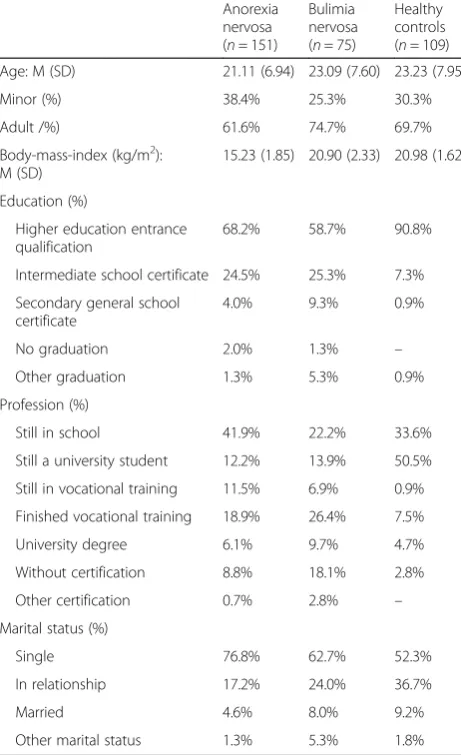
Table 1 summarises the sociodemographic and clinical variables of the three groups. There were no differences between groups with regard to percentage of minors and adults, age or percentage of regular exercisers. However, groups differed with regard to education (χ2(2) = 19.02,p < .001), profession (χ2(2) =16.82, p< .001) and marital status (χ2(6) = 21.22, p= .002) with HC having a higher education and profession status and being less often sin-gle. Furthermore, they differed in BMI (F(2,332) = 375.39,
p< .001, AN < BN, HC).
Self-reported quantity of exercise
60.9% of patients with AN, 68.0% of patients with BN and 67.9% of HC reported that they exercised on a regular basis. When including only those who exercise on a regu-lar basis, the three groups significantly differed in exercis-ing (hrs/week) (F(2,207) = 7.91, p < .001). Both patients with AN (M = 5.95, SD = 5.45) and BN (M = 6.24, SD = 3.85) exercised significantly more than HC (M = 3.60, SD = 2.42). ES [95% CI] was 0.06 [−0.29; 0.40] for AN vs. BN,
−0.54 [−0.86;−0.22] for AN vs. HC and−0.85 [−1.23;− 0.48] for BN vs. HC.
Compulsiveness of exercise
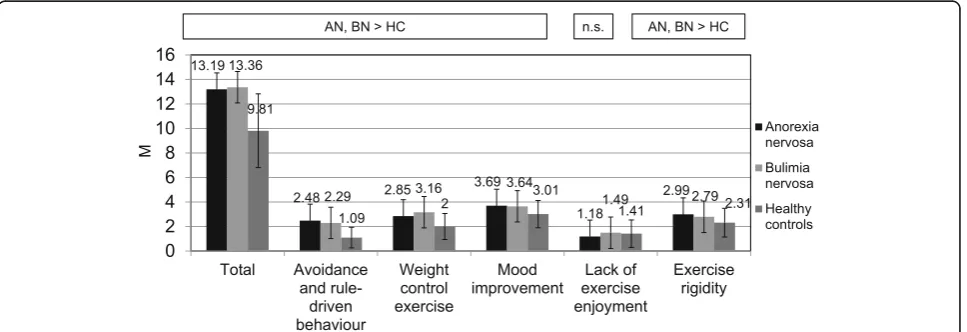
There were significant differences both between pa-tients with AN and HC as well as between papa-tients with BN and HC with regard to CET total score (high ES) and with regard to CET subscales avoidance and rule-driven behaviour (high ES), weight control exercise (moderate to high ES), mood improvement (moderate ES) and exercise rigidity (low to moderate ES), on which patients scored higher. Concerning lack of exercise enjoyment, no statistical difference was found between patients with AN and BN and HC. There were no significant differences between patients with AN and patients with BN, neither in CET total score nor in CET subscales (see Fig. 1). The statistical
parameters of the MANOVA with regard to CET and the ES for the pairwise comparisons AN vs. BN, AN
vs. HC, BN vs. HC can be found in Additional file 1:
Table S1.
Motives for exercise
Patients with AN exercised significantly more to man-age stress than HC. Both patient groups showed higher scores on enjoyment, challenge, social recognition and weight management compared to HC, whereas HC scored higher on ill-health avoidance than patients with AN and higher with regard to affiliation than patients with BN. Patients with AN and BN only differed in re-gard to exercise for appearance reasons in which pa-tients with BN scored higher (see Fig. 2). Furthermore, patients with BN scored higher with regard to the latter motive compared to HC. ES were high with regard to weight management for patients with BN in compari-son to HC, moderate with regard to enjoyment for both patients with AN and BN compared to HC, moderate with regard to social recognition, affiliation and appear-ance for patients with BN in comparison to HC as well as moderate with regard to ill-health avoidance for pa-tients with AN in comparison to HC. All other signifi-cant comparisons showed only low ES.
No differences were found between the three groups for the following six motives: revitalisation, competition, health pressures, positive health, strength and endurance as well as nimbleness. Statistical parameters of the MANOVA with regard to EMI-2 as well as ES for the pairwise comparisons AN vs. BN, AN vs. HC, BN vs. HC are presented in Add-itional file2: Table2.
Predictors of compulsive exercise (as measured by the CET total score)
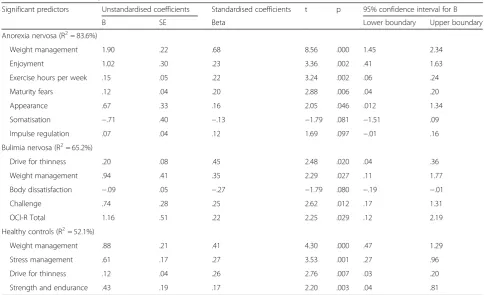
Table 2shows the variables included in the final model, separated for AN, BN and HC.
Discussion
In summary, we found several differences in exercise be-haviours and motives between patients with EDs and HC whereas patients with AN and BN were very similar. Both patients with AN and BN exercised more hours per week and showed higher CE than HC as measured
by the CET. This is in line with previous studies that found that self-reported exercise quantity [16,18–20] as well as CE assessed by other instruments than the CET [16, 17, 20, 23–27] were higher in patients with EDs than in HC. In accordance with Naylor et al. [19] who also used the CET, we found that patients with EDs and
Fig. 2Significant differences in Exercise Motivations Inventory-2 scores between patients with anorexia nervosa (AN), bulimia nervosa (BN) and healthy controls (HC)
Table 2Predictors of compulsive exercise (CET total score)
Significant predictors Unstandardised coefficients Standardised coefficients t p 95% confidence interval for B
B SE Beta Lower boundary Upper boundary
Anorexia nervosa (R2= 83.6%)
Weight management 1.90 .22 .68 8.56 .000 1.45 2.34
Enjoyment 1.02 .30 .23 3.36 .002 .41 1.63
Exercise hours per week .15 .05 .22 3.24 .002 .06 .24
Maturity fears .12 .04 .20 2.88 .006 .04 .20
Appearance .67 .33 .16 2.05 .046 .012 1.34
Somatisation −.71 .40 −.13 −1.79 .081 −1.51 .09
Impulse regulation .07 .04 .12 1.69 .097 −.01 .16
Bulimia nervosa (R2= 65.2%)
Drive for thinness .20 .08 .45 2.48 .020 .04 .36
Weight management .94 .41 .35 2.29 .027 .11 1.77
Body dissatisfaction −.09 .05 −.27 −1.79 .080 −.19 −.01
Challenge .74 .28 .25 2.62 .012 .17 1.31
OCI-R Total 1.16 .51 .22 2.25 .029 .12 2.19
Healthy controls (R2= 52.1%)
Weight management .88 .21 .41 4.30 .000 .47 1.29
Stress management .61 .17 .27 3.53 .001 .27 .96
Drive for thinness .12 .04 .26 2.76 .007 .03 .20
Strength and endurance .43 .19 .17 2.20 .003 .04 .81
HC differed in all subscales of the CET except for lack of exercise enjoyment whereas Meyer et al. [32] found a significant difference in all subscales except for mood improvement. This inconsistency might be explained by different sample characteristics with Meyer et al. [32] in-cluding e.g. a high proportion of patients with EDNOS.
Furthermore, we found that the self-reported quantity of exercise in patients with AN and BN was comparable which is in line with previous studies [10,12,20,28,29]. Moreover, we found no differences in CE between the two diagnostic groups which is in accordance to previ-ous findings that used other instruments [24, 28, 30], but contrary to the study from Sauchelli et al. [33] that also used the CET and found that patients with BN scored higher on the CET total score as well as on all subscales except for exercise rigidity. It is noticeable that the levels of CET total score and of CET subscales of pa-tients with BN in both studies were relatively compar-able whereas patients with AN scored considerably higher in our study. Despite both studies investigating inpatients, different sample characteristics such as a dif-ferent age range, a lower BMI in patients with AN in our study or other unknown variables like illness dur-ation or the proportion of subtype of AN might explain the contradictory results. Furthermore, the sample size of patients with AN in the study of Sauchelli et al. [33] was relatively small. Because of inconsistent results, there is an urgent need for further studies clarifying similarities or differences in CE in patients with AN compared to patients with BN.
Concerning motives for exercise, we found similar-ities and differences between patients with EDs and HC. Exercise for stress management and enjoyment were highest ranked in all groups. Significant differ-ences between patients and HC were found for enjoy-ment, challenge, recognition and weight management with higher scores in patients and for ill-health avoid-ance as well as affiliation with higher scores in HC. Overall, HC showed more health-related motives than patients. This is in accordance with Markland and
Ingledew [42] who found that positive health and
ill-health avoidance were the most pronounced motives for exercise in HC when assessed with the EMI-2. Fur-ther studies using the Reasons for Exercise Inventory
(REI) [43], also found that HC scored higher on
health-related motives than patients with EDs [16, 18].
Mond and Calogero [20] found higher scores on the
subscale weight control of the REI for patients with EDs than for HC which was also true for both patients with AN and BN in our study. Contrary to our results,
in the study by Mond and Calogero [20] HC scored
higher on the enjoyment subscale than patients with EDs. Patients with AN and BN did not differ in motives for exercise (except for appearance in which patients
with BN scored higher) in our study. This result is in line with Bratland-Sanda et al. [18], who found no dif-ferences between patients with AN and BN on the REI subscales.
Our regression analyses revealed that exercise for weight and shape reasons was the strongest predictor of CE in all three groups. This is in line with a previous review that identified weight and shape concerns as one of the four key correlates of CE among patients with EDs [44]. In a previous study, exercising to improve mood was found to be the strongest predictor of driven exercise in patients with AN [16]. However, the authors argue that due to a lack of an association between physical activity and anx-iety scores, the drive to exercise may not primarily be re-lated to anxiety but instead be driven by body and weight concerns. Furthermore, Bratland-Sanda et al. [17] report that negative affect regulation was the most important ex-planatory factor for exercise dependence in patients as well as in HC, whereas weight/appearance was not a sig-nificant predictor. The authors state that motives for exer-cise might shift during phases of illness. They suggest that patients with EDs might be exercising more for weight and shape reasons in earlier phases of the illness while the more chronic ones might be exercising more for negative affect regulation. However, our data of inpatients suggest that severe and chronic cases might also show CE primar-ily for weight and shape reasons. In our regression ana-lyses, exercise for affect regulation, a further key correlate of CE, was not a significant predictor in patients with ei-ther AN or BN. However, the EMI-2 might not have been an appropriate instrument to assess exercise for mood im-provement or affect regulation since it only contains a subscale related to exercise for stress management. The REI also assesses exercise to cope with sadness, depres-sion, anxiety and to improve one’s mood and might have been a better instrument. Compulsivity, a further key cor-relate of CE, turned out to be a significant predictor of CE for patients with BN, but not for patients with AN. This needs clarification and should be investigated in further studies. Perfectionism (EDI-2 subscale), the last key factor proposed in the maintaining model of CE did also not turn out to be a significant predictor in either group. In summary, our regression analyses provide preliminary in-formation which factors might be essential in CE. But our results also highlight the need to empirically evaluate the-oretical models of CE such as the model proposed by Meyer et al. [44].
Quantity of exercise predicting higher CE is in line with studies that found a relationship between vigorous phys-ical activity and exercise dependence [17] or between
ex-ercise frequency and CET total score [19] in mixed
patients with EDs. Furthermore, challenge was a strong predictor in patients with BN. Challenge is seen as an in-trinsic motive that satisfies the basic human need for competence [45]. This result suggests that the more pa-tients with BN exercise for challenging themselves and the more they experience feelings of mastery and com-petence the higher the chance that exercise becomes driven. A specific predictor of CE in HC was stress man-agement. This is in line with Pritchard and Beaver [46] who found that obligatory exercise was predicted by ex-ercise for mood improvement in healthy women.
In summary, our results show that CE is a highly relevant symptom in both patients with AN and BN. Although CE is one of the most negative predictors of outcome and a positive predictor of chronification in pa-tients with EDs, there is a lack of (evaluated) treatment approaches on how to manage these symptoms during therapy so far. Since studies found that changes in com-pulsive/excessive exercising were significantly associated with changes in BMI as well as in ED symptoms [5, 11,
30], interventions specifically targeting CE might be a way to improve outcomes.
Strength and limitations of the study/future research
The study possesses several strengths: The sample size is high. Both patients with AN and BN as well as HC were assessed and directly compared. The CET, a multidimen-sional instrument for assessing CE, was used. Noetel et al. [34] favour the CET since it is an empirically derived and clinically sound measure of CE that avoids the shortcomings of previous studies categorizing CE ac-cording to arbitrary and inconsistent definitions. How-ever, there are also several limitations of the study: First of all, all data except those for the BMI of patients were based on self-ratings, and no structured interview was conducted to assess ED diagnoses. Height and weight of HC were also only self-reported. Self-reported quantity of exercise could be biased: HC may claim to exercise more than is really the case, since activity is socially de-sirable. In patients with EDs, the opposite could be true. E.g. Alberti et al. [47] found that patients with AN underestimated their physical activity by subjective as-sessment when compared with objective measurement. So, accelerometers should be used in future studies. Sec-ond, all patients included were inpatients with severe and often long-standing symptomatology. Results may not be applicable to less severely impaired patients such as outpatients. Third, only females were included in the study. Future research should also address CE in men with EDs and compare them to women to explore
possible gender differences. Forth, there is no psycho-metric validation of the German version of the EMI-2; investigating its psychometric properties is highly rec-ommended. Fifth, the measures have different time frames ranging from one week to one month. Since the original instruments are intended to ask for certain de-fined time frames, we did not change time frames for our study. However, since the patients have a longstand-ing symptomatology symptoms and behaviours might not really differ if referred to the last week or the last month. Sixth, since the study had only a cross-sectional design it permitted only to assess simple associations, but not predictors. The direction of the associations or potential mediating variables should be investigated in future studies. Additionally, it would be interesting to evaluate exercise behaviours and motives for exercise in different stages of illness. Furthermore, investigating samples with only AN and BN patients that show CE e.g. diagnosed by an interview might contribute even more to a better understanding of differences in CE be-tween patients with AN and BN. A structured interview for the assessment of CE in patients with EDs was re-cently suggested [48]. Further studies might also com-pare the two subtypes of AN as well as adolescents and adults.
Conclusions
Exercise behaviours and motives of patients with EDs differ from HC. CE seems to be a highly relevant symp-tom in both patients with AN and BN. Therefore, future research on CE should focus not only on patients with AN, but also on patients with BN. Furthermore, there is an urge to develop and evaluate specific interventions to address CE in therapy. Our results suggest that CE pre-sents similar in patients with AN and BN and therefore argue for a transdiagnostic approach with regard to the development of interventions specifically targeting CE in patients with EDs.
Additional files
Additional file 1:Table S1Statistical parameters of the analysis of variance with subsequent post-hoc tests for the Compulsive Exercise Test (DOCX 22 kb)
Additional file 2:Table S2: Statistical parameters of the analysis of variance with subsequent post-hoc tests for the Exercise Motivations Inventory-2 (DOCX 28 kb)
Abbreviations
AN:Anorexia nervosa; BDI-2: Beck Depression Inventory-2; BMI: Body-mass-index; BN: Bulimia nervosa; BSI-18: Brief Symptom Inventory-18;
Acknowledgements
We sincerely thank all patients as well as the healthy controls for their participation in our study. We gratefully acknowledge the support of the research assistants from LMU. We especially thank Barbara Barton, Carolina Bürger, Kerstin Hupe, Birgit Jochner and Christina Neumayr, for their assistance with data collection, data entry and data management.
Funding
The authors declare that no funding was received for this study.
Availability of data and materials
The dataset used and analysed during the current study is available from the corresponding author on reasonable request.
Authors’contributions
Study design was developed by SS, ND and UV. ND was responsible for recruitment and data collection of HC. Data analysis was completed by SS and SH. SS and SH wrote the manuscript draft. ND and UV revised the manuscript draft. All authors have approved the final manuscript.
Ethics approval and consent to participate
The study protocol was approved by the ethics committee of the Ludwig Maximilian University Munich (project number: 060–13).
Participants received detailed information on the study and gave informed written consent to participate. For minors, also their legal guardians gave informed consent.
Competing interests
The authors declare they have no competing interests.
Publisher’s Note
Springer Nature remains neutral with regard to jurisdictional claims in published maps and institutional affiliations.
Author details
1Department of Psychiatry and Psychotherapy, University Hospital of Munich (LMU), Nußbaumstraße 7, 80336 Munich, Germany.2Schoen Clinic Roseneck, Prien am Chiemsee, Germany.3Department of Clinical Psychology and Psychotherapy, Technical University of Dresden, Dresden, Germany. 4Department of Counseling Psychology, University of Potsdam, Potsdam, Germany.5Department of Psychiatry and Psychotherapy, University Hospital of Freiburg, Freiburg im Breisgau, Germany.
Received: 30 December 2017 Accepted: 1 June 2018
References
1. Physical activity. [http://www.who.int/ncds/prevention/physical-activity/ introduction/en/].
2. Adkins EC, Keel PK. Does "excessive" or "compulsive" best describe exercise as a symptom of bulimia nervosa? Int J Eat Disord. 2005;38:24–9. 3. Bewell-Weiss CV, Carter JC. Predictors of excessive exercise in anorexia
nervosa. Compr Psychiatry. 2010;51:566–71.
4. Brewerton TD, Stellefson EJ, Hibbs N, Hodges EL, Cochrane CE. Comparison of eating disorder patients with and without compulsive exercising. Int J Eat Disord. 1995;17:413–6.
5. Dalle Grave R, Calugi S, Marchesini G. Compulsive exercise to control shape or weight in eating disorders: prevalence, associated features, and treatment outcome. Compr Psychiatry. 2008;49:346–52.
6. Davis C, Katzman DK, Kaptein S, Kirsh C, Brewer H, Kalmbach K, Olmsted MP, Woodside DB, Kaplan AS. The prevalence of high-level exercise in the eating disorders: etiological implications. Compr Psychiatry. 1997;38:321–6. 7. Favaro A, Caregaro L, Burlina AB, Santonastaso P. Tryptophan levels,
excessive exercise, and nutritional status in anorexia nervosa. Psychosom Med. 2000;62:535–8.
8. Shroff H, Reba L, Thornton LM, Tozzi F, Klump KL, Berrettini WH, Brandt H, Crawford S, Crow S, Fichter MM, et al. Features associated with excessive exercise in women with eating disorders. Int J Eat Disord. 2006;39:454–61. 9. Casper R, Jabine LN. An eight year follow up: outcome from adolescent
compared to adult onset anorexia nervosa. J Youth Adolesc. 1996;25:499–517.
10. Stiles-Shields C, Bamford B, Lock J, Le Grange D. The effect of driven exercise on treatment outcomes for adolescents with anorexia and bulimia nervosa. Int J Eat Disord. 2015;48:392–6.
11. Bratland-Sanda S, Sundgot-Borgen J, Rø Ø, Rosenvinge JH, Hoffart A, Martinsen EW. Physical activity and exercise dependence during inpatient treatment of longstanding eating disorders: an exploratory study of excessive and non-excessive exercisers. Int J Eat Disord. 2010;43:266–73.
12. Solenberger SE. Exercise and eating disorders: a 3-year inpatient hospital record analysis. Eat Behav. 2001;2:151–68.
13. El Ghoch M, Calugi S, Pellegrini M, Milanese C, Busacchi M, Battistini NC, Bernabe J, Dalle Grave R. Measured physical activity in anorexia nervosa: features and treatment outcome. Int J Eat Disord. 2013;46:709–12. 14. Carter JC, Blackmore E, Sutandar-Pinnock K, Woodside DB. Relapse in
anorexia nervosa: a survival analysis. Psychol Med. 2004;34:671–9. 15. Strober M, Freeman R, Morrell W. The long-term course of severe anorexia nervosa
in adolescents: survival analysis of recovery, relapse, and outcome predictors over 10–15 years in a prospective study. Int J Eat Disord. 1997;22:339–60.
16. Keyes A, Woerwag-Mehta S, Bartholdy S, Koskina A, Middleton B, Connan F, Webster P, Schmidt U, Campbell IC. Physical activity and the drive to exercise in anorexia nervosa. Int J Eat Disord. 2015;48:46–54.
17. Bratland-Sanda S, Martinsen EW, Rosenvinge JH, Rø Ø, Hoffart A, Sundgot-Borgen J. Exercise dependence score in patients with longstanding eating disorders and controls: the importance of affect regulation and physical activity intensity. Eur Eat Disord Rev. 2011;19:249–55.
18. Bratland-Sanda S, Sundgot-Borgen J, Rø Ø, Rosenvinge JH, Hoffart A, Martinsen EW. "I'm not physically active - I only go for walks": physical activity in patients with longstanding eating disorders. Int J Eat Disord. 2010;43:88–92.
19. Naylor H, Mountford V, Brown G. Beliefs about excessive exercise in eating disorders: the role of obsessions and compulsions. Eur Eat Disord Rev. 2011;19:226–36.
20. Mond JM, Calogero RM. Excessive exercise in eating disorder patients and in healthy women. Aust N Z J Psychiatry. 2009;43:227–34.
21. Zipfel S, Mack I, Baur LA, Hebebrand J, Touyz S, Herzog W, Abraham S, Davies PSW, Russell J. Impact of exercise on energy metabolism in anorexia nervosa. J Eat Disord. 2013;1:37.
22. Sauchelli S, Arcelus J, Sanchez I, Riesco N, Jimenez-Murcia S, Granero R, Gunnard K, Banos R, Botella C, de la Torre R, et al. Physical activity in anorexia nervosa: how relevant is it to therapy response? Eur Psychiatry. 2015;30:924–31.
23. Boyd C, Abraham S, Luscombe G. Exercise behaviours and feelings in eating disorder and non-eating disorder groups. Eur Eat Disord Rev. 2007;15:112–8.
24. Danielsen M, Bjornelv S, Ro O. Validation of the exercise and eating disorders questionnaire. Int J Eat Disord. 2015;48:983–93.
25. Danielsen M, Bratberg GH, Ro O. A pilot study of a new assessment of physical activity in eating disorder patients. Eat Weight Disord. 2012;17:e70–7.
26. Davis C, Blackmore E, Katzman DK, Fox J. Female adolescents with anorexia nervosa and their parents: a case-control study of exercise attitudes and behaviours. Psychol Med. 2005;35:377–86.
27. Pinkston M, Martz D, Domer F, Curtin L, Bazzini D, Smith L, Henson D. Psychological, nutritional, and energy expenditure differences in college females with anorexia nervosa vs. comparable-mass controls. Eat Behav. 2001;2:169–81. 28. Calogero RM, Pedrotty KN. The practice and process of healthy exercise: an
investigation of the treatment of exercise abuse in women with eating disorders. Eat Disord. 2004;12:273–91.
29. Stiles-Shields C, Goldschmidt AB, Boepple L, Glunz C, Le Grange D. Driven exercise among treatment-seeking youth with eating disorders. Eat Behav. 2011;12:328–31.
30. Danielsen M, Ro O, Romild U, Bjornelv S. Impact of female adult eating disorder inpatients' attitudes to compulsive exercise on outcome at discharge and follow-up. J Eat Disord. 2016;4:7.
31. Taranis L, Touyz S, Meyer C. Disordered eating and exercise: development and preliminary validation of the compulsive exercise test (CET). Eur Eat Disord Rev. 2011;19:256–68.
32. Meyer C, Plateau CR, Taranis L, Brewin N, Wales J, Arcelus J. The compulsive exercise test: confirmatory factor analysis and links with eating
33. Sauchelli S, Arcelus J, Granero R, Jimenez-Murcia S, Aguera Z, Del Pino-Gutierrez A, Fernandez-Aranda F. Dimensions of compulsive exercise across eating disorder diagnostic subtypes and the validation of the Spanish version of the compulsive exercise test. Front Psychol. 2016;7:1852. 34. Noetel M, Miskovic-Wheatley J, Crosby RD, Hay P, Madden S, Touyz S. A
clinical profile of compulsive exercise in adolescent inpatients with anorexia nervosa. J Eat Disord. 2016;4(1).
35. Dilling H, Mombour W, Schmidt MH:Internationale Klassifikation psychischer Störungen: ICD-10; Kapitel V (F); Klinisch-diagnostische Leitlinien.Bern, Göttingen, Toronto, Seattle: Huber; 2013.
36. Bauer S, Winn S, Schmidt U, Kordy H. Construction, scoring and validation of the short evaluation of eating disorders (SEED). Eur Eat Disord Rev. 2005;13:191–200.
37. Ingledew DK, Sullivan G. Effects of body mass and body image on exercise motives in adolescence. Psychol Sport Exerc. 2002;3:323–38.
38. Paul T, Thiel A. Eating Disorder Inventory - 2. Deutsche Version. Göttingen: Hogrefe; 2004.
39. Gönner S, Leonhart R, Ecker W. Das Zwangsinventar OCI-R - die deutsche Version des Obsessive-Compulsive Inventory-Revised. Ein kurzes Selbstbeurteilungsinstrument zur mehrdimensionalen Messung von Zwangssymptomen. Psychotherapie, Psychosomatik, Medizinische Psychologie. 2007;57:395–404.
40. Hautzinger M, Keller F, Kühner C. BDI-II. Beck-Depressions-Inventar. Revision. Pearson Assessment: Frankfurt; 2009.
41. Franke GH, Ankerhold A, Haase M, Jager S, Togel C, Ulrich C, Frommer J. The usefulness of the brief symptom inventory 18 (BSI-18) in psychotherapeutic patients. Psychother Psychosom Med Psychol. 2011;61:82–6.
42. Markland D, Ingledew D. The measurement of exercise motives: factorial validity and invariance across gender of a revised exercise motivation inventory. Br J Health Psychol. 1997;2:361–76.
43. Silberstein LR, Striegel-Moore RH, Timko C, Rodin J. Behavioral and psychological implications of body dissatisfaction: do men and women differ? Sex Roles. 1988;19:219–32.
44. Meyer C, Taranis L, Goodwin H, Haycraft E. Compulsive exercise and eating disorders. Eur Eat Disord Rev. 2011;19:174–89.
45. Ingledew DK, Markland D, Strömmer ST. Elucidating the roles of motives and gains in exercise participation. Sport, Exercise, and Performance Psychology. 2014;3:116–31.
46. Pritchard ME, Beaver JL. Do exercise motives predict obligatory exercise? Eat Behav. 2012;13:139–41.
47. Alberti M, Galvani C, El Ghoch M, Capelli C, Lanza M, Calugi S, Dalle Grave R. Assessment of physical activity in anorexia nervosa and treatment outcome. Med Sci Sports Exerc. 2013;45:1643–8.