VOLUME 36, ARTICLE 13, PAGES 391
−
426
PUBLISHED 25 JANUARY 2017
http://www.demographic-research.org/Volumes/Vol36/13/ DOI: 10.4054/DemRes.2017.36.13
Research Article
Another work
‒
family interface: Work
characteristics and family intentions in Japan
Wei-hsin Yu
Janet Chen-Lan Kuo
©2017 Wei-hsin Yu & Janet Chen-Lan Kuo.
This open-access work is published under the terms of the Creative Commons Attribution NonCommercial License 2.0 Germany, which permits use, reproduction & distribution in any medium for non-commercial purposes, provided the original author(s) and source are given credit.
1 Introduction 392
2 Linking work to marriage and fertility intentions 394 2.1 Work characteristics as indicators of potential work‒family conflict 394 2.2 Work characteristics as signals of future economic prospects 396 2.3 Work characteristics as determinants of social relation dynamics 398
3 Data and methods 400
4 Results 407
5 Discussion and conclusions 416
6 Acknowledgments 420
Another work
‒
family interface:
Work characteristics and family intentions in Japan
Wei-hsin Yu1
Janet Chen-Lan Kuo2
Abstract
BACKGROUND
Previous research highlights the importance of job and workplace characteristics in the work‒family interface. Nevertheless, we know little about how the specific context of work is related to singles’ marriage and parenthood intentions.
OBJECTIVE
In this study we examine the links between work conditions and family intentions using a representative sample of never-married, childless adults in Japan, a country that is well known for rapid declines in marriage and fertility rates.
RESULTS
We find that, surprisingly, work characteristics conducive to less work‒family conflict are rarely associated with stronger desires to marry and have children. For never-married men in Japan, the job qualities most relevant to family intentions are those that imply a bright economic future. Job conditions with the potential for work‒family conflict can be positively related to the desire to marry and have children if they also indicate promising career prospects. Conversely, workplace sociability is highly relevant to women’s marriage and fertility intentions. Never-married women working in more collaborative and interactive environments seek potential marriage partners more actively, want to marry and become parents more, and have higher preferred numbers of children. We suggest that in more sociable workplaces, childless singles tend to be more exposed to earlier cohorts’ family experiences and beliefs and so become more interested in marriage and parenthood.
CONTRIBUTIONS
This study demonstrates that, in Japan, the work characteristics relevant to single men’s family intentions differ from those that are relevant to the equivalent intentions of single women. In particular, the finding that women working in more sociable environments desire marriage and children more adds to the literature emphasizing the
influence of social relations on family decisions in advanced economies, as well as suggesting a new channel through which social relations shape ideas and plans about marriage and parenthood.
1. Introduction
Much existing research emphasizes the importance of job and workplace characteristics in the work‒family interface. Jobs and workplaces that enable greater schedule flexibility are found to be associated with a better work‒family fit and lower work‒ family conflict for workers, especially when they are parents (Glass and Camarigg 1992; Glass and Estes 1997; Moen et al. 2016). In addition, work conditions that facilitate self-direction opportunities and support from coworkers and supervisors contribute to more positive spousal and parent-child interactions within families (Menaghan 1991). By contrast, jobs requiring long hours or nonstandard schedules make it more difficult for married women to work continuously, put more strain on families, and increase the likelihood of marriage instability (Presser 1999, 2000; Yu 2009)
Most research on the work‒family interface, particularly on how work characteristics affect family life, focuses on the experiences of married people and parents. Although childless singles generally face fewer family obligations, job and workplace characteristics may still influence their family lives. Specifically, these characteristics may shape young adults’ marriage and fertility intentions, which, according to previous research, have a strong influence on their future family patterns (McGinnis 2003; Schoen et al. 1999). For example, job and workplace characteristics that suggest a high likelihood of work‒family conflict might discourage childless singles from pursuing marriage and parenthood. Furthermore, job and workplace features may be relevant to individuals’ perceptions of their long-term economic prospects (Baron 1984; Yu 2013) and thereby associated with their plans regarding marriage and parenthood (Wiik, Bernhardt, and Noack 2010). Moreover, because workplaces are also environments in which young adults socialize with heterogeneous people, work conditions that encourage more contact among workers could give young adults greater exposure to the marital and familial experiences and beliefs of senior colleagues, thus molding their plans about whether to form unions and become parents.
2013; Philipov, Spéder, and Billari 2006; Schoen et al. 1997; Wiik, Bernhardt, and Noack 2010). Although a handful of recent studies link job strain and work schedule flexibility to fertility intentions (Begall and Mills 2011; Kaufman and Bernhardt 2012), a comprehensive analysis assessing the different mechanisms through which work characteristics affect singles’ family plans is still missing.
In this study, we use a nationally representative sample of never-married men and women aged 20–40 in Japan to examine how job and workplace conditions are associated with singles’ intentions about marriage and parenthood. Japan is an ideal setting for such a study for three reasons. First, Japan exemplifies a so-called lowest-low fertility country, with extremely sharp and prolonged declines in marriage and fertility rates (Ishida 2013). The question of why young Japanese have been postponing marriage and parenthood has attracted much scholarly attention in recent years (e.g., Raymo 2003; Raymo and Iwasawa 2005; Raymo and Ono 2007; Retherford, Ogawa, and Sakamoto 1996; Rindfuss et al. 2004). Although researchers often propose a high level of work‒family incompatibility for women as an explanation for the postponement of marriage and parenthood in Japan and elsewhere (Boling 2008; Rindfuss and Brewster 1996), empirical evidence on whether jobs implying greater conflict with childrearing indeed dampen Japanese adults’ ‒ or at least women’s ‒ desires for marriage and children is lacking. By examining how work conditions are associated with singles’ family plans in Japan, this study helps illuminate the role that work‒family conflict plays in shaping demographic changes in lowest-low fertility countries.
The second reason Japan constitutes an appropriate setting for investigating the link between work characteristics and family intentions is that Japanese workers ‒ particularly before they marry, and particularly men ‒ tend to stay with the same employer for a longer period of time than their counterparts in other advanced economies (Cheng and Kalleberg 1996; Yu and Chiu 2014).3 With low expectations of changing jobs in the near future, the young and single in Japan can easily foresee their future work‒family conflict or economic well-being based on current work characteristics. Thus, it is reasonable to expect that young adults’ marriage and family plans will be related to their job and workplace characteristics in Japan.
Third, one dimension of job characteristics examined in the study concerns social aspects of the workplace, and Japan is a particularly useful setting for considering such aspects. Previous research shows that knowing people who engage in given family behaviors (e.g., marriage postponement) shapes Japanese adults’ attitudes toward the behaviors (Rindfuss et al. 2004), suggesting the importance of social influences on family considerations in that country. Ethnographic evidence on how workplace
3 Although the employment instability of youth in Japan has been increasing in recent years (Genda 2003),
dynamics affect Japanese women’s decisions to continue working when they get married or become pregnant further shows that social interactions in the workplace are influential (Ogasawara 1998; Yu 2009). Altogether, previous research suggests that social dynamics in the workplace may be highly relevant to family intentions in Japan.
2. Linking work to marriage and fertility intentions
Demographers have long been interested in fertility intentions (e.g., Bachrach and Morgan 2013; Morgan and Rackin 2010; Rindfuss, Morgan, and Swicegood 1988). Fertility intentions, though they change throughout life (Hayford 2009), are highly predictive of future fertility behavior (Schoen et al. 1999; Tsukasa 2009). In addition to birth plans, individuals’ marriage intentions are also likely to play a crucial role in shaping fertility patterns, especially in parts of the world where marriage continues to be seen as a prerequisite to childbirth, such as Japan (Raymo and Iwasawa 2008). Thus, addressing why young adults differ in their marriage and parenthood intentions is critical for understanding fertility trends.
Because most of the childless and unmarried spend the majority of their time at work, jobs and workplaces seem to be good places to start when considering factors related to the marriage and fertility intentions of young adults. Surprisingly, the literature on marriage and fertility and related intentions pays relatively little attention to job and workplace characteristics. Nevertheless, existing theories of marriage and fertility behaviors, focusing on the roles of work‒family compatibility (McDonald 2000; Rindfuss and Brewster 1996; Rindfuss, Guzzo, and Morgan 2003), economic standing (Oppenheimer 1988; Xie et al. 2003), and social connections (e.g., Rindfuss et al. 2004; Schoen et al. 1997), respectively, suggest three potential mechanisms through which work characteristics could be linked to young adults’ intentions about marriage and fertility. We discuss each of them below.
2.1 Work characteristics as indicators of potential work‒family conflict
desire for children. In contexts where childbearing is closely linked to marriage, this difficulty may also cause women to postpone or forgo marriage.
Although gender equity theorists generally focus on the slow change in women’s family roles (e.g., McDonald 2000), their arguments regarding the incompatibility of the structure of market work with women’s family obligations suggest that a lower level of work‒family conflict may increase, particularly, women’s desires for marriage and children (Rindfuss and Brewster 1996). At the same time, research on work‒family conflict provides specifics on those job and workplace characteristics that may reduce work‒family conflict. Jobs that give workers greater control over their own schedules, for example, contribute to a better balance of work and family demands (Glass and Camarigg 1992; Moen et al. 2016). Conversely, jobs requiring long working hours or frequent overtime reduce parents’ ability to fulfill their family obligations, increase tension between workers and their family members, and ultimately worsen the workers’ and their families’ well-being (Menaghan 1991; Presser 1999, 2000).
Compared with married people and parents, childless singles may find it less problematic to be in positions or settings with inflexible schedules, long working hours, and other requirements inhospitable to parental obligations. They are likely to be aware, however, of the potential conflict such work conditions could have with their personal lives were they to decide to marry or become parents, and so they might want to postpone marriage and childbearing. Empirical evidence of how job demands impede the transitions to marriage and parenthood of single or childless people is nevertheless rare, with only a few recent studies attempting to gauge the extent of these possible consequences. One such study, using US data, shows that marriage-age women whose jobs advance their autonomy enter their first marriage at younger ages, whereas job autonomy has no effect on marriage formation in men (Kuo and Raley 2014). Another study based on European countries indicates that the ability to control the pace, content, and daily organization of work makes women with one child more likely to want another, but subjective work control is only weakly associated with childless women’s birth intentions (Begall and Mills 2011). The same research also finds that mothers who work in jobs that tend to interfere with family life are less likely than those working in more flexible jobs to plan to have another child in the near future, although such stringent job conditions are not relevant to the fertility intentions of childless women. Somewhat consistent with the finding on childless women, a Swedish study of childless heterosexual couples shows that working in jobs that enhance women’s ability to take parental leave or work part-time does not increase their desire for a child in the next few years. Men, however, are more likely to want to become parents soon if their partners hold such jobs (Kaufman and Bernhardt 2012).
and abstract to those who have not been married. It is also clear from previous research that job strains, working hours, and schedule inflexibility are likely to have different associations for men and women in respect of family intentions. Because women bear the burden of routine housework, child care, and managing family affairs (Bianchi et al. 2000; Shelton and John 1996), they can be expected to want to postpone marriage and parenthood more than men when foreseeing future work‒family conflict.
In the context of Japan, where a male breadwinning family model and a highly unequal division of household labor are both prevalent, gender differences in the degree of concern about work–family conflict might be greater than in other cultures. Research shows Japanese wives’ share of household work to be exceptionally high ‒ they do 90% of it, or more (Oshio, Nozaki, and Kobayashi 2013). Cultural expectations for mothers to be the best ‒ and sometimes the only ‒ caretakers and educators of their children further exacerbate the difficulty for Japanese mothers when it comes to balancing work and family demands (Hirao 2001; Yu 2009). Meanwhile, Japanese men are expected to be “ideal workers,” spending long hours at work and prioritizing job demands over family obligations (Boling 2008; Ogasawara 1998). In this context, we can expect single men to pay relatively little attention to how likely their jobs are to allow time for their future families. After all, work–family conflict in Japan is almost exclusively a concern for employed wives and mothers. At the same time, however, because jobs and maternal responsibilities seem ultimately incompatible, many single Japanese women may expect to withdraw from the labor market when they marry or become pregnant. Indeed, previous research shows that women in Japan are considerably more likely to exit the labor force after marrying than their counterparts in the United States and other Western countries (Raymo and Lim 2011). If single Japanese women are unlikely to see themselves continuing in their current jobs after marriage and childbearing, then experiencing work conditions conducive to greater work‒family conflict will not serve to dampen their enthusiasm for marriage and fertility intentions. Job strain might even increase women’s desire for marriage, if they generally anticipate leaving the labor force soon after marriage. As ethnographic research indicates, young Japanese women in highly unequal workplaces tend to view marriage as a promising opportunity to quit unpleasant work conditions (Ogasawara 1998). Thus, the more stressful the work environment, the more marriage is likely to appeal to single women in Japan.
2.2 Work characteristics as signals of future economic prospects
parenthood. This is especially the case for men (Oppenheimer 2003; Oppenheimer, Kalmijn, and Lim 1997; Rindfuss, Morgan, and Swicegood 1988; Sweeney 2002), given the gendered expectation for them to fulfill the provider role in the family. Because men’s ability to provide for the family depends on their future economic outlook, and not just their current earnings and employment status, a greater long-term earnings potential also speeds up men’s entry into first marriage (Xie et al. 2003).
As the timing of marriage reflects, in part, individuals’ desires for marriage and children, especially in contexts where marriage and children are closely linked, a logical extension of the theory about economic prospects and marriage timing is that a brighter economic future will make individuals more inclined to marry and become parents. Indeed, one study finds that having partners with jobs that promise financial security strengthens women’s intentions to have an additional child (Fiori et al. 2013). However, because most research focuses on how economic prospects affect family behaviors (Adsera 2011; Oppenheimer 2003; Xie et al. 2003), we have scant evidence on whether singles, especially males, with inferior career potential have weaker intentions to marry and have children, or if they simply face greater difficulties finding marriage partners. In Japan, where the cultural prescription is for men to be good providers (Boling 2008; Yu 2009), those with less promising economic prospects are likely to adjust their family intentions accordingly. Conversely, Japanese men with jobs signaling greater promotion opportunities and more lasting employment stability – jobs that confer authority, enable opportunities to upgrade skills, and are in settings that offer long career ladders – may be more eager to marry and have children, and may seek marriage partners more actively, as they are probably more confident about their ability to be the family breadwinner.
Beyond the job characteristics typically associated with a brighter economic future, schedule inflexibility and long working hours may also have implications for long-term job prospects, despite these characteristics’ associations with greater work‒family conflict. As Japan’s corporate culture equates being an ideal worker with spending endless time on the job, workers with more promising positions are often the ones expected to work longer hours (Yu 2009). Those whose jobs enable them to easily switch to part-time work or to take time off for family reasons are unlikely to be in fast-track careers or to occupy important positions in their organizations. In fact, even in other societies, a certain kind of schedule flexibility can imply a dimmer economic future; Kaufman and Bernhardt’s (2012) study of Swedish couples shows that women whose partners’ jobs allow their partners to take parental leave or work part-time easily are less likely to want to have a child in the near future. Thus, if economic prospects are more relevant to men’s family desires than work‒family conflict, we will find long working hours and schedule inflexibility to be positively related to such desires in Japan.
ages in contexts where their financial contribution is critical to the family (Oppenheimer 1988; Sweeney 2002), such women are shown to marry later in Japan, probably because they have more to lose by entering the highly gendered family arrangements in that country (Ono 2003). Following the same logic, Japanese women with job characteristics that signal a brighter economic future could be expected to have weaker marriage and parenthood desires. At the same time, empirical findings elsewhere suggest that there might not be a relation between the two, as high-achieving women’s interest in postponing family for careers may be offset by their comparatively greater financial gain from marriage ‒ assuming that they follow the pattern of assortative mating and marry partners with higher economic status ‒ or by their greater ability to contribute financially to their future family. Kaufman and Bernhardt (2012), for example, show that Swedish women with high-paying jobs are no different than those with low-paying jobs in their desire to have a child in the next five years. Xie and colleagues (2003) also show that long-term income potential does not affect US women’s rates of transitioning into marriage. We therefore expect either negative or no relations between work characteristics that signal future economic prospects and Japanese women’s desires for marriage and children.
2.3 Work characteristics as determinants of social relation dynamics
Aside from being places that demand and reward workers’ efforts, workplaces are also locales where social interactions occur. For many childless singles who are no longer in school, workplaces are where they spend the most time and experience the majority of their interpersonal interactions (Estlund 2003). Workplace social encounters differ from exchanges with friends, family members, or social groups formed elsewhere in that they tend to involve a more heterogeneous mix of people, especially in terms of age and life-course stage. In fact, outside of their extended families, young adults have few opportunities to meet and socialize with people of as wide a range of age and life-course stages as they do in the workplace.
“social capital” (Astone et al. 1999), that is, the social resources that individuals use to realize their instrumental or noninstrumental interests (e.g., greater social integration with family and friends). Marriage, for example, enables individuals to expand their social networks and solidify ties they have through their partners. Likewise, having a child can enhance one’s interactions with existing ties (e.g., parents and siblings) and strengthen relationships with friends and family who have experience of parenthood. Consistent with this argument, Schoen and colleagues (1997) show that those who place considerable importance on the social relationships created by having children express a greater intention to have a child.
Based on network influence theory, two studies of Japan specifically show that knowing someone with nontraditional family behaviors – someone who perhaps cohabits or chooses not to marry – makes individuals more likely to approve of unconventional family behaviors (Choe et al. 2014; Rindfuss et al. 2004). While these studies focus on unconventional family attitudes, their results essentially indicate that being embedded in social networks where more of the members exhibit relatively traditional family behaviors makes young adults more likely to hold traditional family views; they may therefore have a greater desire for marriage and children. We can expect a similar argument if the creation of social capital ultimately motivates singles to form families (Astone et al. 1999; Schoen et al. 1997). When singles are more exposed to people with spouses and children, entering marriage and parenthood enables them to better relate to the people surrounding them, resulting in better social connections. The possibility of generating greater social capital may lead singles in more frequent contact with married people and parents to desire marriage and children more.
social ties may be limited. Thus, we expect jobs embedded in more collaborative and interactive environments to be conducive to greater expressed desires for marriage and children among childless singles.
3. Data and methods
This study utilizes data from the first wave of the Japan Life Course Panel Survey (JLPS), conducted in 2007 by the Institute of Social Science at the University of Tokyo. This wave of the JPLS contains a uniquely extensive set of questions on respondents’ views and plans about marriage and parenthood, in addition to information on their current jobs and workplaces, making it perfectly suitable for this study. The JLPS collected data from nationally representative samples of young (ages 20‒34) and mature (ages 35‒40) adults at separate times in the same year, with response rates of 34.5% and 40.5%, respectively. Although these response rates are somewhat low, research examining surveys from Japan has shown that low survey response rates do not bias results from multivariate analyses (Rindfuss et al. 2015). Nevertheless, to ensure that our sample does not disproportionately exclude individuals of certain working statuses, such as those with contingent jobs, we compared the distribution of workers in different types of employment in our sample with that reported by Japan’s Bureau of Statistics (2008) for the same year. We found the distributions to be extremely similar.4
The sampling procedure of the JPLS allows researchers to combine the young and mature samples and use the combined sample as being representative of Japanese adults between 20 and 40 years old (Ishida 2013). We base this study on the combined sample, which consists of 4,800 individuals. Because of the focus on singles’ intentions to enter marriage and parenthood, our analysis uses only the data from respondents who have never been married ‒ 1,273 men and 1,109 women in the initial sample. Although we could examine marriage intentions among all those who were unmarried, we limit the analysis to the never-married, because past marriage experience may alter individuals’ family views; unfortunately, we do not have enough cases of singles with prior marriages for a separate analysis. Focusing on the never-married is also beneficial for our analysis of parenthood intentions, because married people’s parenthood intentions tend to be highly relevant to their spouses’ job characteristics (Kaufman and Bernhardt
4 For example, the Bureau of Statistics reports that 27.9% of paid employees in Japan between 25 and 34
2012), and the survey contains limited information on spouses.5 Given that some of our dependent variables concern the plan to enter parenthood, which is relevant only to non-parents, we further limit the sample to those who are childless. This limitation leads us to eliminate only five cases, as childbirths from unwed mothers are rare in Japan (Ishida 2013). To investigate how work characteristics are associated with marriage and parenthood intentions, we must also restrict the sample to those with current jobs. This restriction leads us to exclude 189 men and 118 women.6
Because for all but one of the variables included in the analysis, the percentages of missing values are very small ‒ ranging from 0.5% to 1.7% for those with any missing values ‒ we generally exclude the cases with invalid values on key variables. For the one exceptional variable, personal income, however, we used multiple imputation methods to fill in missing data (Acock 2005), as the modest proportion of respondents missing this information (7.5%) would make their exclusion potentially problematic.7 After taking these steps to handle missing data, our analytical sample consists of 1,022 men and 949 women. We estimate all models using imputed data (based on ten imputations).
The statistical analysis employs six dependent variables related to marriage and parenthood intentions. With regard to marriage plans, the JLPS asked all respondents who had never been married whether they wished to marry one day. If the answer was positive, the respondents were then asked to report the age by which they expected to enter a first marriage. We create a dummy variable to indicate that respondents wish to marry as the first outcome of interest. For the second outcome, we examine respondents’ expected timing of marriage, conditional on their intending to marry one day. We measure this variable in years based on the difference between respondents’ current age and the age by which they hope to marry.
Because responses to the question of whether they intend to marry one day do not allow us to identify those with an especially strong desire to marry, we introduce a third dependent variable measuring whether respondents have been actively pursuing
5 Conducting a separate analysis among those who were married without children is difficult, because the
number of such respondents is small. In an exploratory analysis we included these respondents in the models about transitions to parenthood, while controlling for marital status, and the results were largely similar. 6
One main reason for never-married respondents to be without jobs was that they had not finished school. Of the never-married who were not in school, the great majority ‒ 90% of men and 93% of women ‒ had jobs. Among never-married women who were not students we found no significant difference in the marriage or fertility intentions between those with and without jobs. Of their male counterparts, those without jobs were slightly older and less well educated, suggesting that such men might be involuntarily jobless. Although the men excluded for being jobless had significantly weaker desires for marriage and fertility, the exclusion is unlikely to distort the results, because the ways their characteristics are associated with marriage and fertility intentions are consistent with the pattern shown for the analytical sample.
7
marriage partners. We view taking an active approach to meet potential marriage partners as an expression of a strong marriage intention. Specifically, we construct this dependent variable based on a series of questions about the actions respondents have been taking for the purpose of meeting potential partners for romantic relationships. Respondents were asked to choose all that applied from a list of ways of finding romantic partners, including asking parents or other family members for introductions, asking coworkers or supervisors for introductions, participating in enrichment lessons and hobby meetings, taking courses or joining club activities, taking part in arranged dates, using the internet, and employing dating services. Respondents are considered as actively pursuing marriage (coded as 1, otherwise 0) if they have asked parents or family members to introduce potential partners, taken part in arranged dates, attended matchmaking parties, or used matchmaking agencies or dating services. In Japan, all these activities are relatively formal and generally signal to the parties involved that the ultimate goal of such meetings is marriage. We consider those who have never utilized any formal means to be actively engaged in partner-seeking activities only if they have taken part in three or more informal activities (the median for those using any informal means is two). Although not all those taking informal routes to seek romantic partners are necessarily eager to marry, exceptional activity in this respect signifies a stronger marriage intention. After all, marriage is still the presumed destination of romantic relationships in Japan. The typical alternative, cohabitation, is hardly treated as one (Raymo, Iwasawa, and Bumpass 2009).
We rely on three dependent variables to gauge parenthood intentions. First, we use a continuous measure for respondents’ preferred number of children, created from their own reports. Second, we create a dummy for wishing to become a parent one day. Third, we include a continuous variable indicating in how many years respondents want to become parents, if at all. Echoing its questions on marriage, the JLPS asked all those who had never had a child whether they wanted to become parents one day and, if so, when. We construct the variables about the parenthood desire and expected timing in the same way as we do for those related to marriage.
every day,” 2) “the workplace is generally understaffed,” and 3) “the workers are always trying to catch up with deadlines.” Instead of calculating Cronbach’s alpha, which cannot dependably evaluate scales constructed from binary items (Raykov, Dimitrov, and Asparouhov 2010), we have conducted a principal component factor analysis to ensure our index construction is appropriate. The analysis indicates that the three items load nearly evenly onto one, and only one, factor.
We measure schedule flexibility using respondents’ reports of the extent to which their jobs allow them to reduce work hours, take time off, or make other adjustments if they need to do so for family or other reasons. Because respondents were asked to rate on a scale of one to four, with four being the most positive, we measure schedule flexibility on the same scale. The measure of job autonomy is derived from two items: 1) “I can decide about the pace of my own work,” and 2) “I can decide how I want do my job in the workplace.” Respondents were asked the extent to which they agree with these statements, on a scale of one to four. We use alpha scoring to create the index of job autonomy (Cronbach’s alpha = 0.71), with four being the highest level.
of job security is measured as an index ranging from one to four, with four being the least likely to be unemployed in the near future.
To examine how the social aspects of workplaces are associated with individuals’ marriage and fertility plans, we introduce an indicator of workplace sociability. Specifically, we rely on four items to assess the social atmosphere of respondents’ workplaces: 1) “the overall workplace atmosphere is collaborative and helpful,” 2) “much work performed in the workplace is done by teams and through collaboration,” 3) “my work environment is one in which experienced workers frequently give advice to less experienced ones,” and 4) “in the workplace, young workers can find people to consult about their job- or life-related issues.” Respondents were asked whether each of the statements applied to their current workplace (i.e., they gave binary responses). The alpha scoring method is used to create an index of workplace sociability from these four items. Our additional principal component factor analysis suggested that the four items reflect a single latent construct and that the items load onto that one factor fairly evenly.
In addition to the work characteristics just described, the models include other job features that may be related to family intentions. First, we take into account personal income. The JLPS asked respondents to choose from among 13 categories for their income during the past year, ranging from zero income to 22,500,000 yen or more. We converted the responses into a continuous measure of income using the midpoint of each category. For the top category, we calculated the midpoint based on the assumption of a Pareto distribution (Hout 2004). To facilitate easier presentation, we measure personal income in units of 100,000 yen. As mentioned earlier, we also used multiple imputation methods to fill in missing data on this variable.
Second, we include firm size, measured in three categories according to the number of employees: 1) fewer than 30 (small), 2) 30‒300 (medium), and 3) more than 300 (large), as well as 4) firm size unknown to respondents. Third, we use a dummy variable to indicate that respondents worked in government offices (public sector) at the time of survey. Fourth, we control for employment status, measured in four categories: 1) standard wage employment, 2) nonstandard wage employment, 3) self-employment, and 4) family enterprise employment. In Japan, whether an individual works as a standard or nonstandard employee has dramatically different implications for their job security and career prospects (Yu 2012), making it important to differentiate the two statuses in the models. We distinguish between those working for themselves and those working for family enterprises, because they also tend to encounter different workplace dynamics.
features to see whether the different life stages make different job features relevant. The associations between work characteristics and marriage or parenthood intentions did not differ significantly by age group. In addition, we control for level of educational attainment. Given that our analysis includes all those with current jobs, regardless of whether they were students at the same time, we further control for being enrolled in school, as not having completed schooling is likely to weaken one’s marriage and childbearing intentions. Because previous research finds that coresidence with parents affects young adults’ transitions to marriage in Japan (Raymo and Ono 2007; Yu and Kuo 2016), we introduce a dummy for living with parents. Finally, because singles’ marriage and parenthood intentions may vary by expectations and opportunities in their local context, we control for whether respondents lived in (1) any of 16 major population centers, (2) cities with more than 200,000 residents, (3) other cities, or (4) towns and villages.
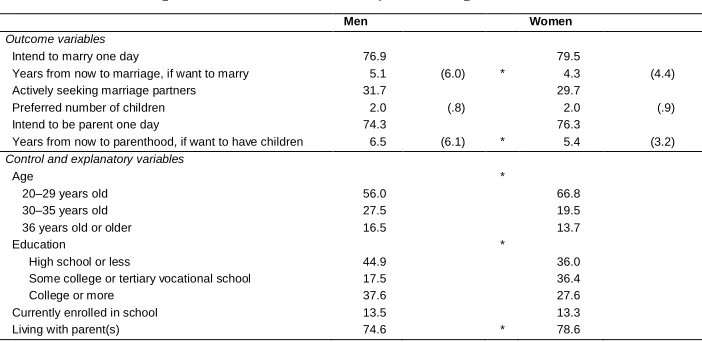
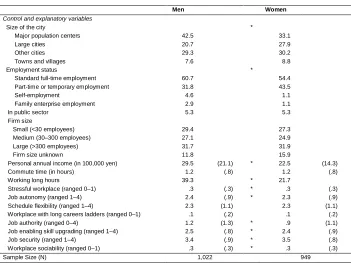
Table 1 provides descriptive statistics for all the variables used in this study. Based on the test results for gender differences, childless single men and women were similar in their desires for marriage and children in Japan, except that women expected to marry and have children earlier than men did. The two groups differed in job and workplace characteristics. Japanese men in the analytical sample had higher income, greater job autonomy, more job authority, and more opportunities to upgrade their skills. This was consistent with previous research showing great gender inequality in Japan (Yu 2009). At the same time, Japanese women were slightly more likely to be in sociable workplaces and less likely to be in stressful workplaces (p < .05; the values in the table are the same for the two groups as a result of rounding).
Table 1: Descriptive statistics of the analytical sample
Men Women
Outcome variables
Intend to marry one day 76.9 79.5
Years from now to marriage, if want to marry 5.1 (6.0) * 4.3 (4.4)
Actively seeking marriage partners 31.7 29.7
Preferred number of children 2.0 (.8) 2.0 (.9)
Intend to be parent one day 74.3 76.3
Years from now to parenthood, if want to have children 6.5 (6.1) * 5.4 (3.2)
Control and explanatory variables
Age *
20‒29 years old 56.0 66.8
30‒35 years old 27.5 19.5
36 years old or older 16.5 13.7
Education *
High school or less 44.9 36.0
Some college or tertiary vocational school 17.5 36.4
College or more 37.6 27.6
Currently enrolled in school 13.5 13.3
Table 1: (Continued)
Men Women
Control and explanatory variables
Size of the city *
Major population centers 42.5 33.1
Large cities 20.7 27.9
Other cities 29.3 30.2
Towns and villages 7.6 8.8
Employment status *
Standard full-time employment 60.7 54.4
Part-time or temporary employment 31.8 43.5
Self-employment 4.6 1.1
Family enterprise employment 2.9 1.1
In public sector 5.3 5.3
Firm size
Small (<30 employees) 29.4 27.3
Medium (30‒300 employees) 27.1 24.9
Large (>300 employees) 31.7 31.9
Firm size unknown 11.8 15.9
Personal annual income (in 100,000 yen) 29.5 (21.1) * 22.5 (14.3)
Commute time (in hours) 1.2 (.8) 1.2 (.8)
Working long hours 39.3 * 21.7
Stressful workplace (ranged 0–1) .3 (.3) * .3 (.3)
Job autonomy (ranged 1–4) 2.4 (.9) * 2.3 (.9)
Schedule flexibility (ranged 1–4) 2.3 (1.1) 2.3 (1.1) Workplace with long careers ladders (ranged 0–1) .1 (.2) .1 (.2)
Job authority (ranged 0–4) 1.2 (1.3) * .9 (1.1)
Job enabling skill upgrading (ranged 1–4) 2.5 (.8) * 2.4 (.9)
Job security (ranged 1–4) 3.4 (.9) * 3.5 (.8)
Workplace sociability (ranged 0–1) .3 (.3) * .3 (.3)
Sample Size (N) 1,022 949
Note: All values followed by parentheses are means, with their respective standard deviation presented in the parentheses, while the rest of the numbers ‒ numbers for categorical variables ‒ are in percent. The mean and standard deviation for personal income are calculated using original values, without imputed numbers.
* indicates significant gender differences at the level of .05 for two-tailedttests or indicates that distributions vary significantly by gender at the level of .05 for chi-square tests.
With regard to modeling strategies, we use logistic regressions for all binary outcome variables (e.g., whether to marry or have children one day) and ordinary-least-squares regressions for the models predicting the preferred number of children, a continuous variable. For the models predicting years to the expected age of marriage and years to the expected entry into parenthood, we fit negative binominal regressions to capture the right-skewed distributions of the two outcomes. The negative binomial models also adjust for exposure, which is a function of age for both outcomes.8 We
8
therefore exclude age group from the predictors in these models to avoid redundancy. Given our expectation that many work characteristics are related to men’s and women’s marriage and fertility plans differently, separate models are estimated for men and women in the analysis.
4. Results
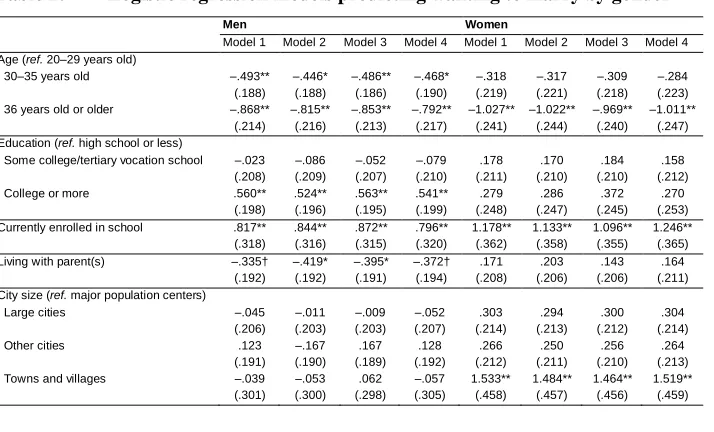
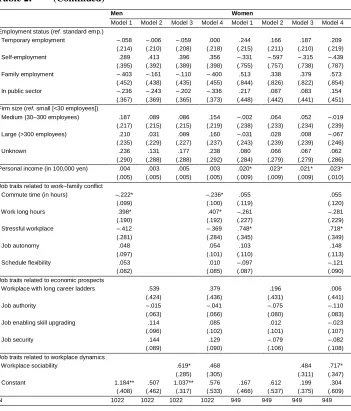
Table 2 presents a series of logistic regression models predicting men’s and women’s intentions to marry one day. We test job features corresponding to the work‒family conflict hypothesis, the economic prospects hypothesis, and the social-relation dynamics hypothesis in Models 1‒3, respectively. We then examine all the work characteristics together in Model 4. Consistent with the argument that work conditions that may cause conflict with future family obligations increase individuals’ likelihood of postponing or even forgoing marriage, Japanese men with long commute times were less likely to want to marry. Nevertheless, working long hours, which is also likely to add to work‒family conflict, is positively associated with men’s wanting to marry. No other job characteristics are associated with men’s intention to marry.
Table 2: Logistic regression models predicting wanting to marry by gender
Men Women
Model 1 Model 2 Model 3 Model 4 Model 1 Model 2 Model 3 Model 4 Age (ref.20‒29 years old)
30‒35 years old ‒.493** ‒.446* ‒.486** ‒.468* ‒.318 ‒.317 ‒.309 ‒.284 (.188) (.188) (.186) (.190) (.219) (.221) (.218) (.223) 36 years old or older ‒.868** ‒.815** ‒.853** ‒.792** ‒1.027** ‒1.022** ‒.969** ‒1.011**
(.214) (.216) (.213) (.217) (.241) (.244) (.240) (.247) Education (ref.high school or less)
Some college/tertiary vocation school ‒.023 ‒.086 ‒.052 ‒.079 .178 .170 .184 .158 (.208) (.209) (.207) (.210) (.211) (.210) (.210) (.212) College or more .560** .524** .563** .541** .279 .286 .372 .270
(.198) (.196) (.195) (.199) (.248) (.247) (.245) (.253) Currently enrolled in school .817** .844** .872** .796** 1.178** 1.133** 1.096** 1.246**
(.318) (.316) (.315) (.320) (.362) (.358) (.355) (.365) Living with parent(s) ‒.335† ‒.419* ‒.395* ‒.372† .171 .203 .143 .164
(.192) (.192) (.191) (.194) (.208) (.206) (.206) (.211) City size (ref.major population centers)
Large cities ‒.045 ‒.011 ‒.009 ‒.052 .303 .294 .300 .304 (.206) (.203) (.203) (.207) (.214) (.213) (.212) (.214) Other cities .123 ‒.167 .167 .128 .266 .250 .256 .264
(.191) (.190) (.189) (.192) (.212) (.211) (.210) (.213) Towns and villages ‒.039 ‒.053 .062 ‒.057 1.533** 1.484** 1.464** 1.519** (.301) (.300) (.298) (.305) (.458) (.457) (.456) (.459)
Table 2: (Continued)
Men Women
Model 1 Model 2 Model 3 Model 4 Model 1 Model 2 Model 3 Model 4 Employment status (ref. standard emp.)
Temporary employment ‒.058 ‒.006 ‒.059 .000 .244 .166 .187 .209 (.214) (.210) (.208) (.218) (.215) (.211) (.210) (.219) Self-employment .289 .413 .396 .356 ‒.331 ‒.597 ‒.315 ‒.439 (.395) (.392) (.389) (.398) (.755) (.757) (.738) (.787) Family employment ‒.403 ‒.161 ‒.110 ‒.400 .513 .338 .379 .573
(.452) (.438) (.435) (.455) (.844) (.826) (.822) (.854) In public sector ‒.236 ‒.243 ‒.202 ‒.336 .217 .087 .083 .154
(.367) (.369) (.365) (.373) (.448) (.442) (.441) (.451) Firm size (ref.small [<30 employees])
Medium (30‒300 employees) .187 .089 .086 .154 ‒.002 .064 .052 ‒.019 (.217) (.215) (.215) (.219) (.238) (.233) (.234) (.239) Large (>300 employees) .210 .031 .089 .160 ‒.031 .028 .008 ‒.067 (.235) (.229) (.227) (.237) (.243) (.239) (.239) (.246)
Unknown .236 .131 .177 .238 .080 .066 .067 .062
(.290) (.288) (.288) (.292) (.284) (.279) (.279) (.286) Personal income (in 100,000 yen) .004 .003 .005 .003 .020* .023* .021* .023* (.005) (.005) (.005) (.005) (.009) (.009) (.009) (.010) Job traits related to work‒family conflict
Commute time (in hours) ‒.222* ‒.236* .055 .055
(.099) (.100) (.119) (.120)
Work long hours .398* .407* ‒.261 ‒.281
(.190) (.192) (.227) (.229)
Stressful workplace ‒.412 ‒.369 .748* .718*
(.281) (.284) (.345) (.349)
Job autonomy .048 .054 .103 .148
(.097) (.101) (.110) (.113)
Schedule flexibility .053 .010 ‒.097 ‒.121
(.082) (.085) (.087) (.090)
Job traits related to economic prospects
Workplace with long career ladders .539 .379 .196 .006
(.424) (.436) (.431) (.441)
Job authority ‒.015 ‒.041 ‒.075 ‒.110
(.063) (.066) (.080) (.083)
Job enabling skill upgrading .114 .085 .012 ‒.023
(.096) (.102) (.101) (.107)
Job security .144 .129 ‒.079 ‒.082
(.089) (.090) (.106) (.108)
Job traits related to workplace dynamics
Workplace sociability .619* .468 .484 .717*
(.285) (.305) (.311) (.347)
Constant 1.184** .507 1.037** .576 .167 .612 .199 .304 (.408) (.462) (.317) (.533) (.466) (.537) (.375) (.609)
N 1022 1022 1022 1022 949 949 949 949
Note: Numbers in parentheses are standard errors. †p < .10; *p < .05; **p < .01 (two-tailed tests).
provide better career prospects, this result suggests that workplaces that are highly stressful tend to push women into marriage more, as marriage may be considered an alternative to employment. Although no job characteristics that imply a better economic future are significantly associated with women’s intention to marry, Japanese women with higher incomes were found to be more likely to want to marry, in defiance of the conventional wisdom that economic independence leads women to opt out of marriage. Because the job characteristics related to long-term economic prospects are not relevant, the positive association with income might not indicate a shift from the male breadwinner to dual-earner family model, under which women with higher economic potential are more attractive in the marriage market. Perhaps having higher current income increases women’s interest in marriage by enabling them to afford the initial spending associated with marriage (e.g., the cost of finding a new residence), even though they do not expect to provide for the family in the long run. Alternatively, it is possible that never-married women in better-paying workplaces have more opportunities to meet men with higher income potential, making marriage more appealing to them than to low-earning women. Table 2 further shows that women in more sociable work environments were more likely to want to marry one day. Results for Japanese women thus provide support for the social-relation dynamics hypothesis.
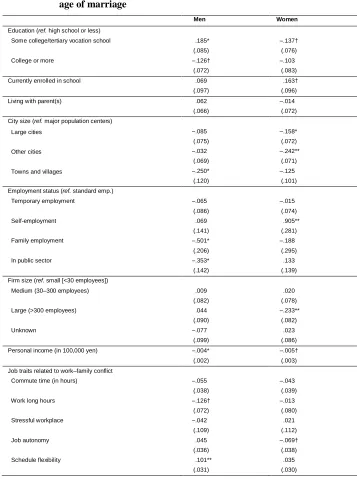
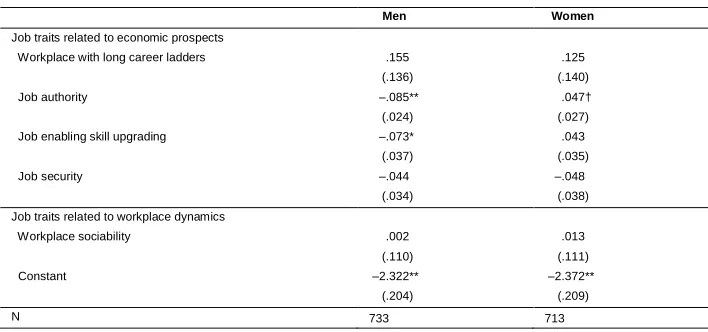
Table 3: Results from negative binomial models predicting years to expected age of marriage
Men Women
Education (ref. high school or less)
Some college/tertiary vocation school .185* ‒.137†
(.085) (.076)
College or more ‒.126† ‒.103
(.072) (.083)
Currently enrolled in school .069 .163†
(.097) (.096)
Living with parent(s) .062 ‒.014
(.066) (.072)
City size (ref. major population centers)
Large cities ‒.085 ‒.158*
(.075) (.072)
Other cities ‒.032 ‒.242**
(.069) (.071)
Towns and villages ‒.250* ‒.125
(.120) (.101)
Employment status (ref. standard emp.)
Temporary employment ‒.065 ‒.015
(.086) (.074)
Self-employment .069 .905**
(.141) (.281)
Family employment ‒.501* ‒.188
(.206) (.295)
In public sector ‒.353* .133
(.142) (.139)
Firm size (ref. small [<30 employees])
Medium (30‒300 employees) .009 .020
(.082) (.078)
Large (>300 employees) .044 ‒.233**
(.090) (.082)
Unknown ‒.077 .023
(.099) (.086)
Personal income (in 100,000 yen) ‒.004* ‒.005†
(.002) (.003)
Job traits related to work‒family conflict
Commute time (in hours) ‒.055 ‒.043
(.038) (.039)
Work long hours ‒.126† ‒.013
(.072) (.080)
Stressful workplace ‒.042 .021
(.109) (.112)
Job autonomy .045 ‒.069†
(.036) (.038)
Schedule flexibility .101** .035
Table 3: (Continued)
Men Women
Job traits related to economic prospects
Workplace with long career ladders .155 .125
(.136) (.140)
Job authority ‒.085** .047†
(.024) (.027)
Job enabling skill upgrading ‒.073* .043
(.037) (.035)
Job security ‒.044 ‒.048
(.034) (.038)
Job traits related to workplace dynamics
Workplace sociability .002 .013
(.110) (.111)
Constant ‒2.322** ‒2.372**
(.204) (.209)
N 733 713
Note: Numbers in parentheses are standard errors. †p < .10; *p < .05; **p < .01 (two-tailed tests).
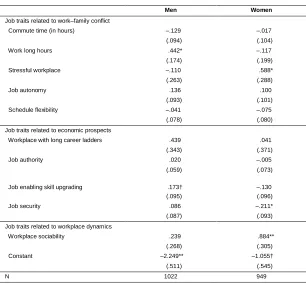
Table 4: Results from logistic regressions predicting actively seeking marriage partners
Men Women
Age (ref.20‒29 years old)
30‒35 years old .138 .458*
(.174) (.196)
36 years old or older .278 .857**
(.208) (.231)
Education (ref. high school or less)
Some college/tertiary vocation school ‒.102 .628**
(.212) (.206)
College or more .280 .572*
(.179) (.231)
Currently enrolled in school .077 .394
(.278) (.311)
Living with parent(s) .037 .251
(.167) (.196)
City size (ref. major population centers)
Large cities .047 ‒.425*
(.188) (.199)
Other cities .179 ‒.093
(.171) (.190)
Towns and villages ‒.856* ‒.503
(.336) (.306)
Employment status (ref. standard emp.)
Temporary employment ‒.084 ‒.309
(.210) (.198)
Self-employment ‒.078 ‒.401
(.365) (.766)
Family employment ‒.233 .741
(.473) (.712)
In public sector ‒.082 ‒.360
(.330) (.360)
Firm size (ref. small [<30 employees])
Medium (30‒300 employees) .163 .078
(.207) (.221)
Large (>300 employees) .053 .477*
(.220) (.219)
Unknown .016 .223
(.272) (.259)
Personal income (in 100,000 yen) .004 ‒.001
Table 4: (Continued)
Men Women
Job traits related to work‒family conflict
Commute time (in hours) ‒.129 ‒.017
(.094) (.104)
Work long hours .442* ‒.117
(.174) (.199)
Stressful workplace ‒.110 .588*
(.263) (.288)
Job autonomy .136 .100
(.093) (.101)
Schedule flexibility ‒.041 ‒.075
(.078) (.080)
Job traits related to economic prospects
Workplace with long career ladders .439 .041
(.343) (.371)
Job authority .020 ‒.005
(.059) (.073)
Job enabling skill upgrading .173† ‒.130
(.095) (.096)
Job security .086 ‒.211*
(.087) (.093)
Job traits related to workplace dynamics
Workplace sociability .239 .884**
(.268) (.305)
Constant ‒2.249** ‒1.055†
(.511) (.545)
N 1022 949
Note: Numbers in parentheses are standard errors. †p < .10; *p < .05; **p < .01 (two-tailed tests).
Similar to the previous finding regarding the intention to marry, Japanese women holding jobs in stressful workplaces were found to be more likely to actively engage in partner-seeking activities. This association further supports the argument that exceedingly stressful workplaces lead women to desire marriage more, as they view marriage as a means of escaping unpleasant work environments. The result that women with greater job security were less likely to seek romantic partners actively is similarly consistent with this view. Women with insecure jobs were especially likely to seek marriage as an alternative. In addition, the model indicates that women working in relatively sociable settings were more likely to actively pursue marriage partners. This finding once again confirms the positive link between workplace sociability and marriage desires for women.
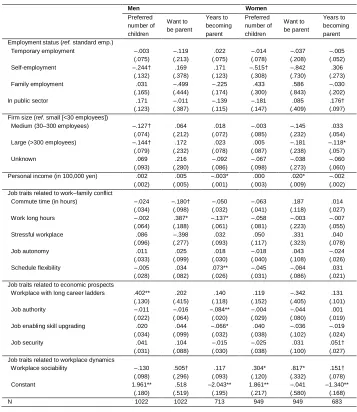
models include the same controls as in the ones presented above, but we omit some of the coefficients in the table to conserve space. In the models predicting at what age respondents would like to enter parenthood (e.g., years to becoming parents), we also control for the preferred number of children, because individuals’, especially women’s intended age for entering parenthood should be inversely related to the total number of children they would like to have.
Starting from the first model in Table 5, working in a place with long career ladders is strongly associated with men’s preferred number of children. This finding is consistent with the hypothesis that work conditions that imply better career prospects help increase men’s desire to have children. The result that men with greater job authority wished to become parents sooner (i.e., desiring fewer years from now to parenthood), as shown in the model predicting the expected number of years to entering parenthood, provides additional support for the same hypothesis. In addition, the second and third models in the table indicate that men who worked long hours were more likely to want to have children one day and that they wished to enter parenthood at an earlier age, respectively. Thus, for Japanese men, working long hours is associated with not only stronger marriage intentions, but also greater eagerness to take on parental roles, even though such hours would reduce the time available for child rearing. Moreover, and echoing the way in which schedule flexibility is linked to men’s expected timing of marriage, men whose jobs allow greater flexibility tended to want to delay parenthood more. This finding provides further evidence for our speculation that the poorer economic prospects of men who are able to reduce working hours or interrupt employment for family reasons contribute to their desire to postpone family formation.
Table 5: Partial results from regression models predicting various fertility intentions Men Women Preferred number of children Want to be parent Years to becoming parent Preferred number of children Want to be parent Years to becoming parent Employment status (ref.standard emp.)
Temporary employment ‒.003 ‒.119 .022 ‒.014 ‒.037 ‒.005 (.075) (.213) (.075) (.078) (.208) (.052) Self-employment ‒.244† .169 .171 ‒.515† ‒.842 .306
(.132) (.378) (.123) (.308) (.730) (.273) Family employment .031 ‒.499 ‒.225 .433 .586 ‒.030 (.165) (.444) (.174) (.300) (.843) (.202)
In public sector .171 ‒.011 ‒.139 ‒.181 .085 .176†
(.123) (.387) (.115) (.147) (.409) (.097) Firm size (ref.small [<30 employees])
Medium (30‒300 employees) ‒.127† .064 .018 ‒.003 ‒.145 .033 (.074) (.212) (.072) (.085) (.232) (.054) Large (>300 employees) ‒.144† .172 .023 .005 ‒.181 ‒.118* (.079) (.232) (.078) (.087) (.238) (.057)
Unknown .069 .216 ‒.092 ‒.067 ‒.038 ‒.060
(.093) (.280) (.086) (.098) (.273) (.060) Personal income (in 100,000 yen) .002 .005 ‒.003* .000 .020* ‒.002 (.002) (.005) (.001) (.003) (.009) (.002) Job traits related to work‒family conflict
Commute time (in hours) ‒.024 ‒.180† ‒.050 ‒.063 .187 .014 (.034) (.098) (.032) (.041) (.118) (.027) Work long hours ‒.002 .387* ‒.137* ‒.058 ‒.003 ‒.007 (.064) (.188) (.061) (.081) (.223) (.055)
Stressful workplace .086 ‒.398 .032 .050 .331 .040
(.096) (.277) (.093) (.117) (.323) (.078)
Job autonomy .011 .025 .018 ‒.018 .043 ‒.024
(.033) (.099) (.030) (.040) (.108) (.026) Schedule flexibility ‒.005 .034 .073** ‒.045 ‒.084 .031
(.028) (.082) (.026) (.031) (.086) (.021) Job traits related to economic prospects
Workplace with long career ladders .402** .202 .140 .119 ‒.342 .131 (.130) (.415) (.118) (.152) (.405) (.101) Job authority ‒.011 ‒.016 ‒.084** ‒.004 ‒.044 .001
(.022) (.064) (.020) (.029) (.080) (.019) Job enabling skill upgrading .020 .044 ‒.066* .040 ‒.036 ‒.019 (.034) (.099) (.032) (.038) (.102) (.024)
Job security .041 .104 ‒.015 ‒.025 .031 .051†
(.031) (.088) (.030) (.038) (.100) (.027) Job traits related to workplace dynamics
Workplace sociability ‒.130 .505† .117 .304* .817* .151† (.098) (.296) (.093) (.120) (.332) (.078) Constant 1.961** .518 ‒2.043** 1.861** ‒.041 ‒1.340**
(.180) (.519) (.195) (.217) (.580) (.168)
N 1022 1022 713 949 949 683
Note: Numbers in parentheses are standard errors. Ordinary least squares regression models are estimated for the preferred number of children, and logistic regression models are used for wanting to be a parent. For both sets of models we control for age, education, school enrollment, whether living with parents, and size of the residential city. The models for years to becoming a parent, estimated with negative binomial regressions, control for education, school enrollment, living with parents, size of the residential city, and preferred number of children, while including a function of age as the exposure variable.
Conditional on wanting to become parents, women working in more sociable environments were only marginally different from others regarding their expected timing of entering parenthood. It is somewhat surprising, however, that the coefficient for workplace sociability is positive in the model predicting years to the expected age of becoming parents, which suggests an intention to delay parenthood. Although this coefficient is not significant at the .05 alpha level, because its sign is inconsistent with the other results for workplace sociability, we conducted an additional analysis to understand this result. Specifically, we fitted a multinomial logit model with all never-married, childless women in the sample, using a categorical variable to capture whether they wanted to transition to parenthood: 1) in 0–3 years, 2) in 4‒10 years, and 3) in 11 years or later.9 We found that although women who worked in a more sociable setting were less likely to want to become parents within the next three years, they were no more likely to want to have a child in 11 or more years than in 4‒10 years. The results were similar when we divided the categories differently: Beyond their preference to avoid having children in the very near future, women working in more sociable environments were not more inclined to postpone parenthood. In this sense, the finding about workplace sociability and expected timing of motherhood does not necessarily contradict the earlier results linking workplace sociability to greater fertility desires. Workplaces that are more collaborative and cohesive are likely to generate more social rewards for workers. Because the transition to parenthood often leads to Japanese women leaving their jobs, those who find their workplaces socially rewarding are likely to want to postpone this transition for some time, even if they fully expect to become parents and to have relatively more children one day.
5. Discussion and conclusions
Despite the fact that jobs and workplaces constitute a major part of singles’ lives, previous research rarely investigates how work characteristics are related to their life-course plans. To our knowledge, this study is the first to comprehensively examine three possible mechanisms ‒ work conditions as indicators of potential work‒family conflict, as signals of economic prospects, and as determinants of workplace social dynamics ‒ that link work conditions to never-married men’s and women’s family intentions. We find considerable gender differences in which job characteristics are relevant to childless singles’ marriage and childbearing intentions. For Japanese men, several job characteristics that have implications for future economic well-being are
9
important. Those whose jobs have higher levels of authority and enable skill upgrading wish to enter both marriage and parenthood sooner, and those employed in organizations with relatively long career ladders prefer a larger family size. Conversely, job attributes associated with economic prospects are hardly relevant to Japanese women’s family intentions. Instead, women working in more collaborative and sociable environments are more likely to want to marry, to pursue marriage partners actively, and to want to become parents, and they have a higher preferred number of children. The findings for women thus support the hypothesis that childless singles have stronger family desires when their workplaces compel them to interact more with coworkers, who are likely to be in more advanced life-course stages than those with whom they typically socialize.
Although our findings for women are consistent with the argument that exposure to senior coworkers in more sociable workplaces encourages childless singles to want to emulate the former’s family experiences, we must acknowledge that we lack information about those with whom respondents in such workplaces specifically interacted.10 In an additional analysis, however, we replaced the workplace sociability index in the models with the report of senior workers frequently giving advice to junior ones – the only item directly indicating interactions between young and older workers among those used to construct workplace sociability. We found this single item to be consistently linked to stronger marriage and fertility desires among women, and it appeared to be more strongly associated with these desires than other items used to construct workplace sociability. These results, along with previous ethnographic evidence that social interactions in Japanese firms tend to involve workers of different ages and job tenures (Graham 2003; Peltokorpi 2013), suggest that exposure to senior workers is the mechanism for the positive link between workplace sociability and family intentions for single women in Japan.
Because we do not know women’s family intentions before they entered relatively sociable workplaces, one could also interpret our findings as indicating that women with stronger family desires simply chose more sociable workplaces for the purpose of having more opportunities to meet marriage partners. To address this possibility, we fitted additional models, adding respondents’ reported opportunities to meet people they could potentially date. We found the associations between workplace sociability and family intentions to be similar even after taking into account the opportunities for meeting dating partners. We also found that those working in more sociable environments were more likely to be in their first jobs, which individuals are likely to choose without considering future family plans. Despite these findings, there might still be other unobserved factors simultaneously shaping women’s selection into sociable
10
workplaces and family intentions. Hence, we conducted a further analysis using bivariate probit models to test the existence of such unobserved factors.11 The results rejected the need to correlate the error terms for the equation predicting being in a highly sociable workplace and for the equation predicting a strong family intention, suggesting that the results presented are not biased by unobserved characteristics that account for both Japanese women’s workplace sociability and family intentions.
Results from this study also indicate that job characteristics causing increased work‒family conflict are associated with some variations in marriage and family intentions in Japan, but most of the findings contradict the work‒family conflict hypothesis. Among men, those with extended working hours generally have a greater desire for marriage and children, and those with schedule flexibility wish to delay marriage and parenthood more. We suggest that both working long hours and being unable to take time off for family reasons can indicate that individuals’ positions are relatively important in the workplace, even though these characteristics also tend to increase work‒family conflict. In this sense, the findings for long working hours and schedule flexibility corroborate the economic prospects hypothesis for men. Ultimately, Japanese men are concerned about whether their jobs will enable them to be good providers for their future families. Whether a job will allow a balance between their work and family lives appears to play only a minor role in men’s considerations about marriage and parenthood. Moreover, we show that, rather than having the same intentions as other men but encountering greater difficulty finding marriage partners, Japanese men with poorer career prospects actually have lower family desires.
Our findings for Japanese women also fail to support the work‒family conflict hypothesis. Contrary to the hypothesis, women in understaffed and stressful workplaces tend to seek marriage partners actively, and they appear to desire marriage more. Such results suggest that Japanese women continue to view marriage as a way to exit their often unpleasant work environments. Rather than avoiding marriage until they land jobs that are more compatible with family obligations, Japanese women are more eager to marry ‒ so that they can legitimately exit the labor force ‒ when their jobs are excessively demanding. Because the desire for marriage among women working in stressful environments might have more to do with their interest in escaping these conditions than with their appreciation of marriage and children, it is not surprising that such environments are not associated with women’s parenthood intentions at all.
Because the data used in this study is cross-sectional, we are limited in our ability to make definitive causal inferences. We have therefore been cautious in interpreting the findings. We should nevertheless note that our additional analysis that treated job
11 These models examined Japanese women’s likelihood of being in a highly sociable workplace and of
characteristics as endogenous suggested that alternative explanations are unlikely.12 It also seems unreasonable to interpret, for example, the positive association between being in stressful work environments and women’s marriage desires as indicating that women with stronger family intentions tend to choose jobs in such environments. Moreover, we should keep in mind that young adults may not take into account their family plans in considering jobs until they approach the typical age of marriage. At that point, however, they might not be able to move to jobs more compatible with their family intentions as job opportunities have been highly limited for young Japanese, especially those who are not new graduates, in the past few decades (Genda 2003; Genda, Kondo, and Ohta 2010).13
Beyond offering a comprehensive analysis of how work conditions are associated with family intentions, this study makes a few general contributions to our understanding of marriage and fertility patterns in industrialized countries. First, by linking workplace sociability to women’s fertility plans, this research adds to the previous literature that emphasizes the important influence of social relations on childbearing and other family decisions in advanced economies (Astone et al. 1999; Bongaarts and Watkins 1996; Rindfuss et al. 2004; Schoen et al. 1997), where the economic values of marriage and children have been diminishing. The generally greater relevance of workplace sociability to Japanese women’s childbearing intentions, compared to other work conditions, underlines the importance of social dynamics in explaining fertility intentions and behavior in lowest-low fertility countries. Moreover, this study provides new evidence regarding the channels through which social relations shape individuals’ ideas and plans about marriage and parenthood. Not only are workplaces environments in which young adults spend much of their time, they are also venues for different people to exert influences on young adults’ family beliefs and intentions.
Second, the striking gender differences in how work conditions are linked to marriage and fertility intentions suggest that men and women differ greatly in their formation of family plans. For men, economic concerns appear to dominate their considerations about marriage and parenthood. By contrast, social influences – at least social influences experienced at work – are more relevant to women’s interest in marriage and children. Because our study focuses strictly on job and workplace characteristics, we are unable to conclude whether economic factors are generally more
12 We fitted a series of bivariate probit models similar to those described in footnote 9, treating each job
characteristic with a significant coefficient in the models presented in Tables 2‒5 as an endogenous variable in separate models. For all these models, the results rejected that the error term for the equation predicting having a given work characteristic was correlated with the main equation’s error term, suggesting that our estimates are not biased by endogeneity caused by either reverse causality or other sources.
13
critical for men’s marriage and family intentions than they are for women’s; and whether social factors matter more to women, in the same range of intentions, than they do to men. Nevertheless, findings from this study have important implications for future studies examining gender differences in the formation of marriage and fertility plans.
Finally, because those advanced economies in which work entails a greater conflict with family obligations often have lower fertility rates (Rindfuss and Brewster 1996), many consider enhancing work‒family compatibility as a likely means to promote childbearing in lowest-low fertility countries (e.g., Boling 2008). The fact that various job characteristics conducive to work‒family conflict are positively associated with young Japanese adults’ desire for marriage or parenthood suggests that the relationship between family-irresponsive work conditions and fertility behavior is a complex one. Although increasing work‒family compatibility is important in its own right, the example of Japan suggests that policies aiming to curb work hours or increase schedule flexibility might not help encourage childless singles to enter marriage and parenthood. So long as the society continues to endorse the male breadwinner model, and marriage is still seen as an alternative to employment for women, relatively family-friendly work conditions might not be able to entice men or women to enter marriage and parenthood.