Permanent WRAP URL:
http://wrap.warwick.ac.uk/112822/
Copyright and reuse:
This thesis is made available online and is protected by original copyright. Please scroll down to view the document itself.
Please refer to the repository record for this item for information to help you to cite it. Our policy information is available from the repository home page.
An inquiry into the development of intercultural
learning in primary schools using applied
Scriptural Reasoning principles
Anne Moseley
A thesis submitted in fulfilment of the
requirements for the degree of Doctor of
Philosophy in Education
University of Warwick
Centre for Education Studies
Contents
Acknowledgement ... 11
Declaration ... 13
Abstract ... 14
1 Introduction ... 16
1.1 Introduction: Initial Motivation ... 16
1.2 Research Questions ... 17
1.3 The Importance of this Research ... 19
1.4 Chapter Overviews ... 20
1.5 Summary of the Research Conducted ... 22
2 Scriptural Reasoning ... 24
2.1 What is Scriptural Reasoning? ... 24
2.2 Scriptural Reasoning Beginnings. ... 25
2.3 Scriptural Reasoning and its Theological Position ... 26
2.4 Scriptural Reasoning and its Philosophical Position... 28
2.5 Principles of Scriptural Reasoning ... 31
2.5.1 Principle 1 - Learning and Understanding ... 32
2.5.3 Principle 3 – Building Friendships ... 36
2.6 Using Scriptural Reasoning ... 39
2.7 Current Empirical Work ... 40
2.8 Summary... 42
3 Religious Education and the Use of Sacred Texts ... 44
3.1 Sacred Texts – Past Use in Schools ... 44
3.2 Sacred Texts – Current Use in Schools ... 46
3.3 Sacred Texts - Current Reports and Findings ... 49
3.4 Sacred Texts – Developmental Issues... 50
3.5 Sacred Texts – Religious Integrity ... 53
3.6 Religious Education and Narratival Pedagogy ... 55
3.7 Religious Education and Dialogical Pedagogy ... 59
3.8 Religious Education and Interpretative pedagogy ... 63
3.9 Summary... 63
4 Intercultural Communicative Competence ... 65
4.1 Introduction ... 65
4.2 Intercultural Communicative Competence ... 66
4.3 Historical Context in the UK ... 70
4.4 Religious Education and Intercultural Communicative Competence ... 74
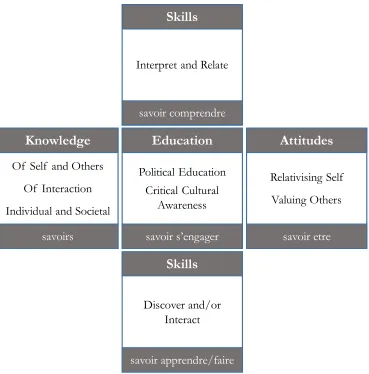
4.6 Outline of Byram’s Model ... 76
4.7 Formative Influences ... 79
4.8 Developmental Issues ... 81
4.9 Intercultural Assessment Issues ... 84
4.10 Autobiography of Intercultural Encounters ... 86
4.11 Personal Experience with ICC in Primary Schools. ... 89
4.12 Summary... 91
5 Methodology ... 92
5.1 Introduction ... 92
5.2 Methodological Position ... 93
5.3 Action Research Methodological Principles ... 95
5.3.1 Action Research Integrates Research and Action ... 96
5.3.2 Action Research is Conducted in Collaborative Partnership ... 97
5.3.3 Action Research is both Theoretical and Practical... 99
5.3.4 Action Research Starts from a Vision of Social Transformation. ... 101
5.3.5 Action Research Requires a High Level of Reflexivity ... 101
5.3.6 Action Research Involves Engagement with Existing Knowledge ... 102
5.4 Action Research Design – Part 1 ... 103
The Intervention – Synthesising Theory into Practice ... 103
5.5.1 Building a Team - School Participants ... 107
5.5.2 Building a Team - Faith Representatives ... 108
5.5.3 Before the Intervention - Pilot Scheme July 2015... 110
5.5.4 Before the Intervention - Training for AR Team – July 2015 ... 110
5.5.5 Before the Intervention - Review of Current School Documents ... 111
5.5.6 AR1 – St Village School ... 111
5.5.7 AR2 – Smalltown Community School ... 112
5.5.8 AR3 – Middlecity Academy... 113
5.6 The Story Tent Intervention ... 113
5.6.1 Introduction to the Day ... 114
5.6.2 Session 1 ... 114
5.6.3 Session 2 ... 115
5.6.4 Session 3 ... 116
5.6.5 Session 4 ... 117
5.7 Action Research Design -Part 2 ... 117
Story Tent Evaluation and Development ... 117
5.7.1 First Iteration ... 118
5.7.2 Second Iteration ... 119
5.8 Methods ... 120
5.8.2 Pupil Reflexive Questionnaire ... 121
5.8.3 Observed Group Work ... 122
5.8.4 Semi-Structured Pupil Interview – AIE ... 122
5.8.5 Interviews – Team Observations ... 123
5.9 Development of a Coding Structure ... 124
5.10 Case Study – ICC Portfolio ... 133
5.11 Ethical Considerations ... 134
5.12 Summary... 135
6 Findings from the Intervention ... 136
6.1 Introduction ... 136
6.2 Pilot Intervention... 137
6.2.1 Setting... 137
6.2.2 Trial Questionnaire ... 137
6.2.3 Trial Self-Assessment Sheet ... 138
6.2.4 Trial Reflections ... 139
6.2.5 Trial Adult Reflections ... 139
6.2.6 Data Collection Revisions ... 140
6.3 First Action Research Intervention – The Story of Noah ... 141
6.3.1 1AR1: First Intervention, St Village School ... 141
6.3.3 1AR3: First Intervention, Middlecity Academy ... 142
6.3.4 Data Analysis of Self-Assessment - Intervention 1 ... 142
6.3.5 Data Analysis from Group Findings - Intervention 1 ... 144
6.3.6 Data Analysis from Adult Observations - Intervention 1 ... 148
6.3.7 Data Analysis from AIE Interviews - Intervention 1 ... 153
6.4 Second Action Research Intervention – The Story of Creation... 156
6.4.1 2AR1: Second Intervention, St Village School ... 156
6.4.2 2AR2: Second Intervention, Smalltown Community School ... 157
6.4.3 2AR3: Second Intervention, Middlecity Academy ... 157
6.4.4 Data Analysis from Self-Assessment - Intervention 2... 158
6.4.5 Data Analysis from Group Findings - Intervention 2 ... 159
6.4.6 Data Analysis from Adult Observations - Intervention 2 ... 162
6.4.7 Data Analysis from AIE Interview - Intervention 2 ... 169
6.4.8 Trends and Questions Coming out of the Data ... 171
6.5 Summary of Findings ... 172
6.5.1 Are some Intercultural Communicative Competence Linked? ... 172
6.5.2 What Part Does Personal Faith Have in ICC?... 173
6.5.3 What Impact Does the School Ethos Have on ICC? ... 173
6.5.4 What Effect Does the Ability to Tolerate Ambiguity Have on ICC? ... 174
7.1 Introduction ... 175
7.2 Attitudes - Valuing Others ... 175
7.2.1 Attitude of Respect (AR) ... 176
7.2.2 Attitude of Openness (AO)... 176
7.2.3 Attitude of Curiosity (AC) ... 183
7.3 Attitudes - Relativising Self ... 187
7.3.1 Tolerating Ambiguity (TA) ... 187
7.3.2 Identity (Id) ... 191
7.3.3 Empathy (EM) ... 196
7.4 Communicative Awareness ... 199
7.4.1 Communicative Awareness Verbal (CAV) ... 202
7.4.2 Communicative Awareness Non-verbal (CAN) ... 206
7.4.3 Communicative Awareness Text (CAT) ... 207
7.5 Discovery and Interaction ... 213
7.5.1 Technical Discoveries (DT) ... 214
7.5.2 Practical Discoveries (DP) ... 217
7.5.3 Emancipatory Discoveries (DE) ... 218
7.6 Interpret and Relate ... 220
7.6.1 Explain (SE) ... 221
7.6.3 Interpret (SI) ... 224
7.7 Critical Cultural Awareness (CCA) ... 227
7.8 Research Team Reflections ... 229
7.9 Summary of Findings ... 232
8 A Discussion of Findings and Next Steps ... 235
8.1 Primary Findings ... 236
8.1.1 The Use of the Story Format was Important to the Success of the Intervention ... 236
8.1.2 SR’s Style of Dialogue is Distinctive in its Ability to Promote ICC ... 239
8.1.3 The Use of Drama is a Powerful Motivator for Practising ICC ... 241
8.2 Secondary Findings ... 243
8.2.1 There is a Cognitive Hierarchy within the ICC, Relating to Skills ... 243
8.2.2 There is an Interactional Hierarchy within the ICC, Relating to Attitudes 246 8.2.3 Strong Religious Identity Correlates with both Low and High ICC ... 248
8.2.4 The Story Tent Intervention Provided a Meaningful Encounter for the Research Team as well as the Pupils ... 250
8.3 Summary of Findings ... 252
9 Conclusions ... 254
9.1 Strengths and Limitations of the Research. ... 254
9.2.1 Opportunities for Future Story Tent Interventions ... 256
9.2.2 Opportunities for Future Research ... 257
10 References ... 259
Appendix A: Assessment Planning ... 268
Appendix B: First Intervention: Sample Teaching Material ... 269
Appendix C: First Intervention: Sample Self-Assessment. ... 274
Appendix D: Second Intervention: Sample Sorting Activity ... 276
Appendix E: AIE Structured Interview Outline ... 277
Appendix F: Case study data information ... 283
Appendix G: Lego Representation of Case Study Pupils ... 284
Appendix H: AIE Transcript Coding ... 285
Appendix I: Research Team ... 286
Appendix J: Rules for Dialogue ... 287
Appendix K: ICC Skills and Attitudes ... 287
Tables and Figures
Table 1 - Factors in Intercultural Communication (Byram, 1997: 34) ... 77
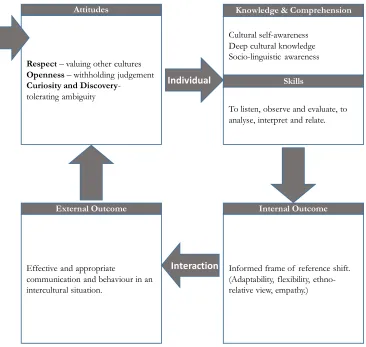
Table 2 - Pyramid Model of Intercultural Communicative Competence (as redrawn by Deardorff) (Deardorff, 2006: 254) ... 85
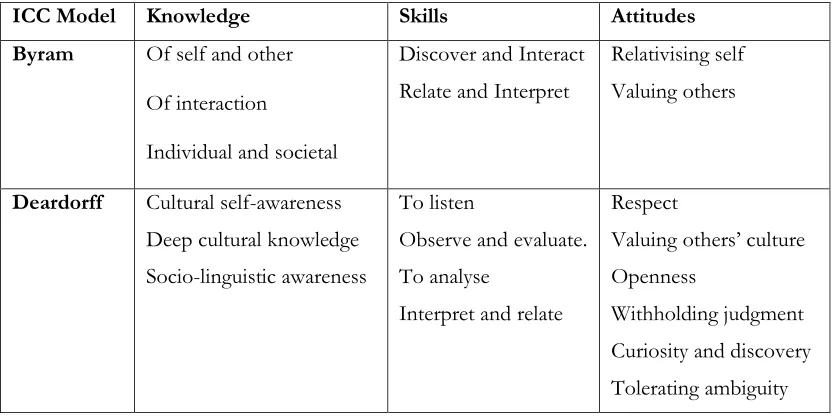
Table 3 - Comparison of ICC outlined by Byram and Deardorff ... 86
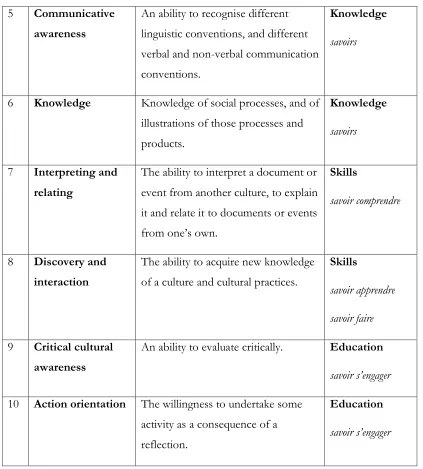
Table 4 - Intercultural competences outlined in the AIE (Council of Europe, 2009) ... 88
Table 5 – Action Research Team ... 109
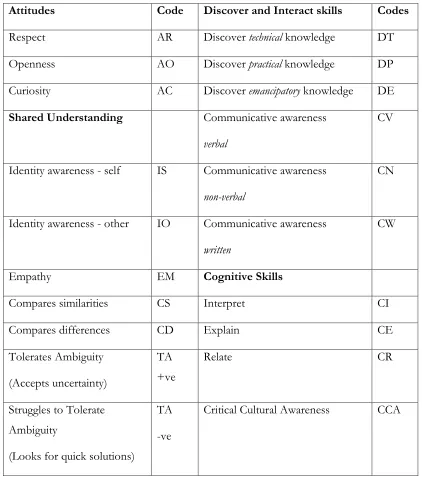
Table 6 - First set of codes applied to the AIE interviews ... 126
Table 7- Second set of codes applied to the AIE interviews ... 129
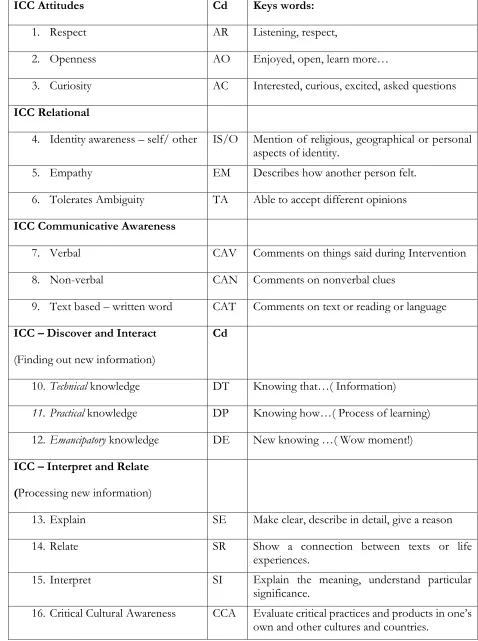
Table 8 - Third set of codes applied to the AIE interviews ... 132
Table 9 – Self-assessment summary from 1AR ... 143
Table 10 - 1AR Coding data from group 3 session transcripts ... 145
Table 11 – 1AR Coding data from adult observation transcripts ... 149
Table 12 - 1AR Coding data from AIE transcripts ... 154
Table 13 – Self-assessment summary from 2AR ... 158
Table 14 - 2AR Coding data from group 3 session transcripts ... 159
Table 15 - 2AR Coding data from adult observation transcripts ... 162
Table 16 - 2AR Coding data from AIE transcripts ... 169
A
CKNOWLEDGEMENTThis research would not have been possible without the help and support of many
people and organisations. I would like to recognise and thank Culham St Gabriel’s Trust and the Hockerill Foundation for their financial support of this research. I would like to thank my supervisor, Julia Ipgrave, for her guidance and support throughout this
research project, and whose insights I have valued enormously both at a professional and personal level. I would also like to acknowledge the advice and work of Michael
Hammond and all those at the Centre for Educational Studies. In addition, I would like to thank Jane Bates whose inspirational school leadership opened my eyes to the world of Intercultural Communication, and Sarah Snyder whose work with Scriptural
Reasoning triggered the train of thought behind this research back in 2012.
I would especially like to thank the schools who were willing to open their doors and engage with the research process in such a positive way, and all the pupils who contributed so wholeheartedly and whose engagement led to many interesting new insights. Those adults who participated in the Action Research program in the various schools are deserving of particular thanks by name: Nadiya Takolia for her support in developing the teaching material; Angela Brodbeck for her faithful administrative support; Asima Iqbal, Hannah Skolnick, Habir Bal, Henry Mpako, and Bernardo Herandez for sharing their stories and insights with the pupils; the class teachers Tracy Butcher, Ali McLester, Charlotte Stratton, and Aysha Sultana who provided unique insights into the teaching and learning process; and finally to Alison Struthers who acted as an outside observer. I have enjoyed working with these remarkable people and I am so thankful for their time and insights.
I have had as a result of this research journey. I would like to recognise the contribution of Brian and Peggy Woolnough, my parents, who provided a home full of global visitors and outward looking perspectives and to my children Abbie and Ben Moseley who have encouraged and supported me over the past five years through this intensive process. Finally, my particular thanks go to my husband David Moseley who has always believed I was capable of doing this research and whose faithful, loving, patient support has
encouraged me through to the finishing line. Anne Moseley
D
ECLARATIONA
BSTRACTThis thesis explores the possibility of applying Scriptural Reasoning (SR) principles for promoting Intercultural Communicative Competence (ICC) in primary schools. It used storytelling and interfaith dialogue to encourage pupils to exercise these competences in classroom settings.
It takes its philosophical position from the work of Ricoeur and combines a
phenomenological and interpretive approach to Religious Education (RE) to develop pupils’understanding of both the “other” and the “self.” From this theoretical position, an age-appropriate intervention was developed based on the principles of Scriptural Reasoning in collaboration with the Cambridge Interfaith Program (CIP). The resulting
“Story Tent” themed day built on the established work of Julia Ipgrave’s dialogic and
Esther Reed’s narrative approach to religious education.
The underpinning work utilised Action Research (AR) methodology through a cyclical approach which took place over two iterative cycles in three different schools, each with its own distinctively-different religious ethos and demographic make-up. It was unusual in combining the contributions not only of teachers and researcher but also faith representatives from local communities. Data was collected through pupil self-assessments, group work, and research team interviews during the Story Tent
Intervention day. Follow-up interviews were completed with a selection of pupils using a semi-structured interview – The Autobiography of Intercultural Encounter (AIE). The data was combined to produce pupil case study portfolios. ATLAS.ti was used to support the coding process and analysis of the data.
provided an environment where pupils and adults could explore and exercise intercultural communication. The secondary findings indicate that the skills and attitudinal competences outlined by Michael Byram seemed to lie within a hierarchy, both cognitively and interactionally. There was evidence which suggested that pupils with a strong sense of identity and were also able to tolerate ambiguity demonstrated a range of intercultural competences including critical cultural awareness. Finally, the personal religious identity of the pupils also had an impact on the pupils’ responses to the
1
I
NTRODUCTION1.1
Introduction: Initial Motivation
This thesis grew out of my experiences as a teacher of Religious Education in primary schools and my personal interest in interfaith dialogue. As a primary teacher I had been involved in developing a global citizenship (DCSF, 2007) curriculum in response to government requirements to promote social cohesion and global citizenship. As part of this development and with the support of the Bradford School Linking Network (Cowie and Henry, 2007) I developed an exchange partnership with a school from a
neighbouring city. I was keen to explore whether this Intervention would enable the pupils to develop Intercultural Communicative Competence as outlined by the Council of Europe (Council of Europe, 2008). My Masters research investigated the impact of this partnership over the period of a year. Through analysis of their interviews, I became aware of the readiness of primary aged pupils to engage with and learn from those with different life experiences and backgrounds through the process of structured dialogue (Moseley, 2011).
This thesis draws together my experiences of using dialogue and story within the primary curriculum to create a new Intervention. It explores whether dialogue around faith stories can help children develop the knowledge, skills and attitudes necessary for communication across religious and cultural barriers – an ability based on Intercultural Communicative Competence.
1.2
Research Questions
My research titleis “An inquiry into the development of intercultural learning in primary schools using applied Scriptural Reasoning principles”.
My hypothesis was that Intercultural Communicative Competence could be promoted in primary schools using faith stories delivered by faith representatives through applied Scriptural Reasoning practices.
My aim was to test this hypothesis through practical classroom research. My objectives were:
i) To develop and refine a teaching strategy Intervention that employed an age-appropriate adaptation of Scriptural Reasoning with a view to promoting Intercultural Communicative Competence among primary school children. ii) To measure Intercultural Communicative Competence displayed by the
children during the Intervention against a model currently employed by the Council of Europe's education programmes.
1) What are the possibilities for and challenges to the development of Scriptural Reasoning strategies for promoting Intercultural Communicative Competence? I based my answers to this primary question on three sub-questions, which I explored through reviews of both current thinking and available literature:
1a) What is Scriptural Reasoning and how is it currently practised?
1b) What differences are there between Scriptural Reasoning approaches and the current use of religious stories in primary schools as taught in Religious Education?
1c) What synergy is there between Intercultural Communicative Competence and Scriptural Reasoning to support an exploration of this kind?
Once I had established my rationale, I selected Action Research for my research methodology and applied a two-part process to explore the following preliminary question:
2) How might Scriptural Reasoning practices be adapted to suit the experience, skills and cognitive levels of primary age pupils for them to exercise Intercultural Communicative Competence?
I addressed this question in two stages:
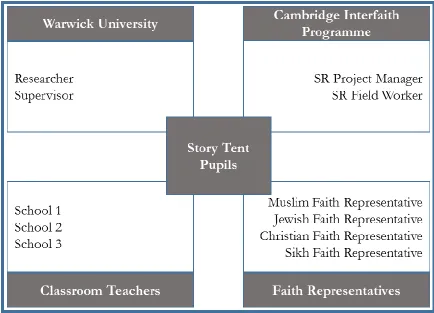
Part 1 – The initial theory was used to synthesise the “STORY TENT”
Intervention in collaboration with members of the Action Research team. Part 2 – The Intervention was iteratively tested and refined in collaboration with teachers, faith representatives and pupils.
and cognitive levels of primary age pupils for them to exercise Intercultural Communicative Competence.
2a) Which Intercultural Communicative Competences (if any) are being demonstrated during the Intervention?
2b) How does the Story Tent Intervention encourage (enable) pupils to exercise Intercultural Communicative Competence?
I considered these questions throughout both iterations of the story tent and across all three of the study schools. I will describe the findings from these activities in Chapters 6 and 7.
1.3
The Importance of this Research
I believe this research is significant as it combines three areas of learning. It builds on the new and growing understanding of Intercultural Communicative Competence in a practical classroom setting. It applies the principles of the academic discipline of textual Scriptural Reasoning to the use of story with young learners. It does this by building on previous well-tested and applied pedagogic styles of teaching Religious Education in a multi-faith context. More specifically, I believe my research is creative and new in that it addresses four areas of learning in which little research has previously been published. I related interfaith work to the demands of the primary curriculum.
I applied authentic sacred texts beyond the use of the Bible.
1.4
Chapter Overviews
Following this introduction, I will use Chapters 2, 3 and 4 to address the three initial sub-questions and present a literature review to explore the current understanding of
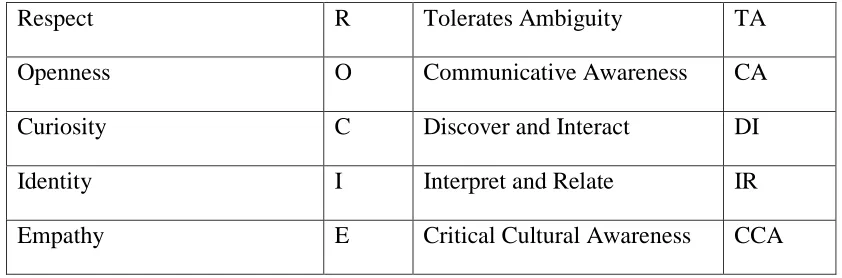
Scriptural Reasoning (SR), Religious Education (RE) and Intercultural Communicative Competence (ICC) respectively. I will outline the Action Research (AR) methodology in Chapter 5 and discuss the findings from the data in Chapters 6 and 7. Chapter 8 draws together the findings that came out of the research and explores possible implications for future research opportunities. The final section draws together a summary of the findings and concluding remarks. Throughout the remainder of this thesis I will use abbreviations for the key research concepts as indicated above.
I will use Chapter 2 to discuss the origins of SR in the early 1990s using the work of Ochs and Ford (1998). I will place SR within a philosophical and theological position and I will also review the current practice of SR across different continents, building
particularly on the work of the Cambridge Interfaith Programme. I will suggest a case for applying the philosophical position of Ricoeur (1992) to the practice of SR in so far as it combines a descriptive phenomenological approach to using sacred texts with an interpretative hermeneutical process. The Chapter will conclude by justifying the proposal that SR can be used in primary school pupils through the exploration of faith stories and the dialogical method of engagement.
build on the phenomenological and interpretative methods of religious education to deliver a new style of reading scriptures together across faith traditions.
Chapter 4 will provide an overview of the current understanding of ICC. I will draw parallels between the work carried out within the UK and the work of the Council of Europe over the last two decades. This will be based upon government and independent reports, and Council of Europe publications, targeting education and community
cohesion. I will apply a wider review of the developing research in the field of ICC across different geographical contexts and highlight some of the complexities within the subject matter. I will also explore some of the theoretical positions of intergroup dynamics, particularly the work of Brewer’s Intergroup Relations (Brewer, 2003), Tajfel’s Social Identity Theory (Tajfel, 1978) and Ting Toomey’s Identity Negotiation Theory (Ting-Toomey, 2015). Finally, the research will be positioned within the European context using material from the Council of Europe; specifically, Byram’s model of ICC which grew out of his teaching experiences of foreign language (Byram, 1997) and the
Autobiography of Intercultural Encounters (AIE) an application which developed theory into practical teaching materials and support the development of ICC (Council of
Europe, 2009).
semi-structured interviews by members of the research team, and how these were analysed using ATLAS.ti and Excel.
In Chapter 6, I will survey the data collected during the Intervention and describe the findings from the research. This will be followed, in Chapter 7, by an analysis of the AIE interviews and a deeper study of the pupils’ responses. This will enable a deeper
exploration of the individual competences that the pupils were demonstrating, alongside the broader impact of the Intervention.
In Chapter 8, I will explore my findings in the light of the literature review and propose a selection of significant primary and secondary findings which came out of the research. I will also make concluding remarks about possible ways forward and implications for future research opportunities.
1.5
Summary of the Research Conducted
This research presents the findings of a systematic investigation into the possibility of developing ICC in primary aged pupils, through the RE curriculum, using comparative faith stories. I carried out a theoretical exploration of existing research and applied this understanding to develop a practical, age-appropriate Intervention that was trialled and tested within the classroom setting.
2
S
CRIPTURALR
EASONINGIn Chapter 2 I will explore some of the possibilities for and challenges to the development of SR strategies for promoting ICC in primary pupils. I will start with a brief description of the practice of SR and review its theological roots. From this foundation, I will consider the underlying theories behind the process of encountering the “other” and position SR
within a philosophical framework. This will be followed by a summary of the intended learning outcomes of SR in the light of current research and a reflection on peer examples of empirical work which demonstrate the possibility of using SR principles to develop intercultural communication.
2.1
What is Scriptural Reasoning?
SR is an approach to studying scriptures in interreligious encounters. Its focus is on developing an understanding of religion, as experienced by faith participants through shared dialogue around sacred texts. It is a practice where people of different faith traditions come together to share their sacred texts in an environment of mutual trust and respect. It is usual to have three different perspectives presented through the
“recitation” or reading of a piece of scripture and a short personal explanation given by the reader to share their interpretation of the meanings embedded in the text. Participants do not need to be formally trained or academic: they act as representatives of a faith
dualistic positions of either religious assimilation or confrontation to find a third approach which facilitated a mutual critical engagement through interreligious dialogue. It placed honest religious dialogue within the public sphere, which encouraged mutual understanding to address societal issues without compromise of beliefs. David Ford has highlighted its potential below:
Secularised societies have generally failed to mobilise religious resources for public wisdom and for peace. Religions have often reacted against them, faced with a choice between assimilation or confrontation. But there is another possibility: mutually critical engagement among all the participants aimed at transforming the public sphere for the better. (Ford and Pecknold, 2006: 20)
This approach extends respectful mutual criticality to the reading and interpretation of sacred texts, offering an opportunity for the authentic use of scriptures to be applied to issues facing communities and wider social institutions. It not only provides
opportunities to compare beliefs but also, through the process of dialogue, to be challenged to review stereotypes and preconceptions of other faith positions.
2.2
Scriptural Reasoning Beginnings.
In the following sections I will briefly review how these traditions have influenced the foundational principles of SR. Ochs’ hermeneutics was not a rationalist textual analysis to
determine objective meaning, yet neither was it a relativistic approach based on subjective personal insight: rather, it presented a middle way of mutual critical engagement.
2.3
Scriptural Reasoning and its Theological Position
SR brought together a collegial approach from four stands of theological development that happened in the early 1990s. These were Jewish textual reasoning, Christian post-liberal text interpretation, a range of less text-based Christian philosophies and theologies, and a Muslim concern for the Quran and for Islam in relation to Western modernity. It was a point in time where there was a mutual desire among the Abrahamic traditions to learn from each other’s religious heritage and apply their own faith
interpretations to a changing world. To more fully understand the theological foundations of SR I will consider firstly the significance of utilising parallel texts as a basis for dialogue, and secondly reflect on the impact that each of the different faith traditions has had on the process of SR.
Within the Jewish faith tradition there has been a widely used rabbinic tradition known as
“Chavruta” which involves the practice of reading the Talmud with another person; to study, analyse, discuss and debate a shared text. Through this textual reasoning process both participants learn from each other as each reader interprets the text and draws out meaning in relation to the other perspective. There is as described in Hebrew a “Miqra”
oras Kepnes (Koshul and Kepnes, 2007) describes it a “calling out” of meaning. To read
In the mid-1990s SR became an interfaith encounter when those from a Christian
tradition, notably David Ford from the Cambridge Interfaith Programme, became part of the discussion, and “Textual Reasoning” became “Scriptural Reasoning”. This seemed a natural extension especially in the light of Vatican 2 as the Catholic Church moved towards reconciliation both ecumenically from within the Christian tradition but also with those from other faiths. The study and interpretation of scripture within small groups has been a familiar part of the Christian tradition and matched well with the style of Textual Reasoning developed by Ochs. However, it was the inclusion of the Quran and the teachings of Islam that marked a significant change in focus.
Scriptural Reasoning was relatively tame and acceptable when its practitioners read and interpreted the Torah and New Testament, but the movement really became bold and
internationally significant when, around seven years ago, it started to include the study of Islamic texts. (Koshul and Kepnes, 2007: 119)
Koshul provides evidence to explain why this was an appropriate extension. Through quotes from the Quran, insights from the historical context, and exploring the Islamic concept of “Iql”he arguedthat joint reading of scriptures with the Quran is an
epistemologically valid practice. There are several references to the Torah and the Bible within the Quran, for example:
And so, if you have misgivings about [the revealing of wisdom] what we have revealed to you, ask those who have been reading scriptures before your time [and you will find that] surely the truth has come to you from your lord. Be not then among hesitators. Ayah (10:94) (Koshul and Kepnes, 2007: 14)
the use of “Aql” (thinking or reasoning) which was used over 36 times in the Quran indicating that this, when properly used, will bless the interpreter with God’s signs in the
world around them. This implied, that within the Quranic narrative there is the possibility of constructive dialogue with people of other faiths. It also opens the
possibility of a three-part dialogue to facilitate what Ford has called “mutual grounds” on
which a mutually enriching exchange can take place.
For some believers scripture is authoritative, with only one interpretation and one true meaning, whilst for others there exists the possibility of working out culturally relevant interpretations through the hermeneutic process. In SR the later position is taken. The text is seen as an authoritative voice embedded in culture and tradition that can be interpreted in different ways, in different cultures, in different periods of time. The dialogue that takes place in SR seeks to help participants to come to a fuller
understanding of different interpretations of text as worked out in the lives of practising believers, whilst respecting difference and engaging in an honest critique of beliefs and values. This recognition of religious diversity and the expansion of practice to be inclusive of different religious practices makes it accessible to all the participants.
2.4
Scriptural Reasoning and its Philosophical Position
It is useful to consider the underlying philosophical position of SR since certain of these perspectives will later be seen to have a direct mapping to particular competences within ICC.
Whilst Ochs and Ford have positioned SR within the philosophical pragmatic paradigm, subsequent scholars have explored its application and practice within the
“bracket out” all previous assumptions. Heidegger (1956) developed his thinking further and applied these principles to the exploration of what it means to be human. He
suggested that, if we want to explore the question of being, we must look at ourselves from within. It is through the dynamic encounters of those from a different cultural background that new skills, attitudes and knowledge are developed together.
This phenomenological approach was the overarching topic of the peer reviewed Journal of Scriptural Reasoning (JSR) in June 2014 suggesting there has been much comparative investigation, but it is the work of Gavin Flood in “The Promise of Scriptural
Reasoning” (Ford and Pecknold, 2006) that has crystallised most eloquently the
applicability of phenomenology to SR. Flood described phenomenology in terms of the descriptive or static phenomenology (beschreibende phanomenologie) but also the dimension of explanatory or generic phenomenology (erklarende phanomenologie) that looked beyond the appearances themselves to the origins in which the appearances arise. He suggests these two dimensions of description and enquiry can and do sit well together. Flood argues that it is possible to apply these principles to SR through a hermeneutic phenomenology.
We clearly need a descriptive phenomenology in order to clarify the relationship of scripture to community but we also need a second level phenomenology or hermeneutical phenomenology that is open to deeper questions of being and truth and the answers presented in scriptural traditions. (Flood, 2006: 160)
Concurring with Heidegger (1949), Ricoeur recognised the importance of understanding the human condition through lived experiences but proposed that this was never fully understood and always mediated through a continuous process of interpretation. He argued that new knowledge was developed through an honest reflection based on a priori understanding, and that this understanding could be developed through a hermeneutical cycle. Each lived experience became open to new and refined insights, a process that was always beginning and never completed. The practice of describing experiences through the lens of interpretation will always, he suggests, be more complex than our descriptions can fully illuminate.
There is a strong case for positioning SR within the philosophical position of Ricoeur which has been linked by other professionals involved with teaching SR. Moyaert (2017), suggests that Ricoeur is best described as the philosopher of dialogue and describes how his work has influenced her approach to teaching SR within a higher education context. Ricoeur, she states, has argued that it is possible to hold in tension both traditional and innovative interpretations of text. This position was described by Kearney who argued a philosophical position which mediated between Gadamer’s backward look at the
hermeneutics of tradition with Habermas’s forward look of communicative action.
Tradition needs innovation in order to sustain itself as a living transmission of meaning capable of being reactive in its inaugural moments, while innovation needs tradition in order to make sense as a form of expression governed by rules. (Kearney, 2004: 6)
reader but also the fact that there is surplus meaning hidden in the text which can be interpreted in more than one way. Consequently, different readers will develop different interpretations.
Ricoeur goes further to suggest that this process of interpretation is enhanced through a challenge to preconceived ideas and highlights the work of Freud and Nietzsche, along with Marx’s critique of false consciousness, as “Masters of Suspicion” who challenge our perceptions and demand a critical analysis of our experiences in order to develop
authentic meaning. This notion of critical hermeneutics also sits well with the principles of SR. It allows different text interpretations where consensus is not the desired
outcome, rather an honest critical analysis of text interpretations as worked out within religious and cultural contexts. Heidegger, Ricoeur and Gadamer suggest that this process can be extended beyond the text to all forms of understanding and can be applied to the written and the spoken expressions of culture.
This philosophical position enables an understanding of scripture which builds on traditional meanings through innovative insights of believers, who seek to interpret their scriptures to be culturally relevant to a changing society. SR does this through the process of dialogue between participants from different faith traditions which add depth of understanding within a shared cultural setting. This shared understanding according to Gadamer (1975) enables a “Fusion of Horizons”, which helps individuals to gain a
deeper but not a perfect understanding.
2.5
Principles of Scriptural Reasoning
There are three core principles of SR as outlined by the Cambridge Interfaith
2.5.1 Principle 1 - Learning and Understanding
SR provides a space for participants to share knowledge and insights from their own faith tradition alongside hearing about other perspectives from different faith traditions.
Participants learn more about other faith communities through what is often at their heart- scripture. In addition to a deep interfaith encounter, SR deepens peoples' understanding of their own scripture and wider tradition. This is because you read your text in the company of someone outside your tradition who may not have read your scripture before, and who sees it through very different lenses to your own. As a result of their questions and reflections, participants'
relationships with their own scripture is enriched. (CIP, 2017)
This approach to interfaith encounters builds understanding of the “other” through the
process of dialogue. Martin Buber (1937), an influential thinker in early SR debates, distinguishes two types of encounter. The first type of encounter applies the attitude of objectification, described as “I-It”, which presents a single mono-logic voice to be heard with one true perspective to be understood. The second type of encounter applied a relational attitude described as “I-Thou”, which presents a dialogical position and assumes two or more voices presenting different perspectives. In these encounters he describes a third space which opens up a space of the “in-between” or place of meeting. Mikhail Bakhtin (1981) also draws a distinction between these two different kinds of dialogue; the first he describes as the authoritative word which is either accepted or rejected, the second the persuasive word worked out together through dialogue or two way communication. He suggests that in this two-way process of dialogue as well as having another physically situated addressee opposite, there is a third or “
super-addressee” who plays the part of a witness to what is being said. The “super-addressee”
plays the part of an imagined perfect listener who is hearing perfectly and can help
the dialogical method of learning and understanding and is explored more in the following Chapters.
Moyaert (2017), an advocate for Scriptural Reasoning, suggests that it is important that in building relations across religious communities we avoid simply generating more
knowledge about religious traditions. Rather she proposes we develop “linguists capable of religious translation”. This concept of religious translation opens up the possibility of developing the pedagogic styles and principles found in SR with those found in the linguistic translation as imbedded in Byram’s model and in the ICC curriculum. 2.5.2 Principle 2 - Exploring Differences
SR is not about finding consensus: rather it is about finding ways to disagree well. It is this aspect of SR that is particularly useful in providing a context where pupils can explore the place of difference
SR allows us not only to appreciate the many things which we share and have in common, but it also draws on differences and teaches participants to appreciate them. There is no pressure to come to an agreement or consensus, and differences and questions are as welcome as similarities and answers. SR may of course find common ground, but it can also be content to improve the quality of our disagreements. (CIP, 2017)
Ochs suggests that western philosophy and modern culture have been rooted in a system that defines the world through binaries, a dualistic worldview that focuses on opposites: for example, hot and cold, black and white, you and me. Through this process of identifying particularities two problems emerge. Either the differences become exaggerated and polarised causing separation, or they can initiate a tendency towards universalism where the particularities are minimised and assimilated. Ochs (2006)
suggests that there is a different way of thinking that builds on the work of Peirce (1931)
which provides a third dimension. A place where hot and cold can allow the concept of warm, black and white can allow the concept of grey.
Although this third-space thinking is an important descriptor for SR, I feel that Ochs’
particular examples are not sufficient, since they invite an interpretation that the third space is one of compromise. I believe that a better illustration would have the encounter of black and white giving rise to a third space of colour, and the encounter of hot with cold leading to the third space of temperature. The third space is most helpfully one that encompasses difference and moves beyond it to some meta-descriptive quality.
The key issue, however, is that when these binaries are put into relationships then new ways of creative interpretation can be experienced together. This is what SR is about, exploring faith in relationship with others.
This place of third space translation or trialogue is highlighted in the work of Kepnes (Koshul and Kepnes, 2007) who proposes that Islam, as the third monotheistic religion, shares a sense of self and other with both Judaism and Christianity. He builds his argument through an exegesis of the story of Abraham, Ishmael and Isaac. In exploring the perspectives of the characters from different faith traditions, he points to the fact
that in all three texts the story of the “other”, the outsider, and the stranger is an important and necessary aspect to gain meaning from the story. In exploring these texts
together, the tension between being “thou” and “we” can be seen worked out in the
narrative. For example, Isaac and Ishmael in Genesis 25:9 are found together burying Abraham. Despite all their differences and painful histories, they can be both brothers grieving the loss of a father and yet fathers of different nations.
Without differences to play against, learning itself is impossible. (Burbules, 1993, :26)
Holding this difference in tension long enough for it to bring about change is often considered counter-intuitive. Much of the learning that takes place in schools is based on consensus and the building of a shared understanding. An individual may start with a hypothesis or idea about the way the world exists or is, but then through the process of dialogue with another may become aware of an antithesis or a different perspective. In Hegelian philosophy it is the process of bringing these two ideas together that a new idea arises through the synthesis of the two ideas. This process seeks to create new truth from conflicting concepts. This is not what SR seeks to do. It is rather a process where the dynamics of difference can be explored through interreligious encounters where
become interreligious translators is possible. In the same way that it is possible to translate a different language she suggests it is possible to translate meaning from a different religion. Whilst those involved in language translation will always be most articulate in the first language and any translation will always be only partial she suggests that this could be transferable into the interreligious context.
For those who see their religious identity as tied to a particular outworking of religion, the approach of SR presents a challenge. For these individuals, religious plurality may seem to be a threat to a set of beliefs and lifestyle which has been spiritually enriching. A natural response is to withdraw into closed communities where the familiar is cherished and the foreign and unfamiliar rejected. Ricoeur calls this “the temptation of identity” or “la déraison identitaire” (Ricoeur, 2004: 81) He previously (Ricouer, 1992) wrote that identity and alterity need not be contrary but rather they can be interconnected. He
suggests that the “shortest route to knowing yourself is through the other.” Moyaert also recognises that through creating a shared narrative diversity and unity can be held
together.
We may construct several narratives about ourselves, told from several points of view that add deeper insights into the question who we are in relation to others. Narrative in this sense is not opposed to difference, change and otherness but rather weaves diversity and unity together. (Moyaert, 2017: 82)
It is through these descriptive encounters that authentic representations of identity can be maintained whilst understanding another viewpoint. Through this type of dialogue deeper and richer insights can be gained as identity and alterity are held together. 2.5.3 Principle 3 – Building Friendships
participants talk together shared understanding can develop across lines of difference. This principle highlights the potential for challenging stereotypes and prejudiced perceptions.
With time, as relationships between members of the group grow, traditional stereotypes of the
‘other’ are broken down, barriers are dismantled and at best, participants develop lasting
friendships underpinned by an appreciation of difference as well as an understanding of common values. Deep and sometimes risky friendships develop across divides. Participants may, together, draw on the wisdom of their different traditions to deal with the practical issues their
communities face and their ability to respond together is strengthened. (CIP, 2017)
At the heart of SR encounters is the concept of the meeting place which provides an opportunity for shared hospitality. The space is not owned or inhabited by one group over another; rather it is a space where participants are both host and guest at the same
time, a “tent of meeting”; a portable “safe space” which can become a spiritual centre to explore faith from different perspectives.
This “in-betweenness” is a significant metaphor in various ways for SR. It is concerned with what happens in the interpretive space between the three scriptures; in the social space between the mosque, church and synagogue; in the intellectual spaces between “house” and “campuses”,
and between discipline on the campuses; in the religious and secular space between the houses and the various spheres and institutions of society; and in the spiritual space between the interpreters of scripture and God. (Ford and Pecknold, 2006: 12)
This “in-between” space becomes an interpretative space where all are welcome, and all
voices heard. A hospitable space where friendships are made through relaxed encounters. This concept of the tent as a place of meeting was instrumental in the concepts behind my development of the Story Tent Intervention. It will be discussed as part of the rationale behind the Intervention design in the methodology Chapter. It represents an outward expression of the inner working of translation central to the practice of SR. The principle of building friendships and breaking down prejudice has been extensively researched over the last fifty years surrounding the work of Gordon Allport and his
“Contact Theory” (Allport, 1954). I quote his work here as it was instrumental in the way I developed ICC during my MA research. I also recognise the growing influence his work has gained in recent years through an awareness of its relevance to social cohesion and of particular interest to this research, the “Shared Space” research project (NATRE, 2017) developed through NATRE and based at Bristol University. Contact theory promotes value in diversity and develops meaningful encounters in safe spaces where religious and cultural differences can be explored.
Allport believed that to break down prejudice, active interaction between groups was required. Since Allport first proposed his Contact Theory in 1954 there has been
educational settings, was proving to be an effective way of breaking down sectarian prejudice in Ireland. However, Hewstone warned of the limitations of expecting too much from the intergroup contact theory and uses the example of the breakdown of the former state of Yugoslavia. In a country where people of different faiths had lived side by side without conflict for many years, this contact and mixing of communities did not stop the country descending very quickly into civil war in the 1990s.
For Allport it was important that certain conditions were met for contact to be significant. He states:
Prejudice may be reduced by equal status contact between majority and minority groups in the pursuit of common goals. The effect is greatly enhanced if this contact is sanctioned by institutional supports and if it is the sort that leads to the perception of common interests and common humanity between members of the two groups. (Allport, 1954: 267)
These conditions are met within the practice of SR and have been applied to the development of the Story Tent Intervention in the design phase.
2.6
Using Scriptural Reasoning
Minzu University). Each of these regional areas are responsible for developing their own expressions of SR. Ochs describes the process below:
The “form” of Scriptural Reasoning is therefore displayed only in region-specific embodiments, but these embodiments display generalizable forms nonetheless. (Ochs, 2013: 201)
Different culturally relevant forms of SR have evolved across the four regions. Each area has encouraged new expressions and development of SR practices and peer reviewed work can be found in the Journal of Scriptural Reasoning (JSR).
The Cambridge Interfaith Programme (CIP) have expanded the work of SR in the UK and Europe through several different projects. Summer School programmes have trained and equipped religious leaders from different faith communities across the world, giving them an understanding of SR principles and practices to take back to their communities. Participants have attended from communities affected by religion-related conflicts such as Nigeria, Palestine, Israel, Pakistan and India. Ready prepared resources are available through online “Text Packs” for use with those who wish to start their own groups and there is also an online SR community. Since my research is based within the UK it is to the CIP that I have turned for support.
2.7
Current Empirical Work
and applying a personal interpretative framework they found an ease and freshness with the approach which enabled honest dialogue without a set agenda for peace-building.
The study of the texts alongside each other yet on the terms of the religious believers as
protagonists of their own faiths allowed for the presence of different interpretations to be exciting, and not competitive. (Kaye, 2010)
In an area of the world which has experienced so much pain and conflict this study found that the process of meeting together regularly over the course of the year did breakdown prejudice and build more cohesive communities: the following comments highlight this outcome:
What was great was that I was not expected to deal with all my issues with the Israeli Jews. I could go into that meeting with my suspicions, come out with suspicions, but the difference was that I was able to sit and talk with them and gradually erase the hatred I have been taught to feel. (Mahmud, (Muslim) age 25)
and
When she came in I thought we would have to talk about politics and peace and stuff like that. I just don't think I can do that with the Palestinians yet. I have a brother who was badly injured in a terrorist attack and I know that I would have just got too emotional and blocked up having to talk about that. It was good to speak about my religion and where I come from instead. (Eliraz (Jewish) age 26)
More recently the practice has been extended beyond the Abrahamic traditions to include Eastern religions, developed by Ruokanen, and Huawei, and reported by David Ford (2012). Ruokanen, and Huawei have carried out two studies in China and applied the principles to include the sacred texts of the Chinese traditions of Taoism,
and Protestant) and Islam. Working with scholars, professionals and young students over a 10-month period between 2014 and 2015, they found participants experienced similar outcomes to those who focused solely on the Abrahamic traditions. Participants found they developed a deeper understanding of their own faith traditions as well as
understanding more clearly other faith positions. It should be noted that the issue of religion in China is a sensitive one. However, this form of interreligious dialogue enabled a broad non-judgemental exploration of moral issues across different religious traditions. New initiatives within the public sphere amongst community groups have been explored. Although currently unpublished, Sarah Snyder of CIP has developed a programme for use in prisons and hospitals using stories and drama to present scripture from different faith traditions. The Three Faiths Forum have applied SR principles in secondary schools
through its “Tools for Trialogue” workshops and Tom Greggs (2010) has applied the principles with Muslim and Christian youth workers at the University of Chester. This work however has not been extended into the primary school context. This observation prompted the initiation of this research thesis. I wanted to explore whether there might be a place in the RE curriculum to develop an age-appropriate form of SR. I was particularly keen to investigate whether this might help pupils to communicate across religious and cultural divisions.
2.8
Summary
From the examples above, we can see SR has already been applied in religious and secular contexts with people of different faiths or none. It provides an environment
where people are brought together to explore the significance of “difference” which is
environment where successful outcomes require the use of critical engagement and therefore it provides a good training ground for an exploration into the possible development of ICC.
3
R
ELIGIOUSE
DUCATION AND THEU
SE OFS
ACREDT
EXTSIn Chapter 3 I will begin to explore the possibility of applying SR principles to the teaching of RE in primary schools. This will commence with a discussion of the
differences between the use of religious texts in primary schools, as taught in RE, and SR approaches. I will develop a literature review based on established empirical research in the field of religious education and my own personal experience as a primary teacher of RE. This will lead to the consideration of developmental issues and the appropriate use of sacred texts within primary schools. I will conclude by reviewing the current
understanding surrounding the use of using religious stories and dialogue, to produce an adapted form of SR which could be used in secular school settings in the light of
developments in religious education pedagogy.
3.1
Sacred Texts
–
Past Use in Schools
At the end of the nineteenth century the Bible was used in schools to promote moral character and Christian values through a confessional approach. The Education Act of 1944 introduced a requirement on schools to provide “Religious Instruction”. This was provided through a non-denominational approach in relation mainly to Christian and Biblical content. In the 1960’s and 70’s research completed by the likes of Harold Loukes (1961) and Ronald Goldman (1965) suggested that the Bible was too complex and should not be taught in schools and confessional approaches to the teaching of RE were largely discredited.
the establishment of Standing Advisory Councils (SACREs) in each of the local education authorities. Members were drawn from faith representatives, professional educators and teachers, and local authority representatives. Each LEA was tasked with providing support and advice to schools but more specifically to develop a locally-agreed syllabus which reflected the religious nature of the area.
Subsequent non-statutory guidance (QCA, 2004) and Government recommendations (DCSF, 2010) provided advice on the teaching of RE in schools. These reports suggested that religious education should provide a context from which pupils could explore cultures, beliefs and values at a local, national and global level with recommendations supporting the Social, Moral, Spiritual and Cultural development of pupils and the social cohesion agenda. The non-statutory advice recommends an approach which builds on respect, challenging stereotypes and developing understanding.
RE subject matter gives particular opportunities to promote an ethos of respect for others, challenge stereotypes and build understanding of other cultures and beliefs. (DCSF, 2010: 8)
These principles are reflected in the practice of SR and highlight the possibility for extending the approach advanced by Ochs and Ford to the teaching of RE.
The RE Review (Religious Education Council, 2013) also offers advisory documentation on developing the role of religious education within the curriculum and, with over 60 religious organisations represented in the construction of the report, it holds significant insights. It suggests that:
understand, interpret and evaluate texts, sources of wisdom and authority and other evidence. They learn to articulate clearly and coherently their personal beliefs, ideas, values and experiences while respecting the right of others to differ. (Religious Education Council, 2013: 14)
This advice supports the approach I have taken in this research and sits well with the principles underlying SR. It highlights the place of dialogue in understanding another viewpoint and it does so through the interpretation of texts and sources of wisdom. It recognises the place of personal belief in religious encounters and promotes an environment of mutual respect towards those that hold different opinions. It also suggests that the skills of interpreting, understanding and evaluating are well-positioned in the RE curriculum and reflects the skills and competence-based approach of this research.
3.2
Sacred Texts
–
Current Use in Schools
In recent years, different trends have had an impact on the way scripture has been presented in the RE curriculum. The changing nature of society and increased religious pluralism has challenged the predominant place of the Bible in schools. In response to the developing pluralistic nature of British Society the Swann Report (1985)
recommended an approach which avoided either assimilation or polarizing of cultures, but rather highlighted the value of diversity which recognised the importance of building society through mutual respect.
and, where necessary, assisting the ethnic minority communities in maintaining their distinct ethnic identities within this common framework. (Swann, 1985: 5)
This research recognises the importance of developing a pluralistic approach to using the Bible which places it alongside other scriptures from different faith traditions. It neither looks to assimilate belief to create a common shared interpretation or promote one understanding over another; rather, diversity is respected, and different voices heard for the mutual benefit of all.
The increased influence of the secular movement in religious education raised concerns about the possibility of indoctrination taking place if pupils studied the Bible in schools, arguing that they are texts that are only relevant to committed Christians. Copley (2004) argued that the Bible was relevant for all people of faith or no-faith and that the removal of the Bible from the RE curriculum reconstituted a form of secular indoctrination. This research takes the position of Copley that the study of scripture is relevant to all and can promote the development of pupils’ theological assumptions irrespective of their
personal faith position.
traditions. This research moves pupils to look inside the texts to explore first-hand the significance of scriptures for individuals of religious faith communities as worked out through the faith traditions they represent.
Whilst a multi-faith approach to religious education has encouraged an understanding of living faith positions, little research has been done into the use of sacred texts in primary schools beyond the Bible. I wanted to explore how these texts were experienced and interpreted by believers from within their own faith communities and present them in a way that could be experienced and interpreted by those outside of their faith
communities.
Before embarking on the current research project, I carried out a small survey amongst local teachers to provide some background information pertinent to my thesis. The survey investigated how teachers used sacred texts in schools, and how they felt about using them. I was particularly interested to explore the place of comparative texts currently held within the RE curriculum. In my role as Acting RE Advisor in
Warwickshire I was able to have access to RE teachers from a wide range of schools across the county. Questionnaires were completed by staff in 37 primary schools (some with a religious character but most without) from Warwickshire and central Birmingham in the autumn term of 2013. Ten Structured Follow-up Interviews were conducted in a Purposeful Sample of the schools early in 2014.
This initial inquiry suggested there was little cohesion in the approach to the use of faith stories in the different schools. A total of 65 stories from different faith traditions were used across the 37 participating schools. Some stories were favourites across many of the schools, the most popular being stories associated with Christmas, Easter, Diwali,
Amongst the teachers there was an agreement that faith stories helped children to talk about their beliefs and develop cultural understanding, however finding good quality resources was a problem. RE specialists felt concerned about the lack of confidence in other members of staff in their schools and whilst most schools used Bibles confidently in both RE lessons and assemblies, there was a reluctance to use other sacred texts - specifically a sense of nervousness about using the Quran. Through this initial
exploration I identified a need for teacher support and training in the use of sacred texts, but I also recognised an opportunity to use sacred texts to develop a wider cultural understanding.
3.3
Sacred Texts - Current Reports and Findings
In 2013 Ofsted, the government schools’ regulatory body, reported that achievement and teaching in RE was less than good in six out of ten schools. They inferred that this originated in weaknesses in teacher understanding of the subject, poor and fragmented curriculum planning, inefficient assessment and limited access to effective training. When reviewing the use of sacred texts, they found for example that:
…Christian stories, particularly miracles, were often used to encourage pupils to reflect on their
own experience without any opportunity to investigate the stories’ significance within the religion
itself. (Ofsted, 2013: 15)
4 of the teachers felt that the education system had an important role to play in addressing interreligious and ethnic challenges, and yet few felt confident to do this. From the findings of my initial research, the work of the Bible Society, and the Ofsted report it appears that there is a need for more support for teachers to engage with sacred texts from different faith traditions and that these texts have the potential to enable pupils to understand the significance of the stories within the religions themselves.
3.4
Sacred Texts
–
Developmental Issues
Ronald Goldman (1965), an influential voice in the development of religious education, argued that young children were not developmentally ready for biblical study. He argued that a traditional bible-based RE was not an effective approach with younger pupils. In his application of Piagetian cognitive development stages to the study of religious thinking he hypothesised that it was not until pupils reached the stage of Formal Operations that they were ready to engage with biblical study. Before this stage, he
argued that pupils’ interpretations of text were likely to be literal and that they simply were not ready to experience the spiritual significance of the meanings embedded within the texts.
Oh yes, the crucifixion is absolutely one because I feel very aware that we are explaining
something in quite a lot of detail to children which is about … almost terrorism. (SACS Interview –07072014)
Some teachers felt that sacred texts required complex literary skills to fully understand the religious concepts required for a complete understanding of the texts:
I wouldn’t give the Bible per se entirely to a primary school child unless they showed particularly high levels of reading skills. (LCEPR Interview –17062014)
These difficult stories and literary concerns raise issues about whether primary pupils are developmentally equipped to deal with the complex moral and cognitive issues presented in these texts.
Goldman’s work has subsequently been challenged and called into question in two separate subsequent quantitative research studies by Peatling (1974) and Smith (1998). They reconsidered his original research and have raised serious questions about the stability and generalisability of his findings. Francis (2000) has also raised concerns about the biblical material Goldman employed suggesting that the results might have been distorted since a standard text of the Bible was not used.
Whilst there has been a wide recognition that there is a justification for using the bible
with younger children, Goldman’s ideas have prompted debate and held considerable
influence in religious education developmental models.
texts amongst pupils in KS2. Whereas Goldman may once have created scepticism over whether such an Intervention could be meaningful, Francis’ work presents an
interpretation which extends beyond Piagetian stages of cognition and could be adapted to suit younger pupils. The “Loman Index of Biblical Interpretation” suggests pupils will
either turn to a literal acceptance, a symbolic acceptance or a rejection mode. The
concept of “styles of thinking” rather than “stage of thinking” is a helpful approach to
categorizing pupils’ responses to encounters of scripture and is explored further in my
analysis of pupils’ interpretive responses to sacred texts.
Trevor Cooling (1994) has also questioned whether it is appropriate to expect younger pupils to engage in meaningful ways with the theological dimension of the Bible. He argues that there is a growing body of evidence to suggest that pupils can cope with quite difficult ideas as long as they are presented in ways that relate to the pupils’ experiences. Citing the work of Margaret Donaldson (1978) and Brenda Watson (1993), his “Concept Cracking” pedagogy contains both a content-centred approach focused on biblical concepts and a child-centred approach which seeks to provide experiences that are relevant, meaningful and age appropriate.
Whilst there are arguments which question whether it is appropriate to use the Bible with younger pupils, I suggest that the use of stories as religious cultural expressions will enable pupils to connect with the sacred texts. The aim is not to engage with them as theological books to be understood, but rather to explore religious expressions of