Analysis of Casting Defects using Simulation
Software
Rohini U. Kendre1, M. S. Harne2, Dr. S. B. Chikalthankar3, Laxmi Donode4
1,4
PG Scholar, 2, 3Assistant Professor, Department of Mechanical Engineering, Government College of Engineering Aurangabad, Maharashtra, India
Abstract: Casting is one of the oldest manufacturing processes used to manufacture metallic components. The casting manufacturing process covers a wide range of application from domestic to industrial components. Sand casting is mostly used casting manufacturing process because of its process simplicity of producing complex geometry with ease. Various casting defects have adverse effect on casting quality and productivity. Casting simulation method is used to observe defect in cast component before actual production can be started. This is economical and qualitative approach adopted by foundries now days. In present work more efforts are directed towards analyzing the defects occur during metal pouring and solidification process. In experimental casting we are not able to visualize the entire pouring process which affects casting defects. With the help of Click2cast software, factors affecting casting defects like velocity, pressure and temperature can be determined which will be proactive tool for manufacturing of actual part.
Keywords:Casting, Defect, Simulation, Parameters, Filling analysis
I. INTRODUCTION
As sand casting is mostly used casting manufacturing process, it provides variation when sand used with different properties. Use of simulation software is the tool used by many industries it reduces shop floor trial hence reduces the development lead time. Although it has economy and reliability but it requires skill manpower to operate. as simulation software work on mathematical equation it needed the person with skill of solid modelling to understand the casting simulation results which are best suited the real casting process.
II. LITERATURE
Sunil Umarane et al work on elimination of defects in aluminium alloy produced gravity die casting using simulation software. The defects observed are solidification shrinkage, cracks, unfilled riser and incomplete mould cavity and it occur due to improper selection of process parameter or improper design of gating and riser. The die is modified accordingly with the simulation results then casting is produced are observed no defects. [1] Sachin l. Nimbulkar et al gives that porosity is one of the defects in ductile iron casting and porosity amount is related to sand casting processes parameter. main objectives is to study the existing design of gating and feeding system and optimized the gating and feeding system using auto-cast x1 casting simulation software. [2] Rajulapati Ganesh et al in his work shows the velocity variations, pressure variations, solidification behaviour and its effect on various defects like porosity, cold shuts etc in sand casting. Based on the results obtained in simulation respective changes can be made in order to avoid the defect. [3] Kavad Mahesh et al performed simulation and experimental work on spheroidal graphite iron and observed defect occur at t junction in sand casting in his present work, he gives the effect of thermal as well as geometrical parameters on casting defects arises. [4]
Table1. List of casting simulation software
Sr. No. Software program Mathematical equations used
1 NOVA FLOW FDM
2 Magma FDM
3 Solid cast FDM
4 Auto cast VEM
5 Click2cast VEM
6 Procast FEM
7 Cast tech FEM
8 Power cast FEM
9 Mavis flow FEM
10 Cap Cast FEM
11 SIM tech FEM
13 BKK metal casting FEM
14 Flow3D FDM &FVM
15 Cam cast simulator NAVIER STOKE & HEAT TRANSFER
[image:2.612.60.499.78.371.2]III.METHODOLOGY
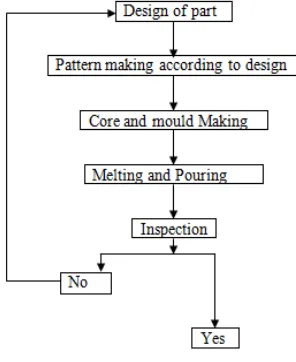
[image:2.612.173.421.149.369.2]Fig. 1 shows the overall process flowchart utilizes during the overall process of casting simulation.
Figure 1: Process flow chart
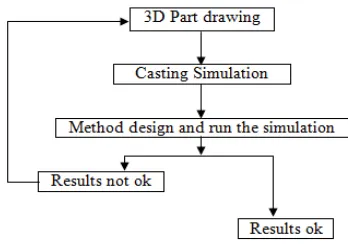
[image:2.612.236.384.422.603.2]Optimization Method include simulation which helps in eliminating the cost of trial at the development stage as the gating can be easily modified using computer design software according to result obtained and then perform the simulation with modified gating that reduces the unnecessary iteration there by reducing lead time until the required quality is obtained.
Figure 3: Steps involved in virtual casting
IV.RESULTSANDANALYSISOFCASTINGSIMULATION
The casting simulation is done on the part from real life casting i.e., the lever arm which is made by using the graded gray cast iron and software used is click2cast which effectively shows the defects occurs in real casting process. The process parameters used in casting is listed as below.
Table2. Process parameter
Size of molding box 260 x 250 x 100 mm
Volume of casting 291053mm3
Modulus of casting 4.87634mm
No of cavity 1
Pouring temperature 1330 0C
Material FG300
Mesh size 3mm
Mold material Green sand
Core material Silica sand
The initial temperature of the sand 20 0C
Figure 4: Mesh model of part along with gating
A. Velocity variation
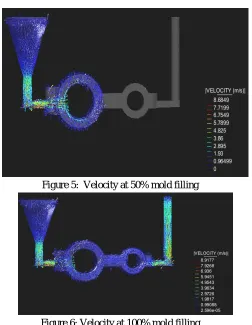
Figure 5: Velocity at 50% mold filling
Figure 6: Velocity at 100% mold filling
B. Pressure Variation
Vent is the small opening provided in the mold cavity to easy escape of air and gases during solidification. If the gases of solidification retain in the mold cavity it hinders the flow of molten metal inside the cavity due to increase in pressure. Pressure play a vital role in casting as many defect like porosity can be corrected by applying a small amount of pressure at the inlet of gating system before end of solidification process which help in filling the prose or cavity form during the solidification process thereby reducing the defects in casting.
[image:4.612.193.421.484.724.2]Figure 7: Pressure at 50% mold filling
C. Temperature Variation
[image:5.612.192.427.132.245.2]In casting basically all solidification process will be concentrated in between two temperatures that are liquid point and solid point temperature. The pouring temperature of molten metal is high enough than solidification temperature. Preheating of mould and core helps in removing the moisture contain and harden the binders which gives sound casting.
Figure 9: Temperature during mold filling D. Cold Shut During Filing
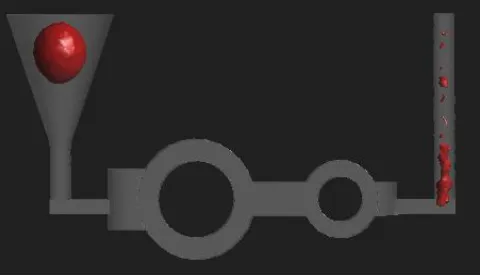
[image:5.612.192.431.288.420.2]This is the defect occurs due to lack of fusion of metal in two portion because of early beginning of solidification process.
Figure 10: Cold shut form during mold filling
In above figure it is observed that at the end of ingate the cast part is having a circular shape which divides the metal flow in two separate parts and it cannot fuse properly giving arise a cold shut in that zone and it continues upon the proper mixing of molten metal.
E. Porosity (%) During Filing
This is the cavity arises due to lack of molten metal present at the last zone during solidification.
Figure 11: Porosity (%) during mold filling
F. Macro Porosity During Filing
[image:5.612.192.433.518.656.2]quality. The little porosity observed in the casting part is due to core and chemical composition of metal used that can be easily eliminated in the real casting.
Figure 12: Macro Porosity during mold filling
V. CONCLUSIONS
The casting simulation software Click2cast is based on finite element methods helps in easily visualizing the velocity , pressure, temperature change during the filling of mould Which is not possible in real life casting and it also helps in predicting the defects like mold erosion, cold shut, porosity etc. The solidification process for graded gray cast iron in green sand mold casting can be studied and understand easily with the help of this software helps in further development of new part with ease. This method of simulation of cast part helps in eliminating the shop floor trial thereby reducing the lead time and waste occur during product development stage and early production stage in industry. From the above study it is concluded that the use of simulation method in industry is economical, reliable, defect reduction, high accuracy parts with minimum losses due to rejections.
VI.ACKNOWLEDGMENT
The author wishes to thank the technical supporter from Krishna Metal Works, Shendra MIDC, Aurangabad, Maharashtra, India industry for their suggestions, encouragement and support in completing the present work
REFERENCES
[1] Sunil Umarane and Dr. D. N. Raut “A Review on Elimination of Defects in Gravity Die Cast Al-Alloy Casting Using Autocast Simulation” International Journal of Scientific Engineering and Research, 2015.
[2] Sachin L. Nimbulkar, Dr. Rajendra S. Dalu “Design Optimization of Gating and Feeding System through Simulation Technique for Sand Casting of Wear Plate” Perspectives in Science, 2016.
[3] Rajulapati Ganesh, Ch.Maheswara Rao “Analysis of Casting Defects during Filling of AA 7075 in a Mold Cavity Using Click 2 Cast Simulation Software” International Journal of Management, Technology And Engineering, 2019.
[4] Kavad Mahesh, S. R. Kulkarni “Simulation of sand casting to predict porosity for Ductile Iron” International Research Journal of Engineering and Technology, 2018.
[5] Campbell, John-Complete Casting Handbook, Second Edition Metal Casting Processes, Metallurgy, Techniques and Design-Elsevier Butterworth-Heinemann (2015) second edition.
[6] Marekbruna, danabolibruchova” numerical simulation of porosity for al-alloys”, XXI international conference polish Slovak 2017. [7] Ravi, B. and Joshi, D. “Feed ability Analysis and Optimization Driven by Casting Simulation”, Indian Foundry Journal, 2007.
[8] Prabhakara Rao, P, Chakravarthy, G., S.Kumar, “Computerized simulation of sand casting process”, Institute of India Foundry men, 2009. [9] Choudhari, C.M.Padalkar, K.J., Duhamel “Defect free casting by using simulation software”, Appl. Mechanical Matter, 2013.
[10] Ravi B, Metal Casting: Computer-Aided Design and Analysis, Prentice-Hall India, 2005.