Learning Analytics for Motivating Self-Regulated Learning and Fostering the Improvement of Digital MOOC Resources
D.F.O.Onah1, E.L.L.Pang2, J.E.Sinclair2, J. Uhomoibhi3 1University College London (UNITED KINGDOM) 2The University of Warwick (UNITED KINGDOM)
3Ulster University (UNITED KINGDOM)
ABSTRACT
engaging learners and providing the understanding of how to support and help participants at risk of dropping out of the course.
Keywords: Learning analytics, MOOC, self-regulated learning
1 INTRODUCTION
Online education has suffered the lack of learners’ engagement which has serious issues generally over time within the educational system. Recent attempts to develop new emerging technologies to determine the future of the digital learning environment in a MOOC context has improved to some extend how contents are revised and tailored to participants. The flexible digital learning environment and design of innovative visualization of learning content has help to improve time management among the learners [17]. However, the most dramatic effect to shaping the future of education comes from big data mining and learning analytics that could be related to educational improvement and learners’ engagement. Although, learning analytics and implementation is still in the early stages of experimentation in the digital learning environment, there are several controversial issues lingering around the implementation of learning analytics in educational settings. Undoubtedly, learning analytics has contributed significantly in the future of the digital learning environment. The growing implementation of new technologies and analysis techniques in education has shown the need for continuous research on current methods of engaging learners within digital learning environment.
dropout [11, 12], and the students ability to self-regulated their learning habits [13]. While other studies point out personal reasons as a factor of learners’ high dropout rate [1, 14].
2 RELATED STUDY
In the current literature, learning analytics research focuses on developing predictive models of learners’ performance and identify students-at-risk of droping out in a digital learning environment [2, 3]. However, research related to learning analytics in MOOCs carries an intense and intrinsic possibility that might influence learning [4]. Learning analytics over the years faces challenging demands and difficulties when applied in MOOC contexts [5], but as Knox [6] mentioned, learning analytics has a strong potential for discovery when it is applied to MOOC datasets. There were few research studies that combine learning analytics practices in MOOCs [7, 8, 9, 10].
2.1 Significance of Learning Analytics
Learning analytics platform monitors learners’ activities in a digital learning environment [15]. The role of learning analytics in both online and traditional education settings could be found in: (1) their role in reform of the learning activities; (2) how this could assist educators to improve educational content, teaching and learning; (3) how lecture videos and audio could be revised for optimum engagement [14, 16]. Learning analytics has been successful as a mechanism that is essential for mitigating against the high dropout rate within online education.
studies on the satisfaction of students in their studies by measuring how specific interactions affect their learning achievements [19, 20].
3 eLDa MOOC PLATFORM
This study has introduced a novel platform to explore the four factors of the learning analytics described in this paper. eLDa is an online platform that supports a novel approach to MOOC development, which aims to actively involve participants in directing and regulating their own learning. It provides the necessary framework and support for participants to set their own learning goals and to access resources suitable for their needs. In order to support users’ self-directed learning through informed choice, the system offered advice on (but not enforce) recommended prerequisites for each topic and provided a map for learners to visualize the elements they have studied so far in the learning environment. The course platform was designed for A-level teachers of Computer Science who participated in an online version of the platform. The platform was also applied in a blended-learning classroom to deliver undergraduate modules to student of Computer Science discipline from a top UK university. The online version of the course was also available for external participants worldwide. The platform has over 150 registered participants and about over 80 active participants engaging fully with the course elements.
3.1 Aims and Objective
The platform should support good data collection and analyses features to evaluate participants’ self-regulated learning levels, the path followed and needed to integrate a variety of acknowledged MOOC ‘good practice’ features to support learners and mitigate participants’ dropout.
3.2 Platform Design
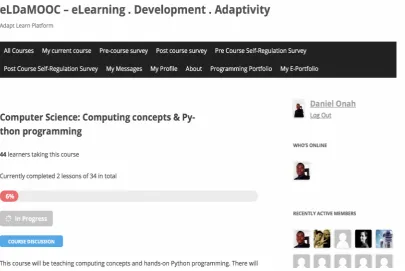
Figure 1. Visualization of eLDa course interface and online participants
[image:5.595.87.530.464.711.2]Figure 2 shows visualization of lesson completed and lessons yet to be studied. This visualization of the whole course enabled learners to manage their study time effective and self-regulate their learning habits.
4. PROPOSED FRAMEWORK
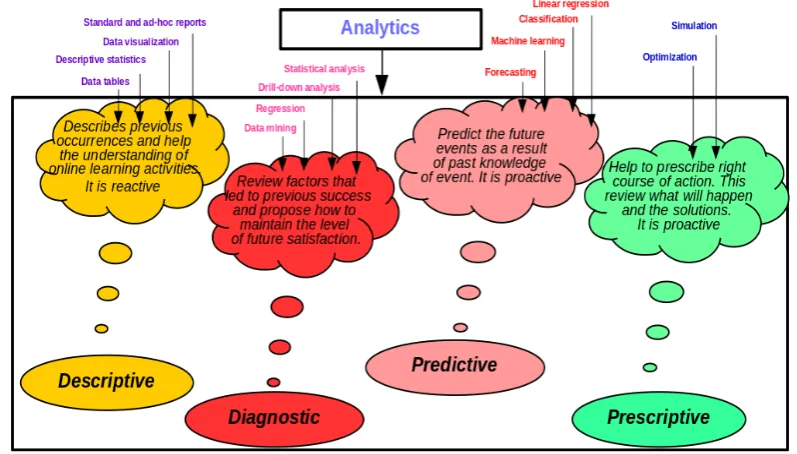
[image:6.595.98.497.201.428.2]Learning analytics is the science of using data to build models that lead to better decisions that in turn add value to individual’s self-regulated learning skills. The various activities and observation from previous studies could help in improving the present. The following factors help in making learning analytics to be effective in an educational context and as illustrated in Figure 3:
Figure 3. Proposed framework of a learning analytics model
Descriptive Analytics: This is a reactive factor that helps in describing the previous occurrence and understanding of the individual learning activities and habits in a MOOC platform.
Diagnostic Analytics: This review all the factors that led to the previous success of an online course and proposed how to maintain and improve this factors for continuity. This explore the level of satisfaction among the learners with regards to the online course content.
Prescriptive Analytics: This is a proactive factor which help to prescribe a standard measure that could help to provide effective action among course instructors. This allow the course instructors and coordinators to review possible actions to take in order to resolve the effect of future dropout rate in an online course. The instructor acts based on the knowledge obtained from the predictive analytics and is able to identify areas of the online course that require urgent and adequate review in order to encourage and support self-regulated learning of the participants.
Figure 3 illustrate these four factors and the measure for the four analytic factors proposed in this paper.
5. RESEARCH METHODOLOGY
The overarching approach adopted to be used in this proposed work is derived from the design science research methodology (DSRM), which is a paradigm centered on the development and evaluation of an inventive artefact to investigate a precise problem domain.
5.1 DATA COLLECTION
Previous research conducted using the tool has seen data collected using newly established instrument known as MOOC online self-regulated learning questionnaire (MOSLQ) that was developed to measure and understand self-regulated learning within a novel MOOC platform. Mixed methods of qualitative and quantitative methods was used for the data collection. The data were analysed using statistical package for the social sciences (SPSS). Results based on the activities of students online was presented to illustrate resource management, self-regulated learning and course engagement. The same approach has been proposed in this study to explore learning analytics in the digital course environment.
6 CONCLUSION
developed for continuing professional development training organised for Computer Science teachers. This further demonstrate the various learning activities, independent learning habits and self-directed learning.
Thus, we explore the effect of learning analytics in mitigating MOOC dropout issues and how we could use the analytics models to support students while engaging with their studies in a self-regulated learning manner in a digital learning environment. This research was conducted on the basis of applying the proposed framework approach in a wider study implemented in eLDa MOOC platform. Several investigations have already been conducted to identify measures that could be used in the analyses of the learning analytics models described in this paper.
7 ACKNOWLEDGMENT
The first author wishes to acknowledge Mr Adakole S. Onah’s financial support in his research and family members and friends for their moral support.
REFERENCES
[1] Onah, D. F., Sinclair, J., & Boyatt, R. (2014). Dropout rates of massive open online courses: behavioural patterns. EDULEARN14 proceedings, 5825-5834.
[2] Dawson, S., & Siemens, G. (2014). Analytics to literacies: The development of a learning analytics framework for multiliteracies assessment. The International Review of Research in Open and Distributed Learning, 15(4).
[3] Dawson, S., Gašević, D., Siemens, G., & Joksimovic, S. (2014, March). Current state and future trends: A citation network analysis of the learning analytics field. In Proceedings of the fourth international conference on learning analytics and knowledge (pp. 231-240). ACM.
[4] Reich, J. (2015). Rebooting MOOC research. Science, 347(6217), 34-35.
[5] Clow, D. (2013, April). MOOCs and the funnel of participation. In Proceedings of the Third International Conference on Learning Analytics and Knowledge (pp. 185-189). ACM.
[6] Knox, J. (2014). From MOOCs to Learning Analytics: Scratching the surface of the'visual'.
[7] Moissa, B., Gasparini, I., & Kemczinski, A. (2015). A systematic mapping on the learning analytics field and its analysis in the massive open online courses context. International Journal of Distance Education Technologies (IJDET), 13(3), 1-24.
[8] Vogelsang, T., & Ruppertz, L. (2015, March). On the validity of peer grading and a cloud teaching assistant system. In Proceedings of the Fifth International Conference on Learning Analytics And Knowledge (pp. 41-50). ACM.
[9] Kloos, C. D., Alario-Hoyos, C., Fernández-Panadero, C., Estévez-Ayres, I., Muñoz-Merino, P. J., Cobos, R., ... & Chicaiza, J. (2016, September). eMadrid project: MOOCs and learning analytics. In Computers in Education (SIIE), 2016 International Symposium on (pp. 1-5). IEEE. [10] Ruipérez-Valiente, J. A., Muñoz-Merino, P. J., Gascón-Pinedo, J. A., & Kloos, C. D. (2017). Scaling to Massiveness With ANALYSE: A Learning Analytics Tool for Open edX. IEEE Transactions on Human-Machine Systems, 47(6), 909-914.
[11] Alario-Hoyos, C., Pérez-Sanagustín, M., Delgado-Kloos, C., Muñoz-Organero, M., & Rodríguez-de-las-Heras, A. (2013, September). Analysing the impact of built-in and external social tools in a MOOC on educational technologies. In European Conference on Technology Enhanced Learning (pp. 5-18). Springer, Berlin, Heidelberg.
[12] Alario‐Hoyos, C., Muñoz‐Merino, P. J., Pérez‐Sanagustín, M., Delgado Kloos, C., & Parada G, H. A. (2016). Who are the top contributors in a MOOC? Relating participants' performance and contributions. Journal of Computer Assisted Learning, 32(3), 232-243.
[13] Zimmerman, B. J. (2000). Attaining self-regulation: A social cognitive perspective. In
Handbook of self-regulation (pp. 13-39).
[14] Onah, D. F. O., Sinclair, J., Boyatt, R., & Foss, J. (2014). Massive open online courses: learner participation. In Proceeding of the 7th International Conference of Education, Research and Innovation (pp. 2348-2356).
[15] Fournier, H., Kop, R., & Sitlia, H. (2011, February). The value of learning analytics to networked learning on a personal learning environment. In Proceedings of the 1st International Conference on Learning Analytics and Knowledge (pp. 104-109). ACM.
[17] Onah, D. F. (2017). Investigating self-regulated learning in massive open online courses: a design science research approach (Doctoral dissertation, University of Warwick).
[18] Onah, D. F. O., & Sinclair, J. E. (2017). Assessing Self-Regulation of Learning Dimensions in a Stand-alone MOOC Platform. International Journal of Engineering Pedagogy (iJEP), 7(2), 4-21.
[19] Kolowich, S. (2012). Who takes MOOCs. Inside Higher Ed, 5, 2012.