Systematic Review: Evaluating the effectiveness of
patient-directed educational interventions on the uptake of colorectal
cancer screening.
By Jay Patel
A Master’s Paper submitted to the
faculty of the University of North
Carolina at Chapel Hill in partial
fulfillment of the requirements for
the degree of Master of Public
Health in the Public Health
Leadership Program
_________________________
Advisor
____________________
Date
____________________
Second Reader
2 | P a t e l
Abstract
Title Systematic Review: Evaluating the effectiveness of patient-directed educational interventions on the uptake of colorectal cancer screening.
Background Colorectal cancer is the third most common neoplasm in the United States, with over 150,000 people receiving a new diagnosis every year.1 Colorectal cancer is also the second-leading cause of all cancer-associated mortality, attributed to deaths totaling nearly 50,000 annually.1 Despite the morbidity and mortality of colorectal cancer and the effectiveness early detection, colorectal cancer screening lags behind other types of screening. Patient education and health literacy are posited to play a role in the lack of colorectal cancer screening in American adults
Purpose To evaluate the effectiveness of patient-oriented educational materials, including small media and decision aids on the outcomes of screening uptake, patient knowledge, and patient intent.
Data Sources MEDLINE, CINAHL, hand-searched reference list
Study Selection One reviewer independently selected studies addressing the study questions and met eligibility criteria.
Data Extraction Information on study design, setting, intervention, comparators, study population, outcomes, and quality were extracted by one reviewer. The reviewer assigned a quality rating for each study.
Data Synthesis The reviewer found that with regards to increasing colorectal cancer screening uptake, the evidence is mixed, with two studies demonstrating the a positive effect, three demonstrating no effect, and one showing a negative effect. All three studies investigating patient knowledge suggest an increase in knowledge. Patient intent for screening was mixed, with one study showing a positive effect, one showing a negative effect and two showing no effects at all.
Limitations Only investigated randomized controlled trials as opposed to pre-post test interventions. Articles used different measurement tools/methods for assessing outcomes of interest. Limited the number of outcomes to only three. Investigated only educational materials while excluding other interventions.
3 | P a t e l
Introduction
Colorectal cancer is the third most common neoplasm in the United States, with over
150,000 people receiving a new diagnosis every year.1 Colorectal cancer is also the
second-leading cause of all cancer-associated mortality, attributed to deaths totaling nearly 50,000
annually.1 Studies have demonstrated that colorectal cancer screening is effective at reducing
mortality and morbidity; the evidence is strong enough to warrant the adoption of screening
guidelines by the United States Preventive Services Task Force (USPSTF), the American Cancer
Society (ACS), and the United States Multisociety Task Force on Colorectal Cancer. The USPSTF
currently recommends that screening should be performed in adults beginning at the age of 50
years and continuing to 75 years. The clinical recommendations for this population consist of 1)
annual fecal occult blood testing, 2) flexible sigmoidoscopy every five years, 3) annual fecal
occult blood testing plus flexible sigmoidoscopy every five years, or 4) colonoscopy every 10
years.2
Underutilization of Colorectal Cancer Screening in the United States
Despite the strength of evidence and the fact that screening interventions have been
available for decades, many Americans do not undergo routine screening for colorectal cancer.
Findings from the National Health Interview Survey (NHIS) administered by the Centers for
Disease Control indicate that only 50% of US adults over the age of 50 years have undergone
complete screening as described by current guidelines.3 The CDC also states colorectal cancer
screening lags behind screening for other common neoplasms, such as breast and cervical
4 | P a t e l overestimates of actual screening rates. A study performed amongst Medicare beneficiaries
who had adequate coverage and reimbursement for screening also demonstrated underuse of
screening; only 29.2% of the study cohort had ever been screened and only 25.4% were found
to be up to date with screening recommendations.4 Although colorectal cancer screening rates
have increased from less than 25% since the 1980’s, most of this growth is attributed to
increasing referral for colonoscopy due to Medicare coverage in 2001.4 Other modalities such
as sigmoidoscopy and fecal occult blood testing decreased in use during the same period.4
A number of studies have explored the reasons behind the underutilization of colorectal
cancer screening the United States.6-8 One factor influencing screening is a recommendation or
a discussion with a physician concerning colorectal cancer.1 Research also suggests that
healthcare systems utilizing patient navigators, staff that facilitate follow-up, and electronic
reminder systems are successful in positively influencing screening for colorectal cancer.
The most important patient-related factors determining screening for colorectal cancer
are insurance status and having a consistent source of primary care.1 Two other positive
correlates for colorectal cancer screening are income and educational levels.1 A positive
relationship also exists between colorectal cancer screening and patient knowledge about
cancer, perceptions of susceptibility and risk to cancer, and strong health promoting behaviors.8
Although all of these factors exert their own independent effects on a patient’s screening
status, a number are highly correlated with one another. For example, the higher the
educational level of a person, the more likely this person is to have a high income level, health
5 | P a t e l understand more concerning the risk s and benefits of colorectal screening as well as the
reasons behind screening.
Health Literacy and Screening for Colorectal Cancer
Health literacy is defined as “the capacity of an individual to obtain, interpret, and
understand basic health information and services and the competence to use such information
and services in ways which are health enhancing.”9 Low literacy is common in the United States,
with more than 90 million American adults scoring in the lowest 2 levels of a 5-level scale aimed
at evaluating a person’s ability to function in society and achieve one’s goals.10 Studies suggest
that low health literacy is associated with less knowledge regarding cancer screening,
diminished screening rates, and worse clinical outcomes.11 Providing written and/or
inappropriately complex cancer screening information may also be ineffective amongst
individuals with low health literacy and as a result, patients may be less inclined to pursue
screening.12 Literacy is also important in the context of patient autonomy in the
decision-making process; patient documents for informed consent may be too complex for a number of
people, and individuals may undertake suboptimal decision-making in accepting or rejecting
certain screening interventions.12
Health literacy is suggested to impact colorectal cancer screening specifically.
Unscreened patients are more likely to lack the knowledge regarding the reasons for
performing colorectal cancer screening.4 Furthermore, patients who have not been screened
are more likely to not know about screening modalities apart from colonoscopy.4 Limited health
6 | P a t e l Patients with more less literacy are also likely to report barriers to the completion of CRC
screening, even when referred by a physician.11 Three studies have also explored health literacy
as a predictor of colorectal cancer screening and found no statistically significant association;
the study sizes of these three studies was small, however, and should not be used to dismiss
the role of literacy in the underuse of screening.11, 13, 14.
Patient-Oriented Education Materials for Colorectal Cancer Screening
Because of the association between lower health literacy and colorectal cancer
screening, interventions to improve screening rates amongst adults could focus on improving
patient health literacy and knowledge. Improvement in patient education could allow patients
to become better engaged in making healthcare decisions, an activity promoted by leading
healthcare organizations in the United Kingdom, the United States, and Australia.15-17 The
importance of providing patients with the best available evidence regarding risks, benefits, and
purposes of screening has led to a demand for tools that would facilitate their involvement in
healthcare decision-making with providers. A number of patient-level interventions have been
developed in a variety of healthcare settings, all promoting better informed decision-making
and improved health education. Such interventions consist of media as varied as computer
applications, pamphlets and printed items, and patient-directed videos.
Recently a number of patient-oriented educational materials have included decision
aids. Patient decision aids or decision support interventions are designed to assist patients in
making informed decisions on their health.18 Decision aids differ from other small media
7 | P a t e l to their own health through the inclusion of numerical and graphical risk information.19
Decision aids also contain exercises aimed to help patients arrive at decisions reflecting their
own beliefs and value systems.19 A systematic review of decision aids for a number of
healthcare issues suggests that these interventions improve patient knowledge of medical
options, result in a more appropriate perception of risks, and assist patient clarification with
regards to the potential outcomes of such options.20 Decision aids are also shown to increase
the participants of patients in the decision-making process and further enabled patients to
better express their desires in discussions with medical professionals.20
While patient education materials and decision aids are helpful in allowing patients to
make better informed decisions, they often contain complex information about medical
concepts and procedures.21 Decision aids also include quantitative information on outcomes
and risks, all of which require a high level of literacy and numeracy to interpret.21 Some studies
have shown that even standard forms of patient information are readily misunderstood, with
two-thirds of cancer patients having difficulties understanding the information they receive and
over one half searching for information that better suits their needs.22 Given this fact, the
cognitive burden of these education materials may prove to be a barrier towards their
effectiveness.
Research Needs for the Evaluation of Patient-Oriented Materials for Colorectal Cancer Screening
Patient-oriented educational items for colorectal cancer are used extensively in clinical
8 | P a t e l Considerable evidence and research has been performed evaluating decision aids and other
patient-oriented materials in a variety of other healthcare environments; however, there are no
meta-analyses or systematic reviews evaluating specific patient education materials for
colorectal cancer screening. Investigations and research are necessary in order to understand
the effectiveness of such materials on patient perception of colorectal cancer lifetime risk, the
harms and benefit of screening, and any effects on patient intent and uptake of screening
methods.
The goal of this systematic review is to evaluate the effectiveness of small media
interventions and decision aids currently in clinical practice amongst patients aged 50-75 years
of age who are at average risk for acquiring colorectal cancer. This is of particular importance
due to the fact that low health literacy may be a barrier to the uptake of colorectal cancer
screening in American adults. This systematic review aims to investigate the following: 1). Do
patient education materials improve patient knowledge regarding colorectal cancer, types of
screening interventions, and the risks and benefits of screening interventions when compared
to usual care? 2). Do small media and decision aids increase the uptake of colorectal cancer
screening when compared to usual care? 3). Are decision aids and small media educational
9 | P a t e l
Methods
Patient Population, Interventions, Comparators, Settings and Outcomes of Interest (PICOTS)
This systematic review seeks to evaluate the effectiveness of decision aids and patient
education materials at improving screening uptake, patient knowledge and attitudes of
colorectal cancer screening methods. Specifically, we are interested in whether educational
materials increase uptake of colorectal cancer screening compared to usual care, improve
patient knowledge regarding the risks and benefits of screening, and whether such materials
improve a patient’s intent to pursue screening. The primary population of interest is the
population for which screening is currently recommended by the USPSTF: adults aged 50-75
years old. For the purposes of this review, our major goal is to investigate patient education
materials and decision support techniques/aids amongst those adults at otherwise average risk
for colorectal cancer. Individuals at greater risk for colorectal cancer due to either a strong
family history of predisposing conditions (Familial Adenomatous Polyposis, Hereditary
Nonpolyposis Colorectal Cancer, Crohn’s Disease, Ulcerative Colitis) will be excluded from this
review. Furthermore, the population of interest consists of those who are either not current
with screening guidelines or have never had prior screening with FOBT, colonocospy, or
sigmoidoscopy. The population also consists of all races and ethnicities; no limits were placed
on nationality. Age range was limited to individuals over the age of 50.
The interventions of interest consist of education materials aimed at promoting
colorectal cancer screening and knowledge amongst patients and not providers. These
10 | P a t e l and computer or Internet applications that explain colorectal cancer screening. These media
interventions should be designed to promote compliance elicit informed consent for a
recommended option, or designed to not necessarily elicit a specific decision from a patient.
These small media interventions can be viewed as “one-way” materials that do not seek to elicit
feedback or engagement from the user. The other interventions include small media with
decision aids. Decision aids are defined as interventions designed to help individuals make
specific and deliberative choices among options by providing at minimum information on the
options and outcomes relevant to the patient’s health.19 The comparators for these
interventions is defined as “standard of care” that involves at the most, simple discussions with
primary care providers concerning screening without any other informational interventions, or
standard educational materials already in practice with regards to decision aids.
The outcomes of interest in this systematic review include patient knowledge, screening
behaviors, and intent to become screened. Screening behaviors will be assessed with a decision
to either undergo or forego screening after the intervention is administered. The time frame for
such evaluations will be at least 1 month after administration. Patient intent will be determined
based on subjective questionairres that can express patients desire to become screened.
Patient knowledge will be assessed by an improvement in certain topics of information
amongst each patient. Conversations about screening with providers will be based on either
self-report or documentation in patient chart or notes. The time frame for all articles was
limited to publication dates after 1996. The above PICOTSs are further expanded below in a
11 | P a t e l Table 1: Inclusion and Exclusion Criteria for Final Review
Exclusion Inclusion
Study Design Research-based focus groups
Observational trials, mixed methods studies, pre-post test interventions
Randomized controlled trials
Interventions Lifestyle interventions, education interventions aimed at treatment or diagnosis of cancer, group education, practice-level or physician-directed
intervention, patient
navigators, materials directed at other neoplasms
Educational interventions including but not limited to multimedia, print materials, video, and electronic
resources, and decision aids
Study Population Individuals aged younger than 50 years at higher than
average risk for colorectal cancer (1st degree relatives with colorectal cancer, personal history of IBD, or hereditary conditions predisposing to CRC)
Individuals between 50-75 at average risk for colorectal cancer, naïve screening population or patients not current with screening guidelines
Study setting In-patient services, urgent care centers, emergency rooms
Ambulatory care settings, outpatient clinics
Comparators If a non-decision aid: usual care that includes other educational interventions, system or provider-level practices (physician reminders, EMR systems, patient facilitators)
If decision aid: other decision aids as the ONLY comparator, practice level or provider level interventions as defined above
Usual care:
Defined for non-decision aid interventions as conversations with other providers or no additional intervention
For decision-aids, can include other educational materials directed at patients,
12 | P a t e l Time Studies published before 1996 Any study published after
1996.
Data Sources and Search Strategy
Medline was used to search for relevant studies and articles.. The search algorithm was
limited to English-language articles published after 1996, with an age limited to middle aged
individuals defined as aged 45 years and older. A review of the CINAHL database was also
performed in conjunction with the initial MEDLINE search. Search limits were similar to those
used in the MEDLINE search; all articles were limited to English-language, published after 1996,
and mostly adults. Articles were also hand-searched for inclusion as well, especially with
regards to recent articles that may have not appeared in the above searches. Such articles were
published relatively recently in 2011, and thus did not necessarily have associated search terms
that would be included in any current search strategy. Search algorithms for CINAHL and
13 | P a t e l Table 2: Search Algorithms for CINAHL and MEDLINE
Database Algorithm
MEDLINE ("prevention and control"[Subheading] OR ("prevention"[All Fields] AND "control"[All Fields]) OR "prevention and control"[All Fields] OR "prevention"[All Fields]) OR ("mass screening"[MeSH Terms] OR ("mass"[All Fields] AND "screening"[All Fields]) OR "mass screening"[All Fields]) OR ("colonoscopy"[MeSH Terms] OR
"colonoscopy"[All Fields]) OR (("feces"[MeSH Terms] OR "feces"[All Fields] OR "fecal"[All Fields]) AND ("occult blood"[MeSH Terms] OR ("occult"[All Fields] AND "blood"[All Fields]) OR "occult blood"[All Fields]) AND ("research design"[MeSH Terms] OR ("research"[All Fields] AND "design"[All Fields]) OR "research design"[All Fields] OR "test"[All Fields] OR "laboratory techniques and procedures"[MeSH Terms] OR ("laboratory"[All Fields] AND "techniques"[All Fields] AND "procedures"[All Fields]) OR "laboratory techniques and procedures"[All Fields])) OR
("sigmoidoscopy"[MeSH Terms] OR "sigmoidoscopy"[All Fields])) AND (("rectal neoplasms"[MeSH Terms] OR ("rectal"[All Fields] AND "neoplasms"[All Fields]) OR "rectal neoplasms"[All Fields]) OR ("colonic neoplasms"[MeSH Terms] OR
("colonic"[All Fields] AND "neoplasms"[All Fields]) OR "colonic neoplasms"[All Fields]) OR ("colonic neoplasms"[MeSH Terms] OR ("colonic"[All Fields] AND "neoplasms"[All Fields]) OR "colonic neoplasms"[All Fields] OR ("colon"[All Fields] AND "cancer"[All Fields]) OR "colon cancer"[All Fields]) OR ("colorectal neoplasms"[MeSH Terms] OR ("colorectal"[All Fields] AND "neoplasms"[All Fields]) OR "colorectal neoplasms"[All Fields] OR ("colorectal"[All Fields] AND "cancer"[All Fields]) OR "colorectal cancer"[All Fields])) AND (("videotape recording"[MeSH Terms] OR ("videotape"[All Fields] AND "recording"[All Fields]) OR "videotape recording"[All Fields] OR "videotape"[All Fields]) OR ("pamphlets"[MeSH Terms] OR "pamphlets"[All Fields]) OR ("patient education as topic"[MeSH Terms] OR ("patient"[All Fields] AND "education"[All Fields] AND "topic"[All Fields]) OR "patient education as topic"[All Fields]) OR ("health education"[MeSH Terms] OR ("health"[All Fields] AND "education"[All Fields]) OR "health education"[All Fields]) OR ("multimedia"[MeSH Terms] OR "multimedia"[All Fields]) OR ("education"[Subheading] OR "education"[All Fields] OR "educational status"[MeSH Terms] OR ("educational"[All Fields] AND "status"[All Fields]) OR "educational status"[All Fields] OR "education"[All Fields] OR "education"[MeSH Terms]) OR ("patient acceptance of health care"[MeSH Terms] OR ("patient"[All Fields] AND "acceptance"[All Fields] AND "health"[All Fields] AND "care"[All Fields]) OR "patient acceptance of health care"[All Fields] OR ("patient"[All Fields] AND "acceptance"[All Fields] AND "healthcare"[All Fields]))) AND (("decision making"[MeSH Terms] OR ("decision"[All Fields] AND "making"[All Fields]) OR "decision making"[All Fields]) OR (Decision[All Fields] AND support[All Fields]).
CINAHL (Preventive Health Care OR Cancer Screening OR colonoscopy OR FOBT OR
14 | P a t e l Quality Assessment
One reader reviewed abstracts in order to evaluate the articles for inclusion. Abstracts
that described educational interventions for colorectal cancer were selected for full-text
review. The full-text review was then performed in order to determine the final number of
articles that would be included in the study based on pre-defined inclusion and exclusion
criteria. These criteria were divided into four categories: study design, intervention type, study
population, and study setting. For inclusion, the study design was pre-specified for randomized
controlled trials only. Intervention type was specified as either a decision aid or small media
education material (defined above) that promotes colorectal cancer screening. Study
population was limited to individuals over 50 years old who were fit for screening and had no
other co-morbidities that would preclude screening. Study sites were limited to ambulatory
settings or outpatient clinics. Comparators were defined as usual care.
Exclusion criteria for the final review included any studies that were not randomized
controlled. Articles that investigated other interventions (group education, system- or
practice-level changes, physician directed interventions (EMR reminder systems, etc), and patient
facilitators or navigators) were also excluded from the study. Studies evaluating prevention
amongst individuals with higher-than-average risk for colorectal cancer (inflammatory bowel
disease, strong family history, previous personal history of colorectal cancer) were excluded.
Finally, studies that were performed in settings where prevention techniques could potentially
be used diagnostic tests (urgent care centers, inpatient services, emergency rooms) were
15 | P a t e l Articles that met the inclusion criteria for final review were evaluated with quality
criteria developed by the USPSTF and discussed in the Task Force’s Procedure Manual23 More
specifically; interest was placed on assessing the overall internal validity and external validity of
each article. Internal validity was determined by analyzing the composition of intervention and
control groups, with particular emphasis placed on the maintenance of groups during the trial,
accurate and reliable measurement methods, and adjustment for confounding. Internal validity
was rated as good fair, and poor as specified and defined by the USPSTF. External validity was
rated by assessing the study population, research situation, and providers involved in the study
situation. External validity was rated globally, with similar indices as used for internal validity
(good, fair, and poor).
A critical appraisal tool incorporating such criteria was developed by faculty affiliated
with the University of North Carolina School of Medicine and the Gillings School of Global Public
Health and was used for the purposes of quality abstraction.24 The critical appraisal tool
assesses the above specifications of internal and external validity as defined by the USPSTF. The
results of using this tool will be used to judge the overall quality of each article. All articles will
be assessed via our interpretations of measurement bias, confounding, and selection bias. All
three of these quality characteristics were graded on a scale of (+) to (+++), with (+) signifying
low potential for bias and (+++) high potential. The potential for bias was then be used to judge
the internal validity and external validity of each study. For the purposes of this review, we
rated both internal and external validity as either poor, fair, or good. Overall quality of each
study will be graded similarly to both internal and external validity. Reviewers completed the
16 | P a t e l defined by the USPSTF and used in this review is listed in Table 3; the critical appraisal tool used
for our review is included in Table 4.
Data Extraction and Outcomes Evaluation
This systematic review is interested in a number of outcomes, related to
patient-directed educational interventions and their role in promotion of colorectal cancer screening.
For the purposes of this review, primary outcomes consisted of patient knowledge, patient
intent, and screening uptake. Patient knowledge is defined as an understanding of colorectal
cancer as well as methods of screening. Knowledge should also include an understanding of
average risk for colorectal cancer in addition to the risks and benefits of screening methods.
Patient intent is defined as the desire to undergo screening. Screening uptake is defined as the
proportion of intervention or controls who have taken up screening after viewing the decision
aid. Screening uptake will most likely be assessed either by chart review or patient admission.
The outcomes of screening intent and knowledge will most likely employ different
evaluation tools across multiple studies. Some studies may have adopted standardized
questionnaires while others employ novel de novo methods for evaluation. In addition,
reporting of outcomes will most likely differ by study. Because of these disparities in reporting
17 | P a t e l
Internal Validity External Validity
Critieria Initial assembly of comparable groups:
o For RCTs: adequate randomization, including first concealment and whether potential confounders were distributed equally among groups.
o For cohort studies: consideration of potential confounders with either restriction or measurement for adjustment in the analysis; consideration of inception cohorts.
Maintenance of comparable groups (includes attrition, cross-overs, adherence, contamination).
Important differential loss to follow-up or overall high loss to follow-up.
Measurements: equal, reliable, and valid (includes masking of outcome assessment).
Clear definition of interventions. All important outcomes considered.
Analysis: adjustment for potential confounders for cohort studies, or intention to treat analysis for RCTs.
Study Population:
The degree to which the people who were involved as subjects in the study constitute a special population because they were selected from a larger eligible population or were for other reasons unrepresentative of people who are likely to seek or be candidates for the preventive service. The selection has the potential to affect the following:
Absolute risk: The background rate of outcomes in the study could be greater or less than what might be expected in asymptomatic people because of the inclusion/exclusion criteria, because of non-participation, or for other reasons.
Harms: The harms observed in the study could be greater or less than what might be expected in asymptomatic people.
The following are features of the study population and the study design that may cause experience in the study to be different from what would be observed in the US primary care population:
Demographics (age, gender, ethnicity, education, income): The criteria for inclusion/exclusion or non-participation do not encompass the range of people likely to be candidates for the preventive services in the US primary care population.
Co-morbidities: the frequency of co-morbid conditions in the study population does not represent of the frequency likely to be encountered in people who seek the preventive service in the U.S. primary care population. Special inclusion/exclusion criteria: There are other special
18 | P a t e l
service.
Source, intensity of recruitment: The sources for recruiting subjects for the study and/or the effort and intensity of recruitment may distort the
characteristics of the study subjects in ways that could increase the effect of the intervention as it is observed in the study.
Situation:
The degree to which the clinical experience in the situation in which the study was conducted is likely to be reproduced in other settings
Healthcare system: The clinical experience in the system in which the study was conducted is not likely to be the same as experience in other systems because, for example, the system provides essential services for free when these services are only available at a high cost in other systems.
Country: The clinical experience in the country in which the study was conducted is not likely to be the same as in the U.S. because, for example, services available in the U.S. are not widely available in the other country of study conduct or vice versa.
Selection of participating centers: The clinical experience in which the study was conducted is not likely to be same as in offices/hospitals/settings in which the service will be delivered to the U.S. primary care population because, for example, the centers have ancillary services not available generally.
Time, effort, and system cost for the intervention: The time, effort, and cost to develop the service in the study is more than would be available outside the study setting.
Providers:
The degree to which the providers in the study have the skills and expertise likely to be available in general settings
Training to implement the intervention: The intervention in the study was done after giving providers special training not likely to be available or required in U.S. primary care settings.
Expertise, skill to implement intervention: The providers included in the study had expertise and/or skills at a level that is higher than the level likely to be encountered in typical settings.
19 | P a t e l Table 3: Quality Criteria for Internal and External Validity – USPSTF Procedure Manual
who are not likely to be available in typical settings.
Ratings Good: Meets all criteria: Comparable groups are assembled initially and maintained throughout the study (follow-up at least 80 percent); reliable and valid measurement instruments are used and applied equally to the groups; interventions are spelled out clearly; all important outcomes are considered; and appropriate attention to confounders in analysis. In addition, for RCTs, intention to treat analysis is used.
Fair: Studies will be graded "fair" if any or all of the following problems occur, without the fatal flaws noted in the "poor" category below: Generally comparable groups are assembled initially but some question remains whether some (although not major) differences occurred with follow-up; measurement instruments are acceptable (although not the best) and generally applied equally; some but not all important outcomes are considered; and some but not all potential confounders are accounted for. Intention to treat analysis is done for RCTs.
Poor: Studies will be graded "poor" if any of the following fatal flaws exists: Groups assembled initially are not close to being comparable or maintained throughout the study; unreliable or invalid measurement instruments are used or not applied at all equally among groups (including not masking outcome assessment); and key confounders are given little or no attention. For RCTs, intention to treat analysis is lacking.
Good: The study differs minimally from the US primary care
population/situation/providers and only in ways that are unlikely to affect the outcome; it is highly probable (>90%) that the clinical experience with the intervention observed in the study will be attained in the US primary care setting.
Fair: The study differs from the US primary care population/situation/providers in a few ways that have the potential to affect the outcome in a clinically important way; it is only moderately probable (50%-89%) that the clinical experience with the intervention in the study will be attained in the US primary care setting.
20 | P a t e l Name:
PUBH 751: Critical Appraisal of the Health Literature
Citation (JAMA style)
Study Question and Research Design
Source Population
Study Population (descriptive: demographics, eligibility criteria) and how chosen (volunteers, recruitment, tertiary care clinics, population-based, etc)
Initial Comparability of groups (ie, randomization or group composition; concealment of allocation)
Drop outs (no endpoint data), adherence, crossovers (attrition, loss to follow up)
Potential for selection bias (+ to +++) and explain
Measurement of exposure, intervention, potential confounders, and outcomes; reliability and
validity of measurement; how performed, blinding Potential for measurement bias (+ to +++)
Potential confounders (name and describe how each was controlled for)
Potential for confounding (+ to +++)
Analysis (intention to treat or other adjustment)
21 | P a t e l Table 4: Critical Appraisal Tool – Gillings School of Global Public Health and the UNC School of Medicine
Clinical and Public Health importance for the source population; for a wider population
Overall judgment of internal validity (good, fair, poor)
External validity: applicability to other populations
22 | P a t e l
Results
The initial search strategy yielded 118 articles from MEDLINE, 107 articles from CINAHL,
and 2 articles from hand searching. The overall search yielded 225 distinct articles when
excluding two instances of duplicate articles. All 225 abstracts were reviewed, yielding a total of
32 articles included in the full-text review and 193 article exclusions. Of the 30 articles text
reviewed, a total of 8 articles met the criteria for final inclusion and 19 for exclusion. Of the 19
articles that were excluded, 47% were not randomized-controlled, 32% evaluated interventions
other than those targeted for this review, and 21% were studies that involved the wrong type
of population. Three articles could not be full-text reviewed due to the fact that they were
unavailable in the library of our institution and were thus not included in our study. Our search
strategy and review process are included in the Figure 1 below.
Of the eight articles selected for final review, 7 were randomized controlled trials
evaluating colorectal cancer screening decision aids and 1 was a randomized controlled trial
evaluating a small media educational intervention video that was not a decision aid. A
description of included articles is listed in Table 5. With regards to our primary outcomes of
interest, seven out of eight articles (88%) reported screening uptake results; 3 out of 8 studies
(38%) reported knowledge as a pre-specified outcome; 4 out of 8 studies (38%) reported
patient intent or readiness for screening as an outcome. All eight articles were assessed for
quality using our two evaluation tools. The results of the quality assessment are highlighted in
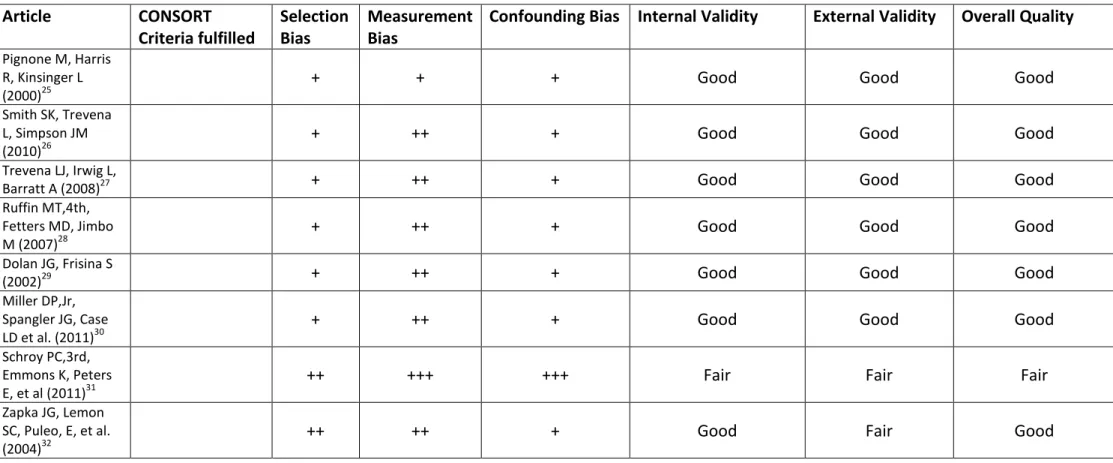
Table 7. Seven out of six articles received a quality rating of “good” while only one article
23 | P a t e l Figure 1: Flow Diagram of Search Strategy and Review Process
Original Search Total – 227
MEDLINE – 118 abstracts CINAHL – 107 abstracts Hand searching – 2 abstracts
Abstract Review Led to 197 Exclusions: Duplicates, other neoplasm screening (breast, prostate, cervical), non-educational
interventions, high risk population decision support, duplicates (n=2)
Identified for Full Text Review – 32 Medline – 17 articles
CINAHL - 13 articles Hand-Searching – 2 articles
Final Inclusion – 8 articles
MEDLINE – 5 articles CINAHL – 1 article
Hand-Searching – 2 articles
Exclusions – 19 articles 9 Non –RCT
6 Different Intervention
24 | P a t e l Table 5: Characteristics/Description of Studies Included in Final Review
Study Study Type Research Objective Intervention and Control Study
Population
Outcomes of interest
Pignone M, Harris R, Kinsinger L (2000)25
Randomized-Controlled Trial
To test whether a decision aid consisting of an educational video, targeted brochure, and chart marker increased performance of colon cancer screening in primary care practices.
Intervention Arm:
11 minute video on colon cancer, followed by an exercise in which participants are asked to choose one of three color-coded, patient-directed brochures to indicate their interest in screening; color-coded card was attached to patient chart. Control
A video of similar length on car safety, seat belt use, and airbags, and received a standard brochure on automobile safety.
Total study population, n = 249
Intervention arm 125
Control Arm 124
-Intent to ask provider about screening
-Conversations about screening, -Screening test ordering, -Screening test completion or uptake
Smith SK, Trevena L, Simpson JM (2010)26
Randomized-Controlled Trial
Whether a decision aid designed for adults with low education and literacy can support informed choice and involvement in decisions about screening for bowel cancer
Interventions:
Two interventions arms consisting of a decision aid (paper based booklet and DVD) with or without a question prompt list
Control:
The consumer information booklet developed for people invited to take part in the Australian national bowel cancer screening program.
Total Study population, n = 572
Intervention Arms* Total = 384 -Decision Aid w/ question propmpt list = 196
-Decision aid w/o question prompt = 188
These two groups were combined in final analysis Control 173 Primary outcomes -Informed choice -Knowledge
-Screening attitudes and behaviors
Secondary outcomes -decisional conflict -decision satisfaction
-confidence in decision-making -general anxiety
-interest in screening
-worry about developing bowel cancer
-acceptability of materials.
Trevena LJ, Irwig L, Barratt A (2008)27
Randomized-controlled trial.
Test the effect of a self-administered decision aid on informed choice in participants
Intervention:
Decision aid booklet; six booklets were produced, each containing age,
25 | P a t e l
from a range of educational backgrounds, and to assess whether their decisions are consistent with values about screening.
gender, and family history-specific probabilities of the outcomes of biennial FOBT-screening over five screening rounds. Included five core issues for informed choice about screening.
Control:
Consumer print materials version of Australia guidelines for colorectal cancer screening
Intervention Arm n = 157
Control Arm n = 157
(defined by three measures: 1). Adequate knowledge 2), clear values and 3). Screening intention)
Secondary Outcomes
-Screening test uptake - decision aid acceptability -psychological outcomes
Ruffin MT,4th, Fetters MD, Jimbo M (2007)28
Randomized controlled trial
To test a preference-based decision aid for colorectal cancer, and sought to test it against stand-alone website. The intervention is called “Colorectal Web”
Intervention:
Colorectal Web, interactive program presented as a web site or stand-alone program, includes a preference clarification activity Control:
an existing CRC Web site carefully selected by investigators as reflecting the standard, state of the art, non-interactive format. Differs from Colorectal Web in that it does not promote a preference among the CRC screening options.
Total Study population, n = 174
Intervention Arm n = 87
Control Arm n = 87
Primary Outcomes
-Screened for colorectal cancer
Secondary Outcomes
-Screening test preference
Dolan JG, Frisina S (2002)29
Randomized-Controlled Trial
Conduct a pilot test of a decision aid designed to help patients choose among currently recommended colorectal cancer screening programs.
Intervention: A 2 part process, consisting of a preliminary phase and the administration of a decision aid. The decision aid consisted of a model that incorporated aspects of the analytic hierarchy process.
Control: Standardized interview consisting of a preliminary phase and an educational phase. Preliminary phase consisted of brief description of colorectal cancer and the purpose of the study, a demographic survey, questions regarding family and personal history, etc. Educational
Total study population, n = 97 patients
Intervention Arm n = 50
Control Arm n = 47
Primary Outcome
-Decision process
26 | P a t e l
phase was a short 470-word description of colorectal cancer and descriptions of the 5 screening programs
Miller DP,Jr, Spangler JG, Case LD et al. (2011)30
Randomized controlled trial
Determine if a web-based multimedia colorectal cancer screening patient decision aid, developed for a mixed-literacy audience, could increase CRC screening
Intervention: CHOICE CRC screening decision aid (Communicating Health Options through Interactive
Computer Education); based on video-tape decision aid developed by Pignone, Harris, and Kissinger (2000)25
Control: A video about prescription refills and drug safety.
Total study population, n = 264 enrolled
Intervention arm n = 132
Control arm n = 132
Primary Outcome
-Receipt of CRC screening within 24 weeks of study enrollment.
Secondary Outcome
-patient’s ability to state a CRC screening preference,
-patient’s change in readiness to receive CRC screening,
-CRC test ordering a visit immediately following the assigned program
Schroy PC,3rd, Emmons K, Peters E, et al (2011)31
Randomized controlled trial
Assess the effectiveness of a novel decision aid on shared decision-making in the primary care setting.
Intervention: Intervention is an interactive computer-based decision aid. 2 intervention arms were created: one with a decision aid plus a YDR personalized risk assessment tool with feedback or the decision aid alone, or control arm.
Control: a modified version of “9 ways to stay healthy and Prevent Disease” website
Total study population, n = 666
Intervention Arm: Two arms: Decision aid plus YDR risk
assessment (n=223)
Decision aid alone (n=212)
Control Arm: n = 231
Primary Outcome
-patient knowledge -patient preferences
-satisfaction with the decision-making process
-screening intentions, and test concordance
Zapka JG, Lemon SC, Puleo, E, et al. (2004)32
Randomized Controlled Trial
Test the effectiveness of a video (educational) designed to improve colorectal cancer screening uptake
Intervention: Educational video that seeks to encourage patients to speak to their health care providers about colorectal cancer screening, namely sigmoidscopy. It is a 15 minute video titled “Say Yes to the Test.”
Total study population, n = 938
Intervention Arm n = 450
Primary Outcome:
27 | P a t e l
Control: Usual care Control Arm n = 488
* Smith SK, Trevena L, Simpson JM, et al. combined the two intervention arms for the final analysis.
Table 6: Quality Assessment of Articles Included in Final Review
Article CONSORT
Criteria fulfilled
Selection Bias
Measurement Bias
Confounding Bias Internal Validity External Validity Overall Quality
Pignone M, Harris R, Kinsinger L (2000)25
+ + + Good Good Good
Smith SK, Trevena L, Simpson JM (2010)26
+ ++ + Good Good Good
Trevena LJ, Irwig L,
Barratt A (2008)27 + ++ + Good Good Good
Ruffin MT,4th, Fetters MD, Jimbo M (2007)28
+ ++ + Good Good Good
Dolan JG, Frisina S
(2002)29 + ++ + Good Good Good
Miller DP,Jr, Spangler JG, Case LD et al. (2011)30
+ ++ + Good Good Good
Schroy PC,3rd, Emmons K, Peters E, et al (2011)31
++ +++ +++ Fair Fair Fair
Zapka JG, Lemon SC, Puleo, E, et al. (2004)32
28 | P a t e l Colorectal Cancer Screening Uptake
A majority of the articles evaluated colorectal cancer screening uptake as a pre-specified
outcome. Pignone M, Harris R, and Kinsinger L (2000)25 measured screening test uptake via
patient chart review. They report that 36.8% of intervention subjects completed a screening
test versus 22.6% of controls with an absolute difference of screening of 14.2% (95% CI
3.0-23.4%) favoring the intervention group. The unadjusted relative risk of having a screening test
ordered after watching an intervention was 1.79 (95% CI 1.23-2.58) compared to controls.
Smith SK, Trevena L, Simpson JM (2010)26 evaluated screening uptake three months
post-intervention from patient test completion records. Fecal Occult Blood Test (FOBT) kits
were mailed to all participants. Overall 68% of the entire study cohort had completed and
returned the FOBT test kits. When examined by intervention, 59% of participants in the
intervention had completed the FOBT compared to 75% of controls (P<0.01).
Trevena LJ, Irwig L, Barratt A (2008)27 determined screening rates amongst participants
one month after having viewed or received the intervention. This was determined via
telephone. After one month, the proportion of decision aid participants who had reported
completion of the FOBT was 5.5% compared to 6.6% of controls (p=0.64). This difference was
reported as not statistically significant.
Ruffin MT,4th, Fetters MD, Jimbo M (2007)28 also evaluated screening uptake by
questioning participants via telephone interviews at 2,8, and 24 weeks after using Colorectal
Web, a multimedia web-based decision aid. They found that at 24 weeks post-intervention, a
29 | P a t e l control arm for an absolute difference of 23 (p=0.035). The odds ratio for screening based on
the exposure to the decision aid (using logistic regression) was 3.23 (95% CI 2.73-3.50).
Dolan JG, Frisina S (2002)29 assessed screening uptake or decision outcome via chart
review 2 to 3 months after participants completed study visit. The authors state that data
extraction included whether colorectal cancer screening was documented in the visit note, the
specific screening test chosen, whether the screening test was completed, and the results of
screening and follow-up examinations. The authors found that 14 individuals in the control
group (52%) had completed screening compared to 18 (49%) in the experimental group (p =
1.0). The authors concluded that there was no statistical difference in the proportion of those
getting screened based on intervention status.
Miller DP,Jr, Spangler JG, Case LD et al. (2011)30 evaluated receipt of CRC screening
within 24 weeks of study enrollment via chart review. Both the ordering of a screening test as
well as receipt were extracted. Amongst individuals who viewed the Communicating Health
Options through Interactive Computer (CHOICE) screening decision aid, 19% completed the test
at 24 weeks. As a comparator, the proportion of control subjects who completed screening was
14% (p=0.25). The odds ratio for having a screening test with the CHOICE decision aid as an
exposure was 1.7 (95% CI 0.8-3.2, p=0.12). The authors concluded there was no statistically
significant difference in screening completion between the intervention and control groups.
Zapka JG, Lemon SC, Puleo, E, et al. (2004)32 measured screening completion amongst
individuals randomized to view a non-decision aid educational video and amongst individuals
30 | P a t e l screening receipt via telephone interviews administered 4 to 6 months after initial study visit. In
total, 55% of participants reported current testing, with 90% reported for the purposes of
screening (colonoscopy was excluded). Amongst the control group, 55.3% reported having a
sceening test of any type compared to 55.1% of subjects who were randomized to view the
video. The authors delineate their results based on the screening test; the odds ratio with the
video as the exposure for getting screened with sigmoidoscopy with or without another test
was 1.22 (95% CI 0.88-1.70) while the odds ratio for other test combinations was 0.84
(0.63-1.14). The authors concluded that there was no overall increase in screening rates due to the
educational video.
The outcomes for screening uptake for colorectal cancer are summarized in Table 7.
Patient Knowledge of Colorectal Cancer Screening
Three out of eight articles pre-specified patient knowledge as an outcome of interest.
Smith SK, Trevena L, Simpson JM (2010)26 were interested in patient knowledge as a component
of informed choice in the decision-making process. The author’s measure of knowledge was
developed by the UK General Medical Council guidelines relating to screening. The measure
assessed both conceptual and numerical knowledge of colorectal cancer and screening. A
marking scheme was developed that provided a max score of 12 (4 points for questions related
to conceptual understanding and 8 points for numerical knowledge. Investigators decided that
50% or a score greater than or equal to 12 was considered “adequate knowledge”. These scores
were dichotomized into adequate and inadequate knowledge. Conceptual knowledge improved
31 | P a t e l the decision aid groups and 1.26 in the control group (p<0.001). The proportion of participants
with adequate knowledge total knowledge was higher in the decision aid group (56%) than in
the control group (19%) (p<0.001). The decision aid also increased participants’ numerical
understanding of basline risk for colorectal cancer as well as absolute reduction in deaths
attributable to screening: the mean scores were 2.93 (maximum of 8) for intervention group
and 0.58 for the control group (p<0.001).
Trevena LJ, Irwig L, Barratt A (2008)27assessed knowledge via responses to four
open-ended questions regarding FOBT. Patients were judged on the basis of these questions as to
whether or not they had adequate or inadequate knowledge. The knowledge assessment was
used as in order to determine the authors’ larger outcome of interest concerning informed
choice. Among those who had viewed the decision aid, 20.9% were deemed to have adequate
knowledge compared to 5.5% of those exposed to the control guidelines (p=0.0001).
Schroy PC,3rd, Emmons K, Peters E, et al (2011)31 assessed knowledge at baseline and
after viewing the intervention. The measure used to evaluate knowledge was adapted from key
messages endorsed by the National Colrectal Cancer Raoundtable and the Massachusetts
Department of Public Health. The measure consisted of a 12-item true-false questionnaire that
inquired about risk factors for colorectal cancer, the purposes for colorectal cancer screening,
and the age at which screening should begin. Cumulative knowledge scores were derived by
summing the total number of correct responses, from a scale of 0 to 12. Baseline knowledge
scores for the two decision aid groups (decision aid alone or decision aid + personalized risk
32 | P a t e l alone: 7.7 (SD 2.9); control 7.5 (2.7)]. Post-test scores were 10.7 (SD 1.8) for the decision aid
plus YDR, 10.9 (SD 1.6) for the decision aid alone, and 8.6 (SD 2.6) for the control group. The
mean increase in scores was 3.0 (SD 2.5) for the decision aid alone group and 3.3 (SD 2.6) for
the decision aid plus YDR group, compared to the control group’s mean score increase of 0.8
(SD 2.2) (p<0.001).
The overall results for the above studies are summarized in Table 7.
Patient Intent Towards Screening
A total of three articles discussed patient intent for screening as a pre-specified
outcome. The studies investigating patient intent were Smith SK, Trevena L, Simpson JM
(2010)26, Trevena LJ, Irwig L, Barratt A (2008)27 , Miller DP,Jr, Spangler JG, Case LD et al. (2011)30, and Schroy PC,3rd, Emmons K, Peters E, et al (2011)31.
Smith SK, Trevena, L, Simpson JM (2010)26 were interested in determining attitudes
toward completing FOBT and measured this using a six item scale. Scores ranged from 6 to 30
with higher scores signifying a more positive attitude towards completing the test. The authors
used the median value of the sample in order to classify participants’ attitudes as positive or
negative. Participants in the decision aid groups had mean score of 26.4 towards completing
FOBT compared to a mean score of 27.3 for the control group (p=0.003). The authors concluded
that participants in the decision aid groups were more likely to have a negative attitude
33 | P a t e l Trevena LJ, Irwig L, Barratt A (2008)27 assessed intention to screen in a questionnaire
immediately after viewing the decision aid or control. Intention was used as a proxy for
screening decisions and was measured at baseline as well. At baseline, 90.4% of individuals
randomized to the decision aid group intended to pursue screening compared to 88.5% of the
participants randomized to the guidelines. At post-test, given imeediately after subjects were
exposed to either the control guidelines or the printed decision aid, 87.3% of decision aid
participants reported intent to pursue screening compared to 90.5% of controls (p = 0.40).
Furthermore, the authors reported that 21.6% of participants randomized to the decision aid
reported that the intervention shifted their intention “away” from screening compared to
22.6% of controls (p=0.48). The authors stated that these were not statistically significant.
Miller DP,Jr, Spangler JG, Case LD et al. (2011)30 reported “readiness to screen” as a
pre-specified outcome. Readiness to receive screening was measured at baseline and after viewing
the respective computer programs (either the CHOICE decision aid or control program) with
two identical questions: 1) are you interested in being screened for colon cancer in the next
three months 2) Do you plan to ask your doctor about being screened for colon cancer at this
visit? Patient responses to these question were then used to map each patient’s pre-action
readiness stage using the TransTheoretical Model’s Stages of Change. The stages were
Precontemplation (no interest in screening within the next three months), Contemplation
(unsure if interested in screening but planning to discuss screening at visit or interest in being
screened but not at this visit), and Preparation for Action (interested and plan to discuss
screening immediately).33 Approximately half of patients entered the study at the Preparation
34 | P a t e l were at the Precontemplation or Contemplation stage, 52% of those who were randomized to
the CHOICE decision aid moved to a more favorable stage compared to 20% of those who were
in the control group (p=0.0001). Six CHOICE patients and one control patient moved to less
favorable stages. The authors state the odds ratio of having increased readiness when exposed
to the decision aid was 4.7 (95% CI 1.9-11.9) when compared to controls.
Schroy PC,3rd, Emmons K, Peters E, et al (2011)31 asked participants about screening
interventions immediately after viewing the decision aid and control. Subjects were asked how
sure they were to schedule an appointment to get screened for CRC and how sure were they to
complete the screening. Responses were graded on a 5-point frame ranging from “not all sure”
to “completely sure”. Mean intention scores for the question, “How sure are you that you will
schedule a colorectal cancer screening test?” were 4.3 (SD 1.0) in the decision aid plus risk
assessment group, 4.4 (SD 1.0) in the decision aid group alone, and 3.9 (1.4) in the control
group. Mean intention scores for the question of how sure they were to complete screening
were 4.3 (SD 1.0) for both intervention groups and 3.9 (1.3) for the control group.
35 | P a t e l Table 7: Results of Primary Outcomes
Article Screening Uptake Knowledge Intent
Numerical Results Effect of Intervention
Numerical Results Conclusion Numerical Results
Conclusion
Pignone M, Harris R, Kinsinger L (2000)25
Test completion: 36.8% of intervention subjects vs. 22.6% controls, absolute difference of 14.2% (3.0-23.4%) favoring intervention group
Unadjusted RR 1.79 (1.23-2.58)
Positive
Smith SK, Trevena L, Simpson JM (2010)26
68% of entire cohort completed FOBT
59% of intervention completed FOBT compared to 75% of controls
(p<0.01). Negative
56% of those viewing the decision aid had adequate knowledge compared to 19% of
controls (p<0.001). Positive
Median readiness score for
completion of screening:
Intervention group 26.4 vs. control group 27.3 (p=0.003) .
Negative
Trevena LJ, Irwig L, Barratt A (2008)27
5.5% of those who viewed the intervention vs. 6.6% of controls (p=0.64)
No effect
20.9% of the decision aid group had “adequate knowledge” versus 5.5% of control group
Positive Intention to pursue screening:
87.3% of decision aid participants vs. 90.5% of controls (p=0.40)
No effect
Ruffin MT,4th, Fetters MD, Jimbo M
(2007)28
89 pateints total been screened: 56 in the intervention arm vs. 33 in the control arm for an absolute difference of 23 (p=0.035)
Odds ratio for test completion, using logistic regression to control for demographic or physician
Positive
Amongst those at Contemplation or Precontemplation:
52% of those who were randomized to the CHOICE decision aid moved
36 | P a t e l
characteristics = 3.23 (2.73-3.50) to a more favorable stage compared to 20% of those who were in the control group (p=0.0001).
OR of increased readiness = 4.7 (1.9-11.9) Dolan JG, Frisina S
(2002)29
14 in control group (52%) versus 18
(49%) in experimental group (p=1.0) No effect Miller DP,Jr, Spangler
JG, Case LD et al. (2011)30
19% of intervention group completed screening versus 14% of controls (p=0.25)
Odds ratio for completion of
screening: 1.7 (0.8-3.2, p=0.12) No effect
The mean increase in knowledge scores 3.0 (SD 2.5) for the decision aid alone group and 3.3 (SD 2.6) for the decision aid plus YDR group, compared to the control group’s mean score increase of 0.8 (SD 2.2) (p<0.001).
Positive
Schroy PC,3rd, Emmons K, Peters E,
et al (2011)31
Mean intention scores for scheduling
screening: 4.3 (1.0) for DA + YDR, 4.4 (1.0) in DA alone, 3.9 (1.4) in control group.
Mean intention for completion of screening: 4.3 (1.0) for both
interventions (DA or DA + YDR) compared to 3.9 (1.3) for controls
37 | P a t e l
Zapka JG, Lemon SC, Puleo, E, et al.
(2004)32
55.3% of controls reported having screening of any type compared to 55.1% of controls
OR for completing sigmoidoscopy with or w/o any other test: 1.22 (0.88-1.70)
OR for any other test combination: 0.84 (0.63-1.14)
38 | P a t e l
Discussion
Our systematic review includes eight randomized controlled trials evaluating the effects
of educational interventions (decision aids and small media) on outcomes associated with a
patient’s decision to pursue screening for colorectal cancer. The review included seven
randomized controlled trials evaluating decision aids and one randomized controlled trial
evaluating a non-decision aid educational video.
Overall, the majority of studies were rated good (88%) with only one study rated as fair.
Seven of eight studies evaluated the outcome of screening uptake. Overall, the evaluated the
studies demonstrated a mixed effect with regards to overall uptake of screening. Only two
articles demonstrated a positive effect with screening while four studies showed no effect of
the educational intervention and screening rates. One study even showed a negative trend with
regards to screening. Patient knowledge was also assessed, but only three studies specified
knowledge as an outcome of interest. All three studies demonstrated a positive effect of the
intervention on increasing knowledge of colorectal cancer and screening. Four articles specified
patient intent to pursue screening as a pre-specified outcome; only one study demonstrated a
positive effect with regards to an intervention’s effect on intent while two articles showed no
change in intent and one demonstrated a negative effect on intent for screening.
Based on these findings, we conclude that good quality evidence suggests mixed effects
of educational interventions in improving screening uptake and patient intent. Good quality
studies demonstrate a positive effect on educational interventions and improvement in patient
39 | P a t e l and thus we conclude that overall, the evidence rating the effectiveness of educational
interventions is currently insufficient.
Our findings fit with a previous systematic review seeking to summarize evidence on
factors and strategies that could influence colorectal cancer screening. The review investigated
patient-level interventions and analyzed such interventions based on type. Small medial with
and without decision aids was reviewed. The evidence for small media with decision aids was
rated as low, and was found to have mixed effects with regards to screening, with an
improvement of rates from -6% to 15%. Small media without decision aids was rated as high in
regards to strength of evidence and also had mixed effects, with changes in screening
documented at between -3 to 23%. This is similar to our conclusions of the mixed effects of
educational interventions on screening rates. A Cochrane review evaluating randomized
controlled trials of decision aids investigated patient knowledge as an outcome. The study
concluded that overall, decision aids produced higher knowledge scores, with a mean 19%
improvement from baseline. Our findings, although limited, thus support this finding. To our
knowledge, no evidence exists evaluating the change in patient intent or attitudes towards
screening.
Our review demonstrates that evidence exists evaluating educational interventions in
randomized-controlled settings. We suggest that more research is needed to investigate
colorectal cancer education materials, especially given the lack of time available in outpatient
40 | P a t e l colorectal cancer screening in general. Furthermore, improving lower rates of health literacy
have been highlighted by the Institute of Medicine.
Our review has a number of limitations. First, we decided to limit our review to study
designs of randomized controlled trials. A large number of studies evaluating educational
interventions employed a pre-test/posttest design, in which a cohort was exposed to the
intervention and tested afterwards. We thus excluded a number of studies on this basis that
may have limited our ability to make valid conclusions with regards to our outcomes of patient
knowledge and patient intent. Second, our review excluded any studies that incorporated other
types of interventions in addition to simple educational interventions. For example, one study
evaluated a multi-level intervention, with a decision-aid coupled with provider training and
practice level interventions; another study combined patient brochures with telephone
reminders.35,36 Limiting ourselves to only “one-way” patient interventions and decision aids
thus limits the amount of evidence available. However, our interest was the independent effect
of such interventions on patient knowledge, attitudes, and behavior; this would have been
difficult to undertake with the studies mentioned. Thirdly, our outcomes of interest were
limited to just intent, screening uptake, and knowledge. The studies reviewed included other
potentially important outcomes such as the degree to which patients’ were “informed”, the
propensity to discuss screening with providers, decisional conflict, and anxiety. These are
potentially important, and should be included in a future review.
The mixed evidence regarding uptake and educational materials suggests a greater need
41 | P a t e l variation in results may be due in part to the lack of standardization in randomized-controlled
trial design and educational intervention. For example, this review evaluated broad patient
population; a number of studies thus differed in patient characteristics with some evaluating
only limited literacy patients; others evaluated patients from a number of different
socioeconomic or otherwise. Another variation was in the methods used to evaluate outcomes;
there were no standardized tools amongst studies assessing patient intent or education and
studies evaluated uptake via chart review or patient admission. We suggest that with regards to
education and intent, standardized questionnaires should be tested and developed in order to
facilitate outcomes measurement. We further recommend that decision aid content should be
standardized as well, especially with regards to information, risks and benefits, and exercises.
Such standardization may facilitate the evaluation of educational materials in the future and
42 | P a t e l
Conclusion
Our systematic review suggests that educational materials are effective at improving
patient knowledge of colorectal cancer and screening, an important consideration especially
with regards to adequate informed decision-making. The evidence reviewed also suggests a
mixed effect at improving patient knowledge and intent to become screened. We suggest that
more evidence and studies are necessary in order to understand the role of patient education
and screening behavior and attitudes. Nevertheless, if patient knowledge is considered,
educational materials do have merit in clinical practice, by better enabling patients to
understand the purposes of screening, lifetime risks of disease, and risks and benefits of
pursuing screening. Some studies have taken extra steps to provide an option of “no screening”
in decision aid excercises, in order to better facilitate patient choice and autonomy in informed-
and shared-decision making. Future studies should incorporate standardized measures for
patient screening and intent in addition to a means of providing standard content in