IN VITRO ANTIOXIDANT AND ANTIMICROBIAL POTENTIALS
OF THREE EXTRACTS OF AMARANTHUS HYBRIDUS L. LEAF
AND THEIR PHYTOCHEMICALS
Gloria Ihuoma Ndukwe,
[a]*Poro David Clark
[a]and Ibiba Reuben Jack
[a]Keywords: Maceration; Amaranthus hybridus; phytochemical constituents; antimicrobial; antioxidant; stigmasterol; quinazoline; capsaicin; methyl commate B.
The study sought to determine the phytochemical components, antioxidant and antimicrobial activities of n-hexane, ethyl acetate and methanolic extracts of Amaranthus hybridus L. leaf. Three extracts of A. hybridus were examined for antimicrobial activity using disc diffusion assay. The different extracts demonstrated varied concentration-dependent antimicrobial activities against the test organisms. All extracts studied in this work were active against E. coli, S. aureus, B. cereus, T. mentagrophyte and A. niger. The methanol extract showed potent inhibitory activity against T. mentagrophyte when compared to a standard antifungal agent, fluconazole. In vitro antioxidant activities were studied spectrophotometrically using vitamin C as standard. There were significant correlations between the methanolic extract and vitamin C for 2,2-diphenyl-1-picrylhydrazyl (DPPH) scavenging, reducing ability, hydroxyl radical inhibitory and phosphomolybdate scavenging. The results of this study have shown that leaves of A. hybridus possess bioactive compounds which contributed to its antimicrobial and antioxidant properties.
*Corresponding Authors
Phone: +2348033404528
E-Mail: [email protected]
[a] Department of Chemistry, Rivers State University, Nkpolu-Oroworukwo, Port Harcourt, Nigeria
INTRODUCTION
Plants and plant-derived products have been a source of medicine for long. Even today, scientists and the general public recognize their value as a source of new and complementary medicines owing to their versatile applications.1 Medicinal plants have been used for centuries
as remedies for human diseases and offer a new source of biologically active chemical compounds as antimicrobial agents.2 Plants have been known to contain or possess
abundant phytochemicals, antimicrobials and pharmacologically active principles, which include anthraquinones, flavonoids, saponins, polyphenols, tannins and alkaloids.3
While orthodox medicine is generally accepted and preferred globally, the use of herbs and traditional medicines is often considered an equally acceptable alternative in many regions of the world.4 Traditional medicine is
commonly used in developing countries where the cost of orthodox medicine and access to medical care are not available to a part of the population.4 The acceptance of
traditional medicine as an alternative form of health care and the development of microbial resistance to the available antibiotics has led scientists to investigate the antimicrobial activity of medicinal plants.5 Likewise, the use of synthetic
antioxidants are suspected to cause or promote negative health effects, hence stronger restrictions are being placed on their application and a trend to substitute them with naturally occurring antioxidants is developing.6 The role of
medicinal plants in disease prevention or control has been attributed to antioxidant properties of their constituents.7
Keeping the above mentioned importance of medicinal plants in view, one of the medicinally important plants, Amaranthus hybridus L., also known as African spinach and ‘terere’ by most communities in Kenya, is cultivated in several regions of the world including South America, Africa, India, China, and the United States of America.8 In
Kenya, its leaves are eaten like spinach or green vegetables. In Nigeria, Amaranthus hybridus leaves combined with seasonings are used to prepare soup.9 These leaves, when
boiled and mixed with a groundnut sauce, are eaten as a salad in Mozambique or poured into a sauce and served over vegetables in West Africa.10 The plant is also used in the
treatment of intestinal bleeding, excessive menstruation and diarrhea.11
EXPERIMENTAL Plant Material
The leaves of Amaranthus hybridus (Figure 1) were purchased from a market in Port Harcourt, Nigeria.
The purchased leaves were identified and authenticated by Prof. (Mrs.) O. B. Green of the Department of Plant Science and Biotechnology, Rivers State University, Nigeria. The plant material was sorted out to obtain only fresh leaves which were washed with distilled water (without squeezing) to remove debris and dust particles. The washed leaves were air-dried for a few days under shade to prevent ultra-violet rays from altering the chemical constituents.2,12 The dry
leaves were later pulverized using a manual blender.
Extraction
The dry pulverized leaves ofA. hybridus (610 g) was macerated using 2.1 L of n-hexane in an aspiratory bottle at room temperature for 48 h with frequent stirring.13 Then the
extract obtained was filtered into a conical flask using a funnel and a filter paper to obtain the n-hexane extract. The residue left was again subjected to second successive extraction with fresh n-hexane according to the procedure described above to obtain the second extract of n-hexane; this process was done 6 times to exhaustively extract the plant material. The same procedure was performed on the plant residue using 1.7 L of ethyl acetate and 1.2 L of methanol sequentially. The three extracts obtained were then separately concentrated using a rotary evaporator at 45 °C. The concentrated extracts were later weighed to obtain the yields and percentage yield for each extract was calculated.
Phytochemical Screening
Phytochemical examination was carried out on each of the extracts of A. hybridus leaf using standard methods. Each of the concentrated extract was subjected to qualitative tests via standard procedures to detect the presence of alkaloids, flavonoids, saponins, tannins, terpenoids, steroids and cardiac glycosides.14,15
Phytochemical Quantification
The methods of Wenkam and Wills were adopted for the preparation and extraction of A. hybridus leaf for GC-MS analysis.16,17
Antimicrobial Assay
Clinical isolates of two Gram-positive pathogenic bacteria (Bacillus cereus and Staphylococcus aureus), two Gram-negative pathogenic bacteria (Escherichia coli and Pseudomonas aeruginosa) and two pathogenic fungi (Aspergillus niger and Trichophyton mentagrophyte) were used for this study. The microbes were obtained from University of Port Harcourt teaching hospital, Nigeria.
Disc diffusion assay
Disc diffusion method of susceptibility testing, as described by Mahmodi et al. and Ndukwe et al. with some modifications was used to evaluate the antimicrobial properties of the extracts.18,19 In this method, broth cultures
of microorganisms were first prepared by inoculating a colony or colonial material of each microorganism separately, into 10 mL sterile nutrient broth for the bacteria
and potato dextrose broth for the fungi. Inoculated nutrient broth tubes were incubated at 37 °C for 6 h to obtain a turbidity equivalent to 0.5 McFarland standards, while inoculated PDB broth tubes were incubated at 25 °C for 24 h. After incubation, the broth cultures of the bacteria were swab plated, separately, unto sterile nutrient agar plates. This was also done for the fungi using Sabouraud dextrose agar plates. The number of agar plates used corresponded to the number of dilutions of the investigated extracts, the number of microorganisms subjected to the testing, and the number of standard drugs (positive controls) used. Filter paper discs of 6 mm in diameter were impregnated separately with the A. hybridus leaf extracts and placed on the inoculated plates with the aid of sterile forceps. Antibiotic and antifungal impregnated discs were also placed on another set of inoculated plates to serve as positive controls. The plates were incubated at 37 °C for 24-48 h, after which the zones of inhibition around the discs were measured.
Antioxidant Assays
DPPH radical scavenging assay
The DPPH radical scavenging activity was determined according to the method reported by Sunil and Ignacimuthu with few modifications.20 1 mL of methanolic DPPH
(0.15%) was mixed with 3 mL of each A. hybridus leaf extract at varying concentrations (0.25-2.5 mg L-1) or
vitamin C (reference antioxidant) and incubated in a dark room for 30 min. Thereafter, absorbance was measured at 515 nm. Scavenging activity of each extract and vitamin C was expressed as percentage and calculated using eqn. (1). Distilled water was used as blank.
(1)
where Ac is absorbance of the control and As is absorbance
of the sample.
Hydroxyl Radical Scavenging Assay
Hydroxyl radical scavenging activity was investigated using the method described by Bera et al. with few modifications.21 1 mL of phosphate buffer (0.2 M, pH 7.2),
1 mL of test solution either A. hybridus leaf extract (0.25-2.5 mg L-1) or vitamin C, 0.02 mL of ferric chloride (0.02 M)
and 0.05 mL of phenanthroline (0.04 M) were introduced into a test tube. The reaction was triggered by adding 0.05 mL of 7 mM hydrogen peroxide. After 5 min of incubation at room temperature (25 °C), absorbance was measured at 560 nm using a UV spectrophotometer. Hydroxyl radical scavenging activity was expressed as percentage scavenging activity and calculated using eqn. (1). Methanol was used as blank.
Phosphomolybdate Assay
Free radical scavenging activity via the phosphomolybdate method was determined according to the method of Jayaprakash et al. as modified by Okoko and Diepreye.22,23 0.2 mL of either A. hybridus leaf extract
(0.25-c s
c
%Scavenging activity
A
A
100
A
−
2.5 mg L-1) or vitamin C (reference antioxidant) was mixed
with 1 mL of phosphomolybdate reagent (4 mM ammonium molybdate, 28 mM sodium phosphate and 0.6 M sulphuric acid) and incubated in a water bath at 95 °C for 90 min. Absorbance was taken at 695 nm after allowing the content to cool. Free radical scavenging activity was expressed as percentage activity and calculated using eqn. (2). Distilled water was used as blank.
c s
c
% TAC
A
A
100
A
−
=
×
(2)where TAC is total antioxidant capacity.
Reducing Ability
The ability of the extract to reduce Fe3+ was investigated
according to Oyaizu method as modified by Okoko and Diepreye.24,23 A. hybridus leaf extract or vitamin C (0.5 mL
was mixed with 0.5 mL of phosphate buffer (0.2 M, pH 6.6) and 0.5 mL of potassium ferricyanide (1%) and incubated at 50 °C. After incubation for 20 min, 0.5 mL of trichloroacetic acid (10%) was added and centrifuged for 10 min at 3000 rpm. A portion of the upper layer (0.5 mL) was mixed with 0.5 mL distilled water and 0.1 mL ferric chloride (0.1%). After 10 min of incubation at room temperature, absorbance was measured at 700 nm. An increase in absorbance indicated greater reducing ability.
Statistical Analysis
Data obtained were expressed as means ± standard deviation (SD) of triplicates. All data were subjected to one-way analysis of variance (ANOVA) using SPSS (version 20) software. The values were considered to be significantly different when p<0.01. Means and standard deviations from the DPPH radical scavenging activity, hydroxyl radical inhibitory, reducing ability and phosphomolybdate assays are results of experiments performed in triplicate.
RESULTS AND DISCUSSION
Yields of extracts
Plants provide a large range of natural compounds belonging to different molecular families offering various medicinal properties.25 Ethno-botanical information revealed
that the plant selected in this study is traditionally used for various medicinal purposes.11,26 Extraction of A. hybridus
leaf was carried out starting with a non-polar solvent (n-hexane), followed by a semi-polar solvent (ethyl acetate) and finally a polar solvent (methanol). Percentage yields of A. hybridus leaf extracts are given in Table 1. Percentage of extractable compounds varied from 2.5 to 3.9 %. This observation agrees with the work of Ibrahim et al. who reported the percentage yield of extracts to be in the order, methanol > ethyl acetate > n-hexane.27 However, the yields
of the extracts, as well as the bioactivity of the extracts prepared by maceration method has been reported to vary in
several studies.28 It has also been suggested that the
maceration method may be a better choice for the extraction of secondary metabolites.28
Table 1. Extraction yield of A. hybridus leaf.
Extract Weight of extract, g Percentage yield, %
n-Hexane 15.51 2.50
Ethyl acetate 19.92 3.20
Methanol 24.31 3.90
Qualitative and quantitative assessment of phytochemicals
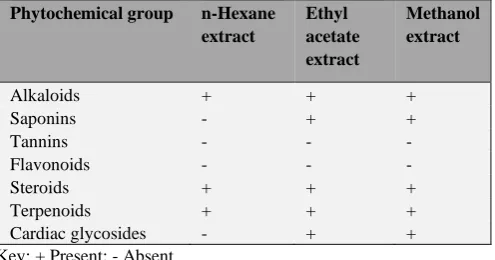
The qualitative phytochemical screening of A. hybridus leaf extracts revealed the presence of secondary metabolites (Table 2). Alkaloids, saponins, steroids, terpenoids, and glycosides were present in A. hybridus leaf, but flavonoids and tannins were absent. This result corroborates the findings of Maiyo et al., who noted that leaf extract of A. hybridus contained steroids, terpenoids and cardiac glycosides but lacked tannins.28 Cardiac glycosides are an
important class of natural drugs that are widely used in the modern treatment of congestive heart failure and for the treatment of arterial fibrillation and flutter.29 Terpenoids
have been demonstrated to be active against bacteria, fungi, viruses and protozoa.30,31 Alkaloids have important
pharmacological uses such as analgesics, antibacterial, antimalarial and anti-hypertensive.32
Table 2. Phytochemical groups present in A. hybridus leaf.
Phytochemical group n-Hexane extract
Ethyl acetate extract
Methanol extract
Alkaloids + + +
Saponins - + +
Tannins - - -
Flavonoids - - -
Steroids + + +
Terpenoids + + +
Cardiac glycosides - + +
Key: + Present; - Absent
Table 3. Phytochemical percentage composition of A. hybridus leaf.
Phytochemical group Percentage composition (%)
Alkaloids 0.004
Glycosides 0.009
Saponins 0.002
Flavonoids Nil
Tannins Nil
Total 0.015
GC-MS is preferred for more precise information in both qualitative analysis and quantitative determination.33A
the phytochemicals and other chemical constituents of medicinal plants account for their medicinal value.34 GC-MS
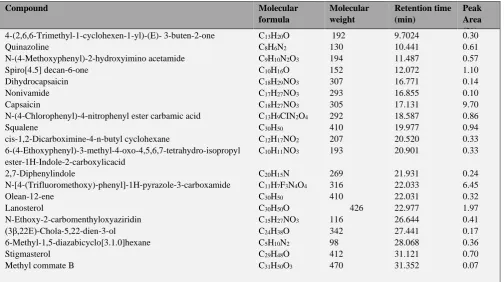
analysis of methanolic extract of A. hybridus leaf indicated the presence of 20 compounds. The names and structures of identified phytochemicals with their retention time, molecular formula, molecular weight and abundance (peak area in %) are presented in Table 4. Among the identified phytochemicals, squalene is a compound that possesses antitumor, antioxidant, anticancer, antimicrobial, chemo-preventive, pesticide and sun-screen properties; squalene has also been reported as an important precursor for the synthesis of phytosterols such as sitosterol, campesterol and stigmasterol. Capsaicin and dihydrocapsaicin are alkaloids and have been reported to have antioxidant activity, methyl commate B is a triterpene glycoside in nature. Triterpene glycosides are well known for their cytotoxic, antibacterial, antimicrobial, antiviral, insecticide, nematicide, anticoagulant, hemolytic, antiparasitic, wound healing and antitumor activities. Quinazoline is an alkaloid having anti-cancer, antifungal and antibacterial properties while stigmasterol exhibits anti-cancer activities.35-40 Qualitative and quantitative studies have revealed that this plant is rich in phytochemical components and therefore could play important medicinal and physiological roles.
Antimicrobial activity of A. hybridus leaf extracts
The methanol extract of A. hybridus leaf demonstrated varied concentration-dependent antimicrobial activities against the test organisms (Table 5). The extract was active against E. coli, S. aureus, B. cereus, A. niger and T. mentagrophyte. However, there was no observable zone of inhibition against P. aeruginosa. Antimicrobial activities of the ethyl acetate extract of A. hybridus leaf are presented in
table 6. It was observed that the ethyl acetate extract demonstrated weak activity against S. aureus, B. cereus, and E. coli when compared with the positive control (streptomycin and ofloxacin). Only 50-200 mg mL-1 of the
extract had effect on T. mentagrophyte and A. niger, the other dilutions had no effect. There was no measurable zone of inhibition against P. aeruginosa. n-Hexane extract had little inhibitory effect on S. aureus, E. coli and B. cereus. There was no measurable inhibition zone against P. aeruginosa. However, the extract showed moderate antifungal activity in some of the concentrations compared to conventionally used fluconazole (Table 7). Several studies have indicated that Gram-negative bacteria are more resistant to antimicrobial agents than Gram-positive bacteria, due to the presence of a multilayered structure of Gram-
negative bacteria that is not present in Gram-positive bacteria.41 Results of this study showed that the extracts of A.
hybridus leaf were active against E. coli, S. aureus, B. cereus, T. mentagrophyte and A. niger but were ineffective against P. aeruginosa (Tables 5-7). P. aeruginosa is considered one of the most rapidly growing bacteria in its resistance to existing antibiotics.19,42 The results of A. hybridus leaf indicate that methanol produced a more potent extract with increased antimicrobial activity, which inhibited greater number of bacterial strains and fungi. The observed antifungal potency of methanol extract can be attributed to two reasons. First, the nature of biologically active components (alkaloids, terpenoids and saponins) present.43 Alkaloids, terpenoids and saponins, documented as plant metabolites, have been well known for their antimicrobial activities.43 Secondly, the high polarity and strong extraction capacity of methanol may have given rise to a large number of active constituents responsible for the observed antifungal activity.
Table 4. Identified components of methanolic extract of A. hybridus leaf.
Compound Molecular
formula
Molecular weight
Retention time (min)
Peak Area (%) 4-(2,6,6-Trimethyl-1-cyclohexen-1-yl)-(E)- 3-buten-2-one C13H20O 192 9.7024 0.30
Quinazoline C8H6N2 130 10.441 0.61
N-(4-Methoxyphenyl)-2-hydroxyimino acetamide C9H10N2O3 194 11.487 0.57
Spiro[4.5] decan-6-one C10H16O 152 12.072 1.10
Dihydrocapsaicin C18H29NO3 307 16.771 0.14
Nonivamide C17H27NO3 293 16.855 0.10
Capsaicin C18H27NO3 305 17.131 9.70
N-(4-Chlorophenyl)-4-nitrophenyl ester carbamic acid C13H9CIN2O4 292 18.587 0.86
Squalene C30H50 410 19.977 0.94
cis-1,2-Dicarboximine-4-n-butyl cyclohexane C12H17NO2 207 20.520 0.33
6-(4-Ethoxyphenyl)-3-methyl-4-oxo-4,5,6,7-tetrahydro-isopropyl ester-1H-Indole-2-carboxylicacid
C10H11NO3 193 20.901 0.33
2,7-Diphenylindole C20H15N 269 21.931 0.24
N-[4-(Trifluoromethoxy)-phenyl]-1H-pyrazole-3-carboxamide C11H7F3N4O4 316 22.033 6.45
Olean-12-ene C30H50 410 22.031 0.32
Lanosterol C30H50O 426 22.977 1.97
N-Ethoxy-2-carbomenthyloxyaziridin C15H27NO3 116 26.644 0.41
(3β,22E)-Chola-5,22-dien-3-ol C24H38O 342 27.441 0.17
6-Methyl-1,5-diazabicyclo[3.1.0]hexane C5H10N2 98 28.068 0.36
Stigmasterol C29H48O 412 31.121 0.70
Table 5. Antimicrobial activity of methanol extract of A. hybridus leaf.
MCO Zone of inhibition (mm)
200 mg mL-1 100 mg mL-1 50 mg mL-1 25 mg mL-1 12.5 mg mL-1 6.25 mg mL-1 PCT
S.a 10.1±0.23 9.7±0.12 8.9±0.21 8.1±0.21 7.7±0.12 7.7±0.12 28.9±1.05 ST) B.c 10.1±1.10 9.0±0.20 8.6±0.12 8.3±0.20 8.1±1.01 8.1±0.17 19.8±0.12(ST) E.c 9.2±0.31 8.9±0.21 8.6±0.23 8.2±0.40 7.8±0.29 8.1±0.25 19.3±0.35(OF)
P.a NA NA NA NA NA NA 15.9±0.21(OF)
A.n 9.9±0.21 8.8±0.06 8.5±0.15 8.0±0.06 7.9±0.15 7.4±0.06 13.9±0.12(FZ)
T.m 9.8±0.23 9.2±0.21 8.8±0.31 8.3±0.25 7.4±0.25 NA 12.0±0.10(FZ)
NA - no action, MCO – microorganisms, B. c – Bacillus cereus, S. a – Staphylococcus aureus, E. c –Escherichia coli, P. a – Pseudomonas aeruginosa, A. n Aspergillus niger, T. m – Trichophyton mentagrophyte, PCT – positive control: ST- Streptomycin, OF – Ofloxacin, FZ – Fluconazole.
Table 6. Antimicrobial activity of ethyl acetate extract of A. hybridus leaf.
MCO Zone of inhibition (mm)
200 mg mL-1 100 mg mL-1 50 mg mL-1 25 mg mL-1 12.5 mg mL-1 6.25 mg mL-1 PCT
S.a 9.1±0.27 8.5±0.15 NA NA NA NA 28.9±1.05 ST)
B.c 9.3±0.47 9.1±0.21 8.5±0.23 8.4±0.25 8.0±0.21 7.3±0.21 19.8±0.12(ST)
E.c 8.9±0.06 7.6±0.17 NA NA NA NA 19.3±0.35(OF)
P.a NA NA NA NA NA NA 15.9±0.21(OF)
A.n 9.7±0.27 8.2±0.12 7.7±0.23 NA NA NA 13.9±0.12(FZ)
T.m 9.8±0.12 9.1±0.21 8.6±0.12 NA NA NA 12.0±0.10(FZ)
NA - no action, MCO – microorganisms, B. c – Bacillus cereus, S. a – Staphylococcus aureus, E. c –Escherichia coli, P. a – Pseudomonas aeruginosa, A. n Aspergillus niger, T. m – Trichophyton mentagrophyte, PCT – positive control: ST- Streptomycin, OF – Ofloxacin, FZ – Fluconazole.
Table 7. Antimicrobial activity of n-hexane extract of A. hybridus leaf.
MCO Zone of inhibition (mm)
200 mg mL-1 100 mg mL-1 50 mg mL-1 25 mg mL-1 12.5 mg mL-1 6.25 mg mL-1 PCT
S.a 9.5±0.36 8.8±0.21 NA NA NA NA 28.9±1.05 ST)
B.c 9.4±0.59 9.1±0.23 8.8±0.15 8.2±0.25 7.7±0.61 7.6±0.29 19.8±0.12(ST)
E.c 8.9±0.59 8.8±0.23 8.4±0.15 NA NA NA 19.3±0.35(OF)
P.a NA NA NA NA NA NA 15.9±0.21(OF)
A.n 9.0±0.21 8.5±0.12 7.7±0.15 NA NA NA 13.9±0.12(FZ)
T.m 9.9±0.10 8.9±0.10 NA NA NA NA 12.0±0.10(FZ)
NA - no action, MCO – microorganisms, B. c – Bacillus cereus, S. a – Staphylococcus aureus, E. c –Escherichia coli, P. a – Pseudomonas aeruginosa, A. n Aspergillus niger, T. m – Trichophyton mentagrophyte, PCT – positive control: ST- Streptomycin, OF – Ofloxacin, FZ – Fluconazole.
Table 8. ANOVA Result for antioxidant activity of A. hybridus leaf extracts.
Extract Method
HRIA (560 nm) DPPH (515 nm) Phosphomolybdate (695 nm) Reducing ability (700 nm)
Vitamin C 0.41±0.15 0.54±0.14 0.45±0.04 0.33±0.07
Methanol extract 0.43±0.06 0.51±0.13 0.44±0.04 0.29±0.04
n-Hexane extract 0.34±0.06 0.37±0.10* 0.36±0.04* 0.27±0.08
Ethyl acetate extract 0.41±0.18 0.49±0.08 0.40±0.04 0.28±0.05
P-value 0.1667 <0.0001 <0.0001 0.1685
F-value 1.742 12.37 11.36 1.761
Summary Ns S S Ns
Summary of the six varying concentrations (0.25, 0.50, 1, 1.5, 2.0 and 2.5 mg L-1) of different solvent extract of A. hybridus leaf. Values
are the mean SD of samples in triplicate. Means present a significant difference (p<0.01). *Significance difference versus vitamin C, S-significant, NS – No significant difference.
Although results of the antibacterial assay were not very promising, an increase in the concentration of the extracts may improve the inhibition. In addition, the antimicrobial activities displayed against E. coli, S. aureus, B. cereus T.
mentagrophyte and A. niger could be due to the synergistic
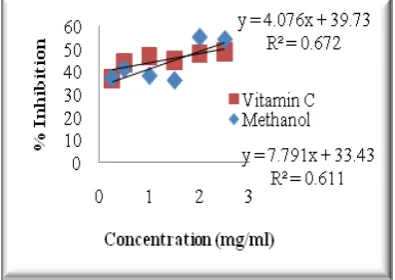
Figure 2. DPPH free radical scavenging activity of methanol extract of A. hybridus leaf.
Figure 3. DPPH free radical scavenging activity of ethyl acetate extract of A. hybridus leaf.
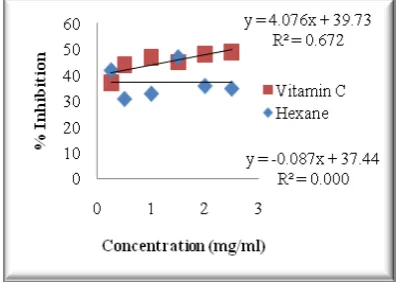
Figure 4. DPPH free radical scavenging activity of n-hexane extract of A. hybridus leaf.
Figure 5. Hydroxyl radical inhibitory activity of methanol extract of A. hybridus leaf.
Figure 6. Hydroxyl radical inhibitory activity of ethyl acetate extract of A. hybridus leaf.
Figure 7. Hydroxyl radical inhibitory activity of n-hexane extract of A. hybridus leaf.
Figure 8. Phosphomolybdate assay of ethyl acetate extract of A. hybridus leaf.
Figure 10. Phosphomolybdate assay of n-hexane extract of A. hybridus leaf.
Figure 11. Reducing ability of ethyl acetate extract of A. hybridus leaf.
Figure 12. Reducing ability of methanol extract of A. hybridus leaf.
Figure 13. Reducing ability of n-hexane extract of A. hybridus leaf.
Antioxidant activity
Antioxidant activity of A. hybridus leaf was determined using DPPH radical scavenging, hydroxyl radical inhibitory, reducing power and phosphomolybdate assays. Previous researchers have reported that different methods for determining antioxidants activity give different results because of their different mechanistic principles.44 DPPH
assay is one of the best-known, accurate, and frequently employed methods for evaluating antioxidant activity.45 It is
a stable free radical because of delocalization of its unpaired electron over the whole molecule. Donation of protons to the DPPH radicals results to a corresponding change from violet to pale yellow in solution. Comparable scavenging activities of the plant extracts were observed with those of the standard compound (Table 8). The result revealed significant differences with n-hexane extract while for ethyl acetate and methanolic extracts, there were no significant differences. It was also observed that the scavenging effect of the plant extracts on DPPH radical was in the order, methanol > ethyl acetate > n-hexane extracts. Scavenging effect of A. hybridus leaf extracts could be attributed to the presence of stigmasterol, an anticancer phytosterol.35,40 It
was observed that there exist a strong significant correlation (R² = 0.7996, Figure 2) in the activity of methanol extract of A. hybridus leaf when compared to vitamin C. In contrast, n-hexane extract showed a non-significant correlation with a negative slope (y = -3.0247x +40.907, R² = 0.1242, Figure 4) indicating that there was little or no scavenging activity in the n-hexane extract. The trend in the behaviour of methanolic extract was similar to that of vitamin C. Figure 3 shows that the radical scavenging activity is in positive correlation with the concentrations of ethyl acetate extract used. However, correlation in the case of n-hexane was found to be non-significant (Figure 4). This result is consistent with another report of a strong correlation of antioxidant activity in methanolic extract.46
Reducing power assay is often used to assess the ability of an antioxidant to donate an electron.24 In this study, the
ability of extracts was estimated in order to determine the potential of the extracts to reduce Fe3+ to Fe2+ by electron
donation. This is associated with the presence of a redundant or complex molecule serving as an electron donor and/or free radical scavengers. In this study, the reducing power of the plant extracts were found in the order, methanol > ethyl acetate >n-hexane (Table 8), indicating that the methanolic extract has a better reducing power than other extracts. Methanolic extract of A. hybridus leaf may, therefore, contain high amount of reductants compared to n-hexane and ethyl acetate extracts. Therefore, methanolic extract can act as electron donor and could react with free radicals to convert them into more stable products and terminate the free radical chain reactions. This result confirms the findings of El-Hashasa et al., who reported that the reducing power of a plant correlates with its phenolic content.47 Figure 12
depicts that the reducing ability is in positive correlation with the concentrations of the extract (methanol) used. Significant positive correlations (Figure 11) were observed between the ethyl acetate extracts and vitamin C. While the n-hexane extract exhibited a non-significant correlation (Figure 13).
lipids.48 Thus, removing OH radical is very important for the
protection of biological systems. In this study, the methanol extract of A. hybridus leaf was more active than other extracts and was slightly better than vitamin C (Table 8). Correlation coefficient of methanol extract is R² = 0.885, showing that the inhibitory activity of the plant was slightly higher than vitamin C (R² = 0.6773, Figure 5). Ethyl acetate extract of A. hybridus leaf scavenged hydroxyl radical at concentrations of 2.0 mg mL-1 to 2.5 mg mL-1 which may be
attributed to the presence of capsaicin. Capsaicinoids with phenolic structure can donate hydrogen to hydroxyl radical, thereby neutralizing it into water. The R-value of ethyl acetate appeared to be better than that of n-hexane (Figure 6 and 7). This could be as a result of the polarity index of n-hexane (0.1). There was a strong linear relationship between the activities of ethyl acetate and vitamin C (Figure 6). In contrast, n-hexane exhibited no correlation or relationship between the two variables (Figure 7). Alkaloids are major antioxidants in natural products, and their antioxidant activities have been proven in recent studies.49,50 The activity
of these plant extracts, especially methanol and ethyl acetate extracts are indications of the presence of phytochemicals that could be responsible for the observed antioxidant activity.
Phosphomolybdate test measures the ability of an extract to destroy free radicals by transferring an electron to the later. The antioxidants present in the extract reduced molybdate (VI) to molybdate (V) and this was measured spectrophotometrically at 695 nm.22 Comparable scavenging
activities of the plant extracts were observed with those of the standard compound (Table 8). The result revealed significant differences with n-hexane extract while for ethyl acetate and methanolic extracts, there were no significant differences. However, the antioxidant activity of vitamin C, an antioxidant used as the positive control, had a significantly better correlation than A. hybridus leaf (Figures 8-10). The observed differences in antioxidant properties may be due to the polarity of extraction solvents.
CONCLUSION
Methanolic extract of A. hybridus leaf showed significant antioxidant property. The leaf of A. hybridus is rich in various phytochemicals and had moderate to significant antifungal property but showed quite weak antibacterial activity. Bioactive compounds present in this leaf can be harnessed as natural antioxidants and pharmaceutical products.
REFERENCES
1Liu, Z. L., He, Q., Chu, S. S., Wang, C. F., Du, S. S., Deng, Z. W.,
Essential oil composition and larvicidal activity of Saussurea lappa roots against the mosquito Aedes albopictus (Diptera: Culicidae), Parasitol. Res., 2012, 110(6), 2125-2130. DOI 10.1007/s00436-011-2738-0
2Das, K., Tiwari, R. K. S., Shrivastava, D. K., Techniques for
evaluation of medicinal plant products as an antimicrobial agent: Current methods and future trends, J. Med. Plant Res., 2010,4(2), 104-111. DOI: 10.5897/JMPR09.030
3Sofowara, N. A., Medicinal Plants and Traditional Medicine in
Africa (Rep.edn), Spectrum Book Ltd., 2006, 150-160.
4Dahanukar, S. A., Kulkarni, R. A., Rege, N. N., Pharmacology of
medicinal plants and natural products, Indian J. Pharm. Sci., 2000, 32, 81-118.
https://pdfs.semanticscholar.org/5b28/cccaa13ef8660cb7d19c 87252448da272262.pdf
5Rahmoun, N. M., Atmani, Z. B., Benabdallah, M., Boucherit, K.,
Villemin, D., Braham, N. C., Antimicrobial activities of the henna extract and some synthethic naphthoquinones derivatives, Am. J. Med. Biol. Res., 2013, 1(1),16-22. DOI: 10.12691/ajmbr-1-1-3
6Aiyegoro, O. A., Okoh, A. I., Phytochemical screening and
polyphenolic antioxidant activity of aqueous crude leaf extract of Helichrysum pedunculatum. Int. J. Mol. Sci., 2009, 10(11), 4990-5001. Doi:10.3390/ijms10114990
7Salazar-Aranda, R., Perez-Lopez, L. A., Lopez-Arroyo, J.,
Alanis-Garza, B. A.,Waksman de Torres, N., Antimicrobial and antioxidant activities of plants from northeast of Mexico, Evid Based Complementary and Alternat. Med. 2011(15) 536139, Doi:10.1093/ecam/nep127
8Muniz-Marquez, D. B., Wong-Paz, J. E., Contreras-Esquivel, J. C.,
Rodriguez-Herrera, R.,Anguilar, C. N., Extraction of phenolic compounds from Coriandrum sativum L. and Amaranthus hybridus L. by Microwave technology, in: Polyphenols in plants: Isolation, purification and extract preparation, Ed. Watson, R. R., 2nd Edition 2019,
185-190.https://doi.org/10.1016/B978-0-12-813768-0.00012-8
9Oke, O. L., Amaranth, in Handbook of tropical Foods, Ed. Chan
H. T. Jr., Marcel-Dekker, Inc. New York, 1983, 1, 12-18.
10Oliveira, J. S., De Carvalho, M. F., Nutritional value of some
edible leaves used in Mozambique, Econ. Bot., 1975, 29, 255-271. https://www.jstor.org/stable/4253619
11He, H. P., Cai, Y., Sun, M., Corke, H., Extraction and
purification of squalene from Amaranthus grain, J. Agric. Food Chem., 2002, 50, 368-372.DOI: 10.1021/jf9003972.
12Ncube, N. S., Afolayan, A. J., Okoh, A. T., Assessment
Techniques of Anti-microbial Properties of Natural Compounds of Plant Origin: Current Methods and Future Trends, Afr. J. Biotechnol., 2008, 7(12), 1797-1806. https://doi.org/10.5897/AJB07.613.
13Ndukwe, G. I., Oluah, A., Fekarurhobo, G. K., Isolation of an
isoflavonoid and a terpenoid from the heartwood of Baphia nitida Lodd. (camwood), Ovidius Univ. Ann. Chem., 2020, 31(1), 5-8. DOI: 10.2478/auoc-2020-0002
14Ndukwe, G. I., Garba, S. Y., Adelakun, E. A., Activity-guided
isolation and antimicrobial assay of a flavonol from Mitracarpus verticillatus (Schumach. & Thonn.) Vatke.10SR, J. Appl. Chem., 2016, 9(9), 118-131. DOI:10.9790/5736-090902118131
15Khan, A. M., Qureshi, R. A., Ullah, S. A., Gilani, A., Nosheen,
Sahreen, A., Murad, W., Phytochemical analysis of selected medicinal plants of Margalla Hills and Surroundings, J. Med. Plant Res., 2011, 5(25), 6055-6060.
https://academicjournals.org/journal/JMPR/article-abstract/3A291D221055
16Wenkam, A., Utilization and processing of fruits, Macmillan
Press, London, 1990, 388-508.
17Wills, R., Postharvest: An introduction to physiology of handling
fruits and vegetables, Publication University of New Wales Press Ltd., 1998, 560-561.
18Mahmoudi, S., Khali, M., Benkhaled, A., Benamirouche, K., Bait,
19Ndukwe, G. I., Ojinnaka, C. M., Oyedeji, A.O., Nxasana, N.,
Apalata, T., Antibacterial activity of the fruit of Napoleonaea imperialis P. Beauv, J. Innov. Res. Health Sci. Biotechnol.,
2015, 1(1), 1-11. Doi: 10.18644/jiresh-biotech.0000001
20Sunil, C., Ignacimuthu, S., In vitro and in vivo antioxidant
activity of Symplocoscochinchinensis S. Moore leaves containing phenolic compounds, Food Chem. Toxicol., 2011, 49(7), 1604-1609. Doi: 10.1016/j.fct.2011.04.010.
21Bera, T. K., Chatterjee, K., Ghosh, D., In vitro antioxidant
properties of the hydro-methanol extract of the seeds of Sweiteniamahagoni (L.) Jacq, Biomarkers Genomic Med., 2015, 7(1), 18-24.https://doi.org/10.1016/j.bgm.2014.05.003
22Jayaprakasha, G. K., Jena, B. S., Negi, P. S., Sakariah, K. K.,
Evaluation of antioxidant activities and antimutagenicity of turmeric oil: A byproduct from curcumin production, Z. Naturforsch. C., 2002, 57(1), 823-835.DOI: 10.1515/znc-2002-9-1013
23Okoko, T., Diepreye, E., Reduction of hydrogen
peroxide-induced erythrocyte damage by Carica papaya leaf extract,
Asian Pac. J. Trop. Biomed., 2012, 2(1), 449-453. Doi: 10.1016/S2221-1691(12)60074-4
24Oyaizu, M., Studies on the products of browning reaction
prepared from glucose amine, Jap. J. Nutr. Diet.,1981, 44(2), 307-315. https://doi.org/10.5264/eiyogakuzashi.44.307
25Nisa, H., Kamili, A. N., Bandh, A. S., Amin, S., Lone, A. B.,
Parray, A. J., Phytochemical screening, antimicrobial and antioxidant efficacy of different extracts of Rumex dentatus L. - A locally used medicinal herb of Kashmir Himalaya, Asian Pac. J. Trop. Dis., 2013, 3(6), 434-440. doi: 10.1016/S2222-1808(13)60097-3
26Ibrahim, R., Abubakar, E. M., Modibbo, S. M., Lamaran, B. G.,
Percentage yield and acute toxicity of the plant extracts of Ceiba pentandra grown in Bauchi state, north eastern Nigeria, J. Pharmacogn. Phytochem., 2017, 6(5), 1777-1779. http://www.phytojournal.com/archives/?year=2017&vol=6&i ssue=5&ArticleId=1904
27Hayouni, E. A., Abedrabba, M., Bouix, M., Hamdi, M., The
effects of solvents and extraction method on the phenolic contents and biological activities in vitro of Tunisian Quercus coccifera L, and Juniperus pheonica L. fruits extracts, Food Chem., 2007, 105, 1126-1134. https://doi.org/10.1016/j.foodchem.2007.02.010
28Maiyo, Z. C., Ngure, R. M., Matasyoh, J. C., Chepkorir, R.,
Phytochemical constituents and antimicrobial activity of extracts of three Amaranthus plant species, Afr. J. Biotechnol., 2010, 9(21), 3178-3182. https://doi.org/10.5897/AJB2010.000-3162
29Nascimento, G. G. F., Locatelli, J., Freitas, P. C., Silva, G. I.,
Antimicrobial activity of plant extracts and phytochemicals on antibiotics resistant bacteria, Braz. J. Microbiol., 2000, 31, 247-256. https://doi.org/10.1590/S1517-83822000000400003
30Tassou, C. C., Drosinos, E. H., Nychas, G. J. E., Effects of
essential oils from mint (Mentha piperita) on Salmonella enteritidis and Listeria monocytogenes in model food systems at 4 °C and 10°C, J. Appl. Bacteriol.,1995, 78, 593-600. https://doi.org/10.1111/j.1365-2672.1995.tb03104.x
31Cowan, M. M., Plant products as anti-microbial agents Journal of
Clin. Microbiol. Rev., 1999, 12, 564-582. DOI: 10.1128/CMR.12.4.564
32Ugwoke, C., Oriji J., Anze S., Ilodibia, C., Qualitative
phytochemical analysis and antimicrobial potential of the ethanol and aqueous extracts of the leaf, stem and root of Chromeleana odorata, Int. J. Pharmacogn. Phytochem., 2017, 9(2), 207-214.DOI number: 10.25258/phyto.v9i2.8064
33Sermakkani, M., Thangapandian, V., GC-MS analysis of Cassia
italica leaf methanol extract. Asian J. Pharm. Clin. Res., 2012, 5(2), 4-90. https://www.semanticscholar.org/paper/GC-
MS-ANALYSIS-OF-CASSIA-ITALICA-LEAF-
METHANOL-Sermakkani-Thangapandian/dac8c97c43a43c991bdaaa3cf59ed97c419ec3 19
34Varadarajan, P., Rathinaswamy, G., Asirvatahm, D.,
Antimicrobial properties and phytochemical constituents of Rheo discolor Hance. Ethnobotan. leaflets, 2008, 12, 841-845.https://pdfs.semanticscholar.org/5653/c650c90a93e814f3 3386f86b48ab2c5773c9.pdf
35Ezhilan, B. P., Neelamegam, R., GC-MS analysis of
phytocomponents in the ethanol extract of Polygonum chinense L. Pharmacog. Res., 2011, 4(1), 4-11. Doi: 10.4103/0974-8490.91028
36Cheong, B. E., Zakaria, N, A., Cheng, A. Y. F., Teoh, P. L.,
GC-MS analysis of Strobilanthes crispus plant, Trans. Sci. Technol,, 2016, 3(1-2), 61-155.
http://www.transectscience.org/pdfs/vol3/no1_2/31-2_155_161.pdf
37Murakami, K., Ito, M., Htay, H. H., Tsubouchi, R., Yoshino, M.,
Antioxidant effect of capsaicinoids on the metal-catalyzed lipid peroxidation. Biomed. Res., 2001, 22(1), 15-17. https://www.jstage.jst.go.jp/article/biomedres/22/1/22_15/_p df
38Bahrami, Y., Franco, C. M. M., Acetylated triterpene glycosides
and their biological activity from holothuroidea reported in the past six decades, Marine Drugs, 2016, 14(8), 147-150. https://doi.org/10.3390/md14080147
39Jafari, E., Khajouei, M. R., Khodarahmi, A. K., Quinazolinone
and quinazoline derivatives: Recent structures with potent antimicrobial and` cytotoxic activities, Res. Pharma. Sci., 2016, 11(1), 1-14.
https://www.ncbi.nlm.nih.gov/pubmed/27051427
40Bradford, P. G., Awad, A. B., Phytosterols as anticancer
compounds, Mol. Nutr. Food Res., 2007, 51(2), 161-170. https://doi.org/10.1002/mnfr.200600164
41Silhavy, M. J., Kahne, D., Walker, S., Bacterial cell envelope,
Cold Spring Harb. Perspect. Biol., 2010, 2(5), 1-17. http://dx.doi.org/10.1101/cshperspect.A000414.a000414
42Kusi, M., Shrestha, K., Malla, R., Study on Phytochemical,
Antibacterial, Antioxidant and Toxicity Profile of Viscum album Linn Associated with Acacia catechu, Nepal J. Biotechnol., 2015, 1, 60-65.
https://doi.org/10.3126/njb.v3i1.14234
43Tschesche, R., Advances in the chemistry of antibiotics
substances from higher plants: Pharmacognosy and Phytochemistry, in Wagner H, Horharmmer L, editors. Proceeding of the 1st International Congress, Murich. Berlin, 1971, 1, 89-274.
https://link.springer.com/chapter/10.1007/978-3-642-65136-6_12
44Floegel, A., Kim, D., Chung, S., Koo, S. I., Chun, O. K.,
Comparison of ABTS/DPPH assays to measure antioxidant capacity in popular antioxidant-rich US foods, J. Food Compos. Anal., 2011, 24(7), 1043-1048. DOI: 10.1016/j.jfca.2011.01.008
45Zhou, K., Yu, L., Effects of extraction solvent on wheat bran
antioxidant activity estimation. LWT-Food Sci. Technol., 2004, 7, 717-721. DOI: 10.1016/j.lwt.2004.02.008
46Lee, Y., Chang, Y., Physiochemical and antioxidant properties of
methanol extract from maca (Lepidium meyeniiwalp.) leaves and roots, J. Food Sci. Technol., 2019, 1, 278-286. DOI: 10.1590/fst.03818
47El-Hashash, M. M., Abdel-Gawad, M. M., El-Sayed M. M.,
Sabry W. A., Abdel-Hameed E. S., Saleh, E., Abdel-Lateef E. E., Antioxidant properties of methanolic extracts of the leaves of seven Egyptian Cassia species. Acta Pharm. Zagreb Croatia, 2010, 60(3), 361-367. DOI: 10.2478/v10007-010-0030-y
48Mohamed, H., Ons, M., Yostra, E. T., Rayda, S., Neji, G.,
49Pu, F., Ren, X. L., Zhang, X. P., Phenolic compounds and
antioxidant activity of fruits of six Diospyros Kaki genotypes, Eur. Food Res. Technol., 2013, 6923-932. DOI: 10.1007/s00217-013-2065-z
50Yin, Q. W., Duan, S. Q., Zhang, Y., Zeng, L., Song, X. M.,
Antioxidant activities of different solvent extracts and alkaloids of Uncaria rhynchophylla Jacks, J. Guangxi Normal Univ., 2010, 28(1), 31-34.
https://www.cabdirect.org/cabdirect/abstract/20103165819