THE CONTEXT, CONTENT, AND CONSEQUENCES OF DISRUPTIVE BEHAVIOR AMONG NURSES THROUGH PARTICIPANT OBSERVATION AND INTERVIEWS
Jacoba Leiper
A dissertation submitted to the faculty of the University of North Carolina at Chapel Hill in partial fulfillment of the requirements for the degree of Doctor of Philosophy in the School of Nursing.
Chapel Hill 2014
Approved by:
Noreen Esposito
Linda Beeber
Donna Havens
Jennifer Leeman
© 2014 Jacoba Leiper
ABSTRACT
JACOBA LEIPER: The Context, Content, and Consequences of Disruptive Behavior among Nurses through Participant Observation and Interviews
(Under the direction of Dr. Noreen Esposito)
Disruptive behavior (DB) is a term used in health care to describe a wide variety of
unhelpful, hostile, and hurtful behaviors that occur between health care workers. The
consequences of disruptive behavior are significant for both nurses and health care
organizations. Most studies on DB examine type, frequency, and consequences of disruptive
behavior, while few explore how and why it occurs.
While DB occurs among all healthcare workers, this study focused on DB among
nurses and aimed to understand how it occurred. The research questions were: a) how do
nurses perceive DB in their interactions with other nurses, and b) under what circumstances
and in what context does DB among nurses occur. Data collection methods included
participant observation, semi-structured interviews, and contextual documents. Data analysis
was done using grounded theory techniques and included coding, comparison of data,
developing diagrams and matrices, and in-depth exploration of categories.
Findings included that two types of nurses regularly initiated DB on the nursing unit:
disruptive nurses (individuals who had a pattern of continual DB) and stress-reactive nurses
(individuals who initiated DB only under stressful circumstances). Responses of nurses to
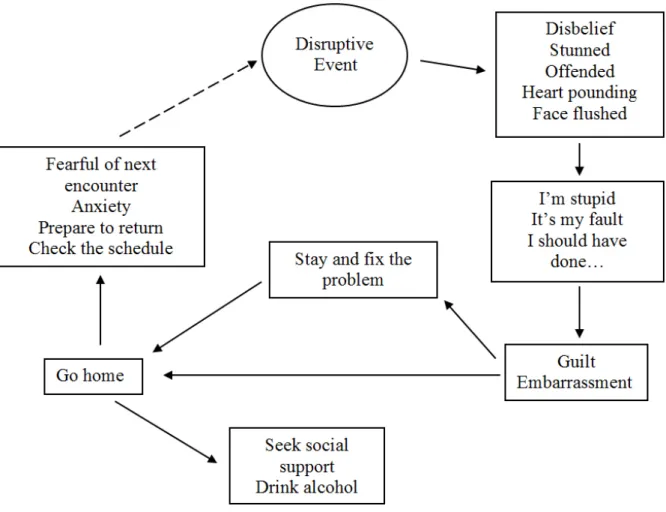
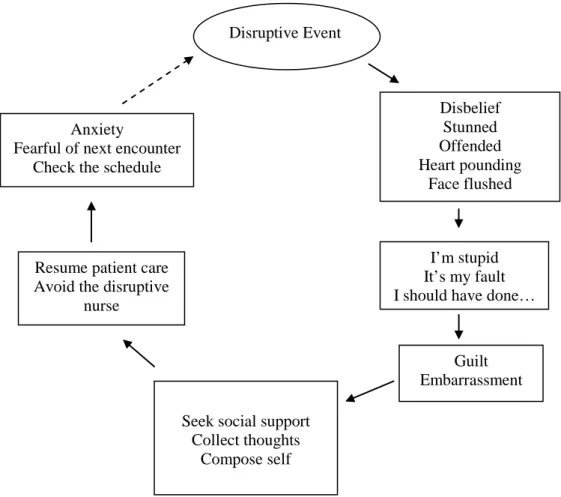
DB consisted of a pattern of managing, recovering, and preparing for DB. Solving DB on the
reported, confronted, or surrendered to the situation. Each of these strategies had
unsatisfactory consequences which lead to the nurses becoming despondent. The result was a
seemingly never-ending rise and fall of DB. Lastly, this study identifies that public DB
(constant stream of negative comments and complaining to no one in particular) is a form of
DB and is very disturbing to nurses.
This study adds to a broader understanding of the occurrence of DB in the nursing
workplace and may provide opportunities for the design of preventative interventions at
nursing practice and organizational levels for the promotion of a safe and healthy work
DEDICATION
ACKNOWLEDGEMENTS
First I would like to thank my academic advisor and dissertation chair, Dr. Noreen
Esposito. Throughout the years of course work, development of ideas, and execution of the
dissertation you not only shared your expert knowledge with me, but supported me
academically and emotionally. I truly appreciate your willingness to work with me on the
topic of disruptive behavior among nurses and your persistence in encouraging me to do
participant observation as a way to gather data on this topic. Participant observation made
this study unique. Thank you for your constructive criticism, and continual questioning and
challenging of my ideas, research analysis, and writing – all contributed to my success. I
would also like to thank my other committee member for sharing their expertise regarding
my dissertation research.
I want to thank the nurse manager who agreed that I could conduct the study on her
nursing unit. I want to extend a very special thank you to the nurses and staff on the nursing
unit; without the help of especially the nurses of the unit, this study would not have been
possible. Thank you for opening your hearts and sharing your stories and experiences of
disruptive behavior with me. Words cannot express how greatly I appreciate it.
Many thanks to my fellow doctoral students, co-workers, friends and family for your
support and excitement with every milestone reached. Thank you to my fellow doctoral
student friends who made classes and school fun with lunches, dinners, and writing circles.
Thank you for staying connected via face book when we were at different stages of study and
resources, and celebrate every successful step. Thank you to my employer and co-workers
who supported me by allowing me to reduce my workload and always asking how I was
doing and offering help and resources. Thank you to my family who was always
encouraging, pushing me forward, and telling me how proud they are. Thank you to my
husband to experienced all the trials and tribulations of doctoral study with me. Although we
separated during my doctoral studies, this accomplishment is mostly thanks to your
willingness to accommodate my academic desires.
Lastly, a very special thank you to my friends Liz, Angela, and Don for always being
there and keeping me focused. The companionship, encouragement, fun, and empathy that
you provided kept me going during difficult times. Liz, your friendship, support and
TABLE OF CONTENTS
LIST OF TABLES ... xiii
LIST OF FIGURES ... xiv
Chapter I. A STUDY OF DISRUPTIVE BEHAVIOR AMONG NURSES ...1
Background and Context...1
Problem Statement ...5
Statement of Purpose and Research Questions ...6
Rationale and Significance ...6
Research Approach ...7
Researcher’s Perspective ...8
Assumptions ...9
Definitions of Key Concepts ...10
Chapter Summary ...12
II. REVIEW OF THE LITERATURE: AN OVERVIEW ...13
Conceptualization of Disruptive Behavior in the Literature ...14
The Nurse—And Disruptive Behavior ...17
Prevalence ...18
Perpetrators ...18
Organizational antecedents ...19
Demographic antecedents ...20
Personal antecedents ...21
Environmental antecedents ...22
Consequences ...22
The nurse ...22
The organization ...23
The profession ...23
Reactions ...24
Data from Qualitative Studies ...25
Old and New Theoretical Perspectives ...27
Oppression Theory ...28
Circuits of Power Theory ...28
Salin’s (2003) Model of Enabling, Motivating, and Precipitating Structures and Processes in the Work Environment That Contribute to Bullying ...29
Limitations of These Theories ...30
Research Study Plan ...30
Summary ...32
III. METHODOLOGY ...34
Research Approach ...34
Participant Observation ...36
Semi-structured Interviews ...37
Research Setting...38
Gaining Entrée and Sampling of Nursing Unit ...39
Gaining entrée to the hospital ...39
Sampling the nursing unit ...39
Gaining entrée to the nursing unit ...39
The Nursing Unit ...40
A typical day on the unit ...43
The new graduate nurses’ day...44
Data Collection and Sampling of Nurses for Observation and Interviews ...45
Conducting Participant Observation ...45
Building Rapport ...46
Sampling Nurses for Participant Observation...49
Sampling Nurses for Interviews...49
Conducting Interviews ...50
Data Management ...51
The Data ...51
Field Notes ...51
Interviews ...52
Protection of Participants ...53
Data Analysis and Synthesis ...54
Coding and Categorizing ...54
Exploring and Comparing Codes and Categories ...56
Contextual Documents ...57
Issues of Trustworthiness ...58
Summary ...59
IV. FINDINGS ...61
Kelly’s Story ...61
The Characteristics of Disruptive Behavior: “…This is Our Drama…” ...62
The Actors ...63
When DB Was Most Likely to Occur ...65
Experiencing High Stress ...66
Receiving Report at Change of Shift ...68
Normal Unit Activity ...69
What DB Looked Like ...70
Where DB Occurs: Private and Public Areas ...71
The Consequences of a DB Event: How Unit Nurses Respond ...73
Managing DB ...75
Recovering from DB ...75
Preparing for DB ...76
Summary ...76
The Never-ending Story of Disruptive Behavior ...77
Problems with Reporting ...78
Official Rules of Reporting ...78
Nurse Behavior is Reportable? ...79
Reluctance of Resolving DB by Themselves...80
Changing Perception about DB ...81
Surrendering to the Situation ...81
The Seemingly Never-ending Rise and Fall of DB ...82
Summary ...88
V. DISCUSSION ...90
Major Findings ...90
Limitations of the Study...95
Implications at Nursing Practice and Organizational Levels ...96
Implications for Future Research ...98
Conclusion ...99
APPENDICES ...100
LIST OF TABLES
Table
1 Intensity of DB Occurring Based on Context and
LIST OF FIGURES
Figure
1 The consequences of DB at the end of shift. ... 74
CHAPTER 1
A STUDY OF DISRUPTIVE BEHAVIOR AMONG NURSES
This qualitative study explored the phenomenon of disruptive behavior (DB) among
nurses in a hospital environment. DB is a term used to describe a wide variety of negative
verbal, physical, and work-related behaviors among nurses. The aim of the study was to
understand the process of DB among nurses in a healthcare organization by exploring nurses’
perspectives of DB, and examining the circumstances and contexts in which DB occurs. I
anticipate that the knowledge generated by this study will provide new insights into how and
why DB occurs among nurses. Data collection included participant observation,
semi-structured interviews, and contextual documents.
This chapter begins with an overview of the background and context of the problem.
This is followed by the problem statement and research questions. Also included are
discussions of the research approach, rationale and significance, researcher’s perspective, and
assumptions. The chapter concludes with definitions of key terms.
Background and Context
Disruptive behavior (DB) is a term used in healthcare to describe a wide variety of
hostile, hurtful, and intimidating behaviors that occur between workers (Joint Commission,
2008). DB commonly consists of various degrees of verbal, physical, and work-related
abuses (Dzurec, Kennison, & Albataineh, 2014; Farrell, 1997, 1999; Farrell, Bobrowski, &
also known as horizontal or lateral violence, bullying, incivility, and verbal, physical, or
psychological abuse, among many other terms. Behaviors include shouting, criticizing,
spreading gossip, isolation, finger pointing, intimidation, unfair work assignment, and many
more.
DB has been identified as a problem in healthcare and discussed in nursing literature
for more than 30 years. Many articles and studies include references to the societal and
historical development of nursing as influences in the development of DB and explain DB
using oppression theory (Freire, 1973). Some writers openly argue that DB originated due to
the social construction of the female role in society and the historical development of nursing
(Alavi & Cattoni, 1995; Dellasega, 2005; Roberts, 2000, 2006). With the constructed role of
women as caregivers in western society and nursing’s roots in both religious and military
models, a foundation of obedience and submission was established. This placed women in
an oppressed situation and essentially limited nursing to a specific gender. Nursing
education had to uphold society and nursing’s standards of creating a “good” or “ideal” nurse
(Alavi & Cattoti, 1995; Roberts, 2006). So, harshness of words and treatment, during and
shortly after training, ensured the creation of self-sacrificing, loyal, and obedient nurses. The
ideal nurse limited her speaking voice, was loyal at all costs, and was strictly obedient to
those in power and authority. Thus, DB found early footholds among nurses and continued
to thrive.
Alavi and Cattoni (1995) and Farrell (2001) published breakthrough articles which
daringly exposed DB and challenged traditional theories. Alavi and Cattoni (1995), in a bold
article titled “Good nurse, bad nurse . . .,” explicitly described classic recurring examples of
incident involves a new nurse being sent by experienced nurses to obtain vital signs on a
deceased patient. The new nurse either became very upset believing he or she found the
patient dead or returned with fabricated vital signs, because he or she already experienced
negative behavior and degradation from the other nurses when not complying with or failing
their requests. This story is told and retold and reenacted by nurses, and consequently DB is
perpetuated.
Farrell (2001) wrote an article titled “From Tall Poppies to Squashed Weeds: Why
Don’t Nurses Pull Together More?” in response to and to challenge authors who explain DB
only in terms of oppression and feminist theories. Farrell stated that DB viewed from these
perspectives were limiting and did not include workplace practices (organizational and
practice factors) or the nature of interpersonal conflict—factors which are controlled by
nurses in most cases. Farrell proposed that the discussion and examination of DB among
nurses move beyond “a preoccupation with oppression theory” (p. 33). These authors caused
a burst of articles and research on DB.
Currently, the situation regarding DB remains dire. Generally, most articles
determine the frequency of behaviors, determine who is most at risk, and examine possible
causes and consequences. The prevalence of DB remains high as studies indicate that up to
79% of hospital nurses identify themselves as victims of DB (Chipps, Stelmaschuk, Albert,
Bernhard, & Holloman, 2013; Rosenstein & O’Daniel, 2008; Rowe & Sherlock, 2005;
Vessey, Demarco, Gaffney, & Budin, 2009). The most frequent source of verbal aggression
was nurses, followed by families and physicians.
Studies consistently indicate that victims are usually new younger female nurses,
Roche, Diers, Duffield, & Catling-Paull, 2010; Rowe & Sherlock, 2005; Vassey et al., 2009;
Yildirim, 2009). Griffin (2004) found that 96.1% of new graduates (n = 26) witnessed
disruptive behavior among nurses in their first year, and 46% experienced it. Griffin also
noted that 60% of new nurses left their position within the first six months due to some form
of negative behavior.
The reasons why DB occurs among nurses is complex. Besides the greater societal
and historical influences, organizational factors and specific work practices may play a part.
Contextual and circumstantial factors such as organizational tolerance for DB, misuse of
authority, lack of autonomy, formal and informal power differences, high workload,
time-pressures, problems with the socialization process of new nurses into the profession, lack of
effective communication and communication skills, respect, and anger management among
many other factors were identified as part of the overall problem of DB (Allan, Cowie, &
Smith, 2009; Corney, 2008; Curtis, Bowen, & Reid, 2007; Dzurec et al., 2014; Hutchinson,
Jackson, Vickers, & Wilkes, 2006a, 2010; Hutchinson Wilkes, Jackson, & Vickers, 2010;
Khalil, 2009; Randle, 2003; Roche et al., 2010). A high rate of nurse turnover and nursing
shortage may contribute as well (Griffin, 2004; Lavoie-Tremblay, Wright, Desforges,
Galenas, Marchionni, & Drevniok, 2008). Furthermore, organizational structures such as
bureaucracy, definitive lines of authority, centralization of decision making, specialization,
written policies, and high productivity standards may cause nurses to struggle with their care
giving role since there is a conflict between the organizations’ need for effectiveness and the
nurses’ need to provide care (Deetz, 1992; Dellasega, Volpe, Edmonson, & Hopkins, 2014;
The toll of DB can be severe. Victims of DB experience adverse consequences; for
example, the nurse may experience emotional effects (anger, fear, frustration); social effects
(strained relationships, lowered support); psychological effects (depression, burnout,
substance abuse); and physical effects (decreased immune response, cardiac arrhythmias).
Rowe and Sherlock (2005) reported (n = 213) that reactions included feelings of anger, hurt,
frustration, and shock, and long-term effects included lower job satisfaction, negative
collegial relationships, lesser sense of well-being, and less trust and support in the workplace.
These consequences in turn affect the organization in terms of decreased patient
safety, adverse patient outcomes, decreased quality of care, and a negative work
environment, as well as financial effects including reduced productivity, increased staff
turnover, increased absenteeism, and increased sick leave (Bartholomew, 2006; Farrell, 1997,
1999; Farrell et al., 2006; Griffin, 2004; Joint Commission, 2008; Rosenstein & O’Daniel,
2008; Rowe & Sherlock, 2005). For example, Rosenstein and O’Daniel (2008) reported (n =
4,530) that it provoked stress and frustration, and impaired relationships.
There were also clinical effects of DB: disruptive behavior was related to adverse
events, medical errors, and patient mortality (Rosenstein & O’Daniel, 2008). Bartholomew
(2006) described an occasion where a nurse was so upset after a disruptive incident that she
could not think clearly and overdosed a patient with intravenous morphine. The patient was
transferred to the intensive care unit. In the present day complex healthcare arena, we can ill
afford these costly consequences.
Problem Statement
The prevalence of DB is high, the reasons why it occurs varied, and the consequences
frequency, type, and consequences of DB and although societal, historical, organizational,
demographical, and personal factors have been identified as causes of DB, how and if these
factors play a role in creating DB incidents has not been fully explored. Despite the
information available, solutions and effective interventions are lacking. The qualitative
nature and data collection methods of this study may provide new insight and lead to
effective strategies that will lessen the occurrence and impact of DB.
Statement of Purpose and Research Questions
With this study I examined nurses’ perspectives, context, circumstances, and overall
process of DB in a hospital environment. The aim was to gain a better understanding of the
process of DB which may serve as a starting point for potential interventions to prevent DB.
The research questions were:
1. How do nurses perceive disruptive behavior in their interactions with other
nurses?
2. How do nurses understand the circumstances and contexts in which disruptive
behavior among nurses occur?
Rationale and Significance
Important regulatory institutes, commissions, and organizations acknowledged the
problem of DB and its effects in healthcare. The Institute of Medicine (2000) published a
report on patient safety—To Err is Human—calling for action. The report cites results of
many studies regarding communication among healthcare workers, patient care errors, and
other safety issues in healthcare. They identify a strong safety culture with elements of clear
communication, teamwork, and safe methods to report errors among their priorities. The
creation of a Code of Conduct aimed at stopping disruptive and intimidating behaviors
among healthcare professionals, effective in 2009. The International Council for Nurses
(ICN) also recognized the issue and is hosting its fourth conference on Violence in the Health
Sector in October 2014 (ICN, 2014).
The rationale for this study developed from the prevalence of DB among nurses, lack
of effective interventions, and my desire to understand and take action to reduce DB among
nurses. I believe that as healthcare workers we need to adhere to the ethical principal of “do
no harm.” DB causes harm. Increasing our understanding of DB may uncover ways to
develop interventions aimed at reducing the behavior. Effective interventions may reduce all
the consequences that nurses suffer as result of DB and improve the retention of nurses,
especially new-graduate nurses, create a safer work environment for nurses, promote values
inherent in nursing (e.g., caring, collaboration, teamwork), promote patient safety, and
enhance the general welfare of healthcare organizations.
Research Approach
A qualitative research approach using data collection methods of participant
observation, semi-structured interviews, and contextual documents was appropriate for this
study. Participant observation refers to a process of learning through exposure to or
involvement in the daily lives or routines of the participants in the research setting (Schensul,
Schensul, & LeCompte, 1999; Spradley, 1979). This data collection method allowed me to
study and experience the workplace context, listen to the nurses, and watch them interact
with each other in their natural setting. Semi-structured interviews refer to conversations to
“obtain descriptions of the life world of the interviewee in order to interpret the meaning of
with nurses and other pertinent healthcare workers allowed me to understand DB from the
nurses’ point of view as they told me about their experiences. Grounded theory is a
systematic yet flexible methodology that guides data collection and analysis of the research
topic or phenomenon with the purpose of developing a theory (Charmaz, 2006). I did not use
grounded theory, but used grounded theory ideas to plan and guide the study and analysis
techniques to explore conditions, causes, and consequences of DB.
After approval from my university’s Institutional Review Board and the hospital’s
(study site) Nursing Research Council I started data collection by doing participant
observations on one nursing unit for six months. After an initial settling-in period I
conducted in-depth semi-structured interviews with 16 nurses from the unit and four other
pertinent healthcare workers. In addition, I collected a variety of relevant contextual
documents. The information obtained through participant observation and interviews formed
the basis for the overall findings, while the texts added context. To my knowledge this was
the first and only study to use participant observation as a data collection method on the topic
of DB.
Researcher’s Perspective
At the time this study was conducted, I was a doctoral student with more than 20
years of hospital nursing experience. I worked as a nurse educator in the academic setting,
but had bedside nursing experience in three different countries where I have experienced and
witnessed DB many times. I became interested and started exploring the topic while still
working at the bedside after hearing about a multitude of DB incidents concerning a
particular nurse and wanted to help the nurses who were her victims. A few years later, after
view of DB was influenced by my personal work experience and academic exploration. In
2009 I conducted a pilot study conducting interviews with nurses who experienced DB. The
results of that study formed the foundation for this study.
Based on my current beliefs, my understanding of DB is that it is a complex
multifaceted problem that is not only influenced by factors such as the historical and societal
development of nursing, but also the circumstance and context of the organizational and
nursing unit environment. I acknowledge up front that my experiences and prior academic
work and research served as initial sensitizing concepts (Charmaz, 2006). To counteract
unduly influencing my research, I maintained the grounded theory tradition of diligent and
systematic analysis of data and by engaging in reflection. Reflexivity ensured that I critically
explored and explained my role as researcher (Dowling, 2006; Wolf, 2007). In this study I
had a close relationship with the participants and the work environment, and explicit
discussion of all my personal responses adds credibility to the study. Throughout the
research process I discussed my findings and interpretations with my participants and
dissertation chair.
Assumptions
Based on my experience and background I made the following assumptions. First,
that most nurses experience some form of DB from another nurse, but in many cases they do
not recognize the behavior as disruptive. My second assumption is related to the first; that
nurses view DB among themselves as “normal.” This assumption is based on my personal
experience as a student nurse, later as a new nurse in many different hospitals during the
development of my career, the long-standing saying of “nurses eat their young,” and the
behavior. Nurses only recognize some common behaviors as disruptive when their
awareness of DB is heightened during discussion or education about the topic. Third, that
nurses (mostly women) do not effectively deal with DB in the work setting. I base this
assumption on my experience, observations, and prior research findings that nurses do not
confront each other to resolve an issue, but rather talk to other nurse colleagues about the
incident. This allows feelings of anger, frustration, guilt, or grudges that remain unresolved
for extended periods of time. Fourth, that the organizational and unit environment influences
the amount of DB that occurs among nurses. Again, personal experience and observation
during my past 20 years of bedside nursing led me to believe that DB flourishes in some
environments where it is allowed (and at times rewarded) by management. An
organizational environment where there are time limitations on documentation and
performance of tasks, a lack of sufficient staff, an increased workload and pressure on
performance, high levels of staff turnover with constant orientation of new nurses, and poor
communication among nurses and nurses and management lead to increased tension and
stress among all parties that cause DB.
Definitions of Key Concepts
Bullying—Bullying involves repeated forms of negative or hostile behaviors
occurring over time which may involve offending, harassing, or negatively affecting the
work tasks of the individual targeted (Hutchinson, Wilkes, et al., 2010).
Disruptive Behavior (DB)—Intimidating and disruptive behaviors include overt
actions such as verbal outbursts and physical threats, as well as passive activities such as
refusing to perform assigned tasks or quietly exhibiting uncooperative attitudes during
professionals in positions of power. Such behaviors include reluctance or refusal to answer
questions and return phone calls or pages, condescending language or voice intonation, and
impatience with questions (Joint Commission, 2008).
Disruptive nurse—A nurse who has a pattern of continual disruptive behavior.
Horizontal Violence—
Horizontal violence most commonly takes the form of psychological harassment, which creates hostility, as opposed to physical aggression. This harassment involves verbal abuse, threats, intimidation, humiliation, excessive criticism, innuendo, and exclusion, denial of access to opportunity, disinterest, discouragement and the withholding of information. (McKenna, Smith, Poole, & Coverdale , 2003, p. 2)
Incivility—“Low intensity, deviant behavior with ambiguous intent to harm the target
in violation of workplace norms and mutual respect. Uncivil behaviors are characteristically
rude and discourteous, displaying a lack of regard for others” (Hutton, & Gates, 2008, p.
168).
License Practical Nurse (LPN)—A person with one year nursing education at a
technical or community college. An LPN works closely with and is supervised by an RN,
but has a limited scope of practice.
Nurses—Registered nurses (RN) and Licensed practical nurses (LPN).
Organizational and Unit Environment—Contextual conditions that exist in the
healthcare organization or nursing unit (e.g., staffing levels, time constraints, workflow,
communication mechanisms, policies and procedures, formal and informal hierarchy,
organizational and unit culture, physical outlay).
Registered Nurse (RN)—A person with either a baccalaureate or associate’s degree in
Stress-reactive nurse—A nurse who initiates disruptive behavior only under stressful
conditions (e.g., patient deteriorating rapidly, multiple admissions at the same time).
Chapter Summary
In this chapter, I introduced the study by providing a brief overview of DB. The
overview started with the presumed origins of the behavior rooted in societal beliefs
regarding the role of women and the historical development of nursing. I discussed current
knowledge of the prevalence, causes, and consequences, and present the research questions.
The rationale of the study was discussed in terms of the current interest in DB by major
regulatory nursing institutes and commissions and the knowledge that lacks. Significance of
the study relates to the benefits that can potentially be reaped by having a greater
understanding of the problem. I discussed the research approach, my perspective, interest,
and bias, and followed this segment with my assumptions about DB. The chapter concluded
with key definitions. Overall, the chapter represented a concise rendering of the prelude to
CHAPTER 2
REVIEW OF THE LITERATURE: AN OVERVIEW
The purpose of this qualitative study is to explore nurses’ perspectives of DB and to
examine the circumstances and contexts in which DB occurs. The aim is to understand the
process of DB among nurses in a healthcare organization. I start this chapter by describing
how DB is conceptualized in nursing literature, and follow with a detailed review of
quantitative and qualitative studies, addressing specific components of DB. I also briefly
discuss theories that explain DB. The material examined contributed directly to my
understanding of the problem, in combination with my personal observation and experience,
and philosophical perspective led to the development of a research plan that I explain at the
conclusion of this chapter.
I now continue with a more concentrated review the literature, focusing on DB among
nurses. This concentrated review includes research published since July 2001. Two
databases, PubMed and the Cumulative Index to Nursing and Allied Health Literature
(CINAHL), were searched. Search terms included “disruptive behavior and nurses and
research,” “horizontal violence and nurses and research,” “lateral violence and nurses and
research,” “bullying and nurses and research,” “incivility and nurses and research,”
“interpersonal conflict and nurses and research,” and “verbal and physical abuse and nurses
and research.” In addition to electronic databases, reference lists at the end of research
were used to do direct name searches of work by leaders (e.g., Bartholomew, Farrell,
Hutchinson, and Griffin) on this topic.
The search was limited to English-language publications of quantitative and
qualitative studies that addressed disruptive behavior among nurses or between nurses and
healthcare workers. Included studies addressed one or more aspects related to types and
frequency of DBs. Exclusion criteria included studies (a) that focused solely on behavior
between physicians and nurses, (b) regarding the development or psychometric testing of
tools measuring DB, (c) where a type of DB was not the primary focus (e.g., measured
related concepts such as burnout or empowerment), and (d) the majority of the sample
population were not nurses. A sample of 24 articles was examined for this review.
Since DB is a collective term used to describe a variety of behaviors I will start with
how it is conceptualized in the nursing literature.
Conceptualization of Disruptive Behavior in the Literature
Disruptive behavior (DB) is a relatively new term introduced by the Joint
Commission to describe a variety of negative behaviors (Joint Commission, 2008). The Joint
Commission (2008) defines DB as “overt actions such as verbal outbursts and physical
threats, as well as passive activities such as refusing to perform assigned tasks or quietly
exhibiting uncooperative attitudes during routine activities” (¶2). They note that these
behaviors are often manifested by healthcare professionals in positions of power.
Verbal, physical, and other abuses and its effects among healthcare workers have
been reported in nursing literature for more than 30 years. Terminology commonly used in
the vast majority of studies and journal articles examining this topic includes verbal and
violence, and incivility, among many others. While the definitions, and therefore the
meanings, of the terms differ, many researchers and authors use these terms in combination
or interchangeably. In addition to the variety of terms, different definitions are used for the
same terms. Overall, DB is mostly defined in terms of behaviors. In other words, some
authors define terms in an abstract manner, while most list specific behaviors. Appendix A
represents a selection of the most commonly used terms and examples of the variety of
definitions.
The term “bullying” or “bullying” in combination with another term (e.g., bullying
and horizontal violence) is used most in the literature, followed by “verbal abuse” or a
combination of “verbal and physical abuse.” Fewer researchers use the other terms (e.g.,
incivility, disruptive behavior, workplace violence, overt violence, psychological violence,
vertical violence, and more). The use of multiple terms and definitions leads to inconsistency
and a lack of clarity of the concept which hinders research efforts (Stevenson, Randle, &
Grayling, 2006). Adding to the difficulty of conceptualizing DB in nursing is the fact that
definitions are seldom clearly operationalized in studies. The term under study is measured
by examining behaviors, but there is no clear distinction between the terminology used and
the behaviors measured (Leiper, 2010). Studies examining the terms “bullying,” “verbal
abuse,” or “incivility” all measure similar behaviors. The wide range of definitions (e.g.,
repeated behavior or single incident, peer or person in the hierarchy) and selection of
behaviors being measured (only verbal or verbal and physical abuse or verbal and sexual)
does not present a clear conceptualization of DB. The information of DB in healthcare,
To better understand and conceptualize DB, I created a typology of disruptive
behaviors (Leiper, 2010; see Appendix B). Three broad categories according to type of
abuse became evident: verbal abuse, physical abuse, and work-related abuse. Verbal abuse
included three subcategories: overt behaviors (e.g., criticizing, name calling, and blaming);
covert behaviors (e.g., sabotage and isolation); and sexual behaviors (e.g., harassment and
intimidation). Physical abuse included three subcategories: physical abuse to person (e.g.,
non-sexual abuse—hitting, slapping); physical abuse to property; and physical abuse—
sexual. Work-related abuse included behaviors such as sabotage and use of power.
Behaviors in the verbal and physical abuse categories can occur vertically (along a hierarchy)
and horizontally (from peer), while those in the work-related category refer mostly to vertical
abuse. Using my typology, I found that all studies that I used to create the typology (24
studies over the past 13 years) addressed verbal abuse in some form, three-fourths addressed
sexual behaviors, and nearly half addressed physical and work-related abuse (Leiper, 2010).
To add to the complexity of determining what DB consists of, several issues
presented with the measurement of DB in quantitative studies (Leiper, 2010). First, most
researchers designed their own surveys or modified existing tools. Second, the tools were
not used repeatedly and reliability levels were not always reported (Hinchberger, 2009;
Longo, 2007; McKenna et al., 2003). Third, different tools were used to measure the same
concept. Fourth, behaviors were measured over different lengths of time. Lastly, the answer
format of the tools varied greatly. A prime example was studies measuring the most used
term, “bullying.” Since 1991, six studies were done measuring bullying among healthcare
workers. Three studies used self-designed surveys (Hinchberger, 2009; Quine, 2001; Vessey
2008), and one used the Workplace Bullying Behavior Scale (Yildirim, 2009). Of these six
studies, two measured the behavior over 12 months (Quine, 2001; Yildirim, 2009), two over
six months (Johnson & Rea, 2009; Simons, 2008), one during the time that participant was a
nursing student (Hinchberger, 2009), and one did not specify a time span (Vessey et al.,
2009). The answer format also differed and varied from Likert scales to yes/no to checkbox
answers.
In summary, these three factors, (a) the poor conceptualization of DB in terms of
definition, (b) poor operationalization, and (c) the limitations in measurement produce
fragmented, unclear, and unfocused information preventing the synthesis of data and adding
to the complexity of interpretation and determination of the nature of DB in healthcare and
among nurses. Clearly further study of the topic is needed. Future studies need to focus on
the development of consistent terminology, definition, and instrument use to clarify the
concept of DB. Qualitative studies, such as this study and others, will assist in providing
foundational concepts to clarify DB, and may provide a better foundation for measurement
and exploration of DB in a consistent manner.
The Nurse—And Disruptive Behavior
The literature on DB in healthcare is abundant with studies investigating DB in
healthcare (e.g., Dzurec et al., 2014; Farrell et al., 2006; Rosenstein & O’Daniel, 2008;
Spence Laschinger, Leiter, Day, & Gilin, 2009). The vast majority study DB in a broad
sense, including all healthcare workers in survey questions, while only four studies examined
nurse-nurse DB exclusively (Curtis et al., 2007; Dunn, 2003; Longo, 2007; McKenna et al.,
among nurses. Keeping in mind the inclusion and exclusion criteria for this review, the
results are particularly troubling.
Prevalence
DB among nurses is a global issue and prevalence is disturbingly high. Several
international studies serve as examples: Turkish researchers Celik, Celik, Agirbas, and
Ugurluoglo (2007) found that 80.6% of nurses (n = 622) reported verbal abuse from another
nurse. Spence Laschinger et al. (2009) in a Canadian study reported that 77% of nurses (n =
612) reported incivility from a co-worker, while Khalil (2009), a South African researcher,
reported a workplace violence prevalence rate of 54% among nurses (n = 471). Studies
conducted in the U.S. also report notable prevalence. Rowe and Sherlock (2005) found that
75% of nurses (n = 213) experience verbal abuse from another nurse, while Rosenstein and
O’Daniel (2008) found that 73% of nurses (n = 2 846) witness DB among themselves.
Chipps et al. (2013) found 59% of the study participants (n = 167) reported witnessing
coworker bullying weekly, and 34% reported experiencing at least two bullying acts weekly,
and Simons (2008) reported that 31% of nurses (n = 511) experience bullying behavior from
another nurse at least daily or weekly. Overall, studies indicate that 17–79% of hospital
nurses identify themselves as victims of DB (Vessey et al., 2009). Although epidemiological
data of DB are not available, the vast amount of scholarly and anecdotal literature clearly
indicates that DB is a significant problem for nurses and healthcare organizations.
Perpetrators
Most studies on the topic of DB include a choice of many perpetrators (e.g., patients,
physicians, managers, nurses). Considering the inclusion criteria that the majority of the
nurses. Of the 24 studies reviewed, most indicated the nurse or co-worker as top perpetrator
(Budin, Brewer, Chao, & Kovner, 2013, Celik et al., 2007; Khalil, 2009; Lemelin, Bonin, &
Duquette, 2009; Rowe & Sherlock, 2005; Spence Laschenger et al., 2009; Vassey et al.,
2009) followed by the manager/director/administrator (Johnson & Rea, 2009; Quine, 2001;
Yildirim, 2009), and patient/family (Camerino, Estryn-Behar, Conway, van der Heijden, &
Hasselhorn, 2008; Farrell et al., 2006; Nachreiner et al., 2007).
Antecedents
The context and circumstances of when DB occurs in the hospital setting is somewhat
less explored in the literature. Since context was a crucial part of this study I explored the
reported antecedents closely. Quantitative and qualitative studies investigated a variety of
causes of DB. Quantitative studies included a variety of variables; to ease the synthesis of
this information, I again created a typology where I assessed the type of antecedent addressed
by the study. I created four categories: organizational, demographical, personal, and
environmental antecedents. Organizational antecedents include skill mix, autonomy,
uncertainty of patient treatment, time constraints, work load, and so forth; demographical
antecedents include sex, age, education, experience, and so on; personal antecedents include
previous history of abuse, work-home relationship, and so forth; and environmental
antecedents include gang activity in the area and poor neighborhoods.
Organizational antecedents. Several studies reported similar results. For example, Camerino et al. (2008) in a longitudinal survey study (n = 34107) found that work factors
such as hours, uncertainty concerning patient’s treatment, role conflicts and ambiguity,
increased lifting and bending, and time pressures (ΔR2 =0.09 ranging from 0.17; p < .0001)
3099) foundthat organizational conditions such as lack of autonomy (r = -0.26; p < 0.05),
unanticipated changes in patient acuity (r = 0.07; p < 0.05), time constraints (r = -0.02; p <
0.05),number of nurses (r = -0.08; p < 0.05), percentage of patient admissions (r = 0.07; p <
0.05) and number of patients awaiting admission (r = 0.07; p < 0.05) were all correlated to
the amount of workplace violence the nurses experienced. Quine (2001) in a descriptive
study (n = 396) found that bullying increased when nurses perceived a weak organizational
climate of trust. She reported the impact of higher workloads (M = 3.2, SD = 1.0 as to M =
2.8, SD = 0.9, t [1,383] = 4.3, p < 0.001), greater role ambiguity (M = 2.5, SD = 1.2 as to M =
1.9, SD = 0.9, t [1,387] = 6.4, p < 0.001), less participation in decision making (M = 2.9, SD
= 1.2 as to M = 1.9, SD = 0.9, t [1,389] = 7.8, p < 0.001), and lower job control (M = 16.5,
SD = 4.3 as to M = 19.5, SD = 2.5, t [1,377] = 8.2, p < 0.001). Budin et al. (2013) in a
descriptive study (n = 1407) found similar results regarding autonomy, support, and nurse
satisfaction. Yildirim (2009) in a descriptive correlation study (n = 286) found that bullying
positively correlated with increased workload (p < 0.05). In Anderson’s (2002) descriptive
study (n = 67) nurses indicated that poor staffing, long hours of work, and not knowing how
to deal with workplace abuse were contributing factors.
Demographic antecedents. Vassey et al. (2009) in a survey study (n = 303) found that nurses who worked on medical surgical units were bullied most (23%), followed by
critical care (18%), and emergency room (12%). Camerino et al. (2008) in a longitudinal
survey study (n = 34107) found that nurse-nurse violence most often occurs in intensive care
units (7.4%), followed by geriatric units (7%), and medical-surgical units (6%).
Vassey et al. (2009) found that nurses who worked five or less years on a unit (58%;
Yildirim (2009) in a descriptive correlation study (n = 286) found that bullying was
positively correlated to total years working (p < 0.05) and negatively correlated to the nurse’s
age (p < 0.01). Bullying was not associated with nurses’ education level. However, Lemelin
et al. (2009) in a descriptive correlation study (n = 181) found that gender (r = .17; p = 0.05)
and education (r = .16; p = 0.05) yielded significant correlations. Women were more
exposed to psychological abuse than men. More advanced education resulted in less
workplace violence and younger nurses were more exposed to physical and sexual abuse than
older nurses. Violence from a colleague was also related to years of experience (r = -.12; p =
0.05). Less experienced nurses experienced more violence from a colleague. Roche et al.
(2010) in a descriptive correlation study (n = 3099) also found that the higher level of
education the nurse has, the less violence she experiences (r = -.22; p = 0.05). Camerino et
al. (2008) yielded similar results in their longitudinal survey study (n = 34107). They
reported that younger nurses (< 30 years), experienced more violence from colleagues (6.3%)
compared to older nurses (> 45 years; 5.2%); nurses with higher education experience less
(5.2%) than those with lesser education (6.9%); and that nurses born in another country
experience more violence (6.6%) from a colleague than those who were locally born (5.4%).
Interestingly, Budin et al. (2013) in their study (n = 1407) found that nurses experience more
verbal abuse from colleagues who were unmarried.
Personal antecedents. Anderson (2002) in a descriptive study (n = 67) attempted to determine if a history of childhood or adult abuse contributed to being a victim of workplace
violence, but found this not to be statistically significant. Dion (2006) in a descriptive
correlation study (n = 115) assessed the impact of work-family conflict (demands of work
with work responsibilities) on incivility at the workplace. Neither was found to be
statistically significant.
Environmental antecedents. Anderson (2002) in a descriptive study (N = 67) found that hospital location and the presence of gang activity in the area were identified as
contributing factors.
Consequences
Many studies address the consequences of DB. To present findings in an organized
manner I have categorized the consequences according to those associated with the nurse, the
organization, and the profession. Since there is so much information, I will illustrate the
consequences with a few studies.
The nurse. The psychological, emotional, and physical effects on the nurse are highly evident. Nurses feel that their health is affected; they experience weight loss,
headaches, palpitations, and chest pain; they feel unwanted, undervalued, miserable,
depressed, frustrated, angered, anxious, stressed, and humiliated; they take time off, do not
want to go to work, and have reduced confidence and self-esteem (Camerino et al., 2008;
Chipps et al., 2013; Hutchinson et al., 2006a; McKenna et al., 2003; Nachreiner et al., 2007;
Quine, 2001; Rosenstein & O’Daniel, 2008; Rowe & Sherlock, 2005; Yildirim, 2009). A
few studies serve as examples: Quine (2001) found that 87% of nurses (n = 396) who
experienced bullying felt miserable and depressed and 82% did not want to go to work.
McKenna et al. (2003) found that 58% of nurses (n = 551) who experienced horizontal
violence felt undervalued and unwanted, and Rosenstein and O’Daniel (2008) found that
94% of health care workers (n = 4530) who experience DB stated that it led to stress and
The organization. The health care organization is negatively impacted by DB in terms of turnover, intent to leave, productivity, patient safety, organizational climate, and
commitment (Camerino et al., 2008; Dion, 2006; Hutton & Gates, 2008; Laschinger,
Finegan, & Wilk, 2009; Rosenstein & O’Daniel, 2008; Vessey et al., 2009; Yildirim, 2009).
Rosenstein and O’Daniel’s (2008) study was most influential in the decision of the Joint
Commission to mandate a Code of Conduct for hospitals. They found that 71% of health
care workers (n = 4530)felt that DB led to medication errors, 67% to adverse patient events,
and 27% to increased patient mortality. Spence Laschinger (2013) in a descriptive study (n =
336) found that bullying from nurses had significant direct and indirect effects on
nurse-assessed adverse events (R2 = 0.03-0.06) and perceptions of patient care quality (R2 = 0.04–
0.07). Roche et al. (2010) also found that nurses (n = 3099) reported that DB was associated
with patient falls, medication errors, and late administration of medications. Dion (2006) in a
study of nurses (n = 184) found a significant relationship between DB and decreased
production (p = 0.001) as did Yildirim (2009, n = 286, p < .0001). Spence Laschinger et al.
(2009) found that DB was the strongest predictor for job satisfaction among nurses (N =
1106, p < 0.001). Vessey et al. (2009) found that 49% of nurses (n = 303) lost interest in
their job and 50% had the desire to resign after experiencing DB. Yildirim (2009) also found
a significant relationship between DB and intent to leave (n = 286, p < 0.001). These
findings are consistent with Camerino et al. (2008), who reported that increased DB is related
to lower organizational commitment (n = 34107, p < 0.001).
The profession. With the disturbing consequence of DB being related to intent to leave and lower organizational commitment, recruitment and retention of nurses is essential,
baby boomer retirement. A dramatic increase in the aging patient population is expected, and
simultaneously, experienced nurses, baby boomers themselves, will also be retiring (Bell,
2013; Fox & Abrahamson, 2009; Sherman, Chiang-Hanisko, & Koszalinski, 2013). The
poor retention of new graduate nurses due to DB may play a significant part in a future
nursing shortage. The estimated cost of recruiting and orienting a new graduate is about
$44,000 to $49,000, making DB a financial drawback(Beecroft, Kunzman, & Krozek, 2001;
Halfer, 2007). New graduates and student nurses are particularly vulnerable to DB due to
their situation of inexperience and dependence (Griffin, 2004; Longo, 2007; Randle, 2003).
Beecroft et al. (2001),Winter-Collins and McDaniel (2000), and Griffin (2004) reported that
35%–60% of new graduates leave within their first year due to the workplace environment,
DB, increased stress, and pressure.
Reactions
How nurses react after a DB incident is important because it may reflect the value
they attach to the behavior, or the value they perceive the organization attaches to the
behavior, and their gendered response. Ferns and Chojnacka (2005) reported that nurses
have a “culture of non-reporting” (p. 53). Reasons for underreporting DB included that DB
is seen as routine, reporting incidences were time consuming, lack of awareness of the
reporting system, reporting incidences had not led to change, and the nursing ethic of coping,
among others. Farrell (1999) found that nurses (n = 270) most often attempt to deal with an
incident by talking to colleagues, a friend, a concerned person, a family member, and
manager—in that order. Vassey et al. (2009) in a descriptive study (n = 212) found similar
results with less than 50% of the nurses in acute care settings reporting DB. These findings
that they coped with DB by talking about it to colleagues, because they felt that management
did not take any action and allowed these behaviors to occur without any real consequence to
the perpetrator.
Another most disturbing reaction was found by Randle (2001, 2003). Student nurses
who were exposed to and experienced DB internalized the behavior and started treating
others the same way. Farrell (2001) supports this finding in his discussion of why DB occurs
among nurses, stating that “aggression breeds aggression” (p. 30) mainly because it gets
results which reinforces the behavior, thus perpetuating it. Since DB is commonplace, nurses
see it as part of the job, learn it as they socialize into nursing, maintain it as part of their
culture, and use it to their benefit.
Data from Qualitative Studies
While quantitative studies are very helpful in pinpointing specific variables and
reflect the underlying nature of nursing in the organization, these factors do not tell the whole
story of how DB occurs. Qualitative studies have exposed some of alternate aspects related
to DB, but unfortunately with only a few published, the mechanisms at work have not fully
been exposed or explored.
Australian researchers Hutchinson, Vickers, Jackson, and Wilkes (Hutchinson et al.,
2006a; Hutchinson, Vickers, Jackson, & Wilkes, 2006b, 2006c, 2007, 2008; Hutchinson,
Vickers, et al., 2010; Hutchinson, Wilkes, et al., 2010) have done the most qualitative work,
and have revealed a wealth of knowledge to help the nursing community understand the
intricacies of DB. Their initial studies focused on nurses and student nurses’ stories and
experiences. These studies identified concepts such as othering, legitimization of power,
moved to an organizational perspective leading to the development of a theory and model
(Hutchinson, Vickers, et al., 2010; Hutchinson, Wilkes, et al., 2010; see Appendix C). Their
theory and model was based on their prior findings and the existing organizational theories of
Clegg (1989) and Salin (2003). Hutchinson, Wilkes, et al. (2010) tested their model and
found that three organizational factors contribute to DB among nurses (n = 370). The
organizational factors are (a) informal organizational alliances (groups of nurses who act
together, cliques, old girls’ clubs), (b) organizational tolerance or reward of DB, and (c)
misuse of legitimate authority, processes, and procedures. Informal organizational alliances
are related to organizational tolerance and reward (r = 0.77, p = 0.05) and misuse of
legitimate authority (r = 0.74, p = 0.06). In turn organizational tolerance (r = 0.66, p = 0.13)
and misuse of authority (r = 0.23, p = 0.11) is related to bullying. Alliances that form among
nurses who engage in DB developed into cooperative, deliberate, and planned activities of
destructive behavior and fostered a tolerance for abusive behavior. These nurses “could do
what they like, write their own rules, and work together” (Hutchinson et al., 2006a, p. 229).
Within nursing teams where DB is rife, abuse becomes normalized and surveillance and
control is exercised through power structures that are easily hidden behind legitimate
organizational authority, rules, or procedures. This behavior in combination with
organizational tolerance creates power structures that normalize DB as an accepted part of
nursing culture. New nurses are particularly vulnerable during socialization into the
profession as they often endure an initiation or indoctrination process while learning the
“rules” of the job. When an organization is tolerant of this type of behavior it becomes part
of the organization and unspoken strategic power relations develop between alliances and
abuse. Simultaneously, victims are silenced, or when they complain, are labeled as deserving
of ill treatment and eventually minimized, ignored, and denied (Hutchinson et al., 2006a;
Hutchinson, Wilkes, et al., 2010).
Randle’s (2003) study supports some of the above findings. She conducted a
three-year study with nursing students (n = 43) and set out to explore how changes in their
self-esteem influences patient care. A major finding was that the prevalence of bullying directed
toward the student nurses had negative effects on self-esteem. Power relationships were at
the forefront during the socialization process of students which included undermining their
self-esteem, an initiation process to gain a sense of belonging, and most disturbingly, the
adoption of norms and rules of the dominant group. The internalization of abusive behaviors
toward other nurses perpetuates the prevalent nursing culture. Allan et al. (2009), using case
study methodology (n = 3), found that abusive power relationships in combination with poor
communication contribute to DB. They found that ineffective communication regarding
minor issues escalated to rude and abusive language that quickly led to major consequences.
Khalil (2009) in the first stage of her ethno-phenomenological study collected survey
information from 471 nurses. She also found that lack of effective communication among
nurses, as well as lack of respect and anger management led to DB.
Old and New Theoretical Perspectives
To find reasons for DB among nurses, many nurse scholars turned to theoretical
explanations over the years. Many nursing scholars have explained DB among nurses in
hospital settings in terms of Freire’s (1973) oppression theory, and lately Clegg’s (1993)
circuits of power theory and Salin’s (2003) model of enabling, motivating, and precipitating
2006; Matheson & Bobay, 2007; Roberts, 2000, 2006; Hutchinson et al., 2006b; Hutchinson,
Vickers, et al., 2010; Hutchinson, Wilkes, et al., 2010). All these theories fit under the
umbrella of critical social theory (CST). Freire’s (1973) oppression theory is a prime
example of CST, while Clegg’s circuits of power and Salin’s model are variations of CST
(Calhoun, 1995; Morrow & Brown, 1994).
Oppression Theory
According to oppression theory (Freire, 1973) as a result of constraints imposed by
the dominant culture (e.g., physicians, the medical model, hospital administrators, health
insurance companies, etc.) some nurses are not able to express themselves freely. The
consequent accumulation of unreleased tension causes nurses to lash out at each other.
Oppression theory is relevant since historically nursing (94.4% women) is viewed as a servile
and subordinate job by our society and feminist theorists believe that patriarchal and
capitalist structures that cause the oppression of women are reproduced in the hospital
workplace (Davies, 1995; Dellasega, 2009). The vast majority of articles and studies on DB
mention or apply oppression theory.
Circuits of Power Theory
A second theory that has been used to explain DB among nurses is based on the work
of Clegg’s (1993) circuits of power theory (Hutchinson et al., 2006b). This theory describes
three circuits of power: episodic agency power (micro level/interpersonal), dispositional
power (macro level/social integration), and facilitative power (macro level/systems
integration). Hutchinson et al. (2006b) explored and applied the dispositional power circuit
to nursing. This circuit represents social integration and there is a focus on symbolic power
circuit rules are fixed and meaning is created, contested, and stabilized. The dispositional
power circuit suggests that power operates in groups, and negative behavior directed toward
members who do not conform to group norms helps to maintain order in the group,
strengthening the circuit of power. For example, most nurses on a unit follow the same rules
and procedures—they assimilate into the circuit of power. When one nurse resists and
breaks a rule, the other nurses will see him or her as a failure and target the individual with
negative behavior until the resistance is overcome and the smooth flow of the circuit is
restored, maintaining order within the unit. Negative behavior is thus seen as “normal”
(Hutchinson et al., 2006b).
Salin’s (2003) Model of Enabling, Motivating, and Precipitating Structures and Processes in the Work Environment That Contribute to Bullying
Essentially, the model addresses organizational antecedents of DB. Antecedents fall
into three groups of conditions: (a) enabling (necessary conditions), (b) motivating (good
conditions), and (c) precipitating (trigger conditions) structures and processes in the work
environment. Enabling conditions are the most important and allow DB to occur (or not
occur). They serve as a control. The model indicates that an interaction of enabling factors
with at least one of the motivating (good conditions) or precipitating (trigger conditions)
structures and factors is necessary to lead to DB. In other words, enabling conditions need to
be present for DB to occur and at least one motivating or precipitating condition has to be
present. For example, if a situation exists in an organization where a perpetrator of DB
receives awards (motivating factor) and there is a low cost to the perpetrator (enabling
factor), DB will occur in the organization. Similarly, if there are frequent changes in the
composition of the work group (precipitating factor) and high levels of high levels of
Hutchinson, Vickers, et al. (2010) and Hutchinson, Wilkes, et al. (2010) integrated
components of this theory when they developed their theory (described in earlier section).
Limitations of These Theories
These three theories explain some aspects of DB among nurses, but they are not
comprehensive. Oppression theory explains DB from a larger societal context in terms of
two groups struggling with power. Circuits of power theory (Clegg, 1989), Salin’s (2003)
model, and Hutchinson, Wilkes, et al. (2010) have the potential to explain DB from an
organizational perspective. They do not address the intricacies of the behavior within one
group—the narrower perspective—the nurses actually experiencing it and the meanings they
derive from it. This study will present nurses’ perspectives, where individual characteristics,
interpersonal interactions, individual and/or group behavior, and the work context may be
important.
Research Study Plan
To be successful with this study, I developed a research plan to help focus and shape
the research process (Bloomberg & Volpe, 2008). My research plan was based on exploring
and understanding DB which started with the research questions. The literature and data
from my pilot study, where I used the same research questions, provided valuable sensitizing
concepts (initial ideas) that I used as starting points (Charmaz, 2006). My plan was flexible,
fluid, and essentially a working tool that I continually revised and refined during the course
of the study.
To create the first rendering of the research plan I examined each question and
developed descriptors and sensitizing concepts for each. The first question, “How do nurses
and deals with nurses’ viewpoints of DB. It reaches out to the collective meaning and
experience of DB.
Perception—feelings about DB, feelings, sequence of event, reactions during/after,
decisions during/after, influences, and judgments.
Interview questions explored nurses’ thoughts, feelings, and reactions of DB. By
eliciting information about how DB events happened, how they felt about it, reacted, and
what the consequences were, I got a sense of the meaning of DB. Through participant
observation I confirmed nurses’ perceptions and experiences. As the study progressed I
developed categories from the data about DB that occurs in public and problems with
reporting DB; since I did not anticipate this I included more questions and exploration about
these two categories.
The second question, “How do nurses understand the circumstances and contexts in
which DB among nurses occurs?” deals with circumstances and contexts—two concepts that
overlap to some extent.
Circumstances(when)—to determine circumstances that lead to DB, I coded specific
circumstances or conditions at unit level, for example, report time, sudden or unexpected
increase in workload, emergency situations, time constraints, dependence on others, poor
communication, among others.
Context (who, when, where, why, how)—to determine the context in which DB occurs
I planned to examine broad and narrow contexts. Broad contexts included organizational
factors, but after I started the study I found that due to the nature of DB on the unit and the
nurses’ focus on what was happening in their immediate environment I could not do that. I
when it happened, chain of command, policies and procedures, physical layout, discourse,
body language, dress, demographic information of nurses, etc.).
I used grounded theory techniques for data analysis. I followed the traditional
procedures of initial and then focused coding (Charmaz, 2006). I developed categories from
the codes which I then explored, further focusing on data that would add new knowledge to
the existing literature.
Summary
In summary, while much knowledge of DB exists, the fragmented nature and poor
conceptualization of DB hinders progress on understanding the complete picture of all the
influences involved in creating the phenomenon. Studies highlight the prevalence of DB
among nurses and show that nurses are the leading perpetrators. Specific working conditions
such as increased work load, uncertainty regarding patient condition or treatment, staffing
levels, time constraints, and autonomy, among a few other related conditions, are clearly
identified as potential causes of increased DB among nurses. The type of nursing unit may
also be a factor, with units that deliver higher levels and more complex care identified as
places where DB occurs most. Interrelationships among the nurses were also identified as
important with younger, less experienced nurses being the victims. Personal antecedents
were not significant. One small study explored environmental antecedents and these may
contribute to DB.
Qualitative studies exposed and identified new dimensions of the problem of DB
among nurses. The more intricate processes and interrelationships of group formation, power
organizational structures were identified. Hutchinson et al. has done the most qualitative
work on the topic of DB and developed a theory based on organizational antecedents.
Theoretical explanations for DB have for the most part been limited to oppression
theory which is a broad social theory and limited in its use at the nursing unit level. Present
day researchers are exploring other theories such as Clegg’s (1993) circuits of power and
Salin’s (2003) model of enabling, motivating, and precipitating structures and processes in
the work environment that contribute to bullying.
I conclude the chapter with a description of a research plan that I developed to focus
and shape the study. I included ideas of how I developed the plan and how I adapted and