� � � � ��� � �� �� � � � �� ��������������������� ������������������� ����������� ��������� �������������������� �������������� ��������������������� ���������������� ��������������������
������������������������
������������������������������������������������������������
����������������������������������
������������������������
�������������������������������
����������������������������
��������������� ������������������� ������������������ ��������������������� ���������������������� ������������������������� ������������������������� �������������������������� ��������������������� ���������������������������� ��������������������������� ������������������������ ���������������������������� �������������������������� ��������������������������� ������������������������ ���������������������� �������������������������� ��������������������� ���������������������� �������������������� ����������������������� ����������������������������� ������������������������� �������������������������� ������������������ ������������������������� ������������������ ���������������������������� ������������������������������ ����������������������� �������������������������� ������������������������ ������������������ ���������������������� ��������������������� �������������������������� ����������������������� ������������������� ��������������������������� ���������������������������� ������������������������� ����������������������� �������������� ����������������������� ������������������� ���������������������������� �������������������� ������������������������� �������������������������� ���������������������� ������������������������� ������������������� ������������������������� ���������������� ��������������������� �������������� ������������������� �������������������������� ��������������������������� ��������������������� ������������������������� ������������������������ ����������������������������� ��������������������������� ������������������ ������������������ ��������������������������� �������������������������� ������������������������ �������������������������� �������������������I S B N 1 - 8 4 4 0 7 - 2 1 7 - 7
The UN Millennium Project is an independent advisory body commissioned by the UN
Secretary-General to propose the best strategies for meeting the Millennium Development Goals (MDGs). The MDGs are the world’s targets for dramatically reducing extreme poverty in its many dimensions by 2015—income poverty, hunger, disease, exclusion, lack of infrastructure and shelter—while promoting gender equality, education, health, and environmental sustainability. The UN Millennium Project is directed by Professor Jeffrey D. Sachs, Special Advisor to the Secretary-General on the Millennium Development Goals. The bulk of its analytical work has been carried out by 10 thematic task forces comprising more than 250 experts from around the world, including scientists, development practitioners, parliamentarians, policymakers, and representatives from civil society, UN agencies, the World Bank, the International Monetary Fund, and the private sector. The UN Millennium Project reports directly to UN Secretary-General Kofi Annan and United Nations Development Programme Administrator Mark Malloch Brown, in his capacity as Chair of the UN Development Group.
���������������������
��������������������������
�����������������������
�����������
������������������������
�������������������������������
����������������������������
��������������� ��������������� �������������� ������������������ � ������������
��������������� ����������������� �������������� ������������������ ����������
�������������� ����� ��������� ������������
�������������� ����������������� ������������� ������������� ���������������� ���������� ������������� ���������������� ��� ���������� ���������������� ������������������� ����� ��������
���������������
������������ ������ ������������������ ����������������� ��������������
������������ ��������������� ������������� �������������������
First published by Earthscan in the UK and USA in 2005 Copyright © 2005
by the United Nations Development Programme All rights reserved
ISBN: 1-84407-217-7 paperback
For a full list of publications please contact: Earthscan
8–12 Camden High Street London, NW1 0JH, UK Tel: +44 (0)20 7387 8558 Fax: +44 (0)20 7387 8998 Email: [email protected] Web: www.earthscan.co.uk
22883 Quicksilver Drive, Sterling, VA 20166-2012, USA
Earthscan is an imprint of James and James (Science Publishers) Ltd and publishes in association with the International Institute for Environment and Development
A catalogue record for this book is available from the British Library Library of Congress Cataloging-in-Publication Data
A catalog record has been requested
This publication should be cited as: UN Millennium Project. 2005. Investing in Development: A Practical Plan to Achieve the Millennium Development Goals. New York.
Photos: Front cover, top to bottom and left to right, Christopher Dowswell/UNDP, Pedro Cote/UNDP, Giacomo Pirozzi/Panos Pictures, Liba Taylor/Panos Pictures, Jørgen Schytte/UNDP, UN Photo Library, Giacomo Pirozzi/ UNICEF, Curt Carnemark/World Bank, Pedro Cote/UNDP, Franck Charton/UNICEF, Paul Chesley/Getty Images, Ray Witlin/World Bank, Pete Turner/Getty Images, B. Marquez/UNDP.
This book was edited, designed, and produced by Communications Development Inc., Washington, D.C., and its UK design partner, Grundy & Northedge.
The UN Millennium Project was commissioned by the UN Secretary-General and supported by the UN Develop-ment Group, which is chaired by the Administrator of the United Nations DevelopDevelop-ment Programme. The report is an independent publication. This publication does not necessarily reflect the views of the United Nations, the United Nations Development Programme, or their Member States.
For a listing of any errors or omissions in Investing in Development: A Practical Plan to Achieve the Millennium Develop-ment Goals found subsequent to printing, please visit http://www.unmillenniumproject.org.
Contents
Preface x Contributors xii Task force reports xv Abbreviations xvi
Millennium Development Goals xviii Ten key recommendations xx
Part 1 Why the MDGs are important, where we stand, and why we’re falling short
1 The Millennium Development Goals and why they matter 1 What are the Millennium Development Goals? 1
Why the Goals are important 2 Structure of the report 9
2 Where we stand with only a decade to go 13 Evaluating poverty and progress around the world 13 How regions are progressing toward the MDGs 18 Summary of progress toward each Goal 23
3 Why the world is falling short of the Goals 28 Four reasons for shortfalls in achieving the Goals 29 Private and public investments to meet the MDGs 46
iv
Part 2 Country-level processes to achieve the Millennium Development Goals
4 MDG–based poverty reduction strategies 55
Designing a national strategy to achieve the Goals 55 Working back from the 2015 targets and timelines 56 A transparent, integrated, and consultative process 61
5 Public investments to empower poor people 63
Rural development: increasing food output and rural incomes 65 Urban development: promoting jobs, upgrading slums, and developing
alternatives to new slum formation 72
Health systems: ensuring universal access to essential health services 77 Education: ensuring universal primary education and expanded postprimary
and higher education 84
Gender equality: investing to overcome pervasive gender bias 87 Environment: investing in improved resource management 90 Science, technology, and innovation: building national capacities 92 Interdependence of investment clusters 93
Implementing the recommendations: scale and sequencing 94
6 Key elements for rapid scale-up 95
Political leadership 96
Setting concrete objectives and sequencing work plans 97 Building national and local implementation capacity 99 Replicable and locally appropriate delivery mechanisms 106 Monitoring and feedback 107
Putting communities at the center of scaling up 108
Promoting scale-up through long-term funding commitments and technical support 109
7 Governance to achieve the Millennium Development Goals 110
Strategies to enhance governance for the MDGs 113 Investments in public administration 114
Strengthening the rule of law 115
Promoting accountability and transparency 116 Promoting human rights 118
Promoting sound economic policies in support of the private sector 120 Partnering with civil society 124
8 Civil society’s contribution to the Millennium Development Goals 126
Providing public advocacy for the Goals 128 Contributing to policy design 128
v
Scaling up service delivery 129 Monitoring for accountability 132 What international CSOs can do 132
9 Contributions of the private sector 137
Increasing productivity and creating jobs 137
Service delivery through public-private partnerships 140 Responsible corporate governance and citizenship 142 Contributing to policy design 143
Advocacy for the Goals 144 Corporate philanthropy 144
10 Africa’s special needs 146
Africa’s unique circumstances 148 MDG-focused investments for Africa 153
11 Investment priorities for reaching the Millennium Development Goals in other regions 158
East Asia 159 South Asia 163 Central Asia 167 Latin America 169
Middle East and North Africa 173
Transition and CIS countries of Central and Eastern Europe 174 Special challenges 176
12 Strategies for countries affected by conflict 183
Investing in conflict prevention 184 Investing in countries in conflict 186
Investing in countries emerging from conflict 187
Part 3 Recommendations for the international system to support country-level processes
13 Fixing the aid system 193
The 10 central problems with the aid system today 193 Key measures to improve aid delivery 199
14 A global breakthrough in trade 211
The context of trade negotiations 212 Key areas under negotiation 213
Promoting the export supply side in low-income countries 221 Contents
vi Contents
15 Regional and global goods 223 Regional goods 223
Global goods 228
16 Getting started in 2005: launching a decade of bold ambition 231 Identify fast-track countries 231
Prepare MDG-based poverty reduction strategies 232 Launch a global human resource training effort for
the Millennium Development Goals 235 Launch the Quick Wins initiatives 235
Engage the middle-income countries in the challenge of meeting the Goals 236
Part 4 The costs and benefits of achieving the Millennium Development Goals
17 Resources required to finance the Millennium Development Goals 239
MDG investment needs at the country level 241
Financing the MDG investments at the country level 245 Global ODA needs to meet the Goals 248
Financing mechanisms for increasing the ODA envelope 254 Immediate ODA needs for 2005 256
18 The benefits: the case for a decade of bold ambition 258 Dramatic—but only partial—poverty reduction around the world 258 The need for ongoing assistance beyond 2015 262
The danger of inaction 262 A decade of bold ambition 263
Appendix 1 Millennium Development Goals interventions by area 265
Appendix 2 Millennium Development Goals interventions by target 281 Appendix 3 Assumptions underlying the resource
estimates in chapter 17 294
Appendix 4 Methodology and data sources for projecting progress toward the Goals in table 18.1 301 Notes 304
References 309 Acknowledgments 324
vii Contents
Boxes
1.1 The Millennium Development Goals are country goals 3
1.2 The Monterrey Consensus as a framework for global partnership 5 1.3 The means to a productive life 8
1.4 Poverty reduction and global security 10 3.1 Essential inputs for reaching the Goals 30 3.2 The poverty-demography trap 38
3.3 Geographical obstacles and economic growth 40 3.4 The poverty-conflict nexus 42
3.5 Large-scale aid works—when done properly 51 4.1 Translating the Goals to the local level 58
4.2 How to know if the content of a poverty reduction strategy is up to the task of meeting the Millennium Development Goals 60
5.1 Quick Wins—solutions to implement now 66 5.2 Increasing crop yields in Africa 69
5.3 Improving urban sanitation in India 74 5.4 Controlling malaria in Viet Nam 78
5.5 Sexual and reproductive health—essential for reaching the Goals 82 5.6 Getting every child into school in Tanzania 85
5.7 Empowering women in Rwanda 89
6.1 Transforming the lives of slum dwellers in Brazil 97 6.2 Health workers to control malaria in Ethiopia 103 6.3 Transferring infrastructure technology in Algeria 105 7.1 Assessing governance: many approaches 111
7.2 Actions to promote transparency 117 7.3 The power of information 119
8.1 CSOs and the Goals: critiques and opportunities 127 8.2 How CSOs help Thailand battle AIDS 131
8.3 SPARC—partnering with local government 131
8.4 The women’s movement and UN Conferences in the 1990s 134 8.5 Grameen Trust—spreading knowledge and self-reliance 135 9.1 The private sector’s role in development: the Monterrey Consensus 138 9.2 Scaling up public services through the private sector: rural
electrification in Chile 140
12.1 Responding to health needs in fragile settings 188
13.1 Selected pilot country experiences in operationalizing the Millennium Development Goals 195
13.2 What advanced economies must do for the Goals 197
13.3 Governing for the Goals at the international financial institutions 202 13.4 Differentiating development support by country needs 204 13.5 MDG-based planning in Ethiopia 207
16.1 Identifying MDG fast-track countries 233 17.1 Key terms and concepts 240
viii Contents
17.2 MDG needs assessment methodology 242
17.3 The 0.7 percent ODA target and the Millennium Development Goals 252
17.4 Some caveats for the projections of official development assistance needs 254
Figures
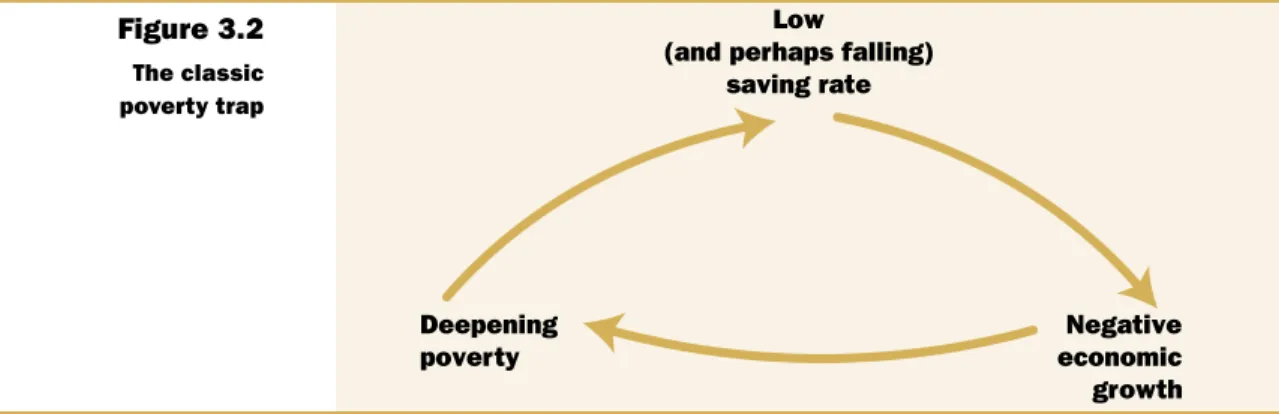
3.1 Capital accumulation, economic growth, and the MDGs 29 3.2 The classic poverty trap 36
3.3 Saving rates, by developing region 37
4.1 An MDG-based poverty reduction strategy 57
7.1 Foundations of the private sector and pillars of entrepreneurship 121 7.2 Time to start a business, by region 122
7.3 Time to start a business, by income 122
10.1 Relative transport costs in a typical Sub-Saharan country are much higher than in Asia 149
17.1 Scaling up public investments in the Goals in Ghana 247 18.1 Under-five mortality 261
Maps
2.1 Absolute poverty: infant mortality and malnutrition, 2000 17 2.2 Child mortality rate, 2002 24
2.3 Maternal mortality ratio, 2000 25
2.4 Share of urban population living in slums 27 3.1 Human vulnerability index, 1980 44 5.1 Physicians per 1,000 people 80 5.2 Antiretroviral drug coverage 81
10.1 Global map of malaria stability index 151
11.1 Per capita incomes in provinces of mainland China 160 11.2 Literacy rates for girls, though increasing, are much lower than for
boys 164
11.3 High infant mortality rates point to pockets of extreme poverty 170 11.4 Areas at highest natural disaster–related mortality risk 180 17.1 MDG financing gap, 2015 249
Tables
2.1 Measures of average progress in the developing world, 1990–2002 14
2.2 Major trends in the Goals, by region 15
2.3 Population living below the poverty line, by developing region 16 2.4 Tracking developing world progress by region since 1990 18 3.1 Economic growth predicted from domestic saving, population growth,
ix Contents
3.2 Agriculture risk, transport risk, and malaria risk, by region 44 3.3 Concentration of non-oil FDI among developing countries, 2002 47 10.1 Governance in tropical Sub-Saharan Africa is no worse than elsewhere,
after controlling for income 147
10.2 Comparative indicators across developing regions around 1965 152 10.3 Agricultural technology and productivity, by developing region 153 11.1 Mortality risks due to natural hazards, by region 171
13.1 Tying of donor assistance, 2002 198
13.2 Estimated official development assistance for direct MDG support and MDG capacity building, 2002 199
13.3 Recommendations for reforming development partnership 200 14.1 Economic growth rates by population size and location 222 17.1 Per capita MDG investment needs and MDG financing gaps in
Ban-gladesh, Cambodia, Ghana, Tanzania, and Uganda, 2006–15 244 17.2 Cofinancing the MDGs in low-income countries 249
17.3 Estimated cost of meeting the Millennium Development Goals in all countries 251
17.4 Plausible ODA needs to meet the Millennium Development Goals 251
17.5 Estimated ODA flows and gaps of Development Assistance Committee members based on existing commitments 255
18.1 The benefits of meeting the Millennium Development Goals, by developing region 259
A3.1 Annual per capita GDP growth assumptions for 2006–15, by region 295
A3.2 Estimated government resource mobilization 296 A3.3 Breakdown of funding for global research 298
Preface
The UN Millennium Project has been a unique undertaking. Its 10 task forces, Secretariat, and broad array of participants from academia, government, UN agencies, international financial institutions, nongovernmental organizations, donor agencies, and the private sector created a worldwide network of develop-ment practitioners and experts across an enormous range of countries, disci-plines, and organizations. The Project was made possible by the unique com-mitment, skills, and convictions of the task force coordinators, who led their groups to take on some of the most challenging development questions of our generation, and by the task force members, who gave remarkably of their time. This has been a global effort, in the service of a great global cause—the Mil-lennium Development Goals (MDGs). Our Project has been a microcosm of a larger truth: achieving the Millennium Development Goals will require a global partnership suitable for an interconnected world. The world truly shares a common fate.
This has been a labor of love for the many participants in the task forces and Secretariat. Individuals have volunteered vast amounts of effort and exper-tise to the Project. Their contributions, far beyond any reasonable expectation, have immeasurably sharpened and strengthened the messages contained in the Project’s many outputs, including this report, the task force final reports, the newly developed tools for needs assessment, and the advisory support for MDG-based planning in several countries.
I believe that all of the participants have contributed in such a manner because they recognize the special nature of this effort. Part of that is the honor and privilege of working on behalf of UN Secretary-General Kofi Annan, who launched the UN Millennium Project and who has played an unparalleled role in promoting the global fight against extreme poverty. Part is the delight of working for and together with UNDP Administrator Mark Malloch Brown,
xi Preface
whose tenacity, vision, and leadership have guided the UN Development Group’s efforts for several years. We have also enjoyed, admired, and richly ben-efited from the leaders of other UN agencies, who direct teams that save lives and ease burdens of poverty and despair throughout the world on a daily basis.
Another special aspect of the Project is the rare and powerful opportu-nity to help give voice to the hopes, aspirations, and vital needs of the world’s poorest and most voiceless people. We have met countless heroes and heroines of development in the three years of our work—in the villages and slums of Africa, Asia, Latin America, and other parts of the developing world. We have seen people preserving their spirit, integrity, commitment, and hope for the future even when they have little else, when tragic circumstances have left them bereft of health, education, possessions, and a means of livelihood. The human spirit, we have seen on innumerable occasions, is truly indomitable.
This triumph of the human spirit gives us the hope and confidence that extreme poverty can be cut by half by the year 2015, and indeed ended alto-gether within the coming years. The world community has at its disposal the proven technologies, policies, financial resources, and most importantly, the human courage and compassion to make it happen.
Jeffrey D. Sachs January 2005
Contributors
This document presents the findings and recommendations of the UN Mil-lennium Project, an independent advisory body to UN Secretary-General Kofi Annan. We are grateful to the Secretary-General for initiating and supporting the UN Millennium Project, for his unswerving commitment to the objective of global poverty reduction, and for his remarkable and tireless leadership of the United Nations system. We also thank Mark Malloch Brown, Administra-tor of the United Nations Development Programme (UNDP) and Chair of the United Nations Development Group, for his sage guidance and support at every step of the project. We also wish to express our profound appreciation to members of the UN Development Group’s Executive Committee for their ongoing support: Carol Bellamy, United Nations Children’s Fund; Jim Mor-ris, World Food Programme; and Thoraya Obaid, United Nations Population Fund. We are further grateful to Louise Fréchette, Deputy Secretary-General, José Antonio Ocampo, Department of Social and Economic Affairs; his pre-decessor Nitin Desai; and Shashi Tharoor, Department of Public Information, for their generous guidance and advice.
This report has been co-authored by the coordinators of the UN Millen-nium Project’s 10 task forces and Secretariat, building on the contributions made by hundreds of scholars, development practitioners, scientists, political leaders, and policy leaders involved since the Project’s inception in July 2002. A large number of task force associates and task force members made tremendous contributions to many parts of this report, including Gabriella Carolini, Glenn Denning, Helen de Pinho, Philip Dobie, Lisa Dreier, Lynn Freedman, Caren Grown, Ruth Levine, Kristen Lewis, Joan Paluzzi, Robin Sears, Smita Srinivas, Yesim Tozan, Ron Waldman, Haynie Wheeler, Paul Wilson, and Nalan Yuk-sel. In the UN Millennium Project Secretariat, Albert Hyunbae Cho, Michael Faye, Michael Krouse, Fatou Lo, Gordon McCord, Luis Javier Montero, Rohit
xiii Contributors
Wanchoo, Emily White, and Alice Wiemers worked around the clock for many months to provide invaluable research assistance. Erin Trowbridge pro-vided extremely important comments and inputs. Prarthna Dayal, Rafael Flor, Maria Beatriz Orlando, Nora Simpson, Kelly Tobin, and Brian Torpy also made essential efforts in further supporting task force contributions.
This report also directly integrates many of the ideas developed by the UN Millennium Project’s Task Force on Poverty and Economic Develop-ment, including many outlined by its interim report of February 2004. The members and associates of the Task Force on Poverty and Economic Devel-opment who contributed include Kwesi Botchwey, Haidari Amani, Ernest Aryeetey, George Cahuzac, Andrew Cassels, Jamie Drummond, Richard Freeman, Rebecca Grynspan, Pekka Haavisto, Aynul Hasan, Peter Heller, Macartan Humphreys, John Langmore, Ruth Jacoby, Carlos Jarque, Allan Jury, Eddy Lee, Zhu Ling, Thomas Merrick, Vijay Modi, John Okidi, Hafiz Pasha, Michael Platzer, Steven Radelet, Atiqur Rahman, Frederic Richard, Ana-Teresa Romero, Rabbi Royan, Ratna Sahay, Francisco Sercovich, Sudhir Shetty, David Simon, Suresh Tendulkar, Michael Usnick, Ashutosh Varsh-ney, and Xianbin Yao. Several of them wrote crucial background papers that formed the basis for important sections of the text. These include Philip Alston (human rights), Macartan Humphreys and Ashutosh Varshney (con-flict), Vijay Modi (rural infrastructure), David Simon (aid flows), and Ste-ven Radelet (governance and official development assistance). The Economic Commission for Africa (together with UNDP Ethiopia) and the Economic and Social Commission for Asia and the Pacific (in collaboration with UNDP Thailand) hosted the task force meetings where many of the ideas in this report were developed.
UNDP offered a gracious home to the UN Millennium Project in addition to providing instrumental financial, in-kind, and intellectual contributions on behalf of the UN Development Group. For this we thank all members of the senior management team including Abdoulie Janneh, Rima Khala Hunaidi, Elena Martinez, Jan Mattson, Kalman Mizsei, Shoji Nishimoto, Hafiz Pasha, Julia Taft, and their respective bureau teams. Under the leadership of Bruce Jenks, the Bureau for Resources and Strategic Partnerships provided tireless support to the project, particularly from Turhan Saleh, Amina Tirana, and the rest of the MDGs Unit. Mark Suzman in the Office of the Administrator provided daily doses of patient and thoughtful advice.
The Millennium Trust Fund at UNDP was supported by several govern-ments and foundations and provided the core financial support for the Project since its inception in 2002. The Project is also deeply grateful for the contri-butions from the Ford Foundation, the Bill and Melinda Gates Foundation, the William and Flora Hewlett Foundation, the John D. and Catherine T. MacArthur Foundation, the David and Lucile Packard Foundation, the Open Society Institute, and the Rockefeller Foundation.
xiv Contributors
The UN Millennium Project would like to give special thanks to the Earth Institute at Columbia University for its intellectual, administrative, financial, and in-kind support to the Project Secretariat and to many of the task forces. The project also thanks the Center for Global Development, the John F. Ken-nedy School of Government at Harvard University, Partners in Health, the International Centre for Research on Women, the Mailman School of Public Health at Columbia University, and the Yale Center for the Study of Global-ization for their crucial role in supporting the activities of the Project’s task forces.
The UN Millennium Project is indebted to the staff of the United Nations system and to members of governments, civil society, and the private sector, too numerous to mention by name, who have contributed directly or indirectly to the report. All errors and omissions remain the responsibility of the authors.
xv
Task force reports
Task Force on HungerHalving hunger: it can be done
Task Force on Education and Gender Equality
Toward universal primary education: investments, incentives, and institutions Task Force on Education and Gender Equality
Taking action: achieving gender equality and empowering women Task Force on Child Health and Maternal Health
Who’s got the power? Transforming health systems for women and children Task Force on HIV/AIDS, Malaria, TB, and Access to Essential Medicines, Working Group on HIV/AIDS
Combating AIDS in the developing world
Task Force on HIV/AIDS, Malaria, TB, and Access to Essential Medicines, Working Group on Malaria
Coming to grips with malaria in the new millennium
Task Force on HIV/AIDS, Malaria, TB, and Access to Essential Medicines, Working Group on TB
Investing in strategies to reverse the global incidence of TB
Task Force on HIV/AIDS, Malaria, TB, and Access to Essential Medicines, Working Group on Access to Essential Medicines
Prescription for healthy development: increasing access to medicines Task Force on Environmental Sustainability
Environment and human well-being: a practical strategy Task Force on Water and Sanitation
Health, dignity, and development: what will it take? Task Force on Improving the Lives of Slum Dwellers A home in the city
Task Force on Trade Trade for development
Task Force on Science, Technology, and Innovation Innovation: applying knowledge in development
Abbreviations
APRM African Peer Review Mechanism
ASEAN Association of Southeast Asian Nations
CARICOM Caribbean Community
CGIAR Consultative Group on International Agricultural Research
CIS Commonwealth of Independent States
COMESA Common Market for Eastern and Southern Africa
CSO civil society organization
DAC Development Assistance Committee
DFID Department for International Development (UK)
DOTS directly observed treatment, short course
ECOWAS Economic Community of West African States
EIA Energy Information Administration
EITI Extractive Industries Transparency Initiative
ERS Economic Recovery Strategy for Wealth and Employment Creation
EU European Union
FAO Food and Agriculture Organization
FDI foreign direct investment
FTA free trade agreement
GATS General Agreement on Trade in Services
GATT General Agreement on Tariffs and Trade
GAVI Global Alliance for Vaccines and Immunization
GDP gross domestic product
GEMS Global Environment Monitoring System
GNI gross national income
GNP gross national product
HIPC heavily indebted poor country
ICT information and communication technologies
IDA International Development Association
xvii Abbreviations
IFF International Financing Facility ILO International Labour Organization IMF International Monetary Fund IMR infant mortality rate
IPCC Intergovernmental Panel on Climate Change LDC Least Developed Country
MCA Millennium Challenge Account MCC Millennium Challenge Corporation MDG Millennium Development Goal MFN most-favored nation
MTEF medium-term expenditure framework NEPAD New Partnership for Africa’s Development NGO nongovernmental organization
OECD Organisation for Economic Co-operation and Development ODA official development assistance
ODS overall trade-distorting domestic support PRS poverty reduction strategy
PRSP Poverty Reduction Strategy Paper R&D research and development
RAE Rehabilitation of Arid Environments Charitable Trust (Kenya) SADC Southern African Development Community
SDI Slum/Shack Dwellers International SDT special and differential treatment
SPARC Society for Promotion of Area Resource Centers (India) SWAps sectorwide approaches
TRIPS Agreement on Trade-Related Aspects of Intellectual Property Rights
UNAIDS Joint United Nations Programme on HIV/AIDS UNCTAD United Nations Conference on Trade and Development UNDAF UN Development Assistance Framework
UNDP United Nations Development Programme
UNDESA United Nations Department of Economic and Social Affairs UNECA United Nations Economic Commission for Africa
UNEP United Nations Environment Programme
UNESCAP United Nations Economic and Social Commission for Asia and the Pacific
UNESCO United Nations Educational, Scientific and Cultural Organization UNFPA United Nations Population Fund
UNICEF United Nations Children’s Fund
UNIFEM United Nations Development Fund for Women UNIDO United Nations Industrial Development Organisation USAID U.S. Agency for International Development
WBCSD World Business Council for Sustainable Development WIPO World Intellectual Property Organization
������ ������ ������ ������ ������ ��������� ����������������������������������������������������������������������� ������������������ ��������� ����������������������������������������������������������������������������� ��������� �������������������������������������������������������������������������������������������� �������������������������������� ��������� ������������������������������������������������������������������������������������������ ������������������������������������������ ��������� �������������������������������������������������������������������������� � ������ ��������� ����������������������������������������������������������������������������� ��������� ���������� ���� ����������� ��� ������������ ������������ ����� �������� ��������� ���� ��������� ������������������������������������������������ ���������� ������� ��� ������ ���� ����������� ��� ������� �������� ������������ ������� ��� ����� ��������� ��������������������������� ���������� ����� ��������� ��� ����� �� ������������ ������������ ��� ���� ������ ��� ��� ������ ���� �������� ������������� ���������� �������� ��� ����� ��� ������ ������������ ������������� ���������������� �� �������� ���� ������������������������������������������������������������������������������������� ���������������������������������������������� ���������� �������������������������������������������������������������������������������������������� ������������������������������������������������������������������������������������������� ��������� ����� ���������� �������� ���� ������������� ��� ��������� ���������� ������ ���� ����� �������������������������������������������������������������������������������������� ���������� ����������������������������������������������������������������������������������������� ������� ��������� ���� �������� ��� ������� ���� ���� ������������ ������������ ��� ������ ������� ������������������������������������������������������� ���������� ����� ���������������� ����� ���� ����� ��������� ��� ����������� ���������� �������� ��������� ����������������������������������������������������������������������������� ������������������������������������������������������������������������������������������� �������������������������������������������������������������������� ���������� ��� ������������ ����� ����������� ����������� �������� ���� ���������� ����������� ���� ������� ������������������������������ ���������� ��� ������������ ����� ��������������� ����������� �������� ������� ��� ����������� ���������� ����������������������������� ���������� ��� ������������ ����� ���� �������� �������� ����� ���������� ���� ��������� ��� ���� �������������� ������������������������������������������������������ ������ ��������� ��������������������������������������������������������������� ��������� ������������������������������������������������������������������������������������������ �
����������������������������
���������� ���������������� ���������� �������� ������������������ ��������� ��������������� ������������� ������������� ������������� ��������� ��������� ��������������� ������� �������������� �������������� ������ ����������������� ���������������� ����������� �������� ���������� ������������� ��������������Millennium Development Goals xviii
������ ������ ������ ������ ������ ��������� ����������������������������������������������������������������������� ������������������ ��������� ����������������������������������������������������������������������������� ��������� �������������������������������������������������������������������������������������������� �������������������������������� ��������� ������������������������������������������������������������������������������������������ ������������������������������������������ ��������� �������������������������������������������������������������������������� � ������ ��������� ����������������������������������������������������������������������������� ��������� ���������� ���� ����������� ��� ������������ ������������ ����� �������� ��������� ���� ��������� ������������������������������������������������ ���������� ������� ��� ������ ���� ����������� ��� ������� �������� ������������ ������� ��� ����� ��������� ��������������������������� ���������� ����� ��������� ��� ����� �� ������������ ������������ ��� ���� ������ ��� ��� ������ ���� �������� ������������� ���������� �������� ��� ����� ��� ������ ������������ ������������� ���������������� �� �������� ���� ������������������������������������������������������������������������������������� ���������������������������������������������� ���������� �������������������������������������������������������������������������������������������� ������������������������������������������������������������������������������������������� ��������� ����� ���������� �������� ���� ������������� ��� ��������� ���������� ������ ���� ����� �������������������������������������������������������������������������������������� ���������� ����������������������������������������������������������������������������������������� ������� ��������� ���� �������� ��� ������� ���� ���� ������������ ������������ ��� ������ ������� ������������������������������������������������������� ���������� ����� ���������������� ����� ���� ����� ��������� ��� ����������� ���������� �������� ��������� ����������������������������������������������������������������������������� ������������������������������������������������������������������������������������������� �������������������������������������������������������������������� ���������� ��� ������������ ����� ����������� ����������� �������� ���� ���������� ����������� ���� ������� ������������������������������ ���������� ��� ������������ ����� ��������������� ����������� �������� ������� ��� ����������� ���������� ����������������������������� ���������� ��� ������������ ����� ���� �������� �������� ����� ���������� ���� ��������� ��� ���� �������������� ������������������������������������������������������ ������ ��������� ��������������������������������������������������������������� ��������� ������������������������������������������������������������������������������������������ �