Original Article
Combination of isotretinoin and doxycycline as
alternate day regimen for the treatment of
nodulocystic acne
Introduction
Acne vulgaris is now-a-days one of the most common skin disorder affecting the teenagers and young adults. Nodulocystic acne is one of
the severe forms of acne vulgaris, which is both cosmetically and psychologically disabling. It is a severe cystic form of acne characterized by comedones, inflammatory cystic lesions, and large nodules greater than 5 mm in diameter
Irfan Ullah, Mohammad Majid Paracha*, Mehran khan, Aysha Saliha, Dawood Khan Department of Dermatology, Khyber teaching hospital/Khyber medical college, Peshawar. * Department of Dermatology, Lady Reading Hospital, Peshawar.
Abstract
Background Oral isotretinoin is used in the treatment of nodulocystic acne with standard dose of 0.5-1mg/kg/day. It is used mostly in mild to moderate papulopustular acne, but the combination of isotretinoin and doxycycline has never been tried before due to the adverse effect on the same day. In this study we administered the combination of isotretinoin and doxycycline on alternate days for the treatment of severe nodulocystic acne.Objective To determine the efficacy of isotretinoin plus doxycycline, an alternate day regimen, for the treatment of nodulocystic acne and to assess its possible side effects.
Methods A prospective observational study was conducted in Dermatology department MTI Khyber Teaching Hospital; Peshawar, Pakistan. Study was conducted from September 2019 till February 2020. All the patients who came to the outpatient department of dermatology unit for treatment of their severe nodulocystic acne were included in the study. A total of thirty patients were included in the study. The administered dose on alternative days of isotretinoin was 20mg and doxycycline was 200mg in two divided doses. Each patient was advised to do baseline complete blood counts, lipid profile, liver function tests and fundoscopy. These investigations were then repeated on followup. Data was analyzed through SPSS version 20.
Results At the end of the first 6 months of this study, two female patients dropped out. The results were divided into complete clearance and partial clearance, based on complete resolution of acne with non visible acne lesions and some isolated lesions, respectively. At the end of initial 03 months therapy, 24 patients (85.71%) were found with complete clearance of lesions. At the end of 5th month of therapy remaining 3 patients (10.71%) showed complete clearance from acne lesions. 01 patient (3.51%) did not give complete response to the therapy at the end of the 6th month, as poor compliance to the recommended medications was an obvious reason. No significant side effects were noted. P value of <0.05 was considered significant.
Conclusion Isotretinoin combined with doxycycline on alternate day is considered a much efficacious as well as safe treatment modality in treatment of severe and resistant nodulocystic acne and also is very cost effective.
Key words
Address for correspondence Dr. Mohammad Majid Paracha Department of Dermatology,
Lady Reading Hospital, Peshawar, Pakistan. Ph: 03339637010
Email: [email protected]
which may be inflamed and non-inflamed
nodules.1,5 These lesions often heal with
resultant scarring. It occur most commonly on the face but can also be seen to occur on upper trunk as well. This type of acne is more common in teenagers but any age group can be affected.3,4
Nodulocystic acne also involves the bacteria called propionibacterium acnes.5,20 P.acne is one
of the normal flora of the skin; which can result in an infection, when it gets trapped in the pores alongside sebum and dead skin cells. This causes the pores to become erythematous and swollen, with the result that infection goes into deeper skin.1,3
The nodules and cysts persist for weeks or months and usually heal with severe scarring. The treatment of severe acne is a challenge and the usual over-the-counter medications and topical therapies don’t work on such type of acne. There are various treatment modalities used for management of acne vulgaris which includes topical antibiotics, topical retinoids, oral antibiotics, intra lesional steroids and hormonal therapy in women. In majority of the cases economic constraint becomes a hurdle in the treatment of such patients.5,21,22 To treat
nodulocystic acne can be a challenging task and may require a combination of medicines. Using
topical treatments alone are usually not
effective.2,5
Oral antibiotics are indicated in mainly moderate to severe inflammatory acne.5 Tetracycline and
its derivatives still remain the first choice. Macrolides, co-trimoxazole, and trimethoprim are other alternatives for acne.6 Doxycycline, is
a tetracycline derivative that exhibits better
results in the treatment of papulopustular acne. However use of doxycycline is most likely to
cause photosensitivity. The
antibiotic-resistant of P. acne is increasing with the use of these oral antibiotics, so they should be used for the shortest possible time to prevent this problem.7,8
The recommended treatment for nodulocystic acne is isotretinoin. It is approved in severe recalcitrant nodulocystic acne.9,19 It can also be
used in moderate-to-severe acne vulgaris, resistant to conventional therapy and frequently relapsing cases of acne, which is a cause of psychological morbidity and results in severe scarring. Pre-treatment counseling, patient selection, and monitoring are critical due to its side effects like teratogenicity, and adverse psychiatric events.9,10
High dose of isotretinoin when used as a monotherapy, has unproved links with possible suicide, depression, or inflammatory bowel disease.11,12 However, little data exists on the
safety and efficacy of the use of isotretinoin and doxycycline therapy, given on alternate days for
the treatment of severe and resistant
nodulocystic acne.
Materials and Methods
having severe cystic form of acne, characterized by numerous or extensive papules or pustules and large nodules greater than 5 mm in diameter on face and trunk. Informed written consent was taken from all patients who were included in the study before conducting the research. Patients who were hypersensitive to either doxycycline or isotretinoin, patients who were at any drug that would likely to influence acne and its therapy, patients with renal or hepatic disease or dyslipidemia, pregnant and lactating women were excluded from the study.
Detailed history was taken and complete physical examination performed in a proper illuminated room. And systemic examination was done to rule out associated diseases. Every patient was counseled about the medications used in regimen, duration of therapy and its possible side effects. Each patient was advised to do baseline complete blood counts, lipid profile, liver function tests and fundoscopy before starting the therapy. These investigations were then repeated after a month initially, at 2nd month and then at the completion of 5 months of the therapy. Patients were clinically evaluated at 1st week after starting of therapy and then monthly for the first 5 months of the therapy. All these measures were done to assess for the possible side effects of medications including benign intracranial hypertension. Each patient was digitally photographed after consent, before starting therapy, and later on each follow up visit so as to keep record for comparison and assessing clinical improvement. Each patient was put on oral isotretinoin 20mg dose on alternate day with doxycycline 200mg in two divided doses on the alternate days as well. The duration of therapy was up to 6 months minimum, based on the clinical response of each patient. Patients were then followed up after every one month to assess the response of the lesions to therapy. Efficacy was determined in terms of the percentage of the number of acne
lesions cleared from baseline of study till 3 months follow-up. Complete clearance (efficacy) was then categorized as the clearance of visible acne lesions of more than 80% from baseline lesions. Partial clearance was categorized as an 50-80% improvement from baseline lesions at 12 weeks follow-up. Poor response was considered as 25-50% improvement from baseline lesions. Less than 25% clearance was considered as treatment failure. Data was collected through designed proforma. A strict exclusion criterion was followed to avoid any bias and confounding variables. Two patients had not reported back on the subsequent follow up visit and hence they were labeled as “missing”.
The collected data of total 30 patients was saved in Microsoft excel 2010 and was then analyzed through SPSS version 20. Mean±SD was calculated for numerical variables like age, duration of the therapy. Frequency and percentages were calculated for categorical variables like gender and efficacy. Efficacy was stratified with age and gender to see effect modification. Post stratification t-test was applied in which p value <0.05 was considered as significant.
Results
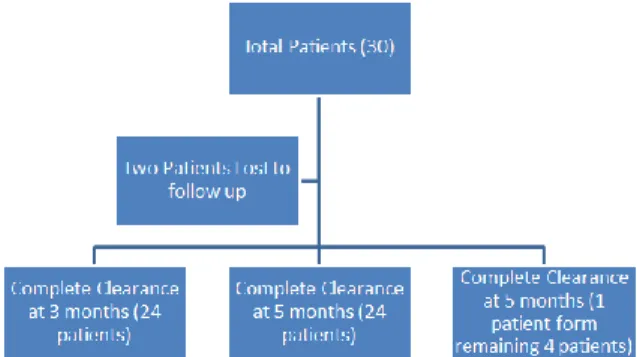
Figure1 showing results of alternate day regime of doxycycline and isotretinion for nodulocystic
Table 1 Results of the study n=28
Response to combination therapy Frequency (%)
Complete clearance at 3 months 24 (85.71%) Partial clearance at 3 months 04 (14.29%) Complete clearance at 5 months 07 (96.42%) Partial response at 6 months 01 (3.58%)
Deranged Lfts 02 (7.14%)
GI upsets 03 (10.71%)
papilledema 0 (0%)
Table 2 Duration wise response (n=28) Duration of
treatment
Complete response
Partial response
P value After 3
months
24 (85.71%)
4 (14.29%) <0.01
After 5 months
27 (96.42%)
1 (3.58%) <0.0001
the recommended medications. At the end of initial 5 months of therapy remaining 3 patients (10.71%) showed complete clearance, thus complete clearance was noted in 27 patients (96.42%). One patient (3.58%) did not show complete clearance at the six month therapy as she was having poor compliance to the medications. Two patients (7.14%) reported with mild deranged Liver function tests but were clinically not significant. 03 patients (10.71%) reported with GI upsets but were treated symptomatically. One patient had reported with blurring of vision at 1st follow-up visit, fundoscopy was advised twice weekly but reported to be normal. Among male patients, 92.85% responded to the three months of the treatment while 7.15% reported with complete clearance of acne at 05 months of treatment. In
female patients 78.57% were labeled completely cleared from acne at three months of treatment and 14.28% gave complete clearance at 5 months. While 7.14% did not give complete clearance at the full six months treatment of this regime. P value was significant at three months (p< 0.01) and five months (p<0.0001) (Table 1 & 2). Fasting lipid profile, complete blood counts were found to be within the normal limits during and at the end of 6 months therapy. Fundoscopy was reported to be normal for all the participants during and at the end of the treatment. Summary of the patients is shown in figure 1 below.
Discussion
For the better treatment of acne vulgaris, it is
classified into three broad categories:
comedonal, inflammatory and nodulocystic. Nodulocystic acne is a severe form of acne vulgaris, which is associated with psychological and social implications.21,22 The timely and
effective treatment of nodulocystic acne cannot only prevent physical scarring but also the cosmetic and emotional distress associated with it. In the present day world, the treatment of severe nodulocystic acne has become a challenging task and may require a combination of medicines.22
Systemic isotretinoin is considered the drug of choice for the treatment of not only severe nodulocystic acne but also moderate acne that fails to respond to conventional therapy.13-15
However, due to the cost of oral isotretinoin and longer duration of therapy patients usually quit the treatment very early.21,22 The mechanism by
which isotretinoin induces its effect is by: decreasing the size and secretions of the sebaceous glands, inhibiting P. acnes growth, normalizing the follicular keratinization and also
Isotretinoin when used in high doses and for longer periods are not without the risk of its potential side effects.
An oral antibiotic like doxycycline, which is a derivative of tetracycline, is preferably used in the treatment of inflammatory, papulopustular acne. Doxycycline works by exhibiting an excellent penetration into follicles and sebaceous glands.7,17 It is better tolerated than other oral
antibiotics however it is not efficacious as a sole therapy for treatment of severe nodulocystic acne. Long-term therapy with oral antibiotic also offers a risk to the development of resistance to
P. acnes.8,18,20
Present day studies are deficient on the combined use of isotretinoin and doxycycline due to its associated risks and potential side effects like benign intracranial hypertension. Our pilot study combined the use of oral isotretinoin with doxycycline on alternate days for the treatment of severe and refractory nodulocystic acne. Results showed that the use of an alternate day regime of oral isotretinoin and doxycycline is a safe and effective treatment modality for severe and resistant nodulocystic acne. Oral isotretinoin in a low dose of 20mg/day combined with doxycycline 100mg twice daily dosage, each given on alternate days showed promising results in the initial 6 months of study. Patients were assessed on subsequent monthly visits, and complete clearance was noted in 85.71% of patients in first three months and was equally effective in nodulocystic acne of face and trunk. Complete clearance was noted in 10.71% of patients among the remaining 14.29% of patients at 5 months of treatment; while 3.57% of patients did not give complete clearance of acne after 6 months of treatment due to poor compliance to the therapy (Table 1). There was marked clinical improvement noted in the lesions with an early resolution of inflammatory cysts, flattening of papulopustular
lesions, in the first two months after initiation of treatment. Pustular lesions resolved more rapidly than papules or nodules, and the lesions on the face and trunk equally responded to therapy.
Safety profile of the medications was assessed during the study by the reporting of adverse events by the patients and also by routinely done
laboratory investigations. There was no
significant side effects particularly headache as fundoscopy results were reported to be normal on subsequent visits (Table 1). 7.14% cases were having mild deranged LFTs but were not clinically significant. 10.71% patients were complained of GI upset but were treated symptomatically.
Conclusion
In order to improve the tolerability of isotretinoin therapy, to prevent the initial flare-up of acne, to reduce the duration of therapy and for the cost effectiveness of severe and refractory nodulocystic acne, we decided to use a modified treatment regimen by combining a low dose oral isotretinoin with doxycycline on alternate day. To the best of our knowledge, in present day literature there is no reported use of an alternate day therapy of 20 mg isotretinoin with 100mg doxycycline BD dosage. The present study showed that low dose isotretinoin alternating with doxycycline represents a well-tolerated and efficient alternative to the standard routine treatment of severe nodulocystic acne. Hence, we recommend this combination therapy
for treatment of severe and resistant
nodulocystic acne which fails to respond to
standard therapies. Further prospective
Limitations
This is a pilot study with a sample size of only 30 patients.23 So it was difficult to cover
majority of cases. Therefore, it is further recommended to conduct studies on a large scale for much conclusive results.
References
1. Simpson NB, Cunliffe WJ. Disorders of the sebaceous glands. In: Burns T, Breathnach S, Cox N, Griffiths C, editors. Rook's Text book of Dermatology. 7th ed. Vol. 43. Blackwell Science; 2004. pp. 43.1–43.75. 2. Gollnick HP, Zouboulis CC, Akamatsu H,
Kurokawa I, Schulte A. Pathogenesis and pathognesis-related treatment of acne. J Dermatol 1991; 18: 489–99.
3. Leyden JJ. New understanding of the pathogenesis of acne. J Am Acad Dermatol. 1995; 32: 515–25.
4. Plewig G, Kligman AM. Acne and Rosacea. 3rd ed. New York: Springer-Verlag; 2000. 5. Cunliffe WJ, Gollnick HP. Acne: Diagnosis
and management. 1st ed. London: Martin Dunitz Ltd; 2001.
6. Mernadier J, Alirezai M. Systemic antibiotics for acne. Dermatology 1998; 196: 135-9.
7. Shapiro LE, Knowles SR, Shear NH. Comparative safety of tetracycline, minocycline, and doxycycline. Arch Dermatol 1997; 133: 1224–30.
8. Eady EA. Bacterial resistance in acne. Dermatology 1998; 196: 59–66.
9. Katsamba A, Dessinioti C. New and emerging treatments in dermatology: Acne. Dermatol Ther 2008; 21: 86–95.
10. Del Rosso JQ. Recently approved systemic therapies for acne vulgaris and rosacea. Cutis 2007; 80: 113–20.
11. Smith EV, Grindlay DJ, Williams HC. What's new in acne? an analysis of systematic reviews published in 2009-2010. Clin Exp Dermatol 2011; 36(2): 119-122.
12. Crockett SD, Porter CQ, Martin CF, Sandler RS, Kappelman MD. Isotretinoin use and the risk of inflammatory bowel disease: a case-control study. Am J Gastroenterol 2010; 105(9): 1986-1993.
13. Titus S, Hodge J. Diagnosis and treatment of acne. Am Fam Physician 2012;86(8): 734-740.
14. Rigopoulos D, Larios G, Katsambas AD. The role of isotretinoin in acne therapy: why not as first-line therapy? facts and controversies. Clin Dermatol 2010; 28(1): 24-30. 10.1016/j.clindermatol.2009.03.005 15. Layton AM, Knaggs H, Taylor J, Cunliffe
WJ. Isotretinoin for acne vulgaris - 10 years later: A safe and successful treatment. Br J Dermatol 1993; 129: 292-6.
16. Leyden JJ. The role of isotretinoin in the treatment of acne: personal observations. J Am Acad Dermatol 1998; 39:45–8.
17. Driscoll MS, Rothe MJ, Abrahamian L, Grant-Kels JM. Long-term oral antibiotics for acne: is laboratory monitoring necessary? J Am Acad Dermatol. 1993; 28: 595–602.
18. Gilchrist T.C. A bacteriological and microscopical study of over 300 vesicular and pustular lesions of the skin, with a research upon the etiology of acne vulgaris. Johns Hopkins Hospt Rept 1900; 9: 409– 430.
19. Zouboulis CC, Bettoli V. Management of severe acne. Br J Dermatol 2015; 172(1): 27-36. 10.1111/bjd.13639
20. Dessinioti C, Katsambas AD: The role of Propionibacterium acnes in acne pathogenesis: facts and controversies. Clin Dermatol 2010; 28(1): 2–7.
21. Mallon E, Newton JN. The quality of life in acne. J Am Acad Dermatol 1999; 140: 672-676.
22. Dreno B, Poli F. Epidemiology of acne. Dermatology 2003; 206: 7–10.