Next-Generation Needs
for Cash Management
NEW CASH MANAGEMENT
CHALLENGES IN AN
INCREASINGLY COMPLEX
BUSINESS ENVIRONMENT
Contents
About This Report . . . . 3
Next-Generation Needs for Cash Management
• Treasury functions worldwide are under increasing
pressure to perform better . . . . . 4
• Treasury has a mandate to step out of the back
office and provide higher value to the enterprise. . . . . 6
• Cash management can be re-established as a
priority for future success. . . . 8
• Business growth can be built on improvements
in the speed and accuracy of cash reporting and forecasting. . . . . 10
Sponsor’s Perspective . . . . 12
About This Report
In May of 2015, CFO Research conducted a global survey of senior finance executives at large companies, to examine the pressures they face in providing timely, accurate cash reporting and cash forecasting to business decision makers across the enterprise. This report is based on 371 survey responses from CFOs, treasurers, and other senior finance and treasury executives at companies with more than $250 million in annual revenues, representing a broad range of company segments, as follows:
TITLE
Chief financial officer (CFO)
or equivalent 21% Director of finance 12% Chief executive officer (CEO),
president, or managing director 11% Controller 9% Executive vice president (EVP)
or senior vice president (SVP)
of finance 9% Cash manager 9% Treasury analyst 8% Treasurer 8% Head of treasury or group treasurer 5% Vice president (VP) of finance 5% Other senior finance title 2% Other title 2%
REVENUE
US$250 million - US$500 million 21% US$500 million - US$1 billion 18% US$1 billion - US$5 billion 30% US$5 billion - US$10 billion 15% US$10 billion - US$20 billion 9% US$20 billion or more 7%
INDUSTRY
Financial services/Real estate/
Insurance 19% Business/Professional services 11% Auto/Industrial/Manufacturing 10% Software/Internet/Networking 10% Wholesale/Retail trade 9% Construction 8% Chemicals/Energy/Utilities 6% Food/Beverages/
Consumer packaged goods 4% Health care 4% Public sector/Nonprofit 4% Transportation/Warehousing 4% Hardware/Electronics 3% Media/Entertainment/Travel/Leisure 2% Pharmaceuticals/Biotechnology/ Life sciences 2% Telecommunications 2% Aerospace/Defense 1% REGION Europe 27% Latin America (including Mexico,
Central America, and
South America) 23% Asia/Pacific
(including India and Australia) 24% United States/Canada 25%
•
ABOUT THIS REPORT TREASURY FUNCTIONS WORLDWIDE ARE UNDER INCREASING PRESSURE TO PERFORM BETTER TREASURY HAS A MANDATE TO STEP OUT OF THE BACK OFFICE AND PROVIDE HIGHER VALUE TO THE ENTERPRISE CASH MANAGEMENT CAN BE RE-ESTABLISHED AS A PRIORITY FOR FUTURE SUCCESS BUSINESS GROWTH CAN BE BUILT ON IMPROVEMENTS IN THE SPEED AND ACCURACY OF CASH REPORTING AND FORECASTING SPONSOR’SFIGURE 1 A majority of finance executives report that effective and efficient cash management has become more difficult.
Treasury functions worldwide
are under increasing pressure
to perform better
Cash management and forecasting
have become more important thanever for a company’s success, but they have also become more difficult to do well. And the pressure to be “best in class” in terms of cash reporting and forecasting is only likely to grow, according to finance and treasury leaders from large companies around the world.
In a recent study of treasury functions sponsored by SAP, CFO Research surveyed 371 senior executives from finance and treasury departments at companies with a minimum of US$250 million in annual revenues. The survey results underscore executives’
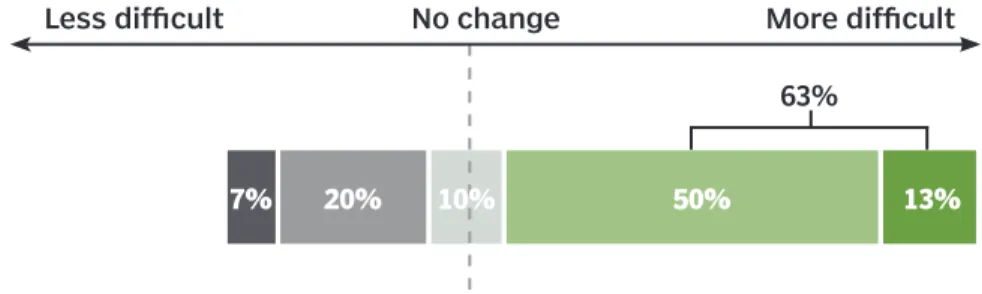
concerns with the increasing difficulty of preparing and delivering timely, accurate cash reports and forecasts. Eight out of ten respondents (80%) say that complexity and volatility in the business environment has made cash management more important today. But a majority of finance executives (63%) also say that, compared to five years ago, they now find it more difficult to manage cash efficiently and effectively.
(See Figure 1.)
According to the survey respondents, a combination of internal and external forces has “raised the stakes,” making it more difficult to quickly produce comprehensive, aggregated reports on the company’s cash position, and cash forecasts with a higher
ABOUT THIS REPORT
•
TREASURY FUNCTIONS WORLDWIDE ARE UNDER INCREASING PRESSURE TO PERFORM BETTER TREASURY HAS A MANDATE TO STEP OUT OF THE BACK OFFICE AND PROVIDE HIGHER VALUE TO THE ENTERPRISE CASH MANAGEMENT CAN BE RE-ESTABLISHED AS A PRIORITY FOR FUTURE SUCCESS BUSINESS GROWTH CAN BE BUILT ON IMPROVEMENTS IN THE SPEED AND ACCURACY OF CASH REPORTING AND FORECASTING SPONSOR’SPERSPECTIVE
“Compared to five years ago, it is ………….. to manage my company’s cash efficiently and effectively.”
Less difficult More difficult
63% No change
n Much less difficult nLess difficult nNo change/Not sure nMore difficult nMuch more difficult
Percentage of respondents
degree of accuracy. For some companies, the challenge can be traced to their own success and growth; 62% of the respondents say that the size and complexity of their own companies make it difficult to develop accurate views of the company’s cash position and forecasts across all groups and business units.
The more groups and business units that are involved, the more difficult it becomes to gather and conform any kind of data across the enterprise—and especially data on cash accounts. Increased complexity can come from having more legal entities, more complex businesses, more complex product lines and selling behaviors, an increasing number of operating geographies, or all of the above. A very large number of survey respondents—83%—believe that increasing complexity in their businesses has made it more difficult to manage cash efficiently and effectively. Looking forward, three-quarters (76%) believe that business complexity is likely to get even worse over the next two years.
The need to work across many different and separate legacy systems may also be a function of a company’s growth over time, particularly as new businesses are acquired. Typically, collecting and conforming data from many different systems, developed or acquired separately over the years, requires much higher levels of manual intervention.
In fact, 57% of the survey respondents say that the number of different information systems in use at their companies does indeed make it difficult to develop accurate views of cash positions and forecasts across all their groups and business units.
Outside forces are at work, as well, according to our analysis of the survey results. Seven in ten respondents (70%) say that meeting regulatory and legal requirements now requires more time and effort from treasury than it did five years ago. In addition, 63% believe that, within the next two years, changes in international regulation will require even more time and effort from treasury. The time and resources spent on managing compliance activities across multiple jurisdictions take away from the effort that can go into getting cash information into managers’ hands more quickly. In the end, two-thirds of the finance executives in the survey (66%) agree that developing accurate views of the company’s cash position and forecast across all groups and business units already requires an excessive amount of manual intervention. And these kinds of resource constraints are only compounded by the continuing pressures on finance functions to “do more with less.” Many respondents report that they must cope with conflicting priorities: 58% say that their treasury function is under-resourced and will require additional resources over the next two years, but an even larger number (72%) say that their company’s treasury function is now under more pressure than ever to reduce its costs.
To execute the company’s business strategy in this environment, treasury functions will need to find ways to provide their companies’ management with information on cash positions and cash forecasts faster, easier, and with deeper insight. But the challenges they face are only going to intensify, respondents say.
Two-thirds of
the finance
executives agree
that developing
accurate views
of the company’s
cash position
and cash
forecast requires
excessive manual
intervention.
ABOUT THIS REPORT•
TREASURY FUNCTIONS WORLDWIDE ARE UNDER INCREASING PRESSURE TO PERFORM BETTER TREASURY HAS A MANDATE TO STEP OUT OF THE BACK OFFICE AND PROVIDE HIGHER VALUE TO THE ENTERPRISE CASH MANAGEMENT CAN BE RE-ESTABLISHED AS A PRIORITY FOR FUTURE SUCCESS BUSINESS GROWTH CAN BE BUILT ON IMPROVEMENTS IN THE SPEED AND ACCURACY OF CASH REPORTING AND FORECASTING SPONSOR’STreasury has a mandate
to step out of the back office
and provide higher value
to the enterprise
Treasury functions will need to find
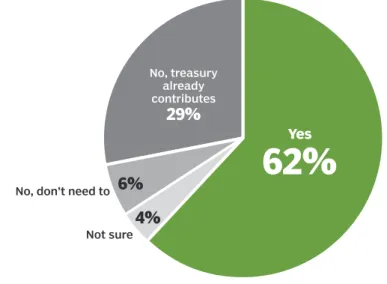
creative ways to overcome these challenges if they are to meet growing demands for higher-value financial and business analysis, based on more-accurate and useful forecasts. Respondents acknowledge that high-value activities will become increasingly important to their companies; six out of ten (62%) say that the treasury function will need to increase its contribution to high-value planning, analysis, and decision-support activities over the next two years. Only 6% say that they don’t believe treasury needs to contribute to high-value activities. (See Figure 2.) ABOUT THIS REPORT TREASURY FUNCTIONS WORLDWIDE ARE UNDER INCREASING PRESSURE TO PERFORM BETTER•
TREASURY HAS A MANDATE TO STEP OUT OF THE BACK OFFICE AND PROVIDE HIGHER VALUE TO THE ENTERPRISE CASH MANAGEMENT CAN BE RE-ESTABLISHED AS A PRIORITY FOR FUTURE SUCCESS BUSINESS GROWTH CAN BE BUILT ON IMPROVEMENTS IN THE SPEED AND ACCURACY OF CASH REPORTING AND FORECASTING SPONSOR’SPERSPECTIVE
FIGURE 2 Respondents say that treasury needs to increase its contribution to high-value activities.
“Over the next two years, do you believe that your company’s treasury function will need to contribute more to high-value planning, analysis, and decision-support activities than it currently does?”
29%
No, treasury already contributes6%
4%
No, don’t need to
Not sure
Percentage of respondents
Percentages may not total 100% due to rounding
62%
YesToday, however, fewer than half the companies are in the position they want to be in. For example, 55% agree that developing a “single version of the truth” for cash-related data is currently too difficult and time-consuming. And the executives in the survey split fairly evenly in rating their treasury functions on the full range of their capabilities, with approximately half giving them “best in class” or “above average” ratings, but the other half saying they need either some improvement or substantial improvement. (See Figure 3.)
The main obstacles to increasing treasury’s contribution to high-value activities reflect the same kinds of pressures being placed on cash management activities: 63% of the respondents rate complexity of the company’s business as either a substantial or a moderate obstacle; the same number (63%) say that increased regulatory pressure presents obstacles; and 58% of respondents believe that it takes too much time and effort to collect data from across the company’s accounts and prepare accurate cash reports .
However, a sense of urgency may be missing—these obstacles are primarily seen as moderate, rather than substantial. The question remains whether being “adequate” or even “above average” will be enough to meet the heightened challenges of an evolving and more complex business environment.
ABOUT THIS REPORT TREASURY
FUNC-TIONS WORLD-WIDE ARE UNDER INCREASING PRESSURE TO PERFORM BETTER
•
TREASURY HAS A MANDATE TO STEP OUT OF THE BACK OFFICE AND PROVIDE HIGHER VALUE TO THE ENTERPRISE CASH MANAGE-MENT CAN BE RE-ESTABLISHED AS A PRIORITY FOR FUTURE SUCCESS BUSINESS GROWTH CAN BE BUILT ON IMPROVEMENTS IN THE SPEED AND ACCURACY OF CASH REPORTING AND FORECASTING SPONSOR’SPERSPECTIVE
FIGURE 3 Half of respondents say their treasury function needs improvement.
“How would your rate your treasury function on the following capabilities?”
Improving accuracy of cash flow forecasts
52%
Improving treasury information systems
51%
Optimizing internal funding across different countries
51%
Developing a “single version of the truth” for cash accounts
48%
Improving yield on short-term/liquid assets
48%
Managing foreign exchange or currency risk
47%
Reducing the internal cost of treasury activities
47%
Optimizing internal funding among operating units
47%
Reinvesting cash reserves in the business
42%
Strengthening liquidity
41%
Improving the efficiency of cash movements within the company
40%
Needs improvementCash management can be
re-established as a priority
for future success
All in all, respondents feel
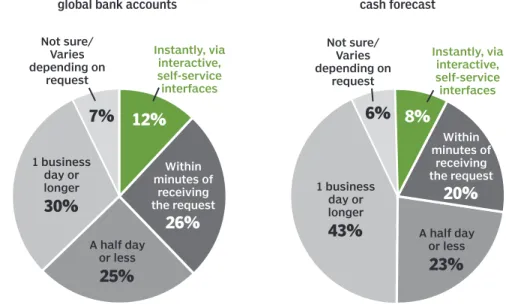
that time spent on simply collecting, conforming, and preparing cash data is at the expense of providing additional insights and expertise from the finance function that can support better decision making throughout the company and drive growth. According to the finance executives in the survey, few companies currently have real-time response capabilities in place—that is, interactive, self-service interfaces—for either aggregating cash balances (12%) or preparing consolidated cash forecasts (8%).One-quarter of the respondents (25%) report that it takes approximately half of a business day to aggregate cash balances from their global bank accounts, and even more (30%) say it takes one full business day or longer. Similarly, 23% report that it takes approximately half a business day to prepare a consolidated cash forecast, while the largest number—43%—say it takes one full business day or longer. (See Figure 4.)
ABOUT THIS REPORT TREASURY FUNCTIONS WORLDWIDE ARE UNDER INCREASING PRESSURE TO PERFORM BETTER TREASURY HAS A MANDATE TO STEP OUT OF THE BACK OFFICE AND PROVIDE HIGHER VALUE TO THE ENTERPRISE
•
CASH MANAGEMENT CAN BE RE-ESTABLISHED AS A PRIORITY FOR FUTURE SUCCESS BUSINESS GROWTH CAN BE BUILT ON IMPROVEMENTS IN THE SPEED AND ACCURACY OF CASH REPORTING AND FORECASTING SPONSOR’SPERSPECTIVE
FIGURE 4 Few companies have real-time response capabilities in place.
“In general, how much time does it take for your company’s treasury function to complete the following activities?”
25%
23%
30%
7%
12%
6%
8%
43%
26%
20%
A half day or less A half day or less 1 business day or longer Not sure/ Varies depending on request Not sure/ Varies depending on request Instantly, via interactive, self-service interfaces Instantly, via interactive, self-service interfaces 1 business day or longer Within minutes of receiving the request Within minutes of receiving the request Percentage of respondentsPercentages may not total 100% due to rounding Aggregate cash balances from
In an increasingly difficult business environment, real-time response capabilities allow a company to operate at “the speed of thought” and provide a crucial competitive edge.
Coordination and alignment across the business will be needed to optimize decision making, and treasury functions will be called upon to deliver accurate and comprehensive cash information into the hands of the managers making business decisions almost immediately.
In addition, going forward companies may find themselves less well prepared to take the best advantage of the next big advance in information capabilities. Most respondents (56%) believe their company’s information systems and tools for cash management are only “adequately” equipped to accommodate “big data”—that is, much larger and unstructured data sets. And one in five (21%) believe that they are inadequately prepared.
Few companies
have real-time
response
capabilities
for either
aggregating
cash balances
or preparing
consolidated cash
forecasts.
ABOUT THIS REPORT TREASURY FUNCTIONS WORLDWIDE ARE UNDER INCREASING PRESSURE TO PERFORM BETTER TREASURY HAS A MANDATE TO STEP OUT OF THE BACK OFFICE AND PROVIDE HIGHER VALUE TO THE ENTERPRISE•
CASH MANAGEMENT CAN BE RE-ESTABLISHED AS A PRIORITY FOR FUTURE SUCCESS BUSINESS GROWTH CAN BE BUILT ON IMPROVEMENTS IN THE SPEED AND ACCURACY OF CASH REPORTING AND FORECASTING SPONSOR’SBusiness growth can be
built on improvements in the
speed and accuracy of cash
reporting and forecasting
What do companies have to do
in order to move from “average” or “adequate” to “best in class” for treasury activities? Large majorities of respondents state that, for their companies to succeed in the future, management outside oftreasury will need a better understanding of the company’s cash position and forecasts, both across all groups and business units (83%) and for their own individual functions or businesses (82%). Keeping the information within the confines of the treasury function itself undercuts the value of the data to the company at large.
Consequently, finance executives in the survey say that their top priorities for cash management will be improving the accuracy, consistency, and quality of cash data (34%); improving the accuracy of cash forecasts (34%); and providing real-time access to consolidated cash information and analyses (33%). (See Figure 5.)
The main difficulty, it appears, is simply giving cash management the attention it deserves. As Figure 5 shows, the largest numbers of respondents rate improvements in each capability as important, but also competing with the company’s other priorities. In these circumstances, the ability to “do more with less” will go a long way towards maximizing the value treasury can provide to other business managers.
ABOUT THIS REPORT TREASURY FUNCTIONS WORLDWIDE ARE UNDER INCREASING PRESSURE TO PERFORM BETTER TREASURY HAS A MANDATE TO STEP OUT OF THE BACK OFFICE AND PROVIDE HIGHER VALUE TO THE ENTERPRISE CASH MANAGEMENT CAN BE RE-ESTABLISHED AS A PRIORITY FOR FUTURE SUCCESS
•
BUSINESS GROWTH CAN BE BUILT ON IMPROVEMENTS IN THE SPEED AND ACCURACY OF CASH REPORTING AND FORECASTING SPONSOR’SPERSPECTIVE
Improving the accuracy, consistency, and quality of cash data
Improving the accuracy of cash forecasts
Providing real-time access to consolidated cash information and analyses
FIGURE 5 Improving cash management is a priority for the vast majority of respondents.
“How important for your company’s success are the following types of improvements to its cash-management and forecasting capabilities?”
Low priority High priority
n Not needed nLow priority/Not important
nImportant, but competing with other priorities nTop priority
Percentage of respondents
Percentages may not total 100% due to rounding 7% 6% 6% 13% 15% 20% 45% 45% 40% 34% 34% 33%
At the minimum, simply spending less time on wrestling cash data from all of a
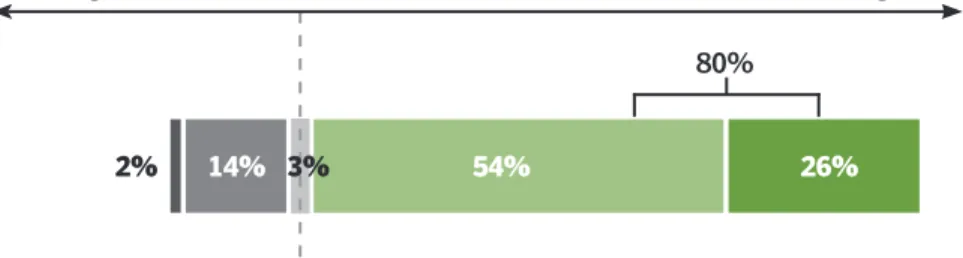
company’s separate accounts and business units can translate into spending more time on adding value to cash analyses and forecasts. In fact, eight out of ten respondents (80%) are looking for their treasury function to prepare cash reports and liquidity forecasts much more quickly than they are currently able to. (See Figure 6.)
To provide the high-quality cash analyses at the speed required for success, companies are understandably reluctant to add more treasury resources in order to compensate for cumbersome and time-consuming manual processes. Their alternative, then, is to find new ways not only to get faster—by reducing the time and effort it takes to prepare and deliver cash reports and forecasts—but also to get better—by delivering more-insightful, more-immediate, and more forward-looking cash analyses into the hands of the business’s decision makers.
ABOUT THIS REPORT TREASURY FUNCTIONS WORLDWIDE ARE UNDER INCREASING PRESSURE TO PERFORM BETTER TREASURY HAS A MANDATE TO STEP OUT OF THE BACK OFFICE AND PROVIDE HIGHER VALUE TO THE ENTERPRISE CASH MANAGEMENT CAN BE RE-ESTABLISHED AS A PRIORITY FOR FUTURE SUCCESS
•
BUSINESS GROWTH CAN BE BUILT ON IMPROVEMENTS IN THE SPEED AND ACCURACY OF CASH REPORTING AND FORECASTING SPONSOR’SPERSPECTIVE
FIGURE 6 The vast majority of respondents say treasury will need to act much more quickly than they currently do.
“Within the next two years, I expect our treasury function will need to prepare cash reports and liquidity forecasts much more quickly than they are currently able to.”
Disagree Agree
n Disagree strongly nDisagree nNot sure nAgree nAgree strongly
Percentage of respondents
2% 14% 3% 54% 26%
Sponsor’s Perspective
While no one can say for certain
what the world of treasury functions will look like in the future, it is no surprise that managing cash and liquidity is becoming an increasingly complex task, as the majority of respondents has stated in this report (Figure 1). Between the various point solutions and ERP systems a company may use and the assorted solutions inherited from mergers and acquisitions, system landscapes are becoming more diverse than ever. Based on discussions with our customers, we understand that organizations around the globe struggle to wrangle cash-relevant information into a single version of the truth and to optimize and improve cash forecasting, especially in the face of increased FX volatility.At the same time, this research shows increasing expectations on treasury functions to deliver proactive and high-value business support. More and more finance leaders are realizing the potential to move treasury out of the shadows of back-office processing into a more strategic role as contributor and partner to the business (Figure 2). Today’s best-in-class treasurers need to be able to provide strategic stewardship to the Boardroom, and in particular to their CFO. Real-time information increasingly is expected to be the basis for decision making, anytime and anywhere – and on any device.
The findings from this important piece of research show clearly that it is critical for organizations to develop the ability to manage cash data more quickly, as shown in Figure 4. However, this often turns out to be a difficult undertaking, considering existing obstacles such as increasingly complex regulations and a volatile global business environment to contend with.
For more than a decade, SAP has heavily invested in an integrated suite of treasury applications within the ERP flagship solution. This TR suite is designed to help you manage the complete spectrum of activities associated with cash, liquidity, risk, and compliance management by giving you the information you need and the tools to act upon it. SAP has the capability to fully integrate its ERP data into Treasury—logistics data, invoices, incoming payments, foreign exchange exposures, and more. World-class corporates such as Roche, Bosch-Siemens Hausgeräte (BSH), and Zalando are relying on our treasury portfolio every day.
And with the evolution of technology, SAP is now in the position to fulfill the promise of delivering real-time analysis, alerts, and insights with the power of new user interface techniques and the underlying SAP HANA platform. The all-new SAP Cash Management, powered by SAP HANA, is taking full advantage of this technological transition. It instantly reflects all cash-related business activities and provides this information to managers in their preferred format, such as e-mail, online inquiry, or comprehensive reporting. With the power and speed of SAP HANA, cash requirements can be
understood in seconds and instantly translated into action. As an example, after getting a real time alert, business users can trigger immediate actions such as mitigating counterparty risk by initiating a bank transfer including a payment directly out of the analysis application.
The research clearly indicates that improvements in the speed and accuracy of cash reporting and forecasting are key for future business growth (Figure 5). SAP Cash Management powered by SAP HANA is SAP’s answer.
For more information, please visit www.sap.com/finance-solutions
ABOUT THIS REPORT TREASURY FUNCTIONS WORLDWIDE ARE UNDER INCREASING PRESSURE TO PERFORM BETTER TREASURY HAS A MANDATE TO STEP OUT OF THE BACK OFFICE AND PROVIDE HIGHER VALUE TO THE ENTERPRISE CASH MANAGEMENT CAN BE RE-ESTABLISHED AS A PRIORITY FOR FUTURE SUCCESS BUSINESS GROWTH CAN BE BUILT ON IMPROVEMENTS IN THE SPEED AND ACCURACY OF CASH REPORTING AND FORECASTING•
SPONSOR’S PERSPECTIVENext-Generation Needs for Cash Management is published by CFO Publishing LLC, 51 Sleeper
Street, Boston, MA 02210. Please direct inquiries to Linda Klockner at (617) 790 3248 or [email protected].
CFO Research and SAP developed the hypotheses for this research jointly. SAP funded the research and publication of our findings. At CFO Research, Celina Rogers and David W. Owens directed the research, and David W. Owens wrote the report.
CFO Research is the sponsored research group within CFO Publishing LLC, which produces
CFO magazine and CFO.com.