EXAMINING RURAL VS. URBAN DISPARITIES IN COMMUNITY-BASED HELPER SUPPORT AND RESIDENTIAL CARE TRANSITIONS AMONG MEDICARE
BENEFICIARIES WITH DEMENTIA AND FUNCTIONAL LIMITATIONS
Tandrea Sharrell Hilliard
A dissertation submitted to the faculty at the University of North Carolina at Chapel Hill in partial fulfillment of the requirements for the degree of Doctor of Philosophy in the Department of Health Policy and Management in the Gillings School of Global Public
Health.
Chapel Hill 2015
Approved By:
Peggye Dilworth-Anderson Marisa Domino
©2015
ABSTRACT
Tandrea Sharrell Hilliard: Examining Rural vs. Urban Disparities in Community-Based Helper Support and Residential Care Transitions among Medicare Beneficiaries with
Dementia and Functional Limitations
(Under the direction of Peggye Dilworth-Anderson)
Strategies to afford elders with dementia the opportunity to remain in their homes or other community dwelling places are often desirable among various stakeholders. Informal care in the community has been shown to delay nursing home entry. Rural elders in general are particularly vulnerable for institutionalization due to reduced access to adequate
based support. Less is known regarding geographic disparities in community-based helper support networks over time for people with dementia and functional difficulties and the direct impact of such support on residential care transitions from community
dwellings to nursing facilities (i.e., skilled nursing facilities (SNFs), nursing homes, and assisted living facilities).
Using a retrospective cohort of community-dwelling Medicare beneficiaries in the Medicare Current Beneficiary Survey (MCBS), this study aimed to examine the presence, magnitude, and sources of community-based helper support over time for Medicare
beneficiaries age 65 and older with dementia and ADL/IADL limitations living in rural and urban residences, as well as to determine whether and how such support impacts residential care transitions.
the support gaps for functional limitations did not statistically differ across geographic areas. Compared to persons living in an urban area, persons with dementia and functional
limitations who lived in a rural area adjacent to a metropolitan or micropolitan area were, on average, less likely to transition to both short- and long-term care nursing facilities. Rural-urban residence and community-based support were not associated with time-to-transition. Age and number of co-morbidities were significantly associated with time-to-first nursing facility transition.
To my praying grandmother, Mrs. Conella Jones Hilliard; my grandparents in heaven, Joe Henry Hilliard and Ruth and Nathaniel Nicholson; my exceptional parents, Charlene and Daniel Nicholson; a host of family, friends, loved ones, and generous supporters; and every child in Halifax County, NC, with a dream.
TABLE OF CONTENTS
LIST OF TABLES ... ix
LIST OF FIGURES ... xii
LIST OF ABBREVIATIONS ... xiii
CHAPTER 1. INTRODUCTION ... 1
CHAPTER 2. LITERATURE REVIEW ... 4
Community-Based Informal Caregivers ... 4
Transitions into Institutional Care ... 6
Rural vs. Urban Divides in Informal and Formal Support... 8
Purpose and Contributions to the Literature ... 11
Study Aims and Hypotheses ... 16
Theoretical Framework ... 17
Study Significance & Innovation ... 22
Significance... 22
Innovation ... 24
CHAPTER 3. DATA SOURCES ... 26
Medicare Current Beneficiary Survey ... 26
Area Resource File ... 29
Inclusion and Exclusion Criteria ... 30
Study Variables and Measures ... 44
Introduction ... 47
Methods... 49
Aim 1a Methods ... 49
Aim 1b Methods ... 56
Results ... 62
Aim 1a Results ... 62
Rural and Urban Differences in ADL/IADL Limitations and Helper Support ... 63
Temporal Trends in ADL/IADL Limitations and Helper Support ... 67
Aim 1b Results ... 85
Discussion ... 102
CHAPTER 5. RURAL-URBAN RESIDENCE, COMMUNITY-BASED HELPER SUPPORT, AND LIKELIHOOD OF TRANSITION TO A NURSING FACILITY ... 109
Introduction ... 109
Methods... 112
Testing and Selection of Instruments ... 116
Results ... 120
Discussion ... 133
CHAPTER 6. RURAL-URBAN RESIDENCE, COMMUNITY-BASED HELPER SUPPORT, AND TIME-TO-TRANSITION ... 139
Introduction ... 139
Methods... 140
Results ... 143
Summary of Findings ... 155 Study Limitations ... 156 Policy Implications and Future Research ... 159 APPENDIX. STUDY INCLUSION AND EXCLUSION CRITERIA
LIST OF TABLES
Table 1. Eligible MCBS Sample Cohort... 38
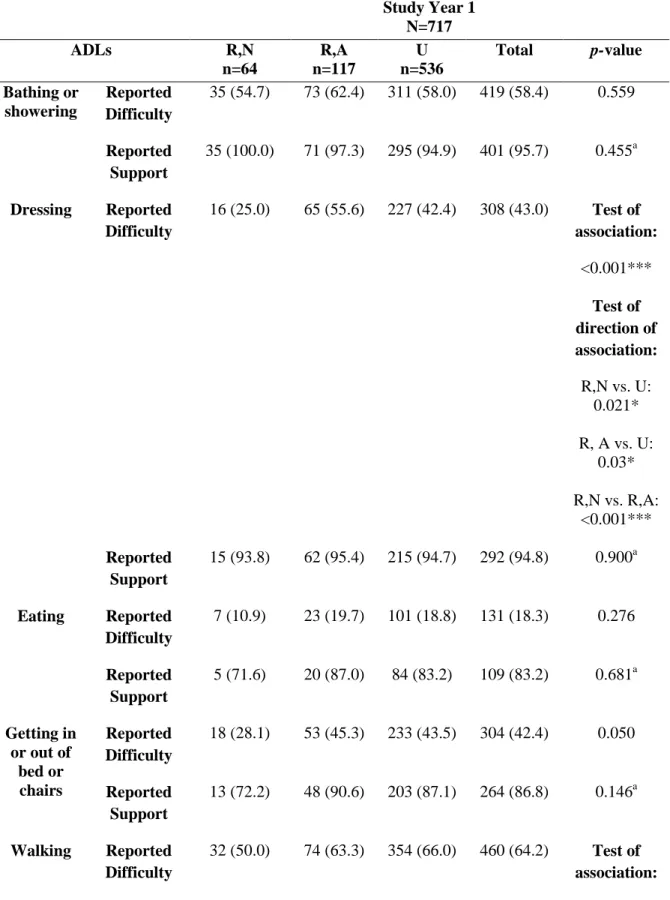
Table 2. Functional Limitations by Self/Proxy Reported vs. Claims Identified Dementia at Baseline ... 39
Table 3. Eligible Beneficiaries by MCBS Entry Year, N (%) ... 40
Table 4. Eligible Beneficiaries by Longitudinal Study Year and Type of MCBS Interview, N (%) ... 40
Table 5. Documented Deaths during the Year by Longitudinal Study Year and Type of MCBS Interview, N (%) ... 41
Table 6. Total Years of Participation per Beneficiary across Study Years, N (%) ... 42
Table 7. Demographic Predictors of Attrition: Not Participating in the MCBS for Four Years ... 42
Table 8. Study Variables and Measures ... 44
Table 9. Community-Dwelling Beneficiaries with At Least One ADL/IADL Limitation across Study Years and Rural vs. Urban Residence, N (%) ... 68
Table 10. Reported Number of ADL/IADL Limitations at Baseline, Mean (SD) ... 69
Table 11. Reported Number of ADL/IADL Limitations: Pooled, Mean (SD) ... 69
Table 12. Reported Number of ADL/IADL Helpers at Baseline, Mean (SD) ... 70
Table 13. Reported Number of ADL/IADL Helpers: Pooled, Mean (SD) ... 70
Table 14. Reported ADL Difficulties and Reported Support at Baseline, N (%) ... 71
Table 15. Reported ADL Difficulties and Reported Support: Pooled, N (%) ... 73
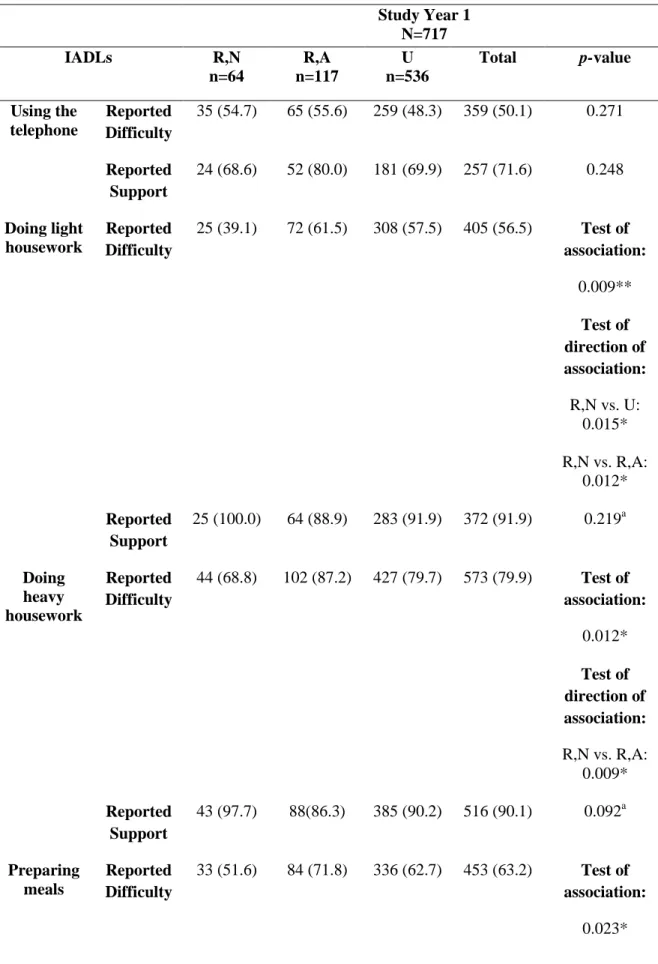
Table 16. Reported IADL Difficulties and Reported Support at Baseline, N (%) ... 75
Table 17. Reported IADL Difficulties and Reported Support: Pooled, N (%) ... 77
Table 18. Sources of Support for IADL/ADL Limitations at Baseline, N (%) ... 79
Table 21. Rural vs. Urban Differences and Temporal Trends in the Number of Functional Limitations and Reported Helpers , Average Marginal
Effects (Standard Errors) ... 82
Table 22. Characteristics of the Sample: Aim 1b. Demographic, Socioeconomic, and Health Status Predictors, N (%)... 88
Table 23. Support Gaps for ADL/IADL Limitations at Baseline, N (%) ... 90
Table 24. Support Gaps for ADL/IADL Limitations: Pooled, N (%) ... 90
Table 25. ADL/IADL-Specific Support Gaps for ADL/IADL Limitations at Baseline among Beneficiaries with Any Gaps in Reported Support, N (%) ... 91
Table 26. Assessing Disparities in Support for ADL/IADL Limitations: Demographic, Socioeconomic, and Health Status Predictors, Average Marginal Effects (Standard Errors) ... 93
Table 27. Assessing Disparities in Support for ADL/IADL Limitations: Demographic, Socioeconomic, and Health Status Predictors (Multiple Imputation Models), Average Marginal Effects (Bootstrapped Standard Errors) ... 95
Table 28. Assessing Disparities in Support for ADL/IADL Limitations: Demographic, Socioeconomic, and Health Status Predictors (Testing for Selectivity), Average Marginal Effects (Standard Errors) ... 97
Table 29. Assessing Disparities in Support for ADL/IADL Limitations: Demographic, Socioeconomic, and Health Status Predictors (Multiple Imputation Models Testing for Selectivity), Average Marginal Effects (Bootstrapped Standard Errors) ... 99
Table 30. Characteristics of the Sample: Aim 2, N (%) ... 124
Table 31. Transition Outcomes, N (%) ... 125
Table 32. Transition Outcomes by Rural-Urban Residence, N (%) ... 125
Table 33. Transition Outcomes by Single vs. Multiple Source(s) of Support, N (%) ... 126
Table 34. 2SRI First-Stage Logistic Regression Model: Endogenous Regressor as Outcome (Single (1) vs. Multiple Sources of Support (0))—Aim 2 ... 126
Table 36. Factors Associated with the Probability of Nursing Facility Transition Outcomes during Follow-Up: 2SRI Multinomial Logistic Regression Second-Stage Model Results, Average Marginal Effects
(Bootstrapped Standard Errors) ... 130 Table 37. Factors Associated with the Probability of Nursing Facility
Transition Outcomes during Follow-Up: Exogenous Multinomial Logistic Regression Second-Stage Model Results, Average Marginal
Effects (Standard Errors) ... 132 Table 38. Characteristics of the Sample: Aim 3, N (%) ... 145 Table 39. Mean and Median Nursing Facility Transition Times (days) ... 146 Table 40. 2SRI First-Stage Logistic Regression Model: Endogenous
Regressor as Outcome (Single (1) vs. Multiple Sources of
Support (0))—Aim 3 ... 146 Table 41. Factors Associated with the Hazard Rate for Transition to a
Nursing Facility during Follow-Up: 2SRI and Exogenous Cox-Proportional
LIST OF FIGURES
Figure 1. Theoretical framework. ... 21 Figure 2. Mean total number of ADL/IADL difficulties over time
across rural and urban residence. ... 83 Figure 3. Mean total number of ADL difficulties over time across rural
and urban residence... 83 Figure 4. Mean total number of IADL difficulties over time across rural
and urban residence... 84 Figure 5. Mean total number of ADL/IADL helpers over time across rural
and urban residence... 84 Figure 6. Prevalence of ADL/IADL support gaps over time across rural
and urban residence... 91 Figure 7: Kaplan-Meier survival plot for transition: Overall... 150 Figure 8. Kaplan-Meier survival plot for transition: Rural vs. urban residence. ... 150 Figure 9. Kaplan-Meier survival plot for transition: Single vs. multiple
LIST OF ABBREVIATIONS
AD Alzheimer’s disease
MCBS Medicare Current Beneficiary Survey ADL Activities of Daily Living
IADL Instrumental Activities of Daily Living SNF Skilled Nursing Facility
HHA Home Health Agency
R, N Rural, Not Adjacent to Metropolitan or Micropolitan Area R, A Rural, Adjacent to Metropolitan or Micropolitan Area
U Urban Area
ACA Affordable Care Act
SD Standard deviation
CHAPTER 1. INTRODUCTION
Alzheimer’s disease (AD), the most common form of dementia (accounting for an estimated 60–80% of cases), is the fifth-leading cause of death among those age 65 and older in the United States (Alzheimer’s Association, 2014; Murphy, Xu, & Kochanek, 2013). Approximately 5 million older Americans are affected by this disease—one in nine people age 65 and older and close to one-third of people 85 and older have AD (Alzheimer’s Association, 2014). Many older adults who develop dementia also experience loss of
independence due to activities of daily living (ADL) or instrumental activities of daily living (IADL) limitations. The presence of functional limitations is often used as a marker of dementia severity and signifies an advanced disease state among affected persons (Moore, Zhu, & Clipp, 2001). Functional loss is typically the impetus for formal (i.e., professional) and/or informal long-term care, services, and supports, either in the community or in institutions (CDC, 2013).
this disease. For rural elders who may have less access to adult children as helpers (Glasgow, 2000; Glasgow, 2003) and who may be isolated from more formal sources of support,
assistance with ADLs/IADLs may be provided for by other members of their informal support networks such as neighbors or friends. Less is known regarding the longitudinal stability of helper networks among community-dwelling Medicare beneficiaries with AD or other dementias and who need help with basic daily activities. This is especially true among those living in rural areas where, in addition to informal support challenges, there are often access barriers to formal care due to fewer health professionals locally, a lack of community or medical services, or transportation issues.
Although strategies to delay or prevent nursing home placement are desirable due to increased costs, loss of independence, preferences to remain in community dwellings, and other reasons (Kane & Kane, 2001; Eckert, Morgan, & Swamy, 2004; Reinhard, 2010), the transition to a nursing home or other nursing facilities is common for older adults with dementia (Arrighi, Neumann, Lieberburg, & Townsend, 2010). No previously identified studies have assessed rural vs. urban differences and disparities in community-based helper support for ADLs/IADLs among persons with dementia and limited functional capacity, as well as associations between residence, community-based support, and the occurrence and timing of residential care transitions from the community to nursing facilities.
Given increasing interest in and commitment to helping older persons with chronic care needs, such as persons with dementia and functional limitations, continue living in their communities for as long as possible among various stakeholders including health
directly inform policy efforts and community-based initiatives that seek to provide accessible and supportive community-based care options for older persons with impairments and create a more sustainable healthcare system by reducing costly and potentially avoidable
CHAPTER 2. LITERATURE REVIEW Community-Based Informal Caregivers
Informal caregivers, typically family members, are the first-in-action to provide care and support for older persons with dementia. In fact, the majority of older people with dementia are cared for in the community by family or others (Moore, Zhu & Clipp, 2001; Schulz & Martire, 2004). The prevalence of these informal caregivers (e.g., family, friends) far exceeds the number of paid direct-care workers in the United States (Institute of
Medicine, 2008). It is estimated that 60–70% of older adults with Alzheimer’s disease (AD) or other dementias live in the community in non-institutionalized settings compared to 98% of older adults without this disease (Met Life Mature Market Institute, 2012; Alzheimer’s Association, 2014; Medicare Current Beneficiary Survey, 2008 Unpublished tabulations analyzed under contract for the Alzheimer’s Association, November 2011). Of those with dementia who live in the community, an estimated 75% live with someone while 25% live alone (Alzheimer’s Association, 2014; Medicare Current Beneficiary Survey, 2008.
Unpublished tabulations analyzed under contract for the Alzheimer’s Association, November 2011).
Dementia onset is often mild, but over time, persons with this disease develop limitations in basic functional activities and become increasingly unable to care for
eventually people with dementia reach a level of disability that requires constant care, which is often provided by their informal support networks (Moore, Zhu, & Clipp, 2001). Unpaid caregivers, who are typically family members, other relatives, or friends, provided an
estimated 17.7 billion hours of unpaid care, valued at over $220.2 billion, to loved ones with dementia in 2013 (Alzheimer’s Association, 2014). Informal care provided by children in particular reduces Medicare expenditures on long-term care and inpatient care (Van Houtven & Norton, 2008) and is considered a cost-saving alternative to institutionalization.
The care provided by family caregivers to loved ones with dementia is extensive and often includes assisting with instrumental activities of daily living (IADLs) such as grocery shopping and meal preparation; medication assistance; personal activities of daily living (ADLs) such as bathing, dressing and feeding; mobility assistance and supervision; decision making; service identification and use; and other key life tasks. Compared to non-dementia caregivers, dementia caregivers have been found to spend significantly more hours per week providing care and also report greater impacts related to employment issues, strain, mental and physical health problems, time constraints, and family conflicts (Ory, Hoffman, Yee, Tennstedt, & Schulz, 1999; Schulz & Martire, 2004). Dementia caregivers also tend to provide care for a longer time, on average, than caregivers of older persons with other serious conditions and are more likely than caregivers of other older people to assist with any ADL (Alzheimer’s Association, 2014).
The challenges of dementia caregiving are great and numerous studies have
Sands, & Yaffe, 2003; Siegler, Brummett, Williams, Haney, & Dilworth-Anderson, 2010). Having a higher income, larger social network, more positive appraisals of caregiving (i.e., feeling useful, appreciated, or finding more meaning in life), religious beliefs and practices, and strong ties to religious organizations have been associated with fewer depressive symptoms and better mental health among caregivers (Williams, 2005; Hebert, Dang, & Schulz, 2007). Despite the numerous challenges that informal caregivers encounter, the invaluable support provided by spouses, adult children, relatives, friends, and neighbors continues to serve as the first line of consistent care for elders living with this disease. Although these home- and community-based informal caregivers are the primary providers of long-term care for older adults with AD, as this disease advances and becomes more complex care provision across different settings is often required.
Transitions into Institutional Care
older persons with dementia. Transitioning to a nursing home is expected by age 80 for 75% of AD patients, compared with only four percent of the general population (Arrighi,
Neumann, Lieberburg, & Townsend, 2010; Alzheimer’s Association, 2014).
Older persons with prevalent or incident dementia have been shown to have greater Medicare- and Medicaid-funded nursing facility use, greater hospital and home health use, more residential care transitions (i.e., transitions between home, home with healthcare, nursing facility, and hospitals) per person-year follow-up, and more mean total transitions than people who were never diagnosed (Callahan et al., 2012). Among beneficiaries with dementia, 74.5% of transitions to nursing facilities were transfers from hospitals. At the time of death, nearly half (46%) of persons with dementia were at home, compared to 35% in the hospital and 19% in a nursing facility (Callahan et al., 2012).
Care transitions are often tied to complex informal and/or formal network dynamics (Allen, Lima, Goldscheider, & Roy, 2012). Because older persons with dementia, and
particularly those with functional difficulties, are more prone to experiencing residential care transitions, it is important to examine such transitions over time among this patient
care, Medicare beneficiaries who enter long-term care facilities such as nursing homes rely heavily on Medicare to cover medical care costs (Jacobson, Neuman, & Damico, 2010).
Assisted living is a long-term residential care option that often bridges the gap between home care and nursing homes to assist persons in need of assistance but not at the level provided by nursing homes (Metlife, 2009). Assisted living residence is not covered by Medicare; although many states now cover some assisted living services under Medicaid programs (e.g., waivers), there is much variation across states in terms of eligibility and funding amounts (ALFA, 2013). As such, much of assisted living care is privately financed. Although nursing homes constitute the majority of long-term facility use, it is also important to examine assisted living facilities in the context of long-term residential care transition settings. Specific attention needs to be given to geographic variation in transitions between community and institutional settings to identify care patterns and disparities in care and to assess whether efforts to create a more balanced system of care for vulnerable older persons are having the desired effects in both rural and urban communities.
Rural vs. Urban Divides in Informal and Formal Support
community-urban older residents who are more likely to co-reside with or have adult children living nearby (Dwyer & Miller, 1990; Goins, Spencer, & Byrd, 2009). Inadequate or distal kin support among rural older adults often results in greater reliance on friend and neighbor networks compared to urban older people (Glasgow, 2000; Glasgow, 2003).
Geographic proximity of caregivers is particularly important in discussions of
adequate support systems for rural elders with functional limitations. Although the definition of “long-distance caregiver” varies (e.g., living more than 50 miles away from an aging parent (Schoonover, Brody, Hoffman, & Kleban, 1988); living more than two hours away from the care recipient (Koerin, & Harrigan, 2003)), a commonly applied definition of a long-distance caregiver is “living one hour or more away from the care recipient” as proposed by Wagner (1997). Based on this common definition, an estimated 2.3 million people are long-distance caregivers (Alzheimer’s Association, 2013; Unpublished data analyzed under contract for the Alzheimer’s Association by the National Alliance for Caregiving and AARP, 2009). Approximately 25% of rural caregivers live in the same household as the person for whom they provide care; 60% live within a one-hour drive; 4% live between a one- and two-hour drive away; and 11% live more than a two-hour drive away (National Alliance for Caregiving & AARP, 2004; based on Family Caregiving In The U.S.: Findings from a National Survey, National Alliance for Caregiving and AARP, 1997).
Heisler, 2014). Lack of proximal support could significantly impair the ability of older persons with dementia and functional limitations to remain in community settings versus transitioning to nursing facility. However, many older adults with dementia rely on informal support from persons who live at a significant distance away. Approximately nine percent of unpaid caregivers of people with dementia live more than two hours away from the person for whom they provide care, and another six percent live one to two hours away (Alzheimer’s Association, 2013; Unpublished data analyzed under contract for the Alzheimer’s
Association by the National Alliance for Caregiving and AARP, 2009).
Parish, 2001; Seekins et al., 2011). Due to poor access to home- and community-based services that would support community living among older adults with functional limitations and a generally larger supply of nursing homes in rural areas, nursing homes tend to be the only available option in these areas for seniors as they become increasingly unable to care for themselves (Coburn & Bolda, 2001).
To better grasp and understand the differences in long-term care needs that may exist for rural elders compared to urban elders, greater understanding of the family and social support characteristics of elders in rural and urban communities is needed (Coburn & Bolda, 2001). Despite the overwhelming impact of this disease on older Americans and persistent geographic divides in care access and quality, research examining geographic disparities in the presence and stability of community-based helper support and how such informal support affects nursing facility use among older adults with dementia has lagged. Greater knowledge and understanding of this issue may help the system better prepare to meet the demands for formal long-term care while concurrently developing supportive policies and community-based interventions for older adults living with dementia and functional impairments and their informal helpers or caregivers.
Purpose and Contributions to the Literature
The purpose of this retrospective, longitudinal, cohort-designed dissertation study is to descriptively and analytically examine geographic disparities in the presence
beneficiaries age 65 and older with dementia and functional difficulties. Rural vs. urban comparisons are of primary interest; however, rural, not adjacent vs. rural, adjacent to metropolitan or micropolitan area differences are also assessed. Additionally, this study examines the effects of rural vs. urban residence and community-based helper support on the likelihood and timing of transitions into nursing facilities among Medicare beneficiaries with dementia and functional impairments residing in the community at baseline. This includes skilled nursing facilities or shorter-stay nursing facilities as well as nursing homes or assisted living facilities, which are traditionally longer-stay nursing facilities.
With the goals of increasing quality of life and well-being among such persons who have functional limitations due to chronic disease, illness, injury or other causes of disability, the Affordable Care Act (ACA) of 2010 vastly increased the availability of such services (Reinhard, Kassner, & Houser, 2011). In 2012, the Administration for Community Living at the U.S. Department of Health and Human Services was specifically created to improve access to community supports for persons with disabilities and older adults with unique needs, such as seniors with dementia, who desire to remain in community dwelling places (U.S. Department of Health and Human Services, 2012). Despite these efforts, significant variation in the availability of these services exists due to the optional nature of many key provisions. Decisions regarding the provision of these supports are largely made at the state level and many states choose not to fully invest in LTSS, greatly limiting the care choices of many persons in need (Reinhard, Kassner, & Houser, 2011). To achieve a rebalanced system with adequate home- and community-based support for older persons with functional
impairments and other disabilities, continued efforts to identify and address inequities in support are necessary. This includes consistent monitoring of informal helper support
systems, because informal care provided by family and other community members remains a critical factor in the effectiveness of home- and community-based options.
constant care (Moore, Zhu, & Clipp, 2001). Individuals who require assistance with basic needs such as ADLs represent an advanced stage of Alzheimer’s, where their ability to function in daily life has been impaired by the cognitive and behavioral effects of AD (Alzheimer’s Association, 2014). Providing assistance with such limitations constitutes a large portion of informal dementia caregivers’ task load, which tends to be more extensive than caregivers of older persons with other conditions (Alzheimer’s Association, 2014). Medicare beneficiaries included in this study report functional impairments at baseline and thus represent a segment of the dementia patient population that is more progressed in the disease. Given the aforementioned challenges associated with informal dementia caregiving, which often involves providing functional impairment assistance to persons in later stages of AD, it is critically important to longitudinally examine and describe the support networks of this segment of the dementia patient population. Findings from this research may identify additional areas in which LTSS are needed augment the support networks of beneficiaries with dementia and inform the development of more targeted policies that increase dementia care options for older persons while addressing geographic-specific determinants.
differences that may exist between different types of rural communities, particularly in research that relates to access to care or support, as this study does. Barriers in access to care are persistent issues in rural communities in general. However, persons living in communities more adjacent to urban areas may have different care experiences than those living in more remote rural areas. Differences within rural communities with respect to health care have been found. Persons living in rural, non-adjacent to metropolitan or micropolitan areas visit their health providers less often than residents of other areas (i.e., urban or rural, adjacent to urban communities) (Larson & Fleishman, 2003). A non-dichotomous definition of rural and urban residence may reveal hidden variation in nursing facility use that may help
policymakers, clinicians, and researchers identify specific areas where disparities in access and service use exist (Larson & Fleishman, 2003; Hall, Kaufman & Ricketts, 2006). In an effort to uncover variation that may exist across rural communities, in addition to differences between rural and urban areas, this study includes a three-category definition of rural-urban residence (i.e., rural, not adjacent to a metropolitan or micropolitan area (R,N); rural, adjacent to a metropolitan or micropolitan area (R,A); and urban (U)).
Further, many existing studies of rural caregiving have key methodological
include (Goins, Spencer, & Byrd, 2009): 1) conceptualization in theory; 2) a longitudinal study design; 3) operationalization of key variables of interest; and 4) the inclusion of objective measures from Medicare claims data to support many self/proxy-reported measures.
Study Aims and Hypotheses
The relationships of interest in this study were examined via the pursuit of three specific aims:
Aim 1a: To describe rural vs. urban group differences and temporal trends in the presence (i.e., co-occurrence of reported help, helpers, and/or use of special equipment (ADLs only) for reported ADL/IADL limitations), magnitude (i.e., number of reported ADL/IADL helpers), and sources of community-based helper support reported for ADL/IADL functional limitations (e.g., spouses, adult children) among the study sample.
This aim is descriptive. Therefore, no hypotheses are stated.
Aim 1b: To examine rural vs. urban disparities in community-based support for ADL/IADL functional limitations among the study sample over time, controlling for key demographic, socioeconomic, and health status factors.
H1: Controlling for key demographic, socioeconomic, and health status predictors, rural residence will be associated with gaps in support for functional limitations.
residential care transition out of the community to nursing facilities (i.e., SNFs, nursing homes, or assisted living facilities) during the study period.
H2: Based on evidence that adequate help in the community reduces the risk of permanent nursing home residence (Boaz and Muller, 1994) and that rural elders in
the community may have less access to adult children as informal helpers (Glasgow, 2000; Glasgow, 2003), it is hypothesized thatrural residence and limited community-based helper support (i.e., single source of community-community-based support vs. multiple
sources) will be associated with an increased likelihood of transition to a residential nursing facility.
Aim 3: To examine the effects of rural vs. urban residence and community-based helper support for ADL/IADL functional limitations on the length of elapsed study time to the first residential care transition to a nursing facility.
H3: On the basis of existing literature demonstrating that informal care provided by adult children delays nursing home entry (Van Houtven & Norton, 2004) as well as evidence of reduced access to adult children as caregivers among rural elders (Glasgow, 2000; Glasgow, 2003), it is hypothesized that rural residence and limited
community-based helper support (i.e., single source of community-based support vs. multiple sources) will be associated with fewer elapsed days-to-first transition.
Theoretical Framework
by environmental factors such as societal and health services system factors and individual factors (Bradley et al., 2002). Individual factors are categorized as need and enabling and predisposing factors. Need includes perceived and evaluated functional capacity, symptoms, general state of health; enabling factors include family and community resources, and accessibility; and predisposing factors include age, sex, marital status, education,
race/ethnicity, and occupation as well as attitudes, knowledge and beliefs (Bradley et al., 2002). As described in Phillips, Morrison, Andersen, & Aday (1998), this model is useful for understanding the context of healthcare use and has been cited as a critical theoretical
approach to nursing home use (Culbert, 2009). The Behavioral Model of Health Service Use is applicable to this study given the focus on the effects of contextual factors on transitions to formal residential care settings.
The model applied in this dissertation research was adapted to best meet the goals of this study and include the best available measures while attempting to maintain the model’s core integrity. The adapted theoretical model guiding this research is illustrated in Figure 1. This adapted model includes relevant variables in the following major categories: healthcare system environment; population characteristics including predisposing factors, enabling resources, and need factors; and the outcome variables reflecting health service use— likelihood and timing of residential care transitions out of community dwellings to nursing facilities. The primary factors of interest in this study are rural vs. urban residence and informal community-based ADL/IADL helpers.
this study include key demographic characteristics (i.e., age, sex, race/ethnicity, marital status, income, education, and living situation (i.e., lives alone vs. lives with others)) (Luppa et al.,2010). Although rural vs. urban residence could be considered an enabling factor because it may influence the ability to engage in health services, rural vs. urban residence also affects the propensity to use health services (i.e., predisposing factor) and may directly determine enabling factors included in this study, such as the level of support received in the community. For these reasons, it is modeled as a predisposing factor.
Community-based ADL/IADL support, as measured by the reported number of ADL/IADL helpers and the relationships of those helpers to the beneficiary, is modeled as an enabling factor because such support and assistance represents a personal, familial, or
community resource that may facilitate or impede healthcare use among older persons (Toseland, McCallion, Gerber, & Banks, 2002; Luppa et al., 2010). In Aim 1, the quantity and relationships of reported ADL/IADL helpers for reported ADL/IADL limitations are described. In Aims 2 and 3, a dichotomous indicator of having a single (i.e., only one type of helper as measured by reported helper relationships) vs. multiple (i.e., having more than one type of helper as measured by reported helper relationships) sources of community-based ADL/IADL support is included in the regression models as a predictor.
research study are proposed. Compared to urban-dwelling persons with dementia and functional limitations, rural-dwelling elders will:
Have gaps in support for specific ADL/IADL limitations; Report fewer helpers for ADL/IADL limitations;
Report more non-kin helpers;
Have an increased likelihood of transition to a nursing facility during the
follow-up period; and
Have fewer elapsed days to the first residential care transition to a nursing
facility during the follow-up period.
Figure 1. Theoretical framework.
Study Significance & Innovation Significance
This research is significant in several ways. First, this study is timely and relevant because it deals with a very serious and highly prevalent disease (i.e., AD) greatly affecting older Americans today. Alzheimer’s is a burgeoning epidemic in America. Advanced age is the greatest risk factor for AD (Alzheimer’s Association, 2014; Gauthier, Wu, Rosa-Neto, & Jia, 2012), and with the Baby Boomers reaching the age of greater dementia risk, the
cognitive stability of America’s older adult population is threatened. Projections in 2008 from the U.S. Census Bureau indicate that in 2030 nearly one in five U.S. residents is expected to be age 65 and older (Vincent & Velkoff, 2010; U.S. Census Bureau 2008 Projections). By 2050, the number of persons age 65 and older is projected to increase from 38.7 million in 2008 to 88.5 million in 2050 (Vincent & Velkoff, 2010; U.S. Census Bureau 2008 Projections). Due to the rapid increase in the number of Americans over age 65, the annual incidence of AD or other dementias is expected to double by the year 2050
(Alzheimer’s Association, 2014; Hebert, Beckett, Scherr, & Evans, 2001).
Second, a focus on community-based support and residential care transitions to facilities is critical given the economic impacts of AD on the healthcare system. Controlling nursing facility expenditures is a consistent priority in public policy, particularly because a large portion of nursing home costs are covered at the public’s expense by Medicaid (Levine, Halper, Peist, & Gould, 2010). In 2014, aggregate payments for health care, long-term care, and hospice from all sources for persons with AD and other dementias totaled $214 billion; this number is projected to increase to $1.2 trillion (in 2014 dollars) in 2050 (Alzheimer’s Association, 2014; The Lewin Group, 2004; Medicare Current Beneficiary Survey, 2008. Unpublished tabulations analyzed under contract for the Alzheimer’s Association, November 2011). This projected increase is expected to result in a six-fold increase in government spending under Medicare and Medicaid, as well as a five-fold increase in out-of-pocket spending among beneficiaries (Alzheimer’s Association, 2014).
This is a serious cause for concern for the already strained programs Medicare and Medicaid. Twenty-nine percent of older persons with dementia also have Medicaid coverage, compared to 11% of older persons without dementia (Alzheimer’s Association, 2014;
Medicare Current Beneficiary Survey, 2008. Unpublished tabulations analyzed under
beneficiaries admitted to long-term care facilities rely heavily on Medicare to cover medical care costs (Jacobson, Neuman, & Damico, 2010). With a substantially larger older adult population, sustainability concerns for Medicare are elevated, particularly given the consistent rise in Medicare spending associated with care for chronic conditions.
Third, this project answers the Alzheimer’s Association’s call for additional research on geographic disparities in dementia care (Alzheimer’s Association, 2012b, p. 53). The demography of America is rapidly changing, creating an urgent need for additional research in this area. This study seeks to identify whether disparities in community-based helper support and institutionalization exist among rural and urban older Americans with
compromised health and functioning. This is a critical initial step in identifying areas where locale-specific behavioral and policy interventions are needed to bridge gaping divides in care.
Innovation
This study is innovative in several ways. First, this study focuses on a novel
hypothesis—rural residence and limited community-based helper support are associated with an increased likelihood of and less elapsed time to transition to a nursing facility.
Additionally, the examination of longitudinal trends and gaps in community-based assistance for functional limitations and rural vs. urban differences specifically among older persons with dementia is innovative and offers a unique contribution to the literature. To my
Second, the use of the MCBS to longitudinally examine and quantify effects and patterns of helper support among Medicare beneficiaries with dementia and ADL/IADL difficulties sets this study apart from others in this area of research. Much of the previous work on care transitions specifically has been cross-sectional. The MCBS provides a unique opportunity to study access to helpers in the community, as well as other key contextual factors, and residential care transitions across time concurrently.
Third, rural vs. urban disparities in community-based helper support for ADL/IADL limitations will be directly examined and quantified, if present. This is consistent with previous research examining unmet needs with regard to assistance with functional limitations among older adults. Previous research has found that many older persons with reported ADL/IADL difficulties have unmet needs in this area; older persons lacked needed assistance and often experienced negative consequences as a result of those unmet needs (Desai, Lentzner, & Weeks, 2001). This study examines potential unmet needs with regard to community-based helper support for functional difficulties specifically among those with dementia and functional impairments. Reported ADL/IADL difficulties were compared to the reported receipt of any help, reported helpers for those functional difficulties, and use of any special equipment for ADLs only and assessed for incongruence. Such incongruences are referred to as “support gaps” and this measure is assessed over time for rural and urban elders with dementia. To my knowledge, this study uniquely uses the MCBS to measure
CHAPTER 3. DATA SOURCES Medicare Current Beneficiary Survey
The Medicare Beneficiary Survey (MCBS) offers a unique opportunity for studying longitudinal relationships between helper support, contextual factors, and residential care transitions by nature of its study design. To my knowledge, no previous study has examined all of these concepts concurrently in a longitudinal fashion using MCBS data, despite the data set’s offerings.
All aims of this dissertation used data from the MCBS from 2000–2009. The MCBS is a continuous, multipurpose survey of a sample of institutionalized and non-institutionalized Medicare beneficiaries. This survey was designed to aid the Centers for Medicare and Medicaid Service’s (CMS) administration, monitoring, and evaluation of the Medicare program. The central goals of the MCBS are to determine expenditures and sources of payment for all services used by Medicare beneficiaries, including co-payments, deductibles, and non-covered services; to ascertain all types of health insurance coverage and relate coverage to sources of payment; and to trace processes over time, such as changes in health status and spending down to Medicaid eligibility and the specific impacts of program changes, satisfaction with care, and usual source of care.
an additional three years following the enrollment year, for a total of four years of data (one baseline year of data, plus three follow-up years of usage data). For this reason, longitudinal changes may be assessed with annual observations for each beneficiary, as available. In each year of data, there are four overlapping sample panels with staggered entry into the survey, meaning that one panel is contributing data to the MCBS for the first time while the others are supplying data for the second, third, and fourth time (Briesacher, Tija, Doubeni, Chen, & Rao, 2012). Additionally, in each year of data, the last panel from the prior year will have been replaced with a new sample panel to ensure that the total MCBS sample provides an accurate reflection of the current Medicare population (Briesacher et al., 2012). The MCBS typically has three rounds of data collection per year, with each panel followed for up to 12 interviews. However, most questions in the MCBS are only asked once per year in the fall round. Generally, the MCBS is designed to provide a view of what happened during the entire year. People under age 65 (disabled) and age 85 or older (oldest old) are oversampled to increase the precision of estimates for these groups (Briesacher et al., 2012). All interviews are conducted in person with computer-assisted personal interview technology (Briesacher et al., 2012).
The MCBS releases two data modules annually: Access to Care and Cost and Use. The Access to Care module contains three continuing panels (from previous years), plus the one new panel for that year for a total of approximately 16,000 beneficiaries (i.e., four panels with
approximately 4,000 beneficiaries in each) enrolled in a given year. The Cost and Use module only contains the three continuing panels (i.e., participants do not appear in the Cost and Use module the first year in the study) for a total of approximately 12,000 beneficiaries enrolled in a given year. There is overlap between the two modules because of the continuing panels.
module contains the “always enrolled” population (i.e., participants that were enrolled/alive for the entire study year), whereas the Cost and Use contains the “ever enrolled” population (i.e., participants will still appear even if they die mid-year) (Ferraro & Liu, 2005; Mann, 2012). The two modules are created from the same survey population. The Cost and Use and Access to Care files may be linked using the unique beneficiary identifier called the “BASEID” that is contained in both modules (Mann, 2012). Two types of interviews are conducted: 1) Institutionalized persons complete a “facility” interview; and 2) non-institutionalized persons complete a “community” interview, because they reside in community dwellings as opposed to facilities.
The Access to Care module contains survey-reported information (i.e., either self- or proxy reported) on beneficiaries’ access to healthcare services, satisfaction with care, and usual source of care and is released within one year of the survey (CMS, 2012a). The Access to Care module also includes survey information on functional limitations among beneficiaries as well as their “helpers” or individuals who provide help with these limitations and other activities.
Helpers include spouses, adult children, immediate relatives, friends, and others providing support, as reported by community-dwelling beneficiaries or their proxies. Conventional descriptions in the literature typically use the term “caregiver” to describe persons in this role. However, there may be a difference in meaning between the terms “helper” and “caregiver” due to the potential for differences in interpretation regarding the level of support provided.
persons assisting with ADL/IADL functional limitations included in this study were referred to as helpers rather than caregivers. Despite this potential difference in meaning, this study is well-connected to issues concerning informal and community-based caregiving for older persons in the United States due to the type of support under study (i.e., assistance with functional
limitations).
The Cost and Use module, which is released after the Access to Care module (i.e., within two years of the survey), combines survey-reported data (e.g., information on the use and cost of all types of medical services as well as information on supplementary health insurance, living arrangements, income, health status, and physical functioning) with Medicare claims data (e.g., use and cost information on inpatient hospitalizations, outpatient hospital care, physician
services, transitions between settings such as skilled nursing homes, and other medical services, diagnoses, and procedure codes, etc.) to provide a more comprehensive view of health services used, amounts paid, and sources of payment (CMS, 2012a). Each year of the MCBS may be used separately for cross-sectional analyses or linked together over multiple years for conducting longitudinal analyses (Briesacher et al., 2012), as this study does.
The present study includes a pooled sample of panels entering the MCBS in 2000 through 2006 as well as their linked follow-up usage data, creating a longitudinal design; follow-up data are available through 2009.
Area Resource File
(recently renamed the Area Health Resources File), which was accessed online (U.S. Department of Health and Human Services, 2013) and linked to MCBS data using the Social Security
Administration’s (SSA) Office of Research, Evaluation and Statistics Beneficiary State and County Codes.
The 2003 UICs, rather than the 2013 UICs, were deemed appropriate for this study given the specific years of interest. MCBS captures one state/city for the year (i.e., as of December 31st). The 2003 UICs divide U.S. counties into twelve total categories (two groups of
metropolitan counties and ten groups of nonmetropolitan counties) (USDA, 2012). Similar to Stearns, Slifkin, and Edin (2000) and Jaynes (2004), these individual UICs were collapsed into fewer categories indicating rural vs. urban status due to the limited sample size to maximize power of the analyses. For this study, the UICs were collapsed to create three distinct categories: a) urban (UICs 1 & 2); b) rural, adjacent to a metro or micro area (UICs 3–7, 9 & 10); and rural, not adjacent to metro or micro area (UICs 8, 11, & 12). This method allows for the identification of key differences or heterogeneity within the rural group and represents a more nuanced
approach to understanding rural vs. urban disparities. The ARF was also the source for the individual level county characteristic variables that were tested as instruments in Aim 2’s instrumental variables analysis.
Inclusion and Exclusion Criteria
prior to the 1999 Supreme Court ruling in Olmstead v. L.C. ((98-536) 527 U.S. 581 (1999)), which mandated the provision of long-term care service options in the community for aging and disabled populations (Kasper, 2005). The baseline study cohort was limited to community-dwelling individuals (i.e., sample persons who completed “community” interviews; meaning that they were community residents rather than facility residents) with an enrollment year age of 65 years or above who also had a self- or proxy-reported and/or claims-identified dementia
diagnosis and who reported at least one ADL/IADL difficulty. Aim 1 includes all eligible beneficiaries included in the MCBS for at least one study year. Aims 2 and 3, which examines movement into nursing facilities beyond the baseline study year, were limited to beneficiaries who remained in the MCBS for at least two study years.
Beneficiaries who were eligible for Medicare due to End-Stage Renal disease were excluded from analyses because they represent a smaller and unique subpopulation of Medicare (Kautter, Khatutsky, Pope, Chromy, & Adler, 2006). Thus this study includes persons Medicare-eligible due to age or disability. The study was limited to fee-for-service or “traditional”
versus the mainland states. This includes lower Medicare reimbursements to Puerto Rican hospitals and beneficiaries enrolled in premium-free Medicare Part A not being automatically enrolled in Medicare Part B, which covers outpatient services (Elliott, Haviland, Dembosky, Hambarsoomian, & Weech-Maldonado, 2012).
This longitudinal study examined outcomes among prevalent dementia cases (i.e., transitions to a facility following a dementia diagnosis). Incident cases were not included in the study given attrition among the sample over time, which increased the potential for incomplete follow-up utilization data among cases identified in later study years. Persons were identified as having a dementia diagnosis during their MCBS enrollment year if the following criteria applied:
1. A self-given or proxy “yes” response to the following MCBS question, “Has a doctor ever told you that you had AD or dementia?” For proxy respondents, the MCBS question asked is, “Has a doctor ever told you that (your relative) had AD or dementia?”
2. At least one Medicare claim (inpatient, outpatient, or physician) in the enrollment year that included a diagnostic code for AD or other dementia. The diagnostic codes used to identify AD and other dementias were obtained from the 2006 ICD-9
codebook (Bynum, 2009). The diagnostic codes used to identify survey participants with AD and other dementias are 331.0, 331.1, 331.11, 331.19, 331.2, 331.7, 331.82, 290.0, 290.1, 290.10, 290.11, 290.12, 290.13, 290.20, 290.21, 290.3, 290.40, 290.41, 290.42, 290.43, 291.2, 294.0, 294.1, 294.10 and 294.11 (Bynum, 2009).
bed or chairs, walking, and using the toilet) or six IADLs (i.e., using the telephone, doing light housework, doing heavy housework, preparing meals, shopping for personal items, and
managing money/paying bills).
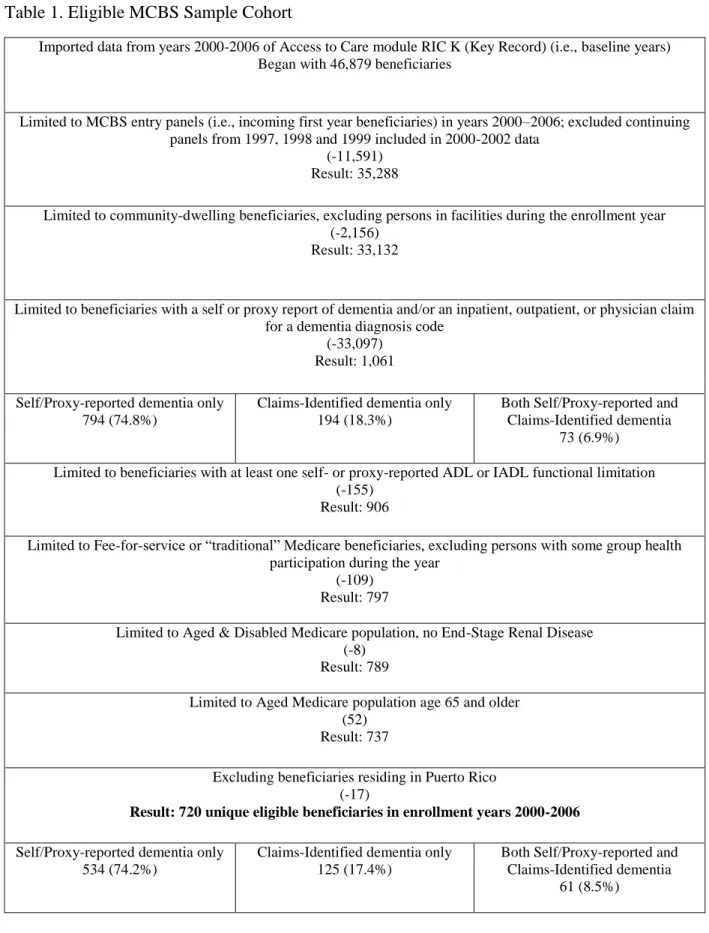
Table 1illustrates the application of the sample exclusion criteria and the resultant number of unique eligible Medicare beneficiaries (N= 720) for the study cohort. The inclusion criterion of a diagnosis of dementia is solely based on a self/proxy-reported diagnosis for the majority of beneficiaries included in the study sample (74%). Overlap between self/proxy-reported dementia and claims-identified dementia was minimal; nine-percent of the sample had both a Medicare claim with a dementia diagnosis code and self/proxy-reported dementia. The Medicare claims data that accompany the MCBS data modules only include data for
beneficiaries included in the respective module and for that particular file year (CMS, 2013a). Medicare claims on historical or future events for past or current participants are not included in the standard release (CMS, 2013a). Therefore, the claims diagnosis is based on whether an applicable claim was identified during the beneficiary’s first MCBS enrollment year. Claims prior to the MCBS enrollment year were unable to be examined. The inability to examine claims data from prior years may have resulted in the under-identification of dementia claims,
particularly among persons who self/proxy-reported dementia. In addition, dementia diagnoses may be underreported in claims due to clinicians not associating the services provided at the time of contact with that particular diagnosis. Another potential explanation is that self/proxy-reported cases may have associated age-related memory loss or memory loss due to other conditions with dementia. The distinction between age-related forgetfulness and dementia is largely the
thinking or reasoning reaches a level that affects their ability to perform daily activities, it is more likely that the individual has reached the state of dementia.
In fact, functional impairment is often indicative of a more advanced state of dementia (Moore, Zhu, & Clipp, 2001). By limiting this study to persons with dementia who also have functional impairments, the sample under study represents individuals in a more advanced state of disease and is not representative of all persons affected by this condition. However, the presence of such impairments suggests that the memory loss experienced has advanced beyond age-related changes. Further, the purpose of this analysis is to examine levels of community-based support among beneficiaries with dementia and impaired daily functioning to determine if these individuals are in fact receiving the help that they need with home-based care (CMS, 2014).
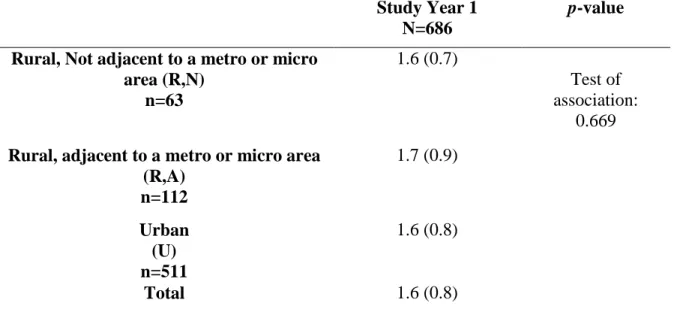
As shown in Table 1, 85% of eligible beneficiaries identified as having dementia, also reported at least one functional limitation. Functional limitations are highly prevalent among the beneficiaries identified in the sample as meeting the criterion of having dementia. In addition, at baseline, the total number of reported ADL/IADL difficulties is significantly higher among those with only a self/proxy report of dementia compared to beneficiaries identified through claims only (Table 2). Similarly, persons with both self/proxy-reported dementia and at least one
as having dementia, studying ADL/IADL-specific support among beneficiaries with reported difficulties in this sample is a relevant pursuit.
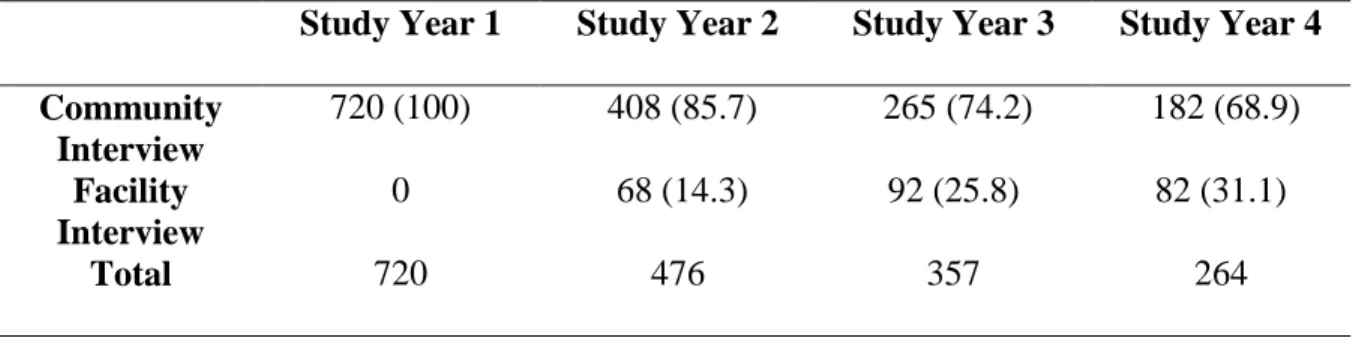
All inclusion and exclusion criteria are based on beneficiaries’ status during their enrollment year into the MCBS (i.e., enrollment in entering panels from 2000 to 2006). See Appendix 1 for a complete list of inclusion and exclusion criteria. The total number of eligible beneficiaries per MCBS entry year is indicated in Table 3. After the enrollment or entry year, each MCBS sample panel is followed for an additional three years. Therefore, participants may be enrolled in the study for a total of four years, consisting of one enrollment year plus three follow-up years in which healthcare use data are obtained. Follow-up data were merged in for the identified eligible sample cohort and duplicate observations were excluded. The number of beneficiaries remaining in the study longitudinally is illustrated in Table 4. All eligible beneficiaries were community-dwelling in Study Year 1. Fifty-three percent of community interviews at baseline were conducted with a proxy, rather than with the sample person (R,N: 52%; R,A: 45%; and U: 55%). The majority of proxies were adult daughters (37%), followed by spouses (30%). As shown in Table 4, some remaining beneficiaries in follow-up years were institutionalized and completed facility interviews.
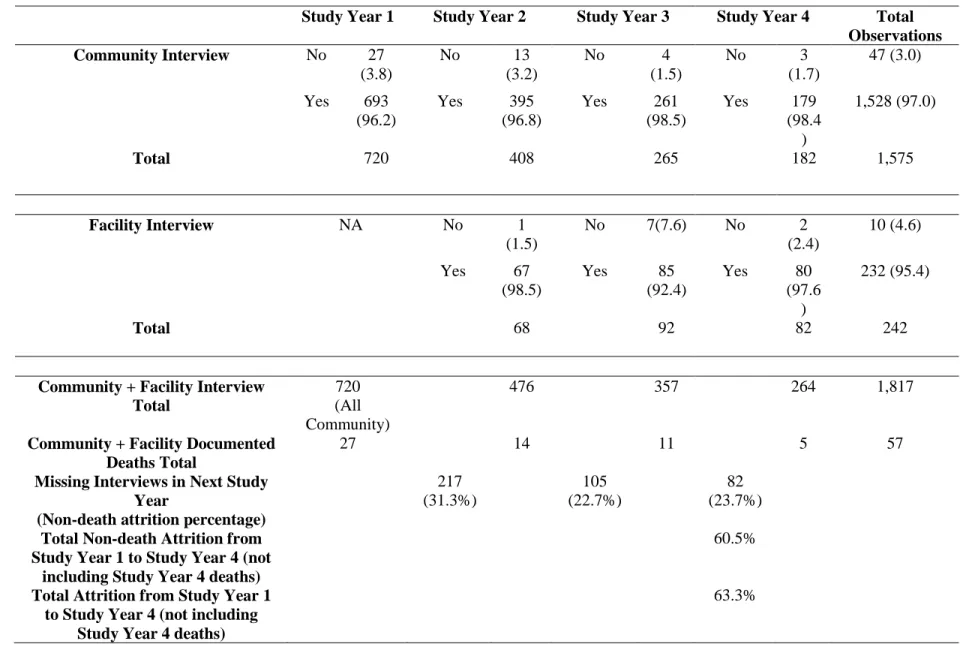
As Table 5 illustrates, not all missing interviews across study years are accounted for in the number of documented deaths, indicating non-death attrition. The MCBS does not include an indicator providing information on the trajectories of those who are lost to follow-up, nor their reasons for discontinuation in the study (Hubbard & Edwards, 2010). Most non-death attrition in the MCBS occurs after the baseline Access to Care interview and the first Cost and Use
interview (i.e., second-year) (Hubbard & Edwards, 2010). Such is the case in this study.
Different attrition rates for the MCBS sample have been reported using earlier releases of MCBS data. Using two combined MCBS panels (panel 1: 2005 entry and 2008 exit combined with panel 2: 2006 entry and 2009 exit and excluding attrition due to death), Hubbard and Edwards (2010) report an attrition rate of 26% (1,639 left with 4,771 remaining in year 4 out of 6410 at baseline). Using three pooled entry MCBS panels (panel 1: 1997 entry and 2000 exit; panel 2: 1998 entry and 2001 exit; and panel 3: 1999 entry and 2002 exit), Kautter et al. (2006) report an attrition rate of 62% (8,878 left with 5,437 remaining in year 4 out of 14,315 at baseline). The total attrition rate for this study is 63.3% (Table 5), which is consistent with Kautter et al. (2006).
would prove most beneficial to researchers interested in this subpopulation of Medicare beneficiaries.
Table 6 includes the total years of participation per beneficiary across study years. This table shows that of those who completed interviews at baseline, 32% remained in the MCBS only one year, 18% remained in the study two years, 15% remained in the study three years, and 35% of the original sample remained in the study for a total of four years. The mean length of follow-up among the baseline sample was 2.5 study years (SD=1.3) and ranged from one to four study years. Results from an imputed (i.e., uses imputed data from Aim 1b due to missing values for covariates) logistic regression model examining differences in key demographic
characteristics at baseline between those who did not remain in the study all four years and those who did are presented in Table 7. Age and total number of ADL/IADL difficulties were
Table 1. Eligible MCBS Sample Cohort
Imported data from years 2000-2006 of Access to Care module RIC K (Key Record) (i.e., baseline years) Began with 46,879 beneficiaries
Limited to MCBS entry panels (i.e., incoming first year beneficiaries) in years 2000–2006; excluded continuing panels from 1997, 1998 and 1999 included in 2000-2002 data
(-11,591) Result: 35,288
Limited to community-dwelling beneficiaries, excluding persons in facilities during the enrollment year (-2,156)
Result: 33,132
Limited to beneficiaries with a self or proxy report of dementia and/or an inpatient, outpatient, or physician claim for a dementia diagnosis code
(-33,097) Result: 1,061 Self/Proxy-reported dementia only
794 (74.8%)
Claims-Identified dementia only 194 (18.3%)
Both Self/Proxy-reported and Claims-Identified dementia
73 (6.9%) Limited to beneficiaries with at least one self- or proxy-reported ADL or IADL functional limitation
(-155) Result: 906
Limited to Fee-for-service or “traditional” Medicare beneficiaries, excluding persons with some group health participation during the year
(-109) Result: 797
Limited to Aged & Disabled Medicare population, no End-Stage Renal Disease (-8)
Result: 789
Limited to Aged Medicare population age 65 and older (52)
Result: 737
Excluding beneficiaries residing in Puerto Rico (-17)
Result: 720 unique eligible beneficiaries in enrollment years 2000-2006
Self/Proxy-reported dementia only 534 (74.2%)
Claims-Identified dementia only 125 (17.4%)
Both Self/Proxy-reported and Claims-Identified dementia
Table 2. Functional Limitations by Self/Proxy Reported vs. Claims Identified Dementia at Baseline
(Mean [SD], N=720)
Total Number of ADL/IADL Limitations
Total Number of ADL Limitations
Total Number of IADL Limitations
Self/Proxy-Reported Dementia Only
n=534
6.8 (3.5) 4.1 (1.9) 2.7 (2.1)
Claims-Identified Dementia Only
n=125
4.6 (3.1) 2.6 (1.8) 2.0 (1.7)
Both Self/Proxy-Reported and Claims-Identified Dementia
n=61
7.0 (3.0) 4.5 (1.7) 2.5 (1.9)
Total 6.4 (3.5) 3.9 (2.0) 2.6 (2.0)
p-value Test of association:
p<0.001
Test of direction of association:
Self/proxy report only vs. Claims only
p<0.001
Claims only vs. Both Self/proxy report and
Claims
p<0.001
Test of association:
p<0.001
Test of direction of association:
Self/proxy report only vs. Claims only
p<0.001
Claims only vs. Both Self/proxy report and
Claims
p<0.001
Test of association: 0.002**
Test of direction of association:
Self/proxy report only vs. Claims only
Table 3. Eligible Beneficiaries by MCBS Entry Year, N (%)
2000 82 (11.4)
2001 102 (14.2)
2002 93 (12.9)
2003 106 (14.7)
2004 115 (16.0)
2005 110 (15.3)
2006 112 (15.6)
Total 720 (100)
Table 4. Eligible Beneficiaries by Longitudinal Study Year and Type of MCBS Interview, N (%) Study Year 1 Study Year 2 Study Year 3 Study Year 4 Community
Interview
720 (100) 408 (85.7) 265 (74.2) 182 (68.9) Facility
Interview
0 68 (14.3) 92 (25.8) 82 (31.1)
Table 5. Documented Deaths during the Year by Longitudinal Study Year and Type of MCBS Interview, N (%)
Study Year 1 Study Year 2 Study Year 3 Study Year 4 Total
Observations
Community Interview No 27
(3.8)
No 13
(3.2)
No 4
(1.5)
No 3
(1.7)
47 (3.0)
Yes 693 (96.2)
Yes 395 (96.8)
Yes 261 (98.5)
Yes 179 (98.4 )
1,528 (97.0)
Total 720 408 265 182 1,575
Facility Interview NA No 1
(1.5)
No 7(7.6) No 2
(2.4)
10 (4.6)
Yes 67 (98.5)
Yes 85
(92.4)
Yes 80 (97.6
)
232 (95.4)
Total 68 92 82 242
Community + Facility Interview Total
720 (All Community)
476 357 264 1,817
Community + Facility Documented Deaths Total
27 14 11 5 57
Missing Interviews in Next Study Year
(Non-death attrition percentage)
217 (31.3%) 105 (22.7%) 82 (23.7%)
Total Non-death Attrition from Study Year 1 to Study Year 4 (not
including Study Year 4 deaths)
60.5%
Total Attrition from Study Year 1 to Study Year 4 (not including
Study Year 4 deaths)
63.3%
Table 6. Total Years of Participation per Beneficiary across Study Years, N (%) Study Year 1 Study Year 2 Study Year 3 Study Year 4 Participated in MCBS Only 1
Year
233 (32.4) Participated in MCBS 2 Total
Years
129 (17.9) 123 (25.8) 6 (1.7) Participated in MCBS 3 Total
Years
106 (14.7) 101 (21.2) 99 (27.7) 12 (4.6) Participated in MCBS All 4
Study Years
252 (35.0) 252 (52.9) 252 (70.6) 252 (95.5)
Total 720 476 357 264
Table 7. Demographic Predictors of Attrition: Not Participating in the MCBS for Four Years Average Marginal Effects (Bootstrapped Standard Errors) Rural vs. Urban Residence
R,N -0.075
(0.062)
R,A -0.016
(0.047)
First year in MCBS 0.005
(0.011)
Age 0.007**
(0.003)
Male 0.056
(0.039)
African American -0.052
(0.061)
More than 1 Race -0.043
(0.061)
Other Race -0.216
(0.115)
Hispanic or Latino Ethnicity 0.043
(0.084)
Lives alone -0.009
Average Marginal Effects (Bootstrapped Standard Errors)
Divorced 0.077
(0.071)
Separated -0.0070
(0.179)
Never Married -0.143
(0.117)
Income $25K or less 0.050
(0.044)
High School Diploma or Greater -0.023
(0.038)
Medicaid Participation -0.131**
(0.046)
Number of ADL/IADL difficulties 0.023***
(0.005)
Number of Co-morbidities -0.015
(0.017) General Health Status Rating
Excellent 0.069
(0.066)
Very Good -0.097
(0.058)
Fair 0.054
(0.047)
Poor 0.083
(0.051)
Observations 720
Notes. Uses multiple imputation data from Aim 1b due to missing values for covariates (i.e., multiple imputation using chained equations): Rural vs. urban residence (3 missing values); Income $25,000 or less (8 missing values); High School Diploma or Greater (16 missing values); and General Health Status (3 missing values).
Referent categories are Urban, White, Widowed, and Good General Health Status rating.
Study Variables and Measures
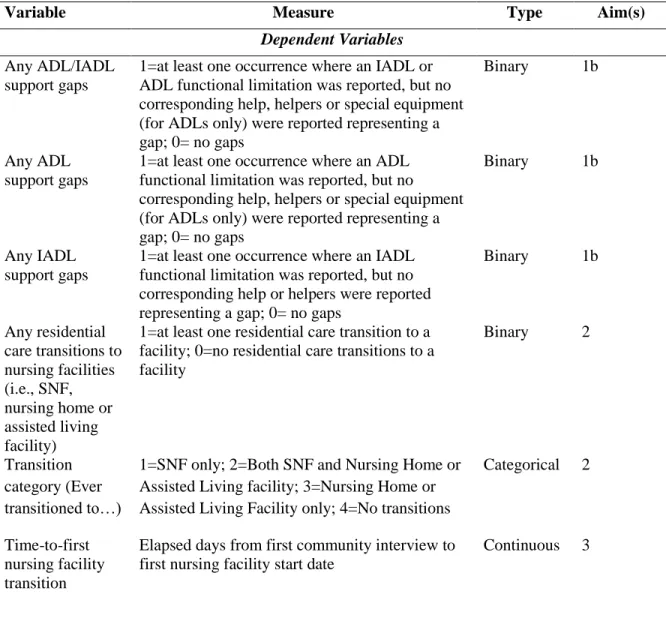
Table 8 provides a comprehensive list of variables and measures that were included in this study. Details on the variable, measure, type, and associated aim(s) are included.
Empirical models are tested in all study aims, where the key independent variables of interest are rural vs. urban residence (aims 1–3) and community-based helper support (aims 2 & 3). Covariates are similar across aims. Some categorical variables were collapsed in aims 2 and 3 regression models.
Table 8. Study Variables and Measures
Variable Measure Type Aim(s)
Dependent Variables
Any ADL/IADL support gaps
1=at least one occurrence where an IADL or ADL functional limitation was reported, but no corresponding help, helpers or special equipment (for ADLs only) were reported representing a gap; 0= no gaps
Binary 1b
Any ADL support gaps
1=at least one occurrence where an ADL functional limitation was reported, but no
corresponding help, helpers or special equipment (for ADLs only) were reported representing a gap; 0= no gaps
Binary 1b
Any IADL support gaps
1=at least one occurrence where an IADL functional limitation was reported, but no corresponding help or helpers were reported representing a gap; 0= no gaps
Binary 1b
Any residential care transitions to nursing facilities (i.e., SNF, nursing home or assisted living facility)
1=at least one residential care transition to a facility; 0=no residential care transitions to a facility
Binary 2
Transition category (Ever transitioned to…)
1=SNF only; 2=Both SNF and Nursing Home or Assisted Living facility; 3=Nursing Home or Assisted Living Facility only; 4=No transitions
Categorical 2
Time-to-first nursing facility
Elapsed days from first community interview to first nursing facility start date
Independent Variables
Environment
Usual Source of Care
1=Has a usual source of care; 0=no usual source of care
Binary 2
Pre-disposing Characteristics
Age Number of years Continuous 1,2,3
Sex 1=male; 0=female Binary 1,2,3
Race 1=White; 2=African American; 3=More than one race; 4=Other Race (Asian, Native Hawaiian or Other Pacific Islander; American Indian or Alaska Native; Other race)
Categorical 1,2,3
Ethnicity 1=Not Hispanic or Latino; 0=Hispanic or Latino
Binary 1,2,3
Geographic Location (Rural/Urban Residence)
1=Rural, not adjacent to metro or micro area (R,N); 2=Rural, adjacent to metro or micro area (R,A); 3=Urban (U)
Categorical 1,2,3
Marital Status 1=Married; 2=Widowed; 3=Divorced; 4=Separated; 5=Never Married
Categorical 1,2,3
Income 1=Income $25,000 or less; 0=Income greater than $25,000
Binary 1,2,3
Education 1=High school diploma or greater than high school diploma; 0=Less than high school diploma;
Binary 1,2,3
Medicaid Participation
1=Some Medicaid participation for the year 0=No Medicaid
participation for the year
Binary 1
Living situation 1=lives alone; 0=lives with others
Binary 1,2,3
Enabling Factors
Community-based ADL/IADL Helpers
Reported Number of ADL/IADL Helpers
Count of reported helpers for ADLs/IADLs
![Table 2. Functional Limitations by Self/Proxy Reported vs. Claims Identified Dementia at Baseline (Mean [SD], N=720) Total Number of ADL/IADL Limitations](https://thumb-us.123doks.com/thumbv2/123dok_us/8310309.2200852/52.918.115.809.210.927/functional-limitations-reported-identified-dementia-baseline-number-limitations.webp)