IMPROVING LUNG CANCER SCREENING AND REFERRAL RATES OF NORTH CAROLINA MEDICAID ENROLLEES
BJ Lee Peterson
A dissertation submitted to the faculty at the University of North Carolina at Chapel Hill in partial fulfillment of the requirements for the degree of Doctor of Nursing Practice in the School
of Nursing.
Chapel Hill 2019
ABSTRACT
BJ Lee Peterson: Improving Lung Cancer Screening and Referral Rates of North Carolina Medicaid Enrollees
(Under the direction of Deborah K. Mayer)
Low-dose chest tomography (LDCT) screening in high-risk patients (individuals age 55-74 with a 30-pack-year smoking history in a current smoker, or similar smoking history in a former smoker who quit within the past 15 years) has proven to reduce both lung cancer and all-cause mortality by 20% and 7%, respectively (Aberle et al., 2011). Despite endorsement by medical and nursing organizations and payers, as well as the strong evidence in support of LDCT screening (Aberle et al., 2011), lung cancer screening rates nationwide remain low at 1.9% (Pham et al., 2018). The goal of this Doctor of Nursing (DNP) quality improvement project was to improve lung cancer screening in eligible Medicaid recipients in a rural primary care practice. The process to improve screening included primary care provider (PCP) education and
improvement projects should include educational interventions to increase PCP knowledge of lung cancer screening and process improvements in gathering accurate USPSTF lung cancer screening patient eligibility criteria of pack-years smoking history documentation in the EHR.
ACKNOWLEDGEMENTS
I would like to thank my committee for their guidance, support and encouragement in the completion of this project. I would like to especially thank Deborah K. Mayer, committee chair, for her continued direction and vision of the potential impact on the lives of North Carolinians and their healthcare providers. As an eminent leader in oncology nursing, I am humbled to have such a wise mentor assisting me through this process. I thank Carrie Palmer for her continued encouragement and support throughout my doctoral course of study. To Tanya Darrow, I thank you for having a passion to continuously improve the primary care provided to the patients in your practice setting and being willing to partner on this project.
I would also like to thank the physicians, physician assistants, nurses, office staff and patients at the implementation site. Without each of these team members, this project would not have been possible. I appreciate the investment to incorporate the intervention into daily clinical practice in anticipation of the knowledge to be gained.
Appreciation to Dr. Patricia Rivera at The University of North Carolina- Chapel Hill, Dr. Lynn Bowlby from Duke Internal Medicine Outpatient Clinic, Dr. Scott Skibo with the Duke LifePoint Hospital system, and the North Carolina Lung Cancer Initiative for their interest in and support of this project.
TABLE OF CONTENTS
LIST OF ABBREVIATIONS ... ix
CHAPTER 1: INTRODUCTION ... 1
Problem Statement ... 2
Purpose ... 2
Background and Significance ... 3
Review of Literature ... 10
Results and Discussion ... 10
Theoretical Framework ... 18
Study Outcomes ... 23
CHAPTER 2: METHODS ... 24
Setting and Participants ... 24
Design and Data Collection ... 25
Statistical Analysis ... 29
CHAPTER 3: RESULTS ... 31
Total Practice Medicaid Patients- Eligible, Did Not Participate: Demographics, Smoking History, Symptomatology and Smoking Cessation Counseling ... 31
Patient Sample: Demographics, Smoking History, Symptomatology Smoking Cessation Counseling ... 31
Comparison of Total Medicaid Patient Sample and Eligible Patient Sample ... 32
Secondary Outcome Measure: Not Referred for LDCT Screening ... 34
Secondary Outcome Measure: Referred and Declined LDCT Screening ... 34
CHAPTER 4: DISCUSSION... 35
CHAPTER 5: LIMITATIONS AND PRACTICE IMPLICATIONS ... 39
CHAPTER 6: CONCLUSIONS ... 41
APPENDIX A: PRISMA FLOW DIAGRAM ... 42
APPENDIX B: LITERATURE REVIEW ... 43
APPENDIX C: IMPLEMENTATION SITE TRAINING POWERPOINT PRESENTATION .. 44
APPENDIX D: ELIGIBILITY DETERMINATION FOR LDCT SCREENING REFERRAL .. 53
APPENDIX E: AHQR “IS LUNG CANCER SCREENING RIGHT FOR ME. A DECISIONMAKING TOOL FOR YOU AND YOUR HEALTH CARE PROFESSIONAL .... 54
APPENDIX F: DATA COLLECTION TOOL ... 56
APPENDIX G: ONE PAGER PDF LUNG CANCER SCREENING TOOL... 57
APPENDIX H: BASELINE DEMOGRAPHICS ... 59
APPENDIX I: CONSORT DIAGRAM ... 61
APPENDIX J: PATIENT SAMPLE DEMOGRAPHICS ... 62
APPENDIX K: PATIENT SAMPLE ELIGIBLE FOR LDCT SCREENING... 64
APPENDIX L: PATIENT SAMPLE SMOKING CESSATION COUNSELING ... 65
APPENDIX M: PATIENT SAMPLE OUTCOMES FOR LDCT SCREENING REFERRAL .. 66
LIST OF ABBREVIATIONS
ACS American Cancer Society
AHRQ Agency for Healthcare Research and Quality ASCO American Society of Clinical Oncology CMS Centers for Medicare and Medicaid Services CPT Current Procedural Terminology
CT Computed Tomography
CXR Chest X-Ray/ Chest Radiograph
DANTE Detection and Screening of Early Lung Cancer by Novel Imaging Technology and Molecular Essays Trial
DLCST Danish Randomized Lung Cancer CT Screening Trial DNP Doctor of Nursing Practice
EHR Electronic Health Record HCP Health Care Provider IRB Institutional Review Board
LDCT Low-Dose Computed Tomography
Lung-RADS Lung Imaging Reporting and Data System MILD Multicentric Italian Lung Detection Trial NC North Carolina
PDSA Plan- Do- Study- Act
PHI Protected Health Information RCT Randomized Controlled Trial SDM Shared Decision Making
CHAPTER 1: INTRODUCTION
Rates of cigarette smoking in North Carolina continue to exceed the national average of (17.9% vs. 16.4%) placing many North Carolinians at risk for developing smoking related lung cancer (National Institutes of Health, 2018). North Carolina Medicaid enrollees, aged 16-64, report much higher smoking rates at 43.3% (State Center for Health Statistics, North Carolina Department of Public Health, 2016). Minorities and those who are socioeconomically
disadvantaged (measured by wealth, income distribution, poverty rate, unemployment rate, education, occupation and housing quality) have not only higher smoking prevalence and higher lung cancer incidence, but also higher mortality rates (Singh, Williams, Siahpush, & Mulhollen, 2011). Those with a low socioeconomic status smoke cigarettes more heavily with a duration nearly twice as many years than those with a family income of three times the poverty rate (Siahpush, Singh, Jones, & Timsina, 2009). Socioeconomically disadvantaged patients are more likely to be diagnosed with later-stage cancer and less likely to receive any treatment, surgery, and chemotherapy for lung cancer (Woods, Rachet, & Coleman, 2006).
past 15 years) has proven to reduce both lung cancer and all-cause mortality by 20% and 7%, respectively (Aberle et al., 2011). Despite strong evidence in support of LDCT screening with proven reductions in lung cancer associated morbidity and mortality (Aberle et al., 2011), and the resulting endorsement by medical and nursing organizations and payers, screening rates nationwide remain low at 1.9% (Pham, Bhandari, Oechsli, Pinkston & Kloecker, 2018). Problem Statement
North Carolina Medicaid enrollees (adults aged 18-64 years, non-institutionalized) report current smoking rates of 43.3%, placing these enrollees at high risk for lung cancer while also being at high risk for healthcare disparities due to their socioeconomic status (State Center for Health Statistics, North Carolina Department of Public Health, 2016). However, LDCT screening guidelines have not been widely implemented into national evidence-based clinical practice as evidenced by a low national lung cancer screening rate of only 1.9% (Pham et al., 2018). Many patient, provider and system level barriers have been suggested as reasons for low screening rates (Carter-Harris & Gould, 2017). There is currently no data published on the estimated or actual numbers of lung cancer screenings in the North Carolina Medicaid
population. If the North Carolina Medicaid population does not have access to screening, this gap in care may be contributing to healthcare disparities and poor outcomes.
Purpose
Background and Significance
Lung cancer statistics. Lung cancer is the third most common cancer and the leading
cause of cancer deaths in the United States in both men and women, accounting for one quarter of cancer deaths, and kills more people than breast cancer, prostate cancer, and colon
cancer combined.(American Cancer Society, 2019a). The burden of lung cancer in incidence and mortality rates in North Carolina is, on average, higher than that of the United States. Lung cancer was the leading cause of cancer mortality in North Carolina from 2012- 2016 with 27,600 deaths (North Carolina Department of Health and Human Services, 2018). It is estimated that 8,010 North Carolinians will be diagnosed with lung cancer and 5,370 people will die from lung cancer in 2019 (American Cancer Society, 2019b)
Despite improvements in patient survival over the last several decades for other cancer types, including breast and prostate cancer, there have been comparatively marginal
improvements in lung cancer survival. The lack of significant improvement in lung cancer survival is largely attributed to the advanced stage at time of diagnosis offering limited treatment options.The national five-year survival rate for lung cancer is 55% when the disease is detected early and still localized within the lungs. However, only 16% of lung cancer cases are diagnosed at an early stage. Unfortunately, lung cancer is primarily detected when the patient has become symptomatic and the cancer has spread to other organs with a five-year survival rate of only 4% (American Lung Association, 2016).
Stage I lung cancer is localized to a primary site (the lung) and represents only 16% of newly diagnosed patients. According to the SEER database, 60% of patients with non-small cell lung cancer and 29% of patients with small cell lung cancer at a localized (traditionally Stage 1) are
alive at five years after diagnosis (American Cancer Society, 2019c). Twenty-two percent of American lung cancer patients are diagnosed with regional disease, Stages II and III, where the cancer has spread outside of the lung to the lymph nodes, tissues or other organs (National Cancer Institute, 2018). These patients have a 29.7% five-year survival rate. Nationally, approximately 80% of lung cancers are of late stage (Stage IV) at time of diagnosis, conferring poor treatment options and poorer outcomes (SEER, 2018). Fifty-seven percent of patients are diagnosed with distant lung cancer, Stage IV, where the cancer has metastasized and most difficult to treat resulting in five-year survival rates of less than 5% (SEER, 2018). In contrast, North Carolina data on stage of lung cancer at diagnosis is: 18.9% are localized; 24.6% are regional; and 50.1% are distant (North Carolina State Center for Health Statistics, 2017). Currently, stage-specific five-year survival data is not available for North Carolina (American Lung Association, 2019).
Smoking. It is estimated that 85-90% of lung cancers are attributable to smoking
Mirroring national trends, the smoking rates have decreased overall in North Carolina from 21.8 in 2011 to 17.9 in 2016, yet much more work needs to be done (Centers for Disease Control and Prevention, 2017c). Rates of current cigarette smoking in North Carolina continue to exceed the national average placing many North Carolinians at risk for developing lung cancer (National Institutes of Health, 2018). North Carolina Medicaid smoking rates are higher than for other North Carolinians placing these enrollees at high risk for lung cancer. One study showed that 43.3% of non-institutionalized adults aged 18-64 years enrolled in North Carolina Medicaid reported current smoking compared to 32.2% with no health insurance reported smoking and 16.2% with other health insurance (State Center for Health Statistics, North Carolina Department of Public Health, 2016).
Healthcare disparities. Nationally, adult cigarette smoking has declined from 20.9% in
(North Carolina Cancer Prevention and Control Branch/N.C. Comprehensive Cancer Control Program, 2017).
While lung cancer mainly occurs in older people, approximately 30% are less than 65 years of age at time of lung cancer diagnosis (North Carolina Cancer Prevention and Control Branch/N.C. Comprehensive Cancer Control Program, 2017). Of those Americans diagnosed with lung cancer each year, it is estimated that approximately 8% of those are aged 45-54 years old and 22% of those are aged 55-64 years old (North Carolina Cancer Prevention and Control Branch/N.C. Comprehensive Cancer Control Program, 2017). However, most people diagnosed with lung cancer are 65 or older, with 70 years being the national median age at time of
diagnosis. While those older than 65 years will qualify for Medicare for insurance coverage, those younger than 65 years may not have health insurance.
Recognition of social determinants of health, disparities, inequities and care gaps are important when evaluating smoking related lung cancer in North Carolina. Poorer overall health, a higher prevalence of comorbid conditions, and greater life stress may also be a function of the challenges Medicaid enrollees face navigating the health care system, including the financial and logistical barriers they encounter when accessing care and historic distrust of a system that’s not designed around their needs (Forrest, Adams, Wareham, Rubin, & White, 2013). Medicaid beneficiaries are often in poorer health before their lung cancer diagnosis—making their treatment much more complex. Medicaid or uninsured patients have higher co-morbidity rates with more than a third being obese, approximately 20% being treated for depression, 20% with high blood pressure, and 15% having diabetes (Mendes, 2013).
There are fewer doctors in North Carolina, with just 139 PCPs per 100,000 people, compared to 154 per 100,000 in the rest of the United States (America’s Health Rankings® 2016 Annual Report, 2017). North Carolina invests fewer resources into public health funding ($56 per person) than the rest of the nation ($98 per person)—a difference of nearly $42 (America’s Health Rankings® 2016 Annual Report, 2017). More than 72% patients diagnosed with lung cancer between 2010 and 2014 received their primary health insurance through at least one type of governmental program (North Carolina Cancer Prevention and Control Branch/N.C.
Comprehensive Cancer Control Program, 2017).
Outcome disparities among low-income populations demonstrate they are at higher risk for poorer treatment outcomes (North Carolina Department of Health and Human Services, 2017). Patients with Medicaid or no insurance consistently have worse outcomes than other patients with lung cancer (Mendes, 2013). These poorer outcomes include higher risks of death than privately insured patients, as well as African-Americans and Hispanics—groups that are disproportionately represented in Medicaid programs—have higher lung cancer incidence and higher lung cancer mortality rates when compared with non-Hispanic whites and those with higher socioeconomic status (Mendes, 2013).
Early detection of lung cancer. Millions of Americans continue to smoke justifying
cytology conducted prior to the 1990’s failed to show a statistically significant reduction in lung cancer mortality (Wender et al, 2013). As a result, the American Cancer Society removed its initial endorsement for lung cancer screening with CXR for current and former smokers (Wender et al., 2013). However, research continued to evaluate alternative methods, such as LDCT, for early detection of lung cancer. Many of these LDCT randomized clinical trials compared LDCT to CXR with or without sputum cytology with mixed results.
In late 2013, the United States Preventative Services Task Force (USPSTF) issued a Grade B recommendation and endorsed annual LDCT screening in individuals at high risk for developing lung cancer based on the results of the National Lung Screening Trial (Moyer, 2014). High risk is defined as adults aged 55-80 years who have at least a 30 pack-year smoking history and currently smoke or have quit within the past 15 years (USPSTF, 2013). Prior to the USPSTF recommendations and reimbursement of screenings in December 2013, screening rates using LDCT were very low at 3.3% (Jemal & Fedewa, 2017). In 2015, rates had only increased to 3.9% after the Affordable Care Act mandated coverage of LDCT screening for high-risk privately insured individuals. The Centers for Medicare and Medicaid Services (CMS) initiated coverage for LDCT in February 2015 for eligible persons with a written prescription and shared decision-making (SDM) documentation (Simmons, Gray, Schabath, Wilson & Quinn, 2017). Professional organizations such as the American Cancer Society (ACS) and American Society of Clinical Oncology (ASCO) also supported adoption of LDCT screening in high-risk populations. Medicaid coverage of lung cancer screening was deferred to the individual states.
evaluated for lung cancer despite the potential to thwart thousands of deaths annually (Jemal & Fedewa, 2017). In the first national estimate of LDCT screening following the USPSTF recommendation in 2015, over 50% of smokers meeting USPSTF criteria for LDCT screening were Medicaid or uninsured (Jemal & Fedewa, 2017). While this study was not designed to evaluate reasons for low uptake of LDCT screening, the authors proposed that reasons may include gaps in smoking knowledge regarding LDCT, lack of access to care, and lack of
physician’s knowledge about screening recommendations and reimbursement (Jemal & Fedewa, 2017).
A more recent publication showed that annual LDCT screening remains inadequate following USPSTF recommendations despite the time since implementation and potential to prevent thousands of lung cancer deaths each year (Pham et al., 2018). This study showed that in 2016, only 1.9% of 7.6 million eligible smokers were screened by LDCT for lung cancer. While the aim of this study was to update the number of LDCTs performed in the United States, the author speculated that reasons may range from lack of physician knowledge and referral, to lack of patient interest in and knowledge of screening (Pham et al., 2018).
Review of Literature
The potential improvements in lung cancer and all-cause mortality and earlier stage at diagnosis with LDCT screening of a high risk patient population necessitates a review of the literature to more fully evaluate the benefits of lung cancer screening with LDCT. Searches were conducted in CINAHL, PubMed and Embase (Appendix A). The combined search terms
included: (1) lung cancer screen*; AND (2) LDCT OR low dose chest tomography; AND (3) nurs* OR nurse practitioner OR physician assistant OR primary care OR family OR physician. Limitations on search terms included: language (English); publication years (5 years or 2012-2017) plus known landmark studies; and age (middle aged+: 45 + years, middle aged: 45-64 years, aged: 65+ years; and 80 and over or very elderly: 80+ years). The search terms were all combined to yield 22 results in PubMed, six in CINAHL, and 32 in Embase. The addition of the search term “practice change” yield no results in any of the databases. Forty-three articles were reviewed. Of these results, four RCTs of LDCT screening were selected for inclusion in the review of literature as they were the only studies reporting results of both the intervention (LDCT) and control (non-LDCT) groups (Appendix B).
Results and Discussion
Of the four RCTs included in the review, only the National Lung Screening Trial (NLST) compared annual LDCT to annual CXR (Aberle et al., 2011). In the largest high quality LDCT screening trial to date, the U.S. based, multicentered NLST enrolled 53,454 participants. Eligible participants were between the ages of 55-74 and current or former smoker (quit <15 years ago) with >30 pack year smoking history. Participants received three annual scans.
the NLST, the DANTE trial (Infante et al., 2009) enrolled 2472 participants comparing LDCT to annual clinical review. This Italian study of three hospitals from the same network evaluated asymptomatic men between the ages of 60-74 who were current or former smokers with >20 pack-year smoking history. The DLCST trial (Saghir et al., 2012) randomized 4104 men and women at a single site in Denmark. Participants were between the ages of 50-70 and current and former smokers (<10 years and > 4 weeks since smoking cessation) with >20 pack-year smoking history. The MILD trial (Pastorino et al., 2012) evaluated LDCT (annual versus biennial)
compared to usual care. This single institution trial conducted in Milan enrolled 4099
participants. Current and former smokers, at least 49 years of age with no upper age limit, with a >20 pack-year smoking history or quit <10 years ago were eligible for study participation.
Lung cancer mortality. Clinical trial findings on lung cancer associated mortality were
described in three of the four RCTs (Aberle et al., 2011; Infante et al., 2009; Saghir et al., 2012). The NLST reported a 20% reduction in lung cancer mortality with LDCT (95% CI, 6.8-26.7; p = 0.004). The study authors reported a number needed to screen (NNS) with LDCT to prevent one lung cancer death of 320 (among those undergoing ≥1 screens). This is compared to screening 900-1900 all-comers requiring screening mammograms to prevent one death from breast cancer, and screening 500 individuals with colonoscopy to prevent one death from colorectal cancer (Humphrey et al., 2013). Three trials comparing LDCT to annual clinical review or usual care reported lung cancer mortality rates that were not statistically different between randomized groups.
All-cause mortality. The NLST (Aberle et al., 2011) found a 6.7% reduction in
112- 5,000). In contrast, the three trials comparing LDCT to annual clinical review or usual care showed no difference in all-cause mortality rates (Infante et al., 2009; Saghir et al., 2012;
Pastorino et al., 2012).
of 56 pack-years; DANTE (Infante et al., 2015) reported mean smoking history of 47 pack-years; DLCST (Saghir et al., 2012) reported mean smoking history of 36 pack-years; and MILD
(Pastorino et al., 2012) reported mean smoking histories of 38 and 39 pack-years.
Stage at diagnosis. All four studies in the review reported a positive impact of screening
on early stage at diagnosis compared with CXR, annual clinical review, or usual care. The NLST (Aberle et al., 2011) reported 51.8% (329 of 635) Stage 1A and 11.2% (71 of 635) Stage 1B lung cancers in the LDCT group compared to 32.7% (90 of 275) Stage 1A and 14.9% (41 of 275) Stage 1B lung cancers in the CXR group which was a significant difference. DANTE (Infante et al., 2015) reported significantly more Stage 1 lung cancers in the LDCT group (53 of 63, 84%) compared to the control group (12 of 35, 34%; p = 0.004). DLCST (Saghir et al., 2012) reported more early stage cancers (Stage 1 and 2) in the LDCT group compared to the control group (54 vs. 10, p < 0.001). The MILD trial (Pastorino et al., 2012) reported 59% Stage 1A lung cancers in the annual LDCT arm vs. 55% in the biennial arm vs. not reported in the control arm.
The results from these four RCTs support LDCT screening as an effective method to detect cancers at an earlier stage of lung cancer diagnosis when conducted in similar patient populations and under similar clinical trial conditions. The earlier stage at time of lung cancer diagnosis leads to more treatment options available to the patient and subsequent improvements in lung cancer mortality.
screening include false-negative results, false-positive results, incidental findings, overdiagnosis, radiation exposure, and psychological distress (Moyer, 2014). The harms of false-negative results were not studied in the reviews. However, the sensitivity of LDCT for detecting lung cancer ranged from 80-100%, implying a false-negative rate of 0-20% (Humphrey et al., 2013). False-positive results ranged from 9.2-51% of participants in baseline screens, with positive predictive values for abnormal studies ranging from 2.2-36%. Most abnormal LDCT scans were resolved with further imaging. Positive examinations were lower in subsequent follow-up
screens, with positive predictive values for abnormal studies ranging from 4-42%. Positive predictive values for abnormal LDCT scans with recommendations for biopsy ranged from 50-92% (Humphrey et al., 2013).
There were no standardized approaches to reporting incidental findings among the studies. In LDCT studies, non-pulmonary findings of infections, other types of cancer and coronary artery calcification were commonly reported (Humphrey et al., 2013). Overdiagnosis was not formally reported in the studies. However, four RCTs of LDCT which reported results in both the LDCT and no LDCT groups suggested overdiagnosis in only one trial showing an excess of 119 lung cancers among 26,722 participants after 6.5 years of follow-up (Humphrey et al., 2013). Radiation associated with one LDCT scan ranged from 0.61 to 1.5 mSv in two RCTs and two cohort studies reported. LDCT screening produces similar radiation exposure to
increased short-term anxiety among those with positive or intermediate findings (Humphrey et al., 2013).
In summary, evaluation of the current evidence affirms the need for continued
development of standardized practices and guidance for not only the LDCT screening procedure, but also for follow-up testing to amplify accuracy, determine cost-effectiveness and reduce harms. LDCT screening has proven to be an effective method to detect cancers at an earlier stage of lung cancer diagnosis leading to more available treatment options to the patient and subsequent improvements in lung cancer mortality. However, patient, provider and system level barriers have been suggested as barriers to widespread adoption (Carter-Harris & Gould, 2017).
Barriers to lung cancer screening. Several studies have identified limited
The majority of PCPs in these studies identify early detection as the main benefit of LCDT screening (Simmons et al., 2017; Ersek et al., 2016); however, a low proportion believe that LDCT actually reduced lung cancer mortality (Ersek et al., 2016; Lewis et al., 2015). Primary care providers who believe that LDCT screening reduces mortality in the high-risk population are more likely to believe that screening and early detection has the potential to improve quality of life, improve overall outcomes, and motivate smoking cessation (Simmons et al., 2017). In fact, Ersek and colleagues (2016) reported in the evaluation of the knowledge of, attitudes toward, and use of LDCT for lung cancer screening among family physicians that: 98% felt LDCT increased odds of detecting cancer at an earlier stage; 75% felt the benefits
outweighed the harms; 76% discussed risks/benefits of LDCT in some capacity with their patients; yet >50% reported making one or no screening recommendations in the past year.
Additionally, Lewis and colleagues (2015) assessed lung cancer screening practices and attitudes among PCPs in the era of new LDCT screening guidelines at an academic medical center. The investigators found that few PCPs ordered lung cancer screening with approximately 50% of the PCPs knowing three or more of the six guideline components for lung cancer
screening (screen annually; begin screening at age 50 or 55; end screening at age 75 or 80; 20 or 30 pack-years smoking history; current and former smokers; and not exposure to secondhand smoke only), and 24% knew none of the screening components. This study showed that PCPs had a limited understanding of lung cancer screening guidelines and LDCT effectiveness with these knowledge gaps hindering the uptake of evidence-based lung cancer screening guidelines.
HCPs involved in the development and management of lung cancer screening clinics throughout the state continue to voice concerns over North Carolina Medicaid requests for coverage being denied for eligible high-risk patients (S. Skibo, personal communication, August 18, 2018). Most providers state confusion around the state’s administration of the CMS mandate to cover LDCT screening (L. Bowlby, personal communication, January 26, 2018). Online resources regarding North Carolina Medicaid coverage for lung cancer screening are difficult to locate. Key North Carolina lung cancer screening thought leaders have little knowledge of the prior authorization requirement through the vendor, EviCore, with none reporting familiarity with this requirement or guidelines (P. Rivera, personal communication, August 29, 2018). Currently, North Carolina Medicaid covers chest computed tomography (CT) without contrast under the current procedural terminology (CPT) code of CPT 71250 but not the usual LDCT lung
screening code of G0297. This creates a significant problem because this CPT code for chest CT does not require reporting findings in the consistent screening language of Lung-RADS (P. Rivera, personal communication, August 29, 2018). Lung-RADS was created to standardize lung cancer screening CT reporting and management recommendations, reduce confusion in lung cancer screening CT interpretations, and facilitate outcome monitoring (American College of Radiology, 2018). Given that CPT 71250 must be used to gain prior authorization for lung cancer screening in high risk Medicaid patients, inaccurate data collection on the number of LDCT screenings conducted in the North Carolina Medicaid population are likely occurring.
decisions are considered (Delbanco & Gerteis, 2015). The USPSTF outlines the content of the SDM conversation, which should occur prior to actual LDCT screening: advantages, limitations, known harms and potential harms (Moyer, 2014). Billing code G0296 is utilized to document the SDM process.
Despite PCPs recommending traditional cancer screening (such as mammography for breast cancer; pap smears for cervical cancer; and fecal occult blood, flexible sigmoidoscopy and colonoscopy for colorectal cancer), LDCT screening is not yet included in the PCP’s daily practice recommendations (Ersek et al., 2016). Ersek and colleagues (2016) called for increased provider educational outreach to improve screening rates. By improving PCP knowledge of commonly identified barriers (lung cancer screening’s evidence base, guidelines, potential
harms, and reimbursement) and reinforcing the confirmed benefits, lung cancer screening can be enacted to improved lung cancer mortality.
Theoretical Framework
The importance of using science-based concepts to evaluate and enhance health care delivery and improve patient outcomes is critical to evidence-based practice. Equipping the clinician to appropriately discuss risks and benefits and refer high risk patients for lung cancer screening and to discern how to best disseminate and implement this knowledge should be informed by evidence rather than opinion or belief.
Rogers' Diffusion of Innovations Theory (1962) has been used to examine research utilization in many disciplines, and may offer insights to the diffusion of ideas and practices related to guideline recommended lung cancer screening among clinicians. Rogers’ theory suggests that when the individual perceives information as new knowledge or evidence
the new idea. Utilizing Roger’s theory as a guiding framework for targeted educational efforts and implementation of a lung cancer risk screening tool can improve evidence-based practice and patient outcomes.
Rogers’ theory is a group of ideas that provide a description and explanation of the phenomenon by which new ideas, products, or behaviors spread over time throughout a society or organization (Nilsen, 2015). The result of this diffusion is the adoption of the idea, product or behavior as part of the social system. The key to adoption is the perception of this idea, product or behavior as new or innovative. Interpersonal influence of opinion leaders or change agents, and the adoption decisions of targeted individuals are the keys to spreading the innovation (Greenhalgh, Robert, Macfarlane, Bate & Kyriakidou, 2004).
Rogers (1962) described five adopter classifications on the basis of innovativeness (innovators, early adopters, early majority, late majority and laggards). The rate of adoption is the relative speed with which the members of the social system adopt an innovation and early adopters have different characteristics than those who are slower to adopt. The new idea or innovation is communicated through successive diffusion stages over a period of time to members of the social system (Rogers, 2002). This diffusion may be passive or active. Rogers also describes five process factors that influence the rate of adoption: knowledge, persuasion, decision, implementation and confirmation. These major components of Rogers’ theory will inform the process of diffusion and dissemination of lung cancer screening education and screening tool within the practice site with the aim to increase referrals for LDCT in high-risk individuals.
When Rogers’ theory is applied to evidence-based lung cancer screening
identified knowledge or behavior gap in targeted clinicians’ practices (Greenhalgh, Robert, Macfarlane, Bate & Kyriakidou, 2005). The PCP is well positioned to assist the patient with decision-making for preventative screening interventions as they represent the initial point of care coordination of preventative care in the United States. Studies have identified the PCP’s lack of knowledge of lung cancer screening (Simmons et al., 2017), lack of knowledge of guidelines (Lewis et al., 2015), and lack of knowledge of payment and reimbursement (Ersek et al., 2016) as key barriers to appropriate screening. Reinforcing the confirmed benefits of and improving PCP knowledge of barriers to screening can lead to improved lung cancer mortality through earlier detection. The diffusion of innovation theory may prove a beneficial framework to efficiently spread this evidence-based research knowledge into clinical practice.
According to Rogers’ theory, when promoting an innovation such as lung cancer
screening, it is important to understand the characteristics of the target population that will assist or hinder the adoption into practice. Rogers contends there are five established adopter
categories with different strategies useful in appealing to the different adopter categories. Knowing that most clinicians in the implementation site will fall into the middle categories of early adopters, early majority, and late majority, providing strategies (such as success stories and evidence of success) to appeal to these providers will be important to adoption of the lung cancer screening initiative.
Adoption of an innovation by an individual is a process rather than a single event and is often dependent upon other decisions within an organization (Rogers, 2003). The rate of
testability of the innovation, in the absence of significant resources; and (5) the visibility of outcomes resulting from adoption of the innovation (Rogers, 1995).
The five-step innovation-decision process of individual stages by which a person adopts an innovation includes: knowledge, persuasion, decision, implementation, and confirmation. If the innovation has greater relative advantage to the one it is to replace, and if the innovation is consistent with existing beliefs, values, past history and practice needs, the adoption will occur more quickly. If the innovation is easy to understand and use and is of low complexity, it will be adopted sooner. If the innovation can be piloted to see its advantages, and it is observable and seen by others in the social system considering adoption, it will likely diffuse more rapidly.
This project will address the identified key barriers to practice implementation, which will be targeted toward the informational needs at the practice site (such as the closest certified LDCT screening location, requirements for referral, reimbursement, and processes for both SDM conversations and follow up of abnormal findings). The use of a simple lung cancer risk
screening tool embedded into the practice electronic health record (EHR) which is relatively quick and easy for the PCP to identify the at-risk patient is of great importance. A pilot of the screening tool will be conducted with intended users prior to formal launch of the tool to assess gaps in future implementation.
There are three identified types of innovations knowledge: awareness knowledge, how-to knowledge, and principles knowledge. Studies have shown that the majority of potential
Limitations of Rogers’ theory include the fact that although the S-shaped curve and the adopter categories were originally developed as a descriptor model, it cannot explain how or why people adopt innovations at different rates or if adoption will be successful (Greenhalgh et al., 2005). Rogers’ theory does not promote an active participation in adoption of the innovation, which newer research has found to be more effective in individual behavior change. One review found that more active interventions, such as HCP reminders and educational outreach, were more effective in changing provider behavior than passive interventions (Ellis et al., 2005).
Rogers’ theory serves as a necessary schema for translating evidence-based lung cancer screening guidelines into clinical practice to effectively and efficiently improve health outcomes in patients at high risk of lung cancer. Lung cancer screening initiatives must be perceived as not only advantageous with low implementation complexity, but also readily adaptable with clear advantages in order to promote its adoption into clinical practice. Without the guiding
framework of Roger’s diffusion of innovation theory, there would be a lack of understanding of both the engagement of potential adopters of lung cancer screening at the proposed clinical site and the innovation-decision process and possible obstacles to adoption. A lack of understanding of the patterns of adoption by individuals could potentially lead to unsuccessful implementation of the lung screening education and tool due to the lack of utilization of key opinion leaders to influence the behavior of potential adopters.
such as knowledge but failed to demonstrate changes in individual provider behavior (Raz et al., 2018). This practice change project aims to increase lung cancer screening rates by translating this new knowledge into behavior change.
LDCT screening guidelines have not been widely implemented into national evidence-based clinical practice (Pham et al., 2018). Many patient, provider and system level barriers have been suggested as reasons for low screening rates (Carter-Harris & Gould, 2017). Despite North Carolina Medicaid enrollees reporting current smoking rates of 43.3%, placing these enrollees at high risk for lung cancer while also being at high risk for healthcare disparities due to their socioeconomic status (State Center for Health Statistics, North Carolina Department of Public Health, 2016), current lung cancer screening rates in this population are not known. Can implementation of a lung cancer screening assessment tool into a rural community practice EHR improve PCP’s identification of North Carolina Medicaid enrollees at high risk for lung cancer and increase appropriate referrals for LDCT screening?
Study Outcomes
CHAPTER 2: METHODS
The goal of this DNP quality improvement project was to improve lung cancer screening in eligible North Carolina Medicaid recipients. The process to improve screening included incorporating a lung cancer risk assessment tool into the practice EHR to assist the PCP to appropriately identify eligible patients for LDCT screening to increase appropriate LDCT screening referrals.
Setting and Participants
Site implementation was conducted at a busy family practice in rural Vance County, North Carolina. The office has four physicians and 11 physician assistants caring for patients. The investigator worked closely with a Physician Assistant (PA), who serves as lead for quality practice improvement projects and liaison between the investigator and key personnel at the practice site. The practice site has an electronic medical record (AllScripts), which is well-incorporated into daily clinic practice.
According to North Carolina County Rankings, Vance County ranks 14th in lung cancer
percentage of 21% (North Carolina Cancer Prevention and Control Branch/N.C. Comprehensive Cancer Control Program, 2017). Additionally, Vance County is among the six North Carolina counties with the highest percent of people enrolled in NC Medicaid as of January 2017, ranging between 32-40% (Toledo, 2017). North Carolina Medicaid smoking rates are higher than for other North Carolinians placing these enrollees at high risk for lung cancer. The State Center for Health Statistics, North Carolina Department of Public Health (2016) conducted a study, which showed that 43.3% of non-institutionalized adults aged 18-64 years enrolled in North Carolina Medicaid reported current smoking.
Design and Data Collection
This practice change project was designed to aid the adoption of evidence supported lung cancer screening into primary care clinical practice by incorporating a lung cancer risk
assessment tool into the existing EHR to facilitate providers screening and referral. Data was gathered for three months before and after implementation of the lung cancer risk assessment tool in order to evaluate the impact on provider lung cancer screening behavior.
As lung cancer screening is complex, the review of the literature has emphasized that education of the provider is important in lung cancer screening and was provided prior to implementation of the screening tool (Simmons et al., 2017; Lewis et al., 2015; Ersek et al., 2016; Klabunde et al., 2012). A 15-minute education session with providers was delivered in conjunction with a PowerPoint presentation (Appendix C) addressing national, state and county specific lung cancer statistics, LDCT screening benefits and risk, USPSTF guideline
conversation and documentation, overview of North Carolina Medicaid coverage requirements, coding and prior authorization process, and overview of the resource/ referral guide. For those providers unable to attend the education session, the PowerPoint presentation was emailed to them for review. The PowerPoint was also emailed out to all practice HCPs for their reference. The site quality improvement lead informed office and nursing staff of the procedure of
documenting information for the eligible patients’ visits. No letters or phone calls were made to proactively recruit patients to for LDCT screening assessment. Patients were evaluated as they presented for a scheduled appointment to more closely represent a PCP office without staff dedicated to a lung cancer screening program.
Upon registration at the clinic on the day seen, patients who were North Carolina Medicaid enrollees (single coverage or dual eligible), age 55-80 years, and had a documented smoking history in the EHR were identified as eligible for participation (Appendix D) and were given a “Is Lung Cancer Screening Right for Me: A Decision Making Tool for You and Your Health Care Professional” (Appendix E) form from a tear-pad kept at the check-in desk to complete while waiting in the lobby for their appointment. If the front office personnel missed handing the form to the patient at check in, the medical assistant/ nursing staff were to provide this tear-pad form to the patient for completion while waiting in the room for the PCP. The form was to then be handed to the PCP by the patient and the information would be reviewed together to calculate the pack year history and assess the patient’s risk for lung cancer, undergo a SDM conversation, provide smoking cessation counseling if needed, and refer for LDCT screening if appropriate.
collected to describe the population. No protected health information (PHI) was collected. Outcomes data included use of codes G0297 (LDCT screening) and CPT 71250 (diagnostic CT). The actual chart was reviewed if the patient was eligible for LDCT screening but referral was not ordered or if the patient refused LDCT screening referral. Data were entered into an excel
spreadsheet. The clinic’s EHR could not be altered to allow for discreet fields for documentation
of the seven questions to assess the risk of lung cancer for North Carolina Medicaid enrollees. Therefore, the decision was made to embed a .pdf of the seven questions into the EHR
(Appendix G). Upon a North Carolina Medicaid enrollee with smoking history presenting to the clinic, documentation of patient aged 55-80 years triggered subsequent screening questions consistent with NC Medicaid lung cancer screening criteria (EviCore, 2018). These questions in the .pdf tool included:
1. Is the patient between 55-80 years of age? Yes/No
2. Calculate pack-years smoking history with formula: number of years smoked x average number of packs smoked per day = pack years ___ Number
3. Does the patient have at least a 30 pack-year history of cigarette smoking? Yes/ No 4. Does the patient currently smoke or quit less than 15 years ago? Yes/ No
5. Is the patient asymptomatic of underlying lung cancer symptoms? Yes/No 6. Is the patient willing to undergo curative lung surgery? Yes/ No
If the patient met all North Carolina Medicaid criteria for high risk of lung cancer, the provider then entered into a SDM conversation with the patient reviewing the benefits and risks of LDCT lung cancer screening followed by smoking cessation and smoking abstinence
counseling, if needed. This SDM visit included review of the decision aid titled “Is Lung Cancer Screening Right for Me?” developed and published by AHRQ. The provider then documented
the SDM discussion and decision. If the patient met all criteria and chose to receive LDCT referral for screening, a written order for the lung cancer screening visit with required information was generated from the EHR. As currently is the practice, the Department of Radiology continued to perform prior authorization prior to the LDCT scan. If the patient declined LDCT screening, the rationale for that decision was to be documented in the EHR. If the patient was unsure about referral for LDCT screening or requests more time, the patient was to be scheduled for a follow-up clinic visit to discuss the screening decision. Documentation of a smoking cessation and abstinence counseling session continued to be required for all patients who were currently smoking.
Baseline chart review of three months prior to implementation (October 19, 2018 through January 18, 2019) determined the number of North Carolina Medicaid enrollees aged 55-80 years of age who were current or former smokers and eligible for LDCT screening assessment.
suggested documentation requirements; and reimbursement coding for quick reference. Reminders to the HCP to document required components of SDM, use of a decision aid, and smoking cessation and abstinence counseling were included in the resource.
At the conclusion of the three-month implementation pilot (January 19, 2019 through April 19, 2019), change in provider lung cancer screening behaviors were measured compared to baseline (number who were eligible and referred for LDCT screening, number who were eligible and not screened, and number of eligible patients refusing LDCT referral). Due to the short duration of this pilot project we were not able to evaluate those who actually completed the LDCT once referred, nor the number of lung cancers detected upon LDCT referral.
The project was submitted to the University of North Carolina at Chapel Hill Institutional Review Board (IRB) for review and approval. The University of North Carolina at Chapel Hill IRB determined the submission did not constitute human subjects research as defined under federal regulations and did not require IRB approval.
Statistical Analysis
Descriptive statistics were used to analyze data regarding pre- and post-implementation patient demographics and variables related to LDCT screening. These tests included mean, median, minimum, maximum, frequencies and percentages. IBM SPSS Statistic software program was used to calculate the descriptive statistics for the study patients. To determine if the implementation of the risk assessment tool led to improved rates of LDCT referrals for Medicaid enrollees, the number who were eligible and referred for LDCT screening, number who were eligible and not screened, and number who were eligible but declined LDCT referral were compared before and after implementation using two proportion z-tests. The two
CHAPTER 3: RESULTS
Total Practice Medicaid Patients- Eligible, Did Not Participate: Demographics, Smoking
History, Symptomatology and Smoking Cessation Counseling
To understand the population of Medicaid patients seen in this rural primary care practice, demographics related to age, gender, race, ethnicity, insurance and zip code were collected (Appendix H, Table 1). Additional information on pack-year smoking history,
symptomatology and smoking cessation counseling was collected. Of the 184 Medicaid patients evaluated in the clinic during the study period, 150 of the total Medicaid practice sample were eligible but did not participate (were Medicaid enrollees- either single coverage or dual eligible; age 55-80 years; and positive smoking history).
Patient Sample: Demographics, Smoking History, Symptomatology Smoking Cessation
Counseling
Thirty-four patients met eligibility criteria for lung cancer screening (were Medicaid enrollees; age 55-80; documented pack-years smoking history; and were asymptomatic)
Comparison of Total Medicaid Patient Sample and Eligible Patient Sample
The total practice Medicaid population (N=150) differed significantly from the eligible patients (N=34) in several areas (Appendix H, Table 1).
Age. The patients in the total Medicaid practice cohort were statistically significantly
younger than the eligible patient cohort. The total Medicaid practice cohort had a mean (SD) patient age of 61.9 (4.87) years while the patient sample (N=34) were older with a mean (SD) age of 66.5 (5.25) years (p=0.00004).
Gender. There were no significant differences between the proportion of females
(p=0.59) and males (p=0.59) in each cohort. The total Medicaid practice cohort had a higher proportion of females (n=85, 56.7%) compared to males (n=65, 43.3%). Similarly, the
proportion of females (n=21, 61.8%) in the eligible patient group was higher than males (n=13, 38.2%).
Race. The total Medicaid population had a statistically significantly higher proportion of
Black/ African Americans (n=81, 54.0%) compared to the eligible patient group of Black/ African Americans (n=7, 20.6%, p=0.00008). The total Medicaid practice population also had a statistically significantly lower proportion of White/ Caucasians (n=63, 42%) than the patient sample (n=27, 79.4%, p=0.00008).
Ethnicity. There were no significant differences in ethnicity between the total Medicaid
Insurance. The total Medicaid practice population had a statistically significantly higher
proportion of patients with North Carolina Medicaid only (n=58, 38.7%) compared to the eligible patient group (n=5, 14.7%, p=0.01). The total Medicaid practice population had a statistically significantly lower proportion of patients with dual eligibility with North Carolina Medicaid and Medicare (n=92, 61.3%) compared to the eligible patients (n=29, 85.3%, p=0.01).
Zip code. There were no significant differences between zip codes of the two cohorts.
The total Medicaid practice population had a similar proportion of patients from within the immediate Vance County area zip codes of 27536 and 27537 (n=108, 72%) compared to all other zip codes outside of Vance County. The proportion of eligible patients from within the
immediate Vance County area zip codes of 27536 and 27537 was 67.6% (n=23) compared to zip codes outside of Vance County.
Pack-year smoking history and symptomatology. There was a high proportion of
patients in the total Medicaid practice population who had no pack-year history documented (n=118, 78.7%). A significantly higher proportion of the eligible patients had a documented >30 pack-year smoking history (n=23, 67.6%) compared to the total Medicaid practice population (n=28, 18.7%, p=0.00001). A significantly higher proportion of the eligible patients had a documented <30 pack-year smoking history (n=11, 32.6%) compared to the total Medicaid population (n=4, 2.7%, p=0.00001).
Of the total Medicaid practice population with a documented pack-year history (n=32), all were symptomatic (100%) and were determined ineligible for LDCT lung cancer screening. None of the 34 patients eligible for LDCT lung cancer screening were symptomatic.
Smoking cessation counseling. There were no significant differences between the
between the cohorts. Overall, a slightly higher proportion of the eligible patients received smoking cessation counseling, if needed, (n=17, 50%) compared to the total Medicaid practice population (n=60, 40%, p=0.285).
Primary Outcome Measure: Referred for LDCT Screening
To measure improvement in LDCT screening referrals of the eligible patients (N=34), referral was determined as either “yes” or “no”. There was not a statistically significant improvement in referrals following implementation (p = 0.23). There were more patients
referred for LDCT screening during the post-implementation period (n=3, 19%) compared to the pre-implementation period (n=1, 6%) but this did not reach statistical significance (Appendix M, Table 5).
Secondary Outcome Measure: Not Referred for LDCT Screening
Patients who met all criteria for LDCT screening referral yet were not referred were determined as either “yes” or “no”. There was no statistically significant change in the
percentage of patients who met all eligibility criteria for LDCT screening but were not referred between and pre-implementation (n=11, 61%) and post-implementation (n=8, 50%) groups (p=0.51) (Appendix M, Table 5).
Secondary Outcome Measure: Referred and Declined LDCT Screening
CHAPTER 4: DISCUSSION
The goal of this DNP quality improvement project was to improve lung cancer screening in eligible Medicaid recipients in a rural primary care practice. The process to improve screening included incorporating a lung cancer risk assessment tool into the practice EHR to assist the PCP to appropriately identify eligible patients for LDCT screening and to increase appropriate LDCT screening referrals. Thirty-four patients met the USPSTF lung cancer screening eligibility criteria (ages 55-80, documented pack-year smoking history and asymptomatic) from the Medicaid practice population (N=184) seen during the study period. Data was gathered for three months before and after implementation of the lung cancer risk assessment tool in order to evaluate the impact on provider lung cancer screening behavior. Our project found no significant
improvement in the primary outcome of LDCT screening referrals. Post-implementation screening rates in this study increased to 19%; however, this was not statistically significant.
A high proportion of patients in our total Medicaid practice population had no pack-year smoking history documented (n=118, 78.7%). Recommending LDCT screening in a targeted, high-risk population is designed to decrease the burden of screening (including false-positive follow-up and screening anxiety) (Goulart & Ramsey, 2013). Incomplete documentation of smoking history to include accurate pack-year history can negatively impact the numbers of patients who actually meet USPSTF lung cancer screening criteria. Smoking history
documentation remains an area for improvement at this practice site for continued improvement in LDCT screening referral rates.
Determining screening eligibility can remain confusing for the PCP even when the pack-year smoking history is known. Research has shown that selection of patients for LDCT
screening using an individualized risk assessment tool is superior (greater sensitivity and specificity) to the current eligibility criteria based on patient age and pack-year smoking history alone (O’Dowd & Baldwin, 2017). In this project there was a non-statistically significant improvement in the proportion of patients who met all criteria for LDCT referral in the post-implementation cohort (n=8, 50%) but were not referred compared to the pre-post-implementation cohort (n=11, 61.1%). The three patients who were referred for LDCT screening during the post-implementation period were also seen in the pre-implementation period but were not referred at that time despite knowing the age, pack-year smoking history and symptomatology. Review of the EHR revealed no documented reason why they were not initially considered or evaluated for LDCT referral as they did meet USPSTF eligibility criteria at that time. It is plausible that the education efforts in this project, combined with the lung cancer risk assessment screening tool, were effective in prompting the PCP to evaluate these patients on their
may be challenging during a primary care visit but is an important aspect of expanding clinician knowledge and changing clinician behavior (Li et al., 2018).
Importantly, all patients referred for LDCT during both the pre-implementation period (n=1) and the post-implementation period (n=3) had documentation of all required elements for payor coverage. Additionally, all patients who were referred for LDCT during both the pre- and post- implementation periods (n=4) had documentation of smoking cessation and abstinence counseling.
Recent debate has questioned if the current USPSTF lung cancer screening guidelines are too stringent to apply to African American adult smokers, suggesting that the guidelines may be too conservative for this specific population citing racial differences in smoking patterns
(Aldrich et al., 2019). Our study found African Americans represented only 21% (n=7) of eligible patients using current USPSTF lung cancer screening eligibility criteria. Suggestions for modification of the eligibility criteria for this population include decreasing the current 30 pack-year eligibility to 20 pack-pack-years, as well as decreasing the minimum age to begin consideration for LDCT lung cancer screening from the current 55 years to 50 years (Aldrich et al., 2019). Our study quantified pack-year history as only >30 or <30 pack-years. However, proactively looking at more descriptive pack-year smoking quantities could help to inform future screening criteria for specific populations. Although decreasing the USPSTF recommendations in the adult African American smoker population may increase the percentage eligible for screening, these suggestions are not recommended in current guidelines or in clinical practice as it would likely result in failure of payment by CMS and private insurances.
pack-year history documented. Despite this information, there was no change in the proportion of patients with documented smoking cessation counseling during the pre- and
CHAPTER 5: LIMITATIONS AND PRACTICE IMPLICATIONS
Limitations of this study include the small patient sample (N=34), which may contribute to the lack of statistically significant findings and limits the generalizability to a larger
population.
Additional limitations include the lack of significant process changes during the project. The low uptake of utilizing the AHRQ decision aid tool by the registration or medical assistant/ nursing staff was identified following the first month of implementation. Only a small change was made in the ownership of distribution of the decision aid to the PCP. During a practice change project of this type, one would expect implementing changing the intervention utilizing PDSA cycles to improve smoking history documentation and uptake of the screening tool. The Plan-Do-Study-Act (PDSA) cycle is a commonly used improvement process in health care settings that uses small tests of change to optimize a process (Coury et al., 2017). However, as a DNP student with limited access to the clinic, staffing and data at the study site, these results may have been different than if employed full-time at the site with daily presence to enact changes to improve smoking history documentation and uptake of the screening tool.
Due to the short duration of the pilot project, the outcomes of the LDCTs ordered were not evaluated, which would be monitored in a real life clinical setting.
appropriate patient identification for screening from the EHR database. Specific questions to be investigated in future analyses include:
• How does the documentation of pack-year smoking history improve LDCT referral rates
in a high-risk North Carolina Medicaid population? Comparisons from this site could then be compared to other primary care practice sites within North Carolina.
• What is the impact of this project on the LDCT screening referral rates in the
CHAPTER 6: CONCLUSIONS
APPENDIX C: IMPLEMENTATION SITE TRAINING POWERPOINT
APPENDIX D: ELIGIBILITY DETERMINATION FOR LDCT SCREENING
APPENDIX E: AHQR “IS LUNG CANCER SCREENING RIGHT FOR ME. A
APPENDIX F: DATA COLLECTION TOOL ID Age Sex (Female/ Male) Race (White, Black or AA, Other Pacific Islander, refused to respond or Undefined) Ethnicity (Not Hispanic or Latino, Hispanic or Latino, Undefined) Insurance (Medicaid/ Medicare) Zip Code
Quarter Seen (Oct 19-Jan 18 or Jan 19- Apr 19)
Symptoms at presentation (Yes/ No) Dual Eligibility (Yes/ No) Cigarettes (Not smoker/ Smoker) Pack-Years (<30 pack years, > 30 pack years, not
documented) LCS Counseling (Yes/ No) LDCT Referral Made (Yes/ No) Other_Imaging (No, Abnormal baseline CXR, Abnormal baseline diagnostic CT, Abnormal following LDCT, not documented) Smoking Cessation Counseling (Yes/ No)
Meets Criteria for LDCT Screening (Screened with LDCT, Meets criteria but NOT screened, Ordered by patient did not go; HCP offered LDCT but no documentation of pack years; Unable to verify if qualified- unknown pack years; Does NOT meet criteria- symptomatic; Does NOT meet cireria, <30 pack years; Does not meet criteria- Other; Already had LDCT screening ordered)
APPENDIX G: ONE PAGER PDF LUNG CANCER SCREENING TOOL
If Yes, Continue
•Does the patient have BOTHNC Medicaid and are between the ages of 55-80 ? Yes or No
Calculate Pack Years
•Calculate pack-years smoking with formula: # of years smoked X average number of packs smoked per day = pack years ___ (Number)
If Yes, Continue
•Does the patient have at least a 30 Pack-Year history of cigarette smoking? Yes or No
If Yes, Continue
•Does the patient Currently smoke or they quit less than 15 years ago? Yes or No
If Yes, Continue
•Is the patient Asymptomatic of underlying lung cancer symptoms? Yes or No
If Yes, Continue
•Is the patient willing to undergo curative lung surgery? Yes or No
If No,
•Has the patient received a low-dose CT lung screening in less than 12 months? Yes or No
RISK ASSESSMENT FOR LCDT LUNG CANCER SCREENING
§Written order for LDCT for lung cancer screening with required information documented (EMR)- Physician, NP, PA or CNS
§Beneficiary date of birth
§Actual pack-year smoking history (number)
§Current smoking status, and for former smokers, the number of years since quitting §Statement that the beneficiary is asymptomatic
§National Provider Identifier (NPI) of the ordering practitioner
§Department of Radiology continues to obtain prior authorization for LDCT (EviCore prior authorization requirement)
Patient AGREES to have LDCT lung cancer screening:
G0297 (not diagnostic CPT
71250 )
§Schedule follow-up visit to discuss
Patient UNSURE of LDCT lung cancer
screening:
§Document rationale in EMR
Patient DECLINES LDCT lung cancer
screening:
If patient meets all criteria above:
§ Document required lung cancer screening shared-decision-making (SDM) conversation (risks vs. benefits)- G0296
§ Document use of decision aid: “Is lung cancer screening right for me?” Agency for Healthcare Research and Quality (AHRQ)
§ Document smoking cessation & abstinence counseling session- Z87.891 (ICD-10) (ICD-9-CM- V15.82)
¡ Lung Cancer Statistics
¡ The American Cancer Society (2018) estimated that lung cancer accounted for
234,030 new cases and 154,050 deaths in 2018.
¡ An estimated 8,888 North Carolinians were diagnosed with lung cancer and 6,168 people died from lung cancer in 2017 (North Carolina Cancer Prevention and Control Branch/ N.C. Comprehensive Cancer Control Program, 2017).
¡ 85-90% of lung cancers are attributable to smoking (Centers for Disease Control, 2017).
¡ North Carolina Medicaid enrollees, aged 16-64 years, report smoking rates at 43.3% (State Center for Health Statistics, North Carolina Department of Public Health, 2016).
¡ Lung Cancer Statistics In Vance County, NC(1 of 100 Counties in North Carolina)
¡ Ranks 1st(highest) in current smoking rates (29% vs 21% in NC)
¡ Ranks 14thin lung cancer mortality
¡ Ranks 18thin distant stage at lung cancer diagnosis
¡ Ranks in highest percent of population enrolled in NC Medicaid, ranging between
32-40%
¡ Lung Cancer Risk Assessment & LDCT Screening
¡ 75% of lung cancers are Stage III or IV at diagnosis = 4% five-year survival rate (Siegel et al., 2017)
¡ Despite endorsement by medical and nursing organizations and payers, LDCT
screening guidelines have not been widely implemented in clinical practice as evidenced by low national lung cancer screening rates of only 1.9% (Pham et al., 2018).
¡ North Carolina Medicaid enrollees with their high rates of smoking as well as
associated health disparities, are at high risk for lung cancer (State Center for Health Statistics, North Carolina Department of Public Health, 2016).
This quality improvement initiative aims to improve the primary care provider’s identification of North Carolina Medicaid enrollees at high risk for lung cancer and appropriately refer for LDCT screening in an effort to detect early-stage lung cancer and
decrease lung cancer mortality.
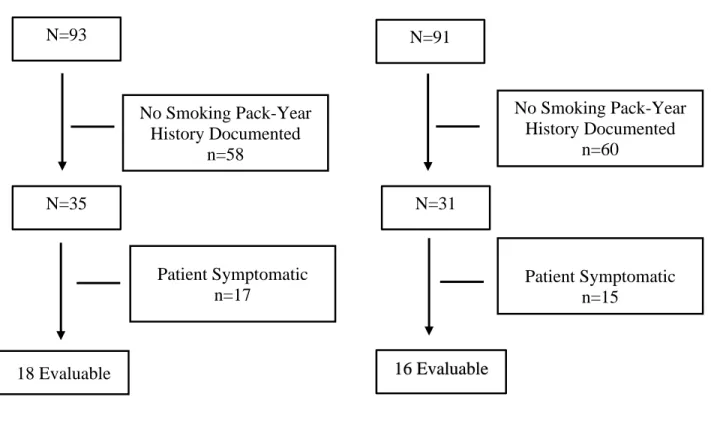
APPENDIX I: CONSORT DIAGRAM
Pre-Implementation Sample Post-Implementation Sample N=93
Figure 2. Consort Diagram
N=93 N=91
No Smoking Pack-Year History Documented
n=58
No Smoking Pack-Year History Documented
n=60
Patient Symptomatic n=17
Patient Symptomatic n=15
18 Evaluable
N=35 N=31
APPENDIX M: PATIENT SAMPLE OUTCOMES FOR LDCT SCREENING