Germline Analysis from Tumor-Germline Sequencing Dyads to
identify clinically actionable secondary findings
Bryce A. Seifert#1,2, Julianne M. O'Daniel#1,2, Krunal Amin1, Daniel S. Marchuk1, Nirali M. Patel2,3, Joel S. Parker1,2, Alan P. Hoyle2, Lisle E. Mose2, Andrew Marron2, Michele C. Hayward2, Christopher Bizon4, Kirk C. Wilhelmsen1,4, James P. Evans1,2, H. Shelton Earp III2, Norman E. Sharpless1,2, D. Neil Hayes2, and Jonathan S. Berg1,2
1Department of Genetics, University of North Carolina at Chapel Hill, Chapel Hill, NC 27599,
U.S.A.
2Lineberger Comprehensive Cancer Center, University of North Carolina at Chapel Hill, Chapel
Hill, NC 27599, U.S.A.
3Department of Pathology and Laboratory Medicine, University of North Carolina at Chapel Hill,
Chapel Hill, NC 27599, U.S.A.
4Renaissance Computing Institute, University of North Carolina at Chapel Hill, Chapel Hill, NC
27599, U.S.A.
# These authors contributed equally to this work.
Abstract
PURPOSE—To evaluate germline variants in hereditary cancer susceptibility genes among unselected cancer patients undergoing tumor-germline sequencing.
EXPERIMENTAL DESIGN—Germline sequence data from 439 individuals undergoing tumor-germline dyad sequencing through the LCCC1108/UNCseq™ (NCT01457196) study were analyzed for genetic variants in 36 hereditary cancer susceptibility genes. These variants were analyzed as an exploratory research study to determine if pathogenic variants exist within the germline of patients undergoing tumor-germline sequencing. Patients were unselected with respect to indicators of hereditary cancer predisposition.
RESULTS—Variants indicative of hereditary cancer predisposition were identified in 19 (4.3%) patients. For about half (10/19), these findings represent new diagnostic information with potentially important implications for the patient and their family. The others were previously identified through clinical genetic evaluation secondary to suspicion of a hereditary cancer predisposition. Genes with pathogenic variants included ATM, BRCA1, BRCA2, CDKN2A, and CHEK2. In contrast, a substantial proportion of patients (178, 40.5%) had Variants of Uncertain Significance (VUS), 24 of which had VUS in genes pertinent to the presenting cancer. Another
Corresponding Author: Jonathan S. Berg, M.D., Ph.D., Department of Genetics, University of North Carolina at Chapel Hill, 120 Mason Farm Road, CB#7264, Chapel Hill, NC 27599, [email protected], Phone: (919) 966-7043, Fax: (919) 843-0291.
HHS Public Access
Author manuscript
Clin Cancer Res
. Author manuscript; available in PMC 2017 August 15.Published in final edited form as:
Clin Cancer Res. 2016 August 15; 22(16): 4087–4094. doi:10.1158/1078-0432.CCR-16-0015.
A
uthor Man
uscr
ipt
A
uthor Man
uscr
ipt
A
uthor Man
uscr
ipt
A
uthor Man
uscr
143 had VUS in other hereditary cancer genes, and 11 had VUS in both pertinent and non-pertinent genes.
CONCLUSION—Germline analysis in tumor-germline sequencing dyads will occasionally reveal significant germline findings that were clinically occult, which could be beneficial for patients and their families. However, given the low yield for unexpected germline variation and the large proportion of patients with VUS results, analysis and return of germline results should adhere to guidelines for secondary findings rather than diagnostic hereditary cancer testing.
Keywords
Cancer susceptibility genes; Cytogenetics and clinical molecular genetics; Molecular diagnosis and prognosis; Suppressor genes; Familial and hereditary cancers
Introduction
With the technological advancement and continued reduction in cost associated with massively parallel sequencing, application of this technology to tumor sequencing has enabled clinicians and scientists to elucidate molecular mechanisms in cancer(1) and recognize the potential of personalized oncology(2,3). When tumor-germline dyad sequencing is performed on entire genomes, exomes, or selected genes, germline variants are “subtracted out” from those found in the tumor in order to identify somatic mutations(4). The primary focus is then the analysis of somatic mutations to identify driver mutations with existing targeted therapies(2,3,5). While the process of germline variant subtraction
enhances the specificity of detecting somatic mutations(3), in some instances, a pathogenic germline mutation may be overlooked that predisposes a patient to increased cancer susceptibility(6–8). Ignoring the germline data post “subtraction” will likely miss these critical variants and identifying such germline variants via tumor-only sequence analysis would be challenging and imprecise(9).
In the course of tumor/germline sequencing, the incidental detection of germline mutations of potentially diagnostic clinical significance can and does occur as previously described by other groups (10,11). As these concomitant and potentially unexpected findings could have significant implications for the patient and their family members, we conducted an
exploratory study within patients undergoing tumor-germline sequencing to explore the frequency of “opportunistically identified” pathogenic germline variants within cancer predisposing genes.
Experimental Design
Patients, germline sequencing, and variant calling
Participants were enrolled in the LCCC1108 study (UNC clinical sequencing study, referred to hereafter as UNCseq™). Informed consent and whole blood DNA (or buccal as
appropriate) were obtained from all patients through an institutional review board (IRB)-approved protocol at the Lineberger Comprehensive Cancer Center and the University of North Carolina, Chapel Hill(5) (NCT01457196). The UNCseq™ study aims to associate known molecular alterations with clinical outcomes in oncology and uses this information to
A
uthor Man
uscr
ipt
A
uthor Man
uscr
ipt
A
uthor Man
uscr
ipt
A
uthor Man
uscr
support treatment decisions through reporting of genetic profiling to clinicians. The overarching study consent describes the collection and analysis of both tumor and germline tissue including the explicit possibility for identification of an underlying hereditary cancer predisposition. Participants consent to the reporting of all results deemed clinically significant. Consent was obtained by UNCseq™ study staff for the primary study at enrollment. Patients were referred into the UNCseq™ study team by their clinic physician and enrolled according to their treated cancer (Table 1) and thus the tumor tissue to be analyzed. All patients enrolled between 11/2011 and 06/2014 for the cancer types listed in Table 1 were included in our data capture for exploratory germline analysis.
Library preparation and gene capture methods have been described previously(5). Briefly, DNA was extracted from blood using a Puregene DNA Purification kit (Gentra Systems), DNeasy Blood and Tissue Kit (Qiagen), or a Maxwell MDx16™ (Promega, Inc.). In each methodology, DNA was extracted according to the manufacturer's protocol. DNA was fragmented to approximately 180-225 base pairs using a Covaris E220 focused
ultrasonicator instrument (Covaris, Inc.). Post-fragmentation, the sample was enriched for appropriately-sized fragments using an automated separation step employing AMPure beads (Beckman Coulter). Fragment size enrichment and subsequent library preparation steps involving precise liquid handling steps were performed using the Agilent basic Bravo A and/or the Bravo B robot(s) (Agilent Technologies). Gene capture was performed using a
SureSelectXT custom capture kit according to the manufacturer's protocal (Agilent
Technologies). All exons of the 247 genes on the UNCseq™ panel were sufficiently captured with average coverage depth of 750X (see Supplementary Table 1-Capture V6 within Jeck et al.(5) listing all 247 genes).
Library quality was assessed with a Bioanalyzer or Tapestation 2200 (Agilent Technologies) using either D1K Screentapes or High Sensitivity D1K Screentapes (Agilent Technologies). Completed libraries were normalized and pooled using Bravo robots guided by vWorks automation control software (Agilent Technologies), and sequenced at the UNC High Throughput Sequencing Facility (HTSF) using a HiSeq2500™ (Illumina). Alignment and variant calling of the sequencing reads have been described previously, with the addition of Isaac and FreeBayes for variant calling as well as ABRA for read realignment(5,14–17). In brief, germline sequencing reads were mapped to the hg18 reference genome using the Burrows Wheeler Aligner(10) and ABRA(13). ABRA is a bioinformatics platform designed to improve indel detection and accuracy for estimation of variant allele frequency(13). The germline variants were then called using Varscan(19), FreeBayes haplotype-based variant detector(15), and Isaac to improve calling near indels by local realignment(12). Lastly, variants were annotated using ANNOVAR(20). Generally, mean target coverage for all patients ranged from 100-2000X, with the average being approximately 750X. Germline variants and variant annotations were stored in a local PostgreSQL database(16).
While the NGS methods used here may detect copy number variation (CNV), we did not use it for this purpose. If we had, any CNV would have been verified through a Clinical
Laboratory Improvement Amendments (CLIA)-certified laboratory at UNC-Chapel Hill. Validation of the assay including assessment of sensitivity and specificity to detect germline variants was not performed because this is an exploratory research study. Any variants
A
uthor Man
uscr
ipt
A
uthor Man
uscr
ipt
A
uthor Man
uscr
ipt
A
uthor Man
uscr
deemed clinically significant, and thus warranting return to the patient, are confirmed on a new sample through an orthogonal method within the CLIA certified Molecular Genetics Laboratory at the University of North Carolina at Chapel Hill.
Variant classification
Variants were first filtered through a gene list of 36 known hereditary cancer genes and then prioritized for analysis based on minor allele frequencies, protein effect, and existence in databases of previously reported pathogenic variants (see Table 1 for analyzed genes). Allele
frequency data were obtained from The 1000 Genomes Browser (http://browser.
1000genomes.org/index.html), National Heart, Lung, and Blood Institute Exome Variant
Server ESP6500 Data Set (http://evs.gs.washington.edu/EVS/), and/or The Exome
Aggregation Consortium (ExAC, http://exac.broadinstitute.org/).
Online resources for variant classification included The National Center for Biotechnology
Information ClinVar database http://www.ncbi.nlm.nih.gov/clinvar/), the Leiden
Open-Source Variation Database (LOVD, http://www.lovd.nl/2.0/index_list.php), and the
Catalogue of Somatic Mutations in Cancer (COSMIC, http://cancer.sanger.ac.uk/cosmic).
COSMIC was used to determine if a variant existed in tumors from similar tissues of origin. After a preliminary computational classification, variant counts were generated using an in-house python script and validated manually.
Variants underwent tiered review by trained molecular analysts in conjunction with discussion in a multidisciplinary group. Evidence curation and variant classification was performed in a manner similar to the more recently published guidelines from the American College of Medical Genetics and Genomics and the Association for Molecular
Pathology(17). As the patients were not selected for clinical or family histories suggestive of a hereditary cancer predisposition, this phenotype information was not available during the variant review process. Therefore, the molecular analysts utilized an incidental or secondary variant analysis approach such that a high threshold for pathogenicity must be met for variant result. The medical and family history presented in Table 2 was obtained from medical record review after variant analysis. Following stringent review, variants classified as Likely Pathogenic or Known Pathogenic were identified as eligible for return to patients. Prior to results return, these variants will be confirmed through analysis of a new sample via an orthogonal method (e.g. Sanger sequencing) and verified by an American Board of Medical Genetics and Genomics (ABMGG)-certified molecular pathologist. The confirmation step was ongoing at the time of submission. Once confirmed, the hereditary cancer predisposing variants will be returned to the patients through a board certified genetic counselor experienced in hereditary cancer. When medical record review documented a clinically known hereditary cancer predisposing variant, no additional steps for confirmation and results return were performed.
Results
To assess the frequency of pathogenic variants opportunistically identified in a group of unselected cancer patients undergoing tumor sequencing, we analyzed germline variants from 439 patients ascertained through the UNCseq™ study(5). Although all 247 genes of
A
uthor Man
uscr
ipt
A
uthor Man
uscr
ipt
A
uthor Man
uscr
ipt
A
uthor Man
uscr
the UNCseq™ panel were sequenced, we specifically investigated germline variants only in 36 genes strongly associated with hereditary cancer syndromes that were present on the somatic sequencing panel. Based on current knowledge about the spectrum of cancers associated with these hereditary cancer syndromes, 24 were considered concordant with the cancer types of the patients being analyzed (Table 1). These cancers included colorectal, ovarian, breast, musculoskeletal, lung, kidney, brain/CNS, melanoma, hematologic, and pancreatic cancers(18–25). Of all cases examined, 19/439 (4.3%) had germline variants classified as Pathogenic/ Likely Pathogenic (P/LP) in a hereditary cancer predisposing gene. Of these, 12 were in genes concordant with the presenting cancer at enrollment and 7 were in other hereditary cancer genes (Fig. 1, Table 2). The discrepancy in pathogenic/likely pathogenic variants listed in Table 2 and Figure 1 is due to a number of cases having pathogenic variants in discordant genes (e.g. BRCA1 NM_007294.3:c.594-2A>C in patient 11 with colorectal cancer, BRCA2 NM_000059.3:c.5233_5233delA, p.(Met1745fs) in patient 15 with AML, and others). The majority of these findings occurred in patients with colorectal, ovarian, breast, and pancreatic cancers; very few such findings occurred in patients with musculoskeletal, lung, kidney, brain, skin, or hematologic malignancies.
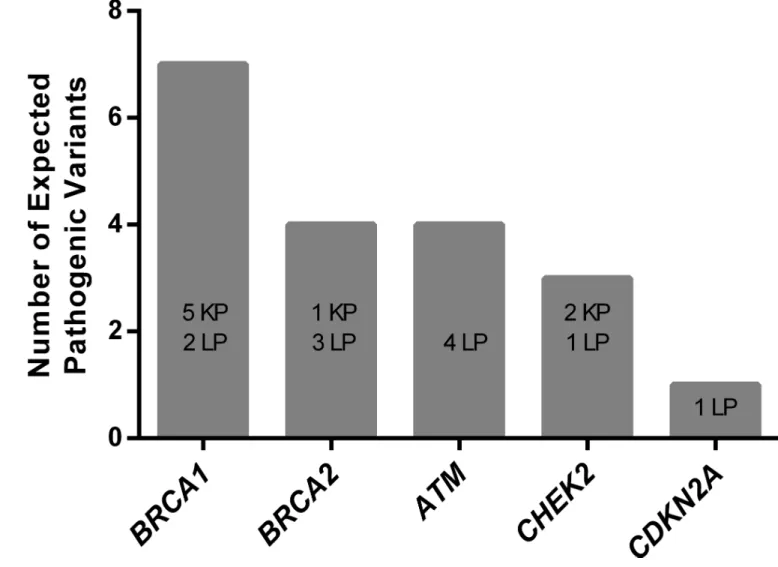
Overall, BRCA1 and BRCA2 harbored 11/19 (57.9%) of the pathogenic variants, the majority of which were classified Likely Pathogenic because they were novel variants expected to result in an early truncation or for which existing evidence suggested a pathogenic role based on classification guidelines(17) (Fig. 2). As might be expected, we discovered that a portion of the P/LP variants had been previously identified through prior clinical genetic assessment for hereditary cancer predisposition. Medical record review following variant classification revealed that the BRCA1/2 variants identified in breast and ovarian cancer patients in this study had all been previously identified through routine clinical genetic testing, indicated based on medical and family history(26). However, we also discovered P/LP variants in patients whose prior clinical genetic testing was negative because it was focused on only BRCA1/2 genes. None of the ATM and CDKN2A pathogenic variants identified in breast cancer patients were previously known (Table 2), reinforcing the idea that additional P/LP variants may exist in breast cancer patients that would be missed in individuals whose clinical testing was restricted to BRCA1 and BRCA2 (27,28).
Some patients had a prior history of cancers consistent with the variants identified in the germline analysis, but had been enrolled for cancers that were presumably unrelated (Table 2). For example, Patient 11 was previously diagnosed with breast cancer at age 41 and was enrolled in UNCseq™ when diagnosed with colorectal cancer at age 49. She was found to have a pathogenic canonical splice site variant in BRCA1 (NM_007294.3:c.594-2A>C) that provides a very good explanation for her breast cancer, but there is debate about whether BRCA1 mutations predispose individuals to colon cancer (29). Similarly, Patient 17 was previously diagnosed with breast cancer at age 52, but was enrolled in the UNCseq™ study for non-small cell lung cancer. She was found to have a pathogenic nonsense variant in ATM (NM_000051.3:c.352C>T, (p.Gln118Ter)) that provides a plausible explanation for her breast cancer. There is limited evidence to support the contribution of ATM to lung cancer(30).
A
uthor Man
uscr
ipt
A
uthor Man
uscr
ipt
A
uthor Man
uscr
ipt
A
uthor Man
uscr
Although relatively few patients had clearly pathogenic variants, 178/439 (40.5%) had a germline Variant of Uncertain Significance (VUS) (Fig. 1, 3). In 24 patients, a VUS was found in a gene relevant to the presenting cancer type, while 143 patients had a VUS in hereditary cancer genes unrelated to their cancer type. Not surprisingly, 11 patients had a VUS in both pertinent and non-pertinent genes (Fig. 3).
Discussion
This manuscript explores the yield of clinically relevant findings from germline analysis in patients undergoing tumor-germline dyad sequencing. Consistent with the range reported in previous hereditary genetic disease studies(3,31,32), we found that 4.3% of patients had incidental pathogenic germline variants. This frequency is lower than the approximately 12% recently reported by Schrader et al. 2016(10). While 4.3% of our patients harbored pathogenic germline variants, analysis of the same 36 genes in the study by Schrader and colleagues(10) indicated 116/1,566 (7.4%) of their cases to have pathogenic variants in these genes (Table 1, this study; eTable 7, Schrader et al. 2016(10)). Further, if the data by Schrader is limited to the same cancer types included in our current analysis, only 61 of the 116 cases remain. Thus, when given the same restrictions, Schrader et al. report a pathogenic variant in 3.9% of cases, which is consistent with our findings. Therefore, it could be presumed that in a larger population of unselected cancers run on a larger gene capture, the UNCseq™ data may have revealed the presence of additional pathogenic germline variants. Regardless, both studies suggest that a small but clinically meaningful number of patients undergoing tumor-germline sequencing will harbor germline pathogenic findings in hereditary cancer susceptibility genes.
Interestingly, the majority of pathogenic or likely pathogenic variants identified in this study were in patients with breast or ovarian cancer, even though these diagnoses made up only ~1/3 of the total cohort studied. It is somewhat surprising that no patients were identified with Lynch syndrome, although this may simply be due to the relatively small number of colorectal cancer cases analyzed (N=53). The lack of findings in patients with other tumor types is not unexpected, given the relatively small contribution of monogenic cancer predisposition in those conditions.
Another explanation for the small proportion of patients with pathogenic variants in our study could be the utilization of a tumor-germline sequencing panel created for therapeutic rather than genetic diagnosis of hereditary cancer predisposition. For instance, the next-generation sequencing capture panel in our study lacks several important hereditary cancer predisposition genes such as PALB2, BARD1, BRIP1, and PMS2. While these genes are implicated in hereditary cancer predisposition, they may not necessarily be used to guide cancer treatment decisions and therefore were not on the therapeutic-focused UNCseq™ panel. Further, our germline analysis did not include CNV detection. Therefore, we cannot exclude the possibility that additional pathogenic germline variants may exist within this cohort.
In our series, half of the pathogenic variants had previously been identified through clinical genetic evaluation. The other half, representing about ~2% of our patients, were not
A
uthor Man
uscr
ipt
A
uthor Man
uscr
ipt
A
uthor Man
uscr
ipt
A
uthor Man
uscr
associated with any prior clinical hereditary cancer evaluation. For this subset of patients, the opportunistic germline analysis provides critical information for both the individual and their family, enabling potentially lifesaving interventions(9,33). Identifying pathogenic germline variants could also provide important prognostic information, guiding surgical procedures or targeted therapeutic options for the individual cancer patient, thereby
providing immediate treatment applications(2,34). Further long-term follow-up is needed to assess whether this information ultimately benefits patients and/or their family members. We recognize that unexpected germline susceptibility information may be unwelcome to some patients depending on their personal situation or preference for information. Providers who obtain tumor-germline sequencing on their patients should thus be aware of the potential for germline findings and prepare their patients for this possibility.
That being said, providers should also recognize that analysis of the germline as an ancillary part of a tumor sequencing assay does not substitute for clinical genetic evaluation and testing for cancer predisposition, when indicated. In clinical genetic testing for hereditary cancer susceptibility, the patient has a personal and/or family history suggestive of a hereditary cancer risk, and thus an elevated prior probability of having a causative genetic lesion. Germline testing in this setting is focused on the identification of variants in relevant genes and thus findings must be assessed for their potential causal/diagnostic role and communicated within the personal and familial context of the cancer history(35). Importantly, variants of uncertain significance (VUS) are frequently returned within the diagnostic evaluation of hereditary cancer risk(36) where clinical follow up could include testing additional family members to determine, for example, if the VUS segregates with the cancer risk in the family. Interestingly, when patients with features suggestive of a hereditary cancer predisposition undergo tumor-germline sequencing, the tumor data may aid the interpretation of germline VUS variants through assessment of loss of heterozygosity (LOH) in the tumor. Current efforts within the Clinical Genome Resource are focused on
determining how LOH in the tumor can support pathogenicity of a germline variant(37).
On the contrary, when clinical laboratory assessment of tumor-germline pairs is performed for prognostic or therapeutic indications, the identification of germline variation would be considered an incidental or secondary finding. As such, only Pathogenic or Likely
Pathogenic findings should be reported to patients per the recommendations of the American College of Medical Genetics and Genomics(31). This notion is supported by the finding of VUS results in almost half (40.5%) of patients in the current study and almost all patients in the Schrader et al study(10). This proportion was expected, given the large proportion of VUS results in other studies(32,38–40). The clinical relevance of these variants, by definition, remains to be determined. It is important to note that if this testing had been performed for suspicion of an underlying hereditary cancer predisposition, these VUS results would likely have been reported back to the ordering clinician. Further investigation into the VUS results, including segregation analysis and functional studies, might be necessary to provide additional evidence of pathogenicity(36,37). Although reporting and clinical correlation of VUS are appropriate through clinical genetics evaluation based on suspicion of a cancer predisposition, the sheer quantity of such findings in a germline analysis as demonstrated here and elsewhere(10) makes their routine clinical follow-up in all patients undergoing tumor-germline sequencing untenable. Because the identification of
A
uthor Man
uscr
ipt
A
uthor Man
uscr
ipt
A
uthor Man
uscr
ipt
A
uthor Man
uscr
germline variants in hereditary cancer genes is not the primary goal of tumor-germline dyad sequencing, these results are most consistent with the definition of incidental or secondary findings(41); given the low prior probability of clinical relevance, the majority of variants identified are likely to be inconsequential. In accordance with guidelines for evaluating incidental findings(31), VUS results were not considered appropriate to return to patients in this study.
While some studies report less or more VUS than our results here, these differences may stem from different thresholds of variant classification or the number of genes examined within each study. Ultimately, in a setting such as tumor-germline sequencing returning VUS results to patients would produce a significant clinical burden(33), may cause undue stress, and may result in potentially unnecessary surveillance, testing or procedures for the patient and family members erroneously presumed to be “at-risk”. Given the more stringent threshold for reporting of variants considered to be incidental or secondary to the testing indication, it is essential to recognize that the absence of a reported germline hereditary cancer variant on a tumor-germline test does not rule out the possibility that a pathogenic variant does, in fact, exist. This important distinction may need to be communicated to patients who incorrectly assume that their tumor genetic evaluation included comprehensive testing for hereditary cancer predisposition. It remains imperative for oncologists to
ascertain whether their patients should be evaluated specifically for germline mutations due to personal, medical and family history indications including age at presentation, tumor phenotype, and ancestral background.
Whether next generation sequencing should be applied on a routine basis for tumor mutation profiling remains to be determined(42) though it is a major focus of precision medicine efforts. We demonstrate here that utilizing an incidental/secondary variant analysis approach for germline sequence data in unselected patients undergoing somatic sequencing may provide a small but important benefit with regard to the detection of clinically relevant, highly penetrant variants in hereditary cancer predisposition genes. Most of these findings can be ascertained through cancer genetics evaluation recommended on the basis of family history, age at presentation, ancestry or tumor phenotype. However, some of these patients may not be referred to a cancer genetic service(43–46) and a minority will be missed due to lack of typical clinical and/or family history indications(47,48).
Potentially unsuspected pathogenic variants have now been reported in a small, but not insignificant, proportion of cancer patients undergoing therapeutically indicated tumor-germline testing(10,11), and our data provide further support to this scenario. Disclosing the identification of a hereditary cancer predisposition would be highly relevant to the clinical care of these cancer patients and have important implications for their relatives’ medical guidance. Providers who obtain tumor sequencing will need to be cognizant of the implications of tumor-germline analysis with respect to potential incidental findings(49), understand the differences between tumor sequencing and clinical genetic testing for hereditary cancer susceptibility, and be able to effectively communicate these issues to their patients.
A
uthor Man
uscr
ipt
A
uthor Man
uscr
ipt
A
uthor Man
uscr
ipt
A
uthor Man
uscr
Acknowledgements
Bryce A Seifert, Ph.D., Julianne M. O'Daniel, M.S., C.G.C, and Jonathan S. Berg, M.D., Ph.D. had full access to all data in the study and take responsibility for the integrity of the data and the accuracy of the data analysis.
Financial Support: Support of all authors and this manuscript was provided by the University Cancer Research
Fund and National Institutes of Health grant U01 HG006487.
REFERENCES
1. Hoadley KA, Yau C, Wolf DM, Cherniack AD, Tamborero D, Ng S, et al. Multiplatform Analysis of 12 Cancer Types Reveals Molecular Classification within and across Tissues of Origin. Cell. 2014; 158:929–44. [PubMed: 25109877]
2. Roychowdhury S, Iyer MK, Robinson DR, Lonigro RJ, Wu Y-M, Cao X, et al. Personalized oncology through integrative high-throughput sequencing: a pilot study. Sci Transl Med. 2011; 3:111ra121.
3. Jones S, Anagnostou V, Lytle K, Parpart-Li S, Nesselbush M, Riley DR, et al. Personalized genomic analyses for cancer mutation discovery and interpretation. Sci Transl Med. 2015; 7:283ra53– 283ra53.
4. Meyerson M, Gabriel S, Getz G. Advances in understanding cancer genomes through second-generation sequencing. Nat Rev Genet. 2010; 11:685–96. [PubMed: 20847746]
5. Jeck WR, Parker J, Carson CC, Shields JM, Sambade MJ, Peters EC, et al. Targeted next generation sequencing identifies clinically actionable mutations in patients with melanoma. Pigment Cell Melanoma Res. 2014; 27:653–63. [PubMed: 24628946]
6. Schlussel AT, Gagliano RA, Seto-Donlon S, Eggerding F, Donlon T, Berenberg J, et al. The evolution of colorectal cancer genetics—Part 1: from discovery to practice. J Gastrointest Oncol. 2014; 5:326–35. [PubMed: 25276405]
7. Zhang S, Royer R, Li S, McLaughlin JR, Rosen B, Risch HA, et al. Frequencies of BRCA1 and BRCA2 mutations among 1,342 unselected patients with invasive ovarian cancer. Gynecol Oncol. 2011; 121:353–7. [PubMed: 21324516]
8. Pal T, Permuth-Wey J, Betts JA, Krischer JP, Fiorica J, Arango H, et al. BRCA1 and BRCA2 mutations account for a large proportion of ovarian carcinoma cases. Cancer. 2005; 104:2807–16. [PubMed: 16284991]
9. Bombard Y, Robson M, Offit K. Revealing the incidentalome when targeting the tumor genome. JAMA. 2013; 310:795–6. [PubMed: 23982363]
10. Schrader KA, Cheng DT, Joseph V, Prasad M, Walsh M, Zehir A, et al. Germline Variants in Targeted Tumor Sequencing Using Matched Normal DNA. JAMA Oncol. 2016; 2:104–11. [PubMed: 26556299]
11. Meric-Bernstam F, Brusco L, Daniels M, Wathoo C, Bailey A, Strong L, et al. Incidental germline variants in 1000 advanced cancers on a prospective somatic genomic profiling protocol. Ann Oncol. 2016
12. Raczy C, Petrovski R, Saunders CT, Chorny I, Kruglyak S, Margulies EH, et al. Isaac: ultra-fast whole-genome secondary analysis on Illumina sequencing platforms. Bioinformatics. 2013; 29:2041–3. [PubMed: 23736529]
13. Mose LE, Wilkerson MD, Hayes DN, Perou CM, Parker JS. ABRA: improved coding indel detection via assembly-based realignment. Bioinformatics. 2014; 30:2813–5. [PubMed: 24907369] 14. Zhao X, Wang A, Walter V, Patel NM, Eberhard DA, Hayward MC, et al. Combined Targeted
DNA Sequencing in Non-Small Cell Lung Cancer (NSCLC) Using UNCseq and NGScopy, and RNA Sequencing Using UNCqeR for the Detection of Genetic Aberrations in NSCLC. PLoS ONE. 2015; 10:e0129280. [PubMed: 26076459]
15. Garrison, E.; Marth, G. [2015 Jul 22] Haplotype-based variant detection from short-read sequencing.. arXiv [Internet]. 2012. 1207.3907v2. Available from: http://arxiv.org/pdf/ 1207.3907.pdf
A
uthor Man
uscr
ipt
A
uthor Man
uscr
ipt
A
uthor Man
uscr
ipt
A
uthor Man
uscr
16. [2015 Jul 3] TR-14-02 The GMW, A Genetic Medical Workflow Engine | RENCI [Internet]. Available from: http://renci.org/technical-reports/tr-14-02-the-gmw-a-genetic-medical-workflow-engine/
17. Richards S, Aziz N, Bale S, Bick D, Das S, Gastier-Foster J, et al. Standards and guidelines for the interpretation of sequence variants: a joint consensus recommendation of the American College of Medical Genetics and Genomics and the Association for Molecular Pathology. Genet Med. 2015; 17:405–23. [PubMed: 25741868]
18. Walsh T, Casadei S, Lee MK, Pennil CC, Nord AS, Thornton AM, et al. Mutations in 12 genes for inherited ovarian, fallopian tube, and peritoneal carcinoma identified by massively parallel sequencing. Proc Natl Acad Sci USA. 2011; 108:18032–7. [PubMed: 22006311]
19. Economopoulou P, Dimitriadis G, Psyrri A. Beyond BRCA: New hereditary breast cancer susceptibility genes. Cancer Treatment Reviews. 2015; 41:1–8. [PubMed: 25467110] 20. Evans, DG. Neurofibromatosis 2.. In: Pagon, RA.; Adam, MP.; Ardinger, HH.; Wallace, SE.;
Amemiya, A.; Bean, LJ., et al., editors. GeneReviews(®) [Internet].. University of Washington, Seattle; Seattle (WA): 1993. Available from: http://www.ncbi.nlm.nih.gov/books/NBK1201/ [2015 May 18]
21. Friedman, JM. Neurofibromatosis 1.. In: Pagon, RA.; Adam, MP.; Ardinger, HH.; Wallace, SE.; Amemiya, A.; Bean, LJ., et al., editors. GeneReviews(®) [Internet]. University of Washington, Seattle; Seattle (WA): 1993. Available from: http://www.ncbi.nlm.nih.gov/books/NBK1109/ [2015 May 18]
22. Northrup, H.; Koenig, MK.; Au, K-S. Tuberous Sclerosis Complex.. In: Pagon, RA.; Adam, MP.; Ardinger, HH.; Wallace, SE.; Amemiya, A.; Bean, LJ., et al., editors. GeneReviews(®) [Internet]. University of Washington, Seattle; Seattle (WA): 1993. Available from: http://
www.ncbi.nlm.nih.gov/books/NBK1220/ [2015 May 18]
23. Song WJ, Sullivan MG, Legare RD, Hutchings S, Tan X, Kufrin D, et al. Haploinsufficiency of CBFA2 causes familial thrombocytopenia with propensity to develop acute myelogenous leukaemia. Nat Genet. 1999; 23:166–75. [PubMed: 10508512]
24. Ghiorzo P. Genetic predisposition to pancreatic cancer. World J Gastroenterol. 2014; 20:10778–89. [PubMed: 25152581]
25. Matloff, E. Cancer Principles and Practice of Oncology: Handbook of Clinical Cancer Genetics. Lippincott Williams & Wilkins; Philadelphia, PA: 2013.
26. Hampel H, Bennett RL, Buchanan A, Pearlman R, Wiesner GL. A practice guideline from the American College of Medical Genetics and Genomics and the National Society of Genetic Counselors: referral indications for cancer predisposition assessment. Genet Med. 2015; 17:70–87. [PubMed: 25394175]
27. LaDuca H, Stuenkel AJ, Dolinsky JS, Keiles S, Tandy S, Pesaran T, et al. Utilization of multigene panels in hereditary cancer predisposition testing: analysis of more than 2,000 patients. Genet Med. 2014; 16:830–7. [PubMed: 24763289]
28. Minion LE, Dolinsky JS, Chase DM, Dunlop CL, Chao EC, Monk BJ. Hereditary predisposition to ovarian cancer, looking beyond BRCA1/BRCA2. Gynecol Oncol. 2015; 137:86–92. [PubMed: 25622547]
29. Phelan CM, Iqbal J, Lynch HT, Lubinski J, Gronwald J, Moller P, et al. Incidence of colorectal cancer in BRCA1 and BRCA2 mutation carriers: results from a follow-up study. Br J Cancer. 2014; 110:530–4. [PubMed: 24292448]
30. Schneider J, Illig T, Rosenberger A, Bickeböller H, Wichmann H-E. Detection of ATM gene mutations in young lung cancer patients: a population-based control study. Arch Med Res. 2008; 39:226–31. [PubMed: 18164969]
31. Green RC, Berg JS, Grody WW, Kalia SS, Korf BR, Martin CL, et al. ACMG recommendations for reporting of incidental findings in clinical exome and genome sequencing. Genet Med. 2013; 15:565–74. [PubMed: 23788249]
32. Schrader KA, Cheng DT, Joseph V, et al. Germline variants in targeted tumor sequencing using matched normal dna. JAMA Oncol. 2015:1–8.
A
uthor Man
uscr
ipt
A
uthor Man
uscr
ipt
A
uthor Man
uscr
ipt
A
uthor Man
uscr
33. Parsons DW, Roy A, Plon SE, Roychowdhury S, Chinnaiyan AM. Clinical tumor sequencing: an incidental casualty of the American College of Medical Genetics and Genomics recommendations for reporting of incidental findings. J Clin Oncol. 2014; 32:2203–5. [PubMed: 24958819] 34. Rahman N. Realizing the promise of cancer predisposition genes. Nature. 2014; 505:302–8.
[PubMed: 24429628]
35. O'Daniel JM, Lee K. Whole-genome and whole-exome sequencing in hereditary cancer: impact on genetic testing and counseling. Cancer J. 2012; 18:287–92. [PubMed: 22846728]
36. Plon SE, Eccles DM, Easton D, Foulkes WD, Genuardi M, Greenblatt MS, et al. Sequence variant classification and reporting: recommendations for improving the interpretation of cancer
susceptibility genetic test results. Hum Mutat. 2008; 29:1282–91. [PubMed: 18951446] 37. Rehm HL, Berg JS, Brooks LD, Bustamante CD, Evans JP, Landrum MJ, et al. ClinGen — The
Clinical Genome Resource. New England Journal of Medicine. 2015; 0:null.
38. Kurian AW, Hare EE, Mills MA, Kingham KE, McPherson L, Whittemore AS, et al. Clinical evaluation of a multiple-gene sequencing panel for hereditary cancer risk assessment. J Clin Oncol. 2014; 32:2001–9. [PubMed: 24733792]
39. Couch FJ, Hart SN, Sharma P, Toland AE, Wang X, Miron P, et al. Inherited mutations in 17 breast cancer susceptibility genes among a large triple-negative breast cancer cohort unselected for family history of breast cancer. J Clin Oncol. 2015; 33:304–11. [PubMed: 25452441]
40. LaDuca H, Stuenkel AJ, Dolinsky JS, Keiles S, Tandy S, Pesaran T, et al. Utilization of multigene panels in hereditary cancer predisposition testing: analysis of more than 2,000 patients. Genet Med. 2014; 16:830–7. [PubMed: 24763289]
41. [2015 Jul 3] Anticipate and Communicate: Ethical Management of Incidental and Secondary Findings in the Clinical, Research, and Direct-to-Consumer Contexts | Presidential Commission for the Study of Bioethical Issues [Internet]. Available from: http://bioethics.gov/node/3183
42. Tripathy D, Harnden K, Blackwell K, Robson M. Next generation sequencing and tumor mutation profiling: are we ready for routine use in the oncology clinic? BMC Med. 2014; 12:140. [PubMed: 25286031]
43. Mai PL, Vadaparampil ST, Breen N, McNeel TS, Wideroff L, Graubard BI. Awareness of cancer susceptibility genetic testing: the 2000, 2005, and 2010 National Health Interview Surveys. Am J Prev Med. 2014; 46:440–8. [PubMed: 24745633]
44. van Riel E, van Dulmen S, Ausems MGEM. Who is being referred to cancer genetic counseling? Characteristics of counselees and their referral. J Community Genet. 2012; 3:265–74. [PubMed: 22426886]
45. Overbeek LIH, Hoogerbrugge N, van Krieken JHJM, Nagengast FM, Ruers TJM, Ligtenberg MJL, et al. Most patients with colorectal tumors at young age do not visit a cancer genetics clinic. Dis Colon Rectum. 2008; 51:1249–54. [PubMed: 18536968]
46. McCarthy AM, Bristol M, Fredricks T, Wilkins L, Roelfsema I, Liao K, et al. Are physician recommendations for BRCA1/2 testing in patients with breast cancer appropriate? A population-based study. Cancer. 2013; 119:3596–603. [PubMed: 23861169]
47. Karageorgos I, Mizzi C, Giannopoulou E, Pavlidis C, Peters BA, Zagoriti Z, et al. Identification of cancer predisposition variants in apparently healthy individuals using a next-generation
sequencing-based family genomics approach. Hum Genomics. 2015; 9:12. [PubMed: 26092435] 48. Amendola LM, Dorschner MO, Robertson PD, Salama JS, Hart R, Shirts BH, et al. Actionable
exomic incidental findings in 6503 participants: challenges of variant classification. Genome Res. 2015; 25:305–15. [PubMed: 25637381]
49. Raymond VM, Gray SW, Roychowdhury S, Joffe S, Chinnaiyan AM, Parsons DW, et al. Germline Findings in Tumor-Only Sequencing: Points to Consider for Clinicians and Laboratories. J Natl Cancer Inst. 2016:108.
50. Evans DG, Birch JM, Narod SA. Is CHEK2 a cause of the Li–Fraumeni syndrome? J Med Genet. 2008; 45:63–4. [PubMed: 18178638]
A
uthor Man
uscr
ipt
A
uthor Man
uscr
ipt
A
uthor Man
uscr
ipt
A
uthor Man
uscr
Statement of Translational Relevance
Tumor-germline next generation sequencing is rapidly advancing as a tool for
personalized oncology. Typically, germline mutations are subtracted out from those in the tumor to identify somatic mutations. This exploratory research study sought to investigate the frequency of pathogenic germline mutations among patients unselected for indicators of hereditary cancer predisposition that were undergoing tumor-germline sequencing. With approximately 4% of the cases harboring pathogenic variants, diagnostic germline findings such as these could be beneficial for patients and their families.
A
uthor Man
uscr
ipt
A
uthor Man
uscr
ipt
A
uthor Man
uscr
ipt
A
uthor Man
uscr
Figure 1. Germline findings across all UNCseq™ patients
The percentages of patients with Pathogenic variants (light shading) or Variants of Uncertain Significance (VUS, dark shading) in genes that are concordant with the tumor type are depicted as stacked bar graphs. Numbers above the bars represent the sample size for the specific tumor type. Numbers in parentheses represent the number of patients with Variants of Uncertain Significance or Pathogenic variants. Here, Pathogenic variants include both Likely Pathogenic (LP) and Known Pathogenic (KP) variants. In both the ovarian and breast cancer groups, one patient in each group had a Variant of Uncertain Significance and a Pathogenic variant. Hence, 8 cases were found to have pathogenic variants in genes concordant with breast cancer, 3 cases were found with pathogenic variants in genes concordant with ovarian cancer, and 1 case was found to have a pathogenic variant in a gene concordant with pancreatic cancer.
A
uthor Man
uscr
ipt
A
uthor Man
uscr
ipt
A
uthor Man
uscr
ipt
A
uthor Man
uscr
Figure 2. Germline Pathogenic/Likely Pathogenic variants identified in all UNCseq™ patients
The numbers of Known Pathogenic (KP) and Likely Pathogenic (LP) variants across all UNCseq™ patients analyzed are depicted as a bar graph, divided by gene.
A
uthor Man
uscr
ipt
A
uthor Man
uscr
ipt
A
uthor Man
uscr
ipt
A
uthor Man
uscr
Figure 3. Germline Variants of Uncertain Significance across all UNCseq™ patients
A. Variants occurring in genes relevant to the patient's cancer diagnosis. B. Variants
occurring in genes unrelated to the patient's cancer diagnosis. Numbers above the bars represent the frequency of patients with 0,1,2,3 or 4 variants. Percentages represent the percent of all UNCseq™ patients analyzed.
A
uthor Man
uscr
ipt
A
uthor Man
uscr
ipt
A
uthor Man
uscr
ipt
A
uthor Man
uscr
A
uthor Man
uscr
ipt
A
uthor Man
uscr
ipt
A
uthor Man
uscr
ipt
A
uthor Man
uscr
ipt
Table 1
UNCseq™ cancer cases and hereditary susceptibility genes analyzed
Cancer Type (Subtype) Cases (% of Total) Hereditary cancer susceptibility genes
evaluated
Hereditary cancer susceptibility genes not
analyzeda
Colorectal 53 (12.1%) MLH1,MSH2, MSH6, APC, PTEN,
SMAD4, STK11
PMS2, MUTYH, EPCAM, BMPR1A
Ovarian 29 (6.6%) BRCA1, BRCA2, MRE11A, TP53,
MSH6, CHEK2, MLH1, MSH2
PALB2, BARD1, BRIP1 RAD51C, RAD51D, PMS2
Breast (Ductal, Lobular, Other) 114 (26.0%) BRCA1, BRCA2, ATM, CHEK2, CDH1, MRE11A, PTEN, STK11, TP53
PALB2, BARD1, BRIP1
Musculoskeletal 41 (9.3%) TP53
Lung (Non-small cell, Small cell, Other)
31 (7.1%) TP53
Kidney 30 (6.8%) VHL, MET FH, FLCN
Brain/CNS (Astrocytoma, Glioma, Oligodendroglioma, Other)
54 (12.3%) NF1, NF2, TSC1, TSC2, TP53
Skin (Melanoma, Non-melanoma, Other)
39 (8.9%)
CDKN2A, PTCH1 c , TP53 BAP1
Hematologic (ALL, AML, CLL,
Other)b
29 (6.6%) RUNX1, CEBPA, TP53 NBN, MRE11A, PTPN11
Pancreas 19 (4.3%) BRCA1, BRCA2, CDKN2A, ATM, TP53, STK11, MLH1, MSH2, MSH6
PALB2, PMS2, EPCAM
Total 439
Other hereditary cancer genes AKT1, CDC73, CDKN1B, EGFR, MEN1 NTRK1, PIK3CA, RB1, RET, SMARCA4, SMARCB1,WT1
a
These hereditary cancer susceptibility genes were not included on the targeted UNCseq™ capture panel.
b
Hematologic cancer abbreviations: Acute Lymphoblastic Leukemia (ALL), Acute Myeloid Leukemia (AML), Chronic Lymphocytic Leukemia (CLL).
c
A
uthor Man
uscr
ipt
A
uthor Man
uscr
ipt
A
uthor Man
uscr
ipt
A
uthor Man
uscr
ipt
T ab le 2Clinical summary of UNCseq™ patients with germline pathogenic v
ariants
P
atient
Cancer type at Enr
ollment Sex Age a Gene cDN A change b Pr otein change V ariant type Classif ication
Clinical Genetics Ev
aluation
P
ersonal and/or F
amily
History
Prior Clinical T
esting
Clinical T
est Result
c
Concordance with Cancer at Enr
ollment d 1 Ov arian F 48 BRCA1 NM_007294.3: c.5266_5267insC p.(Gln1756fs) Frameshifting indel KP Y es Ashk enazi Je wish
F:Lung, Bladder MA: P
ancreas, 72 Y es (+) Y es 2 Ov arian F 41 BRCA1 NM_007294.3: c.5193+1G>T N/A Splice-site KP Y es
No Cancer History
Y es (+) Y es 3 Breast F 37 CDKN2A NM_000077.4: c.35C>A p.(Ser12T er) Nonsense LP Y es
Personal: Melanoma, 21,31 Family: Adopted
Y es (−) No 4 Breast F 55 BRCA1 NM_007294.3: c.2457_2457delC p.(Asp821fs) Frameshifting indel KP Y es MMaR:Breast, Ov arian, P ancreas M:Breast, 36 Y es (+) Y es 5 Breast F 29 BRCA1 NM_007294.3: c.211A>G p.(Ar g71Gly) Missense KP Y es
S:Breast, 28; M:Breast,42 MA:Breast,33; MA:Breast,37
Y es (+) Y es 6 Breast F 63 A TM NM_000051.3: c.1561_1562delA G p.(Glu522fs) Frameshifting indel LP Y es
M:Breast,55; MA:Breast,30s & 40s 3MU:Blood MA:Cancer
,60s Y es (−) Y es 7 Breast F 29 BRCA2 NM_000059.3: c.7538_7539insA p.(Thr2515fs) Frameshifting indel LP Y es
M: Breast, 39&49, and Brain/CNS, 58
Y es (+) Y es 8 Breast F 35 BRCA1 NM_007294.3: c.131G>A p.(Cys44T yr) Missense KP Y es P
A: Bilateral Breast, 45
Y es (+) Y es 9 Breast F 37 BRCA2 NM_000059.3: c.8575delC p.(Gln2859fs) Frameshifting indel KP Unkno wn Unkno wn (adopted) Y es (+) Y es 10 Breast M 53 BRCA2 NM_000059.3: c.5718_5719delCT p.(Leu1908fs) Frameshifting indel LP Y es
S:Breast,50; B:Colon,53 PA:Breast, 55; PC:Colon, 35 Kno
A
uthor Man
uscr
ipt
A
uthor Man
uscr
ipt
A
uthor Man
uscr
ipt
A
uthor Man
uscr
ipt
P atientCancer type at Enr
ollment Sex Age a Gene cDN A change b Pr otein change V ariant type Classif ication
Clinical Genetics Ev
aluation
P
ersonal and/or F
amily
History
Prior Clinical T
esting
Clinical T
est Result
c
Concordance with Cancer at Enr
ollment d 11 Colorectal F 49 BRCA1 NM_007294.3: c.594-2A>C N/A Splice-site LP Y es
Personal: Breast, 41 Family: PA: Breast, 29; PC: Breast, 50
Y es (+) No 12 AML M 54 BRCA1 NM_007294.3: c.594-2A>C N/A Splice-site LP Unkno wn Not Reported No N/A No 13 GI-other M 54 A TM NM_000051.3: c.8545C>T p.(Ar g2849T er) Nonsense LP No
No Cancer History
No N/A No 14 Breast F 59 CHEK2 NM_007194.3: c.1100delC p.(Thr367fs) Frameshifting indel KP No Non- Contrib utory M:L ymph node,
80 U: Li
v er No N/A Y es 15 AML M 57 BRCA2 NM_000059.3: c.5233_5233delA p.(Met1745fs) Frameshifting indel LP No F:P ancreas, 72 No N/A No 16 P ancreas M 61 A TM NM_000051.3: c.170G>A p.(T rp57T er) Nonsense LP Y es B:P ancreas, 52 No N/A Y es 17 NSCLC F 66 A TM NM_000051.3: c.352C>T p.(Gln118T er) Nonsense LP No
Personal: Breast, 52 Family: S:Breast, F: Bone (myeloma), B:Amyloidosis
No N/A No 18 Musculosk eletal F 57 CHEK2 e NM_007194.3: c.1100delC p.(Thr367fs) Frameshifting indel KP No F:Kidne y
PGM: Lung, B:CNS (
2 ) No N/A No 19 Ov arian F 52 CHEK2 NM_007194.3: c.1486C>T p.(Gln496T er) Nonsense LP No
Personal: Melanoma, 57 Family: PU: Stomach
No N/A Y es Abbre viations:
Cancer type: AML=Acute Myelogenous Leuk
emia; NSCLC= Non-small cell lung cancer
.
Gender: F= female; M= male. Classif
ication: KP= Kno
wn P
athogenic; LP= Lik
ely P
athogenic; VUS= V
ariant of Uncertain Signif
icance.
F
amily History: M=Mother; F=F
ather; S=Sister; B=Brother; MA= Maternal Aunt; MU= Maternal Uncle; MGM= Maternal Grandmother; MGF= Maternal Grandf
ather; MMaR=Multiple Maternal Relati
v
es; P
A= P
aternal Aunt; PU= P
aternal Uncle; PGF=P
aternal Grandf
ather;
PGM=P
aternal Grandmother; PC= P
aternal Cousin; U=Uncle.
a Age at the time of diagnosis b T
A
uthor Man
uscr
ipt
A
uthor Man
uscr
ipt
A
uthor Man
uscr
ipt
A
uthor Man
uscr
ipt
c Clinical T
est Result: (+) = Same Mutation Reported, (−) = Gene w
as not included in the clinical genetic test and these ne
g
ati
v
e results indicate ne
w diagnostic results.
d Concordance with cancer at enrollment: Y
es = P
athogenic v
ariant is in a gene that is concordant with the presenting cancer at enrollment. No = P
athogenic v
ariant is in a gene that is discordant with the presenting cancer at enrollment.
e CHEK2 has been implicated as a susceptibility gene for a Li-Fraumeni-lik
e cancer syndrome. Ho
we
v
er
, the current e
vidence for this association is disputed(
50