ORIGINAL RESEARCH
AR
TICLE
Matthew A. Cavender,
MD, MPH
Deepak L. Bhatt, MD, MPH
Gregg W. Stone, MD
Harvey D. White, DSc
Ph. Gabriel Steg, MD
C. Michael Gibson, MD, MS
Christian W. Hamm, MD
Matthew J. Price, MD
Sergio Leonardi, MD
Jayne Prats, PhD
Efthymios N. Deliargyris,
MD
Kenneth W. Mahaffey, MD
Robert A. Harrington, MD
On behalf of the CHAMPION
PHOENIX Investigators*
BACKGROUND: Cangrelor is an intravenous P2Y
12inhibitor approved
to reduce periprocedural ischemic events in patients undergoing
percutaneous coronary intervention not pretreated with a P2Y
12inhibitor.
METHODS: A total of 11 145 patients were randomized to cangrelor or
clopidogrel in the CHAMPION PHOENIX trial (Cangrelor versus Standard
Therapy to Achieve Optimal Management of Platelet Inhibition). We explored
the effects of cangrelor on myocardial infarction (MI) using different
definitions and performed sensitivity analyses on the primary end point of
the trial.
RESULTS: A total of 462 patients (4.2%) undergoing percutaneous
coronary intervention had an MI as defined by the second universal
definition. The majority of these MIs (n=433, 93.7%) were type 4a.
Treatment with cangrelor reduced the incidence of MI at 48 hours (3.8%
versus 4.7%; odds ratio [OR], 0.80; 95% confidence interval [CI], 0.67–
0.97;
P
=0.02). When the Society of Coronary Angiography and Intervention
definition of periprocedural MI was applied to potential ischemic events,
there were fewer total MIs (n=134); however, the effects of cangrelor
on MI remained significant (OR, 0.65; 95% CI, 0.46–0.92;
P
=0.01).
Similar effects were seen in the evaluation of the effects of cangrelor on
MIs with peak creatinine kinase-MB
≥
10 times the upper limit of normal
(OR, 0.64; 95% CI, 0.45–0.91) and those with peak creatinine
kinase-MB
≥
10 times the upper limit of normal, ischemic symptoms, or ECG
changes (OR, 0.63; 95% CI, 0.48–0.84). MIs defined by any of these
definitions were associated with increased risk of death at 30 days.
Treatment with cangrelor reduced the composite end point of death, MI
(Society of Coronary Angiography and Intervention definition),
ischemia-driven revascularization, or Academic Research Consortium definite stent
thrombosis (1.4% versus 2.1%; OR, 0.69; 95% CI, 0.51–0.92).
CONCLUSIONS: MI in patients undergoing percutaneous coronary
intervention, regardless of definition, remains associated with increased
risk of death in the current era. Cangrelor compared with clopidogrel
significantly reduces MI regardless of the definition.
CLINICAL TRIAL REGISTRATION: URL: http://clinicaltrials.gov. Unique
identifier: NCT01156571.
consistent reduction in Periprocedural Myocardial infarction
With cangrelor as assessed by Multiple Definitions
Findings From chaMPiOn PhOeniX (cangrelor Versus standard therapy to
achieve Optimal Management of Platelet inhibition)
© 2016 The Authors. Circulation is published on behalf of the American Heart Association, Inc., by Wolters Kluwer. This is an open access article under the terms of the Creative Commons Attribution License, which permits use, distribution, and reproduction in any medium, provided that the original work is properly cited. Key Words: creatine kinase, MB form ◼ myocardial infarction
◼ percutaneous coronary intervention Correspondence to: Deepak L. Bhatt, MD, MPH, 75 Francis St, Boston, MA 02115. E-mail [email protected]
c
angrelor is a reversible, intravenous adenosine
diphosphate receptor antagonist and has a rapid
onset and offset of its antiplatelet effects.
Cangre-lor has been approved for use in patients undergoing
percutaneous coronary intervention (PCI) not pretreated
with a P2Y
12inhibitor on the basis of the results of the
CHAMPION PHOENIX trial (Cangrelor versus Standard
Therapy to Achieve Optimal Management of Platelet
In-hibition).
1The CHAMPION PHOENIX trial compared
can-grelor with clopidogrel in patients undergoing PCI and
found that cangrelor reduced the composite end point of
death, myocardial infarction (MI), ischemia-driven
revas-cularization, or stent thrombosis by 22%.
1The definition
of MI used in the trial was based on the second universal
definition of MI, and the protocol mandated the collection
of blood samples to test for biomarkers of myonecrosis
after the initial PCI.
2A core laboratory also reviewed all
angiograms from the index PCI to determine whether
there was evidence of angiographic complications
dur-ing the procedure, includdur-ing intraprocedural stent
throm-bosis (IPST).
3Some have questioned whether MIs and IPST
detect-ed through these standardizdetect-ed efforts represent
clinical-ly meaningful events. In this anaclinical-lysis, we sought to
de-termine whether changes in the definition of MI or stent
thrombosis would have affected the overall primary end
point of the trial. Additionally, we aimed to evaluate the
effects of cangrelor on MIs of different sizes and types.
Finally, we sought to better understand the impact of
the different definitions on the incidence of MI and the
prognosis of patients who have an MI.
MethODs
study Population and Design
CHAMPION PHOENIX was a double-blind, placebo-controlled trial that randomized 11 145 patients who were undergoing PCI to either intravenous cangrelor or clopidogrel. The full inclusion and exclusion criteria and protocol of the trial have been reported previously.1,4 In brief, patients were eligible for the trial if they had not been treated previously with platelet inhibitors and were undergoing PCI for ST-segment–elevation MI, non–ST-segment–elevation acute coronary syndrome, or stable angina.
Patients were randomized to receive either cangrelor fol-lowed by clopidogrel after the infusion of cangrelor was com-plete or clopidogrel as soon as possible after randomization. Patients randomized to cangrelor received an infusion of cangrelor (30 μg/kg followed by an infusion of 4 μg/kg per minute) and placebo capsules. Cangrelor was continued for at least 2 hours or for the duration of the procedure (if the procedure lasted >2 hours) and was followed by clopido-grel 600 mg after the infusion of the intravenous study drug. Patients randomized to clopidogrel received either 600 or 300 mg clopidogrel as determined by clinician preference. Randomization was stratified by intended loading dose of clopidogrel (600 versus 300 mg) and normal or abnormal status at baseline (status based on cardiac biomarkers, changes in the ECG, and symptoms). Biomarkers of myo-necrosis (creatinine kinase-MB fraction [CK-MB]; Siemens ADVIA Centaur 2-site sandwich immunoassay) were to be measured every 6 hours and analyzed by a core laboratory (Quest Diagnostics).
end Points
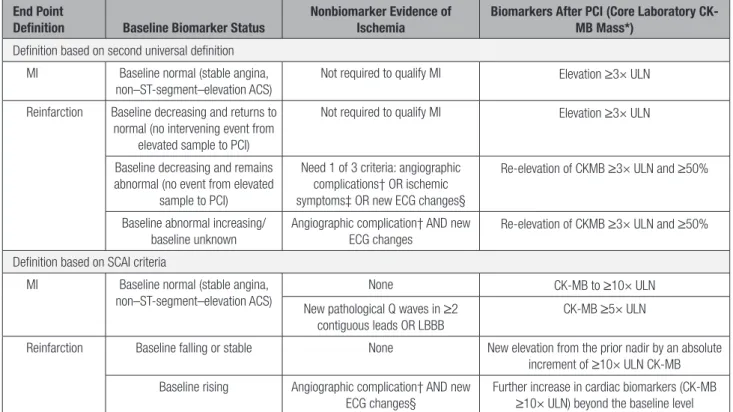
A Clinical Events Committee that was independent, was unaware of the treatment assignments, and was based at the Duke Clinical Research Institute adjudicated all compo-nents of the primary and secondary efficacy end points. The primary efficacy end point was a composite of death, MI, ischemia-driven revascularization, or stent thrombosis at 48 hours. The definition of MI used in the adjudication of the primary efficacy end point was based on the sec-ond Universal Definition of MI and was the most contem-porary definition available at the time in which the trial was designed (Table 1).2
To determine whether patients had a periprocedural MI within 48 hours of randomization, the Clinical Events Committee
clinical Perspective
What is new?
• Cangrelor is an intravenous P2Y12 inhibitor approved to reduce periprocedural ischemic events in patients undergoing percutaneous coronary intervention not previously treated with a P2Y12 inhibitor.
• 4.2% of patients had a myocardial infarction (MI) as defined by the second universal definition within 48 hours after undergoing percutaneous coronary intervention.
• Cangrelor reduced MIs regardless of whether the MI was defined with the second universal or Society of Coronary Angiography and Intervention definition or when MIs were restricted to only those with large biomarker elevations and either symptoms or ECG changes.
What are the clinical implications?
• Changes in the definition of MI used in the primary end point did not affect the overall findings from the CHAMPION PHOENIX trial (Clinical Trial Comparing Cangrelor to Clopidogrel Standard of Care Therapy in Subjects Who Require Percutaneous Coronary Intervention).
• Some have questioned whether MI remains an important clinical event in the current era; however, we found that patients who had an MI, regardless of the definition, were at increased risk of death at 30 days.
ORIGINAL RESEARCH
AR
TICLE
classified patients on the basis of their cardiac biomarker sta-tus at baseline. Patients were considered to be normal at base-line if they were undergoing PCI for stable angina, had basebase-line levels of cardiac biomarkers below the 99th percentile, and had no new ECG changes or symptoms consistent with acute coro-nary syndrome within the prior 6 hours. Additionally, patients were considered to be normal at baseline if they were classified as undergoing PCI for a non–ST-segment–elevation acute coro-nary syndrome but had 2 biomarker samples ≥6 hours apart that were below the 99th percentile, no new ECG changes, and no ongoing acute coronary syndrome symptoms or symp-toms within 6 hours before the sample. In these patients who had no evidence of MI at baseline, MI was considered to have
occurred if there was an elevation in CK-MB that was ≥3 times the upper limit of normal (ULN).
All other patients in the trial were considered to be having an MI at the time of PCI and were further categorized on the basis of whether biomarkers were decreasing and returned to nor-mal, were decreasing but remaining abnornor-mal, were increas-ing, or had an unknown baseline. Those patients in whom baseline biomarkers were decreasing and were beneath the ULN were considered to have a reinfarction if there was an ele-vation in CK-MB that was ≥3 times the ULN. Patients with bio-markers that were decreasing at baseline but remained above the ULN were considered to have a reinfarction if they had an angiographic complication, ischemic symptoms, or new ECG
table 1.
Definitions of Pci-related (type 4a) Mi
end PointDefinition Baseline Biomarker status nonbiomarker evidence of ischemia Biomarkers after Pci (core laboratory cK-MB Mass*)
Definition based on second universal definition MI Baseline normal (stable angina,
non–ST-segment–elevation ACS)
Not required to qualify MI Elevation ≥3× ULN
Reinfarction Baseline decreasing and returns to normal (no intervening event from
elevated sample to PCI)
Not required to qualify MI Elevation ≥3× ULN
Baseline decreasing and remains abnormal (no event from elevated
sample to PCI)
Need 1 of 3 criteria: angiographic complications† OR ischemic symptoms‡ OR new ECG changes§
Re-elevation of CKMB ≥3× ULN and ≥50%
Baseline abnormal increasing/ baseline unknown
Angiographic complication† AND new
ECG changes Re-elevation of CKMB ≥3× ULN and ≥50% Definition based on SCAI criteria
MI Baseline normal (stable angina, non–ST-segment–elevation ACS)
None CK-MB to ≥10× ULN
New pathological Q waves in ≥2
contiguous leads OR LBBB CK-MB ≥5× ULN
Reinfarction Baseline falling or stable None New elevation from the prior nadir by an absolute increment of ≥10× ULN CK-MB Baseline rising Angiographic complication† AND new
ECG changes§
Further increase in cardiac biomarkers (CK-MB ≥10× ULN) beyond the baseline level ACS indicates acute coronary syndrome; CK-MB, creatinine kinase-MB; MI, myocardial infarction; PCI, percutaneous coronary intervention; SCAI, Society of Coronary Angiography and Intervention; and ULN, upper limit of normal.
*CKMB collection after PCI: 6-hour collection through 24 hours (minimum of 3 samples required). Core laboratory values took priority; hospital laboratory values were used if core laboratory values were not available (CK-MB is the priority, but troponin may be used).
†Angiographic evidence of complication (assessed by the angiographic core laboratory): new onset of vessel closure or compromise defined as TIMI (Thrombolysis in Myocardial Infarction) grade 0/1 flow after baseline TIMI grade 2/3 flow (also called acute closure or no reflow), TIMI grade 2 flow after baseline TIMI grade 3 flow (also called slow reflow), sustained distal embolization, or sustained side-branch closure of a vessel ≥2 mm in diameter or intraprocedural thrombotic event (IPTE). IPTE is a new or worsening thrombus formation at any time during the procedure. IPTE can be a stent-related or non–stent-related complication phenomenon or intraprocedural stent thrombosis (IPST), new or worsening thrombus related to the stent, or abrupt closure resulting from thrombosis. Abrupt closure resulting from nonthrombotic causes, including major dissections, perforation, or others, were not considered IPST. If a nonthrombotic cause of abrupt stent closure cannot be definitively determined, the cause was considered IPST. IPST may present as either acute thrombotic stent closure after a stent was implanted in a patient with a patent vessel beforehand or new thrombus formation within or adjacent to a stent in a vessel in which thrombus either was not present or had diminished or resolved before the stent was implanted.
‡Ischemic symptoms: angina or equivalent symptoms that needed to be treated medically or lasted ≥20 minutes. Ischemic symptoms as determined by the treating physician include but are not limited to weakness, shortness of breath, wheezing, tiredness, fainting, sweating, nausea/vomiting, abdominal pain, back pain, jaw pain, palpitations, fast heartbeat, and drug use for chest pain (nitroglycerin, morphine, β-blocker, etc).
changes (new ST-segment elevation/depression >0.1mV in at least 2 contiguous leads; new left bundle-branch block; new Q wave [> 0.03 seconds]) in conjunction with a re-elevation of CK-MB that was ≥3 times the ULN and ≥ 50% higher than the nadir. Patients in whom biomarkers were increasing at base-line (including patients with only 1 elevated biomarker sample at baseline or 2 biomarkers values collected <6 hours apart that prevented the adequate assessment of the biomarker tra-jectory) had to have both angiographic evidence consistent with a periprocedural event (sustained acute vessel closure, new Thrombolysis in Myocardial Infarction grade 0/1 flow, evi-dence of distal embolization, side-branch closure off a vessel
≥2 mm in diameter, dissection, thrombus, or no reflow) and ischemic ECG changes in addition to a re-elevation of CK-MB that was ≥3 times the ULN and ≥50% from baseline. Patients determined to have a ST-segment–elevation MI at baseline (including those patients with normal baseline cardiac markers who are confirmed by the Clinical Events Committee to have a baseline ST-segment–elevation MI ECG) were not reviewed for potential type 4a MI.
The Society of Coronary Angiography and Intervention (SCAI) subsequently proposed a new definition for periproce-dural MI.5 In this analysis, we retrospectively applied the SCAI criteria to those events adjudicated as an MI during the trial. In patients with normal cardiac biomarkers at baseline, patients had to have an elevation of CK-MB to ≥10 times the ULN. Patients who had normal biomarkers at baseline but developed new pathological Q waves in ≥2 contiguous leads or left bun-dle-branch block were considered to have an MI if they have a CK-MB elevation ≥5 times the ULN. Patients with cardiac bio-markers that were either stable or falling at baseline required a new elevation from the previous nadir level by an absolute increment of ≥10 times the ULN of CK-MB. Patients with bio-markers that were rising at baseline required a further increase in cardiac biomarkers (CK-MB ≥10 times the ULN) beyond the last level. In the population of patients with rising biomarkers, the SCAI definition also requires signs consistent with a clini-cally relevant MI (ie, new onset or worsening heart failure or sustained hypotension). These specific events were not pro-spectively collected in the trial. Instead, for this analysis, we required patients with biomarkers that were rising at baseline to have either new ischemic ECG changes or angiographic evi-dence consistent with a clinically relevant MI.
The predefined definition of stent thrombosis used in the original analysis of CHAMPION PHOENIX included both defi-nite stent thrombosis (as defined by the Academic Research Consortium [ARC]) and IPST (angiographically confirmed new or worsening thrombus related to the placement of the coro-nary stent).6,7 The first sensitivity analysis excluded IPST and was the composite of death, MI, ischemia-driven revasculariza-tion, or ARC definite stent thrombosis at 48 hours after ran-domization. Additional sensitivity analysis also excluded IPST and used revised MI definitions based on SCAI’s proposed clinically relevant threshold for an MI (death, MI [SCAI definition for peri-procedural events], ischemia-driven revascularization, or ARC definite stent thrombosis) and a definition of MI that required a postprocedural CK-MB elevation of ≥10 times the ULN (death, MI [CK-MB ≥10 times the ULN], ischemia-driven revascularization, or ARC definite stent thrombosis) at 48 hours after randomization.
An academic executive committee and The Medicines Company designed the trial. The Medicines Company funded the trial. At the conclusion of the trial, the database was trans-ferred to the Harvard Clinical Research Institute, which had full access to the data and validated the analyses included in this article. The Institutional Review Board or Ethics Committee for each participating institution reviewed and approved the trial. All patients provided written informed consent.
statistical analysis
This analysis used the modified intention to treat population of patients who underwent PCI and were treated with study drug (n=10 942). The association between MI type and the primary efficacy end point was examined with a logistic regression model that controlled for potential confounders (treatment, patient status, age [≥65 years], history of congestive heart failure, diabetes mellitus, prior MI, country [United States/ Non–United States], PCI duration).
The effects of cangrelor compared with clopidogrel on MI were determined with a logistic regression model that was stratified by intended loading dose of clopidogrel (600 versus 300 mg) and patient status at baseline (normal/abnormal).
A 2-sided significance level of 0.05 was used, and there were no corrections for multiple comparisons because of the exploratory nature of this analysis. Event curves were devel-oped from 48-hour Kaplan-Meier estimates. Analyses were performed with SAS software version 9.3 (SAS Institute, Cary, NC).
resUlts
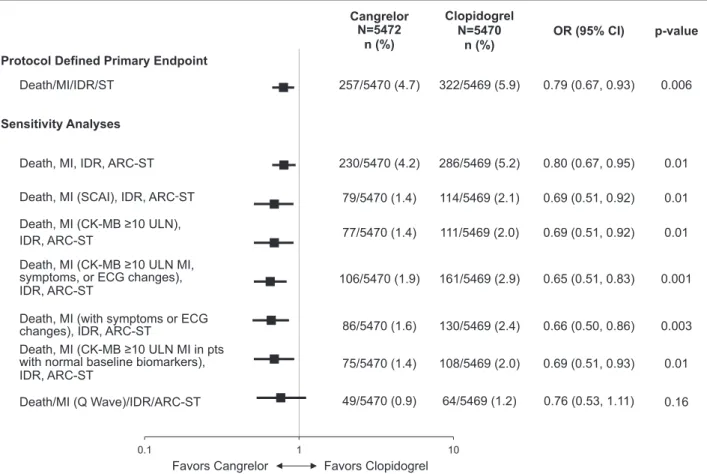
The primary efficacy end point as originally defined in the
CHAMPION PHOENIX trial was the composite of death,
MI, ischemia-driven revascularization, or stent
throm-bosis at 48 hours. In this sensitivity analysis in which
IPST was not included as part of the stent thrombosis
events considered in the composite end point, cangrelor
reduced death, MI, ischemia-driven revascularization, or
ARC definite stent thrombosis at 48 hours (4.2% versus
5.2%; odds ratio [OR], 0.80; 95% confidence interval
[CI], 0.67–0.95;
P
=0.01; Figure 1). When different
defi-nitions of MI were used in the primary efficacy end point,
the results of the trial were consistent with previously
reported results. Treatment with cangrelor reduced the
composite end point of death, MI (using SCAI definition
for periprocedural MI), ischemia-driven revascularization,
or ARC definite stent thrombosis (1.4% versus 2.1%; OR,
0.69; 95% CI, 0.51–0.92;
P
=0.01) and the composite
end point of death, MI (peak CK-MB
≥
10 times the ULN),
ischemia-driven revascularization, or ARC definite stent
thrombosis (1.4% versus 2.0%; OR, 0.69; 95% CI, 0.51–
0.92;
P
=0.01; Figure 2).
ORIGINAL RESEARCH
AR
TICLE
PCI; n=433, 93.7%) and occurred in patients with
base-line biomarkers that were normal (
Table I in the online-only
Data Supplement
). Treatment with cangrelor reduced the
incidence of type 4a MI compared with clopidogrel (3.5%
versus 4.4%; OR, 0.80; 95% CI, 0.66–0.98;
P
=0.03;
Ta-ble 2). When the SCAI definition of periprocedural MI was
used for potential ischemic events that occurred during
the trial, there were fewer overall events (n=134).
Treat-ment with cangrelor also reduced the incidence of MI
using the SCAI criteria for periprocedural events (1.0%
versus 1.5%; OR, 0.65; 95% CI, 0.46–0.92;
P
=0.01). In
patients with baseline biomarkers that were normal,
can-grelor reduced the incidence of MIs with symptoms and
CK-MB
≥
5 times the ULN (0.4% versus 0.7%; OR, 0.54;
95% CI, 0.32–0.91;
P
=0.02). Similarly, cangrelor
re-duced MIs with a peak CK-MB
≥
10 times the ULN (0.9%
versus 1.4%; OR, 0.64; 95% CI, 0.45–0.91;
P
=0.01)
and those MI with peak CK-MB
≥
10 times the ULN,
symp-toms, or ECG changes (1.5% versus 2.4%; OR, 0.63;
95% CI, 0.48–0.84;
P
=0.001). There was no
heteroge-neity in the effects of cangrelor on MI based on index
diagnosis (
Table II in the online-only Data Supplement
).
The distribution of peak biomarkers in patients treated
with cangrelor and clopidogrel is shown in
Figure I in the
online-only Data Supplement
.
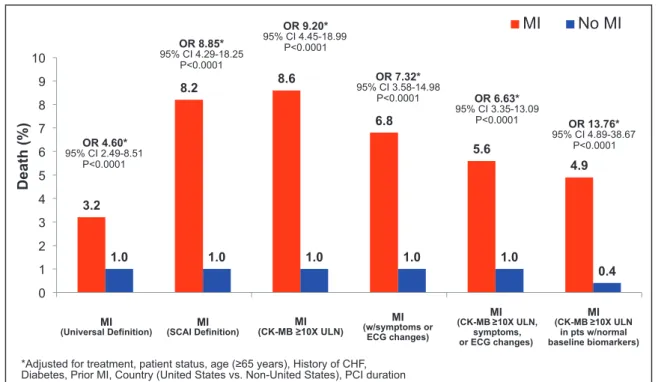
Patients randomized in CHAMPION PHOENIX who
had an MI as defined with the definition in the
origi-nal protocol that was based on the second universal
definition of MI were at increased risk of death at 30
days even after adjustment for potential confounders
(adjusted OR, 4.60; 95% CI, 2.49–8.51;
P
<0.001;
Figure 3). MI also was associated with increased risk
of death at 30 days when using the SCAI definition
(adjusted OR, 8.85; 95% CI, 4.29–18.25;
P
<0.001)
and when considering only MI that resulted in a peak
CK-MB
≥
10 times the ULN (adjusted OR, 9.20; 95% CI,
4.45–18.99;
P
<0.001).
DiscUssiOn
In this sensitivity analysis of the CHAMPION PHOENIX
trial, we found that treatment with cangrelor reduced the
incidence of death, MI, ischemia-driven revascularization,
or stent thrombosis regardless of the definition of MI or
Cangrelor N=5472
n (%)
Clopidogrel N=5470
n (%) OR (95% CI) p-value Protocol Defined Primary Endpoint
Death/MI/IDR/ST 257/5470 (4.7) 322/5469 (5.9) 0.79 (0.67, 0.93) 0.006
Sensitivity Analyses
Death, MI, IDR, ARC-ST 230/5470 (4.2) 286/5469 (5.2) 0.80 (0.67, 0.95) 0.01
Death, MI (SCAI), IDR, ARC ST 79/5470 (1.4) 114/5469 (2.1) 0.69 (0.51, 0.92) 0.01
Death, MI (CK-MB 10 ULN),
IDR, ARC-ST 77/5470 (1.4) 111/5469 (2.0) 0.69 (0.51, 0.92) 0.01
Death, MI (CK-MB 10 ULN MI, symptoms, or ECG changes),
IDR, ARC-ST 106/5470 (1.9) 161/5469 (2.9) 0.65 (0.51, 0.83) 0.001
Death, MI (with symptoms or ECG
changes), IDR, ARC-ST 86/5470 (1.6) 130/5469 (2.4) 0.66 (0.50, 0.86) 0.003
Death, MI (CK-MB 10 ULN MI in pts with normal baseline biomarkers),
IDR, ARC-ST 75/5470 (1.4) 108/5469 (2.0) 0.69 (0.51, 0.93) 0.01
Death/MI (Q Wave)/IDR/ARC-ST 49/5470 (0.9) 64/5469 (1.2) 0.76 (0.53, 1.11) 0.16
Favors Cangrelor Favors Clopidogrel
0.1 1 10
Figure 1.
Protocol-defined and sensitivity analyses of primary efficacy end points at 48 hours using different
definitions of myocardial infarction (Mi).
stent thrombosis. The consistency of the results across
a variety of different definitions supports the efficacy
of cangrelor in patients undergoing PCI. Furthermore,
cangrelor reduced MIs of different sizes, but particularly
those MIs associated with high levels of biomarkers and
MIs that were associated with signs or symptoms of
ischemia. We also found that the occurrence of an MI,
regardless of type, remains associated with significant
odds of death in the 30 days after the event. Thus, the
benefits of cangrelor in reducing periprocedural MI
re-main clinically important in the current era.
Because the majority of ischemic events that occurred
during the first 48 hours of CHAMPION PHOENIX were
type 4a MIs related to PCI, these data highlight the need
for adequate and effective antithrombotic therapies.
8Current guidelines recommend that patients undergoing
Figure 2.
sensitivity analyses evaluating outcomes at 48 hours of cangrelor compared with clopidogrel using
different definitions of myocardial infarction (Mi).
ORIGINAL RESEARCH
AR
TICLE
PCI be treated with oral antiplatelet therapies before or
immediately after the procedure.
9–11The oral P2Y
12
in-hibitors currently used in practice have a delayed onset
of action and do not result in antiplatelet effects for
≈
60
to 120 minutes.
12,13The delay in the onset of antiplatelet
effect is a particular problem in patients such as those
treated with ad hoc PCI after elective coronary
angiogra-phy or in patients undergoing PCI for acute coronary
syn-drome in whom little antiplatelet effect may be present
during the actual PCI. Furthermore, some medications
such as those used during moderate sedation may delay
the onset of antiplatelet effects.
14Intravenous glycoprotein IIb/IIIa inhibitors are
avail-able and can be used in patients undergoing PCI who are
not pretreated with an oral P2Y
12inhibitor.
15However,
prior studies showed that the majority of benefit from
glycoprotein IIb/IIIa inhibitors occurred in patients with
elevated cardiac biomarkers, yet the EARLY-ACS trial
(Early Glycoprotein IIb/IIIa Inhibition in Non–ST-Segment
Elevation Acute Coronary Syndrome) and ACUITY trial
(Acute Catheterization and Urgent Intervention Triage
Strategy) showed that the routine use of these agents
in these populations increased the risk of bleeding
with-out significant improvements in clinical with-outcomes.
16,17As a result, the use of glycoprotein IIb/IIIa inhibitors has
declined, and some current guidelines do not endorse
routine use.
9Because cangrelor is an intravenous
formu-lation that has high bioavailability and is a highly effective
platelet inhibitor, it is likely that much of the benefit with
regard to the reduction of MI seen in this study reflects an
antiplatelet effect that is more potent and occurs more
quickly than the effects of clopidogrel.
18Prior studies
have shown that more intensive antiplatelet therapy can
reduce ischemic events in patients undergoing PCI.
10,11,19These findings from CHAMPION PHOENIX build on prior
studies and show that drugs with greater bioavailability
and a faster onset of action can reduce ischemic events
even compared with effective antiplatelet therapies.
20–23Some have questioned whether MIs, particularly
those events with low elevations in cardiac biomarkers
that may not have been previously detected, are
clini-cally relevant in the contemporary era.
24,25We found
that patients with an MI after randomization had a risk of
death that was between 4- and 13-fold greater than that
table 2.
effect of cangrelor on Mi at 48 hours
cangrelor (n=5472) clopidogrel (n=5470) Or (95% ci) P Value
MI (universal definition) 207/5470 (3.8) 255/5469 (4.7) 0.80 (0.67–0.97) 0.02
Type 1 1/5470 (0.0) 1/5469 (0.0) 1.00 (0.06–15.99) >0.99
Type 2 0/5470 (0.0) 0/5469 (0.0) … …
Type 3 3/5470 (0.1) 0/5469 (0.0) … …
Type 4a 194/5470 (3.5) 239/5469 (4.4) 0.80 (0.66–0.98) 0.03
Type 4b 9/5470 (0.2) 15/5469 (0.3) 0.60 (0.26–1.37) 0.22
Type 5 0/5470 (0.0) 0/5469 (0.0) … …
MI (SCAI definition)* 53/5470 (1.0) 81/5469 (1.5) 0.65 (0.46–0.92) 0.01 MI (by peak CK-MB)
Peak 3–<5× ULN 101/5470 (1.8) 126/5469 (2.3) 0.80 (0.61–1.04) 0.09
Peak 5–<10× ULN 82/5470 (1.5) 83/5469(1.5) 0.99 (0.73–1.34) 0.94
Peak ≥10× ULN 50/5470 (0.9) 78/5469 (1.4) 0.64 (0.45–0.91) 0.01
Q wave 11/5470 (0.2) 18/5469 (0.3) 0.61 (0.29–1.29) 0.19
Non–Q wave 196/5470 (3.6) 237/5469 (4.3) 0.82 (0.68–1.00) 0.04
STEMI 24/5470 (0.4) 34/5469 (0.6) 0.70 (0.42–1.19) 0.19
Non-STEMI 183/5470 (3.3) 221/5469 (4.0) 0.82 (0.67–1.00) 0.05
MI with symptoms or ECG changes 62/5470 (1.1) 99/ 5469 (1.8) 0.62 (0.45–0.86) 0.004 MI with peak CK-MB ≥10× ULN,
symptoms, or ECG changes
83/ 5470 (1.5) 130/5469 (2.4) 0.63 (0.48–0.84) 0.001
MI with peak CK-MB ≥10× ULN in patients with normal baseline biomarker
38/ 3519 (1.1) 64/ 3431 (1.9) 0.57 (0.38, 0.86) 0.01
CI indicates confidence interval; CK-MB, creatinine kinase-MB; MI, myocardial infarction; OR, odds ratio; SCAI, Society of Coronary Angiography and Intervention; STEMI, ST-segment–elevation myocardial infarction; and ULN, upper limit of normal.
for patients who had no event. The clear association
be-tween MI and death, which was present for all definitions
of MI evaluated in these analyses, provides evidence that
therapies designed to reduce MIs are likely important in
the treatment of patients undergoing PCI.
Numerous definitions of MI have been proposed for
use in clinical trials
2,5,26; however, the optimal definition
remains unclear.
7,27Furthermore, differences in the
defini-tions change the incidence of periprocedural MI as noted
by the fact that only 31% of the type 4a MIs as defined
by the second universal definition met the SCAI criteria.
The second universal definition of MI noted that it was
difficult to define MI in patients with elevated biomarkers
at baseline. These guidelines suggested including
crite-ria that incorporate features supportive of ischemia (eg,
imaging, ECG). In CHAMPION PHOENIX, patients with
ele-vated biomarkers required evidence of symptoms,
angio-graphic evidence consistent with a periprocedural event,
or ischemic ECG changes, in addition to further elevations
in biomarkers, to be considered as having a type 4a MI.
In patients who had no evidence of MI at baseline, MI was
considered to have occurred if there was an elevation in
CK-MB that was
≥
3 times the ULN regardless of whether
symptoms were present. The third universal definition now
requires that patients have signs or symptoms of
myocar-dial ischemia regardless of baseline biomarkers. In
addi-tion, the third universal definition proposes a >5-fold rise
above the 99th percentile for the upper reference limit for
patients with normal biomarkers at baseline to meet the
MI definition.
26The SCAI definition differs in some important ways
from the universal definition. Patients with normal
car-diac biomarkers at baseline had to have an elevation of
CK-MB to
≥
10 times the ULN or cardiac troponin (I or
T) to
≥
70 times the ULN to meet the definition of MI.
Although this definition identified fewer events in
CHAM-PION PHOENIX, the events identified were clinically
meaningful and were associated with increased risk of
death at 30 days even when controlling for the extent of
coronary artery disease.
These data should be considered in light of some
limi-tations. First, these analyses are post hoc analyses that
were not prespecified. As a result, they represent
sen-sitivity analyses that supplement the findings from the
predefined, primary results of the trial. Accordingly, the
MI definition based on the SCAI criteria was not
prospec-tively adjudicated and was obtained retrospecprospec-tively. This
trial assessed MI using the universal definition that was
available at that time the trial was designed and did not
use the third universal definition that is now available.
In addition, CK-MB was systematically collected in the
CHAMPION PHOENIX trial, whereas the second and third
universal definitions of MI prefer cardiac troponin.
Bleed-ing was investigator reported and was not adjudicated,
3.2
8.2 8.6
6.8
5.6
4.9
1.0 1.0 1.0 1.0 1.0
0.4 0
1 2 3 4 5 6 7 8 9 10
MI
No MI
OR 8.85* 95% CI 4.29-18.25
P<0.0001
OR 9.20* 95% CI 4.45-18.99
P<0.0001
OR 7.32* 95% CI 3.58-14.98
P<0.0001
OR 13.76* 95% CI 4.89-38.67
P<0.0001 OR 6.63*
95% CI 3.35-13.09 P<0.0001
Death (%)
*Adjusted for treatment, patient status, age ( 65 years), History of CHF, Diabetes, Prior MI, Country (United States vs. Non-United States), PCI duration
OR 4.60* 95% CI 2.49-8.51
P<0.0001
MI
(CK-MB 10X ULN in pts w/normal baseline biomarkers) symptoms,
or ECG changes)
MI
(w/symptoms or ECG changes)
MI
(CK-MB
MI
(CK-MB 10X ULN, 10X ULN)
MI
(SCAI Definition)
MI
(Universal Definition)
Figure 3.
association between the types of myocardial infarction (Mi) using various definitions and the risk of
death at 30 days.
ORIGINAL RESEARCH
AR
TICLE
although post hoc adjudication did not qualitatively
change the safety profile.
23Finally, CHAMPION PHOENIX
was not powered for this specific component of the
pri-mary end point or to assess the effects of cangrelor on
specific types of MI.
cOnclUsiOns
MI, as defined with a variety of different classifications,
continues to be an important event in the contemporary
era that significantly increases the risk of death at 30
days. Although there are multiple proposed definitions
of MI and these different definitions result in changes
in the incidence of MI, there were no qualitative
differ-ences in the effects of cangrelor with the use of
vari-ous definitions. As a result, cangrelor was effective in
reducing ischemic events in patients undergoing PCI in
CHAMPION PHOENIX regardless of the definition of MI
tested in this study.
acKnOWleDgMents
We would like to thank Steven E. Elkin, MS, and Debra Ber-nstein, PhD, of The Medicines Company for their statistical support, along with Yuyin Liu, MS, and Lanyu Lei, MS, of the Harvard Clinical Research Institute for their independent verification of the analyses. Harvard Clinical Research Insti-tute received funding from The Medicines Company for these analyses.
sOUrce OF FUnDing
The CHAMPION PHOENIX trial was funded by The Medicines Company.
DisclOsUres
Dr Cavender reports consulting fees from AstraZeneca and Merck. Dr Bhatt has served on the Advisory Board for Cardax, Elsevier Practice Update Cardiology, Medscape Cardiology, and Regado Biosciences; on the Board of Directors for Bos-ton VA Research Institute and Society of Cardiovascular Pa-tient Care; as chair for the American Heart Association Quality Oversight Committee; and on the Data Monitoring Committees for Duke Clinical Research Institute, Harvard Clinical Research Institute, Mayo Clinic, and Population Health Research Institute. Dr Bhatt has received honoraria from the American College of Cardiology (senior associate editor, Clinical Trials and News, ACC.org), Belvoir Publications (editor in chief, Harvard Heart Letter), Duke Clinical Research Institute (clinical trial steering committees), Harvard Clinical Research Institute (clinical trial steering committee), HMP Communications (editor in chief,
Journal of Invasive Cardiology), Journal of the American Col-lege of Cardiology (guest editor; associate editor), Population Health Research Institute (clinical trial steering committee), Slack Publications (chief medical editor, Cardiology Today’s Intervention), Society of Cardiovascular Patient Care
(secre-tary/treasurer), and WebMD (CME steering committees); other funding from Clinical Cardiology (deputy editor), NCDR-ACTION Registry Steering Committee (vice-chair), VA CART Research and Publications Committee (chair); research funding from Amarin, Amgen, AstraZeneca, Bristol-Myers Squibb, Eisai, Ethi-con, Forest Laboratories, Ischemix, Medtronic, Pfizer, Roche, Sanofi Aventis, The Medicines Company (including for serv-ing as co-chair of CHAMPION PHOENIX); and royalties from Elsevier (editor, Cardiovascular Intervention: A Companion to Braunwald’s Heart Disease). Dr Bhatt was a site coinvestigator for Biotronik, Boston Scientific, and St. Jude Medical; was a trustee for the American College of Cardiology; and performed unfunded research for FlowCo, PLx Pharma, Takeda. Dr Stone reports no relevant disclosures. Dr White reports honoraria from AstraZeneca and research funding from Sanofi-Aventis, Eli Lilly, National Health Institute, Glaxo Smith Kline, Merck Sharpe & Dohme, and AstraZeneca. Dr Steg has received a research grant (to INSERM U1148) from Sanofi and Servier; has received speaking or consulting fees from Amarin, Astra-Zeneca, Bayer, Boehringer-Ingelheim, Bristol-Myers-Squibb, CSL-Behring, Daiichi-Sankyo, GlaxoSmithKline, Janssen, Lilly, Novartis, Pfizer, Regeneron, Roche, Sanofi, Servier, The Medi-cines Company; and owns stock in Aterovax. Dr Gibson has re-ceived honoraria from The Medicines Company. Dr Hamm has received honoraria from AstraZeneca, Sanofi Aventis, and Lilly, as well as research funding from Astra Zeneca and The Medi-cines Company. Dr Price reports honoraria from AstraZeneca, Merck & Co, Accriva Diagnostics, and The Medicines Compa-ny. Dr Leonardi has served on the Advisory Board for The Medi-cines Company, Eli Lilly, and Merck. Drs Prats and Deliargyris are employed by The Medicines Company. Dr Mahaffey has re-ceived honoraria from Bayer, Boehringer Ingelheim, Bristol My-ers Squibb, Cubist, Eli Lilly, Epson, Forest, Glaxo Smith Kline, Johnson & Johnson, Medtronic, Merck, Mt. Sinai, Myokardia, Omthera, Portola, Purdue Pharma, Spring Publishing, Vindico, and WebMD, as well as research funding from Daiichi, John-son & JohnJohn-son, Medtronic, St. Jude, and Tenax. Dr Harrington has served on the Advisory Board for Evidint, Regado, and Scanadu; has received honoraria from Amgen, Daiichi-Lilly, Gil-ead Sciences, GilGil-ead Sciences Inc, Janssen R&D, Medtronic, Merck, Novartis Corporation, The Medicines Company, Vida Health, Vox Media, and WebMD; has received other funding from the American Heart Association; has received research funding from AstraZeneca, BMS, CSL Behring, GSK, Merck, Portola, Sanofi-Aventis, and The Medicines Company; and has ownership interest in Element Science and MyoKardia.
aFFiliatiOns
Medical School, Boston, MA (C.M.G.); Kerckhoff Clinic and Thoraxcenter, Bad Nauheim, Germany (C.W.H.); Scripps Clin-ic, La Jolla, CA (M.J.P.); UOC Fondazione IRCCS Policlinico San Matteo, Pavia, Italy (S.L.); The Medicines Company, Par-sippany, NJ (J.P., E.N.D.); and Stanford University, Palo Alto, CA (K.W.M., R.A.H.).
FOOtnOtes
Received December 14, 2015; accepted July 8, 2016. Guest Editor for this article was Eric R. Bates, MD. The online-only Data Supplement is available with this arti-cle at http://circ.ahajournals.org/lookup/suppl/doi:10.1161/ CIRCULATIONAHA.115.020829/-/DC1.
Circulation is available at http://circ.ahajournals.org.
reFerences
1. Bhatt DL, Stone GW, Mahaffey KW, Gibson CM, Steg PG, Hamm CW, Price MJ, Leonardi S, Gallup D, Bramucci E, Radke PW, Wi-dimský P, Tousek F, Tauth J, Spriggs D, McLaurin BT, Angiolillo DJ, Généreux P, Liu T, Prats J, Todd M, Skerjanec S, White HD, Harrington RA. Platelet inhibition with cangrelor during PCI. N Engl J Med. 2013;369:393–395.
2. Thygesen K, Alpert JS, White HD; Joint ESC/ACCF/AHA/WHF Task Force for the Redefinition of Myocardial Infarction. Universal defini-tion of myocardial infarcdefini-tion. Eur Heart J. 2007;28:2525–2538. doi: 10.1093/eurheartj/ehm355.
3. Généreux P, Stone GW, Harrington RA, Gibson CM, Steg PG, Brener SJ, Angiolillo DJ, Price MJ, Prats J, Lasalle L, Liu T, Todd M, Skerjanec S, Hamm CW, Mahaffey KW, White HD, Bhatt DL; CHAMPION PHOENIX Investigators. Impact of intraproce-dural stent thrombosis during percutaneous coronary interven-tion: insights from the CHAMPION PHOENIX Trial (Clinical Trial Comparing Cangrelor to Clopidogrel Standard of Care Therapy in Subjects Who Require Percutaneous Coronary Interven-tion). J Am Coll Cardiol. 2014;63:619–629. doi: 10.1016/j. jacc.2013.10.022.
4. Leonardi S, Mahaffey KW, White HD, Gibson CM, Stone GW, Steg GW, Hamm CW, Price MJ, Todd M, Dietrich M, Gal-lup D, Liu T, Skerjanec S, Harrington RA, Bhatt DL. Ratio-nale and design of the Cangrelor versus standard therapy to acHieve optimal Management of Platelet InhibitiON PHOENIX trial. Am Heart J. 2012;163:768–776.e2. doi: 10.1016/j.ahj. 2012.02.018.
5. Moussa ID, Klein LW, Shah B, Mehran R, Mack MJ, Brilakis ES, Reilly JP, Zoghbi G, Holper E, Stone GW. Consideration of a new definition of clinically relevant myocardial infarction after coronary revascularization: an expert consensus document from the Society for Cardiovascular Angiography and Interventions (SCAI). J Am Coll Cardiol. 2013;62:1563–1570. doi: 10.1016/j. jacc.2013.08.720.
6. Cutlip DE, Windecker S, Mehran R, Boam A, Cohen DJ, van Es GA, Steg PG, Morel MA, Mauri L, Vranckx P, McFadden E, Lan-sky A, Hamon M, Krucoff MW, Serruys PW; Academic Research Consortium. Clinical end points in coronary stent trials: a case for standardized definitions. Circulation. 2007;115:2344–2351. doi: 10.1161/CIRCULATIONAHA.106.685313.
7. Brener SJ, Cristea E, Kirtane AJ, McEntegart MB, Xu K, Mehran R, Stone GW. Intra-procedural stent thrombosis: a new risk factor for adverse outcomes in patients undergoing percutaneous coronary intervention for acute coronary syndromes. JACCCardiovasc In-terv. 2013;6:36–43. doi: 10.1016/j.jcin.2012.08.018.
8. Rao SV, Ohman EM. Anticoagulant therapy for percutaneous coro-nary intervention. Circ Cardiovasc Interv. 2010;3:80–88. doi: 10.1161/CIRCINTERVENTIONS.109.884478.
9. Windecker S, Kolh P, Alfonso F, Collet JP, Cremer J, Falk V, Filippa-tos G, Hamm C, Head SJ, Juni P, Kappetein AP, Kastrati A, Knuuti J, Landmesser U, Laufer G, Neumann FJ, Richter DJ, Schauerte P, Sousa Uva M, Stefanini GG, Taggart DP, Torracca L, Valgimigli M, Wijns W, Witkowski A. 2014 ESC/EACTS guidelines on myo-cardial revascularization: the Task Force on Myomyo-cardial Revascu-larization of the European Society of Cardiology (ESC) and the European Association for Cardio-Thoracic Surgery (EACTS) devel-oped with the special contribution of the European Association of Percutaneous Cardiovascular Interventions (EAPCI). EurHeart J. 2014;35:2541–2619.
10. Steinhubl SR, Berger PB, Mann JT 3rd, Fry ET, DeLago A, Wilmer C, Topol EJ; CREDO Investigators, Clopidogrel for the Reduction of Events During Observation. Early and sustained dual oral anti-platelet therapy following percutaneous coronary intervention: a randomized controlled trial. JAMA. 2002;288:2411–2420. 11. Wiviott SD, Braunwald E, McCabe CH, Montalescot G, Ruzyllo W,
Gottlieb S, Neumann FJ, Ardissino D, De Servi S, Murphy SA, Ries-meyer J, Weerakkody G, Gibson CM, Antman EM; TRITON-TIMI 38 Investigators. Prasugrel versus clopidogrel in patients with acute coronary syndromes. N Engl J Med. 2007;357:2001–2015. doi: 10.1056/NEJMoa0706482.
12. Parodi G, Valenti R, Bellandi B, Migliorini A, Marcucci R, Co-mito V, Carrabba N, Santini A, Gensini GF, Abbate R, Antoniucci D. Comparison of prasugrel and ticagrelor loading doses in ST-segment elevation myocardial infarction patients: RAPID (Rapid Activity of Platelet Inhibitor Drugs) primary PCI study.
J Am Coll Cardiol. 2013;61:1601–1606. doi: 10.1016/j. jacc.2013.01.024.
13. Gurbel PA, Bliden KP, Butler K, Tantry US, Gesheff T, Wei C, Teng R, Antonino MJ, Patil SB, Karunakaran A, Kereiakes DJ, Parris C, Purdy D, Wilson V, Ledley GS, Storey RF. Randomized double-blind assessment of the ONSET and OFFSET of the antiplatelet effects of ticagrelor versus clopidogrel in patients with stable coronary artery disease: the ONSET/OFFSET study. Circula-tion. 2009;120:2577–2585. doi: 10.1161/CIRCULATIONAHA. 109.912550.
14. Hobl EL, Stimpfl T, Ebner J, Schoergenhofer C, Derhaschnig U, Sunder-Plassmann R, Jilma-Stohlawetz P, Mannhalter C, Posch M, Jilma B. Morphine decreases clopidogrel concentrations and effects: a randomized, double-blind, placebo-controlled trial. J Am Coll Cardiol. 2014;63:630–635. doi: 10.1016/j. jacc.2013.10.068.
15. Levine GN, Bates ER, Blankenship JC, Bailey SR, Bittl JA, Cercek B, Chambers CE, Ellis SG, Guyton RA, Hollenberg SM, Khot UN, Lange RA, Mauri L, Mehran R, Moussa ID, Mukherjee D, Nalla-mothu BK, Ting HH; American College of Cardiology Foundation; American Heart Association Task Force on Practice Guidelines; Society for Cardiovascular Angiography and Interventions. 2011 ACCF/AHA/SCAI guideline for percutaneous coronary interven-tion: a report of the American College of Cardiology Foundation/ American Heart Association Task Force on Practice Guidelines and the Society for Cardiovascular Angiography and Interven-tions. J Am Coll Cardiol. 2011;58:e44–e122. doi: 10.1016/j. jacc.2011.08.007.
16. Giugliano RP, White JA, Bode C, Armstrong PW, Montalescot G, Lewis BS, van ‘t Hof A, Berdan LG, Lee KL, Strony JT, Hildemann S, Veltri E, Van de Werf F, Braunwald E, Harrington RA, Califf RM, Newby LK; EARLY ACS Investigators. Early versus delayed, pro-visional eptifibatide in acute coronary syndromes. N Engl J Med. 2009;360:2176–2190. doi: 10.1056/NEJMoa0901316. 17. Stone GW, Bertrand ME, Moses JW, Ohman EM, Lincoff AM, Ware
ORIGINAL RESEARCH
AR
TICLE
Lieber IH, Cohen DJ, Mehran R, White HD; ACUITY Investigators. Routine upstream initiation vs deferred selective use of glycoprotein IIb/IIIa inhibitors in acute coronary syndromes: the ACUITY Timing trial. JAMA. 2007;297:591–602. doi: 10.1001/jama.297.6.591. 18. Storey RF, Wilcox RG, Heptinstall S. Comparison of the
phar-macodynamic effects of the platelet ADP receptor antago-nists clopidogrel and AR-C69931MX in patients with ischaemic heart disease. Platelets. 2002;13:407–413. doi: 10.1080/ 0953710021000024402.
19. Cannon CP, Harrington RA, James S, Ardissino D, Becker RC, Emanuelsson H, Husted S, Katus H, Keltai M, Khurmi NS, Kontny F, Lewis BS, Steg PG, Storey RF, Wojdyla D, Wallentin L; PLATe-let inhibition and patient Outcomes Investigators. Comparison of ticagrelor with clopidogrel in patients with a planned invasive strategy for acute coronary syndromes (PLATO): a randomised double-blind study. Lancet. 2010;375:283–293. doi: 10.1016/ S0140-6736(09)62191-7.
20. Steg PG, Bhatt DL, Hamm CW, Stone GW, Gibson CM, Mahaffey KW, Leonardi S, Liu T, Skerjanec S, Day JR, Iwaoka RS, Stuckey TD, Gogia HS, Gruberg L, French WJ, White HD, Harrington RA; CHAMPION Investigators. Effect of cangrelor on periprocedural outcomes in percutaneous coronary interventions: a pooled analy-sis of patient-level data. Lancet. 2013;382:1981–1992. doi: 10.1016/S0140-6736(13)61615-3.
21. Bhatt DL, Lincoff AM, Gibson CM, Stone GW, McNulty S, Montale-scot G, Kleiman NS, Goodman SG, White HD, Mahaffey KW, Pol-lack CV Jr, Manoukian SV, Widimsky P, Chew DP, Cura F, Manukov I, Tousek F, Jafar MZ, Arneja J, Skerjanec S, Harrington RA; CHAM-PION PLATFORM Investigators. Intravenous platelet blockade with cangrelor during PCI. N Engl J Med. 2009;361:2330–2341. doi: 10.1056/NEJMoa0908629.
22. Harrington RA, Stone GW, McNulty S, White HD, Lincoff AM, Gib-son CM, Pollack CV Jr, Montalescot G, Mahaffey KW, Kleiman NS, Goodman SG, Amine M, Angiolillo DJ, Becker RC, Chew DP,
French WJ, Leisch F, Parikh KH, Skerjanec S, Bhatt DL. Platelet inhibition with cangrelor in patients undergoing PCI. N Engl J Med. 2009;361:2318–2329. doi: 10.1056/NEJMoa0908628. 23. Jatene T, Harrington RA, Stone GW, Steg PG, Gibson CM, Hamm
CW, Price MJ, Prats J, Deliargyris EN, Mahaffey KW, White HD, Bhatt DL; CHAMPION PHOENIX Investigators. Investigator-reported bleeding versus post hoc adjudication of bleeding: lessons from the CHAMPION PHOENIX Trial. J Am Coll Cardiol. 2016;67:596–598. doi: 10.1016/j.jacc.2015.11.027.
24. Bhatt DL, Topol EJ. Does creatinine kinase-MB elevation after percutaneous coronary intervention predict outcomes in 2005? Periprocedural cardiac enzyme elevation predicts adverse out-comes. Circulation. 2005;112:906–915. doi: 10.1161/CIRCULA-TIONAHA.104.483297.
25. Cutlip DE, Kuntz RE. Does creatinine kinase-MB elevation after percutaneous coronary intervention predict outcomes in 2005? Cardiac enzyme elevation after successful percutaneous coronary intervention is not an independent predictor of adverse outcomes.
Circulation. 2005;112:916–922.
26. Thygesen K, Alpert JS, Jaffe AS, Simoons ML, Chaitman BR, White HD, the Writing Group on behalf of the Joint ESC/ACCF/AHA/WHF Task Force for the Universal Definition of Myocardial Infarction. Third universal definition of myocardial infarction. J Am Coll Car-diol. 2012;60:1581–1598.