DIAGNOSTIC UNCERTAINTY: EXPLORING PATTERNS OF PATIENT SATISFACTION BY GENDER
Katrina Branecky
A thesis submitted to the faculty at the University of North Carolina at Chapel Hill in partial fulfillment of the requirements for the degree of Master of Arts in the Department of Sociology.
Chapel Hill 2018
Approved by:
Claire Yang
Liana Richardson
ABSTRACT
Katrina Branecky: Diagnostic Uncertainty: Exploring Patterns of Patient Satisfaction by Gender (Under the direction of Claire Yang)
Clinical uncertainty is known to be a source of dissatisfaction for patients and providers
(Calnan1984). My research focuses on diagnostic uncertainty, which takes place when providers
struggle to identify and label patients’ symptoms as disease within modern biomedicine. I used
2012 data from the Medical Expenditure Panel Survey (MEPS) to group 5,817 respondents by
the diagnostic uncertainty of their medical diagnoses. These groupings were then used to
examine the effect of diagnostic uncertainty on patient satisfaction. My findings showed that
diagnostic uncertainty was associated with reduced satisfaction with the time patients felt their
providers spent with them. There was also evidence of an interaction effect between gender and
diagnostic uncertainty, with women reporting dissatisfaction with higher levels of diagnostic
uncertainty. Results varied by level of uncertainty and component of satisfaction; therefore,
further research exploring the variability of these findings, particularly regarding gender effects
ACKNOWLEDGMENTS
I would like to express my appreciation to the members of my Master’s thesis committee
– Claire Yang, Sherryl Kleinman, and Liana Richardson – for their helpful feedback and
continuing support throughout the process of completing this thesis. I would also like to give
thanks to Cathy Zimmer for her mentorship and assistance with data analysis. Lastly, special
thanks go out to my family and friends for their unending love and support. Melanie, I could not
TABLE OF CONTENTS
LIST OF TABLES………...v
LIST OF FIGURES………...……...vi
LIST OF ABBREVIATIONS...………...….…….vii
INTRODUCTION………...……….………..1
BACKGROUND………...6
Clinical Uncertainty………...8
History of MUIs and Patient Gender………...16
Social Construction of Disease and MUIs………...19
Debates over the Social Construction of MUIs………...21
Patient Legitimation for MUIs………...25
Ratings of Patient Satisfaction………...27
DATA AND METHODS………...32
Data source………...32
Dependent Variables………....…...33
Independent Variables………...…...34
RESULTS………...…………...38
Regression Results by Measure of Satisfaction………...….…………....42
Gender Differences in Five Measures of Satisfaction………...……...48
DISCUSSION...………...55
CONCLUSION...61
APPENDIX………...62
LIST OF TABLES
Table 1: Patient-reported Medical Conditions by Degree of Diagnostic Uncertainty….…...36
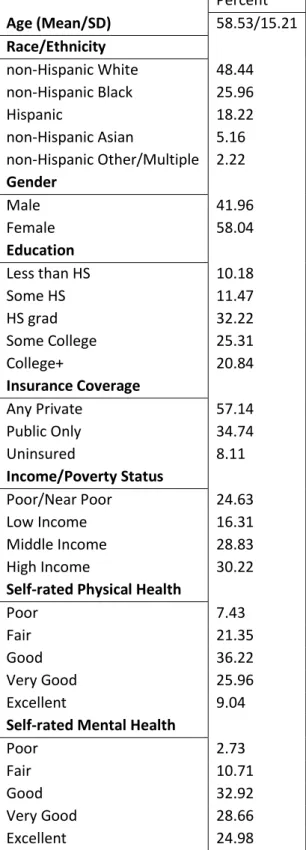
Table 2: Basic Descriptive Statistics: Continuous and Categorical Variables...…...40
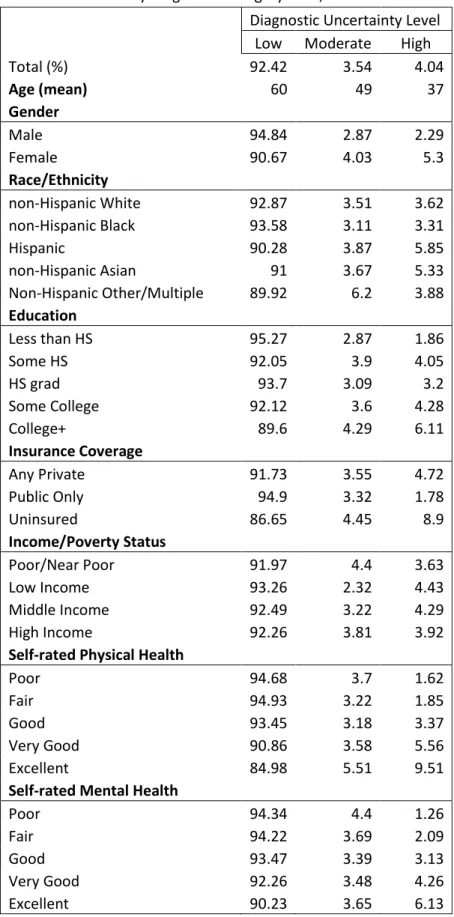
Table 3: Variables by Diagnostic Category (%)………….………...41
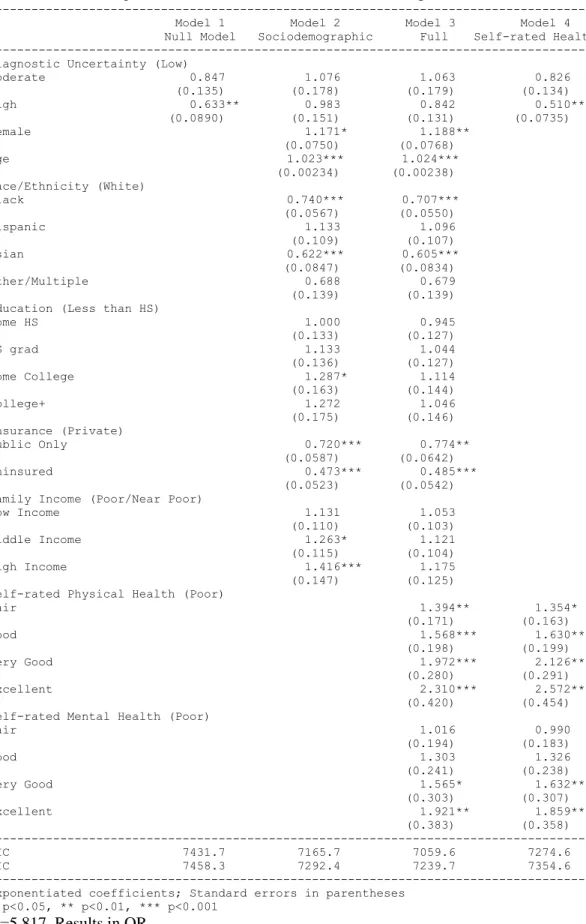
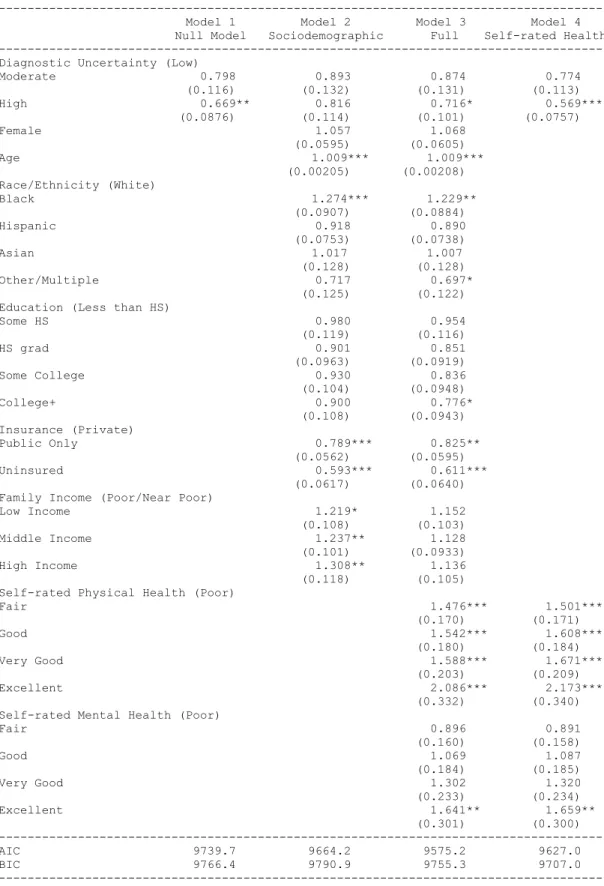
Table 4: Ordered Logit Model: Health Care Satisfaction over the past 12 months...46
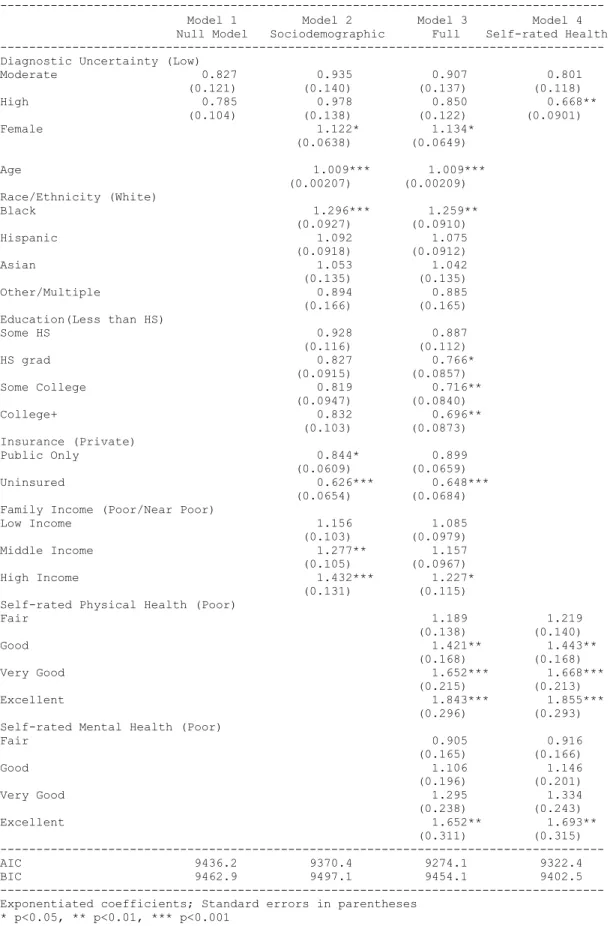
Table 5: Ordered Logit Model: “How often did providers show respect for what you had to say?”...47
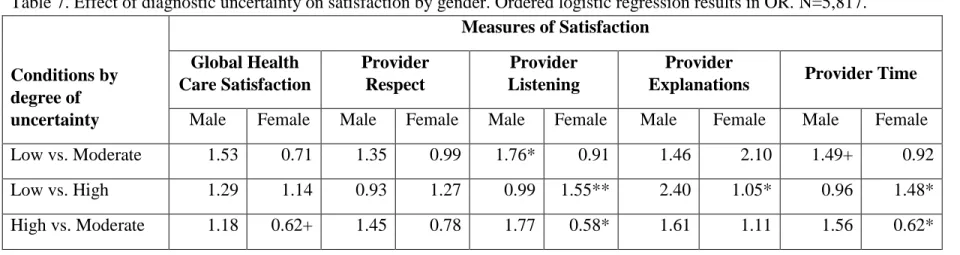
Table 6: Effect of female gender on satisfaction by the diagnostic uncertainty of respondents’ medical conditions…………...50
Table 7: Effect of diagnostic uncertainty on satisfaction by gender………...54
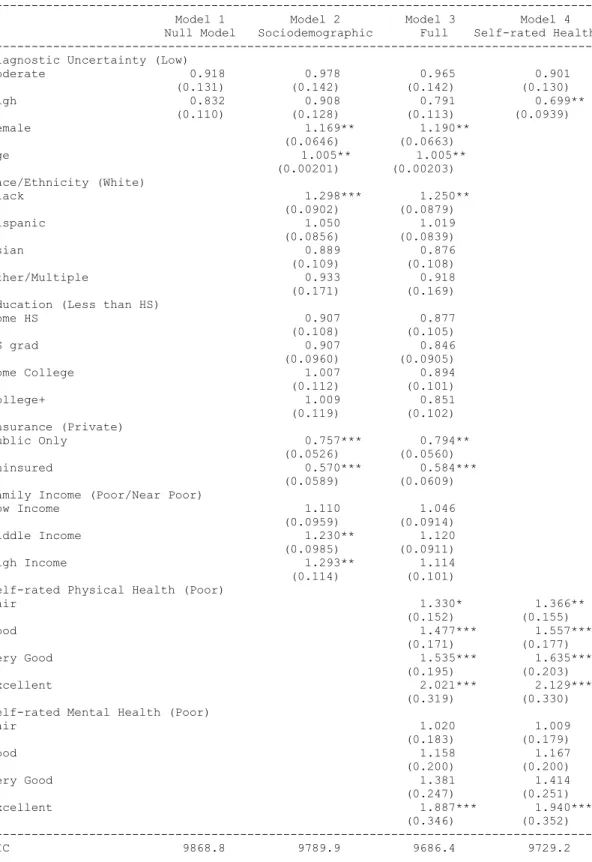
Table 8: Ordered logit model: “How often did providers listen carefully to you?”...62
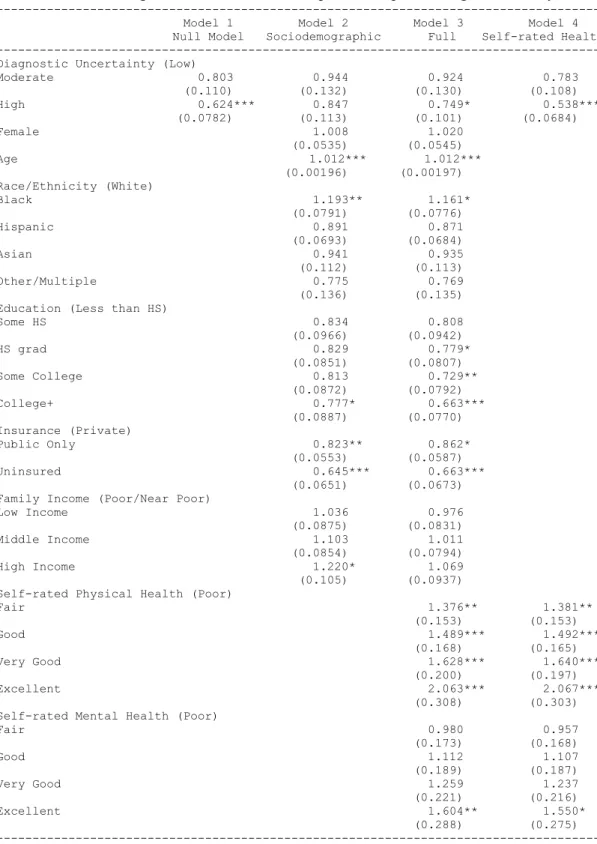
Table 9: Ordered logit model: “How often did providers explain things in a way that was easy to understand?”...63
Table 10: Ordered logit model: “How often did providers spend enough time with you?”...64
LIST OF FIGURES
Figure 1: Conceptual Model of Diagnostic Uncertainty on
LIST OF ABBREVIATIONS
CHD-Coronary Heart Disease
DSM-Diagnostic and Statistical Manual of Mental Disorders
ECG-Electrocardiogram
GP-General Practitioner
IBS-Irritable Bowel Syndrome
ICD-The International Classification of Diseases
LLPDD-Late Luteal Phase Dysphoric Disorder
ME-Myalgic Encephalomyelitis
MEPS-Medical Expenditure Panel Survey
MUI-Medically Unexplained Illness
MUPS-Medically Unexplained Physical Symptoms
MUS-Medically Unexplained Syndromes
INTRODUCTION
Clinical uncertainty affects patients from the moment they enter the medical system,
leading to numerous ramifications for patient care. Whereas clinical uncertainty can be broadly
defined as a providers’ lack of knowledge about any aspect of medical practice, diagnostic
uncertainty applies more specifically to the labeling of symptoms as disease. Diagnostic
uncertainty has been conceptualized in three ways: as a perception of physicians, as a factor in
diagnostic decisions, and as a temporal construct (Bhise et al. 2017). My research focuses on the
diagnostic uncertainty that takes place when providers struggle to identify and label patients’
symptoms as disease within the current biomedical system. Limitations in modern medical
knowledge and existing medical technologies contribute to providers’ difficulties in diagnosing
patients, particularly when test results are unreliable or ambiguous or when diagnostic
technologies for disease are not yet available.
Medically unexplained illnesses/syndromes (MUI/MUS) lie at the pinnacle of diagnostic
uncertainty. They are considered medically unexplained because current medical technology
cannot verify their existence. MUIs are ‘diagnoses of exclusion’ – labeled as such because they
are diagnosed after medical tests fail to identify an organic or ‘explained’ cause. Patients with
medically unexplained physical symptoms (MUPS) –a term used to classify symptoms of MUI
and MUS – also report a lower quality of medical care (Dirkzwager and Verhaak 2007). This
includes patients reporting that providers did not take them seriously when reporting symptoms,
encounter (Dirkzwager and Verhaak 2007). Current classifications of MUPS were used to
capture patients with the highest levels of diagnostic uncertainty.
This paper uses 2012 data from the Medical Expenditure Panel Survey to examine how
diagnostic uncertainty affects patient satisfaction. I use the International Classification for
Diseases (ICD-9), which is employed in medicine to classify patients by diagnosis, to select
patients with medical conditions that are of varying levels of diagnostic uncertainty. Fifteen
ICD-9 codes for diseases were grouped by their level of diagnostic uncertainty (low, moderate,
and high), and this determination was based on the reliability (sensitivity/specificity) and
existence of diagnostic tests. These three groupings of diseases were then used to explore the
effect of diagnostic uncertainty on patient satisfaction. Patient satisfaction as an outcome
included a measure of overall health care satisfaction over the past 12 months in addition to four
measures of provider-specific satisfaction: whether patients felt that their providers respected
them, listened to them, made explanations in a way that was easy to understand, and spent
enough time with them. Dissatisfaction with providers is commonly seen in cases of clinical
uncertainty and MUPS (Calnan 1984; Lian and Hansen 2018). I hypothesize thatconditions of
higher diagnostic uncertainty will be associated with lower ratings of patient satisfaction,
particularly with measures of satisfaction specific to doctor-patient interactions.
I also seek to understand how the relationship between diagnostic uncertainty and patient
satisfaction is affected by gendered experiences of health care. Medically unexplained physical
symptoms are known to be more common among women (Nimnuan et al. 2001;
Hausteiner-Wiehle et al. 2011; Johnson 2008). Studies of gender differences in medical care are
widespread, from gendered expectations of care (Stenberg et al. 2012; Johnson 2008;
Werner and Malterud 2003; Stenberg et al. 2012). Diagnostic uncertainty provides a specific
context in which differential treatment may take place by gender. I propose that implicit bias
and unconscious stereotyping of women may be one way in which physicians unknowingly alter
their clinical behavior when presented with symptoms they cannot explain or fit neatly into a
diagnostic category. The stereotype of the female hysteric and its association with MUPS is one
potential source of provider bias. Although this study cannot directly study implicit bias, the aim
is to determine if women’s experiences with diagnostic uncertainty in the clinical encounter
differ from men’s experiences. I hypothesize that there will be an interaction effect between
women and diagnostic uncertainty, such that reduced satisfaction as a result of diagnostic
uncertainty will be more pronounced for women. For example, I predict that women presenting
with medically unexplained physical symptoms will report the most dissatisfaction with their
health care, particularly with their providers.
My theoretical model can be found in Figure 1. Providers’ responses to diagnostic
uncertainty are associated with patient sociodemographics such as gender (Lutfey et al. 2009;
Alam et al. 2017). Health care satisfaction also varies by patient sociodemographics. Based on
prior research on satisfaction, I included gender, race/ethnicity, age, socioeconomic status
measures, and self-rated health measures in my model. Variables used as measures of
socioeconomic status were education, family income, and insurance coverage, all of which have
been associated with health care satisfaction in prior research (Fenton et al. 2012). Higher age,
lower education, and higher health status have a positive association with satisfaction, while
gender and race effects have been more variable (Hekkert et al. 2009). My research examines
prior research (Fenton et al. 2012). These outcomes, listed in Figure 1, include patient
satisfaction with global health care and with patient-provider interactions.
Diagnostic uncertainty is inherent in physicians’ encounters of patients with MUPS.
Biomedical discoveries expand knowledge of disease, but advances in knowledge also heighten
what remains uncertain or still unknown (Nettleton 2006). MUPS exist within these knowledge
gaps and have become increasingly prevalent in outpatient care. Numerous studies have found
that about a fifth of the population present to primary care clinics for medically unexplained
symptoms, and an even higher proportion of patients present to secondary care clinics with them
(Creed et al. 2011). In a study of six medical specialties as well as dentistry, between one-third
and two-thirds of patients were not given a biomedical explanation for their symptom(s)
(Nimnuan et al. 2001; Creed et al. 2011). Clinical uncertainty is known to be a source of
dissatisfaction for both patients and providers (Calnan 1984). Due to the rising levels of
diagnostic uncertainty resultant from advancing biomedicine, as witnessed in the rising
prevalence of medically unexplained physical symptoms, studies of how diagnostic uncertainty
Figure 1. Conceptual Model of the Relationship between Diagnostic Uncertainty and Measures of Health Care Satisfaction
Gender Race/Ethnicity
Age
SES [education, family income, insurance status]
Self-rated Physical/Mental Health
Health Care Satisfaction •Global Health Care •Provider Respect •Provider Listening •Provider Explanations •Provider Time
BACKGROUND
When looking at decision-making behaviors, Clark and colleagues found that there was a
“technology effect” bias in which people implicitly associated technology with success (2016).
These implicit associations are ones learned gradually and affect cognition and behavior
unconsciously but automatically. A “technology effect” within the current biomedical system
means that providers implicitly expect technology to provide the certainty they need to make a
diagnosis. This supports providers’ tendencies to overuse technology when seeking a diagnosis
and to be overly optimistic about technology’s ability to successfully confirm a diagnosis (Clark
et al. 2016). Overconfidence in technology and its success may exacerbate feelings of
uncertainty when faced with diagnostic challenges; this heightened uncertainty resulting from
negative test results or lack of diagnostic tests can elicit a range of negative reactions from
physicians (Gerrity and Light 1992). Diagnostic uncertainty is rooted in modern medicine and
accentuated in cases of MUPS. As biomedical knowledge and technological innovation expand,
so does the associated uncertainty (Nettleton 2006) with important implications for medical care.
My research uses classifications of MUPS because they represent a clinical picture with
the highest levels of diagnostic uncertainty that exist in medical practice. The label of MUPS
has been used within psychology and medicine to describe a constellation of symptoms that do
not fit easily within the diagnostic classifications of our modern biomedical system – a system
built on diagnosis through some biomedical explanation. When current medical technology
cannot identify an ‘organic’ reason for symptoms, much less verify the existence of those
symptoms can only be labeled ‘medically unexplained’ (Nimnuan et al. 2001). The most
common medically unexplained physical symptoms are “headache; back, joint, abdominal, chest
and limb pains; fatigue; dizziness; bloating; palpitations; hot or cold sweats; nausea; trembling or
shaking; and numbness or tingling sensations” (Creed et al. 2011:2). Uncertainty is an inherent
property of medicine, but providers find uncertainty uncomfortable, unwanted, and dissatisfying
(Gerrity and Light 1992; Fox 1957; Light 1979; Calnan 1984; Hartz et al. 2000). Thus,
clinicians and researchers struggle to find ways to classify MUPS and ‘explain’ them within a
framework of diagnosis built for diseases that can be confirmed by some biomedical explanation.
Unsurprisingly, MUPS have been reclassified and relabeled often.
In the past few decades alone, medically unexplained physical symptoms have been
relabeled into categories that include ‘medically unexplained physical syndromes,’ ‘medically
unexplained syndromes,’ and ‘medically unexplained illnesses.’ The categorization of medically
unexplained syndromes was used to explain a greater breadth and variability of symptoms
beyond existing labels of “somatoform disorders” and “functional somatic syndromes” (Creed et
al. 2011; Johnson 2008). Functional somatic syndromes are conditions marked by physical,
bodily complaints and include chronic fatigue syndrome, irritable bowel syndrome,
fibromyalgia, premenstrual syndrome, myofascial pain syndromes, and unexplained chronic pain
(Smith et al. 2003). These syndromes are MUIs rooted in the historical diagnoses of hysteria and
neurasthenia – common catch-all categories for women in the 19th century (Johnson 2008).
MUIs also have a high prevalence in clinical practice (Creed et al. 2011) and are reported to be
more common among women, although research into the sociocultural factors influencing the
predominance of MUIs in women is currently lacking (Johnson 2008). Thus, research of MUIs
context of the social construction of illness as it comes to be defined within medical, psychiatric,
research and lay realms.
Clinical Uncertainty
Clinical uncertainty is seeded in medicine. Medical students face uncertainty early in
their training as they learn that they can never possess all of the knowledge and skills that exist in
the ever-expanding world of biomedicine. Additionally, there are still many unknowns in our
current knowledge of medicine, and there exist uncertainties in determining the difference
between individual and systemic gaps in this knowledge (Fox 1957). Gerrity and Light
conceptualize uncertainty in the clinical encounter as the complex interplay of patients’
characteristics, providers’ characteristics, and the interaction between the two within an
organizational context. First, they assert that clinical uncertainty is created from the combination
of the medical problem at hand and patients’ characteristics such as gender. Second, physicians
come to the clinical encounter with their own characteristics – including attitudes, beliefs and
prior patient experiences – that help to produce physicians’ reactions to this uncertainty and the
consequential medical decision-making process that takes place (Gerrity and Light 1992).
Providers’ decisions such as ordering diagnostic tests, requesting follow-up care, and
recommending treatment are thus a result of each unique context.
Providers’ responses to uncertainty begin with medical training. Light discusses how
socialization for uncertainty during professional training can create problems for providers when
decisions need to be made quickly and without full knowledge of the situation or the patient
(1979). When success is based correct decision-making when faced with uncertainty, providers
at all stages of training may react to minimize this uncertainty and exert control over the
management,” or role simulation until students conform to and adopt the school of thought and
the mannerisms of mentors (Light 1979:313). The second reaction to uncertainty taken by
providers in training is advancing knowledge and clinical experience through means such as
specialization. The third reaction is to measure competence by technique – or the ability to
perform procedures and other technical medical acts – rather than measuring success by patient
outcomes, which are uncertain. The fourth reaction is to maintain a dominant relationship in
order to control uncertainty by means of discouraging patient involvement through esoteric
medical terminology, withholding information and evading questions. The fifth reaction
involves providers adhering to a level of professional autonomy. Since uncertainty in medical
practice leaves room for diverse, contradictory and even erroneous clinical opinions, upholding
professional autonomy permits decisions to go unchecked by colleagues as differences in
practice style (Light 1979). This progression of medical training allows providers to make their
own choices around uncertainty and feel comfortable that they will be unquestioned and
unchallenged by patients and fellow providers (Light 1979).
Providers’ reactions to uncertainty when presented with diagnostically uncertain symptoms
are highly variable and involve everything from denial or avoidance to acknowledgement or
acceptance (Gerrity and Light 1992). Physicians’ “defenses against and denials of uncertainty is
one of the most consistent observations made by sociologists studying medical training” (Gerrity
and Light 1992: 1028). Even when providers acknowledged uncertainty, their reactions varied
based on the medical problem at hand and the consequences that would result from being
incorrect. For example, when the differential diagnosis included a “high-risk” disease, providers
reported being more comfortable with uncertainty after life-threatening causes were ruled out
life-threatening illness through numerous diagnostic tests and 2) downplaying or ignoring patients’
symptoms either when testing rules out life-threatening disease or when they determine that
symptoms do not pose a risk and thus do not warrant urgent investigation through testing.
Hence, providers’ perceptions of uncertainty permeate their patterns of decision-making and
manifest in a variety of clinical behaviors.
Investigations into differences in providers’ cognitive and behavioral responses to
uncertainty must begin with an examination of diagnostic process itself. Providers, particularly
primary care physicians, are responsible for making the determination to diagnose a patient with
a medically unexplained illness. In the case of MUIs, diagnoses are made “on the basis of
subjective symptom report” (Johnson 2008:22). The doctor-patient relationship arguably has a
stronger influence on the diagnoses of MUIs than diagnoses of organic diseases. In cases of
MUI diagnoses, the decision cannot rely on the more ‘objective’ indicators of disease found in
test results but instead rely on which subjective symptoms patients communicate to their doctors.
Diagnosis can also be affected by how patients present their symptoms when interacting with
providers, and how providers respond to patients’ presentation. For instance, providers were
more likely to misdiagnose patients’ symptoms as medically unexplained when they perceived
the patient relationship as ‘negative’ (Nimnuan et al. 2000). Measures of the
doctor-patient relationship consisted of physician-reported answers regarding their perceptions of
patients’ cooperation in the encounter, patients’ reliability in providing a history of their illness,
and the quality of the interaction (Nimnuan et al. 2000). Without ‘objective’ evidence of
symptoms gleaned from the results of diagnostic tests –in other words, without data that can be
quantified in pathophysiological findings and verified through reproducible tests –providers’
judgment. Although these judgments are grounded in prior clinical experience and knowledge of
diseases, they also make room for biases against patients to find their expression in medical
practice.
The clinical uncertainty inherent in the knowledge and practice of medicine can manifest
in many ways that negatively affect the patient experience. Uncertainties in knowledge,
diagnosis and treatment provide the opportunities for this to happen when providers’ value
judgements and assumptions about patients impact clinical decision-making. Studies have found
that providers can assume symptoms are medically unexplained without performing the
investigation needed to rule out an organic explanation for disease (Creed et al. 2011; Balsa et al.
2003). This tendency toward prematurely ruling out organic diseases is heightened when doctors
feel uncertain about the diagnosis. Providers’ use of diagnostic discretion when diagnostic
uncertainty exists can serve as a means through which unconscious biases result in the unequal
treatment of patients (Balsa et al. 2003). Further, providers who expect patients to have a
negative reaction to uncertainty were more likely to withhold treatment options and instead
decide on the course of treatment they determined best for their patients (Alam et al. 2017).
Therefore, both providers’ perceptions of uncertainty and their expectations about patients’
reactions to this uncertainty can create disparities in diagnosis and treatment.
Doctor-patient communication suffers as a result of physicians’ intolerance of uncertainty
(Alam et al. 2017), leading to numerous clinical behaviors that do not often align with the needs
of patients. Although patients and providers alike are frustrated by diagnostic uncertainty in the
clinical encounter, providers are found to be more dissatisfied by uncertainty than patients, who
were instead more dissatisfied by communications within the encounter (Calnan1984). This
highlighted in a recent study on MUPS patients. Patients reported feeling more comfortable with
diagnostic uncertainty the longer they faced their illnesses (Nettleton 2006), yet providers – who
experience dissatisfaction themselves – often anticipate that their patients will be dissatisfied
with the diagnostic uncertainty of their condition. In reality, patients were more dissatisfied with
providers’ communications and behaviors (Nettleton 2006). Patients were particularly frustrated
by their providers’ tendencies to communicate less and involve them less frequently in medical
decisions, and they expressed a desire to have their symptoms acknowledged as ‘real’ and
managed appropriately despite the presence of uncertainty in diagnosis (Nettleton 2006). Thus,
diagnostic uncertainty affects the clinical encounter in a way that places strain on the
doctor-patient relationship (Page and Wessley 2003) and challenges doctor-doctor-patient communications
(Peters et al. 2008).
Providers’ perceptions of uncertainty, which lead to these disparities in care, can vary
based on patient characteristics such as gender. For example, a study by Lutfey et al. found that
physicians were less certain about their diagnoses of coronary heart disease (CHD) for women
than for men, and for Blacks than for Whites (2009). Both gender and race effects existed in the
context of an otherwise identical case presentation, and this uncertainty surrounding the
diagnosis independently affected physicians’ future clinical decision-making. For instance,
physicians who were more certain about the diagnosis of CHD were more likely to order the
appropriate diagnostic tests (Lutfey et al. 2009). Further, these physicians were also more likely
to write the appropriate prescriptions for CHD and to request that patients return for an earlier
follow-up visit (Lutfey et al. 2009). Patient care varied as a result of providers’ interpretations of
Doctor-patient communication suffers as a result of physicians’ intolerance of uncertainty
(Alam et al. 2017), leading to numerous clinical behaviors that do not often align with the needs
of patients. Although patients and providers alike are frustrated by diagnostic uncertainty in the
clinical encounter, providers are found to be more dissatisfied by uncertainty than patients, who
were instead more dissatisfied by communications within the encounter (Calnan1984). This
disconnect between providers’ responses to diagnostic uncertainty and patients’ needs is
highlighted in a recent study on MUPS patients. Patients reported feeling more comfortable with
diagnostic uncertainty the longer they faced their illnesses (Nettleton 2006), yet providers – who
experience dissatisfaction themselves – often anticipate that their patients will be dissatisfied
with the diagnostic uncertainty of their condition. In reality, patients were more dissatisfied with
providers’ communications and behaviors (Nettleton 2006). Patients were particularly frustrated
by their providers’ tendencies to communicate less and involve them less frequently in medical
decisions, and they expressed a desire to have their symptoms acknowledged as ‘real’ and
managed appropriately despite the presence of uncertainty in diagnosis (Nettleton 2006). Thus,
diagnostic uncertainty affects the clinical encounter in a way that places strain on the
doctor-patient relationship (Page and Wessley 2003) and challenges doctor-doctor-patient communications
(Peters et al. 2008).
Providers’ interpretations of symptoms and confidence in their own clinical judgment to
diagnose are highly impacted by patient characteristics. Moreover, variations in providers’
evaluations of diagnostic certainty, which was influenced by patient characteristics, only serve to
exacerbate existing disparities and promote misdiagnosis and medical errors (Lutfey et al. 2009).
Since physicians were found to experience the most diagnostic uncertainty when it came to
medical care including reduced test-ordering, lower rates of the correct diagnosis, and lack of
appropriate prescriptions and follow-up care. In sum, patient characteristics such as female
gender and young age influence providers’ interpretations of uncertainty, which in turn impede
their diagnosis and treatment of disease.
Physicians’ responses to diagnostic uncertainty are thought to operate through an
interplay of three domains: cognitive, emotional and ethical (Alam et al. 2017). Alam et al.
assert that cognitive reactions to uncertainty involve the use of diagnostic reasoning that is
grounded in unconscious stereotypes related to patient characteristics such as gender (2017).
Concurrent emotional and ethical reactions serve as additional factors that influence how
physicians react to and disclose uncertainty (Alam et al. 2017). Together, these reactions to
uncertainty provide the means by which stereotypes influence providers’ diagnostic behaviors.
Welch et al. detail three ways in which disparities in clinical decision-making result from
patient characteristics: statistical discrimination, stereotyping, and prejudice (2012). First,
statistical discrimination – coined by Balsa and colleagues in 2001 – has been used to explain the
process of diagnosis based on statistical probabilities. Namely, providers make determinations
of diagnosis based on the probability of seeing a disease in clinical practice (calculated using
current population-based prevalence rates for disease), the probability of seeing a set of
symptoms within a particular disease, and the probability of seeing a symptom in a particular
patient (Welch et al. 2012). Statistical discrimination most often takes place when providers
react to uncertainty by allowing probabilities from population-based epidemiological data to
overwhelm the presenting data of their patient (Balsa 2001; Balsa et al. 2003; Balsa et al. 2005).
In this way, medical knowledge based on population data takes priority over individual data
Second, stereotyping is problematic when generalizations that are made about a group
are then used to make assumptions about an individual. Moskowitz details the process of
stereotype application, whereby “stereotypes can trigger negative beliefs about a social group
and its members and can cause a dissociation between a person’s conscious experience of being
unbiased and a person’s actual response” (2012:668). Third, prejudice is defined as a groundless
bias against a social group (Welch et al. 2012). Although findings of overt prejudice were not
seen, recent research attests that prejudice – like stereotyping – primarily exerts its influence
unconsciously (Welch et al. 2012). This aligns with Michelle van Ryn’s assertion that group
characteristics are “unconsciously and automatically applied to the individual” in a way that
affects clinical outcomes (2002:I-143).
Unconscious stereotyping and implicit prejudice can help explain how patient gender
affects providers’ views of patients and their resultant clinical behavior. One hypothesized
mechanism by which physicians’ understanding of patients influence clinical outcomes is
provider interpersonal behavior (van Ryn 2002). Although both male and female patients may
receive the same diagnosis of an MUI, they may experience differences in their providers’
behavior due to the application of unconscious stereotypes. Differences in interpersonal
behaviors include variations in the way in which providers ask questions, provide information,
and respond emotionally to their patients. These behaviors affect patient outcomes such as
satisfaction. Another hypothesized mechanism is physicians’ interpretation of symptoms
(vanRyn 2002). Physicians may be more likely to interpret their female patients’ symptoms as
medically unexplained due to unconscious stereotyping. This in turn would not only reinforce
disparities in the incidence rates of MUI diagnoses by gender but also drive provider’s behavior
Statistical discrimination, unconscious stereotyping, and implicit prejudice are all
hypothesized to reinforce gender disparities in diagnosis of MUIs and work to degrade
doctor-patient interactions. Although research has found that physician behaviors vary by gender and
race, little is known on how the presentation of different health problems across
sociodemographic factors like gender might alter physician behaviors and decision-making
(Cooper et al. 2012, Street et al. 2005). My analyses focus on factors such as physicians’
displays of respect, listening and explanatory behaviors, and decisions regarding the time allotted
to an individual patient. When patients’ symptoms are diagnostically ambiguous, the
unconscious stereotypes and biases of physicians regarding gender may more easily influence
provider’s behaviors such as these.
History of MUIs and Patient Gender
There is a well-documented history of medically unexplained illnesses (MUIs) and the
predominant role of gender in their labeling and legitimacy (Johnson 2008). Documentation of
such conditions started over 2,000 years ago (Trimble 2004). In early 19th century America,
MUIs retained the label of hysteria, which was known as a women's disease as far back as the
time of Hippocrates. However, these diseases faced relabeling and expansion over the next
several decades. A diagnosis of hysteria was made distinct from a new but similar condition of
neurasthenia, which was employed to make inclusion of men into this diagnostic category more
acceptable and the disease itself more appealing. Nevertheless, the differences between the two
conditions were often confused or made less distinct over time (Johnson 2008), and neurasthenia
became another "catch-all" diagnostic category (Shorter 1993). A diagnosis that is classified into
a catch-all disease category is known today as a diagnosis of exclusion - labeled as such when
history-gathering and physical exam than medical technologies that weigh heavily on diagnostics
today. As such, the decision to diagnose a patient with hysteria or neurasthenia, both diagnoses
of exclusion, depended even more obviously on the interpretations and assumptions of individual
physicians.
19th century medical texts continued to comment that young women were "more prone to
nervous complaints" and that educating women would exacerbate nervous symptoms and
damage their reproduction (Johnson 2008:14; Oppenheim 1991). Although language of this
nature is no longer included in medical literature, the idea that women are more likely to suffer
from medically unexplained illnesses remains well-known and well-reported in medicine. For
example, women have consistently been shown to report higher numbers of symptoms than men
(Kroenke and Spitzer 1998). The higher prevalence of symptoms is related to the greater social
acceptability of women to report symptoms to others and to seek medical care for those
symptoms (Johnson 2008). This fact is often absent or overlooked in the medical literature, or
used without consideration of potential sources of bias. Even though reporting somatic
symptoms is higher in women, hypochondriasis is not: for instance, women don’t worry about
serious illness more than men do (Barsky and Wyshak 1990; Creed and Barsky 2004). Despite
the fact that hypochondriasis affects men and women equally, women are more likely to report
that they are made to feel like a hypochondriac (Johnson 2008). In fact, women generally report
more negative interactions with physicians than men, including being made to feel like a
hypochondriac, a malingerer, or mentally ill (Johnson 2008; Elderkin-Thomson and Waitzkin
1999). In the UK, 17% of women reported that physicians told them that the problem was all ‘in
their heads,’ compared to 7% of men (Elderkin-Thomson and Waitzkin 1999). Current medical
though knowledge presented in the medical literature influences the clinical experiences of
women, not many texts consider the sociocultural mechanisms behind this higher prevalence of
symptom reporting and utilization of medical care among women or the biases that can result.
Consideration of the biopsychosocial model of illness in MUIs can provide some insight
into how these gender differences in patient health behaviors affect aspects of the clinical
encounter such as diagnosis and treatment (Johnson 2008). Currently, the majority of MUPS
studies fail to account for the social and cultural aspects of gendered differences in care. As
2016 study by Weiss et al. finds that illness behaviors and use of health care vary by patient
gender (Weiss et al. 2016). Gender norms help account for these differences in illness behaviors.
Women are more likely than men to perceive symptoms, report them to physicians, and access
the health care system. Women’s coping styles, illness beliefs, and symptom attribution patterns
also differ from men (Johnson 2008). Research has started to focus on the sociocultural reasons
behind women’s higher rates of MUIs, but they often do so by applying knowledge of gendered
behavior to reduce the health care costs associated with women’s greater health care utilization
(Creed et al. 2011). Also, physicians can respond to this research on gender and MUIs in
numerous ways – from encouraging psychotherapeutic treatment as a means of altering women’s
learned illness behaviors to denying women access to the sick role, which can be done by
normalizing symptoms and discouraging women from ‘overutilizing’ the health care system
when diagnostic tests come back negative and symptomatic treatments are ineffective.
The sociocultural understanding of gender differences in MUIs can result in differential
treatment of women, beginning with the initial diagnosis of women with MUIs. Statistical
discrimination plays a role when current medical knowledge is applied to the individual in a way
MUPS during diagnostic decision-making and use current medical knowledge of gender
differences in MUIs in their treatment of individual patients. In this way, providers diagnose
women with MUIs more often than men, cyclically reinforcing existing prevalence rates (Bloor
1979). Further, providers base communication and treatment decisions for MUIs using outside
knowledge of gender disparities in behaviors and health outcomes, which only serves to reaffirm
existing medical knowledge. The ability of stereotype application to reinforce current disparities
in diagnosis and care, as seen in this example of statistical discrimination, evidences the
malleable nature of knowledge and data and exemplifies the social construction of disease and
medical knowledge.
Social Construction of Disease and MUIs
A sociology of diagnosis works to better understand the contextual and structural
influences on the diagnostic process and understandings of diagnoses (Brown 1995). Diseases
are considered legitimate if they are defined as medical problems that can be classified and
therefore diagnosed and assigned treatments and prognoses that fit within the current biomedical
framework. Medicalization – how medicine seeks to treat human problems as medical problems,
and contested illnesses – syndromes with conflicted and questioned legitimacy – are both
explained within Brown’s typologies of disease (1995). Medically unexplained physical
symptoms often fall within Brown’s typologies of contested and potentially medicalized
definitions of disease (1995). These conditions are by nature partly medicalized because of their
ability to be labeled under a broad diagnostic code. Classifying groupings of symptoms in this
way attempts to reduce feelings of diagnostic uncertainty and validate that symptoms are under
the medical domain. However, the commonality of symptom clusters in the general population,
validate the existence of a discrete condition that can be confirmed within biomedicine,
objectively measured and studied, and then incorporated in clinical practice. In sum, difficulties
in classifying MUPS hinder medicalization and create grounds for contestation among patients
and clinicians.
Brown asserts that controversial diagnoses or contested illnesses illustrate the fact that
medical knowledge, diagnoses and illnesses are all socially constructed (1995). Disease
categories do not remain constant across time and place, and instead social and political forces
combine with medical forces to determine the legitimacy of an illness and whether or not it
becomes medicalized. According to Brown, “[d]iagnosis represents the time and location where
medical professionals and other parties determine the existence and legitimacy of a condition”
(1995:38). Labels are constantly evolving to create discrete disease categories, but these are
dependent upon current medical knowledge and biomedical understanding of diseases. Recent
examples include the contestation and legitimation of classifying Fibromyalgia (Barker 2008;
Barker 2011), Premenstrual Syndrome (Figert 1995), Chronic Fatigue Syndrome and Multiple
Chemical Sensitivity (Dumit 2005) as diseases. As disease labels change, so do their prevalence
rates. The prevalence rate for Irritable Bowel Syndrome, for example, “varies considerably with
the definition of the syndrome” (Creed et al. 2011:13). The same trends are noted for other
medically unexplained syndromes. It is important to note that MUIs are not only socially
constructed, but their associated population-based prevalence rates can also reinforce existing
definitions and in turn influence clinical decision-making.
Michael Bloor extends this idea of socially constructed illness to the clinical experience.
He found that specialists’ medical assessments and procedural recommendations varied when
1979). Variations in clinical decisions occurred as a result of the intersection of patient and
provider characteristics and the interplay of providers’ knowledge and experience with a
patients’ unique presentation of symptoms and medical history. Moreover, specialists varied
their decision-making drastically depending upon the unique provider-patient interaction and a
set of arbitrary value judgments that determined whether a child receives a diagnosis or was
recommended surgery. Bloor concludes that the “variation in medical assessments is a natural
concomitant of the structure of medical knowledge” (Bloor 1979:59). Since MUIs are an
obvious example of socially constructed illness, variations in diagnosis, prevalence and treatment
of MUIs cyclically reinforce how these illnesses come to be defined and legitimized within
biomedicine. As mentioned previously, providers determine patients’ diagnoses through an
assessment of patients that draws from existing medical knowledge. Because medical
knowledge is socially constructed, Bloor argues that “the corpus of medical knowledge will not
be of a sufficiently specific character to be unproblematically applied by the practitioner” (Bloor
1979:58). Medical knowledge is applied to patients within a biomedical context; therefore,
stereotypes and statistical discrimination can find their expression when providers use existing
medical knowledge without regard for its social construction or for the uniqueness of each
patient’s illness experience.
Debates over the social construction of MUIs
Medically unexplained syndromes as contested illnesses face conflict within the
classification debates of medical and mental health professionals. The labeling of medically
unexplained symptoms, determined by consensus yet noted for its many limitations, occurred in
order to describe a constellation of symptoms that could not be organically explained. Since
Medical professionals and mental health experts have both worked to extend their authority by
categorizing medically unexplained syndromes under their own sets of diagnostic criteria; these
can be found both in the Internal Classification of Diseases and the Diagnostic and Statistical
Manual of Mental Disorders. Each group worked to include a broad range of symptoms into a
set of diagnostic categories that can guide future research and treatment. However, Creed and
colleagues highlight a fundamental conceptual problem seen in psychology to defining a
medically unexplained symptom:
A patient’s symptom is seen either as an organic one (‘medically explained’) or
‘medically unexplained’, which may be taken to imply a psychological cause.
This dualism is still enshrined in our classifications of diseases (The International
Classification of Diseases (ICD) has a separate chapter for ‘mental’ disorders and
the Diagnostic and Statistical Manual of Mental Disorders (DSM) is only
concerned with mental disorders), despite the fact that we know now that human
illness is determined by a mixture of biological, psychological and social factors
(Henningsen et al. 2011: 44).
Although some argue against a purely psychological or physical approach to diseases since
this cultural dualism falls outside the currently proposed biopsychosocial model of disease
(Johnson 2008), current understandings of MUPS are steeped in the conflict between mental
health professionals and medical providers, and between classifications in the International
Classifications of Diseases (ICD) and the Diagnostic and Statistical Manual of Mental Disorders
(DSM). For instance, irritable bowel syndrome (IBS) can be diagnosed as an undifferentiated
somatoform disorder (a DSM classification) and as a general medical condition (classified under
both psychiatrists and health care professionals struggled for professional dominance and control
over the diagnostic criteria (Figert 1995:63).
Psychiatrists often find their professional authority questioned due to their reliance on
expert consensus for the DSM. This reliance on expert consensus of diagnostic criteria poses a
limitation in defining a disease’s ‘reality’ in the case of medically unexplained syndromes such
as LLPDD when there are no biological markers or positive diagnostic tests to note. However,
the case of medically unexplained syndromes is accentuated by its inability to be defined within
both medical and mental health realms since both struggle to understand the etiology, diagnostic
criteria, and treatment for these diseases. The lack of consensus between the DSM and ICD as
well as their constantly evolving definitions and diagnostic criteria only serve to add to the
confusion surrounding these disorders. Most unexplained illnesses could be incorrectly
diagnosed by providers as mental illness under labels such as ‘undifferentiated somatoform
disorder’ or the new catch-all ‘somatic symptom disorder.’ The DSM-V, which defines somatic
symptom disorder, specifies that providers should not diagnose individuals with a mental
disorder based only on the fact that a medical cause cannot be found (American Psychiatric
Association 2013). Nevertheless, patients with MUPS are known to be shuttled between medical
providers and psychiatrists in the course of their illnesses (Shorter 2005).
As Johnson states, “it is often the health care professional who must make the distinction
between psychological symptoms and organic symptoms” (2008:22). Psychiatric illnesses have
a rich history of stigma, whereas many physical diseases do not have a similar history of stigma
and blame. Psychiatric illnesses are also hard to separate from medical diseases given the high
prevalence rates of psychiatric symptoms and diseases in patients with organic medical diseases.
explained illnesses, are at risk for the same psychiatric comorbidities. However, they are also at
risk for having providers discount their physical symptoms as psychosomatic and decide in favor
of a psychiatric diagnosis.
Also, the decision to consider pathological versus psychological causes, or even to order
tests that might aid in a diagnosis, is made by the individual provider when faced with a specific
patient and specific context. When faced with diagnostic uncertainty, providers might find a
psychiatric cause alleviates some of the discomfort associated with a failure to identify an
organic cause. Patients with MUPS are familiar with this tendency of providers to imply or state
that their medical problems are ‘in their heads’ (Elderkin-Thompson and Waitzkin 1999).
MUPS patients are much more likely to report that their general practitioner (GP) did not always
take them seriously or involve them in treatment decisions, was not always prepared to talk about
all their problems, and was not always prepared to take sufficient time to talk to them. Also,
they report difficulties in getting their GP to refer them to medical specialists when requested or
to be prepared to discuss mistakes or “matters that have gone wrong” (Dirkzwager and Verhaak
:32). Of note, between 23 and 29 percent of all patients reported that their GP unnecessarily
explains physical problems as psychological ones. This finding suggests that providers have this
tendency for all of their patients, but no gender interactions were analyzed here. Nettleton found
that patients with MUPS reported feeling delegitimized and treated as a malingerer or a
hypochondriac (2006). When patients are denied entrance to the sick role as their symptoms are
misunderstood or dismissed, it is not surprising that they would resist psychological explanations
for their symptoms and fight to legitimize their experiences (Nettleton 2006).
The tendency to assert that medically unexplained syndromes have some psychological
psychological basis is lacking. In fact, a meta-analysis by Henningsen and colleagues found
functional somatic syndromes such as Irritable Bowel Syndrome and Chronic Fatigue Syndrome
are distinct from depression and anxiety (2003). Moreover, medically unexplained illnesses and
depression were found to exert different patterns of impairment on functioning, even when found
together (Creed et al. 2011). Henningsen et al. conclude that “In view of the relative
independence from depression and anxiety, classification and treatment of these syndromes as
“common mental disorders” does not seem fully appropriate” (2003:528). Interestingly, recent
research has also found that MUPS are not the same as somatoform disorders and are more
closely related to depression and anxiety than to somatoform disorders (Smith et al. 2005). This
contradictory evidence highlights the uncertainty surrounding MUIs.
Although findings indicate that MUPS are distinct from somatoform disorders and from
other mental illnesses such as depression and anxiety, much of the current research revolves
around the efficacy of psychological and psychiatric therapies for MUIs and the link between
MUIs and somatoform disorders or other mental illnesses (Creed et al. 2011; Johnson 2008).
Since the proposed causes of medically unexplained syndromes range from psychiatric causes to
underlying organic causes that are currently unknown, there is much confusion around diagnosis
and treatment. The tendency of patients with an organic disease to also have psychiatric
disorders (Creed et al. 2011) further complicates research differentiating the two in situations of
diagnostic uncertainty.
Patient legitimation for MUIs
Conflict over the existence and labeling of diseases extends into patients’ experience with
MUIs. Diseases, defined within a biomedical construct, differ from the lived experiences of
conflict patients face when their own experiences do not fit within a biomedical understanding of
disease. Kleinman conceptualized this conflict by comparing disease – a biomedical and
pathological viewpoint – to illness – the subjective experience (1988). Patients with medically
unexplained syndromes encounter difficulties in finding legitimacy for their condition when
symptoms are not organically explained and instead their symptoms come to be categorized as a
contested or only partly medicalized illness. MUIs are diagnosed based on providers’
assessment of patients’ expressions of illness and explanations of symptoms. Thus, physicians
are responsible for determining whether a diagnosis can be applied based on the ‘subjective’
report of their patients when faced with a lack of biomedical proof or diagnostic certainty.
Purely contested illnesses involve the lived experience of symptoms without any labeling of a
disease through diagnosis, and partly medicalized conditions are allowed only some legitimacy
amid high levels of uncertainty (Nettleton 2006; Kleinman 1988).
Patients with medically unexplained syndromes also feel what Kornelsen labels
“dissonance in the relationship” with their providers when they battle between the need for
self-advocacy for a diagnosis and successful collaboration with their physicians (2016). Patients
often seek a name for their condition as a way to feel believed and legitimized or to find hope for
effective treatments. Kornelsen et al. detail the illness experience of MUPS patients, which
involved a three-step process of actively searching for a diagnosis, living with MUPS, and then
either accepting or resigning themselves to uncertainty (2016). The first component of this
process involved patients accessing the health care system for a new and distressing symptom
and then seeking a diagnostic label for their problem. The very act of naming a patient’s
condition was considered “a crucial step in the social validation of their condition” (Kornelsen et
others, and lack of such validation is a common frustration for MUPS patients (Kornelsen et al.
2016). Patients with a concrete diagnosis, attached to a certain prognosis and treatment
approach, struggle less with this legitimation than those labeled with MUPS, or given no label at
all.
Patients’ reactions to living with medically unexplained illnesses – and the associated
uncertainty – included actions such as self-educating – what Nettleton terms ‘information work’
(2006), engaging in self-care, and becoming involved in advocacy (Kornelsen etal.2006).
Patients struggle to find a diagnosis or a successful treatment approach when their symptoms are
medically unexplained: their subjective illness experience does not align with current medical
knowledge of disease, and providers’ and patients’ understanding of the problem are dissonant.
If the views of providers and patients are in conflict, problems occur in the clinical encounter and
dissatisfaction ensues (Lian and Hansen 2016).
Ratings of patient satisfaction
When doctors and patients are able to communicate successfully, patients are more
satisfied with their health care. Researchers have used ratings of health care to measure the
perceived success of doctor-patient communications and patient satisfaction with the clinical
encounter more generally (Kaplan 1989; Ong et al. 1995; Jackson et al. 2001). The MEPS, for
example, uses not only self-reported questions about global satisfaction with health care but also
questions about aspects of doctor-patient communications and the doctor-patient relationship.
These include questions that ask patients to report their providers’ respect for them and to
evaluate providers’ behaviors such as how often providers listened to them, explained concepts
According to Kaplan and colleagues, “patient satisfaction is by far the most recognized and
widely used measure for gauging the effectiveness of physician-patient communication” (1989).
Patient satisfaction has been a commonly used measure of the effectiveness of doctor-patient
communication for decades (Kaplan et al. 1989; Ong et al. 1995). Aspects of the doctor-patient
communication that predict patient satisfaction include “explanation of the symptom cause,
likely duration, [and] lack of unmet expectations” (Jackson et al. 2001). Patient satisfaction with
health care is therefore one way to determine the quality of doctor-patient communications and
how patients’ experiences of the clinical encounter might vary by their medical problems, and by
the diagnostic uncertainty of the patient’s medical conditions more specifically.
Satisfaction is a helpful measure because it measures patients’ perceptions, which give a
unique look at patients’ expectations of medical care. Moreover, patient satisfaction measures
are strongly tied to health outcomes, including adherence to care (Zolnierek and Dimatteo 2009;
Safran et al. 2001), utilization of care such as the decision to seek other opinions (Carr-Hill
1992), and reported health status (Jackson 2001). Thus, patients’ views of their experiences with
healthcare are important when considering ways to reduce the cost of medical care and improve
patient outcomes.
A recent study found that health-care satisfaction relates more to factors that are outside of
the patient experience than within them (Bleich et al. 2009). This includes patient characteristics
such as gender, race/ethnicity, age, education, and health status. Prior researchers have struggled
to come to a consensus regarding the effects of gender on patient satisfaction. Many studies find
that men report lower health care satisfaction than women (Haviland et al. 2005; Zhang et al.
2007). In contrast, some research has found men to be more satisfied, although gender
the inconsistency in findings of studies that look for an effect of gender, as well as race/ethnicity,
on outpatient satisfaction (2009). However, higher age, education, and measures of health status
have been consistently linked to higher patient satisfaction (Hekkert et al. 2009).
Conversely, Lian and Hansen find that relational factors, incuding aspects of the
doctor-patient relationship such as concordance in providers’ and doctor-patients’ views, contribute more to
patient satisfaction than individual factors such as education and health status when it comes to
medically unexplained illnesses (2016). Akin to other research on patient satisfaction, this study
includes patient sociodemographics as controls and looks to determine the effects of diagnostic
uncertainty on ratings of satisfaction, with a focus on satisfaction ratings about the relations
between doctor and patient. As such, I conducted regressions on five outcomes measuring
patient satisfaction, which included global patient satisfaction as well as four outcomes which
intend to capture aspects of the doctor-patient relationship and behaviors within the clinical
encounter.
Asking questions about satisfaction with providers’ behaviors obtains information from
patients about the doctor-patient relationship in order to investigate the effects of diagnostic
uncertainty on patients’ interpersonal experiences in the clinical encounter. These measures of
provider satisfaction are found to be highly important for the clinical outcomes of MUPS patients
(Kornelsen 2016). In 1986, Bass found that satisfaction, in addition to treatment adherence and
clinical improvement in symptoms, were related to the effectiveness of doctors in eliciting their
patients’ concerns (Salmon 2000). Therefore, inclusion of provider-specific satisfaction
measures, such as how well patients felt they were treated or respected, allows for a better
understanding of the quality of doctor-patient communications – particularly the providers’
information gathering, whether through the medical history, the physical exam, or more specific
diagnostic tests. Therefore, provider’s ability to elicit patients’ problems and concerns is an
important aspect of information-gathering during the clinical encounter that is needed to make an
appropriate diagnosis and treatment.
There is also recent research on the satisfaction of patients with a medically unexplained
illness called Myalgic Encephalomyelitis (ME) which explores patients’ experiences in the
clinical encounter and within the context of the doctor-patient relationship (Lian and Hansen
2016). Ratings of satisfaction in patients with ME when making initial contact with a general
practitioner (GP) were low. For example, 54% felt that their general practitioner "to a little or no
extent investigated their ailment in a satisfactory manner," and 45% felt that their GP "to a little
or no extent took their problems seriously" (Lian and Hansen 2016:315). Ratings of patients’
current GPs were higher, and this was specifically related to relational factors rather than
personal factors of patient or provider. Specifically, Lian and Hansen report that satisfaction
with patients' current general practitioners was higher when there was continuity of care,
agreement in views between doctors and patients, and specialist referrals (2016). Patients'
perceptions on whether they felt understood or in agreement with their doctor relates most
closely to my outcome variable that measures whether patients felt that their provider listened to
them.
A successful therapeutic relationship with a primary care provider was crucial in
mitigating the effects of uncertainty, and this included provider listening, understanding, interest,
and respect for the reality of symptoms. According to Kornelsen and colleagues, “In almost all
instances, the continuity of care relied on the clinician displaying qualities of listening, respect,
these aspects of the doctor-patient relationship that have been known to be areas of importance,
and areas of tension, for MUPS patients. These areas have a direct influence on patient
DATA AND METHODS
Data source
Data was obtained from the Medical Expenditure Panel Survey (MEPS), a nationally
representative survey of noninstitutionalized US citizens. Since 1996 the MEPS has collected
data annually from families, individuals, medical providers, and employers in the United States
on access to, utilization of, and costs for health care services. Although MEPS has a household
component, an insurance component, and a medical provider component, analyses for this study
will focus on 2012 data from the household component, which includes respondents’ answers to
questions about their satisfaction with their medical care. The household component uses an
overlapping panel design to survey households that were used in the previous year for the
National Health Interview Survey (NHIS), a survey conducted by the National Center for Health
Statistics. Household interviews were conducted over a period of two years to provide some
individual longitudinal data for information such as health condition, health status, and
satisfaction with care. In 2012, 14,763 families were surveyed, totaling to 37,182 respondents.
Racial/ethnic minorities were oversampled. The combined overall response rates for the
two-year 2012 household components of MEPS (which drew from NHIS respondents at a response
rate of 82.9%), was 56.3%.
For this study, I merged data from the Medical Conditions File and Panel 16 of the
Longitudinal Data File, both of which were obtained from the MEPS’ Household Component. In
the Medical Conditions File, when respondents reported no medical condition, their condition
past 12 months, no condition was included in the dataset and these patients were excluded from
the final sample. Panel 16 of the Longitudinal Data File included questions regarding ratings of
health care and, consequently, was only applicable to those who had experiences with health
care. Therefore, respondents in the final sample were those who had a medical condition as
reported in one of the 15 ICD-9 classifications (Table 1) and had completed questionnaires
regarding health satisfaction regarding visits that took place within the past year. The final
sample included 5,817 respondents.
Dependent Variables: Measures of health care satisfaction
I include an outcome variable of global health care satisfaction as well as four variables
that pertain more specifically to satisfaction with one’s provider and with the doctor-patient
relationship. In this way, my analyses include outcomes that refer to specific components of the
clinical experience. All measures of health care satisfaction were self-administered to
respondents who had an experience with health care in the past year. The survey questions were
taken from the Consumer Assessment of Health Plans Survey, which was used to measure
consumer’s ratings of the quality of health care (MEPS 2012). Answers to the five questions
asked in this survey have been used in prior research on health care satisfaction and health care
quality (Fenton et al. 2012). The first item, global health care satisfaction, was obtained through
a question asking how satisfied respondents were with their health care over the past 12 months,
on a scale from 0 (worst health care possible) to 10 (best health care possible). Due to low
sample sizes for the lowest ratings of health care satisfaction, I consolidated reports into three
categories which I label poor/fair, good, and very good/excellent. The remaining four items
measured health care satisfaction specific to the patient encounter. These included questions
attentiveness (how often providers listened carefully to you), provider’s explanations (how often
health providers explained things in a way that was easy to understand), and provider’s time
(how often health providers spent enough time with you). Again, due to low sample size for the
lowest health care ratings, outcomes were consolidated into three categories of never/sometimes,
usually, and always.
All outcome variables were tested for ordinality using stereotype logistic regression to
ensure dependent variables that were monotonically increasing. For the final analyses, ordinal
logistic regression analyses were used. Interpretations of results in odds ratios follow the
standard comparison across groups. For global health care satisfaction, odds ratio coefficients
report the odds of rating very good/excellent compared to good or poor/fair, and the odds of
rating very good/excellent and good compared to poor/fair. Provider-specific satisfaction ratings
provide the odds of reporting always compared to usually or sometimes/never, and the odds of
reporting always and usually compared to sometimes/never.
Independent Variables:
Medical Conditions
Patients’ medical conditions were selected based on their diagnostic uncertainty, which
was determined by the availability of valid and reliable diagnostic tests. Medical conditions
were reported to interviewers verbatim by respondents during the household component surveys.
Conditions were later coded by professional coders into the ICD-9-CM codes. I selected three
classes of medical conditions based on their diagnostic uncertainty: conditions with low or no
diagnostic uncertainty, those with moderate diagnostic uncertainty, and those with high
diagnostic uncertainty. Five ICD-9 classifications were chosen based on the presence or absence
Conditions were placed into categories based on the diagnostic criteria found on National
Institute websites for each disease.1 Conditions with low diagnostic uncertainty include
conditions that are diagnosed using a positive diagnostic test that is considered objective and
verifiable using quantitative medical technologies. For example, a patient with a dysrhythmia
receives a diagnosis when findings on an electrocardiogram (ECG) indicate that a dysrhythmia is
present.
Conditions of moderate diagnostic uncertainty fall in the middle, when medical
technologies can be used to aid in a diagnosis but are not required for a diagnosis to take place.
Diagnostic technology may provide unreliable results, and so these conditions often rely on
patient symptom report as well as providers’ physical examination of patients to aid in the
diagnosis. The diagnosis for Parkinson’s disease, for example, often occurs based on clinical
examination alone. When medical testing is performed and shows no indication for disease,
providers can still diagnose Parkinson’s disease based on other criteria, such as noting the
presence of a resting tremor on clinical examination.
Conditions of high diagnostic uncertainty include those commonly diagnosed by
physicians when no other organic cause is found; this grouping of ICD-9 codes includes
diagnostic labels applied to vague and ill-defined complaints such as nausea and fatigue. These
types of medical complaints are often labeled medically unexplained [physical] symptoms
(Creed et al. 2011). No formal criteria for labeling and studying MUPS exist to date, which
hinders replicability of such studies (Dirkzwager and Verhaak 2007). Within the MEPS,
condition codes were grouped so that there were no codes for individual medically unexplained
syndromes. However, I selected conditions based on past research of common medically
unexplained symptoms (Creed et al. 2011). No MUPS patient also had a medical condition that