O R I G I N A L R E S E A R C H
Effect of
XPC
polymorphisms on the response to
platinum-based chemotherapy: a meta-analysis
This article was published in the following Dove Press journal:
OncoTargets and Therapy
Chenyao Xie1,*
Jing Zhao1,*
Wenxi Hua2,*
Pei Tan1,*
Yudi Chen1,*
Jingwen Rui2
Xiaohan Sun1
Jiaying Fan1
Xiangyu Wei1
Xiaojing Xu1
Xiaoqin Yang1
1School of Biology and Basic Medical
Sciences, Soochow University, Suzhou
215123, People’s Republic of China;
2Medical College, Soochow University,
Suzhou 215123, People’s Republic of
China
*These authors contributed equally to this work
Objective:As an important DNA repair gene, the xeroderma pigmentosum complementa-tion group C (XPC) gene and its funccomplementa-tional genetic variants’relationship with chemotherapy response has been extensively studied. To quantitatively elucidate the genetic impact of the
XPC rs2228000 and rs2228001 polymorphisms on the response to platinum-based che-motherapy, the present meta-analysis was conducted.
Materials and methods: A systematic literature search was performed in seven cyber databases until February 20, 2019, for all relevant studies that assessed the relationship betweenXPCpolymorphisms and the response to platinum-based chemotherapy. Odds ratios (ORs) with a 95% confidence interval (95% CI) were measured to assess the strength of the association. R programs were developed to perform the statistical analyses, including calculations of pooled estimates, publication bias and sensitivity analyses, and heterogeneity interpretations.
Results:A total of 1,615 patients from 10 studies for the rs2228001 polymorphism were winnowed for further statistical analysis. For the rs2228000 polymorphism, 858 samples from six datasets were included. However, this meta-analysis indicated no significant effect of these two XPCpolymorphisms on the response to platinum-based chemotherapy. When stratified according to sample size, country or cancer type, no statistical significance for association was identified in all subgroups. Further sensitivity analysis and publication bias assessment ensured the reliability of the meta-analysis.
Conclusions: The pooled estimates suggest that neither the rs2228000 polymorphism nor the rs2228001 polymorphism contributes to the genetic predisposition for an altered response to platinum-based chemotherapy. Considering the limitations of our present meta-analysis, more studies with large-scale cohorts and rigorous methods are needed to validate our results.
Keywords:XPC, polymorphism, meta-analysis, platinum-based chemotherapy
Introduction
As a mainstay of chemotherapy, platinum-based regimens are still widely employed for the treatment of a wide spectrum of advanced-stage cancers. Unfortunately, in clinical practice, a significant proportion of patients exhibit intrinsic or acquired resistance to platinum-based therapies. Genome structural variations, such as single nucleotide polymorphisms (SNPs), are genetic factors that may influence che-motherapy response.1 Therefore, extensive studies have been conducted on the genetic loci associated with sensitivity to platinum-based regimens.
As an important DNA damage recognition protein, xeroderma pigmentosum com-plementation group C (XPC) plays a key role in nucleotide excision repair. In vitro
Correspondence: Xiaojing Xu; Xiaoqin Yang
School of Biology and Basic Medical
Sciences, Soochow University, 199 Ren’ai
Road, Suzhou 215123, People’s Republic
of China
Tel +86 512 6588 0119; +86 512 6588 2235
Email [email protected]; [email protected]
OncoTargets and Therapy
Dove
press
open access to scientific and medical research
Open Access Full Text Article
OncoTargets and Therapy downloaded from https://www.dovepress.com/ by 118.70.13.36 on 25-Aug-2020
experiments suggest that XPC overexpression could lead to enhanced sensitivity to cisplatin treatment,2 and its defect could result in reduced p53 responses to cisplatin treatment.3 Two common polymorphic loci of theXPCgene, rs2228000 (G>A, Ala499Val) and rs2228001 (G>T, Lys939Gln), have been investigated for the effectiveness of carcinogenesis.4–6 Scattered evidence has demonstrated that the G allele homo-zygotes of these two polymorphisms could lead to signifi -cantly increased XPC mRNA expression in the Asian population.4,7 Given the obvious importance of the XPC gene, it is reasonable to hypothesize that the XPC
rs2228000 and rs2228001 polymorphisms can affect responses to platinum-based therapy.
Several previous association studies tried to quantita-tively assess the relationship between theXPC polymorph-ism and the response to platinum-based chemotherapy. However, their results were incongruous, and those scat-tered datasets were also plagued by small sample sizes and consequently led to very restricted statistical power. The aim of this meta-analysis was to comprehensively evaluate the diagnostic value of the XPC genotypes of the rs2228000 and rs2228001 polymorphisms as a biomarker for chemotherapy response in cancer patients subjected to platinum-based treatments.
Materials and methods
Literature search
For this study, a comprehensive literature screening was conducted to identify relevant datasets published in the China Knowledge Resource Integrated Database (http:// www.cnki.net/), the Wanfang Data Resource System of Digital Periodicals (http://www.wanfangdata.com.cn/), the VIP Chinese Technology Periodical Database (http://qikan. cqvip.com/), the Wiley Cochrane Library (http://onlineli brary.wiley.com/cochranelibrary/search/), PubMed from the National Center for Biotechnology Information (http:// www.ncbi.nlm.nih.gov/pubmed), Excerpta Medica Database (https://www.embase.com/), and the Web of Science from Clarivate Analytics (http://isiknowledge. com/). A search string was constructed as a Boolean expres-sion and built with the following terms and known syno-nyms: cancer (“cancer”, “adenocarcinoma”, and
“carcinoma”), polymorphism (“polymorphism”, “SNP”, and“variant”), XPC gene (“RAD4”and“XPC”), and pla-tinum-based chemotherapy (“chemotherapy”, “platinum”,
“carboplatin”,“cisplatin”, “oxaliplatin”, “lobaplatin”, and
“nedaplatin”). In our literature search, language was limited to English for PubMed, Web of Science, Cochrane, and Excerpta Medica Database. In the CNKI, Wanfang, and
Unique records from literature search (n =282 )
Records identified from other sources (n = 0)
Records screened (n = 262)
Not research paper or thesis
(n = 20)
Relevant studies assessed for eligibility (n = 12)
Records excluded (n = 250)
1) Not for platinum-based chemotherapy response 2) Not cancer study 3) No eligible data 4) Not these two XPC polymorphisms
10 articles included in this meta-analysis 6 studies for rs2228000 10 studies for rs2228001
Records excluded (n = 2)
1) Numeric error
2) No criteria or details for chemotherapy response evaluation
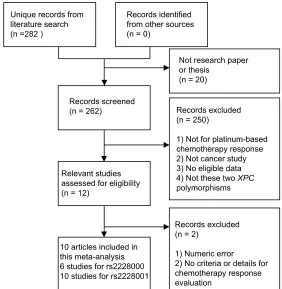
Figure 1Flowchart showing the detailed processes of literature screening and study selection.
OncoTargets and Therapy downloaded from https://www.dovepress.com/ by 118.70.13.36 on 25-Aug-2020
Chinese VIP databases, the search language was set to Chinese. All other default parameters in these databases we used were left unchanged. The published literature was searched from the database’s inception to 20 February 2019.
Study selection
For a dataset to be included in this meta-analysis, full-text content should be accessible, and the corresponding rele-vant study had to meet the following predefined inclusion criteria: (1) study for theXPCpolymorphism (rs2228000 or rs2228001); (2) study for the response to platinum-based cancer chemotherapy; and (3) enough genotype data to construct at least one genetic comparison model. Studies were taken out from further processing when failing any of the prespecified exclusion criteria: (1) nonplatinum-based
chemotherapy; (2) no data for chemotherapy response; (3) no data for theXPCpolymorphisms; (4) duplicated data; (5) noncancer study; or (6) no chemotherapy response evalua-tion criteria or details in responder definition.
Data extraction and processing
The name of the author and the publication year were extracted from individual studies to mark the corresponding dataset used in further meta-analyses. Information regarding the features of the study design and patient characteristics were included. We recorded cancer type, chemotherapy regimens, geographical region, and criteria in the assessment of treatment outcomes. Furthermore, the numbers of patients with good and poor response for different polymorphism genotypes were extracted to construct 2×2 contingency tables for statistical analysis. The
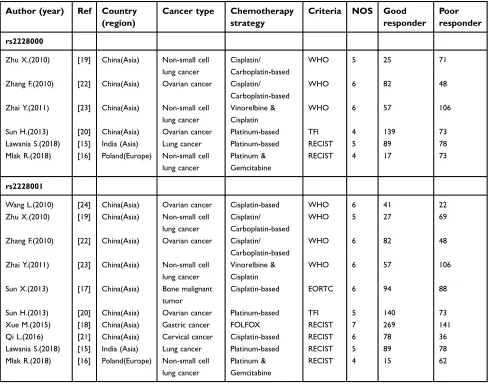
Table 1Principal characteristics of studies included in this meta-analysis
Author (year) Ref Country (region)
Cancer type Chemotherapy strategy
Criteria NOS Good responder
Poor responder rs2228000
Zhu X.(2010) [19] China(Asia) Non-small cell
lung cancer
Cisplatin/ Carboplatin-based
WHO 5 25 71
Zhang F.(2010) [22] China(Asia) Ovarian cancer Cisplatin/
Carboplatin-based
WHO 6 82 48
Zhai Y.(2011) [23] China(Asia) Non-small cell
lung cancer
Vinorelbine & Cisplatin
WHO 6 57 106
Sun H.(2013) [20] China(Asia) Ovarian cancer Platinum-based TFI 4 139 73
Lawania S.(2018) [15] India (Asia) Lung cancer Platinum-based RECIST 5 89 78
Mlak R.(2018) [16] Poland(Europe) Non-small cell
lung cancer
Platinum & Gemcitabine
RECIST 4 17 73
rs2228001
Wang L.(2010) [24] China(Asia) Ovarian cancer Cisplatin-based WHO 6 41 22
Zhu X.(2010) [19] China(Asia) Non-small cell
lung cancer
Cisplatin/ Carboplatin-based
WHO 5 27 69
Zhang F.(2010) [22] China(Asia) Ovarian cancer Cisplatin/
Carboplatin-based
WHO 6 82 48
Zhai Y.(2011) [23] China(Asia) Non-small cell
lung cancer
Vinorelbine & Cisplatin
WHO 6 57 106
Sun X.(2013) [17] China(Asia) Bone malignant
tumor
Cisplatin-based EORTC 6 94 88
Sun H.(2013) [20] China(Asia) Ovarian cancer Platinum-based TFI 5 140 73
Xue M.(2015) [18] China(Asia) Gastric cancer FOLFOX RECIST 7 269 141
Qi L.(2016) [21] China(Asia) Cervical cancer Cisplatin-based RECIST 6 78 36
Lawania S.(2018) [15] India (Asia) Lung cancer Platinum-based RECIST 5 89 78
Mlak R.(2018) [16] Poland(Europe) Non-small cell
lung cancer
Platinum & Gemcitabine
RECIST 4 15 62
Abbreviations:FOLFOX, combination of Leucovorin Calcium (Folinic Acid), Fluorouracil and Oxaliplatin; RECIST, response evaluation criteria in solid tumors; TFI, treatment-free interval; EORTC, evaluation criteria from European Organization for Research and Treatment of Cancer; WHO response evaluation criteria introduced by the World Health Organization; NOS, The Newcastle–Ottawa Scale score.
OncoTargets and Therapy downloaded from https://www.dovepress.com/ by 118.70.13.36 on 25-Aug-2020
methodological quality assessment for the eligible studies was conducted according to the 9-point Newcastle–Ottawa Scale (NOS, http://www.ohri.ca/programs/clinical_epidemiology/ oxford.htm. Accessed 24 Mar 2019). The NOS scores, ranging from 0 to 9, indicated a low, moderate, and high quality for 0–3, 4–6, and 7–9 points, respectively.
Statistical analysis
Statistical meta-analyses were conducted with our in-house R pipeline (R version: 3.5.1, http://cran.r-project.org/), which integrated the analysis modules of the “meta” package (version: 4.9–2, http://cran.r-project.org/web/packages/ meta/).8Differences in the response to platinum-based che-motherapies between theXPCgenotypes of the rs2228000 and rs2228001 polymorphisms were assessed for statistical signif-icance and were expressed as an odds ratio (OR) with corre-sponding 95% confidence interval (95% CI). Cochran’s Chi-square-based Q-test was adopted to evaluate between-study heterogeneity. A fixed effect model based on the Mantel–Haenszel algorithm9was used for the circumstances under which no significant heterogeneity was detected (P≥0.10). Otherwise, a random effects model employing the DerSimonian and Laird algorithm10was used. Stratified ana-lyses were conducted separately according to chemotherapy response criteria [WHO criteria and response evaluation
criteria in solid tumors (RECIST) versus others], sample size (≥200 versus <200), country (China versus others), and cancer type (lung cancer versus others) to explore the impact of these characteristics on the pooled estimates. The strength of the association between theXPCpolymorphisms and chemother-apy response was evaluated under a homozygote model (aa versus AA, allele A represents the major allele and allele a represents the minor allele), heterozygote model (Aa versus AA), dominant model (aa+Aa versus AA), and recessive model (aa versus AA+Aa). To address significant heterogene-ity, a Galbraith plot was generated to spot outliers as possible sources.11 Publication bias was assessed according to the asymmetry of the funnel plot. Neither the Egger’s test12nor the Begg and Mazumdar’s test13would be conducted to quan-titatively evaluate the publication bias when no more than ten datasets were included in one genetic comparison model. To determine the robustness of the pooled estimate, leave-one-out sensitivity analysis was employed to assess the effect of every single study on statistical significance.
All steps involved in this study strictly complied with the principles of the Preferred Reporting Items for Systematic Reviews and Meta-Analyses (PRISMA) from the beginning until the end.14At least three investigators participated in every step of this meta-analysis. All inconsistencies were resolved by discussion among all investigators.
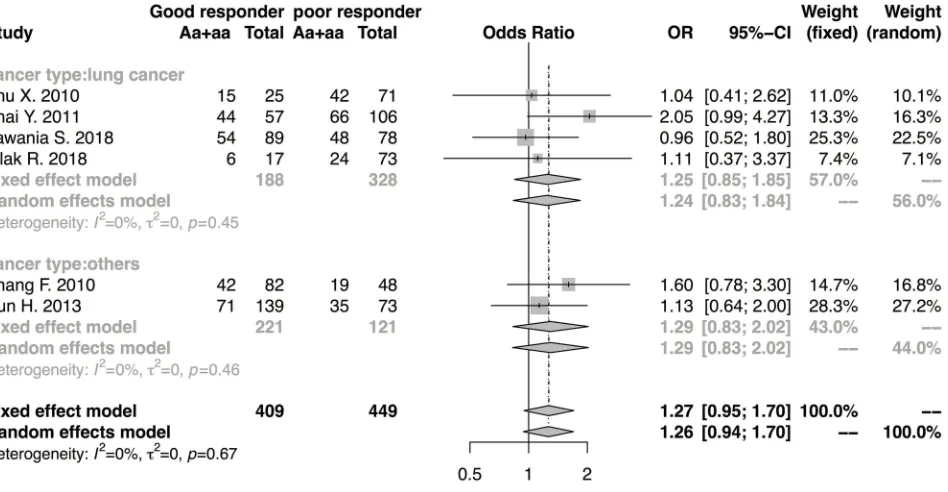
Figure 2Forest plot showing the association between theXPCrs2228000 polymorphism and the response to platinum-based chemotherapy. The odds ratio (OR) and corresponding 95% confidence interval (95% CI) were calculated under the dominant model. Involved studies were stratified according to cancer type. Each study was labeled with the name of the author and the year of publication. The area of the gray box represents the weight of the sample size assigned under thefixed effect model. The lateral points of the gray diamond icon represent the upper and lower bounds of a 95% CI, while the vertical points indicate the point estimate. The solid vertical line represents the null effect (OR=1). A represents the major allele, and a represents the minor allele.
OncoTargets and Therapy downloaded from https://www.dovepress.com/ by 118.70.13.36 on 25-Aug-2020
Results
Literature search and data extraction
After removing duplicates, our initial literature screening yielded 282 manuscripts and theses. Among them, 76 were in English and 206 were in Chinese. The number of relevant studies was narrowed down through the imple-mentation of the predefined inclusion and exclusion cri-teria. A total of ten articles with relevant datasets were identified.15–24 Of the ten included datasets, there were four studies for lung cancer,15,16,19,23 three for ovarian cancer,20,22,24 one for cervical cancer,21 one for gastric cancer,18 and one for bone malignant tumor.17 For the
XPC rs2228000 polymorphism, six studies with 409 good responders and 449 poor responders to chemotherapy were included.15,16,19,20,22,23For theXPCrs2228001 poly-morphism, the corresponding numbers collected from 10 datasets were 892 and 723, respectively.15–24 The
work-flow of the literature selection process is demonstrated in Figure 1. The characteristics of the involved studies are summarized in Table 1. All included studies for both
polymorphisms were considered good or moderate quality according to the NOS scores. Specifically, one cervical cancer study for the rs2228001 polymorphism only pre-sented the genotype data for the major allele homozygote (AA) and the minor allele carriers (Aa+aa), which could only be integrated in the dominant model.21 Two case– control studies were not integrated into our meta-analysis for the rs2228001 polymorphism. One osteosarcoma study was excluded because of the discrepancy between the number of poor responders and the sum of homozygote wild-type, heterozygote mutant, and homozygote mutant of these samples.25 One study for cisplatin-based che-motherapy on esophageal squamous cell carcinoma was not included due to the lack of details of the definitions of good and poor responders.26
Meta-analysis and subgroup analysis
In the overall population, there was no statistical signifi -cance for the association between theXPCrs2228000 poly-morphism and the response to platinum-based
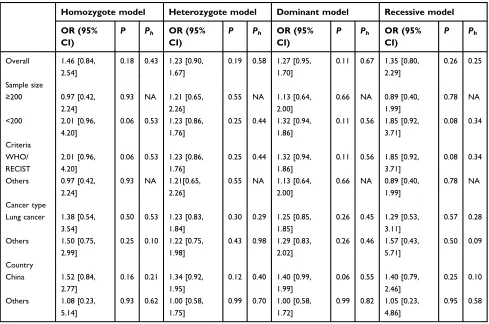
Table 2Association between theXPCrs2228000 polymorphism and the response to platinum-based chemotherapy
Homozygote model Heterozygote model Dominant model Recessive model OR (95%
CI)
P Ph OR (95%
CI)
P Ph OR (95%
CI)
P Ph OR (95%
CI)
P Ph
Overall 1.46 [0.84,
2.54]
0.18 0.43 1.23 [0.90,
1.67]
0.19 0.58 1.27 [0.95,
1.70]
0.11 0.67 1.35 [0.80,
2.29]
0.26 0.25
Sample size
≥200 0.97 [0.42,
2.24]
0.93 NA 1.21 [0.65,
2.26]
0.55 NA 1.13 [0.64,
2.00]
0.66 NA 0.89 [0.40,
1.99]
0.78 NA
<200 2.01 [0.96,
4.20]
0.06 0.53 1.23 [0.86,
1.76]
0.25 0.44 1.32 [0.94,
1.86]
0.11 0.56 1.85 [0.92,
3.71] 0.08 0.34 Criteria WHO/ RECIST 2.01 [0.96, 4.20]
0.06 0.53 1.23 [0.86,
1.76]
0.25 0.44 1.32 [0.94,
1.86]
0.11 0.56 1.85 [0.92,
3.71]
0.08 0.34
Others 0.97 [0.42,
2.24]
0.93 NA 1.21[0.65,
2.26]
0.55 NA 1.13 [0.64,
2.00]
0.66 NA 0.89 [0.40,
1.99]
0.78 NA
Cancer type
Lung cancer 1.38 [0.54,
3.54]
0.50 0.53 1.23 [0.83,
1.84]
0.30 0.29 1.25 [0.85,
1.85]
0.26 0.45 1.29 [0.53,
3.11]
0.57 0.28
Others 1.50 [0.75,
2.99]
0.25 0.10 1.22 [0.75,
1.98]
0.43 0.98 1.29 [0.83,
2.02]
0.26 0.46 1.57 [0.43,
5.71]
0.50 0.09
Country
China 1.52 [0.84,
2.77]
0.16 0.21 1.34 [0.92,
1.95]
0.12 0.40 1.40 [0.99,
1.99]
0.06 0.55 1.40 [0.79,
2.46]
0.25 0.10
Others 1.08 [0.23,
5.14]
0.93 0.62 1.00 [0.58,
1.75]
0.99 0.70 1.00 [0.58,
1.72]
0.99 0.82 1.05 [0.23,
4.86]
0.95 0.58
Abbreviations:OR, odds ratio; CI, confidence interval; RECIST, Response Evaluation Criteria In Solid Tumors; WHO response evaluation criteria introduced by the World Health Organization;Ph,P-value for heterogeneity test; NA, not applicable.
OncoTargets and Therapy downloaded from https://www.dovepress.com/ by 118.70.13.36 on 25-Aug-2020
chemotherapy (homozygote model: OR=1.46, 95% CI 0.84–2.54; heterozygote model: OR=1.23, 95% CI 0.90–1.67; dominant model: OR=1.27, 95% CI 0.95–1.70, Figure 2; recessive model: OR=1.35, 95% CI 0.80–2.29). Stratified analysis by sample size did not reveal a material difference between the large sample size subgroup and the small sample size subgroup. Studies were also classified according to geographical region. The pooled estimates suggested that this polymorphism could not influence the platinum-based chemotherapy response in the Chinese population and in populations from other countries. No statistical significance for pooled estimates could be observed in all subgroups divided according to chemother-apy response evaluation criteria. Stratification by cancer type also showed no substantial differences for the sub-groups of lung cancer and other cancers (Table 2).
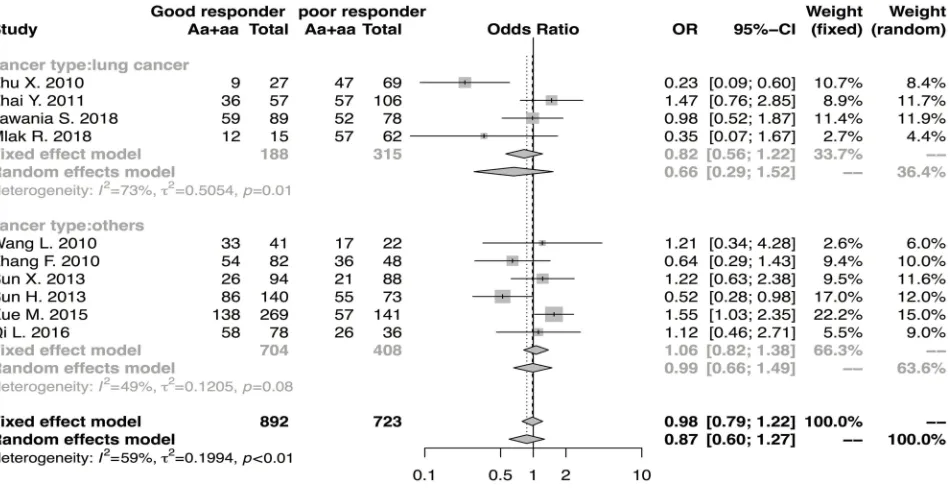
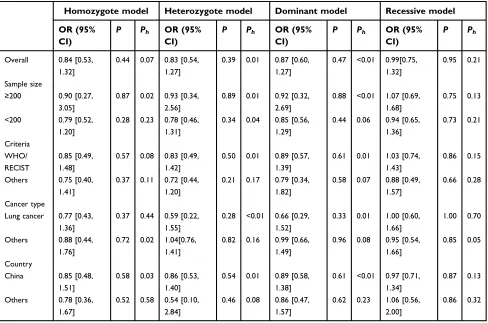
As for the XPCrs2228001 polymorphism, the quanti-tative synthesis of the included studies revealed no statis-tical significance for its association with response to platinum-based chemotherapy (homozygote model: OR=0.84, 95% CI 0.53–1.32; heterozygote model: OR=0.83, 95% CI 0.54–1.27; dominant model: OR=0.87, 95% CI 0.60–1.27, Figure 3; recessive model: OR=0.99, 95% CI 0.75–1.32). When subdivided by sample size, neither the subgroup with≥200 samples nor the subgroup
with <200 samples showed a statistically significant change. Regarding the geographical region of the involved studies, the pooled estimates indicated no conflict between patients from China and from other nations. Stratified analysis according to chemotherapy response evaluation criteria indicated that the null hypothesis could not be rejected in any subgroups. When restricting the analysis to lung cancer or other cancers, no significance was evi-dent in either subgroup under all genetic models (Table 3).
Publication bias and sensitivity analysis
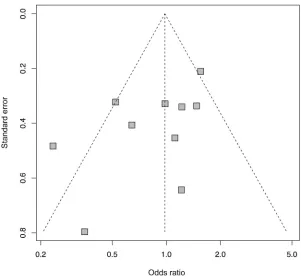
Publication bias was interpreted by visual inspection of the degree of asymmetry in the Begg’s funnel plots. For both polymorphisms studied in this meta-analysis (Figures 4 and 5), no evidence of obvious asymmetry could be drawn from the funnel plots, which indicated only a tiny likelihood of publication bias. By omitting individual datasets, their influence on the pooled esti-mates was evaluated. The results suggested no material change of statistical significance (data not shown).
Heterogeneity analysis
For theXPCrs2228001 polymorphism, significant between-study heterogeneity was detected in the homozygote, hetero-zygote, and dominant models. Galbraith plot analysis (data not
Figure 3Forest plot showing the association between theXPCrs2228001 polymorphism and the response to platinum-based chemotherapy. The odds ratio (OR) and corresponding 95% confidence interval (95% CI) were calculated under the dominant model. Involved studies were stratified according to cancer type. Each study was labeled with the name of the author and the year of publication. The area of the gray box represents the weight of the sample size assigned under thefixed effect model. The lateral points of the gray diamond icon represent the upper and lower bounds of a 95% CI, while the vertical points indicate the point estimate. The solid vertical line represents the null effect (OR=1). A represents the major allele, and a represents the minor allele.
OncoTargets and Therapy downloaded from https://www.dovepress.com/ by 118.70.13.36 on 25-Aug-2020
shown) identified two outliers in the homozygote model,18,22 two in the heterozygote model,18,19and three in the dominant model18-20 as the potential sources of heterogeneity. The removal of these outliers significantly reduced the between-study heterogeneity (homozygote model: heterogeneity test P-value=0.38; heterozygote model: heterogeneity test
P-value=0.26; dominant model: heterogeneity test
P-value=0.59) but did not materially influence the significance of the pooled estimates (homozygote model: OR=0.81, 95% CI 0.54–1.22,P-value=0.31; heterozygote model: OR=0.90, 95% CI 0.66–1.23,P-value=0.50; dominant model: OR=1.04, 95% CI 0.77–1.41,P-value =0.78).
Discussion
Based on the published datasets, we intended to quantita-tively elucidate the possible genetic impact of the XPC
rs2228000 and rs2228001 polymorphisms on the response to platinum-based chemotherapy. The lack of a significant effect on the response to chemotherapy might reflect the unlikelihood of these twoXPCpolymorphisms as causative factors for altered sensitivity to platinum-based regimens,
masking the potential involvement of other genetic or clin-ical factors. However, these conclusions did not differ from the findings in the stratified analysis according to cancer type, sample size, and country. Other confounding factors not discussed in this study, such as cancer stage, patient age, and accumulative effect of genetic variances, should be included in further research when data are available.
In this meta-analysis, we only selected studies with explicit criteria for chemotherapy response evaluation and details of the definition process. This selection was done to avoid the impact on the accuracy of pooled estimates led by inconsis-tency, which could result from the simultaneous inclusion of heterogeneous case and control groups. The details for using the same response evaluation criteria could be quite different between studies. For example, several studies using the RECIST criteria defined complete response (CR), partial response (PR), and stable disease (SD) as good responders,27,28 while some studies grouped CR and PR as good responders15,21We did not include the data set for eso-phageal squamous cell carcinoma26in our meta-analysis for rs2228001 due to its lack of details in responder definition.
Table 3Association between theXPCrs2228001 polymorphism and the response to platinum-based chemotherapy
Homozygote model Heterozygote model Dominant model Recessive model OR (95%
CI)
P Ph OR (95% CI)
P Ph OR (95% CI)
P Ph OR (95% CI)
P Ph
Overall 0.84 [0.53,
1.32]
0.44 0.07 0.83 [0.54,
1.27]
0.39 0.01 0.87 [0.60,
1.27]
0.47 <0.01 0.99[0.75,
1.32]
0.95 0.21
Sample size
≥200 0.90 [0.27,
3.05]
0.87 0.02 0.93 [0.34,
2.56]
0.89 0.01 0.92 [0.32,
2.69]
0.88 <0.01 1.07 [0.69,
1.68]
0.75 0.13
<200 0.79 [0.52,
1.20]
0.28 0.23 0.78 [0.46,
1.31]
0.34 0.04 0.85 [0.56,
1.29]
0.44 0.06 0.94 [0.65,
1.36] 0.73 0.21 Criteria WHO/ RECIST 0.85 [0.49, 1.48]
0.57 0.08 0.83 [0.49,
1.42]
0.50 0.01 0.89 [0.57,
1.39]
0.61 0.01 1.03 [0.74,
1.43]
0.86 0.15
Others 0.75 [0.40,
1.41]
0.37 0.11 0.72 [0.44,
1.20]
0.21 0.17 0.79 [0.34,
1.82]
0.58 0.07 0.88 [0.49,
1.57]
0.66 0.28
Cancer type
Lung cancer 0.77 [0.43,
1.36]
0.37 0.44 0.59 [0.22,
1.55]
0.28 <0.01 0.66 [0.29,
1.52]
0.33 0.01 1.00 [0.60,
1.66]
1.00 0.70
Others 0.88 [0.44,
1.76]
0.72 0.02 1.04[0.76,
1.41]
0.82 0.16 0.99 [0.66,
1.49]
0.96 0.08 0.95 [0.54,
1.66]
0.85 0.05
Country
China 0.85 [0.48,
1.51]
0.58 0.03 0.86 [0.53,
1.40]
0.54 0.01 0.89 [0.58,
1.38]
0.61 <0.01 0.97 [0.71,
1.34]
0.87 0.13
Others 0.78 [0.36,
1.67]
0.52 0.58 0.54 [0.10,
2.84]
0.46 0.08 0.86 [0.47,
1.57]
0.62 0.23 1.06 [0.56,
2.00]
0.86 0.32
Note:OR, odds ratio; CI, confidence interval; RECIST, Response Evaluation Criteria In Solid Tumors; WHO response evaluation criteria introduced by the World Health Organization;Ph,P-value for heterogeneity test.
OncoTargets and Therapy downloaded from https://www.dovepress.com/ by 118.70.13.36 on 25-Aug-2020
Figure 4Funnel plot of the meta-analysis for theXPCrs2228000 polymorphism under the dominant model. Each gray square represents an included dataset. The vertical dashed line indicates the pooled odds ratio. The funnel defined by the two crossed dashed lines represents the pseudo 95% confidence interval.
Figure 5Funnel plot of the meta-analysis for theXPCrs2228001 polymorphism under the dominant model. Each gray square represents an included dataset. The vertical dashed line indicates the pooled odds ratio. The funnel defined by the two crossed dashed lines represents the pseudo 95% confidence interval.
OncoTargets and Therapy downloaded from https://www.dovepress.com/ by 118.70.13.36 on 25-Aug-2020
However, we still calculated the pooled estimates after adding this dataset. No material change for statistical significance could be observed (homozygote model: OR=0.75, 95% CI 0.48–1.18; heterozygote model: OR=0.87, 95% CI 0.60–1.25; dominant model: OR=0.87, 95% CI 0.63–1.21; recessive model: OR=0.86, 95% CI 0.59–1.27), which indi-cated the stability of our results.
For the XPC rs2228001 polymorphism, significant between-study heterogeneity was detected in the homozy-gote, heterozygote and dominant models. However, the removal of the identified outliers18-20,22 in the Galbraith plots not only led to significant relief of heterogeneity but also indicated the stability of the pooled estimates. However, the hidden confounding factors introduced by these outliers could not be explored in the present study due to the lack of detailed clinical information for the samples involved in the included studies. For this reason, further large-scale multicenter-clinical studies with elabo-rate, relevant data should be performed to address the impact of these factors. For the two polymorphisms, sen-sitivity analysis further strengthened stability, and the inference of publication bias also revealed unbiasedness. Because of the advantages listed earlier, we are greatly confident in the robustness of the results.
The accuracy of genotyping experiments and chemother-apy response measurements in the genetic association stu-dies involved in this meta-analysis could vary according to the personal experience of the genotype researchers and clinical investigators. Furthermore, the differences inherent in both the variance of chemotherapy regimens and the different chemotherapy response evaluation criteria should not be ignored. These subjective factors were out of the scope of this study but are important areas that need to be taken into account in prospective settings for future research. Although this meta-analysis strictly followed the principles suggested by the PRISMA guidelines for meta-analysis,14 a number of inherent limitations should be noted when inter-preting the results. First, the number of involved studies was relatively small, and the sample size was comparatively lim-ited, especially for theXPCrs2228000 polymorphism, calling for updated analyses when more datasets are available. Moreover, the influence of otherXPCpolymorphisms in the response to platinum-based chemotherapy was not evaluated in this meta-analysis because of limited sample sizes. Furthermore, several cancer types receiving platinum-based chemotherapy were not covered in this meta-analysis also due to the lack of data. Last but not least, most of the involved studies originated from Asia, especially China, which
significantly impacted ethnic variety and could subsequently lead to sampling bias. However, the superiority of this meta-analysis should be worth noting. Compared with every single study included, the conclusions drawn from this meta-analysis showed higher authenticity based on a substantially enlarged sample size and consequently increased statistical power and a greatly minified risk of random errors. On the other hand, the results of the NOS quality assessment, sensitivity evaluation, and publication bias analysis further ensured robustness.
Conclusions
In conclusion, our pooled estimates of meta-analysis based on a systematic literature review revealed no statistically signifi -cant association between theXPCrs2228000 and rs2228001 polymorphisms and the response to platinum-based che-motherapy. However, further statistical investigation will be merited with the synthesis of more multicentric datasets with a large sample size to elucidate the impact of theXPC poly-morphisms on the response to platinum-based chemotherapy.
Acknowledgments
This study was funded by the research start-up fund of Soochow University (Q413400116), the natural Science Foundation of Jiangsu Province (No. BK20170334), the Priority Academic Program Development of Jiangsu Higher Education Institutions, and the National Undergraduate Training Program for Innovation and Entrepreneurship (201810285050Z).
Disclosure
The authors declare no conflicts of interest in this work.
References
1. Rosell R, Wei J. Single nucleotide polymorphisms (SNPs) in non-small cell lung cancer (NSCLC) patients. Oncologist. 2012;17 (12):1484–1485. doi:10.1634/theoncologist.2012-0205
2. Chen Z, Yang J, Wang G, Song B, Li J, Xu Z. Attenuated expression of xeroderma pigmentosum group C is associated with critical events in human bladder cancer carcinogenesis and progression.Cancer Res. 2007;67(10):4578–4585. doi:10.1158/0008-5472.CAN-06-0877 3. Wang G, Chuang L, Zhang X, et al. The initiative role of XPC protein
in cisplatin DNA damaging treatment-mediated cell cycle regulation.
Nucleic Acids Res. 2004;32(7):2231–2240. doi:10.1093/nar/gkh541
4. He J, Shi TY, Zhu ML, Wang MY, Li QX, Wei QY. Associations of Lys939Gln and Ala499Val polymorphisms of the XPC gene with cancer susceptibility: a meta-analysis. Int J Cancer. 2013;133 (8):1765–1775. doi:10.1002/ijc.28089
5. Jiang X, Zhou LT, Zhang SC, Chen K. XPC polymorphism increases risk of digestive system cancers: current evidence from a meta-analysis.Chin J Cancer Res. 2012;24(3):181–189. doi:10.1007/s11670-012-0181-0
6. Francisco G, Menezes PR, Eluf-Neto J, Chammas R. XPC polymorph-isms play a role in tissue-specific carcinogenesis: a meta-analysis.Eur J human genet. 2008;16(6):724–734. doi:10.1038/ejhg.2008.6
OncoTargets and Therapy downloaded from https://www.dovepress.com/ by 118.70.13.36 on 25-Aug-2020
7. Zhu M-L, Hua R-X, Zheng L. Associations between polymorphisms of the XPC gene and lung cancer susceptibility: a meta-analysis.
Tumor Biol. 2014;35(4):2931–2939. doi:10.1007/s13277-013-1377-8 8. Schwarzer G. Meta: an R package for meta-analysis.R News. 2007;7
(3):40–45.
9. Mantel N, Haenszel W. Statistical aspects of the analysis of data from retrospective studies of disease. J Natl Cancer Inst. 1959;22 (4):719–748.
10. DerSimonian R, Laird N. Meta-analysis in clinical trials. Control Clin Trials. 1986;7(3):177–188.
11. Galbraith R. A note on graphical presentation of estimated odds ratios from several clinical trials.Stat Med. 1988;7(8):889–894. 12. Egger M, Smith GD, Schneider M, Minder C. Bias in meta-analysis
detected by a simple, graphical test.BMJ. 1997;315(7109):629–634. 13. Begg CB, Mazumdar M. Operating characteristics of a rank correlation test for publication bias. Biometrics. 1994;1088–1101. doi:10.2307/ 2533446
14. Moher D, Liberati A, Tetzlaff J, Altman DG. Preferred reporting items for systematic reviews and meta-analyses: the PRISMA statement.BMJ. 2009;339.
15. Lawania S, Singh N, Behera D, Sharma S. XPC polymorphism and risk for lung cancer in north indian patients treated with platinum based chemotherapy and its association with clinical outcomes.Pathol Oncol Res. 2018;24(2):353–366. doi:10.1007/s12253-017-0252-0
16. Mlak R, Krawczyk P, Homa-Mlak I, et al. Predictive value of single nucleotide polymorphisms of ERCC1, XPA, XPC, XPD and XPG genes, involved in NER mechanism in patients with advanced NSCLC treated with cisplatin and gemcitabine. Pathol Oncol Res. 2018. doi:10.1007/s12253-018-0459-8
17. Sun X-H, Hou W-G, Zhao H-X, Zhao Y-L, Ma C, Liu Y. Single Nucleotide Polymorphisms in the NER Pathway and Clinical Outcome of Patients with Bone Malignant Tumor. Asian Pac J Cancer Prev. 2013;14(3):2049–2052.
18. Xue M-H, Li G-Y, Wu X-J, Zhang C-X, Zhang C-F, Zhu K-X. Genetic variability of genes in NER pathway influences the treatment outcome of gastric cancer. Int J Clin Exp Pathol. 2015;8 (5):5563–5569.
19. Zhu XL, Sun XC, Chen BA, et al. XPC Lys939Gln polymorphism is associated with the decreased response to platinum based chemother-apy in advanced non-small-cell lung cancer.Chin Med J. 2010;123 (23):3427–3432.
20. Sun H. Association of Single Nucleotide Polymorphism in DNA Repair Gene with the Clinical Outcome to Platinum-Based Chemotherapy in Epithelial Ovarian Cancer. Shijiazhuang, Hebei, China: Hebei Medical University; 2013.
21. Qi L, Lv J, Zhu X, et al. Association between ERCC1, XPD, XPC polymorphisms and chemosensitivity of platinum-based neoadjuvant chemotherapy in patients with locally advanced cervical cancer.
J Wenzhou Med Univ. 2016;46(10):724–729.
22. Zhang F.Association of the DNA Repair Gene XPC Polymorphisms with Susceptibility to Platinum-Based Chemotherapy in Epithelial Ovarian Cancer. Shijiazhuang, Hebei, China: Hebei Medical University; 2010.
23. Zhai Y, Xu Q, Hong C, Zhang Y, Yuan Y. The correlation of the sensitivity to NP chemotherapy in non-small lung cancer to DNA repair gene XPC polymorphism. Med J Liaoning. 2011;25 (4):177–183.
24. Wang L. Correlation of Genotype in Nucleotide Excision Repair System to Sensitivity of Epithelial Ovarian Carcinoma Patients to Platinum-Based Chemotherapy. Wenzhou, Zhejiang, China: Wenzhou Medical University; 2010.
25. Zhao Y-L, Yang L-B, Geng X-L, et al. The association of XPG and MMS19L polymorphisms response to chemotherapy in osteosarcoma.Pak j med sci. 2013;29(5):1225–1229.
26. Yang PW, Hsieh CY, Kuo FT, et al. The survival impact of XPA and XPC genetic polymorphisms on patients with esophageal squamous cell carcinoma.Ann Surg Oncol. 2013;20(2):562–571. doi:10.1245/ s10434-012-2622-x
27. Shindo Y, Hazama S, Maeda Y, et al. Adoptive immunotherapy with MUC1-mRNA transfected dendritic cells and cytotoxic lymphocytes plus gemcitabine for unresectable pancreatic cancer.J Transl Med. 2014;12(1):175. doi:10.1186/1479-5876-12-175
28. Zhou J, Deng W, Gao J, Yuan J, Li Y, Shen L. Association between ABCB1 G2677T/A polymorphisms and chemosensitivity of pacli-taxel in advanced gastric cancer. Chin J Gastrointestinal Surg. 2015;18(2):123–126.
OncoTargets and Therapy
Dove
press
Publish your work in this journal
OncoTargets and Therapy is an international, peer-reviewed, open access journal focusing on the pathological basis of all cancers, potential targets for therapy and treatment protocols employed to improve the management of cancer patients. The journal also focuses on the impact of management programs and new therapeutic
agents and protocols on patient perspectives such as quality of life, adherence and satisfaction. The manuscript management system is completely online and includes a very quick and fair peer-review system, which is all easy to use. Visit http://www.dovepress.com/ testimonials.php to read real quotes from published authors.
Submit your manuscript here:https://www.dovepress.com/oncotargets-and-therapy-journal
OncoTargets and Therapy downloaded from https://www.dovepress.com/ by 118.70.13.36 on 25-Aug-2020