The Hurunui Waiau
Zone Implementation
Programme as a
Collaborative Planning
Process:
A Preliminary Review
Report No. R12/46
ISBN 978-1-927210-43-7 (printed)
978-1-927210-44-4 (electronic)
978-1-927210-45-1 (web)
Report prepared for Environment Canterbury by
Ali Memon
Ronlyn Duncan
Anne Spicer
Lincoln University
Report No. R12/46
ISBN 978-1-927210-43-7 (printed) 978-1-927210-44-4 (electronic) 978-1-927210-45-1 (web)
24 Edward Street, Lincoln PO Box 345
Christchurch 8140 Phone (03) 365 3828 Fax (03) 365 3194 75 Church Street PO Box 550 Timaru 7940
Phone (03) 687 7800 Fax (03) 687 7808
Website: www.ecan.govt.nz
1
The Hurunui Waiau Zone Implementation Programme as a Collaborative
Planning Process:
A Preliminary Review
By
Ali Memon, Professor of Environmental Planning &Management
Ronlyn Duncan, Lecturer in Water Management
Anne Spicer, Research Assistant and Doctoral Candidate
Department of Environmental Management, Faculty of Environment, Society and Design
Lincoln University, Canterbury, New Zealand
2
EXECUTIVE SUMMARY
The objective of this report is to provide a preliminary assessment of the development
of the Hurunui Waiau Zone Implementation Programme as a collaborative planning
exercise to progress the implementation of the Canterbury Water Management
Strategy (CWMS) in the Hurunui Waiau catchments. This report builds on an earlier
study (Lomax, Memon and Painter, 2010) on the development of the CWMS as an
innovative collaborative regional strategy to address exacerbating conflicts over the
allocation and management of freshwater resources in the Canterbury region in New
Zealand. Past attempts to satisfactorily address these concerns within the framework
of the Resource Management Act 1991 statutory planning regime have encountered
significant barriers. The formulation and implementation of the CWMS is expected to
overcome these barriers by having adopted a collaborative governance model. This
report reflects upon and presents observations of the Hurunui Waiau Zone
Implementation Programme process. As such, it flags for the Canterbury Regional
Council a number of issues which have emerged from this valuable learning experience
and concludes with a number of questions drawn from our observations for
consideration by the CRC with zone committees and other stakeholder groups and
3
Table of Contents
EXECUTIVE SUMMARY……… 2
1. INTRODUCTION ……… 4
2. RESEARCH QUESTIONS AND METHODOLOGY ………. 5
3. THEORETICAL CONTEXT ……… 7
4. HOW WELL HAS THE HWZC PROCESS WORKED? ………. 11
4.1 Inclusiveness ………. 11
4.2 Process Facilitation ……….. 14
4.3 ZIP Translation ………. 16
4.4 Trust ………... 17
4.5 Science Policy Interface ………. 18
4.6 Predictive Models ……….. 20
4.7 Competing Knowledge ……… 21
4.8 The Spirit of Collaboration ………... 21
4.9 Pre-determined Paths and Underlying Assumptions ………. 22
5. CRITICAL ROLE OF ZONE COMMITTEES IN IMPLEMENTING THE CWMS… 24 5.1 Relationship between the CWMS and HWZC .……….…….. 24
5.2 Relationship between HWZC and ECAN ………. 25
6. REFLECTIONS ……….… 26
7. CONCLUSIONS ……….………. 29
8. RECOMMENDATIONS FOR FURTHER RESEARCH ………... 30
4
1. INTRODUCTION
Collaborative dialogic governance approaches, informed by different ways of knowing,
are advocated in the current academic literature to resolve deep-seated freshwater
resource conflicts (Scholz and Stiftel, 2005; Warner, 2007; Pahl-Wostl et al., 2008; Berry
and Mollard, 2010). Allocation and management of water resources in Canterbury,
New Zealand, have become highly contested during the last two decades. This is a
reflection of rapidly increasing water demand for multiple and competing uses. The
Canterbury Water Management Strategy (henceforth the Strategy or CWMS) is a
potentially innovative strategic planning initiative based on a relatively informal
collaborative governance model. It provides strategic direction on the allocation and
management of available surface and groundwater freshwater resources in the
Canterbury region. A key attribute of the Strategy is that it was developed through an
informed collaboratively-derived consensus amongst local Canterbury government
elected leaders, senior officials and key water stakeholder groups. Implementation of
the Strategy is likewise being undertaken via collaborative processes at regional and
zonal levels.
A key reason for initially adopting the relatively informal, non-statutory pathway on the
regional and zonal basis relates to widely shared concerns amongst key water
stakeholders in Canterbury about the Resource Management Act 1991 (henceforth the
RMA). The RMA pathway to resolve water conflicts is seen as resulting in relatively
adversarial, costly and time consuming statutory planning processes that has not been
capable of dealing with cumulative environmental effects. At the time of its inception,
the Strategy represented an expectation that informed deliberation amongst relevant
stakeholders in a non-statutory process would lessen the risks of subsequent conflicts
during the course of implementing the Strategy under the RMA processes. These
concerns and expectations are supported in the recent academic literature on
collaborative planning. From a theoretical perspective, the CWMS embodies many of
the essential elements for an innovative collaborative water governance regime and
represents considerable promise for managing water in an integrated and participatory
5
2. RESEARCH QUESTIONS AND METHODOLOGY
This report is part of our research programme on water governance in Canterbury
(Memon and Skelton, 2007; Memon and Weber, 210; Memon and Kirk, 2012; Weber,
Memon and Painter, 2011). It builds on a recent study on the development of the
CWMS as an innovative collaborative regional strategy to address exacerbating conflicts
over the allocation and management of freshwater resources in the Canterbury region
in New Zealand (Lomax, Memon and Painter, 2010).
This report focuses on the decision-making process we have witnessed at the zonal
level. Specifically, our research examined the deliberative process followed by the
Hurunui Waiau Zone Committee (HWZC) in the development of its Zone
Implementation Programme (ZIP). As an innovative collaborative planning process well
rehearsed in theory,the aim of our research has been to examine the relative strengths
and weaknesses of the governance process that have culminated in the production of
the HWZC ZIP. Hence, the research question that guided our research was how has the
Strategy been implemented in practice? A key additional question that arose as the
research proceeded was how has the Canterbury Regional Council managed its dual
role of facilitator of the process and regulator?
Our report provides preliminary reflections on these questions. Accordingly, set within
the broader context of the drivers which have shaped the CWMS and its priorities and
targets, this report focuses on the process undertaken to develop the ZIP as a
collaborative planning exercise, and raises questions about the context of the policy
recommendations contained in the ZIP as the key formative output of the collaborative
process. The research on which this report is based was funded by the Canterbury
Regional Council (also known as Environment Canterbury).
The data collection and analysis approach for the report was three-pronged:
1. A review of the international collaborative water governance literature was
undertaken.
2. Regular attendance and observation of committee meetings.
6
The third author of this report attended all except one of the meetings of the HWZC and
Regional Committee during the period April to September 2011 while the other two
authors also attended some of the meetings. The meeting proceedings were recorded
and an in-depth report was prepared after each meeting based on observations and
reflections. These confidential notes, together with formal meeting minutes and
published and unpublished documentary information, coupled with weekly discussions
by the research team are the main data sources on which this report is based. While
we have been involved in informal conversations with various zone committee
members and others involved in the collaborative process over the past twelve months,
we have not held formal interviews with members of the HWZC, the CRC or other
stakeholders because it was agreed premature to do so. We would like to conduct
these interviews after the finalisation of the statutory RMA planning instruments and
the implementation of measures for improving water quality in these catchments has
progressed. We will need to secure further funding for this research. For these
reasons, the findings of this report should be regarded as preliminary. The authors are
also very aware that the Hurunui Waiau Zone Committee was the first to be established
and consequently what occurred in the development of its ZIP and the associated
proposed Hurunui Waiau River Regional Plan (HWRRP) may not be replicated in other
zones. Nevertheless, we believe that there is considerable value in reflecting on issues
that have arisen at this early stage of the implementation of the CWMS.
A significant omission in this report is that we do not address the issue of the role of
Maori in governance of the Hurunui-Waiau rivers within the HWZC framework. This is
7
3. THEORETICAL CONTEXT
Water conflicts in the 21st century generally belong to the class of ‘wicked problems’
(Rittel and Webber 1973) which fail to be adequately resolved by regulatory agencies
accountable to elected leaders. Water conflicts, along with other wicked problems,
involve a complexity which is caused by goals and means of stakeholders becoming
inseparable, as well as the dynamics of socio-ecological processes which characterise
water as a multiple use common pool resource. Traditional top-down hierarchical
government institutions often lack capacity to avert water conflicts (Memon and
Skelton, 2007). What needs to be recognised in these situations is that optimal
solutions are unlikely to exist and ‘best’ solutions are a ‘mirage’ (Innes and Booher,
2010). On this basis, it is argued in the literature that the aim should therefore be to
engage diverse actors “in dialogue [that] offer[s] a wide variety of experience,
knowledge, and ideas that offer a rich terrain of options to explore” (2010, 9-10).
A growing realisation regarding these dilemmas amongst environmental policy and
planning theorists has caused a shift in their ideas about how institutions which deal
with water conflict should be configured. We refer to this shift as the ‘collaborative
turn’ in water governance, which is typified by the European continental theories about
discursive ethics proposed by Jurgen Habermas (Habermas, 1984). The Habermasian
school of deliberation asks how people with different conceptions of the good life can
shape a co-existent and just society? Habermas answers by proposing a process of
discursive arguments where the norms and rules of a society are decided by the force of
the better argument. This regards language and the exchange of ideas in deliberative
forums as the source of social reform; regarding knowledge as something which can
weave between debates presented on opposing sides.
The ‘collaborative turn’ in water governance in Western property owning democracies
is grounded in a complex series of factors which include concerns about social and
ecological impacts of the neoliberal political project; an attempt to solve the cynicism
and disengagement of citizens from political processes; a deeper understanding of the
social exclusion some (e.g. indigenous peoples) feel in regards to decisions relating to
allocation and management of resources; and finally a realisation by government
8
include multiple stakeholders from private, public and community sectors (Barnes et
al., 2004; Maginn, 2007; Memon and Weber, 2010; Memon and Kirk, 2012).
The strengths of and barriers to collaborative approaches based on deliberation have
been the primary focus of both political scientists (e.g. Bohman, 1998; Pettit, 2001;
Williams, 2004) and planning scholars (Flyvberg, 1998; Healey, 1998; Tewdwr-Jones and
Allmendinger, 2002; Memon and Weber, 2010). It is argued that a collaborative turn
will promote governance legitimacy (Dryzek, 2001); foster better decisions (Forester,
1999) and widen participation to include previously disinterested or disempowered
stakeholders (Versteeg and Hajer, 2010). On the other hand, deliberative processes
have been criticised for a number of reasons: it is easier for well-educated and middle
class citizens to participate in the deliberative process (Versteeg and Hajer, 2010; Ryfe,
2005); the sizes of the group have a large role in deciding the success of the
deliberation process (Parkinson, 2006); the Habermasian notion of ‘ideal speech’
situation being possible to achieve and available to all is unrealistic (Mouffe, 1999;
Bond, 2011) and more generally, as a theory, it fails to elucidate the pervasive impacts
of social factors (Fraser, 1987; Ryan, 1992) and veiled political power (Hillier 2003).
The focus of communicative planning scholars has been on the quality of the
collaborative process itself. Innes and Booher (2010, p. 97), for example, emphasise the
need for “authentic dialogue” which they define as being “accurate in a scientific sense,
comprehensible, sincere and legitimate”. They claim that well run processes come
close to achieving these aims by:
a. Using expert knowledge (and preferably triangulation of the views of more than one
expert);
b. Ensuring that all participants fully understand what other participants or experts
have said and therefore there exists a shared understanding of an issue;
c. Having face to face dialogue, communal meals, group trips etc which all help to
ensure that participants get to know each other and therefore find it harder to be
9
d. Having stakeholders that have the authority to speak for a constituency or who
speak for “the knowledge, concerns and interests of a category of people who are
not or could not be organized” or who speak for themselves, based on their own
experience (2010, 98-99).
The goal of such dialogue, Innes and Booher argue, “is not to choose who or what is
right, nor even what is true or best, but to find actions that all or most can support and
that are [creative and] workable” (2010, p. 100).
Elinor Ostrom (1990) proposed eight design principles for management of common
pool resources. Her principles were evaluated by Cox et al. (2010) in a meta-analysis of
91 empirical studies of collaboration. Cox et al. found that the following design
principles were strongly supported:
The benefits obtained by users of the resource must be proportional to the input
costs (labour, materials, money etc);
Rules that regulate access to a resource are customised to reflect local conditions;
It is clearly understood by all who the legitimate resource users are.
Ansell and Gash (2008) conducted a meta-analysis of 137 cases to ascertain the critical
variables that produce a successful collaboration. They found that the following factors
were important:
Issues present at the beginning of the collaboration effort have an influence over
the level of cooperation received from stakeholders e.g. the level of previous
antagonism;
Power imbalances between stakeholders are common and if this is the case, the
process will be prone to manipulation by the stronger actors;
Facilitative leadership is critical particularly at times of disunity. It is also important
in building trust, exploring mutual gains and empowering and involving
10
Face to face dialogue, trust building, commitment to the process by all participants
and a shared understanding are all considered to be vital to the success of the
process.
Other authors that have contributed to this debate include the following:
1. Hillier (2002; 2003) and Mouffe (2000), in critical response to the Habermasian
school of communicative rationality, argue that conflict is a healthy development in
collaborative situations because, handled sensitively, it can lead to creative and
radical solutions;
2. Versteeg and Hajer (2010) maintain that collaborative governance methods
increase the chances of previously disinterested people becoming involved but that
it is easier for well-educated and middle class citizens to participate than for
marginalised groups;
3. Ryan (1992) claims that equity issues such as gender and ethnicity are usually not
adequately addressed;
4. Elliot (1999) suggests that the use of a neutral facilitator improves the chances of
success;
5. Lawrence argues that members of a collaborative committee must be able to
disassociate their modus operandi from their decision making and thus ensure that
“radical reassessment and re-alignment of production regimes” is not off the
agenda (2005, p. 157);
6. Mehta et al. criticize collaborative projects that use a simplistic view of community
i.e. that it is “homogeneous, bounded, local and designated to a particular “user
group”, neglecting questions of social difference and the diverse” (2001, p. 4).
7. Bryson et al (2006) state that having linking mechanisms in place (such as networks,
powerful sponsors or objects that span boundaries) as well as ensuring that
knowledge held by the community is integrated with that of experts will together
11
Having articulated the theoretical context that has served as the lens through which we
have observed this collaborative process and contributed to our understandings of it, we
now move onto presenting and discussing our research findings.
4. HOW WELL HAS THE HWZC PROCESS WORKED?
In general terms, it is our view that the collaborative process within the HWZC has
worked reasonably well. Overall, we observed that members of the HWZC became quite
familiar with and trusting of each other. While it could be argued that the spirit and
implementation of collaboration was not assisted by demanding timeframes and
externally imposed deadlines, it could equally be argued that these pressures facilitated
the process. Either way, it is our observation that in meeting its timelines, work
undertaken by the HWZC was challenging and demanding for all committee members.
Indeed, in the final stages of the development of the ZIP, members of the HWZC
commented that they were ‘exhausted’. It was also our observation that the
proceedings were by no means smooth sailing and amicable all the way.
A key aspect of the Habermasian-inspired collaborative governance model is that
dialogue in a deliberative forum enables stakeholders to put forward their often
divergent viewpoints in good faith. The potentially powerful outcome of such practice is
that by doing so others come to understand another’s point of view – to stand in the
shoes of another. If anything is to be taken from the HWZC governance process, it
appears to be a success on this score. It was observed that representatives of the HWZC
had not only moved to accommodating each other’s positions, but also to
acknowledging and on some occasions defending another’s position in his or her
absence.
4.1 Inclusiveness
While members of the zone committee built a rapport with each other, an important
question for us as observers was whether each member’s peer group would endorse
12
is expected to contribute to public acceptance of their decisions within the committee.
However, given how far the committee members appeared to have moved to
accommodate each other, we were asking how far these accommodations could extend
outside the committee?
This issue appeared to be recognised by the HWZC and we observed that its members
made considerable effort to engage with stakeholder groups and this continued after
the ZIP had been finalised. Of course, this strategy is substantially limited given the lack
of remuneration and time available for zone committee members. The question we are
now asking is whether consensus around collaboration and the Strategy is anchored to
the energy of zone committee members? If so, this is clearly unsustainable. It is our
view that the CRC needs to be thinking about how to sustain these broader and critical
links that could be viewed as a ‘safety net’ for the decisions derived from the
collaborative process and its ongoing outcomes on the basis that collaboration is a
marathon, not a sprint.
The issue of inclusion is critical for collaborative governance and presents a challenge for
the CRC given the design of the zone committees and how they were originally
established. In theory, and reflecting practice reported in the United States (e.g. Innes
and Booher 2010), everyone who has a stake and wants to have a say should be given
the opportunity to participate as members rather than having to rely on their interests
being represented (or not) or by making submissions on decisions already substantially
finalised. On this basis, the HWZC was limited in its constitution as a truly collaborative
process, particularly to the extent that its membership was handpicked. Clearly, it is not
practical in the Canterbury situation to aim to include everyone but if the CWMS
genuinely hopes that “Allocation decisions will be resolved in most cases without
resorting to the courts” (CWMS, 2009, p. 6) within 10 years time, then the possibility of
alienated, disaffected or ‘unconsulted’ stakeholders may need to be considered.
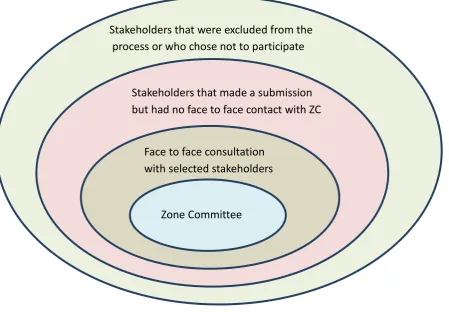
Figure 1 illustrates the zone committee context and shows a hierarchy of stakeholder
involvement that could be useful for the CRC to reflect upon to consider how it might
13
Figure 1: Inclusiveness of the HWZC ZIP Process.
The recently released publications by the CRC, namely, Wai Water and the Canterbury
Water – The Regional Context: Supporting the Canterbury Water Management Strategy,
are excellent documents that will assist in reaching the broader publics. However, the
critical science communication literature (e.g. Irwin and Wynne, 1996) would caution
that a consultation strategy reliant on publications can limit dialogue to a one-way flow
between an authority and its constituency. What is problematic about this modus
operandi is that it usually assumes, firstly, that the publications will be read and,
secondly, that they will be read by willing and relatively informed readers.
Unfortunately, this is often not the case. Hence, the literature advocates the
development of communication channels that facilitate two-way dialogue around an
issue that does not impose pre-conceived ideas about what the issues are and their
solutions (Irwin and Wynne, 1996). Indeed, the literature argues that imposed and
narrowly defined framings of problems and solutions can alienate people (Wynne,
2001). Two way communications can take the form of periodic phone surveys,
continued public meetings or a network of communication that utilises already
established groups and organisations.
Zone Committee Face to face consultation with selected stakeholders
stakeholderstakeholders
14
4.2 Process Facilitation
It is our view that no committee member would say that they had been denied the
opportunity to speak during meetings. However, some might say that the ideas or
issues that they raised did not get fully discussed, especially if other committee
members did not immediately appreciate and acknowledge the significance of their
issue. For example, one member with an interest in the benefits of increased
development in the area had raised at more than one meeting the issue of the nitrogen
load limit stopping new farming development in the area but the issue was not
addressed and he became frustrated by this.
We observed that some issues were elaborated or extra information was provided while
others were left unexplored. We are not sure if this was done on purpose. Examples of
potentially critical issues not resolved or explored and adequately debated in the lead
up to the finalisation of the ZIP include:
The HWZC is aware that there is no guarantee that implementation of best
practices will result in the outcomes listed in the ZIP, particularly if further
farming intensification takes place. The Committee has discussed the need to
monitor and adjust limits/outcomes if necessary (i.e. use adaptive management);
however, the implications of this for the farming community and the extent to
which this is understood by that community is not clear.
One member asked for information on the economic effects of the ZIP
recommendations on local communities and particularly wished to hear from
“bankers, accountants, economic consultants” or the like. Time pressures may
have made this untenable but the financial and economic implications of the ZIP
recommendations remains an open issue.
We observed that often issues, such as these, were raised at meetings but then were left
hanging with little or no discussion or committee members would express their
individual views on the respective issue but then no elaboration would follow.
Notwithstanding the clarity that appears in the zone committee meeting minutes, from
our observation of the meeting dynamics, resolution on some of these critical issues was
15
as distinct from collaborating. In theory, deliberation – the thoughtful articulation and
consideration of an issue that considers its dimensions from multiple angles – is key to
collaborative governance.
It is our view that there needed to be a better process for adequately investigating and
reflecting on the consequences of decisions that were reached. We were concerned
that not all committee members fully understood the underlying assumptions and
advantages/disadvantages of committee decisions. Often, the committee members
were encouraged to “not think like planners” and to focus on outcomes and targets
rather than on detailed implementation. However, as the translation of ZIP
recommendations into the proposed HWRRP process has shown, the consequences of
broad level recommendations do not always become apparent or fully understood until
the detailed implementation is addressed.
We felt that if, at least for major decisions, the underlying assumptions, advantages and
disadvantages were more clearly laid out then all committee members would be made
more aware of the implications (positive and negative) of the decisions that they were
agreeing to. Such practice may encourage some of the more silent members of the
committee to take part in discussions. This should enable the committee as a whole to
be more confident that the decisions reached were a true reflection of all stakeholder
views rather than reflecting the views of the more articulate, quick to understand,
members.
It is on this basis that we recommend an expanded the role for the Facilitator and the
Chair. An expanded Facilitator role could be charged with ensuring that all members of
a committee have an adequate understanding of an issue, that the science has been
well explained in layperson’s terms and successfully integrated with local knowledge and
that the views of relevant stakeholders have been included. As explained in a case study
from Innes and Booher (2010, p. 61) “the director [i.e. facilitator] frequently articulated
and reframed his interpretation of the meaning of group members’ statements until all
parties were satisfied that they understood one another”. A person in this role could
16
views in order to tease out environmental, social, economic and cultural implications.
Similarly, there is scope for an expanded role for the chairperson. Innes and Booher
(2010, p. 92) state that “Most of the leaders in successful processes we are aware of
were instigators and inspirers” who built “capacity amongst others and [initiated]
networks”. This is a much wider role than simply chairing a meeting as was the case for
the HWZC in the development of its ZIP.
4.3 ZIP Translation
While there are good reasons from the CRC’s perspective that a decision that was
perceived by some as “interventionist” had to be made on the HWRRP1, there was
some disquiet that this move had the potential to undermine the collaborative process.
Some stakeholder groups expressed concern that a collaboratively produced
recommendation could be overturned by the CRC. We were left asking how one of the
more important recommendations in the ZIP could have been endorsed by the zone
committee if it was so deficient as to require subsequent CRC intervention. Was that a
reflection of the fact that the zone committee members and stakeholder groups had not
adequately understood the science on which the ZIP recommendations were based?
At the instigation of CRC, new (and potentially more amenable to the HWZC)
recommendations on implementation of water quality targets were subsequently
developed within the zone committee based on deliberation during October and
November 2011.
From the point of view of ECAN, the HWZC had been made aware that they could not
expect to commit ECAN to any actions in the Code of Conduct that was adopted by the
HWZC on 6th September 20112. This point was also made in the Terms of Reference3 for
1
In particular the lifting of the moratorium on resource consent applications relating to water in the Hurunui River and its tributaries on 1 October 2011.
2
The Code of Conduct states: (http://ecan.govt.nz/publications/Council/hurunui-waiau-zone-committee-agenda-060910.pdf)
Limitation of power:
17
the committee. Consequently, the HWZC could not have been unaware of the potential
for one or more of their recommendations to be questioned or overturned by ECan and
the Hurunui District Council. Whether this point was well understood by the wider
stakeholder community is not known. If ECan had not been faced with an imminent
moratorium expiry deadline, then the inconsistency identified in the ZIP may have been
referred back to the HWZC to be sorted out.
That the HWZC undertook further deliberation to establish an alternative (and arguably
potentially better) set of parameters to set and monitor water quality limits is testament
to the power of the collaborative process. It also illustrates our point about the need for
better facilitation and deliberation within zone committees.
4.4 Trust
The importance of gaining and maintaining trust is thoroughly rehearsed in case studies
from the literature. It is well known that the intentional or unintentional undermining
of trust and goodwill consistently serves to unravel collaborative processes (e.g. Innes
and Booher, 2010). Harkes (in Cox et al., 2006, np) for instance, suggests that “the real
‘glue’ [of collaboration] is trust, legitimacy and transparency”.
Informal conversations with members of the public at committee meetings showed that
they were disappointed at what they perceived to be a breach of trust when the nitrate
limit was temporarily raised in the HWRRP and the intent of the ZIP recommendation
that the zone committee members had contributed toward formulating appeared to
have been changed.
Throughout the ZIP development process, the HWZC showed that they took their
responsibility towards community stakeholders very seriously and now, perhaps, felt
that the trust they had built with them could potentially be damaged by events outside
of their control. Perhaps the committee set its expectations too high. These events
16. The committee will operate in such a way as to not compromise the Hurunui District Council’s or
Environment Canterbury’s freedom to deliberate and make such decisions as the Council(s) deem appropriate.
3
18
around the HWRRP highlight the challenge for the CRC as both facilitator and regulator
and regarding how and when it deploys its authority.
Likewise, the CWMS may have raised false expectations when it states that
implementation programmes are “social contracts ... [and] legal processes that follow in
the wake of the adoption of the programmes should not be allowed to undermine this
balanced, holistic approach to managing water resources in each zone and across the
region as a whole” (Canterbury Water, 2009, p. 15). Arguably, the CWMS is not as
explicit in recognising that zone committees cannot expect to commit ECan to any
actions.
4.5 Science Policy Interface
An issue that is not well-explored in the collaborative governance literature is the
dynamics of the science policy interface (Weber, Memon and Painter, 2011). The
translation of science into policy is usually conceived as an input/output process –
assumed good science goes in one end and assumed good policy prescriptions come out
the other end (Duncan 2011). Of course, the reality is fraught with uncertainty and
contestation, collectively described as knowledge politics. From a theoretical
perspective, the practice of using numbers to establish rules, based on the widely held
assumption that these are value-free tools of environmental management, has its
challenges (Porter 1992a, 1992b, 1995; Wynne 1988). With an issue such as nutrient
load limits, that is so politically controversial and where the science is so uncertain,
difficulties arise in gaining agreement from both those who are to be regulated and
those who want to see regulation enforced about how the numbers were arrived at and
negotiated, and how they will be monitored and adjudicated. It is our concern that the
knowledge politics that has undermined the CRC’s past attempts to allocate water
resources and regulate cumulative effects has not gone away (Weber, Memon and
Painter, 2011) even though recourse to the courts has temporarily. It occurs to us that
an important difference is that a court case ultimately hands down a decision. The
danger for the Canterbury collaborative process is that there is potentially no resolution
19
To resolve these issues, science policy theory would advocate that zone committees
should become more closely involved in the process of developing the numbers and
testing various scenarios with modellers in a process of knowledge co-production (i.e. a
two-way process of knowledge-making) (Cash et al., 2006; Landstrom et al. 2011; Callon
1999). This knowledge co-production process is in contrast to the dominant mode of
knowledge production (i.e. involving one-way communication) we observed occurring
for the HWZC, which involved the committee being presented with numbers subsequent
to their framing, testing and calculation by the Land Use and Water Quality Project
(LUWQP) process. We understand this situation was unavoidable in this case as the
LUWQP had undertaken its work before the establishment of the HWZC. We further
understand that the LUWQP is more closely involved with other zone committees.
While it appears this shortfall has been recognised by the CRC, we are unclear on how
future processes will operate. There are many lessons to be learned from the literature
which provides a range of case studies on how to deal with issues associated with
knowledge politics. For example, convening, translation, collaboration and mediation
have been identified as necessary institutional functions for the development of
knowledge that is salient, credible and legitimate and for these knowledge attributes to
be appropriately kept in balance (Cash et al., 2006). There are also case studies which
advocate the close involvement of stakeholders in the framing and developing of
predictive computer models and their simulations (Cockerill et al. 2006; Costanza and
Ruth 1998; Videira et al. 2009; Voinov and Bousquet 2010). This is a departure from the
LUWQP process for the Hurunui whereby stakeholders’ participation extended only to
determining the acceptability of scenarios with which they were presented. While there
was flexibility in terms of the scenarios (with the addition two focusing on water quality
objectives rather than development futures), the stakeholder group involvement in the
knowledge production process was substantially limited which, according to theory,
could have implications for the legitimacy and credibility of the derived catchment limits
(Cash et al. 2006). It should be noted that the relevance of these participatory modelling
20
would need to be assessed to be fit for purpose. This would appear to be an area for
further research.
4.6 Predictive Models
Arguably, a reason why participatory predictive modelling has been found to be useful
for producing knowledge and building consensus around contentious social-ecological
issues is their inherent capacity to not only simply but also reify (i.e. to make real or
concrete) (Duncan 2008; Porter 1995; Shackley and Wynne 1995). A substantial
proportion of the knowledge that underpins the achievement of the Hurunui-Waiau
CWMS targets and the ZIP recommendations has been derived from predictive
computer modelling. The sociology of science literature is replete with warnings about
how easy it is for policy-makers to see the numbers derived from predictive models as
representing reality (e.g. Duncan 2008, 2006; Porter 1995; Pilkey and Pilkey-Jarvis 2007;
Irwin 1989). Planners and policy makers have a tendency to attribute considerable
credibility to numbers and assume that they are value-free and speak for themselves.
Moreover, it is also the case that the assumptions that become embedded in knowledge
claims are often later discovered to be profoundly optimistic, unworkable in practice or
irrelevant to the issue at hand. What is difficult for policy-makers is that by the time
scientific and economic conclusions get to them, the critical contingencies are obscured
from view (or they exist in a very lengthy disclosure report that is difficult to decipher
and to discern management implications). It is our view that it needs to be held ‘front of
mind’ that predictions into the future are hypothetical and dependent upon the
assumptions and data that drive the predictive models (Duncan, 2003; 2006; 2008). A
question for us is what statutory capacity and scope does the CRC have if what is
assumed will happen does not transpire? On this score, we caution that adaptive
management is a useful concept in theory but has proven to be profoundly difficult to
implement in practice (e.g. Ladson and Argent, 2002; Allan and Curtis, 2005; Allan et al.
21
4.7 Competing Knowledge Claims
A further issue in this respect is how should the zone committees handle conflicting
expert advice? For example, in one instance, a Hurunui Water Project (HWP) expert and
a representative from NIWA presented quite different views on the impact of the HWP
storage proposal on the Hurunui River. Incidentally, we see the practice of having
experts present at the same time, known in environmental law as concurrent evidence
or ‘hot tubbing’, as very useful for zone committees. It allows interaction between the
experts, the highlighting of agreement and differences in opinion, and opportunities for
committee members to probe issues on which they are unclear. Of concern was that in
the HWZIP, the evidence of the latter expert only was presented and this was queried by
the HWP representative on the HWZC. This raised questions for us about how should
the CRC and the zone committees deal with competing expert claims and, furthermore,
make decisions about the credibility of the knowledge (usually scientific) with which
they are presented. We observed that the need for peer review was raised and
implemented to a point by the HWZC but we question whether a more formal process
might be needed.
4.8 The Spirit of Collaboration
The tension between the command and control approach of the RMA and the
collaborative approach of the CWMS played out in some important respects. It
appeared to us that some groups entered into the spirit of collaboration e.g. the new
farmer groups that formed with the aim of reducing nutrient discharge from their
properties and recreation groups that compromised on their needs/preferences.
However, there were other groups, industry groups in particular, where the significance
of collaboration appears to be less well appreciated. For example, at the 10th September
2011 meeting, comments from the committee members showed that they believed that
Meridian Energy has yet to act in a collaborative fashion in pursuing its proposed
Isolated Hill scheme. At this same meeting, representatives of the HWP told the HWZC
that they would be applying for resource consent for a storage scheme based on the
Waitohi River. This application was lodged before a study to determine which of several
Waitohi storage schemes would be supported by the HWZC when it applied for funding
22
respect for the collaborative process; but as both Meridian and HWP legitimately
pointed out, “It’s a competitive situation out there” and “We have to apply because we
need to be in a position where we have the option to look hard at the Waitohi”. The
RMA makes holding off applying for consents a risky process since first lodged schemes
have priority. There was clearly disappointment amongst both the HWZC and the
public. Comments were made that the RMA is flawed in that the best solution can be
trumped by the first solution of whatever quality and merit. An important question for
us is how can the CRC compensate institutionally for the limitations of the RMA that
ostensibly entrenches non-collaborative behaviour?
4.9 Pre-determined Paths and Underlying Assumptions
An issue that recurred in our research was the extent to which the ten targets of the
CWMS directed the HWZC’s energy and deliberations along pre-determined paths. The
targets being (a) environmental health/biodiversity, (b) natural character of braided
rivers, (c) Kaitiakitanga, (d) drinking water, (e) recreation and amenity opportunities, (f)
water use efficiency, (g) irrigated land area, (h) energy security and efficiency, (i)
regional and national economies and (j) environmental limits. There are many
arguments that support such an approach (e.g. time saving, process facilitation,
previous widespread consultation). However, this framework also serves to close off
discussion of some potential paths of inquiry and imposes artificial and possibly
counter-productive boundaries around issues that cannot and should not be bounded,
at least initially, in a collaborative and deliberative process. For example, social and
community well-being and quality of life are not targets but their attainment is
assumed to be derivable from the targets. In discussions we have had, there is
anecdotal evidence that increased irrigation in other parts of New Zealand has led to
increased casualisation of labour force (and reduced school rolls), an increased turnover
in farm owners and a decrease in family farm ownership. Preliminary results from one
study in the North Island show that increased intensification has led to high debt levels
and increased stress on farming families. Irrigation, it appears, could inflate the value
of some farmland to such an extent that unforeseen consequences may devalue the
social capital of the community rather than increase it. Consequently, we are asking
23
around irrigation have been sufficiently thought through during the course of the
HWZIP process.
From an academic perspective, we see considerable promise for tailoring responses and
identifying a broader range of options by questioning the way in which problems have
been framed. It needs to be recognised during such a process that potential solutions
often dictate the definition of a problem. For example, an area where we see that the
targets have constrained debate is over the options for the farms that do not include
irrigation. Many of the farmers in the area will not benefit from irrigation schemes
because they are located in areas where the infrastructure will not reach. Other farmers
may not benefit because the cost of the delivered water may be too high. There are few
options for water storage in the area and it is unknown whether the government will
assist with the cost of an environmentally benign but costly storage infrastructure.
Some of the farmers in the area might, therefore, have been marginalised in the debate
because it has concentrated on “irrigated land area” (as required by the CWMS). If the
“irrigated land area” target had been reframed as “improved profitability for farms” or
“enhanced rural profitability” then options such as dry land farming could have been
considered and potentially a broader scope of options for managing water supply and
demand could be considered.
Our concerns about underlying assumptions extend to audited self management (ASM)
programmes. The ZIP supports the implementation of ASM programmes and steps are
already being taken and planned to encourage the uptake of such programmes. The
reality is that the effectiveness of such programmes is unproven, yet farmers are being
asked to make financial commitments for currently unknowable benefits. This situation
represents considerable challenges for the CRC and risk for the Strategy in the long
term. Obviously, with insufficient resources and limited stakeholder support, the
implementation phase could easily founder. However, given the extent of the
uncertainties, the same outcome could arise from extensive resources and
overwhelming support. Our question is, what if best practice does not deliver the
24
5. CRITICAL ROLE OF ZONE COMMITTEES IN IMPLEMENTING THE CWMS
During the course of our investigations, it became increasingly evident that the zone
committees are a critical link in the implementation chain between the CWMS and the
RMA planning instruments. This is because, as discussed below, the CWMS is primarily a
non-statutory planning document while RMA planning instruments carry the force of
law. The CWMS and ZIP recommendations are not binding on district and regional
councils. The challenging role for zone committees is to mediate the regional outcomes
in the CWMS by grounding them on a zonal basis and oversee their subsequent
embedding into statutory regional and district council planning instruments.
In undertaking this role, zone committees have to be cognisant that the special
legislation for ECan gives strong powers to Commissioners to expedite preparation of
statutory planning instruments in order to resolve long-standing water conflicts in
Canterbury. The effectiveness of zone committees in achieving CWMS outcomes is
therefore critically dependent on a commonly agreed understanding about their role as
an interface between the Strategy and RMA planning instruments. Our key research
finding in this respect is that ambiguity that prevailed then in the relationship between
the CWMS, the HWZC and the Canterbury Regional Council proved to be problematic in
giving statutory force to zonal recommendations.
5.1 Relationship between the CWMS and HWZC
The Strategy was crafted between 2008 and 2010. It sets out a way forward towards
sustainable management and use of Canterbury’s water resources. It does this by
spelling out substantive region wide outcomes for water allocation and management
(stated as priorities/principles and regional targets). It also sets out a collaborative
institutional framework based on zone committees to translate regional outcomes into
zone based outcomes.
Arguably, the Strategy lacks sharp teeth. The Strategy was developed as a partnership
25
selected environmental and industry stakeholders. It was crafted as a process of
deliberation by a Steering Group under the guidance of the Canterbury Mayoral Forum4
and has been endorsed5 by the eleven individual Canterbury local authorities and the
Canterbury Mayoral Forum. The Strategy is thus akin to a social contract and currently
carries limited formal standing except to the extent that its visions and principles have
been included in the Environment Canterbury (Temporary Commissioners and Improved
Water Management) Act enacted in April 20106. The Strategy is also acknowledged in the
Regional Policy Statement (2011), the Proposed Hurunui and Waiau Regional Plan (draft
2012) and is expected to be included in the Proposed Land and Water Regional Plan
(draft 2012). The status of ZIPs is also comparable to the CWMS in this respect. To be
effectively implemented, ZIP recommendations need to be incorporated into statutory
planning instruments such as the Proposed Hurunui and Waiau Regional Plan (draft
2012.)
5.2 Relationship between HWZC and ECan:
Lack of clarity about the status of this relationship became the Achilles heel of the
collaborative process. Responsibility for RMA planning instruments in Canterbury comes
under the purview of the regional and district councils. The ECan Act gives strong
executive powers to the Cabinet appointed Commissioners to expedite the plan
preparation process at the regional level. Territorial local authorities in Canterbury lack
comparable powers.
A key question is to what extent was it appropriate for ECan Commissioners to mediate
the incorporation of collaboratively agreed HZIP recommendations into statutory
planning instruments? The CWMS is ambiguous in this respect partly because this is a
politically fraught issue and lack of clarity then enabled ECan to successfully contest the
4
The Canterbury Mayoral Forum is a non statutory body made up of the mayors and chief executives of the regional territorial authorities and Environment Canterbury.
5
The Federated Farmers group is also expected to endorse the Strategy and Ngāi Tahu are supporting the process (without formal endorsement at this stage).
6
26
stance of the HWZC. The current stance of ECan appears to be that it can intervene in
order to protect the wider public interest. In this respect, ECan sees itself as a regional
guardian to protect against the risk of ‘tyranny of zone committee collaborators’. Those
who question this stance argue that ECan intervention runs the risk of undermining the
legitimacy of the collaborative rhetoric that underpins the CWMS.
While some of the zone committee recommendations are implemented regionally, those
pertaining to land use regulation come under the statutory purview of district councils.
How expeditiously and effectively this is accomplished will depend on the degree of
commitment of district councils to regulating farming activities.
6. REFLECTIONS
The current approach to water governance in Canterbury, based on a hybrid model of
collaboration and statutory planning, is akin to a social experiment. While the
collaborative process does not replace the RMA process, it is expected in important
respects to ‘soften’ hitherto adversarial RMA practices via social learning.
Perhaps it is not surprising that many elements of the Canterbury model have been
encapsulated in the recommendations to the Government for improved water
governance in New Zealand by the Land and Water Forum (www.landandwater.org). It is
important for this reason that the Canterbury experience is evaluated and the research
findings shared with a wide range of stakeholders within New Zealand.
Viewed from this perspective, while the findings of our report are useful, they must be
judged as preliminary. HWZC is one of the ten zone committees and was the first one to
get off the ground. It is necessary to evaluate the remaining nine zone committee
processes to verify the findings of our report.
The HWZC process cannot be deemed as typical of or representative of all zone
27
First, the Land Use and Water Quality Group did much of its scientific data gathering and
analysis and modelling of options on the Hurunui and Waiau catchments prior to the
commencement of the HWZC deliberations. As we have explained above, this time lag
became an issue in forging a close science/policy interface. Second, the October 1 2011
moratorium expiry deadline put pressure on the HWZC to finalise and submit its report
to the CRC. In our view, this is another possible reason why all members of the zone
committee did not clearly grasp the full implications of the recommendations in their
final report to the regional council related to the debate about creating head room for
new irrigation. As has been explained above, the CRC was subsequently compelled to
take certain actions to rectify this situation but whose intent was then questioned by
some members of the zone committee.
This situation should not arise with the other nine zone committees. The CRC has gone
to some length during the last few months to clarify the relationship between zone
committees and the Council and none of the other stakeholders groups have attempted
to contest this interpretation. Zone committee are joint committees of CRC and the TLAs
and zone committee reports are recommendations to the Council and the TLAs. In this
sense, as noted earlier, zone committee deliberations are not binding on local
authorities. However, one would expect the regional and district councils to provide
valid reasons for not accepting zone committee recommendations if this proved to be
the case.
While the following may be seen as a point of academic interest only , it ought to be
mentioned that the approach to collaboration that has been adopted by zone
committees in Canterbury significantly differs from what the international academic
literature recommends in two respects. First, as noted earlier, the HWZC members were
handpicked. For example, DoC and power companies were not members. Second, as we
have seen, the outcomes of zone committee deliberations are not binding on local
authorities. Arguably, the Canterbury zone committee process is a lesser version of the
deliberative collaboration practice model as commonly understood in the international
28
To sum up, the substantive outcomes achieved by the HWZC as a collaborative process
may be summarised as follows:
All groups gave up something and received something. There were wins on all sides
Understandably, each party say that they would have liked more.
Primary producers gained head room for increased irrigation to permit
intensification
Environmentalists have secured protection for conservation values, including native
species, braided rivers, native fish and improved water quality
Lake Sumer does not appear as vulnerable now in terms of being harnessed for
power production or irrigation as Waitohi may be an alternative.
Recreationists have managed to secure protection of some of the best kayaking
spots in the country
Maori achieved protection of mahina kai values
The above gains have been framed as an integrated approach to catchment
management.
From a longer term perspective, one could argue that further to reaching consensus on
setting flows and water quality limits, the more important significance of the zone
committee process should be judged as an initiative to promote social learning and
enhance social capital. The HWZC process is an important initiative in shifting away from
a “plan, notify, defend’ modus operandi psyche embedded in the minds of many RMA
actors. On this score, one could provisionally conclude that there is a small group of
people now committed to the RMA draft Proposed Hurunui and Waiau Regional Plan
and will act as advocates for it amongst their constituencies. The extent to which the
zone committee commitment to the draft plan is more widely shared by others will
become evident with the tenor of their submissions to the draft plan.
To what extent the zone committee process experience will modify the adversarial
“rules of the game” practices during the RMA hearings of the plan will also tell us how
beneficial the zone committee process has been in this respect or whether it has served
29
7. CONCLUSIONS
The question that was central to our research was how has the CWMS been
implemented in practice in the Hurunui Waiau Zone? A further question that developed
over time was how has the Canterbury Regional Council managed its dual role of
facilitator of the process and regulator? The literature is clear that implementing
collaborative governance is incredibly challenging and not at all straightforward. This
was certainly borne out in the Hurunui Waiau case. These challenges notwithstanding, it
was our observation that many of the necessary elements for collaboration were in
place and many of its impediments were recognised along the way by the CRC and the
HWZC and strategies were incorporated to accommodate them. This demonstrated
flexibility and adaptability within the institutions charged with implementing the CWMS.
In addition, commitments that align with the following collaborative governance
principles were observed: scientific accuracy, seeking out and including the
views/suggestions of stakeholders, clarity of boundaries, future monitoring of resource
user behaviour, an understanding that costs and benefits to resource users must be
aligned and the clear intention that participants include but do not represent the views
of their constituents. There is no doubt that the collaborative governance model that is
proceeding in Canterbury is changing attitudes, building relationships and developing a
new model for water governance. There is also no doubt that the staff of the CRC have
worked tirelessly to implement the CWMS.
To link our observations with theory and make recommendations for improved practice,
we close with the following questions for discussion by the CRC, both internally amongst
Commissioners and officials, and with zone committees and other stakeholders in
Canterbury. This is followed by recommendations for research.
1. How should the Canterbury Regional Council manage its dual roles of facilitator of the zone committee process and as a regulatory planning authority?
2. How should district councils manage their dual roles of participants in the zonal committee process and as a regulatory planning authority?
30
4. How can relationships developed by HWZC be sustained in the long term?
5. How can two-way dialogue occur with stakeholders beyond those selected by the HWZC?
6. How can the CRC facilitate deliberation as well as collaboration within zone committees?
7. Is there a need for a broadened role for the Facilitator and the Chairperson?
8. How can the articulation of complex science issues, underlying assumptions and decision consequences be improved within zone committees?
9. Does the CRC need to rebuild trust after its intervention on the Hurunui nutrient load limit? How?
10.How can institutional functions of convening, translation, collaboration and mediation be instilled in knowledge production processes to facilitate the production of salient, credible and legitimate knowledge?
11.How can the CRC ensure that zone committees and their supporting networks of stakeholders and constituents have realistic expectations about what will happen to their decisions and recommendations?
12.How can the CRC compensate within the collaborative process for non-collaborative behaviour ostensibly entrenched by the RMA?
13.What process does the CRC have in place to question and challenge the assumptions and problem framings that underpin its strategies and what capacity does it have to adjust if there is a realisation that these have been unrealistic?
14.How can the potential of the zone committee process to enhance social learning and build social capital be enhanced?
8. RECOMMENDATIONS FOR FURTHER RESEARCH:
1. How well has the interface between the collaborative zone process and the statutory RMA regional process functioned and how can it be improved? E.g. what are the perspectives of different stakeholders about how zone committee recommendations are taken on board by the regional council and TLAs ?
31
perspectives of different stakeholders about how zone committee recommendations are taken on board by the TLAs?
3. To what extent has the benefit of participating in the zone committee process provided incentives for actors in the RMA statutory process to ‘soften’ the RMA “rules of the game” at the regional and district council levels?
4. To what extent has the benefit of participating in the zone committee process served to reduce the cost and length of the water planning process (regional and district levels).
5. How effective has the role of Maori been in governance of the Hurunui-Waiau rivers within the HWZC framework.
32
9. REFERENCES
Allen, C. and Curtis, A. (2005) Nipped in the bud: why regional scale adaptive management is not blooming. Environmental Management, 36(3), pp. 414-425.
Allen, C. and Curtis, A., Stankey, G. And Shindler, B. (2008) Adaptive management and watersheds: a social science perspective. Journal of American Water Resources Association, 44(1), pp. 156-174.
Ansell, C. and Gash, A., 2008, Collaborative Governance in Theory and Practice, Journal of Public Administration and Research and Theory, Vol.18, Iss 4, pp. 543-571.
Berry,K. and Mollard, E., 2010, Social participation in water governance and management: critical and global perspectives, Earthscan: London.
Bohman, J., 1998, The Coming of Age of Deliberative Democracy, Journal of Political Philosophy, Vol. 6, Iss. 4, pp 400–425
Bryson, J., Crosby, B. and Middleton Stone, M, 2006, The design and Implementation of Cross Sector Collaborations: Propositions from the Literature, Public Administration Review, Special Issue Vol 66, Dec 2006, pp 44-54
Bond, S., 2011, Negotiating a ‘democratic ethos’: moving beyond the agonistic – communicative divide, Planning Theory, Vol. 10, Iss 2, pp. 161-186
Callon, Michel. 1999. “The Role of Lay People in the Production and Dissemination of Scientific Knowledge.” Science Technology & Society 4 (1): 81-94.
Canterbury Water, 2009, Canterbury Water Management Strategy: Strategic Framework – November 2009, With updated targets, provisional July 2010, Canterbury Mayoral Forum, available from
http://ecan.govt.nz/publications/Plans/cw-canterbury-water-wanagement-strategy-05-11-09.pdf accessed 2nd Feb 2012
Cash, D.W., J.C. Borck and A.G. Patt. 2006. “Countering the Loading-Dock Approach to Linking Science and Decision Making: Comparative Analysis of El Nino/Southern Oscillation (ENSO) Forecasting Systems.” Science, Technology & Human Values 31(4):465-94.
Cockerill, K., Passel, H., Tidwell, V. 2006. “Cooperation modelling: building bridges between science and the public.” Journal of the American Water Resources Association, April: 457-471.
Costanza, R. and Ruth, M. 1998. “Using Dynamic Modelling to Scope Environmental Problems and Build Consensus.” Environmental Management, 22(2): 183-195.
Cox, M., Arnold, G. and Tomás, S., 2010, A review of design principles for community-based natural resource management. Ecology and Society Vol. 15,Iss. 4, pp. 38. Available at