Title:
Meeting report: IUPS and ADInstruments 2017 Teaching Workshop
Author(s):
Fernanda Klein Marcondes, Lais Tono Cardozo, Kelly Cristina Gavaio Luchi,
Muhammad Irfannuddin, Christina Karatzaferi, Maria José Rocha and Robert G. Carroll
Copyright, publisher and additional information:
This is an Accepted Manuscript of an
article published by The American Physiological Association in Advances in Physiology
Education on 1
stJune 2018, available online:
https://www.physiology.org/doi/full/10.1152/advan.00015.2018
.
DOI:
https://doi.org/10.1152/advan.00015.2018
Reference:
Marcondes, Fernanda Klein, Cardozo, Lais Tono, Luchi, Kelly Cristina
Gaviao, Irfannuddin, Muhammad, Karatzaferi, Christina, Rocha, Maria José and Carroll,
Robert G. (2018)
Meeting report: IUPS and ADInstruments 2017 Teaching
MEETING REPORTS AND ANNOUNCEMENTS
Meeting report: IUPS and ADInstruments 2017 Teaching Workshop
Fernanda Klein Marcondes,1 Lais Tono Cardozo,1 Kelly Cristina Gaviao Luchi,1
Muhammad Irfannuddin,2 Christina Karatzaferi,3,4 Maria José Rocha,5 and Robert G. Carroll6 1Department of Physiological Sciences, Piracicaba Dental School, University of Campinas, Piracicaba, Brazil; 2Department of Physiology, School of Medicine, Sriwijaya University, Palembang, Indonesia; 3Muscle Physiology and
Mechanics Group, Department of Physical Education and Sport Science, University of Thessaly, Karyes, Trikala, Greece;
4
Experimental Myology and Integrative Physiology Cluster, Faculty of Sport and Health Sciences, Plymouth Marjon University, Plymouth, United Kingdom; 5
Department of Morphology, Physiology, and Basic Pathology, School of Dentistry of Ribeirão Preto, University of São Paulo, Ribeirao Preto, Brazil; and 6
Brody School of Medicine, East Carolina University,
Greenville, North Carolina
Submitted 23 January 2018; accepted in final form 15 March 2018
Marcondes FK, Cardozo LT, Luchi KCG, Irfannuddin M, Karatzaferi C, Rocha MJ, Carroll RG. Meeting report: IUPS and ADInstruments 2017 Teaching Workshop. Adv Physiol Educ xx:
xxx –xxx, 2018; doi:xxxxxxxxxxxxxxxxx.—Every 4 yr, the Inter- national Union of Physiological Sciences (IUPS) Teaching Workshop is held as a traditional satellite event of the IUPS Congress. The 2017 satellite workshop was held August 5– 8, 2017 in Búzios, Rio de Janeiro, Brazil. The workshop provided an opportunity for discussion and experiences in physiology teaching for educators at various levels, graduate students, and undergraduate students. This report describes the workshop activities and reports the participants’ perceptions of this event. For evaluation of perception, an anonymous questionnaire was sent by e-mail to all participants, addressing nine items: appro- priate topics, time of activities, poster session, congress venue, reg- istration fee, attention of the organizing committee before and during the event, social event, and food. Responses were ranked according to a five-point Likert scale. Of the 145 participants, 77 answered the questionnaire. The participants’ perception was positive, noting in particular opportunities to share knowledge, space for reflection of teaching practice, contact networks for future, exchanges of experi- ence, and collaborations in research in physiological education.
active teaching-learning methodologies; physiology education;
teacher education; teaching
INTRODUCT ION
The first International Congress of Physiological Sciences was organized in Basel, Switzerland in 1889 and has been held every 4 yr (www.iups.org/congresses/previous-congresses/) in many different countries. A teaching workshop has been orga- nized as a satellite conference of the main International Union of Physiological Sciences (IUPS) Congress since 1983, allow- ing a community of educators to enhance and share knowledge and to develop communities of practice. These teaching work- shops generally take place in a location near the city where the IUPS main congress is held, and the organizing committee arranges transportation between these venues. Grants and ex- ternal support subsidize workshop expenses, allowing partici-
Address for reprint requests and other correspondence: F. K. Marcondes, Piracicaba Dental School, Av. Limeira 901, 13414-903 Piracicaba, SP, Brazil (e-mail: [email protected]).
pants to pay a reduced registration fee, which includes trans- portation, accommodation, and food during the workshop. The workshop program allows representatives from different coun- tries to lecture or coordinate workshops with practical activities on topics related to teaching and learning, with most but not all restricted to the field of physiology. The main objectives of these workshops are to discuss the challenges of university teaching and, more specifically, the teaching of physiological sciences; to identify, develop, and share effective educational resources; to disseminate and share the experiences developed in the classroom by physiology teachers in different undergrad- uate courses in different countries; to foster the development of research in the area of education; and to facilitate the creation of contact networks for future collaboration between teachers and researchers from different institutions. This is achieved via a series of focused workshops over 3–5 days, coordinated by leaders in physiology education and research from around the globe. Discussions on the next program start after completion of the preceding teaching workshop. The themes are discussed by the organizing and program committees, and workshop contributions are invited and evaluated by the program com- mittee. Plenaries, key notes, symposia, and round tables were scheduled based on current hot topics, and physiological edu- cational abstracts were solicited. If accepted, these abstracts were subsequently presented in a poster session.
This report describes the development of the IUPS and ADInstruments 2017 Teaching Workshop, and the evaluation of the participants’ perception of this event.
The Workshop
The IUPS and ADInstruments 2017 Teaching Workshop, “Harmonization of Teaching and Learning for a Better Educa- tion,” was held August 5– 8, 2017, in the city of Armação de Búzios, Rio de Janiero, immediately after the August 1–5, 2017 Congress of the IUPS, held in the city of Rio de Janeiro. The workshop was attended by 145 participants, of whom 109 were teachers, 23 postgraduate students, and 13 undergradu- ates, representing 23 different countries: Argentina, Brazil, Canada, Chile, China, Colombia, Dominica, Egypt, Greece, India, Indonesia, Japan, New Zealand, Nigeria, Pakistan, Sao Tome and Principe, South Africa, Sudan, Switzerland, Taiwan, United Kingdom, United States of America, and Zimbabwe.
IUPS AND ADINSTRUMENTS 2017 TEACHING WORKSHOP
3 35
The program included 15 workshops, 3 plenaries, 1 poster session, and 1 round table. Topics were related to the use of technology in the classroom, collaborative learning, active methods in teaching physiology, innovations in teaching prac- tices, dissemination and publication of teaching in physiology, methods of learning assessment, and research in education. At the end of each activity, time was scheduled for questions, discussion, and sharing of experiences among participants. In addition, in the period between the activities and during the coffee break, there were opportunities for conversations.
The program was organized by the Program Committee: Muhammad Irfannuddin (cochair), Christina Karatzaferi (co- chair), Fernanda Klein Marcondes (cochair), Mei-Lin Tsai, Malcolm Gordon, Frank Mojiminiyi, Yasser El-Wazir, Mauri- cio Giuliodori, Arif Siddiqui, Rudolf Schubert, Kim Henige, and Mangala Gunatilake.
The Local Organizing Committee arranged registration, sup- port for attendees before and during the meeting, organization of transfers, check-in and check-out, and sending of certificates and annals. Members included Maria José Alves da Rocha, Erica Granjeiro, Luis Henrique Montrezor, Maria Tereza Nunes, Marcia Carvalho, Pamela B. Mello-Carpes, Paulo Fer- nando, G. P. Montenegro, Vania Maria Correa da Costa, Ana Cláudia Ceccato Montemor, Kelly Cristina Gavião Luchi, and Lais Tono Cardozo.
The participants traveled by chartered bus from Rio de
Janeiro city to Armação de Búzios on the evening of August 5.
August 6, the event was initiated in the morning by a welcome speech from Professors Robert Carroll, East Carolina University, U.S., and Maria Jose Rocha, University of Sao Paulo, Brazil, and chairs of the International Organizing Com- mittee. Professor Penelope Hansen from Memorial University of Newfoundland, Canada, gave the opening interactive ple- nary, “Physiology Education: Past, Present and Hope to the Future.” After a coffee break, four concurrent workshops occurred at 10:30 AM (Table 1). After lunch, four more workshops were given simultaneously (Table 1).
All of the workshops are described below. Following these workshops, Professor Tony Macknight from ADInstruments gave the second plenary, “Constructing a Good Learning Experience.”
The morning of the next day, four additional workshops occurred concurrently, as indicated in Table 1 Then there was a lecture on “The Use of Models to Replace Practical Classes Using Animals.” After lunch, the last three workshops were
held (Table 1). Following workshops, 34 posters were pre- sented in a lively session. That evening, a traditional dinner of the teaching workshops took place, the Celebrate Diversity Party, in which the participants were invited to dress in typical clothing of their country and to present a song also of their country.
In the morning of the last day of the event, a roundtable discussion, “Challenges in Teaching Around the World,” took place, led by five experienced educators representing five continents: Maria Tereza Nunes, University of Sao Paulo, Brazil; Dee U. Silverthorn, University of Texas at Austin, U.S.; Christina Karatzaferi, University of St. Mark and St. John, Plymouth, UK; Osamu Matsuo, Kinki University, Japan; and Yasser El Wazeer, Suez Canal University, Egypt. The presen- tations highlighted that teaching is similar in different countries (and disciplines), balancing individual student needs vs. those of a large group, and potential differences in the use of technology between students and faculty in both communica- tion and learning. Moreover, other challenges highlighted in- cluded the move to “students as customers” in highly commer- cialized educational settings, and the challenges imposed by climatic change and rapid technological advances, which may soon necessitate a rethinking of what is considered a “basic” physiology curriculum for a whole range of health allied and biosciences disciplines. At the end of session, Rob Carroll presented plans for the next IUPS Teaching Workshop that will coincide with the IUPS Congress in Beijing China in 2021.
The closing also included awards for the four best posters: First place: poster no. 8 by Nicolas Enrique (presenter, teacher), “Evaluation as a key of the teaching-learning process in physiology: different strategies to promote the development of content-related and non-content-related skills.” Coauthors are I. E. León, M. Moncada, M. J. Tolosa, M. V. Milesi, and P. Mobili.
Second place: poster no. 32 by Claudia Caldiz (presenter, teacher), “Detecting a problem, finding a solution: cooper- ative work in the academic environment as a key to suc- cess.” Coauthors are L. Vittone, M. Said, L. Lapasta.
Third place: poster no. 13 by Gabriela Monteferrante (pre- senter, PhD student), “Cardiovascular physiology concepts integrated with artistic elements as an engaging and effective strategy for science teaching and learning”. Coauthor is C Lellis-Santos.
Fourth place: poster no. 31 by Amício Castro (presenter, undergraduate student), “The use of an educational game to
Table 1. Workshop schedule
August 6, 2017 (Day 1) August 7, 2017 (Day 2)
Morning workshops 1. Management of integrated curriculum and blue print in physiology education
2. Using social media and smartphone applications in practical lessons to enhance student learning
3. Developing activities on physiology issues for teacher education
4. Creative use of open educational resources to support practical class teaching
Afternoon workshops 5. Developing experimental design and analysis skills in
9. Medical physiology across the lifespan
10. Innovative tools for teaching comparative physiology and functional morphology
11. The use of dramatization to teach physiology
12. Dissemination and publishing in physiology education
13. Replacing live animals to teach physiology in practical classes
6. The use of digital storytelling in physiology teaching 14. Setting the evaluation in the right place
7. The use of team-based learning and rubrics to guide student feedback
8. Educational games in physiology teaching
336 IUPS AND ADINSTRUMENTS 2017 TEACHING WORKSHOP
integrate the physiology of synapses, muscle contraction and autonomous nervous system: perception of students.” Coau- thor is F. K. Marcondes.
Following the closing ceremony and after lunch, the partic- ipants were transported back to the city of Rio de Janeiro.
Workshop Evaluation
Participants’ perception of the event was assessed with a questionnaire generated using Google Forms. Nine items were evaluated: appropriateness of topics, timing of activities, poster session, congress venue, registration fee, attention of the orga- nizing committee before and during the event, and social event and food. The answers were elaborated according to Likert’s verification scale, “which consists of taking a construct and developing a set of statements related to its definition, to which the respondents will express their degree of agreement” (6a). The scale was applied with five points, ranging from bad (1) to optimal (5). This questionnaire also featured a comment sec- tion, in which criticisms, praises, and suggestions for the event could be entered. After the event, all participants received an e-mail invitation to respond to the questionnaire anonymously. Of the 145 participants from the IUPS and ADInstruments
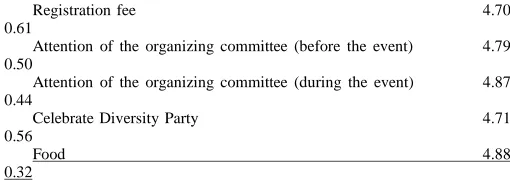
2017 Teaching Workshop, 77 answered the questionnaire. The participants’ perception was extremely positive. The data ob- tained indicate that participants were satisfied with all aspects of the workshop (Table 2). The five best evaluated items were food, the attention of the organizing committee before and during the event, the appropriateness of topics, and the con- gress venue. The four lowest evaluated items were the Cele- brate Diversity Party, the registration fee, the activity time, and the poster session.
According to the comments, there was a positive return on the knowledge shared among the participants through interac- tive experience, with spaces for reflection on the teaching practice and a possibility of improvement with elaboration of strategy from previous shared experiences. In addition, some comments relate the importance of the network created be- tween the speakers and the participants, for the continuous exchange of experiences and collaboration of interviews in doing research. Good hospitality and a workshop organization were also praised.
“This was my first IUPS teaching meeting, and it far ex- ceeded my expectations. Great job to the organizers. I met many people and formed some collaborations and learned a lot. Thank you!”
“The workshop was fantastic, the organizing committee is to be congratulated.”
Table 2. Mean of the scores of the participants’ evaluation
Evaluated Items Mean Score
Appropriate topics 4.79 0.44
Time of activities 4.61 0.54
Poster session 4.22 0.79
Congress venue 4.78 0.50
Registration fee 4.70 0.61
Attention of the organizing committee (before the event) 4.79 0.50
Attention of the organizing committee (during the event) 4.87 0.44
Celebrate Diversity Party 4.71 0.56
Food 4.88 0.32
“A wonderful learning platform to enhance physiology teaching. Thank you for the opportunity.”
“It was an amazing Congress! I learned a lot, met a lot of interesting people, and enjoyed all the activities. The organiz- ing committee was fantastic! Everything was perfectly ar- ranged. I also enjoyed staying in Brazil. I love the people, the food, the beaches. Thank you very much and hope to see you all next time!”
“It was my best teaching workshop and the best experience of my trip to Brazil.”
“It was an excellent congress in all aspects.”
Among the negatives points, participants reported that the poster session could have been in a larger space, with more room to move. Also they wished the workshops had been recorded, so they could watch the other workshops from each morning or afternoon.
Conclusion
The data obtained indicate that events in the format of the workshops reported here represent an important opportunity for interactive experience and reflection on teaching practice, and an opportunity to create contact networks that can contrib- ute to teacher education.
Continuing teacher education allows for critical reflection on teaching experience (3, 6) and allows for improvement of teaching practices. For this, different strategies can be used, such as congresses, seminars, workshops, courses, and study groups, which are spaces for dialogue and exchange of infor- mation between teachers in the same, or from different, insti- tutions (7). The results of participants’ feedback on this work- shop show the importance of these meetings, with their prac- tical activities and sharing of experiences.
Physiology educators often feel on an “island,” as there can be a low number per institution, and events such as this may allow for both the exchange of thoughts and ideas, as well as provide support structures that can benefit many avenues of a faculty member’s career. These events can help to improve teaching, encourage teachers, teach students who will be teach- ers in the future, and share successful teaching strategies to solve difficulties and frustrations.
Acknowledgments
IUPS AND ADINSTRUMENTS 2017 TEACHING WORKSHOP
3 37
Hansen for revision and contributions to the final version of the paper.
Description of Workshops (Hands-On Activities)
For the 15 workshops, there were 33 speakers from 8 different countries, and the description of these activities is presented below:
Workshop 1: Management of integrated curriculum and blue print in physiology education.
Osamu Matsuo, Kindai University, Japan Dee U. Silverthorn, University Texas at Austin, U.S. M. Irfannuddin, Sriwijaya University, Indonesia
Building an integrated curriculum for teaching physiology is important, especially using active methodologies. However, most of physiologists have never experienced management in physiology courses. In this workshop, participants were chal- lenged to understand the significance/importance of manage- ment, sharing with each other the planning and mapping of the curriculum, considering the government outcomes, licensing examination topics, societal medical physiology learning ob- jectives, and institutional goals and objectives. Participants were invited to share their learning objectives and try to map them with one of our sets of competencies and results.
Workshop 2: Using social media and smartphone applica- tions in practical lessons to enhance student learning.
Camilo Lellis-Santos, Federal University of Sao Paulo, Bra- zil
Patricia A. Halpin, University of New Hampshire at Man- chester, U.S.
In this workshop, we discussed ways to use smartphones as laboratories for practical physiology activities, as the engage- ment of experienced students in technologies is the new chal- lenge for teachers, who mostly do not belong to the same generation of students or do not know how to use smartphone applications in the teaching-learning process. The objectives of this workshop included the following: briefly reviewing mobile learning concepts and use of mobile learning laboratory; ex- ploring available smartphones’ applications for physiology practical lessons; and sharing and discussing pedagogical prac- tices in physiology and mobile devices. Participants at this workshop also signed up for a Twitter account and learned to tweet and retweet messages and use a URL shortener and hashtags. Participants located Twitter account articles from credible scientific sources (American Journal of Physiology,
The Scientist, CDC.gov, and WHO.int). They then applied
their Twitter skills to discuss a current scientific topic of interest.
Workshop 3: Developing activities on physiology issues for teacher education.
Paulo F. G. P. Montenegro, Federal University of Paraiba, Brazil
Fabiola Da Silva Albuquerque, Federal University of
Paraiba, Brazil
Many experiences or demonstrations in physiology classes can be difficult to perform, and simple, low-cost activities can be useful alternatives to contribute to meaningful learning. The objective of this workshop was to present, through practical activities, some of these alternatives for the teaching of phys-
Workshop 4: Creative use of open educational resources to support practical class teaching.
David Dewhurst, University of Edinburgh, UK Maria del Mar Quiroga, Monash University, Australia The objective of this workshop was to present online edu- cational resources to support practical classes in undergraduate courses, such as virtual experiences, animations, images, and textual descriptions of the preparations, and experimental methods. In this workshop, data were presented that show that virtual experiences have improved students’ understanding of theoretical concepts in the practical laboratory. This activity was highly interactive and explored which ways these re- sources can be used to support the teaching-learning process in the classroom, laboratories, and online. Participants worked in small groups to create small teaching or learning sessions based on one or more resources, along with engaging learning outcomes and assessments to measure student learning (to- gether with wraparound learning outcomes and assessments to measure student learning). Each group presented its lesson plans to the entire workshop to stimulate critical discussion and brainstorming.
Workshop 5: Developing experimental design and analysis skills in undergraduates.
Dawn Davies, University of Bristol, UK Frankie MacMillan, University of Bristol, UK
The objectives of this workshop were to explore ways in which experimental development and analytic skills could be developed in graduate students to enable them to be fully prepared for year-end research projects. Skills developed should also allow students to understand the scientific method in the experimental design and gain confidence, for example, by reviewing original research papers. The workshop explored through the brainstorming of groups of participants innovative ways to develop these skills and evaluate students using min- imal resources through the following questions: what skills do we want undergraduate students to develop in the first and second years related to the project? How we can develop these skills in students through self-directed hands? How can we assess the acquisition of these skills?
Workshop 6: The use of digital storytelling in physiology teaching.
Muhammad Irfannuddin, Karachi Institute of Medical Sci- ences, Pakistan
Feisal Subhan, Plymouth University, UK
Digital storytelling is an engaging educational strategy and can be defined as the application of various software tech- niques to illustrate a topic in multimedia format, including audio narration, images, screenplay, and background music. This feature has already been used for some time, but the increased use of social media has become more relevant to today’s millennial student and incorporates many pedagogical styles of learning. The objectives of this workshop were to present the importance of digital storytelling and how to use it, discuss how it can be used for evaluation in your physiology curriculum, and build a digital story using various digital resources.
Workshop 7: The use of team-based learning and rubrics to guide student feedback.
338 IUPS AND ADINSTRUMENTS 2017 TEACHING WORKSHOP
vide students with concise feedback on their work. First, the use of team-based learning was described and how it is incor- porated into peer evaluations and evaluation of team members during the lesson. In addition, the use of background knowl- edge assessment, before the beginning of each system, was described to guide their teaching. Subsequently, the role of rubrics and method of rubric delivery in guiding student learning and performance in a third-year human physiology course was presented.
Workshop 8: Educational games in physiology
teaching. Fernanda K. Marcondes, University of
Campinas, Brazil Kelly C. G. Luchi, University of Campinas, Brazil
Lais T. Cardozo, University of Campinas, Brazil Michelle F. B. Leite, University of Campinas, Brazil Luis H. Montrezor, University of Araraquara, Brazil
Érica M. Granjeiro, State University of Feira de Santana, Brazil
Pamela M. Carpes, Federal University of Pampa, Brazil
The purpose of this workshop was to engage participants in a practical activity with a puzzle used to teach the cardiac cycle (2, 4) and discuss students’ perceptions about the game and its effect on the students’ learning as evaluated in different un- dergraduate courses (Biology, Medicine, Nursing, Physiother- apy, Dentistry). Other educational games (action potential, synapse, muscle contraction) were presented, but without the development of the respective practical activities. All of these can be sent to the participants under request.
Workshop 9: Medical physiology across the life span.
Thad E. Wilson, Marian University, U.S.
Medical physiology is taught from the view of a normal adult man and is incorporated into pathophysiology and chronic diseases. Many medical college curricula do not focus on Pediatrics or Geriatrics until later in the education of students, and often the physiologists are not directly involved. This workshop focused on practical and theoretical topics on the incorporation of content and concepts of human develop- ment in physiology into their learning activities and curricu- lum. There was also a discussion on the idea of potentially being more inclusive of the physiology across the life span within each organ system in the American Physiological So- ciety/Association of Chairs of Departments of Physiology Medical Physiology Learning Objectives.
Workshop 10: Innovative tools for teaching comparative physiology and functional morphology.
Malcolm S. Gordon, University of California Los Angeles, U.S.
Stacy Farina, Harvard University, U.S.
In this workshop, some nontraditional forms of teaching comparative physiology and functional morphology course laboratories were presented to participants. Laboratory sections are run as supervised and monitored research projects, not as a series of standardized experiments. The facilitators presented use of three-dimensional printing and micro-computed tomog- raphy data sets, mainly useful for anatomical and functional morphological studies, and computer-based digital photo- graphic image analysis using freely available online software packages, which are especially useful for biomechanical and
behavioral studies.
Workshop 11: The use of dramatization to teach
physiology. Helena Carvalho, Virginia Tech Carilion School
This workshop aimed to demonstrate an original and alter- native teaching methodology developed to improve students’ long-term memory retention and recovery. In this activity, participants learned by doing, by becoming an active part of a learning/teaching exercise. They were instructed to “act” in the dramatization about the cardiac cycle and action potential. And this workshop showed that participants could replicate this activity in their home institutions at no additional cost.
Workshop 12: Dissemination and publishing in physiology education.
Christina Karatzaferi, University of St. Mark and St. John
Plymouth, UK
Dee Silverthorn, The University of Texas at Austin, U.S. Robert G. Carroll, East Carolina University, U.S.
Sean Roe, Queen’s University Belfast, UK
In this workshop, a team of experts, reviewers, and editorial board members of Advances in Physiology Education
famil- iarized participants with types of articles, discussed the most frequent types of errors, and provided input to the participants on the writing of a manuscript. The objectives of this workshop were to familiarize participants with the different formats and submissions that can be made, to support younger colleagues in creating their first submission, to improve their chances of acceptance, and to promote their international reach.
Robert Carroll started the workshop off by defining and characterizing scholarship itself (the “why” of publishing in physiology education), describing the mutually beneficial re- lationships between the act of teaching, the scholarship of educational research, and the performance of service. Dee Silverthorn then discussed the “where” of physiology publish- ing, using her experience as a longstanding editor of Advances
in Physiology Education. Christina Katzaferi rounded off the
first section of the workshop by discussing the “how” of physiology education scholarship. She also stressed the impor- tance of dissemination of one’s practice to peers and commu- nication to the general and teaching public. After the initial presentations, the panel was joined by Dawn Davies, Christina, Dee, Bob, Sean, and Frankie McMillan from University of Bristol, UK, who facilitated groups in brainstorming potential publications (that delegates had brought in already prepared) to get them closer to a publishable form. Sean Roe finished the workshop with a roundup and summary of the main points, drawing together the overall conclusions for the delegates. In summary, this session, among others, provided a clarification on the types of scholarship, avenues for publication, and do’s and dont’s in publicizing physiology education research, and made clearer the link of publication to career development and international exposure. A promising outcome was that many participants indicated they wanted to increase their publica- tions in physiology education research.
Workshop 13: Replacing live animals to teach physiology in practical classes.
Maria Jose Alves da Rocha, University of Sao Paulo, Brazil Mauricio J. Giuliodori, Universidad de La Plata, Argentina The aim of this workshop was to present alternatives for replacing live animals in practical classes. Participants had the opportunity to manage several simple models constructed to engage and inspire the students to learn, for example, how a hopping kangaroo breathes, or
how to analyze ventilation volumes, capacities, or flow
IUPS AND ADINSTRUMENTS 2017 TEACHING WORKSHOP
3 39
diabetes mellitus (1) and hyper- or hypothyroidism, diseases used to explain the physiology of the endocrine glands and its hormones. We finally discussed how these models or activities can be easily adapted in their institutions, especially those with fewer resources.
Workshop 14: Setting the evaluation in the right
place. Hilda Weissman, University of Buenos Aires,
Argentina Luis H. Montrezor, University of Araraquara, Brazil Oscar Bottasso, National Research Council, Argentina
In this workshop, the facilitators presented and promoted the discussion about the role of evaluation. Evaluation is often understood as an instrument for measuring the information assimilated by students and as a means for social control. It is generally considered as a measure of the achievement of objectives, to assign grades and accredit acquired knowledge. However, the evaluation should be the space that provides information about the quality of the teaching. And for students, assessment should serve to raise their awareness and gain confidence in their abilities to solve problems based on their
knowledge. The challenge then is to recover this space, trying to give the evaluation the place it deserves, that is, to create knowledge and subjectivities and not to identify errors of students.
Workshop 15: Improving physiology learning and under- standing by adding activities to the teaching.
Pamela B. Mello-Carpes, University of Pampa, Brazil Felipe Piveta Carpes, University of Pampa, Brazil This workshop aimed to show different possibilities to incorporate dissemination activities as part of a regular course in physiology. The lecturers shared their experiences in out- reach activities conducted by undergraduate students in differ- ent cooperative publics, showing evidence that the involve-
ment of undergraduates in this type of activity improves their understanding of their physiology (5).
DISCLOSURES
No conflicts of interest, financial or otherwise, are declared by the authors.
AUTHOR CONTRIBUTIONS
F.K.M., L.T.C., and K.C.G.L. drafted manuscript; F.K.M., L.T.C., K.C.G.L., M.I., C.K., M.J.A.R., and R.G.C. edited and revised manuscript; F.K.M., L.T.C., K.C.G.L., M.I., C.K., M.J.A.R., and R.G.C. approved final version of manuscript.
REFERENCES
1. Basso PJ, Tazinafo LF, Silva MF, Rocha MJA. An alternative to the use of animals to teach diabetes mellitus. Adv Physiol Educ 38: 235– 238, 2014. doi:10.1152/advan.00051.2014.
2. Cardozo LT, Miranda AS, Moura MJCS, Marcondes FK.
Effect of a puzzle on the process of students’ learning about cardiac physiology. Adv Physiol Educ 40: 425– 431, 2016. doi:10.1152/advan.00043.2016.
3. Freire P. Pedagogy of Autonomy: Knowledge Necessary for
Educational
Practice. São Paulo, Brazil: Paz e Terra, 1996.
4. Marcondes FK, Moura MJCS, Sanches A, Costa R, de Lima PO, Groppo FC, Amaral MEC, Zeni P, Gaviao KC, Montrezor LH. A puzzle used to teach the cardiac cycle. Adv Physiol Educ 39: 27–31, 2015. doi:10.1152/advan.00116.2014.
5. Mello-Carpes PB, Carpes FP. Improving physiology learning and under- standing by adding outreach activities to the teaching: report of the IUPS and ADInstruments Teaching Workshop 2017. Adv Physiol
Educ 42:
159 –161, 2018. doi:10.1152/advan.00148.2017.
6. Silva EMA, de Araújo CM. Reflection in Paulo Freire: a contribution to continued teacher education. In: V Colóquio Internacional
Paulo Freire, Recife, Pernambuco, Brazil, September 19 –22, 2005.
Brasilia, Brazil: Fórum Brasileiro de Economia Solidária, 2005, p. 1– 8. 6a.Silva Júnior SD, Costa FJ. Measurement and verification scales: a com- parative analysis between the Likert and phrase completion scales.
Braz J Mark Opin Med Res 15: 1–16, 2014.
7. Temp H. Continuing Education in Higher Education: A Study with
Teach- ers Working in Physical Education Courses. Santa Maria, Brazil: