ACKNOWLEDGEMENTS
The authors thank Dr. Avinash D. Deshpande, Director of Pharmacy, Pad. Dr. D. Y. Patil Institute of Pharmaceutical Sciences and Research, Pimpri, Pune for providing necessary facilities. The authors also thank Glennmark Pharmaceuticals Ltd, Nashik and Macleods Pharmaceuticals Ltd, for providing gift samples of drugs AMLO and OLME.
REFERENCES
1. British Pharmacopoeia, Vol. 1, London: Her Majesty's Stationary OfÞ ce; 2008. p. 137.
2. Budavari S, editor. The Merck Index: An encyclopedia of chemicals, drugs and biologicals, 13th ed. Whitehouse Station, NJ: Merck and Co. Inc; 2001. p. 86.
3. Hoffman BB. Therapy of Hypertension. In: Brunton LL, Lazo JS, Parker KL, editors. Pharmacological Basis of Therapeutics. 11th ed. New York: Mc Graw-Hill Medical; 2006. p. 845-68.
4. Sweetman SC, editor. Martindale The complete drug reference, 33rd ed. London: Pharmaceutical Press; 2002. p. 862.
5. Sellin L, Stegbauer J, Laeis P, Rump LC. Adding hydrochlorothiazide to olmesartan dose dependently improves 24-h blood pressure and response rates in mild-to-moderate hypertension. J Hypertens 2005;23:2083-92.
6. Vora DN, Kadav AA. Development and validation of a simultaneous HPLC method for estimation of bisoprolol fumarate and amlodipine besylate from tablets. Indian J Pharm Sci 2008;70:542-6.
7. Chitlange SS, Imran M, Sakarkar DM. RP-HPLC method for simultaneous estimation of amlodipine and metoprolol in tablet formulation. Asian J Pharm Sci 2008;2:232-4.
8. Mishra P, Gupta A, Shah K. Simultaneous estimation of atorvastatin calcium and amlodipine besylate from tablets, Indian J Pharm Sci 2007;69:831-3.
9. Sahu R, Patel VB. Simultaneous spectrophotometric determination of amlodipine besylate and atorvastatin calcium in binary mixture. Indian J Pharm Sci 2007;69:110-1.
10. Naidu KR, Kale UN, Shingare MS. Stability indicating RP-HPLC method for simultaneous determination of amlodipine and benzapril hydrochloride from their combination drug product. J Pharm Biomed Anal 2005;39:147-55.
11. Gohil K, Trivedi P, Molvi KI, Spectrophotometric analysis of amlodipine besylate in bulk and in tablet dosage forms. Indian J Pharma Sci 2005;67:376-8.
12. Topale PR, Gaikwad NJ, Tajane MR. Simultaneous UV-Spectrophotometric estimation of losartan potassium and amlodipine in tablet. Indian Drugs 2003;40:119-21.
13. Gawri N, Vaidhyalingam V, Santha A. HPTLC method for the simultaneous estimation of amlodipine besylate and benazepril HCl tablets. Indian Drugs 2003;40:645-8.
14. Rao JR, Kadam SS, Mahadik KR. Reverse phase HPLC determination of amlodipine and benazepril HCl in tablets. Indian Drugs 2002;39:378-81.
15. Dhake AS, Kasture VS, Syed MR. Spectrophotometric methods for estimation of Amlodipine besylate and Benidipine hydrochloride from tablets. Indian Drugs 2002;39:14-7.
16. Patel CV, Khandhar AP, Captain AD, Patel KT. Validated Absorption Factor Spectrophotometric and Reverse-Phase High Performance Liquid Chromatography Methods for the Determination of Ramipril and Olmesartan Medoxomil in Pharmaceutical Formulations. Eurasian J Anal Chem 2007;2:159-71.
17. Shah NJ, Suhagia BN, Shah RR, Patel NM. Development and validation of a simultaneous HPTLC method for the estimation of olmesartan medoxomil and hydrochlorothiazide in tablet dosage form. Indian J Pharm Sci 2007;69:834-36.
Accepted 18 September 2009 Revised 18 July 2009 Received 31 March 2009 Indian J. Pharm. Sci., 2009, 71 (5): 563-567
Formulation Design and Optimization of Fast Dissolving
Clonazepam Tablets
S. B. SHIRSAND, SARASIJA SURESH1* AND P. V. SWAMY
Department of Pharmaceutics, H. K. E. Society’s College of Pharmacy, Sedam Road, Gulbarga-585 105, India,
1Department of Pharmaceutics, Al-Ameen College of Pharmacy, Near Lal Bagh Main Gate, Hosur Road, Bangalore-560
027, India
Shirsand et al.: Fast Dissolving Clonazepam Tablets
Fast dissolving tablets of clonazepam were prepared by direct compression method with a view to enhance patient compliance. A 3² full factorial design was applied to investigate the combined effect of two formulation variables: amount of crospovidone and microcrystalline cellulose. Crospovidone (2-8% w/w) was used as superdisintegrant and microcrystalline cellulose (20-40% w/w) was used as diluent, along with directly compressible mannitol to enhance mouth feel. The tablets were evaluated for hardness, friability, thickness, drug content uniformity, in vitro
*Address for correspondence
dispersion time, wetting time and water absorption ratio. Based on in vitro dispersion time (approximately 16 s); the formulation containing 2% w/w crospovidone and 40% w/w microcrystalline cellulose was found to be promising and tested for in vitro drug release pattern (in pH 6.8 phosphate buffer). Short-term stability (at 40º/75% relative humidity for 3 mo) and drug-excipient interaction. Surface response plots are presented to graphically represent the effect of independent variables on the invitro dispersion time. The validity of the generated mathematical model was tested by preparing two extra-design checkpoints. The optimized tablet formulation was compared with conventional commercial tablet formulation for drug release profi les. This formulation showed nearly fi ve-fold faster drug release (t50% 3.5 min) compared to the conventional commercial tablet formulation (t50% 16.4 min). Short-term stability studies on the formulation indicated that there are no signifi cant changes in drug content and in vitro dispersion time (P<0.05).
Key words: 3² full factorial design, clonazepam, crospovidone, fast dissolving tablets, microcrystalline cellulose
Dysphagia is a common problem encountered in all age groups in concern to solid dosage forms, which results in high incidence of non-compliance and ineffective therapy[1]. Recent advances in novel
drug delivery systems (NDDS) aim to enhance safety and efÞ cacy of drug molecule by formulating a convenient dosage form for administration and to achieve better patient compliance i.e., one, which will rapidly disintegrate in the mouth without need of water (fast dissolving tablet, FDT). Advantages of this drug delivery system include administration without water, accuracy of dosage, easy portability, alternative to liquid dosage forms, ideal for pediatric and geriatric patients and rapid onset of action[2-4].
Clonazepam (CZ) is a benzodiazepine derivative with marked antiepileptic properties. It may be used in the treatment of all types of epilepsy and seizures[5]. Since epileptic patients have to strictly
follow the dosage regimen for preventing sub-therapeutic concentration, FDT will avoid missing out of a dose even during travelling or other situations, where there is no access to water; offers a suitable and practical approach in serving desired objective of faster disintegration and dissolution characteristics with increased bioavailability. Aim of the present study was to develop such a NDDS for CZ by simple and cost-effective direct compression method.
CZ and crospovidone (CP) were gift samples from Torrent Pharma, Ahmedabad, India and Wockhardt Research Centre, Aurangabad, India respectively. Directly compressible mannitol (Pearlitol SD200), sodium stearyl fumarate (SSF) and microcrystalline cellulose (MCC, Avicel PH-102) were generous gifts from Strides Arco Labs, Bangalore, India, Glenmark Ltd., Nashik, India and Alkem Labs Pvt Ltd, Mumbai, India. All other chemicals were of analytical reagent grade.
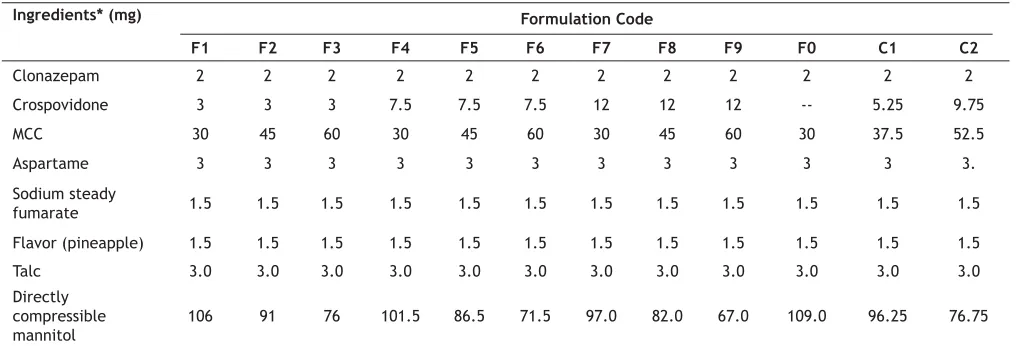
After preliminary studies the formulations were designed according to the 3² full factorial design, allowing a simultaneous evaluation of the two formulation variables and their interaction. The experimental design with the corresponding formulation is outlined in Table 1. The effect of the independent variables, viz., crosspovidone (X1) and microcrystalline cellulose (X2) on the dependent variable, in vitro dispersion time (y1) was evaluated. The preliminary studies indicated that the super-disintegrant CP was found to be superior compared to the other two super-disintegrants (croscarmellose sodium and sodium starch glycolate); and hence it was selected as the super-disintegrant of choice for the present investigation.
Fast dissolving tablets of CZ were prepared by direct compression method[6] according to the formulae
given in Table 1. All the ingredients were passed through #60 mesh separately, weighed and mixed in geometrical order. Then lubricant and glidant (# 200 mesh) were added and mixed for further 5 min. The blend thus obtained was directly compressed using 7 mm ß at round punches into tablets of 150 mg on a 10-station rotary tablet machine (Clit, Ahmedabad, India). A batch of 60 tablets was prepared for all the designed formulations.
For assessing weight variation twenty tablets were selected at random and assessed individually. The individual weights were compared with the average weight for determination of weight variation[7].
nm after appropriate dilution with methanol. The drug content was determined using the standard calibration curve. The mean percent drug content was calculated using 3 determinations[8]. For determination
of in vitro dispersion time, 1 tablet was placed in a beaker containing 10 ml of pH 6.8 phosphate buffer at 37±0.5º and the time required for complete dispersion was determined[9]. For determination of
wetting time and water absorption ratio[10], a piece
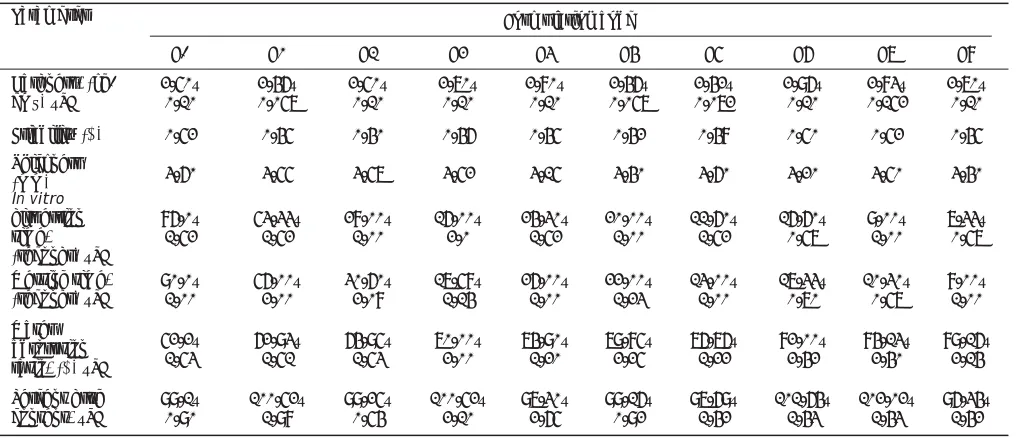
of tissue paper folded twice was placed in a small 5 cm diameter Petri dish containing 6 ml of water. A tablet was placed on the paper and the time required for complete wetting was measured. The wetted tablet was then weighed. Water absorption ratio ‘R’ was determined using the equation, R=100(Wb-Wa)/Wa; where Wa is weight of tablet before water absorption and Wb is weight of tablet after water absorption. The results are shown in Table 2. IR spectra of the pure drug and its formulations were obtained by potassium bromide pellet method using Perkin-Elmer FTIR series (model 1615) spectrophotometer in order to rule out drug-carrier interactions.
In vitro dissolution of the formulated fast dissolving tablets of CZ and one commercial conventional tablet was studied in USP XXIII type-2 dissolution apparatus (Electrolab, Model-TDT 06N) employing a paddle stirrer at 50 rpm using 900 ml of pH 6.8 phosphate buffer at 37±0.5º as dissolution medium[11].
One tablet was used in each test. Aliquots of dissolution medium (5 ml) were withdrawn at speciÞ c intervals of time and analyzed for drug content by measuring the absorbance at 307.5 nm. The volume
withdrawn at each time interval was replaced with fresh quantity of dissolution medium. Cumulative percent CZ released was calculated and plotted against time.
Short-term stability studies on the optimized promising formulation (F3) were carried out by storing the tablets (in amber colored rubber stoppered vials) at 40º/ 75% RH for 3 mo period (as per ICH guidelines). At intervals of 1 mo, the tablets were visually examined for any physical changes, changes in drug content and in vitro dispersion time. A 32 randomised full factorial design was
adopted to optimize the variables. In this design 2 factors were evaluated, each at 3 levels, and experimental trials were performed at all nine possible combinations[12]. The amounts of crospovidone (X
1),
and microcrystalline cellulose (X2), were selected as independent variables. In vitro dispersion time was selected as dependent variable/response (Y1).
Fast dissolving tablets of CZ were prepared by direct compression method using CP as super-disintigrant and MCC as diluent along with directly compressible mannitol (Pearlitol SD 200), which was used to enhance the mouth feel. A total of nine formulations and a control formulation (F0, without super-disintegrant) were designed.
As the material was free flowing (angle of repose value <30º and Carr’s index <15%), tablets obtained were of uniform weight (due to uniform die fill), with acceptable variation as per IP specifications
TABLE 1: FACTORIAL DESIGN FORMULATIONS OF CLONAZEPAM PREPARED BY DIRECT COMPRESSION METHOD
Ingredients* (mg) Formulation Code
F1 F2 F3 F4 F5 F6 F7 F8 F9 F0 C1 C2
Clonazepam 2 2 2 2 2 2 2 2 2 2 2 2
Crospovidone 3 3 3 7.5 7.5 7.5 12 12 12 -- 5.25 9.75
MCC 30 45 60 30 45 60 30 45 60 30 37.5 52.5
Aspartame 3 3 3 3 3 3 3 3 3 3 3 3.
Sodium steady
fumarate 1.5 1.5 1.5 1.5 1.5 1.5 1.5 1.5 1.5 1.5 1.5 1.5
Flavor (pineapple) 1.5 1.5 1.5 1.5 1.5 1.5 1.5 1.5 1.5 1.5 1.5 1.5
Talc 3.0 3.0 3.0 3.0 3.0 3.0 3.0 3.0 3.0 3.0 3.0 3.0
Directly compressible
mannitol 106 91 76 101.5 86.5 71.5 97.0 82.0 67.0 109.0 96.25 76.75
(±7.5%). Drug content was found to be in the range of 96-102%, which is within acceptable limits. Hardness of the tablets was found to be 2.4 to 3.0 kg/cm². Friability below 1% was an indication of good mechanical resistance of the tablets (Table 2). Formulation F3 was found to be promising and displayed an in vitro dispersion time of 16 s, which facilitates faster dispersion in the mouth.
In order to investigate the factors systematically, a factorial design was employed in the present investigation. Formulation optimization has been done by using 3² full factorial design, preparing nine
0 20 40 60 80 100 120
0 5 10 15 20 25 30 35
Time (min)
C
u
mu
la
ti
v
e
% D
ru
g
R
e
le
a
s
e
Fig. 1: In vitro cumulative percent drug release versus time proÞ le of promising clonazepam formulations
Plot showing cumulative percent drug release in pH 6.8 phosphate buffer from control formulations (–♦–); promising F3 formulation (–!–); conventional commercial tablet formulation CF (–!–).
batches of formulations (F1 to F9). A polynomial equation was derived for in vitro dispersion time, by backward stepwise linear regression analysis, using PCP Disso 2000 V3 software. Formulation F3 containing 2% w/w CP, 40% w/w MCC was found to be promising with an in vitro dispersion time of 16 s against the 86 s displayed by control formulation (F0), which does not contain the super-disintegrant CP.
In vitro dissolution studies on the promising
formulation (F3), the control (F0) and commercial conventional tablet formulation (CF) were carried out in pH 6.8 phosphate buffer and the various dissolution parameter values, viz., percent drug dissolved in 5 min (D5), 10 min (D10), dissolution efÞ ciency[13] at 10
min (DE10min), t50%, t70% and t90% are shown in Table 3 and the dissolution proÞ les depicted in Þ g. 1. This data reveals that overall, the formulation F3 has shown nearly Þ ve-fold faster drug release (t50% 3.5 min) when compared to CF (t50% 16.4 min).
IR spectroscopic studies indicated that the drug is compatible with all the excipients. The IR spectrum of F3 showed all the characteristic peaks of CZ, thus conÞ rming that no interaction of drug occurred with the components of the formulation. Short-term stability studies of the above formulation indicated that there are no signiÞ cant changes in drug content and in vitro dispersion time at the end of 3 mo period (P<0.05).
TABLE 2: EVALUATION OF FACTORIAL DESIGN FDT FORMULATIONS
Parameter Formulation code
F0 F1 F2 F3 F4 F5 F6 F7 F8 F9
Hardness* (kg/
cm²) ±SD 2.50±0.10 2.46±0.057 2.50±0.10 2.70±0.10 2.80±0.10 2.46± 0.057 2.42±0.072 2.96±0.10 2.83±0.152 2.70± 0.10
Friability (%) 0.52 0.45 0.40 0.46 0.45 0.42 0.48 0.50 0.52 0.45
Thickness
(mm) 3.60 3.55 3.57 3.52 3.15 3.40 3.60 3.20 3.50 3.40
In vitro
dispersion time* (seconds) ±SD
86.0±
1.52 53.33±1.52 28.00±1.00 16.00±2.0 24.30±1.52 20.00±1.00 11.60±1.52 16.60±0.57 9.00±1.00 7.33± 0.57
Wetting time* (seconds) ±SD
90.0± 1.00
56.00± 2.00
30.60± 2.08
17.58± 1.14
26.00± 1.00
22.00± 1.23
13.00± 1.00
17.33± 0.70
10.30± 0.57
8.00± 1.00 Water
absorption ratio* (%) ±SD
52.2±
1.53 62.93±1.51 64.95±1.53 70.00±2.00 74.90±1.20 79.85±2.25 76.76±1.22 82.00±2.42 84.13±2.40 89.16±2.14
Percent drug content* ±SD
99.1± 0.90
100.52± 1.98
99.25± 0.54
100.52± 2.10
97.30± 2.65
99.16± 0.92
97.69± 1.42
101.64± 1.43
102.02± 1.43
96.34± 1.42
Polynomial equation for 32 full factorial design with
two independent variables i.e., proportion of CP (X1) and proportion of MCC (X2), at three levels is[14],
Y=b0+b1X1+b2X2+b12X1X2+b11X12+b
22X22,where Y is
the dependent variable, b0 arithmetic mean response of nine batches, and b1 estimated coefÞ cient for factor X1. The main effects (X1 and X2) represent the average results of changing one factor at a time from its low to high value. The interaction term (X1X2) shows how the response changes when two factors are simultaneously changed. The polynomial terms X12 and X
22 are included
to investigate non-linearity.
The equation derived for in vitro dispersion time of the factorial formulations is, Y1= 20.44–5.42 X1–4.92X2. The negative sign for coefÞ cients of X1 and X2 indicate that as the concentration of disintegrants increases, in vitro dispersion time decreases. Validity of this Eqn was veriÞ ed by designing two extra design check point formulations (C1 and C2) and determining the in vitro
dispersion time. The in vitro dispersion time values
TABLE 3: IN VITRO DISSOLUTION PARAMETERS IN PH 6.8 PHOSPHATE BUFFER
Formulation Code D5 (%) D10 (%) D15 (%) DE10min (%) t50% (min) t70% (min) t90% (min)
F0 12.5 22.0 25.0 22.76 >30 >30 >30
F3 54.0 69.0 77.0 28.91 3.5 10.5 22.5
CF 29.5 42.5 48.5 33.41 16.4 >30 >30
F0 is control formulation, F3 is promising fast dissolving tablet formulation, CF is conventional commercial tablet formulation, D5 is percent drug released in 5 min, D10 is percent drug release in 10 min, D15 is percent drug release in 15 min, DE10min is dissolution efÞ ciency at 10 min, t50% is time for 50% drug dissolution,
t70% is time for 70% drug dissolution, t90% is time for 90% drug dissolution
predicted from the equation for these formulations are 30.78 and 10.41 s, whereas those observed from experimental results are 31.0 and 9.60 s, respectively. The closeness of the predicted and observed values for C1 and C2 in the method indicates validity of derived equation for the dependent variable (in vitro dispersion time). The computer generated response surface and contour plots for the dependent variable are shown in
Þ gs. 2 and 3, respectively.
The results of the 32 full factorial design revealed
that the amount of crospovidone and microcrystalline cellulose significantly affect the depended variable,
in vitro dispersion time. It is thus concluded that by adopting a systematic formulation approach, an optimum point can be reached in the shortest time with minimum efforts.
REFERENCES
1. Sreenivas SA, Dandagi PM, Hiremath SP. Orodispersible tablets: New-1
0.5 0 -0.5 -1
1 0.3
-0.4 -5
0 5 10 15 20 25 30 35 40 45
Y
1
(
In v
it
ro di
s
p
e
rs
ion t
im
e
)
3 (X1-Crospovidone)
30 (X2-MCC)
Fig. 2: Response surface plot of factorial variables on in vitro
dispersion time
Response surface plot showing effect of factorial variables on in vitro
dispersion time. The shaded regions indicate the range of response variables, Y1 (in vitro dispersion time)
1 0.5 0
-0.5
-1 1
0.5 0 -0.5 -1
Y1 (In vitro spersion time)
3 (X1-crospovidone)
30 (X2-MCC)
fangled drug delivery system- A review. Indian J Pharm Edu Res 2005;39:177-80.
2. Mahajan HS, Patil SB, Gattani SG. Rapidly disintegrating tablets for elderly patients. Pharma Rev 2005;3:49-51.
3. Kuchekar BS, Arumugam V. Design of fast dissolving tablets. Indian J Pharm Educ 2001;35:50-2.
4. Reddy LH, Ghosh BR. Fast dissolving drug delivery systems: A review of the literature. Indian J Pharm Sci 2002;64:331-6.
5. Sweetman SC. Editors. Martindale: The Complete Drug Reference. 33rd ed. London: Pharmaceutical Press; 2002. p. 347-8.
6. Kucherkar BS, Badhan A, Mahajan HS. Mouth dissolving tablets of salbutamol sulphate: A novel drug delivery system. Indian Drugs 2004;41:592-8.
7. Banker GS, Anderson NR. Tablets. In: Lachman L, Libermann HA, Kanig JL, editors. The Theory and Practice of Industrial Pharmacy. 3rd ed. New Delhi: Varghese Publishing House; 1987. p. 293-9.
8. Indian Pharmacopoeia. New Delhi: Controller of Publications; 1996. p. 735.
9. Bi YX, Sunada H, Yonezawa Y, Danjo K. Evaluation of rapidly disintegrating tablets by direct compression method. Drug Devlop Ind Pharm 1999;25:571-81.
10. Chaudhari PD, Chaudhari SP, Kolhe SR, Dave KV, More DM. Formulation and evaluation of fast dissolving tablets of famotidine. Indian Drugs 2005;42:641-9.
11. Bhagwati ST, Hiremath SN, Sreenivas SA. Comparative evaluation of disintegrants by formulating ceÞ xime dispersible tablets. Indian J Pharm Edu Res 2005;39:194-7.
12. Bolton S. Pharmaceutical Statistics. 2nd ed. New York: Marcel Decker Inc; 1990. p. 234-6.
13. Khan KA. The concept of dissolution efÞ ciency. J Pharm Pharmacol 975;27:48-9.
14. Gohel M, Patel M, Amin A, Agarwal A, Dave R, Bariya N. Formulation design and optimization of mouth dissolve tablets of nimesulide using vacuum drying technique. AAPS PharmSciTech 2004;5:10-5.
Accepted 21 September 2009 Revised 23 July 2009 Received 29 May 2008 Indian J. Pharm. Sci., 2009, 71 (5): 567-572
Synthesis, Structure Activity Relationship Studies and
Pharmacological Evaluation of 2-Phenyl-3-(Substituted
Phenyl)-3H-Quinazolin-4-ones as Serotonin 5-HT
2Antagonists
N. SATI*, S. KUMAR1 AND M. S. M. RAWAT2
Department of Pharmaceutical Sciences, H. N. B. Garhwal University, Srinagar Garhwal-246 174, India, 1College of
Pharmacy, IFTM, Lodipur-Raipur, Delhi Road, Moradabad-244 001, India, 2Department of Chemistry, H. N. B. Garhwal
University, Srinagar Garhwal-246 174, India
Sati et al.: 2-Phenyl-3-(substituted phenyl)-3H-Quinazolin-4-ones as Serotonin 5-HT2 Antagonists
Benzoyl chloride was added to the solution of anthranilic acid in pyridine to afford crude 2-phenyl-benzo[d][1, 3] oxazin-4-one (1). To the solution of compound 1 in dry toluene, various substituted anilines were added and the mixture refl uxed for 8 h to afford 2-phenyl-3-(substituted phenyl)-3H-quinazolin-4-ones (2a-2f). All the compounds were obtained in solid state in yields varying between 40 to 70%. Spectral characterization included FTIR, 1H NMR and Electrospray MS. The synthesized compounds were screened for 5-HT2 antagonist activity. Some of the title compounds have been found to show signifi cant 5-HT2 antagonist activity. The compound 2b, 3-(2-chlorophenyl)-2-phenyl-3H-quinazolin-4-one was the most potent derivative in the series of compound synthesized.
Key words: 5-HT2 antagonists, aryl quinazolines, quinazolin-4-ones, serotonin antagonists
*Address for correspondence
E-mail: [email protected]
Serotonin receptors (5-HT2) receptors are of significant clinical interest because of their involvement in various disorders[1,2]. Centrally
acting 5-HT2 antagonists have shown promising effects in animal models for anxiety[3], depression[4]
and in certain drug abuse models[5-7]. In
schizophrenic patients, improvement of negative symptoms[8] and extra pyramidal symptoms[9,10] has
been demonstrated by 5-HT2 antagonists.