OPTIMIZATION OF HUMAN-MACHINE INTERACTION
Taking the User Interface of the
“DAC Plus” as an Example
BACHELOR THESIS
Bachelor of Arts Faculty of Business
Field of Study: International Business
Cooperative State University Baden-Württemberg Mannheim
Handed in by: Anna Katharina May Address: Bahnhofstraße12
69231 Rauenberg Course: WIB 10 A
Student ID-Number: 7365070
Academic Tutor: Prof. Dr. Martin Kornmeier Supervising Tutor at Sirona: Dieter Rensch
Corresponding Company: Sirona Dental Systems, Inc.
II
“From our perspective, one of HCI’s main objectives in the future is to contribute to our quality of life by designing for pleasure rather than for absence of pain.”
Marc Hassenzahl
Darmstadt University of Technology, Germany
Noam Tractinsky Ben-Gurion University, Israel
III
CONFIDENTIALITY STATEMENT
The Bachelor thesis on hand
“Optimization of Human-Machine Interaction
Taking the User Interface of the “DAC Plus” as an Example”
contains internal resp. confidential data of Sirona Dental Systems, Inc. It is strictly for-bidden,
to distribute the content of this paper (including data, figures, tables, charts etc.) as a whole or in extracts,
to make copies or transcripts of this paper or of parts of it,
to display this paper or make it available in digital, electronic virtual form.
Exceptional cases may be considered through permission granted in written form by the author and the Sirona Dental Systems, Inc.
Bensheim, 5th March 2013
IV
PREFACE
This thesis has benefited from the support of many people, some of whom I would like to thank in the following.
First and foremost, I would like to express my gratitude to my supervising tutor, Dieter Rensch, who made this thesis possible by offering me the chance to work on this pro-ject. Furthermore, he supported me with his practical experience, knowledge, and moti-vation while giving me the freedom to work independently.
Furthermore, I sincerely thank my academic tutor Prof. Dr. Martin Kornmeier for all the consultancy and guidance provided throughout the writing of this work.
In addition, I would like to thank the whole product management department of the In-strument division for integrating me so well into their team. I really appreciated the three month working in this pleasant atmosphere.
A special thank goes to André Förster who provided his expert knowledge about the DAC Universal and its context of use. Moreover, he supported me in the implementa-tion of the user tests.
Finally, I would like to thank my fellow students and friends, Alisa Finocchiaro and Kathrin Steinbach, for reading my thesis and giving me their critical feedback and help-ful comments.
V
ABSTRACT
The DAC belongs to the hygiene product range of the Sirona Dental Systems, Inc., one of the world’s largest manufacturers of dental equipment. The device efficiently reproc-esses the instruments used by dentists for treating the patients. One of the main purposes of the DAC is to facilitate the daily work flow of dental practices. However, several weak points concerning the handling are leading to frequent help desk calls and cus-tomer complaints. Therefore, the thesis on hand aims to improve the Human-Machine Interaction of the next product generation. The focus of attention lies on the design of a new user interface as playing a central role in the interaction between user and device.
Within the usual product development process, the aspect of Human-Machine Interac-tion is often perceived to play a minor role. Furthermore, the effort to analyze the user performance is often perceived as too high. Therefore, the first part of this thesis as-sesses the theoretical foundations of the User-Centered Design approach, in order to draw an overview of the possibilities existing to improve the HMI. Providing a wide range of efficient methods, the theory emphasizes an early integration of the user into the development process. The second part of this work shows how selected methods were applied in the case of the DAC. First of all, the criteria of an optimal HMI were identified, which served as a basis for the design of a user interface prototype. After-wards a user test was conducted, measuring not only the usability but also the user ex-perience.
The analysis revealed important insights into the user’s needs and preferences. Various usability problems have been identified and solved leading to a significant improvement of the HMI. The successful analysis proves that even with a small amount of partici-pants and a low-technology prototype, important contributions can be achieved. How-ever, the results cannot be generalized, as the method applied generated only qualitative data. As a consequence, further quantitative research needs to be done in order to verify the outcome of the analysis.
VI
TABLE OF CONTENTS
CONFIDENTIALITY STATEMENT ...III PREFACE ... IV ABSTRACT ... V TABLE OF CONTENTS ... VI LIST OF FIGURES...VIII LIST OF TABLES... IX LIST OF ABBREVIATIONS ... X
1. The Challenge of Designing a Human-Machine Interface... 1
2. Theoretical Approaches to Analyze Human-Machine Interaction ... 5
2.1 The Concept of Human-Machine Interaction ... 5
2.1.1 Types of Human-Machine Interaction... 5
2.1.2 Theoretical Approaches to Achieve Optimal Human-Machine Interaction ... 8
2.2 Stages of the User-Centered Design Process... 12
2.2.1 Methods to Analyze the User and his Task ... 12
2.2.2 Specification: From Usability to User Experience ... 16
2.2.3 Design Process: Development of the Prototype ... 19
2.2.4 Methods to Evaluate the Interaction ... 22
3. Optimization of Human-Machine Interaction: Applying the User-Centered Design Model... 32
3.1 Understanding the User Needs ... 32
3.2 Specifying the Human-Machine Interaction Requirements ... 35
3.3 Creating the Prototype ... 39
3.4 Evaluating the Human-Machine Interaction... 41
3.4.1 Selecting the Appropriate Evaluation Methods ... 41
3.4.2 Designing the Research Study ... 43
VII
3.4.4 Analyzing the User Perception ... 54 3.5 Consequences for the Further User Interface Development Process... 57
4. Future Importance of Human-Machine Interaction for Sirona... 60 BIBLIOGRAPHY... XI ATTACHMENTS ... XVIII DECLARATION OF ACADEMIC INTEGRITY ...XXV
VIII
LIST OF FIGURES
Figure 1: Sirona’s Business Divisions... 2
Figure 2: DAC Universal... 3
Figure 3: The Action Cycle ... 6
Figure 4: Information Exchange Methods of Human-Machine Interaction ... 7
Figure 5: The User-Centered Design Process... 11
Figure 6: Usability Problem Found per User... 23
Figure 7: Evaluation Techniques ... 24
Figure 8: User Interface of the DAC Universal... 34
Figure 11: Evaluation Method for the User Interface Prototype ... 43
Figure 12: User Test Scheduling ... 44
Figure 14: Questionnaire after the Test ... 47
Figure 16: Instruction of Task 11b ... 52 Figure 18: Nielsen’s Usability Engineering Lifecycle Model ...XVIII Figure 21: Menu Structure of First Prototype Version... XXII Figure 22: Menu Structure of the Final Prototype...XXIII
IX
LIST OF TABLES
Table 1: User Analysis Methods... 12
Table 2: Dimensions of the Human-Machine Interaction Evaluation ... 19
Table 3: Common Approaches to Prototyping ... 20
Table 4: Relevant Statements from the Focus Group Sessions ... 33
Table 5: Specification of the HMI in the Case of the DAC... 38
Table 6: Tasks of the User Test ... 45
Table 7: Results of the User Performance Analysis ... 49
Table 8: Results of the User Perception Analysis ... 55
Table 9: Specification of the HMI in the Case of the DAC... 57 Table 10: Criteria of User Experience According to Hassenzahl et al. ... XIX
X
LIST OF ABBREVIATIONS
CRS Customer Requirement Specification
C&C Check & Clean
DAC Dental Autoclave
DIN Deutsches Institut für Normung
HCI Human-Computer Interaction
HMI Human-Machine Interaction
Inc. Incorporated
ISO International Organization of Standardization
PC Personal Computer
R&D Research and Development
Sirona Sirona Dental Systems, Inc.
SUMI Software Usability Measurement Inventory
SUS System Usability Scale
UCD User-Centered Design
1
1. The Challenge of Designing a Human-Machine Interface
“The user interface consists of the language through which the user and product com-municate“ (Mayhew 1999, p.1). Even though this statement seems to be simple, it im-plies a great challenge for everyone involved in product design. In order to provide op-timal human-machine communication, the product developer, first needs to understand the “language” of the potential user, i.e. the context of the usage, the user’s aims, back-ground, and preferences. As a second step this language must be incorporated into the product, meaning that it should support the user in achieving his goals by responding in the expected way. Especially nowadays, where technology is used in almost every field of daily life, users are becoming more diverse, and product complexity is steadily rising. Consequently, this issue increasingly attracts interest (cf. Moser 2012, p.3; Ros-son/Carroll 2002, pp.5-9).
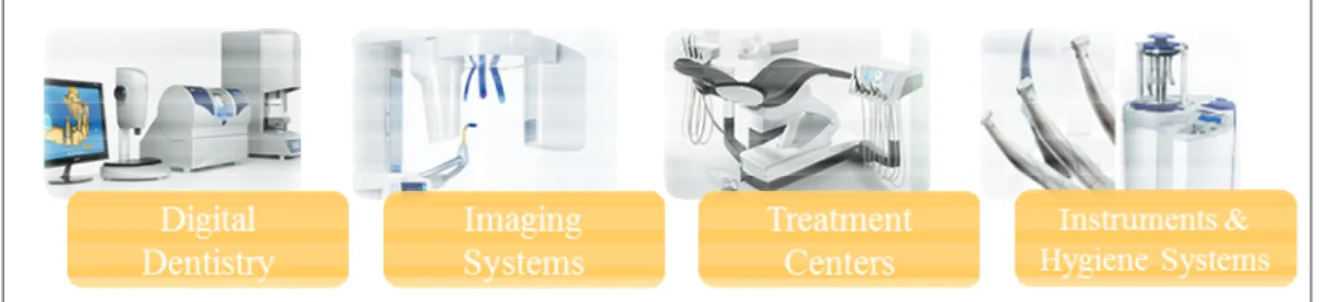
The relevance of this topic is emphasized by the argumentation of Dahm (2006, p.18). He claims that there is no use of high technology and innovation, if users do not know how to apply them, and as a consequence even reject the usage. When referring to medical devices, like in the case of Sirona Dental Systems, Inc., this point has even higher significance. The products are not only used for entertainment or pleasure, but primarily to support the user in his work (cf. Rensch 2012). Sirona Dental Systems, Inc. (in the following referred to as Sirona) is one of the global leaders in manufacturing dental equipment, selling its high technology products to dental practices, clinics and laboratories. The company employs a workforce of more than 3.000 at 29 branch offices on all continents, with its headquarters in Salzburg, Austria and its R&D center and main production plant in Bensheim, Germany. In the fiscal year 2012, Sirona generated revenues of $979 million (cf. Sirona Dental Systems, Inc. 2013a). Sirona covers the whole spectrum of dental capital goods. Its product range consists of four groups, which also represent the four business divisions of the company: Digital Dentistry, Imaging Systems, Treatment Centers and Instruments & Hygiene Systems (cf. Figure 1).
2
Figure 1: Sirona’s Business Divisions
Source: Own figure based on Sirona Dental Systems, Inc. (2013b).
The thesis on hand concentrates on the Human-Machine Interaction (HMI) of the DAC
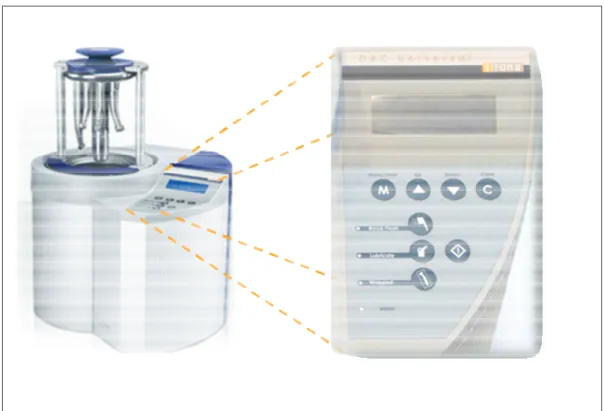
Universal (cf. Figure 2), a product which belongs to the Instruments & Hygiene Sys-tems division. With respect to the annual revenues, it represents the smallest division in comparison to the remaining three, with a share of 11% (cf. Sirona Dental Systems, Inc. 2013c). Its product range includes straight and contra angle handpieces, turbines, scaler, and laser (cf. Sirona Dental Systems, Inc. 2013d). The hygiene systems, like the DAC, are used to clean, lubricate and sterilize the instruments mentioned before. The latest version, launched in 2009, is capable of processing six dental instruments within 16 minutes (cf. Sirona Dental Systems Inc. 2013e).
In comparison to other hygiene systems, the DAC Universal stands out due to its high speed sterilization process leading to a more efficient work flow for dental practices (cf. Rensch 2012). Although the product is sold successfully worldwide, Sirona as being an innovation leader has the steady demand for product improvements. In 2012 internal sources within Sirona such as the development department, customer service center, and technical support staff were interviewed in order to identify critical aspects and sugges-tions for improvement. In summary, weak points concerning the handling of the DAC were mentioned, resulting in frequent help desk calls (cf. Jost 2012, p.87). Since the
product aims to facilitate the work flow of dental practices, the interaction between the
dental assistant and the product plays a central role for the customer. Currently, no spe-cific methods to analyze the HMI are integrated into the product development process within Sirona. As a consequence, this thesis aims to apply a new approach in order to integrate the user and his performance into the product design process. The focus of the
cen-3
tral role in HMI. Generally, the user interacts with various interfaces of the device. In the following, the user interface only refers to the operation of the system through the screen, the part of the DAC enlarged in Figure 2. Other aspects like the process of load-ing and unloadload-ing the device or the user manual are not part of this research study.
Figure 2: DAC Universal
Source: Sirona Dental Systems Inc. (2013e).
The thesis on hand applies user-centered development methods in order to identify the user’s needs and to evaluate his interaction with the user interface. Part of this work is the development of a user interface prototype based on guidelines derived from a user analysis. However, theoretical approaches concerning the graphical design of a user interface such as layout, icons and menu structure are not part of the thesis. The center
of attentions lies on the evaluation of the interaction between user and prototype.
Fol-lowing the User-Centered-Design Model, an early involvement of the end user into the development process is pursued. Since the fundamental structure and design of the user interface are still open for discussion, this research study concentrates on qualitative analysis methods which allow for direct contact and interaction with the potential end users.
4
The content of this thesis is divided into four parts. After this first chapter of introduc-tion, a theoretical foundation of the Human-Machine Interaction concept, its scope and influencing factors, are discussed. Furthermore, an outline of the theoretical approaches to HMI design is presented, followed by the development of a user-centered design model. The model serves as a framework for the further analysis process. In chapter 2.2 the steps to be taken are discussed more in detail. Besides, this part also includes an outline of several research studies and lately published articles related to the topic. The third chapter applies the design model, presented in chapter two. The focus lies on the evaluation of the user interface prototype, which was developed based on a user re-quirements analysis. After having presented the selected methods for the HMI analysis, the implementation and results are assessed. Moreover, the limitations of the research study and further consequences for the product development process are discussed. The last chapter identifies the possible future role of human-machine interaction within Si-rona.
5
2. Theoretical Approaches to Analyze Human-Machine Interaction
2.1 The Concept of Human-Machine Interaction
2.1.1 Types of Human-Machine InteractionIn order to use a product, interaction is always needed no matter if using a toaster, DVD
player or large industrial machine (cf. Stapelkamp 2010, p.13). The term
Human-Machine Interaction (HMI) describes the process of information exchange between a
human being and a machine1 in order to reach a specific goal (cf. Moser 2012, p.122).
All parts, both hardware and software, which (a) provide information, e.g. through a screen or loud speaker, and (b) give the opportunity to control a system, e.g. through
buttons or a mouse, form part of the user interface (cf. ISO 2010, p.7). In chapter one,
the user interface is defined as the “language through which the user and product com-municate” (Mayhew 1999, p.1). This chapter takes a closer look on the communication process and its influencing factors.
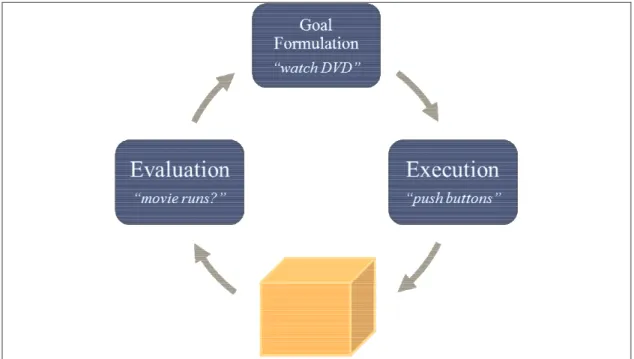
Analyzing the basic steps throughout the HMI process, the Action Cycle (cf. Figure 3)
was developed by Norman/Draper (1986, pp.38-43). The American psychologists de-fined three main stages of interaction: Formulating a goal, executing an action, and evaluating the output (cf. Norman 1988, p.38-43 for this paragraph). As mentioned
be-fore, the user aims to achieve a goal with the help of a machine, e.g. “toasting bread”,
“watch a DVD”, or in the case of the DAC Universal “sterilize dental instruments”. The
intention then needs to be transformed into actions by transmitting information through
the user interface to the machine. Taking the DVD as an example, the user pushes a button to open the DVD player, inserts the DVD, closes the DVD player via another button, and then pushes the “Start”-button. The DVD player has received the informa-tion to start the DVD. After that, the machine transmits the informainforma-tion to the user; e.g. a green light shines and the movie starts. The user then interprets and evaluates the per-ceived response by checking if the initial goal is achieved. In the above example this refers to the desire of watching a movie.
1
6
Figure 3: The Action Cycle
Source: Own Figure based on Norman/Draper (1986, p.38-43).
The challenge is to bridge the gap between the user goals and the product, i.e. designing
the user interface (cf. Norman/Draper 1986, p.43). The Execution gap needs to be filled
with possibilities to transmit information input from the user to the product. The Evaluation gap needs to be filled with plausible output which can be interpreted easily by the user. For both gaps the aim is to keep the cognitive effort as small as possible (cf. for this paragraph Norman/Draper 1986, p.95).
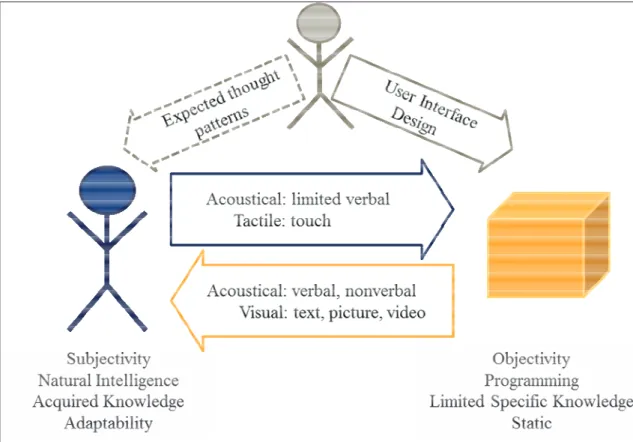
Norman’s model gives a structured overview of the HMI process, in reality however, several difficulties can emerge. For instance, it is possible that the system is not able to offer the possibilities searched by the user, or the system does not provide sufficient or clearly understandable information to evaluate the outcome of an action (cf. Norman 1988, pp.51-52). There are various reasons, which can disrupt the optimal HMI. Some of them can be derived from the model presented in Figure 4. It illustrates the possible methods of communication and the main differences regarding the information ex-change process between a human being and a machine concerning. There are significant differences in the way how a human and a machine send and process the information.
7
The model illustrates, that not only the user (blue) and the product (orange) are
influ-encing the HMI, but also the product designer (grey) (cf. Norman 1988, p.16).
Further-more, the asymmetric use of mediums to exchange information between each other is presented in the blue and orange arrows (cf. Dahm 2006, p.19). On the one hand, the human being can express itself through the use of the voice if the device has a micro-phone or through using a button, joy stick, keyboard, or touch screen. On the other hand, a machine can use verbal or nonverbal sound effects, show a text, pictures or vid-eos. As a result, the information expressed with a touch could be replied with a certain sound. This use of unequal mediums is not typical for the communication between hu-man beings, thus provoking misunderstandings in the HMI (cf. Dahm 2006, p.20).
Figure 4: Information Exchange Methods of Human-Machine Interaction Source: Own Figure based on Dahm (2006, pp.18-20); Norman (1988, p.16).
Following the considerations of Dahm (2006, p.20), further differences exist in the processing of the information received. A human being is able to use its natural intelli-gence and broadly diversified knowledge. Besides, a human being has the ability to
8
adapt to the product’s concept of communication. These attributes are strongly influ-enced by the characteristics, feelings, experiences, and expectations of each individual (cf. Moser 2012, p.12). By watching advertisement, talking to a shop assistant or un-wrapping the product, the user already creates certain expectations about the function,
quality and usage. Thus, Moser (2012, p.
10)
argues, the interaction with a product canalready start indirectly before the user actually holds the product in his hands.
In contrast, the machine only has the resources provided by the person who designed it. Neither is it able to learn from an experience made nor is it capable to adapt to unex-pected situations (cf. Dahm 2006, p.21). Although a machine is not influenced by the environment or its emotions like the human being is, its user interface is based on the designer’s thought patterns. The designer expects a certain behavior from the potential user and designs an appropriate interface that suits these expectations (cf. Norman 1988, p.16). Consequently the thought patterns and expectations of the user need to match those of the designer creating the interface. These ideal prerequisites would lead to an optimal HMI. In reality, this demand can hardly be met due to the diversity of the users, the complex concept of HMI presented above. In order to get closer to an ideal HMI, a process concentrating on the user is presented in the following chapter.
2.1.2 Theoretical Approaches to Improve Human-Machine Interaction
“Users are people with a goal, which your product needs to support” (Barnum 2011, p.84). Especially in the case of the DAC, this statement is fully applicable. The DAC’s task is to facilitate the work of the dental assistant, thus saving time and money of the dentist. If it does not fulfill this demand, it can be easily replaced with a competitor’s solution. Therefore, the center of attention lies on the user’s needs and an optimal HMI. Several approaches to this issue have been made during the last four decades. An out-line is given in the following.
In the 1970’s Scandinavian researchers presented their theory of Cooperative Design
(cf. for this paragraph Bødker et al. 2000, p.1
)
. The product development method aimed9
model”, an expert developed a product in order to facilitate the situation of the user (cf. Schuler et al. 1993, p.XI). The new approach argues that the user knows best what he needs to improve his work (cf. Czyzewski et al. 1990, p.II). One of the first research studies applying the theory was the UTOPIA project. The researchers integrated users in early design sessions having a direct discussion with the designers. Furthermore, they conducted user tests with low technology prototypes. After having reached awareness in
Europe, the approach was introduced in the United States, where the term Participatory
Design emerged (cf. Czyzewski et al. 1990, p.II).
A grand contribution to this topic was made by Gould/Lewis (1985, p.300) publishing a research study about their three principles of Participatory Design and how they are applied in real business life. The first principle is about the “early and continual focus on users”, meaning the user’s needs and tasks are to be understood and must be consid-ered in every step of the development process (cf. for this paragraph Gould/Lewis 1985, p.300). Secondly, empirical measurements have to be used, such as real work situations with prototypes in order to evaluate the performance and reactions. The third principle refers to the need of iterative design, i.e. a repeating cycle of design, user evaluation, and redesign. Since the first user confrontation of a prototype can reveal unpredictable user needs, designers have to be prepared to significant changes in the product concept and sometimes even think about a completely new approach (cf. Gould/Lewis 1985, p.308).
Norman/Draper (1986, p.61) first introduced the term User-Centered Design (UCD) in
1986. Their radical approach not only lets the user participate or cooperate; the user and his nature of interaction are perceived as the driving force of technology and interface design. The product is to support the user instead of being “an elegant piece of pro-gramming” (Norman/Draper 1986, p.61). They even claim the user’s needs are decisive for the interface design, which in turn is decisive for the rest of the product.
A well-defined model about how exactly the process of human-centered design should
be like was developed by Nielsen in 1993. With his eleven-step approach named
10
adding further stages like competitive analysis, setting usability goals, parallel design, and heuristic analysis methods (cf. Nielsen 1993, p.72). The full model is illustrated in Attachment 1. He points out, that not all stages have to be passed to achieve success. The appropriate methods rather needs to be chosen according to the product. He also emphasizes that the earlier the user-tests and analysis start, the less expensive the devel-opment process will be, because less redesign is needed (cf. Nielsen 1993, p. 72).
After the emergence of various theories about UCD the International Organization of Standardization published a norm in 1999, which was revised in 2010, named “Human-Centred Design for Interactive Systems” (ISO 2010, p.3). According to their definition it is the aim of UCD is to concentrate on the usage of the product, applying knowledge from the fields of ergonomics and usability (cf. ISO 2010, p.6). The term usability will be further discussed in chapter 2.2.2. Ergonomics is a scientific discipline, dealing with the interaction of a human being with other systems aiming to enhance the well-being of the human and the performance of the whole system (cf. ISO 2010, p.6). According to ISO (2010, p.8) applying UCD creates a competitive advantage, resulting in better sell-ing prospects for the product. Reasons for this are higher productivity and satisfaction of the user and the reduction of stress and uneasiness.
Theoretically, the argumentations presented above seem to be logical. In practice how-ever, UCD rarely is applied. Gould/Lewis (1985, p.301) conducted a survey with 447 people in charge of product design, approving this assumption. In 2002 another research on this topic was conducted, confirming the conclusion of Gould’s and Lewis’ claim (cf. Vredenburg et al. 2002, p.471). 103 UCD experts mainly from the US and Europe, considered the integration of the user into the product development process to measure the customer satisfaction objectively as very important. In fact, the feedback of internal design teams is used far more than an external user evaluation (cf. Vredenburg et al. 2002, p.475). One reason for this could be the cost and time effort, which need to be invested into the UCD process. According to Vredenburg et al. (2002, p.474) 32% of the experts were not sure UCD saves costs and time of the product development process or not. 44% believed that costs are saved, 24% believed UCD increases costs. However, 80% of the respondents thought applying UCD methods leads to an improvement of the
11
“usefulness and usability of their products in their company” (Vredenburg et al. 2002, p.474).
The outcome of the study could lead to the following conclusion: If the usefulness and usability are improved, a competitive advantage is created which might increase the number of products sold. Consequently, higher costs and time can be compensated. Fur-thermore, Vredenburg (2002, p.474) adds the assumption that the respondents did not consider the costs of customer service and redesign after the launch. As already men-tioned in chapter 1, the best technology is useless, if the user does not know how to ap-ply it. Keeping these points in mind, a model based on the approaches discussed is de-veloped in order to optimize the HMI (cf. Figure 5).
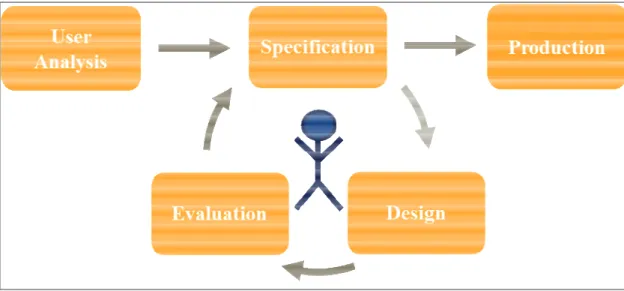
Figure 5: The User-Centered Design Process
Source: Own Figure based on Gould/Lewis (1985, p.300); ISO (2010, p.15); Nielsen (1993, p. 73).
Starting with an analysis of the user’s needs, expectations and tasks, the product specifi-cations can be derived. These include the goals to be achieved and the criteria to meas-ure the outcome. Afterwards, the first design phase starts, often beginning with low technology prototypes. The outcome then needs to be tested in order to verify if the goals, set in the beginning, have been met. If this is not the case, the prototype needs to be adapted to the findings. Having completed this step, the next testing phase begins. If unexpected user needs occur during the test, specifications might need to be changed as
12
well. The described procedure is to be repeated until the evaluation outcome matches the specifications.
The four stages of User Analysis, Specification, Evaluation, and Design will be further discussed in chapter 2.2. Since the goal of the thesis on hand is the optimization of the HMI of the DAC’s user interface, the model is applied in chapter three. The focus lies on the evaluation of the user interface prototype in chapter 3.4. Therefore, the prepara-tion, implementation and interpretation of the evaluation method used are presented more in detail.
2.2 Stages of the User-Centered Design Process
2.2.1 Methods to Analyze the User and his TaskThe approaches presented above all agree on the early integration of the user through
the analysis of his needs and tasks (cf. Nielsen 1993, p.75). In order to figure out what is
needed, Gould/Lewis (1985, pp.301) emphasize that the designer must understand the
user, not “identifying, describing [or] stereotyping”. In the following, several methods concerning user analysis are discussed.
………. ………. ……….