www.wskep.net
Water Security KE Programme Final Report
Final Report of the
Water Security Knowledge Exchange Programme
April 2011 – March 2014
Signed: Alan Jenkins
Date: Thursday 26th June 2014
Report Number: WSKEP Final Report 01
WSKEP Final Report 2011-2014 V1.1.Docx 26/06/2013
Acronyms
BIS UK Department for Business, Innovation and Skills NERC Natural Environment Research Council BGS British Geological Survey NGO Non-Governmental Organisation CEH Centre for Ecology and Hydrology PAG Programme Advisory Group CIWEM Chartered Institution of Water and Environmental Management PF Programme Framework
CCN Catchment Change Network PHE Public Health England
CDP Carbon Disclosure Project PI Principal Investigator
CREW Centre of Expertise for Waters PMG Programme Management Group CWC Changing Water Cycle Research Programme RCUK Research Councils UK
Defra Department for Environment, Food and Rural Affairs RELU Rural Economy and Land Use Research Programme
EA Environment Agency RP Research Programme
EPSRC Engineering and Physical Sciences Research Council SEPA Scottish Environment Protection Agency ESKTN Environmental Sustainability Knowledge Transfer Network SIM Science and Innovation Manager ESRC Economic and Social Research Council SLA Service Level Agreement
EU European Union SPS Specific Priority Subject
EVO Environmental Virtual Observatory SRG Scottish Resource Group FWR Foundation for Water Research SuDS Sustainable Drainage Systems
ICID International Commission on Irrigation and Drainage SWIRL Surrey Water Innovation Research & Learning JPI Joint Programming Initiative SWW South West Water
KE Knowledge Exchange UEA University of East Anglia
KEAB Knowledge Exchange Advisory Board UKCDS UK Collaborative on Development Sciences KEN Knowledge Exchange Network UKWIR UK Water Industry Research
KEP Knowledge Exchange Programme UKWRIP UK Water Research and Innovation Partnership
KTN Knowledge Transfer Network UNESCO United Nations Organization for Education, Science and Culture LOCAR Lowland Catchment Research Programme WERH Wales Environment Research Hub
LOIS Land Ocean Interaction Study Research Programme WSBF Westminster Sustainable Business Forum LWEC Living with Environmental Change WSKEP Water Security Knowledge Exchange Programme MAR Managed Aquifer Recharge WIG Cross - Research Council Water Interest Group
MRE Marine Renewable Energy WP Work Package
OFWAT The Water Services Regulation Authority
Summary
This document is the Final Report for the Natural Environment Research Council (NERC) Water Security Knowledge Exchange Programme (WSKEP) which ran from April 2011 – March 2014. It highlights the outcomes, benefits and impacts of the Programme’s activities, notes key achievements and outputs, describes case examples, presents learning and legacy issues including Programme recommendations and provides a financial statement.
Disclaimer
This document reflects the combined views of the WSKEP Programme Management Group (Alan Jenkins, Graham Leeks, Isabella Tindall, Neil Runnalls and Kay Heuser all based at CEH Wallingford). © NERC
Contents
Acronyms ... 1 Summary ... 1 Disclaimer ... 1 Contents... 1 1. Executive Summary ... 1 2. Programme Overview ... 1 3. Case Examples ... 94. Programme Deliverables and Metrics (Milestones and metrics) ... 15
5. Learning and legacy ... 16
6. WSKEP Finances... 20
Appendix 1 Sub Areas and Specific Priority Subject Workshops ... 21
Appendix 2 WaterR2B Case Studies ... 21
Appendix 3 Programme deliverables ... 23
WSKEP Final Report 2011-2014 V1.1.Docx 1 26/06/2014
1.
Executive Summary
This Final report reflects on the achievements and lessons learned from the three year (April 2011 – March 2014) Water Security Knowledge Exchange Programme. It was managed by a Programme Management Group (PMG) on a daily basis and advised by a strong, business led, Programme Advisory Group (PAG) comprising of both users and producers of NERC research outputs. The PAG met three times a year and was chaired by Michael Norton OBE, Global Water Director at AMEC Environmental & Infrastructure.
The main purpose of WSKEP was to accelerate the uptake of research by end users, in particular by businesses but also by policy-makers, regulators and Non-Governmental Organisations (NGOs) and help inform the direction of future science. This was done by conducting and coordinating a diverse range of Knowledge Exchange (KE) activities, some of which brought together scientists and end users at events to exchange ideas and create projects and partnerships that addressed the needs of the end users. Other activities lead to the production of reports and journal papers or set up schemes to encourage the translation of research results to end user products and services. Web based tools were also delivered which allow users to search for scientists working in their field, find national datasets of relevance or case studies of where other users have resolved similar problems by working in collaboration with researchers.
The Programme culminated in a very successful Reception in Westminster, where the key note speech was given by the Rt Hon David Willetts MP, Minister for Universities and Science. It brought together high level representatives of all the companies that WSKEP had been engaged with, plus others where water related risks were an important issue to their businesses. The reception provided guests with an opportunity to network with many scientists.
Although the Programme has now ended, its legacy will continue. Many relationships have been established which individuals have the opportunity to build upon. The online tools have been combined into a new Water Security Knowledge Exchange Portal (http://www.watersecurity.org.uk/) which will remain active and in the public domain for the foreseeable future.
2.
Programme Overview
Programme Objectives
The aim of WSKEP has been to accelerate the uptake of research and help inform the direction of future science to ensure sustainable use of our water in the future.
NERC-funded research produces knowledge, expertise and skills that can provide significant benefits for the environment, for the economy and for the general well-being of society. Knowledge exchange plays an important role in delivering these benefits.
The overarching purpose of the KE programmes was to accelerate the uptake of research and help inform the direction of future science. This was done by conducting and coordinating a range of KE activities which:
Effectively brought together the NERC-funded research community across all Research Centres and Higher Education Institutes that deliver science in the relevant programme area, and built on their strengths and multidisciplinary capabilities.
Proactively engaged current and potential users of NERC-funded research, particularly in business, but also among policy-makers, regulators and NGOs.
Systematically identified the key needs and science challenges faced by end-users.
Stimulated the exchange of knowledge, the flow of people and the creation of projects and partnerships that addressed the needs and capitalised on the opportunities they presented.
Key Outcomes, Benefits and Impact
Listed below are the key outcomes, benefits andimpacts resulting from WSKEP activities:
The WSKEP Reception on ‘Improving Resilience of Businesses to Water Related Risks’ held in Westminster in November 2013 was considered a success. It had the dual purpose of bringing together high level representatives
WSKEP Final Report 2011-2014 V1.1.Docx 2 26/06/2014
from industry, government and academia to network and collaborate as well as to discuss recent initiatives that would encourage innovation in water management. The various science initiatives on display benefitted from the interest of users and Duncan Wingham set a challenge to the audience that was subsequently picked up and discussed by the PAG. During the evening the keynote speaker, The Rt Hon David Willetts, was invited to visit the Centre for Ecology and Hydrology (CEH). He is now more aware of the issues facing the water industry as a whole.
As a result of the Phase 1 Workshops, WSKEP commissioned AMEC to identify whether any synergies existed between agriculture and the Water Utilities in relation to the management of water. The findings of their report were presented at a meeting in June 2013. Since then a further meeting with Water Companies and the Environment Agency (EA) amongst others was held on 21st March 2014. This meeting prioritised the findings of the report and discussed the way forward for the top two synergies which related to water quality and agricultural water storage. The production of the Workshop report was the most popular news story in the WSKEP May 2014 e-zine and contributed to reaching the highest number of visitors ever to the website. Visitors to the site have offered further contributions to the report which have been followed up.
A meeting on ‘Exploring the opportunities and barriers to much larger scale aquifer storage and recharge than has so far been practised in the UK’ brought together 20-30 experts from academia, the EA and the water utilities on 4th December 2013. WSKEP sponsored this event, with support from the British Geological Survery (BGS), UK Water Industry Research (UKWIR) and the UK Water Research and Innovation Partnership (UKWRIP). The meeting created and explored new ideas and further potential for ‘Managed Aquifer Recharge’ (MAR) in the UK. The resulting recommendations are that the UK develops large scale test-bed facilities for MAR and that UKWIR and BGS partner on aquifer storage and recharge research.
Following on from a Phase I Workshop, WSKEP sponsored the Wales Environment Research Hub (WERH) to organise what was a very successful workshop on ‘Communicating Environmental Science’ in June 2013 at which NERC was represented. The meeting was oversubscribed and people had to be turned away. As a result of this, there was a demand for a further workshop which Mark Everard organised called ‘Communicating science for sustainable practice’ which was held at the University of West of England on 27th - 28th November 2013. Shaun Russell, the Director of WERH wrote ‘The Welsh Government were so impressed with the training workshop that they have asked my Unit to prepare a proposal for yet another event that would expose Government staff specifically (across all departments and not just environment) to the communications theory, skills and case studies that we covered in the WSKEP workshops. ... so you can see the excellent multiplier effect and impact that the activity has had and continues to have.’
WaterR2B, the Programme case study website, was launched at the High Level Event in November 2013 with over 40 case studies across 8 different sectors. WSKEP sought feedback on the style, length and information content etc and as a result of the survey responses, have generated a further 30 studies to upload. They all illustrate how industry has used scientific research to solve a real world problem for example: ‘Is building an irrigation reservoir the right option for farmers?’, What effects do cytotoxins in drinking water have?’ and ‘How can new models help minimise the costs of flooding?’
The Water Research Directory was launched in April 2012 with 300 entries and now has over 1000 entries. It is the only comprehensive listing for the UK. The tool was designed to promote collaboration and to accelerate users (business and policy) access to NERC and other research funded water science. It has achieved its aim as it receives about 150 enquiries every month. It also contains pages on the University Research networks and hydrological research facilities. Both pages, like the main researcher catalogue are self populating and have increased the functionality of the directory. Recently it was written into a proposal to provide a call down service to undertake evidence reviews for Defra’s Water Availability and Quality (WAAQ) Programme ie implementing the standard evidence review methodology which was developed by James Miller with WSKEP funding.
During the life of the Programme, the WSKEP website has consistently ranked between 3rd and 6th on Google (out of over 800 million returns) for the generic search term “water security”. It has featured on the first page for the same search for nearly two years. There are no other NERC sites in the top 50. Unique visitor figures have averaged at just over 900 per month in 2013 and 2014 whilst being about 650 per month during Q4 2012 when the site was building its reputation. This exceptional level of achievement has been due to the way new technologies for example twitter were taken up at the start and used to the Programme’s advantage.
WSKEP has been closely linked to the UK’s country partner role in the European Joint Programming Initiative (JPI) on Water, and has successfully engaged with government departments in that initiative.
WSKEP co-funded several British Water actions to encourage their members to engage more actively with the research community. These included Innovation Days, where researchers and British Water members presented the latest research and innovation to water utilities and Focus Group meetings. The Innovation Days provided an environment where SME’s, researchers and large water utilities could meet and discuss industry needs and
WSKEP Final Report 2011-2014 V1.1.Docx 3 26/06/2014
research capabilities. The first 13 Innovation Exchanges that British Water held delivered 453 10-minute presentations in 49 workshops putting 778 individuals from 164 different suppliers in front of 408 people from 14 client organisations (water utilities). Indications are that 30-40% of suppliers have had further, fruitful discussions with clients and/or other suppliers about developing or adopting their innovations. The two British Water Focus Groups (Sustainable Urban Drainage (SUDS) and Fats Oils and Greases (FOG)) access research skills and discuss industry requirements. The efforts of both these groups aim to improve performance of sewer systems, support high priority research interests in diffuse urban pollution, and in urban flooding. Actions included closer linkage of these groups to the NERC Research Programme in Flooding, and in supporting a case for future research on diffuse urban pollution.
As a result of the Phase 1 Workshops, WSKEP commissioned a piece of work aiming to improve KE related to the health impacts from flooding by identifying high risk populations. This work was carried out by Public Health England (PHE). They hosted a workshop on 30th January 2014 that coincided with another workshop PHE were hosting for the EC PHASE project they are leading on the flood work package. The workshop was called Flooding and GIS systems and the participants included PHE, the Health and Safety Executive, the National Health service (NHS), the UK Met Office, the Flood Forecasting Centre, the EA, CEH and BGS. New areas of data exchange were agreed, some of which will go forward immediately. A concept note was prepared by PHE that outlined future steps and potential funding sources for improvements / inter-operability of data and systems. Public Health England's advice to the public for before, during and after flooding can be found on its website.
Richard Blackmore of Research Impact Consulting produced a report on behalf of WSKEP showing that participants at the Phase 1 Workshops had made new contacts and were developing collaborative research (eg Manchester airport working with Lancaster University), and forming agreements to work together on submitting proposals and winning bids.
WSKEP support for the NERC Catchment Change Network (CCN) has enabled this network to remain the preferred route for delivery of a knowledge hub for the Department for Environment, Food and Rural Affairs (Defra)/EA catchment based approach. WSKEP support has also ensured that other NERC data, knowledge and expertise will be an integral part of the next generation of web based knowledge provision to stakeholders (third sector organisations, industries, consultants and government bodies) involved in implementing the catchment based approach across England and Wales.
Summary of Key Activities
The description below lists the key activities and achievements by Work Package (WP). WP1- Identify key needs and science challenges faced by the users
This Work Package was about identifying the subjects that would form the basis of the Programme Workshops. A set of five Sub Areas was agreed by the PAG in May 2011, three of which were prioritised to be the main area of focus for the first 18 months. A Launch event was held in London on 28th June 2011. It brought 36 users and 16 researchers together with the aim of identifying three Specific Priority Subjects (SPSs) for each of the three selected Sub Areas. (See Appendix I for the resultant titles.) WP 3 implemented the Workshops (see below). Half way through the Programme the NERC KE Advisory Board (KEAB) requested a revised approach to the way WSKEP interacted with businesses. Instead of hosting more workshops in the remaining two Sub Areas, a) plans for the Data Sub Area were revised so that a Water Data Portal could be produced, b) Sub Area 5 was laid aside and c) WSKEP spent time identifying businesses to engage with in order to determine their KE needs. (See WP3 for details)
WP2 - Identify the science that matches the key needs of the users
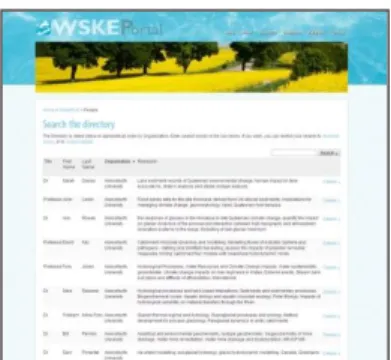
WP2’s main task was the creation of a Water Research Directory (http://www.ukwaterresearch.net/) (Figure 1). It lists PI’s and Co-PI’s of freshwater projects in the NERC Grants on the Web (GOTW), and is further enhanced with details of a) researchers who have attended WSKEP events, b) from web searching University websites, or c) researchers who have self-registered their interest in being included in the Directory. At this time there are over 1000 researchers listed. It also contains information on water research and demonstration facilities in the UK, showing these on an interactive map. There are currently 26 facilities listed. This is the first comprehensive listing for the UK. Finally it contains a Directory of University Water Networks which has the facility for people to submit their own networks. There are at present, 7 listed. The Directory is becoming a very useful resource for businesses and Government Departments (e.g. UK Trade & Investment), allowing them to search for researchers in their specialist fields of interest.
WSKEP Final Report 2011-2014 V1.1.Docx 4 26/06/2014
The other objective of this WP was to establish an Industry Impact Award Scheme where proposals were invited for small knowledge exchange grants of £5-£10K. The Scheme ran from April 2013 – March 2014. It attracted 6 full proposals plus a further 6 enquiries about the scheme. The proposals were reviewed by the PMG and those that were eligible for funding were then evaluated by two relevant members of the PAG. In the event, only one was accepted with a grant being awarded. The scheme was widely advertised a number of times to the Water security community to help stimulate a greater number of applicants.
Finally WP2 identified and distilled from past, current and future NERC funded Research Programmes (RP), industry specific outputs and potential impacts. This involved contacting existing RP Programme Offices as well as the NERC Science Delivery team. The report can be found on the WSKEP Programme website:
(http://www.wskep.net/assets/documents/NERCfundedResearchProgrammesoutputsrelevanttoindustry.pdf) WP3 - Organise Events and Activities to bring together the users and scientists
This Work Package was divided into three parts, 1) the management the Programme Workshops, 2) activities with users to identify areas where WSKEP could support their programmes of work and 3) activities to increase impact from recent Research Programmes.
The management of the Programme Workshops
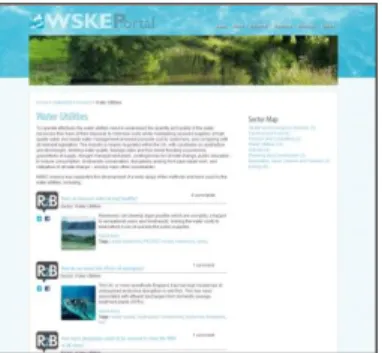
WSKEP designed and organised ten Sub Area Workshops that were hosted by different organisations geographically spread across the UK. They were all lead by Peter Woodward of Quest Associates Ltd, a scientific facilitator who was able to bring a coordinated approach to the family of workshops and ensure that there was effective participation from the delegates. The Workshops were all well attended with representation from key individuals from relevant invited organisations. New partnerships we forged and discussion produced excellent synthesis of the major challenges in the respective priority subject areas. Participant reports were circulated to all who attended and Summary reports were published on the website. A Sub Area Development Meeting was held in June 2012 where the research recommendations from all the Workshops were discussed and prioritised for further action by WSKEP. The top ten were completed in the second half of the Programme. One of the objectives of the Workshops was to initiate collaboration between the researchers and users that attended. The PMG commissioned Richard Blackmore of Research Impact Consulting to gather information by questionnaire about these collaborations and recommend new approaches that could be included in any future workshops to increase the number and effectiveness of post-event collaborations. The report ‘Collaborations arising from WSKEP Workshops’ has been published on the website. The survey found that 50 out of 71 respondents had identified potential collaborations as a result of the workshops, and that 73 bilateral discussions had been held subsequent to the WSKEP Workshops. Despite the short time between the end of the workshop programme and the survey, 27 collaborations had already been initiated, or were being planning. The redesigned Data Sub Area produced a Water Data Portal (Figure 2). It delivers a
comprehensive catalogue of national water-related data that are of interest to a range of stakeholders. The data are divided into three sections, groundwater data, surface water data and atmospheric data. The portal provides a perspective on the data, how useful they are, how to access them (with some video clips) and allow users to comment on the datasets. It went live in June 2014 so it remains interesting to see how businesses will pick it up and use it to identify datasets of interest relevant to their studies.
Activities with users to identify areas where WSKEP could support their programmes of work
Much of the effort of the WSKEP Programme fell into this section of WP3. In the first half of the Programme, User Based Activities focussed on the delivery of several
projects requested and funded by Defra/EA. Actions included monitoring progress on: a Guidance document for undertaking Quick Scoping Reviews and Rapid Evidence Assessments, national water quality scenarios using UKCP09, a Systematic Review on natural, restored and constructed wetlands and planning for an international conference on methods for determining environmental flows. These were fully funded by Defra/EA. The Guidance document was subsequently applied to two evidence assessments which Defra approved. Work continued in the general area of identifying methods and tools by which Defra/EA could access policy relevant knowledge from the vast amount of national, European and international research.
Figure 1 UK Water Research Directory
WSKEP Final Report 2011-2014 V1.1.Docx 5 26/06/2014
In the middle of the Programme, WSKEP concentrated efforts on building relationships with key industry user groups, and working with their established academic partners to increase and diversify that industry’s access and use of NERC science. Key industry sectors included water utilities (where Exeter University was commissioned to extend the work they were doing with South West Water on carbon sequestration to four other water utilities), the grocery sector where WSKEP worked with Cranfield University to expand current work on increasing resilience to droughts, and with the financial sector (The Carbon Disclosure Project (CDP) - Water and the Financial Service Knowledge Transfer Network (KTN)) to identify topics where academic partners can work with CDP-Water and its partners in the financial sector.
In the last phase of the Programme, WSKEP focussed on discussions with businesses including water companies, infrastructure companies, electricity generators, extractive industry, the consulting sector and British Waterways. WSKEP supported the involvement of academics in water innovation actions being run by trade and professional associations – eg British Water, Water Industry Forum and Water Innovation Network. WSKEP also took on board the recommendations that had come from the Phase 1 Workshops. One of these was to raise the profile of health impacts of extremes and in particular flood events. Public Health England organised a workshop on behalf of the PMG to discuss this topic. Another task was to identify synergies between agricultural and water utility users around the management of water. The PMG commissioned AMEC to prepare a report which collated the fragmented information on the subject. The results were then discussed at a workshop where plans were made for the two most promising synergies. A third task was to review the efficacy of communication plans for drought conditions during the 2010 – 2012 drought. The PMG asked Waterwise to see what could be done to improve communication with the general public about water saving initiatives. This report is underway but still outstanding.
Activities to increase impact from recent Research Programmes.
In partnership with the Programme Managers of the Changing Water Cycle (CWC) and Storm Risk Research Programmes (Graham Leeks) and the programme manager of the Macronutrients Programme (Paul Whitehead), WSKEP developed a protocol whereby WSKEP supported these NERC Research Programmes. This protocol allowed PI’s and the Programme Management team to build upon the Impact Plans of each funded project, prepare a programme level synthesis report identifying common areas of user engagement and develop a plan for delivery of programme level KE activities. WSKEP offered complementary support to these programme level KE activities and provided opportunities to promote them and other research programmes at most of the meetings they organised. Based on outputs from the Rural Economy and Land Use (RELU) Programme, Lancaster University completed a Case Study / Best Practice guide on the local stakeholder involvement in catchment management schemes. This was made available through the Catchment Change Network (CCN) Knowledge Hub to those involved in the Defra/EA catchment based approach. Due to staff constraints Imperial College withdrew from its initial undertaking to run a KE activity with the consulting sector and the EA on the use of the improved groundwater modelling of the unsaturated zone that was developed under the Lowland Catchment Research Programme. WSKEP therefore proposed that it should be considered further within the NERC Changing Water Cycle Research Programme. This has taken place within the HyDef project of the CWC Programme which has used Lowland Catchment Research (LOCAR) data and study sites. Also related to this, a Defra funded catchment modelling project began in April 2014 which is linked to the Macronutrients programme.
Another task was about synthesising outputs from recent and current ecosystem services research initiatives. WSKEP commissioned the Environmental Sustainability Knowledge Transfer Network (ESKTN) in collaboration with the Ecosystems Knowledge Network (EKN) to engage agri-food businesses and retailers at the UK regional level to gain a better understanding of using water-related ecosystem service valuation tools. The goal being for these businesses to be able to manage risks and respond to opportunities. A workshop was held, further actions agreed and the report is now available. (http://www.wskep.net/news.php?id=253 and http://www.wskep.net/assets/documents/Business-engagement-in-valuing-and-implementing-water-workshop.pdf)
The final task was about reviewing plans for Current RPs and identifying potential decision support tools. This was completed in association with a WP2 task and the report can be found on the Programme website: (http://www.wskep.net/assets/documents/NERCfundedResearchProgrammesoutputsrelevanttoindustry.pdf)
WP4 - Connect and coordinate KE across NERC
This Work Package was organised in two parts, part 1) was about connecting and communicating with other groups whilst part 2) concerned the management and maintenance of the WSKEP website.
WSKEP Final Report 2011-2014 V1.1.Docx 6 26/06/2014
WSKEP opened and maintained links with many different groups, networks and institutions throughout the 3 year Programme. In terms of NERC groups, WSKEP members attended all the NERC Knowledge Exchange Network (KEN) meetings to learn about other KE activities, network with other KE members and exchange views. On several occasions WSKEP PMG members provided updates on the Programmes activities. WSKEP undertook activities jointly with and added value to the NERC KE Fellows. WSKEP met them at the KEN meetings and helped them by sponsoring and advertising their events, putting them in contact with others working in their field and inviting them to the Programme events. WSKEP stayed in touch with the NERC Marine Renewable Energy (MRE) Knowledge Exchange Programme (KEP) allowing the groups to discuss progress and experiences and exchange information on how the programmes were developing. WSKEP had discussions with those setting up the new NERC Drought and Flood calls. Ned Garnett (NERC Atmospheric Sciences, Science and Innovation Manager) used the outcomes from the two WSKEP Workshops on drought management to convince the Economic and Social Research Council (ESRC), the Biotechnology and Biological Sciences Research Council (BBSRC) and the Engineering and Physical Sciences Research Council (EPSRC) to co-fund this new RP. WSKEP also supported the NERC CCN which enabled it to remain the preferred route for delivery of a knowledge hub for the Defra/EA catchment based approach.
WSKEP has been involved in many other KE Networks. WSKEP worked with WERH on several workshops on communicating environmental science and held many discussions with the Scottish Centre for Excellence in Water Research (CREW). It met with the key trade and professional associations to discuss how they could improve collaboration by actively sharing knowledge on the science and management of water and worked with a number of Academic Water Groups such as the N8 Research Partnership, Water @Leeds, Water at Oxford, Surrey Water Innovation Research & Learning (SWIRL) at Surrey and others. WSKEP created and maintained links throughout with the Living with Environmental Change (LWEC) Programme and later collaborated with the Government Office for Science - LWEC UKWRIP Initiative. WSKEP supported and attended a number of UKWRIP Workshops and events and have recently developed a Water Portal which UKWRIP will access direct from their website.
The WSKEP website
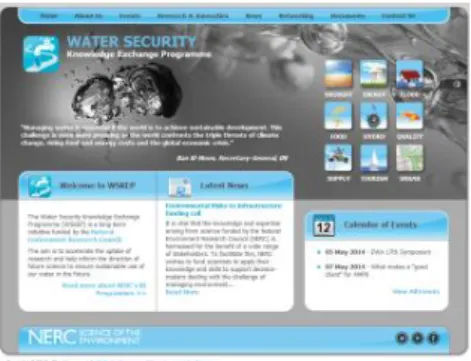
The WSKEP website (http://www.wskep.net/index.php) (Figure 3) has grown and developed during the Programme. It is now a well respected site for water security information, accessed at all levels including by MPs. The events calendar is kept up to date with WSKEP and other national and international conferences and meetings. Newsletters (e-zines) are sent out monthly highlighting WSKEP activities and others supported by the Programme. Tweets are posted nearly every day as well as when the website is updated. WSKEP now has over 1000 twitter followers.
WP5 - Communicate with the science and user communities This Work Package is in two parts, part 1) is about writing and maintaining a Communication Plan whilst part 2) covers the organisation of a High Level event.
The WSKEP Communication Plan was a living document and was updated regularly during the life of the Porgramme. Each version was presented to the subsequent PAG meeting for review and discussion. The document remains active as the tools remain live under the new custodianship of CEH Wallingford. (See Section 5, Programme Legacy)
WSKEP hosted a Reception called ‘Improving Resilience of Businesses to Water Related Risks’ at Central Hall Westminster on Wednesday 6th November 2013. There were four speakers, the Rt Hon David Willetts MP, Prof Duncan Wingham, Chief Executive of NERC, Colin Drummond, Chief Executive of Viridor and joint CEO of Pennon Group plc and Mark Fletcher, Global Water Business Leader for Arup. The aim of the event was to raise the profile of NERC science being used by businesses. It brought together high level representatives from industry, government and academia to discuss recent initiatives to encourage innovation in water management. There were two sponsors, Arup and British Water and seven banners around the room that displayed different science and KE initiatives. The initiatives represented were BGS, COsmic-ray Soil Moisture Observing System UK (COSMOS-UK), Hydrological Outlooks, Met Office, Water@Leeds, SWIRL and WaterR2B. WaterR2B was launched and the UK Water Research Directory was promoted. Duncan Wingham invited the attendees to discuss ways in which NERC could carry out Knowledge Exchange activities with business, which has resulted in some follow on discussions. An article was written up about the event (http://www.wskep.net/news.php?id=295) and a short video prepared showing highlights of the evening (http://www.wskep.net/news.php?id=296).
WSKEP Final Report 2011-2014 V1.1.Docx 7 26/06/2014
As a result of the evening David Willetts requested an opportunity to visit CEH to see the work they do on water related issues. That visit was arranged for 27th January 2014 and was a success. He was presented with one of the first copies of the CEH Science Strategy 2014-2019 by the CEH Director.
WP6 - Act as a KE Ambassador
This WP was an ongoing activity throughout the Programme whereby the good practice in relation to KE was shared among the NERC community. Opportunities to share experiences were undertaken whenever possible. WSKEP interacted with other NERC KE networks and programmes, those of other Research Councils, other University led proposals, initiatives sponsored by government departments and devolved governments, trade and professional associations and European and international KE networks. Across this wide range of communities, WSKEP was able to highlight NERC’s level of commitment to, and leadership in water related knowledge exchange.
Also included in this WP was the development of case studies of benefit to industry from NERC and other freshwater science. WSKEP developed a dynamic website for many different sectors, from the water utilities, through, farming, energy, consulting and health amongst others to highlight case studies of where working with research organisations, industry has solved some of its challenges and needs. The website is called WaterR2B (http://waterr2b.net/) (Figure 4) and was launched at the Westminster Reception in November 2013 containing about 40 case studies. Since then an industry survey was carried out to discover whether this tool was what users required. There was a positive response, so WSKEP continued to build examples of where science and industry have worked together. Another approximately 20 are due to be loaded shortly bringing the total number of case studies to around 60.
WP7 – Management of WSKEP
This WP was created in order to report management issues relating to the Programme. The PMG, which consisted of a Lead, a Project Manager, a Programme Development Manager, a Scientific Advisor and a Coordinator, met on a monthly basis to discuss progress, issues and upcoming events. Minutes were prepared for all meetings and actions followed up.
The PAG consisted of individuals from industry, consultancies, Government Ministries and Agencies who volunteered their time and who were selected in order to provide a diverse range of insights into water KE related issues. The PAG was formed before the start of the Programme, however, some members retired and others joined the Group during the three year period of the Programme. The PAG members provided advice and guidance to the PMG at the meetings; all of which were minuted and actions completed.
The PMG had many responsibilities; these are just a few. It monitored the Programme budget and revised actions in the light thereof. A six monthly financial report was submitted to the NERC KE Innovation team for approval. (See Section 6 for the latest Statement). The PMG regularly updated a risk register based on the System for Targets and Risks (STAR) which was reviewed at the PAG meetings. It was responsible for the branding of the Programme. It used the services of Samui and Cooper RepCo Ltd to develop the style and tools to advertise the Programme. Many contracts were let throughout the 3 years to these companies and other consultancies, all of which were handled by the KEP Co-ordinator. Numerous Workshops and events were organised, hosted and reported on and the website was kept up to date and current. In November 2013 the PMG submitted a proposal for a third phase of WSKEP running from April 2014 to March 2015. This was to be paid for by the then anticipated under spend in the last financial year. This was not granted so the PMG brought the Programme to a close at the end of March 2014.
Key Outputs
The key outputs of the WSKEP Programme were: 1. WSKEP Launch June 2011
2. Ten Workshops with Full Participant Outcome Reports
3. Ten Workshop Summary Reports (http://www.wskep.net/workshop_outputs.php) 4. Sub Area Development Meeting with Full Participant Outcome Report
5. Sub Area Development Meeting Summary statement (http://www.wskep.net/summarystatement.php) 6. Report by Richard Blackmore ‘Collaborations arising from WSKEP Workshops’ Aug 2012
(http://www.wskep.net/news.php?id=200)
WSKEP Final Report 2011-2014 V1.1.Docx 8 26/06/2014
7. Sponsorship for a conference on ‘Blueprint for safeguarding European waters’ 11 Jan 2012 8. Case Study ‘Best Practice from RELU on local stakeholder participation in catchment management’
(http://www.catchmentchange.net/about/resource-centre/)
9. Oral presentation of published paper ‘The NERC Water Security Knowledge Exchange Programme - it's achievements and remaining challenges’ at the British Hydrological Society’s 11th National Symposium in Dundee. 11 Jul 2012
10. The UK Water Research Directory - Researcher and demonstration facilities website (http://www.ukwaterresearch.net/)
11. Foundation for Water Research (FWR) Newsletter lead article ‘WSKEP soaking up knowledge - A novel approach to supporting sustainable and resilient management of droughts’ ( http://www.euwfd.com/FWR-Newsletter10-0.pdf)
12. The Westminster Sustainable Business Forum (WSBF) - ‘Sustainable Solutions: Raising the water mark’ (http://www.wskep.net/news.php?id=196 and http://www.wskep.net/assets/documents/WSBF-Sustainable-Solutions-Raising-the-water-mark.pdf )
13. All Party Parliamentary Water Group – ‘Making Innovation a Reality’ Brochure (http://www.wskep.net/news.php?id=201)
14. A short guide to Water related searches written by WSKEP and Envirobase team members
15. Guidelines document ‘Guidance document for the production of Quick Scoping Reviews and Rapid Evidence Assessments’
16. Sponsorship of the first International Conference on Water Security, Risk and Society held by Oxford University resulting in a Key Issues document (http://www.liamcreative.water2.com.gridhosted.co.uk/conference-reports/) and three Opportunity documents (http://www.wskep.net/assets/documents/nerc-business-water-security.pdf,
http://www.wskep.net/assets/documents/nerc-eu-water-security.pdf and
http://www.wskep.net/assets/documents/nerc-rcuk-water-security.pdf)
17. Theme Issue compiled and edited by Jim hall, David Grey, Dustin Garrick, Simon Dadson and Rob Hope of Philosophical Transactions of the Royal Society A on ‘Water security, risk and Society’ vol 371 number 2002, 13 November 2013. (http://rsta.royalsocietypublishing.org/content/371/2002.toc)
18. Exeter University organised think tank ‘Avoiding the Perfect Storm: Water Food Energy Nexus’ on 24-25 July 2012 plus published report. ( http://www.wskep.net/assets/documents/Uni-of-Exeter-Water-Food-Energy-Workshop-Report-Final.pdf)
19. Sponsorship of the University of East Anglia (UEA) Water Security and International Commission on Irrigation & Drainage (ICID) Seminar Nov 2012 (http://www.uea.ac.uk/watersecurity/events/uea-water-security/icid-seminar
and Report http://www.uea.ac.uk/documents/40159/0/ICID-irrigation-seminar-report/4c958a30-3b23-4e6e-8834-fc5663e0baae)
20. Support for the NERC Catchment Change Network and the Better Thames Network
21. Sponsorship of work leading to a paper in the journal Environmental Evidence on the effectiveness of reed beds at retaining nutrients from agricultural pollution (http://www.environmentalevidencejournal.org/content/2/1/1) 22. The Industry Impact Award Scheme (http://www.wskep.net/Industry_Impact_Awards.php)
23. Sponsorship of the UK Groundwater Forum Annual Conference on 20th June 2013
(http://www.groundwateruk.org/Communicating-Groundwater.aspx) 24. WaterR2B – the case studies website (http://www.waterr2b.net/) 25. WSKEP Report ‘Current research activities relevant to Industry’
(http://www.wskep.net/assets/documents/CurrentResearchActivitiesrelevanttoIndustry.pdf) 26. WSKEP Report ‘NERC funded Research Programmes outputs relevant to Industry’
(http://www.wskep.net/assets/documents/NERCfundedResearchProgrammesoutputsrelevanttoindustry.pdf)
27. ESKTN organised workshop ‘Business engagement in valuing and implementing water-related ecosystems services: making the case for the agri-food sector’ 14th May 2013 (http://www.wskep.net/news.php?id=253)
28. AMEC Report ‘Water Quantity: Synergies between Agriculture and Water Utilities’
(http://www.wskep.net/assets/documents/Synergies_between_agriculture_and_water_utilities_Final%20Report.p df)
29. WERH organised workshop at Bangor on ‘Communicating Environmental Science’ on 27-28 June 2013 (http://www.werh.org/Communicating%20Science%20workshop/CESworkshop.php.en)
30. Follow up to WERH workshop at UWE, Bristol, on 'Communicating Science for Sustainable Practice' on 27-28 Nov
2013(http://www.werh.org/UWE%20CES%20workshop/CommunicatingScienceforSustainablePractice.php.en)
31. Sponsorship for British Water Innovation Days and Focus Groups.
32. Support for the Water Industry Forum workshop on ‘Dealing with the threat of future water shortages – do we need a UK water grid or is it something else?’ (
http://www.waterindustryforum.com/member-services/events/wif-events/do-we-need-a-uk-water-grid/)
33. Journal paper: ‘The potential of using the ecosystem approach for WFD implementation’ (2014) Vlachopoulou, M.1, Coughlin, D.1, Forrow, D.2, Kirk, S.2, Logan, P. 2, and Voulvoulis, N.1(1. Imperial College London - 2.
WSKEP Final Report 2011-2014 V1.1.Docx 9 26/06/2014
Environment Agency) Science of the Total Environment 470 - 471 (2014) 688 - 694.
( http://www.wskep.net/assets/documents/The-potential-of-using-the-Ecosystem-Approach-in-the-implementation-of-the-EU-Water-Framework-Directive-Final.pdf )
34. A Westminster Reception ‘Improving Resilience of Businesses to Water Related Risks’ opened by the Rt Hon David Willetts MP. (http://www.wskep.net/news.php?id=295 and
http://www.youtube.com/watch?v=tFxzbINbfGQ)
35. FWR Newsletter lead article ‘Innovation for the UK Water Community: Opportunities and Barriers’ (http://www.euwfd.com/FWR-Newsletter14-0.pdf)
36. All Party Parliamentary Water Group – ‘Water Innovation 2013’ Brochure ( http://appg-water.co.uk/assets/Innovation_2013.pdf)
37. Harper Adams report on ‘What impact does the alteration of timing to slurry applications have on leaching of nitrate, phosphate and bacterial pathogens? A Rapid Evidence Assessment.’
(http://www.wskep.net/assets/documents/Rapid-Evidence-Assessment-Slurry-application-(280214).pdf) 38. Harper Adams report on ‘How effective are farmland interventions for reducing Faecal Indicator Organisms
(FIOs) in bathing and shellfish waters (especially Escherichia Coli and Intestinal Enterococci) coming from river catchments? A Quick Scoping Review ( http://www.wskep.net/assets/documents/Quick-Scoping-Review-Faecal-Indicator-Organisms-Final%20(270214).pdf)
39. The Water Data Portal – the national water data website (http://www.watersecurity.org.uk/waterdata)
40. WSKEP workshop on ‘Innovative and radical groundwater recharge, storage and resource development’ on 4 Dec 2013 (http://www.wskep.net/news.php?id=337 and
http://www.wskep.net/assets/documents/Radical-groundwater-recharge-workshop-4th-Dec-2013-REPORT.pdf )
41. Support of three WSBF Round table discussions in Westminster. Last meeting held in Dec 2013.
http://www.wskep.net/assets/documents/Water-Post-Event-Brief.pdf and
http://www.wskep.net/assets/documents/WSBF-Water-Round-Table-Discussion-Summary.pdf)
42. Public Health England Workshop on ‘Flooding and GIS: Opportunities for public health’ on 30th January 2014 (http://www.wskep.net/news.php?id=338 and http://www.wskep.net/assets/documents/Flooding-&-GIS-Workshop-Report-Final.pdf)
43. WSKEP workshop on ‘Improving water knowledge exchange between Trade and Professional Institutions and Associations’ on 5 Mar 2014
44. AMEC organised workshop on ‘Synergies between agriculture and Water Utilities’ on 21 Mar 2014
(http://www.wskep.net/news.php?id=336 and http://www.wskep.net/assets/documents/WSKEP-event-March-21-outcomes-Final.pdf)
45. Waterwise report on ‘A review of assessment of communication plans for drought conditions during the 2010 – 2012 period’
46. Six Interim and three Annual Reports to NERC
A list of publications is provided in the metrics spreadsheet.
3.
Case Examples
Expanding upon individual examples cited in the programme overview sections, linking activity – output – outcome – benefit/impact (demonstrated through before and after type measures)
This section of the report explains some of the ways that WSKEP endeavoured to engage with stakeholders in order to achieve the main aim of the Programme - to increase the uptake of NERC water related science by users. A number of initiatives were taken forward. Those not completed due to time constraints are mentioned in Section 5, Unfinished Business but the other KE tools and instruments that were used are listed here (in no particular order):
Case studies Strategic Partnership
Phase 1 Workshops Working through existing KE networks
Communication Other meetings and workshops
User based activities Working with NERC groups
Case studies
From the outset of WSKEP it was clear that case studies were to be captured and recorded for the benefit of the users be they businesses, policy-makers, Department for Business, Innovation & Skills (BIS) or NERC. Initially they were to take to form of printed brochures along the lines of those produced by the Environmental Knowledge Transfer
WSKEP Final Report 2011-2014 V1.1.Docx 10 26/06/2014
Network in collaboration with the Environmental KTN team for the Network’s Priority Technology Areas. However, as time progressed, it emerged that this might no longer be the best way forward for reporting case studies.
The MRE KEP and many of the KE Fellows were also wondering how best to write case studies, so in November 2012, NERC organised a KEN meeting to discuss just this topic. As this was becoming an important issue to WSKEP, three members of the PMG attended that meeting. It was made clear that NERC was changing its focus from reporting outputs to describing outcomes and impacts. Hence our case studies needed to explain the benefits of the research to end users. However, at that stage, there appeared to be no standard way of doing this (headings, length, content etc) or facility for displaying the resulting report. WSKEP therefore identified and reviewed a number of other organisations’ hard copy brochures and online databases of case studies and decided to create its own online tool, based on the best elements of all the others. The reason for choosing the online route as opposed to a hardcopy catalogue was that web-based case studies are dynamic, enable linkages to a vast array of supporting material, have a global reach and compliment NERC / Research Council UK (RCUK’s) web based communication activities. WSKEP was also able to make use of the latest technologies for example by using twitter, embedding YouTube video clips and using state of the art open source modular software for building the database. The resulting tool is called WaterR2B and it was launched in November 2013 with 40 case studies loaded.
Generating the case studies was a major undertaking. Initially, researchers had to be identified where they had successfully resolved a challenge by working with an end user or customer. Occasionally, end users were approached when it was discovered that they had worked on a problem with a scientist. The benefits of creating a case study were discussed with them and then the report written up. The case studies all took the following format and had length restrictions to ensure they were consistent with one another:
The challenge Customers
The solution Underpinning knowledge
Resulting benefits Similar cases
Future directions Peer reviewed papers
Researchers Further articles
The case studies were loaded into the purpose built WaterR2B tool under the following sectors. A few fell into two categories so were loaded into both:
Energy (7), Farming and Food (8),Recreation, Sport, Leisure and Tourism (4), Water Utilities (14), Health and Emergency Services (4), Planning and Construction (4), Finance and Consulting (3), Industry (5)
The titles of the 40 case studies currently in WaterR2B can be found in Appendix 2. After the launch, our user based contacts were surveyed and asked a series of questions including whether they thought it contained about the right level of information. They were also given the opportunity to describe any changes they thought would enhance the tool. There were 87 responses and one comment from the grocery industry read ‘I think it’s brilliant and should be replicated across many of the Research Councils as a common format’. All the comments were favourable so further resource has been put into identifying and creating an additional approximately 20 entries. These will be uploaded imminently and advertised via the next WSKEP newsletter.
Phase 1 Workshops – collaboration outcomes
WSKEP organised ten Workshops in the first eighteen months of the Programme (Phase 1). The PAG agreed five Sub Areas within the Water Security theme. The first three Sub Areas held either three or four one-day Workshops on Specific Priory Subjects (See Appendix 1). Users and scientists with a specific interest in the subject area were invited to attend the Workshops which were hosted by organisations working in the field relevant to that workshop. Each workshop followed a standard format and was divided into 4 sessions:
Setting the scene
Making the most of current research activity
Identify areas for future research activity/collaboration
Alliances, networks and advice to the WSKEP
The workshops were designed to support 3 key aims and objectives:
To increase awareness and uptake of research outputs in the Subject Area
To identify user needs and potential future research projects
WSKEP Final Report 2011-2014 V1.1.Docx 11 26/06/2014
In total 350 people registered to attend the workshops. The delegates were well distributed across different sectors with 142 coming from academia, 124 from business and commerce, 68 from the public sector and 16 from NGOs. On average, there were 35 delegates per workshop, 106 existing research programmes were showcased and 115 potential new research themes were identified.
Overall feedback on the workshops, provided by anonymous feedback, was highly positive, with 45% of delegates giving an overall rating of Very Good, and 49% giving a rating of Good. This type of feedback however, did not indicate the extent of collaborative activities that were planned or new relationships that had been built. WSKEP therefore commissioned Richard Blackmore to investigate the level of longer term benefits arising from these events. He designed an online survey and sent it to all those who had attended one of more workshops. 71 people responded out of 257. 25 of those indicated that they would be willing to have a follow-up telephone interview and in practice, 16 interviews were held. Of the 71 who responded, 50 (around 70% of the total) reported that they had identified collaboration opportunities, while 21 said that they had not. Delegates were then asked whether these collaboration opportunities had been followed up. 33 had held follow-up discussions with potential partners, and a total of 73 separate bilateral discussions were reported. As may be expected, some delegates were significantly more active than others in following up potential collaborations, with as many as 8 opportunities being followed up by one responder. ‘What became clear from individual discussions is that while workshops can help create serendipitous contacts, and assist in the identification of unexpected collaborations, this is only one of their functions. For those delegates that know what they would like to achieve, scrutinise the workshop topics and attendance list in advance, and plan their networking strategy accordingly, workshops can provide a very effective means of achieving their ends.’ (Blackmore 2012)
The survey also asked the workshop delegates why any potential collaborations that they discussed at an event had not yet progressed beyond the stage of discussion. The most frequent reason cited for lack of progress was simply lack of time. However, other barriers to collaboration were:
Structural barriers – these arise primarily from the way in which scientific research is currently organised and funded, and the mechanisms of reward for individual academics.
Relational barriers – these arise more from failures of communication, and a lack of understanding between potential collaborators of respective cultures, interests and internal drivers.
In broad terms, reducing any structural barriers to collaboration is likely to require action by parties such as the Research Councils, University Funding Councils, and Government and is likely to take both significant time and political will. However, WSKEP may have had a significantly greater ability to influence and reduce the relational barriers to collaboration. Furthermore, the two types of barrier are not entirely unconnected: a lack of understanding of deeper structural barriers to collaboration is in itself a relational barrier. If collaborators know more about why different parties behave the way that they do, then designing strategies to overcome any structural difficulties becomes very much easier.
Communication
WSKEP realised very early on that communication was going to be vital to the success of the Programme. The nature of knowledge exchange is such that communication is the way forward, the way to ensure collaborations arise between researchers and users and the way to ensure the uptake of NERC science by stakeholders. WSKEP identified the need for a Communication Plan to identify the audiences it needed to communicate with, the way it was going to communicate and the messages it wanted to deliver. The plan would have to include measures to determine whether these messages had been received and acted upon in accordance with the plan. It would also include a timeline of the planned communication activity. The goal would be to see and to implement the communications efforts as a whole and not as a series of standalone activities.
Hence, the PMG contracted Cooper Repco Ltd., a specialised science communication company to help write and implement the WSKEP Communication Plan. As WSKEP was a NERC initiative the main messages became:
1. NERC is committed to improving knowledge exchange as a means to improving water security.
2. NERC is committed to increasing the uptake of its research outputs, in particular by industry to support the growth of the UK economy, well being and environmental quality.
3. NERC is committed to engaging with stakeholders to assist it to define future research funding policy. A plan with the following components was generated which was kept up to date at regular intervals.
WSKEP Final Report 2011-2014 V1.1.Docx 12 26/06/2014
Direct Actions to deliver the messages
WSKEP events - Phase 1 Workshops, other sponsored Workshops, the Westminster Reception
Direct meetings - with businesses, policy makers and NGOs
Third party support - WSKEP Sponsored events such as Working groups, Forums, Parliamentary receptions
Public relations - WSKEP focused articles describing its objectives and outcomes placed in relevant publications
Web portal - a major means of communicating with the water security user community
Hard copy - flyers, banners
Indirect Actions to deliver the messages
News portal - promotes and publicises activities that promote water security KE
Events portal - a calendar feature that promotes and publicises events and deadlines relevant to water security KE
e-newsletter - containing on average 6 news items sent to all contacts in the WSKEP database 10 times a year.
Social networking - WSKEP’s twitter presence and You-Tube channel
WSKEP-developed online facilities - web tools designed to increase KE, (WaterR2B, the UK Water research Directory and the Water Data Portal)
Overall, this detailed plan enabled WSKEP to generate a great deal of interest in the water security arena, building its community from around 300 people up to nearly 4000. The website is used by MP’s to discover information on events and funding opportunities and typing water security into Google brings the WSKEP home page up somewhere on the first page between third and sixth place below only Wikipedia and the US Environmental Protection Agency.
User Based Activities
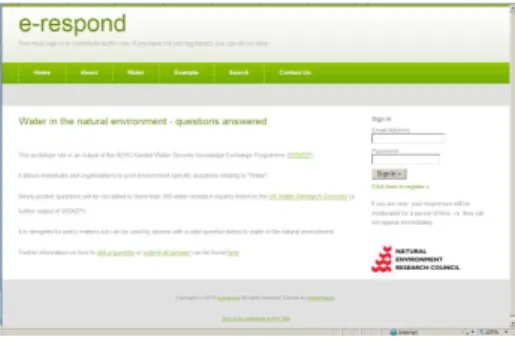
The Phase 1 Workshops were seen as a way of bringing scientist and users together to discuss a subject area pre-defined by WSKEP. This was highly successful but it did not necessarily identify the individual needs of businesses and regulators. If their challenges did not fall into one of the categories addressed by the Workshops, their needs were left unmet. In order to redress the balance, WSKEP held one to one discussions with a number of organisations for example with Defra/EA who visited CEH on a number of occasions. Stuart Kirk, our Defra/EA contact was also a member of the PAG so was able to provide guidance as well as explain the needs of the organisation. One of the things they requested was a means by which their staff could pose questions for which they were seeking advice from the research community. WSKEP therefore developed and launched a web based
tool called e-Respond (http://www.e-respond.net/) (Figure 5) to meet these requirements.
WSKEP have also had discussions with Danone who own Evian water. They wished to be recognised as an international leader in sustainable water resource management. They aim to meet - and where possible exceed - international benchmarks, best practice, norms and standards. Therefore, the company sought advice from organisations that provide scientific support to achieve these aims.
Coca Cola wanted to restore a degraded stretch of river near its bottling plant in south east London. In addition to removing unsightly rubbish, the restoration had to be sustainable, being resilient to both flood and drought events, and it had to re-establish native ecosystems that were consistent with the local area. The company sought expertise from appropriate organisations that were able to help with the environmental and social sciences.
South West Water (SWW) wanted an in-depth assessment of the hydrological conditions of 2012 in South East England against which to assess the performance of their drainage infrastructure during that very wet year. They commissioned a report from hydrological experts at CEH which helped them to assess the true wet weather impacts on the region throughout the year and get the right balance between the impacts of fluvial flooding and the performance of their sewer network. The Head of Waste Water Services at SWW indicated that this had been of very worthwhile significant value in the assessments by The Water Services Regulation Authority (OFWAT), regarding the impacts of fluvial floods, specific to the South West and the performance of their infrastructure.
Water utilities are turning to catchment management techniques to improve raw water quality in order to reduce water treatment costs and reduce energy use in compliance with the UK Climate Act. South West Water is one of the more innovative UK water utilities trialling catchment management techniques to improve raw water quality, and moderate
WSKEP Final Report 2011-2014 V1.1.Docx 13 26/06/2014
extreme high and low flows. Researchers from the NERC/ESRC RELU Research Programme have used SWW catchments as test sites, and there are currently more than thirteen universities working with SWW. WSKEP invited key SWW staff onto the Programme Advisory Group and invited SWW staff to speak at and participate in WSKEP workshops and conferences. KE priorities identified by SWW have been taken forward as follow-up actions to one of the SPS workshops. WSKEP funded Exeter University to extend the work SWW had independently undertaken on the use of peat restoration / carbon sequestration schemes to improve water quality. WSKEP also provided data to support the NERC Impact Accelerator Workshop on catchment Sensitive farming and Landscape restoration (13th Sept 2013). Contacts were maintained with SWW through their representative on the PAG. Information from WSKEP and interactions with SWW through the development of the Natural Hazards Partnership (which has trialled some components in the South West), and the Hydrological Outlook project have also provided further points of engagement. The NERC Business Policy and Innovation team have also stepped in to hold discussions with SWW around the Sustainable Food Production priority area.
Scottish Resource Group (SRG) who own Scottish Coal wanted to empty a lake, Loch Fitty, in order to mine the coal reserves from beneath it. This activity would have environmental impacts on the lake and surrounding area and hence the company contacted experts in lake restoration to undertake an ecological impact assessment. The aim was to see if it would be feasible to return the lake to ‘Good’ ecological status once the coal was mined and the water restored. Although the Scottish Environment Protection Agency (SEPA) approved the plans, SRG required urgent new investment and stakeholder support in spring 2013 and were unable to go ahead with this mine. Instead, they announced the biggest reduction in the UK coal industry in the last decade, closing all but two of their open case mines and making hundreds of workers redundant. ( http://coalactionscotland.org.uk/2013/03/scottish-resources-group-circles-the-wagons-the-end-is-nigh/)
Network Rail has to maintain rail infrastructure which is vulnerable to inundation, landslides and erosion associated with extreme rainfall and river flows. They indicated interest in new NERC research on intense rainfall, led by Newcastle University, within the Changing Water Cycle programme. This work gave improved predictive capabilities through use of higher resolution data and models of rainfall events across the UK at scales which were more appropriate to application to critical parts of the national rail infrastructure than had been possible in the past. The integration of NERC research centre/survey capabilities with the Met Office, within the Natural Hazards Partnership, was also highly relevant. Embankment failures and erosion of structures by river flows cause major delays and lead to major maintenance costs and requirements for capital works. Links with Network Rail contacts were established at project and programme levels. They have been invited to a workshop being organised by ARUP and the broad research community represented by the Arts and Humanities Research Council (AHRC), EPSRC, ESRC and NERC on 23rd June 2014 in London. The workshop will focus on questions around the interactions that infrastructure systems have with the people who use them, the places in which they are located and the environment in which they are built. It will stimulate awareness of the possibilities in translating existing research and identifying tangible areas of opportunity and collaborations to take forward into project development.
Strategic Partnership
WSKEP has contributed to the successful signing of two large companies as Strategic partners with NERC and discussions with a third are well underway.
The Global Water Business Leader for Arup has been on the WSKEP PAG for the last three years where advise and knowledge has been shared. In November 2013, NERC signed a three year Memorandum of Understanding (MoU) with global engineering and design company, Arup, in the first strategic partnership of its kind for the UK's largest funder of environmental science.
WSKEP engaged with BP and Shell early on in the second half of the Programme. In the case of BP, the BP PAG member was invited to discussions with the PMG. There were joint interests in ground and surface water resources, water quality and flood hazard risks. She introduced WSKEP to the BP Group Water Expert and a subsequent meeting was held with him. When they launched their book ‘Water in the energy industry, An Introduction’ they invited members of WSKEP to the event so contacts have been maintained. Shell indicated to the PMG that it used the material and systems that WSKEP made available on the internet, including the Research Directory and overall website. NERC have recently signed a three year Memorandum of Understanding with Shell which will enable Shell to use NERC's world-leading environmental science to help reduce the environmental impact of their operations and projects by providing access to independent, objective advice and information.
WSKEP has also been working with Severn Trent. In presenting a business plan for the next five years (PR14), the regulators (OFWAT and the EA), in response to recent legislation, are placing greater emphasis upon the effective