Some pages of this thesis may have been removed for copyright restrictions.
If you have discovered material in Aston Research Explorer which is unlawful e.g. breaches
copyright, (either yours or that of a third party) or any other law, including but not limited to
those relating to patent, trademark, confidentiality, data protection, obscenity, defamation,
libel, then please read our Takedown policy and contact the service immediately
ANTECEDENTS AND CONSEQUENCES OF PERCEIVED EFFECTIVE MANAGERIAL COACHING:
An individual, team-level and cross-level examination
MARGARITA NYFOUDI Doctor of Philosophy
ASTON UNIVERSITY November 2014
© Margarita Nyfoudi, 2014
Margarita Nyfoudi asserts her moral right to be identified as the author of this thesis
This copy of the thesis has been supplied on condition that anyone who consults it is understood to recognise that its copyrights rests with its author and that no quotation
from the thesis and no information from it may be published without appropriate permission or acknowledgement.
ASTON UNIVERSITY
ANTECEDENTS AND CONSEQUENCES OF PERCEIVED EFFECTIVE MANAGERIAL COACHING: An individual, team-level and cross-level examination
Margarita Nyfoudi Doctor of Philosophy
2014
THESIS SUMMARY
The major contribution of the study is the identification of a positive link
between perceived effective managerial coaching (PEMC) and team task performance and also, the examination of PEMC adopting a multilevel research design and
incorporating dual-source data. Specifically, drawing on social psychology, the thesis aims at developing and testing a comprehensive conceptual framework of the
antecedents and consequences of PEMC for knowledge workers. The model takes into consideration intrapersonal, interpersonal and team-level characteristics, which relate to PEMC and, subsequently associate with important work outcomes. In this regard, the thesis identifies PEMC as a practice of dual nature in that it may be experienced not only as a one-on-one workplace developmental interaction, but also as a managerial practice that is experienced by each member of a team for co-ordination purposes. Adopting a cross-sectional survey research design, the hypotheses are tested in three organisations in Greece and the UK. In particular, hierarchical linear modelling of 191 employees nested in 60 teams yields that employees’ learning goal orientation (LGO) and high-quality exchanges between an employee and a manager (LMX) are positively related to effective MC, while a manager’s LGO moderates the relationship between employees’ LGO and PEMC. In turn, PEMC, as a one-on-one practice, is related to cognitive outcomes, such as information sharing, while as a shared team practice is related also to behavioural outcomes, including individual and team performance. Overall, the study contributes to a growing body of coaching and management literature that acknowledges PEMC as a core managerial practice.
Keywords: coaching, workplace, line manager, knowledge workers, hierarchical linear modelling
I dedicate this thesis to my parents, Pericles and Joanna, for instilling in me from a very young age a love for learning, letters and philosophy.
Στους γονείς μου, Περικλή και Ιωάννα, οι οποίοι μου μετέδωσαν από πολύ μικρή ηλικία την αγάπη για γνώση, Γράμματα και φιλοσοφία.
ACKNOWLEDGEMENTS
First and foremost, I would like to express my deepest gratitude to my
supervisors, Professor Helen Shipton, Dr Nicholas Theodorakopoulos, and Professor Pawan Budhwar, for their guidance and support the past four years. Next to them all of these years, I have gained a great insight into academia and my decision to pursue an academic career is much more informed and purposeful.
I am indebted to so many from Aston University, but I particularly like to thank Dr Claudia Sacramento, Dr Alison Legood, Dr Ieva Martinaityte and Dr Jeremy Dawson for their genuine support and advice. Also, I would like to thank Natalia, Elena, Vimal, Cord, Stuart, Allan, Jo, Jenny, Jude, JooBee, Charmi, Antonio, Ria, Danny, Tolu, Adel, Graham, Tom, and Dimitra for being there in one way or another and making the journey much more enjoyable and memorable.
I would also like to thank James Johnston for his suggestions on online survey software, and Paul Hebron and Michalis Kourtidis for their help with data access.
In addition, I would like to express my sincere thanks to all the staff members of the Research Degree Programme (Liz, Jeanette, Irene, Runjit) and to Work & Organisational Psychology Group administrators Jenny and Zabin. Undoubtedly, my appreciation is also extended to Aston University for granting me a Graduate Teaching Assistantship, without which I would have never embarked on this journey.
I am also thankful to my friends Nina, Patra, Preethi, Anastasia, Alexandra, Chrysa, Nils, Andrea, Katerina, Anna, and Despina for bearing with me, and my long pauses of communication. Although you are so far away, you are always so close in spirit. Thanks for your continuous comfort and endless encouragement.
To my brother, George, thank you for teaching me again and again the significance of peaceful happiness in our lives. To my parents, thank you for all the love, support, encouragement, empathy and belief in me. Your adamant zeal for knowledge, critical contemplation and ethical behaviour, have all been great guides in my life path.
I am eternally grateful to my partner Kosta, who stood by my side as a Titan in the most stressful of moments. Thank you for challenging me, for showing to me a different perspective and ultimately, for making this journey much more stimulating and exciting.
Finally, I would like to thank God for lighting my steps along the way – it has been a great ride!
List of contents Thesis summary……… 2 Acknowledgements………….……… 4 List of contents………….……… 5 List of tables………….………. 9 List of figures………….……… 10 List of appendices.……….. 11 1. Introduction ... 12 1.1Chapter overview ... 12
1.2Rationale, problem identification & literature gaps ... 12
1.3 Research contribution ... 17
1.4 Thesis structure ... 19
1.5 Chapter summary ... 21
2. Coaching at the workplace ... 23
2.1 Chapter overview ... 23
2.2 Identifying coaching as a workplace practice ... 23
2.2.1 Historic backdrop of coaching ... 24
2.2.2 Defining coaching ... 25
2.2.3 Coaching as a distinct developmental interaction at the workplace ... 27
2.2.3.1 Coaching vs. mentoring……….…...…...28
2.2.3.2 Coaching vs. counselling……….29
2.2.4 Types and scope of coaching ... 30
2.3 Identifying coaching as a management practice ... 32
2.3.1 Existing controversy ... 32
2.3.2 Leading & managing knowledge workers ... 33
2.3.3 Functional team leaders coaching knowledge workers ... 35
2.3.4 Managerial coaching: formal or informal? ... 36
2.4 Operationalization of managerial coaching ... 37
2.4.1 Managerial coaching vs. supervisory feedback ... 42
2.5 Defining managerial coaching ... 44
2.6 Effective managerial coaching – a socio-psychological approach ... 46
2.6.1. Effective managerial coaching VS managerial coaching conduct ... 46
2.6.1.1. Intrapersonal processes………..47
2.6.1.2 Interpersonal processes………...49
2.6.1.4 Integration of processes………...52
2.7 Chapter summary ... 55
3. Conceptual model and hypotheses development ... 57
3.1 Chapter overview ... 57
3.2 Antecedents of effective managerial coaching ... 57
3.2.1 Team member’s disposition ... 57
3.2.2 Team member – employee chemistry ... 61
3.2.3 Team leader’s disposition ... 62
3.3 Consequences of effective managerial coaching ... 63
3.3.1 Effective managerial coaching as an interpersonal workplace practice ... 63
3.3.2 Effective managerial coaching as a shared team process ... 66
3.4 The mediating role of effective managerial coaching ... 68
3.5 The mediating role of perceived information sharing ... 69
3.6 Process integration ... 70 3.7 Chapter summary ... 71 4. Research methods ... 73 4.1 Chapter overview ... 73 4.2 Research paradigm ... 73 4.3 Methodology ... 75 4.3.1 Research design... 75 4.3.2 Research context... 78 4.3.3 Research procedure ... 81 4.5 Sample ... 82 4.6 Measures ... 84 4.6.1 Translation of questionnaires ... 84
4.6.2 Team member questionnaire ... 85
4.6.3 Team manager questionnaire ... 87
4.6.4 Control variables... 88
4.7 Data analysis ... 88
4.7.1 Establishing reliability and validity of measures ... 88
4.7.1.1. Cronbach's alpha reliability………...……89
4.7.1.2 Exploratory and confirmatory factor analysis……….………..89
4.7.1.3 Multigroup CFA………..91
4.7.2 Descriptive statistics ... 93
4.7.3 Pearson’s correlation coefficient ... 93
4.8 Meeting the research quality criteria ... 94
4.9 Ethical issues ... 96
4.9.1 Risk/anticipated benefit analysis ... 97
4.9.2 Informed consent ... 98
4.9.3 Selection of participants ... 98
4.9.4 Confidentiality and anonymity ... 99
4.9.5 Research plan for collection, storage and analysis of data ... 99
4.9.6 Conducting research outside the UK ... 100
4.10 Chapter summary ... 100
5. Findings ... 103
5.1 Chapter introduction ... 103
5.2 Reliability and validity of measures ... 103
5.2.1 Exploratory and confirmatory factor analysis ... 104
5.2.2 Multigroup confirmatory factor analysis ... 110
5.3 Descriptive statistics and correlations ... 115
5.4 Hypotheses testing ... 117
5.4.1 Multilevel analysis process ... 117
5.4.2. Antecedents of effective managerial coaching ... 118
5.4.3 Consequences of managerial coaching ... 121
5.4.3.1 Consequences of effective managerial coaching on task performance………..121
5.4.3.2 Consequences of effective managerial coaching on information sharing………122
5.4.3.3 The mediating role of managerial coaching and information sharing………124
5.5 Chapter summary ... 126
6. Discussion ... 129
6.1 Chapter introduction ... 129
6.2. Overview of research problem, research questions and conceptual framework ... 129
6.3 Overview of methodology adopted ... 133
6.4 Discussion of findings ... 134
6.4.1. Resultant framework ... 134
6.4.2. Antecedents of perceived effective managerial coaching ... 136
6.4.3. Consequences of perceived effective managerial coaching ... 139 6.4.3.1 Direct, individual level consequences of perceived effective
managerial coaching………139
6.4.3.2 Direct, cross-level and team-level consequences of perceived effective managerial coaching………142
6.4.3.3 The mediating role of perceived effective managerial coaching and information sharing………..144 6.5 Theoretical contribution ... 147 6.6 Practical implications ... 151 6.7 Research limitations ... 156 6.8 Future research ... 158 6.9 Chapter summary ... 161 7. List of references... 164
List of Tables
Table 2.1 Differences between coaching, mentoring & counselling……… 29
Table 2.2 Coaching models and stages……….. 38
Table 4.1 Organisational characteristics of participating companies……….. 81
Table 5.1 Summary of Cronbach’s alpha coefficients of scales………. 104
Table 5.2 Summary of Cronbach’s alpha coefficients of scales (updated)……… 106
Table 5.3 Pattern Matrix………. 107
Table 5.4 Confirmatory factor analysis results for hypothesised variables……… 109
Table 5.5 Summary of the parcelling procedure of the items……….. 111
Table 5.6 Summary of the factor loadings and AVE for each indicator of the constructs……… 112
Table 5.7 Multigroup confirmatory factor analysis results for hypothesised variables……….. 114
Table 5.8 Means, standard deviations and correlations of variables……….. 116
Table 5.9 Results of hierarchical linear modelling: antecedents of perceived effective managerial coaching………. 120
Table 5.10 Results of hierarchical linear modelling: consequences of perceived effective managerial coaching on perceived information sharing……...122
Table 5.11 Results of hierarchical linear modelling: consequences of perceived effective managerial coaching on perceived information sharing……...123
Table 5.12 Testing the significant of mediations with Sobel test statistic…………. 125
Table 5.13 Results of hierarchical linear modelling: effects of LMX & perceived effective managerial coaching on information sharing and of information & perceived managerial coaching on individual task performance……… 126
Table 6.1 Overview of hypotheses testing……….. 146
List of Figures
Figure 2.1 Actions of coach vs. actions of coachee……….. 27 Figure 2.2 Managing vs. leading………. 34 Figure 2.3 Managerial coaching vs. managing & leading………. 36 Figure 2.4 An operational framework for the examination of the quality of
managerial coaching………. 54 Figure 2.5 The anatomy of managerial coaching……… 55 Figure 3.1 Managerial coaching: a cross-level socio-psychological perspective... 70 Figure 5.1 Scree plot of factor extraction for the items of scales……….. 105 Figure 5.2 Employee’s LGO effects on perceived effective managerial coaching
at different levels of a manager's LGO………... 119 Figure 6.1 Antecedents and consequences of effective managerial coaching... 135
List of appendices
Appendix 1 – Scales for measuring managerial coaching ... 197
Appendix 2 – Cover letter ... 198
Appendix 3 - Consent form ... 200
Appendix 4 – Team member’s questionnaire ... 202
Appendix 5 – Manager’s questionnaire ... 207
Appendix 6 - Pattern matrix ... 211
Appendix 7 - Actual and random eigenvalues ... 212
1.
Introduction
1.1 Chapter overview
The aim of the present chapter is to introduce the construct of managerial coaching and to demonstrate the underlying rationale for a comprehensive
examination of its perceived effectiveness. In this respect, it is organised as follows. Firstly, the chapter identifies the problem and gaps in extant literature that call for a more holistic investigation of managerial coaching. Secondly, it discusses the aim of the thesis and subsequently the research questions and objectives. Thirdly, it elaborates on the theoretical and practical contribution of the study, while finally, it provides a brief overview of the following chapters.
1.2 Rationale, problem identification & literature gaps
Effective leadership behaviour has been increasingly linked with the practice of coaching, as a workplace intervention, which is delivered to team members by their team leader (Cannon & Edmondson, 2001; Fong & Snape, 2014; Gittell, 2001; Hackman & Wageman, 2005; Liu & Batt, 2010; Morgeson, 2005; Wageman, 2001). The growing significance of coaching is in line with prior literature that suggests a delegation of human resource responsibilities to the line manager (Dysvik & Kuvaas, 2012; Francis & Keegan, 2006; Hall & Torrington, 1998; McGovern, Gratton, Hope-Hailey, Stiles, & Truss, 1997; Purcell & Hutchinson, 2007) and the rise of workplace learning (Noe, Tews, & Dachner, 2010). In addition, it corresponds to a perceptual shift in strategic learning & development that once utilised coaching as a corrective and remedial intervention to presently employ it as a best practice for thriving performance (Feldman & Lankau, 2005).
Against this background, the thesis focuses on employees’ perceptions of coaching that is delivered by the functional leader of the team, namely the line manager. Evidence suggests that this is the most widely used form of coaching in organisations (Segers & Inceoglu, 2012) and one of the most compelling leadership processes (Zaccaro, Rittman, & Marks, 2001). Furthermore, the interest on
employees’ perceptions is twofold: they play an important role in shaping employees’ attitudes and behaviour in the workplace (Dysvik & Kuvaas, 2012; Purcell &
Hutchinson, 2007); while they represent a measure to attest for actual (implemented) rather than intended managerial practices (Kuvaas & Dysvik, 2010; Arthur & Boyles,
Evered & Selman (1989:16) were the first to regard coaching “as the heart of management” and to initiate academic interest on the concept as an important leadership behaviour. Contingent on this premise, a number of studies have been undertaken that relate perceived coaching conducted by the line manager to important work outcomes, such as task performance (Gittell, 2001; Liu & Batt, 2009; Agarwal, Angst, & Magni, 2009; Stoker, 2008; Kim, Egan, Kim, & Kim, 2013; Kim, Egan, & Moon, 2014). Indeed, the theoretical connection of managerial coaching to task
performance is substantiated on the historical backdrop and purpose of the practice as a developmental intervention for improving performance (Fournies, 1978). However, the majority of past research focused on the dyadic relationship between a manager and an employee without acknowledging the context within which the intervention takes place. Given that employees within a team receive coaching by the same manager and that they often work together towards achieving common objectives, paying limited theoretical and empirical attention to group level processes may hinder the comprehensive appreciation of coaching and result in biased conclusions.
The thesis bridges this gap by theoretically developing and empirically examining a multilevel framework that views coaching not only as a developmental intervention but also as a core management practice for team-coordination. Specifically, building on Evered and Selman (1989) and social psychology (Allport, 1954), the author defines coaching by the team leader, i.e. managerial coaching, as a workplace interaction of dual nature: the manager offers constructive and continuous feedback and assesses together with the employee the situation, while the employee sets specific goals and objectives with the purpose to develop or further improve competencies and performance and thus, achieve similar tasks in the future in the absence of the manager and while working alongside the rest of the team.
According to the above definition of managerial coaching, goal setting owned by the employee and useful feedback given by the manager in a continuous way
represent fundamental processes of the practice. Indeed, while meta-analyses (Kluger & DeNisi, 1996; Smither, London & Reilly, 2005) demonstrated inconclusive results on the relationship of feedback alone to employees’ performance, studies have shown that feedback strengthens the positive relationship between goal setting and
employees’ performance (for a review v. Locke, Shaw, Saari & Latham, 1981; Locke & Latham, 2002). According to Locke and Latham (2002; 2006; Latham & Locke, 2006), goals, which are specific, difficult to achieve and combined with summative feedback, are significantly related to employees’ performance. The incremental value of the practice of managerial coaching lies on the fact that the manager does not set goals
for the employee; but in contrast, empowers the employee to set own goals by guiding the latter to make clear associations between previous performance, feedback
received and future aspirations within the team environment.
Besides coaching, the manager-employee dyad has been repetitively the focal point for research related to employees’ development and task performance. For instance, meta-analyses (Gerstner & Day, 1997; Dulebohn, Bommer, Liden, Brouer, Ferris, 2011) have shown that employees’ perceived quality of their relationship with the team leader (LMX) is positively related to their performance, while Carmeli,
Atwater & Levi's (2011) and Sias' (2005) studies demonstrated a positive link between employees’ perceived LMX and information sharing. LMX is based on social exchange theory (e.g. Blau, 1964; Cropanzano & Mitchell, 2005; Gouldner, 1960) and in this respect, it has been associated with supervisory mentoring as complementary constructs related to employees’ (protégés’) salary and promotion but not to performance (Scandura & Schriesheim, 1994). Indeed, mentoring appears to be a more career-oriented developmental interaction (Thomas & Lankau, 2009) and extant literature has demonstrated its relation to job satisfaction, organisational commitment, career expectations, and progression (Scandura & Williams, 2004; Payne & Huffman, 2005; Wayne, Liden, Kraimer, & Graf, 1999). Be that as it may, little attention has been given to the relation between LMX and managerial practices that are more proximal to individual and team performance than mentoring, such as managerial coaching.
The limited theoretical understanding of managerial coaching within the spectrum of team leadership has resulted in disagreement with regard to its identification as a leadership process. Indeed, several scholars identified the practice as a core
managerial behaviour (e.g. Ellinger, Baş, Ellinger, Wang, & Bachrach, 2011; Evered & Selman, 1989; Hamlin, 2004; Heslin, VandeWalle, & Latham, 2006), while others conceptualised managerial coaching as one of the many tools/practices available at the disposal of a manager (e.g. Ellinger & Bostrom, 2002; Hawkins & Smith, 2007; Slåtten, Svensson, & Sværi, 2011). Relatedly, no consensus exists regarding its relation to other developmental interventions and different types of coaching at the workplace. For example, the term coaching is often used interchangeably with the term mentoring in order to denote an intervention that involves interaction between two individuals with a developmental purpose (e.g. Becker & Murphy, 1992; Garvey, 2004; Hargreaves, 2010).
Notwithstanding these controversies and the lack of a comprehensive theoretical framework, managerial coaching has been fervently embraced by contemporary organisational practice and practitioners’ literature (Ellinger, 2013; Heslin et al., 2006; Latham, 2007; Seligman, 2007). Although practice preceding research represents a common pattern for organisational phenomena (Zaccaro & Horn, 2003), further arbitrary use of managerial coaching may result in a partial view on its usefulness. This may not only hinder the demonstration of its added value to the organisation, but also increase the chances of being perceived as “an organisational fad that passes quickly” (Segers, Vloeberghs, Henderickx, & Inceoglu, 2011: 205).
Hence, the underlying rationale for the thesis is to join the conversation in extant litarature on the relationship between perceived managerial coaching and task performance by filling the void with regard to the little understanding that currently exists of the multilevel facet of the practice. In doing so, the author envisages to complement existing literature with a comprehensive theoretical and empirical framework that takes into consideration different levels of analysis and hence, to respond to calls for more integrated models in workplace learning (Illeris, 2003) and human resources in general (Ployhart & Moliterno, 2011). Indeed, in contrast to other types of workplace coaching, perceived managerial coaching involves not only one (e.g. executive coaching) or two (e.g. peer coaching) team members, but all the members of the team since the manager coaches individually each member of the team per se. Naturally, such an approach necessitates the development of a multilevel model that captures individual level, team-level and cross-level relationships. In this regard, social psychology (Allport, 1954) may serve as an operational framework for managerial coaching that takes into consideration not only individual (intrapersonal) and dyadic (interpersonal), but also contextual (group) processes.
Contributing to a more inclusive understanding of the mechanism that links managerial coaching with task performance, the thesis also focuses on information sharing, as an important employee outcome that has been found to relate to both workplace interventions (e.g. Bryant, 2005; Cabrera & Cabrera, 2005) and task performance (e.g. Mesmer-Margnus & DeChurch, 2009; Srivastava, Bartol & Locke, 2006). Indeed, information sharing represents the morphology of an employee’s associations with other employees or divisions and describes the frequency,
magnitude and ability to harness these associations (Leana & Pill, 2006; Nahapiet & Ghoshal, 1998). That being so and given the coordinative facet of managerial coaching, information sharing may appear as an important constituent in the model under examination.
The thesis focuses on teams of knowledge workers, as this type of employees works in settings that facilitate the activation of both the developmental and
coordinative facets of the practice. Specifically, knowledge workers may be defined as the employees who, as part of their job requirements, involve in knowledge creation by utilising knowledge obtained through education or experience (Davenport, 2013). These employees may have less structured job descriptions, while their work is elaborate and results-oriented (Horwitz, Chan, & Quazi, 2003). In this regard, managerial coaching may appear as a managerial practice that is aligned with they way in which knowledge workers operate in the workplace in that it may not only enable them to work towards achieving their individual objectives, but also provide them with a blueprint for knowledge exchange and coordination (Collins & Smith, 2006). In contrast, in settings in which work is repetitive and independent for each of the team members, the coordinative facet of managerial coaching may be less relevant.
At this point it is worth mentioning that the thesis elaborates on perceived managerial coaching effectiveness rather than on its perceived conduct. The
underlying rationale lies on the prior dichotomisation of coaching behaviour in extant literature, denoting that the quality of the practice rather than the quantity may be related to important employee outcomes. Specifically, in the course of a qualitative study, Wageman (2001) identified two dimensions (positive and negative) of perceived coaching behaviour, which later Morgeson (2005) redefined as supportive and active types of coaching respectively. Relatedly, Ellinger et al. (2011) found that moderate rather than higher levels of perceived coaching behaviour yielded higher improvement in employees’ job performance. In this regard, it is envisaged that the investigation of the perceived effectiveness of managerial coaching may offer a more comprehensive understanding of the practice and hence, help in the interpretation of Ellinger et al.’s counter-intuitive findings.
The author knows of no previous studies that elaborate on the characteristics related to perceived managerial coaching effectiveness, while to the best of her knowledge only two research studies have been conducted on the antecedents of managerial coaching behaviour (Ellinger, 2003; Heslin et al., 2006). This gap is not unanticipated given the scarce past literature on the relationship between perceived managerial coaching effectiveness and employees’ performance (Gittell, 2001; Agarwal et al. 2009). Nevertheless, a comprehensive understanding of the latter relationship necessitates the identification of characteristics that may serve as
perspective, such an examination incorporates not only intrapersonal and interpersonal but also contextual elements.
Set against this background, the aim of the thesis is to theoretically develop and empirically examine a conceptual framework that takes into consideration the dual nature of managerial coaching both as a dyadic developmental practice and a team coordination mechanism. In doing so, the thesis aims to answer the following research questions:
1. What is effective managerial coaching?
2. What are the antecedents of perceived effective managerial coaching? 3. What are the consequences of perceived effective managerial coaching?
Further, the researcher devised five research objectives that emanate from the abovementioned controversies and research gaps. The successful achievement of these objectives will contribute to the fulfilment of the above research questions and therefore, the research aim. Specifically, the research objectives of the thesis are the following:
a. To theoretically substantiate and distinguish the construct of managerial coaching from other types of workplace coaching and developmental interactions
b. To develop a comprehensive operational framework of effective managerial coaching for knowledge workers
c. To examine, building on social psychology, the importance of intrapersonal, interpersonal, and team characteristics in the effectiveness of managerial coaching
d. To examine, through theoretical and empirical study and at different levels of analysis, the relation of effective managerial coaching to important work outcomes
The following section elaborates on the contribution of the thesis, given the completion of the above objectives and the subsequent answer of the research questions.
1.3 Research contribution
The main contribution of the thesis is the examination of the relationship between managerial coaching and team task performance and also, its multilevel
research design. Specifically, the study develops and tests a multilevel framework that highlights both the interpersonal and team-level facets of managerial coaching.
Theoretically, the study draws on Mumford, Zaccaro, Harding, Jacobs, & Fleishman (2000), who indicated that in complex environments leaders are responsible for employee’s goal setting and guidance, and proposes that in knowledge-intensive environments, leaders help employees to attain their goals with the help of effective coaching. With regard to the team-level facet, the research draws on Klein &
Kozlowski (2000), who argue that through team shared practices team members transform their skills, knowledge, attitudes and other attributes (SKAOs) into valuable resources that reside at the level of the team and contribute to individual and team outcomes. Methodologically, the study is but a few (e.g. Agarwal, et al. 2009) that adopts a multilevel design that not only accounts for variance due to team
membership, but also examines individual-level, team-level and cross-level
relationships. In this respect, the study not only identifies the dual facet of managerial coaching, but also investigates managerial coaching in a robust methodological way.
The study, also, demonstrates that managerial coaching is positively related to team task performance and hence, contributes to already-established conversations on the relationship of coaching to individual performance by initiating dialogue on the association of the practice with team performance. In this regard, the study
theoretically and empirically underpins previous arguments on the significance of coaching for managerial effectiveness (Bartlett & Ghoshal, 1995; Deeter-Schmelz, Kennedy, & Goebel, 2002; Ellinger, Ellinger, & Keller, 2003; Ellinger, Watkins, & Barnas, 1999; Ellinger, 2013; Ellinger et al., 2011; Evered & Selman, 1989; Poksinska, Swartling, & Drotz, 2013; Waldroop & Butler, 1996), while it, also, highlights the added value of managerial coaching to an organisation. In doing so, the study provides justification of any organisational investment of business resources for the development and promotion of managerial coaching in the workplace.
Further, critically reviewing past literature on coaching, the study distinguishes managerial coaching against other forms of developmental interactions and different types of workplace coaching. It also identifies that managerial coaching incorporates a dual nature, one that corresponds to its developmental aspect as a one-on-one
intervention and a second one that relates to its managerial facet as a shared practice among the members of the same team. Indeed, the thesis draws on social learning theory (Bandura, 1977, 1988; Ozer & Bandura, 1990; Wood & Bandura, 1989) and proposes that managerial coaching serves as a regulation mechanism for employees’
without the presence of a manager. It also builds on Evered & Selman (1989) and Drucker (1988) to suggest that managerial coaching forms a core managerial practice that enables managers to delegate tasks to team members and thus, effectively co-ordinate team interaction and processes. In this respect, the thesis highlights that unless both facets are taken into consideration, any investigation may only partially capture the practice and its contribution to work outcomes. Moreover, this work adopts an integrative perspective in the examination of managerial coaching that takes into consideration all the different ways in which the manager may coach an employee within the workplace, i.e. formally, informally or incidentally. It, thus, offers a more holistic evaluation of the contribution of the practice to important work outcomes and at the same time it adds to a growing literature on informal learning (Bednall, Sanders, & Runhaar, 2014). Overall, this work not only contributes to coaching literature by exhibiting the distinctiveness of managerial coaching as a workplace practice, but also, extends management and knowledge worker literature by identifying a novel form of organising and delegating knowledge-intensive tasks.
With regard to the antecedents of effective managerial coaching, the study adopts the view that individual differences play an important role in the contemporary workplace (Day, 2000). In line with this, it builds on Hooijberg & Lane's (2009)
argument that employees’ responsibility and the chemistry between a coach and a coachee are determinant factors for effective coaching. Specifically, the study
proposes that employees’ learning disposition and the quality of exchange between a manager and an employee relate to the effectiveness of managerial coaching. Further, it builds on the aforementioned study of Heslin et al. (2006) and also incorporates managers’ learning disposition in the conceptual framework. In this way, the study contributes to the scarce literature on the antecedents of managerial coaching, while it calls organisations to pay attention not only to the manager or the process but also to the employee and the context within which, coaching occurs.
Having discussed the research contribution, the following part discusses the way in which the thesis is organised into chapters.
1.4 Thesis structure
The thesis is structured in six chapters. The present chapter introduces the aim of the research and provides the rationale and the background reasoning for engaging with the antecedents and consequences of effective managerial coaching.
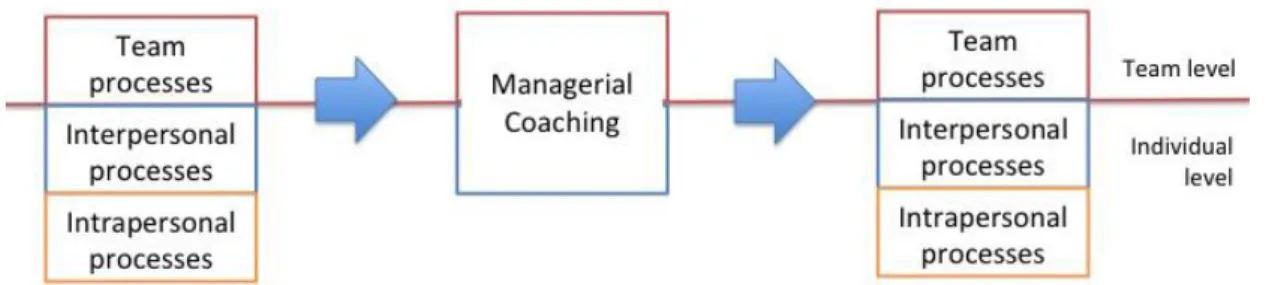
The purpose of the second chapter is to theoretically substantiate the construct of managerial coaching and distinguish it from other workplace interventions in order to acquire a more comprehensive understanding of its nature. In doing so, the chapter draws on both workplace learning and management literature and subsequently, identifies managerial coaching not only as a discrete workplace practice that is offered on a one-on-one basis in order to improve employee’s SKAOs, but also as a core management practice that is used in order to effectively delegate tasks to each member of a team. Further, the chapter elaborates on the partial, yet significant, examination of the effectiveness of coaching in extant literature and draws on social psychology to develop an operational framework for managerial coaching.
Having clarified the concept of managerial coaching, the aim of the third chapter is to develop a set of hypotheses and a conceptual framework that examine both the antecedents and consequences of perceived effective managerial coaching for knowledge workers. In this respect, the chapter identifies the employees’ and manager’s learning disposition, and the chemistry between them as important antecedents of perceived effective managerial coaching. Further, the chapter
demonstrates that due to its dual nature, managerial coaching is related to employee outcomes not only at the individual level but also at different levels of analysis. In addition, the chapter discusses the mediating role of both perceived effective
managerial coaching and information sharing in the relationship between employees’ SKAOs and outcomes. In this way, the chapter highlights the association of the practice with different behavioural and cognitive characteristics, while it also signifies the importance of information sharing in knowledge-intensive organisational settings.
The aim of the fourth chapter is to elaborate on the rationale and the necessity of selecting specific research methods to examine the conceptual framework and proposed hypotheses within the thesis. In this respect, first the chapter discusses the adopted research paradigm and thus, the adopted ontology, epistemology and axiology of the study. Second, the chapter explicates the adopted research
methodology, with a complete account of the adopted research design, context and procedures. Third, it expatiates on the sample size of the study, the validated
measures used in the questionnaires, while it also offers justification for the selection of specific data analytic techniques, including exploratory (EFA) and confirmatory factor analysis (CFA), multigroup CFA, descriptive statistics and correlations, reliability estimates and hierarchical linear modelling. Finally, it expands on the way in which the adopted research methods meet the research quality criteria and offers a detailed
The fifth chapter reports the findings of the data analyses. In particular, firstly it discusses the reliability and validity of the measures and reports the results from the examination of the EFA, dimensionality of the employed scales, CFA and multigroup CFA. Thereupon, the chapter displays the results from the descriptive statistics and correlations, and subsequently the results from hypotheses testing. In this respect, the chapter initially presents the findings from the examination of the antecedents of effective managerial coaching and thereafter, it reports the results with regard to the consequences of the practice.
The concluding chapter aims to discuss the results of the data analyses in the light of the aim of the study, and also the research questions and objectives that were framed in the present chapter. It, thus, provides an overview of the above (aim, questions and objectives) enhanced with the insight developed through the literature review (chapter two) and development of hypotheses (chapter three). Then, the chapter expands on the findings of the analyses, while it offers theoretical justification for the hypotheses that were not supported by the results. Next, it elaborates on the theoretical contribution of the thesis and the practical implications for HR practitioners and organisations. Finally, it discusses potential limitations of the study that may inform future research studies on the practice of managerial coaching.
1.5 Chapter summary
The present chapter introduced the concept of managerial coaching and demonstrated its rising importance in both practice and literature. It defined
managerial coaching as a workplace interaction between the line manager and each member of a team per se with the purpose to enable each team member to achieve individual and team-related performance objectives. Goal setting and feedback are core processes of managerial coaching; yet, the incremental value of the practice lies in that the employee is an equal member in the coaching process, who is responsible to set own goals and objectives. While the link between managerial coaching and employee performance is well established in extant literature, team-level processes have received limited attention. Further, the limited examination of the contextual characteristics within which managerial coaching takes place has resulted in a convoluted literature, in which there is little agreement over the term coaching and its relation to leadership processes or other workplace interventions. In this respect, the thesis bridges these gaps by theoretically developing and empirically examining a multilevel framework for perceived effective managerial coaching. Indeed, adopting a social psychology perspective, the chapter identified the need for a more inclusive
investigation that considers not only intrapersonal and interpersonal but also team characteristics both in terms of the antecedents and consequences of managerial coaching.
It is worth acknowledging that besides managerial coaching, the manager-employee dyad has been the focal point of different streams of research, such as the quality of LMX and mentoring. Although mentoring is more career-oriented, extant literature demonstrates a positive link between the quality of LMX and task
performance. In this regard, the present study adds to this area of research by examining the mediating role of managerial coaching.
After the aim of the thesis was introduced coupled with the research questions and objectives, the chapter elaborated on the research contribution. In particular, the major contribution of the thesis is the examination of the relationship between
managerial coaching and team task performance, and also, the development of a multilevel framework of perceived effective managerial coaching. In addition, the study pinpoints the dual nature of the practice and thus, identifies it as a distinct workplace intervention. Moreover, the examination of the relation of intrapersonal, interpersonal and team characteristics to the effectiveness of the practice contributes to scholarly literature on the antecedents of effective managerial coaching, while the investigation of the individual level, team level and cross-level relationships between managerial coaching and employees’ behaviour and cognition extends both the coaching and management literature and at the same time enhances organisational practice. Furthermore, the examination not only of the formal, but also of any form of managerial coaching enables a more thorough understanding of the practice and contributes to its holistic examination.
Finally, the present chapter set out the way in which the thesis is structured. Specifically, the second chapter reviews the literature, while the third chapter develops the hypotheses and the conceptual framework. Chapter four explicates the research methods adopted for the study and thereupon, chapter five presents the results of the data analysis. Finally, chapter 6 discusses the findings of the study and also, its contribution, limitations and avenues for future research.
2. Coaching at the workplace
2.1 Chapter overview
The aim of the present chapter is to contribute towards the objectives of the thesis in developing a working definition for managerial coaching and in constructing a model that explores the antecedents and outcomes of this important practice. The intention is to combine two disciplinary paradigms, that of workplace learning together with that of managerial instruction, with specific reference to employees in knowledge-intensive contexts. In this regard, the chapter is structured as follows. Firstly, it
establishes coaching as a workplace practice. Specifically, it examines the origins of coaching; it compares it with other developmental interactions and examines the various coaching types in the workplace. Secondly, the chapter introduces coaching as a management practice. In this respect, it elaborates on the controversy that exists in past literature and examines the contemporary management and leadership of employees in knowledge-intensive contexts. This section goes on to expand on the indicative nature of the practice of receiving coaching from the team leader and expatiates on the distinct process of managerial coaching. Thirdly, it builds on the above and develops a working definition for managerial coaching, while it also draws on social psychology to develop an integrated operational model for managerial coaching.
2.2 Identifying coaching as a workplace practice
Peter Drucker (1988) was one of the first to predict the prevalence of
knowledge workers and information sharing. Indeed, over a quarter of a century ago, Drucker urged organisations to shift from “the command-and-control model” (p.3) to alternative managerial processes, which would be based on information sharing and would better suit the development, motivation and ultimately, “organization of
knowledge specialists” (p.11). At present, within the ‘information age’, knowledge workers have pervaded the labour markets (Groysberg, Lee, & Nanda, 2008; Pyöriä, 2005) and thus, the need for suitable managerial practices for their development, motivation and organisation is even more requisite.
Against this background, the workplace has been increasingly recognised as an important locus for the development of knowledge workers (Clarke, 2005; Jarvis, 2006; Mankin, 2009). In workplace interventions, employees are actively involved in
the process, directly practising their newly acquired knowledge, skills, and
competencies on the job; while environmental and psychological factors, which may hinder the transfer of knowledge in traditional classroom-based interventions, are not apparent (Noe et al., 2010). Thus, not only is knowledge transmission more effective, but also knowledge, skills, and competencies are sustained for a longer period of time (Armstrong, 2009). Furthermore, this type of learning has been related to positive work outcomes such as employees’ job satisfaction (e.g. Rowden, 2002; Rowden & Jr. Clyde, 2005) and commitment (e.g. Bartlett, 2001; Wang, Gilland, & Tomlin, 2010).
In line with the above developments, research in the area of workplace learning has been growing. Indeed, an increasing number of studies have examined workplace developmental practices, such as mentoring (e.g. Harvey, McIntyre, Thompson Heames, & Moeller, 2009; Lankau & Scandura, 2002; Lester, Hannah, Harms, Vogelgesang, & Avolio, 2011; Marcinkus Murphy, 2012; Ramaswami & Dreher, 2010; Thurston, D’Abate, & Eddy, 2012), apprenticeships (e.g. Cattani, Dunbar, & Shapira, 2013; Gospel & Fuller, 1998; Grugulis & Stoyanova, 2012; Kempster & Iszatt-White, 2013; Lewis, Ryan, & Gospel, 2008; Warner, 1986), and executive coaching (e.g. Bogner, 2002; Bono, Purvanova, Towler, & Peterson, 2009; Gray & Goregaokar, 2010; Ludeman & Erlandson, 2004; Smither, London, Flautt, Vargas, & Kucine, 2003). Coaching by the functional team leader, a workplace
intervention par excellence, is the most widely used form of coaching in organisations (Segers & Inceoglu, 2012). It is also one of the most compelling leadership processes (Zaccaro et al., 2001). Yet, this type of coaching is highly under-researched (Ellinger, 2013; Heslin et al., 2006; Latham, 2007; Seligman, 2007). Hence, the aim of this section is to distinguish coaching by the line manager as a discrete workplace developmental practice and to contextualise the concept in order to provide the foundations for its scientific examination. In what follows, the chapter elaborates on the historic backdrop and the various definitions of the practice in general. Thereafter, it builds on extant literature and highlights the distinctiveness of coaching by the line manager from other workplace developmental interactions. Finally, it expands on the different types of coaching at the workplace, within which it identifies the practice of coaching by the team leader.
2.2.1 Historic backdrop of coaching
The origins of ‘coaching’ can be traced back to the 16th century, when the word
‘coach’ was utilised to describe the closed carriage drawn by horses (Oxford Dictionaries, 2010). The word stems from the French ‘coche’, which originates from
the Hungarian ‘kocsi’ and means ‘wagon’ (ibid.). Thus, the original meaning of the verb was to “convey a valued person from where one was to where one wants to be” (Whitherspoon & White, 1996: 124).Later on, in the 1840s, the word ‘coach’ was used, casually, at Oxford University to describe a private tutor whose role was to prepare a student for an examination (Evered & Selman, 1989). In the 1880s, the term started being used with its current meaning in sports at boat races (ibid.). However, it was not until the 1950s (Mace & Mahler, 1958; Mace, 1950) that the word ‘coaching’ was introduced in management literature, and only later, in the 1970s, that it started being used more frequently. During that decade, Tim Gallwey published The Inner Game of Tennis (1974), in which he praised coaching as the means through which a player may achieve high-end results. Although subtle, the association between coaching and managerial achievement could be easily made and thus, a few years later Fournies (1978) published the influential Coaching for Improved Work
Performance. Thereupon, numerous practitioner and academic articles and books have been written regarding the concept of coaching as a managerial process.
Nevertheless, little agreement exists with regard to the concept of coaching, its aspects and different facets. This may be due to practice preceding research – a typical phenomenon for organisational concepts (Zaccaro & Horn, 2003). According to D’Abate, Eddy, & Tannenbaum (2003), two points of discrepancy exist: firstly, within the construct, with regard to the core meaning of the concept; and secondly, upon the similarities and differences of coaching with other developmental practices. Be that as it may, utilising the term ‘coaching’ inconsistently hinders the scientific understanding of the concept and intensifies the danger of its characterisation as an organisational fad (Segers et al., 2011). Hence, the following two sections elaborate on the
clarification of the aforementioned discrepancies in order to highlight the distinctive characteristics of the practice and therefore, facilitate its scientific examination.
2.2.2 Defining coaching
Coaching, as a practice that involves conversations between two or more people for developmental purposes, belongs to the group of interventions described as ‘developmental interactions’ (De Haan & Burger, 2005). D’Abate et al. (2003), in their systematic literature review of developmental interactions, found that no term was shared in all the 21 definitions of coaching, which they had researched. Nevertheless, six qualities appeared more frequently than others, namely, specific purpose; short-term timeframe; teaching-focused learning behaviours; goal setting;
practical application, and provision of feedback. Indeed, coaching has been linked to the provision of feedback, reinforcement, motivation and help (Noe, 2002) in order to develop and improve a coachee’s skills, competencies and performance. The purpose is then to enable the coachee through conscious self-reflection (Bond & Seneque, 2012) to set and achieve similar goals in the future without the presence of the coach (Passmore, 2003).
Undoubtedly, the lack of a shared common characteristic is indicative of the aforementioned confusion that exists regarding the core meaning of the concept. Nonetheless, it is possible that the existing discrepancy partially originates in the viewpoint of the beholder. In particular, coaching as a developmental interaction necessitates the involvement of a minimum of two individuals: the coach and the coachee. Depending on the focal point of interest - the coach or the coachee - the definition of coaching may vary. As a case in point, Peterson & Hicks (1996: 14) defined coaching as a “process of equipping people with the tools, knowledge, and opportunities they need to develop themselves and become more effective”. This definition highlights the deliberate involvement of the coachee in the coaching process, although it indirectly implies the mediation of a second individual, who supplies the tools, knowledge and opportunities. On the other hand, Segers et al. (2011: 204) stated that coaching is:
An intensive and systematic facilitation of individuals or groups by using a wide variety of behavioural techniques and methods to help them attain self-congruent goals or conscious self-change and self-development in order to improve their professional performance, personal well-being and, consequently, to improve the effectiveness of their organisation.
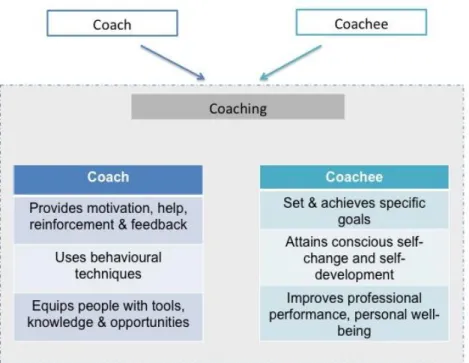
Segers et al.’s (2011) definition emphasises the active and systematic involvement of the coach in the coaching process. It refers to specific targeted enhancements, i.e. goals, self-change and self-development, and it constrains the course of action within the boundaries of an organisation. While both Peterson & Hicks’ (1995) and Segers et al.’s (2011) definitions indicate that coaching is a practice, which is employed to improve employees’ effectiveness; depending on the viewpoint, they focus on different aspects of the developmental interaction. Specifically, Peterson & Hicks (1995) adopt the perspective of the coachee, while Segers et al. (2011) embrace the viewpoint of the coach. Thus, the adoption of a different point of view may, indeed, explain the confusion in defining the core meaning of the concept. Figure 2.1 summarises the
abovementioned perspectives into actions undertaken by the two individuals involved. Against this background, coaching at the workplace may be defined as a one-on-one or one-on-many intervention between a peer or manager (coach) and an employee (coachee), during which, the coach aids the coachee to set and achieve a goal that ultimately benefits the organisation.
The next part elaborates on the second type of discrepancy that exists with regard to coaching, i.e. its relation to other interactive developmental practices, such as mentoring and counselling.
Figure 2.1 Actions of coach vs. actions of coachee
2.2.3 Coaching as a distinct developmental interaction at the workplace The terms of ‘coaching’, ‘mentoring’ and ‘counselling’ are often used interchangeably in practice and in literature (D’Abate et al., 2003; Gallacher, 1997; Stone, 2007). Indeed, the frequent and simultaneous exercise of all three practices in a single session may lead to their consideration as a bundle rather than as distinctive developmental practices. Undoubtedly, coaching, mentoring and counselling share a common general purpose, that is, to help the individual achieve a particular goal. Nevertheless, they refer to a different type of relationship, timeframe and goal and therefore, they involve dissimilar psychosocial mechanisms in order to achieve heterogeneous outcomes. Under this line of reasoning, the interchangeable use of
best practice from one developmental interaction to the other may render ineffective results and thus, bias the potential of these practices. This part elaborates on the similarities and differences of coaching between the practices of mentoring and counselling in order to offer a more holistic understanding of the phenomenon by outlining its boundaries within the constellation of workplace developmental interactions.
2.2.3.1 Coaching vs. mentoring
In contrast to the relatively young history of the concept of coaching, the first reference of the word mentor dates back to the 8th century B.C. and may be found in
Homer’s epic Odyssey, as the name of the elder tutor of Odysseus’ son. At present, the meaning of the concept has not changed radically, indicating a developmental interaction “between a younger adult and an older, more experienced adult [who] helps the younger individual learn to navigate the adult world and the world of work” (Kram, 1985: 2). Respectively, within an organisational context, a mentor is usually a senior manager or an executive, who gives career guidance and advice to a less experienced employee (Hawkins & Smith, 2007).Indeed, D’ Abate et al. (2003) researched 70 definitions of the traditional or classic mentoring and found that, 51-75% of them posited that mentoring is a dyadic relationship, with a downward direction and a long-term time frame, where the developer (mentor) has more experience than the learner. In addition, a satisfactory amount of definitions indicated that mentoring is an internal process, with general developmental objectives.
Taking the above into consideration, it could be seconded that the main
differences between coaching and mentoring lie in their timeframe and goal specificity. In particular, coaching focuses on short-term specific goals, while mentoring
addresses long-term aims that are general and broader. Thus, although both practices may share similar qualities that are related to their interactive nature, the differences in timeframe and specificity instigate dissimilar psychosocial mechanisms. For instance, the short-term, specific goals, which are set during coaching, necessitate a more intensive type of involvement from both the coach and the coachee in comparison to mentoring, during which the goals are general and long-term. In this regard, the scientific examination of the two practices entails a different combination of
psychosocial variables, which contribute to the effectiveness of each practice per se. Thus, unless coaching and mentoring are treated distinctively, the full potential of each developmental practice may not be attained.
TABLE 2.1
Differences between coaching, mentoring & counselling Developmental Interaction: Coaching Mentoring Counselling Participant experience/
knowledge:
Varies Mentor has more
than learner
Varies
Interaction characteristics: 1to1 or 1toMany Dyadic Dyadic
Organisational direction: Any Downward Any
Reporting relationship Same hierarchy Any Any
Location Internal Internal Internal
Object of Development Specific General Personal
Time frame Short-term Long-term Medium-term
2.2.3.2 Coaching vs. counselling
With regard to the practice of counselling, it may be defined as a set of
techniques, skills and attitudes, which are employed to aid people to handle their own issues or setbacks with their own resources (Reddy, 1998). The determinant
characteristic of this type of developmental interaction is that the counsellor may help the client, but the responsibility of the actions lies solely within the latter (Witherspoon & White, 1996). Thus, the counsellor focuses on advising the client and not on
triggering self-reflection, which is a principal characteristic of the coaching process, during which the coachee learns through conscious reflection how to reach
conclusions by him or herself (Bond & Seneque, 2012). In addition, counselling is more focused on personal problems, which may influence job performance, in contrast to coaching, which deals mostly with specific performance challenges (Hawkins & Smith, 2007). Further, the two practices have different focus points (CIPD, 2004). In particular, counselling sessions are broader, while the individual and the counsellor are the solely responsible to set the agenda, i.e. no other stakeholders are involved. In contrast, coaching sessions have a much narrower focus; the coachee sets the
agenda together with the organisation (not the coach), while other stakeholders, such as the learning and development practitioner, may also be involved in the process.
A summary of the main similarities and differences between coaching,
mentoring and counselling is depicted in Table 2.1. Having outlined the boundaries of the practice of coaching within the spectrum of workplace developmental interactions, the final part of this section highlights the plethora of workplace coaching
interventions, each of which interacts with a distinctive set of psychosocial processes. Further, the section introduces the concept of managerial coaching, which is identified as one of these workplace interventions. In doing so, the following part represents the starting point of the scientific examination of the concept in the thesis and hence, it is highly significant for the achievement of the aims of the thesis.
2.2.4 Types and scope of coaching
Both practitioners’ and academics’ interest is growing with regard to coaching, which has evolved into a highly profitable industry (Segers et al., 2011). In this regard, a plethora of different coaching interventions has been proposed and practised in the organisations, while academia exerts efforts categorising the various types into meaningful and distinctive groups. In line with Segers et al.’s (2011) structuring of the coaching industry, this part elaborates on coaching classifications in terms of the status of the coach or coachee, the scope of the intervention and the school of coaching.
With regard to the status of the coach or coachee, Fillery-Travis & Lane (2006) categorised coaching into executive, managerial and internal coaching. The former is delivered mainly by external coaches and is targeted mostly, but not always, to senior level employees. The second type refers to coaching delivered by the line manager, while the latter is pertinent to coaching offered by another employee within the organisation but not the line manager. Similarly, Segers et al. (2011) identified four types of coaching: external, coaching delivered by the line manager, internal and self-coaching. The first three types are analogous to the respective coaching types offered by Fillery-Travis & Lane (2006), yet, self-coaching refers to coaching performed by the individual for the individual. Critically reflecting on the above categorisations, one may notice that the designation for internal coaching is to a certain extent arbitrary. In particular, the adjective ‘internal’ signifies “of or situated on the inside” (Oxford Dictionaries, 2013) and thus, managerial coaching may also be regarded as internal coaching. Hence, the denomination of the type of coaching may also play an important role in the abovementioned discrepancy that exists with regard to the concept of coaching.
Regarding the scope of coaching, Segers et al. (2011) identified three
categories: skills coaching, performance coaching, and development or life coaching. The aim of skills coaching is the development of mastery and capability in order to
hand, performance coaching expands over a longer period of time and focuses on a wider performance area than skills coaching. In contrast, development or life coaching deals with personal matters or significant career choices. Likewise, as per the scope of coaching, Grant & Zackon (2004), identified the following types: corporate/executive coaching, personal/life coaching, small business coaching, non-profit organisational coaching and internal coaching. While most of the above terms are self-explanatory, corporate/executive and internal coaching acquire a different meaning from those offered by Fillery-Travis & Lane (2006) and Segers et al. (2011). Specifically, both types involve non-employee coaches, who deal with change management, leadership and team development (corporate/executive) or who work with companies occupying up to 25 employees (internal). Following the reasoning provided in the previous paragraph, the use of term ‘internal’ in this categorisation is rather subjective, while, linguistically, it does not correspond to the semantic meaning of the word.
Finally, Segers et al. (2011) building on L’Abate, Frey, & Wagner's (1982) ERAAwC model, i.e. Emotionality, Rationality, Activity, Awareness, and Context, categorised coaching, also, in terms of the coaching approach adopted by the coach. In particular, they constructed five categories respectively to the five ERAAwC
components: person centred, cognitive, action, transpersonal, and system.
Undoubtedly, the numerous types of coaching create additional tension and confusion in its theoretical underpinning. Moreover, taking into consideration that coaching has received a lot of criticism of being a temporary management trend (Agarwal et al., 2009; Grant & Cavanagh, 2007; Lapp & Carr, 2008; Segers et al., 2011), the lack of common understanding further diminishes its contribution of to management theory and practice. While the achievement of complete consensus with regard to the core meaning of coaching is unattainable and perhaps, detrimental to the critical character of scientific endeavour, a robust and methodical engagement with the concept may ensure minimisation of faddism and promotion of the epistemic character of coaching. In this regard, it is essential for each scientific endeavour to explicitly refer to the element that determines the denomination for the type of coaching under investigation.
Correspondingly, the thesis focuses on coaching, as it is determined by the status of the coach. Specifically, the type of coaching under investigation is
managerial coaching, that is coaching delivered by one’s line manager. Further, it is argued that managerial coaching is distinguished from other internal types of
coaching, in that it employs different psychosocial processes, including dissimilar power dynamics. Indeed, according to Boonstra & Bennebroek Gravenhorst (1998), the exertion of power is used to influence others and may result in resistance, or compliance and commitment (Falbe & Yukl, 1992). Under this line of reasoning, it is less likely for an employee to interact with a peer in the same way they interact with their manager when being coached.
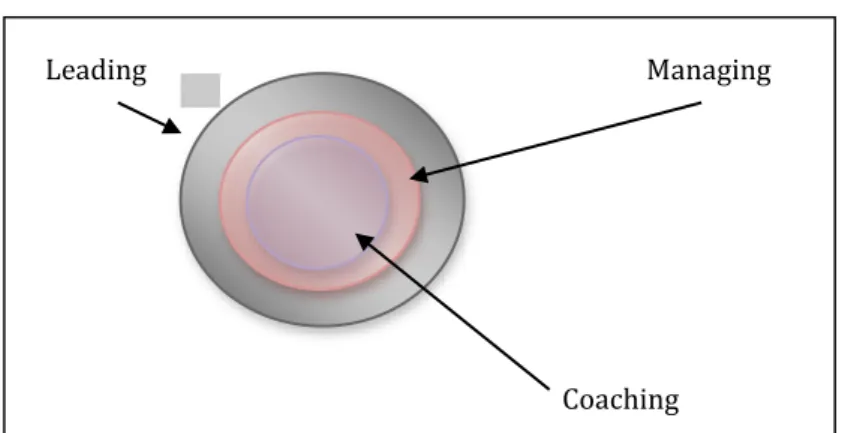
Having contextualised coaching in general as a workplace practice and identified managerial coaching in the spectrum of development interactions, the following part examines the concept of managerial coaching as a leadership practice. It is envisaged that the identification of managerial coaching as both a workplace developmental interaction and a leadership practice will enable the multifaceted examination of the concept and thus, the development of a comprehensive conceptual framework.
2.3 Identifying coaching as a management practice
Section 2.2 clarified the concept of coaching by highlighting its distinctive characteristics in relation to other development interactions, while at the same time, identified managerial coaching as a specific type of workplace coaching. In turn, this section expands on the theoretical underpinning of managerial coaching in order to construct a conceptual model upon which to base the development of the hypotheses. Specifically, the section first elaborates on the relationship between coaching,
managing and leading as behaviours, which are demonstrated by the functional team leader, i.e. the line manager. Thereupon, it discusses the importance of and rational for coaching knowledge workers, while it also discusses its positioning on the planned-unplanned behaviour continuum.
2.3.1 Existing controversy
There is little consensus on the association of coaching, as a dyadic
intervention between a line manager and an employee, with managing and/or leading. Specifically, certain scholars address coaching as a core responsibility within a
manager’s role (Bartlett & Ghoshal, 1995; Deeter-Schmelz et al., 2002; Ellinger et al., 2003; Ellinger et al., 1999; Ellinger, 2013; Ellinger et al., 2011; Evered & Selman, 1989; Hamlin, 2004; Heslin et al., 2006; Jones, 1995; Orth, Wilkinson, & Benfari, 1987; Poksinska et al., 2013; Waldroop & Butler, 1996), others conceptualise it as one of many managerial tools/practices (Bond & Seneque, 2012; Ellinger & Bostrom,
2002; Hawkins & Smith, 2007; Slåtten et al., 2011), some others enlist it as one of many leadership styles/leader behaviours (Arnold, Arad, Rhoades, & Drasgow, 2000; Berg & Karlsen, 2007; Goleman, 2000; Hon & Chan, 2013; Vesterinen, Isola, & Paasivaara, 2009; Vesterinen, Suhonen, Isola, Paasivaara, & Laukkala, 2012), while some treat managing and leading as synonymous terms and thus, perceive
managerial coaching to play an important role for either a manager or a leader (Carter, 2006; Ellinger et al.,1999; Hagen, 2010). Additionally, terms such as leadership
coaching (Anderson & Anderson, 2005; Lee, 2003) further fuel the debate and add to the perplexity of the field, unless they are clearly defined.
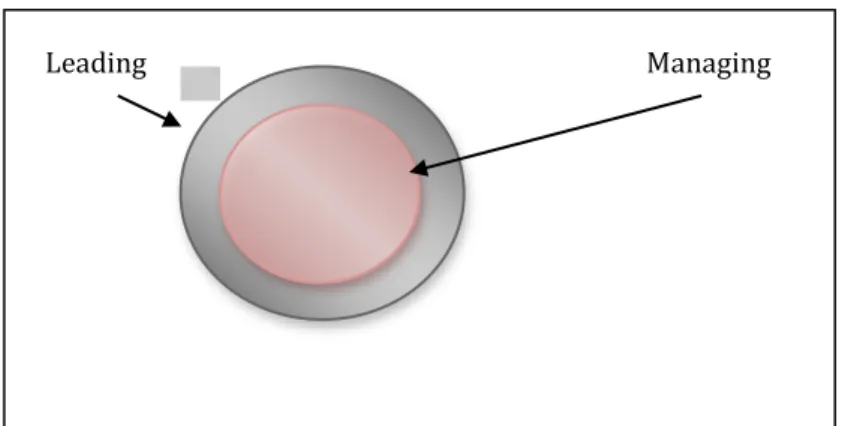
Taking the above into consideration, one may argue that the controversy that exists in extant literature regarding the role of managerial coaching is triggered by the diachronic dispute between leadership and management (for a review v. Ali, 2013). In this regard, a systematic examination of managerial coaching as a practice conducted by the functional team leader to each one of the team members, necessitates a comprehensive understanding of the relationship between coaching, managing, and leading, which is pursued below with specific reference to knowledge workers and a knowledge-intensive environment.
2.3.2 Leading & managing knowledge workers
Since Drucker's (1988) first reference to knowledge workers, society has progressed well into the Information Age or Knowledge Era (Uhl-Bien, Marion, & McKelvey, 2007), where organisational knowledge is considered a strategic competitive advantage (Hagen, 2010; Uhl-Bien et al., 2007). The “all-knowing
supervisors” who were able to divide each team objective into small, manageable and administrative tasks is extinct (Jones, 1995: 438). Their place has been replaced by managers, who lead a team of knowledge workers and who may not possess more knowledge than their subordinates, but better managerial competencies (ibid). Against this background, first Mintzberg (1971, 1975) and thereupon, other renowned
academics (e.g. Kotter, 1982; Yukl, 2012) challenged Fayol's (1949) classical functions of management (i.e. planning, organising, commanding, coordinating and controlling) for their rigidness and obsolesce. Indeed, according to Yukl (2012) a manager’s role is primarily to develop and maintain employees, receive and offer information, make decisions and influence others. In line with this, Stogdill (1974: 3) defines leadership as “the process of influencing the activities of an organized group in its efforts toward goal setting and goal achievement” and thus, indicates that being a