Explicit Form Focus Instruction: The
Effects on Implicit and Explicit
Knowledge of ESL Learners
Mandana Rohollahzadeh Ebadi [1], Mohd Rashid Mohd Saad [2], Nabil Abedalaziz [3]
[1] [email protected] Department of Language
Faculty of Education, University of Malaya, Kuala Lumpur
[2] [email protected] Department of Language
Faculty of Education, University of Malaya, Kuala Lumpur
[3] [email protected] Department of Educational Psychology and Counseling Faculty of Education, University of Malaya, Kuala Lumpur
ABSTRACT
The study examines the effect of explicit form focus instruction and specifically metalinguistic information feedback on the development of both implicit and explicit knowledge of adult English as a Second Language (ESL) learners. Ninety-one subjects at the lower intermediate level were carefully selected through placement test at one of the selected education centre in Kuala Lumpur and randomly assigned into experimental and control groups by the researcher. A quantitative study was conducted over approximately four weeks in 16 sessions. Modal (can and have to), past tense with –ed, Present perfect (since and for), Comparatives, Unreal conditionals were chosen as the target structures. Target structures were taught based on the lesson plan of the study. Pretest and posttest were given before and after the intervention program. The tests consisted of two tests designed to measure implicit knowledge (i.e., EOIT & TGJT) and two other tests (i.e., UGJT & MKT) to measure explicit knowledge. Results of ANCOVA analysis show gains on both types of knowledge on the posttest. The theoretical implication of the results suggests explicit instruction adequately facilitates development of L2 implicit and explicit knowledge. Pedagogically, these results suggest that explicit instruction on some English language features may benefit L2 learners, especially in facilitating their implicit knowledge.
Keywords: second language acquisition, error correction, implicit feedback, recast, implicit knowledge; explicit knowledge, language awareness
INTRODUCTION
One of the concerns of applied linguists is centered on the most effective form of grammar instruction in the communicative classroom (Sheen, 2002). The issue concerns the extent to which teachers need to direct learners’ attention to understand grammar in communication classes. Long (1988, 1991) proposed that grammar instruction may be of two types: “focus on form” and “focus on formS”. The former refers to drawing “… students’ attention to linguistic elements as they arise incidentally in lessons whose overriding focus is on meaning or communication” (Long, 1991, p. 45). The latter is “equated with the traditional teaching of discrete points of grammar in separate lessons” (Sheen, 2002, p. 303).
developing L2 knowledge (N. Ellis, 2002; Ellis, 2002; Hinkel & Fotos, 2002; Seliger, 1979), while others are critical of its function (Krashen, 1982, 1999, 2000; Truscott, 1996; Zobl, 1995). Researchers suggest that some of the grammatical forms in L2 resist intervention (e.g., Dulay, Burt, & Krashen, 1982). Thus, there is continued debate addressing the question of whether and how explicit instruction specially explicit corrective feedback impacts L2 ability.
All the grammatical structures in L2 are not acquired with ease (Akakura, 2009). Some non-salient or fragile features cannot be perceived merely by exposure to the language alone (N. Ellis, 2006). Thus, various methods of intervention have been researched, directed at how effective instructed language learning may be achieved. Norris and Ortega (2000) in a meta-analysis study investigated the efficacy of instruction on L2 learning and compared 49 such studies done between 1980 and 1998. A decade after their meta-analysis, extensive studies dealing with second or foreign language acquisition through some sort of intervention continue. But the main issue regarding the role of FFI (specifically explicit corrective feedback) in developing L2 continues to be debated (DeKeyser, 2003; Ellis, 2002).
The debates over the efficiency of explicit FFI is in part owed to the difficulty of operationalizing procedural L2 knowledge or implicit language knowledge. Until recently, few studies evaluated L2 acquisition on communicative language ability, such as the capacity for fluent speech which is considered to be evidence of implicit language knowledge (Ellis, 2008). Implicit language knowledge is intuitive, and enables spontaneous use of the language characterized by fluency and control evident in our mother tongue or L1, and is considered to be procedural knowledge. By contrast, explicit knowledge is considered as conscious knowledge which may be verbally described (Ellis, 1994). Most of the studies in evaluating L2 acquisition have been conducted by assessing explicit knowledge rather than freely constructed responses hypothesized to tap into implicit procedural knowledge (N. Ellis, 2008; Norris & Ortega, 2000; Truscott, 1996, 1998). This measurement problem has been added to the debate concerning the effectiveness of explicit instruction (Hulstijn, 2005). Up to now, because of methodological difficulties in differentiating implicit and explicit knowledge few studies have addressed this issue (Akakura, 2009).
Recent studies (Ellis, 2005; Ellis & Loewen, 2007; Ellis, Loewen, & Erlam, 2006; Han & Ellis, 1998) recommend providing a relatively separate measure of either implicit or explicit knowledge of language structures according to tests incorporating the distinguishing criteria of the two types of language knowledge within their design. While constructing pure measurement of implicit and explicit knowledge is impossible (Ellis, 2004, 2005), these empirical developments in assessing language knowledge have enabled closer approximations in discriminating implicit and explicit knowledge. It may now be possible to investigate whether or not explicit instruction or particularly explicit corrective feedback as part of the explicit FFI will impact on implicit knowledge. Since improving the ability to communicate fluently and confidently is considered to be the final aim of instruction within a cognitive approach to L2 acquisition, it is appropriate for L2 pedagogy to focus on developing implicit language knowledge besides explicit language knowledge (Ellis, 2008). Also related to the issue of explicit FFI effectiveness is the question of the effects of type of corrective feedback on the type of language features targeted. So far, little research has been conducted to directly investigate the effects of corrective feedback on implicit and explicit knowledge of L2 learners.
Therefore, this study is concerned with the problem of whether it is possible for explicit FFI specifically explicit corrective feedback in the form of metalinguistic information to influence both implicit and explicit knowledge. The specific question motivating the research is as follows:
• Is there any significant effect of the explicit form focus instruction specifically explicit corrective feedback in the form of metalinguistic information on grammar acquisition of ESL learners,
METHOD
Research Site
The study was conducted at one of the selected education centre in Kuala Lumpur during February till May 2013. The English Language Proficiency (ELP) Program in this centre has been established in response to the adults’ academic English language requirements. Though the participants are matured learners who previously possessed the knowledge and skills in their own fields, they still need to enhance their English proficiency in communicative skills.
Participants
Ninety one ESL learners at the lower intermediate level whose scores on placement test or a previous class achievement test were between plus or minus one standard deviation (+-1 SD) of the population mean were randomly assigned into two groups (i.e., one experimental and one control group). This level is ideal for the study for three reasons. First, target structures of the study have been chosen from a list of structures, mostly problematic for lower intermediate level. Second, the lower intermediate learners are probably familiar with and have explicit knowledge of these structures, since our aim is not to study whether corrective feedback contributes the learning of an entirely new structure, but rather whether it assists learners to obtain greater control over a structure they have previously somewhat mastered. Third, it is supposed that students at this level are familiar with communicative tasks of the study and could manage exercises perfectly.
This study was conducted in an ethical and responsible manner by first explaining to the participants in the research process so that they had a clear understanding of the topic of study and the research interest before signing the consent form. In addition, the researcher obtained consent approval of the UMCCED lecturer who kindly participated in this study to teach target structures and conduct the tasks of the study.
Treatment
Target Structures. The target structures of this study were chosen based on the judgments of a panel of 6 experts of a university in Kuala Lumpur, in the field of Linguistics and second language acquisition from a list of universally problematic structures to learners (Ellis et al., 2009) by means of a 5-point Likert Scale. Consequently Modal (can and have to), past tense with –ed, Present perfect (since and for), Comparatives, Unreal conditionals were chosen as the target sentence structures.
Lesson Plan. Based on the aim of the study, the researcher followed steps presented in Teaching English as a Second or Foreign Language (Celce-Murcia, 2001) to provide lesson plans for the study. The English Unlimited Pre-intermediate course book (Tilbury et al., 2010) is currently used as the course book in the centre for this level so it was deemed suitable as an authentic text and source book with an appropriate level of task difficulty on which to base the intervention.
Tasks of the Study. Built on the theoretical framework and objectives of the study the tasks used in the treatment phase of this study were what Ellis called focused tasks; in other words, “they were designed to encourage the use of particular linguistic forms and, to this end, learners were provided with certain linguistic prompts” (Ellis, 2004, p. 237). The target grammatical features of the study were taught in both groups through focused tasks. The only difference between the experimental group and control group was at the time of learners’ errors the experimental group received metalinguistic feedback and the control group received no feedback. The feedback was provided to the whole class or individual students.
Research Instruments
Pilot Study
The four instruments were administered to samples of 34 students from lower intermediate level to find out the psychometric properties of these instruments. Reliabilities of all four tests were estimated by means of internal consistency of responses to every item in each of the tests. Cronbach’s alpha coefficient were calculated for the tests. The reliability values of the four tests of the study were above .80, hence suggesting very good internal consistency (Pallant, 2010). Moreover, the Corrected Item-Total Correlation values in the Item-Total Statistics table of analysis indicates that the degree to which each item correlates with the total score are more than .3. So, according to Pallant (2010) it shows the correlation of each item with the total score is appropriate.
Research Design
The research design was an experimental pretest-treatment-posttest design with experimental and control group (Creswell, 2011). The dependent variables were implicit knowledge and explicit knowledge represented by posttest scores of implicit tests (i.e., EOIT & TGJT) and posttest scores of explicit tests (i.e., UGJT & MKT) respectively. Whereas the independent variable was explicit corrective feedback in the form of metalinguistic information. The covariate variables were pretest scores of implicit tests (i.e., EOIT & TGJT) and pretest scores of explicit tests (i.e., UGJT & MKT).
Data Analysis
To explore the differences between students’ scores in the experimental and control groups in implicit and explicit knowledge, the researcher at first conducted the preliminary assumption testing of parametric tests to ensure the homogeneity of subjects and explore the between-group differences, if any. Following the preliminary assumption testing (i.e., test of normality, linearity, homogeneity of regression slopes and equality of variance) one-way analysis of covariance (ANCOVA) was conducted.
To measure the implicit knowledge of target structures, a combined mean score of the EOIT and TGJT, for total scores of the target structures were calculated. To measure explicit knowledge of target structures, a combined mean score of the UGJT (i.e., using the scores of ungrammatical sentences) and the MKT, for total scores of the target structures were calculated. The decision to use the score of ungrammatical items rather than grammatical items in UGJT for measuring explicit knowledge was motivated by the previous research (Bowles, 2011; Ellis, 2005, cited in Ellis, Loewen, & Erlam, 2006), which showed that these might provide a stronger measure of explicit knowledge.
RESULTS, DISCUSSION AND IMPLICATIONS
Results
Table 1 Analysis of Covariance for Implicit Knowledge as a Function of Group, Using Pretest Scores as a Covariate
Source Df Mean Square F Sig. eta2
Implicit Pretest 1 878.77 43.92 .00 .33
Group 1 5219.81 260.89 .00 .74
Error 88 20.00
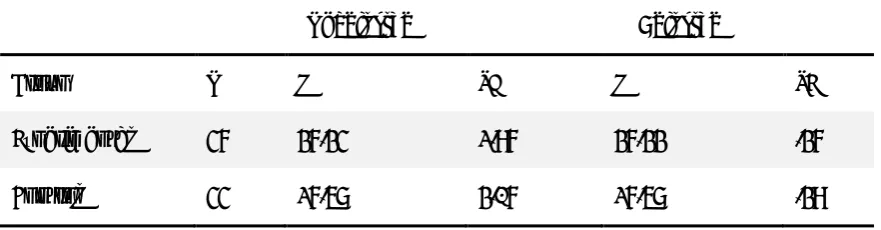
Table 2 presents the means and standard deviations for the experimental group and control group on implicit knowledge, before and after controlling for pretest effect. As is evident from this table, virtually no difference between the experimental group and control group remains after differences in pretest scores are controlled. This table also shows that students in the experimental group (M = 47.02, SD = 5.74) scored significantly higher than students in the control group (M = 31.88, SD = 5.10).
Table 2 Adjusted and Unadjusted Groups Means and Variability for Implicit Knowledge, Using Pretest Scores as a Covariate.
Unadjusted Adjusted
Group N M SD M SE
Experimental 47 47.02 5.74 47.03 .65
Control 44 31.88 5.10 31.87 .67
Furthermore, an analysis of covariance was used to assess whether the experimental group scored significantly higher than the control group in explicit knowledge after controlling for differences between students in both groups in the pretest scores. As presented in Table 3 results indicate that after controlling for the effect of the pretest, there is a significant difference between the experimental group and control group in explicit knowledge, (F (1, 88) = 313.00, p =.00, eta square =.78). The partial Eta squared value of 0.78 showed that 78% of the variance in the dependent variable (explicit knowledge) could be explained by the independent variable. According to Cohen (1988, pp. 284-287) this is considered as a moderate to large effect size. The other value this table is concerned with is the influence of our covariate. The relationship between the covariate and the dependent variable is significant (p value < .05), while controlling for the independent variable. In fact, the value explained 26 percent of the variance in the dependent variable (partial eta squared of .26 multiplied by 100).
Table 3 Analysis of Covariance for Explicit Knowledge as a Function of Group, Using Pretest Scores as a Covariate
Source Df Mean Square F Sig. eta2
Pretest 1 219.05 32.39 .00 .26
Table 4 presents the means and standard deviations for the experimental group and control group on explicit knowledge, before and after controlling for pretest effect. As is evident from this table, virtually no difference between the experimental group and control group remains after differences in pretest scores are controlled. This table also shows that students in the experimental group (M = 37.34, SD = 2.97) scored significantly higher than students in the control group (M = 27.68, SD = 3.07).
Table 4 Adjusted and Unadjusted Groups Means and Variability for Explicit knowledge,Using Pretest Scores as a Covariate
Unadjusted Adjusted
Group N M SD M SE
Experimental 47 37.34 2.97 37.33 .37
Control 44 27.68 3.07 27.68 .39
DISCUSSION
Based on a number of exclusive methodological specifications, this study compared the effects of FFI, specifically explicit corrective feedback in the form of metalinguistic information, on grammar acquisition of ESL learners. The second unique feature of this study is its natural context; the study was conducted in the classroom with students performing communicative tasks. A third unique specification of the study is using the array of instruments, developed by Rod Ellis (2005), to separately measure implicit and explicit knowledge.
An assessment of the pretest scores prior to the start of the program indicated that at first all the participants had only limited implicit and explicit knowledge of the structures. But the results showed a significant advantage for the experimental group after instruction. As clearly indicated in the tables given, explicit corrective feedback in the form of metalinguistic information as one of the explicit FFI techniques in teaching is effective in acquisition of both implicit and explicit knowledge of ESL learners. In other words, the corrective feedback can potentially extract inaccurate structures from the learners’ statements and therefore approximate the learners’ production to the native like accurate language productions. One conceivable reason for better achievement of the experimental group may have been the vital part of attention in learning. According to Schmidt (2001, cited in Varnosfadrani & Basturkmen, 2009) “attention controls access to conscious knowledge, allowing the new features to be learned” (p. 11).
The descriptive statistics in Tables 1, 2, 3 and 4 and the results of ANCOVA show that the corrective feedback in the form of metalinguistic information has a significant effect on both implicit and explicit knowledge of ESL learners. Indeed, overall, it seems that the treatments explicitly enhanced learners’ awareness of the grammatical target structure, thus encouraging them by using their explicit knowledge to monitor their output.
Evidence of this study strongly supports the theoretical position that corrective feedback by providing negative evidence plays a facilitative and perhaps even vital role in second language acquisition. This study by measuring implicit and explicit knowledge separately, also provides good evidence to support Schmidt’s (2001) noticing hypothesis and suggests negative feedback assists learners to become aware of the gap between interlanguage forms and target forms, and “noticing the gap has been hypothesized to help interlanguage development” (Schmidt 2001, cited in Naeini, 2008, p.120).
posited that “Learners have to consciously pay attention to or notice input in order for input to become intake for L2 learning” (p. 13). This is because such corrective feedback encourages learners to notice the gaps between target norms and their own interlanguage (IL), thus facilitating grammatical restructuring (Schmidt, 2001, p. 13). Schmidt noted that errors of Second Language students are part of the learning process, and that drawing attention to them is a key part of their language development.
These results also support the weak interface position toward implicit and explicit knowledge (Ellis, 2006) according to which corrective feedback, by providing a kind of attention and consciousness in learners, not only facilitates explicit learning and explicit memory, but also implicit learning and implicit memory.
IMPLICATIONS
Empirical implication
The substantial empirical implication that can be drawn from this research is: “explicit form-focused instruction specifically explicit corrective feedback benefits ESL learners in terms of both implicit and explicit knowledge of grammatical structures, that is Modal (can and have to), past tense with –ed, Present perfect (since and for), Comparatives, Unreal conditionals structures. The result of this study provides empirical support for some beliefs regarding the benefits of explicit instruction in acquisition of ESL learners (Dekeyser, 2003; Sharwood Smith, 2008).
Pedagogical implication
The findings of this study could be an appropriate guideline for language teachers, educators or language program designers who are in a position to decide whether and how explicit FFI and explicit corrective feedback is to be presented in an instructional context. Extending empirical supports of weak interface position of cognitive psychology, we can propose that second language students could benefit more from pedagogical techniques which promote their explicit knowledge such as interactional feedback in which a set of conversational devices such as clarification requests, comprehension checks, confirmation checks, and repetitions are used to draw the learners’ attention to ungrammatical forms in their output and make them modify their output (Dalili, 2011).
Methodological implication
The results of this study also support recent studies (Bowles, 2011; Ellis, 2005; Ellis & Loewen, 2007; Ellis et al., 2006; Han & Ellis, 1998) which have proposed better understanding of the effect of corrective feedback could be achieved through measuring implicit and explicit knowledge separately. However, “The main limitation of the research to date lies in the method of testing” (Ellis et al., 2009, p. 315). So this study by providing a relatively separate measurement of implicit and explicit knowledge of language structures according to tests incorporating the distinguishing criteria of the two types of language knowledge (Bowles, 2011; Ellis et al., 2009) tried to solve methodological limitation of previous studies in corrective feedback.
LIMITATIONS AND SUGGESTIONS FOR FURTHER RESEARCH
As in all classroom studies, there are inevitable limitations. First, the conclusion of the study is provisional based on the available tests for measuring implicit and explicit knowledge. Second, the participants of the study were adult learners over 20 years old, so the results could not be generalized to the adolescent students. Third, this study was conducted during a one month intensive course program with pretest-posttest design. A delayed posttest or a longitudinal study could provide a deeper insight into the long-term effectiveness of the explicit FFI and metalinguistic corrective feedback. Fourth, the research has only tested six structures out of the seventeen structures which are known as universally problematic for ESL learners mostly in intermediate levels (Ellis et al., 2009).
useful to examine which type of corrective feedback works better for partially acquired structures. Yet, this narrows down the scope of the research as it does not account for new structures. In other words, we cannot say whether corrective feedback is effective in promoting new knowledge or not. It is therefore proposed that for future research, examining the effect of corrective feedback on novel structures could provide useful information for teachers on which type of feedback and when and where to use them effectively.
REFERENCES
Akakura, A. M. (2009). Effect of explicit instruction on implicit and explicit second language. knowledge: An empirical study on english article acquisition. Dissertation Abstracts International. (UMI No. 3373634).
Bley-Vroman, R.W. (1989). The logical problem of second language learning. In S. Gass & J. Schachter (Eds.),
Linguistic perspectiveson second language acquisition (pp.41–68). Cambridge: CUP.
Bowles, M. A. (2011). Measuring implicit and explicit linguistic knowledge. Studies in Second Language Acquisition, 33(02), 247-271.
Celce-Murcia, M. (2001). Rules and reality: Prescriptive vs. descriptive grammar. ESLMagazine, 2(4), 16-17.
Cohen, J. W. (1988). Statistical power analysis for the behavioral sciences (2nd ed.). Hillsdale, NJ: Erlbaum.
Creswell, J. W. (2011). Educational research: Planning, conducting, and evaluating quantitative and qualitative research (4th ed.). Englewood Cliffs, NJ: Pearson.
DeKeyser, R. M. (2003). Implicit and explicit learning. In C. J. Doughty & M. H. Long (Eds.), The Handbook of Second Language Acquisition. (pp. 313-348). Malden, MA: Blackwell Publishing.
Dulay, H., Burt, M., & Krashen, S. (1982). Language two. New York, NY: Oxford University Press.
Ellis, N. (2002). Frequency effects in language processing: A review with implications for theories of implicit and explicit language acquisition. Studies in Second Language Acquisition, 24(2), 143-188.
Ellis, N. (2006). Selective attention and transfer phenomena in L2 acquisition: Contingency, cue competition, salience, interference, overshadowing, blocking, and perceptual learning. Applied Linguistics, 27(2),
164- 194.
Ellis, N. (2008). Implicit and explicit knowledge about language. In J. Cenoz & N. H. Hornberger (Eds.),
Encyclopedia of language and education (2nd ed., Vol. 6: Knowledge about Language, pp. 119-131): Springer US.
Ellis, R. (1994). The study of second language acquisition. Oxford: Oxford University Press.
Ellis, R. (2002). Does form-focused instruction affect the acquisition of implicit knowledge? A review of the research. Studies in Second Language Acquisition, 24(2), 223-236.
Ellis, R. (2005). Measuring implicit and explicit knowledge of a second language: A psychometric study.
Studies in Second Language Acquisition, 27(2), 141-172.
Ellis, R. (2006). Modeling learning difficulty and second language proficiency: The differential contributions of implicit and explicit knowledge. Applied Linguistics,27(3), 431–463.
Ellis, R. (2008). Explicit knowledge and second language learning and pedagogy. In J. Cenoz & N. H. Hornberger (Eds.), Encyclopedia of language and education (2nd ed., Vol.6: Knowledge about Language, pp. 143- 153). Springer US.
Ellis, R. (2009). Implicit and explicit knowledge in second language learning, testing and teaching. Multilingual Matters.
Ellis, R., & Loewen, S. (2007). Confirming the operational definitions of explicit and implicit knowledge in Ellis (2005): Responding to Isemonger. Studies in Second Language Acquisition, 29(1), 119-126.
Ellis, R., Loewen, S., & Erlam, R. (2006). Implicit and explicit corrective feedback and the acquisition of L2 grammar. Studies in Second Language Acquisition, 28(2), 339-368.
Han, Y., & Ellis, R. (1998). Implicit knowledge, explicit knowledge, and general language proficiency. Language Teaching Research, 2(1), 1-23.
Hinkel, E., & Fotos, S. (2002). New perspectives on grammar teaching in second language classrooms. Mahwah, NJ: Erlbaum.
Hulstijn, J. (2005). Theoretical and empirical issues in the study of implicit and explicit Second language learning. Studies in Second Language Acquisition, 27(2), 129-140.
Krashen, S. D. (1982). Principles and practice in second language acquisition (1st ed.). New York, NY: Pergamon Press.
Krashen, S. D. (1999). Seeking a role for grammar: A review of some recent studies. Foreign Language Annals, 32(2), 245-257.
Krashen, S. D. (2000). What does it take to acquire language? ESL Magazine, 3(3), 22-23.
Long, M. H. (1988). Instructed interlanguage development. In L. Beebe (Ed.). Issues in Second Language Acquisition: Multiple perspectives. New York, NY: Newbury House.
Long, M. H. (1991). Focus on form: A design feature in language teaching methodology. In K. de Bot, R. B Ginsberg, & C. Kramsch (Eds.), Foreign language research in cross-cultural perspective (pp. 39-52). Amsterdam, The Netherlands: John Benjamins.
Richards, J., & Rogers, T. (1986). Approaches and methods in language teaching. Cambridge, UK: Cambridge University Press.
Schmidt, R. (2001). Attention. In P. J. Robinson (Ed.), Cognition and second language instruction. Cambridge, UK: Cambridge University Press.
Seliger, H. W. (1979). On the nature and function of language rules in language teaching. TESOL Quarterly, 13(3), 359-369.
Sharwood Smith, M. (2008). Morphological and syntactic awarness in foreign/second language learning. In J. Cenoz & N. H. Hornberger (Eds.), Encyclopedia of language and education (2nd ed., Vol. 6, pp. 179-191). Springer US.
Sheen, R. (2002). Focus on form and focus on forms. Elt Journal,56(3), 303-305.
Tilbury, A. (2010). English Unlimited, CEF B1, Pre-intermediate: Coursebook with E-Portfolio DVD-ROM. Cambridge University Press.
Truscott, J. (1996). The case against grammar correction in L2 writing classes. Language Learning, 46(2), 327-369.
Truscott, J. (1998). Noticing in second language acquisition: A critical review. Second Language Research, 14(2), 103-135.